Tag: Syria

  • Breaking: Rocket attack on US position in northern Syria

    Breaking: Rocket attack on US position in northern Syria

    According to field observations, at the same time as the rocket attacks, Syrian army fighter jets and Russian military helicopters were patrolling around the city of Deir Ezzor.

    The IWN field source in Syria, in a conversation with us, said that the rocket attacks against CONOCO gas facilities were carried out from Hawija Sakar area in north of Deir Ezzor. After this attack, the US fighter jets bombarded the rocket launch site in Hawija Sakar, as well as the airport and Hatlah area. However, none of the resistance forces and the Syrian army forces were harmed in the attacks.

    According to the information released by the US CENTCOM, rocket attacks were carried out around 19:20 (local time) and three US servicemen were injured.

    It should be noted that the SAA and the resistance forces rocket attacks were carried out in retaliation to the US missile attacks. One August 23, the US fighter jets bombed the facilities and ammunition depots of the resistance forces and the Syrian army in the Ayyash region of Deir Ezzor province.

    Read more: US airstrikes on targets in Deir Ezzor province

    Click to view full size
  • US airstrikes on targets in Deir Ezzor province

    US airstrikes on targets in Deir Ezzor province

    According to the US claim, these targets belonged to the forces supported by Iran and the axis of resistance and was carried out in response to the attack of Iranian-backed forces on US positions on August 15.

    Centcom’s statement did not mention the targets of this attack, but at the same time as the US attacks, local sources reported an air strike on an ammunition warehouse and a fire in the village of Ayyash located in the northern suburbs of Deir Ezzor city. In this regard, the residents of Deir Ezzor reported the sound of multiple explosions this morning.

    Location of Ayyash village on the online map

    A video of the fire in Ayyash village

    It is worth mentioning that on August 15, there were two attacks against the positions of the US coalition in Syria. In the first attack, around 06:30 am (local time), the Al-Tanf US base in Homs province was targeted by a drone attack. At 21:00 (local time), the second attack against the US military was carried out in the Omar oil field with several rockets.

    Read more: Iraqi groups drone attack on US Tanf base

    Centcom Statement
  • Turkish strikes north of Syria, 3 SAA servicemen killed + video

    Turkish strikes north of Syria, 3 SAA servicemen killed + video

    On August 16, the Turkish warplanes targeted several headquarters belonging to the Syrian army, including a base in the village of Charqili, 20 kilometers west of the city of Ain al-Arab in Aleppo province. During these attacks, three Syrian army servicemen named “Basal Moala”, “Abdullah Al-Sayed” and “Salah Sabbagh” were martyred and six others were injured.

    According to a Syrian military source, these attacks were carried out from 14:37 to 15:00 on Tuesday (local time).

    These strikes led to increase of tensions between the parties in Aleppo and Raqqa provinces. After the Turkish airstrikes on the HQs of the Syrian army, the Turkish-backed militants also attacked the positions of the Syrian army and the Kurdish militia in the city of Tal Rafaat.

    Also, this morning (August 17) there were fierce clashes between the Turkish-backed Syrian National Army (Jaish al-Watani) and the Kurdish militias in the southern front of Tal Abyad city. so far no details of the casualties of both sides have been published.

    It seems that if the Syrian government and the axis of resistance do not respond strongly to the recent Turkish attacks, this country will escalates its aggressive actions. Despite the opposition of the parties in the Syrian war to Turkey’s new operations in Syria, the silence of the Syrian army and government regarding Turkey’s attacks in recent months has made this country more determined to start military operations in the northern regions of Syria.

    The moment one of the bases of the Syrian army was targeted by the fighters of the Turkish army

    The moment one of the bases of the Syrian army was targeted by the fighters of the Turkish army

  • Rocket attack on US base in northern Syria + Images

    Rocket attack on US base in northern Syria + Images

    On August 15, the positions of the US coalition located in the Omar oil field were targeted by a rocket attack. So far, no group has claimed responsibility for this attack. The rockets reportedly fell in the vicinity of Green Village inside the al-Omar oil field.

    In this regard, the US coalition issued a statement confirming the rocket attack and announced that at 21:00 (August 15) local time, several rockets hit the area around Green Village in Al-Omar oil field.

    Also, this attack did not cause any casualties.

    It is worth mentioning that on May 29 of this year, the American military base in the Omar oil field was also targeted by several rockets.

    Read more:
    Rocket attack on US base in Syria
    Rocket attack on Al-Omar oil field; Two American soldiers were wounded

  • Iraqi groups drone attack on US Tanf base

    Iraqi groups drone attack on US Tanf base

    On August 15, the US base at Al-Tanf region in Homs province was targeted with several drones. An informed source in a conversation with “Islamic World News” stated that this attack was carried out by the Iraqi “International Resistance Faction” and the drones accurately hit the predetermined targets.

    On the other hand, the US coalition issued a statement confirming the drone attack on al-Tanf base, and announced that the attack took place at around 06:30 this morning (local time) and that the US military cooperated with the US-backed Maghawir al-Thoura militants managed to repulse this attack. According to this statement, one drone was intercepted and destroyed, and another one hit the Maghawir al-Thoura positions, but there were no casualties.

    The Al Tanf area in southeastern Syria has been occupied by US forces for years, and Syrian Army and resistance forces are not allowed to approach within a 55-kilometer radius of the area. (Online map)

    Read more:
    Drone attack on US base at Al-Tanf area in southern Syria + Images
    Drone and Rocket Attack on US Tanf Base

  • Israeli missile attacks on Damascus and Tartus

    Israeli missile attacks on Damascus and Tartus

    According to a Syrian military source “At approximately 20:50 this evening (August 14), the Israeli enemy carried out an air aggression with missiles from the direction southeast of Beirut, targeting some points in the Damascus countryside And coinciding with this, another air aggression from the direction of the sea, targeting some points south of Tartus governorate. Our air defenses confronted the aggression’s missiles and shot down some of them. The aggression led to the death of three soldiers, the wounding of three others, and the infliction of some material losses.”

    Read more: Israeli missile attack on the outskirts of Damascus + Images

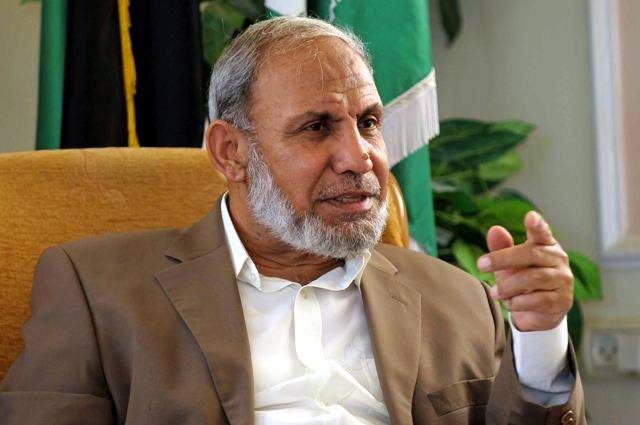
  • Hamas is returning to Syria!

    Hamas is returning to Syria!

    After reports of Hamas’ readiness to return to Syria, a number of experts from opposite sides (supporters of “against” the Hamas decision to return) expressed their opinion. Their first argument is based on the opinion that “the dictatorship of Syria is an outcast and they say any alliance with an isolated country will harm the Palestinians.”

    It should be recalled here that Hamas itself has been under blockade and isolation since winning the elections in Gaza, the organization’s offices in Doha or Beirut do not cancel the fact that with the exception of Iran and Syria (!! Assad never questioned the victory of Hamas in the elections) no one else recognized the power of the Islamic Resistance Movement in the liberated area of occupied Palestine. Therefore, the blocking of Syria by some neighbors is not a serious argument, since Syria is part of the Axis of Resistance alliance, which makes it at least an important component in the region due to the growing influence of this political union.

    The proof of this thesis is the fact that after the failure of the plot against the official Damascus, Saudi Arabia and the UAE took a number of measures to “restore relations” in order to break the ties of the alliance of Syria with Iran.

    Further, the enemy experts in their arguments point to the “disappointment” of the leading Palestinian movement in relation to Assad’s main opponents in the Arab world. This implies all the famous incidents, from the process of “normalization” of Arab dictatorships, to the inability of “political Islam” to form a real anti-Zionist regional force. One can agree with these arguments, but not one hundred percent, since, for example, relations with Zionism in all key countries of the anti-Assad camp have long been at a high level.

    The nuance with the “official recognition of the temporary essence” is a banal bureaucratic procedure that does not carry much importance. As for the “political Islam” project, firstly, this term is used in relation to pro-Turkish and pro–Qatar Ikhwans in a number of countries, and secondly, these elements, led by Qatar, were not going to build an anti-Zionist alliance with Hamas at the head of the corner. On the contrary, they advocated the creation of “two states”, the old dream of the White House Democrats. To this day, the small Emirate continues to actively dissuade Hamas from armed resistance and calls for disarming the Al-Qassam Brigade, in return promising to build a “port” and influence the Zionists through the United States so that they “stop” bombing Gaza. And there were lobbyists among Hamas for such conditions, for example Khaled Mishaal. However, realizing the true intentions of Qatar and Turkey in time, the military command of the al-Qassam Brigade rejected Doha’s plans and, through internal elections, removed Mishaal from key Hamas posts. Therefore, taking into account all the facts and arguments, can we say that “Qatari and Turkish political Islam” wanted to liberate Palestine? Of course not.

    However, among a number of oppositional opinions, a sober thought nevertheless slipped through. An unnamed source claims that “the Assad regime cannot provide any protection or guarantees to Hamas or others in Syria, since Israel daily penetrates into Syrian airspace and bombs any base, airport or barracks it wants, and Hamas will not be able to strike back, because Assad guarantees them only political support and logistics support. Damascus will proceed from past views, according to which military assistance to the Palestinian Movement in the form of opening a second front will be ignored.” To be realistic, it is difficult to ignore the regular failures of the Syrian air defenses and the reluctance to modernize their systems, as well as the fact that the BAATH does not allow the Iranians to build their air defenses. But that’s another story.

    Personally, I think that factionalism within Hamas played a role in the issue of relations with Syria, that is, the victory in the internal elections of those politicians who had their own project and who were able to convince the majority of the Hamas electorate of their effectiveness. The project was to restore membership in the Axis of Resistance and comprehensively develop strategic relations with alliance members.

    The revival of the former status within the alliance built by the IRGC does not prevent the leading Palestinian Movement from remaining faithful to its ideology of “Brotherhood”. Therefore, it is absolutely not true to say that the new charter of Hamas is the reason for the revision of external alliances. The spiritual fathers of Hamas are still supporters of the Muslim Brotherhood, so critics of the organization should ask themselves the question “what are the types of ikhwans?”

    It is worth recalling that this movement has never been homogeneous. Different directions concerned the Brotherhood in countries such as Egypt, Iraq, Yemen, Libya, Lebanon, Jordan and even Palestine, there were many reasons, but the main split was observed in a different view of the events in Iran in 1979. As for the factionalism of Hamas, it is important to understand what we mean by the term the current “Palestinian Muslim Brotherhood”, a community of politicians with neoliberal views, what do they have in common with the pro-Western Justice and Development Party in Turkey and the “soft” autocrats from Qatar? Or the true followers of Hassan al-Banna, Kamal Sharif and Sayyid Qutb? Therefore, if we look at the current leadership of Hamas, we will see there all the same local ikhwans who, in their views, are close to the legendary founders of the Brotherhood.

    And today, what is called a “charter change”, which allegedly served as the main incentive to revise Hamas’ external alliances and thereby opened the way to Syria, is the merit of the “pro-Iranian faction”, and not a “change” in ideology. Let me remind Yahya Sinwar in 2017, when at a meeting with journalists, the head of Hamas in the Gaza Strip said that “there has been a breakthrough in the Syrian crisis,” and “this will give an opportunity to improve relations between Hamas and the regime.”

    Hamas is evolving, but it is not revolutionizing, but it is too early to draw conclusions, the struggle for Palestine continues and the leading Islamic Movements are gaining experience. Still, even the enemies admit that in recent years Hamas has greatly increased in personal diplomacy, which certainly played to the benefit of the Palestinian people.

  • Four people including two children were killed by Turkish strike on Qamishli

    Four people including two children were killed by Turkish strike on Qamishli

    On the evening of August 6th, the Asayish security organization reported that four people, including two children, were killed and two others were injured in the Turkish army’s drone attack on Al-Sina neighborhood in Qamishli city. Turkish officials and military commanders have not commented on this attack so far.

    In recent months, with the whispers of the start of new Turkish operations in northern Syria, Turkish drone attacks on Kurdish militia positions and targeted assassinations against the Syrian Democratic Forces have increased drastically.

    Read more:
    Syria: Turkish drone killed 3 SDF members
    US airstrikes on Syrian army position south of Qamishli + Video

  • Two Turkish servicemen killed in northern Syria

    Two Turkish servicemen killed in northern Syria

    On July 16, the Syrian Democratic Forces (SDF) targeted a Turkish army base in the Kaljabrin area, south of the city of Azaz, located in the north of Aleppo, with an artillery attack. As a result of this attack, two Turkish servicemen were severely injured and transferred to hospital but succumbed to their injuries.

    The Turkish Ministry of Defense also confirmed death of two of its servicemen named Mevlut Yogurtcu and Mert Otal in the operational area of “Euphrates Shield”.

  • Tension in Suwayda; A security HQ was captured by local armed factions+ Images

    Tension in Suwayda; A security HQ was captured by local armed factions+ Images

    In the last few days, al-Suwayda province has witnessed one of the most intense clashes between the local armed factions and the Syrian government’s security forces. On July 23, the forces of the “Quwat al-Fajr Movement” affiliated with the Syrian security apparatus, arrested five civilians in the town of Shahba, located in the north of the city of Suwayda. This issue led to wider tension and armed conflict in Suwayda province, and dozens of people from the surrounding areas of Suwayda city protested this action and blocked several roads in Shahba town and its surroundings by gathering and burning tires.

    These protests continued for several days and finally on July 26, a local armed group named “Rajal al-Karamah” attacked the headquarters of the Syrian security forces in the town of Atil located in the north of Suwayda and after a few hours of fighting, they managed to capture the SAA headquarters.

    According to preliminary information, 17 SAA servicemen and local militia group members were killed and 35 others were wounded as a result of clashes in the Suwayda province in the past days. Contradictory reports have been published regarding the arrest or killing of Raji Falhout, the commander of the “Quwat Al-Fajr Movement” forces, but so far there is no reliable information about his fate.

    It is worth mentioning that the local armed groups in Suwayda province are divided into three categories. Some of these groups are neutral, some of them are against the government of Bashar al-Assad, and another part of them are the pro-government groups affiliated with the Syrian security organization. The activities of most of these armed groups are similar to each other in different fields, but in the past years, they have clashed with each other due to differences over various issues.

    Considering the activities of terrorist elements and the protest gatherings of the people of Suwayda province in recent months, it is possible at any moment that the insecurity of this province will exceed the current level and turn into a serious security crisis for the Syrian government.

    Read more: Syria: Protest in the south, war in the north!

    Tensions in Atil town
  • Israeli missile attack on the outskirts of Damascus + Images

    Israeli missile attack on the outskirts of Damascus + Images

    Early on July 22, the Israeli Army attacked Damascus outskirts with several missiles which resulted in the martyrdom of three Syrian soldiers, the injury of seven others and the material losses.

    A military source said that, “at exactly 00:32 today, the Israeli enemy carried out an air aggression from the direction of the occupied Syrian Golan, targeting some points in the vicinity of the city of Damascus. Our air defenses confronted the aggression’s missiles and shot down some of them.”

    Infographic: Israeli air and missile strikes against Syria in 2021

    Israel’s attacks against Syria and the killing the Syrian citizens are taking place while international organizations and the United Nations have closed their eyes to the aggressions and crimes of the Israeli regime.

    Read more:
    Israeli aggression kills a Syrian citizen Quneitra
    srael aggression on Syria’s Tartus
    Israeli missile attack south of Damascus

  • Assassination of high-ranking ISIS commander  in Aleppo by America + Images

    Assassination of high-ranking ISIS commander in Aleppo by America + Images

    On July 22, the US drones targeted a motorcycle in the village of Khalitan in the outskirts of Jindires town, during which one person was killed.

    Confirming this news, the US CENTCOM announced the killing of a person named “Maher al-Aqal”, one of the five main leaders of ISIS. Also, during this attack, one of the people close to Maher al-Aqal was also seriously injured. No information has been released about the identity of the injured person.

    It is said that Maher al-Aqal nicknamed “Abu Al-Bara al-Shamali” has been active as the governor of the Levant and responsible for the coordination and development of ISIS terrorist cells outside of Syria and Iraq.

    It is worth mentioning that since September of last year, the US coalition has carried out at least five drone attacks against the field commanders of the militants and ISIS, as a result of which five alleged Al-Qaeda commanders and one ISIS commander were killed.

    Read more:
    Biden: ISIS leader killed by US attack in Syria
    13 killed in US invasion of northwestern Syria + Video
    ISIS confirms Abu Bakr al-Baghdadi death