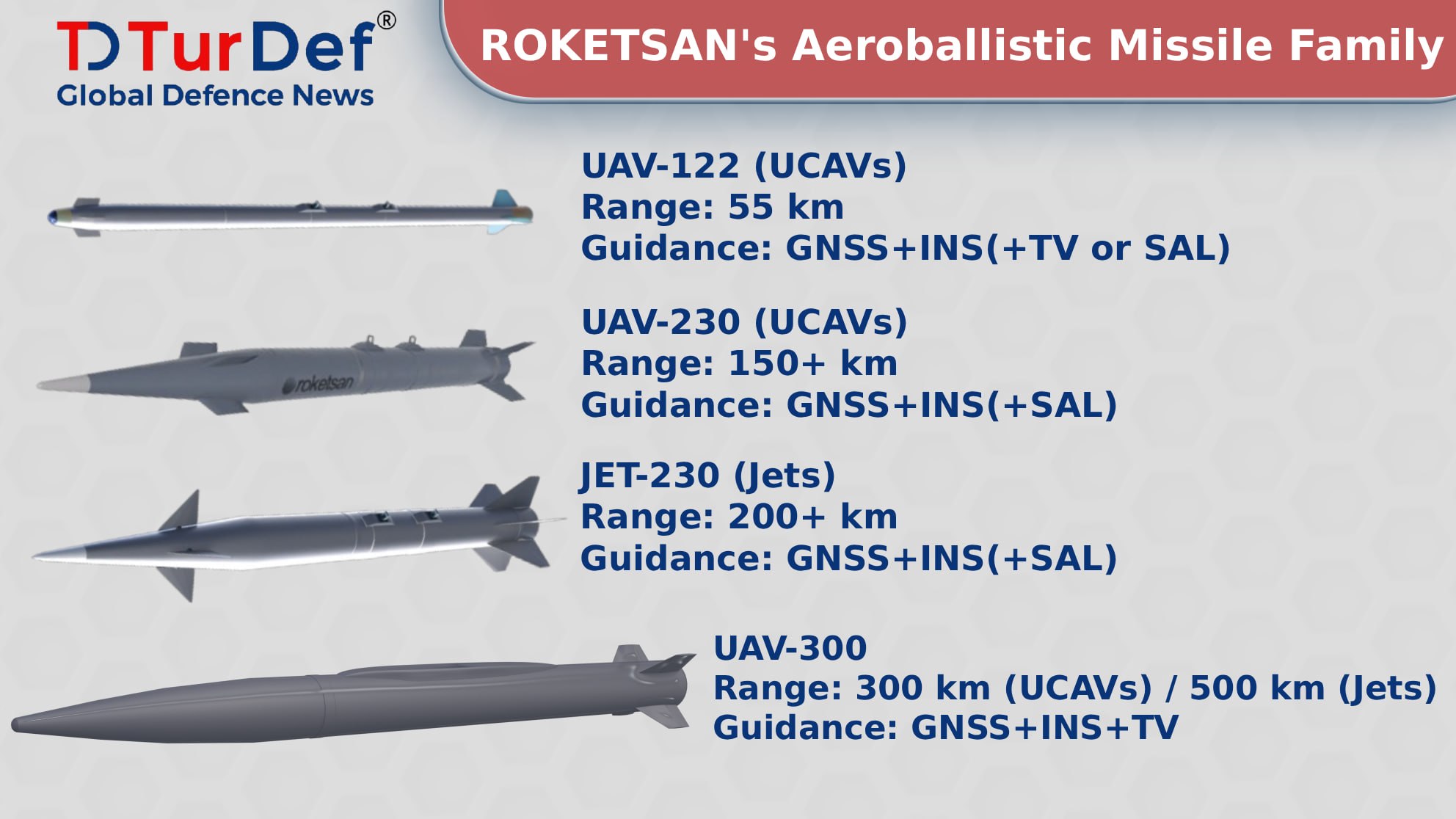
The UAV-122 model is designed for use from combat drones and has a range of about 55 kilometers. The guidance system of this missile is a combination of inertial satellite navigation, and the possibility of using a TV or semi-active laser imaging seeker has also been mentioned for it.
The UAV-230 model is considered the next step of this family and is fired from combat drones, with a range of more than 150 kilometers. Its guidance is also based on GNSS+INS, and the possibility of using a semi-active laser seeker has been raised for it.
The JET-230 version is a variant of the UAV-230 for use from jet fighters, and its range reaches more than 200 kilometers.
At the highest tier is the UAV-300, whose range varies depending on the launch platform; if fired from combat drones, this missile will have a range of about 300 kilometers, and if fired from jet fighters, up to 500 kilometers.
In West Asia and North Africa, oil and its transmission routes have never been merely economic matters; they have always been defined in close connection with politics, national sovereignty, and survival calculations. Every decision in the energy sector carries profound geopolitical messages capable of altering the balance of power among regional actors. Within this framework, Ankara’s announcement to terminate the Kirkuk–Ceyhan oil pipeline agreement with Iraq by 2026 once again demonstrated that energy lies at the heart of Turkey’s security and strategic calculations. From the Erdogan government’s perspective, this decision is not merely a revision of a technical contract but part of a broader effort to redefine the future of energy, reduce costly dependencies, and consolidate Turkey’s role as a regional energy hub. Simultaneously, the cautious resumption of Iraqi oil exports through this pipeline after a long hiatus reflects both parties’ awareness of the geopolitical costs of obstructing energy arteries—an obstruction that, beyond inflicting heavy economic losses on Iraq and the Kurdistan Region, exposed the depth of legal and sovereignty disputes among Baghdad, Erbil, and Ankara. Meanwhile, developments in Syria and the prospect of a post-Assad order represent a key variable in Turkey’s energy and geopolitical calculations. From Ankara’s perspective, post-Assad Syria is not only a security issue but also a geopolitical opportunity to diversify and complete energy and transit corridors—corridors that could link Iraq, the Eastern Mediterranean, and even European markets. In this context, the central question is how Turkey is attempting, through the simultaneous use of energy tools, transit corridors, and Syria’s geopolitical shifts, to redefine its position in West Asia’s transitional order. This situation raises a fundamental question: Will energy and its transit routes in the coming decade become a factor intensifying competition and divisions among Turkey, Iraq, and Syria, or can they serve as a lever for cooperation, integration, and the definition of shared regional interests? The answer to this question will shape not only the future of Turkey’s relations with its neighbors but also the configuration of the region’s energy and geopolitical order.
Background
Among all foreign actors active in the Syrian crisis, Turkey has been the most steadfast supporter of opposition currents against the Damascus government, continuing this support despite heavy security, political, and economic costs. The consequences of this policy, particularly in the form of millions of Syrian refugees, have placed additional pressure on Turkey’s economy and social fabric, gradually becoming one of the most contentious domestic issues in the country. In past years, domestic critics of the Erdogan government repeatedly questioned this policy, calling for normalization of relations with Bashar al-Assad’s government and an end to support for opposition groups. From these factions’ perspective, the continuation of conflict neither guaranteed Turkey’s national security nor imposed long-term costs on Ankara. However, Assad’s fall transformed the equation, and the Erdogan government views this development as validation of its strategy. Ankara now believes its long-term investment in Syrian opposition groups has yielded effective leverage within Damascus’s new power structure. The groups and actors with which Turkey has established political, security, and field ties during the crisis years now find themselves in a position to play a significant role in Syria’s political future, thereby strengthening Turkey’s position as a decisive actor. Prior to Assad’s fall, Turkey’s policy in Syria was based on four core objectives:
Facilitating the return of a portion of Syrian refugees
Securing its southern borders
Containing and rolling back the political and territorial gains of the Kurdish-led Syrian Democratic Forces
Securing concessions for its allied opposition groups in any negotiation process with Damascus.
With the collapse of Assad’s government, the last objective has effectively become obsolete. Under the new circumstances, Ankara is attempting to pursue the remaining three objectives through more indirect and complex paths. Influencing Damascus’s new leadership, establishing active communication with Syria’s Arab community and local tribes, while simultaneously maintaining military and security pressure on the Syrian Democratic Forces, are Turkey’s primary tools for shaping the post-fall order in Syria. However, this strategy’s scope is not limited to Syria alone. Turkey is simultaneously attempting to translate its growing influence in Syria into leverage for increasing geopolitical pressure on Iraq—particularly in areas sensitive to Ankara in terms of border security, energy, and the presence of actors aligned with the Axis of Resistance. In this framework, Turkey is using political, economic, and security tools to shift the balance of influence in Iraq in its favor and limit the role of actors close to the Axis of Resistance. Pressuring Baghdad on security matters, cross-border operations, and managing Kurdistan Region files are part of this multi-layered strategy to consolidate Turkey’s regional position. Overall, Turkey’s policy in the post-Assad era can be seen as a coordinated effort to translate field gains in Syria into sustainable geopolitical influence across West Asia’s northern axis—a strategy encompassing both Syria and Iraq, with the ultimate goal of redefining Turkey’s role against the Axis of Resistance and solidifying Ankara’s position as a decisive regional actor.
Analysis and Findings:
Major projects in Iraq
Ankara’s Strategy Toward Baghdad: Iraq, which until recently was primarily viewed by Ankara as an unstable security belt on Turkey’s southern periphery, has now become one of the focal points of Turkey’s regional strategy. This shift in perspective has been shaped following the transformation of regional dynamics after the events of October 7—developments accompanied by the relative weakening of Iran’s influence across several fronts, increased economic and diplomatic weight of Arab Gulf states, and regional actors’ search for new stability models in West Asia. In this context, Turkey’s renewed engagement with Iraq is not limited to containing the PKK but reflects broader ambitions to redefine Ankara’s regional role. This new approach encompasses a combination of security cooperation with Baghdad and Erbil, advancing a fragile internal peace process in Turkey, and a targeted effort to integrate Iraq into trade, transit, and energy networks between Turkey and the Gulf states. At the heart of this strategy lies geoeconomic logic. Ankara seeks to consolidate its position as a regional trade and energy connectivity hub by investing in shared infrastructure and creating sustainable interdependencies. Projects such as oil pipelines, medium-term gas export plans, and electricity grid development are key tools for Turkey to link Iraq to the region’s emerging energy architecture. The implications of this approach extend beyond Iraq as well. For Europe, redefining connectivity routes and access to energy resources, alongside strengthening stability in the continent’s southeastern neighborhood, holds strategic importance—and developments in Iraq, within this framework, are part of Europe’s larger energy security equation.
Turkey’s policy shift toward Baghdad has occurred concurrently with a series of profound regional transformations, from the Gaza war and escalating Iran-Israel tensions to the fall of the Assad regime, which are collectively rearranging the balance of power in West Asia. These developments have heightened Ankara’s concerns about the spillover of insecurity and the expansion of crisis into its periphery. In such an atmosphere, Turkey feels an urgent need for cooperation with Baghdad to contain PKK threats and recalibrate relations with Iran-backed Popular Mobilization Forces—particularly given fears that Iraq might become the next arena for indirect confrontation between Iran and Israel. This concern has turned Ankara’s more active engagement with Baghdad into a security and political necessity. At the same time, this renewed engagement is meaningful within the broader context of Turkey’s rapprochement with Arab Gulf states, especially Saudi Arabia and the United Arab Emirates. Ankara seeks to position Iraq within a network of emerging regional frameworks that pursue trade, connectivity, and stability simultaneously. Overall, this new alignment strengthens Turkey’s strategic influence in Iraq while reducing Iran’s weight and centrality in shaping Baghdad’s regional dependencies. Thus, from Ankara’s perspective, Iraq is not only a security issue but a geopolitical and geoeconomic opportunity for redefining the regional order in West Asia.
Turkey’s Strategies in Iraq in Confrontation with the Islamic Republic of Iran: Strategic estrangement between Turkey and the United States effectively began in March 2003, when Ankara opposed opening a northern front for U.S. forces during the invasion of Iraq. This decision marked a turning point in bilateral relations and laid the groundwork for a series of mutual tensions and mistrust that deepened over the years. In the months following Iraq’s occupation, field incidents further intensified this rift. The detention of a truck belonging to Turkish special forces in April 2003 and the arrest of Turkish military personnel in July of that year in Sulaymaniyah—an event known as the “Hood Incident”—dealt a serious blow to mutual trust and hardened Ankara’s security outlook toward developments in Iraq. The PKK’s return to armed activities in 2004 further exacerbated Turkey’s threat perception. Simultaneously, widespread opposition from Iraqi Shiite Arabs and Kurds to any Turkish military role—rooted in concerns over the revival of Ottoman ambitions—marginalized Ankara from effective participation in post-war reconstruction and Iraq’s political transition. In this tense atmosphere, Iran’s growing influence in Iraq after 2003 further strengthened Turkey’s security-driven perspective. The expansion of Popular Mobilization Forces into disputed areas such as Tal Afar and Sinjar during the fight against ISIS brought Iran’s influence closer to Turkey’s borders, overlapping with PKK presence and bases—a situation Ankara perceived as a “dual security threat.” In response to this linkage between the PKK, Shiite militias, and Iran, Turkey gradually shifted since 2016 toward a strategy based on unilateral military actions. This strategy included cross-border operations, establishing operational bases in northern Iraq, and deepening security and political cooperation with the Kurdistan Regional Government. However, in recent years, Ankara has sought to recalibrate its approach, redefining its military activities within the framework of “joint security arrangements” with Baghdad rather than unilateral authorities. The stated goal of this shift is to reduce political estrangement in Iraq and gain greater legitimacy for Turkey’s military presence, while addressing Baghdad’s sovereignty sensitivities. Despite this rhetorical shift, Turkey’s cross-border operations and the legal status of its bases in Iraq remain contentious, complicating bilateral relations. Nevertheless, efforts to establish shared institutional frameworks indicate both sides’ willingness to manage disputes through formal cooperation. In this regard, in 2024 Turkey and Iraq agreed to establish a joint security coordination center in Baghdad and transform the controversial Bashiqa base into a center for joint training and cooperation under Iraqi command. Turkish officials describe this move not as a retreat but as a strategic shift toward a “shared security” model—one that, while maintaining Ankara’s operational presence, grants greater formal authority to the Iraqi government. Over the past years, Ankara has continuously sought to reduce its strategic estrangement from Baghdad. The turning point in this process dates back to the Kurdistan Region’s independence referendum in September 2017, when Turkey aligned with Iraq’s central government against Kurdish separatism, supported Baghdad’s recapture of Kirkuk, and thereby opened the path to gradual engagement with Iraq’s federal structure. This process accelerated with the shift of U.S. forces from combat to advisory roles from 2021 onward—a change shaped under internal Iraqi pressure for U.S. withdrawal following the assassinations of General Soleimani and Abu Mahdi al-Muhandis. From Ankara’s perspective, this situation simultaneously contained a threat and an opportunity: the threat of a potential vacuum being filled by Iran, and the opportunity to institutionalize security, economic, and political cooperation with Baghdad before that could occur. Recent geopolitical developments, including the fall of Assad’s regime, the weakening of Iran’s regional position, and mounting pressure on the Axis of Resistance, have created new room for maneuver for Turkey. Ankara views these developments as an opportunity to expand its influence through institutional mechanisms and emerging regional alignments. In this framework, Turkey seeks to integrate Iraq into its broader strategy by linking security cooperation to infrastructure development and positioning Baghdad within regional energy, trade, and stability equations—a strategy aimed at establishing a new balance against Tehran. One tool of this policy is the multilateral security framework involving Turkey, Iraq, Syria, Jordan, and Lebanon, launched in 2025 to manage the ISIS threat. At the Amman summit in March 2025, Turkey, Syria, and Jordan agreed to establish a joint operations center for counterterrorism coordination and managing ISIS-linked camps and prisons. Ankara views this framework as a tool to limit the role of the Syrian Democratic Forces—which it considers the Syrian branch of the PKK—and hopes that by transferring management of camps such as Al-Hol and Roj to Syria’s new government, the logistical links between the PKK and these forces, particularly along the strategic Sinjar corridor, will be severed. The Sinjar corridor, once part of Iran’s ground bridge connecting its allied networks in Iraq, Syria, and Lebanon, retains its geopolitical significance.
Turkey’s Strategic Objectives in Establishing Economic Agreements with Iraq: Turkey’s new approach toward Iraq is not solely a product of geopolitical competition with Iran but also a direct reaction to Ankara’s marginalization in the U.S.-led India–Middle East–Europe Economic Corridor (IMEC) initiative. In response, Turkey is promoting the Iraq-based “Development Road” project as a strategic alternative to IMEC—a project aimed at preserving Turkey’s geoeconomic position, balancing against Iranian influence, and deepening ties with Gulf Arab partners. This major logistics project, by connecting Basra to Turkish territory, transforms Iraq into the cornerstone of Ankara’s east–west connectivity vision, while complementing the central corridor passing through Central Asia and Turkey. The Grand Faw Port, as a regional logistics hub, stands at the center of this project, covering a corridor of approximately 1,200 kilometers from southern Iraq to the Turkish border. Simultaneously, Ankara is upgrading its domestic infrastructure and border crossings, including Habur–Fishkhabur and Ovaköy, to better align with EU customs zones. Regionally, this initiative is part of Turkey’s broader strategy to create interconnected networks and temporary economic alliances along the Turkey–Iraq–UAE–Qatar axis. Given domestic financial constraints, Turkey relies on Gulf state investments, particularly from the UAE and Qatar, to share costs, reduce political risks, and secure regional support. Beyond financing Iraq’s infrastructure, this support lends political legitimacy to the project and integrates Baghdad into broader regional economic frameworks—while enabling Ankara to compete with Iran’s east–west corridors that bypass Turkey.
Turkey-Iraq Energy Agreement: By placing Iraq at the center of its regional connectivity strategy, Ankara has extended the same logic to the energy sector—a domain where pipelines and transit routes are not merely economic assets but effective instruments of geopolitical influence. Iraq’s vast oil and gas reserves, if integrated into regional infrastructure, play a key role in Turkey’s vision of becoming an energy hub—a goal that leads to increased regional influence, supply route diversification, and enhanced Turkey’s position in European energy security. In this regard, Turkey seeks to strengthen and synergize its existing network, including the Trans-Anatolian Natural Gas Pipeline, TurkStream, and Baku–Tbilisi–Ceyhan pipelines, to connect West Asian and Caspian resources to European markets while reducing dependence on Russia and Iran. Within this framework, resuming oil flows through the Kirkuk–Ceyhan pipeline has become a primary priority for Ankara. The pipeline was halted in March 2023 following an international arbitration ruling in favor of Iraq, imposing a $1.5 billion fine on Turkey for unauthorized oil exports from the Kurdistan Region between 2014 and 2018. In response, Ankara terminated the 50-year pipeline agreement in July 2025 and announced its readiness to negotiate a new framework—one that would recognize Baghdad’s sovereignty over oil exports, establish a clear revenue-sharing mechanism, and ensure supply stability. In September 2025, Baghdad and the Kurdistan Regional Government reached an agreement to begin oil exports through this pipeline—a pilot move to restore oil flows toward Turkey. Although Ankara still contests the arbitration ruling, it has signaled willingness to restore oil flows under redesigned arrangements that integrate the pipeline into a broader regional infrastructure vision. Continuing this process, Turkey has submitted a comprehensive draft of a new agreement to Baghdad to expand bilateral energy cooperation. This proposal extends beyond oil to include natural gas, petrochemicals, and electricity—reflecting the expanded scope of Ankara’s energy diplomacy. Crucially, the plan is designed to align energy transit infrastructure with regional connectivity corridors, complementing the “Development Road” project. Turkey’s energy minister has emphasized that the program also envisions extending the pipeline to southern Iraq’s oil fields—a move that would increase export capacity and establish a direct link between southern Iraq and Turkish ports. From Ankara’s perspective, this strategy not only diversifies Iraq’s export routes but also embeds the country more deeply into Turkey-centric regional energy networks—thereby strengthening Turkey’s ambition to become a regional energy hub and enhancing its geoeconomic influence during a period of widespread regional instability from the Strait of Hormuz to the Red Sea.
Scenarios for the Turkey-Iraq Energy Agreement: Several potential scenarios may emerge as a result of Turkey’s decision: Scenario 1: Successful Negotiation of a New Agreement In this scenario, Ankara and Baghdad will successfully sign a new, comprehensive, and extensive oil agreement. Supporting factors include the Iraqi parliament’s readiness to vote on a draft law regulating the renewable energy sector and encouraging local and international investment. Washington’s support further reinforces these prospects, with U.S. State Department spokesperson Tammy Bruce confirming U.S. backing for the understanding among Baghdad, Erbil, and Turkey. Scenario 2: Continuation of the Status Quo In this scenario, oil relations between Iraq and Turkey will remain largely unchanged. The full-capacity restart of the oil pipeline remains out of reach, particularly as estimates indicate Iraq currently lacks the capacity to export 1.5 million barrels per day to Turkey. Scenario 3: Failure of New Agreement Negotiations Various technical and diplomatic challenges between Ankara and Baghdad could hinder finalizing a new agreement. Critics argue that a new deal might restrict oil exports through the State Organization for Marketing of Oil, potentially undermining the Kurdistan Region’s autonomy. Scenario 4: Revised Extension of the Original Agreement Many analysts consider this scenario more likely, whereby both countries extend their original oil agreement but with enhanced cooperation, coordination, and increased export quotas. Turkey’s Energy Minister Alparslan Bayraktar has affirmed Turkey’s willingness to extend the 1973 agreement with legal amendments and expanded activities. Kemal Etrushi, advisor to the Kurdistan Region’s Prime Minister, has also suggested the likelihood of an extension, provided that maintenance and transit costs are economically viable for all parties.
The water deal between Turkey and Iraq evolved from two decades of intermittent talks but took on a new, complex structure after 2024. Two key developments set the stage: the sharp decline of Tigris–Euphrates inflows to below 30 billion cubic meters annually, and the completion of Turkey’s Ilisu Dam. Facing simultaneous water shortages and public discontent, Baghdad was compelled to accept Ankara’s new cooperation model.
In early 2024, both sides signed the Water Project Financing Mechanism, turning water cooperation into a financial and technological package. Turkey pledged technical support and investment via Turkish banks and NATO‑linked institutions, but in return gained control over contractor selection, monitoring technologies, and hydrological data exchange.
About a year later, the oil–water linkage agreement, first reported by Al‑Monitor (2025), revealed the geopolitical logic: water in exchange for oil. Turkey secured new concessions in Kurdish oil exports and pipeline routes in return for increasing water flows. This elevated the deal from an environmental partnership to a security‑economic bargain with deep political consequences.
Analytical Feedback
Turkish think tanks such as ORSAM described the cooperation as Ankara’s “soft power tool,” while analysts from Shafaqna and Etemad warned that the projects expose Iraq’s economic and informational infrastructure to NATO influence. Western research centers like CKH (2025) and Al‑Monitor stressed that the agreement has widened Iraq’s internal divides: Shiite and nationalist parties see it as a threat to sovereignty, whereas Baghdad’s government frames it as a “survival necessity against drought.”
Thus, the water accord has transformed from an environmental project into a multi‑layered arena of power, economic, and security competition—where Turkey, under the guise of development cooperation, extends its geopolitical influence over Iraq and, by extension, the Resistance Axis.
Future Threats
Consolidation of Geopolitical Control Turkey’s completion of major dams (Ilisu, GAP project) gives it effective control over storage and release of Tigris–Euphrates waters. Recent agreements lack unconditional commitments to increase Iraq’s water supply; instead, they tie flows to joint financial and technical projects. Coordination committees and technical mechanisms risk becoming unilateral decision‑making tools for Ankara, especially since monitoring equipment and data exchange are managed by Turkish entities. This enables immediate pressure on Baghdad, potentially triggering agricultural and energy crises in southern and central Iraq, forcing political concessions.
Economic Dependence on Foreign Actors The financing mechanism (April 2024) and oil–water contracts (November 2025) opened Iraq’s water, electricity, and agricultural infrastructure to Turkish capital and companies. This “finance for access” model entrenches dependency. Long‑term contracts and technical conditions reduce Baghdad’s economic autonomy, while Western‑linked banking networks impose obligations that constrain independent policy. Domestic opposition risks being countered by threats of reduced services or halted funding.
Weakening of Independent Regional Players The water deal, framed as technical cooperation, indirectly reshapes the role of traditional regional actors. Analysts note that the Ankara–Baghdad energy‑water chain diminishes Tehran’s influence in transboundary resource management and creates openings for NATO, especially U.S. involvement, in Iraq’s critical infrastructure. This dynamic could spark strategic competition among regional blocs, placing Baghdad between national interests and international pressure.
Information Warfare and Data Security Risks A core element of the agreements is the transfer of “smart water management” technologies and monitoring systems. Academic sources warn that foreign‑managed systems could expose sensitive databases on resources and infrastructure to external actors. Such data can be exploited economically or militarily, enabling predictive crisis modeling or infiltration operations. Without independent governance safeguards, Baghdad risks losing informational sovereignty.
Environmental and Social Consequences Declining river inflows already reduce agricultural output, worsen soil erosion, and intensify dust storms. Regional reports explicitly link dust crises to water shortages. Altered seasonal flows threaten staple crop production and undermine Iraq’s food security, heavily reliant on direct irrigation. Social impacts include rural‑urban migration, strain on urban services, ethnic tensions, and increased recruitment potential for insurgent groups exploiting grievances. Absent compensatory social policies and alternative economic programs, these pressures could destabilize Iraq internally and turn discontent into protest or violence.
Airbus Defence and Space CEO Michael Schoellhorn said negotiations, led by BAE Systems on behalf of the Eurofighter consortium, are progressing well and could conclude soon.
The deal, valued at several billions of euros, would significantly modernize Türkiye’s air force and mark its entry into the “Eurofighter club,” joining users such as the UK, Germany, Italy, Spain, and several Persian Gulf states.
The agreement is seen as a step toward long-term defense cooperation between Türkiye and European partners, amid a broader push by the new German government to expand Europe’s defense capabilities and reduce reliance on the U.S. for security.
Nuh Yilmaz is considered a multifaceted figure in Turkish foreign policy. Currently serving as Deputy Foreign Minister, he previously headed the Strategic Research Center (SAM) at the Foreign Ministry. Between 2013 and 2023, Yilmaz worked with Turkey’s National Intelligence Organization (MIT), gaining substantial experience in security and political affairs across West Asia. His fluency in English and Arabic was also a key factor in his selection for the post.
The appointment of a new ambassador marks Ankara’s strategic push to expand its influence and solidify its presence in post-conflict Syria. Yilmaz’s intelligence background suggests that his mission will go beyond diplomacy, likely involving oversight of security and field operations within Syria.
Turkey aims to solidify its influence in post-war Syria by establishing strong ties with the emerging power structure in Damascus. Multiple meetings between Turkish commanders and senior officials with leaders of the al-Jolani-led administration, along with military support in the form of weapons, training, political backing, and security cooperation, are part of this strategic effort.
The situation in Iraq, however, remains more contentious. Iraqi factions have consistently opposed the presence of Turkish forces on their soil. Resistance groups have launched repeated attacks on Turkish military positions in northern Iraq over recent years. If tensions escalate, further strikes against Turkish bases in the region are likely.
Turkey’s economic and trade cooperation with the Zionist regime is carried out through three main channels: sea, land, and air. These methods are as follows:
— Use of maritime transport and logistics routes: Oil, construction materials, steel, and more are shipped from Turkish ports to Israeli ports using vessels flying the flags of neutral countries such as Liberia, Panama, etc. According to available data, about 18% of Israel’s essential non-oil goods are supplied by Turkish cargo ships.
The maritime route is critical for supplying oil to the Zionist regime. Based on existing information, most of Israel’s oil needs are met by Central Asian countries like Azerbaijan and Kazakhstan via shipping routes that pass through Turkey. Thus, oil from the Caspian Sea is transported by the Baku government in cooperation with Turkey through the Baku–Tbilisi–Ceyhan pipeline into Turkey. Turkish tankers load the oil at Ceyhan port and, upon entering Israeli waters, turn off their AIS tracking systems and deliver the cargo to ports in Haifa, Ashdod, and Ashkelon. In January of last year, Israel topped the list of oil destinations from Azerbaijan, receiving 523,500 tons of oil worth $297 million.
The Baku-Tbilisi-Ceyhan pipeline, which transports oil from the Caspian Sea to the Mediterranean Sea
— Use of hybrid land and air routes: Trade via this method is conducted through third countries. Goods are likely transported overland from Turkey to Georgia and Azerbaijan, and from there flown to Israel. Azerbaijani logistics companies play a key role in this process. Cargo flights from Baku to Israel are actively ongoing, and it’s likely that Turkish goods are included in these shipments.
— Use of Turkish and other Israel-friendly air routes: Turkish and Israeli airlines may use routes through countries such as Jordan, the UAE, and Greece. Cargo may be labeled “for Oman,” while its actual destination is Tel Aviv.
Possible sea and air routes for transporting oil and goods to the Zionist regime
Financial transactions are also conducted through intermediary countries. Banks in the UAE and Switzerland facilitate money transfers between Turkey and Israel. Even cryptocurrency transactions may be used to maintain anonymity.
Overall, neither Turkey nor the Zionist regime shows any real intention of fully cutting economic and trade ties. Turkey profits from trade in various sectors, and Israel benefits not only from securing oil and essential goods like textiles and food, but also from Turkey’s potential role in exporting Israeli gas to Europe. Additionally, Israel can use Turkey as a gateway to access Central Asian and Caucasus markets. This is a strategically important issue that economically benefits both sides. In this context, public statements from Turkish and Israeli officials about severing ties are mostly for domestic consumption and global image management. As long as tensions remain “rhetorical,” it’s highly unlikely that the profitable trade between Turkey and Israel will be disrupted.
Economic and trade cooperation between countries—especially Islamic ones—and the Israeli regime prevents pressure from being effectively applied and instead enables the regime to continue its crimes against the Palestinian people and the region. Cutting off these ties is one of the most effective ways to pressure Israel to stop its crimes.
As a regionally influential country, if Turkey truly seeks to end the killing and war against Palestinians and apply pressure on Israel, it must sever its economic, trade, and political relations with the regime. Otherwise, it will be considered a direct and indirect accomplice in the crimes committed by the Israeli regime.
Turkey deemed such actions “imperialist and Zionist demands”, and a threat to the unity and sovereignty of Syria, as well as to the country’s political transition process. The spokesperson emphasized that Ankara will take all necessary measures to protect its national security.
This stance indicates that Turkey views the situation not merely in terms of border security in Syria, but as part of a broader regional equation. This perspective may lead Turkey to consider more direct and preemptive actions in the Syrian arena.
The mentioned corridor, often referred to as the so-called “David’s Corridor” is seen as a long-standing goal of Zionists aimed at expanding their influence in the region, both physically and spiritually. As long as this corridor is perceived as a threat to Turkey, the country will view it as a significant geopolitical shift and will oppose it firmly, unless the issues related to the Syrian Democratic Forces and the PKK in northern Syria are resolved.
Turkey is particularly concerned about scenarios that could strengthen federal or autonomous structures in Syria, as these might bolster the position of armed Kurds in the northern regions.
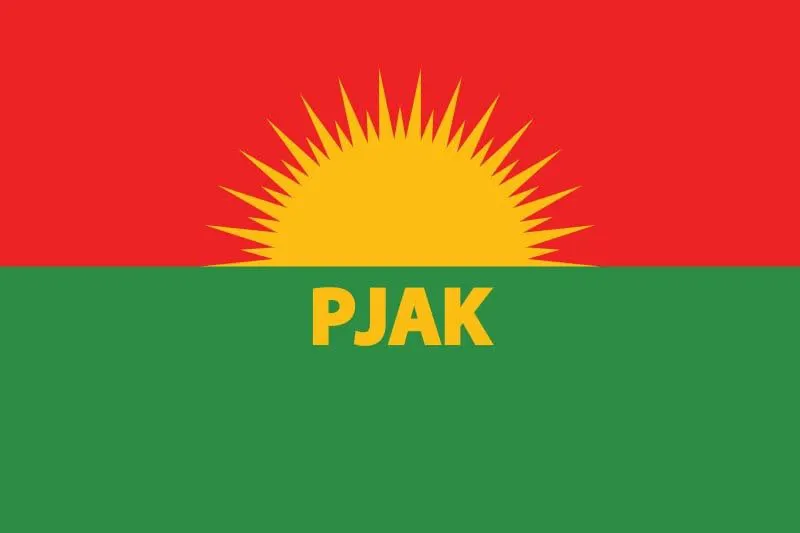
PJAK was established in 2004 by Iranian members of the Kurdistan Workers’ Party (PKK). Its military branch, the “Eastern Kurdistan Units,” operates across Iranian Kurdistan and Qandil in Iraq. Due to its origins, PJAK is influenced by the Turkish PKK, and the United States also regards it as an affiliate of the PKK.
Over the past two decades, multiple clashes have occurred between Iranian forces and PJAK. One of the most significant confrontations took place in the summer of 2011, when the Iranian army launched a large-scale operation against PJAK positions in Qandil, which ended with a ceasefire declared on September 29 of that year. Nevertheless, sporadic skirmishes continued in the following years.
PJAK is led jointly by Amir Karimi and Peyman Wiyan. The group is part of the Kurdistan Communities Union (KCK) and regards Abdullah Öcalan as its ideological leader. After the collapse of the peace process between Turkey and the PKK in 2015, a significant number of Iranian Kurds joined the KCK’s ranks, now making up roughly 35% of its military forces. This has strengthened PJAK’s role in both regional and international contexts.
With the resumption of talks between Turkey and Öcalan in 2024, along with the PKK’s announcement of its withdrawal from armed struggle, the future of the PJAK remains uncertain. Some believe that the PKK’s military and guerrilla capabilities may shift to the PJAK, which could create significant security challenges for Iran. Maybe it’s worth revisiting Öcalan’s earlier statements; since 2008, he has expressed concerns regarding Iran’s interference in the peace process and in 2013, recommended boosting PJAK forces to 40,000 to confront Iranian dangers.
Global developments—from the war in Ukraine and the Syrian crisis to Iran-Turkey rivalry, the role of Israel, and NATO tensions—have influenced Turkey’s strategic calculations regarding Iran. Turkey’s experiences in Syria and Iraq have shown that the Kurds act as a balance of power. Ankara now seeks engagement and coordination with PJAK instead of direct confrontation.
In this context, Netanyahu’s focus on destabilizing Iran has pushed Turkey to develop a more calculated approach toward Iranian affairs. It seems Ankara has concluded that it cannot play an effective role in Iran’s future developments without considering PJAK’s influence. All these factors are compelling Turkey to seriously revise and prepare its strategic agenda concerning Iran. One indication of this may be the Turkish leadership’s intention to align the PKK’s congress with its own interests in renegotiation and potential rearmament.
The Necessity of PJAK in Turkey’s New Strategy In 2015, the Democratic Party of Iranian Kurdistan (PDKI), along with several other Kurdish parties, attempted to reclaim their former position in Iranian Kurdistan’s political and social scene through a campaign called “Rasan,” aiming to curb PJAK’s growing influence. Clashes occurred in the mountainous region of Kileh Shin, allegedly part of an operation orchestrated by the Turkish government. Media outlets close to the PDKI and to some extent Komala subtly confirmed Turkey’s role in these events.
However, these efforts failed, and the Iranian Kurdish parties were unsuccessful in achieving their objectives. Following this setback, Turkey began looking for a more effective alternative force in the region—and that force was PJAK. Simultaneously, Israel unofficially conveyed a message to these Kurdish parties suggesting that significant developments were approaching in Iran and that Kurds could play a key role in shaping them.
PJAK in Turkey’s Strategic Calculations PJAK has yet to hold a congress to formally disarm or dissolve, and this process has stalled, with Qandil attributing the deadlock to Öcalan’s absence from the process. Even if a decision to end armed struggle is made, the guerrilla forces would not immediately lay down their arms. Integrating them into formal politics would require a transitional structure—something PJAK could provide, but only if a comprehensive agreement is reached between Turkey and Öcalan, and anti-Turkish elements within PJAK shift their stance.
Turkey aims to use PJAK as a tool to manage potential developments in Iran and prevent the Kurds from aligning with Israeli interests, thereby avoiding a repeat of the Syrian scenario. For this reason, Ankara seeks to incorporate PJAK into any future peace agreements. According to a Kurdish journalist, Turkey envisions PJAK playing a role in Iran similar to that of the Syrian National Army (SNA) in Syria.
Iran’s Position in the Turkey-PJAK Equation Since 2013, when PKK guerrillas withdrew toward Iran’s borders, Tehran has grown increasingly concerned about the implications of the Turkey-PKK peace process. In meetings with the PKK and Kurdish parties in Iraq, Iran explicitly warned about the expanded presence of these forces near its borders, questioning who would control PJAK in the event of a Turkey-Öcalan agreement. This concern led to a widening rift between Iran and Qandil.
This concern was not solely security-related; it also stemmed from a deeper geopolitical rivalry between Iran and Turkey. From Tehran’s perspective, PJAK could become a tool of Turkish influence if the group aligns itself with Ankara. As a regional actor, Iran must maintain ties with Qandil and use political tools to prevent the balance from tipping solely in Turkey’s favor.
The future role of PJAK depends on the PKK’s orientation toward Iran. If relations between Qandil and Tehran deteriorate, it would signal a full alignment of the PKK with Turkey—a scenario that seems unlikely for now without concrete assurances. For the sake of regional stability, both Iran and Qandil will likely be forced to maintain engagement.
These sources indicate that both an air base and a naval base will be constructed by the Turkish army in Syria. Furthermore, the Turkish army will support Syrian authorities in organizing the military and security forces.
Previously, it was announced that Turkish forces and aircraft would be deployed at various air bases in Syria, including Hama Airport, Palmyra Airport, and T4 Air Base, under the guise of combating the ISIS terrorist group and the Syrian Democratic Forces (SDF).
Yesterday marked Al-Jolani’s third trip to Turkey since he became the Syrian President. During the discussion with Erdogan, they covered multiple topics including security and military collaboration.
In recent weeks, Ankara has implemented significant steps to bolster its military footprint in Syria. This involves a series of meetings among military leaders and political figures from both Turkey and Syria, along with the initiation of talks between Ankara and Tel Aviv aimed at enhancing coordination within Syria.
The MT Valpiave made significant efforts to conceal its journey, turning off its Automatic Identification System (AIS) multiple times. Additionally, the ship’s owner falsified its destination data on navigational websites to hide its connection to Israeli ports.
This shipment is neither the first nor the last instance of Turkish trade with Israel. Dozens of ships have previously transported commercial goods and petroleum products to the Zionists.
Despite Turkey’s claims of leading the Islamic world and supporting Palestine, its ongoing trade with Israel highlights the country’s hypocritical and contradictory stance in the region.
In 2015, Israel and Russia agreed to coordinate operations in Syria, which involved direct communication between the Kremlin and the Israeli Prime Minister, as well as between the highest levels of security, including the Russian National Security Council and the Israeli Internal Security Advisor. There was also a direct connection between the Russian Hmeimim base and the Israeli army intelligence department in the occupied Golan.
By seeking close contact with Tel Aviv and establishing a new coordination mechanism, Ankara aims to increase its influence and play a more significant role in Syrian affairs, enhancing its position as a major player in the country’s political landscape.
It is likely that Israel will accept this proposal, using Turkey’s close relations with the Syrian transitional government and militant groups in Syria as a mediator and leverage to manage possible tensions with the militants and to gain strategic advantages in southern Syria against the current and future government in Damascus.