Tag: YPG

  • SDF press conference in front of al-Sina’a prison; Continued clashes in Ghuwairan neighborhood + Images

    SDF press conference in front of al-Sina’a prison; Continued clashes in Ghuwairan neighborhood + Images

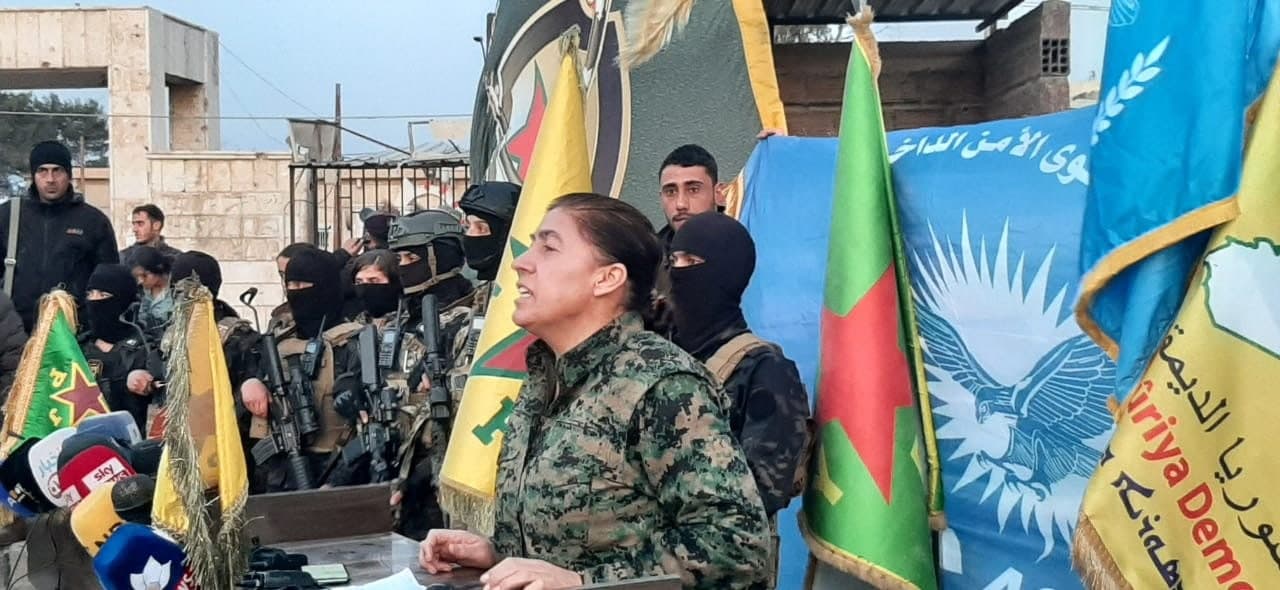
    “The whole prison is now under control, and the prisoners are being transferred to a safe place,” Nowruz Ahmed, one of the commanders of the Syrian Democratic Forces, told in a news conference outside of al-Sina’ah prison after that clashes between Kurdish militias and ISIS elements ended.
    He added: “In the past and before this attack, the ISIS group had tried to attack al-Sina’ah prison two more times, but their offense was thwarted by our security forces. Their offensive was stronger this time, and according to the information we have received from the attackers, the preparations for this invasion were already made.” Nowruz Ahmad stated: “Our operation continues in the region.”

    More than 10,000 Kurdish militants have taken part in these clashes, according to SDF media.

    The exact number of civilian casualties remains unknown, but it appears that at least 130 people were killed during the clashes at al-Sina’ah prison in the city of Hasakah.

    It must be noted that, on the evening of January 20, several ISIS elements (200 to 300 people) attacked the al-Sina’ah prison by detonating two car bombs near the prison. A significant number of ISIS prisoners escaped after the heavy clashes broke out. These clashes continued for seven days in and around the prison and finished on January 26. According to the SDF, around 1,000 ISIS members and ISIS prisoners who managed to escape from prison were detained by Kurdish militants during the clashes.

    Although the SDF has spoken of an end to the clashes and a complete takeover of al-Sina’ah prison, gunfire still can be heard from the Ghuwairan neighborhood. It appears that the operation to clear the Ghuwairan neighborhood and clash with a small number of remaining ISIS elements continue.

    One of the significant and dangerous points of the al-Sina’ah prison riot is the escape of ISIS prisoners with a long history of fighting in the rank of al-Qaeda and ISIS. According to the available information, several key members and commanders of ISIS have so far escaped from Sina’a prison. Abu Dajana and Abu Hamza al-Sharqiya is two fugitive ISIS commanders. Abu Dajana was one of the Iraqi commanders of ISIS in al-Raqqa province, who had previously served as one of al-Qaeda commanders in Iraq during al-Qaeda’s years in Iraq, and joined ISIS in later years. Abu Hamza al-Sharqiya was also one of ISIS’s field commanders in Aleppo province, who was captured by the SDF years later in the battles of Baghuz.

    Due to the prolongation of the clashes in the city of Hasakah, it seems that other prominent commanders have also managed to escape, and in the coming days, their names and details will be more apparent, An issue that will further undermine the security of the Iraqi-Syrian border regions.

    Read more:
    SDF imposed full control over the Sina’a prison + Video
    Latest updates on Sina’a prison riot + Video
    Clashes between ISIS and SDF continue in Hasakah + Video

  • Targeted assassinations by Turkey continue in Iraq and Syria

    Targeted assassinations by Turkey continue in Iraq and Syria

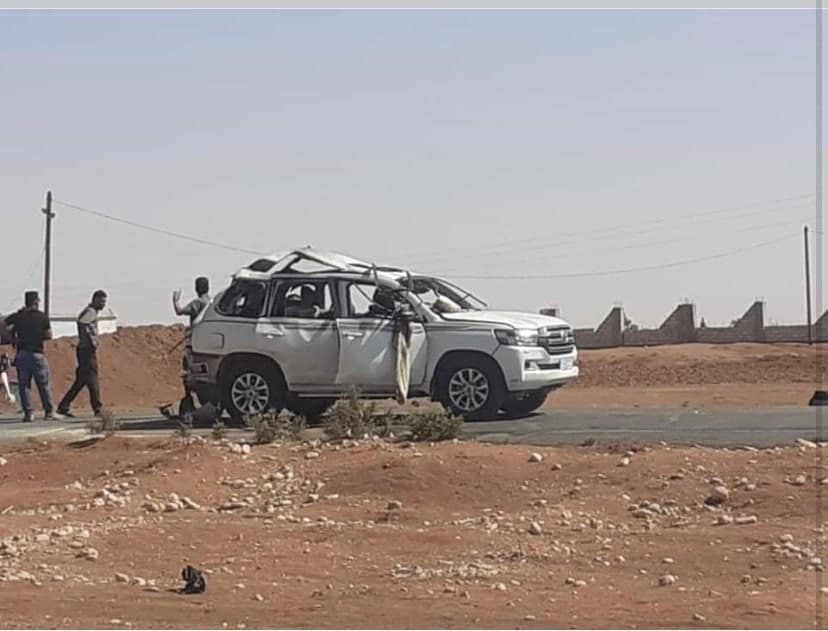
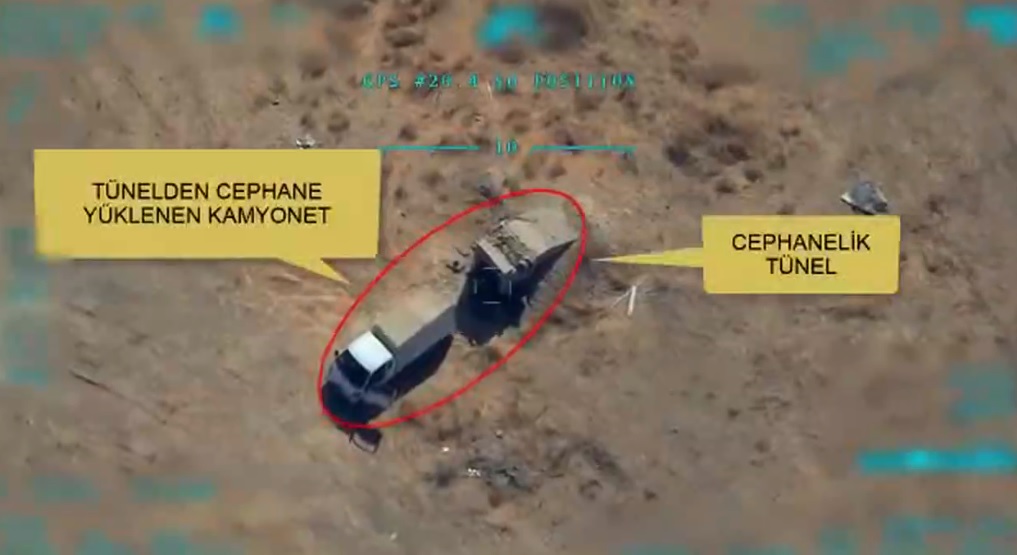
    On August 19, Turkish drones targeted a vehicle belonging to YPG forces on the Qamishli-Amuda road, killing a member of the YPG Military Council and Renas Roj (Salahuddin Shahabi), a field commander of the YPG forces.

    On August 16, Turkish drones targeted a vehicle belonging to Hashad al-Shaabi (PMU) and Kurdish groups in Sinjar, west of Iraq’s Nineveh province. In this attack, Saeed Hassan Saeed, a former Yazidi commander of the YBS, who had joined Hashad al-Shaabi in the form of the 80th Brigade in recent months, was martyred and three others were wounded.

    Turkey continues to carry out assassinations against Kurdish forces in Iraq and Syria, sending a message to regional parties that it is determined to fight what it calls PKK terrorism, and Kurdish forces integration into other organizations will not change the Turkey’s behavior.

    Rênas Roj, YPG commander killed by Turkish drone
  • Protests in Manbij; Four thousand security forces were transferred to Manbij

    Protests in Manbij; Four thousand security forces were transferred to Manbij

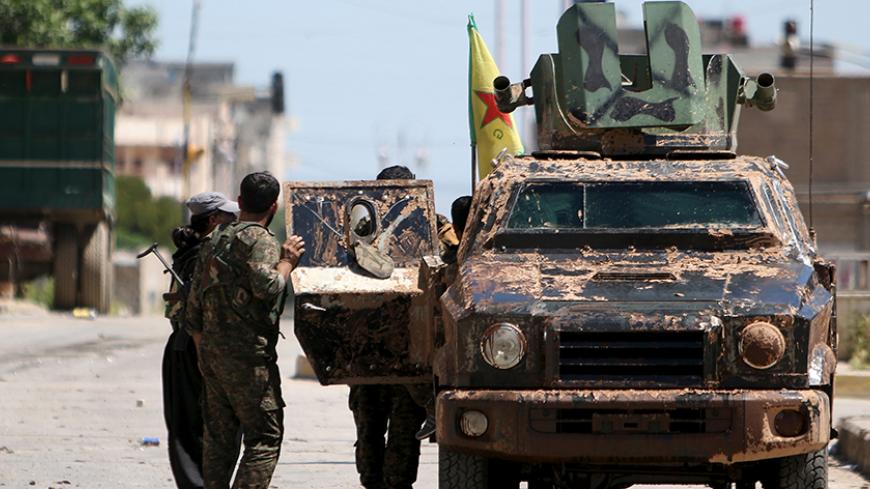
    Following mass rallies and protests against the SDF/YPG, Asayish security forces opened fire on demonstrators in Manbij, killing and wounding several civilians. On Friday morning, 4,000 YPG/Asayish forces and counter-terrorism forces arrived in Manbij region with dozens of armored vehicles.

    The situation has calmed down a bit after the widespread deployment of security forces in Manbij and talks with tribal elders and local officials. Following these events, the Asayish officials announced that from now on, the conscription will take place after consulting with the Manbij local authorities, and all the detainees of the last few days will be released. The forces that fired on the people will also be dealt with.

    The city of Manbij has a population of about 100,000 and most of the population of Manbij is Arab. This alone is a major problem for the Kurdish separatist ideals in northern Syria. Hence, the Manbij city has been the site of many conflicts between regional and local powers in recent years.
    The city of Manbij has been under the control of YPG forces since 2016; However, some YPG policies, such as forced conscription from among the Arabs, have led to Arab dissatisfaction with the YPG and SDF, and on the other hand, the YPG is deeply concerned about the desire of a significant part of the people of Manbij to regain control of the region to the Syrian government.

    Click to see the full size map
  • Details of clashes between YPG and Syrian National Defense Forces in Qamishli

    Details of clashes between YPG and Syrian National Defense Forces in Qamishli

    According to field sources, the result of the meeting mediated by the Russians was the announcement of a ceasefire until 10 am tomorrow (Saturday), but sources close to Asayish claimed that after the agreement, an RPG was fired at YPG forces by the NDF Forces.

    Consecutive meetings will be held in the presence of Asayish commanders (YPG internal security) and the NDF commanders under the supervision of Russian forces until a permanent ceasefire is reached in Qamishli.

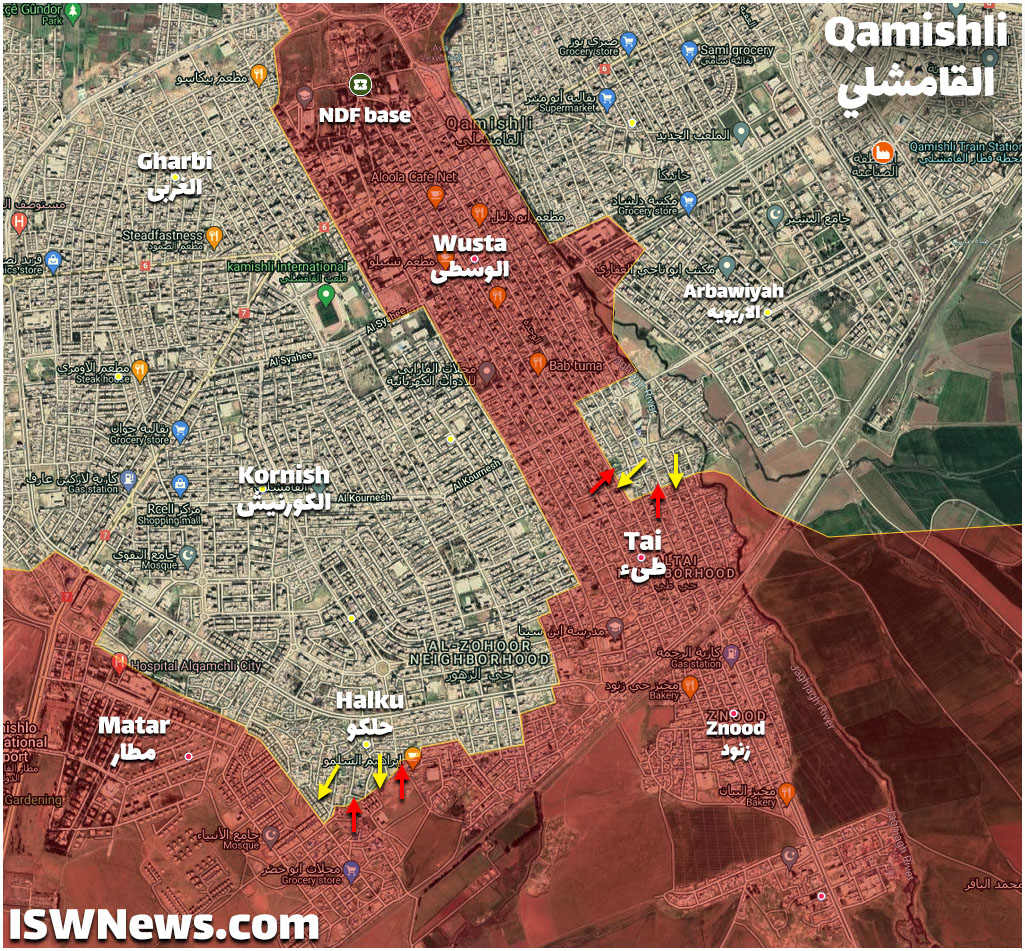
    Clashes in Qamishli erupted after Asayish forces stormed an NDF checkpoint and shootings at them. After the incident, YPG forces attacked areas in the city of Qamishli in order to gain control of some areas, which were met with resistance from NDF forces.

  • Tensions in Qamishli; Russian mediation to resolve the dispute between the YPG and the NDF

    Tensions in Qamishli; Russian mediation to resolve the dispute between the YPG and the NDF

    On 20 April at 22:00 local time, YPG forces stationed at a checkpoint attacked a vehicle belonging to the Syrian National Defense Forces, which led to tensions between the two sides.

    Some sources claimed that five YPG forces were killed and five NDF members were wounded in the clashes.

    Following the escalation of the conflict, Russian forces have intervened in the city of Qamishli to resolve the dispute between the YPG and the NDF, and talks are currently under way between the two sides, mediated by Russia. The security forces called for the withdrawal of the NDF from al-Tai neighborhood in order to reduce the conflict in the city. So far, the outcome of this negotiation has remained unclear. Also, the Asayish security forces took control of parts of Qamishli neighborhoods.

  • Article: Damascus policy towards Syrian Democratic Forces and Arab tribes

    Article: Damascus policy towards Syrian Democratic Forces and Arab tribes

    From the beginning of crisis in Syria, to prevent the protests to expand and reach the biggest minority of the country, the government tried to collaborate and give space to Kurds of the area and Democratic Union Party (PYD) to prepare the situation for presence of military forces of the party in Kurdish inhabited areas. In the following sense, two months after the protests started in Syria in the middle of 2012, the government signed an agreement with the party and let them to come back to Syria. Near the end of 2012, Syrian government supported People’s Protection Units (YPG) after attack of opposition militias to Raas al-Ain town and left the service, security, military and economic affairs of Hasakah province, except the security square, to PYD.

    Although Syrian Kurds, after expanding their reign over Kurdish and even Arabic areas located in East of Euphrates river called “Jazirah”, started the system of self-government under support of USA, but their relation with Syrian government was in the state not peace nor war. There were limited engagements between them for time to time but never became a full enmity.

    In this situation, PYD (close to PKK in Turkey) as the main player of Kurds in Syria started the project of expansion and establishing Kurds in 2012 and from the beginning removed Kurdish National Council (ENKS), as the party close to opposition of Syria and Kurdistan Democratic Party (KDP) in Iraq (led by Barzani), from the battle.
    In fact, in the battle between two idealogies of Barzani and Öcalan, PYD led by Öcalan won.

    They established YPG as the military branch of PYD in March 2012 under command of officers from Qandil area as the first step and also formed the security and police forces of Asayish in the same year. In November 2013, formed self-government office in north of Syria, which divides the area ruled by Kurds to three cantons of Island, Kobani and Afrin and in 2014 three councils of lawmakers and executive to govern the three cantons.
    In October 2015, they formed Syrian Democratic Forces (SDF) from Arabs, of east of Euphrates, Kurds and Assyrians, with proposal of then US special envoy in coalition entitled fighting ISIS and under support of the coalition.

    However, the main player was still YPG and SDF was a distraction to avoid Turkey’s bad relationship with PKK forces. After establishment of SDF, Syrian Democratic Council (SDC) was formed as the political branch of it. Then in March 2016 SDF reported of a federal Kurdish government surprisingly which caused Syrian government and regional and international sides engaged in Syria to react negatively. However due to Turkey’s assault to Afrin area and occupying it, the issue of federal Kurdish government was suspended.

    In 2018, Kurds stepped down from federal government and just formed self-government system in north and east of Syria by establishing local councils under the names of different regions. (Jazirah, Kobani, Manbij, Raqqah, Deir Ezzor, Tabqah, Afrin)

    After the areas under control were expanded in east of Euphrates under support of USA, to manage the Arab-Kurd confrontation, SDF followed both attract and surpass policies using USA and Arabic capacities in Arabic tribes of the area.

    On the other hand, to revive the sovereignty on east of Euphrates area, having an upper hand to manage their relationship with SDF and confront USA occupation of the area, Syrian government started to approach tribes of the area by holding numerous sessions in Hasakah town to attract nomads to themselves and confront USA plans in the area. Therefore, the title and agenda of these sessions were more about confronting USA occupation and plans of dividing Syria rather than sovereignty of Damascus on north and east of Euphrates. Currently and after Turkey occupied some parts and after the Sochi agreement between Turkey and Russia, the situation is ready for return of Syrian army and Russian police to some of the area. Even though the sovereignty of Syrian government has increased in some areas ruled by SDF, they still reject to join central government and relying on USA, they try to have more in their hands in future negotiation with Syrian government.

    Therefore, Syrian government tries to use its pressure levers to manage Kurds and lower their bargaining ability in negotiations by approaching the chiefs of tribes there and giving privileges such as dropping charges against them, fixing some issues of local tribes, to make the younger generation to rebel against their chiefs and leave SDF and join the army.
    In the same sense, after Ali Mamluk visit to Qamishli and meeting chiefs and seniors of tribes, a high committee representing Damascus met with Salih Muslim, the former co-chairman of PYD, in Qamishli.
    In this meeting, the Damascus negotiating team offered the local administration which was contained in the reformed constitution in 2012, for the areas controlled by SDF but Kurdish team did not approve nor reject it. According to Faisal Azuz, presented in the negotiations, both sides tried to reach a plan between self-government and local administration plan that was mentioned in article 107 of the constitution.

    In conclusion, Syrian government plan regarding Kurds and Arabic tribes of east of Euphrates is to have full sovereignty in the area and their tactic is to approach and attract Arabic tribes of the area, who are the majority, prepare the situation of division between Kurds and Arabs and eventually having upper hand in negotiations with Kurds. In another word, they want to use the tribes to bring Kurds close to the central government and reduce their demands in the negotiations. However, the primary issue of Syrian government at the moment is Idlib and east of Euphrates comes after it.

  • Commander of Syrian Democratic Forces Is Terrorist!

    Commander of Syrian Democratic Forces Is Terrorist!

    Ferhat Abdi Şahin known as “Mazloum Abdi” is commander-in-chief of the Syrian Democratic Forces (SDF). He was a prominent commander of terrorist group PKK before US. entered Syria and being assigned as the commander of SDF.
    He is officially member of Kurdistan Workers’ Party (PKK) since 1990. Terrorist group PKK has done a lot of crimes and massacres on civilians and soldiers of Iran and Turkey and is considered a terrorist group by those countries and international society.

    Ferhat Abdi Sahin is wanted by Turkey due to his abundant terrorist acts against Turkish military troops.

    – He was operation commander of PKK in Cilo area between 1991-1996, for that he is famous as Sahin Cilo. He even wrote a book “Diary of Hawk” and mentioned his terrorist acts.(Sahin means Hawk)
    – Between 1997 to 2003, he was acting deputy of PKK in Europe and recruited for PKK in seminars, festivals, camps, etc.
    – He was arrested by Syrian government several times between 2004 to 2009.
    – He was assigned as chief of special forces and intelligence of YPG from 2013 and from 2015 under support of US. he is assigned as commander of SDF.

    Another title of Ferhat Abdi is “Mazloum Kobani”, it means “oppressed Kobani”. It is not clear how he is called oppressed by doing so much terrorist acts!!!

    Regarding activities of this person and other commanders of PKK in Syria’s battles and before it, it is very important to consider the type and presence of these forces in Syria.
    The undeniable fact about the PKK is that the forces of this terrorist group have entered various YPG organs in different forms in recent years or the exchange of forces between these two group has taken place more frequently.
    If we put the fact that YPG has not collaborated with Syria and Resistance axis under Iran’s leadership and also the influence of PKK on Kurdish groups of north of Syria, we can realize why most of the time relations between Syria and Kurds are flawed.

    On the other hand, also we should pay attention to the fact that US. by using a deceiving name “Democratic” gathered Kurds of north of Syria under “Syrian Democratic Forces” name and under this title helped PKK forces with all kinds of training and weapons.
    This move by the US. was so stupid and rude that even US. commanders themselves admit it and that can be heard from the USSOCOM commander-in-chief at the time of the formation of the Syrian Democratic Forces.

    Gen Raymond A. Thomas interview in 2017.
    In this interview he explains clearly how they knowingly whitewashed the US-designated terrorist group PKK and chose a new name for the forces of YPG and PKK to have a lawful and legitimate way to arm them.


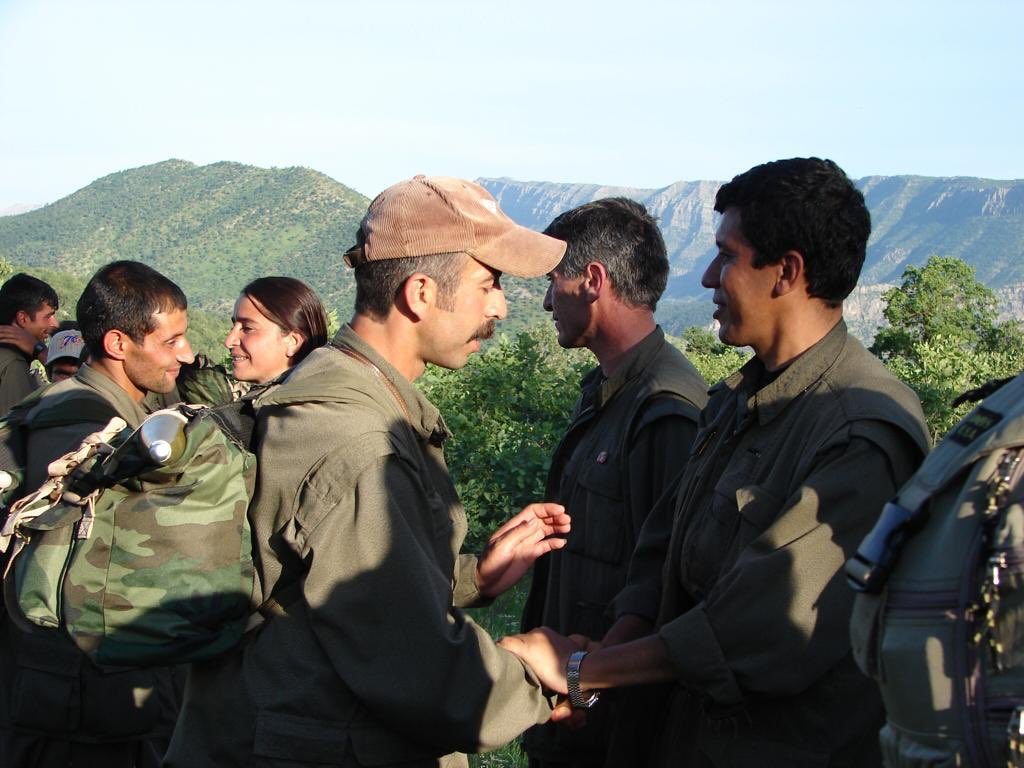
    Images of Ferhat Abdi Shahin attending PKK terrorists conference in Qandil Mountain on Iran-Iraq border:


    Other images of this oppressed! during his active presence in the PKK:

  • Moderate Rebels Who Are Thugs Now!

    Moderate Rebels Who Are Thugs Now!

    ‘Syrian National Army’ militants, which cover a wide range of so-called moderate groups of the Free Syrian Army(FSA) and Salafi-Takfiri groups, are also called ‘Turkish-Backed Free Syrian Army'(TFSA) due to vast support they receive from Turkey.

    In recent week a large number of US. officials objected Turkey in using of these proxy militia to attack Syria. A senior US. official told reporters about the proxy force Turkey is relying on as part of its Syria invasion: “They could have used Turkish regular troops,… Instead they decided to use these thugs & bandits & pirates that should be wiped off the face of the earth!”

    These controversial words by Americans are while the very same groups of these “thugs and bandits and pirates” have been selected, trained, armed, supported and financed by the US and they were addressed as moderate rebels by Americans for the last 8 years!
    An example of this is Al-Hamza Division. In recent years USA spent spent $500 million to train and arm the so-called moderate rebels and the group is now fighting Kurds in Syria under Turkey’s flag.

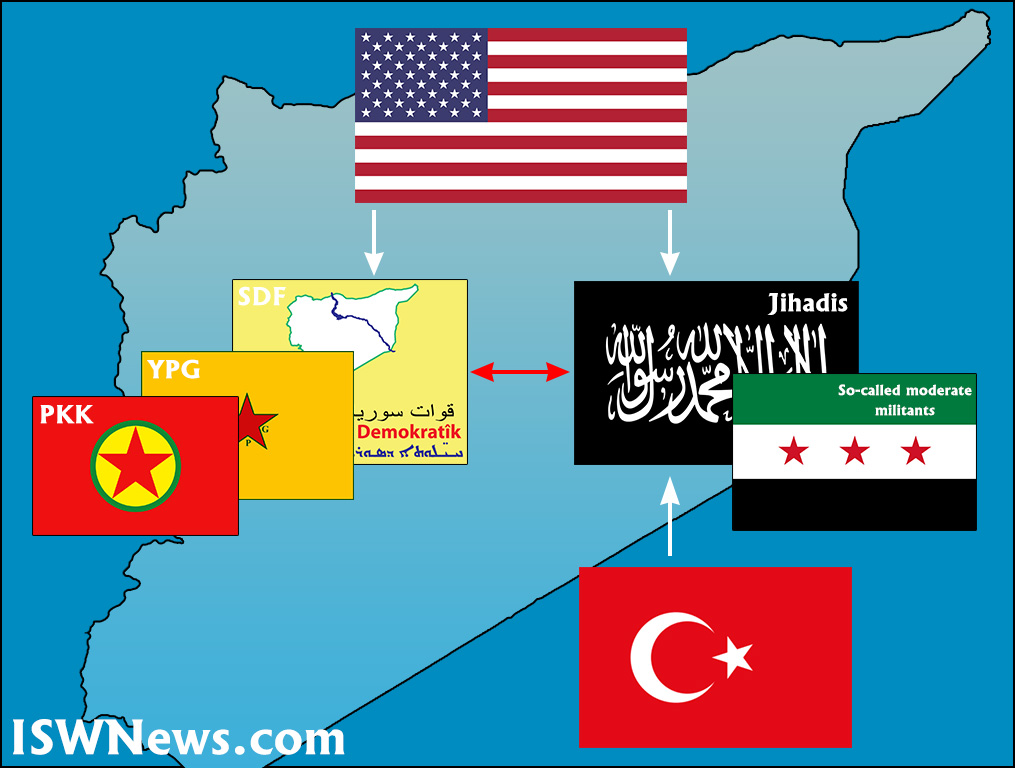
    Another ridiculous point is that these terrorist groups which are fed by the US. in the past years, now are fighting against Kurds! The Kurds such as Syrian Democratic Forces(SDF), YPG and PKK terrorists who were selected, trained, armed, supported and financed by the US. in previous years too!

    Now in north of Syria, groups trained and supported by USA are fighting each other.

    Isn’t USA policies about people of the region not obvious? Isn’t the truth obvious? It is vivid that USA is not after human rights but after fulfilling its interests and imperialist goals in the region and a pity for the souls who sacrificing themselves for the US goals!

  • Latest Updates on Syria; 4 September 2019

    Latest Updates on Syria; 4 September 2019

    ?An explosion reported in the town of Qamishli in northeast Syria.

    ?Russian air defense systems stationed at the Khmeimim air base in Syria’s Latakia province have repelled armed drone strikes on the airbase.

    ?A bomb explodes near the headquarters of the Ahrar Al Sharqiyah militants in al-Rai, Aleppo, near the Turkish border.

    ?Syrian Democratic Forces continue security operations in eastern Euphrates against the ISIS hidden cells.

    ?AlBukamal-AlQaem border crossing in eastern Syria to reopen next Friday.

    ?Israeli satellite company releases new images of Al-Bukamal region, claiming that Iran is building a new military warehouses in the area.

    ?The unofficial and temporary ceasefire between the Syrian Army and the militants in the Syrian Idlib region continues. Military operations have been halted.

    ?The ‘safe zone’ agreement is being implemented slowly on the northern Syrian border in the eastern Euphrates.

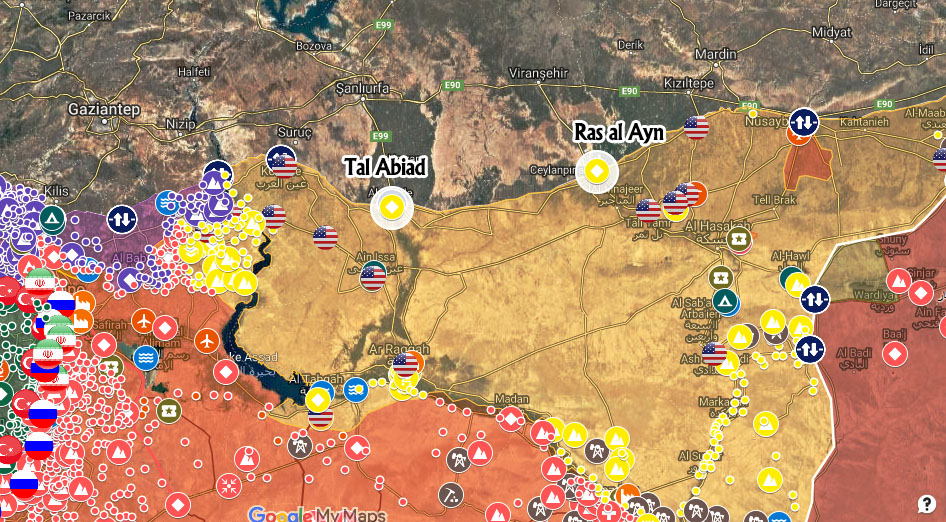
    YPG forces are gradually handing over their bases between Ras al-Ain (Sari Kani) and Tal Abiad (Girê Spî‎) to the SDF military councils in the area.

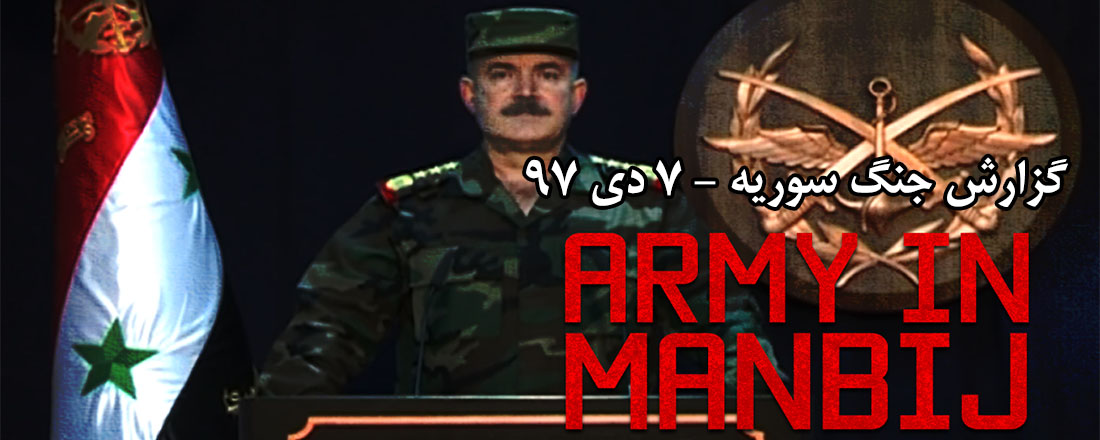
  • Syrian Armed Forces: 400 SDF Troops Retreated from Manbij to East of Euphrates

    Syrian Armed Forces: 400 SDF Troops Retreated from Manbij to East of Euphrates

    Syrian Armed Forces stated that according to the agreement, on January 1st, a convoy of more than 30 vehicles retreated to east of Euphrates through Qara Quzak passage.


    It is said this retreat is about YPG forces who were deployed to the area due to Turkey’s threat. Control of Manbij is under Manbij Military Council.


    It is likely that the released video by Syrian Armed Forces’s site is an old video…