Author: Mirza

  • Latest Updates on Donbas Front, 15 August 2022 (Map Update)

    Latest Updates on Donbas Front, 15 August 2022 (Map Update)

    According to the latest news from the frontlines, the Russian army has concentrated its attacks on the defense line of the Ukrainian army in the Seversk-Soledar-Bakhmut axis. These attacks in the last week have led to an advance in the east and south of the village of Soledar located on the Bakhmut-Lisychansk road. The ultimate goal of the Russian army in capturing Soledar is to cut off the logistic road and impose a quasi-siege on the cities of Seversk and Bakhmut.

    Currently, clashes continue inside Soledar and most of the village is under the control of the Russian army. In Bakhmut, cashes have extended to the eastern entrance of the city, and Bakhmut is under the Russian army artillery fire.

    In south of Bakhmut, heavy clashes are going on in Zaitseve and Kodema areas, and the Russians are trying to advance in this axis. It seems that one of the main goals of the Russian army in this axis is to completely capture the villages and areas south of Bakhmut and surround this city from the south.

    In the western axis of Donetsk city, the exchange of artillery fire between the sides is still going on. In the last week, Russian and the DPR forces took control of the village of Peski, west of the Donetsk airport. Also, clashes between the Russian and Ukrainian armies continue in the Mariinka area, and the Russian army has gained some ground there.

    It is important to mention that the purpose of the Russian forces’ operation in the west of Donetsk is to prevent the AFU ground attacks towards the city of Donetsk and to stop their artillery attacks on the city. And at the moment there is no serious intention by the Russians to advance deep into the west of Donetsk.

    In general, it seems that the Russian army is not in a hurry to clear the north of Donetsk Oblast. If the Russian army is successful at this stage on Bakhmut front, the next stage will be the advances towards the important cities of Slavyansk and Kramatorsk.

    There are no special activities in other fronts either, and most of the clashes are related to the exchange of artillery fire and airstrikes. The news about the large-scale operation of the Ukrainian army in the southern front or the preparation of the Russian army to launch an operation in the Kharkiv province have been more of a psychological warfare, and despite the claims of the Ukrainian and the Russian media, no specific activities has been observed from the parties in the mentioned areas.

    Click to view full size
  • Rocket attack on Turkish Bashiqa base in northern Iraq

    Rocket attack on Turkish Bashiqa base in northern Iraq

    On August 15, the Turkish Bashiqa military base in the Zelkan region, located in the north of Mosul was targeted by four Grad rockets. The Islamic resistance group “Ahrar al-Iraq” took responsibility for this attack by publishing a statement.

    On July 27, the Bashiqa military base was also targeted by five rockets.

    Read more:
    Rocket attack on Turkish Bashiqa base in northern Iraq
    Turkish bases in Iraq under constant drone and rocket attacks! + Video
    Rocket attack on Turkish military base in northern Iraq

  • Iraqi groups drone attack on US Tanf base

    Iraqi groups drone attack on US Tanf base

    On August 15, the US base at Al-Tanf region in Homs province was targeted with several drones. An informed source in a conversation with “Islamic World News” stated that this attack was carried out by the Iraqi “International Resistance Faction” and the drones accurately hit the predetermined targets.

    On the other hand, the US coalition issued a statement confirming the drone attack on al-Tanf base, and announced that the attack took place at around 06:30 this morning (local time) and that the US military cooperated with the US-backed Maghawir al-Thoura militants managed to repulse this attack. According to this statement, one drone was intercepted and destroyed, and another one hit the Maghawir al-Thoura positions, but there were no casualties.

    The Al Tanf area in southeastern Syria has been occupied by US forces for years, and Syrian Army and resistance forces are not allowed to approach within a 55-kilometer radius of the area. (Online map)

    Read more:
    Drone attack on US base at Al-Tanf area in southern Syria + Images
    Drone and Rocket Attack on US Tanf Base

  • Israeli missile attacks on Damascus and Tartus

    Israeli missile attacks on Damascus and Tartus

    According to a Syrian military source “At approximately 20:50 this evening (August 14), the Israeli enemy carried out an air aggression with missiles from the direction southeast of Beirut, targeting some points in the Damascus countryside And coinciding with this, another air aggression from the direction of the sea, targeting some points south of Tartus governorate. Our air defenses confronted the aggression’s missiles and shot down some of them. The aggression led to the death of three soldiers, the wounding of three others, and the infliction of some material losses.”

    Read more: Israeli missile attack on the outskirts of Damascus + Images

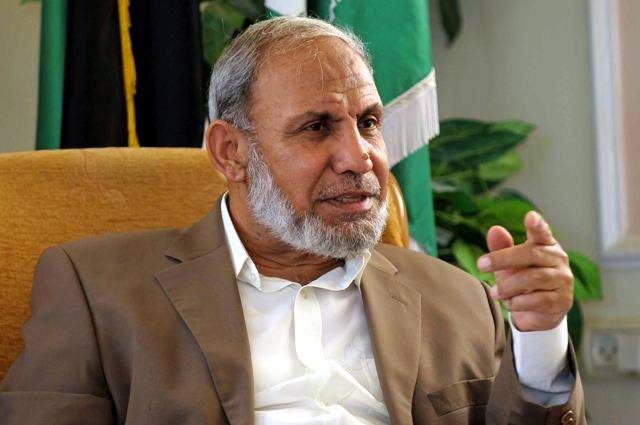
  • Hamas is returning to Syria!

    Hamas is returning to Syria!

    After reports of Hamas’ readiness to return to Syria, a number of experts from opposite sides (supporters of “against” the Hamas decision to return) expressed their opinion. Their first argument is based on the opinion that “the dictatorship of Syria is an outcast and they say any alliance with an isolated country will harm the Palestinians.”

    It should be recalled here that Hamas itself has been under blockade and isolation since winning the elections in Gaza, the organization’s offices in Doha or Beirut do not cancel the fact that with the exception of Iran and Syria (!! Assad never questioned the victory of Hamas in the elections) no one else recognized the power of the Islamic Resistance Movement in the liberated area of occupied Palestine. Therefore, the blocking of Syria by some neighbors is not a serious argument, since Syria is part of the Axis of Resistance alliance, which makes it at least an important component in the region due to the growing influence of this political union.

    The proof of this thesis is the fact that after the failure of the plot against the official Damascus, Saudi Arabia and the UAE took a number of measures to “restore relations” in order to break the ties of the alliance of Syria with Iran.

    Further, the enemy experts in their arguments point to the “disappointment” of the leading Palestinian movement in relation to Assad’s main opponents in the Arab world. This implies all the famous incidents, from the process of “normalization” of Arab dictatorships, to the inability of “political Islam” to form a real anti-Zionist regional force. One can agree with these arguments, but not one hundred percent, since, for example, relations with Zionism in all key countries of the anti-Assad camp have long been at a high level.

    The nuance with the “official recognition of the temporary essence” is a banal bureaucratic procedure that does not carry much importance. As for the “political Islam” project, firstly, this term is used in relation to pro-Turkish and pro–Qatar Ikhwans in a number of countries, and secondly, these elements, led by Qatar, were not going to build an anti-Zionist alliance with Hamas at the head of the corner. On the contrary, they advocated the creation of “two states”, the old dream of the White House Democrats. To this day, the small Emirate continues to actively dissuade Hamas from armed resistance and calls for disarming the Al-Qassam Brigade, in return promising to build a “port” and influence the Zionists through the United States so that they “stop” bombing Gaza. And there were lobbyists among Hamas for such conditions, for example Khaled Mishaal. However, realizing the true intentions of Qatar and Turkey in time, the military command of the al-Qassam Brigade rejected Doha’s plans and, through internal elections, removed Mishaal from key Hamas posts. Therefore, taking into account all the facts and arguments, can we say that “Qatari and Turkish political Islam” wanted to liberate Palestine? Of course not.

    However, among a number of oppositional opinions, a sober thought nevertheless slipped through. An unnamed source claims that “the Assad regime cannot provide any protection or guarantees to Hamas or others in Syria, since Israel daily penetrates into Syrian airspace and bombs any base, airport or barracks it wants, and Hamas will not be able to strike back, because Assad guarantees them only political support and logistics support. Damascus will proceed from past views, according to which military assistance to the Palestinian Movement in the form of opening a second front will be ignored.” To be realistic, it is difficult to ignore the regular failures of the Syrian air defenses and the reluctance to modernize their systems, as well as the fact that the BAATH does not allow the Iranians to build their air defenses. But that’s another story.

    Personally, I think that factionalism within Hamas played a role in the issue of relations with Syria, that is, the victory in the internal elections of those politicians who had their own project and who were able to convince the majority of the Hamas electorate of their effectiveness. The project was to restore membership in the Axis of Resistance and comprehensively develop strategic relations with alliance members.

    The revival of the former status within the alliance built by the IRGC does not prevent the leading Palestinian Movement from remaining faithful to its ideology of “Brotherhood”. Therefore, it is absolutely not true to say that the new charter of Hamas is the reason for the revision of external alliances. The spiritual fathers of Hamas are still supporters of the Muslim Brotherhood, so critics of the organization should ask themselves the question “what are the types of ikhwans?”

    It is worth recalling that this movement has never been homogeneous. Different directions concerned the Brotherhood in countries such as Egypt, Iraq, Yemen, Libya, Lebanon, Jordan and even Palestine, there were many reasons, but the main split was observed in a different view of the events in Iran in 1979. As for the factionalism of Hamas, it is important to understand what we mean by the term the current “Palestinian Muslim Brotherhood”, a community of politicians with neoliberal views, what do they have in common with the pro-Western Justice and Development Party in Turkey and the “soft” autocrats from Qatar? Or the true followers of Hassan al-Banna, Kamal Sharif and Sayyid Qutb? Therefore, if we look at the current leadership of Hamas, we will see there all the same local ikhwans who, in their views, are close to the legendary founders of the Brotherhood.

    And today, what is called a “charter change”, which allegedly served as the main incentive to revise Hamas’ external alliances and thereby opened the way to Syria, is the merit of the “pro-Iranian faction”, and not a “change” in ideology. Let me remind Yahya Sinwar in 2017, when at a meeting with journalists, the head of Hamas in the Gaza Strip said that “there has been a breakthrough in the Syrian crisis,” and “this will give an opportunity to improve relations between Hamas and the regime.”

    Hamas is evolving, but it is not revolutionizing, but it is too early to draw conclusions, the struggle for Palestine continues and the leading Islamic Movements are gaining experience. Still, even the enemies admit that in recent years Hamas has greatly increased in personal diplomacy, which certainly played to the benefit of the Palestinian people.

  • The governor of Shabwah defeated Islah Party with the help of UAE

    The governor of Shabwah defeated Islah Party with the help of UAE

    After the defeat of Al-Amaliqah militants in the urban war and the advance of Islah Party militants towards the governor’s office and Ataq Airport, the UAE warplanes and drones heavily bombed the positions of Islah Party in this area. At the same time as these attacks, other brigades of Al-Amaliqah forces and the STC forces were sent to Ateq, and the militants of the Islah party had to stop besieging the governor’s office and Ataq Airport.

    According to local sources, UAE aircraft have carried out more than 40 airstrikes on the positions of the Islah party in the city of Ataq and the areas of Ayaz, Nukhan, Al-Shabika and the northern roads of Ataq. Also, more than 70 militants were killed and injured in these clashes.

    Currently, the base of the special security forces as one of the main headquarters of the Islah party in Ataq has fallen and the militants of this party have retreated to other bases and areas under their control, and most of the areas of Ataq are under the control of the forces loyal to Awadh bin Al-Wazir al-Awlaqi, the governor of Shabwah. Al-Awlaqi demanded the evacuation and handing over of the bases of the Islah party in the city of Ataq, but Islah party still refuses to surrender these areas.

    Following this defeat, the leaders of the Islah party have announced their intention to withdraw from the agreement with the Saudi coalition and cooperate with the Presidential Leadership Council. In a statement, they held Al-Awlaqi responsible for the killing of dozens of people in Shabwah province and demanded his dismissal from the post of governor of Shabwa.
    Following this issue, some local sources claimed that Tariq Saleh nominated one of his relatives named “Nasser Bajbil” to succeed Awad bin Al-Wazir Al-Awlaqi. Al-Awlaqi is one of the main pillars of the UAE in the occupied areas of Yemen, and it is unlikely that the UAE will agree to his dismissal.

    Read more:
    The Saudi-backed government’s determination to expel Islah Party from Shabwah
    The Saudi coalition dismisses the governor of Marib!

    Clashes between Al-Amaliqa forces and Islah Party militants in Ataq city
  • The Taliban suicide bomber propagandist was killed by a suicide attack! + Video

    The Taliban suicide bomber propagandist was killed by a suicide attack! + Video

    Sheikh Rahimullah Haqqani was one of the prominent scholars of Deobandi in Nangarhar province and one of the most influential preachers of the Taliban in Afghanistan and Pakistan. He was also a member of the Ulama Council of the Taliban leadership and was considered one of the people close to Sirajuddin Haqqani, the Minister of Interior of the Taliban government.

    Haqqani was also attacked by an unknown suicide bomber in October 28, 2017 in Darul Uloom Zubairiyah and was seriously injured, but he survived. After the Taliban came to power in Afghanistan, he went to Kabul, the capital of Afghanistan, and established the Haqqani school in the neighborhood of Shesh Darak in the second district.

    During the past years of the Taliban’s battle with the former government of Afghanistan and its allies, he trained thousands of extremists and suicide students ideologically and intellectually, and provided the Haqqani network with manpower to carry out various operations throughout Afghanistan, but in the end, he himself became the victim of a suicide operation by the ISIS. In some of his statements, he considered a group of Shiites as infidels and called killing a good deed.

  • Khayyam satellite, Iran’s important step towards the development of space power

    Khayyam satellite, Iran’s important step towards the development of space power

    Khayyam satellite was launched by a Russian Soyuz rocket from the Baikonur Cosmodrom in Kazakhstan on the morning of August 9 and successfully placed in a 500 km orbit. It should be noted that the Soyuz launcher has had the largest number of successful space missions among the launchers of different countries in the world.

    According to the officials of the Iranian Space Agency, the Khayyam satellite is a non-military satellite that is under the control and operation of the Islamic Republic of Iran. The order for the construction of this satellite was given in 2018 by the Iranian Space Agency (ISA). The name of its manufacturer or manufacturers has not been officially announced. The guidance and control of this satellite will be done through ground stations in Iran and its information and data will be sent to these stations. Khayyam satellite is capable of imaging with an accuracy of one meter. The imaging accuracy of one meter will make this satellite the highest quality Iranian satellite.

    Productivity improvement in the field of agriculture, accurate monitoring of water resources, managing natural risks, monitoring repurposing changes, unauthorized constructions and fighting deforestation, monitoring of environmental risks, monitoring of mines and mineral discoveries and monitoring borders, are among the applications of data received from Khayyam’s satellite.

    Iranian Zuljanah satellite carrier has the possibility of sending a satellite with a weight of 220 kg in an orbit of 500 km, but the weight of the Khayyam satellite is 600 kg (unofficially) and its injection height is more than 500 km. Therefore, the Zuljanah satellite carrier was not able to perform this mission and the Soyuz launcher was used. Zuljanah launcher has two successful injections of Noor 1 and Noor 2 military satellites in its portfolio.

    Read more: Iran successfully test launches Zuljanah satellite carrier + Video

    The first telemetry data of Khayyam satellite has been received at Mahdasht station after hours of launch. The operating height of the satellite is fixed at 500 km and its life will be about 5 years. This satellite operates in the Leo orbit (160 to 2000 km) and due to receiving the signal over Iran, the rumor of using this satellite in Ukraine is completely ruled out. According to the work schedule, the Khayyam satellite will make four passes over Iran every 24 hours.

    According to Iranian officials, Iranian Space Agency plans to develop domestic capabilities in the field of building and launching satellites needed by the country and develop the relevant ground stations, and continue to meet the current needs of the country in the field of providing satellite data through advanced scientific and technological cooperation with the leading countries in the space industry. In addition to meeting the needs of the country, by transferring knowledge and experience, accelerate the Indigenization of space technology in the country.

  • Latest updates on Yemen, 9 August 2022

    Latest updates on Yemen, 9 August 2022

    1- Shabwah:
    – On August 6, following the tension between the Islah party and the resigned government of Hadi in Shabwah province, Al-Amaliqa forces entered the Marah base to support Awad bin Al-Wazir al-Awlaki, the governor of Shabwa. The Islah party has also sent a convoy of several military vehicles to the city of Ataq to strengthen its positions.
    – On August 8, clashes between militants of Islah Party and Al-Amaliqa forces were reported in the outskirts of Ataq Airport and the base of the 21st Brigade.
    – On August 8, 25 militants were killed and wounded due to clashes between forces loyal to of Islah Party and forces affiliated with Shabwa governor.

    2- Al-Mahra:
    Al-Mahrah tribesmen shot down a Saudi coalition spy drone in the sky of Qashan district. According to the published images from local sources, it seems the downed drone is a US-made ScanEagle drone.

    The wreckage of the downed UAV in the Ghashan district

    3- Sanaa:
    On August 7, several explosions were heard around the city of Sana’a. The pro-Saudi sources claimed the explosions were related to AnsarAllah’s missile test and the explosions has killed six Iranian and Lebanese advisers. Also some other local sources attributed these explosions to the destruction of mines and explosives.

    4- Hudaydah:
    – The Saudi-led forces violated the ceasefire 120 times in the last 48 hours in this province.
    – A child was martyred and two others were injured due to the explosion of a mine planted by the Saudi-led forces in Al-Mujaar area in Al-Tuhaita district.

  • 44 martyrs and 360 wounded; The result of Israel’s attack on Gaza

    44 martyrs and 360 wounded; The result of Israel’s attack on Gaza

    On August 5, the Zionist army announced the beginning of an operation called “Breaking Dawn” against the Palestinian Islamic Jihad movement in the Gaza Strip. From the beginning of this operation until its official end and the implementation of the ceasefire agreement, 44 Palestinians were martyred and 360 others were wounded, the details of which are as follows:

    – Saraya al-Quds, the military branch of the Islamic Jihad movement, reported the martyrdom of 12 members of its groups, and Kataib al-Qassam, the military branch of the Hamas movement, reported the martyrdom of one of its members. Thus, 13 of the martyrs of the recent Israeli attacks on Gaza were soldiers.
    – Also, 31 civilians including 15 children and 4 women were martyred and 360 others were injured.

    Due to the physical condition of some of the injured, there is a possibility of increasing casualties.

    Names of Palestinian martyrs:

    1- Emad Abd al-Rahim Shaleh, 50 years old, Gaza
    2- Youssef Salman Qadoum, 24 years old, Gaza (Saraya al-Quds)
    3- Taysir Mahmoud Al-Jabari, 50 years old, Gaza (one of the commanders of Saraya al-Quds)
    4- Salama Mohareb Abid, 41 years old, Gaza (Saraya al-Quds)
    5- Alaa Abdullah Qadoum, 5 years old, Gaza
    6- Duniana Adnan Atiyeh al-Amour, 22 years old, Gaza
    7- Mohammad Ahmed Abdul Fattah Al-Madhoun, 26 years old, Alandi Towers (Saraya al-Quds)
    8- Fazl Mustafa Zorab, 30 years old, Khan Yunis (Saraya al-Quds)
    9- Mohammad Hasan al-Bayuk, 35 years old, Khan Yunis (Saraya al-Quds)
    10- Ahmad Mazen Azzam, 25 years old, Gaza (Saraya al-Quds)
    11- Tamim Ghassan Abdallah Hejazi, 23 years old, al-Zaneh district (Saraya al-Quds)
    12- Osama Abdurrahman al-Souri, 27 years old, Bani Suheila settlement (Saraya al-Quds)
    13- Hassan Mohammad Mansour, 26 years old, Jabalia camp
    14- Naameh Mohammad Abu Qaida, 62 years old, Jabalia camp
    15- Nooruddin Ali al-Zabidi, 19 years old, Jabalia camp
    16- Hazem Mohammad Salem, 12 years old, Jabalia camp
    17- Ahmad Mohammad Al-Nairb, 13 years old, Jabalia camp
    18- Momin Mohammad Al-Nairb, 4 years old, Jabalia camp
    19- Khalil Iyad Abu Hamadeh, 19 years old, Jabalia camp
    20- Ahmad Walid al-Fram, 18 years old, Jabalia camp
    21- 50-year-old Misbah Misbah al-Khatib, Jabalia camp
    22- 19-year-old Mohammad Mohammad Ibrahim Zakout, Jabalia camp
    23- Ziad Ahmad al-Mudalal, 36 years old, Rafah (Saraya al-Quds)
    24- Mohammad Iyad Hassoune, 14 years old, Rafah
    25- Ismail Abdulhamid Mohammad Salameh, 30 years old, Rafah
    26- Hana Ismail Ali Salameh, 51 years old, Rafah
    27- Rafat Saleh Ibrahim Zamili, 45 years old, Rafah (Saraya al-Quds)
    28- Khalid Saeed Mansour, 47 years old, Rafah (one of the commanders of Saraya al-Quds)
    29- Alaa Saleh Al Tahrawi, 30 years old, Rafah
    30- Ahmad Mohammad Afane, 31 years old, Jabalia camp
    31- Zia Zuhair al-Barai, 30 years old, Jabalia camp
    32- Jamil Ehab Najm, 15 years old, Jabalia camp
    33- Jamil Najm Najm, 6 years old, Jabalia camp
    34- Nazmi Fayez Abu Karsh, 16 years old, Jabalia camp
    35- Hamed Haider Najm, 17 years old, Jabalia camp
    36- Mohammad Salah Najm, 17 years old, Jabalia camp
    37- Mohammad Yaser Nimr al-Nabahin, 13 years old, Al Brij camp
    38- Ahmad Yaser Nimr al-Nabahin, 8 years old, Al Brij camp
    39- Dalia Yaser Nimr al-Nabahin, 13 years old, Al Brij camp
    40- Yasir Nimr Mahmoud al-Nabahin, 45 years old, al-Brij camp (Kataib al-Qassam)
    41- Khaled Ayman Yassin, 27 years old, Zaytoun neighborhood
    42- Shadi Imad Nimr Kaheil, 27 years old, Zaytoun neighborhood
    43- Abd al-Rahman Juma al-Salek, 19 years old, Shojaiye neighborhood
    44- Unknown

    Read more: Ceasefire in Gaza; The end of the four-day war!

  • Ceasefire in Gaza; The end of the four-day war!

    Ceasefire in Gaza; The end of the four-day war!

    On August 7, one of the senior officials of the Egyptian intelligence agency arrived in Gaza to consult with the commanders of Saraya al-Quds, the military wing of the Palestinian Islamic Jihad movement, regarding the ceasefire agreement. Hours later, local sources reported that the ceasefire agreement in Gaza will officially begin at 23:30 Palestinian time.

    The exchange of fire between the parties continued until a few minutes before the implementation of the agreement, but finally the agreement was implemented at the appointed time. It is said that the release of Sheikh Bassam al-Saadi, a leader of the Islamic Jihad, and Khalil Awadeh, the reopening of all crossings of the Gaza Strip, the resumption of fuel supply to Gaza from Monday, and the easing of the blockade of Gaza are among the provisions of this agreement.

    In this regard, Ziyad Al-Nakhlah, Secretary General of the Palestinian Islamic Jihad Movement, after the announcement of the ceasefire in the Gaza Strip, stated during a press conference in Tehran that the Zionist enemy was under pressure from the resistance and we will force this regime to release the prisoners Khalil Awadeh and Sheikh Bassam Al-Saadi and the occupying enemy could not impose any conditions on us.

    Al-Nakhlah warned that if the enemy does not adhere to these conditions, we will consider the agreement as invalid and resume the battle with the enemy.

    It is worth noting that after the arrest of Sheikh Bassam al-Saadi, one of the leaders of the Islamic Jihad movement in the West Bank, tensions between this movement and the Zionist regime increased, and finally, on August 5, the Zionist regime attacked the Gaza Strip and assassinated one of the senior commanders of Saraya al-Quds and clashes continued until late August 7.

    During four days of fighting with the Palestinian resistance, the Zionist regime martyred two of its senior commanders and several members of the military wing of the Islamic Jihad movement, Saraya al-Quds, in targeted airstrikes. This shows that Israel entered the war with the Palestinians with a pre-determined plan, and in fact, after the goals of this regime were achieved, it quickly accepted the ceasefire with a little pressure from the Palestinian Islamic resistance.

  • Four people including two children were killed by Turkish strike on Qamishli

    Four people including two children were killed by Turkish strike on Qamishli

    On the evening of August 6th, the Asayish security organization reported that four people, including two children, were killed and two others were injured in the Turkish army’s drone attack on Al-Sina neighborhood in Qamishli city. Turkish officials and military commanders have not commented on this attack so far.

    In recent months, with the whispers of the start of new Turkish operations in northern Syria, Turkish drone attacks on Kurdish militia positions and targeted assassinations against the Syrian Democratic Forces have increased drastically.

    Read more:
    Syria: Turkish drone killed 3 SDF members
    US airstrikes on Syrian army position south of Qamishli + Video