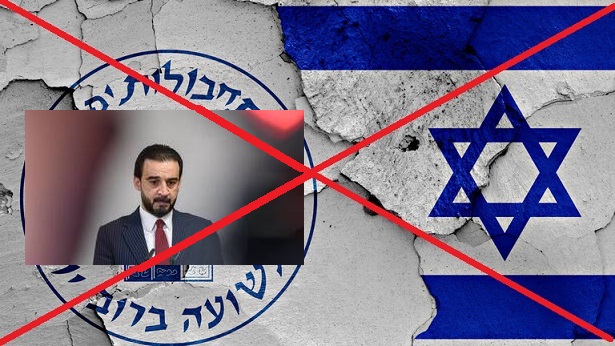
The so-called “recognition of Zionism” has reached such a stage that Iraq is in danger of disappearing as a country. The fact is that the separatist tendencies emanating from the ruling “Sunni” tandem Halbousi-Khanjar are directly related to the process of “normalization”, moreover, the colonialists are ready to plunge the Palestinians themselves into this provocation.
It is no secret that the current speaker of the parliament is a supporter of the creation of “Sunni autonomy” throughout Western Iraq, the same can be said about his former “main opponent” (Khanjar). According to media leaks, since 2016 Anbar has been being prepared for the resettlement of Palestinian refugees.
The division of Anbar into two parts , the Iraqi and the Palestinian, will be the most important condition for Iraq’s accession to the “deal of the century”. It is obvious that the forces of evil are planning to settle Palestinians in the Anbar desert mainly from the West Bank, thus Zionism is trying to “solve” the problem of local resistance and the revival of the intifada forever. Now it is clear why the special services and politicians of Jordan regularly meet with the Mossad and pay a visit to the heads of the Zionist colony, the parties discuss the stages of the implementation of the operation to “resettle” the Palestinians.
The scariest thing in this story is that in Iraq itself there are influential forces supporting the project of creating a “new homeland” for Palestinians in Anbar. For example, the former speaker of parliament Mahmoud al-Mashhadani said that in the so-called “triple alliance”, “Sunnis”1 and Kurds have no problems with “normalization” of relations with “Israel”. The Sunni politician also said that in addition to the Palestinians, it is planned to send more than 500,000 Iraqi Jews to Iraq!!
Actually, the creation of a new concentration camp for the Palestinians is one of the goals of the Zionists who move around Iraq under the guise of American occupiers.
1- The main actor from the “Sunni side” is Halbousi. It is his name that the Iraqisassociate with all the actions of the pro-Zionist direction.
This morning, after the Palestinian resistance fired several rockets at the Zionist settlement of Sderot, injuring four Zionists, the Israeli army retaliated by targeting several areas in the Gaza Strip.
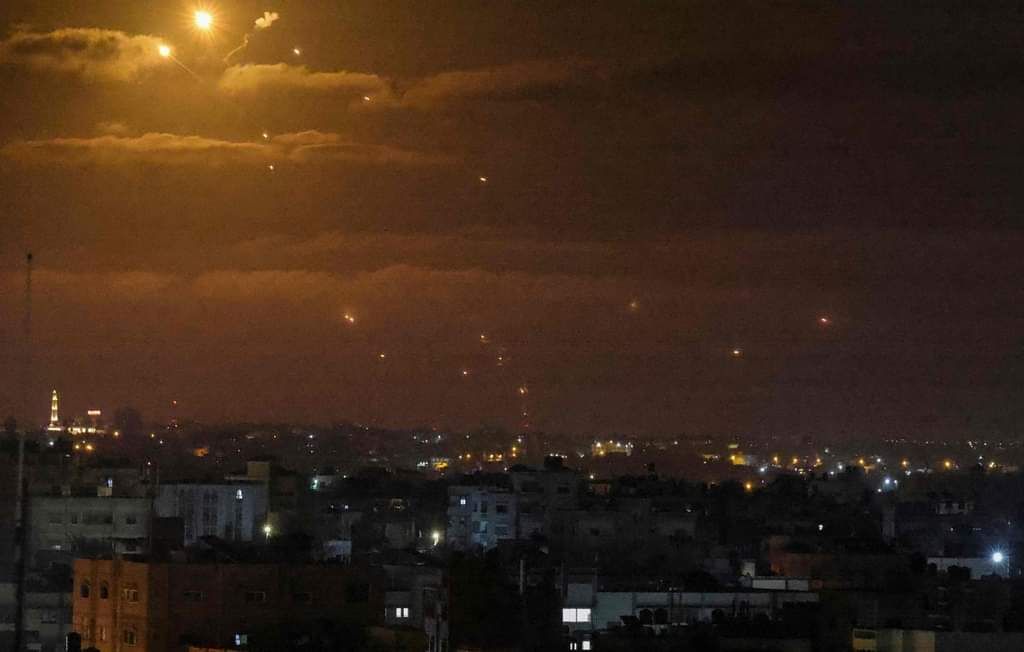
At the beginning of the attacks, the “Isa al-Batran” base belonging to al-Qassam Brigades in the Nusayrat camp in the center of the Gaza Strip was targeted by Israeli drones. Israeli warplanes then fired about 10 missiles at the base, causing a large-scale fire in the area. Israeli tanks and artillery targeted resistance observation posts east of the Albridge camp. East of Khan Yunis was also targeted by the Israeli artillery.
In the second wave of Israeli airstrikes on the Gaza Strip, the “Obaida” base of al-Qassam Brigades near the al-Maghazi camp in southern Gaza was attacked. In this attack, Israeli warplanes fired three missiles at the base. Israeli airstrikes south of the Gaza Strip severely damaged Palestinian civilian homes, injuring one Palestinian.
Palestinian resistance fighters fired surface-to-air missiles at Israeli warplanes in the Gaza Strip. This is the third time the Palestinian resistance has used MANPADS to target Israeli aircraft.
It is expected that with the resumption of clashes in Al-Aqsa Mosque and the resumption of Zionist attacks on this mosque, tensions will increase and we will witness a new round of fighting between Palestine and the Zionist regime.
Images of Israeli airstrikes hitting targets in the Gaza StripThe Israeli army released a video of an attack on targets in the Gaza Strip.Failure of Iron Dom missiles hitting each other
According to initial reports, three rockets were fired by Palestinian resistance groups into the occupied territories, two of which landed in open areas on the outskirts of Sderot and another hit a house. As a result of this attack, four Israeli were injured.
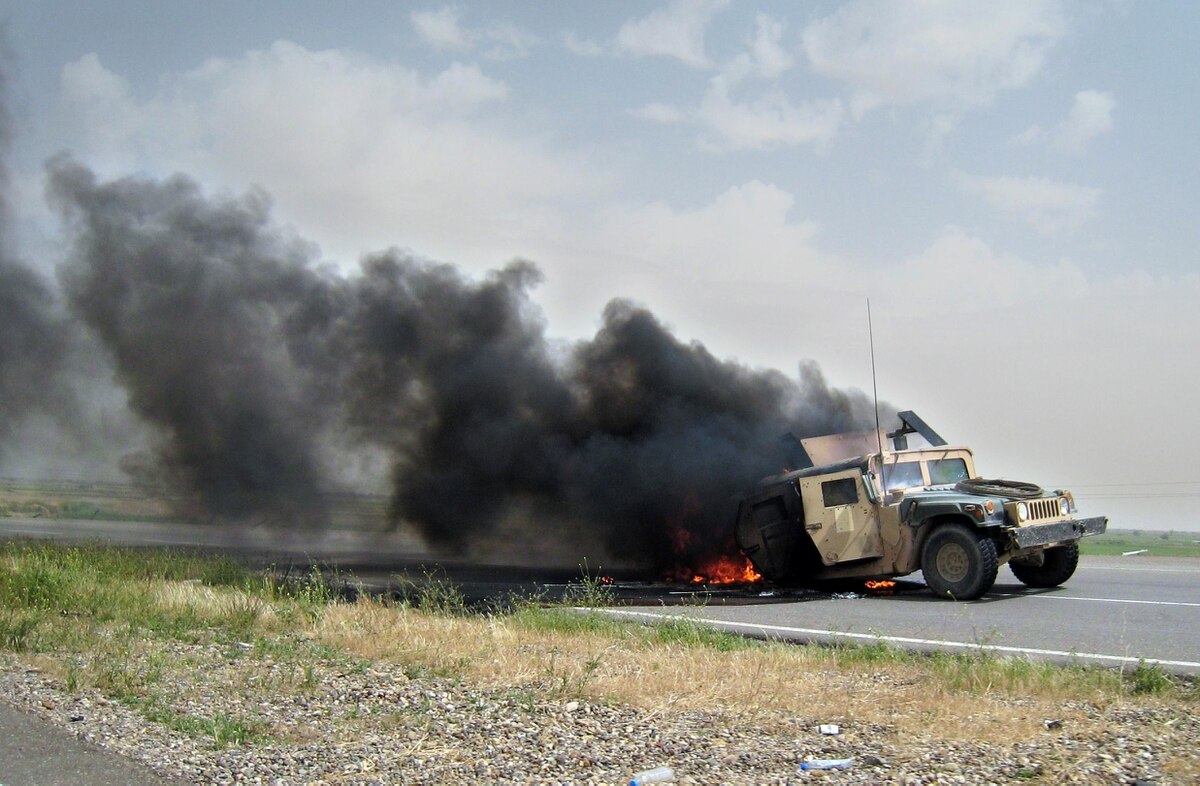
A Turkish Army Lieutenant, Kaan Kanlikuyu was killed by a rocket-propelled grenade fired by PKK militants in northern Iraq.
This is the second official casualty of the Turkish Armed Forces during Operation Claw Lock. Yesterday, the Turkish Ministry of Defense announced that the first lieutenant “Omer Delibash” was wounded in an explosion of a booby trap in the northern regions of Iraq and was transferred to a medical center. However, later he was succumbed to his injuries.
If this trend continues and casualties increase, the Turkish military is likely to limit ground forces and use aircraft to continue operations and carry out targeted attacks.
It is worth mentioning that Operation Claw Lock of the Turkish Armed Forces began in the morning of April 18 against the PKK militants in northern Iraq.
Israeli warplanes targeted the al-Qadisiyah base belonging to Izz ad-Din al-Qassam Brigades, the military branch of the Hamas movement west of Khan Yunis, with eight missiles and an agricultural land between Deir al-Balah and Khan Yunis with one missile. There were no human casualties in the attacks.
The Palestinian resistance also responded by firing surface-to-air missiles using MANPADS at Israeli warplanes. In this regard, the military branch of the Hamas movement announced: “The fighters of Qassam Brigades responded at 01:35 am today (local time) by firing surface-to-air missiles at the hostile warplanes of the Zionist regime in the skies of the Gaza Strip.”
Hebrew media acknowledged that Israeli warplanes had been forced to flee following the missile fire. It is believed that Al-Qassam Brigades have used the Strela MANPADS to repel Israeli warplanes.
This is the second time the Palestinian resistance has used this weapon to target Israeli aircraft. Earlier, in January 2, 2022, Palestinian groups used Strela MANPADS to counter Israeli helicopters in the Gaza Strip.
Israeli fighter jets attack the Gaza StripIsraeli fighter jets attacks areas in the south of Gaza StripSurface-to-air missiles fired at Israeli warplanes over GazaVideo released by the Israeli army of an airstrike this morning in the southern Gaza Strip
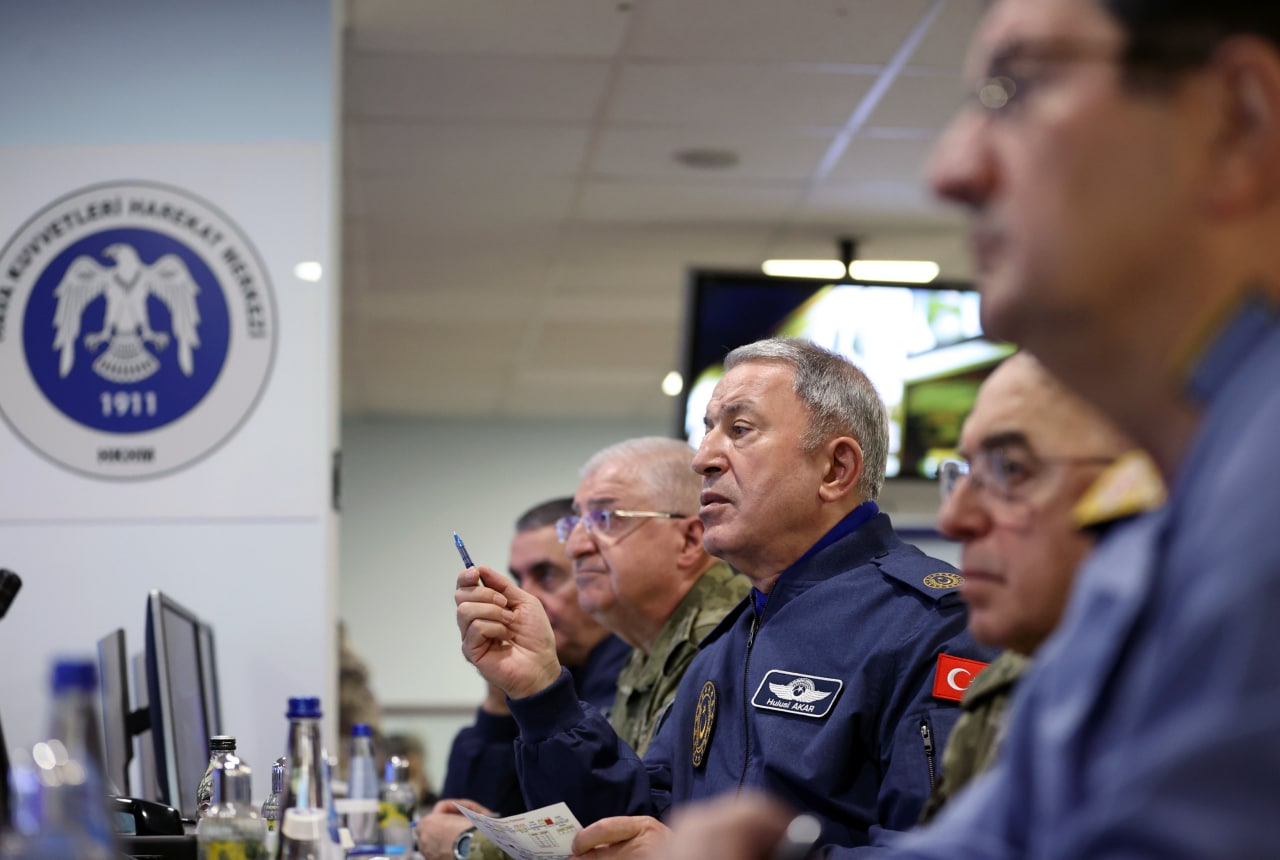
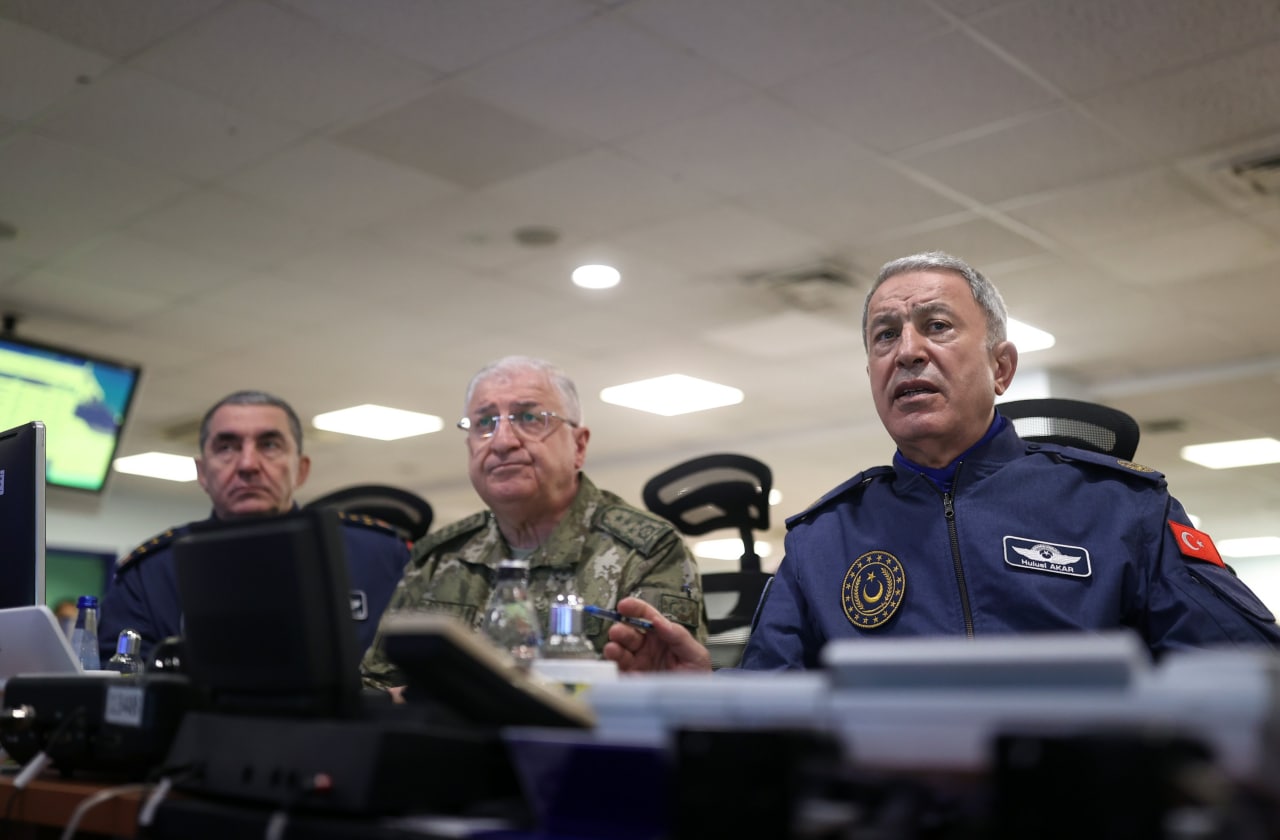
On the morning of April 18, Turkish Defense Minister Hulusi Akar, along with General Yasar Guler, Chief of General Staff, General Musa Avsever, Commander of Army, and Admiral Adnan Ozbal, Commander of the Navy, arrived at the Turkish Air Force Operations Center. Minutes after receiving the latest information and the status of the operational forces, the Turkish Defense Minister announced: “The Turkish Armed Forces have launched a new operation called ‘Claw Lock’ against terrorist targets in northern Iraq and to ensure the security of our borders.”
He claimed that Turkish planes had successfully targeted PKK hideouts, tunnels and ammunition depots in northern Iraq. Turkish Army commandos also, with the support of Turkish military helicopters and UAVs, penetrated deep into the designated areas. Akar added: “So far, our operation has continued according to plan and successfully, and the goals set in the first phase have been achieved.” At least 19 militants were killed while four Turkish troops were wounded during the offensive, the ministry said.
There was no immediate comment from the Kurdish militant group on the incursion and the defense ministry statement couldn’t be verified independently.
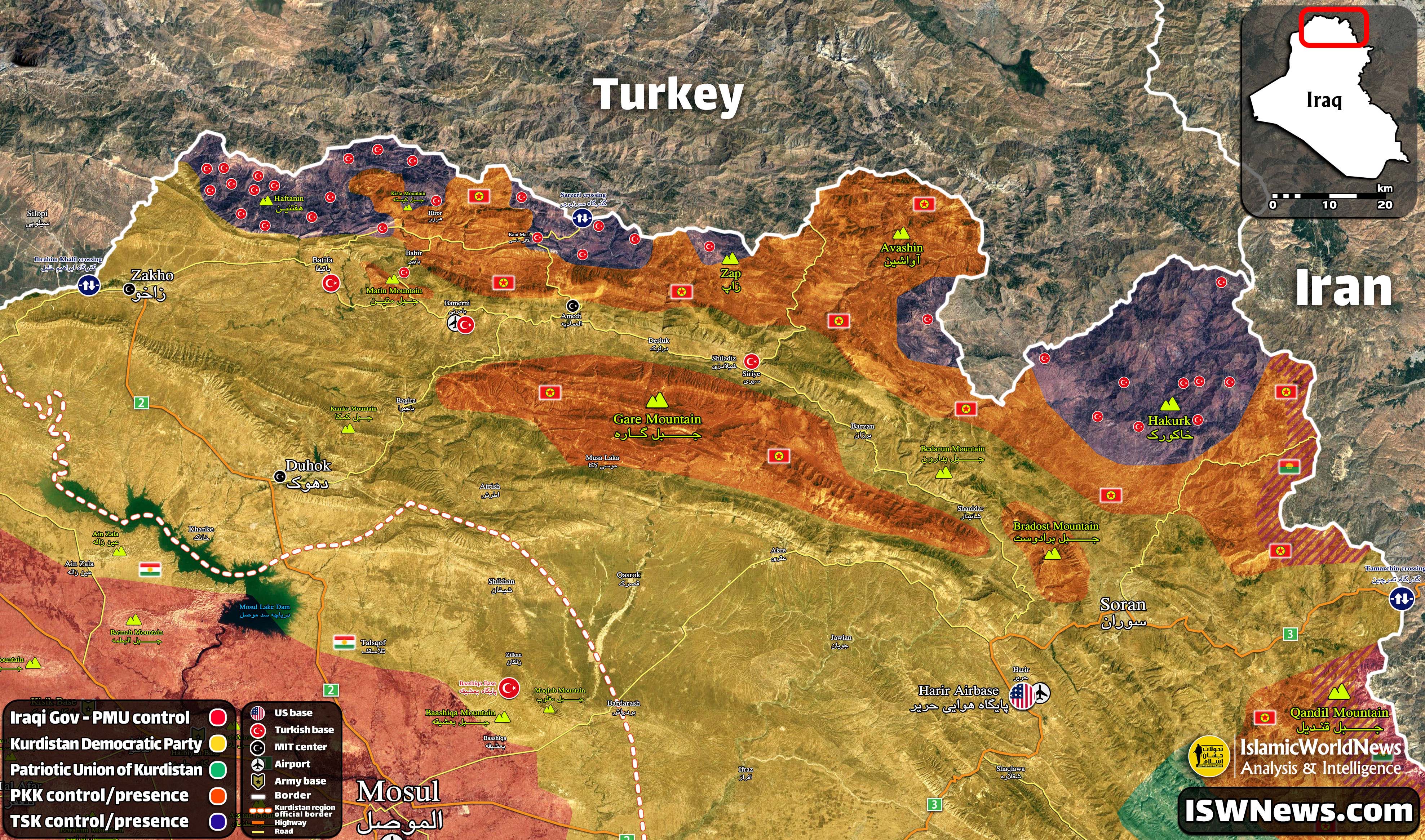
The operation began as Turkish Air Force fighter jets bombed areas in northern Iraq this morning, including Avashin, Matina, Zap, Gara and Qandil mountains.
Turkey has conducted numerous cross-border aerial and ground operations against the PKK over the past decades. The latest offensive, named Operation Claw Lock, was centered in northern Iraq’s Metina, Zap and Avashin-Basyan regions.
In April 2021, Turkish Armed Forces also had launched an operation called ‘Operation Pence-Simsek (Thunder Claw) and Pence-Yildirim (Lightning Claw)’ against PKK elements in northern Iraq. The history of the Turkish army entering northern Iraq dates back to 1982 and the agreement between the two countries. According to the agreement, Turkey is allowed to enter a depth of 20 km in northern Iraq.
It is worth noting that the new Turkish military operation in northern Iraq began three days after Turkish President Recep Tayyip Erdogan met with Iraqi Kurdistan Regional Government Prime Minister Masrour Barzani.
Turkish Defense Minister Hulusi Akar attends Turkish Air Force operations center (1)Video of Turkish army airstrikes and artillery attacks on northern IraqTurkish Defense Minister Hulusi Akar attends Turkish Air Force operations center (2)Click to view full size
As a result of this rocket attack, the alarm sounded in the Israeli areas around Gaza. An Israeli army spokesman said the Iron Dome system had intercepted a rocket.
Following the attack, mediators are expected to begin consultations to reduce tensions and prevent a new war.
This is the first Palestinian rocket attack on the occupied territories after the recent attack by the Israeli military and settlers on Al-Aqsa Mosque. Palestinian resistance groups had recently warned Israeli officials that the Israeli government was responsible for any consequences of the attack on Al-Aqsa Mosque.
On April 17, the headquarters of the 78th Brigade of PMU in the Zamar area, west of Mosul, was attacked by an unidentified drone. As a result of this attack, the deputy commander of the 78th Brigade was wounded. No details have been released about the attack drone, but some sources claimed that the unidentified drone flew into Iraqi Kurdistan after the attack.
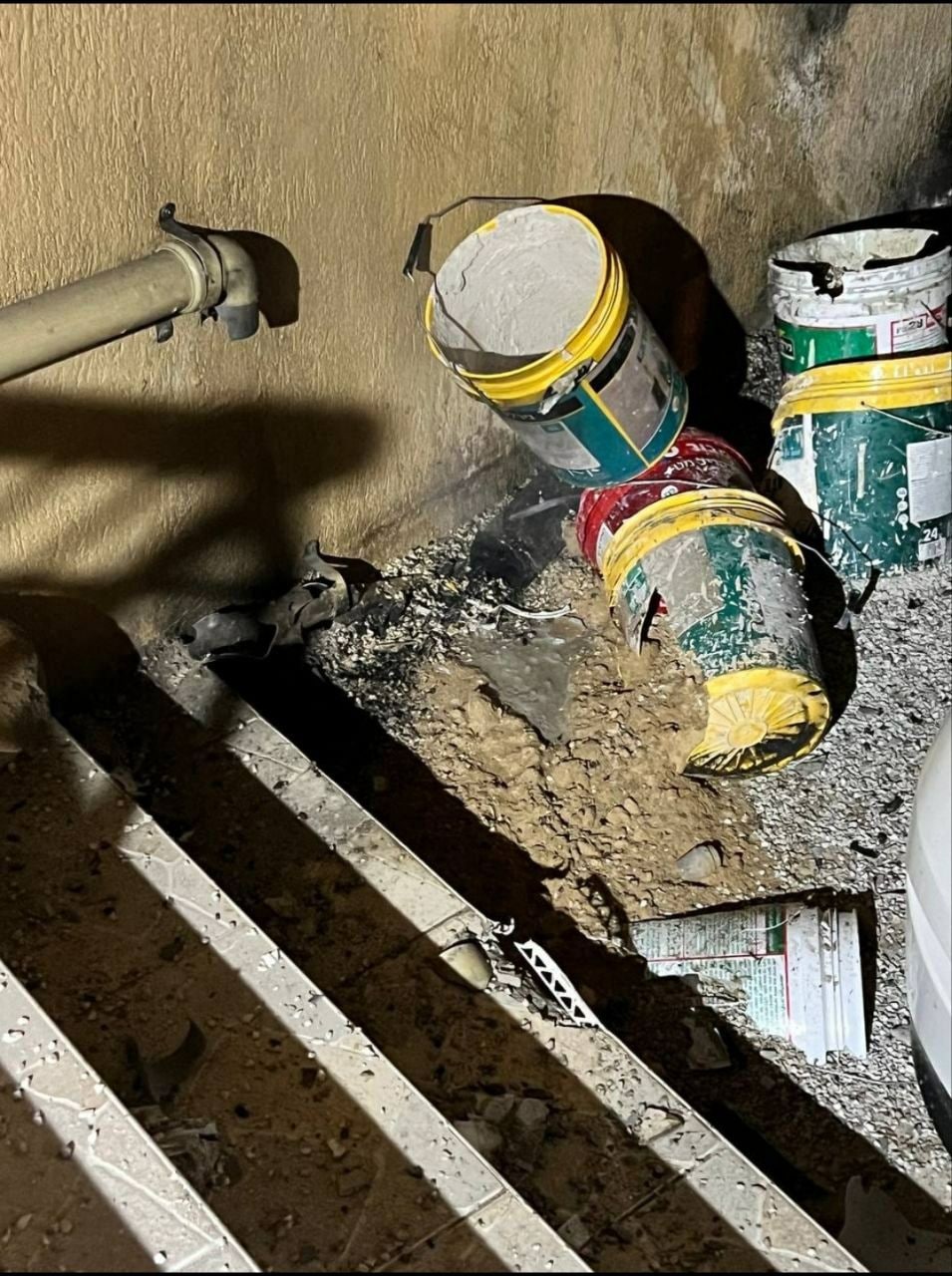
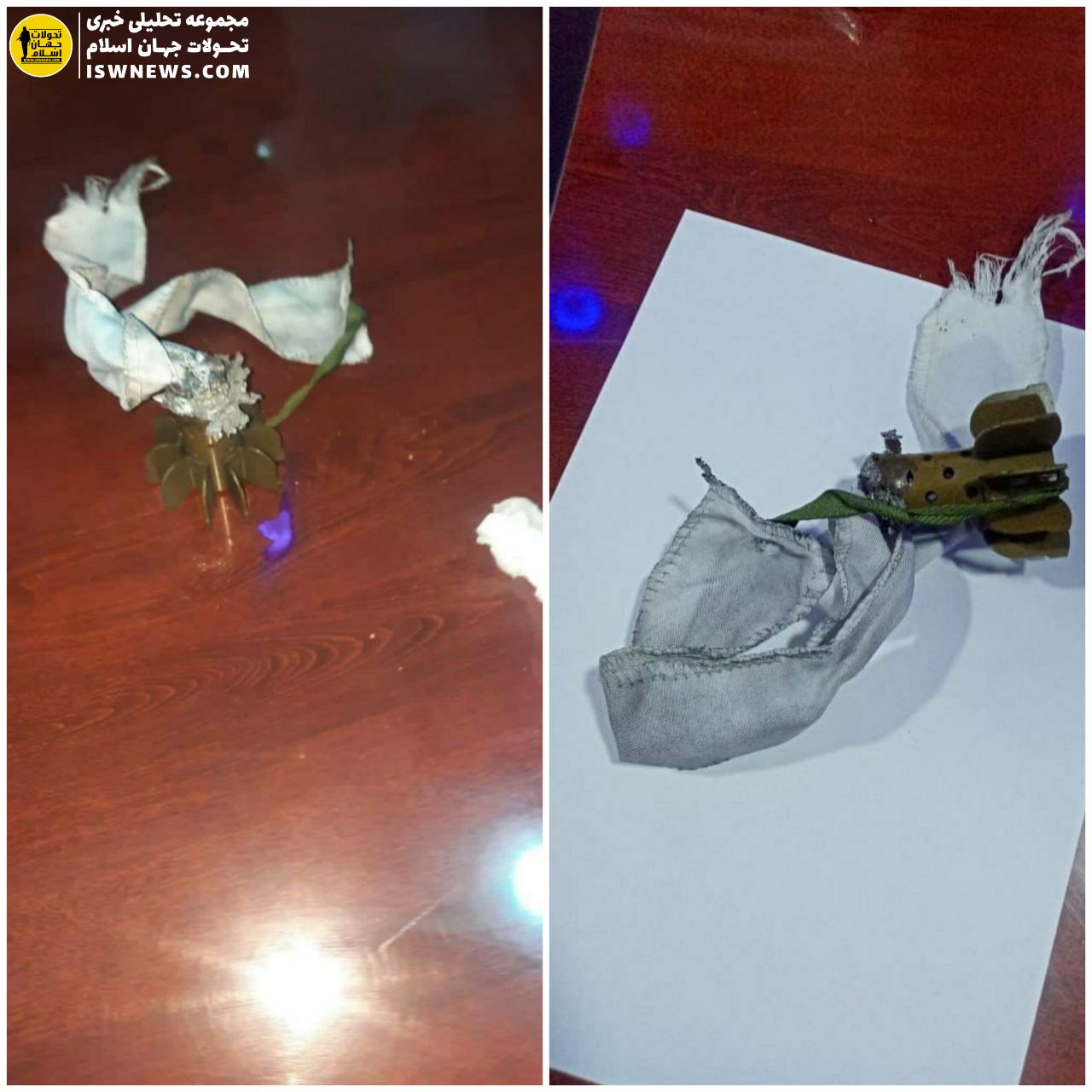
Minutes after the attack, it was revealed that the attack was carried out using two 60-mm mortar shells. The mortars are also said to have been dropped from a commercial DJI Matrice 600 hexacopter. The attack came after Kurdistan Region Prime Minister Masrour Barzani met with Turkish President Recep Tayyip Erdogan at the Dolmabahçe Presidential Palace in Istanbul on Friday evening.
More details have not yet been released, but it is possible that the attack was carried out by US, Israeli and even Kurdish regional security forces for various reasons. Interestingly, at the same time as the attack, several US spy aircraft and refueling planes were flying over the northwestern and western parts of Iraq.
Meanwhile, the Iraqi official news agency, quoting Iraqi security sources, reported that the news of a drone attack on the headquarters of the 78th Brigade of the Hashad al-Shaabi Organization in the Zamar area was baseless and that the explosion was heard at the headquarters was due to a 60 mm mortar shell explosion. During this incident, one of the fighters was slightly wounded.
The deputy commander of the 78th Hashad al-Shaabi Brigade, who was wounded during the attack.
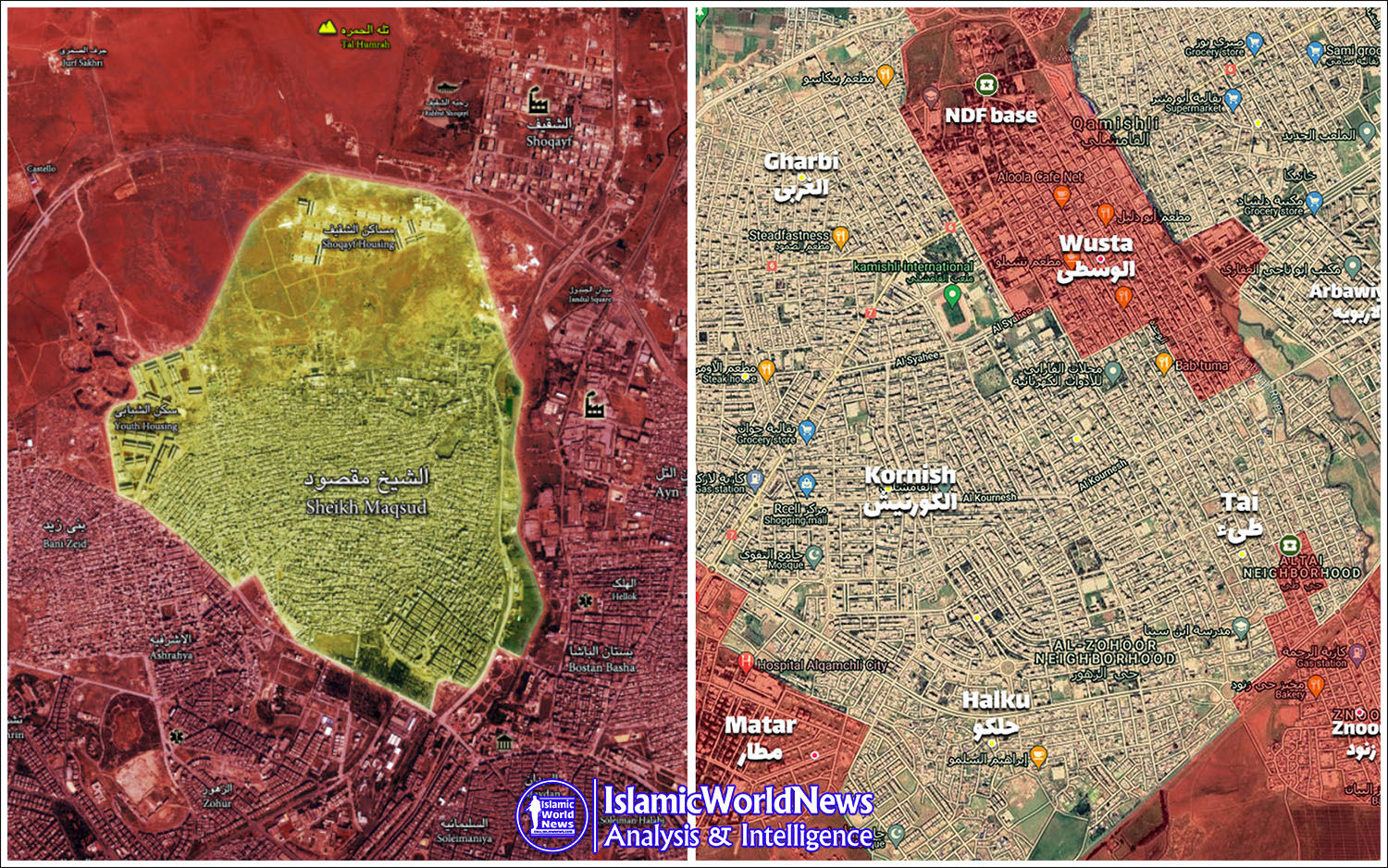
The Syrian Democratic Forces (SDF) accuse the Syrian government of failing to meet the needs of the Kurdish neighborhoods of Sheikh Maqsoud and Ashrafiyah in Aleppo and preventing flour, fuel and food from entering the neighborhood. Hence, in a series of retaliatory measures, SDF forces imposed restrictions on the city of Qamishli, preventing Syrian government employees from entering office and governmental buildings in the city. Following these actions, SDF forces entered some places such as the educational complex, the finance department, the electricity department and a bank and fired the employees. Last week, Syrian Democratic Forces also attacked the al-Ba’ath bakery (the only bakery controlled by the Syrian government) in the city of Qamishli.
Also in the city of Hasakah, SDF forces imposed restrictions on places controlled by the Syrian government.
Explaining the recent events and tensions in the cities of Qamishli and Aleppo, the Islamic World News source in Syria stated, “The essence of the tensions is rooted in the oil purchase agreements signed between the Syrian government and the SDF. In general, the Syrian government provides part of the necessities of the Kurdish neighborhoods of Sheikh Maqsoud and Ashrafiyah in Aleppo. When the transaction or the transfer of oil is delayed for some reason or there is an obstacle in doing so; Tensions are rising; And this issue manifests itself in the form of stopping the supply of necessities in one area in the city of Aleppo or the siege of government areas in another city; An issue that is never mentioned in the media.”
According to Hasakah Governor Ghassan Halim Khalil, meetings are currently being held with Russian mediation to resolve the issue. In January 2021, the Syrian Democratic Forces (SDF) besieged the Syrian government-controlled neighborhoods of Hasakah and Qamishli after accusing the Syrian government of blocking fuel from reaching the Sheikh Maqsoud neighborhood. At that time, after several meetings and mediation by Russia, the tensions and siege ended and the situation returned to normal.
It is noteworthy that despite the current tensions between the Syrian government and SDF forces, there has been no change in positions and areas under the control of both sides in the cities of Qamishli and Hasakah. These tensions also seem to stop soon.