Category: West Asia

  • Yemen: Power struggles between Tariq Saleh and Aidarus al-Zoubaidi entered a new phase

    Yemen: Power struggles between Tariq Saleh and Aidarus al-Zoubaidi entered a new phase

    Following the arrest of 20 members of the Presidential Guard by the forces of Southern Transitional Council (STC) in Aden, new tensions have begun between supporters of Tariq Saleh and Aidarus al-Zoubaidi in areas controlled by the Saudi coalition in Yemen. In response to the arrest of his troops, Tariq Saleh issued an order to confront the STC militants. With this order, the Al-Amaliqa forces, which are under the command of Tariq Saleh, in retaliation arrested five members of the STC in the city of Ataq, the capital of Shabwa province.

    Following the resignation of Mansour Hadi, the power struggle between members of the Presidential Council of the resigned government, including Tariq Saleh and Aidarus al-Zoubaidi , has intensified. The rivalry began with tensions over control of the oil resources of Marib and Shabwa provinces on April 17, and has continued until recently, when the Southern Transitional Council threatened to arrest Tariq Saleh. Prior to the threat, the Southern Transitional Council protested the entry of Tariq Saleh’s forces into Aden and warned that he would be arrested if he continued to infiltrate Aden.

    Simultaneously with the threat, one of the STC forces, Salem Seif al-Radfani, was assassinated in the city of Aden. News sources in STC believe that the assassination was carried out by agents affiliated with Tariq Saleh. There was also another clash in the city of Ataq between the forces of the Southern Transitional Council and Awad al-Awlaki, the governor of Shabwa, which left one dead and one wounded.

    The weakening of Mansour Hadi’s supporters and the Islah Party has led to an increase in the power of other currents in the Yemeni opposition. This has led to a power struggle between the UAE-affiliated factions, including Tariq Saleh and Aidarus al-Zoubaidi, and each of these influential people in the southern regions is seeking more power to attract foreign support, especially from the UAE sheikhs.

    It should be noted that the “Yemeni National Resistance” (YNR) is an armed organization in southwestern Yemen led by Tariq Saleh, which has more than 10,000 troops and includes several groups, including former members of the Republican Guard (of Ali Abdullah Saleh), army soldiers and security forces separated from the Sanaa government, al-Amaliqa and al-Tihama forces.

    Read more:
    Yemen: Islah Party opposes the process of Yemeni Presidential Council
    Yemen: Mansour Hadi resigned for the last time!

  • Joint meeting of Iran and the Taliban to ensure the security of the two countries’ borders

    Joint meeting of Iran and the Taliban to ensure the security of the two countries’ borders

    The meeting of Iranian police officials and Taliban representatives was held in the presence of Brigadier General “Ghasem Rezaei”, the deputy commander of the Iranian police and “Mawlawi Shabir Ahmad”, the head of Afghanistan Ministry of Defense in Taybad city in Iran’s Khorasan Razavi province.

    General Rezaei said during the meeting: “Iran and Afghanistan are friends and brothers and have good political relations and trade exchanges. During the past years, we have been together in various events with a spirit of interaction and cooperation, and wherever the enemies wanted to damage these relations, they failed due to the goodwill and sense of brotherhood that governs the thinking of the two nations.”
    Regarding the foreign intervenes, Rezaei added: “The efforts of both countries should be focused on cohesion and unity, and by managing and planning for small incidents, we should not allow the enemies to magnify problems and prevent their abuse. Our borders are territorial, but our religion and culture have no borders, and the will of the Iranian nation and government is to support our friendly and brotherly country Afghanistan.”
    Emphasizing on ISIS danger he said: “ISIS is the common enemy of both nations and its annihilation is one of the common goals of both countries, and in this way, the free people of Iran and Afghanistan have sacrificed martyrs for the path of Islam.”
    The deputy commander of the Iranian police pointing the dark era of drug production in the past government of Afghanistan said: “Creating cultural solidarity among border residents and combating drug trafficking in order to develop stability and security at the borders should be our concern. We appreciate the will of the people and the new government of Afghanistan in the fight against drug production and change of the past policy toward this matter. The border guards of the Islamic Republic of Iran are ready to provide their experiences and training in the border area to the Afghan border guards. Increasing and strengthening joint security patrols is essential.”

    Mawlawi Shabir Ahmad, the Taliban’s Ministry of Defense, thanking the Iranians for their hospitality, stated: “We do not forget the kindness and assistance of our neighbor Iran during the US invasion of Afghanistan and Iran’s assistance to its oppressed people. ISIS is the common enemy of both nations, and since arrogance (US and NATO) could not strike at the two countries in this way, it is trying to create divisions that we will not allow to succeed in this regard and to know that the unity of the two nations is impenetrable.”

    On the sidelines of the meeting, Iranian and Taliban officials held joint congregational prayers as a sign of unity and empathy.

  • A Turkish military killed in northern Iraq

    A Turkish military killed in northern Iraq

    Thus, the number of casualties of the Turkish army in Operation Claw Lock, which began on the morning of April 18, increased to 11 personnel.

    On May 1 also, the Turkish Ministry of Defense announced that two Turkish soldiers had been killed during Operation Claw Lock in northern Iraq.

    It should be noted that on the morning of April 18, Turkey has launched a new ground and air cross-border offensive named ‘Operation Claw Lock’ against Kurdish militants in northern Iraq. Turkish military has conducted dozens of military operations against PKK militants in northern Iraq in recent years.

    Read more:
    Latest updates on northern front of Iraq, 27 April 2022
    Two Turkish soldiers were killed in Iraq

  • Iraq: Three IED attacks on US convoys

    Iraq: Three IED attacks on US convoys

    According to data obtained by ISWNews, this is the 80th attack by Iraqi resistance groups on US assets in Iraq in 2022.

    Read more:
    Infographic: Iraqi Resistance Groups Operations Against the US in 2021
    Infographic: Iraqi Resistance Groups

  • Militants ATGM attack in Syria’s Aleppo, 10 killed + Video

    Militants ATGM attack in Syria’s Aleppo, 10 killed + Video

    On May 13, Ahrar al-Sham group, a member of the National Front for Liberation coalition, targeted a bus carrying the Syrian National Defence Forces (NDF) on the Anjara front west of Aleppo with an anti-tank guided missile. The attack killed 10 Syrian National Defence Forces and wounded nine others.

    Video of Ahrar al-Sham terrorist group targeting a bus carrying NDF forces with ATGM

    Simultaneously with the funeral of the martyrs of the attack in the Shiite towns of Nubl and Al-Zahra in Aleppo province, Turkish-backed militants targeted Nubl and Al-Zahra area with artillery shells, killing a 12-year-old Syrian boy named “Ali Hussein Hajj Issa” and another one-year-old child named “Mahdi Saeed” was injured.

    In response, the Syrian army targeted militant positions in northern Aleppo with airstrikes and artillery. No information is available on the number of militant casualties.

    HQ map here

  • Israel airstrikes kills five people in Syria

    Israel airstrikes kills five people in Syria

    A Syrian military source stated that, “About 8:20 p.m. this evening, the Israeli enemy carried out an air attack with bursts of missiles from the direction of the Mediterranean west of Baniyas, targeting some points in the central region (likely Hama province). Our air defenses confronted the aggression’s missiles and shot down most of them.”
    The source added that the aggression “led to the death of five, including one civilian, wounding seven citizens, including a child, and causing some material losses.”

    Read more: Russia: Syrian air defenses shoot down 16 Israeli missiles

    The SANA news agency indicated that the Israeli aggression also resulted in the outbreak of several fires in the farms of Masyaf countryside in the western Hama, as a result of the fall of a number of hostile missiles in those areas.

    It should be noted that on April 27 also, the Israeli warplanes fired missiles from Lake Tiberias at targets around the city of Damascus, killing four Syrian soldiers and wounding three others.

    Read more:
    Israeli regime attacks on Qunaitra + Video
    Four killed by Israeli aggression on Syria’s Damascus + Video

    A picture of the martyrs of the Israeli air strike on Syria
  • Turkey and Israel, Europe’s New Energy Alternative

    Turkey and Israel, Europe’s New Energy Alternative

    The outbreak of war in Ukraine has affected the world energy market. The most important event after the increase in oil and gas prices is the limitation and conditions of the new supply of energy to the EU market by Russia. This is why the European Union is thinking of reducing purchases from Russia to supply gas.

    Europe, meanwhile, is thinking of countries that can meet this need. Europe’s strategy is to meet its needs from several sources so that it does not become dependent on one source.

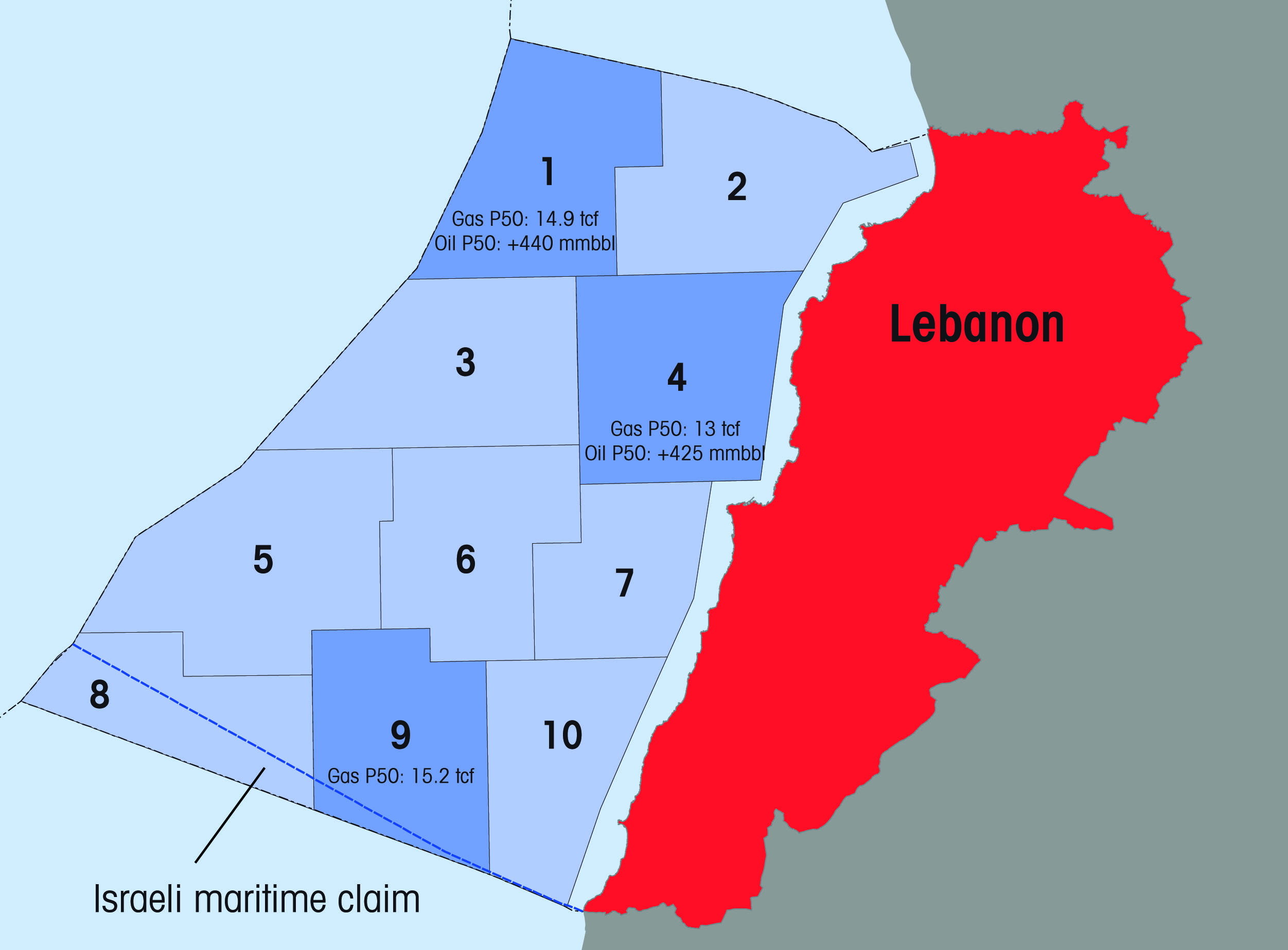
    In addition to increasing oil and gas purchases from old suppliers, Europeans are also turning to new suppliers. Over the past month, news of Turkish-Israeli cooperation has shifted the focus of the energy market. The Leviathan and Tamar gas fields in the waters of occupied Palestine, as well as the oil and gas fields in the disputed EEZ between Lebanon, Israel and Cyprus in the eastern Mediterranean, are a new source of gas for Europe.

    Lebanon’s oil and gas blocks and the disputed area

    Turkey has no territory in this area, but continues its illegal exploration due to the occupation of the northern Republic of Cyprus and the formation of the de facto Turkish government of Northern Cyprus. The news of cooperation with Israel in these fields and the pipeline connecting the Turkish port of Ceyhan is a turning point in European strategy.

    Gas pipeline from the Turkish port of Ceyhan to the occupied Palestinian gas fields

    These fields are the closest point to the export terminal of Ceyhan port and Europe. From here, Turkey sends Baku-Tbilisi-Ceyhan oil and gas shipments to Europe. The security of this field is much higher than other fields in the Caucasus and Libya due to the military power of Israel and Turkey and the NATO base in Cyprus. The Russian Federation’s naval and air base in the port of Banias and Latakia are not efficient enough to cut it off, but it is a potential danger.

    The current challenges for these pipes and fields are protests by the Lebanese and Cypriot governments, Iranian and Russian bases in Syrian ports, and pro-Iranian forces in Lebanon.

    Cyprus’s European nature and de facto Northern Cyprus government also do not have much opposition to Turkish influence in this area. They are relinquishing their share, and the main challenge is on the eastern shores of the Mediterranean.

    The Lebanese government’s opposition, due to the presence of Iranian supporters, including Shiite parties in the parliament and cabinet, is a serious and important issue that makes things difficult for Israel politically. They are a major obstacle to Israel, Turkey and the European Union, but the Lebanese government needs such a resource to get rid of its crisis-ridden economy. This reduces the share of other parties. In this case, the European Union is trying to attract the Lebanese cabinet with its own groups and negotiate with Iran.

    EEZs in the eastern Mediterranean – Maritime disputes in Mideterenean
  • IED attack on US convoy in Iraq

    IED attack on US convoy in Iraq

    According to data obtained by ISWNews, this is the 77th attack by Iraqi resistance groups on US assets in Iraq in 2022.

    Read more:
    Infographic: Iraqi Resistance Groups Operations Against the US in 2021
    Infographic: Iraqi Resistance Groups

  • IRGC attacks on terrorist positions in Iraqi Kurdistan + Video

    IRGC attacks on terrorist positions in Iraqi Kurdistan + Video

    Recently, IRGC security forces arrested five members of a terrorist group in the border city of Baneh, the capital of Baneh County, in Kurdistan Province. According to the IRGC, following the confessions of the members of this terrorist team to their subversive goals and intentions against the security of the Iranian nation, this morning positions of terrorist groups in the northern part of Iraq were targeted by artillery and missile attacks.

    According to local sources, IRGC ground forces shelled positions of PKK and PJAK terrorist groups in Choman and Barbazin heights of Iraq in the Sidekan region.

    It should be noted that in Summer 2021, IRGC’s ground forces carried out artillery and drone strikes on the positions of PJAK terrorists and other terrorist groups in the Choman and Sidekan areas of Iraqi Kurdistan several times.

    Read more:
    New round of IRGC attacks against PJAK terrorists in Iraq
    IRGC Missile and Drone Attacks on Northern Iraq (Map Update)

    Click to view full size
  • Israeli regime attacks on Qunaitra + Video

    Israeli regime attacks on Qunaitra + Video

    At around 3 am local time, the Israeli army fired several surface-to-surface missiles at targets near the town of Hadar, causing material damage.

    Hours after sunrise, Israeli forces launched a second artillery attack on Syrian territory, targeting SAA 90th Brigades on the outskirts of Jabhat al-Khashab, near the occupied Golan Heights, but no casualties were reported.

    Syrian officials and the Israeli regime have not yet commented on the attacks, but it is likely that in the coming days the Israeli army will claim that it carried out these attacks under the pretext of attack on Iranian-backed forces or Hezbollah.

    This is the first Israeli attack on Syrian territory since Syrian President Bashar al-Assad’s visit to Iran.

    The last attack of the Israeli regime on Syria took place on April 27 this year. Israeli warplanes fired missiles from Lake Tiberias at targets around the city of Damascus, killing four Syrian soldiers and wounding three others.

    Read more: Four killed by Israeli aggression on Syria’s Damascus + Video

    Israeli attack on the town of Hadar in Quneitra province
    Israeli artillery attacks on the outskirts of Jabhat al-Khashab town in Quneitra province
  • Opinion: Armies for the liberation of Al-Quds

    Opinion: Armies for the liberation of Al-Quds

    The first thing to realize is that great battles are coming, where the main enemy of the Ummah will be doomed to total defeat and this time Big Satan will not be able to help his main lackey. Why do we need “armies”? The fact is that modern military art has reached such a stage of tactical development when all the leading combat forces of the planet have come to the conclusion that any military unit or organization should include in its tactical arsenal the ability to act as partisans and as a regular army with all the nuances. Accordingly, despite the vast experience of Hezbollah and the Palestinian resistance, they need two things: 1 – an additional front against Zionism, 2 – an increase in the size of the operational center or coordination structure for the transformation from guerrillas to militia.

    Now, as for the strategy. Given the abomination of the Zionist regime, it is necessary to prepare for all scenarios, and the most disgusting thing that Zionism can do in this situation is not even the use of nuclear weapons (we will still go to Heaven, InshaAllah), it is the use of its “Muslim” allies to protect its colony. Here I mean the military units of the junta of Egypt and the guard of the King of Jordan. Earlier, Zionism had already tried to conclude an agreement according to which the Sisi regime would have to “provide security” in the West Bank of Jordan. As for the army of Abdullah’s autocracy, they are already “holding hostage” Palestinian refugees and controlling the transition to the West Bank. The fact that most Palestinians in Jordan lack combat experience should not confuse observers(mass marches indicate a willingness to fight the occupiers – this is the main thing), because after the inevitable collapse of Abdullah’s autocracy, the borders will disappear, which means that the Islamic resistance forces of Iraq[1] located next door will be able to train Palestinians and provide all kinds of military assistance. The presence of British and American military bases in Jordan gives a strong argument in favor of the fact that Abdullah will cling to his throne to the last.

    But apart from these dictatorships, there is another insidious enemy that will certainly come to the aid of Zionism – the autocracy of Saudi Arabia. Yes, we can recall their failed aggression against Yemen. But it is obvious that when the question of the survival of the main ally of the Banu Saud regime in the face of Zionism arises, the criminal regime of Riyadh will do everything to support its main ally in the face of destruction. The Saudis can at any moment mobilize 50,000 militants on the border with Iraq or Jordan, which include their military, various mercenaries and local puppets from among the Arab tribes in Jordan and Iraq. Earlier, Riyadh had already practiced similar tactics in 2014, when, allegedly to counter ISIS, they concentrated 30,000 guards to “protect” the borders. (in fact, the Saudis tried to occupy part of Iraq) In my opinion, the forces of Hashad al-Shaabi of Iraq will have to block a possible Saudi intervention directed against the Palestinians of Jordan.

    After all, from the point of view of tactics, it will be much more convenient for them to stop the Saudis. In principle, the foundation of the local “liberation army” has already been laid in Iraq, which is a symbiosis between Hashad al-Shaabi and the forces of the Islamic Resistance. These organizations are quite capable of fighting on two, and even three fronts[2]. For example, Hadi al-Ameri (head of the Fatah alliance and one of the leaders of the BADR organization) said that “The vanguard of the liberation of Jerusalem comes from here, from Iraq. The banners that will liberate Jerusalem are coming from Iraq.” It is worth recalling that BADR is the main core of Hashad al-Shaabi (almost 70 percent of combat groups). Another Iraqi organization, Harakat Hezbollah al-Nujaba, which, in addition to membership in Popular Mobilization Forces, is present in the Coordinating Council of Resistance Factions, released a clip on the day of al-Quds, where a ballistic missile was shown.

    Thus, we are witnessing the implementation of the Martyr Muhandis’ plan to create ballistic missile systems in the western part of Iraq. At the end of the topic about the “regional liberation army of Al-Quds”, you can also point out about the coordination between Hezbollah and Hamas in Lebanon, where these parties are creating a “Palestinian-Lebanese army”. In Syria and Yemen, by analogy with Iraq, the foundation of the “Al-Quds army” has already been created. Egypt and even Libya may be a surprise.

    1- The Iraqi factor is a reality for Jordan and even the West Bank. After all, earlier the representative of Kataeb Sayyid al-Shuhada explained why the Islamic Resistance of Iraq has the right to strike at the Abdullah regime(first of all, this is a signal for Western military bases), also a year ago the leader of Harakat Hezbollah al-Nujaba Sheikh Akram al-Kaabi noted that his organization has the opportunity to penetrate into the depths of the Zionist enemy. It is logical to assume that we are talking about special operations through the West Bank.

    2- in addition to a common front with the Palestinians against Zionism in the direction of the West Bank, the Iraqis will be able to cover the rear of the Palestinians of Jordan from the Saudi “stab in the back”, and expel the Turkish interventionists from Iraq and Syria.

  • Yemen: Ansar Allah shot down the 15th CH-4 drone!

    Yemen: Ansar Allah shot down the 15th CH-4 drone!

    One month after the UN announced a ceasefire agreement and its repeated violations by the Saudi coalition, Ansar Allah air defense this morning shot down a Chinese-made CH-4 drone belonging to the Saudi coalition.
    The flight and operation of reconnaissance and combat drones during the ceasefire period are among the violations, and Ansar Allah, after numerous warnings to the coalition, responded strongly to this blatant violation.
    This could be the end of a ceasefire agreement that has not been fully implemented. Among the terms of the agreement are the arrival of fuel ships in the port of Al-Hudaydah and the reopening of Sanaa Airport, which the Saudi coalition has refused to fulfill.

    It should be noted that Ansar Allah has destroyed 15 CH-4 drones since the beginning of the Yemen war. This drone is made in China and is similar to the US MQ-9 drone, which can carry 250 kg bombs and fly for up to 40 hours and has a range of up to 5,000 km.

    Read more:
    Infographic: Saudi Coalition and US Aircraft Losses in Yemen War
    Yemen: Ansar Allah destroyed the 14th CH-4 drone!
    Military Knowledge: CH-4 Reconnaissance Combat Drone

    The wreckage of the 15th CH-4 drone