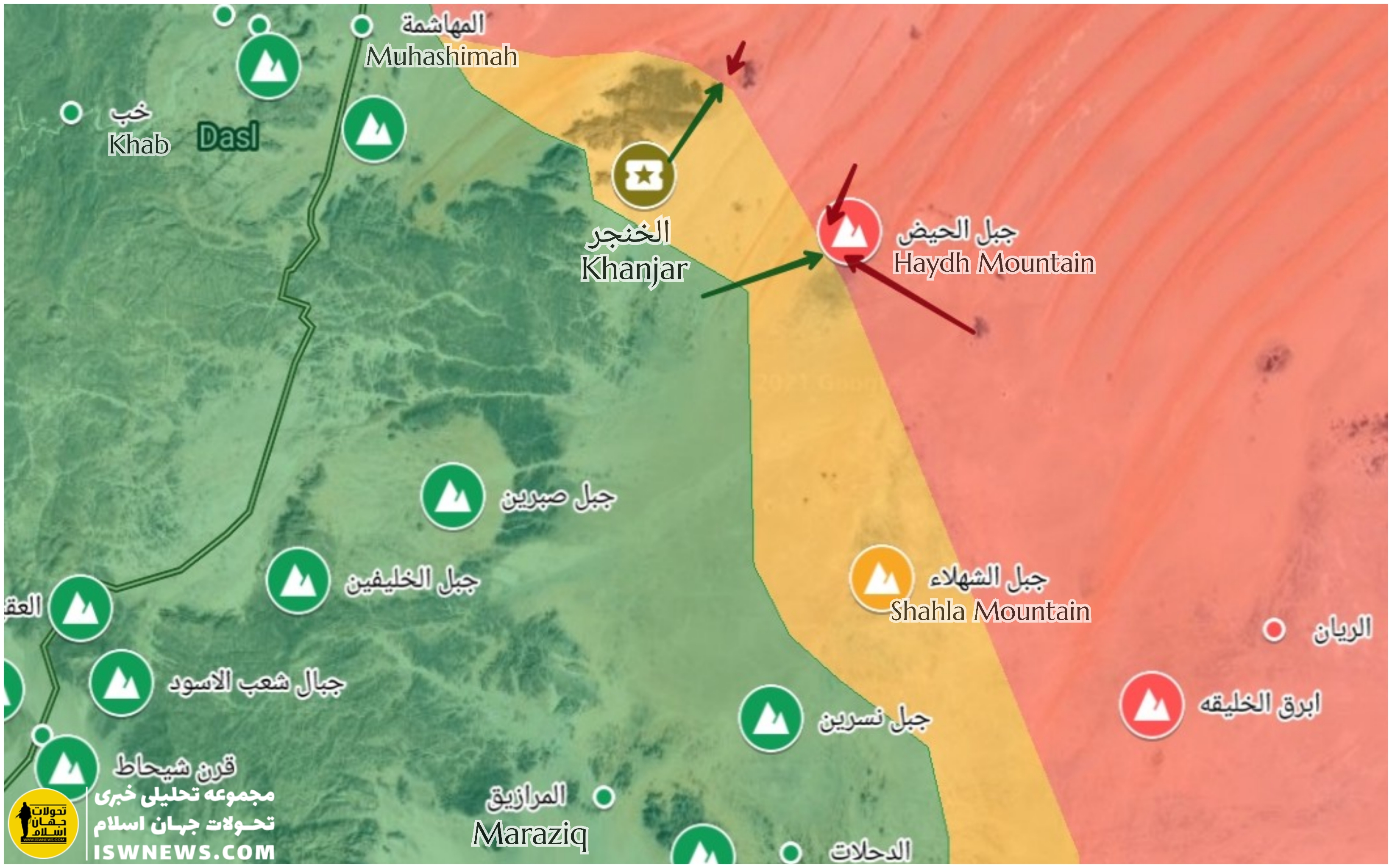
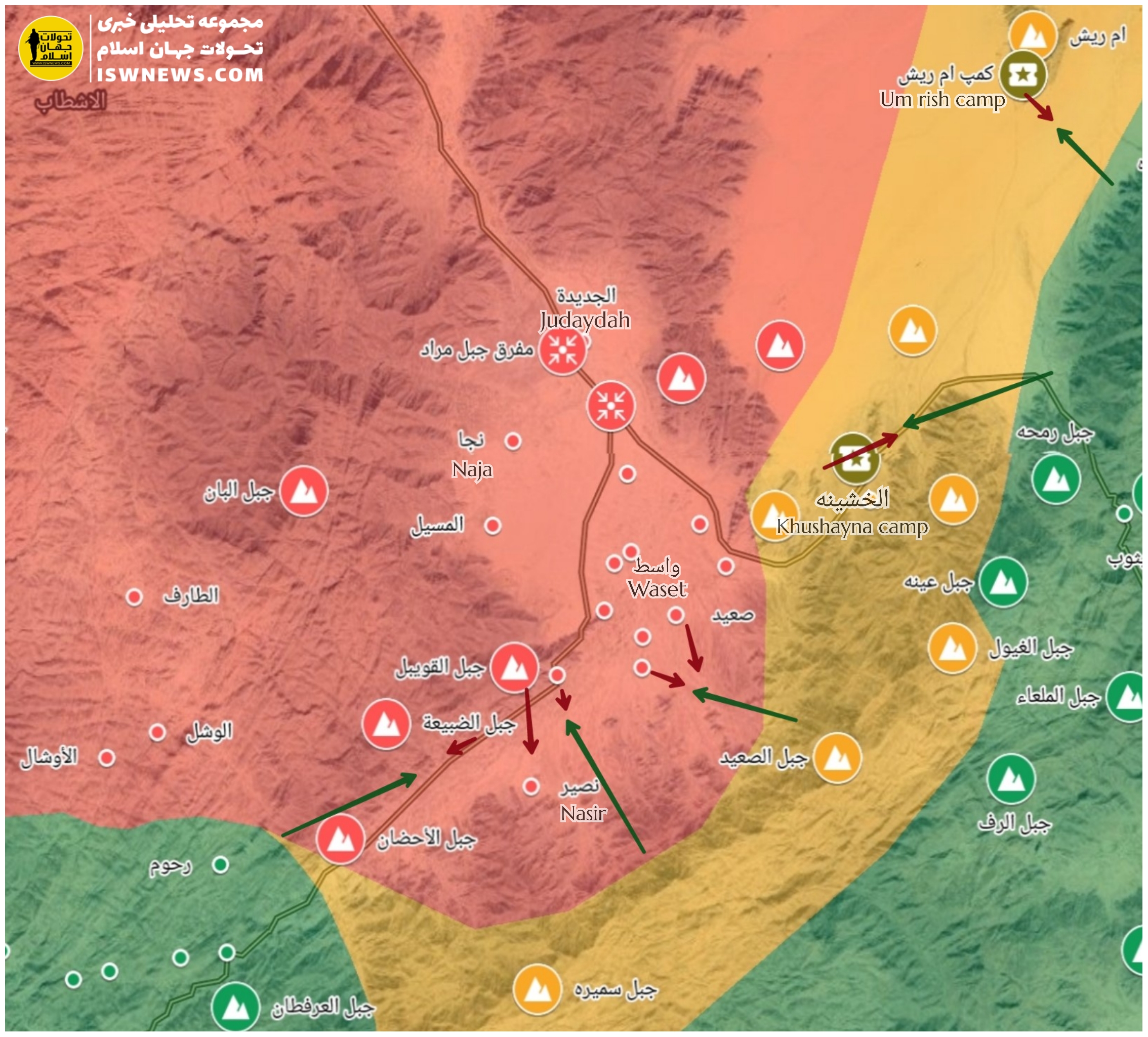
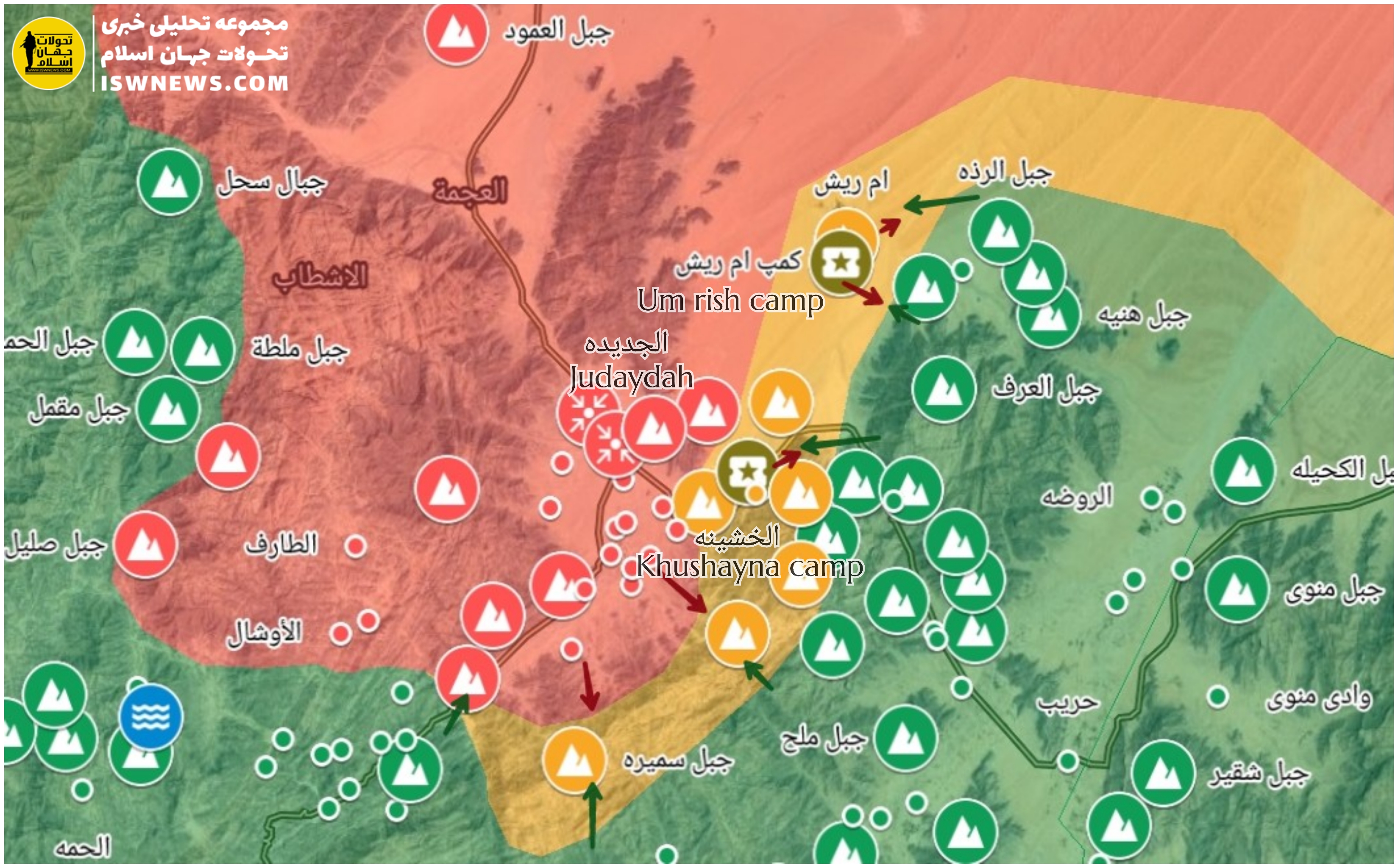
These clashes started on the September 28th and have continued until today. During the attacks, the western and eastern heights of Khanjar camp came under the control of Ansar Allah. Saudi coalition warplanes have bombed the Khanjar fronts nine times during this period, which has had little effect on the course of Ansar Allah operation due to the low accuracy of the strikes.
The Khanjar camp was liberated from the control of Saudi-led forces by Ansar Allah on May 18, 2020, and has since changed twice between the parties. The Saudi coalition is using Khanjar camp as a base to attack the western half of al-Jawf province and the city of al-Hazm, and Ansar Allah use this camp as a place to launch hit and run attacks on the Saudi-led forces in the area.
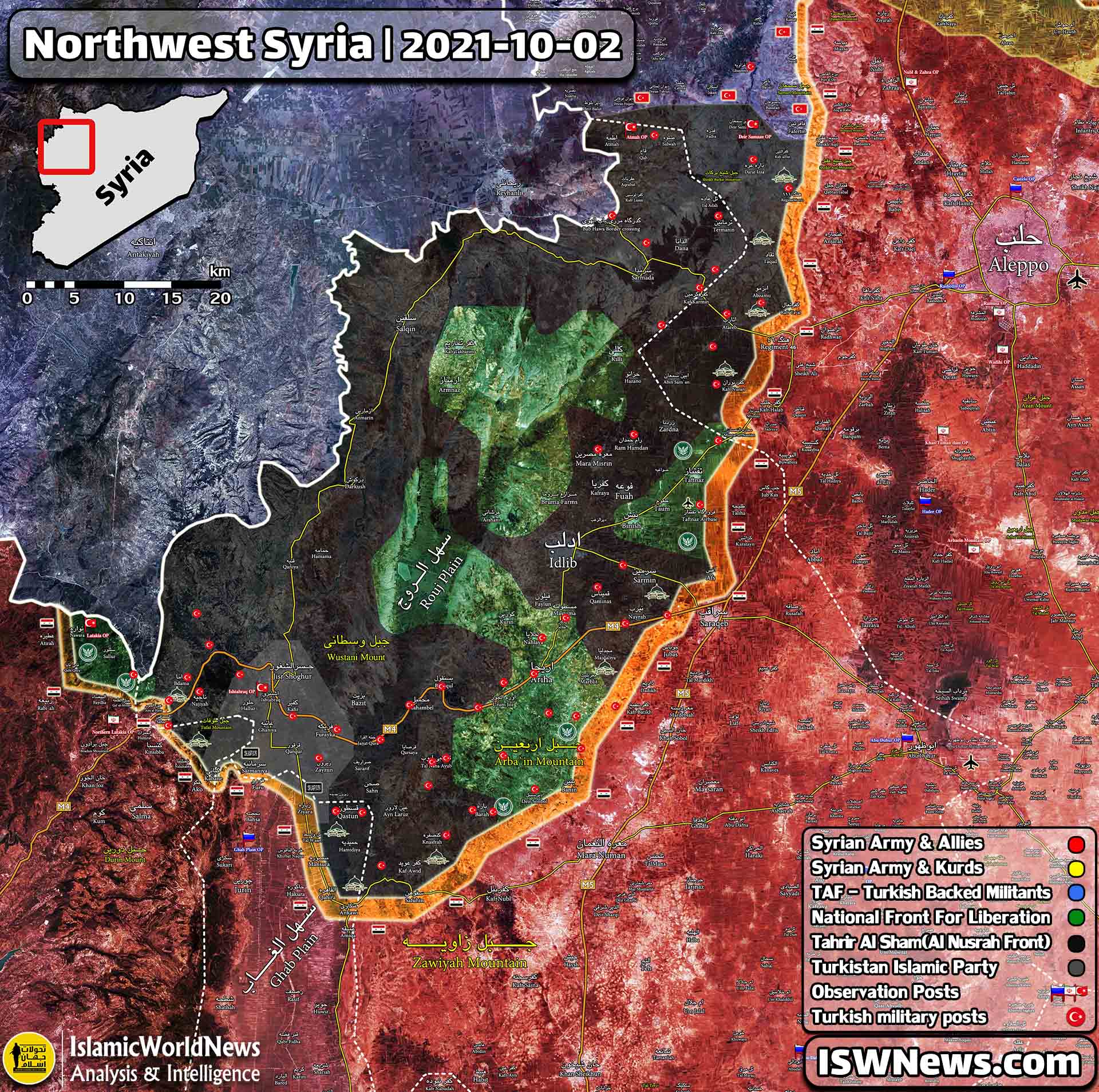
A few days before Russian President Vladimir Putin met with Turkish President Recep Tayyip Erdogan in the Russian port of Sochi, Russian warplanes in a purposeful act bombed positions of Turkish-backed forces near the Turkish military posts in the Idlib region.
The increase in Russian warplanes attacks on militant positions, and even near and around Turkish bases and checkpoints in Syria, is a clear warning to Turkey, and Ankara is well aware of this. Putin’s remarks during a meeting with Bashar al-Assad in the Kremlin show that Russia strongly opposes the continued presence of foreign forces in various parts of Syria, as well as the occupation of Idlib by militants. And this reinforces speculation about talks between Putin and Erdogan on the withdrawal of Turkish troops from Idlib and the cleansing of the province from the militants.
On the other hand, in the past 48 hours, two well-equipped convoys of the Turkish army, including 20 vehicles carrying cement blocks and logistics equipment, entered the Syrian province of Idlib through the Kafr Lusin crossing and headed towards the southern areas of Idlib and the Syrian army contact lines.
The differences between Russia and Turkey in the case of Idlib have caused the two sides to implement their plans and actions more quickly to put pressure on the other side. For this reason, it seems that the movements of different parties in the provinces of Idlib, Aleppo and Hama will increase more in the near future.
The Turkish army is currently stationed in four observation posts and more than 50 military posts in western Aleppo and the Idlib region. Strengthening and increasing the number of these military posts by Turkey has become a challenging issue in the Idlib region. This issue, along with the continued presence of terrorist groups in the region, has made the future of the situation in northwestern Syria even more ambiguous and has dashed hopes for an end to the war in this part of Syria.
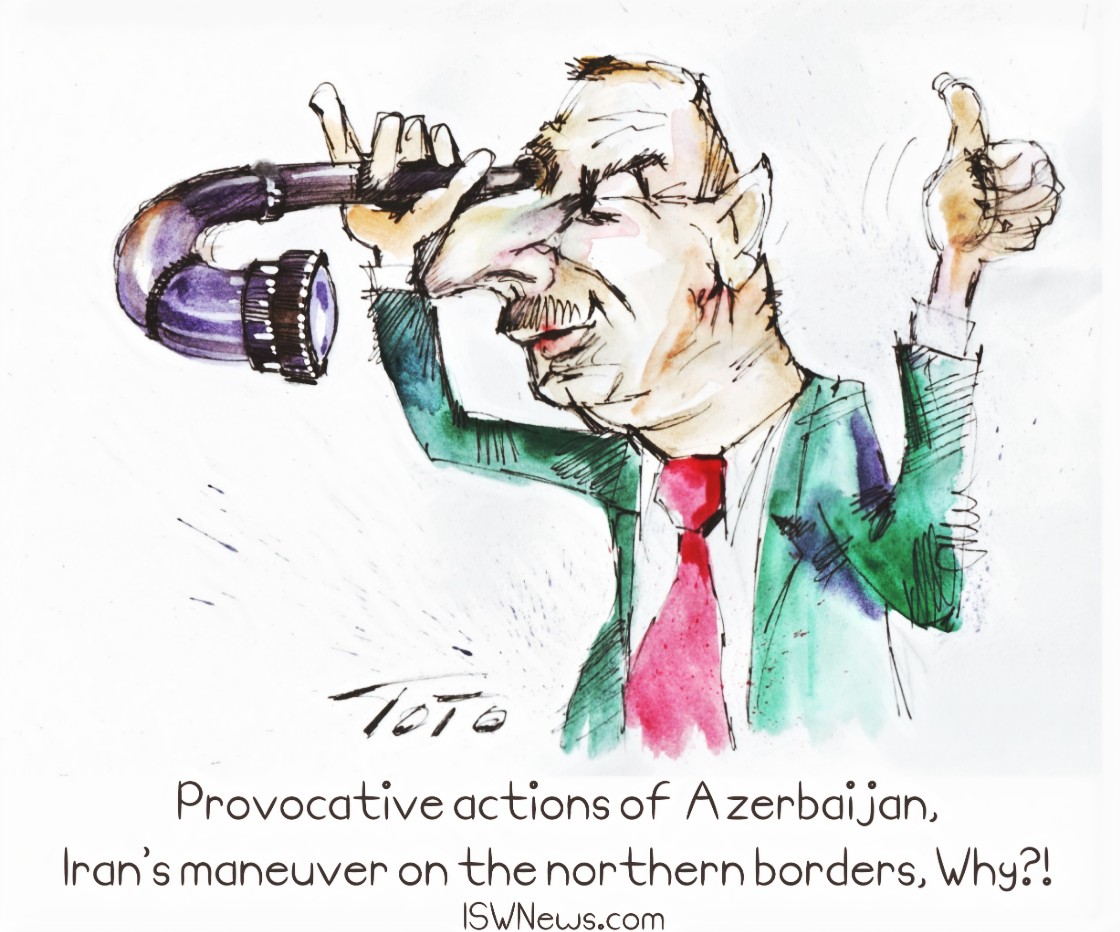
The joint military exercises of the Republic of Azerbaijan with Turkey and Pakistan in the last month, the interruption of the transit route of Iranian trucks and the arrest of their drivers and the sharp statements of the Azerbaijani officials against Iran are important issues in the Caucasus region. What are the goals of Aliyev and his main supporters (Israel and Turkey) in implementing this anti-Iranian project?
The answer to this question is examined in several cases:
1- The success of the Republic of Azerbaijan in the Second Nagorno-Karabakh War was due to the widespread support of Turkey and Israel, the will of the world powers, as well as the inability of the Armenian leaders. This victory has misled Aliyev and other officials in Baku to mistakenly have the illusion and feeling of power against Iran. Therefore, one of the reasons for these anti-Iranian actions of the leaders of the Republic of Azerbaijan is their misunderstanding of regional developments.
2- The confrontation between the Republic of Azerbaijan and Iran is an unequal confrontation. Iran’s military and political power and position are in no way comparable to the Republic of Azerbaijan, even in the case of an alliance with Turkey and Pakistan. On the other hand, the countries of the region will not enter into tension with Iran because of Aliyev, and the harms of this tension far outweigh its benefits. We all know that there is always a political message behind military exercises. Exercise is more of a boast than a military threat, and it is done to prevent military conflict. The Republic of Azerbaijan’s recent exercises with Turkey and Pakistan also served as a warning not to interfere in the Zangezur issue, as well as to announce the support of countries in the region for Aliyev’s government against Iran.
3- Israeli influence on Iran’s borders has always been an important strategy to counter Iran. Aliyev’s government has also entered into closer relations with Israel in recent years, and their debt volume has increased. Hence, the role of Israel in Aliyev’s rhetoric and their tensions cannot be ignored. Therefore, this tension is under the confrontation between the regions of Iran and Israel, and the choice of the name “Khaybar Conquerors” for the Islamic Republic of Iran’s drill on the northwestern borders of Iran is also a proof of this claim.
4- The Republic of Azerbaijan opposes the general policy of Iran in the Caucasus region; And the Iran policy is the policy that pits “unity” against “separatism.” Iran, like Iraq, Yemen, Afghanistan and… opposes any changes in the borders of neighboring countries, including Armenia and the Republic of Azerbaijan. Iran also opposes Azerbaijan plot for the Zangezur area and its Zangezur Corridor, which jeopardize Iran’s economic interests. The detention of Iranian truck drivers on the Armenian border road is also an example of hostage-taking by Turkey and the Republic of Azerbaijan for the Zangezur corridor. In addition, it is said that the Republic of Azerbaijan, in cooperation with Turkey, intended to launch a surprise attack on the southern Armenian province of Syunik, which was thwarted by Iran’s allied policy, and the “Khaybar Conquerors” exercise is in line with this policy.
In this regard, Baku’s actions can be seen as a multidimensional Zionist project, which includes: separatism (emphasis on the separation of Azerbaijani provinces from Iran), ethnicity (Pan-Turkism), security tensions (action against nuclear and political facilities), psychological and media operations, economic issues. (Affecting the economic relations between Iran and Armenia), etc. Given these circumstances, it must be said that if the weakness of Pashinyan and the Armenian authorities in the face of this project continues, their betrayal of Armenia is also certain, and Iran must act alone in the face of the Zionist project. However, considering the recent meetings between the Iranian and Armenian officials, the possibility of such an issue is low, and as the views of Iran and Armenia approach, we will see the opposite front turn to political talks.
Given these circumstances, it should be said that if Armenia acts weakly against this project, Iran will not hesitate to confront the Zionist project and will take more active action. However, considering the recent meetings between the Iranian and Armenian officials and the approaching point of view between the two countries, we are witnessing the opposite front turning to political talks.
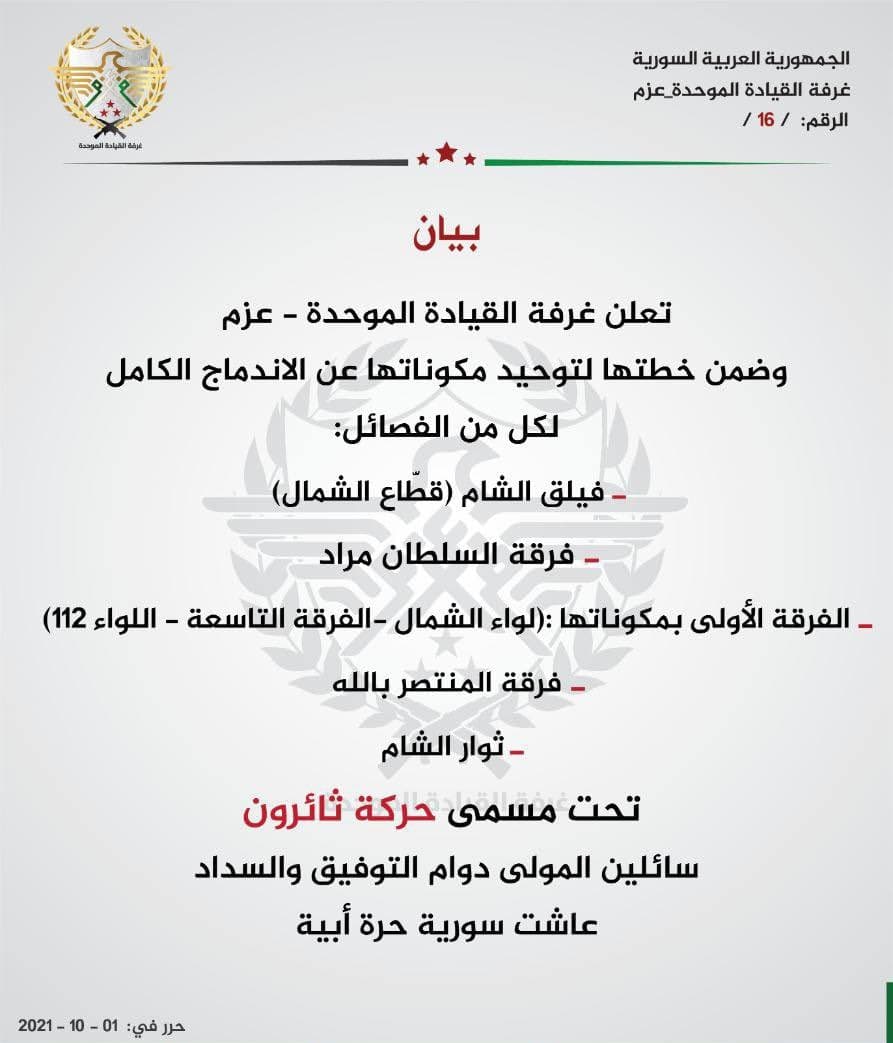
The five armed groups of Sultan Murad Division, Sham Legion (the north sector), Thuwar al-Sham, Muntasir Billah Division, the First Division with its components, the Northern Brigade, the Ninth Division and 112th Brigade will operate under the name of ‘Harakat Thairun’ under the Joint Operation Room “Azm”, which includes several Turkish-backed armed groups. The militants of Harakat Thairun will undergo military training by supervision of Turkish Army officers.
This action took place after the withdrawal of five armed groups from the Azm Operation Room and the formation of a new group called the “Syrian Liberation Front” and caused a confrontation between the “National Front for Liberation” joint operation room and the “Azm Joint Operation Room”. Despite the militants denial, it seems each groups seek to merge and join other armed groups opposed to the Syrian government in their organization.
It is worth mentioning that the move came days after Turkish President Recep Tayyip Erdogan met with his Russian counterpart Vladimir Putin in Sochi, Russia.
1- Aleppo: – Two civilians were killed and 14 others including two children were injured by a motorcycle bomb explosion in the city of Jarablus. – A car bomb exploded in the city of Azaz, north of Aleppo. – Turkish-backed militants bombed the village of Ain Daqnah in the Shahba area. – Turkish army drones fly over Ain Al-Arab.
2- Idlib: – A Turkish military convoy entered the Jabal al-Zawiyah area in Idlib province through the Kafr Lusin crossing. – Syrian Army artillery attacked on militant positions in the villages of al-Fatira and Falifal on the southern outskirts of Idlib.
3- Daraa: Two ex-rebels were killed by unknown gunmen in the city of Tasil and Muzayrab in Daraa province.
4- Raqqah: – Artillery of Turkish-backed forces attacked SDF positions near Ain Issa. – Two SDF members were killed in an attack by unidentified gunmen on a car belonging to SDF on the outskirts of the village of al-Kaltah, 30 km north of the city of Raqqa.
5- Hasakah: – Russian Military Police conducted a patrol on the outskirts of Malekiyah, northeast of Hasakah. – Artillery of Turkish-backed forces attacked village of al-Dardara on the outskirts of Tal Tamar in Hasakah province. – As a result of intra-group clashes between Turkish-backed militants in the city of Ras Al-Ain, a number of “Al-Mu’tasim Division” were killed and wounded.
6- Deir Ezzor: An explosion was reported on the path of the vehicle of the Syrian Democratic Forces (SDF) near the Conoco gas facility.
7- According to the Violations Documentation Center in North Syria, 487 civilians have been killed by Turkish gendarmeries since the beginning of the Syrian crisis.
8- According to the Russian Reconciliation Center in Syria, the militants violated the ceasefire 24 times in the Idlib region, of which 3 were in Aleppo province, 6 were in Latakia province, 1 was in Hama and 14 were in the province.
From the beginning of January to the end of June 2021, Ansar Allah Air and Missile Forces carried out 171 missile and drone operations against the positions of Saudi coalition in Saudi Arabia and the occupied territories of Yemen, the details of which are as follows:
1- Missile and drone attack on the positions of the Saudi coalition in Tadawin camp. Date: January 2.
2- Attack of three drones on the positions of the Saudi coalition in the south of Saudi Arabia. Date: January 15.
3- Attack of two drones on the positions Saudi coalition in southern Saudi Arabia. Date: January 22.
4- Attack of three drones on the positions of the Saudi coalition in Najran, Khamis Mushait and Jizan. Date: February 7.
5- Attack with two missiles on the third military zone in the city of Marib and another on the Tadawin camp. Date: February 8.
6- Missile attack on Sahn al-Jinn camp in the north of Marib city. Date: February 8.
7- Ansar Allah drone attack on Saudi coalition positions in Najran. Date: February 8.
8- Missile attack on the positions of the Saudi coalition in the city of Marib. Date: February 9.
9- Attack of four Sammad-3 and Qasef 2k drones on the positions of the Saudi coalition at Abha Airport. Date: February 10. As a result of this attack, a Saudi plane caught fire and was destroyed.
10 – Drone attack on the positions of the Saudi coalition in Khamis Mushait. Date: February 11.
11- Missile attack on King Khalid Airbase in Khamis Mushait. Date: February 11.
12- Attack with three Qasef 2k drones at King Khalid Airbase in Khamis Mushait and Abha Airport. Date: February 12
13- Attack with a Samamd-3 drone at Abha Airport. Date: 13 February.
14- Attack with two Sammad-3 and Qasef 2k drones at Abha Airport. Date: February 14.
15- Attack with two Sammad-3 and Qasef 2k drones at Jeddah and Abha Airports. Date: February 15.
16- Missile attack on the positions of the Saudi coalition in the city of Marib. Date: February 16.
17- Attack with three drones on Saudi coalition positions in Khamis Mushait. Date: February 16.
18- Missile attack on Saudi coalition positions in Marib. Date: February 17.
19- Drone attack on Saudi coalition positions in Khamis Mushait. Date: February 17.
20- Drone attack on Saudi coalition positions in southern Saudi Arabia. Date: February 17.
21- Missile attack on Saudi coalition positions in the city of Marib. Date: February 18.
22- Drone attack on Saudi coalition positions in Khamis Mushait. Date: February 18.
23- Drone attack on a gathering of Saudi coalition forces east of Al-Jawf. Date: February 19.
24- Missile attack on Saudi coalition positions south of Marib. Date: February 20.
25- Missile attack on Saudi coalition positions in Taif. Date: February 21.
26- Missile attack on the Sahn al-Jinn camp. Date: February 25.
27- Missile attack on the third military zone in the city of Marib. Date: February 25.
28- Attack with two drones at King Khalid Airbase and Abha Airport. Date: February 26.
29- Attack with six missiles on the positions of Saudi coalition in the third military zone and Jabal al-Balq. Date: February 26.
30- Missile attack on Saudi coalition positions in Jizan. Date: February 26.
31- Drone attack on the positions of the Saudi coalition in Khamis Mushait. Date: February 27.
32- In the Fifth Deterrence Balance Operation, in which a Zulfiqar missile and nine Sammad-3 drones attacked Saudi coalition positions in Riyadh. Six Qasef 2k drones also targeted Saudi coalition positions at Abha and Khamis Mushait Airports. Date: February 27.
33- Missile attack on Sahn al-Jinn camp. Date: 28 February.
34- Missile attack on Saudi coalition positions in Jizan. Date: March 1.
35- Missile and drone attacks on Saudi coalition positions in Marib. Date: March 2.
36- Attack with a Qasef 2k drone on the location of the Saudi coalition warplanes at Abha Airport. Date: March 2.
37- Drone attack on Saudi coalition positions in southern Saudi Arabia. Date: March 3.
38- Missile attack on Saudi coalition positions in Marib. Date: March 3.
39- Attack with a Qasef 2k drone on King Khalid Airbase in Khamis Mushait. Date: March 4.
40- Attack with a Quds 2 missile on Jeddah Airport. Date: March 4.
41- Missile attack on Saudi coalition positions in Jizan. Date: March 4.
42- Drone attack on Saudi coalition positions in Jizan. Date: March 4.
43- Attack with three Sammad-3 and Qasef 2k drones at King Khalid Airbase in Khamis Mushait and Abha airport. Date: March 5.
44- Attack with a Qasef 2k drone on the positions of Saudi coalition at Khamis Mushait. Date: March 5.
45- Attack with ten Sammad-3 and Qasef 2k drones at Abha Airport and King Khalid Airbase in Khamis Mushait. Date: March 5.
46- Attack with a Sammad-3 drone on Saudi coalition positions in Khamis Mushait. Date: March 6.
47- In the Sixth Deterrence Balance Operation, in which 10 Sammad-3 drones and one Zulfiqar missile attacked Aramco facilities in the port of Ras al-Tanura and military targets in the Dammam area (located on the southern shores of the Persian Gulf). Also, other areas in Asir and Jizan provinces were attacked with four Qasef 2k drones and seven Badr missiles. Date: March 7.
48- Drone attacks on Saudi coalition positions in Jeddah. Date: March 8.
49- Missile attack on military targets at Abha Airport. Date: March 8.
50- Drone attack on the positions of the Saudi coalition in the port of Yanbu and Khamis Mushait. Date: March 9.
51- Attack with two missiles on Saudi coalition positions in the third military zone in the city of Marib. Date: March 10.
52- Missile attack on Saudi coalition positions in the city of Marib. Date: March 11.
53- Missile attack on a gathering of Saudi coalition forces in Dhale’. Date: March 12.
54- Attack with a missile on a gathering of Saudi coalition forces at the Tariq bin Ziad school in the al-Kadhah area of Taiz province. During the attack, Adnan Raziq, a field commander of the al-Qaeda terrorist group, was killed and Maj. Gen. Fazl Hassan, commander of Mansour Hadi forces in the fourth district, was wounded. The most reliable casualty figures for this missile attack are 16 killed and 52 wounded. Date: March 14.
55- Drone attack on Saudi coalition positions in Khamis Mushait. Date: March 15.
56- Missile attack on Saudi coalition positions in Khamis Mushait. Date: March 15.
57- Missile attack on Saudi coalition positions in Marib. Date: March 16.
58- Attack with a Qasef 2k drone at King Khalid Airbase in Khamis Mushait. Date: March 16.
59- Missile attack on Saudi coalition positions in Marib. Date: March 16.
60- Attack with a Qasef 2k drone at Abha Airport. Date: March 18.
61- Attack with six drones on Aramco facilities in Riyadh. Date: March 19.
62- Attack with two Qasef 2k drones at King Khalid base in Khamis Mushait. Date: March 19.
63- Missile attack on Saudi coalition positions in Marib. Date: March 19.
64- Drone attack on Saudi coalition positions in Jeddah. Date: March 20.
65- Attack with a Qasef 2k drone at Abha Airport. Date: March 20.
66- Drone attack on Riyadh Airport. Date: March 22.
67- Attack with a Qasef 2k drone at Abha Airport. Date: March 23.
68- Drone attack on the Hofuf area in eastern Saudi Arabia. Date: March 24.
69- Missile attack on Saudi coalition positions in Marib. Date: March 24.
70- Missile and drone operations under the title of “National Resistance Day” operation in which Aramco’s facilities at Ras Tanura, Rabigh, Yanbu, Jizan and King Abdulaziz Airbase in Dammam were targeted with 12 Sammad-3 drones and eight Zulfiqar, Badr and Sa’ir ballistic missiles. And other military sites in Najran and Asir were targeted by six Qasef 2k drones. Date: March 26.
71- Missile attack on Saudi coalition positions in Najran. Date: March 26.
72- Drone attack on Saudi coalition positions in Khamis Mushait. Date: March 26.
73- Drone attack on Saudi coalition positions in Khamis Mushait. Date: March 28.
74- Missile attack on Saudi coalition positions in Marib. Date: March 29.
75 – Missile attack on the third military zone in Marib, which killed and wounded more than 11 members of the Saudi coalition forces. Date: March 30.
76- Drone attacks on Saudi coalition positions in southern Saudi Arabia. Date: March 30.
77- Attack with four drones on Saudi coalition positions in Riyadh. Date: April 1.
78- Attack with two drones on Saudi coalition positions in Khamis Mushait. Date: April 2.
79- A missile attack on a gathering of Saudi coalition forces on the outskirts of Kanyis camp. Date: April 2.
80- Missile attack on Saudi coalition positions in Marib. Date: April 3.
81- Drone attack on Saudi coalition positions in Jeddah. Date: April 6.
82- Attack with two drones at King Khalid Airbase in Khamis Mushait. Date: April 7.
83- Missile attack on a gathering of Saudi coalition forces in the north of Marib. Date: April 7.
84- Drone attack on the King Khalid Airbase in Khamis Mushait. Date: April 8.
85- Drone attack on Saudi coalition positions at Abha Airport. Date: April 9.
86- Missile attack on Saudi coalition positions in Jizan. Date: April 10.
87- Drone attack on Saudi coalition positions in southern Saudi Arabia. Date: April 10.
88- Attack with two drones on the Saudi coalition nest at Jizan Airport and King Khalid Airbase in Khamis Mushait. Date: April 11.
89- Missile and drone operations under the name of “30 Sha’ban” operation, during which Aramco’s facilities in Jeddah and Jubail were targeted with 10 Sammad-3 drones, coalition military positions in Khamis Mushait and Jizan with five Qasef 2k drones and 2 Badr-1 missiles. Date: April 12.
90- Joint missile and drone operations in which Patriot depots and bases were attacked with four Sammad-3 and Qasef 2k drones, and Aramco and other sensitive targets with seven Sa’ir and Badr missiles. Date: April 15.
91- Attack with two missiles on the positions of the Saudi coalition in the Sahn al-Jinn and the third military zone in Marib. Date: April 15.
92- Missile attack on Saudi coalition positions in Jizan. Date: April 16.
93- Drone attack on the King Khalid Airbase in Khamis Mushait. Date: April 17.
94- Drone attacks on Saudi coalition positions in southern Saudi Arabia. Date: April 18.
95- Drone attack on military targets at Abha Airport. Date: April 20.
96- Drone attack on King Khalid Airbase in Khamis Mushait. Date: April 22.
97- Attack with two Qasef 2k drones at King Khalid Airbase in Khamis Mushait and one Sammad-3 drone at Aramco facility in Jizan. Date: April 23.
98- Drone attack on King Khalid base in Khamis Mushait. Date: April 23.
99- Drone attack on King Khalid Airbase in Khamis Mushait. Date: April 25.
100- Drone attack on King Khalid Airbase in Khamis Mushait. Date: April 26.
101- Drone attack on King Khalid Airbase in Khamis Mushait. Date: April 28.
102- Attack with two missiles on the Sahn al-Jinn camp in the northern city of Marib, killing and wounding more than 13 Saudi-led forces. Date: April 28.
103- Drone attack on Saudi coalition positions in Jeddah. Date: May 1.
104- Drone attack on the King Khalid Airbase in Khamis Mushait. Date: May 2.
105- Joint missile and drone operations at Najran Airport and King Khalid Airbase in Khamis Mushait, with four Qasef 2k drones and two Badr missiles. Date: May 3.
106- Missile attack on Saudi coalition positions in Marib. Date: May 3.
107- Missile attack on Saudi coalition positions in Marib. Date: May 5.
108- Missile attack on Saudi coalition positions in Marib. Date: May 8.
109- Drone attack on Saudi coalition positions in Khamis Mushait. Date: May 8.
110- Drone attack on King Khalid Airbase in Khamis Mushait. Date: May 9.
111- Missile attack on Saudi coalition positions in Marib. Date: May 10.
112- Drone attack on Abha Airport. Date: May 10.
113- Joint missile and drone operations targeted Aramco facilities, airport and other military targets in Najran with 12 Qasef 2k drones and Sa’ir and Badr missiles. Date: May 13.
114- Drone attack on Saudi coalition positions in Jizan. Date: May 20.
115- Missile attack on the gathering of the al-Qaeda militants in the city of Marib. Date: May 26.
116- Drone attack on Saudi coalition positions in southern Saudi Arabia. Date: May 28.
117- Attack with two Qasef 2k drones at King Khalid Airbase in Khamis Mushait. Date: May 29.
118- Drone attack on King Khalid Airbase in Khamis Mushait. Date: May 30.
119- Drone attack on King Khalid Airbase in Khamis Mushait. Date: May 31.
120- Missile attack on the third military zone in Marib, which killed and wounded more than 17 members of the Saudi coalition forces. Date: June 5.
121- Drone attack on King Khalid Airbase in Khamis Mushait. Date: June 6.
122- Drone and missile attack on the third military zone in the city of Marib. Date: June 10.
123- Drone attack on the positions of the Saudi coalition in Khamis Mushait. Date: June 10.
124- Drone attack on the positions of the Saudi coalition in Khamis Mushait. Date: June 14.
125- Attack with two missiles on the third military zone in the city of Mairib. Date: June 16.
126- Attack with two Qasef drones on Abha Airport. Date: June 17.
127- Drone attack on King Khalid Airbase in Khamis Mushait. Date: June 19.
128 – Attack with 10 Qasef 2k drones on the Saudi coalition training base at the al-Wadiyah crossing, killing and injuring more than 60 troops. Date: June 19.
129- Drone attack on Saudi coalition positions in Najran. Date: June 19.
130- Missile attack on the Saudi coalition base in Taif. Date: June 20.
131- Drone attack on Saudi coalition positions in Khamis Mushait. Date: June 21.
132- Drone attack on the positions of the Saudi coalition in Khamis Mushait. Date: June 22.
133- Attack with a Qasef 2k drone on King Khalid Airbase in Khamis Mushait. Date: June 25.
134- Drone attack on Saudi coalition positions in southern Saudi Arabia. Date: June 26.
135- Drone attack on Saudi coalition positions in southern Saudi Arabia. Date: June 27.
136- Joint missile and drone operation against the positions of the Saudi coalition at the National Guard base in Najran, Abha Airport and King Khalid Airbase in Khamis Mushait, which was carried out with five missiles and five drones. Date: June 28.
137- Missile attack on Saudi coalition positions in Marib. Date: June 29.
138- Attack with two Badr-1 missiles on the Sahn al-Jinn camp and the third military zone in the city of Marib. Date: June 30.
139 – Drone attack on Saudi coalition positions in southern Saudi Arabia. Date: June 30.
Clashes between Ansar Allah and Saudi-led forces on the ground have eased in the past two days, and a new round of talks with the tribes of southern Marib province appears to have resumed. Ansar Allah is trying to prevent more bloodshed by bringing together the remaining tribes in the area.
However, Saudi fighter jets continue to bomb al-Jubah and al-Harib districts heavily, And in the last 48 hours, the Saudi fighter jets have bombed different areas of al-Jubah and al-Harib more than 60 times.
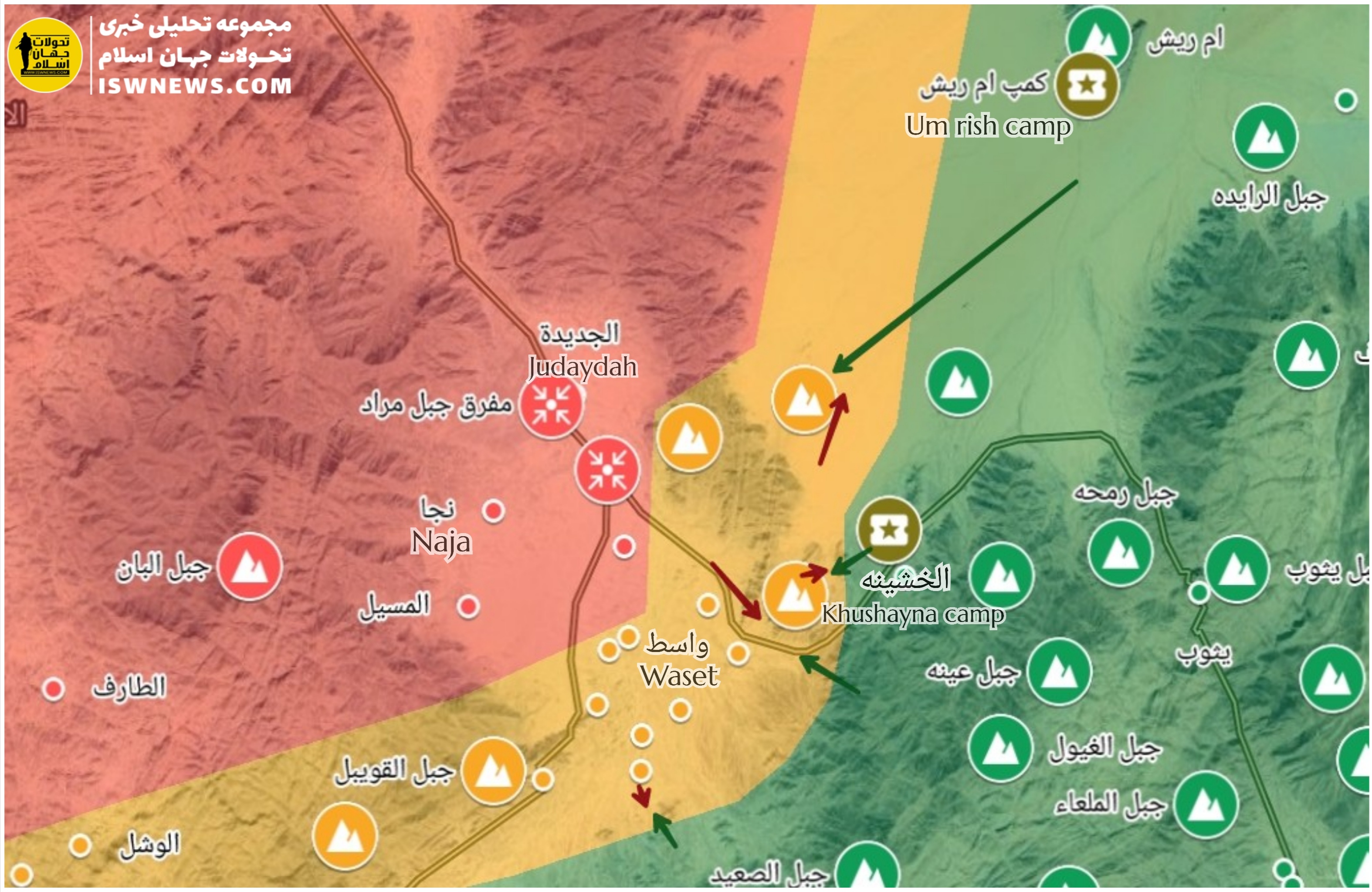
According to the field source of “ISWNews”, on September 29, Ansar Allah managed to complete the liberation and stabilize the progress in the district of al-Jubab, And liberated the Um al-Rish and al-Khushaynah camps from the control of the Saudi-led forces.
Ansar Allah had intensified its attacks to liberate the Um al-Rish camp in the past three days, and on September 29 also attacked the al-Khushaynah camp, and finally the Saudi coalition forces were forced to withdraw from this important defensive line, suffering heavy casualties.
Saudi coalition warplanes have bombed al-Harib and al-Jubah district more than 70 times in the past three days to stop Ansar Allah attacks. In response, Ansar Allah fired several missiles at rallies and other positions of Saudi coalition in the district of al-Jubah.
Clashes continue near the al-Khushaynah and Umm al-Rish camps, as well as al-Zahim and al-Rawdhah areas, and Saudi warplanes have intensified their attacks on Ansar Allah positions.
Breaking the al-Jubah district line of defense is effective in completing the liberation of the southern regions of Marib province and also imposing a siege on the city of Marib.
1- Marib: – Clashes between Ansar Allah and the the Saudi coalition continues in the heights of Al-Juba and Harib. The liberation of the Um Rish and Al-Khushaynah bases is not correct, and the Ansar Allah fighters have not entered these bases so far. – The talks between Ansar Allah and Al-Abdiyah tribes has not been fruitful and some tribes have entered into conflict with Ansar Allah. Now the talks have resumed and the elders are trying to resolve the Al-Abdiyah problem peacefully.
2- Saudi coalition airstrikes: In the past 48 hours, Saudi coalition warplanes bombed Harib and Jubah 51 times, Sarwah 8 times, Madghal 3 times in the Marib province, Al-Khanjar camp 3 times and al-Hazm 2 times in Jawf province.
3- Al-Hudaydah: – The Saudi-led forces violated the ceasefire 391 times in the province in the past 48 hours. – The Saudi coalition drones have bombed Fazah, Jabaliyah, Hays and Tuhayta areas 13 times in the last 48 hours.
4- Saadah: Two civilians were killed and two others were wounded by Saudi coalition artillery shelling in the al-Raqo border area.
5- Dr. Abdul Aziz bin Habtour, Prime Minister of the Yemeni Salvation Government, condemned the conference on normalization of relations with the Zionist regime in the Iraqi province of Erbil.
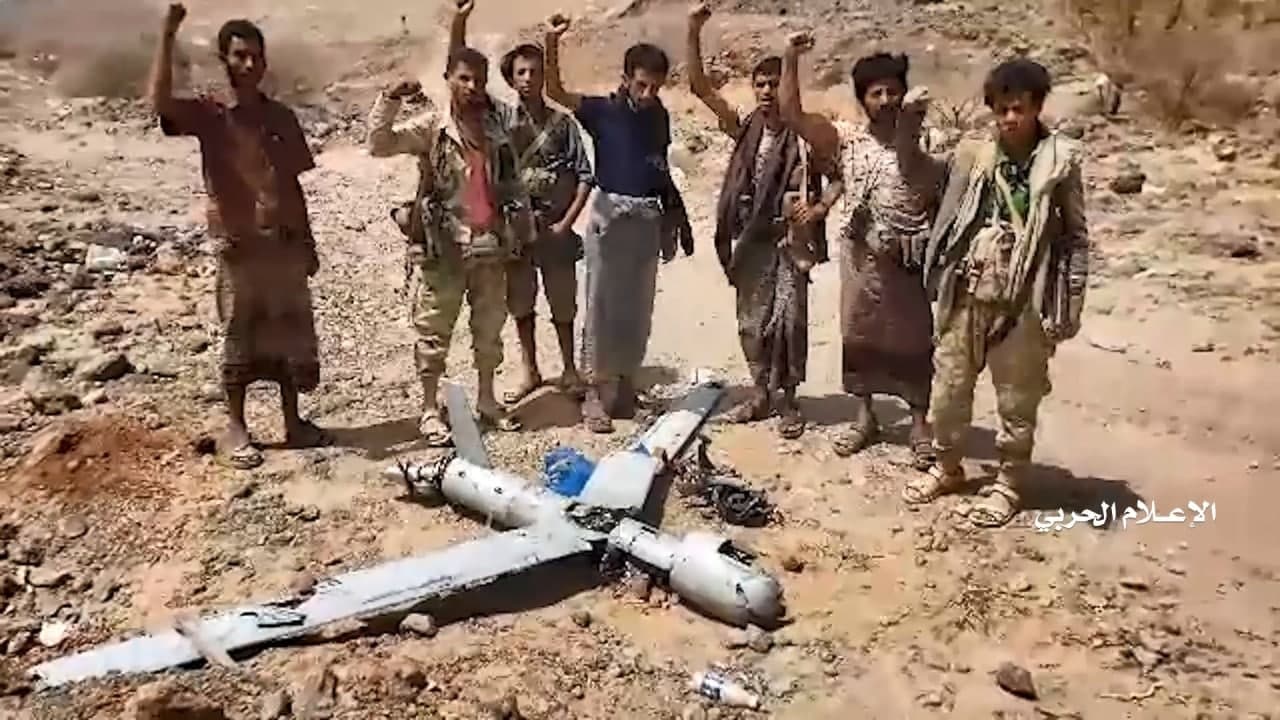
According to the spokesman of the Yemeni Armed Forces, Brigadier General Sari’, the drone was shot down by Ansar Allah air defense this morning in the skies of the Madghal district in the western part of Marib province.
This is the fourth US Scan Eagle drone to be shot down by Ansar Allah in Yemen. The first US Scan Eagle drone was shot down on June 19, 2021, and the second on June 21, 2021 at the al-Mashjah heights in western Marib province and the third on August 14, 2021 in Marib province.
Scan Eagle is a spy drone equipped with an electro-optical and infrared camera that does not require a runway to fly. The drone can fly for more than 20 hours, which allows for reconnaissance operations.