Tag: Ansar Allah

  • The Role of Yemen in the Competition in the Horn of Africa

    The Role of Yemen in the Competition in the Horn of Africa

    In the 21st century, Persian Gulf countries have set ambitious geopolitical objectives, heavily relying on their rich oil revenues. As this trend continues and the oil market remains volatile, diversifying income sources becomes essential. Saudi Arabia’s “Vision 2030,” which focuses on expanding the non-oil sector and investing in foreign assets, aligns with this goal.
    Consequently, as oil resources decline, the Persian Gulf nations are aiming to diversify their economies and safeguard key assets like ports and farmland. The 2008 global financial crisis further accelerated this effort, prompting the Gulf countries to make significant investments in the Horn of Africa to broaden their economic bases.

    Recently, Saudi Arabia’s Red Sea Gateway Terminal (RSGT) signed a 30-year contract with Djibouti Ports and Free Zones Authority (DPFZA) to operate and develop the port of Tajoura. RSGT aims to turn Tajoura into a major multi-purpose terminal, expecting it to handle five million tons of cargo annually, strengthening its role as a gateway for Ethiopian imports and exports. However, there has been a shift from purely economic involvement to more direct political and military actions, with Gulf states establishing military bases and brokering peace in the region. Saudi Arabia’s strategy in the Red Sea focuses mainly on security, evident in its diplomatic and military moves such as a 2017 defense agreement with Djibouti and a 2018 peace treaty between Ethiopia and Eritrea. Its leadership in creating the Red Sea and Gulf of Aden Council in 2020 underscores its commitment to regional security cooperation. Riyadh’s presence in the Horn of Africa appears aimed at controlling the Red Sea to counter threats, especially from Yemen’s Ansarullah. It’s noteworthy that Western media claim Yemen’s Ansarullah and Somalia’s Al-Shabaab are cooperating in arms shipments.

    UAE Movements
    While the UAE and Saudi Arabia often pursue Western strategies in various regions, this has occasionally caused rivalry, as seen in Sudan and eastern Yemen. Consequently, much of the UAE’s effort to expand influence in the Horn of Africa revolves around controlling western Yemen to attain its objectives in the oil-rich Hadramaut area. This region has recently become a conflict zone involving tribes near Saudi Arabia.
    The UAE has adopted a more assertive approach, establishing a strong military and economic footprint across the Horn of Africa. Over the last ten years, it has developed military bases in Eritrea, Somalia, and Ethiopia. Its air base in Assab, Eritrea, symbolizes Abu Dhabi’s commitment to maintaining a lasting presence in the area. Although this base was later dismantled, the UAE’s control over port rights in Mukalla, Aden, and Berbera indicates its strategic goal of dominating maritime routes and influencing the Red Sea and Gulf of Aden regions.

    In fact, the events in Yemen and the Horn of Africa are closely linked. Growing influence in this region could enhance Yemen’s power by diminishing Ansar Allah’s influence. Interestingly, the Emirates’ ambitions appear more aggressive and far-reaching than Riyadh’s. They are even prepared to collaborate closely with the Zionist regime in this area.
    Recently, Western media have reported that Iran and Yemen’s Ansar Allah are gaining influence in the Horn of Africa, particularly in Eritrea, Djibouti, and Somalia. This situation has prompted the Emirates and the Zionist regime to adopt a more coordinated strategy to address the issue. Some sources suggest that, along with Ethiopia, these two regimes have formed a secret alliance in the region.

    Eritrean President Isaias Afwerki recently made surprising statements, blaming the current Yemen crisis on the militarization of the country’s islands. He also emphasized that coastal nations should be responsible for securing the Red Sea, rather than relying on foreign military bases. His primary concern is the potential establishment of a military base on Yemen’s “Zaqr” island by the Emirates, which could pose a serious threat to Eritrea if completed. The presence of the Zionist regime via the Emirates on Yemeni islands threatens regional sovereignty and international interests. These actions form a dangerous shadow alliance that endangers Yemen’s sovereignty and risks transforming it into a shared military domain of the regime and Abu Dhabi.

    Another key point near the Emirates axis involves Somaliland, which is strongly supported by the Zionists and Ethiopia, each with different aims. Ethiopia sees Somaliland as a route to the sea to further its economic ambitions. Meanwhile, Abu Dhabi and Tel Aviv aim to establish a base there, possibly to target Yemen’s Ansarullah.

    Along with security concerns, the Emirates also aims to achieve its economic objectives, emphasizing food security. The region’s potential for agriculture and its proximity to the Gulf states make it appealing as a source of essential foods. The Horn of Africa plays a critical role in the Gulf states’ food security due to its fertile land and established trade routes. The Gulf region relies heavily on food imports, obtaining 85 percent of its staple foods from other countries.

    The Southern Transitional Council’s sinister plan for Ansar Allah
    Besides the explanations about the UAE’s regional influence, the Times reports that a delegation from the Southern Transitional Council recently visited Tel Aviv. They expressed willingness to recognize the “Israeli regime” (supporting the Zionist regime) and to sign the “Abraham Pact” in favor of Trump. However, this is conditional on the Zionist regime and the US participating in a joint ground (Southern Transitional Council) and air (Zionist regime and US) attack on Yemen’s Ansar Allah as a “common problem,” and on the Southern Transitional Council being able to establish the country of “South Yemen.”

    Conclusion
    Generally, the UAE and Saudi Arabia’s roles in the Horn of Africa involve both competition and cooperation. While they share the goal of countering Iran and Yemeni AnsarAllah’s influence, they also have significant disagreements, as dominance in this region can boost their rivalry over Yemeni oil resources. The main reasons for their presence in the Horn of Africa can be summarized as follows:

    1- As the new global order emerges with multipolarity and diminishing US influence, Washington is delegating its objectives to other regions. Boosting the presence of the UAE, Saudi Arabia, and the Zionist regime aligns with US interests. Similarly, recognizing Somaliland in exchange for permission to establish a military base fits this pattern.

    2- The Persian Gulf countries’ involvement in the Horn of Africa and the broader Red Sea region is driven by security needs and economic ambitions. Heightened security concerns have increased the region’s importance, especially as Iran’s influence, supported by the “axis of resistance” and strengthened by the Yemeni war, extends to the Horn of Africa. Naval bases serve as strategic footholds, broadening the Persian Gulf’s influence over regional politics and economics. Recently, Western media have suggested cooperation between Ansar Allah and Somali al-Shabaab, despite their differing motives.

    3- Gaining control over the Horn of Africa allows influence into East, North, and even the Sahel regions of Africa. For instance, without Eritrean cooperation, access to trade routes leading to the Sudanese port would be difficult. Cooperation with Ethiopia could expand influence in Central and East Africa. However, Egypt, an Arab country typically aligned with the UAE and Saudi Arabia, often holds opposing views in this region, which may impact future political dynamics.
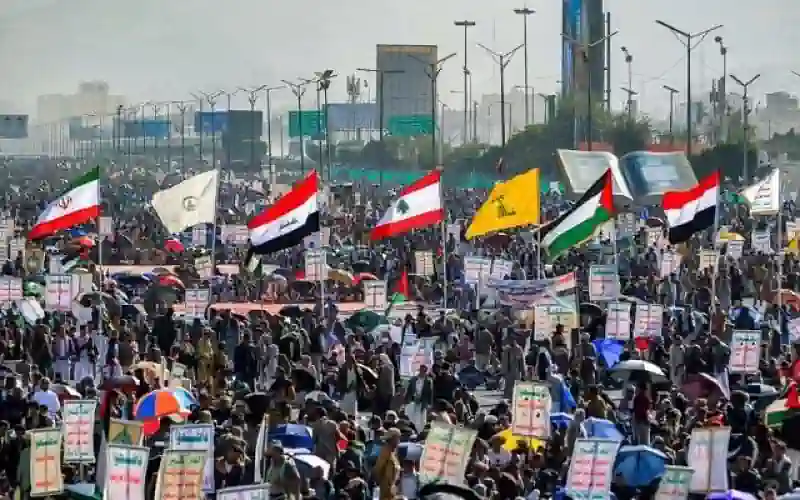
  • U.S. State Department Spokesperson: Washington Disappointed by Iraq’s Reversal on Asset Freeze for Hezbollah and Ansar Allah

    U.S. State Department Spokesperson: Washington Disappointed by Iraq’s Reversal on Asset Freeze for Hezbollah and Ansar Allah

    He stated: “The United States expects Baghdad to take concrete measures against Iran-backed armed groups, including those operating inside Iraq. We are disappointed by Iraq’s retreat from the asset freeze targeting Hezbollah and the Houthis. Hezbollah and the Houthis pose dangers to both the region and the world, and all countries must ensure their territory is not used by these groups or other Iranian proxies for training, fundraising, acquiring weapons, or carrying out attacks. Washington will continue pressing Iraq to curb the activities of Iran-aligned groups that threaten U.S. and Iraqi interests.”

    The spokesperson’s frustrated reaction underscores that Washington views Baghdad’s reversal as a setback in its broader campaign to pressure the “Axis of Resistance.” In recent weeks, the U.S. has sought to leverage economic tools and political pressure to compel Iraq to align with its extraterritorial sanctions. Iraq’s change of stance must be understood within the context of domestic complexities and the government’s concern over backlash from political and social factions close to the resistance camp.

    Baghdad recognizes that any direct move against Hezbollah or Ansarallah would be perceived by Iraq’s Shiite public opinion and allied armed groups as siding with U.S. policy, potentially destabilizing the country’s internal political and security balance.

  • Unconfirmed Reports of Abdul Karim al-Houthi’s Critical Condition After Sana’a Attacks

    Unconfirmed Reports of Abdul Karim al-Houthi’s Critical Condition After Sana’a Attacks

    Since the Israeli attacks, Abdul Karim has not appeared publicly or attended any meetings. In the meantime, his deputy, Abdul Majid Saghir Ahmed al-Murtadha, has taken charge of running the Interior Ministry and is actively engaged in security affairs.

    Given Abdul Karim al-Houthi’s absence from public appearances, the reports seem credible. His exact health status remains unclear, and Ansar Allah has not issued any statement on the matter. Despite being a relatively lesser-known figure in Yemen, he is considered an influential personality within the AnsarAllah movement.

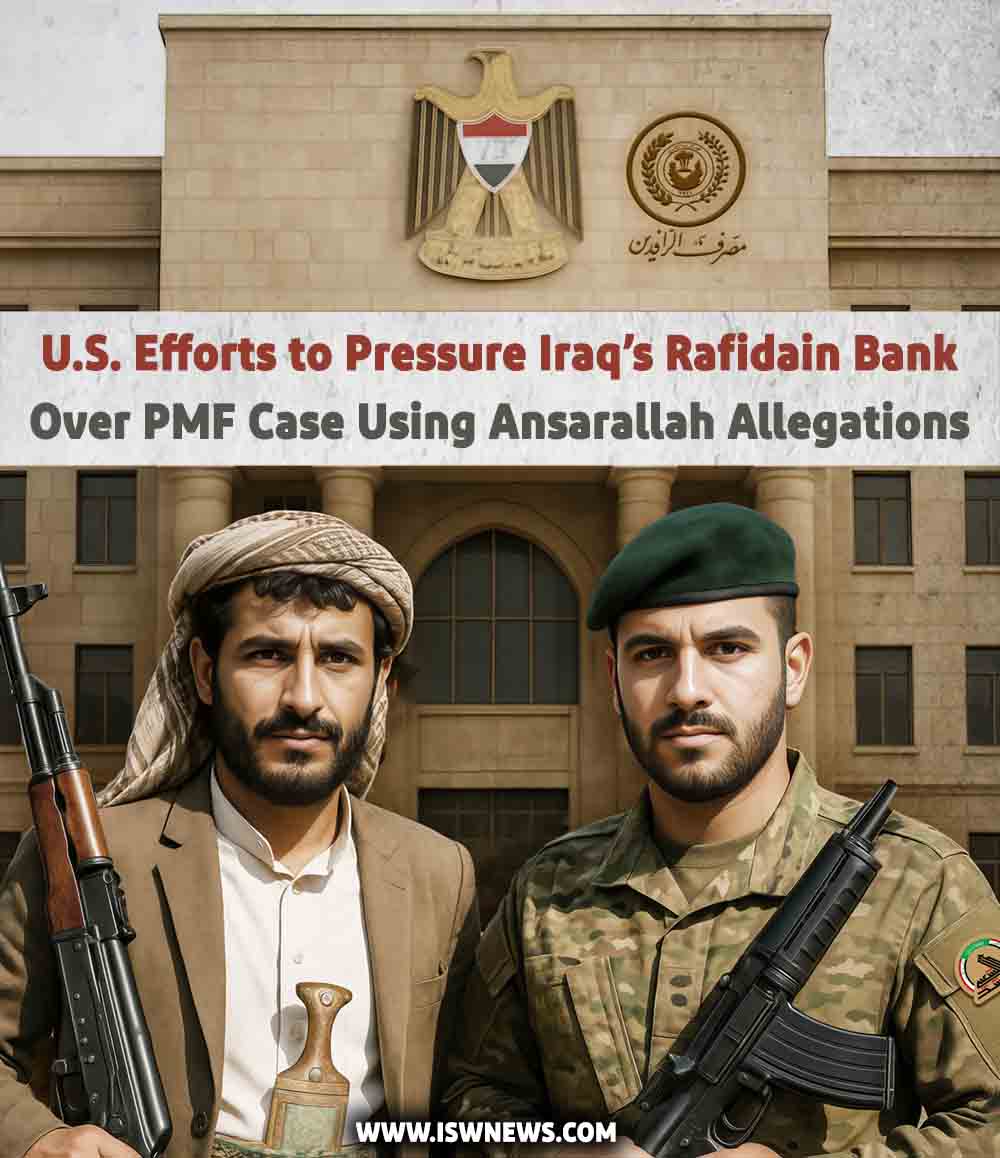
  • U.S. Efforts to Pressure Iraq’s Rafidain Bank Over PMF Case Using Ansar Allah Allegations

    U.S. Efforts to Pressure Iraq’s Rafidain Bank Over PMF Case Using Ansar Allah Allegations

    This issue was raised during the April 29 Iraqi-American summit in Washington, attended by Dr. Michael Faulkender, U.S. Deputy Treasury Secretary; Fuad Hussein, Iraq’s Foreign Minister and Deputy Prime Minister; and Nazar Al-Khairallah, Iraq’s Ambassador to the U.S.

    According to the meeting minutes, U.S. officials warned that Rafidain Bank must cease all financial ties with Ansarallah and relocate its Sana’a branch to Aden—the seat of Yemen’s UN-recognized government.

    On the other hand, Iraqi Foreign Minister Fuad Hussein emphasized during the meeting that Iraq only engages with Yemen’s official government and that Ansarallah has no access to Iraq’s financial system. He also pledged to personally follow up to ensure no transactions are conducted with the group.

    Dr. Sadeq Ali Hassan, spokesperson for Iraq’s embassy in Washington, stated in a letter to Fox Business that “claims about Rafidain Bank processing payments for Ansarallah are completely false.”

    He added: “There is no banking correspondent relationship with Yemeni financial institutions, and due to prevailing political, security, and logistical conditions, it is operationally impossible to conduct any cash or digital transactions within or outside Yemen’s financial sector.”

    According to the embassy’s statement, “Rafidain Bank’s Sana’a branch has been completely closed since 2017, and under the directive of the bank’s general management and coordination with Iraq’s central bank, all financial activities in Yemen have been permanently suspended. The branch holds no liquidity, lacks SWIFT access, and has no operational infrastructure.”

    When asked about accounts linked to PMF—designated by the U.S. as a terrorist group supported by Iran—the Iraqi embassy responded: “Rafidain Bank no longer holds any PMF-related accounts. All such accounts and payrolls have been officially transferred to Al-Nahrain Islamic Bank and are under Iraqi government oversight. The Sana’a branch has no involvement or activity in this matter.”

    U.S. Congressman Joe Wilson condemned the situation and stated he would push to reduce Iraq’s budget during upcoming discussions. He also urged the U.S. Treasury to sanction Rafidain Bank.

    Michael Knights, senior fellow at the Washington Institute and expert on Iraqi military and security affairs, told Fox Business: “Since February 2025, Congress has been calling for sanctions on Rafidain Bank due to its alleged role in facilitating large-scale money transfers to Iran and its allied groups. This has placed Rafidain at serious risk, as many members of Congress are familiar with its name. However, no sanctions have been imposed so far.”

    Fox Business, citing an Iraqi source familiar with the April meeting, claimed: “Rafidain is Iraq’s most opaque bank and has never undergone external auditing.”

    The source also alleged: “Rafidain funds PMF projects and provides unsecured loans to militias. If it refuses transparency and audit requirements, the U.S. should cut its access to dollars.”

    The Fox Business report suggests that the narrative linking Rafidain Bank to Ansarallah is primarily aimed at pressuring Iraq and the bank to accept U.S. conditions. Notably, according to The Wall Street Journal, the U.S. has already sanctioned 14 Iraqi banks for aiding Iran and other sanctioned entities in the Middle East.

    In conclusion, it appears that the U.S. and its allies are attempting to weaken PMF and other resistance groups by restricting their financial resources, ultimately pushing them toward dissolution and reduced influence.

    Source:
    https://www.foxbusiness.com/fox-news-world/iraqi-state-bank-accused-processing-payments-houthi-terrorists-who-disrupt-red-sea-commerce
    https://kurdistantv.net/fa/news/235333

  • White House: Ansar Allah Added to Terrorist List

    White House: Ansar Allah Added to Terrorist List

    The White House outlined the new US administration’s policy towards Yemen, emphasizing cooperation with regional partners to dismantle Houthi capabilities, operations, and resources.

    Trump’s decision was influenced by a proposal from US Republican senators titled the “Dismantle Iran’s Proxy Act,” which calls for a new strategy to confront Yemen, including measures to reduce Yemen’s capabilities in the Red Sea and cut off humanitarian aid.

    The US previously listed the Yemeni Ansar Allah movement as a terrorist group during Trump’s first administration. Biden also announced on January 17, 2024, that he considered the Ansar Allah movement a terrorist group, but the process was not implemented by the end of his administration.

  • Ansar Allah Repels Saudi-Backed Militant Assault in Taiz

    Ansar Allah Repels Saudi-Backed Militant Assault in Taiz

    he reports regarding a heavy attack by the Saudi coalition on the northern axis of Saada and northern Taiz—claiming the killing and capture of more than 70 Houthis and the subsequent escape of Houthis from northern Taiz—are not true, according to IWN field sources in Yemen.

    This morning, militants from the Islah Party attacked Ansar Allah positions at the air defense base and Al-Qari’ height on the northern front of Taiz, but these assaults were repelled by Ansar Allah fighters.

    A ground attack on Ansar Allah is considered to be part of a strategy by the US and Israeli regime aimed at reducing the pressure caused by Ansar Allah’s missile and drone attacks on occupied Palestine, as well as addressing the naval blockade imposed on Israel.

    In this context, American military advisors have consistently urged the Southern Transitional Council, Al-Amaliqa forces, Tariq Saleh, and other groups aligned with the Saudi coalition to initiate a military offensive against Ansar Allah positions. However, these efforts have not yet yielded results.

    It is important to note that the groups affiliated with the Saudi coalition lack the specialized capabilities and resources necessary to effectively engage Ansar Allah on their own. However, their combined forces and coordinated actions could pose a challenge to Ansar Allah.

  • Mossad, CIA Set Up Joint Chamber For Yemen Operation

    Mossad, CIA Set Up Joint Chamber For Yemen Operation

    In accordance with Western media reports from US diplomats, the Tel Aviv regime’s Mossad and the US’s CIA have kicked off new measures to deal with the escalation in Yemen, and to this end, a joint operations room has been set up under the supervision of intelligence officers of the CIA and Mossad and with the involvement of Yemeni groups opposed to the Ansar Allah movement.

    This act came after Saudi Arabia rejected the US proposal to initiate a confrontation and take leadership reins at the internal fronts against the Yemeni Armed Forces.

    According to the Western sources, US Ambassador to Yemen Steven Fagin held a meeting with the leaders of Emirati-affiliated militant groups in Yemen, which was mediated by UAE officials, and called on the Yemeni armed factions to put aside their differences and unite to face the main problem, which he believes is the Ansar Allah movement. In the multilateral meeting, Fagin stressed the full support of the United States for the Yemeni militant groups.

    The US move to provoke the opponents of the Ansar Allah movement in Yemen comes after the failure of the US-UK coalition to prevent missile and drone strikes by the Yemeni armed forces against Israeli ships as well as vessels bound for the regime.

    The US officials are of the opinion that by the use of a ground confrontation, they can divert the focus of the Ansar Allah fighters from the Red Sea and the Gulf of Aden with the aim of preventing the resumption of missile and drone assaults on Israeli positions in occupied territories of Palestine. Meanwhile, the Ansar Allah’s leadership warned Western foes against any adventurous move on Yemeni soil, arguing that the enemy would be astonished in the ground conflict as well.

  • Ansar Allah Warns Saudi Arabia Against Getting In Way Of Yemen War With Israel, Its Allies

    Ansar Allah Warns Saudi Arabia Against Getting In Way Of Yemen War With Israel, Its Allies

    Al-Houthi issued a statement on the ongoing developments in the region, especially in Palestine, noting that the escalation of pressure and its consequences will never affect the Yemeni people’s firm and principled position in support of the Palestinian people.

    He said that we assure our Mujahideen brothers in the Gaza Strip, the Palestinian people, and all the freedom-loving people of the world that whatever the Saudis do against us will never succeed and we will not retreat from the priority of supporting the Palestinian people.

    The Ansar Allah leader also noted that the Saudis are working for the United States, and this is a terrible stupidity in every sense; thus, the Saudis must stop their wrong and unjustified path, and their words are unjustified and unacceptable under the pressure of the United States.

    Leave us alone in the confrontation with the United States and tell them to fight us with all its capabilities, because they have much more resources than you, Al-Houthi underlined, warning that you will not succeed in stopping or limiting our operations in support of the Palestinian people, and you will lose in the process.

    As to the Israeli regime’s atrocities against Palestinians living in the Gaza Strip, he said, the crime of genocide in Gaza must revive the conscience of human beings and arouse a sense of responsibility in every human.

    He further appreciated the people of Morocco who did not follow the orders of their puppet and traitorous regime, which is loyal to Israel.

    According to the Yemeni official, there were demonstrations in Bahrain and calls for support for Palestine.

    He also pointed to the method of boycotting US and Israeli goods as a very important way, which can be implemented by people in all countries.

    The official went on to say that the Ansar Allah movement supports negotiations for ceasefire in Gaza under the supervision of the Hamas movement.

    Referring to the Yemeni Armed Forces’ operations against ships affiliated with Israeli regime and its allies in the Red Sea and other waterways, he noted that the United Kingdom announced the withdrawal of its last warships from the Red Sea and the Gulf of Aden.

    The Americans, the British, and before them the Israelis realized that they were facing a threat that they were unable to confront, he explained, adding that extremely fast, hypersonic and lethal missiles are what terrified even the American aircraft carrier.

    The Americans describe the escape of their aircraft carrier as an unprecedented event in the history of wars, he stated.

    According to the Yemeni official, 10 ballistic and cruise missiles as well as drones were launched in the last week.

    The number of ships targeted by Yemeni forces has reached 166 ships linked to Israel, the United States and the United Kingdom, he announced, adding that the traffic of ships linked to the United States and Britain has decreased in recent months, while the movement of ships linked to the Israeli enemy has almost stopped.

    He added that the US carried out 8 attacks on al-Hudaydah and Hajjah governorates this week, bringing the total number of bombings since January 2 to 570 attacks and bombardments at sea.

    Some 57 Yemeni have been martyred and 87 others have been wounded in the US-British attacks, Al-Houthi concluded.

  • Ansar Allah Movement Shoots Down 8th US MQ-9 Drone

    Ansar Allah Movement Shoots Down 8th US MQ-9 Drone

    This drone was spotted by the Yemeni air defense forces in the afternoon of the previous day and was hit by a surface-to-air missile. The wreckage of the drone crashed near a camp for Yemen internally displaced persons in the Al-Khaseef area in the Alwadi district of Marib Governorate.

    This drone is the 8th MQ-9 of the US Army that has been shot down during the Yemen war. Four out of this drones were downed after the start of the Yemeni military operation in support of Palestine.

  • Leader of Ansar Allah: Inaction, Surrender Not Supported in Yemen

    Leader of Ansar Allah: Inaction, Surrender Not Supported in Yemen

    The key parts of the speech by the leader of the Ansar Allah movement and the Yemeni revolution, on the occasion of the anniversary of the Cry Against the Arrogant Powers are as follows:

    – The martyred leader (Hussein Badreddin al-Houthi) did not start his Quranic plan based on military power and strength and protection, but rather started from scratch under difficult conditions.

    – The United States attack after the 9/11 events in 2001 was the most dangerous attack on Muslims and paved the way for expanding conspiracies, which were prepared before that event.

    – It is regrettable that the Arab and Islamic media outlets at that time expressed sympathy with the US attack to intimidate the people of our nation and paved the way for the psychological defeat of Islamic countries.

    – Most Islamic regimes also opened the way for US influence and the establishment of US military bases.

    – The Islamic Ummah is unaware of the threat and danger of the enemy. This threat starts from the occupation of Palestine and its sanctities. Despite the events currently taking place in Gaza regarding the Zionist crimes, what is preventing numerous people in the Arab world from taking to the streets in protest?

    – In many Arab countries, if demonstrations in support of the Palestinian people were held, they would be suppressed and faced with arrests and deaths.

    – The enemy’s struggle with the Quranic plan failed, and the regime at the time did not achieve its goal of appeasement and proximity to the Americans.

    – The Quranic plan in this stage has a distinguished position in the region and the world in support of Palestine.

    – The option of inaction and surrender is not supported by our nation, and the option of occupation by the United States and Israel is not the way to salvation for nations either. The consequence of loyalty to the US and Israel is conspiracy against one’s own nation; so, it is doomed to remorse.

    – The efforts of some to conclude security agreements with the Americans will bear no fruit, but will open the door to permanent extortion. The Americans do not protect anyone, but plunder their wealth.

    – International variables indicate the decline of the US and the emergence of other international powers. With the decline of the United States, Muslims are absent, and some even tend to join this or that power.

    – Muslims should know that Israel is their enemy, and if they become friends with it, nothing will change within its culture and policies.

  • Yemeni Army Setting Up Underground Missile Bases

    Yemeni Army Setting Up Underground Missile Bases

    The satellite images analyzed by the International Institute for Strategic Studies (IISS) show that the Yemeni army is taking steps to expand its underground military facilities by creating several bases in the provinces of Sanaa and Saada.

    In the past, the Ansar Allah movement had used natural caves and simple small tunnels to protect its fighters from air strikes by the forces of former Yemeni president Ali Abdullah Saleh, and even to deploy its own armed forces. But in recent years, this method has evolved, and completely new underground missile facilities are under construction. These underground facilities were formed before the Ansar Allah movement’s confrontation with the US-UK coalition, indicating that Yemenis had been preparing themselves for future confrontations with the US and other Western powers for years.

    According to the satellite images of this report, the Ansar Allah movement is constructing and developing underground military bases in the Al-Hafa area in southeastern Sanaa, the Attan area in southwestern Sanaa, and the eastern heights of Saada.

    Comparing of the latest satellite images with pictures from years and months ago shows that the debris from the tunnel entrances has been cleared and new routes have been created for the passage of new and heavy vehicles leading into the tunnels. The images of the Al-Hafa area in early 2018 and March 2022 indicate the development of one of the underground infrastructures of the Yemeni army.

    In the Jabal Attan area of Sanaa city, the Ansar Allah movement has in fact expanded the previous Scud missile base of the Yemeni army (during the tenure of Ali Abdullah Saleh), and in the first half of 2023 has started constructing a large tunnel, indicating work on a major underground facility.

    Ansar Allah underground base in Attan area, southwest of Sana’a city

    In late 2022, the Ansar Allah movement began work on new facilities in a valley east of the city of Saada. Satellite images from February 2024 show three wide tunnel entrances with large amounts of excavated soil piled next to them, indicating heavy vehicle activities. Two other sites near Saada have similar characteristics in relation to the construction of underground military facilities, though they cannot be definitively identified.

    After the initial agreement and ceasefire establishment between the Ansar Allah movement and Saudi Arabia in April 2022, the Yemenis have launched extensive efforts to renovate and expand their military facilities, particularly missile and air bases. The Ansar Allah movement’s missile and drone arsenal, as well as the fighter jets and helicopters left over from Ali Abdullah Saleh’s era, require more secure deployment locations, and Yemen’s military bases are being further developed to this end.

    The air strikes by the Saudi-led coalition in the early years of the Yemen war and the destruction of a large portion of Yemen’s air force assets showed that the country’s army urgently needs secure bases to maintain its equipment, and the idea of creating underground bases is the best solution in this regard. The scale of these underground bases, the size of the entrances, and the volume of the excavations indicate that the Ansar Allah movement is not concerned about the disclosure of the locations of these facilities and has taken the necessary security precautions in this regard.

  • Leader Of Yemeni Ansar Allah: Iran’s Response To Israel Powerful

    Leader Of Yemeni Ansar Allah: Iran’s Response To Israel Powerful

    The important parts of Sayyed Abdul-Malik Badreddin al-Houthi’s speech, the leader of the Ansar Allah movement, in his speech about the recent developments in Palestine and the region, are as follows:

    – The official position of most Arab and Islamic countries is led by those who have no inclination to support Palestine. Some are indifferent, some are complicit in aggression, and some in a few regions aid the enemy.

    – The Takfiri movement is a major seditious movement to which tens of thousands belong, but its actions under the banner of jihad are not on the right path.

    – The Takfiri movement carried out more than four thousand suicide operations in Iraq under the banner of jihad. The Takfiri movement, under the guise of Islam, committed crimes such as knife slaughter, mutilation of bodies, etc. The movement of the Takfiris, with the huge financial support of Arab governments and their political and media support, killed hundreds of thousands of Muslims.

    – Where is the Takfiri movement in the face of the Israeli enemy, which is considered the first enemy of Islam according to the Quran?! The Takfiris did not act militarily to support Palestine, nor did they do so on a media level.

    – We offer our condolences on the martyrdom of the sons and descendants of our dear fighter brother, Ismail Haniyeh, and we commend their faith and jihad positions.

    – The Americans still insist on preventing a ceasefire and insist on continuing their aggression and crimes in Gaza.

    – Before Iran’s response, serious and intense efforts were made to create obstacles and restrain Iran’s reaction.

    – The United States and those associated with them have presented many temptations and offers to our Iranian brothers to dissuade them from responding or to weaken their response.

    – Extensive preparations were made to counter Iran’s response, and the leadership of this was in the hands of the US. Some Arab countries stood alongside the Europeans in addition to the US.

    – The Americans built seven layers of defense to counter Iran’s response and to intercept missiles and drones for Israel.

    – Iran’s response in terms of speed, quantity, and quality, and the firing from the Iranian soil, was strong. Iran targeted the enemy’s most important military centers.

    – Iran’s attack, with the participation of the Axis of Resistance, is an important opportunity to target the Israeli enemy.

    – The “Operation Honest Promise” established the equation of responding to the Israeli enemy in exchange for their efforts to impose the rule of war and siege. Based on this, if they attack, they will receive a reciprocal response.

    – The Israeli enemy has been accustomed for decades to attacking Arab and Islamic countries and they do not respond.

    – The enemy tried to portray Iran’s response as insignificant and worthless, and some Arab media outlets joined this position. But the people of Palestine were pleased with Iran’s response.

    – The West’s problem with Iran comes from Iranians’ support for the people and resistance of Palestine. “Displaying the issue of Palestine as an Iranian issue” by the enemy and some Arab countries and “Iran’s support for Palestine” are two distinct issues.

    – The Palestinian people’s happiness of Iran’s operations has made the Zionists fearful.

    – If the Israeli enemy responds to Iran, Iran will respond even stronger, and this is to the benefit of the Palestinian people.

    – In the past two weeks, Yemen’s support operations for Palestine have reached 14 operations using 36 ballistic, cruise, and suicide drones from the Red Sea to the Indian Ocean. Eight enemy-related ships were targeted, and the total number of ships attacked reached 98.