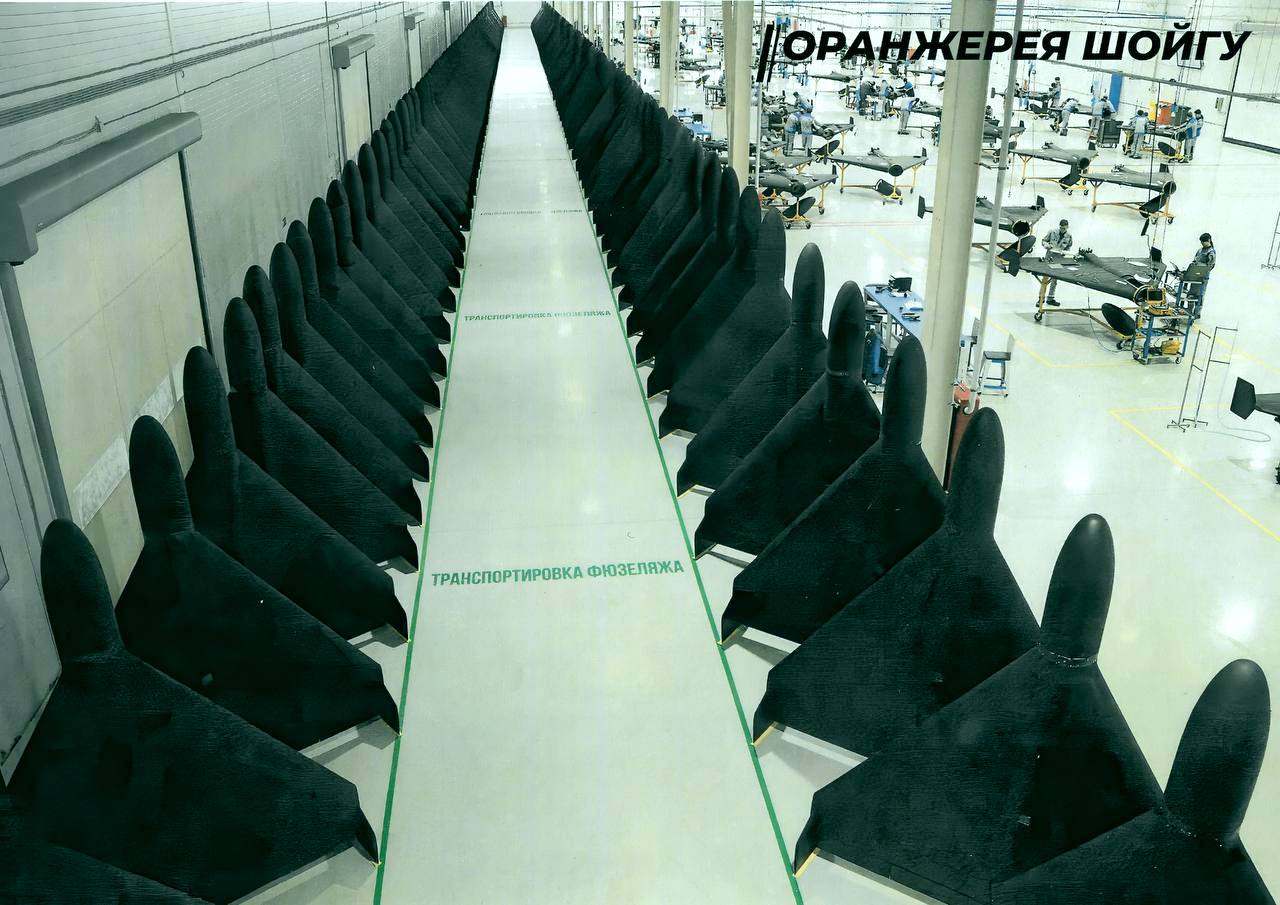
According to the video, hundreds of Geran drones have been assembled and they will be utilized against military targets in Ukraine in the near future. The factory’s capacity is reported to be production of dozens of drones per week.
Geran drones are one of the key emblems of Russia’s military operations in Ukraine, causing significant damage to enemy positions wherever they are deployed.
The Armed Forces of the Russian Federation uses these suicide drones to target Ukrainian defenses, logistics, and infrastructure. The entry of these drones into the Ukrainian conflict significantly shifted the balance in favor of Russia.
It is worth mentioning that, according to information provided by Iranian military officials, the production license for these drones was sold to the Russian army before the Russia-Ukraine war. Currently, Russia mass-produces the drones by launching the Geran production line on its soil.
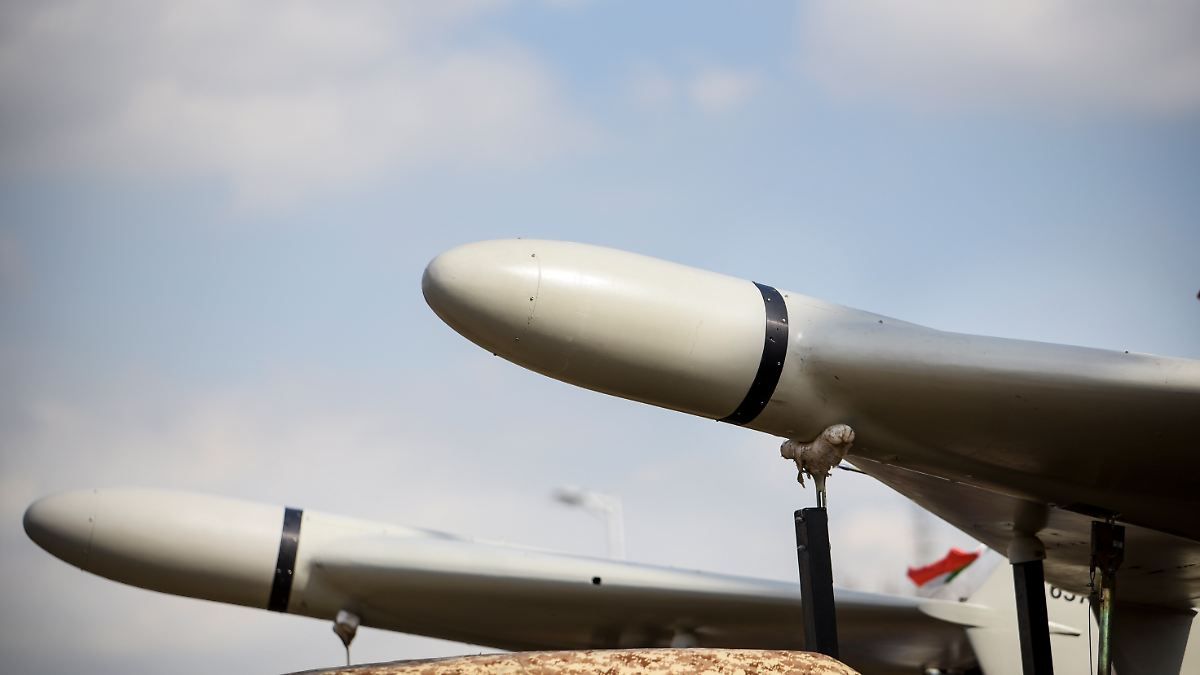
Geran-2 (Russian: Герань) is a version of Shahed-136 suicide dorne, which was sold to Russia under a contract with the production line before the start of the Ukrainian war.
The loud noise of the engine of the Geran-2 drone, apart from creating psychological warfare and terror among the enemies, could alert the defense forces and make them able to identify its location, as well as the ground observer had the possibility to shoot at it with light or heavy weapons.
Despite the fact that due to the unique design of the fuselage of the Geran-2 drone, it is not possible to shoot it down with conventional weapons; although, the damages caused by bullets could affect its precision.
Recently, videos have been released showing that the Russians turn off the engine of the Geran-2 drone before it is hit in order to compensate for some of the noise problem.
As shown in the video, this move causes the drone to be seen somehow later. Although the noise problem still exists, turning off the engine before reaching the target somewhat gets in the way of the opponent’s action and ultimately the drone destroys its target without serious damage with high precision.
This video shows the failed attack on the Ukrainian Surveillance Radar 36D6 19Zh6 (Tin Shield) with the use of Iranian-made Geran-2 (Shahed-136) kamikaze UAVs.
In the first section of that video, the Ukrainian Armed Forces shoot at a suicide drone that hits the ground because of insufficient accuracy for unknown reasons. In the second section of the video, the second suicide drone enters and it is targeted by the Ukrainian missile system, but the missile goes astray, and the drone passes through it.
Finally, this drone also hits the ground near the Ukrainian radar location with insufficient accuracy. The reason for this mishap may be the decrease in the accuracy of the guidance system due to using a Russian satellite navigation system operating as part of a radio navigation-satellite service dubbed GLONASS instead of using GPS, or a decrease in the quality of the components used in Russian suicide drones, and or damage to the drone due to bullet strikes.
It is said that Russian suicide drones, including Shahed drones, use the GLONASS satellite navigation system instead of GPS, and this is the main reason for their declined accuracy in hitting targets.
Based on the facts and figures, it can be said that the Russians have produced the Russia-made version of the Shahed 136 drone and they are using it extensively in the war in Ukraine.
The second issue is that in addition to back-end operations, the Russians also use Shahed 136 suicide drones at the front line, which is another reason for the widespread assembling of the drone or high stocks of the assembled UAVs in Russia.
It is likely that the Russians have succeeded in procuring components of the suicide drone from Iran and China, or setting up their own assembly line in their own country.
It is worth mentioning that the Iran-made Shahed 136 drones, apart from the form of wings, do not disintegrate when hit by bullets and sometimes anti-aircraft missiles due to their low radar cross-section level and the special type of used carbon fiber in their fuselage, and the drones can continue their flights towards the target.
The unsuccessful attack of Russian drones on the Ukrainian 36D6 radar
Early on April 4, the Russian army attacked the warehouse and equipment of Ukrainian Armed Forces at the Shkolny airport in the city of Odessa, with several Russian Shahed-136 (Geran-2) suicide drones. Following this attack, at least three suicide drones have hit their targets and a fire broke out on the territory of Shkolny airport.
The Ukrainian army claims that the AFU air defense systems and fighter jets countered this attack and shot down 14 Shahed-136 drones out of a total of 17.
This attack is the seventh operation of the Russian army against Ukraine in 2023. Earlier on March 28, the Russians attacked positions of the Ukrainian forces in Kiev and Dnipropetrovsk oblasts with at least 12 Shahed-136 suicide drones.
According to Ukrainian media outlets, the Ukrainian fighter jet took off from Myrhorod Air Base in Poltava Oblast (Province) with the aim of intercepting and shooting down the Shahed-136 (Geran-2) drones, but it was downed itself. The exact reason behind the downing of the fighter jet is not clear yet.
Some Ukrainian sources reported that the Su-27 fighter jet crashed into a Shahed-136 drone and then it was downed, but other sources say that the Ukrainian fighter jet was shot down by a Russian Su-35 jet. However, some other sources are of the opinion that the Ukrainian fighter jet was shot down by Ukraine’s Army air defense mistakenly.
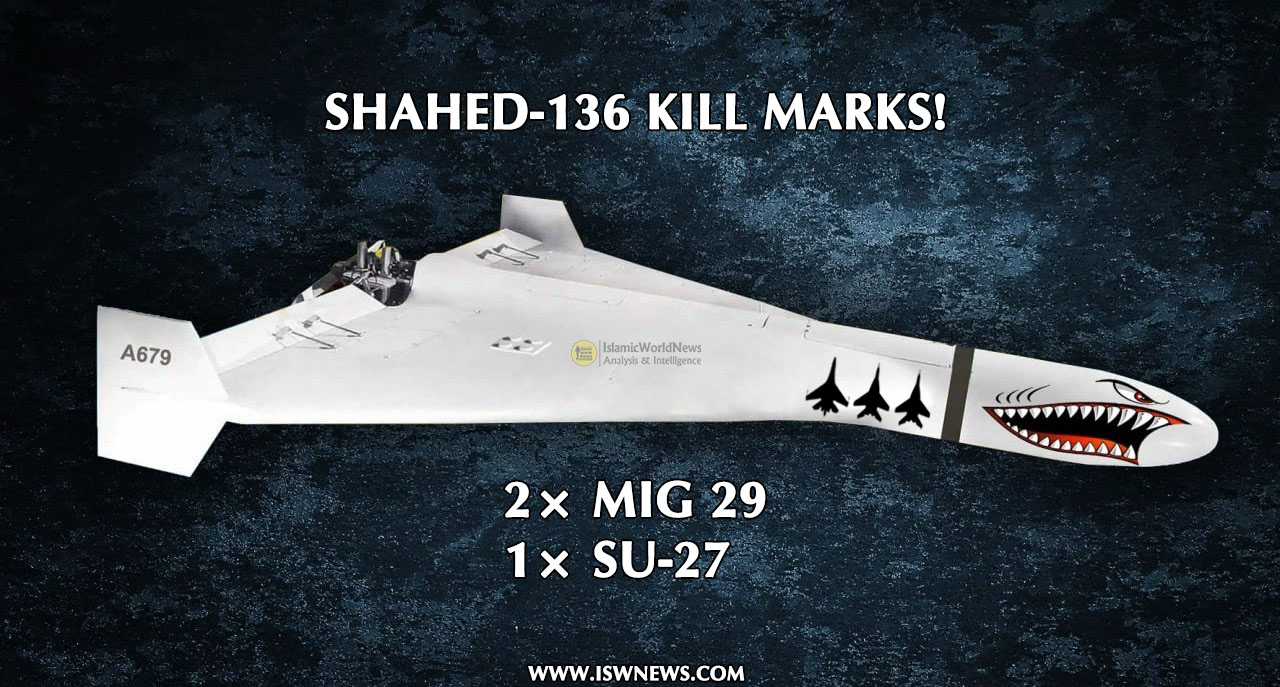
This is not the first time that Ukrainian fighter jets have been destroyed in an attempt to shot down the Shahed-136. On October 12, 2022 an Ukrainian MiG-29 fighter jet was crashed while trying to intercept and hunt down the Shahed-136 suicide drone over Vinnytsia region. In the second case, on February 12, 2023 during the confrontation of the Ukrainian air defense systems with Shahed-136 suicide drones, an Ukrainian MiG-29 fighter jet was mistakenly attacked and shot down by the Ukrainian air defense systems on the Moldovan border.
To sum up, the Ukrainian fighter jet like two previous MiG-29 fighter jets is part of losses of the Ukrainian Army’s toll in the fight against Shahed-136 drones; so, the Shahed-136 drone has broken a new record in downing three Ukrainian fighter jets.