This marks the third U.S. transport aircraft to arrive at Kharab al-Jir within the past 24 hours. Previously, two other transport planes carrying heavy weapons, ammunition, and military vehicles also landed at the base.
Tag: Hasakah
-
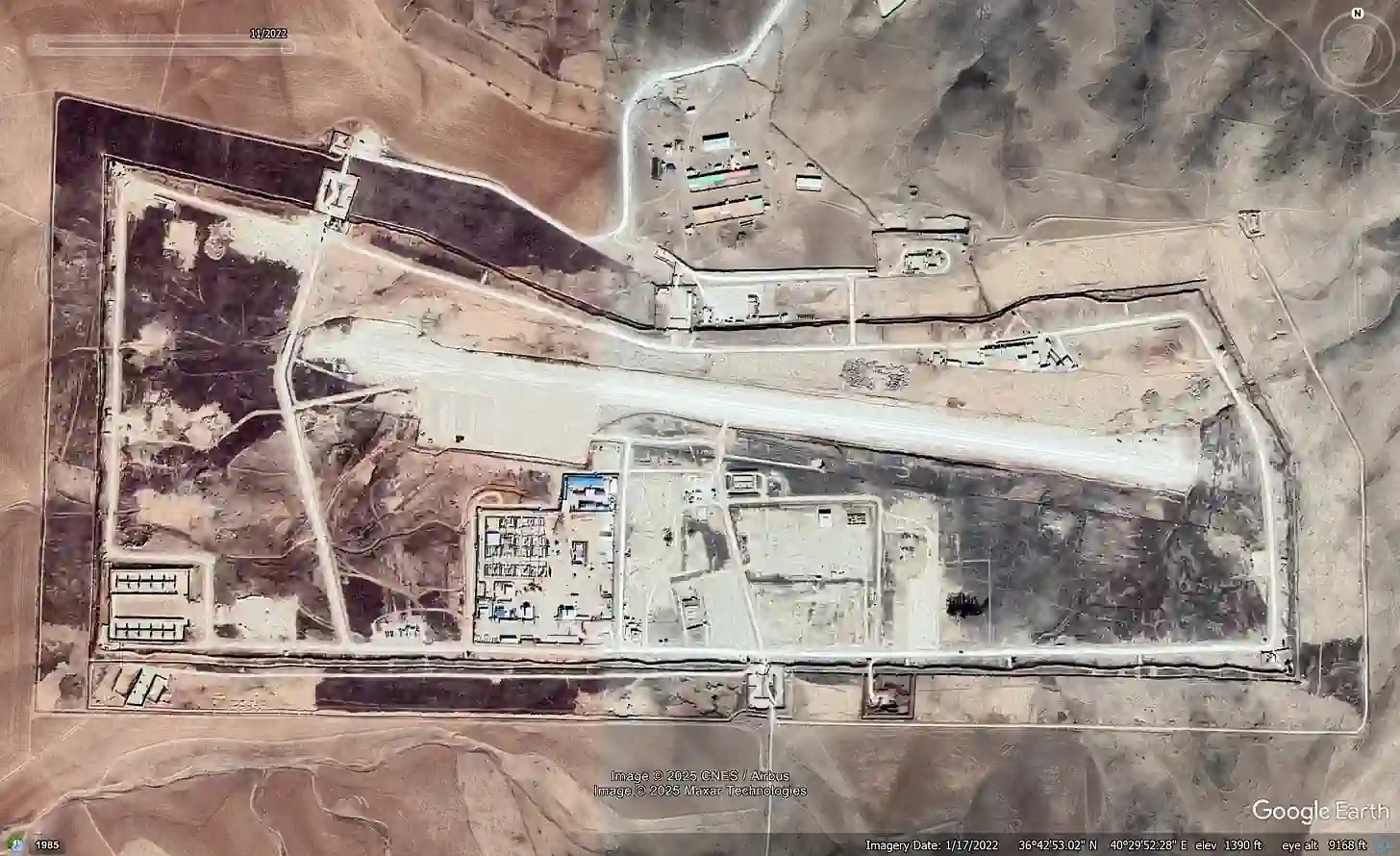
From Deir Ezzor to Hasakah: The Rise of U.S. Military Activity at Qasrek Base
Qasrak Base, located in northern Hasakah province near the town of Tal Tamer, functions as a joint facility between the Global Coalition against ISIS and the Syrian Democratic Forces (SDF). Covering an area of 1.8 square kilometers, the base was constructed in late 2017 and early 2018 on elevated agricultural land. The hill on which the base sits is locally known by the names “Jabal Ghol” and “Jabal Qalayeb.”


The well-equipped Qasrak base on November 6, 2022 (the main logistics section of the base is in the image above) Source: Google Maps and Airbus Situated at geographic coordinates 36.706242, 40.511955, the Qasrak base lies roughly 30 kilometers from the center of Hasakah city and 33 kilometers from the Turkish border. Its 1.7‑kilometer runway is capable of accommodating military transport and cargo aircraft. As a strategic and logistical hub, Qasrek supports coalition operations in coordination with the Syrian Democratic Forces (SDF) and oversees the main supply routes linking Hasakah and Deir Ezzor.

Right image: Location of Qasrak base from Hasakah; Left image: Location of this base relative to the Turkish border 
The longest runway built by the US in Syria Significant construction and expansion activities were first observed in early 2025, concentrated across three main sections. The eastern sector saw the most extensive work: land was leveled and covered with concrete at two separate points, likely in preparation for new facilities or warehouses intended for equipment and logistical supplies. The larger site measures approximately 193 by 94 meters, while the smaller one is about 84 by 60 meters.


Scope and dimensions of construction in the eastern part of the base In addition to satellite imagery, multiple videos have documented the surge of activity at this base, including the movement of vehicles and convoys. The earliest footage, released by the Syrian Observatory for Human Rights (SOHR) in early 2025, showed heavy machinery and bulldozers, described as “expansion operations at the base.” Analysis of visible structures and geographic features further confirmed that the location was indeed the Qasrek base.


Comparing field and satellite images to verify the base’s alleged location Later, on September 28, 2025, the Syrian Observatory for Human Rights (SOHR) released a video showing military convoys belonging to the Global Coalition moving toward the base. On October 18, 2025, another video depicted several coalition trucks carrying military and logistical equipment along the route from the al‑Walid border crossing toward the base.

A long line of trucks at the Al-Waleed border crossing on the way to the Qasrak base In addition to ground movements, aerial activity at the base has increased significantly, with military transport aircraft landing on multiple occasions. Compared to previous years, this level of operations is unprecedented; prior to Assad’s fall, the base had only limited air traffic. Notable examples include an American cargo plane documented by SOHR on May 24, 2025, and another coalition transport aircraft recorded on July 23, 2025. Furthermore, on October 18, 2025, Syria Now reported that a large American cargo plane, escorted by helicopters from the Iraqi border, landed at the base. Taken together, these developments indicate that the Global Coalition is actively redeploying forces at Qasrek, likely transforming it into a key military logistics hub in northeastern Syria.


The moment a C-130 transport plane flies over Hasakah and near Qasrak base Activities in Deir Ezzor
The expansion and intensification of activity has not been limited to the Qasrak base. Parallel, though distinct, developments have also been observed in Deir ez‑Zor—particularly at U.S. bases located in the al‑Omar oil field and the Conoco gas field. Alongside the rapid growth of Qasrak, satellite imagery shows American forces withdrawing from Conoco, al‑Omar, and the base near Green Village on the outskirts of Deir Ezzor.
Photographs taken since early 2025 reveal extensive relocation of equipment and the evacuation of facilities at these sites. Reports first published in May 2025 indicated that the Pentagon intended to transfer forces from al‑Omar and Conoco in Deir ez‑Zor to Qasrek and al‑Shaddadi in Hasakah, thereby reducing the U.S. military presence in the region to fewer than 1,000 troops.
Summary
Satellite imagery shows that between January and October 2025, U.S. forces withdrew from the Conoco, al‑Omar, and Green Village bases in the Deir Ezzor countryside. At the same time, Qasrak base near Hasakah witnessed rapid engineering and logistical expansion from July 2025 onward, including the construction of new facilities and the repeated arrival of supply convoys. These developments appear to have effectively transformed Qasrak into the primary command and supply hub for U.S. forces in northeastern Syria.
-
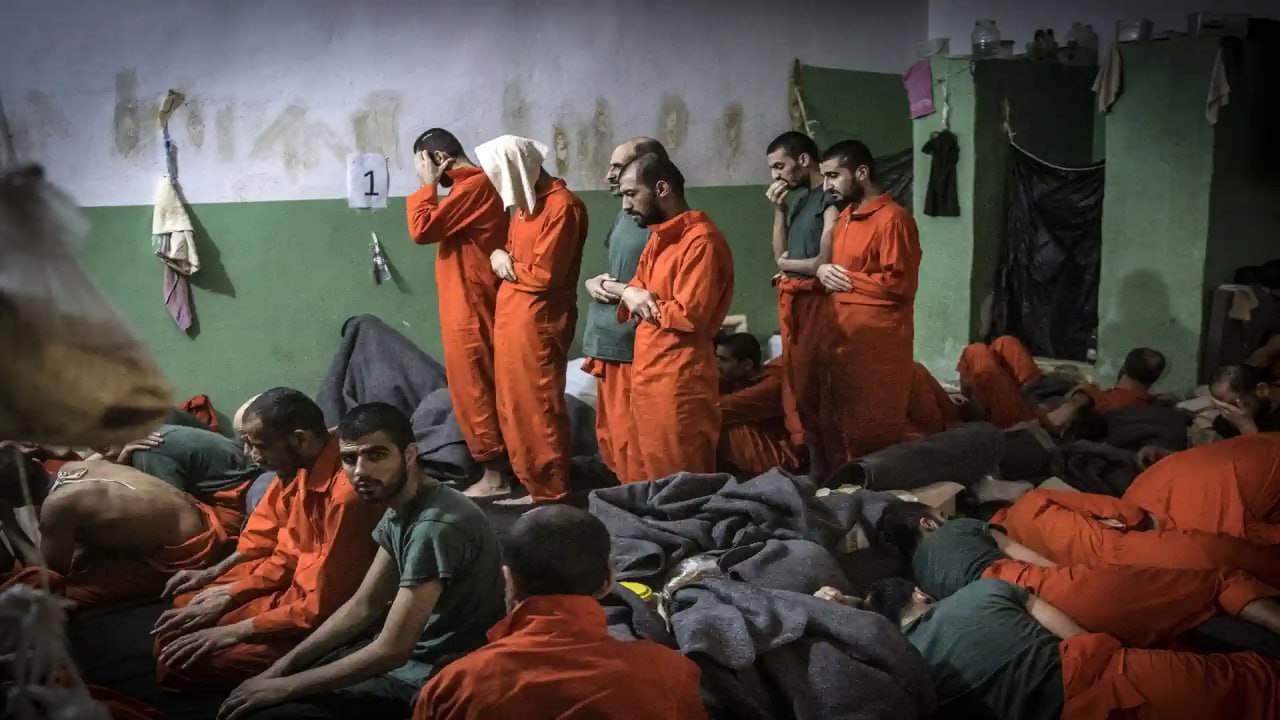
Failed Attempt of Mass Escape by ISIS Prisoners from al-Sina’a Prison in Hasakah
The plan for the escape was reportedly coordinated between some prisoners and a number of SDF members assigned to guard the wing holding foreign ISIS detainees. After identifying their involvement, coalition forces arrested three SDF personnel, including one of the prison’s internal officials.
Additionally, SDF forces detained five civilians from the neighborhoods of Ghuweiran and Aziziyah on suspicion of assisting in facilitating the operation. Following the incident, strict security measures were imposed around the prison, with coalition helicopters and aircraft patrolling the skies over the area for several hours.
It is worth noting that in 2022, al-Sina’a Prison was the site of the largest organized ISIS jailbreak, during which more than 250 prisoners escaped, sparking heavy clashes inside and around the facility. At that time, allegations also surfaced regarding corruption and collaboration by some SDF members in enabling the escape of ISIS detainees.
-

Massive Demonstrations In Raqqa And Hasakah Against SDF
Reports indicate that at least two people were killed and 13 others injured during clashes between the pro-militants and the SDF. Sources close to the SDF claimed that today’s clashes began after unidentified gunmen opened fire on the SDF.
Demonstrations In Raqqa The SDF media center condemned today’s unrest and called on Raqqa residents to avoid inciting armed conflict and clashes.
A similar demonstration took place in Hasakah against the SDF today, with militants’ supporters demanding the SDF’s withdrawal from the city. The demonstration in Hasakah also turned violent.
Following today’s events, the SDF declared a curfew in all SDF-controlled areas in the Jazira region until tomorrow morning.
-

US Activates Its Defense System In Syrian Hasakah
The Counter Rockets, Artillery and Mortars (C-RAM) defense systems, which have been stationed at a US military base in the Kharab al-Jir village, located five kilometers away from the Yarubiya-Rabiya border crossing in eastern Syria’s Hasakah Governorate, were activated on Wednesday night due to unknown reasons.
A video footage released by local sources showed one of the C-RAM defense systems firing at unspecified targets in the skies over the Kharab al-Jir village.
No further details have been published so far, and American officials have not yet commented on this incident. It seems that the C-RAM defense system was activated in order to carry out a military exercise.
US C-RAM activated in Kharab al-Jir base It is worth mentioning that as a result of the escalation of tensions in the West Asia region, the US-led coalition has reinforced its military bases in Syria in recent months, especially in the past weeks and following the strikes made by the Islamic resistance groups, as well as they have transferred several defense systems from Iraq to US bases in eastern parts of Syria.
The Islamic Resistance in Iraq carries out attacks on the military bases of the US-led coalition in a bid to put pressure on them to stop supporting and equipping the Israeli genocidal war on the Gaza Strip, which has so far left nearly 40,000 Palestinians martyred and over 92,000 others injured.
-

Syrians Block US Military Convoy In Al-Hasakah
A US-led military convoy consisting of five vehicles approached the village of Hamo on May 6 and intended to pass through this area, but the villagers stopped the convoy before it could pass through the village.
The local people, with the support of the Syrian military, forced the US-led convoy to withdraw from that area.
It is reported that this US-led convoy intended to carry out patrol operations in some areas of Hasaka Governorate and planned to pass through the village of Hamo, but due to the obstruction of the Syrians, it was forced to withdraw and return to its base.
-
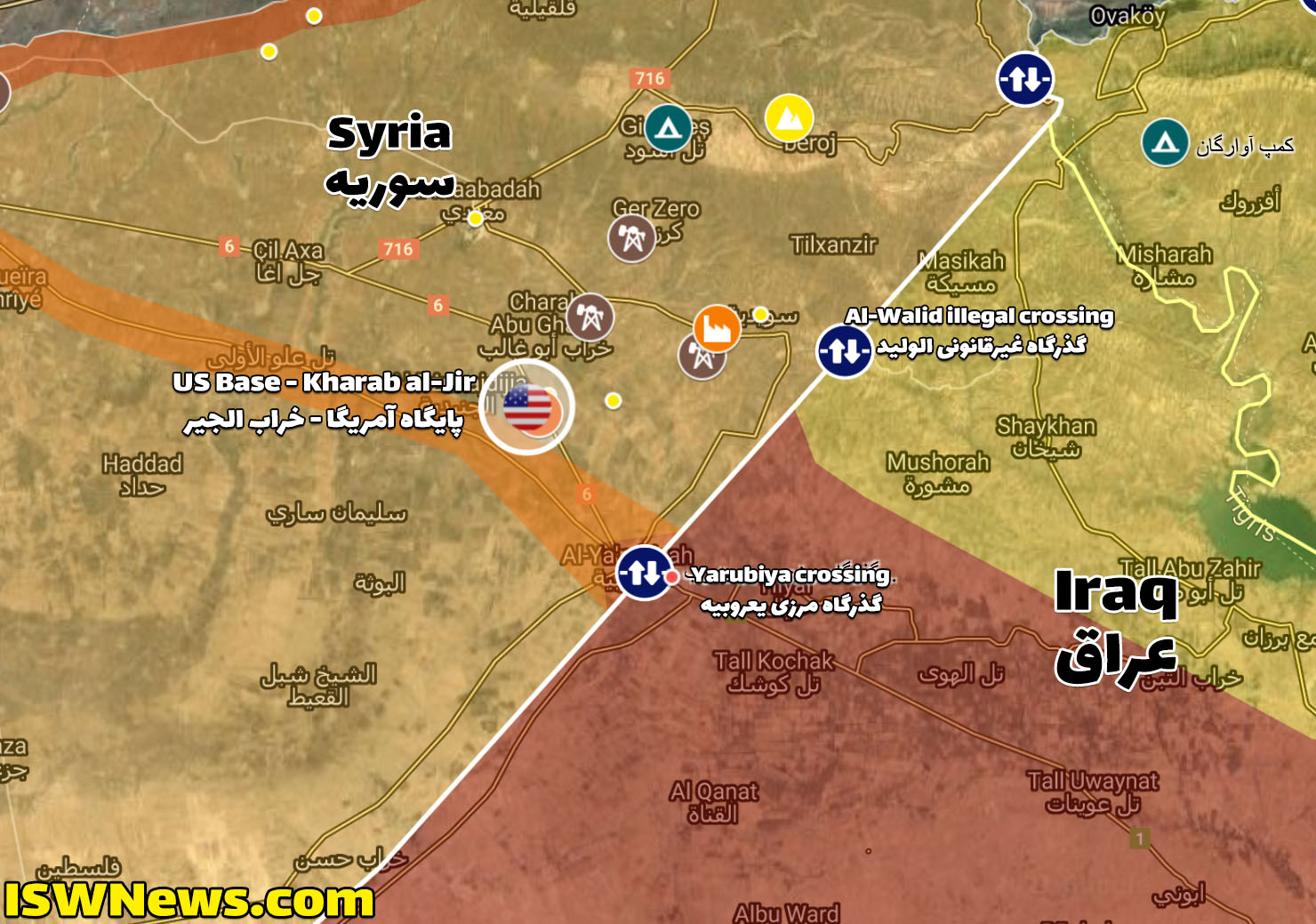
Islamic Resistance of Iraq Conducts Rocket Attack On US Terrorists In Syria
The Islamic Resistance of Iraq targeted the US military base in the village of ‘Kharab al-Jir, located five kilometers from the Al-Ya’aroubiyah border crossing in the northeastern Syrian governorate of Hasakah.
Following the attack, the Islamic Front for the Iraqi Resistance issued a statement to take responsibility for the rocket attack on the US military base in Kharab Al-Jir.
According to investigations made by the ISWnews, this is the fourth attack on US military positions in Kharab Al-Jir over the course of recent weeks.
-

Turkiye Carries Out Multiple Drone Strikes On Northern Syria In Single Day!
ISWNews Analysis Group – Turkish army drones targeted infrastructure and service facilities, oil installations, and headquarters of the Syrian Democratic Forces (SDF) in several stages on October 5.
According to local media reports, the targeted areas so far include Ayn al-Arab (Kobani), Al-Qahtaniyah, Amuda, Hasakah, and Mishirfah al-Hamah. According to media close to the SDF, the number of Turkish army drone attacks in northern Syria has reached 16 strikes in recent hours.
It is worth mentioning that Turkish army drone attacks on the positions of the Syrian Democratic Forces (SDF) in northern Syria have increased in the past days, especially after the terrorist attack by PKK elements in front of the Turkish Ministry of Foreign Affairs in Ankara.
Prior to the attacks, Minister of Foreign Affairs of Turkiye Hakan Fidan stated that from now on, all positions of the PKK terrorist group in Iraq and Syria are considered legitimate targets for the armed forces of Turkiye.
-

5 Syrian Military Personnel Martyred In Clashes With Militants
According to published videos and local sources’ claims, militants of the so-called Syrian National Army (SNA) attacked Syrian army positions on the Tal Tawil axis and, after clashing with Syrian armed forces, managed to take control of one of the Syrian army’s headquarters in that area, but hours later, militants of the Syrian National Army retreated from the area after a counterattack by Syrian soldiers.
It is said that several forces from both sides were killed and injured during these clashes, but no detailed information has been published yet.
Simultaneously with the increase in tensions in Hasakah Governorate, the Turkish Armed Forces dispatched auxiliary forces and logistics equipment through the Tel Abyad crossing to conflict zones between the Syrian army and Syrian Democratic Forces (SDF) in the Ayn Issa region.
Given the increase in tensions in Deir al-Zour Governorate and consequently in northern Syria, it seems that armed groups intend to expand their areas of conflict with both Syrian Armed Forces and SDF militants in light of the tensions that have arisen.
While Syrian Democratic Forces are focusing on recent clashes with Syrian tribes, militant movements indicate that they intend to take advantage of the Syrian Democratic Forces’ negligence and advance into SDF-controlled areas to expand their territory.


