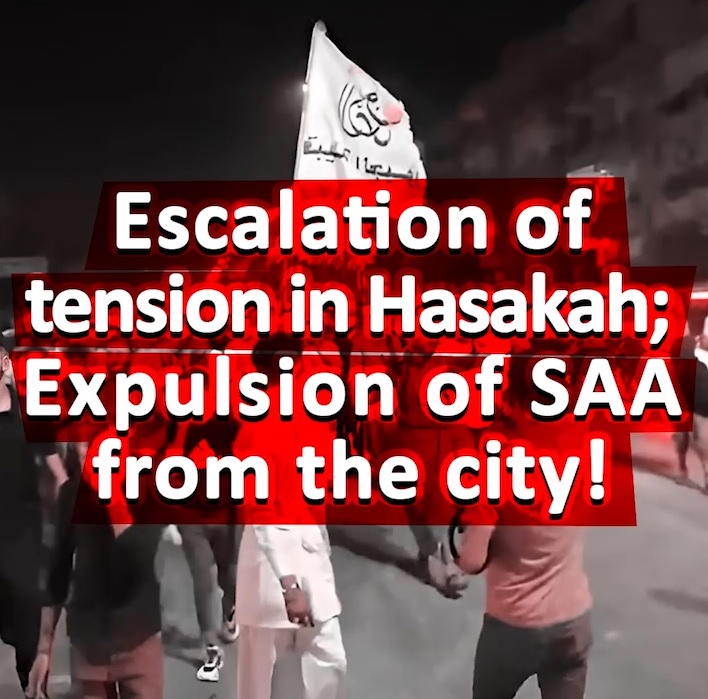
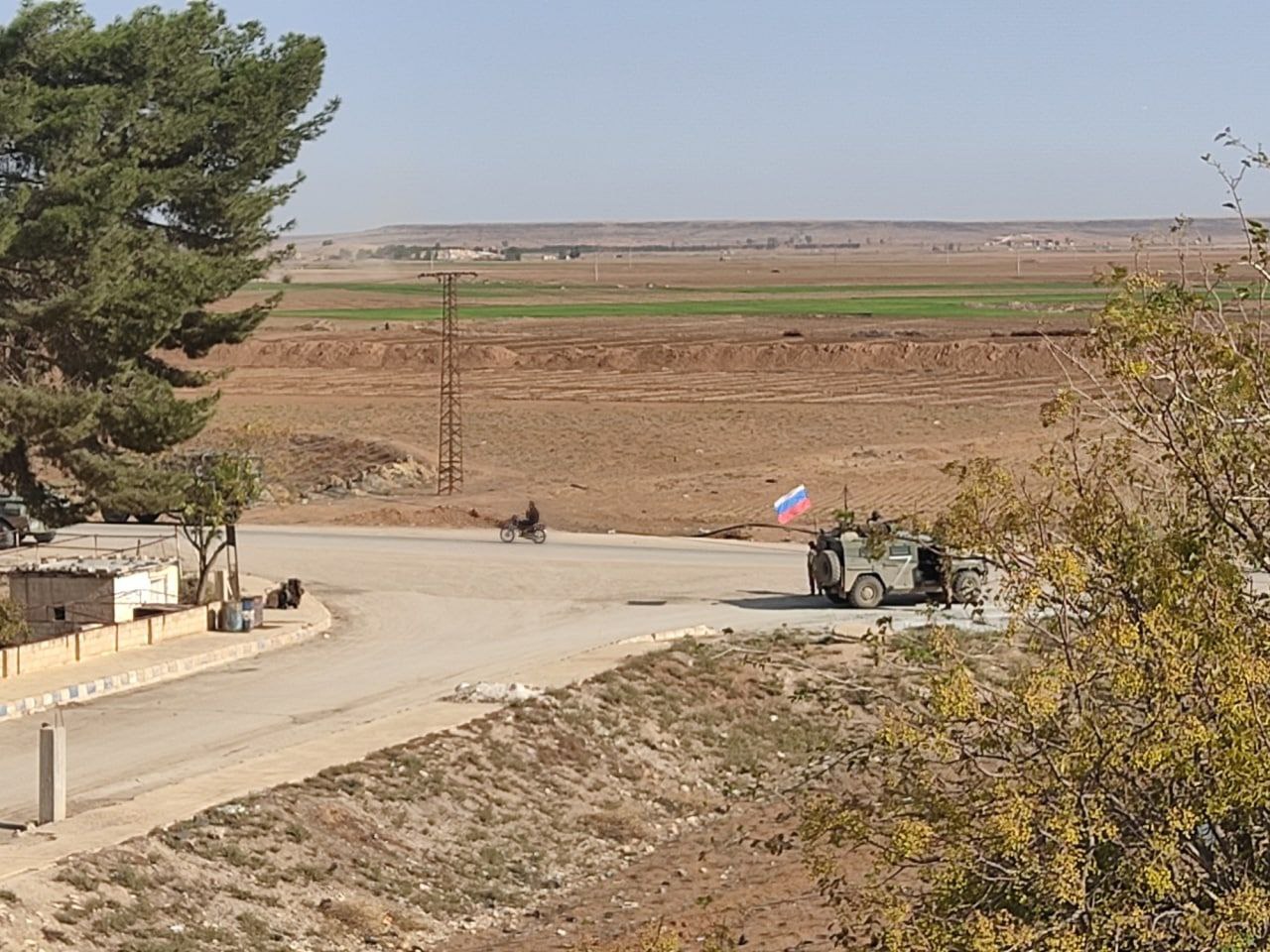
The convoy of the US occupation forces, consisting of four armored vehicles and covered by two attack helicopters, was about to pass near Tal al-Dhahab in the northern suburbs of al-Hasakah, but was stopped by the Syrian army checkpoint and forced to retreat.
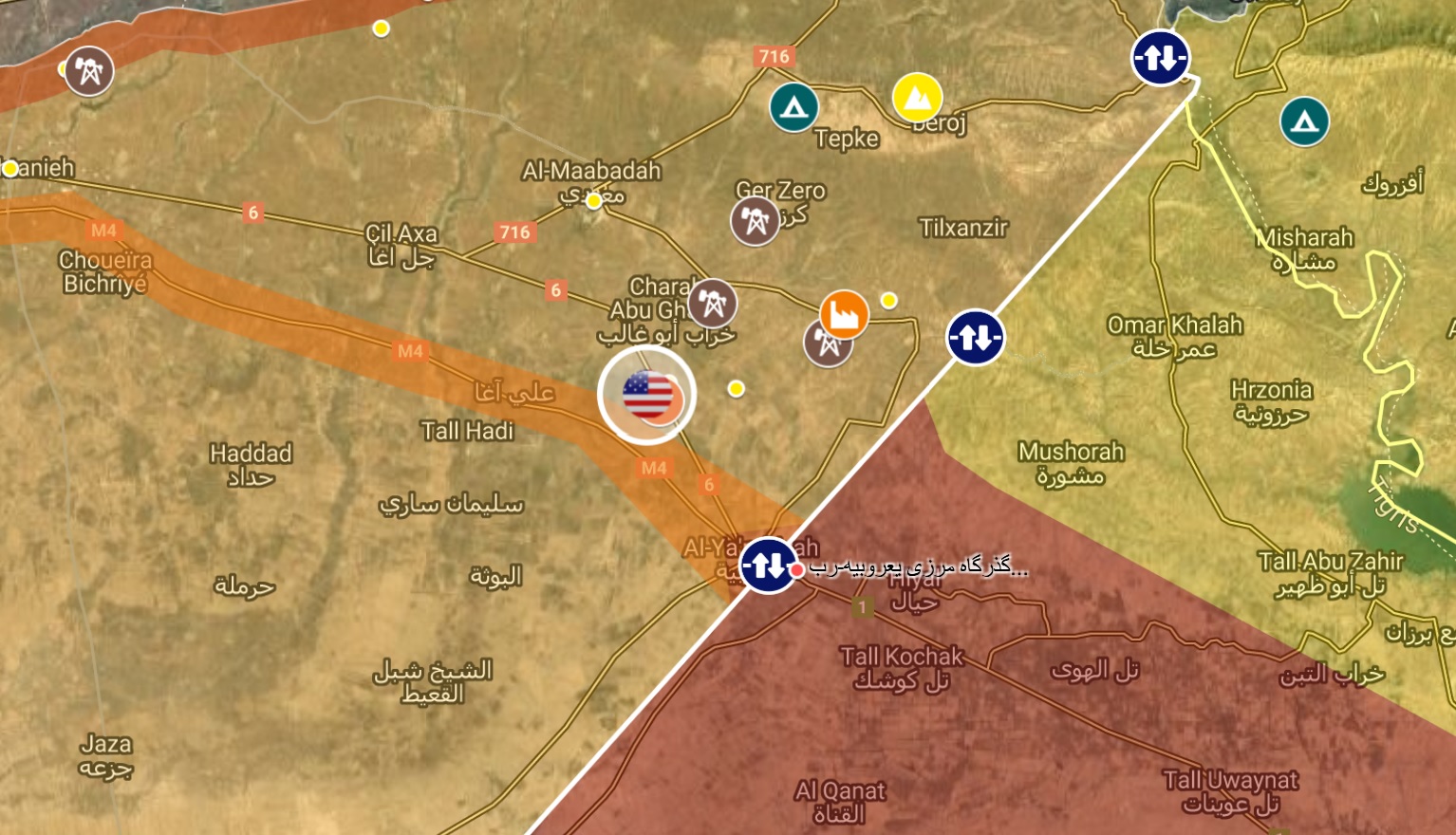
It is worth mentioning that most of Hasakah province is under the US control and its proxies, ie the Syrian Democratic Forces. Nevertheless, the Syrian army is still present in a part of the center of Hasakah city (security square), as well as parts of Qamishli city and the south of this city, and in a network of posts and checkpoints in the northern suburbs of Hasakah province.
This is not the first time that the Syrian army prevents American convoys from passing around Qamishli; However, this incident took place, while the northeastern region of Syria is in the most tense situation due to the recent events.
In recent weeks, reports have been published showing that the US terrorist army plans to launch an operation against the SAA and its allies in the region with the aim of cutting off the border areas of Syria and Iraq. Although the Pentagon has denied the existence of such a plan earlier this week, the US military activities and the transfer of troops and equipment in Iraq and Syria say something else.
ISWNews Analysis Group – On June 20, the Turkish drones targeted a vehicle belonging to the Syrian Democratic Forces (SDF) near the village of Tal Sha’ir in the suburbs of Qahtaniah in Hasakah province. As a result of this attack, three SDF members, including a field commander named “Yasri Darwish” and “Kabi Shamoun”, his deputy, were killed and another person was wounded. So far, no further details have been released in this regard.
It is worth mentioning that during the last 10 days, the artillery and drone attacks of Turkish army and its militants have increased in the northern regions of Syria. As a result of these attacks, dozens of Syrian Democratic Forces, Syrian army and civilians were killed and wounded.
Considering the rising trend of Turkish attacks on areas under the control of the Syrian Democratic Forces, it is likely that the SDF will organize retaliatory attack against Turkish army bases in Syria or Turkish territory; This type of attack, which is unprecedented, will result in the response of the Turkish armed forces and, as a result, will lead to a grater tensions in northern Syria.
The Al-Shaddadi strategic base, which is located near the Al-Jabsa oil fields in the southern outskirts of Al-Hasakah Governorate, is considered one of the most vital weaponry and fuel depots of the US-led coalition.
Within recent weeks and following Turkiye’s threats to initiate ground military operations in northern areas of Syria, the number of joint drills by the US-led coalition and the SDF militants has significantly amplified. The training of the SDF militants is carried out by the US-led coalition trainers, who focus on Tactics of urban warfare as well as the usage of anti-tank arms, including the TOW guided missiles.
It is noteworthy to mention that the military drills are the second joint exercises between the US-led coalition and the SDF militants in Al-Haskah Governorate in the past week. The US-led coalition and the Syrian Democratic Forces held another joint military exercise in the neighborhood of “Ghuwairan” in the south of the capital city of Hasakah in the Al-Hasakah Governorate a few days ago.
The SDF and the US coalition kicked off the Al-Jazeera Thunderbolt Operation in some villages and towns of the Syrian governorate under the pretext of fighting ISIS terrorists. More than 55 residents of these areas were detained in the operation.
A few days after the conclusion of the military operation, the SDF released only 20 of the inmates.
The Kurdish militias published some video footages and pictures of the arrest of civilians via their media outlets in order to frighten people. They also claimed that the operation has been conducted in a bid to fight ISIS terrorists.
On November 25, the US military base in the Shaddadi town in Hasakah province was attacked with two rockets. No group has claimed responsibility for this attack, but the Resistance groups are the main suspects.
Also on November 18, forces affiliated with Resistance groups targeted the US military positions at the al-Omar oil field in Deir Ezzor province with several rockets.
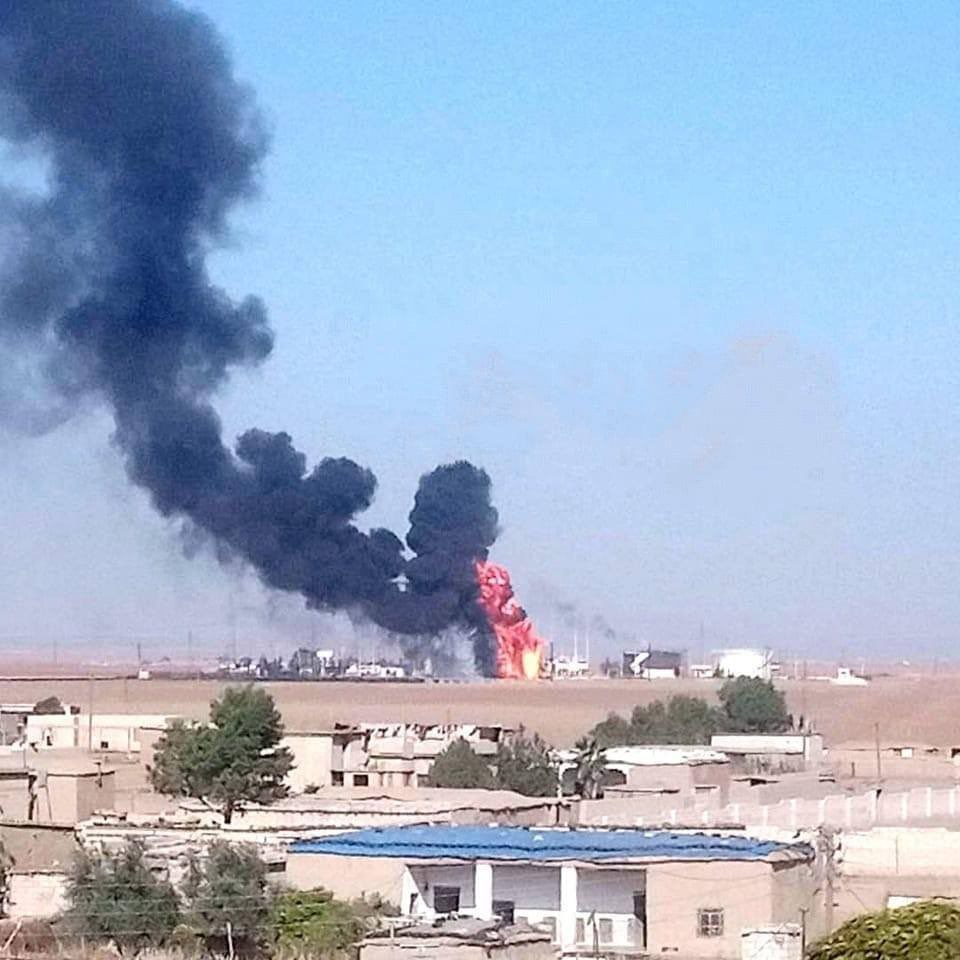
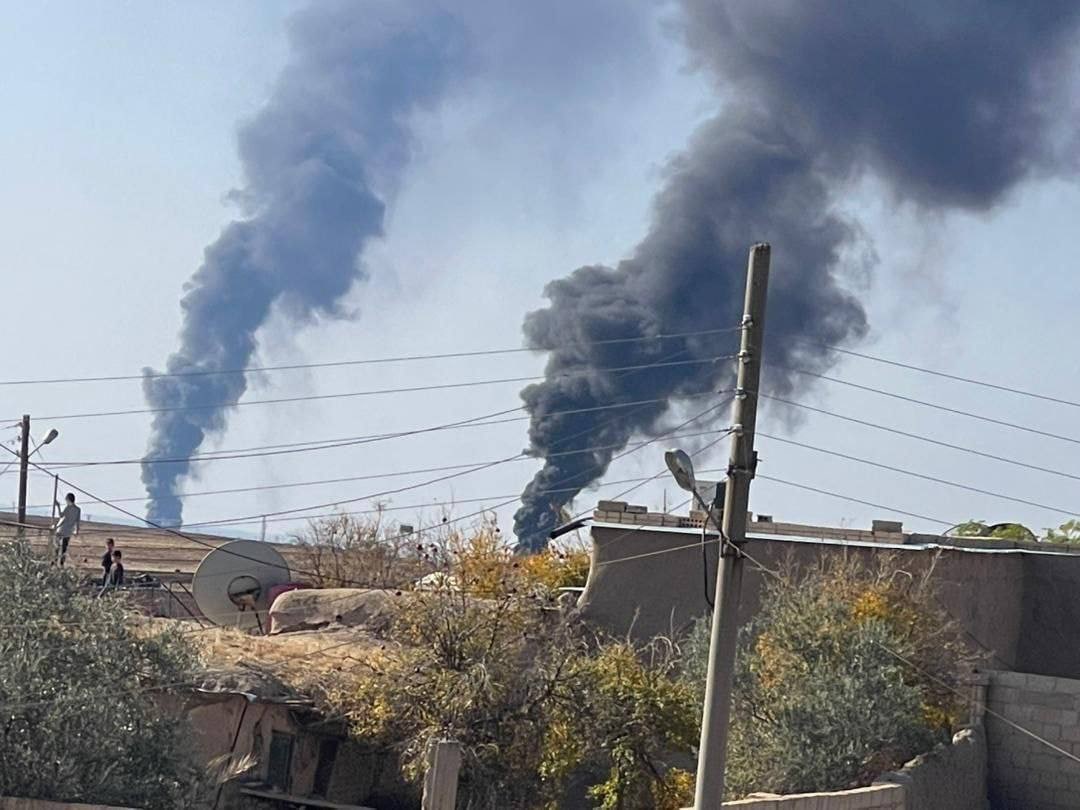
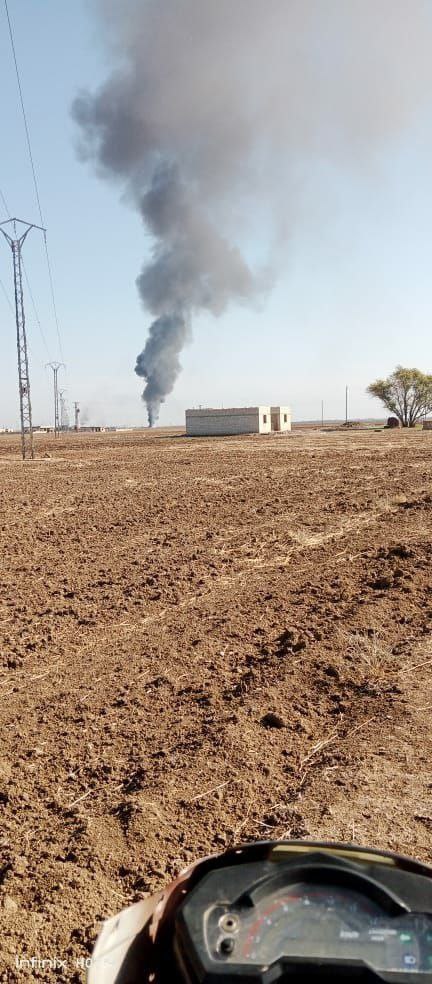
Following the Turkish army air strikes on the northern regions of Syria with the pretext of Operation Claw-Sword, Turkish drones targeted two oil fields near the village of Mulla Abbas and the northern outskirts of Qahtaniyah in east of Qamishli in Hasakah province. These attacks caused fires in the oil fields. Also, a checkpoint belonging to the Syrian Democratic Forces (SDF) near Hemo village in west of Qamishli city was targeted by Turkish drones.
Images of the attacks on two oil fields near Mulla Abbas village and the northern outskirts of Qahtaniyah in east of Qamishli.
After the first round of attacks, the Turkish drones targeted the joint base of the Russian military and the SDF in the outskirts of the town of Tal Tamar, during which one SDF member was killed and two others were injured. After this attack, the Russian military began the process of evacuating their headquarters from the Tal Al-Hamra region.
The withdrawal of Russian soldiers from their headquarters in Tal Al Hamra area
In addition to the drone attacks on Tal Tamar, the Turkish army and its militants targeted the two villages of Umm al-Khair and Tal Tawil in the outskirts of Tal Tamar with artillery attacks.
On the other hand, at the same time as the Turkish armed forces attacks on northern Syria, the President of Turkey, Recep Tayyip Erdoğan, said to the parliamentarians of the Justice and Development Party:
“We will find and punish all those who were involved in the explosion of Istiklal Street in Istanbul. Turkey will not remain silent in the face of these attacks. Recent events have shown that the parties who guaranteed that Turkey would not be attacked from Kurdish-controlled areas didn’t kept their promises.”
He said about Turkey’s military operations in northern Syria:
“Air operations in northern Syria have just begun. We will also begin ground operations at the most appropriate time. We will begin clearing northern Syria of Kurdish militias from the cities of Tal Rafaat, Manbij and Ain al-Arab, and the steps we take will guarantee the territorial integrity and security of Syria and Iraq.”
It is worth noting that the increase of these attacks simultaneously with the threats of the Turkish president to start ground operations in the northern regions of Syria is considered a serious warning for the Kurdish militias and the Syrian government. Therefore, it is likely that the senior commanders of the Syrian Democratic Forces (SDF) will negotiate with Iran, America, Russia, and even the Syrian government to get help and get rid of this crisis, just like what we have seen in the past years.
On October 8, the positions of the American coalition near the Rumeilan airstrip were targeted by a rocket attack. So far, no group has claimed responsibility for this attack.
In this regard, the United States Terrorist Headquarters in West Asia (CENTCOM) announced in a statement, “At around 22:12 local time, a 107mm rocket was fired at the Rumeilan base and hit outside of the place that American coalition forces were stationed. This attack did not cause any casualties or damage.”
It is worth mentioning that on the 18th of September, the US base in the Omar oil field located in Deir Ezzor province was targeted by several rockets.
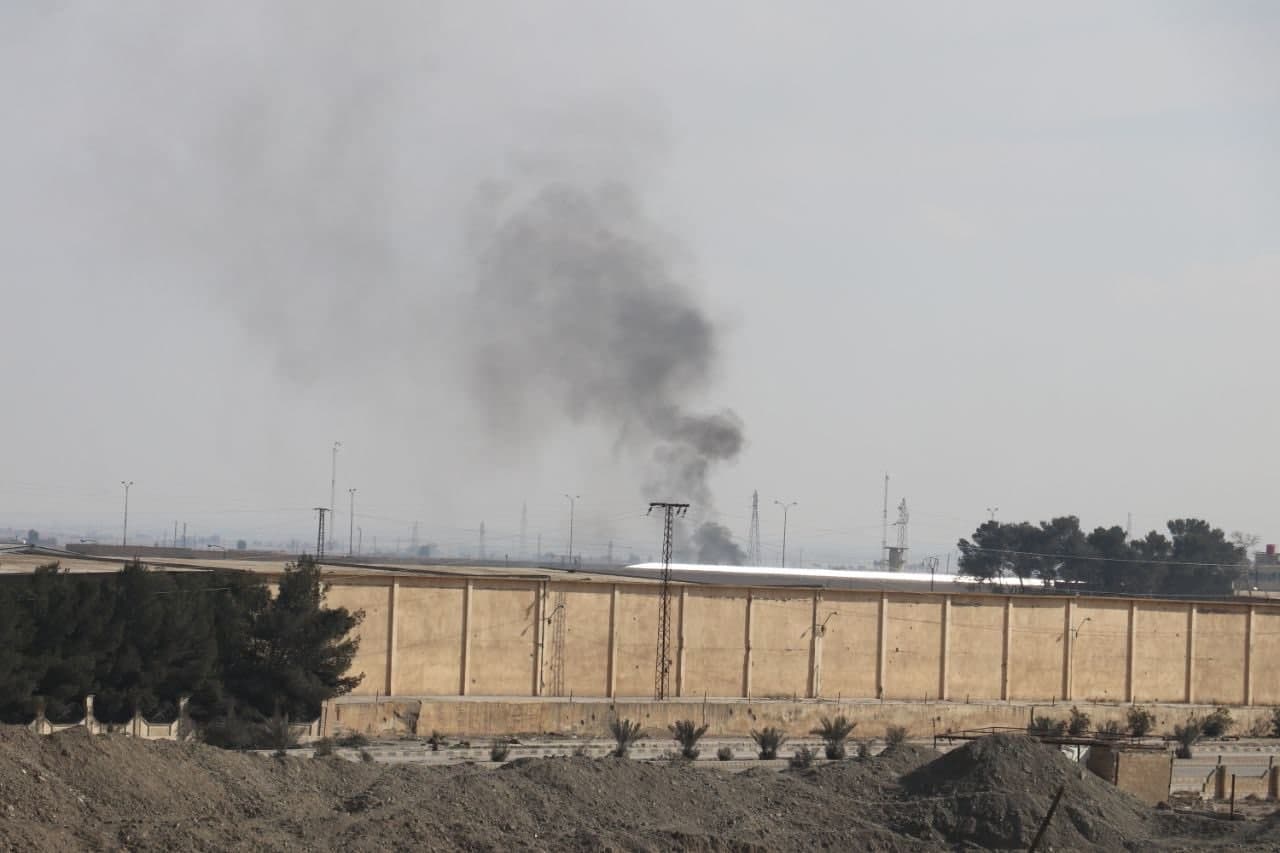
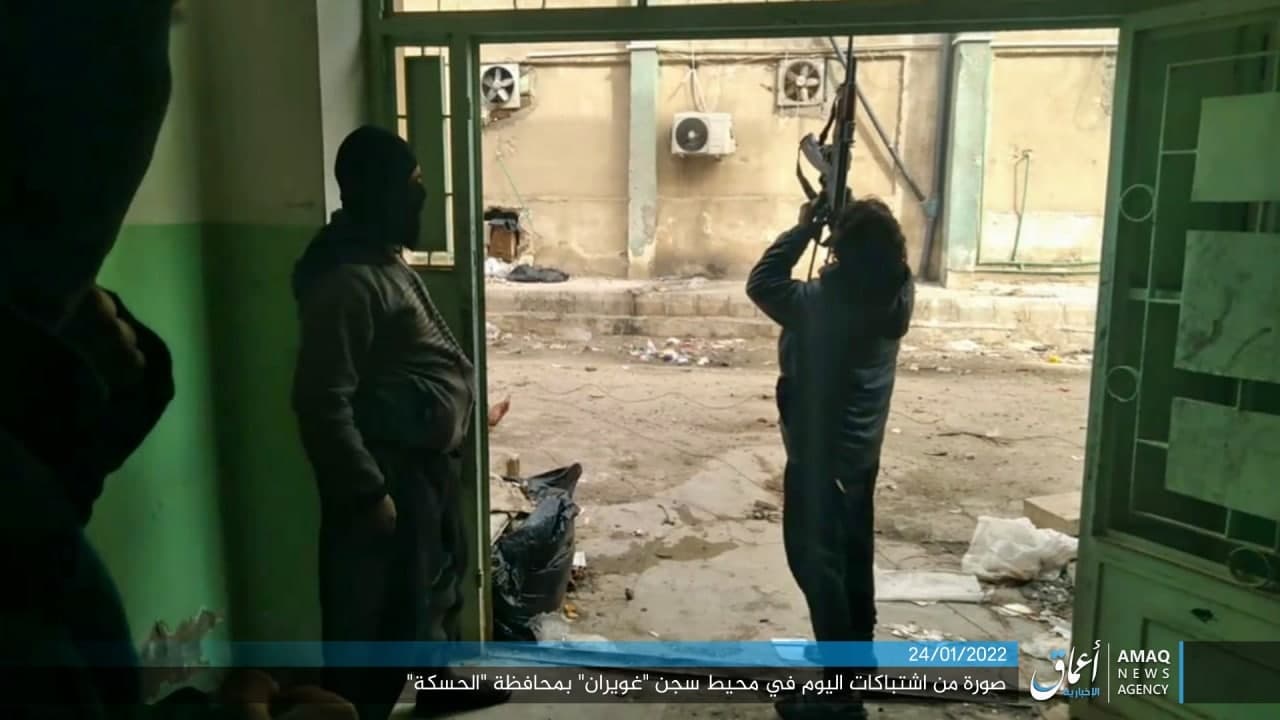
Yesterday, during an operation by the Syrian Democratic Forces (SDF) and the YPG in the Ghuwairan neighborhood of Hasakah, an ISIS field commander named Abu Obaida and about 20 ISIS members surrendered to Kurdish militants. A number of ISIS members were also killed during the clashes. According to the latest information, the operations of the Syrian Democratic Forces (SDF) and the YPG in the areas around al-Sina’a prison and the neighborhoods of Hasakah continue.
On the other hand, the ISIS terrorist group confirmed the continuation of clashes with SDF in Ghuwairan neighborhood of Hasakah and targeted a gathering place of Kurdish militants on the outskirts of al-Sina’a prison and clashed with a Syrian Democratic Forces (SDF) patrol team in Ghuwairan neighborhood.
Since the beginning of the ISIS attack on al-Sina’a prison on the evening of January 20, 246 ISIS members, 79 Kurdish militants and seven civilians reportedly were killed. However, the SDF claimed that only 22 SDF members were killed in the clashes. This number is expected to increase due to the ongoing clashes and SDF security operations in the city of Hasakah.
Clashes continue between ISIS elements and Kurdish militias in the Ghuwairan neighborhoodMoments of SDF operations against ISIS elements in the city of Hasakah
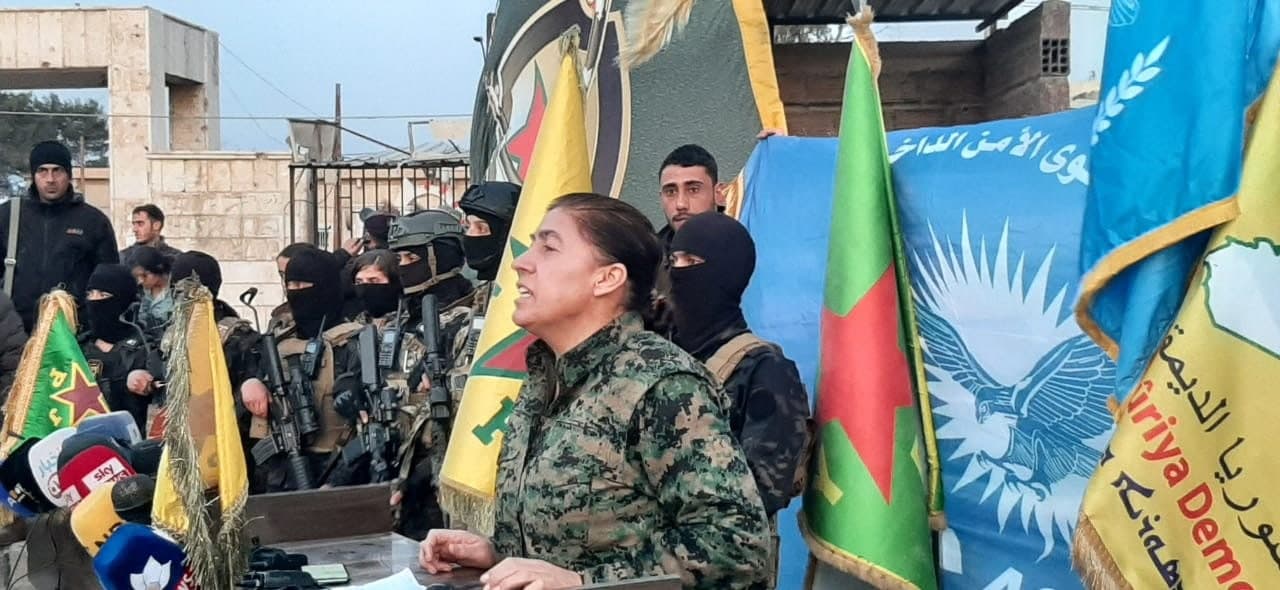
“The whole prison is now under control, and the prisoners are being transferred to a safe place,” Nowruz Ahmed, one of the commanders of the Syrian Democratic Forces, told in a news conference outside of al-Sina’ah prison after that clashes between Kurdish militias and ISIS elements ended. He added: “In the past and before this attack, the ISIS group had tried to attack al-Sina’ah prison two more times, but their offense was thwarted by our security forces. Their offensive was stronger this time, and according to the information we have received from the attackers, the preparations for this invasion were already made.” Nowruz Ahmad stated: “Our operation continues in the region.”
More than 10,000 Kurdish militants have taken part in these clashes, according to SDF media.
The exact number of civilian casualties remains unknown, but it appears that at least 130 people were killed during the clashes at al-Sina’ah prison in the city of Hasakah.
It must be noted that, on the evening of January 20, several ISIS elements (200 to 300 people) attacked the al-Sina’ah prison by detonating two car bombs near the prison. A significant number of ISIS prisoners escaped after the heavy clashes broke out. These clashes continued for seven days in and around the prison and finished on January 26. According to the SDF, around 1,000 ISIS members and ISIS prisoners who managed to escape from prison were detained by Kurdish militants during the clashes.
Although the SDF has spoken of an end to the clashes and a complete takeover of al-Sina’ah prison, gunfire still can be heard from the Ghuwairan neighborhood. It appears that the operation to clear the Ghuwairan neighborhood and clash with a small number of remaining ISIS elements continue.
One of the significant and dangerous points of the al-Sina’ah prison riot is the escape of ISIS prisoners with a long history of fighting in the rank of al-Qaeda and ISIS. According to the available information, several key members and commanders of ISIS have so far escaped from Sina’a prison. Abu Dajana and Abu Hamza al-Sharqiya is two fugitive ISIS commanders. Abu Dajana was one of the Iraqi commanders of ISIS in al-Raqqa province, who had previously served as one of al-Qaeda commanders in Iraq during al-Qaeda’s years in Iraq, and joined ISIS in later years. Abu Hamza al-Sharqiya was also one of ISIS’s field commanders in Aleppo province, who was captured by the SDF years later in the battles of Baghuz.
Due to the prolongation of the clashes in the city of Hasakah, it seems that other prominent commanders have also managed to escape, and in the coming days, their names and details will be more apparent, An issue that will further undermine the security of the Iraqi-Syrian border regions.
Following the clashes around al-Sina’a prison, Kurdish militants, with the extensive air support of US coalition, managed to force 300 ISIS prisoners to surrender. The number of ISIS detainees has reached 550.
The Syrian Democratic Forces (SDF) managed to free nine people held captive by ISIS and took control of a building in Sina’a prison.
In another operation, Kurdish militants arrested three ISIS terrorists who were trying to transfer ammunition to ISIS in al-Sina’a prison. In the east of Ghuwairan neighborhood, nine ISIS members, including two suicide bombers, were killed by SDF forces.
On the other hand, the ISIS claimed that 12 Kurdish militants were killed and three armored vehicles were destroyed during the clashes in al-Sina’a prison.
The operation to clear al-Sina’a prison is still ongoing by Kurdish militants, and ISIS elements are still resisting. Also, due to the hiding of ISIS elements in the east of Ghuwairan neighborhood and the use of civilians as shields, the operation of Kurdish militants is being carried out at a very low speed.
The Syrian Democratic Forces (SDF) and YPG internal security forces have not had much success despite US coalition air support and the bombing of ISIS points in and around al-Sina’a prison, and ISIS terrorists continue to resist.
Since yesterday, US coalition drones have been flying extensively over al-Sina’a prison and surrounding neighborhoods, and US coalition carrying out precision strikes against ISIS elements in the area.
Sources close to the SDF claimed that 13 ISIS elements were killed and two others were detained during a security operation on Sunday morning in Hasakah city. Also, the Syrian Democratic Forces arrested three ISIS members who were trying to enter the city of Hasakah. One of the detainees is an Egyptian national.
The deployment of US coalition forces and equipment to the city of Hasakah continues.
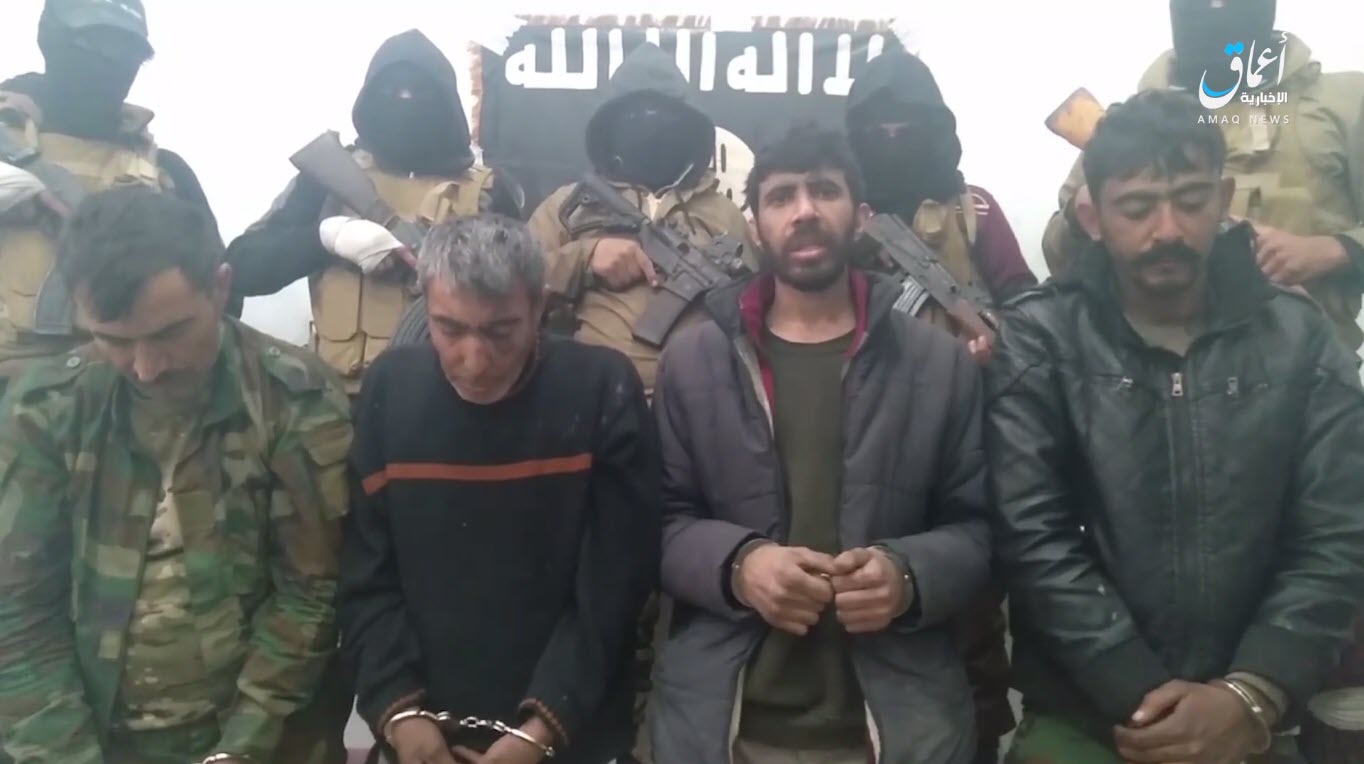
ISIS said in a statement that the attack on al-Sina’a prison was carried out by two suicide bombers, Abu Abdul-Rahman, and Abu al-Faruq al-Muhajerin, and that ISIS terrorists attacked the prison from four directions. At the beginning of the attack, fuel tanks around the prison were blown up to disrupt air support for Kurdish militants. ISIS media also claimed that more than 800 members of the terrorist group had escaped from al-Sina’a prison, and that a number of prison staff had been taken prisoner.
It is worth noting that after the ISIS released pictures of the prisoners of the attack, the families of the Kurdish prisoners gathered in the city of Hasakah and called on the SDF and the American coalition to take more effective measures to free the prisoners.
SDF announced curfew in al-Zahour neighborhood due to the escape of large numbers of ISIS prisoners, as well as the hiding of ISIS elements among civilians in Hasakah.
ISIS attack on the prison appears to have been more than just the release of prisoners, and the terrorist group’s five-day resistance to ground and air strikes shows accurate planning in support, intelligence, attack and defense before the attack. On the other hand, we are witnessing increase of ISIS activities in different parts of Iraq and Syria, and there is a possibility that other scenarios will start in other parts of the region.