Tag: Iran

  • U.S. Navy Says Iran Attempted To Seize Two Oil Tankers Near Strait of Hormuz

    U.S. Navy Says Iran Attempted To Seize Two Oil Tankers Near Strait of Hormuz

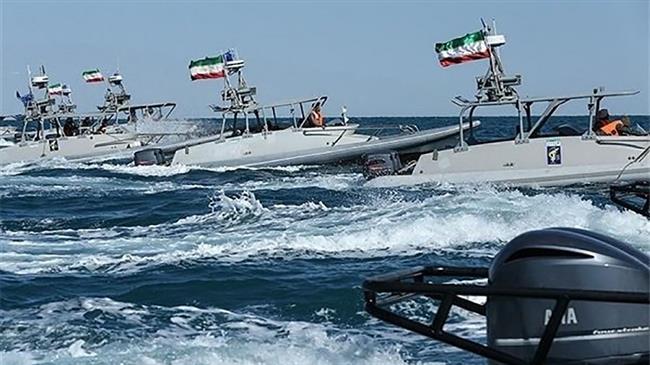
    A spokesman for the Bahrain-based 5th Fleet said that Iranian naval vessels backed off after the U.S. Navy responded, and both tankers continued their voyages.

    “The Iranian navy did make attempts to seize commercial tankers lawfully transiting international waters,” said the spokesman, Tim Hawkins. “The U.S. Navy responded immediately and prevented those seizures.”

    The spokesman added that the Iranian vessels opened fire at the second tanker, but did not cause casualties or major damage.

    Ambrey, a maritime intelligence service, said the tanker that was fired upon was a Bahamas-flagged, Greek-owned, U.S. managed crude oil tanker transiting from the United Arab Emirates to Singapore. It said the incident happened 28 nautical miles northeast of Muscat, the capital of Oman.

    The U.S. announced on May 12 that it will increase the rotation of ships and aircraft patrolling in and around the Strait of Hormuz.

    The decision was a response to the seizure of two oil tankers by Iran on April 27 and May 3. The tankers were captured in response to the seizure of a China-bound Iranian oil shipment by the U.S. near southern Africa on April 22, according to a report by Reuters.

    Iran is yet to comment on the new alleged incidents. Overall, tensions in the Strait of Hormuz will likely rise even more after the U.S. claims.

    Source: SouthFront.org

  • Iran To Increase Range Of Fattah Hypersonic Missile To 2,000 Kilometers

    Iran To Increase Range Of Fattah Hypersonic Missile To 2,000 Kilometers

    Brigadier General Amir Ali Hajizadeh made the announcement while attending a ceremony in the northern province of Mazandaran.

    “Today, we have achieved all complex technologies in the field of the defense industry,” the commander said during the ceremony, according to the semi-official Tasnim News Agency.

    Brig. Gen Hajizadeh also said that the Iranian people will hear more good news in the field of the country’s missile power in the near future.

    The Fattah, which was unveiled earlier this month, can travel at 15 times the speed of sound. The current version of the missile has a range of up to 1,400 kilometers, which means it can reach most U.S. bases in the Middle East as well as Israel from Iranian territory.

    Read more: Military Knowledge: Fattah Hypersonic Ballistic Missile

    Hypersonic missiles like the Fattah reach their top speed at low altitudes in the atmosphere, which makes them extremely difficult to track and intercept.

    Days after the unveiling of the Fattah, the United States imposed sanctions on a network of people and firms from Iran, China and Hong Kong that were allegedly associated with the development of Iran’s missile program. In addition, Israel’s Rafael defense contractor announced that it had been developing a first-of-its-kind anti-hypersonic missile defense system, dubbed Sky Sonic.

    Iran expanded its missile program and made a number of breakthroughs in the field over the last few years, despite facing strict sanctions by the U.S. and other Western countries as well as repeated sabotage attempts by Israel.

    Source: SouthFront.Org

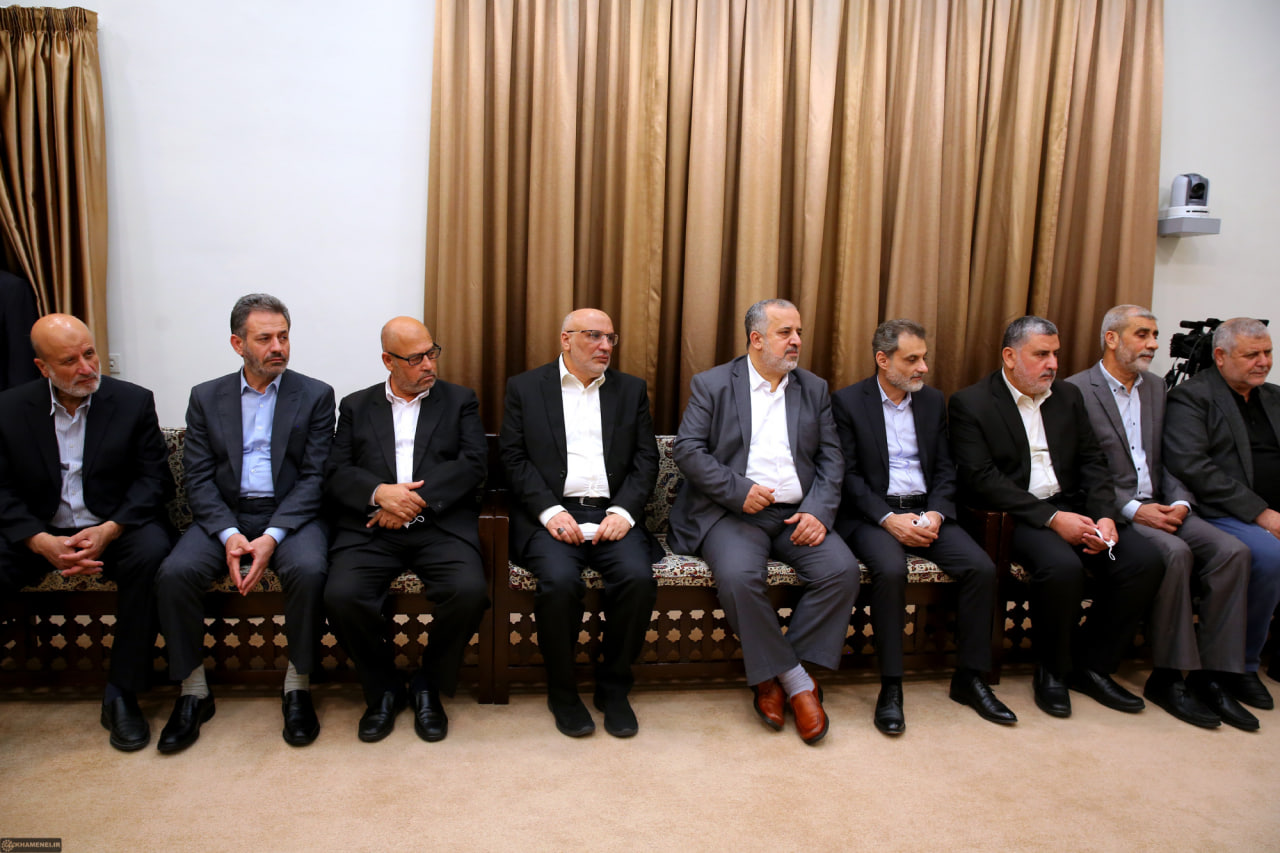
  • Iran Leader Addresses Hamas Official: Palestine Belongs To All Muslims

    Iran Leader Addresses Hamas Official: Palestine Belongs To All Muslims

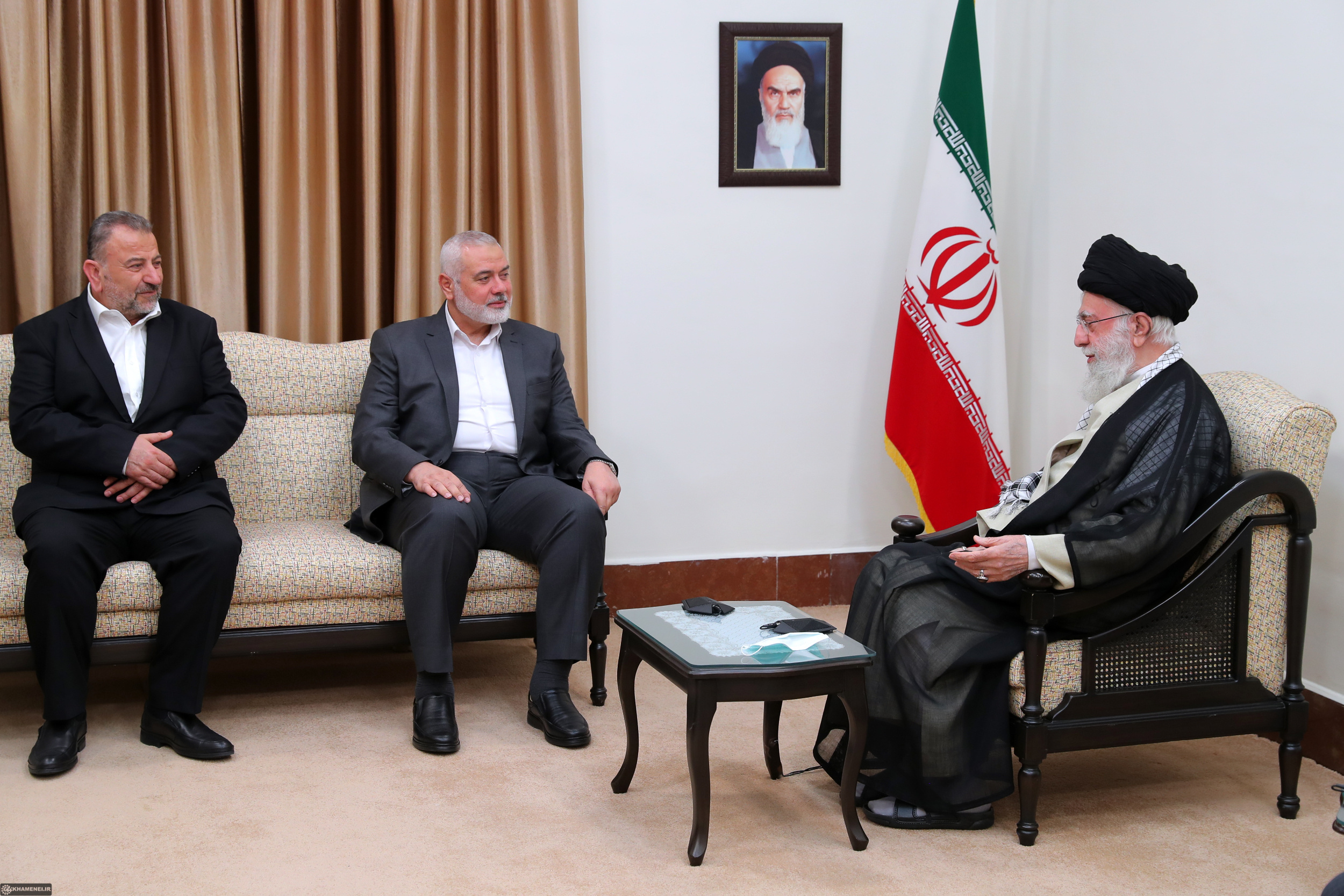
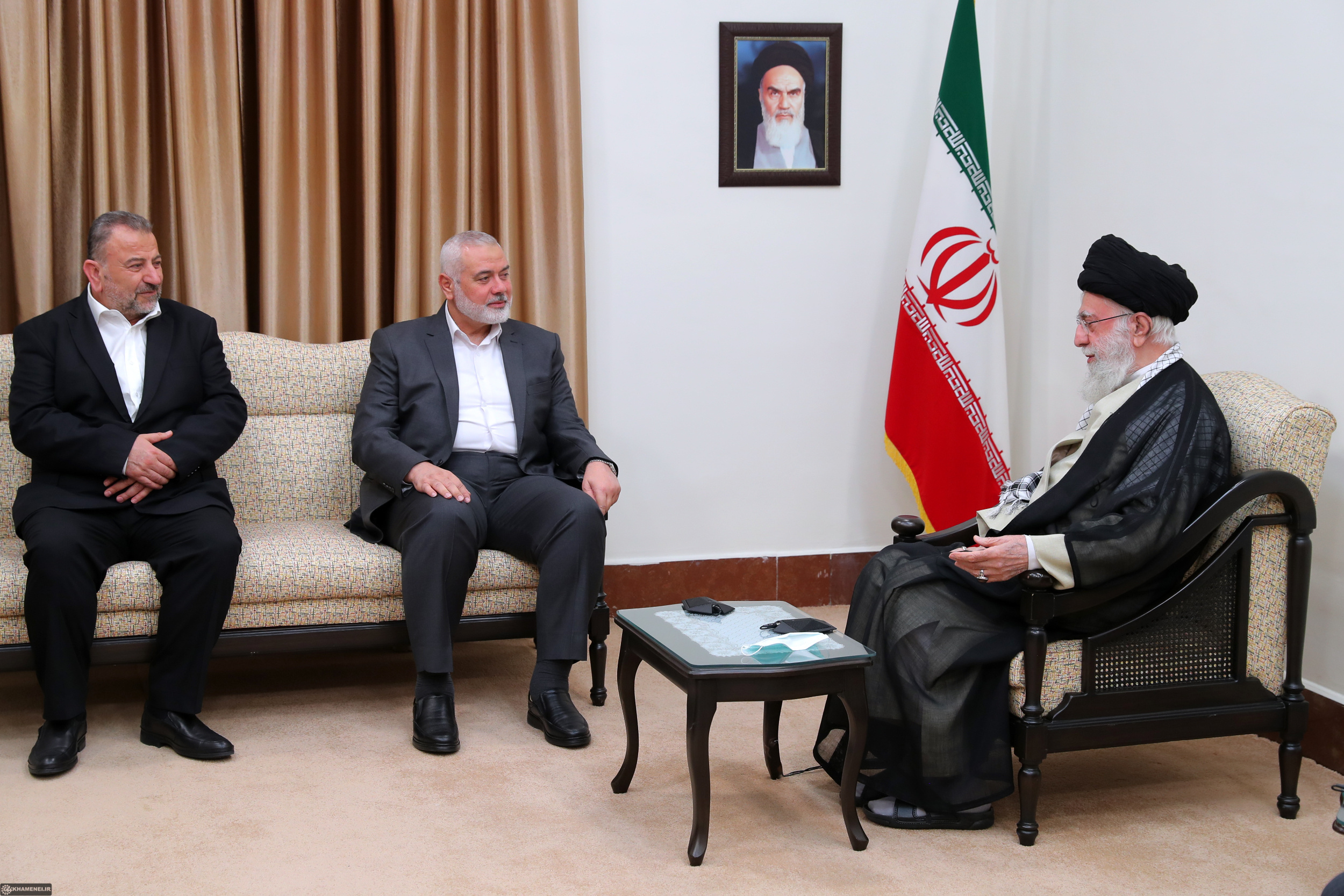
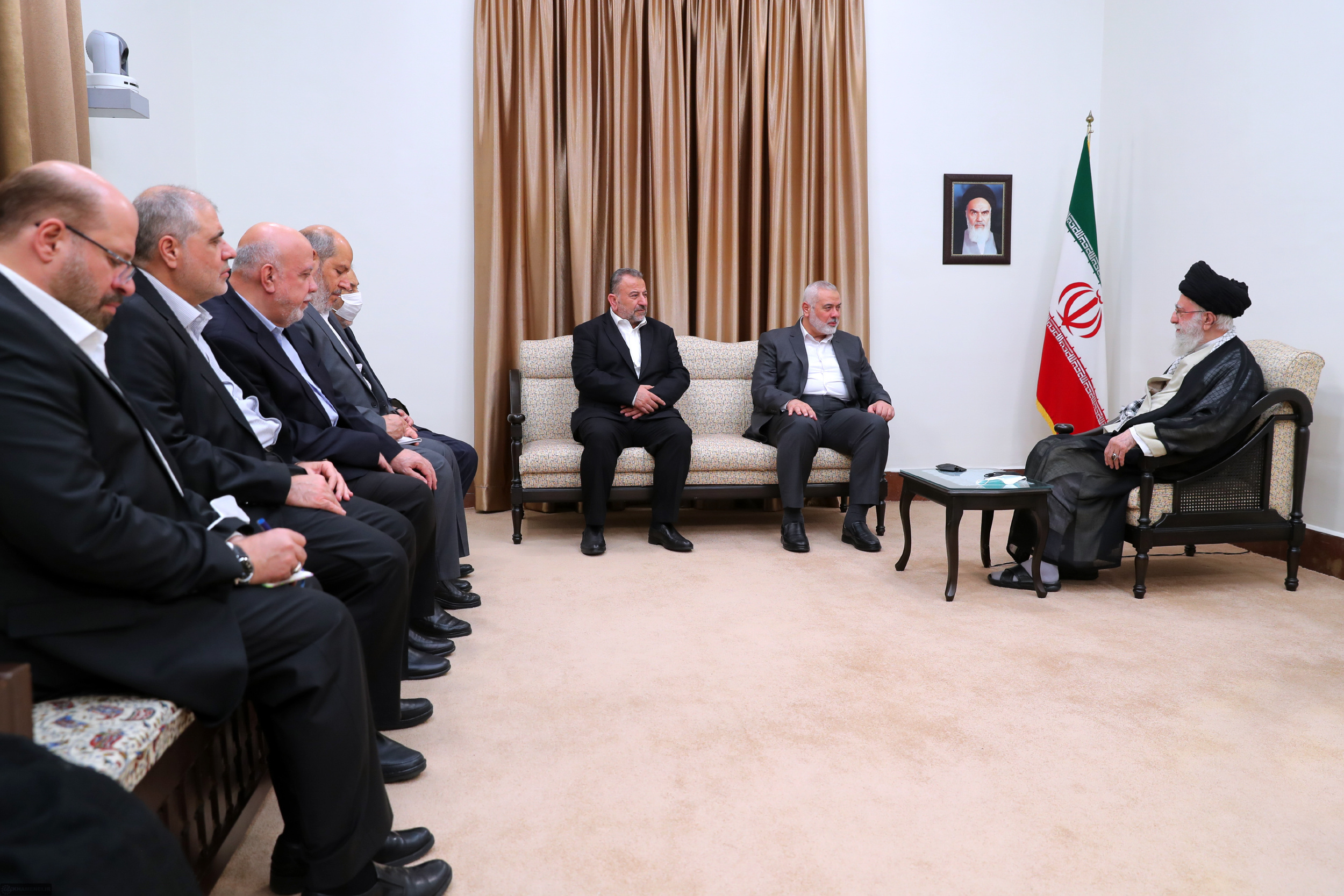
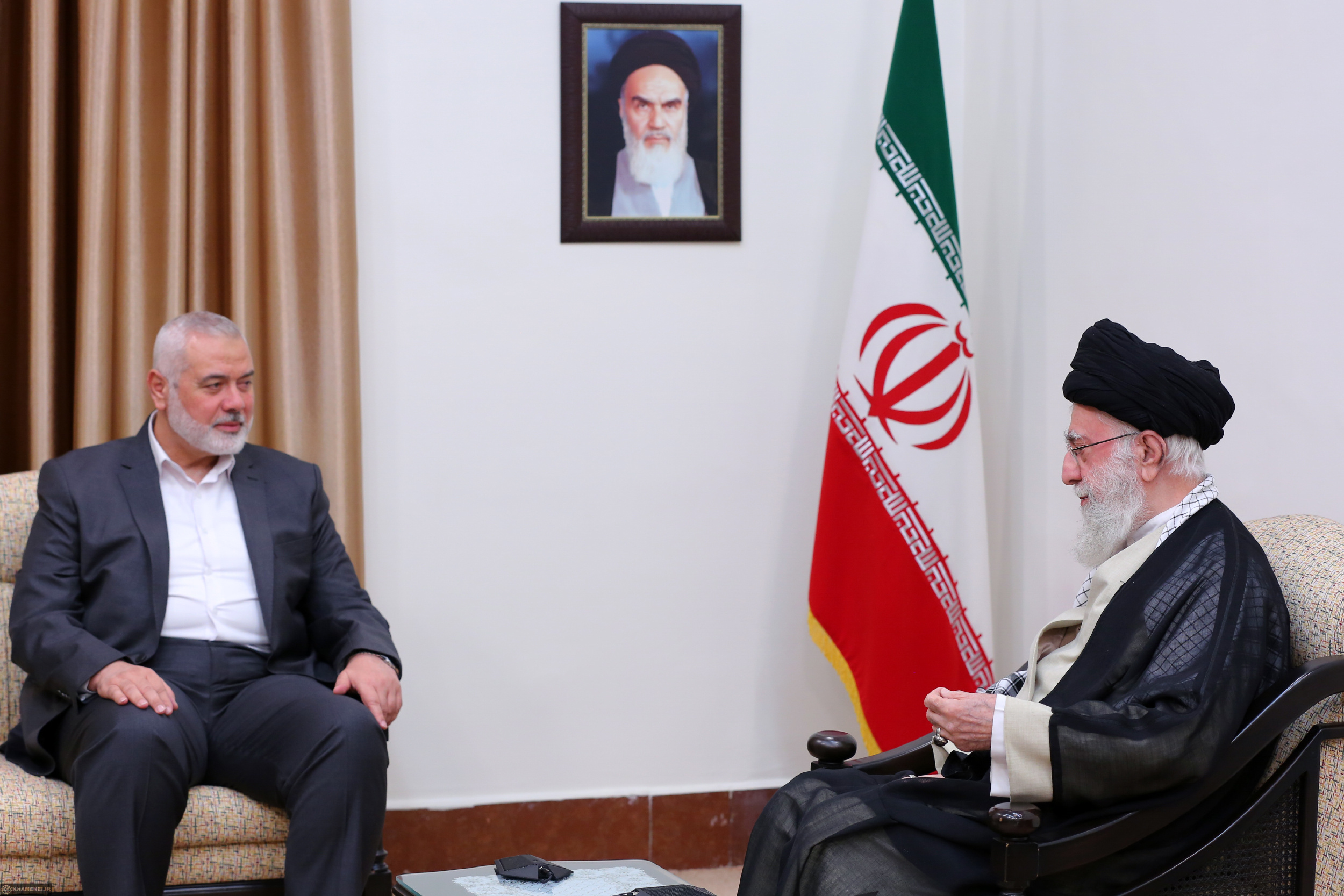
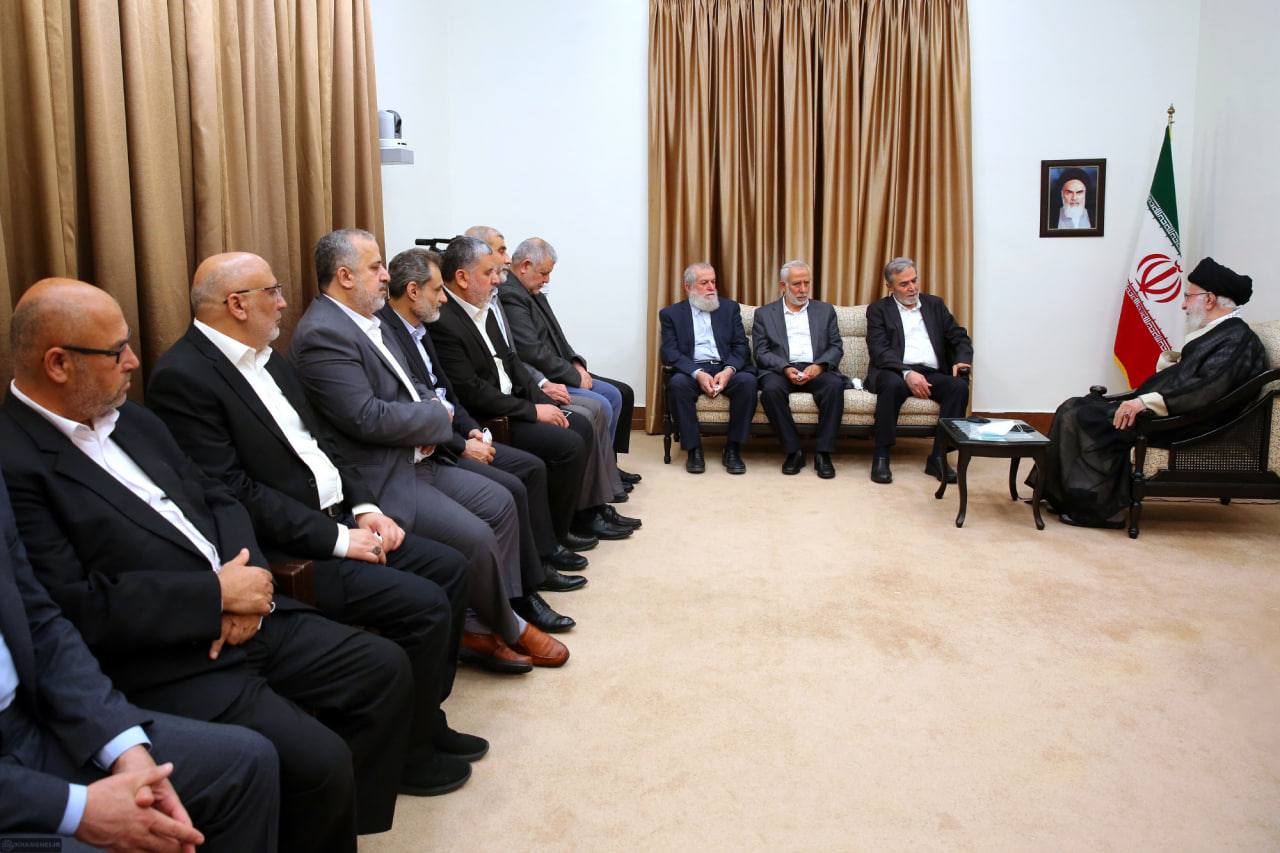
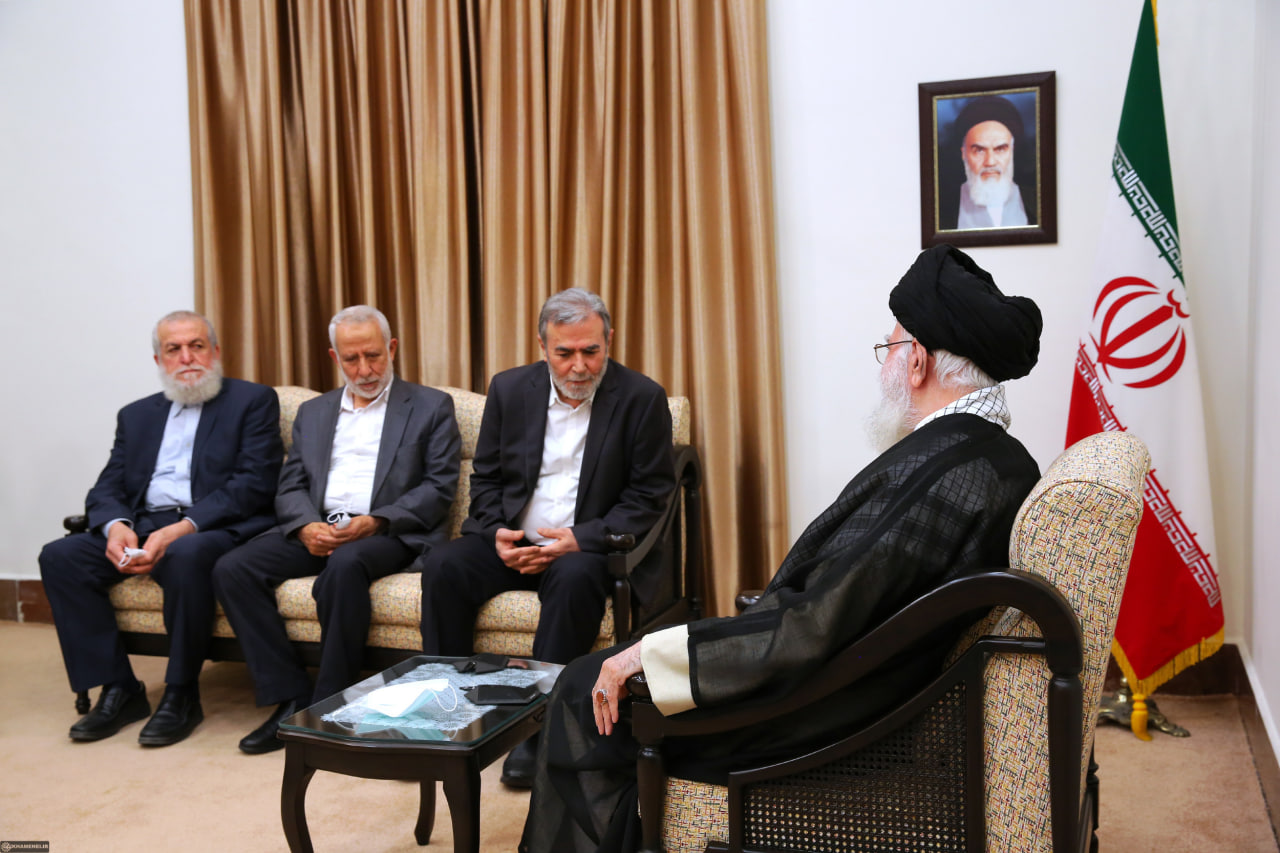
    ISWNews Analysis Group – On June 21, the Supreme Leader of the Islamic Revolution said in a meeting with head of Hamas’ political bureau with Ismail Haniyeh and his accompanying delegation that the progressing movement of the Palestinians, the sense of responsibility of the young and faithful Palestinian generation as well as their individual and collective involvement in the arena of struggle are of great importance.

    The Iranian Leader also emphasized that recent events in the city of Jenin and the military siege of Israeli soldiers by Palestinian youth are a clear example of the new scene and a promising future, which will lead to complete triumph for the Palestinians.

    He further underlined the significance of the issue of unity and more coordination among resistance groups and said that in the recent Gaza war, we witnessed that the enemy’s effort was to create discord and division among resistance groups and it made all-out efforts to create such an atmosphere, but thanks to God, it did not succeed; therefore, more focus should be upon unity and coordination, and that the correct path should continue powerfully.

    The Leader of the Islamic Revolution referred to the Gaza Strip as the core of resistance and also stressed that the West Bank is the point that will bring the enemy to its knees, and that good progress has been made in this region so far. According to the Supreme Leader, who would have thought that one day Palestinian youth in Jenin would make it so difficult for the Zionist troops that they would have to use fighter jets to escape the siege of the young Palestinian fighters, but this happened a few days ago in Jenin.

    He also underscored the Islamic Republic of Iran’s support for the Palestinian cause, noting that Imam Khomeini supported Palestine from the onset of the of the Islamic movement based on his belief and faith, and that the root cause of the Islamic Republic of Iran’s support for Palestine has its roots in the religious obligations and jurisprudence; so, it is not based on tactical or diplomatic moves.

    Imam Khamenei also stated that Palestine belongs to all Muslims and it is a religious obligation for all Muslims to engage in the field for its liberation, because it is a religious duty.

    In the meeting, the political leader of Hamas for his part presented a report on the latest developments in the occupied territories particularly in the West Bank and expressed gratitude for Iran’s ongoing support for Palestine.

    Moreover, Haniyeh discussed the latest developments in the occupied territories, particularly the acceptance of the younger generation of resistance and the formation of self-sufficient armed resistance groups in the West Bank.

    The Palestinian official went on to say that the current situation and the advances made by the resistance front have been unprecedented throughout the history of occupation of Palestinian lands.

    Read more: Hamas Delegation Meets With Iranian President, IRGC Cmdr.

    Addressing the Supreme Leader of the Islamic Revolution, he said that we emphasize in your presence that resistance groups will not retreat from even an inch of Palestinian soil and the approach of struggle and jihad will continue until the liberation of al-Quds and, God willing, with the help of the young and faithful Palestinian generation, Al-Aqsa Mosque will be liberated from the hands of the occupiers in the not-too-distant future and we will all say our prayers there along with you.

    It is worth mentioning that Ismail Haniyeh had previously met with representative of the Supreme Leader and Secretary of the Supreme National Security Council Ali Akbar Ahmadiyan on June 19 in order to discuss regional developments and the latest political and field developments in Palestine.

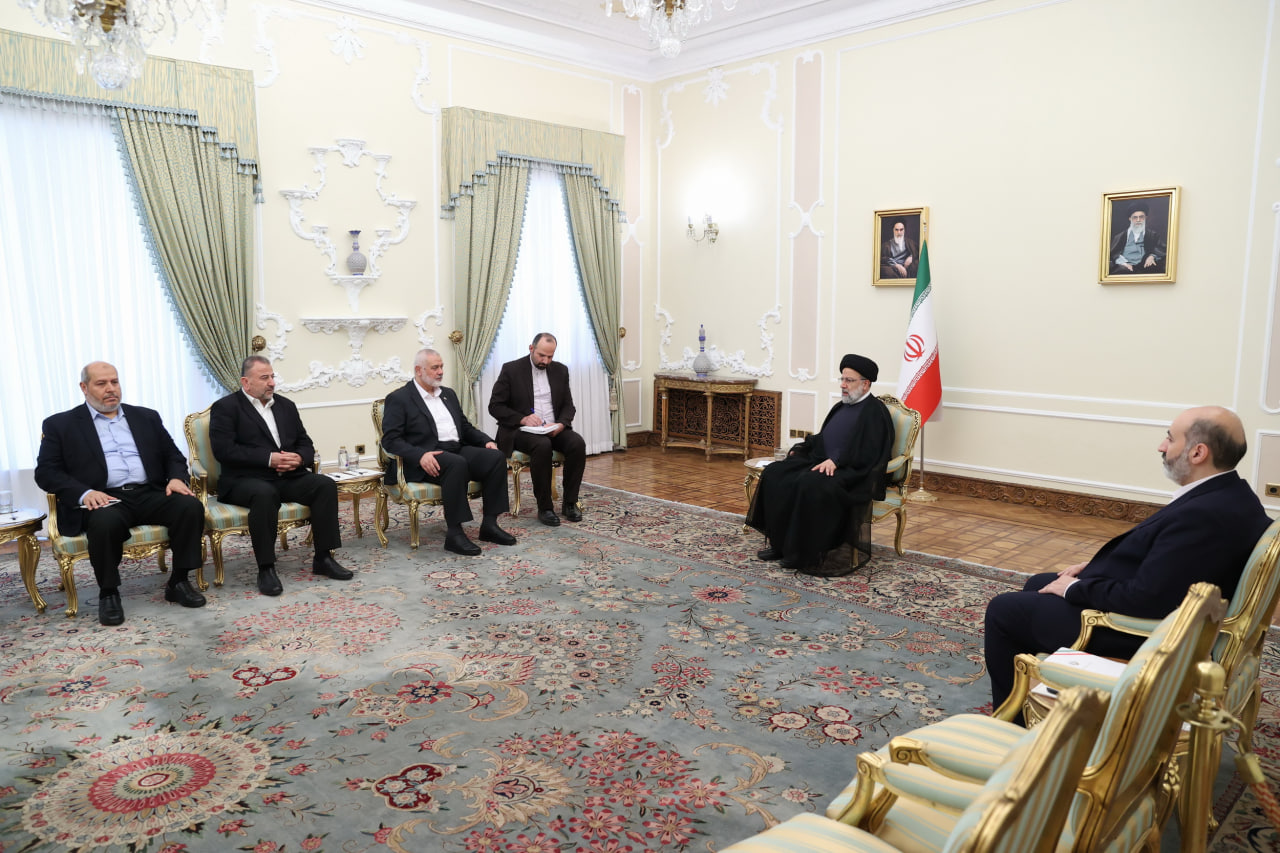
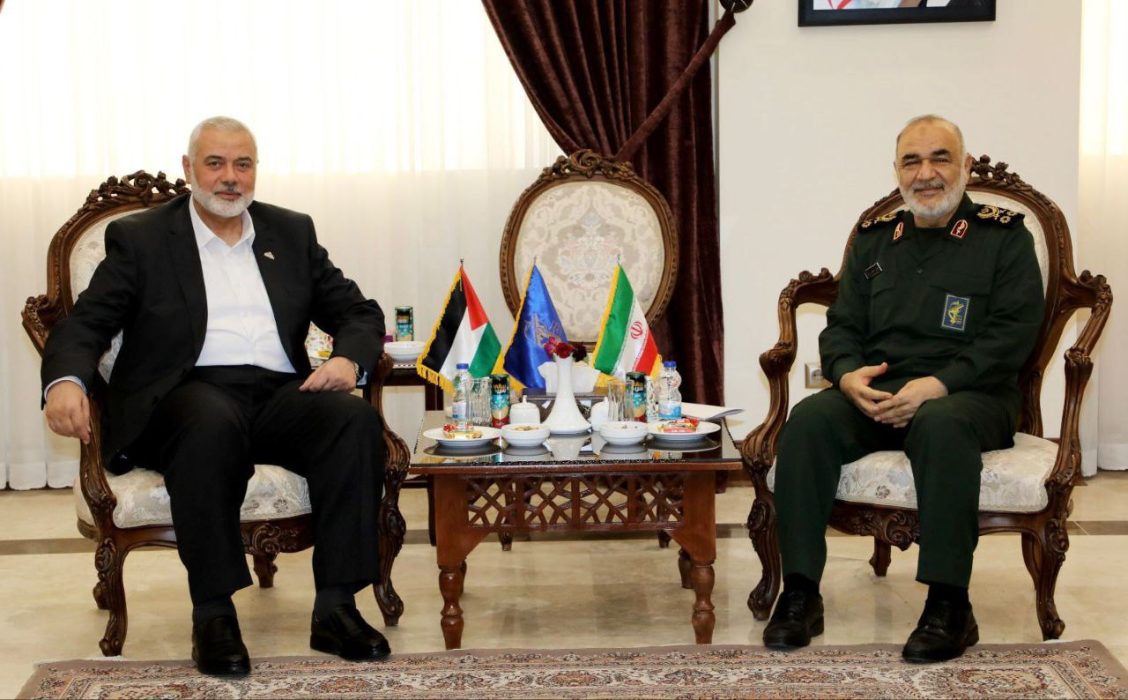
  • Hamas Delegation Meets With Iranian President, IRGC Cmdr.

    Hamas Delegation Meets With Iranian President, IRGC Cmdr.

    ISWNews Analysis Group – President Raisi congratulated the recent successes of the Palestinian resistance front and emphasized that such victories demonstrate that the Islamic Resistance Movement has the upper hand in dealing with the Zionist regime.

    He also stated that all facts and figures on the ground show that at present, the resistance movement is stronger than ever before, and its enemies are weaker than ever.

    President Raisi underscored that the most important issue in the Islamic world is the freedom of al-Quds, and that any attempt to normalize relations with the Israeli regime is a betrayal of the Palestinian ideal and a stab in the back of the resistance movement.

    Head of Hamas’ Political Bureau also expressed his gratitude and that of the Palestinian people to the continuous support of the Islamic Republic of Iran for the ideal of liberation of al-Quds.

    He went on to say that today the resistance movement is expanding and strengthening not only in the Gaza Strip but also in the West Bank, 1948-occupied lands, and even among Palestinians and friends of Palestine, who are residing outside the territories.

    He reminded that Palestine has turned into a part of the unified and continuous resistance movement in the region, and that all resistance groups, including Palestinian jihadi groups and even other elements of the resistance movement, provided all their capabilities with groups present on the front line against the Israelis in recent battles.

    Haniyeh further noted that we hold constant meetings and coordination sessions among all groups, from Lebanon’s Hezbollah movement and the Islamic Jihad Movement in Palestine to Hamas and other Palestinian jihadi groups.

    In the following of the Hamas official’s visit to the Iranian capital Tehran, he held talks with Commander-in-Chief of the Islamic Revolution Guards Corps (IRGC) Hossein Salami.

    It should be noted that Haniyeh also met with representative of the Supreme Leader and Secretary of the National Security Council of Iran Ali Akbar Ahmadian on June 19, and the two sides discussed issues of mutual interests.

  • Zionist Regime Experiencing Weak, Reactionary Position: Imam Khamenei

    Zionist Regime Experiencing Weak, Reactionary Position: Imam Khamenei

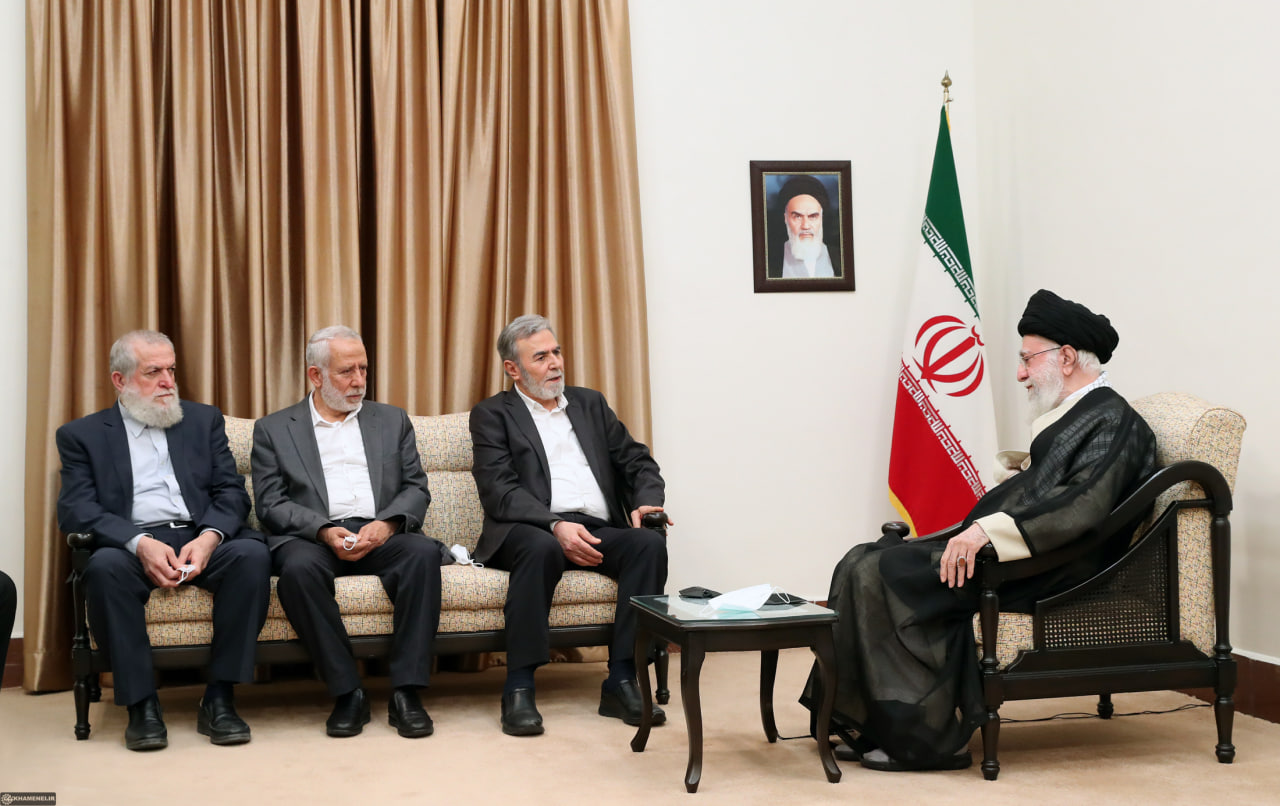
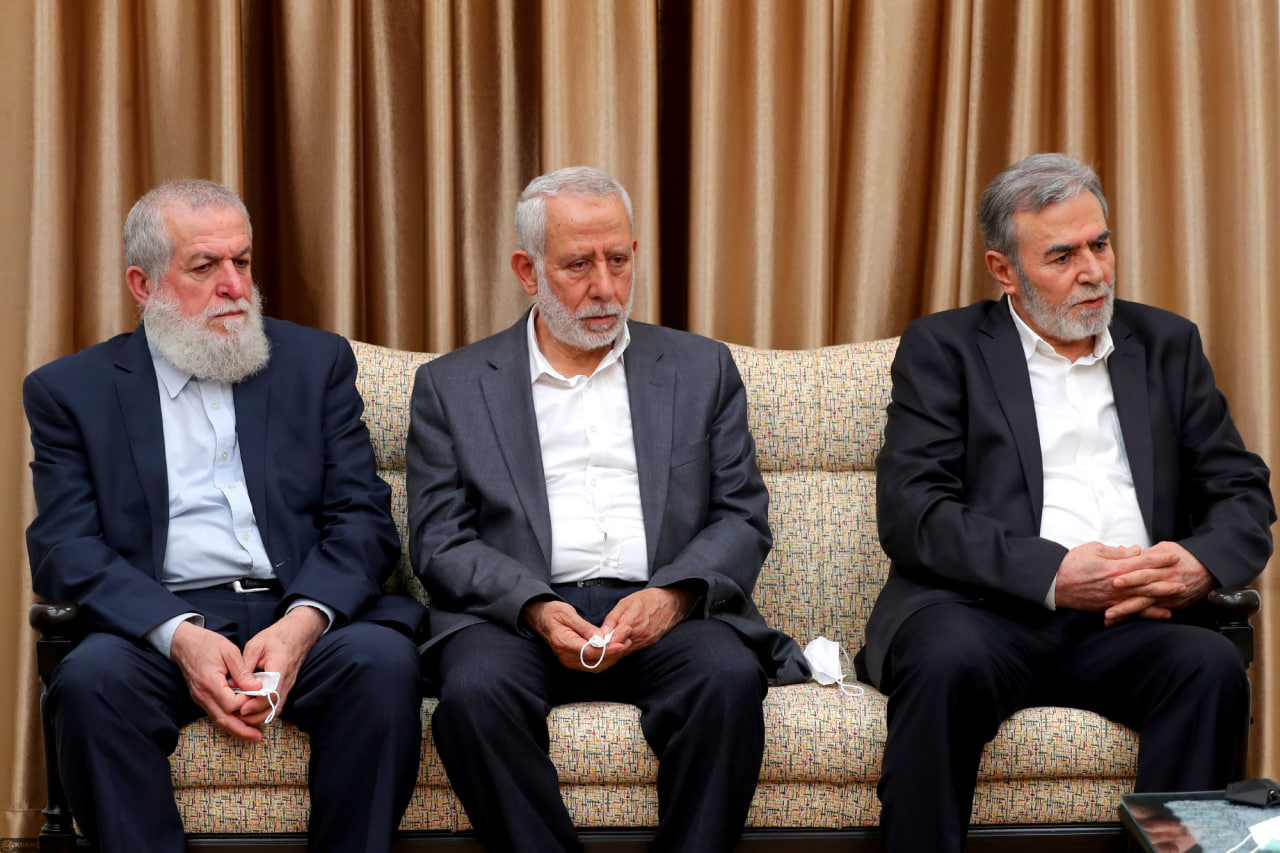
    Ziad al-Nakhalah, Secretary-General of the Islamic Jihad Movement of Palestine, met and held talks with Imam Khamenei, the Supreme Leader of the Islamic Revolution, in the Palestinian official’s visit to Iran on June 14.

    While congratulating the Islamic Jihad’s recent victory in the Israeli-imposed war on the Gaza Strip, the Supreme Leader emphasized that today’s conditions of the Zionist regime is much more different from seventy years ago.

    The Leader noted that the Zionist enemy is now in a passive and reactionary position, and this condition indicates that the Palestinian resistance movements and the Islamic Jihad have recognized the correct path and they are going ahead tactfully. 

    The Supreme Leader further emphasized that without sacrificing oneself, it will not be possible to achieve significant objectives, adding that today, thanks to God, the power and credibility of the Palestinian resistance groups, including the Islamic Jihad, have increased day by day, and that the recent defeat of the Zionist regime in the 5-day war confirms the fact. 

    Imam Khamenei also mentioned that the Islamic Jihad Movement in Palestine showed good performance in the recent conflict in the Gaza strip, and now the conditions have changed concerning the Zionist regime in comparison to seventy years ago; so, the leaders of the Zionist regime are rightful in terms of being concerned about not experiencing the 80th anniversary of the regime. 

    Read more: Secretary General Of Islamic Jihad Declares The End Of Fighting In Gaza

    The Supreme Leader also praised the Islamic Jihad and other Palestinian resistance groups, saying that they have found the key to the fight against the Zionist regime. The growing power of the Palestinian resistance groups in the West Bank is the key to bringing the Zionist enemy to its knees, the Leader of the Islamic Revolution mentioned, noting that this path must continue. 

    Al-Nakhaleh, for his part, expressed gratitude to the Islamic Republic of Iran for its steady support for the Palestinian people and their struggles during the meeting in capital Tehran.

    The Palestinian official also provided the Supreme Leader with a report on recent developments in the occupied territories of Palestine, particularly the defeat of the Zionist regime in the 5-day war in the Gaza Strip as well as the circumstances of the Palestinian resistance groups in the West Bank, including the superiority of the Palestinians in the face of the Zionist regime.

    The Secretary-General of the Islamic Jihad Movement of Palestine said that the Islamic Jihad emerged successful from the recent Gaza war, and we hope to witness the final victory and liberation of al-Quds as soon as possible.

  • Iraq’s Popular Mobilization Units Obtain Iran-Made Mohajer-6 UAV (Video)

    Iraq’s Popular Mobilization Units Obtain Iran-Made Mohajer-6 UAV (Video)

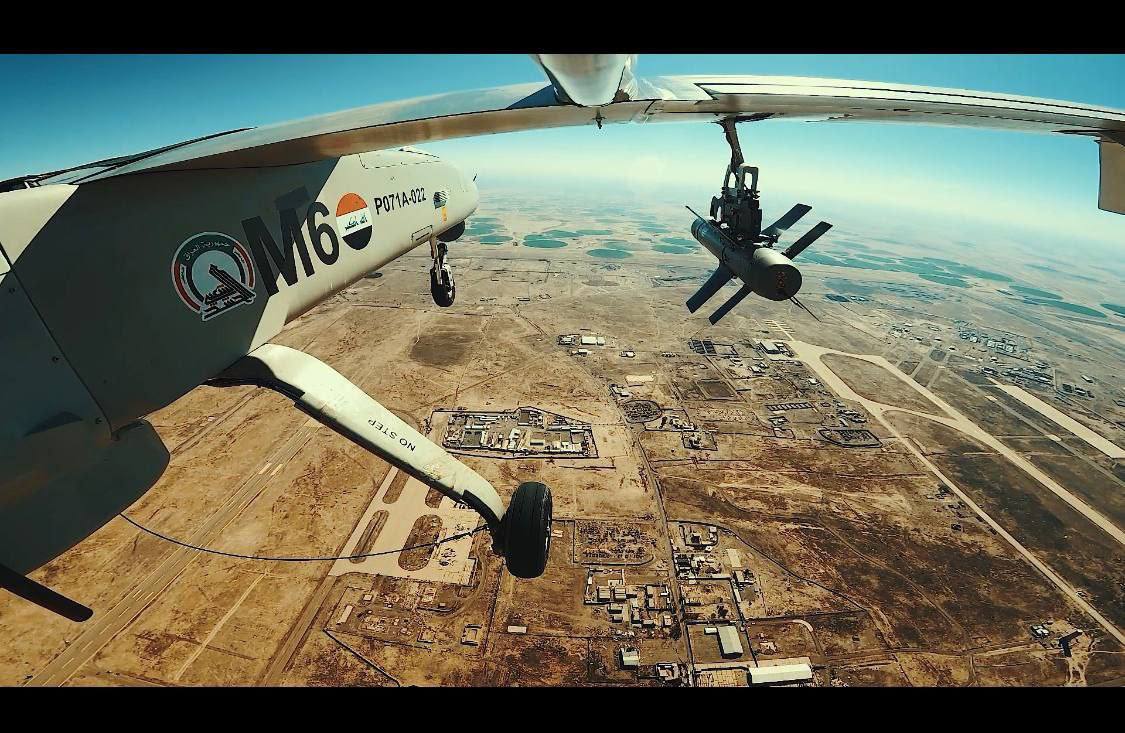
    On June 14, the Iraqi Popular Mobilization Units announced the participation of the “M6” UAV in one of their military exercises in a video footage.

    It is said that the drone is the export version of the Iranian “Mohajer-6” drone, but transformations have been made to the Iran-made UAV by the specialized forces of the Popular Mobilization Units in the Arab country.

     In that video, which was released by the Popular Mobilization Units, the “Mohajer-6” drone precisely destroys two of its targets with the usage of two Qaem-5 bombs during a training mission.

    Its high accuracy in the targeting mission and the easy guided performance of the drone are clearly visible in the released video. 

    Read more: Military Knowledge: Mohajer-6 Reconnaissance Combat Drone

    Earlier in 2021, Mohajer-6 drone along with other Iranian military equipment such as the Toofan MRAP armored vehicle, Jeep Safir, Chamroosh drone and Ra’ad rocket launcher were displayed in a parade, which was held by the Popular Mobilization Units forces at the Abu Montazar Al-Mohammadi Camp (previously known as MKO terrorists’ Ashraf Camp) in Diyala province, Iraq. 

    The Mohajer-6 Combat Surveillance Drone is a medium-class UAV, which has been built by the Ministry of Defense of the Islamic Republic of Iran. The drone was officially unveiled in March 2017 during an inspection by the then President of Iran Hassan Rouhani of the exhibition of the achievements of the Ministry of Defense.

    The Mohajer-6 drone can be considered as the most successful Iran-made exported drone. The UAV has been exported to Iraq (Popular Mobilization Units) and Ethiopia. 

    It seems that the Popular Mobilization Units with the help of Iranian specialists have achieved the capacity and capability to control and employ drones, as well as make changes to the drones.

    In recent years, the Popular Mobilization Units planned to strengthen their air force units, because Martyr Abu Mahdi al-Mohandes had emphasized the need for setting up an air force unit in the organization.

    The video published by Hashd al-Shaabi about the use of Mohajer-6 drone
  • Israel Setting Up New Unit To Get Prepared For War On Iran!

    Israel Setting Up New Unit To Get Prepared For War On Iran!

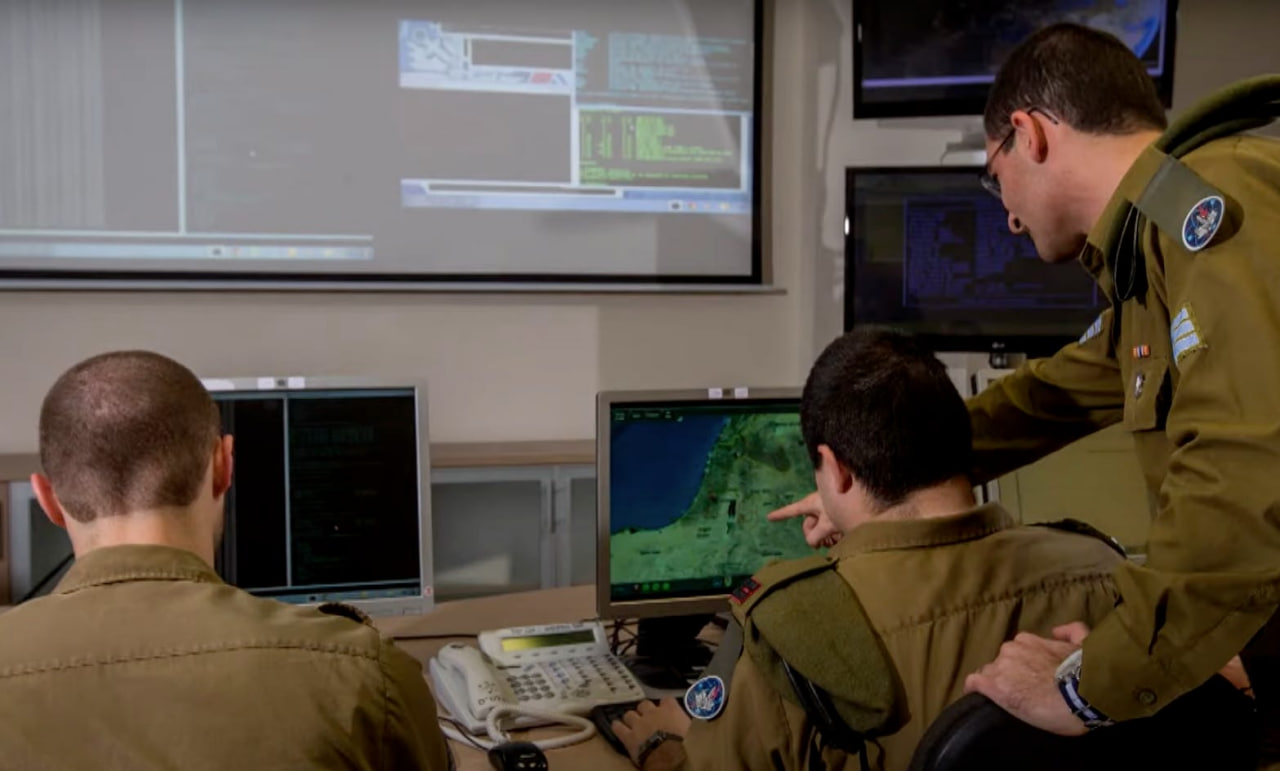
    According to the report by the Hebrew newspaper Yedioth Ahronoth, the new unit is the result of an updated plan prepared by the Israeli army and its air force to attack Iran’s nuclear facilities and other sensitive centers.

    Yedioth Ahronoth, quoting officers from this new unit, wrote that the plan is a fundamental change in thinking and planning, and that the army has been forced to do so because a war with Iran will not be similar to a war with Hezbollah or operations against the Palestinian resistance groups such as Hamas and the Islamic Jihad movements in the Gaza Strip.

    The unidentified officers said that the commander of the Unit 54 and other forces analyze information from different parts of the Islamic Revolution Guards Corps (IRGC) on a daily basis, and they examine the military and training methods of the IRGC.

    It has been said that there are thousands of military targets throughout Iran that Israel can attack, but Lieutenant Y, one of the members of Israel’s new unit, has been entitled to identify the most important targets inside Iran.

    Generally said, the task of the unit is to collect information about the Islamic Revolution Guards Corps. The Unit 54 has 30 personnel, one-third of whom are officers, and it is being commanded by an intelligence major with the abbreviation “D”.

    Another member of the unit told Yedioth Ahronoth newspaper that we analyze all parts of the Islamic Revolution Guards Corps (not merely the IRGC Quds Force). Iran is a large country in terms of land. What we collect and discuss has a direct impact on the ability of the Israeli army and is based on a plan, which has been drawing for years by Israel Defense Forces General Staff to turn into the basis of the military power of the Israeli army in the coming years.

    The officer also stated that every day we collect more targets based on different rankings and learn the best way to hit them, we have doubled our target bank regardless of Iran’s nuclear facilities. This is different from the wars we have had in recent years, because the comprehensive military confrontation is a different story.

    Yedioth Ahronoth concluded that the Unit 54, along with representatives from other intelligence units such as 8200 and 9900 as well as a little support from the United States, prepared a war intelligence plan that no one imagines it will occur.

  • Russia Requires Iran Version Of RQ-170 To Demolish Ukraine Air Defense Systems: Russian Media

    Russia Requires Iran Version Of RQ-170 To Demolish Ukraine Air Defense Systems: Russian Media

    Facts and figures on the ground show that the Russian Aerospace Forces have not been able to fully control the sky over Ukraine since the beginning of the war, and the Ukrainian army has used defense systems such as S-300 to counter operations deep inside Ukraine by Russian helicopters.

    In the past fifteen months, Ukraine received a set of the most advanced missile systems and Western-made defense systems.

    However, the Russian army succeeded in utilizing glide bombs. Such bombs, with their programming modules and low-altitude flight capability, accurately hit targets at distances of 40 to 60 kilometers. The glide bomb paves the way for targeting without firing expensive cruise missiles or dispatching aircraft into areas covered by air defense systems.

    However, the S-300 systems will still pose a serious threat to Russian aircraft. The Russians say there is a solution to this problem to control Ukraine’s sky.

    The solution is to use bomber drones instead of fighter jets and helicopters. Some Russian media outlets believe that instead of using Sukhoi S-70 Okhotnik-B drones, the Russian army should use similar Iranian UAVs.

    According to Top War, we talk about the offensive and reconnaissance drones of the Saegheh type, which were reverse-engineered and produced in Iran based on the basis of the technology of the US RQ-170.

    Iran designed, produced and carefully studied several multi-purpose drones using US stealth drone technology. The difference between Shahed 141 and Shahed161 drones is that Shahed 161 uses a jet engine and Shahed 141 uses a piston engine as a propellant.

    Shahed 141 drone has a speed of 275 kilometers per hour and its weight during flight reaches 175 kilograms and it can fly up to an altitude of 20,000 feet.

    It has the ability to fire two smart “Sadid” bombs with the weight of 34 kilograms. Sadid is a guided anti-armor and air-based missile. And Russians are very interested in it; some Russian military analysts suggested purchase of Sadid-1 and Sadid 345 missiles from Iran!

    Read more: Military Knowledge: Sadid Smart Bombs and Missiles

    Sadid 345 is vital for Russia, because the bomb is very suitable for striking enemy radar equipment or artillery personnel. The bomb has three types of guidance, one of which is televised guidance, which has the least accuracy and its error is about 5 meters.

    The Russian media argued that by using such drones, it is possible to penetrate deep into enemy defense lines (without endangering the lives of pilots of fighter jets) and easily hit predetermined targets. Also, unlike Geranium-2 (Shahed 136) UAVs, such drones are reusable. The use of composite materials in the construction of the drones has reduced their radar reflection.

    In recent months, Western military and intelligence officials announced that the Russian army used more than 400 Iranian-made offensive drones in attacks on urban infrastructure in Ukraine; but, Spokesman for Iran’s Foreign Ministry Nasser Kanani stated that Tehran repeatedly responded to baseless allegations by Ukrainian officials regarding the alleged transferring of drones to Russia and once again it is emphasized that Iran has not exported any military equipment to any party for the usage in the Ukraine war.

    There have not been released any documents or evidence regarding Russia’s use of Iranian bomber drones in the Ukraine war so far, but it seems that if the war continues, we will witness the entry of various Iranian weapons, especially Shahed 141 and Shahed 161 drones into the battlefield.

    However, war zones are one of the main places to test arms and ammunition and Iran is not an exception in this regard; so, it is expected to take advantage of the opportunity.
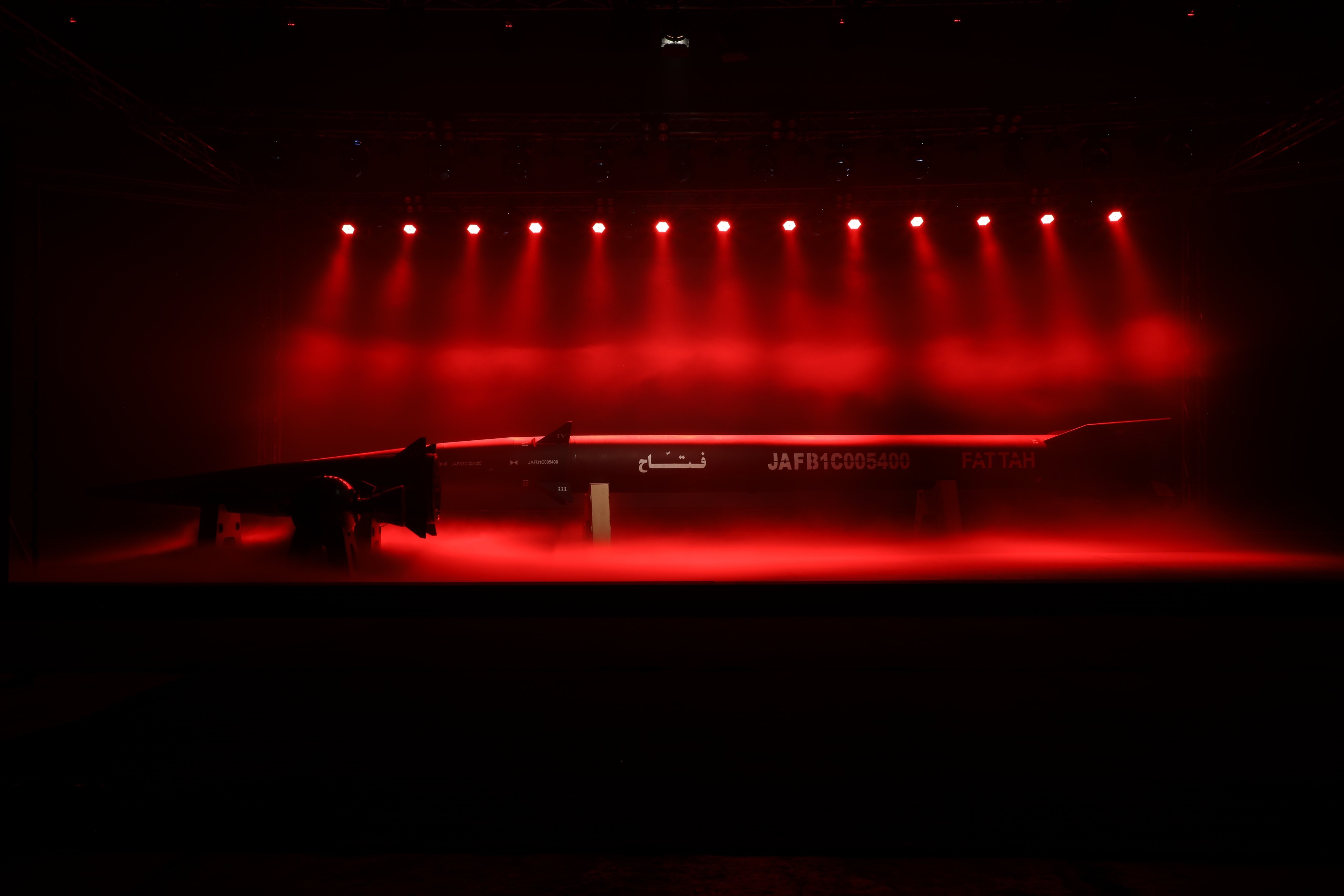
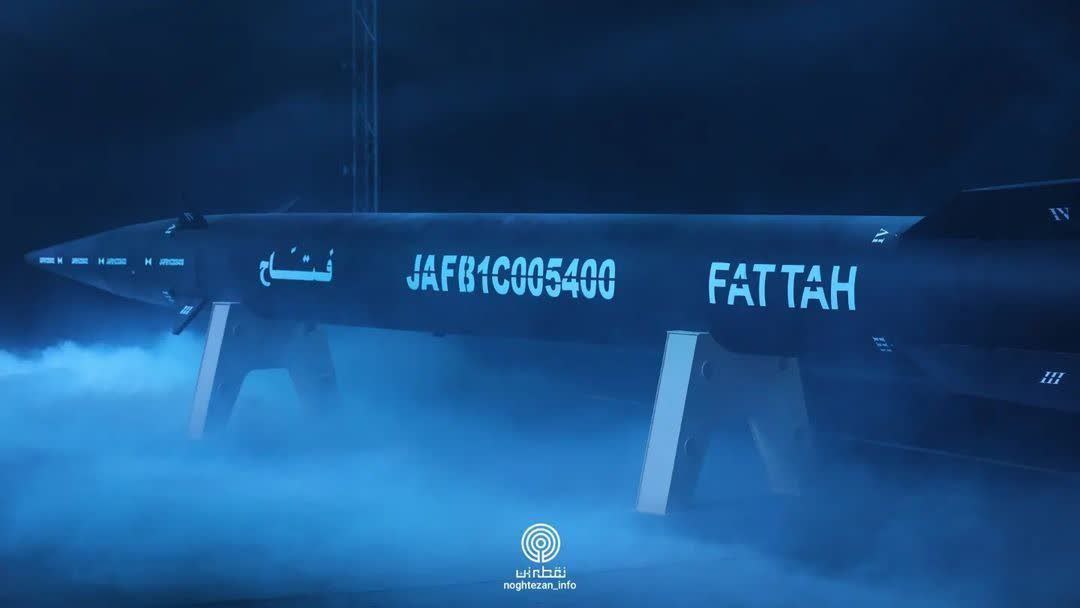
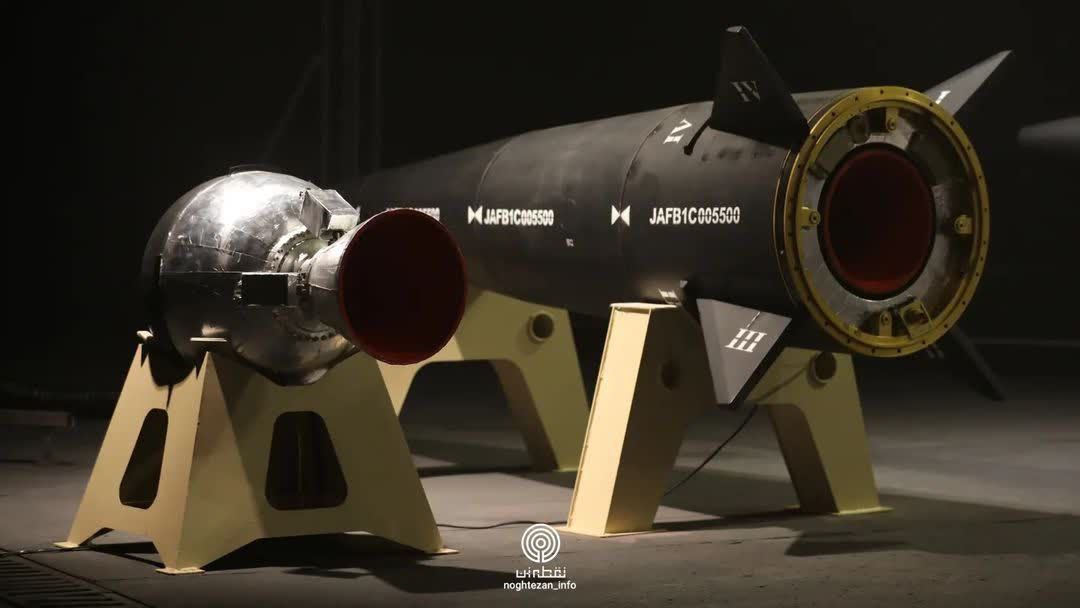
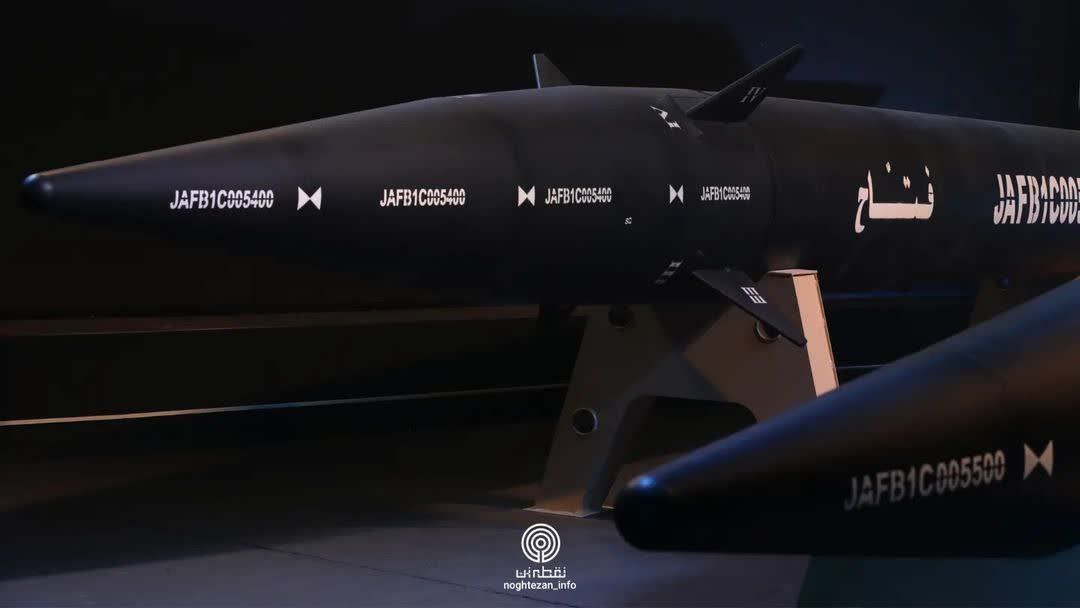
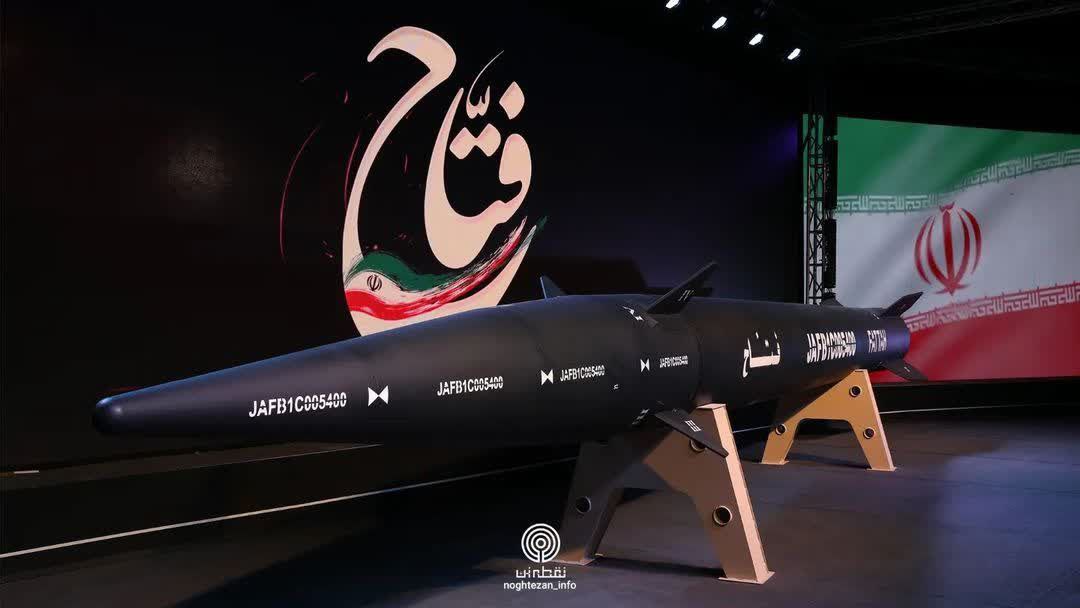
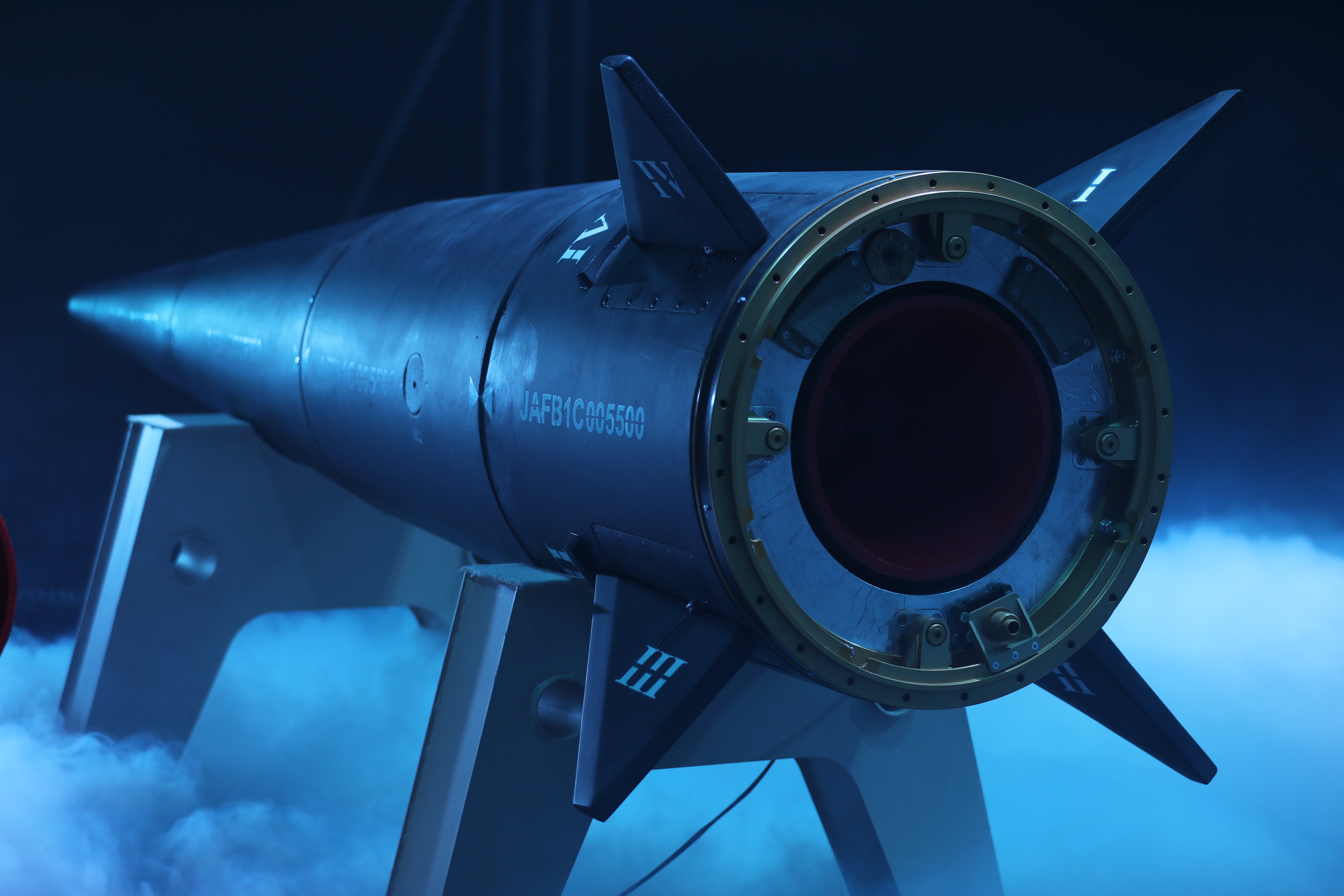
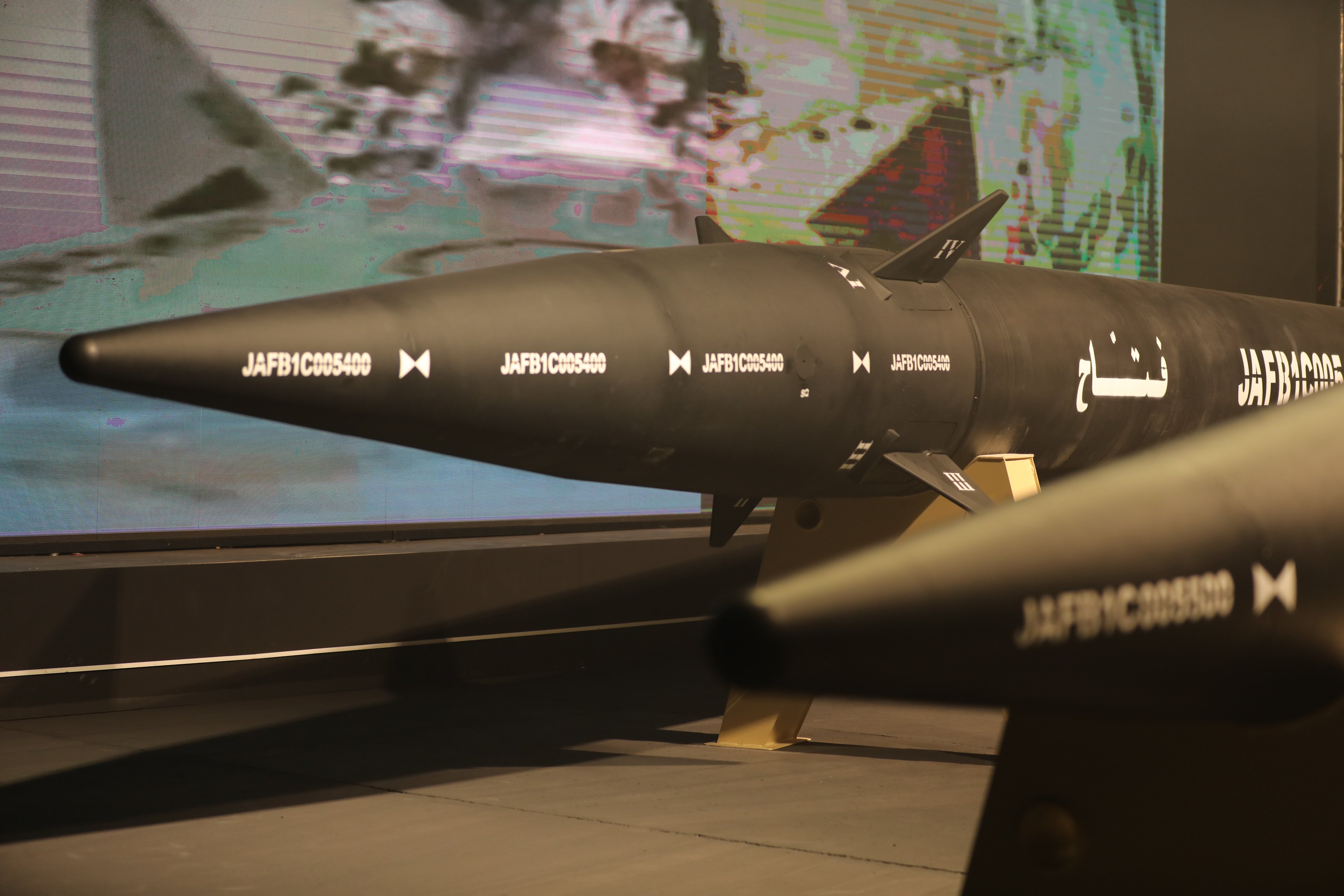
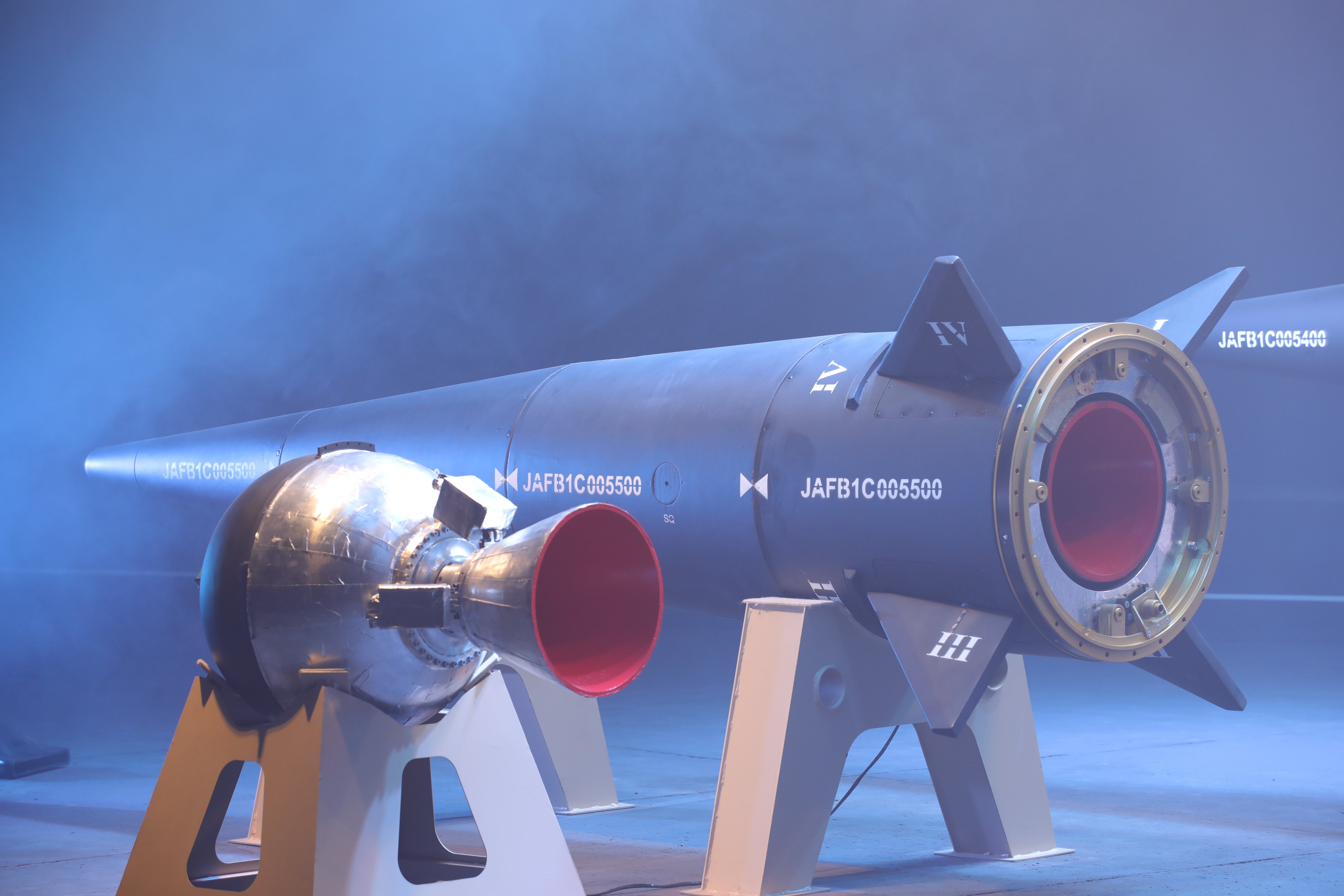
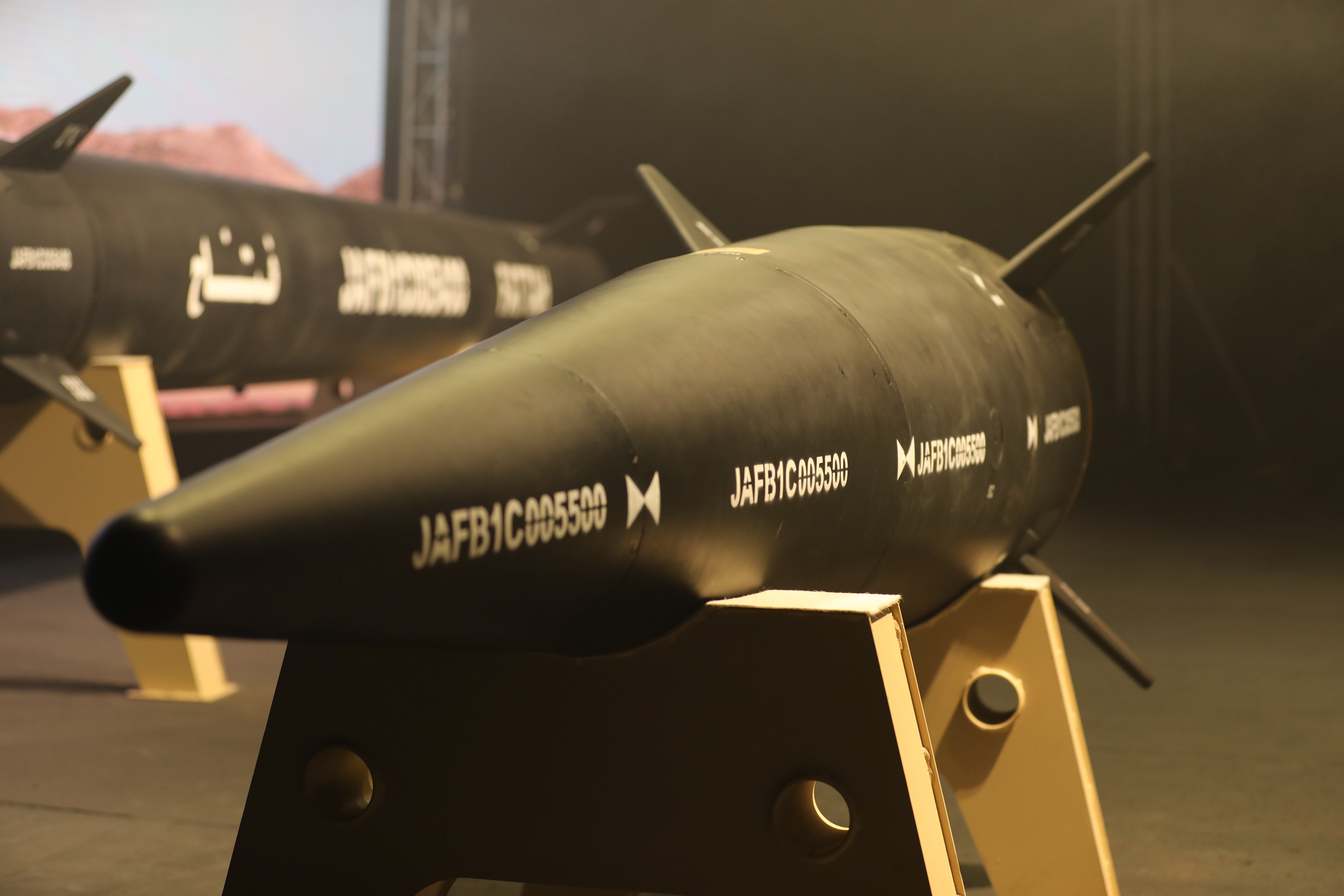
  • Iran Unveils First Home-Grown Hypersonic Missile ‘Fattah’ (Image)

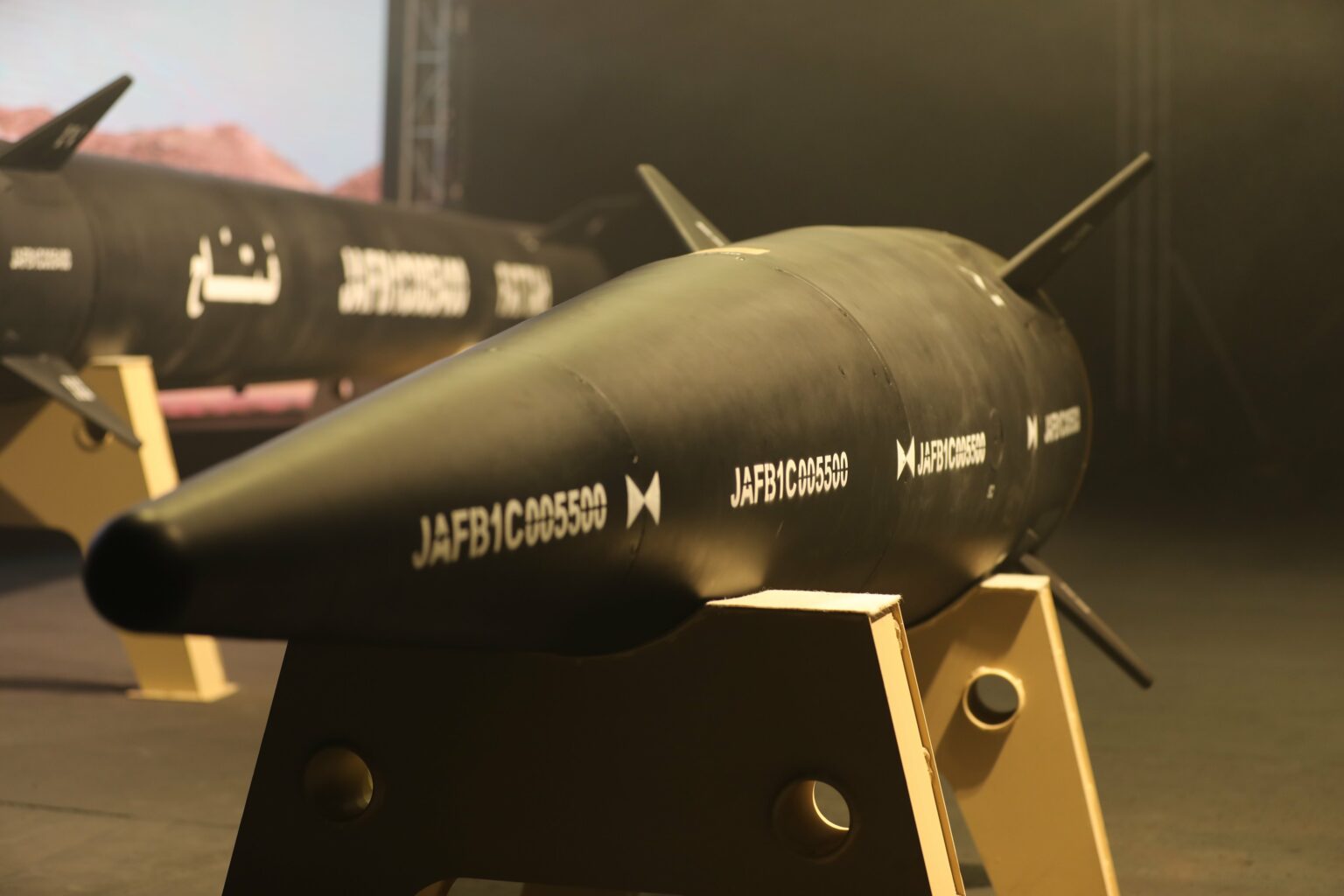
    Iran Unveils First Home-Grown Hypersonic Missile ‘Fattah’ (Image)

    The state-of-the-art strategic achievement of the Islamic Revolution Guards Corps’ Aerospace Force was unveiled on June 6 in the presence of President Ebrahim Raisi and Commander-in-Chief of the Islamic Revolution Guards Corps Major General Hossein Salami as well as Commander of the IRGC Aerospace Force Brigadier General Amir-Ali Hajizadeh at the headquarters of the force.

    The Fattah hypersonic missile possesses a range of 1,400 kilometers and it is capable of penetrating all missile shield systems and destroying them. This type of missile is among the state-of-the-art weapons and equipment that are currently being produced and utilized by countries such as the United States, Russia and China.

    The hypersonic missile enjoys significant accuracy, very high speed, and extraordinary maneuverability as well as the ability to become undetectable and penetrate radar systems.

    The Fattah missile has tactical capabilities due to its solid fuel propulsion system as well as its ability to reach very high speeds and also to perform various maneuvers inside and outside the atmosphere of the earth in order to overcome various types of air defense systems of enemies. The range of this missile is 1400 kilometers and it is said that its speed prior to hitting the target is 13 to 15 Mach.

    Brigadier General Hajizadeh said at the unveiling ceremony of the Fattah hypersonic missile that the missile, which was unveiled today, is a rare missile in the world; in such a way that thanks to the unveiling of the missile, Iran turned into one of the four countries possessing the technology.

    He went on to say that there is not any no anti-missile projectile, which can hit the Fattah missile, because of its technology; while there is an anti-missiles for other weapons such as tanks, ships, airplanes and so on, and even anti-missiles have been built for other missiles. According to the military official, there is no missile shield that has been very successful in the face of this type of missile; on the other hand, three missiles must be fired to hit one hypersonic missile, and of course, the price of one anti-missile projectile is 20 times more expensive than the targeted missile.

    He further stated that the Fattah missile cannot be destroyed by any missile due to its movement in different directions and altitudes; because anti-missile projectiles move according to a specific vector, which have a lower speed comparing to the speed of the hypersonic missiles.

    Advertising video of Fattah missile – A video of the launching steps and how it works until hitting the target

    The IRGC Aerospace Force commander also emphasized that missile program in Iran has been supported and approved by the Supreme Commander-in-Chief Ayatollah Seyyed Ali Khamenei from the day one up to now. When we presented a report on the construction of the missile to the Supreme Leader, He designated the missile as “Fattah,” he added.

    Hajizadeh noted that the cooperation between the Revolution Guards Corps and the government has never been as much as it is now; therefore, we are very grateful for the collaboration by the Ministry of Defense.

    It should be mentioned that earlier in October 2022, Hajizadeh declared on the sidelines of the martyrdom anniversary of Tehrani Moghadam at the headquarters of the IRGC Aerospace Force that they are working on manufacturing a hypersonic ballistic missile, saying that the missile has a high speed and can maneuver inside and outside the atmosphere.

    After awhile, he elaborated on Iran’s hypersonic missiles during his presence on a televised program in March 2023, noting that the speed of Iran’s hypersonic missiles is more than 12 to 13 Mach and the most important advantage of the hypersonic missiles is that the enemies will not be able to destroy them by using their missile defense systems and he confidently said that the foes will not be able to build a system to counter such missiles for coming decades.

    A video of the unveiling ceremony of “Fattah”
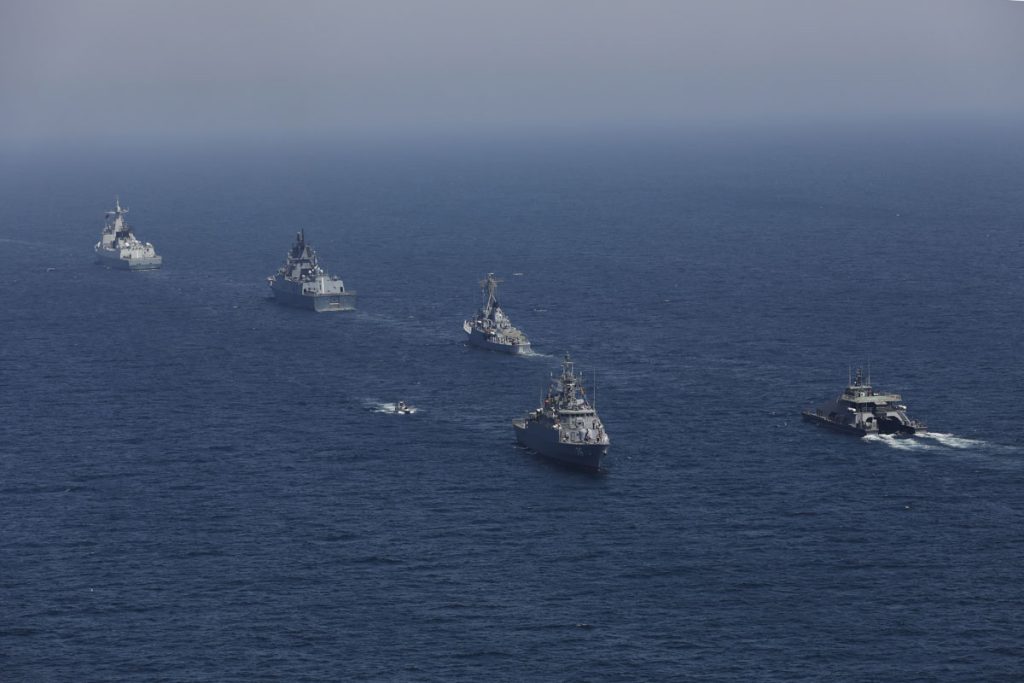
  • Arab Littoral States Of Persian Gulf, Iran To Form Joint Naval Force

    Arab Littoral States Of Persian Gulf, Iran To Form Joint Naval Force

    The Iranian rear admiral pointed in the interview to the desire of countries located in the north of the Indian Ocean to collaborate jointly in securing the region in cooperation with the Islamic Republic of Iran. He declared that a joint naval alliance will be formed between Iran and other regional states such as Saudi Arabia, United Arab Emirates (UAE), Qatar, Bahrain and Iraq.

    The regional alliance comprised of Iran and the Arab littoral states of the Persian Gulf would take shape while Russia and China are also cooperating with the Islamic Republic in a trans-regional coalition and have held numerous military exercises within the framework of the tripartite coalition.

    The commander of the Islamic Republic of Iran Navy further referred to the development of a tripartite naval coalition between Russia, China and Iran, as well as the formation of other regional alliances, saying that as soon as possible, we will witness that our region is free from any unjustified military force and that the people of the region will be able to resort to their own soldiers in order to be dominant in their security field.

    In response to a question about which countries are requesting the formation of such alliances, Rear Admiral Irani said that we had joint plan of action in cooperation with Oman earlier and at present Saudi Arabia has set the objective and pursued that. The United Arab Emirates, Qatar, Bahrain, Iraq, Pakistan and India are among the countries, he added.

    Qatari media outlets had previously asserted that Iran and the Arab states of the region had agreed upon forming a joint naval alliance in cooperation with China in a bid to ensure maritime security in the Persian Gulf.

    The development of Iran’s naval activities and the formation of regional and trans-regional alliances has been the most important strategy of the Islamic Republic of Iran Navy in the past decade. The target of the Islamic Republic of Iran in implementing such a policy is to pave the way for expelling Western military forces in particular the American troops from the West Asia region, as well as to fade away the foreign forces’ interference in developments occurring in the region.

    Read more: United Arab Emirates Pulls Out From US-Led Combined Maritime Force

  • Are Iran’s armed forces on the brink of a new round of attacks on terrorist groups in Iraqi Kurdistan region?

    Are Iran’s armed forces on the brink of a new round of attacks on terrorist groups in Iraqi Kurdistan region?

    Following recent warnings to Iraqi officials, which were made by Commander of the Islamic Revolution Guards Corps’ ground forces Major General Mohammad Pakpour concerning the terrorist groups based in Iraq, the IRGC’s movements and deployments on the western borders of the Islamic country have been intensified.

    The movements are taking place while Iraq’s National Security Advisor Qasim Al-Araji, heading a security delegation to review actions related to the implementation of the security agreement between Iran and Iraq concerning border security, entered Sulaymaniyah in Iraqi Kurdistan on May 27 and then the Iraqi official held talks with Secretary of Iran’s Supreme National Security Council Major General Ali Akbar Ahmadian two days later during a trip to capital Tehran.

    Read more: Iraqi, Iranian Top Security Advisors Meet In Tehran

    Al-Araji emphasized Iraq’s commitment to the security agreement signed with Iran during his meeting with Ahmadian, stating that he considers Iraq’s security to be Iran’s one and vice versa.

    However, it seems that the deadline that Iran determined for Iraq is coming to an end and the issue may have been underscored in Ahmadian and Al-Araji’s recent meeting.

    A number of video footages as well as images circulated on social media networks show that the Islamic Republic of Iran’s armed forces are transferring artillery arms to the western areas of the country and the issue indicates the imminent occurrence of possible operations by Iran’s armed forces against terrorist groups based in Iraq’s Kurdistan region.

    The Democratic Party of Iranian Kurdistan (HDKA), the Kurdistan Free Life Party (PJAK), the Komala Party of Iranian Kurdistan (Komala), and the Kurdistan Freedom Party (PAK) are among the major separatist and terrorist groups that operate on the eastern borders of Iraqi Kurdistan region, and they have been focusing on raiding Iran’s national security for a long time.

    Read more: Iran’s warning to Iraq: Remove the terrorist groups from the Kurdistan Region!

    It is worth mentioning that Iran’s armed forces pounded hideouts of a terrorist group on the outskirts of Koy Sanjaq in the south of Sulaymaniyah and the heights of Sidakan mountainous area in Iraqi Kurdistan region by the use of missiles and drones on November 14, 2022, when at least two militants of the Democratic Party of Iranian Kurdistan were killed and 10 others were wounded.

    Following the developments, Iran and Iraq reached an agreement regarding the expulsion of the mentioned terrorist groups from the borders of Iraqi Kurdistan region and Baghdad promised to cooperate in this respect.

    Since then, the Iraqi government has tried to take practical steps to fulfill its promises under the agreement; however, the pace of the actions seems to be very slow and insufficient. Thus, if the ongoing trend continues, it is possible that Iran will independently carry out another military operation to cleanse the hideouts of the terrorist groups from the border areas of the Iraqi Kurdistan region.

    Read more:
    Iranian missiles pounds terrorist positions in Kurdistan region!
    Iran missile and drone attacks on terrorist groups in Iraq’s Kurdistan + Video

    The transfer of weapons to the western borders by the Iranian army
    Click to view full size
  • Iran Leader: Tehran Welcomes Restoration Of Ties With Egypt

    Iran Leader: Tehran Welcomes Restoration Of Ties With Egypt

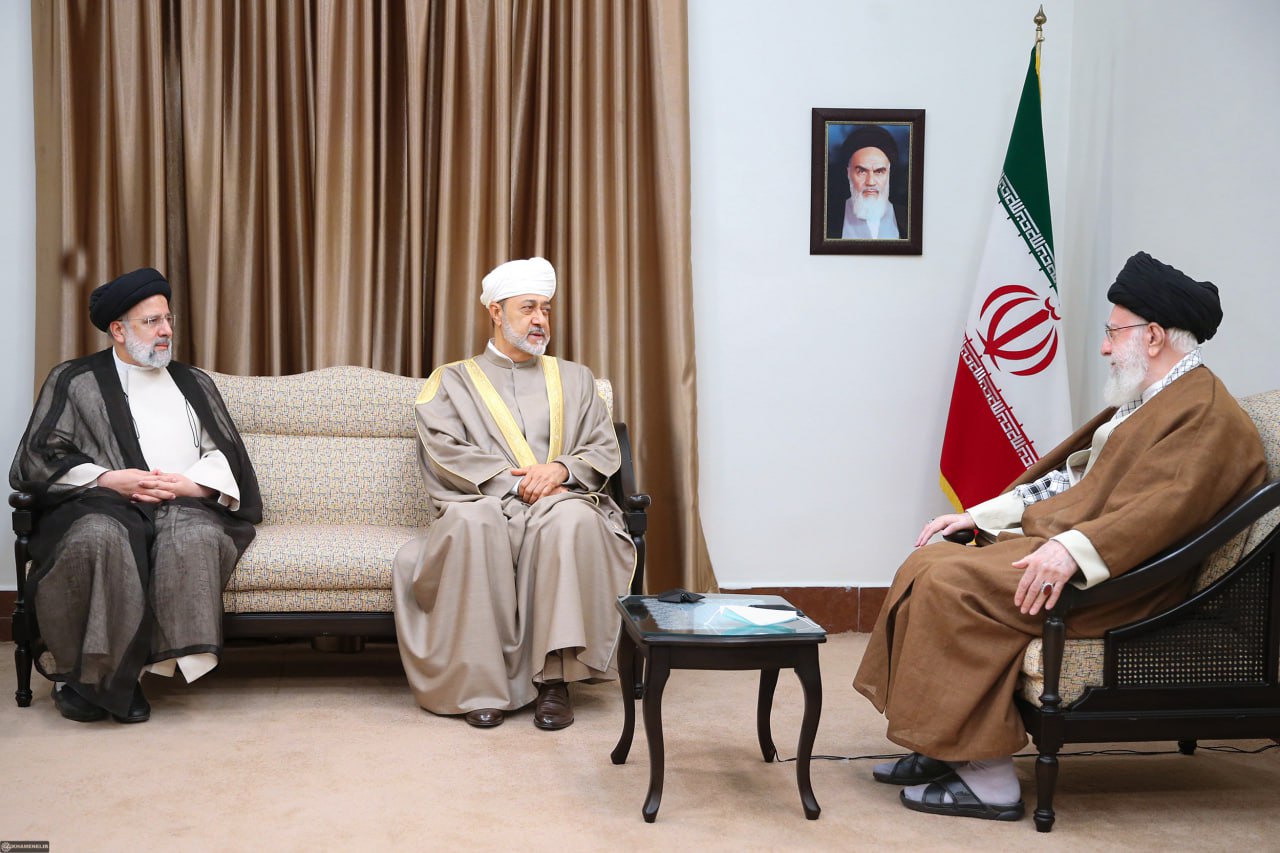
    The Supreme Leader of the Islamic Revolution referred to the Sultan of Oman’s statements regarding Egypt’s desire to resume relationship with the Islamic Republic of Iran, emphasizing that we welcome the stance and have no problem in this respect.

    Ayatollah Khamenei described Iran-Oman relations as long-standing and good in the meeting in Tehran and said that we believe expanding relationship between the two countries in all fields is in the interest of both sides.

    The Leader of the Islamic Revolution also pointed to the danger of the Israeli regime’s presence in the region and stated that the policy of the Israeli regime and its advocates is based on creating discord and lack of tranquility in the West Asia region, so all states in the region should pay heed to the issue.

    Ayatollah Khamenei further stated that the increase of collaborations between Muscat and Tehran is of great importance, because the two nations have a very important commonality in the Strait of Hormuz.

    Touching upon the Sultan of Oman’s expression of satisfaction with the resumption of Iran-Saudi relations, Ayatollah Khamenei stated that such issues are the results of the appropriate policies adopted by President Ebrahim Raisi’s administration to expand and strengthen relationships with neighbors and other states in the region.

    During the meeting, which was also attended by President of the Islamic Republic of Iran Ebrahim Raisi, the Sultan of Oman expressed great satisfaction with the meeting with the Leader of the Islamic Revolution, underscoring that Muscat’s policy is founded on expanding relations with neighbors in particular the Islamic Republic of Iran.

    Haitham bin Tariq Al Said also said that the two sides exchanged views on various fields of cooperation during Tehran negotiations; so, Oman hopes that as a result of the continuation of such consultations, the relationship between the two nations will develop further and its practical outcome will be visible for both parties.