Tag: Iran

  • Iran’s IRGC Unveils New Missile and Drone Bases + Video

    Iran’s IRGC Unveils New Missile and Drone Bases + Video

    On the eve of “Revolutionary Guard’s Day” (Guardian’s Day), images of two underground missile and drone bases of the IRGC Aerospace Force were displayed in the presence of Major General Hossein Salami, IRGC Commander-in-Chief, Brigadier General Amir Ali Hajizadeh, IRGC Aerospace Force Commander and a number of other military commanders.

    According to IRGC statement, these bases are built in the heart of the high mountains and house ground-to-ground missile systems with advanced equipment and attack drones. This is the first time that the IRGC Aerospace Force has unveiled its underground drone bases.

    Read more: Shahed-136 Loitering Munition

    Commander of IRGC Aerospace Force stated: “Currently, we can launch 60 drones (swarm mode) from this base in a fraction of a second in the first wave. Because the range of these drones is extended and not limited; We have no target limitations and we can hit any hostile target at any range”
    Brigadier General Amir Ali Hajizadeh emphasized: “Our missile and simultaneous firing power has increased more than 6 to 7 times, and the preparation time for firing have been greatly reduced.”

    Video released from IRGC underground tunnels – contains old footages of ‘Great Prophet 17’ exercise (PBUH)

    Read more: Iran’s Great Prophet 17 Exercise + Images

  • Leader of Iran: The root of the Ukraine crisis is American policy

    Leader of Iran: The root of the Ukraine crisis is American policy

    Referring to the cases of Ukraine and its lessons, the Supreme Leader of the Islamic Revolution called this issue a clear example of the US crisis-making policy and added: “Contrary to the dual positions (double standards) of the West, the firm position of the Islamic Republic of Iran has always been to oppose war and destruction in all parts of the world, and we consider the cure and judgment of the Ukraine crisis to be based on recognizing its true roots.”

    Ayatollah Khamenei also called the Ukraine crisis the result of US policy and stressed: “Today, Ukraine is a victim of US crisis-making policy because it was the United States that brought Ukraine to this point by interfering in Ukraine’s internal affairs, launching rallies and creating a color coup (revolution), the presence of US senators in opposition rallies, and changing governments.”

    Emphasizing the firm position of the Islamic Republic of Iran in opposing the war, he said: “We oppose the war, the killing of people and the destruction of the infrastructure belonging to nations everywhere in the world. This is a firm assertion of the Islamic Republic, and our policy is not like the West double standard policy, that calls bombing a wedding ceremony in Afghanistan and killing the Iraqi people a fight against terrorism!”

    Ayatollah Khamenei pointed to examples of US crisis-making policy and added: “What is the US doing in eastern Syria? Why did they steal Syrian oil? Why is the national wealth of the people being plundered and usurped by them in Afghanistan? Why in West Asia, they defend the Zionist day and night crimes, and do all these crises in the name of defending human rights?”

    He called the crime against the Yemeni people another example of the contradictory behavior of the West and the United States, saying: “The Yemeni people have been bombed for eight years, but the Westerners not only do not condemn, but also support the crimes against the people through propaganda, media and even logistical support. ”

    The Supreme Leader of the Islamic Revolution emphasized that we in Ukraine are in favor of stopping and ending the war, saying: “But the crisis can be cured if its roots are known. The root of the crisis in Ukraine is the policies of the United States and the West, which must be recognized and judged.”

    Ayatollah Khamenei, addressing important lessons from the Ukraine war, noted: “The first lesson for all governments who rely on the U.S. and Europe is that the West could not be trusted, its support for administrations and politicians that have been installed by them is a mirage and not real.”

    He described today’s Ukraine and yesterday’s Afghanistan as two living witnesses for all dependent governments, adding: “Both the Ukrainian president and the fugitive Afghan president said we trusted the US and Western governments, but they left us alone.”

    The Supreme Leader of the Revolution, addressing the second lesson, called the “people” the most important support of the governments and added: “Just as the people did not come to the field during the US invasion of Iraq under Saddam, but the same people came to the field in the face of the ISIS attack and pushed back the ISIS and suppressed that great danger. If the people of Ukraine had been involved, the Ukrainian government wouldn’t be in this situation. The people didn’t get involved because they didn’t approve of the government.”

    Ayatollah Khamenei called the people the main factor in the independence of the countries and, referring to the sweet experience of the Iranian nation in overcoming the Ba’athist enemy, which relied on the support from all world powers, said: “We must learn great lessons with open eyes and right thoughts and actions.”

  • Missile attack on the 4th UAV battalion of the Iranian Army in Kermanshah?!

    Missile attack on the 4th UAV battalion of the Iranian Army in Kermanshah?!

    The public relations of the IRGC in Kermanshah province issued a statement on February 16th, stating that the fire was related to the storage of engine oil and flammable materials in one of the IRGC support bases in the Mahidasht region of Kermanshah, and stated that a silo was damaged.

    Apart from the IRGC statement, it should be noted that the mentioned silo and the runway in this area are used jointly by the Iranian army and the IRGC. Also, the silo in question is a normal headquarters for maintenance and this confirms the statement of the Kermanshah IRGC regarding the presence of engine oil and flammable materials in this silo.

    Following this statement, and in recent days, the Israeli media and some media outlets in the Persian Gulf have started spreading lies and distorting the truth, and as usual, attributing every explosion and fire in Iran to Mossad; The fire was also announced as the result of an Israeli missile attack on one of the IRGC drone bases!

    However, after a few days and the release of high-quality satellite images of the scene, the ridiculous claim of the Israeli-affiliated media was virtually thwarted.

    In the published images of the silo, it is clear that this incident has nothing to do with the missile attack or explosion claimed by the Israeli media. With some military knowledge and information about missile warheads, it is easy to understand how much damage the lightest missile warheads will leave in a silo with such a thin and weak roof and wall. Therefore, any missile attack is ruled out. Also, the occurrence of any ammunition explosion from inside the silo or the penetration of an attacking drone into the silo and then the explosion, due to the absence of any sign of any explosion is ruled out.
    The only thing that can be seen and confirmed in the images is a simple fire. In the published images, the existence of fire and regular movement of roof parts by workers can be seen.

    It is worth mentioning that one of the wasted tactics of the Israeli regime, especially in the last two years, is that by attributing such incidents to itself through the unofficial media, it tries to prove itself successful in hitting Iran to create a vague atmosphere inside and outside Iran and impress everyone with his imaginary power And take the initiative in the media war.

  • Commander of the IRGC Quds Force travels to Iraq + Images

    Commander of the IRGC Quds Force travels to Iraq + Images

    General Qaani visited the holy shrine of Amir al-Mu’minin Ali (as) in the holy city of Najaf al-Ashraf, went to the shrine of Martyr Sadr and the tomb of Martyr Abu Mahdi al-Mohandes, and a few hours later visited the holy shrine of Imam Hussein (as) in Karbala.

    Given the current political situation in Iraq, the visit of the commander of the IRGC Quds Force to this country carries various messages to various domestic and foreign parties.

  • Iran looking for convergence between Taliban and Ahmad Massoud

    Iran looking for convergence between Taliban and Ahmad Massoud

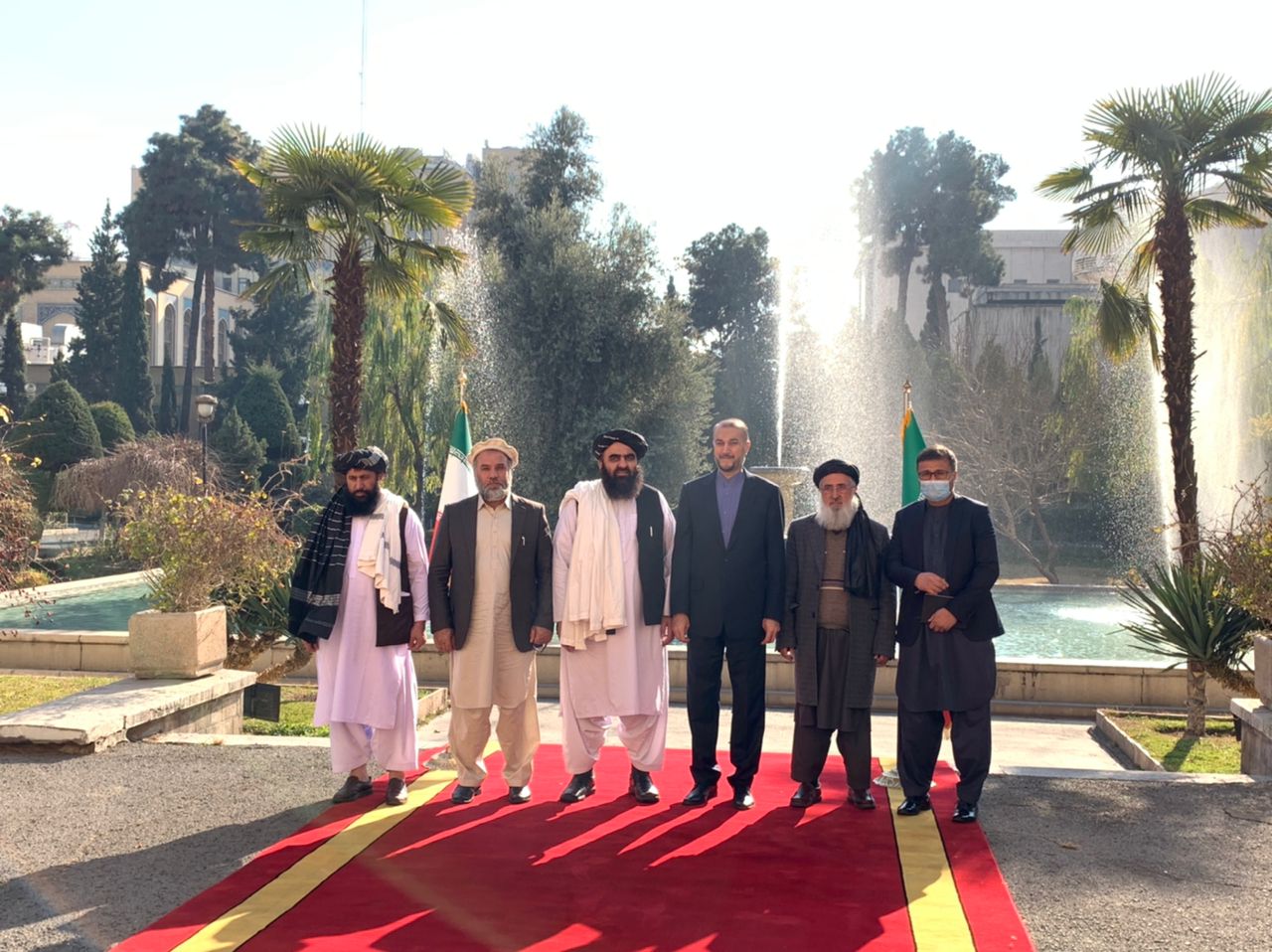
    Taliban committee led by Amir Khan Muttaqi, Taliban FM, met with Ahmad Massoud, leader, and Ismail Khan, an official of Jamiat-e Islami party, met in Tehran with mediation of Islamic Republic of Iran.

    No details have been released regarding the meeting but Taliban claims that they assure that Ahmad Massoud and Ismail Khan can come back to Afghanistan without any problem or threats.

    These meetings took place during the trip of Amir Khan Muttaqi, Taliban FM, to Iran and his talk with Hossein Amir-Abdollahian, Iran FM. Both sides stressed on cooperations such as counter terrorism, drug trafficking, Iranian goods transit to middle Asia, humanitarian aids to Afghanistan, etc.

    In summary, Iran is the closest and most reliable neighbor of Afghanistan and thus Afghanistan groups always welcome and appreciate efforts of their neighbor.
    According to Iranian officials, Iran’s policy in Afghanistan is to help form a inclusive government which can hold peace and stability in Afghanistan. Considering the situation in Kazakhstan and serious threats in middle Asia, unity and cooperation of these countries including Afghanistan seems necessary.

    Read more: Investigation of Afghanistan Major Problems, From Ahmad to Taliban!

  • Iran’s Great Prophet 17 Exercise + Images

    Iran’s Great Prophet 17 Exercise + Images

    According to General Abbas Nilforooshan, Deputy Chief of operations of the Islamic Revolutionary Guard Corps and spokesman of the IRGC Great Prophet 17 exercise, this exercise was carried out in order to increase the level of combat readiness of the IRGC and based on the simulation of one of the most advanced offensive plans in combined wars and various war conditions.

    In general, during the five days, the IRGC’s ground, naval and aerospace forces carried out various stages of naval, land, drone and missile exercises.

    On the second day of the exercise, missile units from the coast and Zulfiqar-class speedboats in the sea simultaneously firing five anti-ship cruise missiles destroyed predetermined targets.

    The “Mohajer-6” drones also destroyed the targets of hypothetical enemy with 100% accuracy by launching Qaem air-to-ground glide bomb and Almas smart missile.

    It should be noted that the advanced Karrar tank (upgraded T72M) was delivered to the IRGC ground forces and was used for the first time in this exercise.

    In the final phase of the joint exercise of the Great Prophet 17, 16 missiles of Emad, Qadr, Sejjil, Dezful and Zulfaqar and Zelzal were fired at the simulated targets and destroyed the designated positions with 100% accuracy. Simultaneously with the firing of the missiles, 10 Shahed-136 suicide drones of the IRGC Air Force were fired at the designated targets.

    Launch of “Shahed-136” suicide drones from a 5-launcher pod

    One of the highlights of the operation was the use of a replica of Israel’s Dimona nuclear power plant. The move was in response to recent Israeli threats against Iran. Israel has threatened Iran in recent months to bomb Iran’s nuclear facilities.

    Simulation of the attack on the Zionist regime’s weapons of mass destruction center during the Great Prophet 17 exercise
    Replica of Dimona nuclear plant

    General Mohammad Bagheri, Chief of General Staff of the Armed Forces, said: “When 16 missiles hit a target, it is a small part of hundreds of missiles that can simultaneously target enemy country (Israel) that intends to fight and attack the Islamic Republic of Iran. The Islamic Republic of Iran does not accept these threats and is currently negotiating with countries to advance the country’s goals and will not tolerate such threats.”

    Regarding the missile exercise, Iran unveiled for the first time the exo-atmospheric trajectory maneuvering technology of its warheads for Qadr medium range ballistic missiles. The exo-atmospheric trajectory maneuvering technology, in addition to increase accuracy, guiding and maneuvering of Qadr missile in the atmosphere enhances its penetrability against missile defense.

    Interview with General Amir Ali Hajizadeh, commander of the IRGC Aerospace Force – Credit: @AbuReza1990M

    Brigadier General Amir Ali Hajizadeh, commander of the IRGC Aerospace Force, said: “It is very difficult to hit ballistic missiles for defense systems and they can hit a small percentage of the missiles, So the hundreds of billions of dollars spent by our enemies are gone and became zero. We have been able to direct ballistic missiles to move and maneuver in different directions, and this phenomenon makes the intercept for the enemy very difficult.”

    Dropping Yasin Bomb by Sukhoi-22 Fighters
    Covering the airspace of the Persian Gulf with the Sevvum(3rd) Khordad air defense systems
  • Iran Unveils “Exo-Atmospheric Trajectory Maneuvering Technology” for its Ballistic Missiles

    Iran Unveils “Exo-Atmospheric Trajectory Maneuvering Technology” for its Ballistic Missiles

    The technology or maneuverability of warhead outside atmosphere is performed with the help of pressurized gas thrusts or dual liquid fuel, and by changing the direction of the warhead, the trajectory is variable and the exact direction of the warhead is unpredictable. Therefore, this capability greatly reduces the chances of an air defense missile hitting a warhead.

    The exo-atmospheric trajectory maneuvering technology, in addition to increase accuracy, guiding and maneuvering of Qadr missile in the atmosphere enhances its penetrability against missile defenses.

    The maneuverability of medium- to high-range ballistic missile warheads can be achieved in two ways: maneuverability outside the atmosphere and hypersonic flight in the atmosphere. Considering the challenges of hypersonic wave rider warheads such as temperature management, guidance, materials and manufacturing process, the exo-atmospheric maneuvering method seems to be the most optimal option considering the performance, cost and time to upgrade conventional ballistic missile warheads in order to escape the air defense missiles.

    For example, in this method, the old warheads can be upgraded and there is no need to use new complex and expensive refractory materials; The base design of the warheads does not change much and there is no need to design from the base.

    According to studies, apparently the only country that has officially unveiled and used exo-atmospheric maneuvering technology so far is Russia and the Topol-MR intercontinental ballistic missile. Now, with this unveiling, Iran is one of the owners of this technology.

    Qadr missile exo-atmospheric warhead
    Topol-MR intercontinental ballistic missile
  • Rumors about the death of Hassan Irloo; coronavirus or Saudi airstrikes?

    Rumors about the death of Hassan Irloo; coronavirus or Saudi airstrikes?

    Some media outlets have spread rumors that Hassan Irloo was wounded in a bombing by Saudi coalition warplanes in Yemen and later killed in Tehran after being transferred to Iran. ISWNEWS deny this rumor. According to reliable information obtained from sources present at the hospital where he was hospitalized, ISWNEWS can confirm that he was not wounded in any way by the bombings of the Saudi coalition.

    There are also other rumors circulating in social media claiming that Hassan Irloo is the same Abdulreza Shahlai, the commander and coordinator of the IRGC Quds Force in Yemen. This rumor is also denied by the ISWNEWS. General Shahlai or the person whom, known by the Western security services as Shahlai, is in perfect health and is still carrying out his mission in Yemen.

    Read more:
    Iran’s ambassador to Yemen Hassan Irloo dies of coronavirus
    The Assassination of the IRGC Quds Key Element in Yemen Was Failed

  • Iran’s ambassador to Yemen Hassan Irloo dies of coronavirus

    Iran’s ambassador to Yemen Hassan Irloo dies of coronavirus

    According to Iranian Foreign Ministry spokesman Saeed Khatibzadeh, “Iran’s ambassador to Yemen, Hassan Irloo, was a chemical warfare veteran of the Iraq-Iran war and contracted coronavirus at his mission in Yemen. Due to the late cooperation of some countries (Saudi Arabia), he unfortunately returned to the country in unfavorable conditions, and despite using all the treatment steps to improve his condition, he was martyred this morning.”

    The Ambassador of the Islamic Republic of Iran, Hassan Irloo, arrived in Sanaa on October 17, 2020, or in other words, his mission was announced on that date. No details are available on how he arrived in Yemen. The media have speculated about how he could have entered Yemen from smuggling by international ships or across the Oman border to flying on a UN plane and arriving by boat of African migrants. In any case, in his short but fruitful period, Irloo demonstrated active diplomacy and good performance in the direction of friendship between the two nations, and carried out worthy and constructive actions in Yemen.

    It should be noted that the United States added Hassan Irloo to the list of its sanctions on December 8, 2020. This is while, the US has played a key role in Saudi Arabia’s war against Yemen, which has caused the world’s worst humanitarian disaster in the impoverished Middle Eastern country.

    Just hours after the death of Hassan Irloo, the Iranian ambassador to Yemen, some foreign media and unofficial Iranian social media channels have published information and speculated about his death, but what is the reality?

    Some media outlets have spread rumors that Hassan Irloo was wounded in a bombing by Saudi coalition warplanes in Yemen and later killed in Tehran after being transferred to Iran. ISWNEWS deny this rumor. According to reliable information obtained from sources present at the hospital where he was hospitalized, ISWNEWS can confirm that he was not wounded in any way by the bombings of the Saudi coalition.

    There are also other rumors circulating in social media claiming that Hassan Irloo is the same Abdulreza Shahlai, the commander and coordinator of the IRGC Quds Force in Yemen. This rumor is also denied by the ISWNEWS. General Shahlai or the person whom, known by the Western security services as Shahlai, is in perfect health and is still carrying out his mission in Yemen.

    Read more:
    Suspicious departure of Iranian ambassador from Yemen
    The Assassination of the IRGC Quds Key Element in Yemen Was Failed

  • Suspicious departure of Iranian ambassador from Yemen

    Suspicious departure of Iranian ambassador from Yemen

    According to Iranian Foreign Ministry spokesman, Saeed Khatibzadeh, Iranian Ambassador to Yemen Hassan Irloo has left the Yemeni capital Sanaa due to coronavirus disease and ongoing treatment in Tehran. This is while, the Western and Saudi media, by lying, stated that the reason for this issue was the emergence of serious differences between Iran and Ansar Allah.

    Rejecting rumors about the story, Mohammad Abdulsalam said, “During the agreement between Iran and Saudi Arabia through Iraq, the Iranian ambassador to Sanaa was transferred by an Iraqi plane due to his health condition.”

    The Ambassador of the Islamic Republic of Iran, Hassan Irloo, arrived in Sanaa on October 17, 2020, or in other words, his mission was announced on that date. No details are available on how he arrived in Yemen.
    The media have speculated about how he could have entered Yemen from smuggling by international ships or across the Oman border to flying on a UN plane and arriving by boat of African migrants.
    Mohammad Ali al-Houthi had also said in this regard that the manner in which the Iranian ambassador entered would not enter the minds of the enemies.
    In any case, in his short but fruitful period, Irloo demonstrated active diplomacy and good performance in the direction of friendship between the two nations, and carried out worthy and constructive actions in Yemen.

    Read more: Answering Key Questions about Yemen War – Part Seven

  • Border clashes between Iran and the Taliban on Nimruz border + Video

    Border clashes between Iran and the Taliban on Nimruz border + Video

    The clashes began when Iranian farmers crossed security walls and were shot at by Taliban militants. Following this action, Iranian border guards also fired at Taliban positions, and the exchange of fire continued for an hour.

    The clashes ended after an hour, and the issue was resolved after talks between representatives of the two sides and clarification of the situation for Taliban.

    The Taliban militants, thinking that their territory extended to the security walls, harassed Iranian farmers and fired at them, prompting a quick response from the Iranian border guards.

    These security walls were built on Iran’s soil to combat smugglers and miscreants, and the Taliban’s perception of invading Afghan territory stemmed from their lack of knowledge of the border lines and their misconceptions.

    After the change of government in Afghanistan and the Taliban take control of Nimruz province, the majority of the Afghan border guards changed to Taliban militants, most of whom are not from Nimruz and are unfamiliar with these borders.

    No reliable statistics or information have been released regarding the casualties on both sides, and the Taliban’s seizure of Iranian border checkpoints is incorrect. Some media outlets report that three Taliban members have been killed.

    According to local sources in Hirmand county, the mentioned security wall was built by the Islamic Republic of Iran and is located in Iran. These lands are the farms of Iranian farmers and are not ruled by the residents of Nimruz province in Afghanistan.

    Iranian border artillery fires at Taliban positions
    fire exchange between Iran and Taliban
    The moment Taliban militants entered Iran’s soil
  • The story behind the changing of the commander of Iranian military advisers in Syria: What was the reason for General Ghaffari’s mission postponement

    The story behind the changing of the commander of Iranian military advisers in Syria: What was the reason for General Ghaffari’s mission postponement

    With the beginning of crisis and armed conflict in Syria and the presence of Iran in this country, the General “Hossein Hamedani” known as “Abu Wahab” was appointed as the first commander of Iranian advisers in Syria in January 2012. His mission was ended in 2014 and General “Mohammad Ja’far Asadi” known as “Abu Ahmad” was appointed as the second commander after General Hamedani. Abu Ahmad mission was also ended after two years in February 2016 after the Liberation of Nubl and Al-Zahra, And General “Sayyed Jawad Ghaffari” was appointed as the third commander of Iranian advisers in Syria.

    Due to Ghaffari’s experience in Syria he managed to establish good connections with the military forces in Syria. He was one of the first Iranian advisers who came to Syria, his command duration is twice the time that of his predecessor. His command was to end in 2020, however, because of the martyrdom of the commander of IRGC Quds Force, Qasem Soleimani, in January 2020 and the escalation of tensions in the region His valediction postponed until late 2021. With the ending of his mission after holding the post for six years, the introduction ceremony of the fourth commander of Iranian advisers were held and a new commander was appointed.

    The valediction of Sayyed Jawad happened simultaneous with several regional changes and most importantly with the meeting between UAE minister of foreign affairs and Bashar Assad. Such events paved the way for some regional and international media to spread false speculation and misinformation, in a way that the anti Iranian outlets claimed that General Ghaffari was expelled by the Bashar Assad because of his differences with the Russians and by the request of UAE minister of foreign affairs. They actually took advantage of the unpublished news and created a psychological operation by linking the end of the Iranian general’s mission to the Emirati foreign minister’s trip to Damascus

    But this is while, few days ago, with the end of Sayyed Jawad’s mission in Syria, several ceremonies were held by different state and military officials with the presence of tribe leaders and the Syrian people in different parts of Syria. They appreciated Ghaffari’s efforts in protecting the holy sites and fighting terrorism in Syria. Different groups from all social strata held the farewell events, because General Ghaffari was a popular figure and had strong public relations.

    It should be noted that Iran’s military attaché in Syria has received a medal of honor from the Syrian defense minister.

    The below pictures are about the Ali Abdullah Ayyoub, Minister of Defense and the head of Syrian Army Joint Chief, meeting with General Ghaffari, and the ceremonies which were held for Ghaffari in southern Aleppo and other parts of Syria. (plus some other old pictures)