Tag: Iran

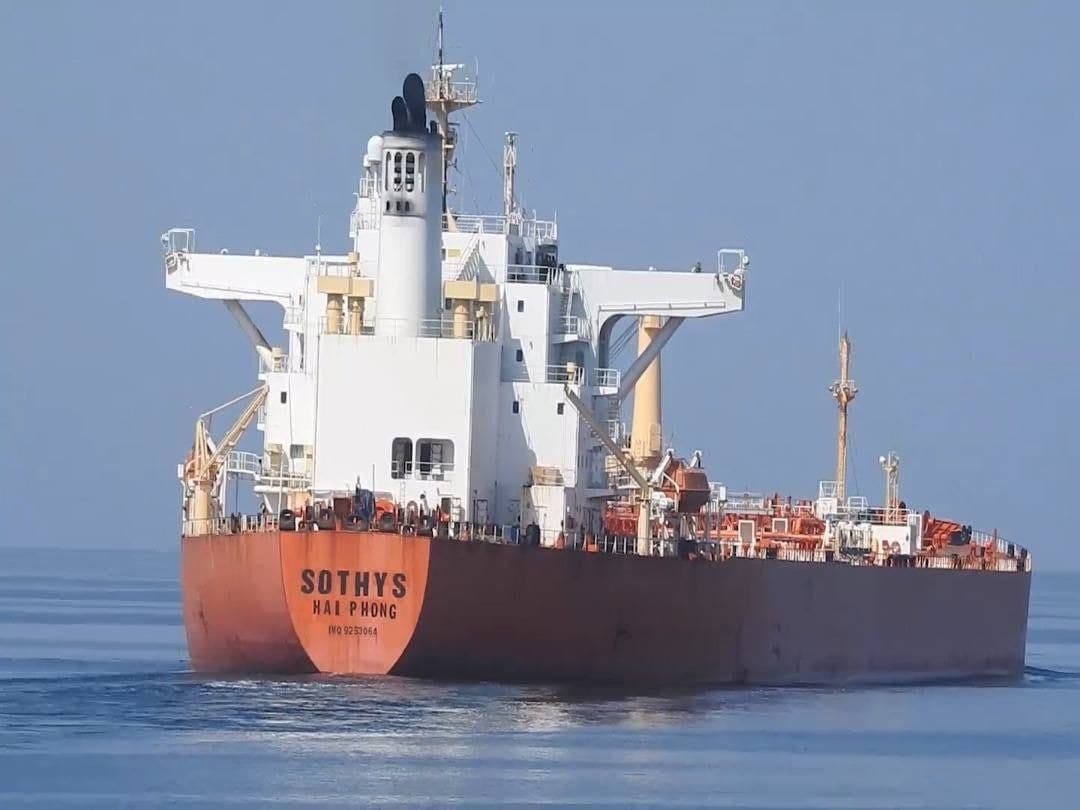
  • Iran releases seized tanker ‘SOTHYS’

    Iran releases seized tanker ‘SOTHYS’

    The Sothys left a position off Iran’s Bandar Abbas port and had reached international waters in the nearby Gulf of Oman early Wednesday.

    “Admiral Tangsiri” the commander of IRGC Navy said in a meeting with “General Salami” the commander of the IRGC in this regard:
    “After a long period of intelligence work and continuous monitoring, when the tanker carrying the stolen Iranian oil was about 40 miles off the coast of Jask and in international waters, the selected units began to seize and transfer the tanker to the territorial waters and the coast of our country.
    With an airdrop operation and the deployment of IRGC special forces on SOTHYS’s deck, American warships approached the scene and took up the warlike position. To prevent our mission from being carried out, the Americans twice flew their drones and helicopters in support of the oil thieves.
    The Americans’ claim that “we had only monitored the seizure” is a big lie.
    The distance of American ships with our ships and forces was less than 30 meters. If they were to monitor, they could do so from a distance or even by using planes and drones.”

    The operation to retrieve Iranian oil by the IRGC navy took place on October 25, which was met with a reaction and a state of war between American warships and helicopters. After that, on November 3, the IRGC described the incident and released documentary videos of the confrontation, which were accompanied by contradictory denials and claims by the United States.

    Read more: IRGC Navy thwarts US piracy in Sea of Oman + Video

  • IRGC Quds Force Commander Visits Iraqi Prime Minister

    IRGC Quds Force Commander Visits Iraqi Prime Minister

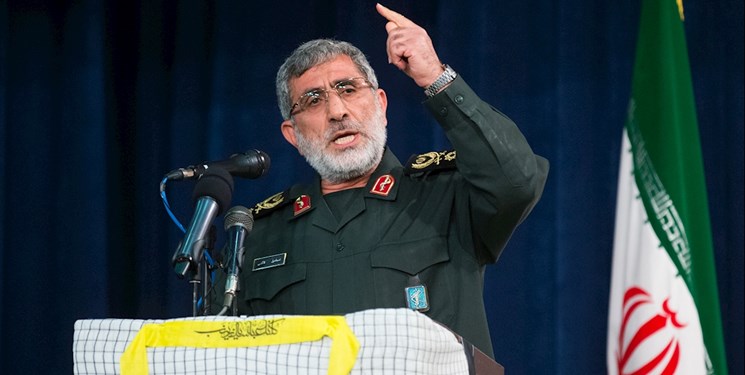
    A day after the failed assassination of Mustafa al-Kadhimi, General Ismail Qaani, commander of the IRGC Quds Force, arrived at Baghdad airport on the morning of November 8 and met with Prime Minister Mustafa al-Kadhimi, President Barham Saleh and several other Iraqi officials.

    During Qaani’s meeting with al-Kadhimi, the issue of his assassination was discussed and General Qaani stressed that this action had nothing to do with Tehran and that Iran strongly condemned such actions and announced Iran’s readiness to assist in investigating the attack.

    The IRGC Quds Force also met with the commanders of the Iraqi resistance groups, stressed the need to maintain unity and avoid tensions.

    Media outlets close to Iraqi resistance groups also claimed that al-Kadhimi had asked General Qaani to talk with Iraqi resistance groups to agree with extension of his second term as prime minister. The Iraqi Prime Minister has also requested a meeting with the Supreme Leader of the Islamic Republic of Iran.

    Read more:
    Iraqi forces identify launch area of quadcopter targeting al-Kadhimi residence
    Drone attack on Iraqi Prime Minister failed!

  • IRGC Navy thwarts US piracy in Sea of Oman + Video

    IRGC Navy thwarts US piracy in Sea of Oman + Video

    According to Iranian official statements, during an operation in Sea of Oman, US warships confiscated an Iranian oil tanker carrying export oil and were transporting its oil cargo to another tanker, SOTHYS, to an unknown destination.

    Simultaneously with this apparent piracy, the Islamic Revolutionary Guard Corps navy carried out a heliborne operation and IRGC troops landed on the tanker and directed it to the Iranian territorial waters.

    The US forces then used several boats and warships to pursue and block the oil tanker route, but failed with the decisive and authoritative entry of the IRGC navy.

    According to a statement by the Islamic Revolutionary Guard Corps, the oil tanker carrying Iranian oil docked in Bandar Abbas at 8:00 AM on October 25. The tanker used by the United States to steal Iranian oil is said to belong to Saudi Arabia.

    The US piracy in Gulf of Oman is the third in two months against Iran’s navy in international waters and the West Asian region. It should be noted that the actions of the United States and Israel against the Iranian navy are part of their comprehensive war against Iran and the Islamic Resistance.

    IRGC Navy operation and seizure of tanker
  • Iranian Navy thwarted a pirate attack in the Gulf of Aden

    Iranian Navy thwarted a pirate attack in the Gulf of Aden

    According to the Iranian Navy media, the naval escort team of the army stationed on the Iranian tanker this morning on the way to the Gulf of Aden, before entering the Bab al-Mandeb Strait, clashed with pirates.
    The attack was carried out by four pirate boats approaching an Iranian tanker. The pirates then came under fire from the army and eventually fled.

    This attack is the second pirate attack in recent days against tankers and navy of the Islamic Republic of Iran in the Gulf of Aden.

  • Iran’s Air Defense Drill Modafe’an-e Aseman-e Velayat 1400 + Images

    Iran’s Air Defense Drill Modafe’an-e Aseman-e Velayat 1400 + Images

    The joint air defense exercise of Modafe’an-e Aseman-e Velayat 1400 was carried out by the Army Air Defense and Air Force and IRGC Air Force in the central desert of Iran using a variety of indigenous missile and air defense systems. In this exercise, defense systems, electronic warfare and reconnaissance and communication systems, etc., were used. And predetermined targets were destroyed by indigenous systems such as 3rd of Khordad, 15th of Khordad, Mersad 16, Tabas, Majid, Dezful, Talash, Sayad, Joshan and Khatam, And various tactics of electronic warfare and cyber warfare were implemented to counter the electronic attack of the imaginary enemy.

    Also, for the first time, the native Quds radar belonging to the IRGC Air Force was used in this exercise. This radar is capable of observing targets at a range of more than 500 km and an altitude of more than 90,000 feet.

    Brigadier General Qader Rahimzadeh, Commander of the Joint Air Defense Base of Khatam al-Anbiya (PBUH), said regarding the objectives of the exercise: “The overall goal of this exercise will be to improve combat readiness and increase the air defense forces in the form of an integrated air defense network.”

    Brigadier General Amir Ali Hajizadeh, Commander of the Air Force of the Islamic Revolutionary Guard Corps, also said on the sidelines of the exercise: “All the systems used were completely Iranian. We did not have this situation 15 years ago, in other words in radars, command and control systems and surface-to-air missile systems we were dependent on foreign equipment, while today, thank God, we have all this equipment in our native and Iranian form.”

    It should be noted that this exercise is held every year with the joint presence of the IRGC and the Army of the Islamic Republic of Iran in order to increase combat capability, readiness, coordination between forces and the use of new equipment and weapons. Modafe’an-e Aseman-e Velayat 1400 was the 11th exercise of its kind.

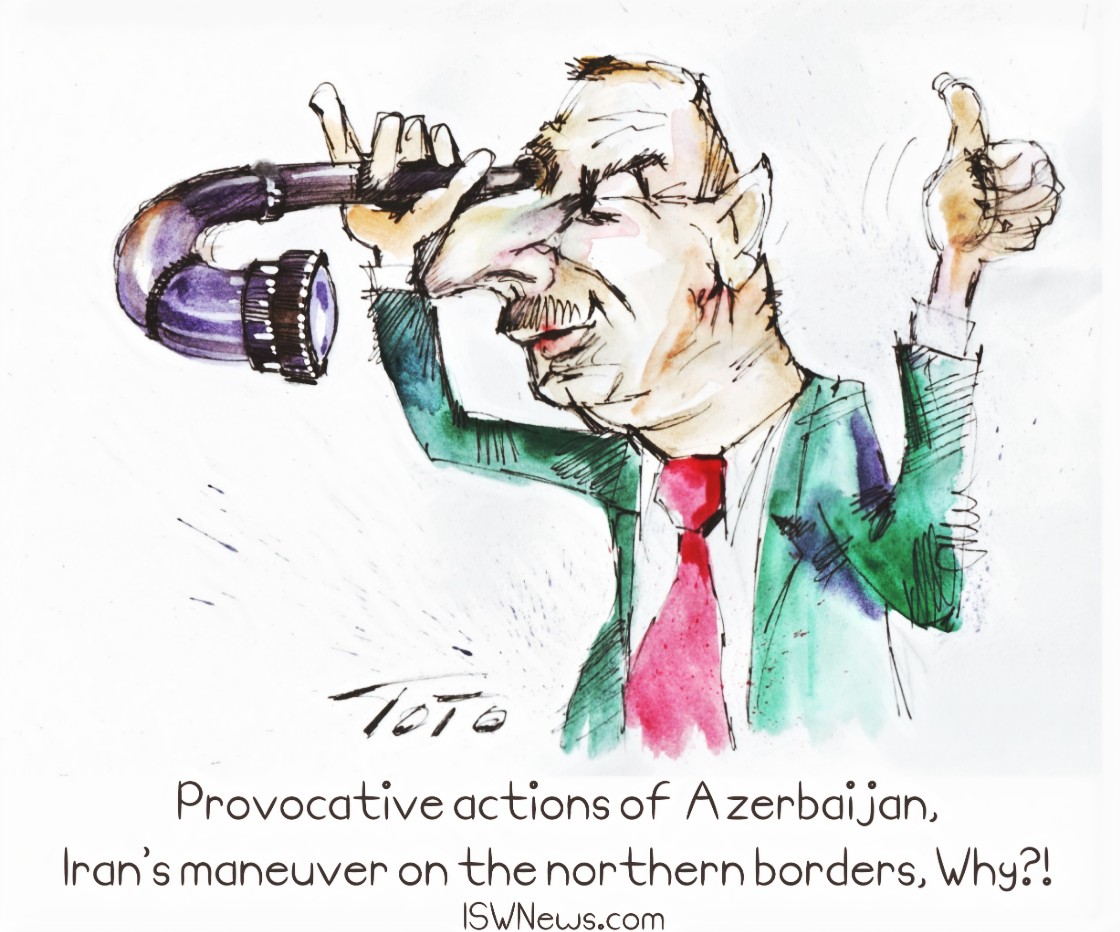
  • Provocative actions of Azerbaijan, Iran’s maneuver on the northern borders, Why?!

    Provocative actions of Azerbaijan, Iran’s maneuver on the northern borders, Why?!

    The joint military exercises of the Republic of Azerbaijan with Turkey and Pakistan in the last month, the interruption of the transit route of Iranian trucks and the arrest of their drivers and the sharp statements of the Azerbaijani officials against Iran are important issues in the Caucasus region.
    What are the goals of Aliyev and his main supporters (Israel and Turkey) in implementing this anti-Iranian project?

    The answer to this question is examined in several cases:

    1- The success of the Republic of Azerbaijan in the Second Nagorno-Karabakh War was due to the widespread support of Turkey and Israel, the will of the world powers, as well as the inability of the Armenian leaders. This victory has misled Aliyev and other officials in Baku to mistakenly have the illusion and feeling of power against Iran. Therefore, one of the reasons for these anti-Iranian actions of the leaders of the Republic of Azerbaijan is their misunderstanding of regional developments.

    2- The confrontation between the Republic of Azerbaijan and Iran is an unequal confrontation. Iran’s military and political power and position are in no way comparable to the Republic of Azerbaijan, even in the case of an alliance with Turkey and Pakistan. On the other hand, the countries of the region will not enter into tension with Iran because of Aliyev, and the harms of this tension far outweigh its benefits.
    We all know that there is always a political message behind military exercises. Exercise is more of a boast than a military threat, and it is done to prevent military conflict. The Republic of Azerbaijan’s recent exercises with Turkey and Pakistan also served as a warning not to interfere in the Zangezur issue, as well as to announce the support of countries in the region for Aliyev’s government against Iran.

    3- Israeli influence on Iran’s borders has always been an important strategy to counter Iran. Aliyev’s government has also entered into closer relations with Israel in recent years, and their debt volume has increased. Hence, the role of Israel in Aliyev’s rhetoric and their tensions cannot be ignored. Therefore, this tension is under the confrontation between the regions of Iran and Israel, and the choice of the name “Khaybar Conquerors” for the Islamic Republic of Iran’s drill on the northwestern borders of Iran is also a proof of this claim.

    4- The Republic of Azerbaijan opposes the general policy of Iran in the Caucasus region; And the Iran policy is the policy that pits “unity” against “separatism.”
    Iran, like Iraq, Yemen, Afghanistan and… opposes any changes in the borders of neighboring countries, including Armenia and the Republic of Azerbaijan. Iran also opposes Azerbaijan plot for the Zangezur area and its Zangezur Corridor, which jeopardize Iran’s economic interests. The detention of Iranian truck drivers on the Armenian border road is also an example of hostage-taking by Turkey and the Republic of Azerbaijan for the Zangezur corridor.
    In addition, it is said that the Republic of Azerbaijan, in cooperation with Turkey, intended to launch a surprise attack on the southern Armenian province of Syunik, which was thwarted by Iran’s allied policy, and the “Khaybar Conquerors” exercise is in line with this policy.


    In this regard, Baku’s actions can be seen as a multidimensional Zionist project, which includes: separatism (emphasis on the separation of Azerbaijani provinces from Iran), ethnicity (Pan-Turkism), security tensions (action against nuclear and political facilities), psychological and media operations, economic issues. (Affecting the economic relations between Iran and Armenia), etc.
    Given these circumstances, it must be said that if the weakness of Pashinyan and the Armenian authorities in the face of this project continues, their betrayal of Armenia is also certain, and Iran must act alone in the face of the Zionist project. However, considering the recent meetings between the Iranian and Armenian officials, the possibility of such an issue is low, and as the views of Iran and Armenia approach, we will see the opposite front turn to political talks.

    Given these circumstances, it should be said that if Armenia acts weakly against this project, Iran will not hesitate to confront the Zionist project and will take more active action. However, considering the recent meetings between the Iranian and Armenian officials and the approaching point of view between the two countries, we are witnessing the opposite front turning to political talks.
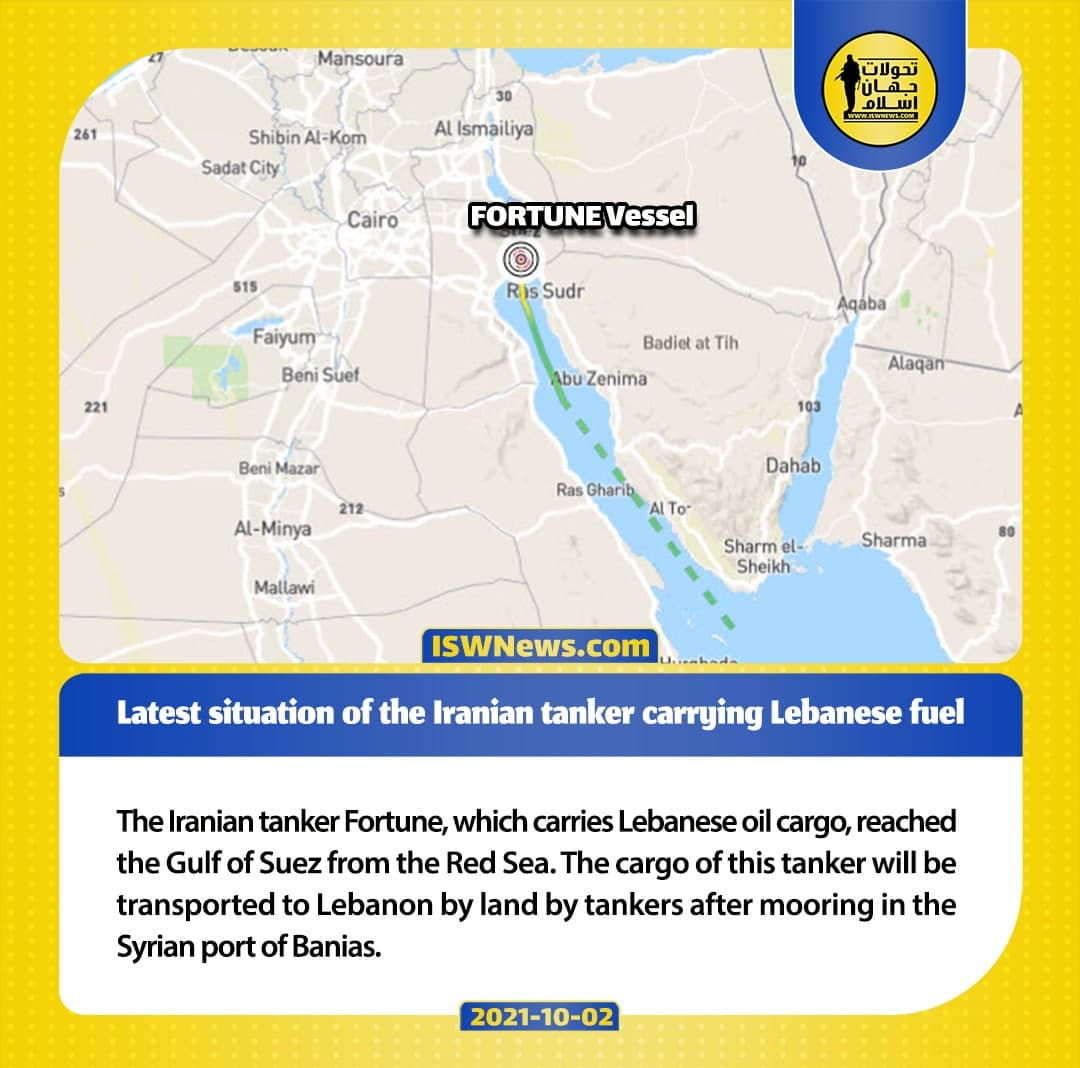
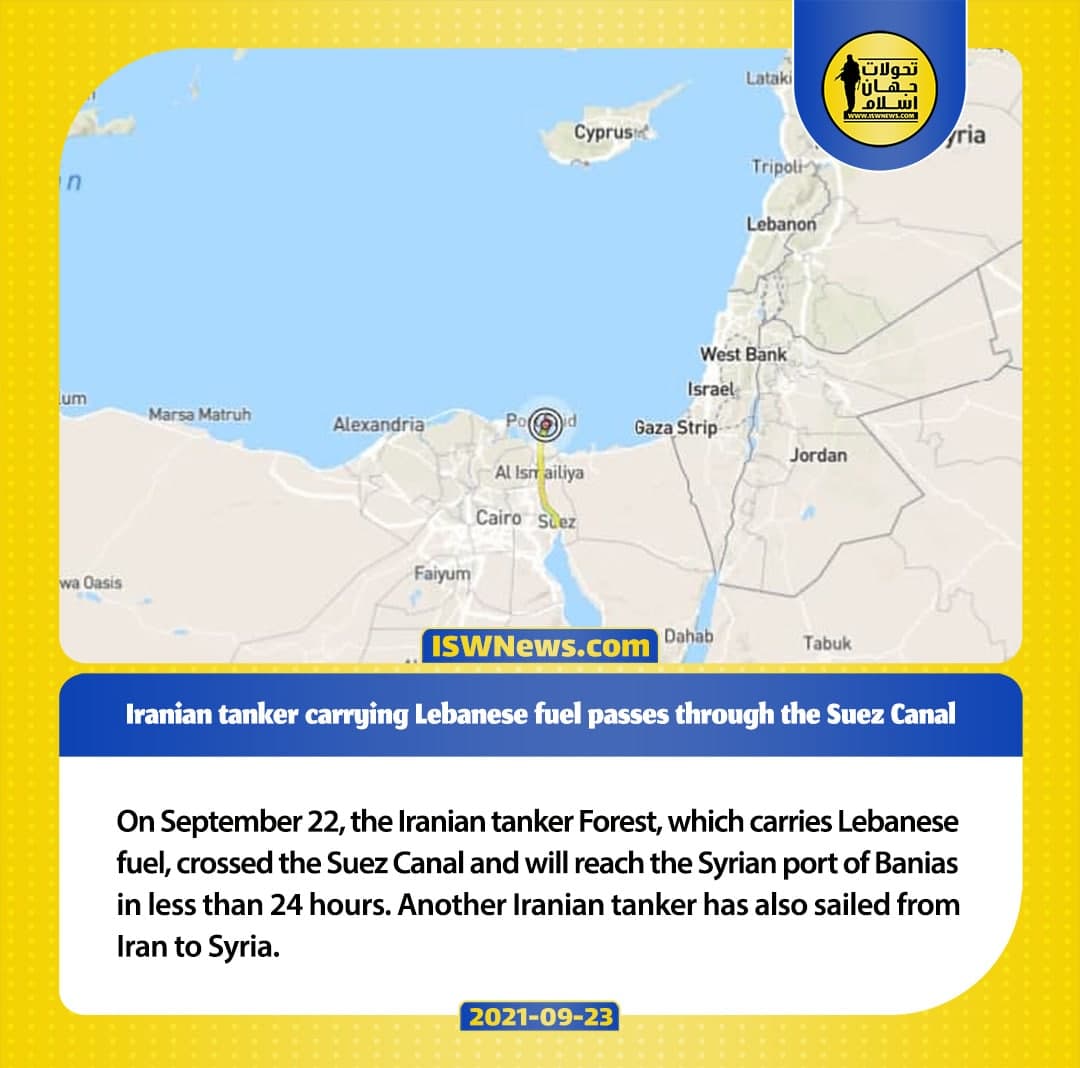
  • Iranian tanker carrying Lebanese fuel passes through the Suez Canal

    Iranian tanker carrying Lebanese fuel passes through the Suez Canal

    It is worth mentioning that on September 12, the first Iranian tanker carrying Lebanese fuel arrived in the Syrian port of Banias. The tanker’s cargo was refined at the Syrian Homs refinery and transported to Lebanon by fuel tankers by land.

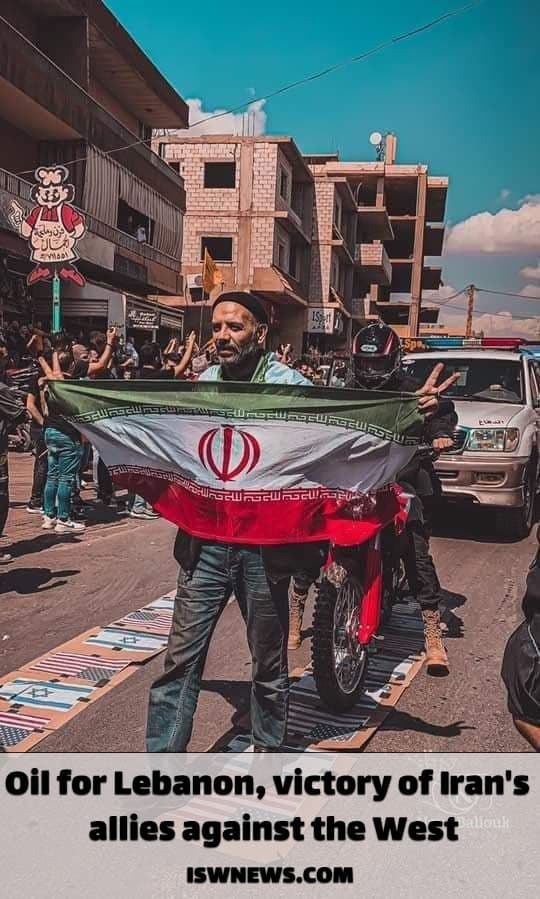
  • Oil for Lebanon, victory of Iran’s allies against the West

    Oil for Lebanon, victory of Iran’s allies against the West

    The fuel crisis in Lebanon was one of the most important and main problems for Lebanese before the arrival of Iranian fuel shipments. The crisis, caused by political and economic problems such as the lack of a cabinet, rising dollar prices, fuel hoarding, disruption of fuel imports by private companies and fuel smuggling to Syria, has severely affected Lebanon’s psychological climate.
    Accordingly, the lack of fuel for the generators of Lebanese hospitals to supply electricity, long queues at gas stations and the explosion of a fuel tanker in northern Lebanon, which killed and injured several residents of the city of Akar, inflamed Lebanese society.

    Lebanese Shiite businessmen announce purchase of fuel from Iran by Sayyid Hassan Nasrallah to resolve the country’s fuel crisis, although some pro-Western Lebanese officials have remained silent or protested, But the majority of the Lebanese people and even Hezbollah’s opposition parties praised the Islamic Republic of Iran and Hezbollah for the movement’s positive efforts and steps to solve the people’s problem and the fuel crisis in Lebanon. Sayyid Hassan’s speech and the announcement of the purchase of fuel from Iran and its transfer to Lebanon caused the Westerners, who were passive in resolving the fuel crisis in Lebanon, to speak at once about supplying fuel to Lebanon and solving the country’s fuel problem!

    After the Secretary General of Hezbollah, in his speech on September 13th, announced the beginning of the process of transferring fuel shipments purchased from Iran to Lebanon through Syria, finally on the morning of September 16th, a convoy of four fuel tankers arrived in Lebanon with the welcome of the Lebanese people. The tankers arrived at the destination escorted by Hezbollah forces and began to evacuate the fuel, thus marking another victory for the resistance front and the defeat of the Western siege.

    Some important points to consider are:
    1- Due to the silent war between Iran and the Zionist regime in the open waters, analysts expected that Iranian ships carrying fuel to Syria would be targeted, but these ships reached their destination without any problems. One of the reasons for not attacking Iranian ships could be the threat of Seyed Hassan Nasrallah, which shows the high deterrent power of the Lebanese resistance. “As soon as Iranian ships leave Iran, they will be considered part of Lebanese territory, and an attack on them would be an attack on Lebanese territory and would lead to a direct response from Hezbollah,” he said.

    2- This action of the Islamic Republic of Iran showed that Iran does not leave its allies in difficulties and the officials of different countries and regional and international media analysts have repeatedly mentioned and acknowledged this issue. On the contrary, the US approach on Afghanistan during the Taliban’s advances in the country and the abandonment of its regional allies is an example of American behavior that was once again highlighted in the media.

    3- The Lebanese people welcome the caravans carrying Iranian fuel and their appreciation of Iran and Hezbollah shows that this action has increased the unity between the countries of the Resistance Front and increased the acceptance of the Hezbollah movement among the Lebanese people.

  • New round of IRGC attacks against PJAK terrorists in Iraq

    New round of IRGC attacks against PJAK terrorists in Iraq

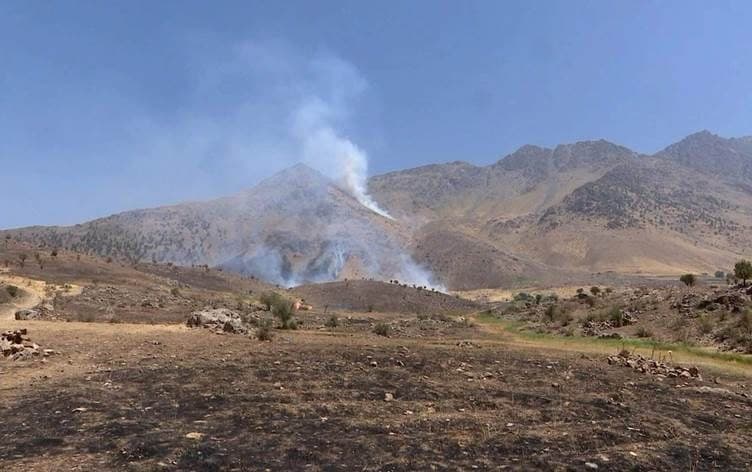
    According to local sources, IRGC artillery attacks on positions of PJAK terrorists in the Sidakan area of ​​Iraqi Kurdistan has began since yesterday, and suicide drones were also used to target the hideouts of PJAK militants.

    This morning, the positions of the PJAK terrorists in the Barbazin heights were targeted by the IRGC. Although the terrorists have stated that they did not suffer any casualties in these attacks, but air surveillance, along with precision attacks using suicide drones has minimized the error rate in these attacks.

    Earlier, Brigadier-General Pakpour, commander of the IRGC’s ground forces, warned the government and residents of the Kurdish region of the possibility of attacking terrorist positions in Iraqi Kurdistan and asked civilians to maintain distance from terrorist groups points in the area. A few days after the warning, on the morning of September 9, the Islamic Revolutionary Guard Corps repeatedly targeted the positions of PJAK terrorists and other terrorist groups in the Iraqi Kurdistan region.

  • Iranian oil tankers reached the shores of Syria

    Iranian oil tankers reached the shores of Syria

    Lebanese Hezbollah has made the necessary arrangements with the Syrian government regarding the mooring of Iranian tankers in the port of Banias and the ground transfer of fuel to Lebanon. It was decided that the cargo of this tankers, which is crude oil, would be refined at the Syrian Homs refinery and transported to Lebanon by land by fuel tankers.

    It should be noted that the cargo of this ships were purchased from Iran at the suggestion of Lebanese Hezbollah and by Lebanese Shiite traders to solve the Lebanese fuel crisis. Lebanon does not have an active oil refinery, and crude oil is first processed in Syria and then shipped to Lebanon.