Category: Iraq map

  • Deadline For Disarming Iraqi Terrorists Ends On September 19!

    Deadline For Disarming Iraqi Terrorists Ends On September 19!

    The deputy commander of the IRGC said in an interview with an Iranian media outlet that we expect from our brothers in the Kurdistan region to show brotherliness, because providing terrorists with safe haven in that region, which has become a source of operations against our country, is not consistent with brotherliness or good neighborliness.

    After uninterrupted negotiations, we finally signed an agreement with the central government in Baghdad as well as the Kurdistan region, and the deadline of the accord to become operational is on September 19 in terms of scheduling and agreed-upon provisions, he argued.

    Read more: Iraqi, Iranian Top Security Advisors Meet In Tehran

    The brigadier general went on to say that we are committed to all the provisions of the agreement, not one word less or one word more; thus, we expect the other party to also abide by the agreement in the same way as the Islamic Republic of Iran has fulfilled its obligations. Otherwise, the situation will come back to its previous state, and we will be forced to protect the interests of the Iranian people, he warned.

    It should be noted that some time ago, Chief of Staff of the Iranian Armed Forces Major General Mohammad Hossein Bagheri stated at a meeting with commanders of the Ground Forces of the Islamic Revolution Guards Corps that the Iraqi government has time up to September in order to eradicate separatist groups in the Kurdistan region of the Arab country.

    Prime Minister of Iraq Mohammed Shia’ al-Sudani also emphasized the seriousness of his government to implement the provisions of the Tehran-Baghdad security agreement completely. He made the remark in a meeting with a delegation of senior managers from Iranian media outlets yesterday.

    The Iraqi premier said that for various reasons, we as the Iraqi government feel obligated to address Tehran’s security concerns regarding terrorist activities, which are being committed from the Kurdistan region in Iraq. To this end, we have spent over $200 million on this issue and deployed more than 3,000 National Army forces along Iran’s borders and throughout the region, he noted.

    Read more: Are Iran’s armed forces on the brink of a new round of attacks on terrorist groups in Iraqi Kurdistan region?

    In recent months, senior commanders of the Iranian armed forces have warned the Iraqi government and officials in the Kurdistan region of Iraq about the illegal and terrorist movements of certain outlawed groups.

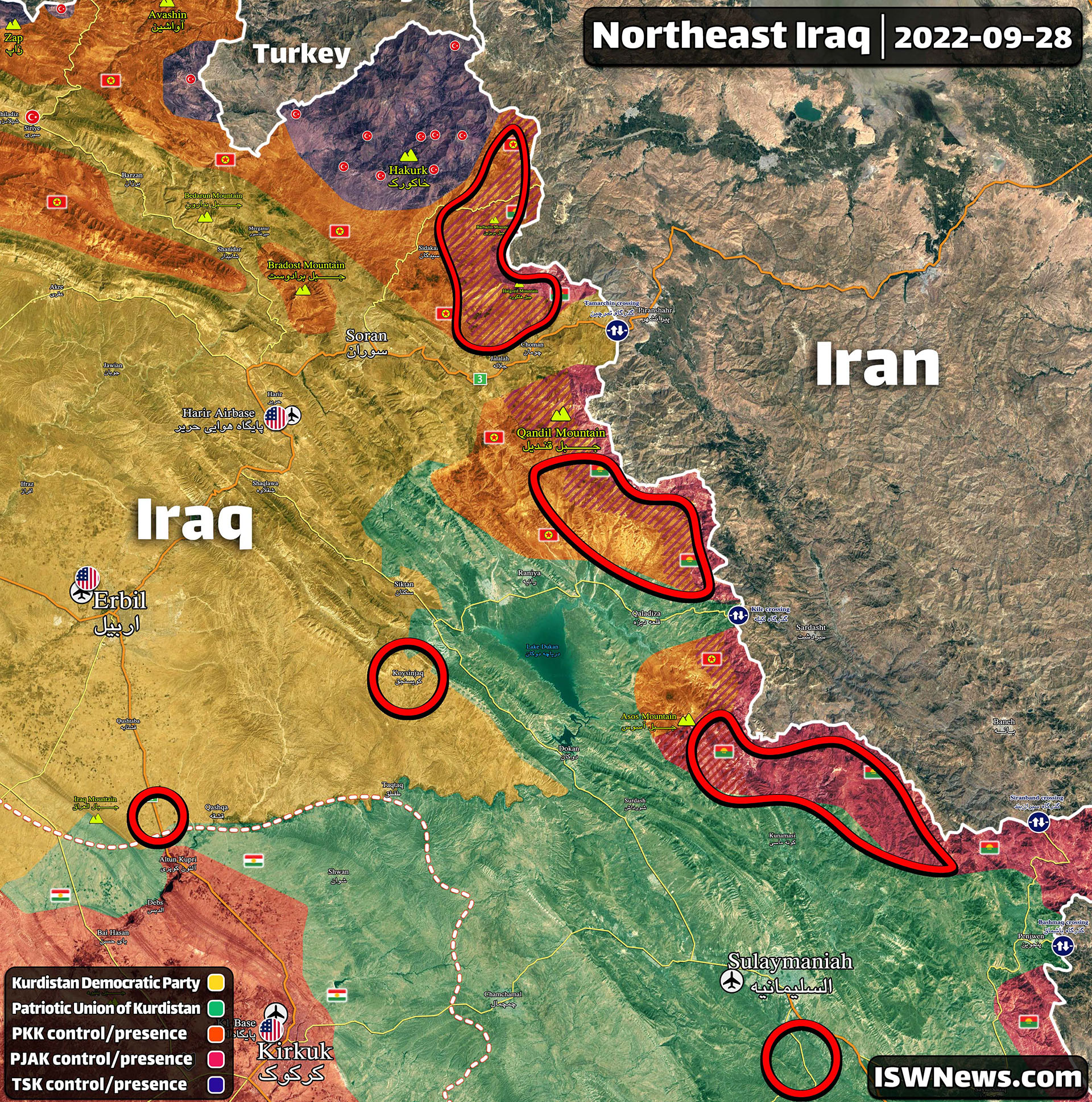
    Given the continued presence of anti-Iran armed groups in the Kurdistan region of Iraq as well as the Iraqi sides’ failure to make proper decisions and implement practical plans to expel or disarm terrorist groups from Iraq’s border areas, the Islamic Republic of reserves its rights to resort to all available capacities to establish security along its western borders after the end of the September 19 deadline.

    Map of the distribution of terrorist groups in the western borders of Iran – click to view in full size

    Read more:
    Iranian missiles pounds terrorist positions in Kurdistan region!
    Iran missile and drone attacks on terrorist groups in Iraq’s Kurdistan + Video
  • Are Iran’s armed forces on the brink of a new round of attacks on terrorist groups in Iraqi Kurdistan region?

    Are Iran’s armed forces on the brink of a new round of attacks on terrorist groups in Iraqi Kurdistan region?

    Following recent warnings to Iraqi officials, which were made by Commander of the Islamic Revolution Guards Corps’ ground forces Major General Mohammad Pakpour concerning the terrorist groups based in Iraq, the IRGC’s movements and deployments on the western borders of the Islamic country have been intensified.

    The movements are taking place while Iraq’s National Security Advisor Qasim Al-Araji, heading a security delegation to review actions related to the implementation of the security agreement between Iran and Iraq concerning border security, entered Sulaymaniyah in Iraqi Kurdistan on May 27 and then the Iraqi official held talks with Secretary of Iran’s Supreme National Security Council Major General Ali Akbar Ahmadian two days later during a trip to capital Tehran.

    Read more: Iraqi, Iranian Top Security Advisors Meet In Tehran

    Al-Araji emphasized Iraq’s commitment to the security agreement signed with Iran during his meeting with Ahmadian, stating that he considers Iraq’s security to be Iran’s one and vice versa.

    However, it seems that the deadline that Iran determined for Iraq is coming to an end and the issue may have been underscored in Ahmadian and Al-Araji’s recent meeting.

    A number of video footages as well as images circulated on social media networks show that the Islamic Republic of Iran’s armed forces are transferring artillery arms to the western areas of the country and the issue indicates the imminent occurrence of possible operations by Iran’s armed forces against terrorist groups based in Iraq’s Kurdistan region.

    The Democratic Party of Iranian Kurdistan (HDKA), the Kurdistan Free Life Party (PJAK), the Komala Party of Iranian Kurdistan (Komala), and the Kurdistan Freedom Party (PAK) are among the major separatist and terrorist groups that operate on the eastern borders of Iraqi Kurdistan region, and they have been focusing on raiding Iran’s national security for a long time.

    Read more: Iran’s warning to Iraq: Remove the terrorist groups from the Kurdistan Region!

    It is worth mentioning that Iran’s armed forces pounded hideouts of a terrorist group on the outskirts of Koy Sanjaq in the south of Sulaymaniyah and the heights of Sidakan mountainous area in Iraqi Kurdistan region by the use of missiles and drones on November 14, 2022, when at least two militants of the Democratic Party of Iranian Kurdistan were killed and 10 others were wounded.

    Following the developments, Iran and Iraq reached an agreement regarding the expulsion of the mentioned terrorist groups from the borders of Iraqi Kurdistan region and Baghdad promised to cooperate in this respect.

    Since then, the Iraqi government has tried to take practical steps to fulfill its promises under the agreement; however, the pace of the actions seems to be very slow and insufficient. Thus, if the ongoing trend continues, it is possible that Iran will independently carry out another military operation to cleanse the hideouts of the terrorist groups from the border areas of the Iraqi Kurdistan region.

    Read more:
    Iranian missiles pounds terrorist positions in Kurdistan region!
    Iran missile and drone attacks on terrorist groups in Iraq’s Kurdistan + Video
    The transfer of weapons to the western borders by the Iranian army
    Click to view full size
  • Popular Mobilization Units Prepare To Form New Brigade In Sinjar

    Popular Mobilization Units Prepare To Form New Brigade In Sinjar

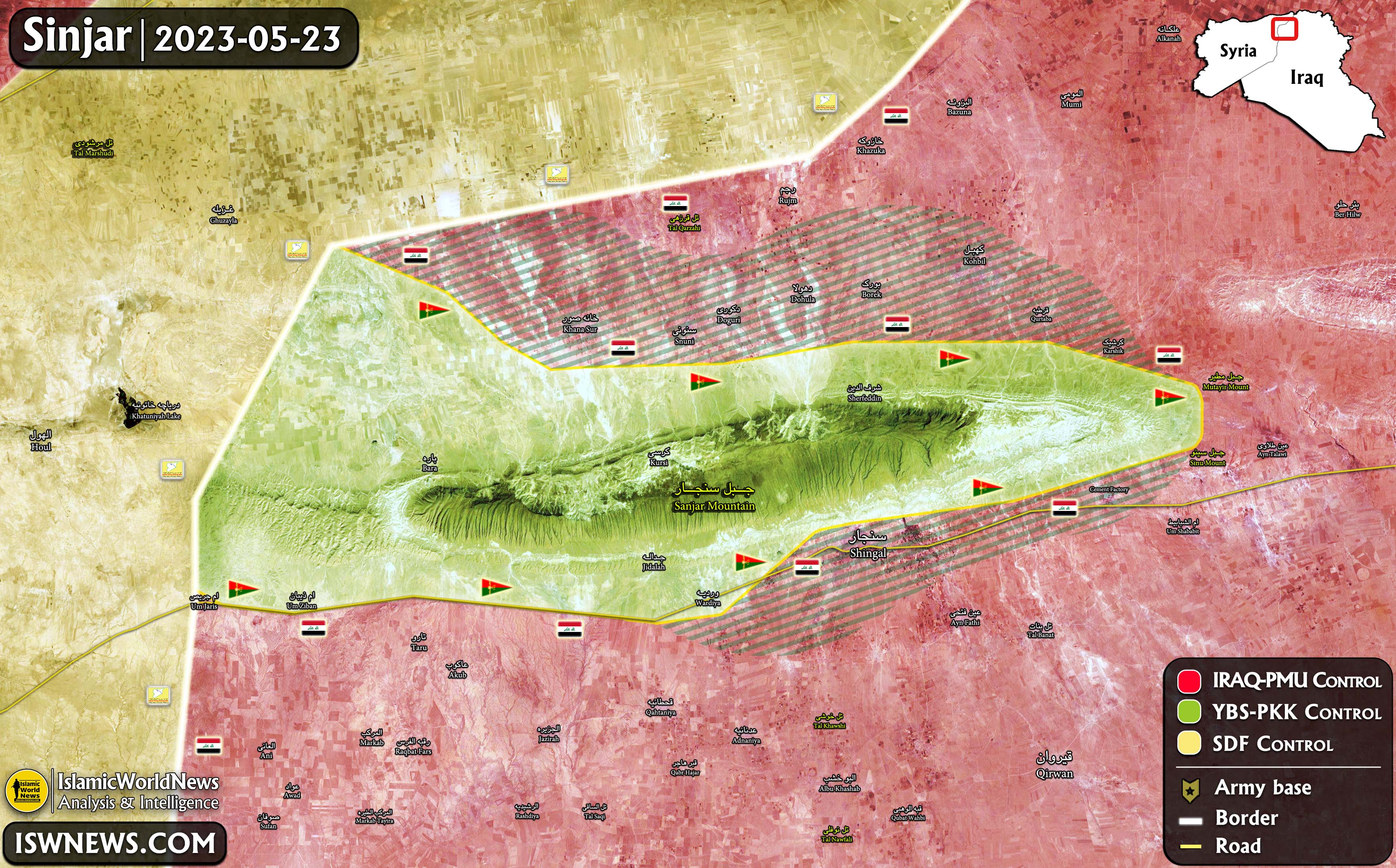
    Kurdish language media outlets, citing sources among the Hashd al-Shaabi Units, declared the forces’ measure to establish a new brigade in the town of Sinjar in Nineveh Governorate will comprise 2,000 resistance fighters.

    According to the unidentified sources, head of Iraqi popular mobilization units Faleh al-Fayaz has succeeded in obtaining the Iraqi Prime Minister Mohammed Shia al-Sudani’s approval to form a new brigade in Sinjar, which will be made up of native residents of this area. The Popular Mobilization Units had previously established a brigade of over 2,000 fighters in the Sinjar County.

    Some speculations have been made, saying that the format of the mentioned new brigade of the PMU in Sinjar has not been finalized so far, and it may comprise of four regiments of native volunteers from Sinjar. Moreover, one of the commanders of the Badr Organization who is also the current advisor to the head of the Popular Mobilization Units in the northern regions and is named Murad Sheikh Kalo has been assigned to establish the new brigade in Sinjar.

    Member of the Kurdistan Democratic Party in the Iraqi Parliament Majid Shankali said that the new brigade would comprise of the residents of Sinjar as well as the Arab people of the area. This move is considered a threat and I informed the relevant institutions on the issue, he warned.

    It is worth mentioning that the Sinjar County is one of the areas of Nineveh Governorate, which is located 120 kilometers west of the Iraq city of Mosul, and most of its residents are Yazidis, who are a Kurmanji-speaking endogamous minority group to Kurdistan region.

    At present, it is believed that more than five groups of Iraqi armed forces and militia groups, including the Popular Mobilization Units, the Sinjar Resistance Units (YBS), local police forces, the Iraqi Army and Peshmerga (Kurdish military forces) are present in Sinjar County, and the paramilitary groups and militias have been fighting each other for years with the aim of having a say and dictate their plans in the region.

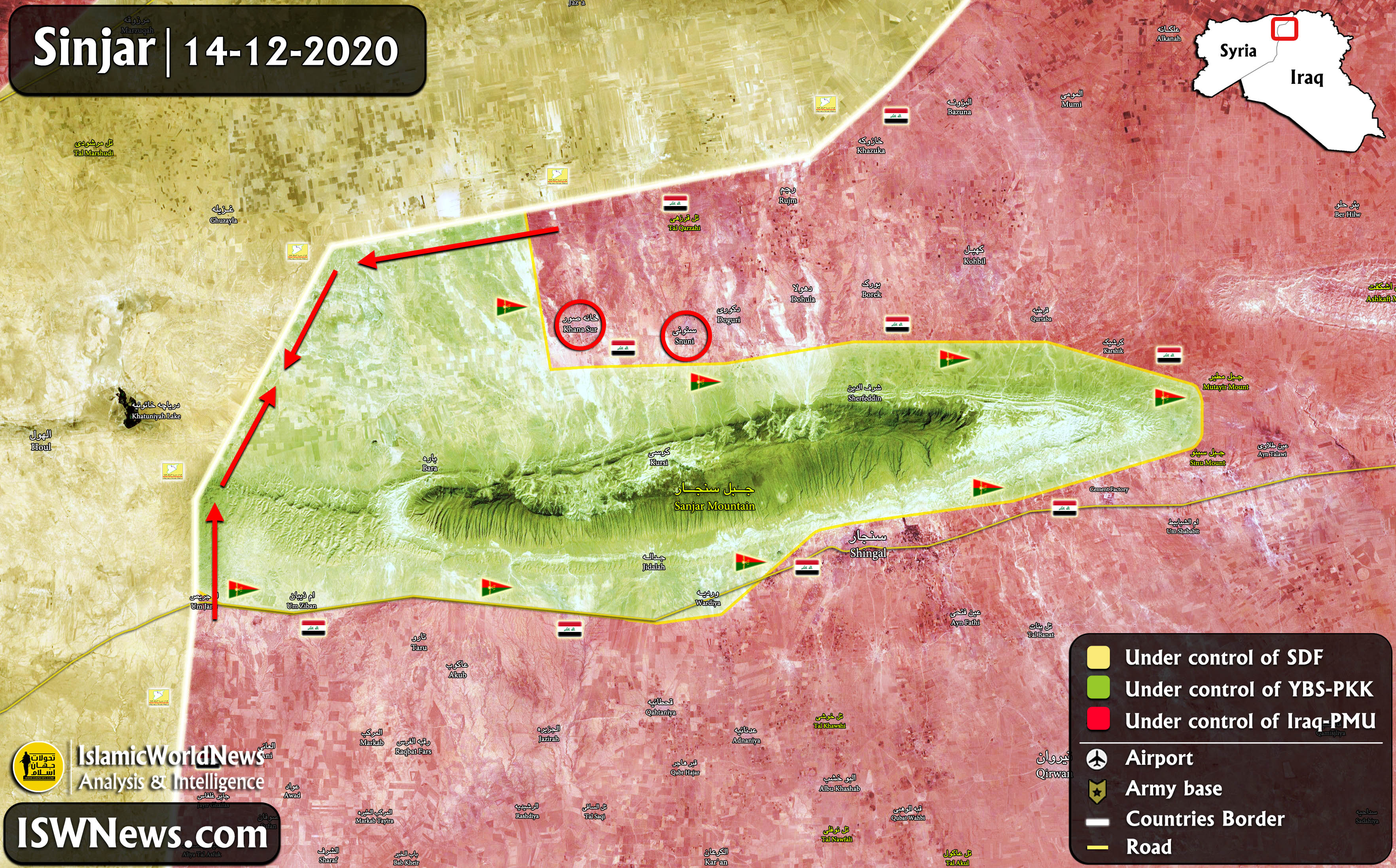
    Sinjar map in northwest of Iraq – Click to view full size
  • Turkish Strikes Kill 3 PKK Members In Iraq

    Turkish Strikes Kill 3 PKK Members In Iraq

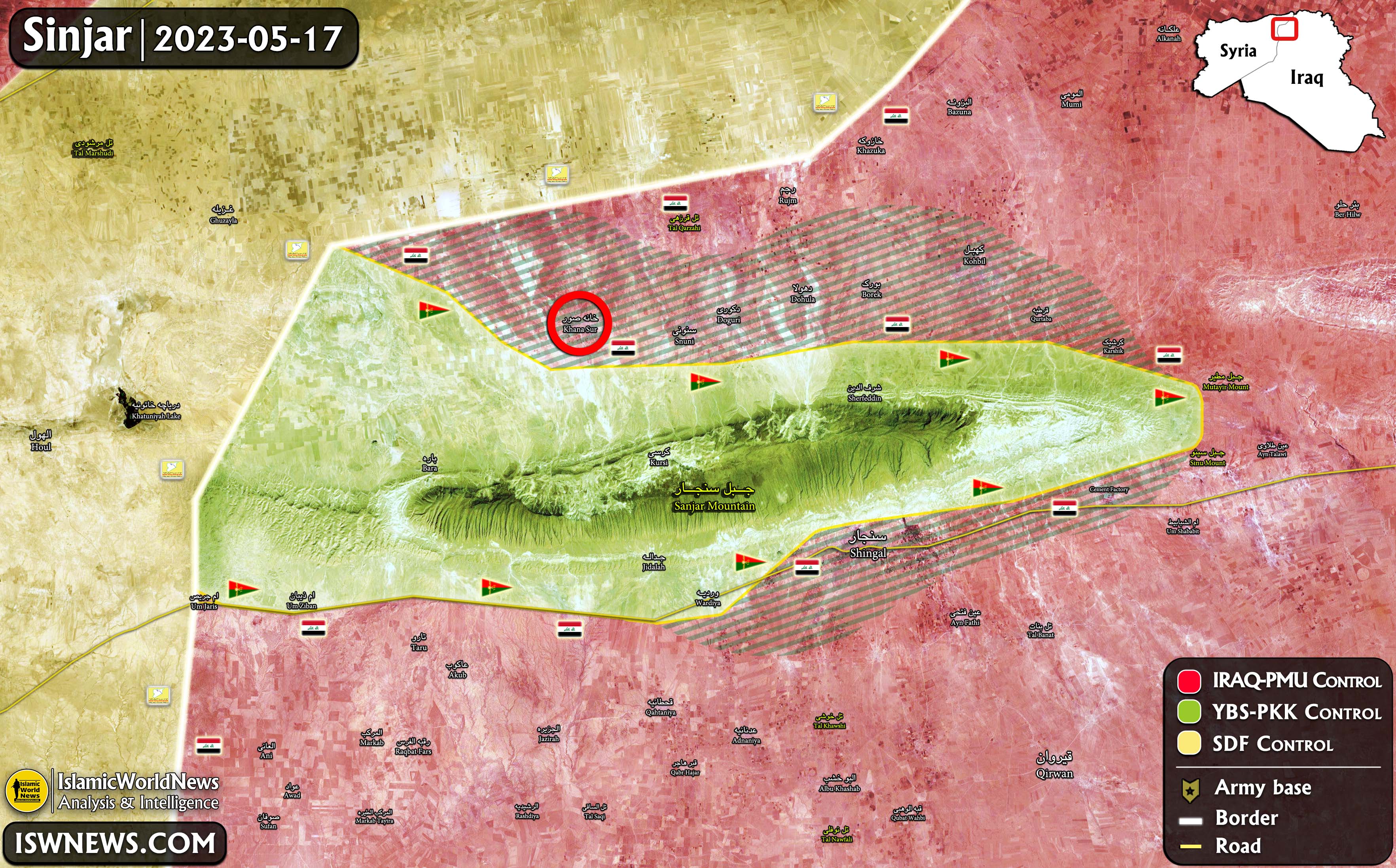
    On May 16, Turkish drones targeted a headquarters belonging to the Kurdistan Workers’ Party (PKK) in Khana Sor area located on the outskirts of Sinjar city, during which three PKK members were killed.

    The Kurdistan Region of Iraq also announced in a statement: “A Turkish drone targeted a base belonging to the Kurdistan Workers’ Party in Sinjar region, and the attack resulted in the death of three fighters of the Kurdistan Workers’ Party.”

    It is worth mentioning that on March 1, Turkish drones also targeted a vehicle in Sinjar city, during which one of the field commanders of the Sinjar Resistance Forces (YBS) along with his bodyguard lost his life.

    Read more: Turkish Drone Attack On Sinjar; Two YBS Members Were Killed

  • Iran’s warning to Iraq: Remove the terrorist groups from the Kurdistan Region!

    Iran’s warning to Iraq: Remove the terrorist groups from the Kurdistan Region!

    In recent years, the officials and military commanders of the Islamic Republic of Iran have repeatedly warned about the activity and deployment of terrorist groups near the borders of Iran and the Kurdistan region of Iraq, and have informed the local and government authorities of Iraq about their opposition. However, the central government of Iraq and the authorities of the Kurdistan region have not taken decisive and acceptable measures to expel these groups or prevent their attacks on the territory of the Islamic Republic of Iran.

    Therefore, with the increase of the activities of terrorist groups Komola, KDPI, PAK, PJAK and PKK in Iran’s borders, as well as attempts to carry out terrorist operations, the explosion in one of the country’s sensitive centers in Isfahan province by elements of the terrorist group Komala under the guidance of Mossad (the attack was neutralized in August), the attempt to bringing armed teams and import a large amount of weapons into Iran’s soil and the active role in the recent riots in Iran’s border cities made the Islamic Revolutionary Guard Corps determined to carry out a artillery and drone campaign against the positions of the mentioned terrorist groups in the Kurdistan region of Iraq.

    Considering the number of terrorist groups and their foreign supporters, it seems that the recent attacks of the IRGC are not enough to completely destroy the terrorist groups and this operation is just a warning message and retaliatory action. On the other hand, the authorities of the Islamic Republic of Iran, at the same time as the start of this operation, have put diplomatic consultations with the Iraqi authorities on the agenda and demanded an end to the activities of terrorist groups around their borders, especially in the Kurdistan region of Iraq.

    The presence of terrorist groups in the Kurdistan region of Iraq, in addition to threatening the security of Iran, is also considered a serious threat to the security of Iraq. If proper action is not taken by the Iraqi authorities to expel terrorist groups from the Kurdistan Region, this issue can threaten Iraq’s national security in the long term, create problems in relations with neighboring countries, increase the number of foreign military bases in northern Iraq, and turning the Kurdistan region of Iraq into an arena for resolving regional disputes and military conflicts.

    Currently, the terrorist groups of the Democratic Party of Iranian Kurdistan (KDPI), Kurdistan Free Life Party (PJAK), the Komala Party of Iranian Kurdistan (Komala) and the Kurdistan Freedom Party (PAK) are among the main separatist and terrorist groups in the eastern borders of the Kurdistan Region, focusing on attacking Iran’s national security. During the past years, many documents have been obtained about the use of the mentioned groups by western Intelligences, including the CIA and Mossad, to carry out subversive operations in Iran.

    Considering this issue, if the current negotiations to dismantle and evacuate the headquarters of these groups from the territory of the Kurdistan Region do not succeed, we may witness more effective and serious operations by Iran, including ground operations to clean up the eastern areas of the Kurdistan Region.

    Read more:
    Iran’s missile and drone attacks against terrorist groups in the Kurdistan region + Video
    15 terrorists were killed in Kurdistan Region of Iraq
    IRGC missile attacks on north of Er
    bil

    Map of the dispersion of terrorist groups in the eastern borders of the Kurdistan region of Iraq – Click to view full size
  • Iran’s missile and drone attacks against terrorist groups in the Kurdistan region of Iraq + Video

    Iran’s missile and drone attacks against terrorist groups in the Kurdistan region of Iraq + Video

    Based on the available information, in the last four days, the headquarters and camps of the terrorist groups of the KDPI around the city of Koysinjaq, the groups of Komala and PJAK in south of Erbil and north of Sulaymaniyah, and PEJAK and PKK in the Sidekan region have been targeted.

    The Iranian Armed Forces have used suicide drones (Shahed-136), artillery rockets and ballistic missiles in these attacks. The intensity of the attacks has been such that the authorities of these groups have admitted that some of their members were injured and killed. Kurdistan regional media reports that 10 people were killed and more than 24 others were injured, citing the Ministry of Health of Iraqi Kurdistan.

    The moment when two Shahed-136 suicide drones dived and accurately hit the positions of terrorist groups in the Kurdistan region of Iraq.

    It is worth mentioning that the new round of Iran’s attacks against terrorist groups in northeastern Iraq began after these groups took advantage of the recent protests in Iran to enter sabotage teams and a large amount of weapons into Iran’s soil And they intended to carry out terrorist operations in Iran. Therefore, these activities were met with a strong reaction from the Iranian armed forces, and their positions were targeted in different parts of the Iraqi Kurdistan region.

    The attacks against terrorist groups continue and the Iranian authorities have not commented on the results or the end time of these attacks.

    The Iranian Armed Forces had previously warned the Iraqi government and the authorities of the Kurdistan Region of Iraq about the terrorist and illegal activities of the aforementioned groups and had announced that if the Iraqi government and the Kurdistan Region did not take the necessary measures to contain and prevent the terrorist activities of these groups, Iran reserves the right to act against these terrorist groups and suppress them with the strictest necessary measures.

    Click to view full size

    Using the Shahed-136 suicide drone to target terrorist positions in the Kurdistan region of Iraq

    Bombing terrorist positions in the Kurdistan region of Iraq

    Bombing terrorist positions in the Kurdistan region of Iraq

    Bombing terrorist positions in the Kurdistan region of Iraq

    Bombing terrorist positions in the Kurdistan region of Iraq
  • IRGC attacks on terrorist positions in Iraqi Kurdistan + Video

    IRGC attacks on terrorist positions in Iraqi Kurdistan + Video

    Recently, IRGC security forces arrested five members of a terrorist group in the border city of Baneh, the capital of Baneh County, in Kurdistan Province. According to the IRGC, following the confessions of the members of this terrorist team to their subversive goals and intentions against the security of the Iranian nation, this morning positions of terrorist groups in the northern part of Iraq were targeted by artillery and missile attacks.

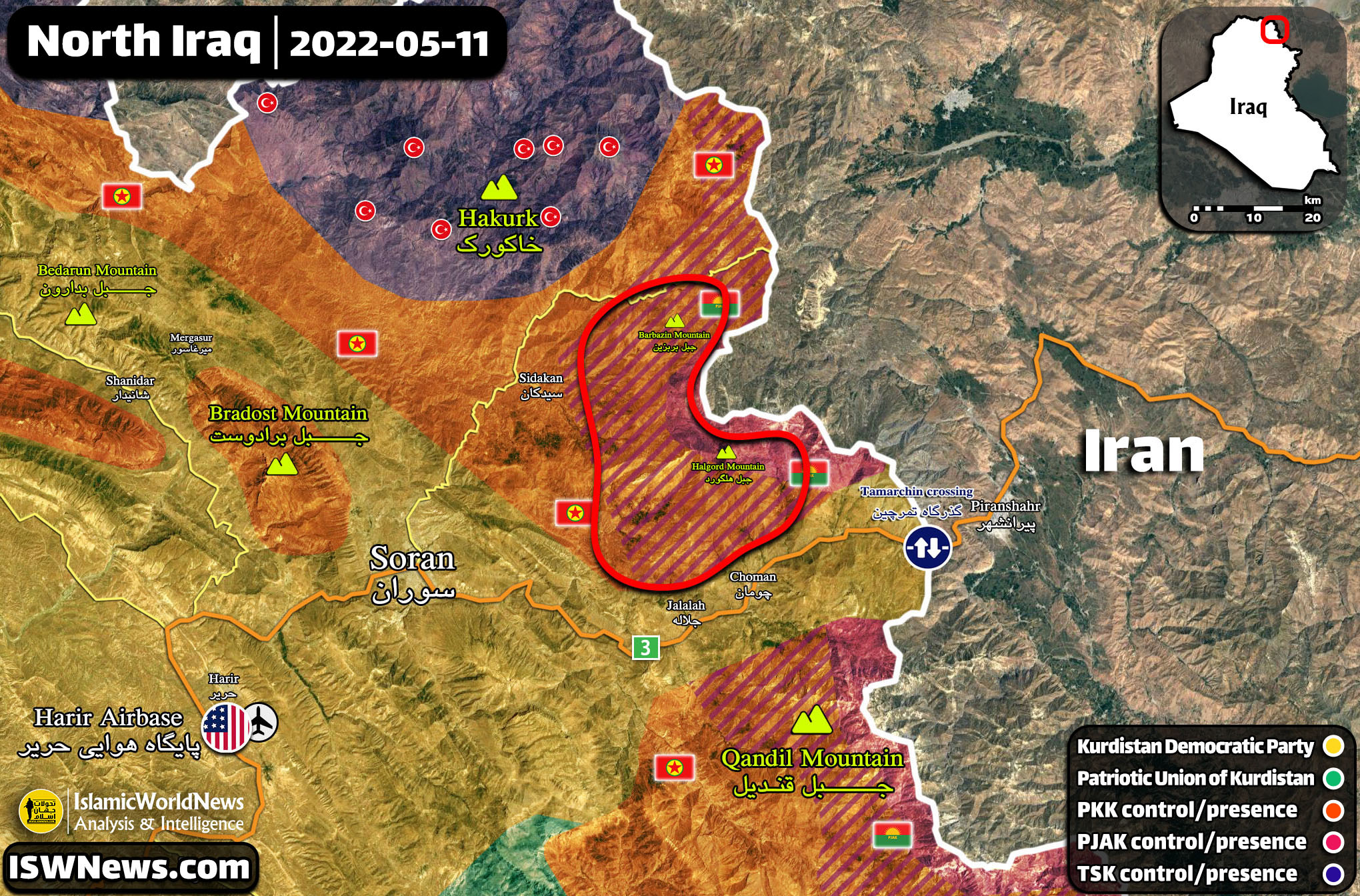
    According to local sources, IRGC ground forces shelled positions of PKK and PJAK terrorist groups in Choman and Barbazin heights of Iraq in the Sidekan region.

    It should be noted that in Summer 2021, IRGC’s ground forces carried out artillery and drone strikes on the positions of PJAK terrorists and other terrorist groups in the Choman and Sidekan areas of Iraqi Kurdistan several times.

    Read more:
    New round of IRGC attacks against PJAK terrorists in Iraq
    IRGC Missile and Drone Attacks on Northern Iraq (Map Update)

    Click to view full size
  • IRGC Missile and Drone Attacks on Northern Iraq (Map Update)

    IRGC Missile and Drone Attacks on Northern Iraq (Map Update)

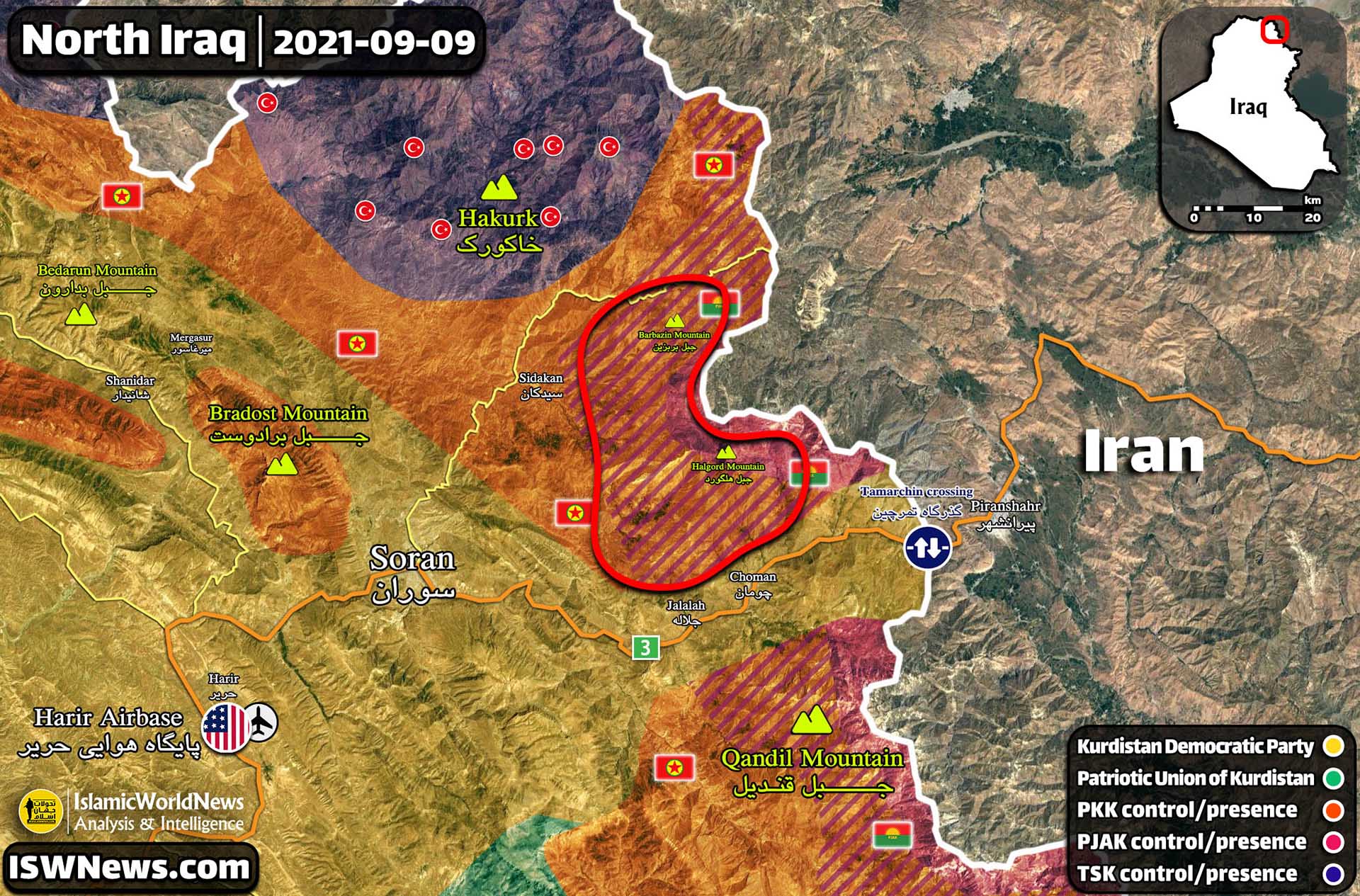
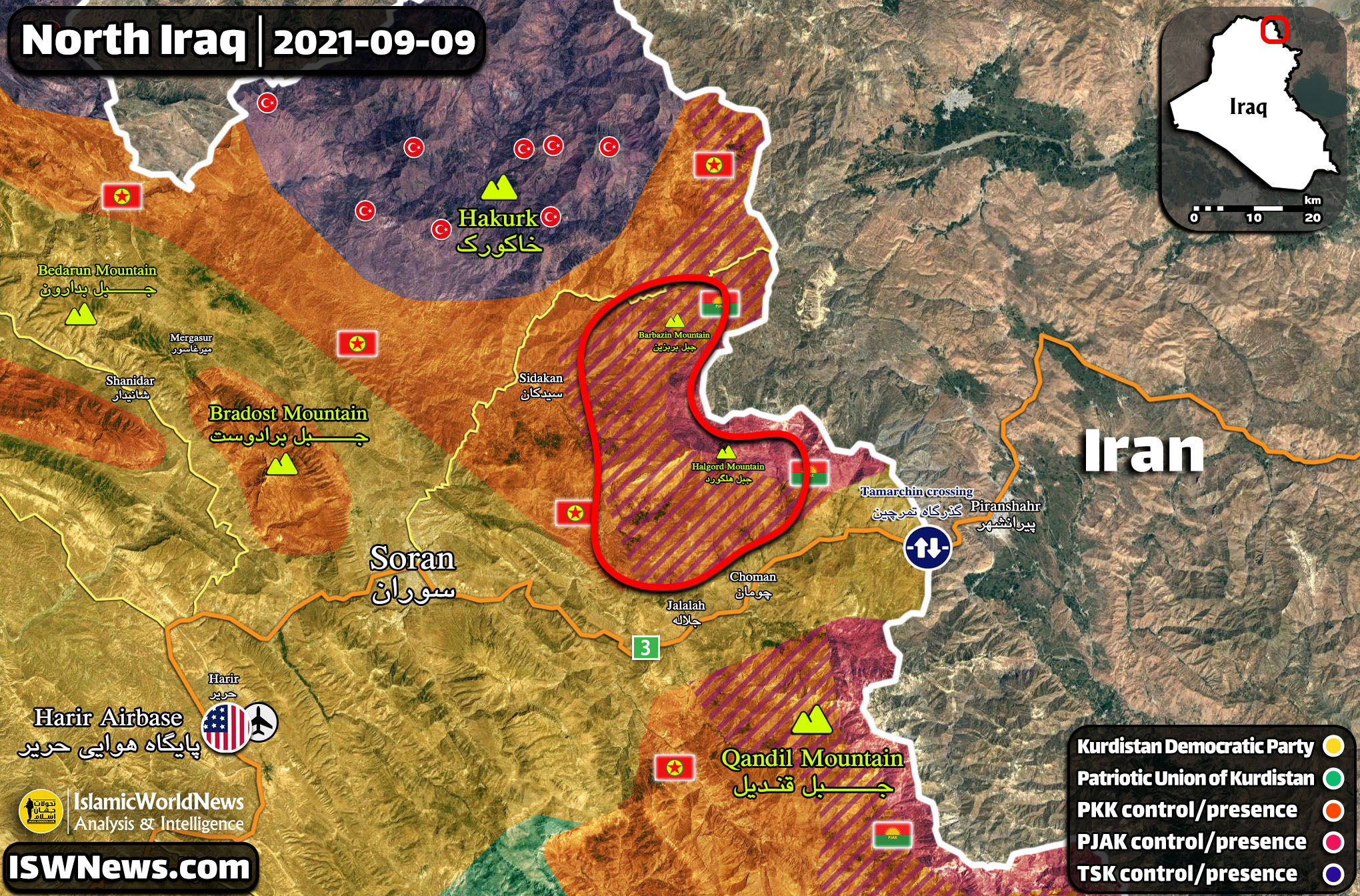
    The attacks, which were carried out with the participation of the IRGC Aerospace and Ground Force, several positions of terrorist groups in the Barbazin and Halgord heights, as well as one of the PJAK military camps on the outskirts of Jalalah town, west of Choman were targeted with artillery and suicide drones. Preliminary information indicates high casualties of PJAK terrorists.

    A few days ago, after Brigadier-General Pakpour, the commander of the IRGC Ground Forces, has warned the government and residents of the Kurdistan Region about the possibility of attacking terrorist positions in the Iraqi Kurdistan and asked civilians to maintain distance from terrorist groups points in the area; this morning (September 9th) several areas in Choman and Sidakan areas were targeted.

    According to local sources, the Islamic Revolutionary Guard Corps (IRGC) has attacked terrorist group positions with drone surveillance and artillery attacks; Suicide drones have also been used in these attacks to accurately destroy the positions of terrorist groups.

    The exact number of casualties of terrorist groups has not been published yet.

    Click to see the full size map
    IRGC attacks terrorist positions in northern Iraq using a suicide drone
    IRGC attacks on terrorist positions in northern Iraq
    IRGC attacks on terrorist positions in northern Iraq
  • Map: Turkish Bases on Iraqi Soil

    Map: Turkish Bases on Iraqi Soil

    After this agreement, in 1992, 1995, 1996 and 1997, the Turkish army crossed the northern borders of Iraq several times, and especially in 1996 and 1997, Turkey deployed its forces in the Iraqi Kurdistan region and with the consent of Masoud Barzani (Kurdish Democratic Party) established several bases in parts of Duhok province.

    The ‘Border Security and Cooperation Treaty’ signed in 1983 between Iraq and Turkey, was suspended by Iraq between 1988 and 1991, prompting Turkey to suspend operations on Iraqi soil during those years.

    According to official and unofficial statistics, there are currently more than 3,000 Turkish troops in northern Iraq.

    After the arrival of ISIS terrorists in Iraq and the occupation of part of the country in 2014, Turkey transferred more than 1,200 troops to Ba’ashiqa, which led to many internal and external protests.

    Also, in 2018, the Turkish army advanced 30 kilometers in the Iraqi Kurdistan region and sent its special forces to the villages of Barmiz and Shapan in the region of Sidkan and Bradost.

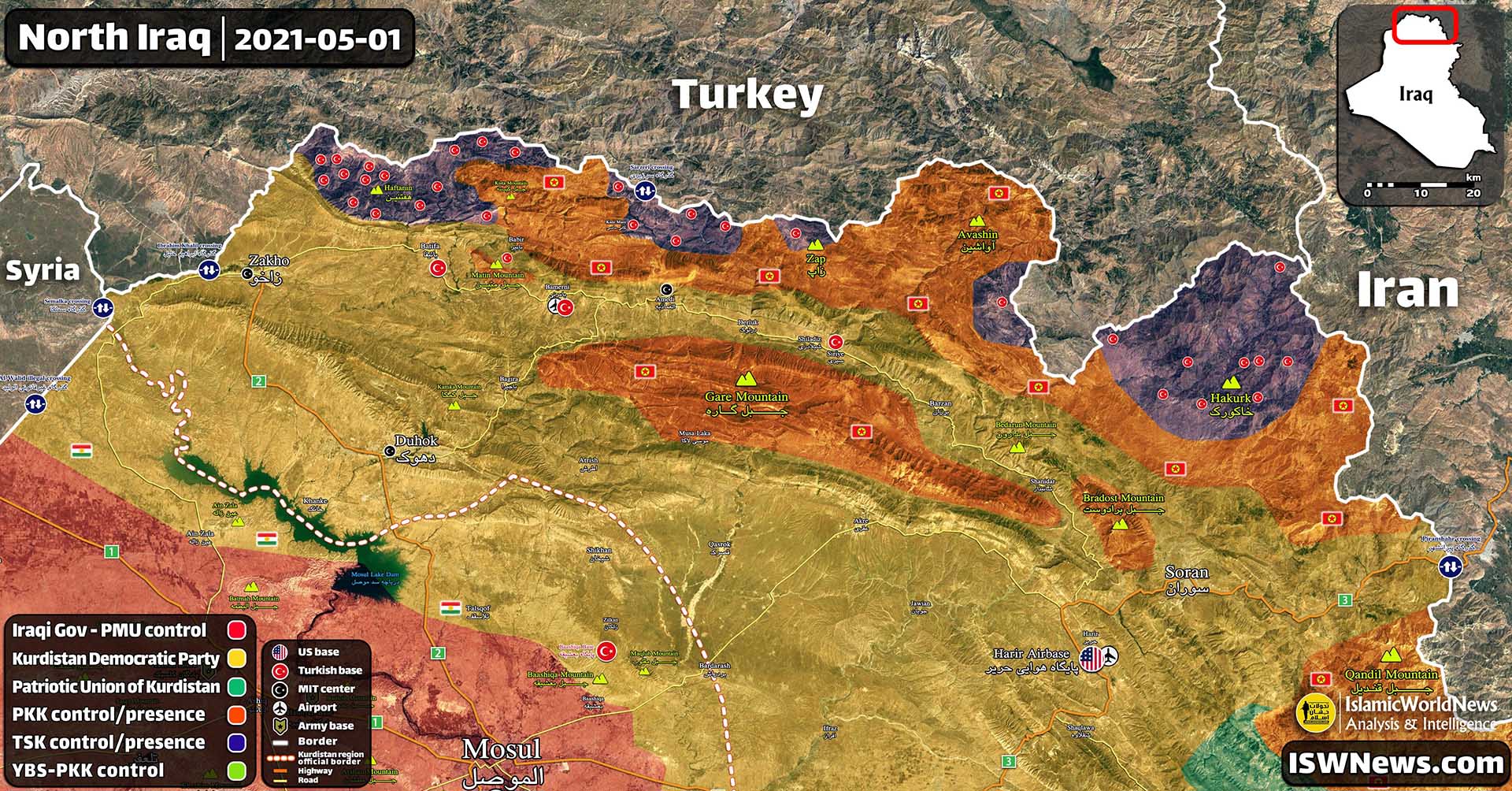
    According to available data, the Turkish army currently has 36 military posts in Duhok province, of which 9 military posts are in the Amedi area, 24 military posts in the Zakho and Haftanin areas, and 3 other military posts are located in Zinari Kistah in Kani Masi. The Turkish military also has six military bases in Amedi , Zakho and Ba’ashiqa, and at least three intelligence bases in Iraq.

    The statistics of some of the most important Turkish military bases in Iraq are as follows:

    • Kani Masi military base is the largest military base of Turkey in terms of the number of soldiers, which is located in the Kani Masi area within the Amedi municipal jurisdiction.
    • Bamarne military and logistical base, which is also a military airport; It is one of the largest logistical bases of Turkey and the largest Turkish intelligence base Iraq.
    • Seri military base in Sheladeze area within the Amedi municipal jurisdiction.
    • Gali sarzeri military base within the Amedi municipal jurisdiction.
    • Kopak military base within the Amedi municipal jurisdiction.
    • Qamri military base in Barwari region and south of Matina mountain.
    • Kukhsapi military base in the village of Ureh in the region of Barwari Bala within the Amedi municipal jurisdiction.
    • Sinam military base in Barwari area within the Amedi municipal jurisdiction.
    • Gerebe military base in Beya village within the Zakho municipal jurisdiction.
    • Gali Zakho military base.
    • Batifa base is one of the intelligence centers of Turkey within the Zakho municipal jurisdiction.
    • Shiret military base between Batifa town and Robski village.
    • Dari military base in Batifa region.
    • Ba’ashiqa (Zilkan) military base between Maqloub and Ba’ashiqa mountains located in north of Mosul city, where about 900 troops are stationed.
    • MIT intelligence center in Amedi.
    • MIT intelligence center in Batifa area in Zakho.
    • MIT intelligence center in Zakho city in Bidari neighborhood.
    • MIT intelligence center in Duhok city in Gere base neighborhood.

    Turkish military bases in northern Iraq – Click to see the full size map
  • Latest Updates on Northern Iraq, 5 May 2021 (Map Update)

    Latest Updates on Northern Iraq, 5 May 2021 (Map Update)

    PKK also claimed that the Turkish army had twice used banned chemical weapons in its attacks on northern Iraq.

    On May 4, the Turkish army heavily bombarded the area around the village of Kistah. As a result of these bombings, 15 families have been evacuated from Kistah village so far.

    The Turkish army has so far taken control of Mount Zanar, Mount Kistah and the surrounding areas, as well as the northern areas of Hiror. Clashes also continue in the Avashin area. According to field reports, the Turkish army has set up a military point in the northern mountains of Hiror.

    It is said that Iraqi border guards (local forces) have set up four checkpoints in the Kani Masi and Kistah areas to prevent Turkish advances in the area, apparently in front of areas occupied by the Turkish military in recent operations in northern Iraq.

    On the other hand, the Turkish Ministry of Defense announced that despite the difficult conditions in the operational area of Pence-Simsek in northern Iraqi Kurdistan, the Turkish army forces are advancing and clearing the predetermined areas.

    Click to see the full size map
  • Latest Updates on Northern Iraq (Map Update)

    Latest Updates on Northern Iraq (Map Update)

    The Turkish army has launched a new operation since April 23, known as Operation Pence-Simsek (Thunder Claw) and Pence-Yildirim (Lightning Claw) against PKK militants in northern Iraq. The recent Turkish operation is the third Turkish military operation in northern Iraq in less than two months. According to the information provided by the Turkish media, 5,280 troops in the form of 352 operational teams are participating in this operation.

    No accurate details have been released so far on the Turkish army’s ground advances, but sporadic clashes continue in northern Iraq.

    Yesterday, PKK forces claimed to have attacked a Turkish military stronghold and clashed with Turkish forces in various parts of northern Iraq. According to PKK, a Turkish army soldier was killed in the clashes in the Qala Bedewe area, five people were killed on the Mam Rashu hill in the Avashin area, four other were killed in the Matina area, and one soldier was killed in the Khantur area. A Turkish drone also allegedly shot down in the Duhok region, according to the PKK.

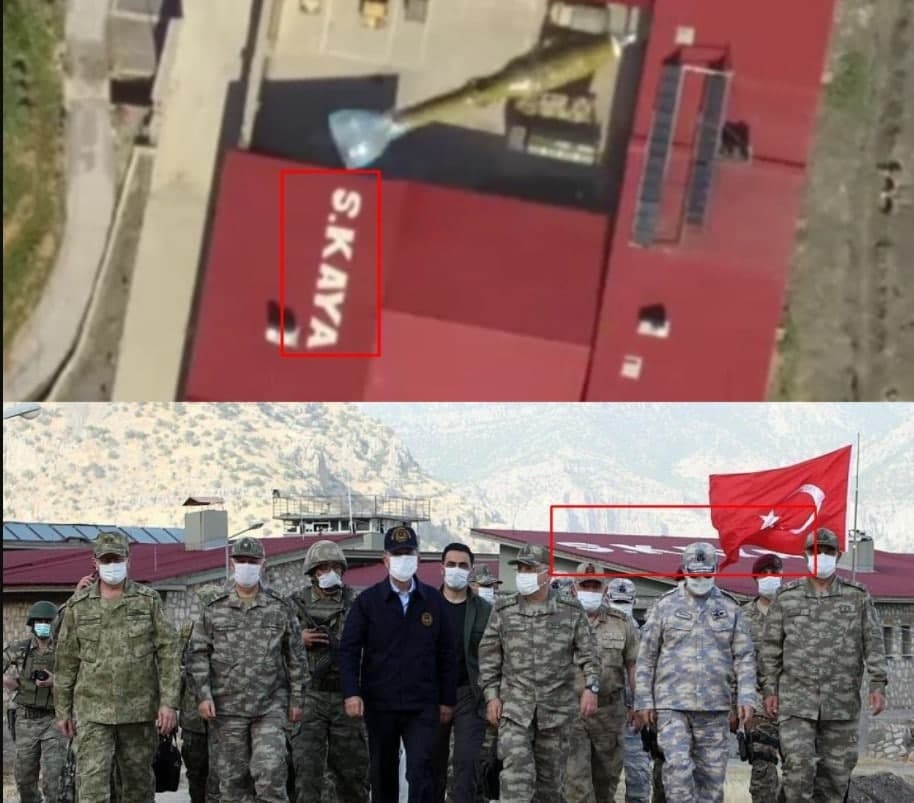
    The PKK Media center also released a video of a quadcopter airstrike on a Turkish military base in the Kirya Resh area and another base in Kani Masi. According to images, the Turkish military base in the Kirya Resh is the same base that the Turkish Defense Minister and other commanders recently visited. PKK forces released another video of a guided missile targeting a Turkish military base in the Zap region of northern Iraq.

    Attack on Turkish base in Kirya Resh
    Turkish Minister of Defense in Kirya Resh base
    PKK guided missile attack on Turkish position in Zap area

    Meanwhile, the Turkish Ministry of Defense announced that 42 PKK members have been killed so far in Operation Pence-Simsek and Pence-Yildirim in northern Iraq. The Turkish military also announced the discovery of two anti-aircraft weapons and 290 rounds of ammunition, as well as several caves and hideouts belonging to PKK forces in northern Iraq. Turkish military fighter jets also bombed targets in the Avashin area 16 times.

    In other news, the Turkish Interior Minister announced the construction of a new military base in the Metina region of northern Iraq. The Turkish army currently has 36 military posts in Duhok province, of which 9 are in the Emadiyah area, 24 are in the Zakho and Haftanin areas, and three are in the ​​Kani Masi area. The Turkish army also has six military bases in Emadiyah, Zakho and Ba’ashiqah in Iraq.

    Click to see the full size map
  • Iraq: Latest Updates on Sinjar area, west of Mosul (Map Update)

    Iraq: Latest Updates on Sinjar area, west of Mosul (Map Update)

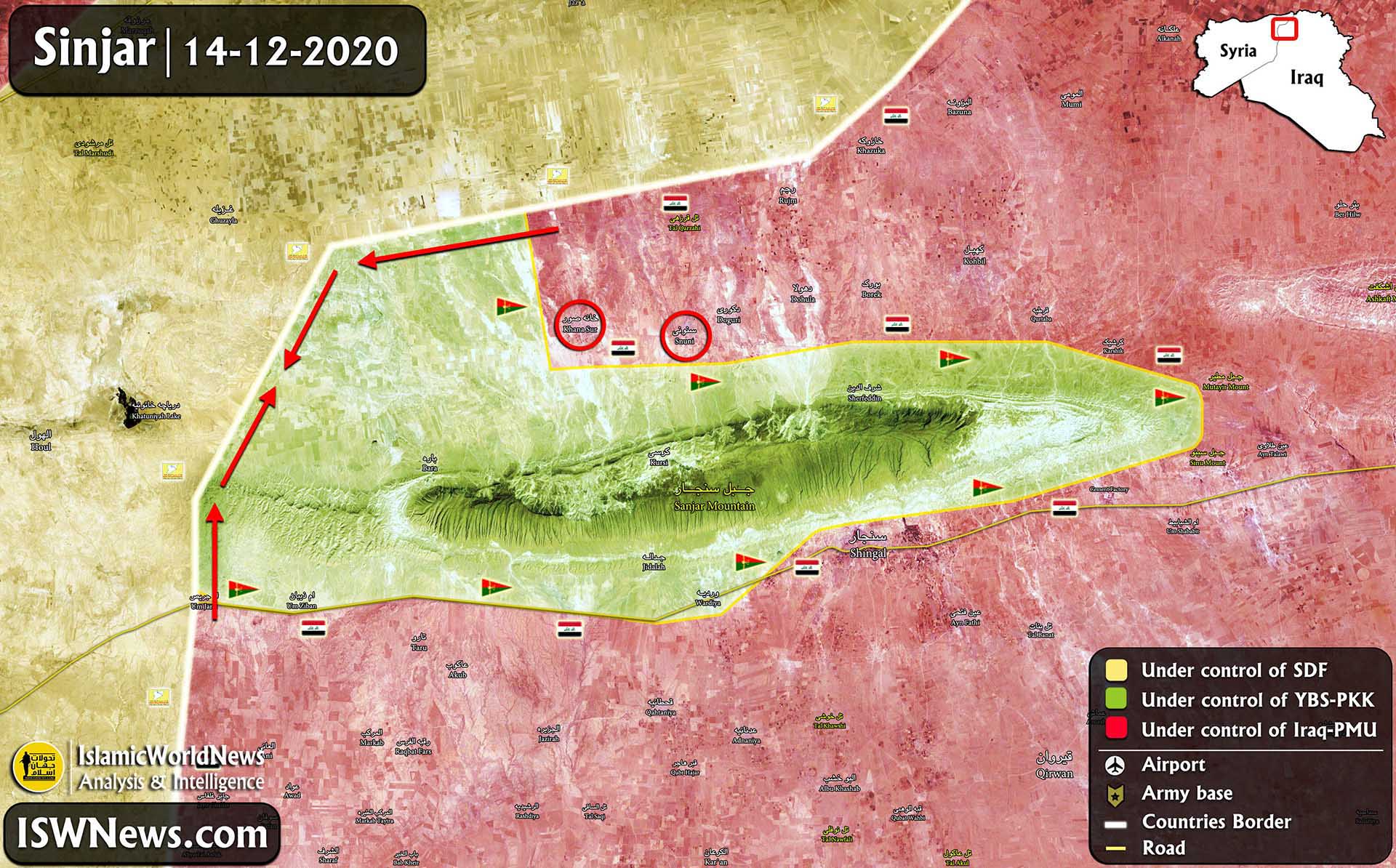
    Following the agreement between Iraqi government and Iqlim Kurdistan on 9 October over Sinjar area to form a joint committee and evacuate the PKK militants and Hashad Sha’abi forces to retreat up to 5 km from Sinjar area, the latest updates are as follows,

    After two brigades of federal police of 2,500 troops were deployed to take position at the border with Syria on 20 November, Iraqi security forces took position on bases of PKK militants and police HQs in Sanuni and Khana Sur, northwest of Sinjar. More than 500 Yazidi fighters have defected PKK militants and will join the local security forces.

    While evacuation of the area by PKK militants has been announced several times by Iraqi security sources, there are news that they only left the urban area and took position in Sinjar mountain.

    Masrour Barzani, Iqlim Kurdistan Prime Minister, said in this regard: “PKK and its militants have not retreated from Sinjar. They only changed clothes and went to Sinjar mountain for a few hours. They came back later. Their number even increased.”

    Following the news of the agreement between the Iraqi central government and Iqlim Kurdistna on Sinjar, both sides declared the agreement a great victory. But some Iraqi and non-Iraqi politicians and personalities have also challenged the agreement.

    Interactive map of Sinjar

    Click to see the full size map

    YOUR SUPPORT IS CRITICAL TO KEEP ISWNews ALIVE!

    I’d like to thank readers for their confidence and support. Thanks to your support we can continue to perform our duty on reporting the important events in the region. So If you like our contents, please don’t feel embarrassed to contribute and help our project, for as little as 1 Dollar. Your contribution, however small, will help ensure our project continuity. Thank you.