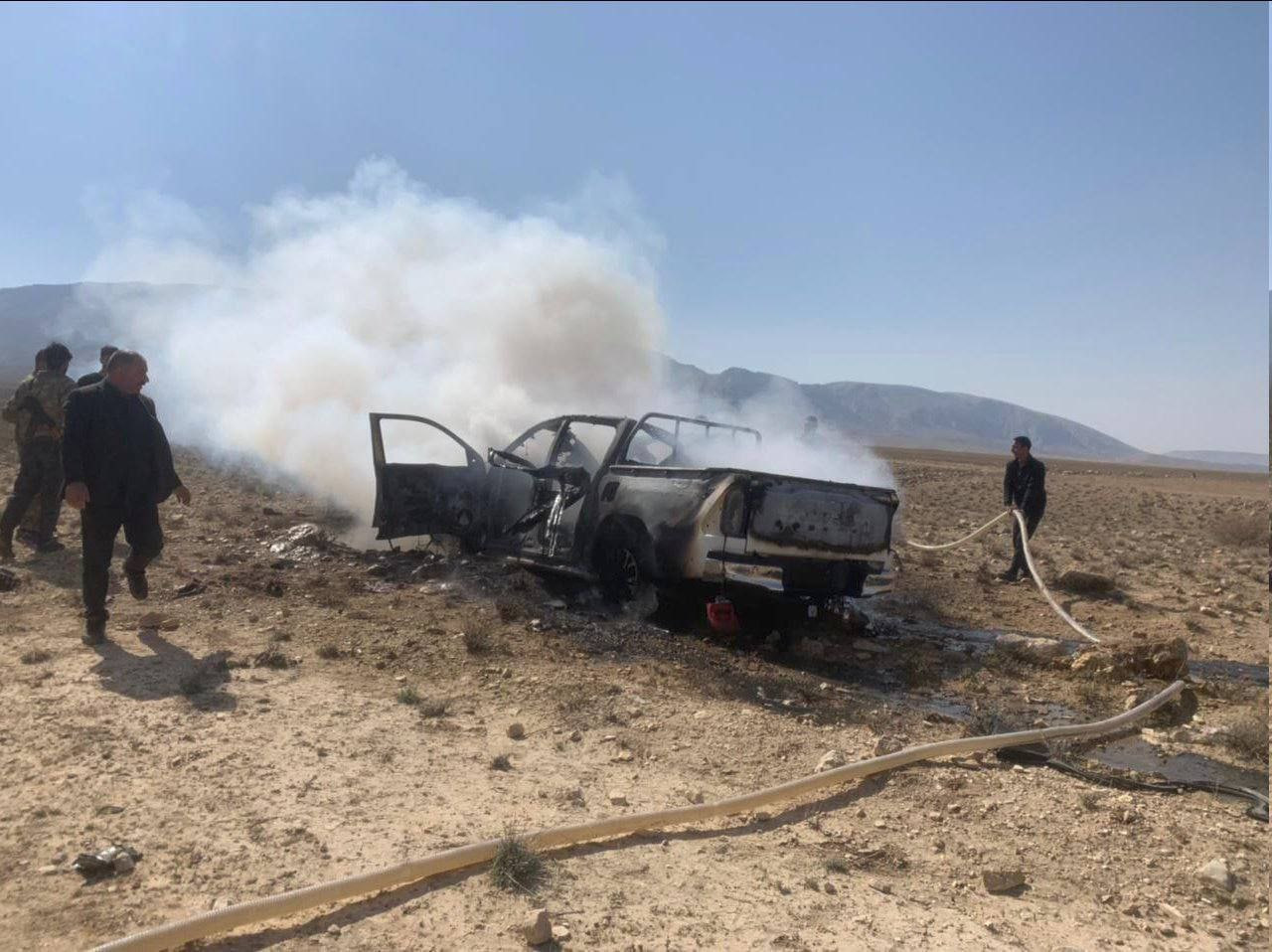
On February 27, Turkish drones targeted a car in Khana Sor area in the suburbs of Sinjar city, located in the west of Nineveh province, during which, Pîr Çeko, the commander of the PMU 80th Brigade along with two other forces were martyred.
A picture of Pîr Çeko (Pir Cheko), commander of the 80th Brigade of the Popular Mobilization Organization
On the other hand, the Iraqi Kurdistan Region’s Counter-Terrorism Group announced: “At 12:10 today local time, a Turkish drone targeted a vehicle belonging to the PKK elements in Khana Sor area of Sinjar city, as a result of which In this attack, a commander and two PKK forces were killed.”
According to the statement, it seems that these people were from the former Sinjar Resistance Units (YBŞ), which after some time were organized in the form of the 80th Brigade of the Iraqi Popular Mobilization Organization (PMU).
After this attack, the “Islamic Resistance Ahrar al-Iraq Brigade” reacted by publishing a harsh statement. According to the Ahrar al-Iraq previous activities against the Turkish positions in northern Iraq, it is likely that the “Ahrar al-Iraq” group, in response to this attack, will organize a new round of attacks against the Turkish bases in Iraq.
Statement by Islamic Resistance Ahrar al-Iraq Brigade
It is worth mentioning that this is Turkey’s first targeted drone attack against the PMU’s 80th Brigade in Nineveh province this year. Last year in 22nd of January, 2022, Turkish drones attacked two vehicles of the YBS forces in the Bab Shalo area on the outskirts of Sinjar, during which two YBS militias were killed and several others were injured.
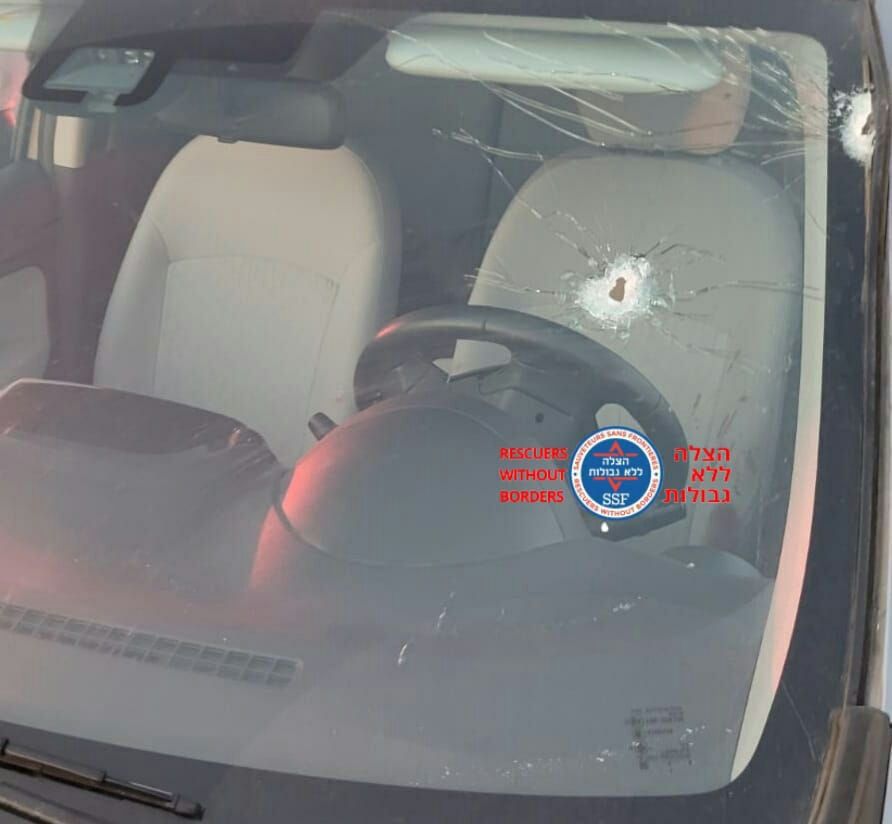
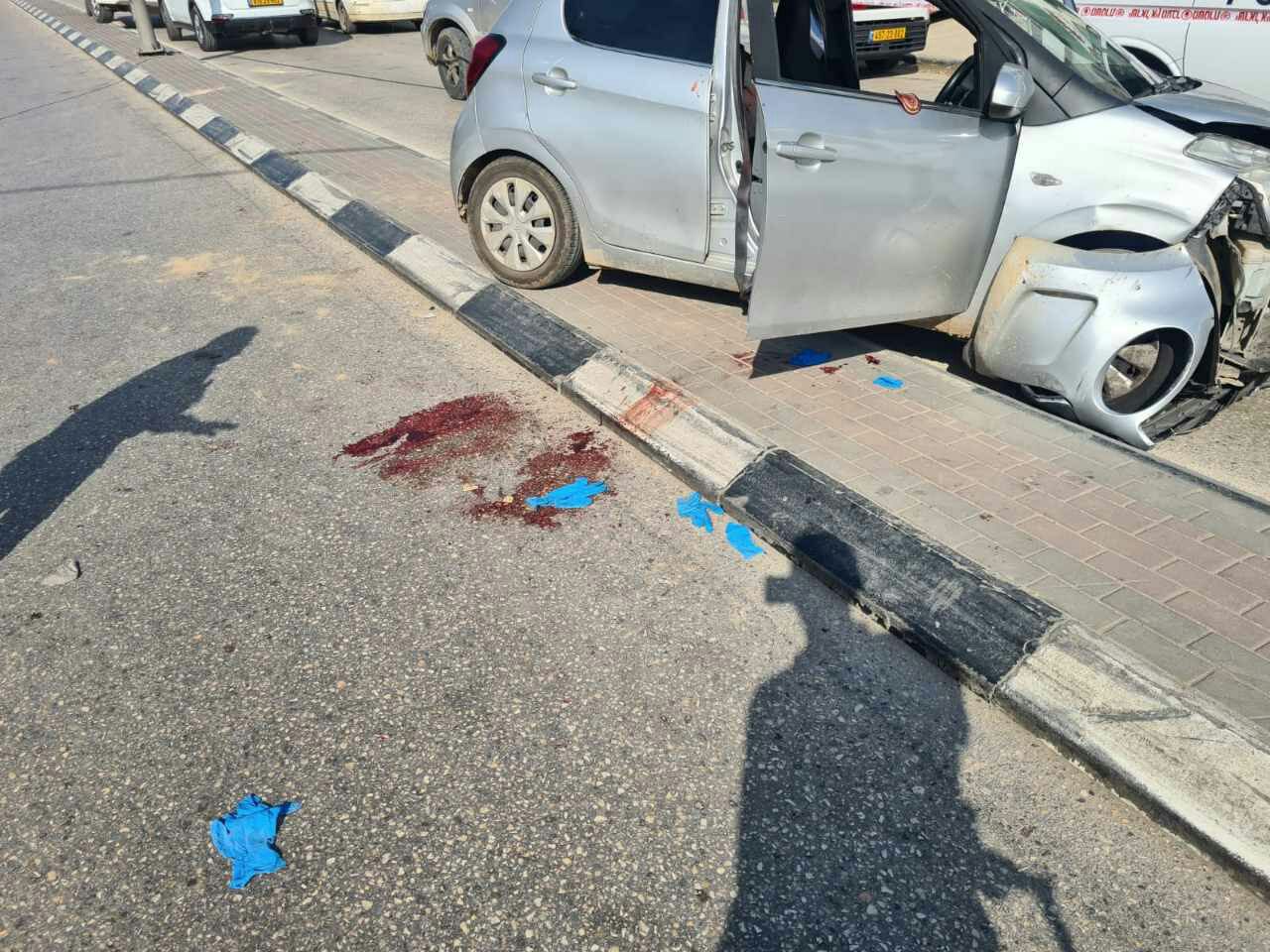
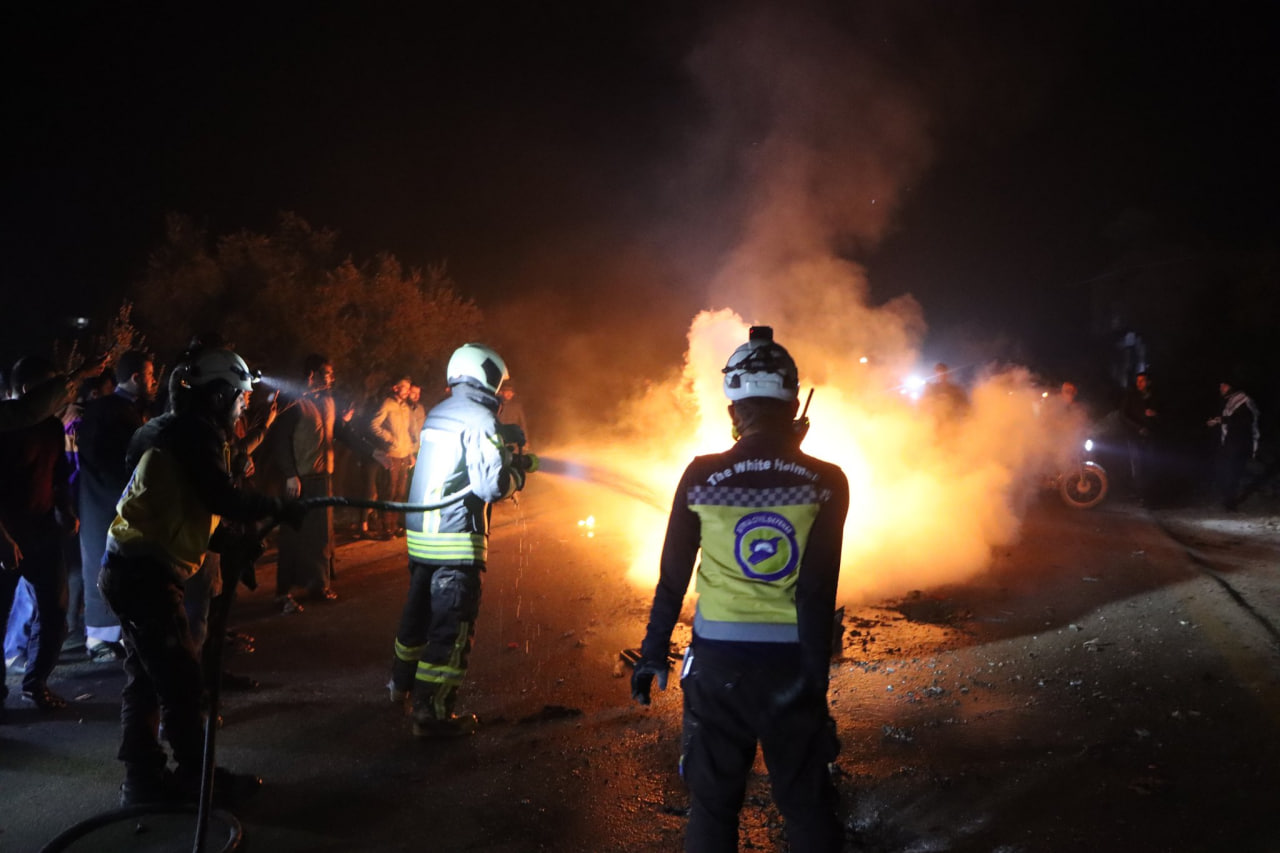
On February 27, three Palestinian youths shot at a Zionist vehicle near Ariha. During this operation, one Israeli was killed and four others were injured. The perpetrators of the shooting operation set fire to their car and fled the scene.
The Islamic Jihad movement, while congratulating the operation of the Palestinian youth near Ariha, praised the courage of the operators and called for the continuation of anti-Israeli operations to inflict heavy blows on the occupiers for their crimes against the Palestinian nation.
It is worth mentioning that on February 26, a Palestinian young man created a fabricated accident scene in Huwara town and stopped a car of two Israelis, then started shooting and killed both of them.
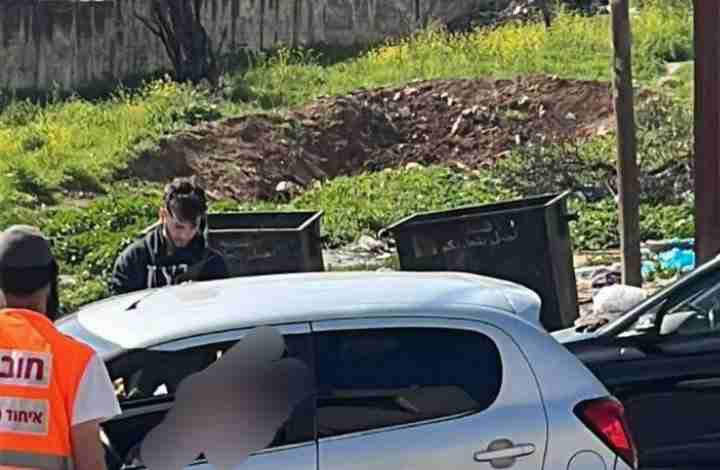
On February 26, a Palestinian young man created a fabricated accident scene in Huwara town to stop Israelis’ car and then started shooting at the Zionists, which killed both Israelis. The Palestinian youth succeeded in fleeing from the scene.
Head of the Samaria Council Yossi Dagan acknowledged that the operation was complicated and difficult.
Pictures from the scene of the accident
It is noteworthy that this anti-Israeli operation occurred concurrent with the security Aqaba Summit in a bid to stop Palestinians’ operations in the occupied territories.
It is worth mentioning that it is not the first anti-Israeli operation in West Bank in the current month. On February 10, a Palestinian citizen named Hussein Qaraqe, 30, rammed his car into a number of Israeli settlers at a bus stop in the occupied al-Quds, killing three settlers and injuring six others.
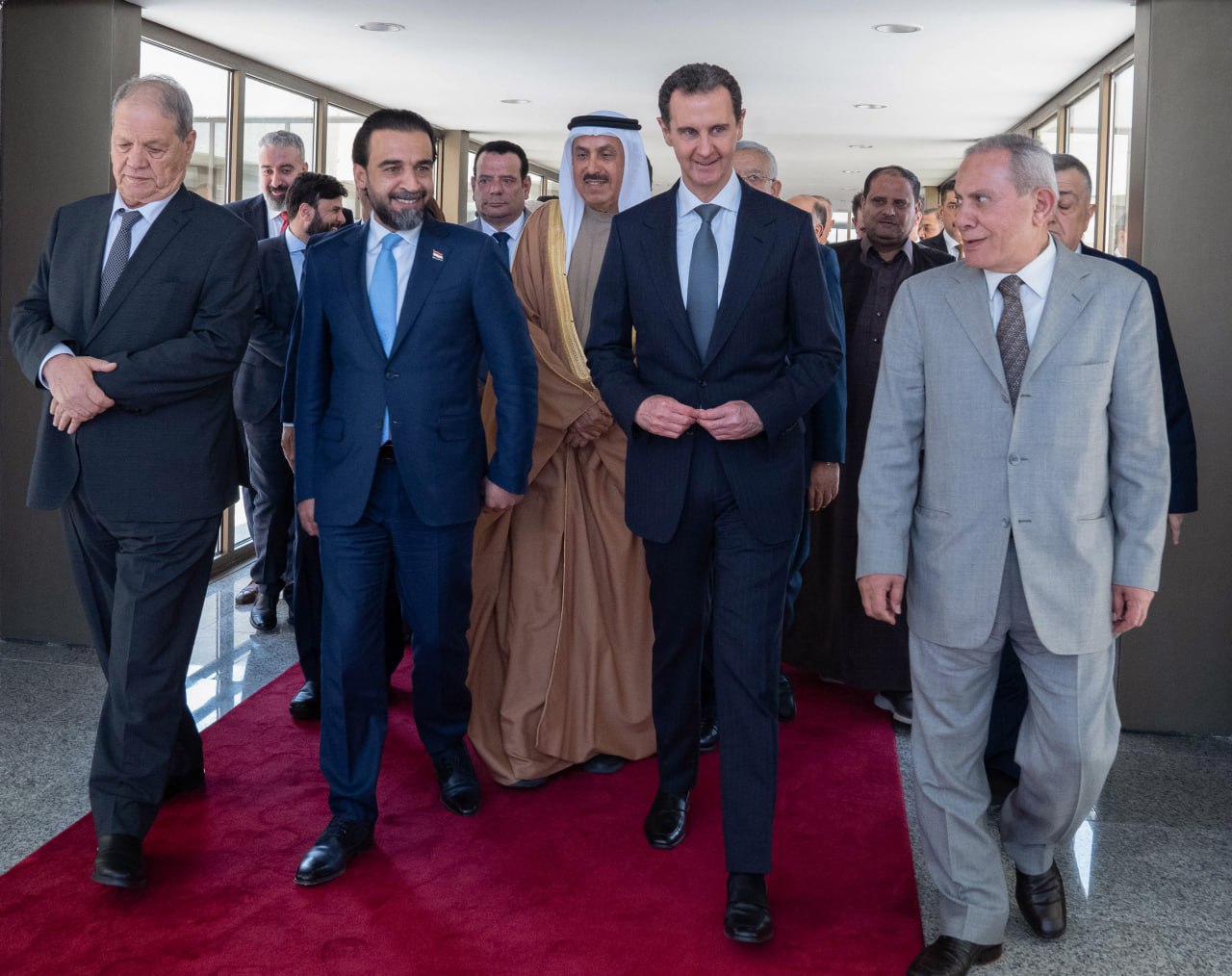
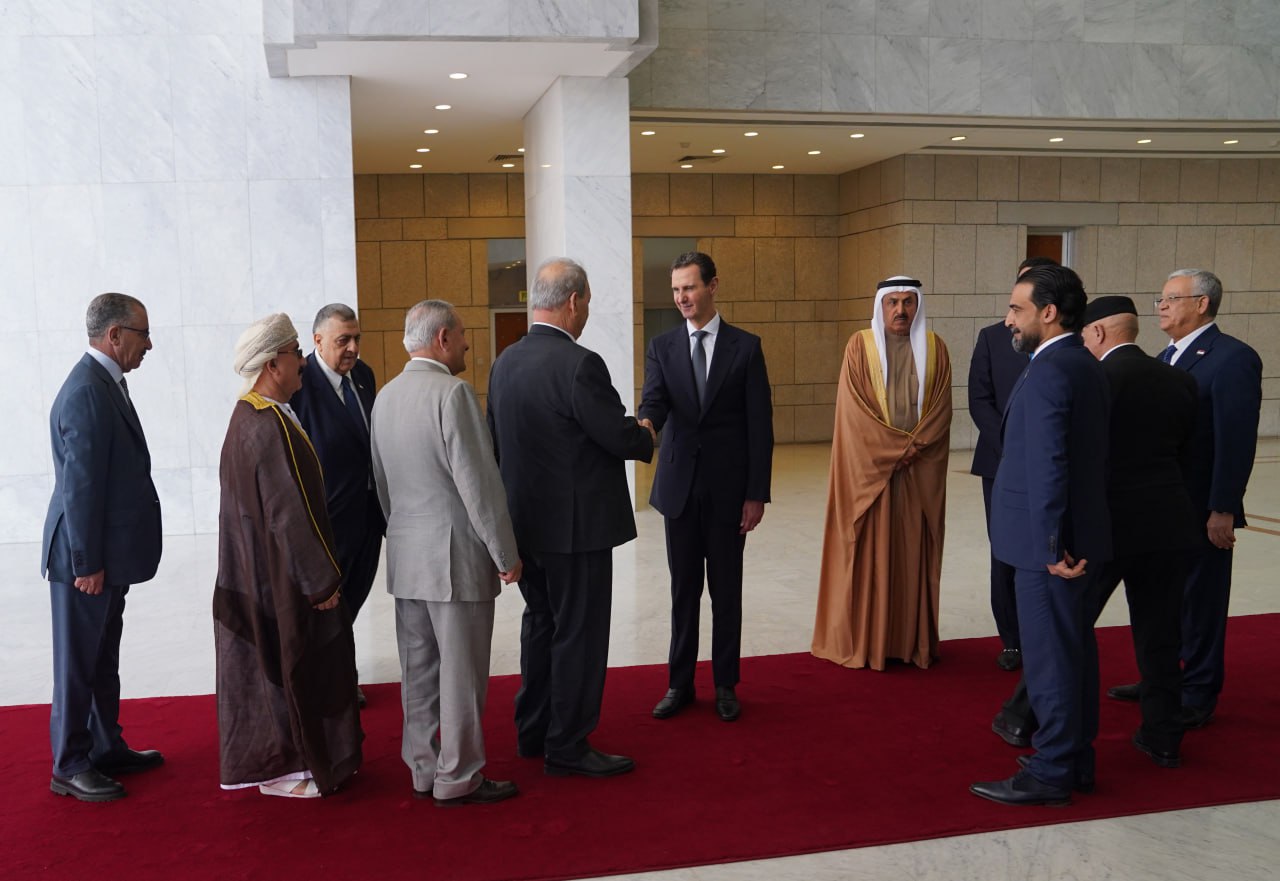
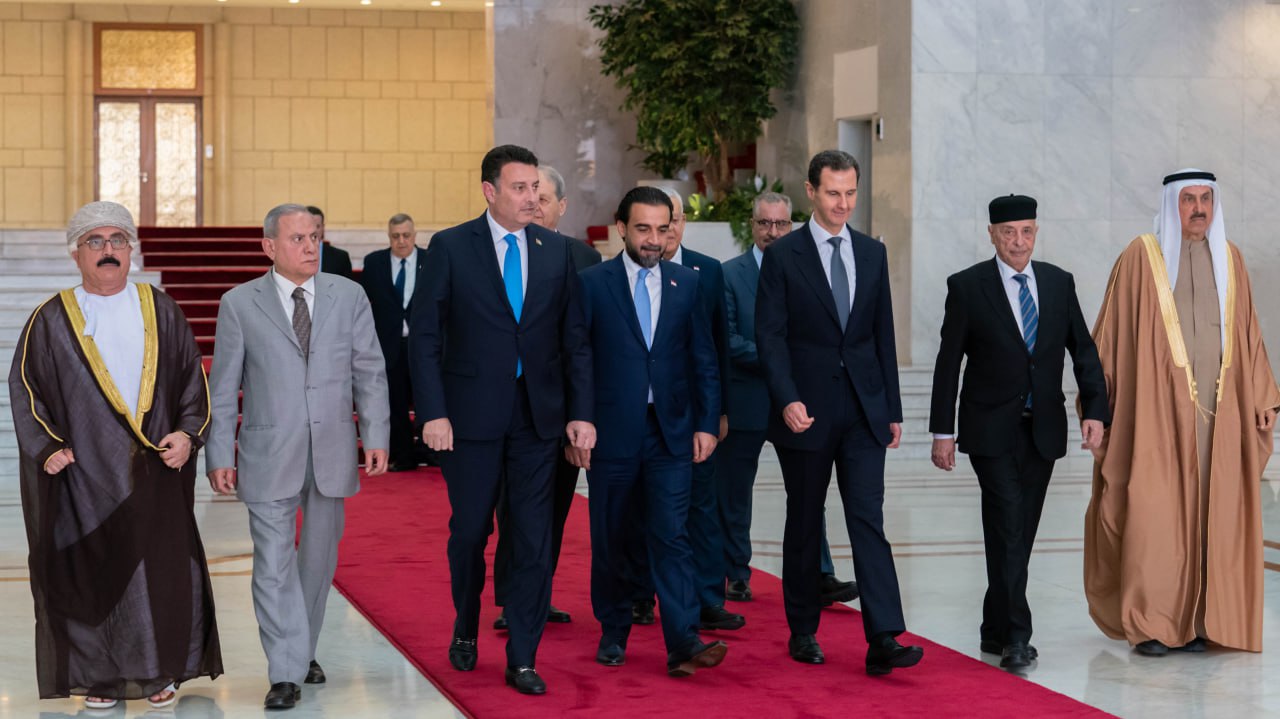
Parliament speakers from Iraq, the United Arab Emirates, Jordan, Palestine, Libya, Egypt as well as heads of delegations of Oman and Lebanon arrived in Damascus on February 26 in an unprecedented move during the last 12 years and were welcomed by the Syrian president.
After the welcoming ceremony, the Syrian parliament held a joint session and the speakers of the Arab parliaments made speeches. Iraq’s Speaker of Parliament Mohammed al-Halbousi along with other Arab counterparts held a special meeting with al-Assad. Al-Halbousi had a separate meeting with the Syrian president.
Images of Bashar al-Assad’s reception from the Arab Parliament delegation
The trip came true after al-Halbousi asked the Arab states in February 25 meeting of the speakers and representatives of the Arab Inter-Parliamentary Union to make a final decision on the return of Syria to the Arab union. Following the beginning of crisis in Syria in 2011, the governments of Saudi Arabia and some other Arab states backed militants opposing the Syrian government and shut down their embassies in Damascus to cut their ties with the war-stricken country. The parliamentarians’ visit in the current period shows that the authorities of the mentioned nations have reached to the conclusion after a decade that the continuation of the past policies and the decline of ties with Syria were not fruitful for them and they should start new relationship with the Arab country.
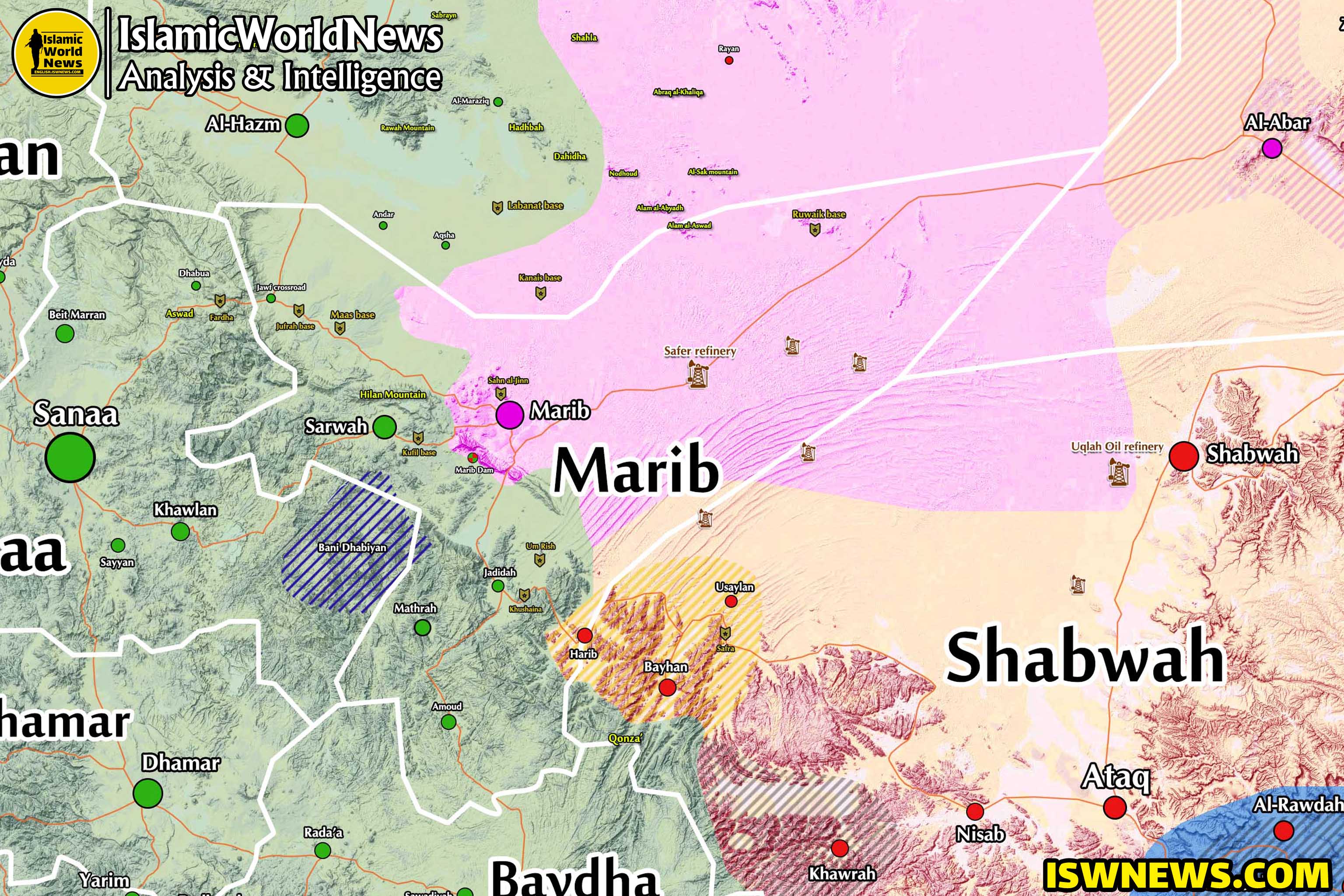
It is believed that Al-Qaeda members lived in this house and were identified and targeted by the US. Later on February 28, local sources stated that during this attack, Hamad bin Hamoud al-Tamimi alias Abdulaziz al-Adnani, a Sharia official and one of the prominent commanders of al-Qaeda in the Arabian Peninsula, along with one of his bodyguards were killed.
Al-Adnani was the one who announced the succession of Khalid Batarfi after the killing of Qasim al-Raymi, the former leader of al-Qaeda in the Arabian Peninsula, and was one of his main supporters to take over this position.
According to available information, Hamad bin Hamoud Al-Tamimi is a citizen of Saudi Arabia and started learning Islamic sciences in 2002. In 2007, he was arrested by the Saudi security forces and imprisoned for five years, and shortly after his release, he was arrested again, but he was seen in Yemen some time later!
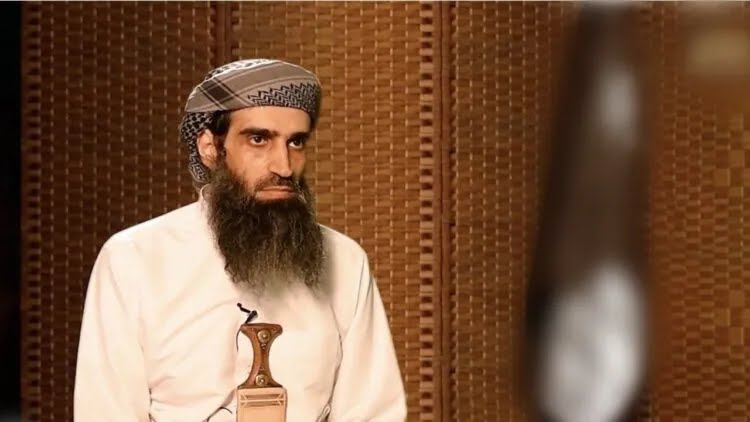
A picture of Hamad bin Hamoud al-Tamimi, the religious leader of the Al-Qaeda terrorist group in the Arabian Peninsula
If this attack was carried out by the US, it can be considered the third US drone attack in Marib. In two previous attacks on Marib, America had attacked the residence and car of al-Qaeda members, which had resulted in the death of three prominent members of this group.
The commander made the announcement in a televised program of Iran’s national TV network dubbed Saf-e Avval (First Line), informing the details of the state-of-the-art missile and drone weaponries manufactured by the Iranians, including Shahed-149 (Gaza) drone, Paveh cruise missile and hypersonic missile.
Brigadier General Hajizadeh said that “the US officials benefit from making the region insecure, as it can be said given the conflicts in last four decades (Iraq-Iran war, the US’s invasion of Iraq, Saudis’ attack on Yemen, the rise of Takfiri terrorist groups and the strikes on Lebanon’s Hezbollah resistance movement) that our region is facing a security fault, because the root cause of Russia-Ukraine confrontation as well as China-Taiwan quarrel comes from the US. If we are not powerful, the enemy would bring the war into the Iranian territory; so, we should be watchful to maintain security of our country and nation, and if we ignore it, our country may face some challenges.”
He noted that the IRGC Aerospace intends to make the US war machine and capabilities incapable, noting that “the Americans enjoy some components of superiority, but we tried to hit the components and turn them into impracticable. Today, the US’s regional bases are under Iran’s supervision and they are easy targets; so, the bases have turned into the Americans’ weak points, and we can hit the bases whenever it is necessary.”
Touching on the IRGC Aerospace’s missile might, which is an indirect warning to the European countries, he noted that “we are now able to target the US aircraft carriers at a 2,000-kilometer distance. Of course, we kept the limit at the distance to respect the Europeans; so, we hope they respect their esteem.”
On the features of the Iranian hypersonic missile, he said that “the hypersonic missile is capable of maneuvering in outer space and moving in different directions; that means it has an engine, which can start 300, 400 and 500 meters far from a target and kick off maneuvering. The speed of the missile reaches at Mach 12-13 and its main advantage is that the foe’s missile defense system cannot hunt and destroy the hypersonic missile; thus, I’m sure the enemies cannot manufacture a defense system to overcome the Iran-made hypersonic missiles even until tens of years.”
Asked about the timing of unveiling the Iranian hypersonic missile, he replied “given the fact that the projectile travels to outer space, we try to find a way to be able to showcase it; if the Americans do not believe in it, it would be not important, because its capability can be seen on the day of incident.”
The commander also pointed to the upgrade of capabilities of the Iranian ballistic missiles, saying that Iran managed to decrease the weight of the long-range missiles to one-fourth and improved their efficiency; and in terms of precision, all Iran-made missiles are precision-strike projectiles and the time required for their preparation has been reduced to one-sixth.
He further referred to the fact that one of the newest Iranian cruise missiles dubbed Paveh has become operational. The cruise missile with a range of 1,650 kilometers, which can travel 50 meters above earth surface.
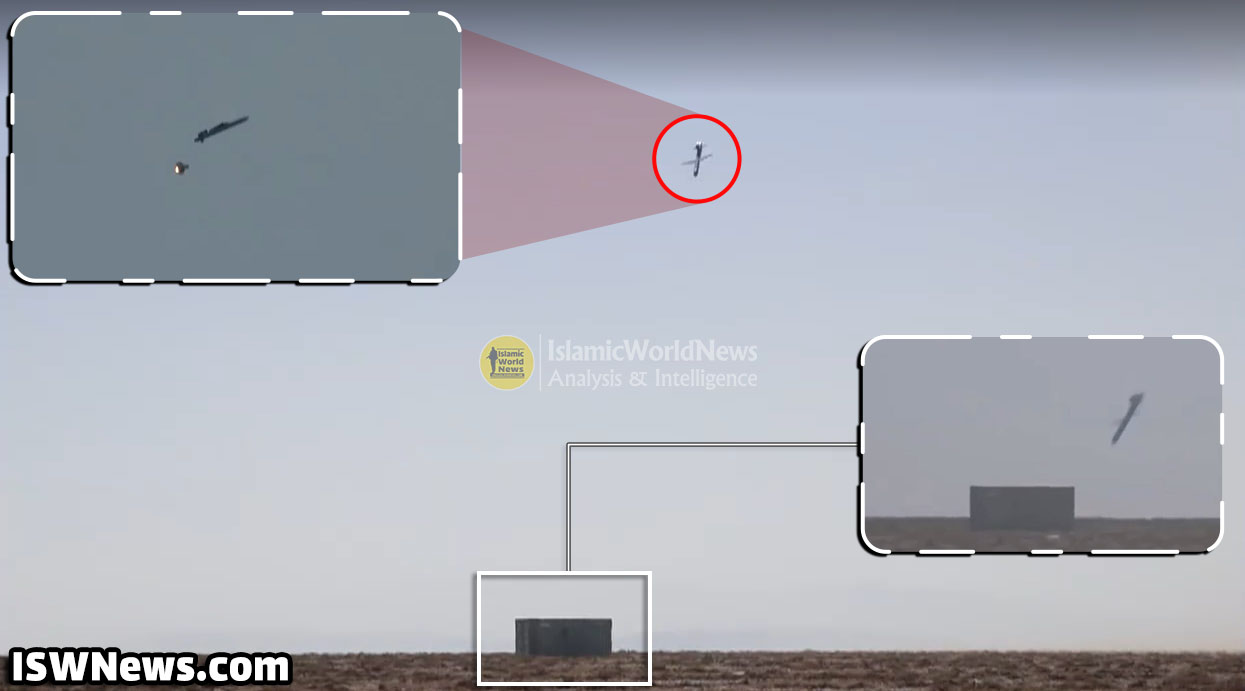
A video published by the IRGC Aerospace shows that the missile was test-fired by the use of solid rocket booster from a launcher; then, the main part was detached from the booster after reaching altitudes, and its wings become open and the main engine starts.
The moment of firing Paveh long-range cruise missile with a range of 1650 km and moving at a flight height of 50 meters from the ground and finally hitting the target
The appearance of Paveh cruise missile is very similar to Quds missile of Yemen’s Ansar Allah movement. It seems that the course of development of Paveh missile has been carried out in recent years using the experiences of Yemen war and Ansar Allah’s operations against Aramco’s oil facilities (officially the Saudi Arabian Oil Group). Paveh missile is an evolved example of Iranian cruise missiles Soumar, Hoveyzeh and Ya-Ali etc.
Video of Yemen’s Ansar Allah Missile Force from the moment of firing Quds 1 cruise missileYemeni Ansar Allah Missile Force’s video of Quds 2 cruise missile
Notable advantages of Paveh cruise missile is that it can be carried and fired by marine and ground vessels as well as fighter jets. The significance of the issue would be highlighted, when Russian Sukhoi 35 fighter jets join the Iranian military equipment, because the Iranians would not need foreign weapons to arm their fighter jets.
Brigadier General Hajizadeh went on to say that “the Shahed-149 or Gaza drone (named after the Gaza Strip in honor of the Palestinians’ struggle against Israel amid their crisis in 2021) is huge drone, which is capable of keeping on flying for a remarkable duration and it can carry nine bombs simultaneously.”
The first video of the takeoff and flight of the Shahed-149 UAV (Gaza)
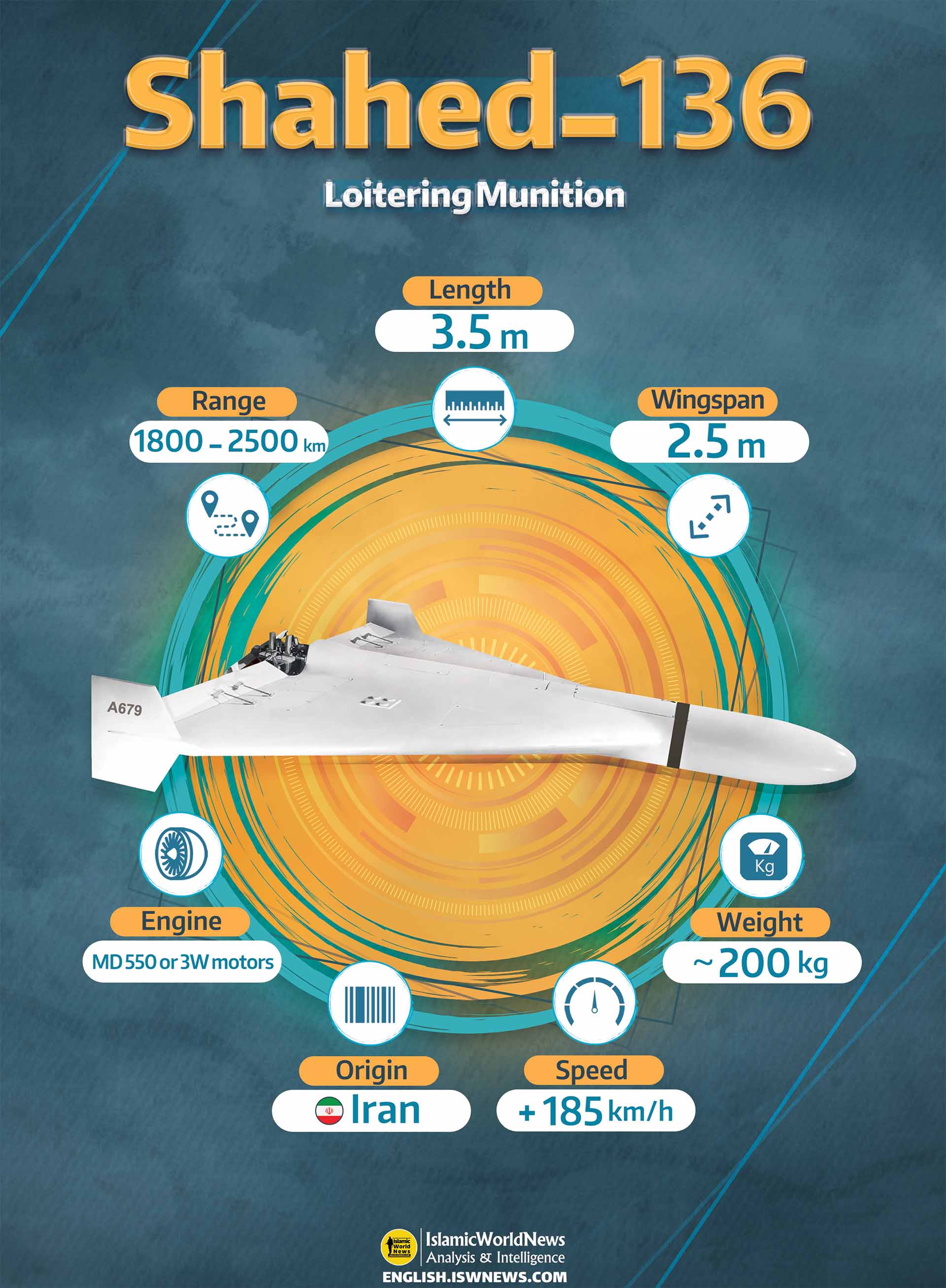
“We have the Shahed-129 and Shahed-139 in our combat drone arsenal, which provide us with good military capabilities, he said, adding that we can utilize the drones for combat, telecommunication and surveillance over border and other areas. The Shahed 129 is equivalent with the US-made MQ-1 and it possesses appropriate abilities, the commander said, noting that the Shahed-136 and Shahed-131 are also unique drones at international level, which have many capabilities.”
Click to view full size
The brigadier general further pointed to Iran’s missile operation on the United States’ airbase in Ayn al Asad (an airbase located in Al Anbar Governorate of western Iraq) in reaction to the Trump administration’s assassination of Lieutenant General Qasem Soleimani at Baghdad Airport on January 3, 2020, saying that “we did not aim to kill the American soldiers in the strike on the Ayn al Asad airbase, but we wanted to break the US’s grandeur; we pursue to avenge former US president Donald Trump and former United States secretary of state Mike Pompeo, who ordered the assassination of General Soleimani.”
Hajizadeh also hinted cooperation among the IRGC Aerospace Force, Iran Space Organization and the Ministry of Defense and Armed Forces Logistics, informing that they try to improve capabilities of satellite carriers to reach higher altitude and increase heavy weights, which will be announced in the future.
The recent operations by the IRGC in the region as well as the resistance movements in Yemen and other countries proved the broaden capabilities of Iran in drone and missile sectors; so that the Western and Eastern politicians as well as military analysts acknowledge the achievements. The understanding of the military superiority of Iran will become more difficult for the Westerners following the massive usage of big drones and hypersonic missiles by the Iranian armed forces.
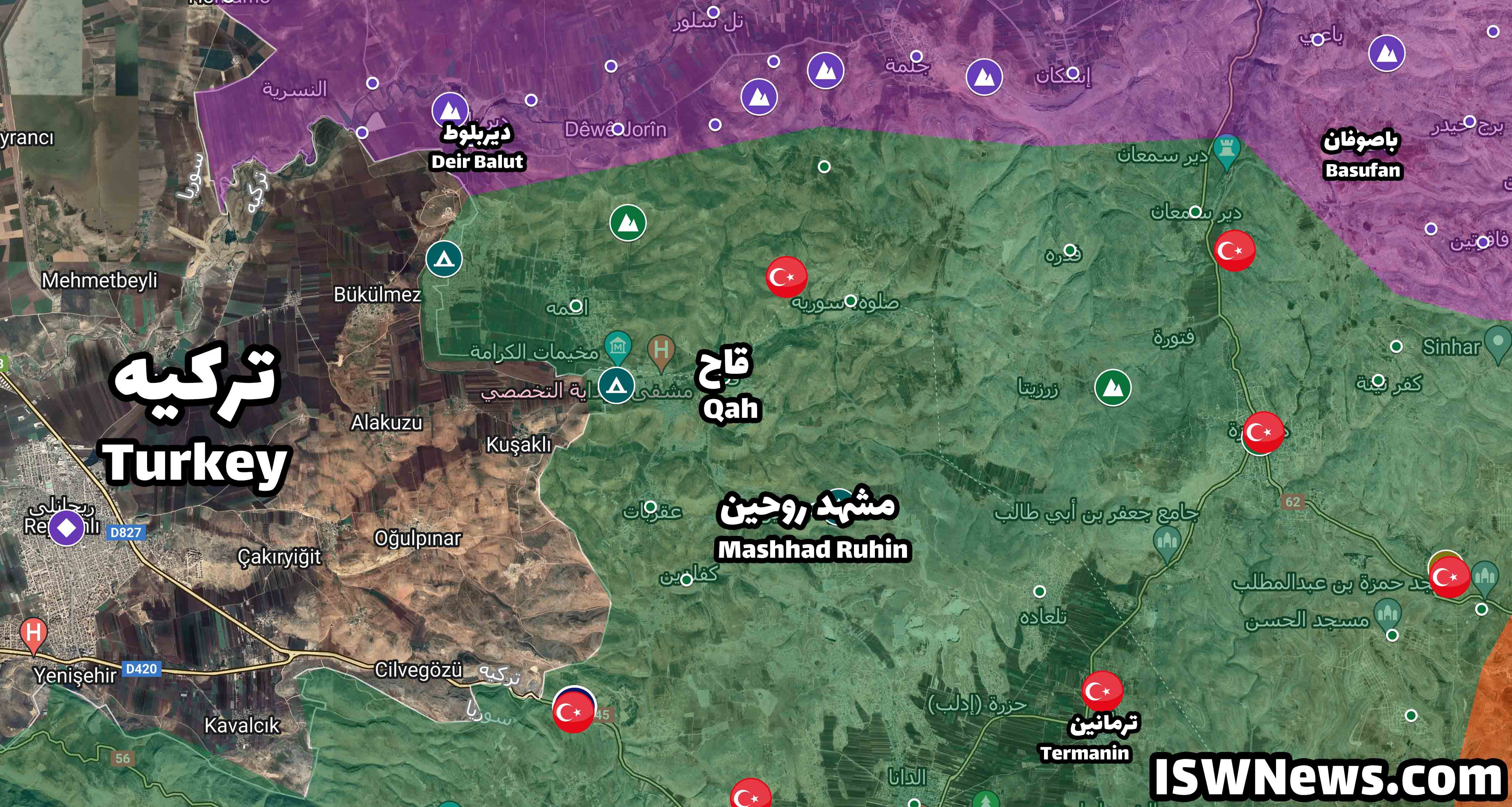
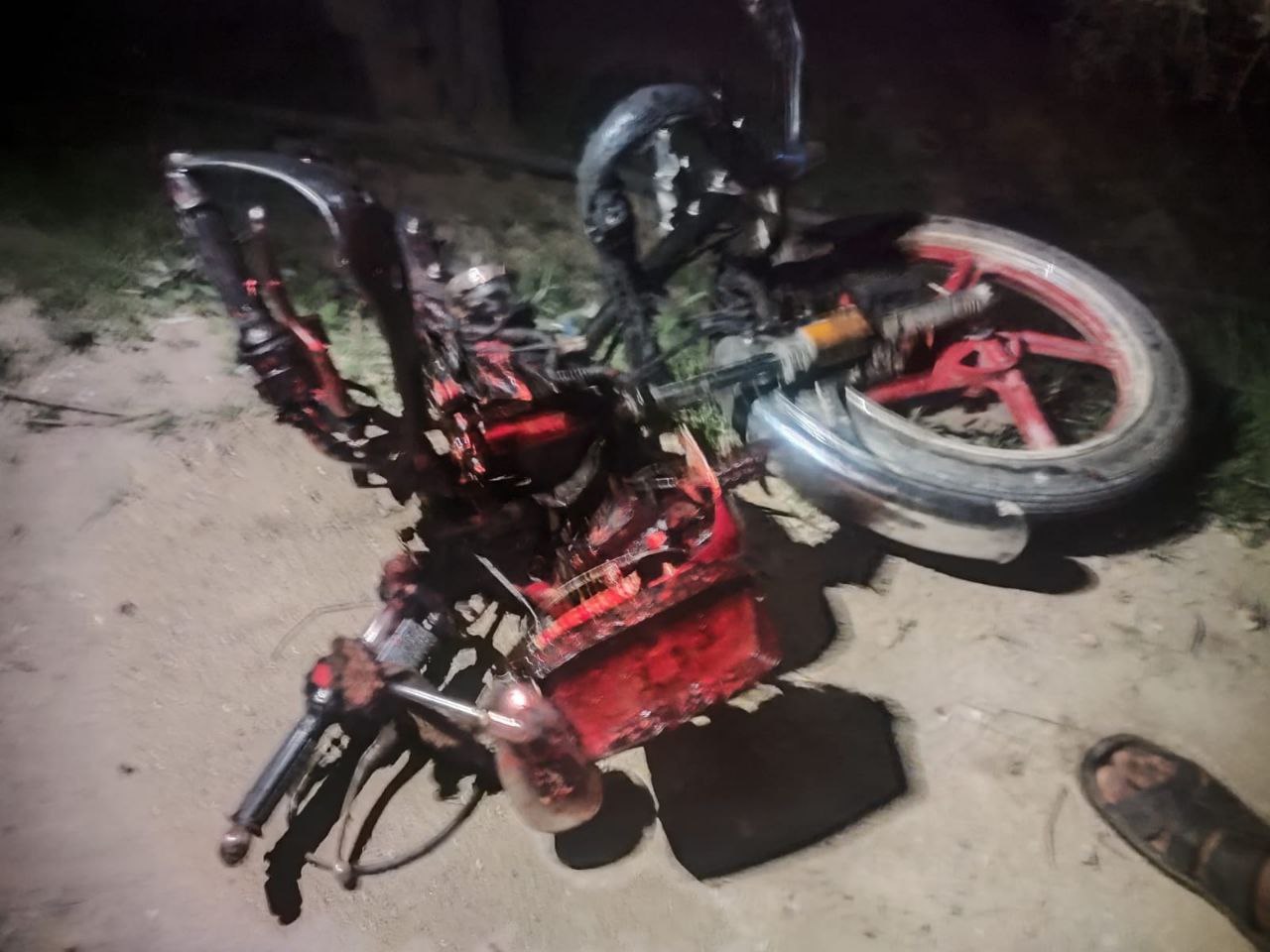
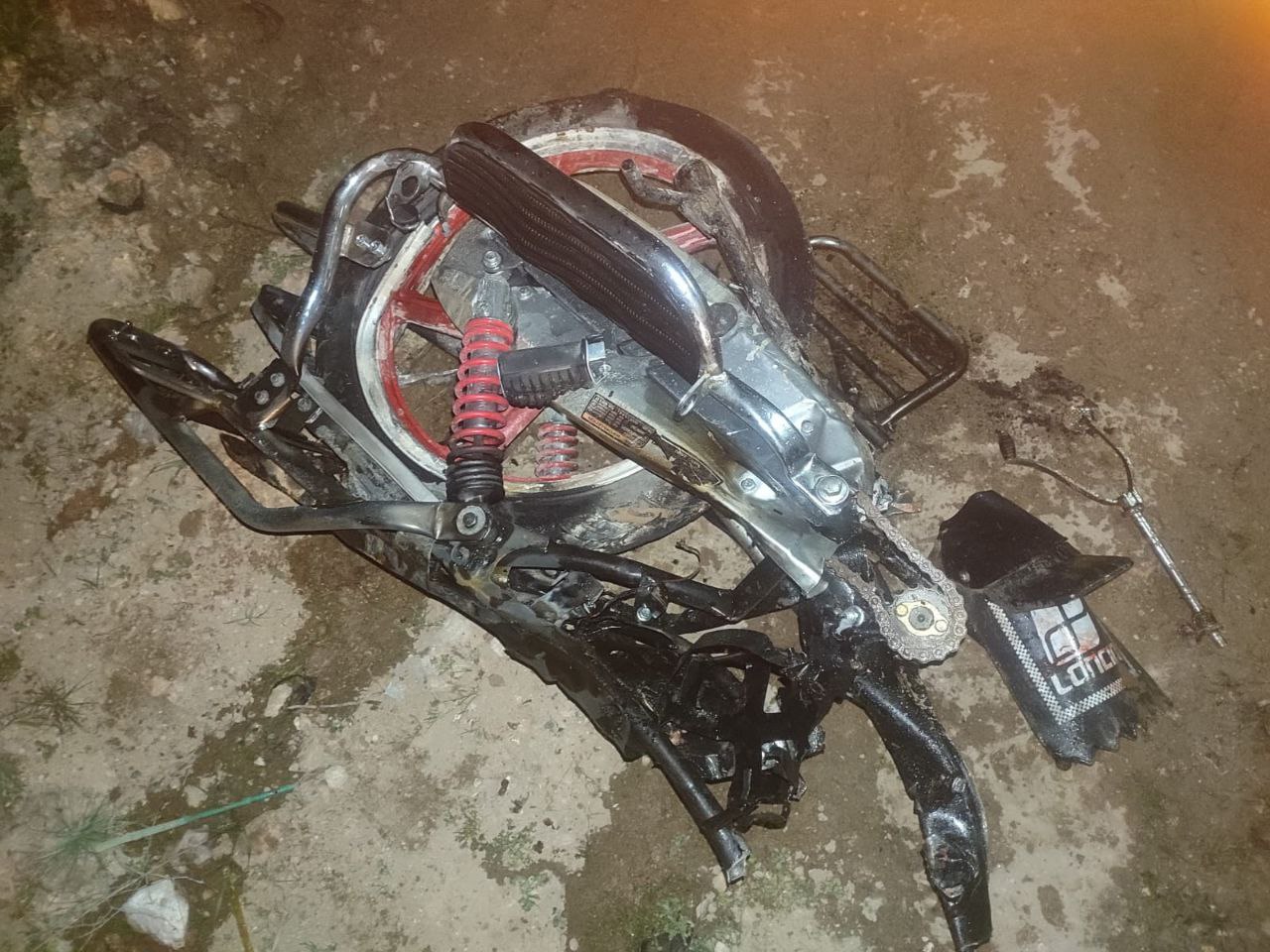
The US drones targeted a motorcycle on Qah-Mashhad Ruhin road on February 24. It is reported that one of the Hurras al-Din (affiliated with al-Qaeda in Syria) group’s commander named “Abu Abadah Al-Muhajir” nicknamed “Abu Abadah Al-Araqi” was killed along with another person.
The targeted motorcycle in the Qah-Mashhad Ruhin road
So far, no one has claimed responsibility for the attack. The US CENTCOM also did not issue a statement in this regard. However, based on previous attacks, this attack was likely carried out by the US Army.
Hence, it is worth noting that this is the first attack by the US coalition on the northern regions of Syria after the recent devastating earthquake in the country. Since the summer of last year, the US coalition has carried out at least six drone attacks against militants and ISIS terrorists, as a result of which five Al-Qaeda commanders and one ISIS commander were killed.
Late on Saturday, at 22:45 local time, a US military logistical convoy was attacked by the “International Resistance Faction” group in the Qadisiyah province in southern Iraq.
Earlier on February 23rd, two logistical convoys of American forces were attacked by Iraqi resistance forces in Baghdad province.
The “Ayn Al-Insaniyah Research and Statistics Center” published statistics and figures of the crimes and aggression of the Saudi coalition against Yemen during the year 2022. The damage statistics on Yemen in 2022 show that despite the peace agreement between the Saudi coalition and Ansar Allah, Saudi Arabia continues to violate the ceasefire and aggression on Yemen.
Statistics of the Saudi coalition aggression on Yemen in 2022: The total number of martyrs and wounded is 3,083, of which 643 are martyrs, of which 27 are women and 102 are children. 2440 people were injured, of which 97 were women and 353 were children.
In 2022, the Saudi coalition has attacked 1 airport, 1 port, 22 power stations and generators, and 46 networks and communication stations. Also, 334 reservoirs and water distribution system, 57 government facilities and 974 bridges and roads were targeted or destroyed.
4 factories were destroyed or damaged, 13 fuel tankers, 25 gas stations, 229 business establishments, 29 poultry and livestock, 1022 transport means, 3 fishing boats, 37 food stores, 5 markets and 95 food trucks were also destroyed or damaged.
The number of destroyed and damaged civilian houses has reached 14,367. One university center, 134 mosques, 5 tourist centers and 12 hospitals and health centers were destroyed and damaged. The Saudi coalition attacks also destroyed and damaged 64 schools and institutes, 1987 agricultural lands, 2 sports facilities, 3 historical sites and 7 media centers were destroyed or damaged.
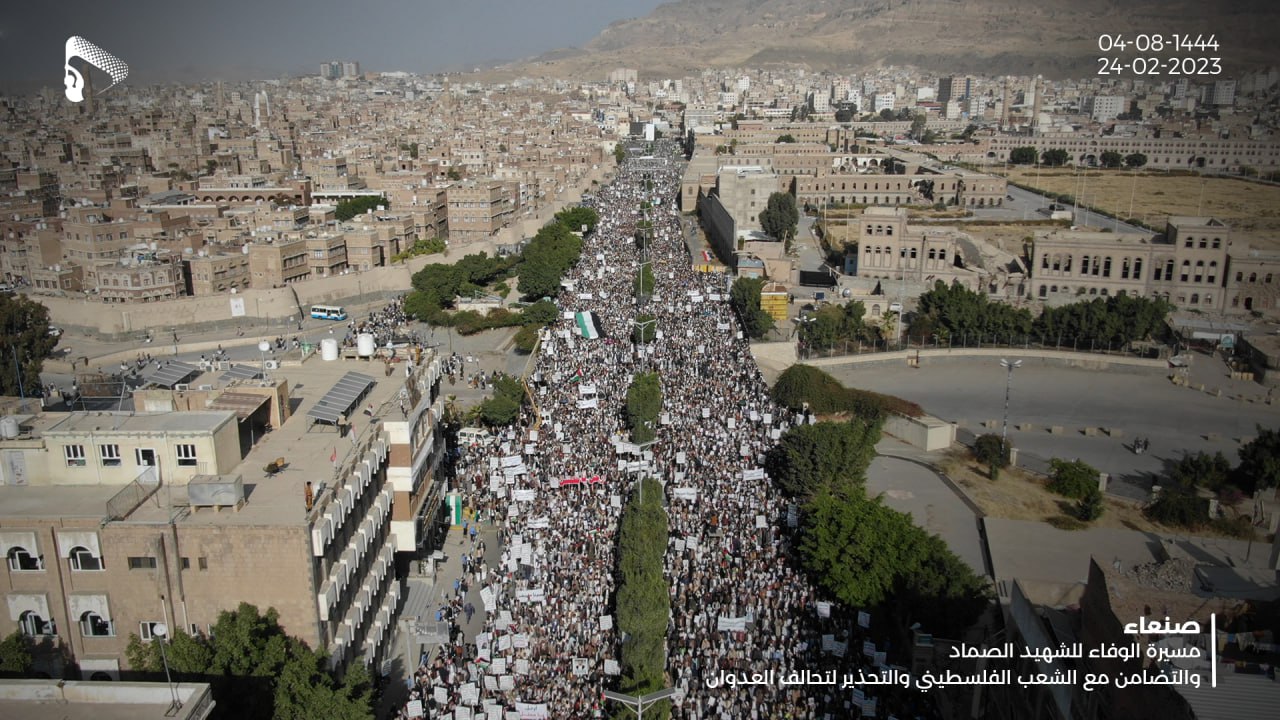
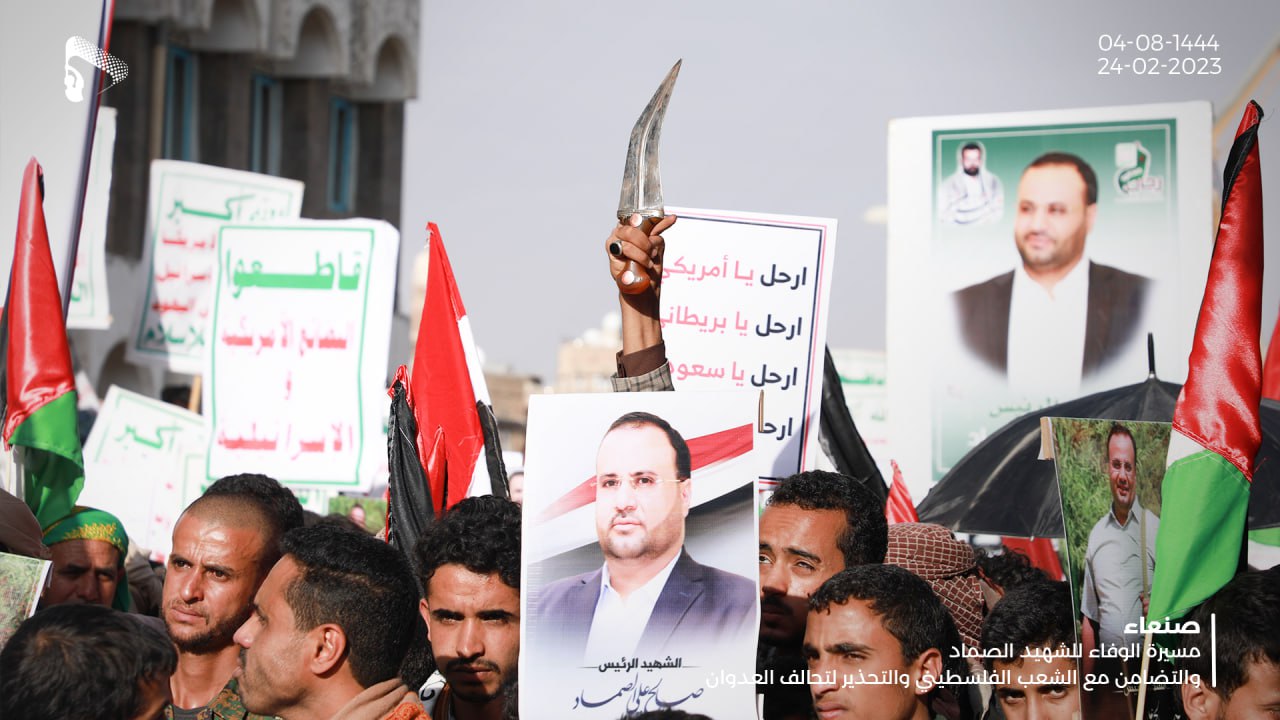
On Friday, February 24th, the people of Yemen held a mass rally and march under the title of “loyalty to martyr al-Sammad, solidarity with Palestine and warning to the aggressor coalition” in various cities under the control of Ansar Allah, in response to the call of Sayyid Abdul-Malik Badruldeen al-Houthi, the leader of Ansar Allah on the occasion of the anniversary of the martyrdom of Saleh Ali al-Sammad.
In the final statement of this march, the people of Yemen declared solidarity with the Palestinian people while warning the member countries of the Saudi coalition and their main supporters regarding the continuation of the all-round blockade of Yemen.
In a televised speech on the occasion of the martyrdom anniversary of Saleh al-Sammad, the former chairman of the Supreme Political Council of Yemen, Sayyid Abdul-Malik Badruldeen al-Houthi, said:
Click to view full size
“Martyr al-Sammad was a model of honesty, loyalty, patience and tireless effort, and after the position of president (head of the Supreme Political Council), he still maintained the spirit of a soldier who is with God and his people. Some of those who reach the position of president, reach this position with assets, companies and huge investments and even urban development in some countries, And some others who left this post with a heavy burden due to abuse of their position at the cost of suffering and oppression of the people and neglecting their issues. Those who used the presidency to loot the wealth of their people, and considered themselves as national symbols, their treachery was revealed. They talked about homeland and patriotism in their media, but in the most difficult stages, they not only left their people alone, but also conspired against them in Sana’a, the capital of the country. However, unlike other people who seek positions for personal gain, Martyr Al-Sammad had no desire to reach positions. He accepted this responsibility based on his belief and sense of responsibility that was formed with the insistence of others. His spirit and morals did not change after this responsibility and he still maintained the spirit of a soldier, a simple citizen and a servant of the people. Martyr al-Sammad tried to activate institutions, popular mobilization and continuous support in the army and popular committees. In all stages of the Saudi coalition’s invasion to control Hudaydah, he played a role in mobilizing the people and activating the official and popular capacities and pushing them to confront the aggression. All the operations of the aggressor coalition, including the operation that targeted Hudaydah, were carried out under the supervision of the United States. The assassination of Martyr al-Sammad was motivated and directed by the Americans. They have repeatedly announced that one of the most important roles they play directly in the aggression against Yemen is identifying the targets. We conducted research, the definitive conclusion of which is that the Americans identified martyr al-Sammad as the main target of the Saudis. They admit that they were directing the bombing operation and were in charge of monitoring the operation from the beginning. In this aggression, Saudi Arabia and the UAE are tools to do what the Americans dictate and draw for them. We have the right to treat any armed presence in Yemen as an occupation. Foreign troops must be removed from our country and we will try with all options to expel the invaders whether on land, sea or sky.”
Leader of Ansar Allah considered the main reason for the strength and victories of the Yemeni people over their enemies to be God’s support, and in explaining the details and the latest status of the negotiations, he said:
“The attack that we witnessed at this stage was the strongest attack in the history of Yemen, considering the size of the armies and the harsh conditions and suffering that the people faced. An important area of our country remained (free), which shows the strategic depth and the inability of the invaders to control it by God’s grace. We are currently in the phase of de-escalation and limited progress in port and airport traffic. The current stage also includes working to prevent the looting of the national wealth of oil, its sale and the looting of its value and price. Also, the dialogue with the mediation of Oman continues, and the aggressor coalition seeks to delay the implementation of the commitments that must be made. During the negotiations, we noticed the negative role of America and their monitoring and role in postponing the commitments of the aggressor coalition. The commitments that we demand are the right of our people and the responsibility of implementing them is with the aggressor coalition because it is he who is the aggressor and the besieger.“
In another part of his speech, Sayyid al-Houthi expressed solidarity with the Palestinian nation and pointed out the Arab countries’ hostility towards Iran and said:
“It is a big fallacy to accuse Iran of enmity with the Arabs and to introduce Israel as a friend! Israel has killed Arabs and insulted their honors, and its presence in the region is aimed at looting their lands and wealth. Israel is actually the enemy of all Muslims and the first enemy of Arabs. But Iran’s position on Palestine is an honorable one. Iran is the biggest supporter of Palestine and also the main supporter of Lebanon.”
It should be mentioned that Saleh al-Sammad was the second head of the Supreme Political Council of Yemen, who was martyred by a Saudi drone strike in April 20, 2016 on his way back from Al Hudaydah university in Al Khamseen street along with a numbers of his companions.
The publication of a footage of Kamov Ka-52 helicopter flying in the eastern Russian city of Vladivostok with a camouflage color proper for the West Asian or African states has reinforced the likelihood of selling this class of helicopter to Iran. Given the fact that the usage of that sort of camouflage color for the helicopters of the Russian Air Force seems not to be common and rational, it is probable that the helicopter has been prepared for selling to Iran or Algeria, who have collaborated and inked several military agreements with Russia in recent years.
The Kamov Ka-52 helicopter is an advanced Russian-made invasive multi-purpose one capable of flying in different weather circumstances. The Ka-52 helicopter has showcased satisfactory performance during the combats in Syria and Ukraine, and it seems to be an appropriate option for equipping and advancing the helicopter fleet of the Islamic Republic of Iran Armed Forces.
Kamov Ka-52 helicopter flying in the eastern Russian city of Vladivostok with a camouflage color proper for the West Asian or African countries
In recent days, there were various reports of military collaboration between Russia and Iran in selling Iranian-made ballistic missiles and suicide drones in return for Su-35 fighter jets, S-400 air defense systems, and Kamov helicopters (Ka-52), which have been confirmed by certain authorities in Iran. Shahriar Heydari, member of the National Security and Foreign Policy Commission of the Iranian Parliament, confirmed that Iran will buy Russian fighter jets, saying that “the Sukhoi 35 fighter jets that Iran ordered from Russia will enter the Islamic country early next Iranian calendar year (1402). We ordered defense systems, missiles and helicopters to Russia, and most of the arms will arrive in Iran as soon as possible.”
The Russia-Iran negotiations on the purchase of offensive, multi-purpose and light helicopters started among Iran Aviation Industries Organization, the JSC Kamov Company and other Russian military organizations in 2014, and the process sped up in the past months. The collaboration between Russia and Iran amplified following the continuation of the conflict in Ukraine as well as the Western sanctions on both states, leading to the enhancement of the might of the two countries in different military and economic arenas.
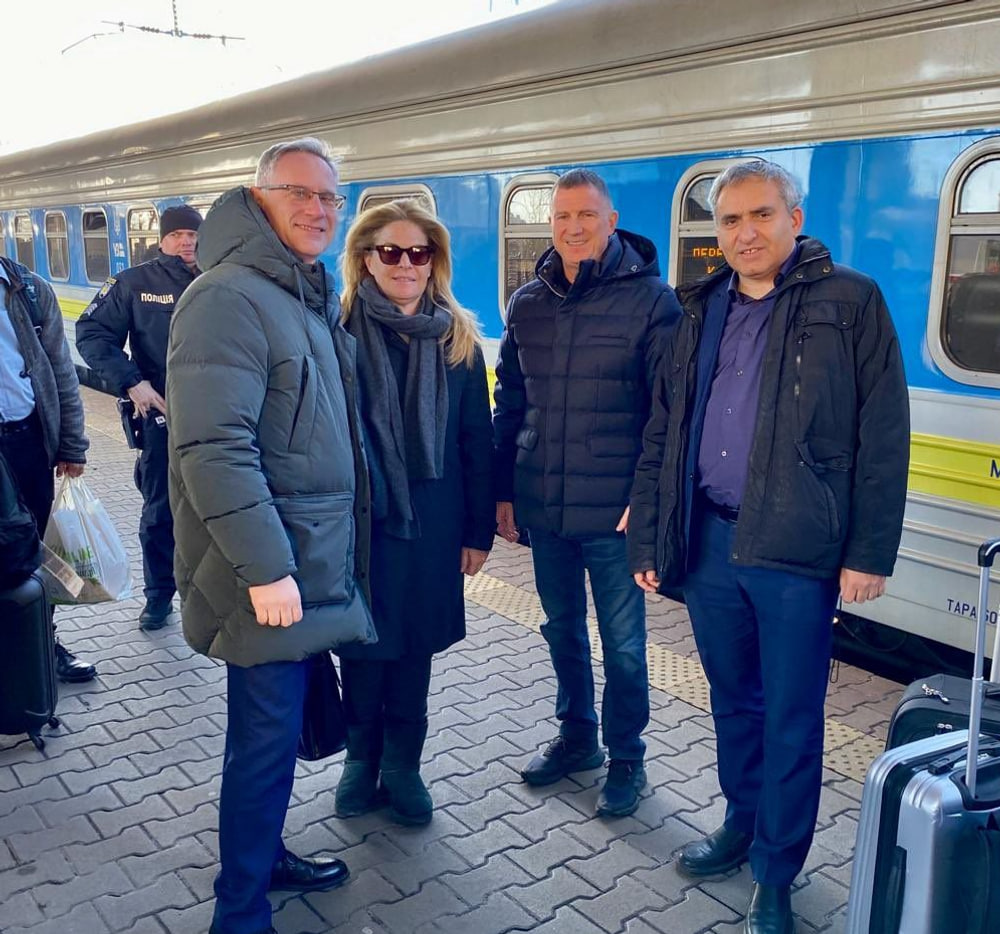
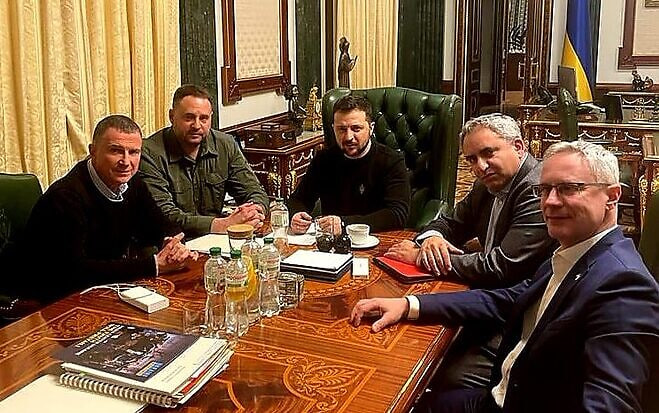
Following their negotiations with top Ukrainian officials, including President Volodymyr Zelensky, the two parliamentarians called on Israel to increase their all-out support for Ukraine in particular in military field.
Moreover, the Zionist regime’s Channel 13 TV network reported that the Ukrainian president called for Israeli Prime Minister Benjamin Netanyahu’s trip to Kiev and the premier’s office said the invitation is being weighed. The Israeli officials opine that the visit in such a volatile condition may make trouble for the regime; however, Netanyahu’s office has announced that the invitation would be discussed.
The Israeli parliamentarians’ visit to Ukraine takes place just a few days after Foreign Affairs Minister of Israel Eli Cohen’s travel to the European country, where he held talks with top Ukrainian officials.