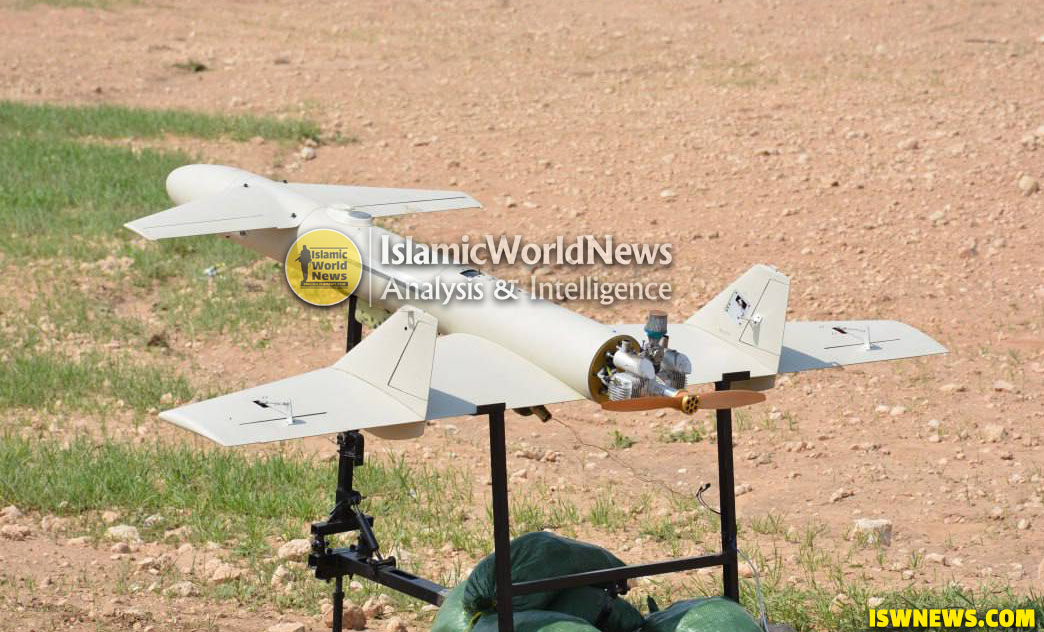
The above picture is related to the drone that the “Liwa Al-Ghalibun Islamic Resistance” group used to attack the US base near the village of Kharab al-Jir. This image has been obtained by “Islamic World News“ for publication.
After the drone attack on Kharab al-Ji base and the US retaliatory strikes on Deir Ezzor, a statement was released by CENTCOM announcing the death of a US contractor. However, informed sources told “Islamic World News“ that three US servicemen were killed and eight others were wounded in this attack. The authenticity of these casualties becomes more believable considering the strong reaction of the US after the drone attack and heavy airstrikes on Deir Ezzor.
It should be noted that this is not the first time that the US Army hides its casualties in the face of the axis of resistance or publishes unreal statistics in its statements.
After the painful drone attack by the Iraqi and Syrian resistance groups on the US occupation base in Syria, a wave of media propaganda by the MSM started against Iran. Ignoring the years of occupation, crimes and massacres of the people of West Asia by the US and its allies, these media point the finger at Iran and accuse Iran of participating in these attacks! These accusations are raised while confronting the US occupation is the natural and legal right of the occupied countries and the oppressed people of these countries, and the US cannot justify its illegal presence in Syria or other parts of West Asia by lying and accusing Iran.
Therefore, this attack was carried out by the will of the people of the region and by independent groups, and the use of Iranian weapons or similar weapons does not necessarily mean Iran’s participation in this attack or other attacks! Just as the US provides various weapons to its allies and their use does not mean direct participation of the US, Iran also provides specific weapons to its allies; And they also use it to defend themselves.
The launching moment of a drone that targeted US base in Syria’s Kharab al-Jir
On March 24, the Ministry of Defense of Azerbaijan published a statement announcing the illegal transfer of military equipment of Russian peacekeepers and Armenian forces in Nagorno-Karabakh on the Khankendi (Stepanakert)-Xelfeli-Turssu (Lisagor) route. The Republic of Azerbaijan called this a violation of the agreements by the Russian peacekeeping forces and their inability to perform their duties in relation to the implementation of the provisions of the tripartite declaration.
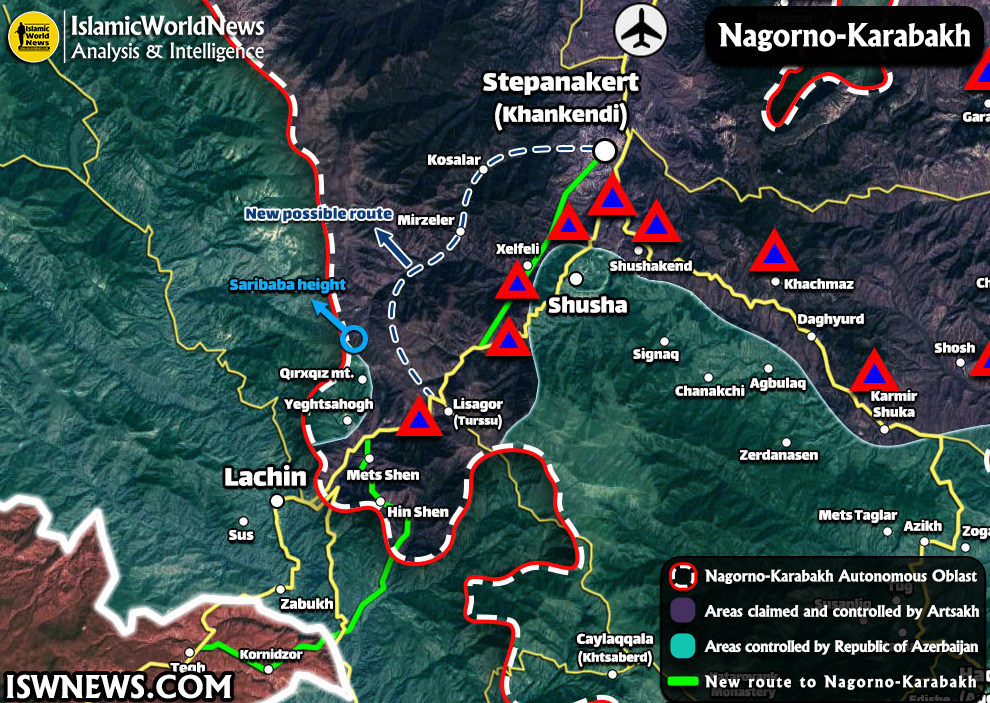
According to the information provided by the Ministry of Defense of Azerbaijan, the Armenian engineering forces are building a new road in north of the Khankendi (Stepanakert)-Xelfeli-Turssu (Lisagor) road (the northern section of Lachin Corridor), which passes through the Khankendi-Kosalar-Mirzeler-Turssu route.
Construction of new road in north of the northern road of Lachin Corridor by the Armenians of Karabakh
Following these tensions, on March 25, Baku government forces violated the 2020 ceasefire agreement in Nagorno-Karabakh by crossing the contact lines of Nagorno-Karabakh in northern Lachin. Following this progress, the Ministry of Defense of the Republic of Azerbaijan published another statement and announced that it has taken the necessary measures to prevent the smuggling of weapons and ammunition to the Nagorno-Karabakh Autonomous Region through the northern road of the Lachin Corridor.
According to the information obtained by the Islamic World News, after the blocking of the Khankendi road by the so-called environmental activists of Ilham Aliev near Shusha, the Armenian forces, with the support of Russia, began the construction of a new and alternative route in the north of the Khankendi-Xelfeli-Turssu road. The government of Baku knows very well that if this road is built and completed, practically all the efforts and achievements of the so-called environmental activists will be wasted; therefore, in order to take the initiative of the Nagorno-Karabakh entering/exiting route, they violated the ceasefire agreement and advanced in this direction.
After these events, the Ministry of Defense of Russia published a statement accusing Azerbaijan of violating clause 1 of the Nagorno-Karabakh ceasefire agreement. It is stated in this statement that the forces of the Republic of Azerbaijan have deployed engineering equipment in the Shusha region at an altitude of 2054.0 (2.9 km northeast of Saribaba mountain) after crossing the contact line. The statement emphasized the Azerbaijani side was informed about the necessity of complying with the provisions of the tripartite agreements of the heads of states, stopping the engineering and technical operations and withdrawing from the occupied positions.
It seems that the purpose of the advances made and the occupation of this point by the government of Baku is to establish military points and increase fire control over the newly established Armenian route or routes in the Khankendi-Kosalar-Mirzeler-Trussu line.
In a statement on March 25, the Liwa Al-Ghalibun Islamic Resistance claimed responsibility for the drone attack on the US military base in the Kharab al-Jir, located five kilometers from the Al-Yarubiyah border crossing in Hasakah province in eastern Syria.
In part of the statement of this group, it is stated: “At 13:00 on the first day of Ramadan (March 23), the drone unit of the “Liwa Al-Ghalibun Islamic Resistance” attacked the location of the US soldiers at the Rmelan airport in Syria, which according to the US, a US soldier was killed and several others were wounded. Our operations are carried out in the framework of a natural and legitimate response to the crime of assassination of hero commanders (martyrs Soleimani and al-Muhandis) and their comrades, as well as confronting the barbaric crimes of the American occupying forces in our country and region.”
This Iraqi resistance group has emphasized that until the complete withdrawal of the American occupying forces from Iraq, Americans will not enjoy security either in Iraq or abroad.
Statement published by the Liwa Al-Ghalibun Islamic Resistance
This is the second drone attack by an Iraqi resistance group against the US military base in Syria in 2023. Earlier on January 20, the US base in Al-Tanf region in southern Syria was targeted by a drone attack by the Iraqi resistance group “Tashkil al-Warithin”.
It is worth mentioning that on March 23, the US military base in Hasakah province was targeted by a drone attack. According to the statement published by CENTCOM, as a result of this attack, a US contractor was killed and five others were wounded. In response to this attack, the US aircraft attacked targets in Deir Ezzor province, during which six members of the Syrian army were martyred. One day after this attack, the resistance groups targeted three bases belonging to the US coalition in eastern Syria with rocket and drone attacks.
Early on Sunday, March 26, a US military logistical convoy was attacked by the “International Resistance Faction” group in the Babil province in southern Iraq.
Earlier on February 25, a logistical convoy of American forces were attacked by the “International Resistance Faction” group in the Qadisiyah province.
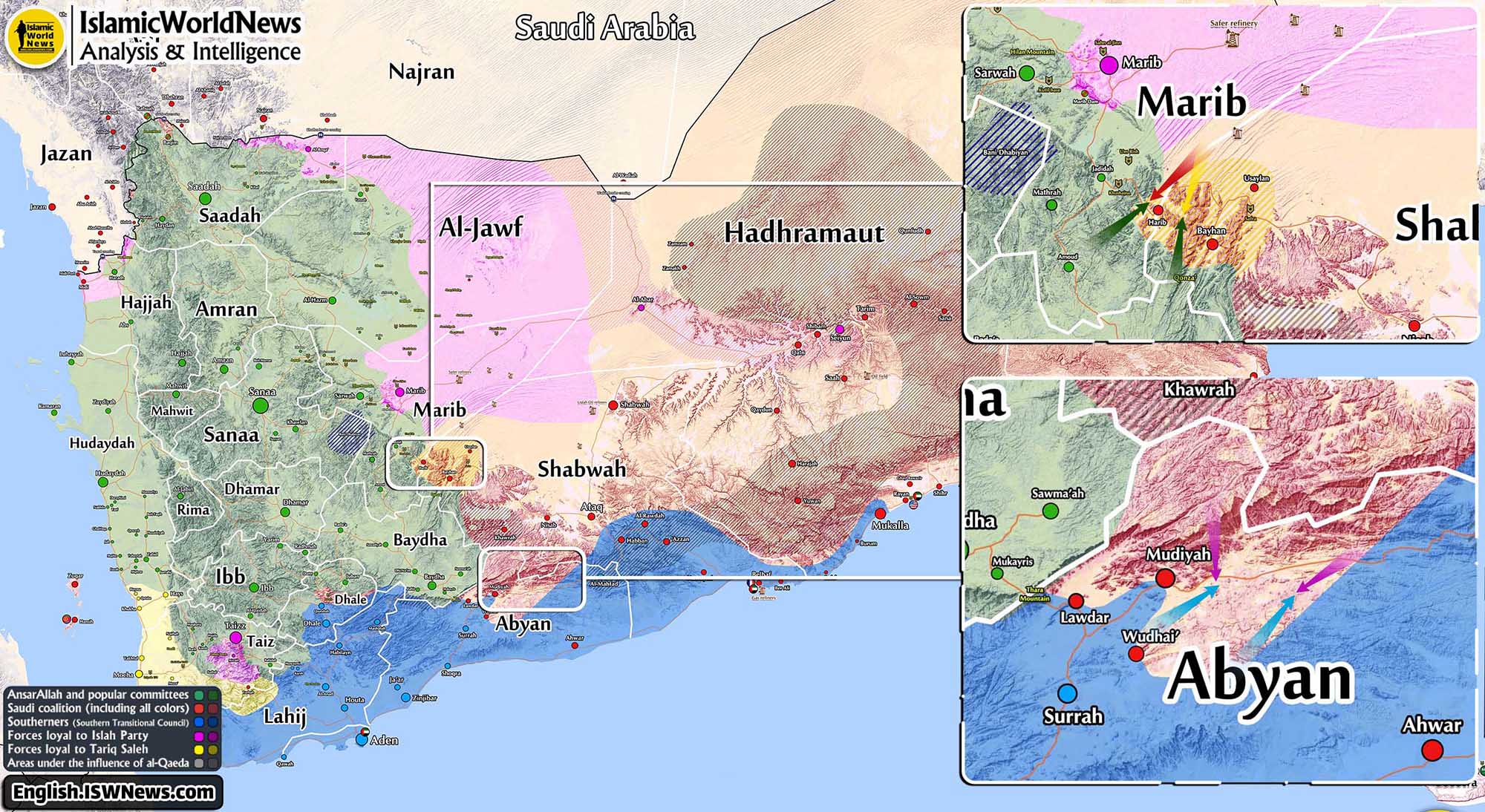
1- Marib: 46 members of Amaliqah forces were killed and injured during the clashes between Amaliqah and Ansar Allah forces in Harib Front. No details have been published about the casualties and damages of Ansar Allah. This conflict started after the withdrawal of Amaliqah forces from some places in the outskirts of Harib town, including Jabal Yahmum, Jabal Jandalah, Maimanah, Arak, Sharq, al-Sih and Hirour and the deployment of Ansar Allah forces in these areas. Currently, Ansar Allah has retreated from most of the areas and there have been sporadic clashes between the two sides. The media affiliated to the Saudi coalition claim that the Amaliqah forces are preparing for the recapture operation of the remaining points.
2- Shabwa: On the 23rd of March, following the arrival of dozens of dead and wounded soldiers from Harib administration to Usaylan and Bayhan districts, the clinics of these cities requested immediate help and medical supplies from the resigned government of Yemen. Also, some of the casualties of Amaliqa forces have been sent to the city of Ataq and district of Markha al-Sufla.
3- Abyan: On the 17th of March, pro-Saudi forces consisting of Islah party militants and al-Qaeda members were deployed in most of the western and eastern areas of Wadi Omran in the district of Mudhyah. This advance was made after the Southern Transitional Council’s militants withdrew from the important area of Wadi Omran due to failure to deal with al-Qaeda’s roadside bombs and ambushes.
4- Aden: On March 21, as a result of an attack by unknown armed men on Aden airport, Abdul Samad al-Omari, the commander of the Hizam al-Amni airport security unit (affiliated to the Southern Transitional Council), was seriously wounded.
5- Hadhramaut: On March 23, as a result of clashes between pro-Saudi and Marib tribesmen in front of the central hospital of Seiyun city, five militants from both sides were killed.
6- Socotra: On March 19, some local sources reported the withdrawal of UAE forces from Abdul Kuri Island and handing it over to the Saudi military. According to these sources, this move was made following Saudi Arabia’s pressure on the UAE to limit the Southern Transitional Council.
Read more: Forced evacuation of the residents of Abdul Kuri Island by the UAE
7- Hudaydah: – The Saudi coalition forces violated the ceasefire 122 times in the last 48 hours in this province. – In the last 48 hours, the Saudi coalition drones bombarded the Al-Jabaliya area twice and once the positions of Ansar Allah in the district of Hays.
8- According to local sources, quoted by the officials of the Salvation Government of Yemen, the agreement of the exchange of prisoners between the Salvation Government of Yemen and the Saudi coalition by making several flights from Sana’a to Aden and Riyadh and vice versa, will be implemented on the 20th of Ramadan (11th of April) under the supervision of the International Red Cross and the United Nations.
The Ayn al-Ansaniyah Research and Statistics Center has released statistics on the crimes and atrocities committed by the Saudi coalition against Yemen during the 2920 days of war.
Statistics of the Saudi coalition aggression on Yemen after 2920 days: The total number of martyrs and wounded in these 8 years is 48,349 people, including 18,140 martyrs and 30,254 wounded. Out of this number, the total number of martyrs and injured children is 4079 martyrs and 4790 injured. The number of men martyrs and wounded is 11,603 martyrs and 22,476 wounded. The number of women martyrs and wounded is 2458 martyrs and 2988 wounded.
During the 2,920 days of aggression and siege, the Saudi coalition has damaged or destroyed 15 airports, 16 ports, 346 power stations and generators, and 617 communication networks and stations. Also, 3095 reservoirs and water supply stations, 2105 government facilities and 7293 roads and bridges have been targeted or destroyed.
During the eight years of aggression, 409 factories, 390 fuel tankers, 12,088 commercial units, 466 poultry and livestock farms, 10,279 means of transportation, 485 fishing boats, 1,020 food stores, 427 fuel stations, 704 markets and 1,040 food trucks were damaged or destroyed.
The number of destroyed and damaged civilian houses has also reached 603,110. 182 academic centers, 1714 mosques, 384 tourist centers and 417 hospitals and health centers have been damaged or destroyed by the Saudi coalition. The attacks of the Saudi coalition have also led to the destruction and damage of 1,265 schools and educational centers, 11,350 agricultural lands, 141 sports centers, 258 historical places, and 61 media centers.
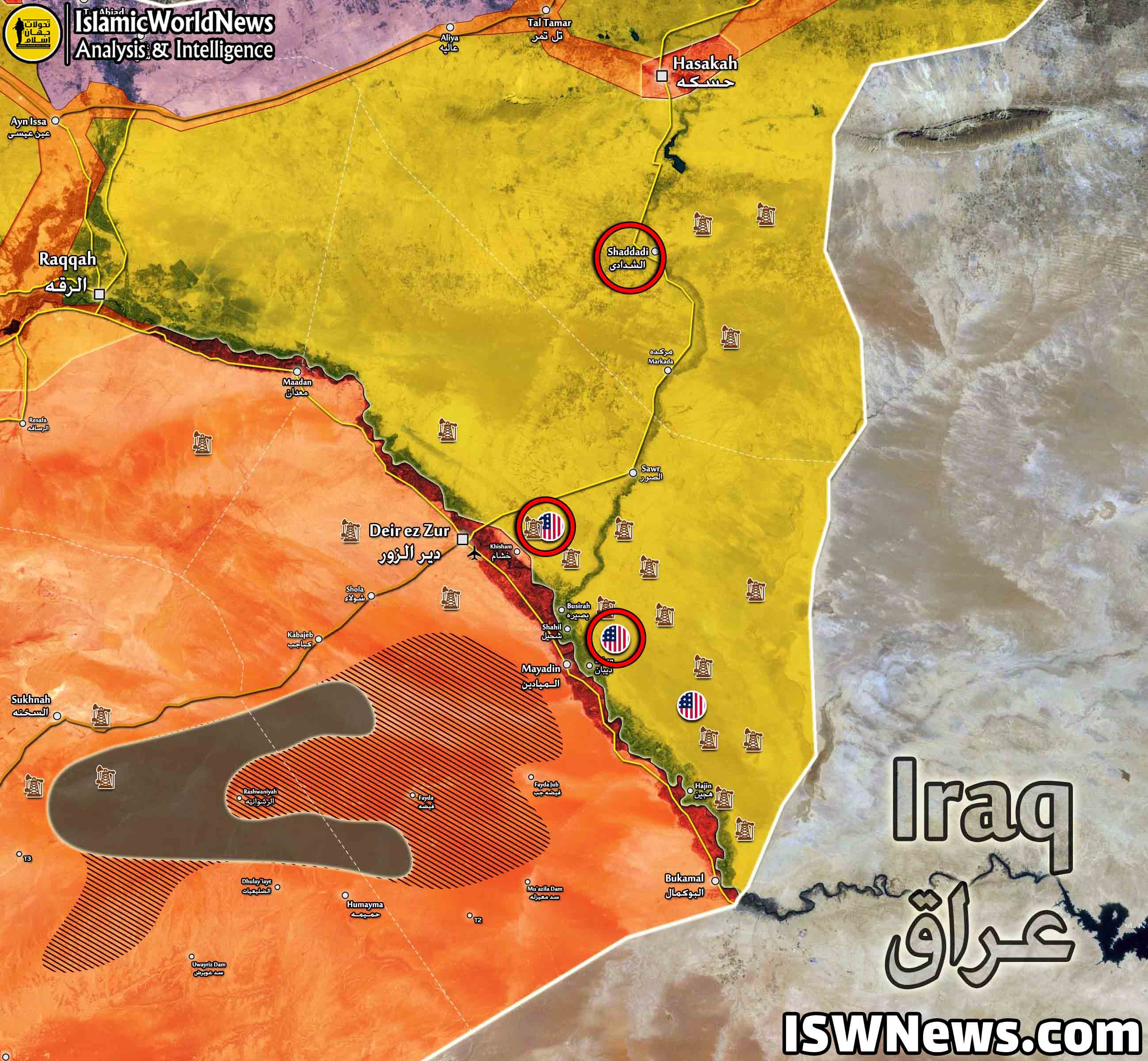
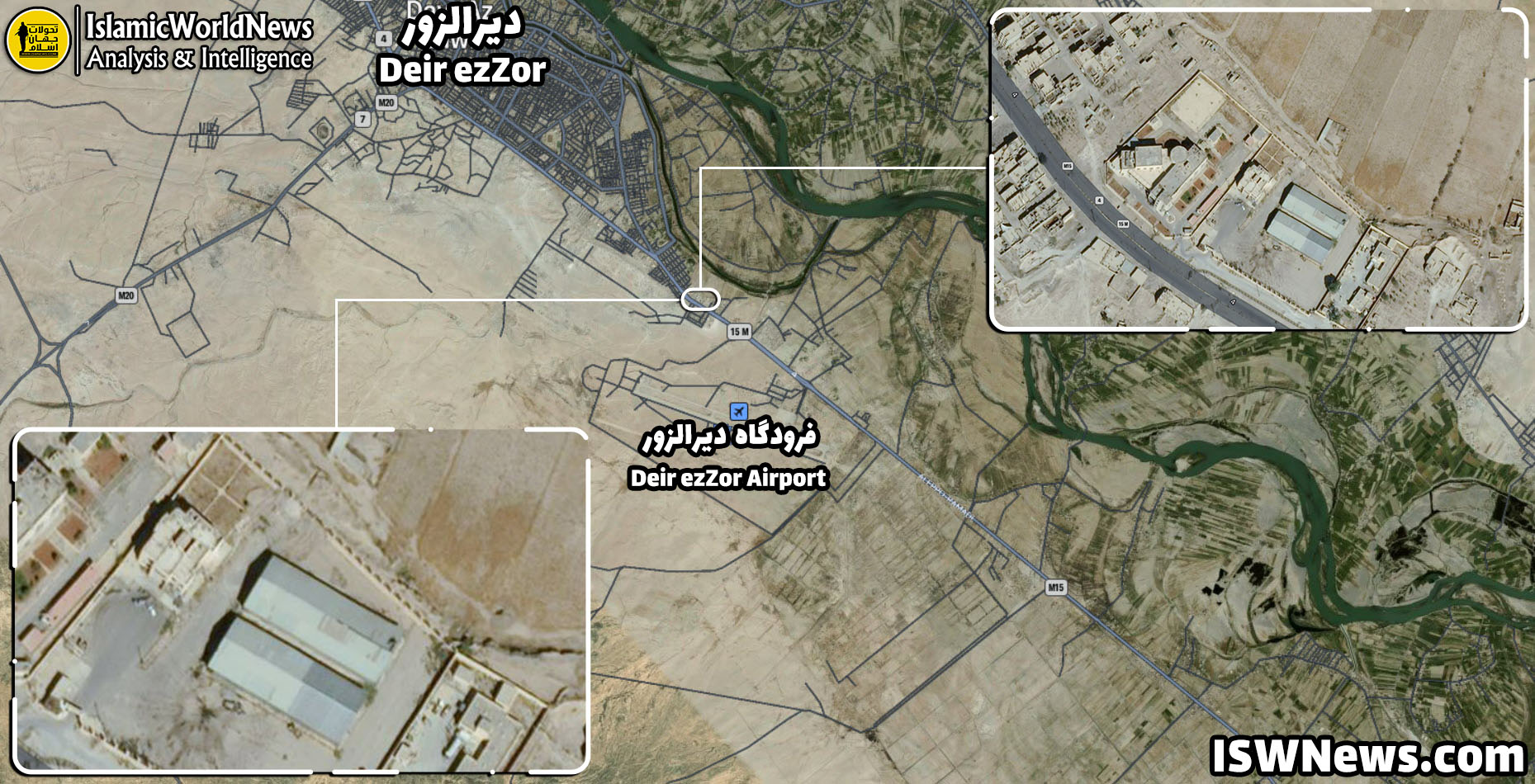
Late on March 24, the resistance groups in retaliation to the US airstrikes on positions of SAA and Iranian-backed groups in Deir Ezzor province, which led to the death of six Syrian servicemen, pounded the US positions at the CONOCO gas facilities and al-Omar oil field in Deir Ezzor province, and the al-Shadadi strategic base in the southern suburbs Hasakah province with several rockets and suicide drones.
Minutes after the attack, an American military official stated that one of our bases in Syria’s Deir Ezzor province was targeted by at least eight rockets. US President Joe Biden also implicitly retreated from the escalation of tensions and said: “To make no mistake, the United States does not — does not, emphasize — seek conflict with Iran,, But be prepared for us to act forcefully to protect our people. That’s exactly what happened last night.”
After the attacks ended, a US official told Al Jazeera that a US soldier was wounded following the rocket attack on three US bases in Syria. Also, the air defense systems shot down two of the three attacking drones.
It should be noted that, hours before the start of the new round of resistance rocket attacks, in the morning of the same day, the positions of the US coalition in the Omar oil field were also targeted by a rocket attack. The US CENTCOM announced in a statement that “on the morning of March 24, ten rockets were fired at the Green Village compound, but this attack did not cause any damage or casualties. One of the rockets hit a residential house, causing heavy damage to the house and injures to two women and two children.”
After about 12 hours have passed since last night’s attacks by resistance forces against the US, there is no military response from the US military. This shows that the US refuses to increase tensions and continue conflicts with Iran in Syria.
Rocket attack on the positions of the US coalition in CONOCO gas facilities in Deir Ezzor provinceExplosions at the US base in the Omar oil field in Deir Ezzor province
In the morning of March 23, the US aircraft targeted positions belonging to resistance groups in Syria’s Deir Ezzor province. According to local sources, six Syrian soldiers were martyred during the attacks.
Minutes after the attack, the US terrorist CENTCOM issued a statement and took responsibility for the attacks. CENTCOM announced that these attacks were in response to the death of an American contractor and the wounding of five others in a drone attack by Iranian-backed groups on US facilities in Hasakah province.
US Defense Secretary Lloyd Austin claimed that these attacks were carried out in response to Thursday’s attack as well as a series of recent attacks against coalition forces in Syria by Iran-backed groups. He stated that any group that attacks American forces will not be immune and will definitely be punished. The purpose of these precise attacks is to protect and defend American personnel.
There is no accurate information about the details of the attacks, but some American media, citing a senior US military official, reported that the US airstrikes targeted an ammunition depot, a monitoring and control building, and an information gathering site in the eastern Syria.
It should be noted that yesterday, some local sources reported a fire at the US military base in the village of Kharab al-Jir, five kilometers from the border crossing of Al-Yarubiyeh in Hasakah province in eastern Syria. It is possible that this fire occurred after drone attacks by resistance groups.
Syrian Army servicemen that reportedly were killed by the US airstrikes
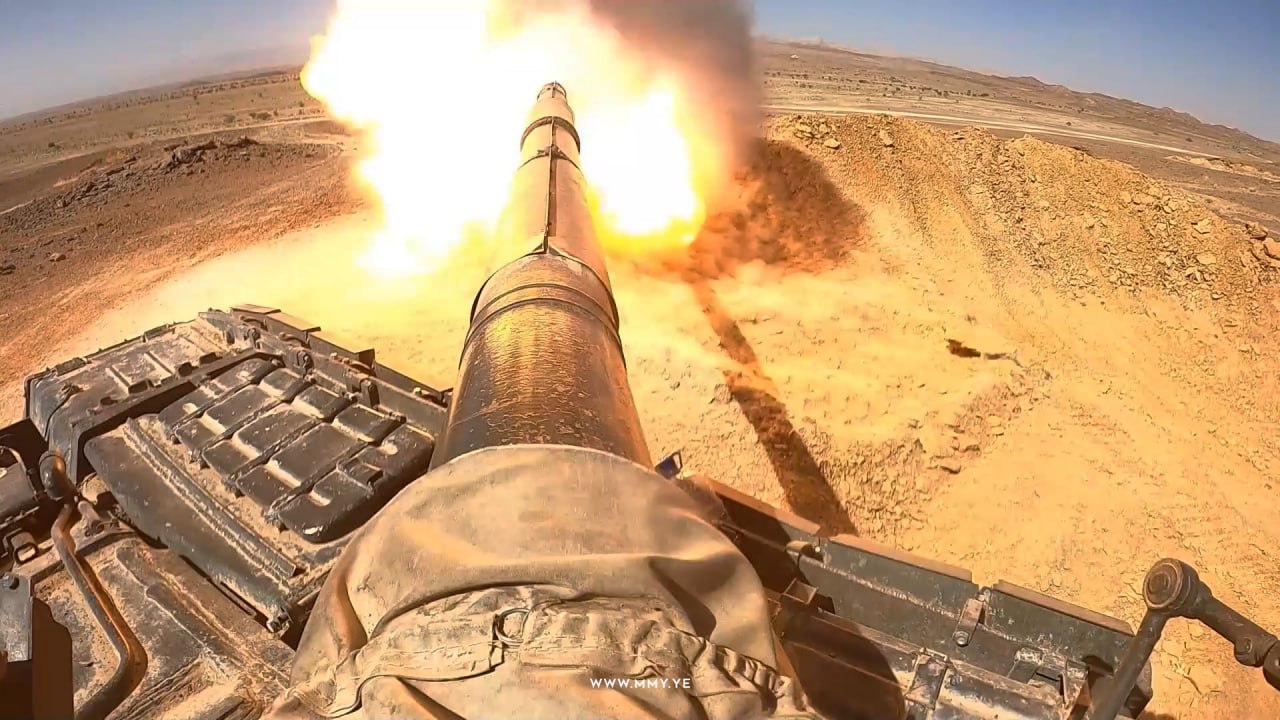
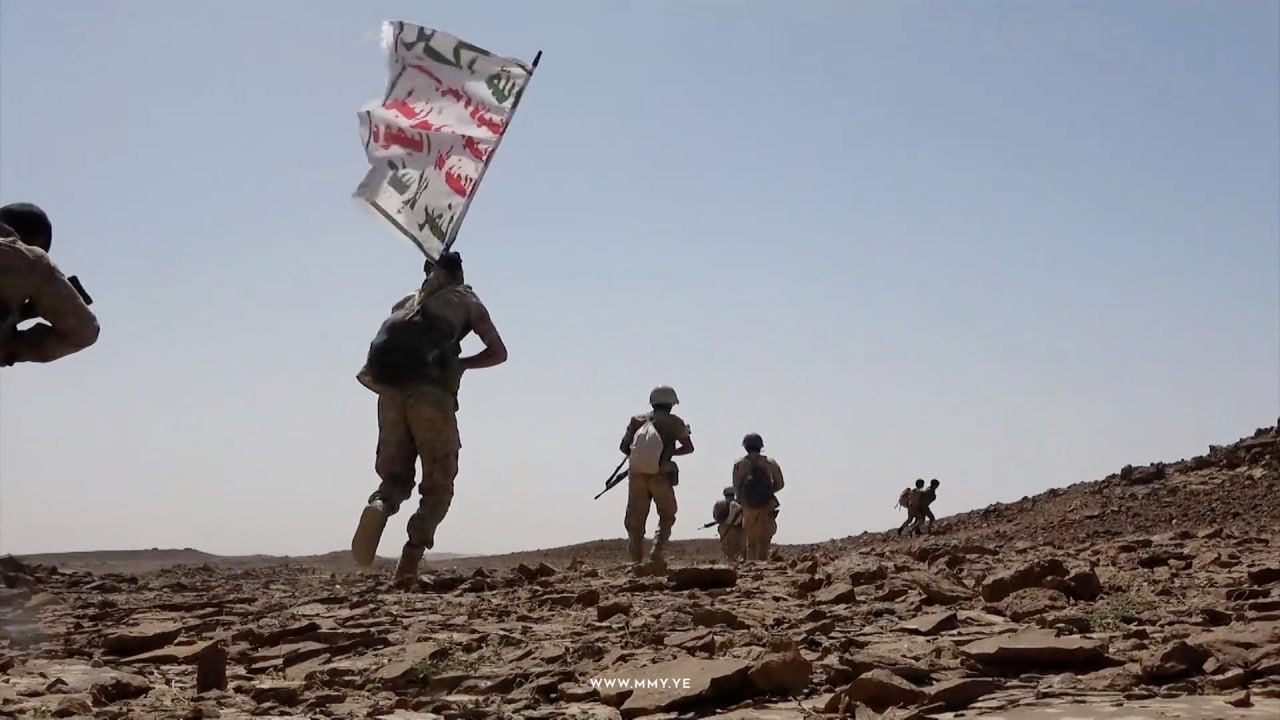
On Wednesday, March 2, the Yemeni armed forces (Sanaa-based government) released images of a large exercise under the title “standing against the aggressors”. This exercise was carried out in an area of 60 square kilometers with the participation of armored, engineering, defense, drone and missile units of the Yemeni army in several directions against simulated targets in the desert and mountainous areas of Al-Jawf province.
One of the interesting scenes of this exercise was the targeting of the US flag and the Zionist regime with the Rajum drone, which is a symbol of Israel’s role and the failure of their project in the Yemen war.
Yemeni armed forces used Mi-8 helicopter, Rajum hexacopter, Zilzal rockets, T55 tank and other armored vehicles in this exercise.
This exercise is the first large-scale exercise of the Yemeni armed forces in recent years. Yemeni armed forces have held various military parades in the provinces of Sana’a, Saada, Hodeidah, etc. Undoubtedly, the holding of these exercises will affect the decision of the heads of the Kingdom of Saudi Arabia to end their aggression against Yemen.
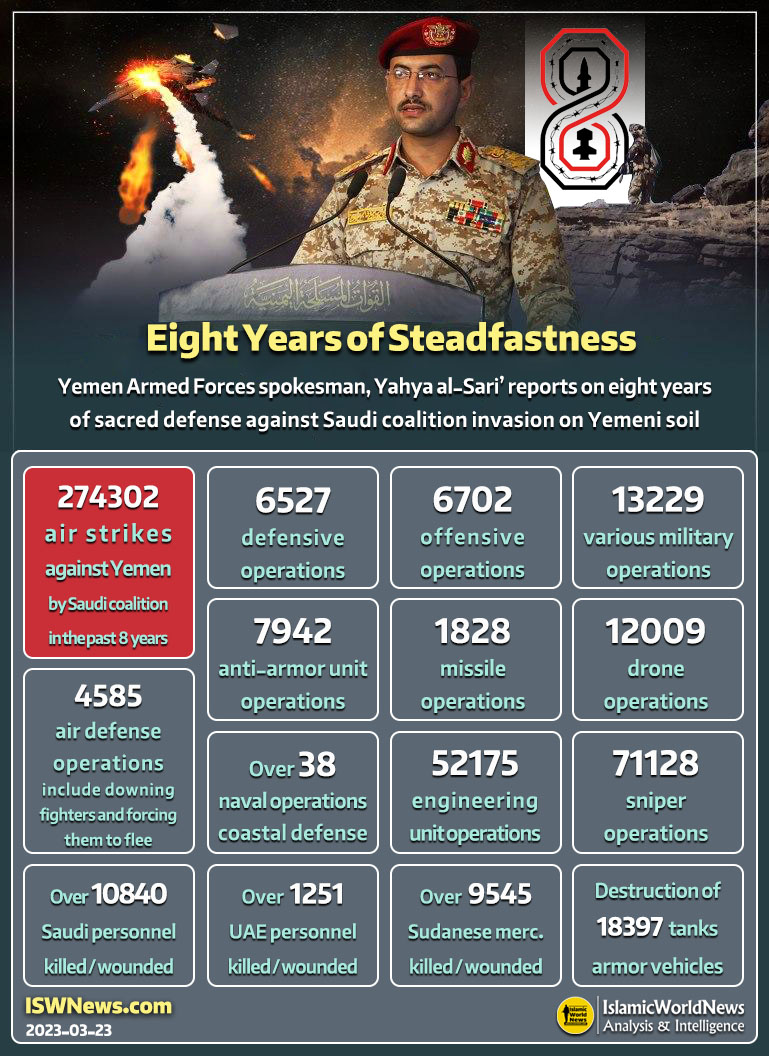
The spokesman for the Yemen Armed Forces, Brigadier General Yahya al-Sari’, on the occasion of National Resistance Day presented the statistics of eight years of fighting with the Saudi coalition.
General Yahya al-Sari’: “With God’s help, our forces were able to stand firmly by our people and neutralize the declared and undeclared goals of the aggressors.
The number of attacks by aggressor fighter jets has been more than 274,302 attacks, including 59 attacks last year.
The invasion and siege of our country was carried out under the leadership and supervision of the US and with the participation of Westerners. In the past years, we have monitored the participation of each country in the aggressor coalition. We ask the educational, media and cultural institutions of our country to document all the crimes of the aggressors and the resistance of our people.
Our forces performed more than 13,229 military operations during the battle against the enemy’s brutal attack. Among these operations, we can mention 6702 offensive operations, 6527 defensive operations, neutralizing offensive efforts and enemy advances.
The missile force has carried out 1,828 military operations, including 1,237 operations targeting enemy gatherings inside Yemeni territory. 589 missile operations against the enemy were targeted outside of our geography, which included operations in the depth of the Saudi and Emirati enemies.
We continue to multiply our strategic missile stockpile as a deterrent that has proven effective over the years.
In the last 8 years, the Air Force has conducted 1,2009 operations, including 3,264 offensive operations and 8,745 reconnaissance operations. UAVs have carried out 2,267 operations inside Yemen and 997 operations abroad.
The total air defense operations in the last 8 years reached 4585 operations, including 2022 destruction and hits and 2565 defensive operations. Air defense managed to shoot down 165 reconnaissance and offensive drones.
13 fighter jets, 10 Apaches and 6 helicopters, including the Black Hawk helicopter, were shot down.
48 US Air Force drones were shot down and 123 other spy drones were shot down.
The Navy and Coastal Defense have carried out 38 special operations in the last 8 years, targeting Saudi and UAE naval vessels was a part of it.
The total number of operations performed by ground units in their different units has reached 25,000 different operations.
The total number of sniper operations since entering the battle line reached 71128 operations. The operations of the eighth year amounted to 5213 sniper operations, of which 3374 operations were recorded in audio and video form.
Among the operations of engineering units, 22,854 were enemy gatherings and 24,907 offensive and defensive operations. The number of operations of the engineering unit that targeted enemy tanks, personnel carriers and military vehicles was more than 4414 operations.
The total number of operations of the anti-armor unit during the last eight years amounted to 7942 operations.
From anti-armor operations, 3082 enemy fortifications, gatherings and barracks and 4860 vehicles were targeted by the enemy.
The total number of operations carried out by the artillery Unit during the last eight years amounted to 85,634 operations. Out of this number of operations, 1150 joint operations were carried out with UAVs and 15269 operations were carried out with Zilzal-1 missiles.
The losses of the Saudi enemy army have been more than 10,840 people killed and injured in eight years. We announce the killing of 36 Saudi officers and soldiers and the wounding of 45 others in the eighth year of the aggression. The losses of the Emirati enemy are more than 1,251 killed and wounded, including senior officers. The number of dead and wounded of the Sudanese army reached more than 9545. More than 40 Sudanese officers and soldiers were killed and 65 others were wounded in the eighth year of the aggression.
The casualties of Yemeni mercenaries have been more than 261,243 killed and injured in eight years. In the eighth year, the number of dead Yemeni mercenaries exceeded 2,500 and more than 5,550 were injured.
Our forces managed to destroy or set fire to more than 18,397 armored personnel carriers, tanks, vehicles, bulldozers and weapons. More than 10,618 cases have been documented including the operations that led to the destruction, damage and burning of enemy vehicles, bulldozers and armored vehicles.
During the eighth year, more than 1,000 vehicles, armored vehicles and military equipment were destroyed or damaged.
Continued aggression and blockade means that the aggressor countries and their followers will suffer more losses. Continuing the battle will only lead to more conflict and work on other legal options to defend our country. The regimes that started the aggression should learn lessons from the strengthening of Yemen and what happened in these years. We emphasize on redoubled efforts to prepare for future developments and increase combat readiness to deal with aggressor and enemy forces.
We reject any presence of foreign forces inside our territory and emphasize that the presence of foreigners is illegal and in line with the attempt to occupy our country. We emphasize that any foreign military presence inside the territory of Yemen is a legitimate goal for our forces and for all Yemeni people.
We send greetings to all the free people of our country and among them the proud tribes who rose up for defense.
We renew our agreement with our beloved people that the armed forces remain loyal to their duties and responsibilities, the most important of which is the liberation war.
We tell our Seyed leader that your people are more determined today to see the battle through to its end.
We emphasize our readiness to implement any order against foreign military presence in Yemen. We are ready to deal decisively with any scenario and neutralize any movement of the aggressors and their mercenaries.
We will continue to develop our military capabilities and increase our combat expertise. We will continue to monitor and deal appropriately with all attempts to loot the national wealth within the framework of our duties and responsibilities.”
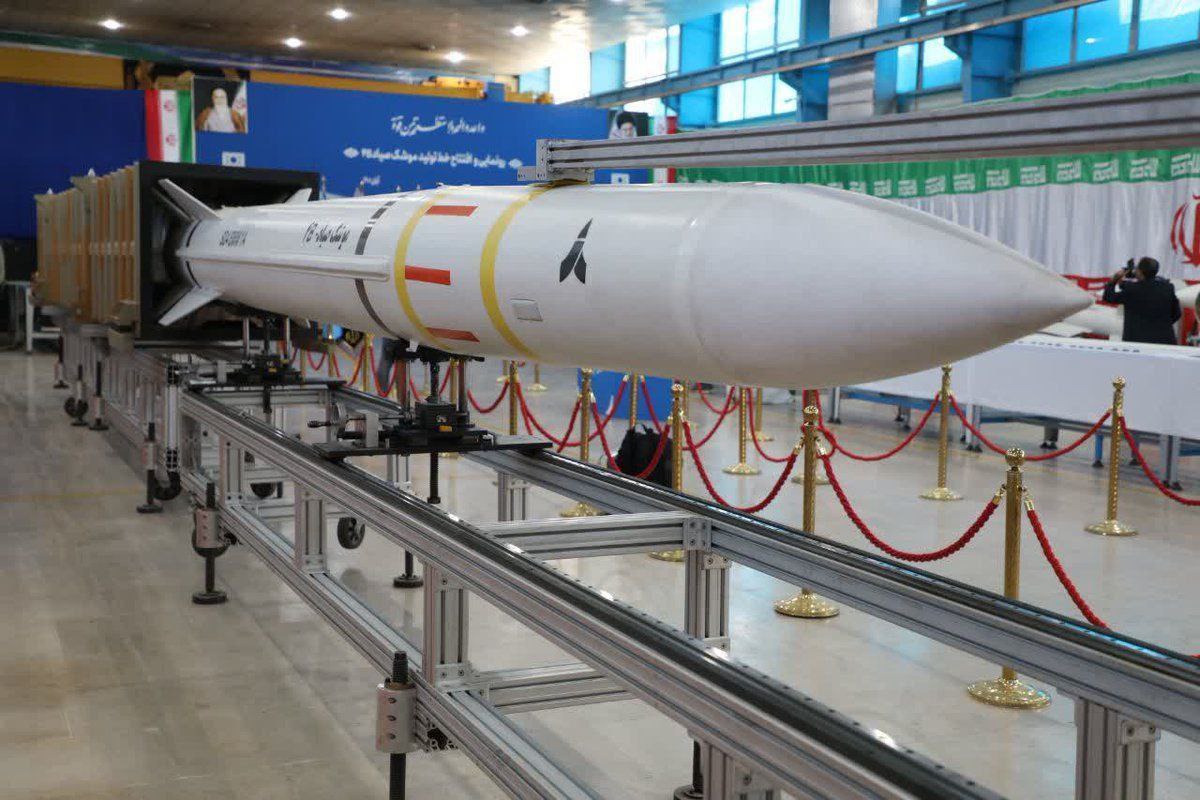
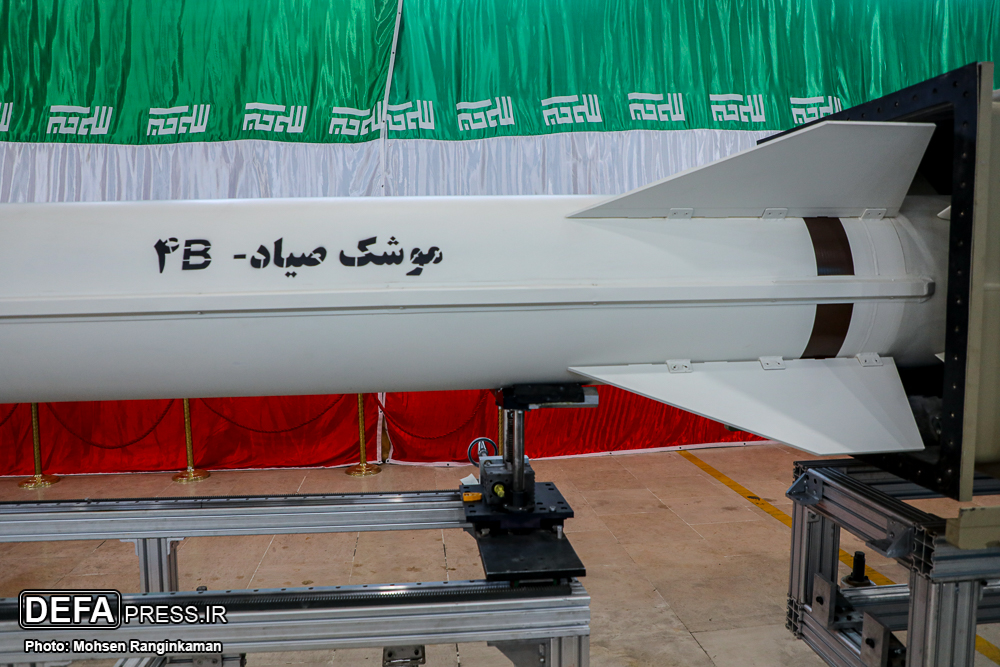
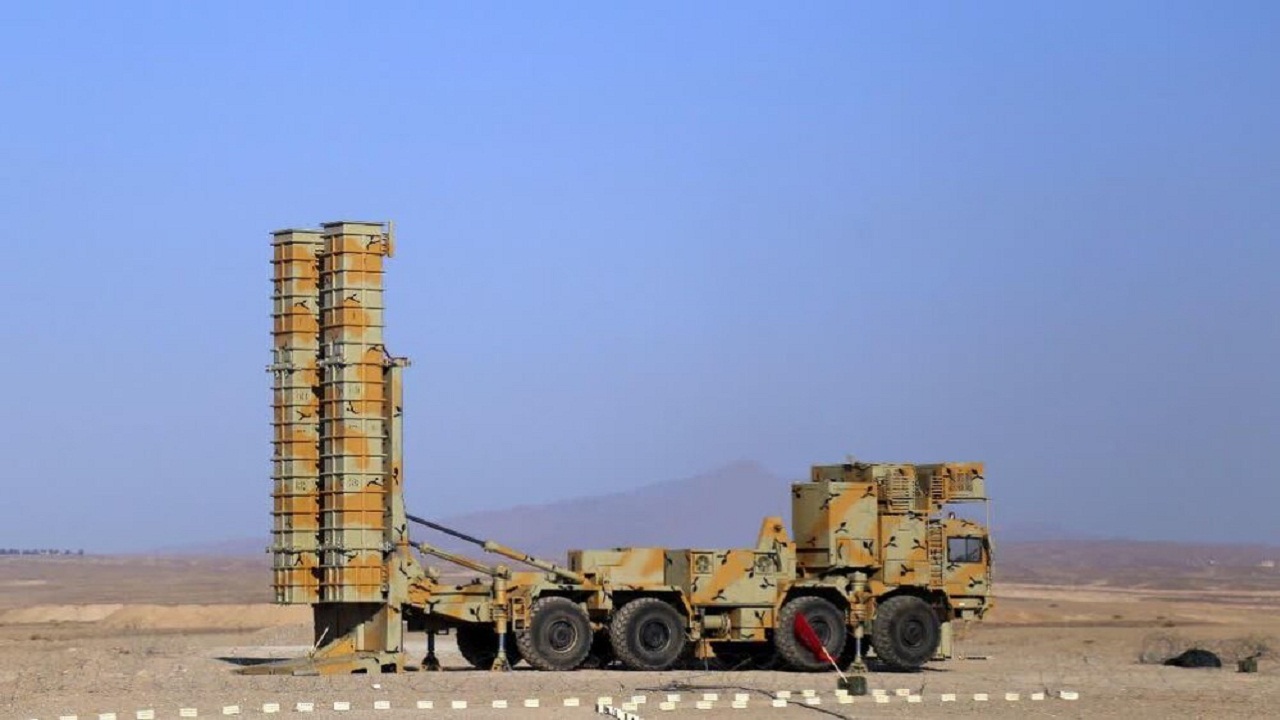
Bavar-373 is an Iranian long-range air defense system build to engage with hostile air targets at a range of more than 300 kilometers. The Bavar-373 missile system can be prepared for launch easily. It features anti-stealth capability that allows it to detect hidden targets with a very low radar cross-section. This system was unveiled for the first time in 2016 And later in 2019, it was added to the Air Defense Force of the Iranian Army. The Ministry of Defense of Iran has unveiled an upgraded missile of the Bavar-373 defense system dubbed Sayyad-4B. With this update, the range of Bavar-373 air defense system increased to more than 300 km.
The Bavar-373 missile system is more advanced than its Russian counterpart S-300 long-range surface-to-air missile system. Several studies and tests conducted by the Iranian military showed that the system is superior to the US Patriot PAC-3 air defence system.
After the American invasion of Iraq, Iran analyzed the US’s operational measures and then according to the needs and deficiencies it had in the field of defense systems, made extensive purchases in the field of air defense systems. The purchase of several types of radar and detection systems, electronic warfare system and short-range defense systems such as TOR-M1 and BUK-M2 and the purchase of the long-range S-300 PMU1 system were among Iran’s measures to fill the gaps in its air defense systems.
It should be noted that before 2016, some of these purchases entered Iran, and some others were not delivered to Iran by Russia under the pretext of Western and American sanctions against Iran. For this reason, Iran began to reform the air defense structure and seriously started the domestic production of air defense systems.
The process of production and localization of air defense systems first started with the update of S-200, And Iran started to modify and localize the missile of this system. The efforts of Iran’s military industry in this field resulted in the production of Taer missiles. Following the localization of missiles of air defense systems, missiles of the Sayyad family such as Sayyad 1, 2 and 3 and a wide range of indigenous air defense systems such as Sevom Khordad, Tabas and Talash reached the operational level.
In radar, with the purchase of Gamma radar, Iran started the production and localization of phased array radars. According to the commander of Iranian Army’s Air Defense Force, this was the result of the studies between the Air Defense Force, the Ministry of Defense and some universities, which despite all the ups and downs it had reached the stage of test firing in 2018 and finally in 2019, it was handed over to the Air Defense Force of the Iranian Army.
To name this system, “belief in internal power” was shown in the word “belief” (Bavar) and “373” is the Abjad letter of “Ya Rasulullah”.
Operational test of Bavar-373 system
Introduction of units of Bavar-373 system:
Bavar-373 is an impenetrable, anti-hacking surface-to-air missile defence system comprising a vertical launching system, two acquisition and engagement radars, Sayyad-4 missiles, and a command-and-control center. The design minimises the need for additional support equipment and systems. The vertical launching system features square launchers that are identical to the launchers utilised by naval warships for air defence.
Each Bavar-373 battalion has a command, control and communication unit, which, as the brain of Bavar-373, is responsible for managing and establishing communication between the system’s components, in addition to communicating with the country’s integrated defense network. One battery of this system has four Sayyad-4 transporter erector launchers (TELs) ready-to-launch missiles and has the ability to destroy targets at a range of 300 km. Also, instead of a Sayyad-4 TELs, the other TELs of Sayyad missile family can also be used.
Bavar-373 control and command unit
Meraj-4 radar is the longest range radar of this system. This radar works similar to the large 64N6E2 radar in the S-300 system, but has superior features. For a better comparison, we will first describe the specifications of the 64N6E2 radar, and then we will discuss the Meraj-4 radar:
64N6E2 is a 3D S-band air surveillance radar that has a maximum range of 300 km and the ability to detect 200 targets. The interceptor radar is also capable of intercepting 12 targets at the same time and assigns these targets to the engagement radar for targeting. The S-300 system is capable of engaging targets at a distance of 200 km.
Meraj-4 radar is a long-range 3D active electronically scanned array (AESA) radar made of 40 rows of waveguides. The research, development and production of this radar has been done in Shiraz Electronics Industries (SEI). Meraj-4 can track up to 300 targets simultaneously. The maximum range of this radar is 450 km, the maximum detection height is 130 km and the maximum range for ballistic targets is 1200 km.
Meraj-4 radar
The engagement radar of this system also belongs to Shiraz Electronics Industries. This radar is an active electronically scanned array (AESA) type with a low probability of interception (LPI). The maximum detection range of this system is 320 km and the detection height is 65 km. It has the ability to detect up to 300 targets simultaneously and has the ability to intercept up to 60 targets and engage with 6 targets and simultaneously guide two missiles towards one target.
The engagement radar of Bavar-373
The Hafez multipurpose and phased array radar is also available as a search and tracking radar for low-altitude scanning, which has track while scan (TWS) capabilities. Its maximum range is 300 km and has the ability to detect up to 100 targets.
Hafez acquisition radar
Another radar of Bavar-373 system is the Alim radar, which is a passive radar. Passive radars are used to resist electronic warfare and increase the detection range of stealthy targets. These types of systems passively track 3D waves of aircraft systems, such as Link 16, identification friend or foe waves (IFF) and waves from aircraft navigation systems (GPS). In case of interference in the interception on the radars, existing passive systems have the ability to accurately track or help to track the hostile aircraft or identify the source of the interference, which, by finding the source, provides the possibility to attack and eliminate the interference.
Alim radar
The Saegheh electronic warfare system is an enhancement system for Bavar-373 that operates in the X and Ku bands and is used to detect specific targets such as AWACS radars, classify the waves emitted by airborne radar and disrupt fire control radars and ground tracking radars that is used in cruise missiles and all types of aircraft. This Saegheh system effectively increases the possibility of dealing with enemy AWACS radars.
Saegheh electronic warfare system
The tactical vehicles used in Bavar system are of two types Zafar and Zoljanah. However, it seems that Zoljanah was excluded from the Bavar-373 system over time.
Zafar-8824 heavy tactical vehicle is 8×8 carrier truck, And it has 4 moving axes and its maximum load carrying capacity is 24 tons. The chassis of this truck is similar to MAZ-537 truck. The Zafar truck has been used as the carrier of the radars and command and control equipment of Bavar-373 system. Also, in the new tests of Bavar-373 system, it has been used as a carrier of two box launchers.
Zafar-8824 heavy tactical vehicle
Zoljannah heavy tactical vehicle is a 10×10 carrier truck. Like the Zafar truck, this truck uses the MAZ-537 chassis. Its maximum load capacity has not been announced, but due to the change in the chassis and the addition of an axle, it should be able to carry more weight than Zafar. The important point is the controllability of the last axis of Zoljanah, which provides the possibility of better maneuvering in difficult conditions. Zoljanah is used to carry Sayyad-4 launcher. Zoljanah will be more expensive than Zafar due to its complexities.
Zoljanah tactical vehicle
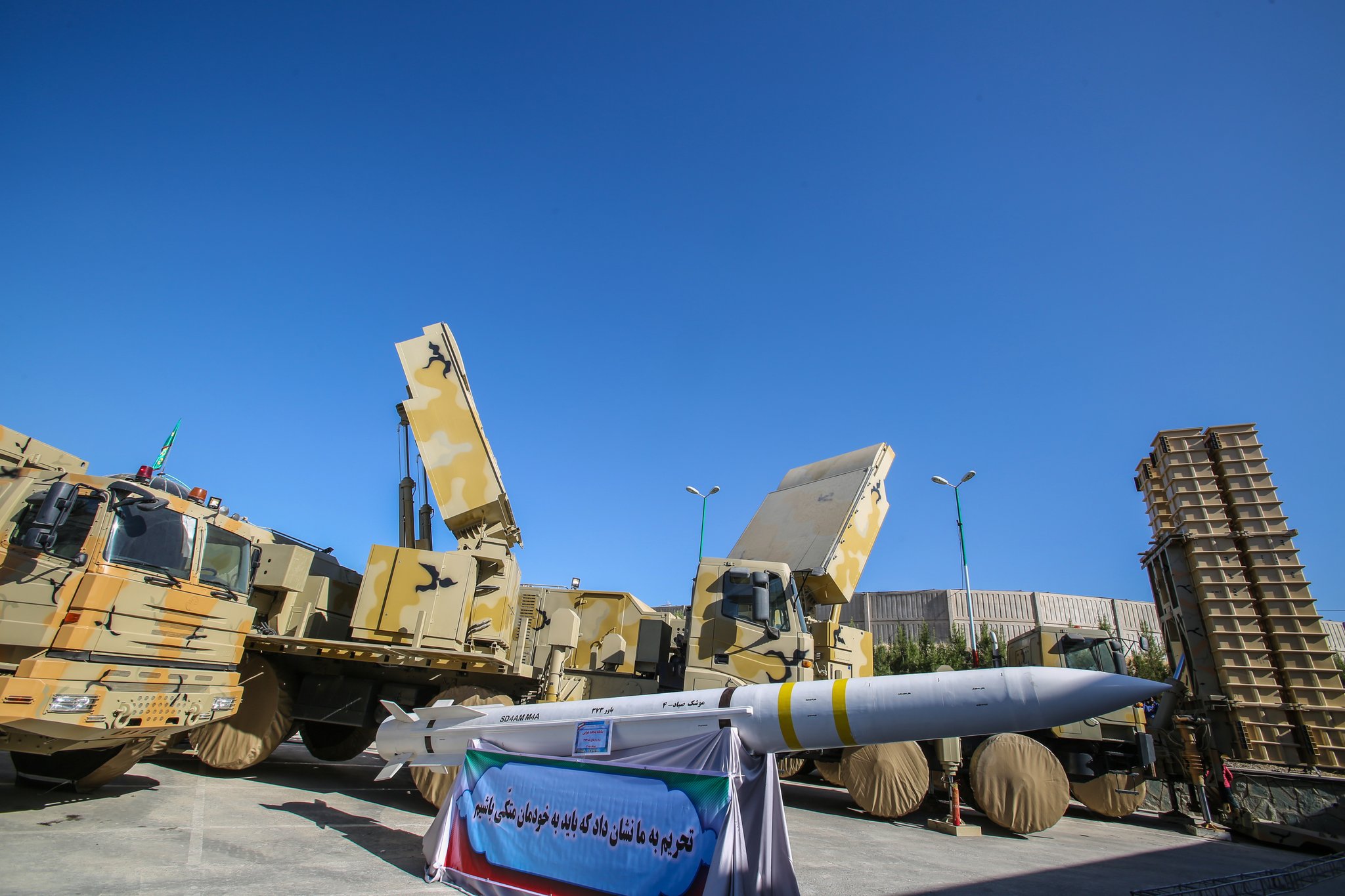
Sayyad-4 launcher is another component of Bavar-373 system. This launcher, unlike the Russian models that have round tubes, is designed similar to the Patriot system launchers. Each Zoljanah vehicle can carry four Sayyad-4 launchers.
Sayyad-4 launcher
Bavar-373 can use several types of missiles. This capability allows Bavar-373 to cover the range and altitude of different targets like the S-400 system. Nevertheless, so far only the Sayyad-4 missile has been officially introduced for use in the Bavar-373 system, but the use of Sayyad family missiles such as Sayyad 2 and 3 is also very likely.
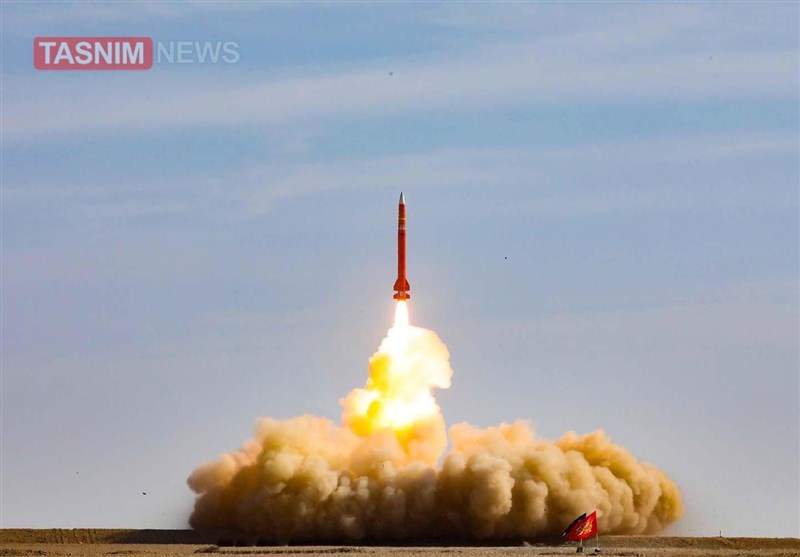
The Sayyad-4 missile can engage targets at a range of 200 km and up to an altitude of 27 km, similar to the 48N6E2 missile of the S-300 system. Sayyad-4 missile uses stabilizer fins and thrust vector control system, which has significantly increased the maneuverability of the missile. These features have made the Sayyad-4 missile similar to the S-400 48N6DM missile, which has anti-ballistic properties. The main difference between the Sayyad-4 missile and the 48N6DM missile is the fins of the thrust vector control system. In Sayyad-4, these fins protrude from the body, and this causes more changes in the exhaust gases of the missile, and as a result, creates a sharper angle for the missile to turn. So, the high turning power shows that the missile has a high G-pressure tolerance. When the missile gains altitude and enters the thin atmosphere, the control fins at the end of the missile lose their effectiveness, and this is another reason for using the thrust vector control system.
Sayyad-4 missile
The Sayad-4 missile has the ability to engage targets at a speed of 4800 m/s. Meanwhile, the 48N6E2 missile has the ability to engage targets at a speed of up to 2800 m/s. It is interesting to know that the Antey-2500 anti-ballistic system missile can engage targets with a speed of 4500 m/s.
As the numbers show us, the Sayyad-4 missile is superior to the S-300’s missiles and Antey-2500 in terms of anti-ballistics and is near to the S-400’s 48N6DM missile. It also has the ability to engage targets such as fighter jets and cruise missiles. Another type of Sayyad-4 missile called Sayyad-4B has been introduced lately, which has a range of up to 250 km. In the latest tests, the Sayyad-4B missile has managed to hit targets at a distance of 304 kilometers.
Sayyad-4B missile
Considering that the Bavar system is modeled after the S-300, the guidance method of the Sayyad-4 missile should also be similar to the S-300 system. The desired guidance method is Track-via-missile. In this guidance method, the missile combines the characteristics of semi-active radar homing (SARH) and radio command guidance. This method has been used on a number of long-range surface-to-air missiles (SAMs), including the MIM-104 Patriot.
In an interview with the commander of the Iranian Army Air Defense Force in 2022, it was said about the “300 km test”:
“Bavar 373 system in this test detected the target at a distance of 450 km. When this target is detected, the initial lock is performed at a distance of 400 km and a stable lock is performed at a distance of 360 km. It takes a minute to hit it. In this test, we chose a UAV with a small cross-sectional area, and by this we wanted to say that this system is able to identify and destroy the smallest target with a very small cross-sectional area, which it succeeded in destroying at a range of 304 km. The target drone, which was produced by a joint effort by the Ministry of Defense and Air Defense of the Army, reached a height of 43,000 feet (13,716 km) in this test, and was hit by the Bavar-373 system. If other countries want to produce a system with this capability, sometimes they need up to 20 years, but we were able to improve this system over time until we achieved a range of more than 300 kilometers; Immediately after this shot, we also conducted the ballistic test, of course, if we had not been obsessive in this test, we could have destroyed the target at a range of 320 km.”
The cases mentioned by the then commander of Iranian Army Air Defense Forces show that the upgrade in Bavar-373 was not limited to the Sayyad-4 missile, but all the subsystems were also upgraded to perform complex operations and hunting ballistic missiles, and the speed of the Sayyad-4B missile was also increased.
Bavar-373 Long Range Air Defense System specifications: Range: + 300 km Number of missiles: 4 missiles Missile variants: Sayyad-4 and Sayyad-4B Radars: – Meraj-4 active phased array radar with a range of 450 km – SEI active electronically scanned array radar – Hafez multipurpose phased array radar – Alim passive radar Carrier chassis: Zafar or Zoljanah tactical vehicle In service: Since August 22, 2019 Target types: Warplane, helicopter, drone, cruise missile, ballistic missile Origin: Iran
Sayyad-4 missile specifications: Range: + 200 km Speed: Unknown Altitude of fire: 27 km Diameter: 515 mm Length: 7.5 meters Warhead weight: 180 kg
Sayyad-4B missile specifications: Range: + 300 km Speed: Mach 6.1 Altitude of fire: 32 km Diameter: 515 mm Length: ~ 8 meters Warhead weight: Unknown
Click to view full sizeClick to view full size
The poster collection of Bavar-373 long-range air defense system in Farsi, Russian, Arabic, Azeri and Kurdish:
According to the spokesman of the Yemeni Armed Forces, Brigadier General Yahya al-Sari’, Ansar Allah air defenses managed to destroy a Chinese-made Wing Loong 2 drone over the al-Jawf province on March 21st. This drone reportedly was destroyed by a surface-to-air missile.
It should be noted that this is the sixth drone to be shot down by Ansar Allah after the implementation of the ceasefire agreement in Yemen.
Also, according to data obtained by ISWNEWS, this is the ninth Chinese Wing Loong 1 or 2 drone to be shot down by Ansar Allah since the start of the war in Yemen.
Details of the shot down of these nine drones are as follows: 1- UAE-owned Wing Loong in the Kholan region of Sanaa province, on September 26, 2016. 2- UAE-owned Wing Loong in Saada province, and on April 19, 2019. 3- Saudi-owned Wing Loong in the district of Hayran in Hajjah province, on November 30, 2019. 4- Saudi-owned Wing Loong in the north of Saada province, on May 21, 2021. 5- Saudi-owned Wing Loong in the district of Kataf in the north of Saada province, on September 13, 2021. 6- UAE-owned Wing Loong in the Usaylan district in Shabwa province, on January 5, 2022. 7- UAE-owned Wing Loong in the Ain district in Shabwa province, on January 11, 2022. 8- Saudi-owned Wing Loong in the Kitaf district in the north of Saada province, on May 24, 2022. 8- Saudi-owned Wing Loong 2 in the al-Jawf province, on March 21, 2023.