Tag: Baghdad

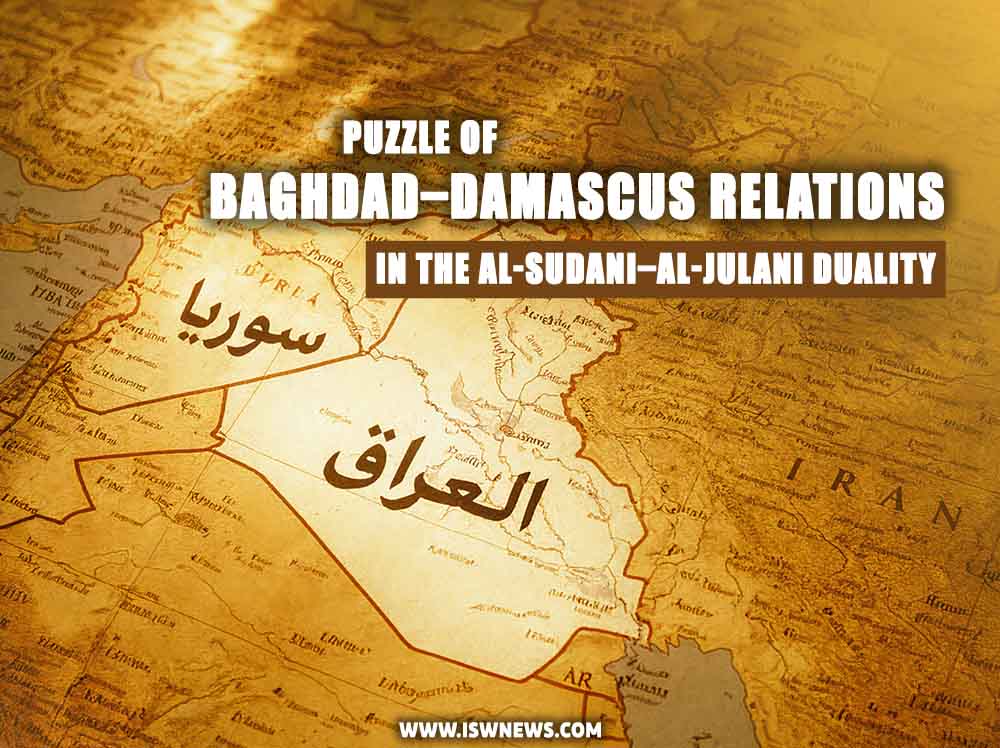
  • The Puzzle of Baghdad–Damascus Relations in the Al-Sudani–Al-Julani Duality

    The Puzzle of Baghdad–Damascus Relations in the Al-Sudani–Al-Julani Duality

    Security considerations

    1. Population Link Between Anbar and Deir ez-Zor

    The first point to consider is the deep demographic, familial, social, and cultural ties between residents of Iraq’s Anbar province and Syria’s Deir ez-Zor. Historically, the border towns of Al-Bukamal and Al-Qaim were one city until the Battle of Maysalun split them, forming the Iraq–Syria border. Over a century later, these ties remain strong. In Syria, the “Eastern dialect” differs significantly from the “Levantine dialect,” and Deir ez-Zor’s accent closely resembles Iraqi Arabic—so much so that it’s considered part of the Iraqi dialect family. Similarly, Iraq’s “Western dialect,” common in Anbar, is more similar to Deir ez-Zor’s speech than to Baghdad’s or northern Iraq’s.

    Moreover, there’s near consensus across Iraq that national security depends on stability in Anbar. The past 22 years (post-Saddam era) show that whenever Anbar is secure, Iraq enjoys relative calm; when unrest or terrorism hits Anbar, instability quickly spreads nationwide.

    These factors suggest that Deir ez-Zor can directly impact Iraq’s overall security, making it essential for Baghdad to pursue security cooperation with Damascus to prevent the province from becoming a source of threat.

    2. From the Syrian and Jazira Desert to Anbar and Lake Tharthar: A Terrorist Playground

    Another issue is the terrain and continued limited presence of ISIS militants in the region stretching from the Syrian desert to Lake Tharthar near Samarra. This area is characterized by desert landscapes, scattered villages, low population density, and cities built along main roads or the Euphrates River. These vast, empty deserts offer ideal conditions for terrorist activity. Managing such terrain requires unavoidable security coordination. Even during tensions, the Assad government and the SDF cooperated on this front, recognizing ISIS as a mutual threat.

    a) Shared Border Strip

    It’s worth noting that the Iraq–Syria border spans roughly 600 kilometers, yet the number of border towns is fewer than five. Except for a small section north of Rabia, the entire border is desert, with only the northern Sinjar area being mountainous. Near the Syrian border, these mountains flatten into plains and hills—meaning over 90% of the border is desert.

    3. Iraqi Residents in Syria and Vice Versa

    Another factor is the significant number of citizens from each country living in the other. Tens of thousands of Iraqis reside in Damascus’s Sayyidah Zaynab district, while hundreds of thousands of Syrians have entered Iraq over the past 15 years. This population holds undeniable strategic weight, compelling both governments to maintain a level of engagement.

    a) Intersection with Sectarianism and Civil War

    Notably, both Iraqi and Syrian communities abroad tend to follow the majority religion of their home country, making them religious minorities in their host nation. Most Iraqis in Syria are Twelver Shia living near the shrine of Sayyidah Zaynab, while most Syrians in Iraq are Sunni—heightening security sensitivities.

    This becomes more complex when considering that these communities are tied to each country’s civil war. Most Syrians in Iraq are war refugees who entered via Deir ez-Zor and settled in Anbar and beyond. Meanwhile, Iraqis in Sayyidah Zaynab are accused by neighboring districts like Babbila and Yalda of having fought alongside Assad’s forces during the war.

    4. Prisoners and the Three Issues of Judicial Cooperation, Prisoner Exchange, and Rehabilitation

    Another issue is the large number of Iraqi prisoners in Syria and Syrian prisoners in Iraq—mostly security offenders and ISIS members. Additionally, tens of thousands of their family members are undergoing rehabilitation in special camps, with the goal of reintegration into society. This situation calls for cooperation on three levels: judicial coordination, prisoner exchange, and rehabilitation of terrorist families.

    The Kurdish Issue

    The second factor prompting Baghdad to accelerate its outreach to Damascus is the “Kurdish issue” in both Iraq and Syria. On one hand, Damascus is dealing with the challenge of the Syrian Democratic Forces (SDF), and on the other, Baghdad faces ongoing competition with Erbil. This shared “single issue” encourages both Arab governments—Baghdad and Damascus—to engage with one another. Baghdad, due to security concerns, is compelled to cooperate with the SDF, but fears that strengthening the group could destabilize Syria and threaten Iraq’s territorial integrity. Therefore, Baghdad seeks to structure its relationship with the SDF through coordination with Damascus to minimize negative repercussions.

    At another level, Baghdad faces a complex triangle in its dealings with the SDF. This triangle consists of:

    • Local militias in Sinjar, which have deep ties to the SDF and maintain operational and organizational support within SDF-controlled territory. Additionally, the Patriotic Union of Kurdistan (PUK) and the security-military network in Sulaymaniyah province are closely linked to the SDF.
    • The second side of the triangle is the Kurdistan Democratic Party (KDP) and the Kurdistan Regional Government (KRG). Erbil maintains ideological and strategic rivalry with the SDF, viewing it as a PKK offshoot. Yet, in the Syrian context, it supports the SDF to present a united Kurdish front against Damascus.
    • The third side is Turkey. No country can shape its relationship with the SDF without considering Turkey’s position.

    This triangle forces Baghdad to accept engagement with the SDF as inevitable, while remaining cautious. In this context, cooperation with Damascus can help regulate Baghdad’s ties with the SDF and reduce its regional and international risks.

    Foreign Policy and Its Imperatives

    In analyzing Baghdad’s motivation to engage with Syria’s new government, foreign policy considerations—beyond security concerns—must be taken into account. Three overarching factors are relevant here:

    1. The United States

    The next factor is the role of the United States. Two specific issues push Baghdad and Damascus toward cooperation: the U.S. military presence and the repatriation of ISIS detainees and their families.

    a) U.S. Military Presence

    Regarding the U.S. military presence, CENTCOM forces have effectively linked eastern Syria and Iraq. Even in Baghdad–Washington negotiations over troop withdrawal from Iraq, the timeline for exiting Syria was part of the discussion. From Washington’s perspective, military presence in Iraq and eastern Syria is interdependent, and the two files cannot be separated.

    b) Repatriation of ISIS Detainees and Families

    On the issue of repatriating ISIS detainees and their families from camps like Al-Hol, Iraq—home to a large portion of these individuals—is compelled to cooperate. This makes coordination between Damascus and Baghdad essential for Iraq.

    2. Neutrality

    Since the tenure of Prime Minister Haider al-Abadi, Iraq’s foreign policy has been based on two principles:

    • Maintaining distance from all regional power blocs, ensuring Iraq is not categorized under any.
    • Maintaining good relations with all neighboring countries.

    This approach, known as “neutrality,” has guided Iraq’s foreign policy throughout the last decade of Bashar al-Assad’s rule and continues to do so.

    Currently, all regional countries except Iran recognize Al-Jolani’s government in Damascus. If Iraq refuses to do so, it risks being classified under Iran’s bloc and the Resistance Axis. Therefore, Baghdad is likely to recognize the new Syrian government de facto.

    3. Geopolitical Projects and Access to the Mediterranean

    Iraq’s geography offers a strategic opportunity to access the Mediterranean via Syria. Its most significant current project is the Development Road, connecting the port of Faw to the city of Fishkhabour and Turkey. Fishkhabour borders both Turkey and Iraq, allowing the Development Road to potentially open a direct route from Syria to the Persian Gulf.

    Historically, Iraq has pursued several geopolitically significant projects tied to Syria, such as the Tehran–Beirut/Lattakia corridor, which offered Iraq a valuable east–west transit route. Iraq also had an oil pipeline from Kirkuk to Baniyas. Additionally, the M4 highway could play a role in China’s Belt and Road Initiative.

    By leveraging these projects, Al-Sudani’s government can justify relations with Syria’s new leadership and even claim that future Syrian governments will become economically dependent on Iraq. This way, even if Al-Jolani’s administration doesn’t last, any future authority in Damascus would be less likely to act against Iraqi interests.

    Internal Political Dynamics of Iraq

    Previously, we outlined three foundational drivers behind Prime Minister Mohammed Shia’ Al-Sudani’s pursuit of cooperation with the Al-Jolani-led government in Damascus: security concerns, the Kurdish question, and foreign policy imperatives. In this section, we examine how Al-Sudani’s domestic political interests also motivate his push to establish or expand ties with Damascus.

    1. Building Leverage for Post-Election Politics and Distancing from the Coordination Framework

    Mohammed Shia’ Al-Sudani aims to distinguish himself from rivals within the Shia Coordination Framework ahead of Iraq’s elections. One key differentiator is his effort to cultivate strong relations with Arab Gulf states.

    This strategy also applies to Turkey. One reason the “Development Road” project tops Iraq’s geopolitical agenda is its potential to deepen partnerships with Turkey and attract investment from Doha and Abu Dhabi. Al-Sudani is focused on post-election dynamics, particularly the race among political factions to form the largest parliamentary bloc. He hopes that favorable ties with Gulf states and Turkey will prompt Sunni groups to support him over his Shia rivals.

    In essence, Al-Sudani seeks to build political and social capital outside the Shia Coordination Framework to leverage during both the popular vote and the parliamentary bloc formation stages. One of the political costs he may accept in return is the swift recognition of Abu Mohammad Al-Jolani’s government.

    2. Appealing to Iraq’s Shia Base Through Support for Syrian Shia

    Given the above, Al-Sudani must also address widespread concern and resentment among Iraqi Shia over Al-Jolani’s militant past. To win over this voter base, he needs compelling justifications.

    One attractive option is to frame the outreach as support for Syria’s Shia community. Damascus’s ruling faction welcomes this approach, as it helps neutralize potential Shia opposition, integrates this segment into the national fabric, and boosts religious tourism revenue. Meanwhile, Al-Sudani can present this as a success to Iraqi society—claiming he has reduced pressure on Syrian Shia and secured the safety of holy sites in Damascus and Aleppo.

    Conclusion

    In analyzing Baghdad–Damascus relations, four key factors must be considered: security concerns, the Kurdish issue, Iraq’s diplomatic posture, and the domestic political interests of the Iraqi Prime Minister. The intersection of these factors has pushed Al-Sudani toward formal engagement with the Al-Jolani government, despite strong internal opposition. However, his approach remains cautious—focused on minimal political interaction rather than full-scale bilateral expansion.
  • U.S. Forces to Withdraw from Baghdad and Ain al-Asad

    U.S. Forces to Withdraw from Baghdad and Ain al-Asad

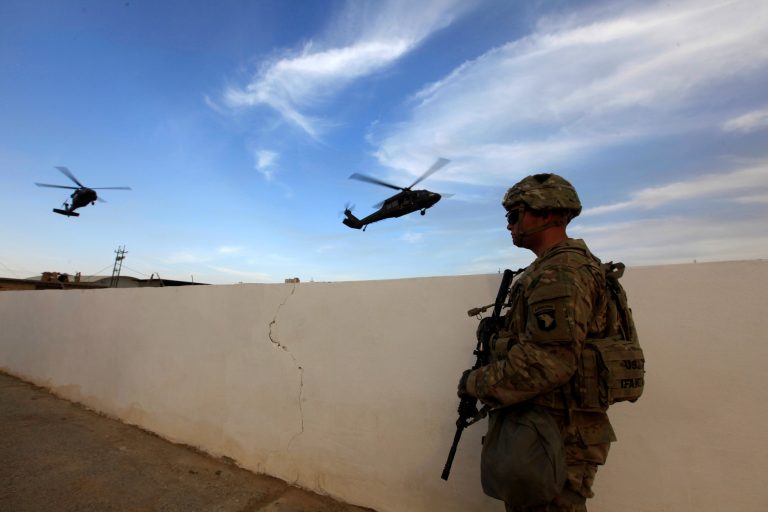
    Official Iraqi government sources have announced the beginning of the withdrawal of the U.S.-led international coalition forces from Baghdad and the Ain al-Asad base in Anbar province. The first phase of withdrawal is scheduled for September this year, during which U.S. forces stationed at Baghdad Airport and the Joint Operations Command will be relocated to Erbil.

    An Iraqi official told Al Jazeera that this retreat is part of an agreement between Baghdad and Washington, and that foreign military trainers will remain in Iraq. Meanwhile, Hussein Alawi, advisor to Iraqi Prime Minister Mohammed Shia’ Al-Sudani, stated that the coalition’s mission in Baghdad and Ain al-Asad will end in September 2025, with the second phase—complete withdrawal—set to be finalized by September 2026.

    According to Alawi, the Iraqi government is committed to strengthening its armed forces and transforming its security relations with coalition countries into stable bilateral partnerships. These relationships will extend beyond military cooperation to include political, economic, and cultural dimensions. He also announced the formation of a high-level military committee to oversee the implementation of the agreement.

    Currently, around 2,500 U.S. troops are present in Iraq as part of the international coalition, primarily stationed at three bases: Ain al-Asad in Anbar, Al-Harir in Erbil, and Victory Base at Baghdad Airport.

    The phased withdrawal from Iraq marks a turning point in Baghdad’s efforts to reclaim full security and military sovereignty. This process not only responds to internal pressures but also reflects the Al-Sudani government’s intention to gradually transfer security responsibilities to Iraqi forces and restore the traditional role of the army in maintaining national stability.

    However, the continued presence of military trainers and ongoing bilateral defense cooperation with the U.S. and other coalition members indicates that Iraq is not seeking a complete severance of security ties. Instead, it aims to shift these relations from the temporary and emergency framework established after the rise of ISIS to a more balanced and enduring strategic partnership.

    The withdrawal from Baghdad and Ain al-Asad can also be seen as a direct result of pressure from resistance groups and their repeated warnings against the continued presence of foreign troops in Iraq. This outcome was achieved through serious negotiations led by the Al-Sudani government. However, it remains unclear whether the plan will be fully implemented or merely symbolic. Past experiences show that the U.S. has previously promised to withdraw its forces from Iraq but failed to follow through, extending its presence instead—raising ongoing doubts about Washington’s commitment to the latest agreement.

  • US Confirms Attack On American Diplomatic Center In Baghdad

    US Confirms Attack On American Diplomatic Center In Baghdad

    A spokesperson for the US embassy in Iraq confirmed Wednesday that the diplomatic mission in Baghdad was attacked on Tuesday night; however, no casualties have been reported so far.

    The spokesperson also noted that the American forces in Iraq are evaluating the damage and the cause of the strike, and that more information will be provided following the end of the evaluations.

    It is noteworthy that local Iraqi sources said that an attack on the base of US troops took place in the vicinity of the Baghdad International Airport in the late hours of Tuesday (local time).

    Following the attack, Spokesman for the Kata’ib Hezbollah resistance faction in Iraq Jaafar al-Husseini stated that the suspicious attack was carried out on Baghdad airport in a bid to disrupt the upcoming visit of Iranian President Masoud Pezeshkian to Iraq.

    As of the moment of publishing this report, no individual or group has claimed responsibility for the suspicious strike.

    Major General Tahsin al-Khafaji, spokesman for Iraq’s Joint Operation Command, also declared that the nature, type of explosion, and reasons behind this attack still remain unclear for Iraqi security forces, adding that no party has taken responsibility for it yet.

  • US Conducts Drone Attack On Headquarters Of PMU In Baghdad, Killing Its Commander, Aide + Video

    US Conducts Drone Attack On Headquarters Of PMU In Baghdad, Killing Its Commander, Aide + Video

    During the drone attack on the logistical support headquarters of the Popular Mobilization Units near the Iraqi Police Academy and east of capital city Baghdad, the commander of the 12th Brigade of the Popular Mobilization Units and the military official of the Harakat Hezbollah al-Nujaba Movement in Iraq Hajj Musghtaq Talib al-Saadi along with his assistant, were martyred.

    The United States’ terrorist forces carried out this attack by firing four missiles, three of which were launched at once, and the fourth missile hit the vehicle carrying al-Saadi.

    The US drone attack comes as Sheikh Akram al-Kaabi emphasized during a speech in Tehran’s Grand Mosque on Wednesday that if the American occupiers do not leave Iraq, the Iraqi resistance will take unprecedented actions against the US.

    As mentioned earlier, the Israeli regime and its eternal ally, the United States, have begun a new round of assassinations and physical removal of influential commanders and individuals of the Islamic resistance axis by the use of division of labor.

    It seems that unfortunately, the scale of assassinations may increase if a decisive response is not received, and the US and the Israeli regime may push the region towards a widespread confrontation.

  • Iraqi Intelligence Service Neutralised Terror Group in Baghdad

    Iraqi Intelligence Service Neutralised Terror Group in Baghdad

    The National Intelligence Service of Iraq announced the destruction of a dangerous terrorist gang in Baghdad and the arrest of its members.

    The members of this team, who were elements of the ISIS terrorist group, intended to carry out suicide operations in Arbaeen processions, police centers, checkpoints and markets in Baghdad.

  • A Small US Airport At Northern Part Of Italian Embassy In Baghdad; How Could It Be!?

    A Small US Airport At Northern Part Of Italian Embassy In Baghdad; How Could It Be!?

    The recent flights of the United States’ helicopters from the Baghdad Diplomatic Support Center or the US airbase at the Baghdad International Airport to the US embassy in Iraq as well as the helipad of US helicopters in the northern part of the Italian embassy in the capital city have been observed for some time in the skies of Baghdad. 

    The flight records of these helicopters show that in addition to various US helicopters, including Sikorsky UH-60M Black Hawk, the American landing strip in the northern part of the Italian embassy in Baghdad also hosts light aircraft such as Beech A36 Bonanza. In a way, it can be said that this embassy has turned into another small airport for the United States in the Iraqi capital.

    American Beech A36 Bonanza flight from this location to Baghdad airport

    According to IWN field sources, senior US officials and forces were transferred from the Baghdad airport to the US embassy by car in recent months, but this process has changed in recent weeks due to Americans’ fear of being assassinated, identified, and so on. And their transfer operations from the US embassy to the Baghdad International Airport and vice versa are now carried out using helicopters, and their car trips have decreased in comparison to the past.

    It is not yet clear why Americans have changed their method of transferring forces to the US embassy in Baghdad. In addition to the flights of the US helicopters inside their embassy and another helipad in the eastern part of the US embassy, the small American airport in the northern part of the Italian embassy is one of the main aerial routes for transporting people and equipment to/from Washington’s embassy and Baghdad airport.

    Satellite images at different times also show various US helicopters stationed at this location. So far, Iraqi government officials and resistance groups’ commanders have not reacted to these movements by the Americans.

    The continuation of these actions and the failure of American soldiers to leave Iraq have caused many people in this country to protest against the Iraqi authorities over the continuation of the United States’ military presence; on the contrary, Iraqi officials neglected the demands and even requested the North Atlantic Treaty Organization (NATO) to increase their military activities in the Arab country.

    However, in accordance with international law, no country is allowed to carry out military actions and reactions in the area of an embassy; so, it seems to be essential to answer the question of whether the US embassy in Baghdad is subject to diplomatic immunity as a result of such a situation or not.

  • IED Attack On US Convoy In Baghdad

    IED Attack On US Convoy In Baghdad

    ISWNews Analysis Group – Ashab al-Kahf resistance group targeted a US logistical convoy in Baghdad province on August 14. Previously, a logistics convoy of American forces was targeted by this group in Qadisiyah province on July 31.

    Read more: IED Attacks Against US Convoy In Iraq

    According to data obtained by IWN, this is the 14th attack by Iraqi resistance groups against US interest and convoys since the beginning of 2023.

    Read more: Infographic: Iraqi Resistance Groups Operations Against the US in 2022

  • Iraqi Army Deploys Anti-Aircraft Systems On Top Of Government Buildings In Baghdad!

    Iraqi Army Deploys Anti-Aircraft Systems On Top Of Government Buildings In Baghdad!

    ISWNews Analysis Group: On August 12, for the first time since 2003 the Iraqi army has installed anti-aircraft systems on the roofs of certain government buildings in Baghdad.

    According to the Alsumaria TV network, the deployment of these systems in the Iraqi capital has surprised and concerned the people.

    The Saudi network Al-Hadath TV also cited its correspondent as saying that the building, where the anti-aircraft systems were stationed, is located near Baghdad Airport. This is the first time since 2003 that anti-aircraft systems have been deployed in Baghdad.

    Following the publication of such reports, spokesperson for the Joint Operations Command of the Iraqi army Major General Tahseen al-Khafaji stated that the deployment of air defense systems on one of the buildings in Baghdad was carried out for training purposes.

    Al-Khafaji also emphasized that the media reports suggesting that the deployment of these systems was due to an imminent threat or readiness for a security incident are not accurate.

  • Senior ISIS Commander Detained In Iraqi Capital Baghdad

    Senior ISIS Commander Detained In Iraqi Capital Baghdad

    ISWNews Analysis Group: The statement also reads: Based on accurate intelligence documents, the Iraqi National Intelligence Service succeeded in arresting the wanted terrorist named Abu Harith Baghdad (nicknamed Muthanna Muhammad Jabbar Afrit), who was one of the leaders of the ISIS terrorist group.

    According to the statement, the mentioned terrorist joined terrorist groups in 2005 and was active in Baghdad units. He was transferred to the mine planting and terror section in Baghdad in 2007; and then, he was relocated in Nineveh province in 2009 and joined the ISIS terrorist group as the commander of the so-called Qadisiyah section.

    Abu Harith Baghdad attempted to enter the Iraqi capital with a fake name and identity after the defeat of the ISIS terrorist group in 2019 and he was finally arrested last Thursday as a result of a 10-hour ambush by Iraqi security forces; so, he was handed over to legal authorities.

  • Elizabeth Tsurkov; Researcher Or Spy?!

    Elizabeth Tsurkov; Researcher Or Spy?!

    After the publication of news stories about the disappearance of the Russian-Israeli woman, an anonymous high-ranking Israeli official presented a report to a group of Israeli journalists and strongly denied published news about Tsurkov’s membership in the terrorist organization Mossad, but investigations show something else.

    Israeli media introduced Tsurkov as an “Israeli prisoner” in Iraq and the Israeli Prime Minister’s office announced that she is alive and was kidnapped by Iraq’s Hezbollah Battalions.

    Iraqi media claims, Israel’s statement was based on an encrypted message from one of Mossad’s agents, which stated: The crow has been caught! Benjamin Netanyahu’s office announced: Tsurkov, who has dual citizenship of Russia and Israel, entered Iraq using her Russian passport.

    It is said that she is a PhD student at Princeton University in the US and an analyst of West Asian affairs who entered Iraq to conduct academic research. Later, Abu Ali al-Askari, head of the security office of Hezbollah Battalions rejected the allegations, describing Netanyahu’s claim on the issue as a dangerous matter.

    A few days after Tsurkov’s disappearance, her sister said in an interview with Israeli media that she was aware of her sister’s abduction from the first moments and quickly informed the Israeli regime. She claimed the family decided to keep it a secret in the hope that the matter would be resolved quickly and quietly.

    Tsurkov has been active on Twitter for over 15 years and openly supported wars and interventions against countries that the US and Israel consider their enemies, especially Syria. Despite the crimes of terrorist groups and opponents of the Syrian government, she helped to whitewash in favor of Syrian militants.

    According to her close friends, she was a former member of the Israeli army intelligence forces who participated in Israel’s 2006 war against Lebanon’s Hezbollah (33-day war). Tsurkov is also simultaneously a member of several Israeli think tanks and US institutions, including New Lines Institute.

    Tsurkov in Pentagon

    Tsurkov’s trips to Iraq!
    Tsurkov traveled to various countries in the region, including Lebanon and Syria, where the visit of Israelis is prohibited. The reasons for changing and hiding her identity on all these trips are also interesting. Tsurkov reported in February 2019 that she had visited the Kurdistan region in northern Iraq.

    According to some sources, she also visited the city of Mosul in 2019 and 2020. The trips took place while the entry of Zionists into Iraq is prohibited. Also, Israel prohibits its citizens from traveling to countries such as Iraq without a special permit from the Israeli Ministry of Interior.

    The presence of any Israeli in Iraq – especially an Israeli woman with such a resume! – becomes sensitive. Some sources claimed, Tsurkov first visited Baghdad in early 2022. She traveled to several cities in Iraq, including Basra, Maysan, and Najaf, and lived with an Iraqi woman in the Karada neighborhood of Baghdad. She entered Iraq again with a two-month visa in November 2022 and extended it in the United Arab Emirates in January of that year.

    Despite repeated claims by Israeli officials that Tsurkov was present in Iraq to conduct research for her PhD studies, Princeton University’s published policies reject Israeli officials’ excuses, because Iraq is among about 20 so-called X-class countries that the university strongly prohibits its students from traveling to for student affairs; a law and policy that existed before and after Tsurkov’s trip to Iraq.

    Moreover, all Princeton University students must register any domestic or international travel related to their course at the university to ensure that their travel complies with the rules. Students can have personal trips to X-class countries (for example, to visit friends or family) but Princeton University law is unambiguous: “You cannot travel to X-class countries for personal work and then engage in course-related activities!”

    Interestingly, during an interview with an Iraqi journalist in Sadr City, Baghdad, Tsurkov described the US government as a “tyrannical government” in the face of Iraq and praised the Iraqi journalist.

    Given her extensive and constant support for US military intervention in Syria and other countries and her membership in American institutions and think tanks, this is an obvious deception.

    Despite having a history of publishing anti-Shia news and promoting extremist ideas affiliated with Al-Qaeda in Syria, Tsurkov introduces herself as an advocate of Sadr!

    Video of Tsurkov’s conversation in Arabic with an Iraqi journalist in Baghdad’s Sadr

    According to statements by Iraqi individuals close to Tsurkov, she met with several Iraqis under different names and asked questions about resistance groups, Sadr movement. She also requested people to meet with leaders of the movement. It is said that Tsurkov had a conversation with one of the senior leaders of the movement days before her disappearance.

    Will we see Tsurkov’s exchange?
    Contradictory reports were published about the efforts of different parties to free Tsurkov. Some media claim Iran and Israel have been negotiating the exchange of prisoners, including Tsurkov, through Russian mediation since June.

    The Russian ambassador to Baghdad denied any Russian involvement in her case. Reports were published about the extensive efforts of the Iraqi government to identify Tsurkov’s location, because the US embassy in Baghdad is strongly pursuing her disappearance.

    In February 2021, Tsurkov tweeted that she was “generally opposed” to prisoner exchanges; even if she is arrested on her next trip to Syria or Iraq! Tsurkov was last seen on March 23 leaving a cafe in the Al-Karada neighborhood.

    Tsurkov leaving Ridha Alwan cafe in Baghdad

    Tsurkov is fluent in English, Hebrew, Russian, and Arabic and used her Russian passport for easy travel to Arab countries under the guise of research and human rights work.

    Seemingly, Tel Aviv failed in its infiltration operation of one of its elements into Baghdad with the code name “Crow”. However, it may take time to fully determine why Tsurkov was in Iraq and exactly what actions she took or intended to take!

  • Iraqis Hold Anti-US Rally In Baghdad

    Iraqis Hold Anti-US Rally In Baghdad

    ISWNews Analysis Group: On July 14, people from different districts of Iraq gathered in Baghdad to protest against the United States’ interference in the country’s internal affairs as well as in Baghdad’s relationship with its neighboring countries.

    Close to the time of holding protest rally near the US embassy in Baghdad, Iraqi security forces were stationed near the suspension bridge in the capital city’s Green Zone.

    It is said that around three thousand security forces were stationed around that area to prevent the possible entry of protesters into the Green Zone.

    After the start of the demonstrations, dozens of Iraqi youths chanted slogans such as God is great and the US is the Great Satan, No to the US and No to Israel to show their resentment against the US and Israel in protest against US interference in Iraq’s internal affairs as well as the presence of Zionist regime’s elements in the Arab country.

    Iraqi protesters emphasized their determination to dismantle the US embassy and expel its ambassador, who interferes in most of Iraq’s internal affairs.

    Hassan Salem and Saud Al-Saadi, both representatives of the Iraqi parliament, also attended the anti-US demonstrations near Baghdad’s Green Zone on Saturday

    It is worth mentioning that the Shia resistance group named As’hab al-Kahf issue a statement earlier on July 12 in order to invite the Iraqi people to hold demonstrations in front of the US embassy in Baghdad.

  • Resistance Group Calls For Demonstrations In Front Of US Embassy In Baghdad!

    Resistance Group Calls For Demonstrations In Front Of US Embassy In Baghdad!

    ISWNews Analysis Group: On July 12, the Shia resistance group As’hab al-Kahf issued a statement, addressing the Iraqi people by saying that the fighters of Islamic resistance groups are your brothers and children, who have not and will not participate in any of the enemy’s projects against the holy religion of Islam.

    The statement also reads that we, the children of Islam and Shia sect, invite you to protest against the enemy of Islam and the Satan’s den, which is called the US embassy.

    We emphasize that our protests are to defend the rights of Iraq and its people, and that they are not related to any political factions or groups, it added.

    According to the announcement of the Shia resistance group of As’hab al-Kahf, this protest rally will be held in front of the US embassy in Baghdad on Friday.