Tag: Iraq

  • Iranian missiles pounds terrorist positions in Kurdistan region!

    Iranian missiles pounds terrorist positions in Kurdistan region!

    According to the latest information obtained from the early morning attack of the Iranian Armed Forces on the military positions of terrorist groups in the Kurdistan Region, the Koysinjaq area, the Jazhnikan camp in northern suburbs of Erbil city and two other headquarters in the Zargoiz and Bangora areas in southern suburbs of Sulaimaniyah city were targeted with several missiles and Shahed-136 (or 131) suicide drones.

    So far, no information has been released about the exact amount of casualties and damages of these attacks, but it is said that a member of the Kurdish Democratic Party of Iran (KDPI) terrorist group named “Behzad Iskat” was killed in the attacks.

    Behzad Iskat, a member of the KDPI terrorist group which was killed as a result of attacks on terrorist positions in the Kurdistan region of Iraq

    Nasser Kanani, the spokesman of the Ministry of Foreign Affairs of Iran said this morning during a meeting with journalists in response to today’s attacks by the Iranian armed forces on terrorist positions in the Kurdistan Region of Iraq:

    “Iran’s expectation is definitely that there will be no threat to Iran’s national security from Iraqi territory and that Iraq should not be used as a place and base of threat against Iran. We expect that the Iraqi government and local government officials of the Kurdistan region to fulfill their international responsibilities and fulfill the commitments they made in the framework of bilateral negotiations with Iran. However, despite the repeated promises that we received from the Iraqi and regional government officials, this did not happen, and as a result, Iran is acting based on its legal rights to protect the security of its borders, land and citizens, to provide security and repel threats.”

    On the other hand, the Kurdistan Regional Government issued a statement strongly condemning today’s attack by Iran’s armed forces and considered it a repeated violation of Iraq’s territorial sovereignty and against the principles of good neighborliness. In this statement, they asked Iran to end these attacks.

    The new round of attacks by Iran’s armed forces on the positions of terrorist groups based in the Kurdistan region of Iraq began while a while ago the US media “Associated Press” quoted informed sources and claimed that General Ismail Qaani, the commander of the IRGC Quds Force, in his recent trip to Iraq, in addition to warning the Iraqi authorities, has stated that if the terrorist groups in the Kurdistan region are not disarmed and the Iraqi army forces are not stationed on the common border between Iran and the Kurdistan region, the Iranian armed forces will start ground operations in northern Iraq!

    Read more: Is Iran marching to Iraq Kurdistan Region to suppress terrorism?!

    It is worth mentioning that last night’s attacks were the third round of attacks by Iranian armed forces against terrorist groups in northern Iraq. The first round of attacks took place on September 28, during which 15 militia members were killed and 24 others were injured. In the second round of attacks on November 14, Sidakan heights, south of Sulaymaniyah and the outskirts of Koysinjaq were targeted and at least two members of the Kurdistan Democratic Party of Iran terrorist group were killed and 10 others were injured.

    Read more:
    Iran missile and drone attacks on terrorist groups in Iraq’s Kurdistan + Video
    Iran missile and drone attacks against terrorist groups in the Kurdistan region + Video

    Footages of Iranian missile and drone attacks on KDPI terrorist group in the Kurdistan region of Iraq
    Click to view full size
  • Is Iran marching to Iraq Kurdistan Region to suppress terrorism?!

    Is Iran marching to Iraq Kurdistan Region to suppress terrorism?!

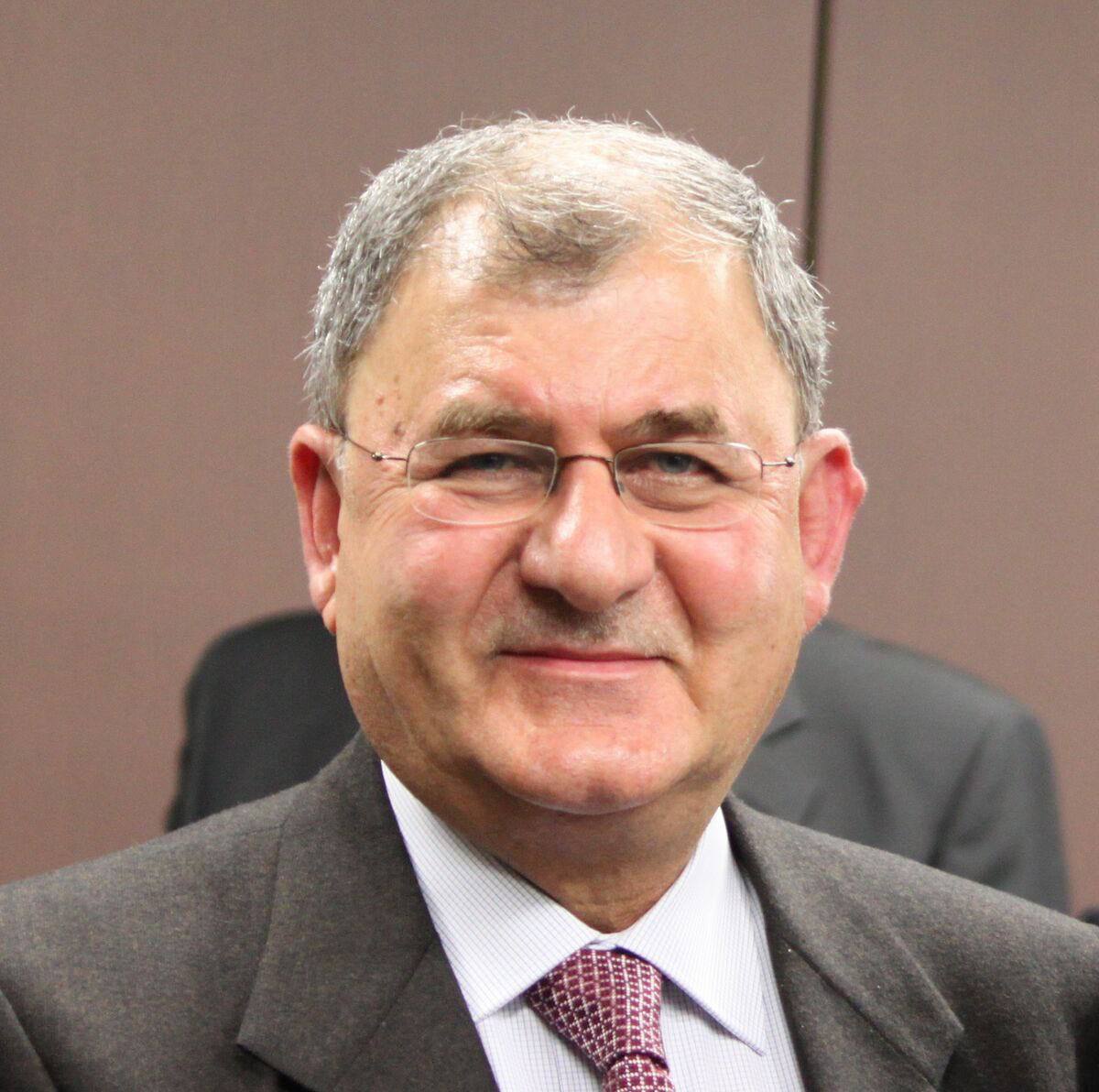
    Late last week, after the Iranian armed forces drone and missile attacks against the positions of terrorist groups in the Kurdistan region of Iraq, General Ismail Qaani, the commander of the IRGC Quds Force arrived in Baghdad to meet and talk with senior Iraqi officials. During this trip, General Qaani met and talked with the President Abdul Latif Rashid, Mohammad Shia al-Sudani, the Prime Minister of Iraq, as well as some other Iraqi officials and personalities.

    After these meetings, the US media “Associated Press” quoting informed sources claimed that “General Qaani, while warning the Iraqi authorities, stated that if the terrorist groups in the Kurdistan region are not disarmed and the Iraqi army forces are not deployed on the common border between Iran and the Kurdistan Region, the Iranian armed forces will begin ground operations in northern Iraq!”

    The Associated Press continued to write, “It is not clear how serious Iran’s warning is, but this is the first time that Iranian authorities, after months of conflict with armed groups based in the Kurdistan Region and asking Iraq to disarm terrorist groups active in northern Iraq, openly threaten to start a ground operation.”

    Although the senior officials of Iran and Iraq have not commented in this regard, but assuming the truth of the claim of this US media and considering the recent attacks of the Iranian armed forces against the terrorist groups based in the Kurdistan region, we understand that these actions show a serious determination, And the new decisions of the Iranian authorities are to deal with terrorist groups in this region. This decision has become more serious, especially after the revelation of the role and involvement of these terrorist groups in the recent unrest in Iran. Therefore, it seems that in the near future, the Iranian armed forces will start a new round of attacks against terrorist groups in the Kurdistan region of Iraq, and the terrorists in the region must wait for the hot days to come!

  • Iran missile and drone attacks on terrorist groups in Iraq’s Kurdistan + Video

    Iran missile and drone attacks on terrorist groups in Iraq’s Kurdistan + Video

    According to local sources, at least two militia members were killed and 10 others were injured since the start of attacks by Iranian armed forces on the positions of terrorist groups in the Kurdistan region.

    In this operation, the IRGC attacks mostly focused on Sidakan heights, south of Sulaymaniyah and the outskirts of Koysinjaq. Currently, the attacks have stopped and new areas will be announced and updated in case of the new round of attacks.

    Naser Kanani, the spokesman of Iran’s Ministry of Foreign Affairs, confirmed this attack this morning during a meeting with reporters without providing further details and said that “Iran will not remain silent regarding the threat to territorial security, especially border threats, and separatist groups and will defend its security.”

    Read more: Iran’s warning to Iraq: Remove the terrorist groups from the Kurdistan Region!

    It is worth mentioning that since the end of September, Iran’s armed forces have launched a new round of operations and missile and drone attacks against the terrorist groups of the Democratic Party of Iranian Kurdistan (KDPI), Kurdistan Free Life Party (PJAK), the Komala Party of Iranian Kurdistan (Komala) and the Kurdistan Freedom Party (PAK). Iran’s armed forces have always warned the Iraqi government and the Iraqi Kurdistan government about the activities and destructive behavior of terrorist groups based in the Kurdistan region against Iran’s national security and wants the bases and military positions of these groups to be dismantled. Therefore, it seems that due to the negligence of the Iraqi side, the Islamic Republic of Iran, in accordance with the right to legitimate defense of its national security, is taking the necessary measures to destroy the positions and bases of terrorists in these areas near Iran’s border.

    The moment the IRGC suicide drone hit one of the positions of the terrorist groups

    A video of the moment one of the IRGC’s suicide drones hit the positions of terrorist groups in the Kurdistan region of Iraq.

    Click to view full size

  • Airstrike on alleged Iranian fuel convoy near Iraq-Syria border

    Airstrike on alleged Iranian fuel convoy near Iraq-Syria border

    Last night, unidentified aircraft attacked a convoy carrying fuel near Al-Qaim crossing in Iraq and destroyed a significant part of this convoy. According to local information, a number of border guards lost their lives in this attack. So far, no further information on the amount of casualties and damages has been published.

    It is said that this fuel convoy belongs to the Islamic Republic of Iran. Iranian authorities have not commented yet.

    The US Terrorist Central Command in West Asia (CENTCOM), while confirming the news of the attack, said that the attack was not carried out by the United States and that the center is investigating the origin of the airstrike. Considering the denial of the attack by the US, the fingers are pointing towards the Israeli regime and it can be concluded that the attack was carried out by Israel.

    In the past, the Israeli regime has repeatedly carried out attacks against the positions of the resistance forces and the Syrian army with the help and cooperation of the United States and using Iraq airspace. Also, the CENTCOM stating that the US does not know about aforementioned aircraft in the sky under its control or that it is investigating the main cause of this attack, is actually a lie and hypocrisy.

  • Iraq: Al-Sudani cabinet received the confidence from the parliament

    Iraq: Al-Sudani cabinet received the confidence from the parliament

    On Thursday, Iraqi parliament members voted with an overwhelming majority of confidence in the government of Mohammad Shia Al-Sudani. In this meeting, Abdul Latif Rashid, the president of Iraq, Jeanine Hennis-Plasschaert, the head of the UN mission in Iraq, Faiq Zeidan, the head of the Supreme Judicial Council of Iraq and some high-ranking officials of this country were present.

    The approved ministers of the Al-Sudani cabinet are as follows:
    1- Fuad Hussein, Minister of Foreign Affairs
    2- Hayan Abdul Ghani, Minister of Oil
    3- Mohammad Tamim, Minister of Planning
    4- Taif Sami, Minister of Finance
    5- Thabit Mohammad, Minister of Defense
    6- Abdul Amir Al-Shimmery, Minister of Interior
    7- Salih Mahdi, Minister of Health
    8- Ivan Faiq, Minister of Immigration
    9- Raazaq Mohaibis, Minister of Transport
    10- Aoun Diab, Minister of Water Resources
    11- Ahmed Al-Asadi, Minister of Labor and Social Affairs
    12- Ahmad Al-Mubarka, Minister of Youth and Sports
    13- Ibrahim Namis, Minister of Education
    14- Athir Daowd Salman, Minister of Trade
    15- Khaled Shawani, Minister of Justice
    16- Ziad Ali Fazel, Minister of Electricity
    17- Hoyam Abboud, Minister of Communications
    18- Abbas Jabr, Minister of Agriculture
    19- Na’im Al-Abboudi, Minister of Higher Education
    20- Khalid Battal Najm, Minister of Industry
    21- Ahmad Fakak Ahmad, Minister of Culture and Antiquities

    Thursday’s Parliament session comes a year after an election in which the Shia cleric Moqtada Al-Sadr was the biggest winner, but failed to rally support to form a government. So, on October 13, 2022, the Iraqi parliament elected Abdul Latif Rashid as the new president of Iraq after consultation between the Shia, Kurdish and Sunni factions, and then Abdul Latif Rashid appointed Mohammad Shia al-Sudani as the prime minister of Iraq to form the new cabinet.

    Read more: Abdul Latif Rashid elected as the new Iraq President

  • Abdul Latif Rashid elected as the new Iraq President

    Abdul Latif Rashid elected as the new Iraq President

    On October 13, the election of the new president of Iraq was held in the parliament of this country with the presence of 269 representatives out of a total of 329 representatives. After the end of the voting, Abdul Latif Rashid surpassed the other presidential candidates with 157 votes, but due to not getting two-thirds of the majority of the votes, the parliamentary voting was extended to the second round.

    Hours later, the second round of voting ended and Abdul Latif Rashid won 162 votes out of the total number of votes cast and was elected as the new president of Iraq by defeating Barham Saleh with 99 votes.

    After the victory, Abdul Latif Rashid appointed Mohammed Shia’ Al Sudani as the prime minister of Iraq to form the cabinet. Confirming this news, al-Sudani said, “I will form the cabinet as soon as possible.”

    It is worth mentioning that in August of this year, the coordination framework of Iraqi Shias chose Mohammad Shia al-Sudani as the final candidate for the position of prime minister and emphasized his support despite the opposition of some people and political groups. This issue caused the supporters of the Iraqi Sadr Movement to gather in the streets of Baghdad and express their opposition to the introduction of al-Sudani as a prime ministerial candidate by the Iraqi Shiite Coordination Framework.

    Considering the opposition of Iraq’s Sadr movement to the Sudanese prime ministership, it is likely that the supporters of Sadr movement will gather in different cities of Iraq in the coming days and force the Iraqi authorities to accept their demands!

  • Iran’s warning to Iraq: Remove the terrorist groups from the Kurdistan Region!

    Iran’s warning to Iraq: Remove the terrorist groups from the Kurdistan Region!

    In recent years, the officials and military commanders of the Islamic Republic of Iran have repeatedly warned about the activity and deployment of terrorist groups near the borders of Iran and the Kurdistan region of Iraq, and have informed the local and government authorities of Iraq about their opposition. However, the central government of Iraq and the authorities of the Kurdistan region have not taken decisive and acceptable measures to expel these groups or prevent their attacks on the territory of the Islamic Republic of Iran.

    Therefore, with the increase of the activities of terrorist groups Komola, KDPI, PAK, PJAK and PKK in Iran’s borders, as well as attempts to carry out terrorist operations, the explosion in one of the country’s sensitive centers in Isfahan province by elements of the terrorist group Komala under the guidance of Mossad (the attack was neutralized in August), the attempt to bringing armed teams and import a large amount of weapons into Iran’s soil and the active role in the recent riots in Iran’s border cities made the Islamic Revolutionary Guard Corps determined to carry out a artillery and drone campaign against the positions of the mentioned terrorist groups in the Kurdistan region of Iraq.

    Considering the number of terrorist groups and their foreign supporters, it seems that the recent attacks of the IRGC are not enough to completely destroy the terrorist groups and this operation is just a warning message and retaliatory action. On the other hand, the authorities of the Islamic Republic of Iran, at the same time as the start of this operation, have put diplomatic consultations with the Iraqi authorities on the agenda and demanded an end to the activities of terrorist groups around their borders, especially in the Kurdistan region of Iraq.

    The presence of terrorist groups in the Kurdistan region of Iraq, in addition to threatening the security of Iran, is also considered a serious threat to the security of Iraq. If proper action is not taken by the Iraqi authorities to expel terrorist groups from the Kurdistan Region, this issue can threaten Iraq’s national security in the long term, create problems in relations with neighboring countries, increase the number of foreign military bases in northern Iraq, and turning the Kurdistan region of Iraq into an arena for resolving regional disputes and military conflicts.

    Currently, the terrorist groups of the Democratic Party of Iranian Kurdistan (KDPI), Kurdistan Free Life Party (PJAK), the Komala Party of Iranian Kurdistan (Komala) and the Kurdistan Freedom Party (PAK) are among the main separatist and terrorist groups in the eastern borders of the Kurdistan Region, focusing on attacking Iran’s national security. During the past years, many documents have been obtained about the use of the mentioned groups by western Intelligences, including the CIA and Mossad, to carry out subversive operations in Iran.

    Considering this issue, if the current negotiations to dismantle and evacuate the headquarters of these groups from the territory of the Kurdistan Region do not succeed, we may witness more effective and serious operations by Iran, including ground operations to clean up the eastern areas of the Kurdistan Region.

    Read more:
    Iran’s missile and drone attacks against terrorist groups in the Kurdistan region + Video
    15 terrorists were killed in Kurdistan Region of Iraq
    IRGC missile attacks on north of Er
    bil

    Map of the dispersion of terrorist groups in the eastern borders of the Kurdistan region of Iraq – Click to view full size
  • Rocket attack on Turkish Bashiqa base in northern Iraq

    Rocket attack on Turkish Bashiqa base in northern Iraq

    Early on October 9, the Turkish Bashiqa military base in the Zelkan region, located in north of Mosul was targeted with four rockets. Ahrar al-Iraq took responsibility for the attack.

    Read more:
    Rocket attack on Turkish Bashiqa base in northern Iraq
    Rocket attack on Turkish Bashiqa base in northern Iraq
    Rocket attack on Turkish Bashiqa base in northern Iraq

  • Opinion: Iraqi Kurdistan has finally turned into a den of evil!

    Opinion: Iraqi Kurdistan has finally turned into a den of evil!

    Since the 60s of the last century, the self-proclaimed Kurdistan has taken a course of cooperation with the colonialists to destroy neighboring Islamic countries. The first regional allies of the Barzani regime were the Zionists and the Turks, this story continues to this day, it seems that only two factors can eradicate the terrorist image of the Kurdish enclave. 1 – military operation, 2 – internal uprising.

    Barzani knows that a war against Zionism is inevitable, therefore he, as an ally of the “temporary entity”, comes under attack. The IRGC’s missile attacks and the use of UAVs against the “occupiers of the holy land” are, among other things, a gesture by Barzani and others that retribution awaits not only Zionism, but also its henchmen. For its part, Erbil welcomed the Turkish intervention, which, in addition to personal expansion and protection of Barzani’s dictatorship, should become a cover for the subversive activities of “radical cosmopolitans” in the territory of Kurdistan. Another reaction of the self-proclaimed enclave was the support of various types of insurgency. Actually, the support of terrorists for the regime of the “Democratic Party of Kurdistan” (KDP) is not something new in foreign policy, but today this tactic is gaining new features. If earlier Barzani “covered” radicals and separatists, now the dictator provides them with material support and is a “strategic depth” for them, and all this for the sake of destroying Iraq.

    Revealing the details of the presence of radical insurgency under Barzani’s tutelage, writer and journalist Mohammed Fatih points out that ”extremist religious groups in the Kurdistan region, represented by Wahhabism, Salafism and others, began to appear after the region gained quasi-independence in 1991.” Moreover, the KDP itself creates manual fighters to serve the interests of Zionism, Turkey and the Americans. This was stated by the Leader of the Patriotic Union of Kurdistan, Karvan Anwar, pointing out that the Democratic Party of Kurdistan has created a military force called Al-Rush, formed from Syrian Kurds, Barzani uses them for guerrilla and political purposes, the formation has from 15 to 17 thousand Syrian Kurdish elements.”

    Observing the subversive activities of Erbil, the “Coordinating Body of the Resistance Factions” issued a statement warning that the factions “are monitoring operations to train armed groups in Iraqi Kurdistan under the auspices of Masoud Barzani, as well as suspicious movements of domestic and foreign agents, where Zionists stand apart, whose goal is to spread chaos, unrest, sabotage, undermining unity of the Iraqi people, social structure.” Earlier, a representative of the Fatah coalition said that “six paramilitary brigades are present on the border with Kurdistan.” Baghdad hints that it has various options on the table regarding Erbil, including a military operation to eliminate the “separatist enclave and terrorist groups there.”

    In any case, in this confrontation, the Iraqis have an impressive advantage, because in addition to support in the face of fraternal Iran and allied relations with Syria, the Arab League has an extremely negative attitude to any attempt by the Kurds of Iraq to “gain independence”. While only Turks and Zionists are on Barzani’s side.

    After the Iranians crushed a number of Mossad headquarters, periodic attacks by groups associated with the Islamic Resistance of Iraq against Turkish interventionists and warning signals from Hashad al-Shaabi to the Barzani regime, it becomes clear that the Tehran-Baghdad axis is ready to physically respond to outgoing threats from Iraqi Kurdistan. It can be summed up that there will be no war unless the power of the Kurdistan Democratic Party is shaken by a popular revolt. After all, we must not forget that the Barzani regime is on the verge of collapse even without external challenges, because total corruption has led modern Kurdish society to a ripening revolutionary storm. Therefore, the dictatorship of the DPR, in principle, has no prospects in the future, and participation in the struggle against the Axis of Resistance only pushes Barzani to a bottomless abyss. There is even an opinion among experts that due to the expected collapse, Erbil decided to complicate Baghdad’s life at last by supporting local insurgents and favoring the Turkish occupation.

  • Attack on Hashd al-Shaabi headquarters in Basra with 16 rockets + Video

    Attack on Hashd al-Shaabi headquarters in Basra with 16 rockets + Video

    Around 02:30 local time on October 4, unknown armed elements attacked the headquarters of Hashd al-Shaabi (PMU) in al-Tanouma area of Basra city. During this attack, 14 Katyusha rockets hit near the presidential palace complex in Basra.

    This conflict ended around 05:30 in the morning and the attackers were forced to retreat after the resistance of Hashd al-Shaabi forces. So far, no report has been published about possible casualties and damages caused by this attack.

    In this regard, a high-ranking security delegation headed by Abdul Amir Rashid Yarallah, Chief of the General Staff of the Army and Abdul Amir Al Shammari, Deputy Commander of the Iraqi Joint Operations Headquarters, entered this province to investigate the recent security events in Basra. During this visit, the Chief of General Staff of the Iraqi Army, in order to increase the security factor of Basra province, ordered that a brigade of the Iraqi army be sent to Basra province.

    So far, no group has claimed responsibility for the attack on the Hashd al-Shaabi headquarters in Basra, but some sources have named the Saraya al-Salam militants, affiliated with the Iraqi Sadr Movement, as the main culprits of this attack.

    A video of the attack on Hashd al-Shaabi headquarters in Basra
  • IRGC missile attacks on north of Erbil

    IRGC missile attacks on north of Erbil

    The Islamic Revolutionary Guard Corps has announced in its latest official statement that military operations against terrorist groups in the Kurdistan region of Iraq will continue until the complete disarmament of the terrorists. In this regard, Major General Mohammad Bagheri, the Chief of the General Staff of the Iranian Armed Forces, criticized the US support and cooperation with terrorists and separatists and stated that Iran reserves the right to respond to the downing of a Muhajer-6 drone by the US terrorist army. He also warned the neighboring countries where the US and Zionist bases are located, that if any hostile action against Iran’s security and national interests is carried out from these bases, the same bases will be attacked.

    It should be noted that at the same time as the IRGC’s attacks on the north of Erbil today, the Turkish army has also launched an artillery attack on the northern heights of Dohuk province and Sidakan region in the east of Erbil province.

    Due to the incompetence of the Iraqi governments and the cooperation of the leaders of the Kurdistan Region with the United States and the Israeli regime, the heights and different regions of the Iraqi Kurdistan region have become a source for training terrorist and separatist groups on the borders of Iran, Turkey and Syria in recent years. During the recent protests in Iran, these groups plotted and implemented terrorist activities against nuclear facilities, etc., which were thwarted by the intelligence of Iran’s security organizations.

    Read more:
    15 terrorists were killed in Kurdistan Region of Iraq
    Iran’s missile and drone attacks against terrorist groups in the Kurdistan region of Iraq + Video

    Video of #Iran‘s missile and Shahed-136 pinpoint attacks against the terrorist groups in north of Altun Kupri.
  • 15 terrorists were killed in Kurdistan Region of Iraq

    15 terrorists were killed in Kurdistan Region of Iraq

    The Iraqi Kurdistan Region media published the pictures of 8 members of the Kurdistan Freedom Party (PAK) who were killed in the recent drone and missile attacks of the Iranian Armed Forces. With these 8 militants and 7 others from the Kurdistan Democratic Party of Iran (KDPI), the terrorist groups in the Kurdistan region of Iraq have officially admitted death of 15 of their forces.

    Now, six days have passed since the start of missile and drone operations by the IRGC and the Islamic Republic of Iran Army, and the positions of the terrorist groups Komala, KDPI, PAK, PJAK and PKK in different regions of the Iraqi Kurdistan region are still under heavy fire from Iran.

    The new round of Iran’s attacks against terrorist groups in northeastern Iraq began after these groups took advantage of the recent protests in Iran to enter sabotage teams and a large amount of weapons into Iran’s soil And they intended to carry out terrorist operations in Iran. Therefore, these activities were met with a strong reaction from the Iranian armed forces, and their positions were targeted in different parts of the Iraqi Kurdistan region.

    So far, the heads of some countries such as the United States of America, France, Saudi Arabia and the Iraqi government have condemned Iran’s attacks against terrorist groups and demanded that Iran stop the attacks.

    On the other hand, at the same time as these attacks, Turkish fighter jets also bombarded the positions of terrorist groups in Bradust Mountain in the northern Kurdistan region of Iraq.

    Read more: Iran’s missile and drone attacks against terrorist groups in the Kurdistan region of Iraq + Video

    The moment when two Shahed-136 suicide drones hit the positions of terrorist groups in the Kurdistan region of Iraq