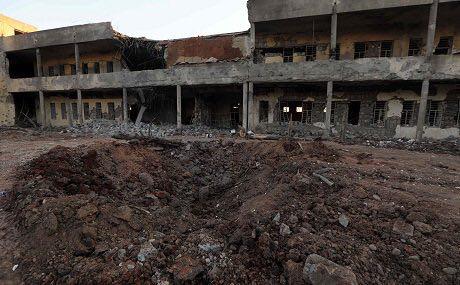
The informed source also claimed in an interview with Deutsche Welle that the KDPI left behind its main headquarters in the Koysinjaq town dubbed “Democratic Castle” after three decades of being stationed there.
It is said that Komala Kurdistan Party and the Komala of the Toilers of Kurdistan have also retreated from their positions in Iran-Iraq border areas.
Following the withdrawal of anti-Iran armed groups, Iraqi National Security Advisor Qasim al-Araji, heading a high-level security delegation traveled to Erbil on September 18 in a bid to follow up on the implementation of a security agreement between Tehran and Baghdad.
This visit was carried out on the orders of Prime Minister and Commander-in-Chief of the Iraqi Armed Forces Mohammed Shia’ al-Sudani.
Simultaneously, Iranian armed forces deployed armored, artillery, missile, drone, and helicopter units to the country’s northwestern borders.
Less than 24 hours remain until the end of the deadline determined by Iran, in particular the Ground Forces of the Islamic Revolution Guards Corps’ (IRGC) ultimatum to disarm all terrorists in the Kurdistan Region of Iraq; if the Iraqi government fails to act according to the terms of the security agreement with Iran, the Iranian armed forces will initiate operations against anti-Iran armed groups stationed in the Kurdistan Region of Iraq.
The deputy commander of the IRGC said in an interview with an Iranian media outlet that we expect from our brothers in the Kurdistan region to show brotherliness, because providing terrorists with safe haven in that region, which has become a source of operations against our country, is not consistent with brotherliness or good neighborliness.
After uninterrupted negotiations, we finally signed an agreement with the central government in Baghdad as well as the Kurdistan region, and the deadline of the accord to become operational is on September 19 in terms of scheduling and agreed-upon provisions, he argued.
The brigadier general went on to say that we are committed to all the provisions of the agreement, not one word less or one word more; thus, we expect the other party to also abide by the agreement in the same way as the Islamic Republic of Iran has fulfilled its obligations. Otherwise, the situation will come back to its previous state, and we will be forced to protect the interests of the Iranian people, he warned.
It should be noted that some time ago, Chief of Staff of the Iranian Armed Forces Major General Mohammad Hossein Bagheri stated at a meeting with commanders of the Ground Forces of the Islamic Revolution Guards Corps that the Iraqi government has time up to September in order to eradicate separatist groups in the Kurdistan region of the Arab country.
Prime Minister of Iraq Mohammed Shia’ al-Sudani also emphasized the seriousness of his government to implement the provisions of the Tehran-Baghdad security agreement completely. He made the remark in a meeting with a delegation of senior managers from Iranian media outlets yesterday.
The Iraqi premier said that for various reasons, we as the Iraqi government feel obligated to address Tehran’s security concerns regarding terrorist activities, which are being committed from the Kurdistan region in Iraq. To this end, we have spent over $200 million on this issue and deployed more than 3,000 National Army forces along Iran’s borders and throughout the region, he noted.
In recent months, senior commanders of the Iranian armed forces have warned the Iraqi government and officials in the Kurdistan region of Iraq about the illegal and terrorist movements of certain outlawed groups.
Given the continued presence of anti-Iran armed groups in the Kurdistan region of Iraq as well as the Iraqi sides’ failure to make proper decisions and implement practical plans to expel or disarm terrorist groups from Iraq’s border areas, the Islamic Republic of reserves its rights to resort to all available capacities to establish security along its western borders after the end of the September 19 deadline.
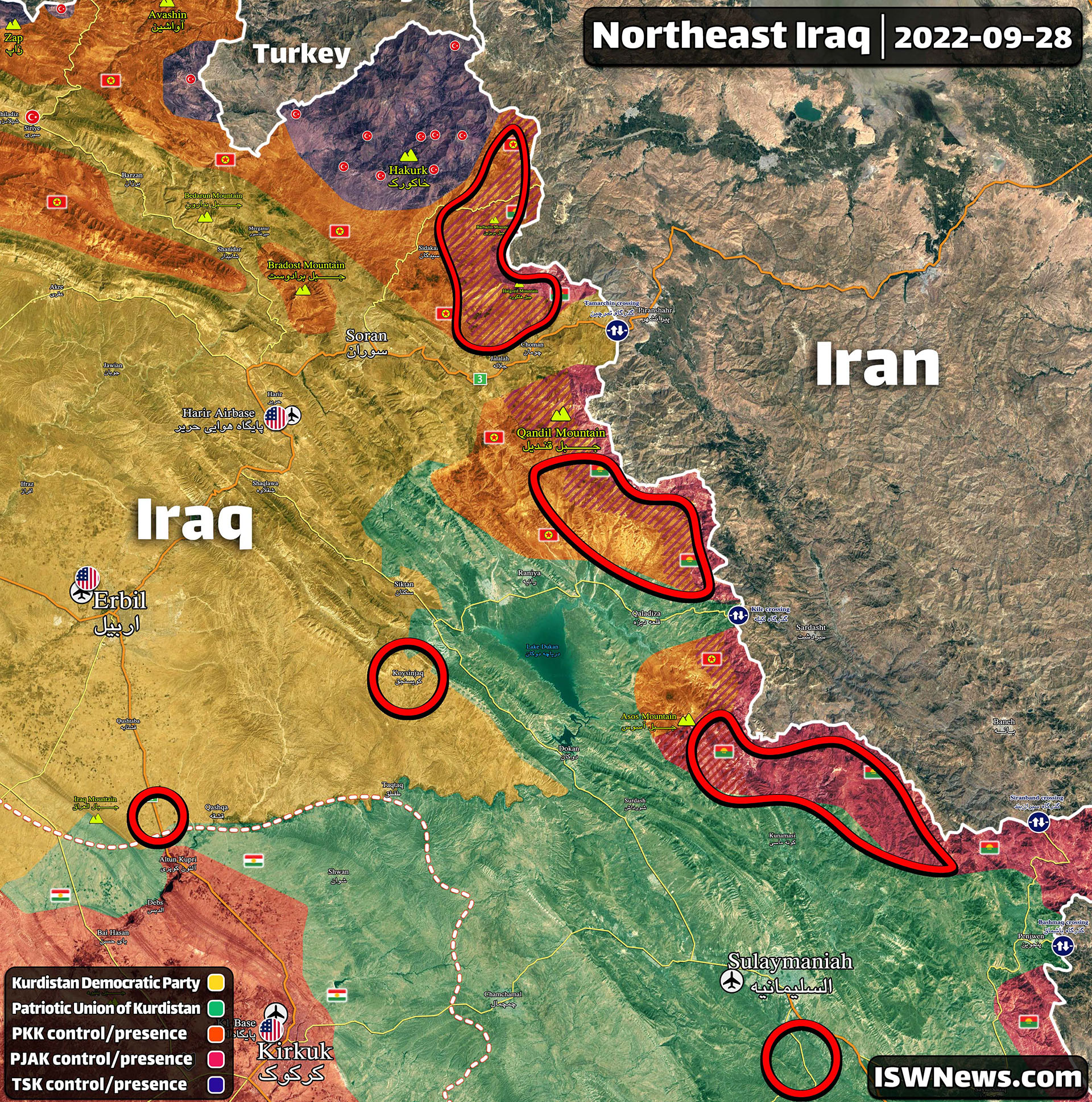
Map of the distribution of terrorist groups in the western borders of Iran – click to view in full size
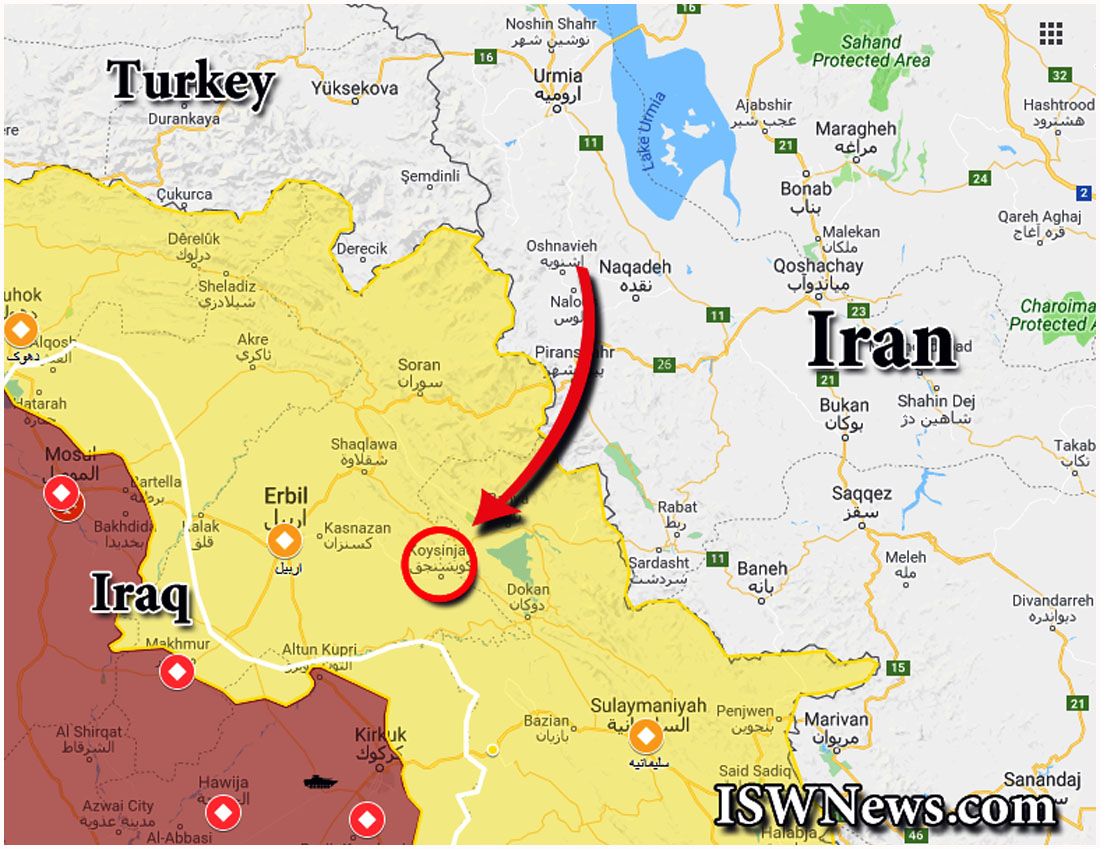
According to the latest information obtained from the early morning attack of the Iranian Armed Forces on the military positions of terrorist groups in the Kurdistan Region, the Koysinjaq area, the Jazhnikan camp in northern suburbs of Erbil city and two other headquarters in the Zargoiz and Bangora areas in southern suburbs of Sulaimaniyah city were targeted with several missiles and Shahed-136 (or 131) suicide drones.
So far, no information has been released about the exact amount of casualties and damages of these attacks, but it is said that a member of the Kurdish Democratic Party of Iran (KDPI) terrorist group named “Behzad Iskat” was killed in the attacks.
Behzad Iskat, a member of the KDPI terrorist group which was killed as a result of attacks on terrorist positions in the Kurdistan region of Iraq
Nasser Kanani, the spokesman of the Ministry of Foreign Affairs of Iran said this morning during a meeting with journalists in response to today’s attacks by the Iranian armed forces on terrorist positions in the Kurdistan Region of Iraq:
“Iran’s expectation is definitely that there will be no threat to Iran’s national security from Iraqi territory and that Iraq should not be used as a place and base of threat against Iran. We expect that the Iraqi government and local government officials of the Kurdistan region to fulfill their international responsibilities and fulfill the commitments they made in the framework of bilateral negotiations with Iran. However, despite the repeated promises that we received from the Iraqi and regional government officials, this did not happen, and as a result, Iran is acting based on its legal rights to protect the security of its borders, land and citizens, to provide security and repel threats.”
On the other hand, the Kurdistan Regional Government issued a statement strongly condemning today’s attack by Iran’s armed forces and considered it a repeated violation of Iraq’s territorial sovereignty and against the principles of good neighborliness. In this statement, they asked Iran to end these attacks.
The new round of attacks by Iran’s armed forces on the positions of terrorist groups based in the Kurdistan region of Iraq began while a while ago the US media “Associated Press” quoted informed sources and claimed that General Ismail Qaani, the commander of the IRGC Quds Force, in his recent trip to Iraq, in addition to warning the Iraqi authorities, has stated that if the terrorist groups in the Kurdistan region are not disarmed and the Iraqi army forces are not stationed on the common border between Iran and the Kurdistan region, the Iranian armed forces will start ground operations in northern Iraq!
It is worth mentioning that last night’s attacks were the third round of attacks by Iranian armed forces against terrorist groups in northern Iraq. The first round of attacks took place on September 28, during which 15 militia members were killed and 24 others were injured. In the second round of attacks on November 14, Sidakan heights, south of Sulaymaniyah and the outskirts of Koysinjaq were targeted and at least two members of the Kurdistan Democratic Party of Iran terrorist group were killed and 10 others were injured.
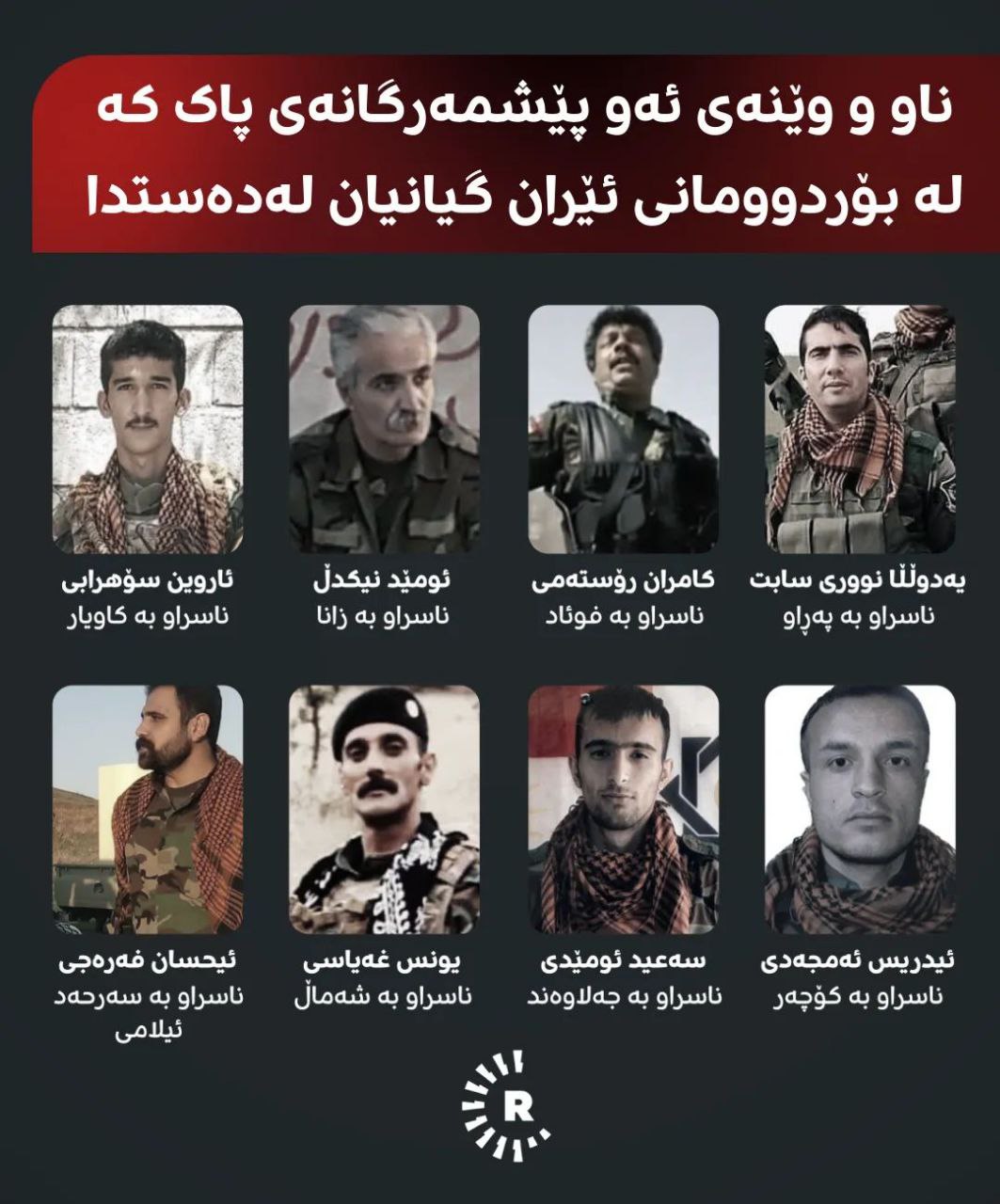
The Iraqi Kurdistan Region media published the pictures of 8 members of the Kurdistan Freedom Party (PAK) who were killed in the recent drone and missile attacks of the Iranian Armed Forces. With these 8 militants and 7 others from the Kurdistan Democratic Party of Iran (KDPI), the terrorist groups in the Kurdistan region of Iraq have officially admitted death of 15 of their forces.
Now, six days have passed since the start of missile and drone operations by the IRGC and the Islamic Republic of Iran Army, and the positions of the terrorist groups Komala, KDPI, PAK, PJAK and PKK in different regions of the Iraqi Kurdistan region are still under heavy fire from Iran.
The new round of Iran’s attacks against terrorist groups in northeastern Iraq began after these groups took advantage of the recent protests in Iran to enter sabotage teams and a large amount of weapons into Iran’s soil And they intended to carry out terrorist operations in Iran. Therefore, these activities were met with a strong reaction from the Iranian armed forces, and their positions were targeted in different parts of the Iraqi Kurdistan region.
So far, the heads of some countries such as the United States of America, France, Saudi Arabia and the Iraqi government have condemned Iran’s attacks against terrorist groups and demanded that Iran stop the attacks.
On the other hand, at the same time as these attacks, Turkish fighter jets also bombarded the positions of terrorist groups in Bradust Mountain in the northern Kurdistan region of Iraq.
Based on the available information, in the last four days, the headquarters and camps of the terrorist groups of the KDPI around the city of Koysinjaq, the groups of Komala and PJAK in south of Erbil and north of Sulaymaniyah, and PEJAK and PKK in the Sidekan region have been targeted.
The Iranian Armed Forces have used suicide drones (Shahed-136), artillery rockets and ballistic missiles in these attacks. The intensity of the attacks has been such that the authorities of these groups have admitted that some of their members were injured and killed. Kurdistan regional media reports that 10 people were killed and more than 24 others were injured, citing the Ministry of Health of Iraqi Kurdistan.
The moment when two Shahed-136 suicide drones dived and accurately hit the positions of terrorist groups in the Kurdistan region of Iraq.
It is worth mentioning that the new round of Iran’s attacks against terrorist groups in northeastern Iraq began after these groups took advantage of the recent protests in Iran to enter sabotage teams and a large amount of weapons into Iran’s soil And they intended to carry out terrorist operations in Iran. Therefore, these activities were met with a strong reaction from the Iranian armed forces, and their positions were targeted in different parts of the Iraqi Kurdistan region.
The attacks against terrorist groups continue and the Iranian authorities have not commented on the results or the end time of these attacks.
The Iranian Armed Forces had previously warned the Iraqi government and the authorities of the Kurdistan Region of Iraq about the terrorist and illegal activities of the aforementioned groups and had announced that if the Iraqi government and the Kurdistan Region did not take the necessary measures to contain and prevent the terrorist activities of these groups, Iran reserves the right to act against these terrorist groups and suppress them with the strictest necessary measures.
Click to view full sizeUsing the Shahed-136 suicide drone to target terrorist positions in the Kurdistan region of IraqBombing terrorist positions in the Kurdistan region of IraqBombing terrorist positions in the Kurdistan region of IraqBombing terrorist positions in the Kurdistan region of IraqBombing terrorist positions in the Kurdistan region of Iraq
Yesterday missile attack have targeted several strategic places like the Koy Sanjaq area which the terrorist groups HDK an HDKA-KDPI using this area as a military base and training ground.
According to eyewitnesses two of missiles hit the KDPI base in Koysinjaq. (Images)
According to local reports at least 22 terrorists were killed including several commanders:
1- Soheila Qader 2- Ibrahim Zayuwi 3- Nasrin Haddadi 4- Hashem Azizi 5- Karim Mahdavi 6- Rahman Peyravi 7-Muhammad Hasan Pour 8- Karim Saqqezi and 35 other were wounded.
It is also said that several other bases of terrorist groups have been targeted by IRGC missiles, and most of the casualties are related to those bases.
Clearly, the news of these casualties is censored by these two terrorist groups.