According to the Italian magazine Il Faro sul Mondo, Israel is attempting to isolate the conflict in Yemen from the ongoing war in Gaza and is preparing for targeted military strikes against the Sanaa-based government. This strategy involves coordinated efforts across several domains:
1. Recruitment and Deployment of Spy Networks In recent days, Mossad has launched a broad campaign on social media to recruit operatives, inviting opponents of Yemen’s Ansar Allah movement to join “Unit 504,” a covert operations wing. To establish this unit, Israeli agents have reportedly reached out to various anti-AnsarAllah factions in occupied Yemeni territories, including remnants of Ali Abdullah Saleh’s network and the Southern Transitional Council.
These activities reflect Israel’s intent to expand its intelligence footprint in Yemen and carry out preemptive strikes in response to Yemen’s support for Palestinians in Gaza. Israeli officials frequently cite Ansar Allah’s slogans and flags as evidence of a “existential threat,” with Prime Minister Benjamin Netanyahu repeatedly stating his desire to continue attacks on Yemen—even after the recent ceasefire in Gaza. Channel 12 in Israel also reported that Netanyahu plans to maintain military pressure on Yemen beyond the Gaza conflict.
Israeli intelligence efforts in Sanaa are not limited to recruiting from political opposition. They have also infiltrated humanitarian and international organizations, allegedly using operatives for sabotage. For instance, during Israel’s 16th airstrike on Yemen on August 28, the cabinet meeting location was targeted, resulting in the death of 12 Yemeni officials, including Prime Minister Ahmed al-Rahwi of the Reform and Reconstruction Government.
Yemeni security forces and Ansar Allah’s intelligence wing have responded by arresting networks linked to Hamed Hussein al-Majali—a Saudi agent affiliated with Mossad and the CIA—as well as operatives embedded in humanitarian organizations. However, countering Israeli espionage requires more advanced infrastructure and strategic planning.
The primary goal of U.S. and Israeli intelligence in Yemen is to gather detailed information on missile and drone bases, naval positions, weapons depots, and the whereabouts of key political and military figures.
2. Activation and Support of Anti-Ansarallah Groups Targeted assassinations in Sanaa and Al-Bayda province in recent days suggest that Western and Israeli intelligence agencies are reactivating covert cells in Ansarallah-controlled areas. These attacks, often aimed at field commanders and local officials, appear designed to destabilize and sow chaos. For example, on October 31, a female doctor was killed in Sanaa, and on November 2 and 3, two Ansarallah-affiliated personnel were assassinated in Rada’a district.
Given the history of al-Qaeda and ISIS activity in Rada’a, it’s likely that these groups are being reactivated with support from Western-Arab intelligence. Surrounding areas such as Al-Qayfa, Al-Zahir, Mukayras, and Al-Sawma’ah remain vulnerable due to extremist presence, though most tribes in Al-Bayda are allied with Ansarallah, making a full collapse unlikely.
Meanwhile, U.S. and British embassies in Yemen are reportedly strengthening ties with Saudi-Emirati-backed forces such as the Giants Brigades and Tariq Saleh’s units. With support from diplomats like Steven Fagin and Abdu Sharif, these groups are enhancing their capabilities for potential ground operations against Yemen’s revolutionary forces.
3. Communications Networks and Satellite Surveillance Israeli intelligence is also focused on dominating communication systems in occupied Yemeni territories, conducting cyberattacks, analyzing satellite imagery to locate missile and drone bases, and monitoring Ansarallah’s field movements.
While much of this activity remains covert, social media users—especially on X (formerly Twitter)—have been tracking and analyzing satellite images of military sites in Saada and Sanaa. These individuals may be directly or indirectly linked to Western intelligence agencies. Additionally, reports have surfaced that Southern Transitional Council forces have used Israeli Cellebrite spyware to monitor phone lines and track individuals in Hadramaut province, indicating that Israel is replicating its intelligence model from Lebanon, Syria, and Palestine in Yemen.
Conclusion Israel’s espionage network in Yemen employs a range of tools and tactics similar to those used in other regional theaters. Yemenis, particularly in the north and central regions, benefit from strong public resistance to betrayal and foreign interference, rooted in tribal and cultural values. This social cohesion provides a powerful foundation for countering terrorist and intelligence operations.
Israel’s primary objective is to detach Yemen from the regional resistance axis and neutralize its strategic threat. While continued missile and drone operations in the Red Sea and occupied Palestine offer a tactical response, they are insufficient against aerial assaults and surveillance dominance. A comprehensive strategy—including public mobilization, technological resilience, and regional coordination—is essential to confront and dismantle Israel’s intelligence apparatus in Yemen.
Recently, Arab media reported that Ansar Allah was at odds with its main political ally, the “Popular Congress Party,” and claimed that the party’s leaders were detained and their headquarters seized, allegedly due to connections with Ahmed Abdullah Saleh, the son of ex-Yemeni leader Ali Abdullah Saleh, now residing in the Emirates. These reports, however, were false, and the Yemeni Popular Congress Party denied the accusations circulated by Saudi and Emirati media that Ansar Allah intelligence agents had attacked its headquarters in Sanaa.
Salim Al-Mughlas, a member of the Ansar Allah political bureau, revealed that Saudi Arabia and the UAE recently attempted to incite Yemeni factions and trigger internal conflict in Sanaa, but this plan failed. He dismissed rumors in Arab media about the arrest of Popular Congress Party members, stating that these provocations aimed to target both the Popular Congress Party and the Ansar Allah movement.
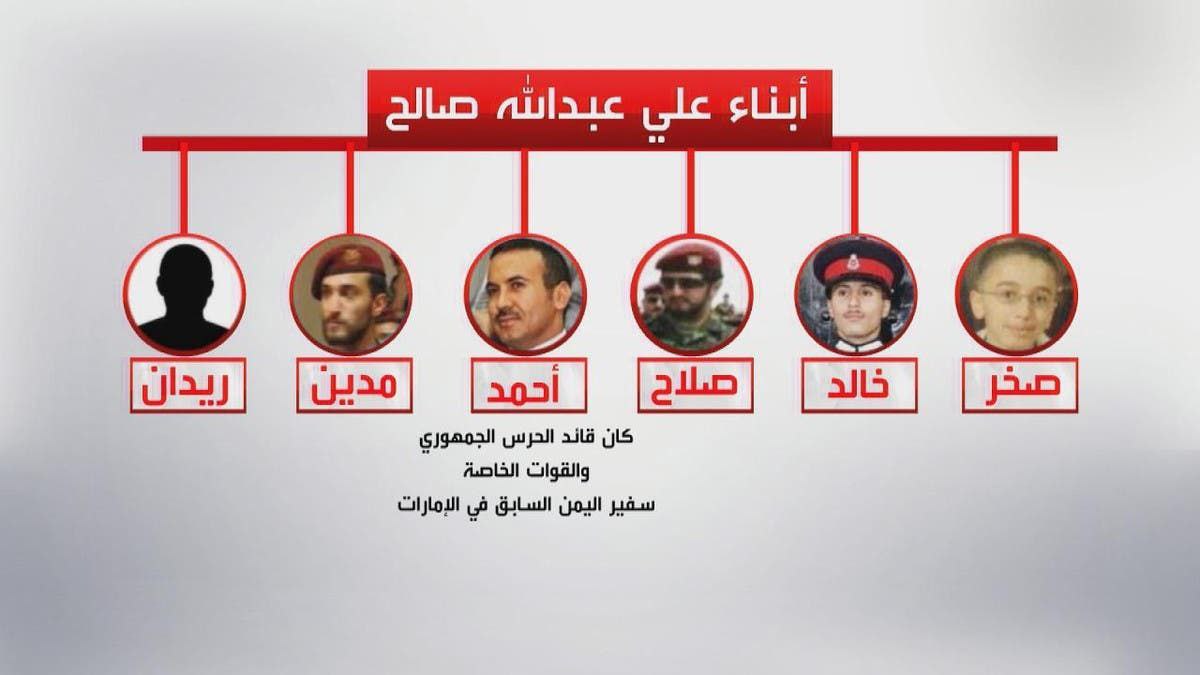
The story indicates that the Ansar Allah intelligence service acted wisely by uncovering and preventing the sedition led by elements linked to the Popular Congress Party. It appears that Mossad is trying to involve Ahmed Abdullah Saleh in politics through Emirati agents and by attracting members of the Popular Congress Party based in Sanaa, aiming to create new security tensions. Meanwhile, alongside Tariq Saleh’s covert efforts to strengthen ties with the Islah Party in Taiz, local sources confirmed that Madin Abdullah Saleh, another son of former Yemeni leader Ali Abdullah Saleh, recently arrived in Marib. He traveled to Riyadh a few days earlier and was coordinated into Marib by the Saudis. These actions align with a tripartite plan involving Israel, the UAE, and Saudi Arabia to reintroduce Saleh’s children into Yemeni politics. During his visit, Madin likely met with Saudi-UAE coalition military leaders, including Sultan Al-Aradah, other Islah Party leaders, and Lieutenant General Sagheer bin Aziz, to discuss ongoing political and military developments.
The plan to bring Ali Abdullah Saleh’s children back is actually a security strategy orchestrated by the Israeli Mossad. It started by rewriting the story of Saleh’s death at the hands of Ansar Allah while he was fleeing Sanaa, and progressed through his eldest son Ahmed’s contact with members of the Popular Congress Party in Sanaa. Recently, this has become more evident with the movements of Tariq and Madin Saleh in southwestern Yemen and Marib. It is anticipated that Saleh’s sons will enter Yemen as part of a new group of mercenaries connected to the Saudi coalition. Their goal is to recruit members of the Popular Congress Party in Sanaa, as well as forces loyal to Tariq Saleh and supporters of Ali Abdullah Saleh, such as Lieutenant General Sagheer bin Aziz. This strategy aims to weaken the political influence of Ansar Allah’s allies.
At first glance, this plan might appear weak and naive, since the Popular Congress Party lacks significant power in Sanaa. Meanwhile, Ansar Allah, with its considerable political and social influence, could easily seize control of the entire organization of this party through a security operation. However, their separation will undermine Ansar Allah’s political standing in Yemen. Additionally, their subordinate elements could turn into a Mossad spy network in Sana’a and infiltrate the Yemeni government and armed forces. This would allow Israel to gather more intelligence and data on military and vital installations, as well as the headquarters of Ansar Allah leaders, commanders, and the Yemeni armed forces.
Overall, Ansar Allah must work harder than ever to maintain the unity of their internal front within the Sana’a government and prevent spies from infiltrating areas under their control. One method of infiltration involves reopening roads between cities held by Ansar Allah and the resigned government, which is being pushed by the UN. This move could allow spies easier access to Ansar Allah’s internal territories. Although Ansar Allah oversees and inspects these roads, Israeli field agents possess specialized training and resources to evade security checks, potentially infiltrating cities controlled by Ansar Allah.
“Roozbeh Vadi… was executed following judicial proceedings and confirmation of his sentence by the Supreme Court,” the judiciary’s Mizan Online website said, adding that the man had leaked information about a “nuclear scientist who was assassinated during the Zionist regime’s recent aggression.”
The execution was carried out by hanging, it added, noting that Mizan reported that Vadi worked at one of Iran’s “key and sensitive organizations” and that his access enabled him to pass on “classified information” after being recruited online by Mossad.
Israel started the war on June 13, stating that its goal was to cripple Iran’s nuclear program. The war ended when a ceasefire was suddenly announced on June 24, just two days after the United States joined the war by attacking three key nuclear sites in Iran.
During the war, over a dozen Iranian nuclear scientists were assassinated by the Israeli military and intelligence. More than 30 of the Islamic Republic’s top military commanders were also killed.
Mossad rule in the war was not limited to assassinations, however. The agency’s special forces led a covert attack on Iranian air defenses and ballistic missiles, deploying suicide drones and guided missiles from within the territories of the Islamic Republic.
Some 700 people suspected of working for Mossad were arrested by Iranian security forces during the war. At least few have already been convicted and executed.
On Tuesday (October 1) at 8:00 p.m. local time, the Iranian Armed Forces attacked military positions of the Tel Aviv regime in various regions of occupied Palestine, when they fired dozens of ballistic and hypersonic missiles. The following is an assessment of the attack and an analysis of the areas targeted in the operation.
Moments after the Iranian missiles were fired at 8:00 p.m., Spokesman for the Israeli army Rear Admiral Daniel Hagari claimed that our defense systems are fully operational and are detecting and intercepting threats wherever necessary, even at this moment.” Shortly after this claim, numerous videos were released showing Iranian missiles hitting Israeli positions, indicating a high success rate for the Iran-fired missiles. The large number of projectiles hitting the Israeli targets proved that the defense systems of the Israeli military, as well as those of the United States, failed to intercept the Iranian missiles.
According to the initial statement from the Islamic Revolution Guards Corps (IRGC), the Operation True Promise II was carried out in response to the assassination of Palestine’s Hamas political leader Ismail Haniyeh, Lebanon’s Hezbollah Secretary General Sayyed Hassan Nasrallah, and the senior advisor of the IRGC in Lebanon Major General Abbas Nilforushan. Significant military and security positions in the heart of the Israeli-occupied territories were targeted during the operation. The IRGC considered Iran’s military response to be in line with the Islamic Republic’s legal rights as well as international law, warning the Zionists that if they try to react to this retaliatory operation, they would face more devastating and crushing strikes.
As more time passed following the missile attack, the spokesman for the Israeli army again claimed, “the IRGC used the Fattah hypersonic missiles for the first time in tonight’s attack. We will respond to this attack at the right time and place.”
Stunning video of firing a batch of Khaybar Shekan and Fattah-1 missiles in the Sadeq-2 operation towards the Zionist regime
According to the second statement from the Islamic Revolution Guards Corps, several air and radar bases, as well as centers that had been involved in hatching the plot of assassinating resistance leaders, were targeted during the aforementioned operation. Despite the fact that these areas are being protected by the most advanced and extensive defense systems, most of the Iranian missiles successfully hit their targets.
Israeli media outlets reported that Iran fired 181 ballistic missiles toward the occupied territories of Palestine. Some Western sources estimated the number of projectiles to be between 200 and 250. Nevertheless, the official figure was declared by chief commander of the IRGC Major General Hossein Salami, who stated that 200 missiles were launched toward the occupied territories.
It is worth noting that the missiles were launched from several locations across the Islamic country, including Tehran and its suburbs as well as other cities such as Kermanshah, Shiraz, Khorramabad, Tabriz, and Isfahan.
Firing a batch of missiles from TabrizFiring a batch of missiles from Kermanshah
According to the released footages, most of the fired projectiles reached their targets, which indicates a very high success rate for the Iranian armed forces.
One notable aspect of Operation True Promise II was the execution of targeted cyber operations and extensive electronic warfare by the use of jamming systems against the Israeli regime with the aim of disrupting its defense systems. Advisor to the IRGC commander General Ebrahim Jabari announced that a broad cyber operation was carried out simultaneously with the missile operation against Israel’s defense systems.
Hours after the strike, the Islamic Revolution Guads Corps released images of several missiles used in Operation True Promise II. The released images showcased ballistic missiles such as Emad, Khaybar Shekan, Qadr-H and Qadr-F with upgraded warheads. Furthermore, analysis of videos released by the Israeli settlers indicated that the IRGC also utilized advanced hypersonic Fattah missiles in this operation.
Iranian missiles that were fired towards the occupied territories
Additionally, based on images released by Israeli settlers, the booster of the Fattah-1 missile was seen in the occupied territories. These images confirmed the claims of using hypersonic missiles.
Fattah missile’s booster
On the other hand, the Israeli regime attempted to intercept the Iran-fired missiles using Arrow-2 and Arrow-3 anti-ballistic missile systems, while the United States fired at least 12 Standard Missile-3 (SM-3) anti-ballistic missiles from the USS Bulkeley and USS Cole. The number of successful interceptions remains unclear. An ambiguous footage of the interception of the Iranian missiles was also released, but it appears to be old and cannot be verified.
The targets hit in Operation Promise II are as follows:
1-Mossad Headquarters: The Mossad headquarters is located near the Glilot base in northern Tel Aviv city. This base is also the main site for the Unit 8200 or the Central Collection Unit of the Intelligence Corps (AMAN). Visual evidence show that the Mossad headquarters was targeted by two projectiles. Although these two missiles, for whatever reason (likely intentionally to warn Mossad), struck approximately 500 meters apart – one to the north and the other to the south of the building. However, this attack sends a clear message to the Israeli regime: Iran’s reach extends to the main intelligence hub of Israel, and if it makes a decision, it can target that site with a barrage of missiles; and there may not be any mistake next time.
Missile struck approximately 500 meters north of Mossad HQsMissile struck approximately 500 meters north of Mossad HQsMissile struck approximately 500 meters north of Mossad HQsMissile struck approximately 500 meters south of Mossad HQs
In addition, three other missiles struck several kilometers into the sea. One of these missiles hit the western area of the Mossad headquarters in the Mediterranean Sea, resulting in a fire in the water! Clearly, a specific target was struck in the strike.
Two other missiles hit another point a few kilometers off the coast of Tel Aviv with an extraordinary accuracy. The precise impact of these two missiles on a specific point in the sea cannot be by chance. The nature of this target is still unclear.
The missile (left) hits the sea and causes a fire in the sea! This video show the beach along the west side of the Mossad headquarters.Two missiles hit a specific point in the sea on the coast of Tel Aviv, precisely one after another.
2-Tel Nof Airbase in Southern Tel Aviv: Apart from one video that clearly captured the missile strikes, no other videos have been released from this base so far. In the released video from this military base, several missiles hit the Tel Nof airbase. In one of the strikes, flames and white smoke rose from the targeted site, indicating that solid-fuel air defense systems, such as the Arrow missile defense system, were targeted.
To date, no high-quality or even low-quality images of the Tel Nof Airbase have been released, and perhaps they never will be. The damages at Tel Nof were also quite remarkable!
Missiles hit the Tel Nof air base
It is also noteworthy that during the attack on Tel Nof base, one missile struck several kilometers south of this base, hitting the courtyard of an elementary religious school (Shalhavot Chabad) in Gedera, causing damage to the school building! This school is affiliated with the Haredi movement, a branch of Orthodox Jews in Israel.
Shalhavot Chabad schoolMissile hit the courtyard of Shalhavot Chabad religious school in Godra
3-Nevatim Airbase: Most of the attacks and recorded videos are related to the Nevatim Airbase. According to the videos, the Nevatim base has been targeted by a barrage of Iranian ballistic missiles, and it likely suffered the most damage from Iran’s missile attacks on Israel.
Satellite images released after the attack on Nevatim base also indicate the damage inflicted on the base.
The satellite images indicate that the location of the F-35 fighter jets at Nevatim was hit. One of the missiles struck one of the F-35 shelters with high precision. Additionally, a large hangar, administrative buildings, and other points within the airbase were also hit. The targeted areas show that it can be said that several types of missiles were used in the attack on Nevatim base, and the missiles that hit their targets with high accuracy were likely of the Khyber-Shekan or Fattah class.
Satellite images of Nevatim Air Base after Iran’s missile attackA batch of missiles hit Nevatim Air BaseA batch of missiles hit Nevatim Air BaseA batch of missiles hit Nevatim Air Base
4. Hatzerim Airbase: Another target of Iran’s missile attack was the Hatzerim Airbase near the city of Be’er Sheva. Reports confirm Iran’s attack on this base. According to Israeli media outlets, the city of Be’er Sheva sustained minor damages during the Iranian missile attack. This may have occurred due to the fall of missile boosters on Be’er Sheva.
Furthermore, a video footage from inside the Gaza Strip has been released, confirming at least one projectile hitting the Hatezrim Airbase.
A missile hit the Hatzerim Air Base
5. Ovda Airbase: Among the areas in the occupied territories targeted by Iran’s missile attacks, less attention has been given to the Ovda Airbase. However, considering the rate of missiles fired at this base and the very precise hits, it could be said that the most successful attack on Israeli military bases was on the Ovda Airbase.
Based on the low-quality satellite images available, it can be observed that seven missiles struck this base, and nearly all of them hit their targets with remarkable precision.
Alleged satellite images of Ovda Air Base after Iran’s missile attack
If higher-quality satellite images are released, it may be possible to identify several other targeted sites. The main reason that no videos of the missile craters at this base have been released is that the Ovda Airbase is located kilometers deep in the desert, and unlike other bases, there are no nearby villages or towns where someone could film the moments of the attack. However, these satellite images are still valuable.
The Ovda Airbase is located in the southernmost part of the occupied territories, in the southern Negev Desert, 40 kilometers north of the port city Eilat.
This airbase houses Israel’s Squadron 115, which includes F-16C fighters (now retired) and F-16D Barak fighter jets. Additionally, the Israeli Air Force Flight Academy and the Air Force Officer School are part of the training programs for Air Force officers, which are operational at this airbase.
Another important point is that the Ovda Airbase is officially the only air base authorized for the transportation of explosive materials for the Israeli regime. Therefore, this base is used for the export of military equipment and munitions to other countries.
Overall, the missile Operation True Promise II marks a turning point in the developments in the West Asian region. This operation goes beyond being merely a “long whip” against the enemy; it not only inflicted heavy damage on the military bases of the Israeli army but also caused the collapse of the Israelis’ defensive structure, undermining their claims of being invulnerable.
The assassination of commanders and leaders of Islamic resistance groups, especially Sayyed Hassan Nasrallah and Ismail Haniyeh, was an unforgivable sin, and a failure to respond to it would undermine Iran’s establishment and reputation within the resistance axis.
Iran’s missile strikes also serve as a strong response to Israeli Prime Minister Benjamin Netanyahu’s threats; he should know that Iran is not defenseless, when it comes to his threats against the Iranian nuclear and oil facilities. In fact, Iran possesses greater, heavier, and faster capabilities, and certainly, Israel, with all its defensive and aerial resources, will be defeated in this competition in the face of Iran.
The areas that were hit by Iranian missiles in the occupied territories.
Hezbollah said in a statement that it had launched a Qadir-1 ballistic missile at the headquarters of Israel’s spy agency, Mossad, in the suburb of the city of Tel Aviv. The attack was carried out in response to recent assassinations in Lebanon and the attack that targeted communication devices across the country a week earlier, the group noted.
The unprecedented set off warning sirens in Tel Aviv and its suburbs. The Israeli Defense Forces later said in a statement that the missile was intercepted by the David’s Sling medium-range air defense system. No injuries were reported by the military.
Video of interceptingVideo of intercepting
At least 42 people were killed and more than 3,500 others were wounded on September 17 and 18 in a sabotage attack that thousands of pagers and walkie-talkies were exploded in Lebanon.
Later on September 20, an Israeli strike hit the southern suburb of the Lebanese capital, Beirut, assassinating Hezbollah top military commander Ibrahim Aqil along with more than 50 other people. Over 68 others were wounded in the strike.
Israel escalated again on September 23, launching an aerial campaign against Hezbollah that has so far claimed the lives of 569 people and left over 1,800 others wounded across Lebanon.
One of the Israeli strikes on September 24 hit Beirut, claiming the life of Ibrahim Qubisi, the commander of Hezbollah missile forces.
Up until the ballistic missile attack on Tel Aviv, Hezbollah had limited its response to rocket attacks on northern and central Israel.
The confrontation between Israel and Lebanon broke out after the beginning of the war in the Gaza Strip last October, with Hezbollah and its allies launching near-daily attacks against the IDF in support of the Palestinian enclave.
So far, the confrontation has resulted in 26 civilian deaths in Israel and the occupied Syrian Golan Heights as well as the deaths of at least 22 soldiers and security officers. On the Lebanese side, more than 1,800 people have been killed, including more than 500 fighters of Hezbollah.
In accordance with Western media reports from US diplomats, the Tel Aviv regime’s Mossad and the US’s CIA have kicked off new measures to deal with the escalation in Yemen, and to this end, a joint operations room has been set up under the supervision of intelligence officers of the CIA and Mossad and with the involvement of Yemeni groups opposed to the Ansar Allah movement.
This act came after Saudi Arabia rejected the US proposal to initiate a confrontation and take leadership reins at the internal fronts against the Yemeni Armed Forces.
According to the Western sources, US Ambassador to Yemen Steven Fagin held a meeting with the leaders of Emirati-affiliated militant groups in Yemen, which was mediated by UAE officials, and called on the Yemeni armed factions to put aside their differences and unite to face the main problem, which he believes is the Ansar Allah movement. In the multilateral meeting, Fagin stressed the full support of the United States for the Yemeni militant groups.
The US move to provoke the opponents of the Ansar Allah movement in Yemen comes after the failure of the US-UK coalition to prevent missile and drone strikes by the Yemeni armed forces against Israeli ships as well as vessels bound for the regime.
The US officials are of the opinion that by the use of a ground confrontation, they can divert the focus of the Ansar Allah fighters from the Red Sea and the Gulf of Aden with the aim of preventing the resumption of missile and drone assaults on Israeli positions in occupied territories of Palestine. Meanwhile, the Ansar Allah’s leadership warned Western foes against any adventurous move on Yemeni soil, arguing that the enemy would be astonished in the ground conflict as well.
These individuals were detained in a joint operation by the MIT and Istanbul police.
It is said that one of the detainees, Hamza Turhan Ayberk, a former employee and a prominent TV figure, had connections with a Mossad spy using the code name Victoria.
Ayberk formed a group with government employees who worked under his supervision and gathered information about individuals and companies operating in Turkiye from Western Asian countries.
In 2019, Ayberk was trained by Mossad in Belgrade, Serbia, for his missions and initially engaged in simple espionage tasks for the Israeli intelligence organization.
According to the statements made by General Amir Ali Hajizadeh, the commander of the Islamic Revolution Guards Corps Aerospace Force as well as the existing field information, these attacks were carried out against the command and espionage headquarters of the Mossad approximately 10 kilometers far from the Iraqi city of Erbil, and also against the hideouts and training centers of Takfiri groups associated with the ISIS Khorasan branch in the Kafr Takharim area in northern Idlib Governorate of Syria.
The attack on the Mossad headquarters in the Iraqi city of Erbil was carried out by firing 11 Fateh-110 and Fateh-313 missiles. Out of this number, four missiles were launched from western Iranian city of Kermanshah (Tange Kenesht military base) and seven other missiles were launched from the northwest Iranian city of Tabriz (Azarshahr missile site) to hit the targets. Additionally, according to the published videos regarding the Erbil attack, one or two suicide drones were also used, but the Islamic Revolution Guards Corps has not hinted to the drone attacks in their four statements; therefore, details about the number and type of suicide drones used in this operation are not available. Nonetheless, it is highly likely that these drones are of the Shahed 131 or 136 types.
It is worth mentioning that during the attack on the Mossad headquarters in Erbil, four people, including Peshraw Dizayee, a leading figure of the traders close to the Israeli regime as well as Ahzi Amin, who was a former intelligence commander of the Kurdish Peshmerga forces, were killed.
The attack on the terrorist groups in Syria was carried out by firing 13 missiles. Out of this number, four Khaybar-Shekan ballistic missiles were launched from the Darkhoveyn area in southern Khuzestan province, which is located in southwestern Iran. The ballistic missiles were fired towards Idlib Governorate in Syria to target the headquarters of terrorist groups in the Talteta area. Furthermore, nine other missiles were launched towards targets in Syria, but there is no information available about the type of missiles or the targets. However, General Hajizadeh announced in an interview that the terrorists’ positions in the east of the Euphrates River have also been targeted by missile attacks. It seems that based on field reports from the Idlib and Aleppo governorates as well as General Hajizadeh’s statements, some of these 9 missiles have hit the pre-planned targets in northern and eastern Syria.
What are the important points of these military operations?
The Islamic Republic of Iran utilized the tactic of “hybrid attack” during conducting of these strikes, which we had previously witnessed in the Aramco attack and over the course of the military operations carried out by the Russian army during the Ukraine war. This means that before the missile strike on Erbil, one or more drones were launched in a bid to engage the US C-RAM defense systems stationed at the Al-Harir air base, and then the ballistic missiles hit the Israeli regime’s headquarters. Additionally, with the firing of 24 missiles, these attacks have been the largest missile operation conducted by Iran up to date.
As stated in the statements of the Islamic Revolution Guards Corps, this operation was conducted in response to terrorist attacks in Kerman city and Sistan and Baluchestan province, as well as the assassinations of the IRGC commander Martyr Sayyed Razi Mousavi and senior leader of Hamas and founding commander of its military wing (the Izz ad-Din al-Qassam Brigades) Martyr Saleh al-Arouri by the Israeli regime. But more importantly, it displays Iran’s missile power and capabilities to the United States and the Israeli regime.
In this operation, the strategic ballistic missile Khaybar Shekan was launched against targets in the battlefield for the first time, which could accurately target objectives within a range of approximately 1260 kilometers (from Darkhoveyn in Khuzestan province to Talteta in northwestern Syria). As the name of this missile suggests, the experts of the Islamic Revolution Guards Corps developed this ballistic missile with the aim of creating the capability to target the Israeli regime’s positions, and the operationalization of Khaybar Shekan in the battlefield serves as a serious and clear warning to the Israeli regime. Furthermore, this operation marks the first missile attack by Iranian forces with a range exceeding 1200 kilometers from inside Iran, and such a missile attack has not been carried out before.
These individuals were Iranian nationals and intended to carry out attacks using suicide drones on Iranian soil and try to create discord between Iran and the Taliban.
It is also said that the Taliban caretaker government will soon transfer the detainees to Iran for interrogation.
The preparation and implementation of such terrorist plots are expected in the current crisis situation that the Israeli regime is facing. It is worth mentioning that Iranian nuclear facilities, military sites, and border areas can be targeted.
Furthermore, since the onset of the Gaza war, Persian-language media outlets in the Israeli occupied territories have repeatedly attempted to provoke terrorist acts in Iranian border provinces such as Sistan and Baluchistan, Kurdistan, as well as trigger political and social disputes, but they have been unsuccessful for various reasons.
Pictures of people arrested in the joint operation of the Ministry of Intelligence of Iran and the Taliban on the border of Afghanistan
Yoav Galant, the Israeli regime’s defense minister, claimed at a counter-terrorism policy conference at Reichman University that Iran is building an airport in southern Lebanon, 20 kilometers away from the border of occupied Palestinian territories.
He went on to say that Iran has created an airport in southern Lebanon for attacking Israel.
If we reach the stage of conflict, there is no doubt that we will use our destructive power, and Hezbollah and Lebanon will pay a painful and heavy price, the minister added.
Images of the alleged al-Jubour base in southern Lebanon
The Israeli minister claimed that Iran is now the biggest threat to the Israeli regime, regional stability, and global order, and that the Islamic Republic is strongly seeking to achieve military nuclear power and it is closer than ever to this goal.
In the midst of the developments in the Middle East, Iran is gaining geographical and ideological dominance over the region, he acknowledged.
Iran’s goal is to create a destructive war against Israel while simultaneously striving to acquire nuclear weapons, he alleged, saying that these efforts are detrimental to all neighboring countries.
These remarks come on September 10 as David Barnea, the head of the Mossad intelligence agency, threatened Iranian officials at a conference at Reichman University with assassination.
Speaking in a live interview with the Islamic Republic of Iran News Network (IRINN), Deputy Defense Minister Brigadier General Reza Talaei-Nik said that the plot was uncovered as result of a “multi-year intelligence operation.”
“Nine years ago, our colleagues were working on one of the networks of the enemy … when they found that the Zionist regime’s Mossad was focusing on some subjects in the defense industry including the connector,” the Mehr News Agency quoted the spokesman as saying during the interview.
As a part of the foiled plot, Mossad agents wanted to supply faulty military-grade connectors to the Iranian defense industry.
“Our intelligence forces detected the connectors before they entered the missile system,” Talaei-Nik said.
The spokesman also noted that the experts of the ministry of defense managed to detach the faulty section from the connectors and rebuild and use them again.
The connectors were redesigned by the Mossad to cause an explosion within a determined period of time, Talaei-Nik revealed.
“The enemy did not understand that we had detected [their plot] which means that they wanted to surprise us with an operation on defense systems but they were taken by surprise,” the spokesman added.
Talaei-Nik noted that the plot would have caused the loss of $19 million of military equipment if it had succeeded as planned.
The spokesman also stressed that Iran will not hesitate to take serious legal actions against the countries that have collaborated with the Mossad in the plot.
The whole plot began to fall apart when a trader became suspicious after he noticed that foreign suppliers of the connectors were closely monitoring Iran’s domestic market and the distributors of the parts, said Talaei-Nik, adding that the individual notified officials in the Intelligence Organization of the Defense Ministry.
The spokesman went on to say that the Iranian intelligence officials, who had already been tipped off, utilized the information to identify the rest of the Mossad network.
The intelligence department of the Iranian Defense Ministry and the logistics branch of the armed forces were the first to announce the failed Mossad sabotage plot. Israel has not commented on the Iranian allegation, so far.
The Israeli intelligence orchestrated several attacks against Iranian infrastructure, defense industrial complex and nuclear facilities over the years. The attacks included cyber sabotage, assassinations of key officials and scientists as well as bombings, some of which were carried out with bombs. Iran usually responds by launching its own covert operations against Israeli targets.
According to the report by the Hebrew newspaper Yedioth Ahronoth, the new unit is the result of an updated plan prepared by the Israeli army and its air force to attack Iran’s nuclear facilities and other sensitive centers.
Yedioth Ahronoth, quoting officers from this new unit, wrote that the plan is a fundamental change in thinking and planning, and that the army has been forced to do so because a war with Iran will not be similar to a war with Hezbollah or operations against the Palestinian resistance groups such as Hamas and the Islamic Jihad movements in the Gaza Strip.
The unidentified officers said that the commander of the Unit 54 and other forces analyze information from different parts of the Islamic Revolution Guards Corps (IRGC) on a daily basis, and they examine the military and training methods of the IRGC.
It has been said that there are thousands of military targets throughout Iran that Israel can attack, but Lieutenant Y, one of the members of Israel’s new unit, has been entitled to identify the most important targets inside Iran.
Generally said, the task of the unit is to collect information about the Islamic Revolution Guards Corps. The Unit 54 has 30 personnel, one-third of whom are officers, and it is being commanded by an intelligence major with the abbreviation “D”.
Another member of the unit told Yedioth Ahronoth newspaper that we analyze all parts of the Islamic Revolution Guards Corps (not merely the IRGC Quds Force). Iran is a large country in terms of land. What we collect and discuss has a direct impact on the ability of the Israeli army and is based on a plan, which has been drawing for years by Israel Defense Forces General Staff to turn into the basis of the military power of the Israeli army in the coming years.
The officer also stated that every day we collect more targets based on different rankings and learn the best way to hit them, we have doubled our target bank regardless of Iran’s nuclear facilities. This is different from the wars we have had in recent years, because the comprehensive military confrontation is a different story.
Yedioth Ahronoth concluded that the Unit 54, along with representatives from other intelligence units such as 8200 and 9900 as well as a little support from the United States, prepared a war intelligence plan that no one imagines it will occur.