Tag: Quneitra

  • Silent Heirs of the Golan: The Emergence of New Resistance Group in Syria

    Silent Heirs of the Golan: The Emergence of New Resistance Group in Syria

    The Dawn of Hope
    While the Syrian Democratic Forces (SDF) concentrated their efforts on combating ISIS, Bashar al-Assad, backed by Iran and Russia, managed to reclaim large swaths of territory previously lost to Salafi groups. By 2019, following ISIS’s defeat, the conflict reached a form of deadlock. However, sudden offensives by groups such as Hay’at Tahrir al-Sham (HTS) and the Turkish-backed Syrian National Army altered the dynamics.

    In the meantime, factions like the Syrian Social Nationalist Party (SSNP), which had previously fought alongside the government, remained active—justifying their continued operations as responses to growing Israeli occupation. This faction, which supports the formation of a “Greater Syria,” expressed its support on December 17 for the establishment of a front to confront Israeli aggression. In response, the group Uli al-Baas emerged on January 9, initially under the name “Southern Liberation Front,” before adopting its current name and symbolism on January 11.

    As post-Assad Syria became a contested arena between Israeli and Turkish influence, Uli al-Baas framed itself as part of the Axis of Resistance against what it calls the “Global Axis of Evil.” In a statement to Newsweek, the group’s political bureau—officially named “The Islamic Resistance Front in Syria – Uli al-Baas”—affirmed that praising Israeli occupation and Turkish incursions is expected, since “[America] is the sponsor of chaos, terrorism, and evil across the globe.”
    The group’s emblem—featuring a raised Kalashnikov—mirrors an iconography first introduced by Iran’s Islamic Revolutionary Guard Corps (IRGC) and later adopted by Hezbollah and other Iran-aligned resistance groups, including several in Iraq. The term Uli al-Baas, mentioned in the Qur’an, was previously invoked by Hezbollah Deputy Secretary General Sheikh Naim Qassem in reference to the group’s struggle against Israel.

    Despite its alignment with the Axis of Resistance, Uli al-Baas claims organizational and political independence, asserting no affiliation with any party or state. It presents itself as a revolutionary, nationalist movement rooted in Arab identity, with a distinct political project aimed at establishing a strong and liberty-oriented state.

    A Turbulent Beginning
    On January 13, Uli al-Baas claimed it was deploying light armored vehicles and fighters to Quneitra, Suwayda, Daraa, Damascus, and surrounding rural areas. Four days later, it officially declared the start of its “military operations” against Israeli presence in the south.
    The group’s first alleged action was reported on January 24, claiming that one of its units downed an Israeli drone in the Tal Ahmar area of rural Quneitra on January 21. On January 31, it issued a second statement, asserting that it had attacked Israeli forces in the village of Turanja, northern Quneitra. However, no evidence was provided, and on February 14, the group’s Telegram channel retracted the claim.

    Cooperation with Other Fronts
    On February 19, Uli al-Baas announced the deaths of two senior commanders, Muhannad al-Baqari and Muhammad Mansour, during an operation near Israeli positions in Quneitra. Just two days later, on February 21, the group formed a coalition with two other Iran-aligned factions— Liwa Dir’ al-Sahel, led by Miqdad Fathi, and Ashbah Ruh al-Muqawama, led by Abdulhamid al-Shamali. This alliance targeted ISIS, Salafi movements, and the newly restructured Syrian government. The republication of the coalition’s official statement by Uli al-Baas clearly indicated its confrontational stance toward Damascus.

    Mission
    The group identifies the expulsion of Israeli forces from southern Syria as a central objective. It cites Israel’s violations of the 1973 ceasefire line and its continued strikes on Syrian installations as justification for its armed resistance. Uli Albas views the Syrian interim government as complicit due to its silence regarding Israeli aggression. The Zionist officials, meanwhile, have warned they will not allow hostile forces to establish a presence near their borders.
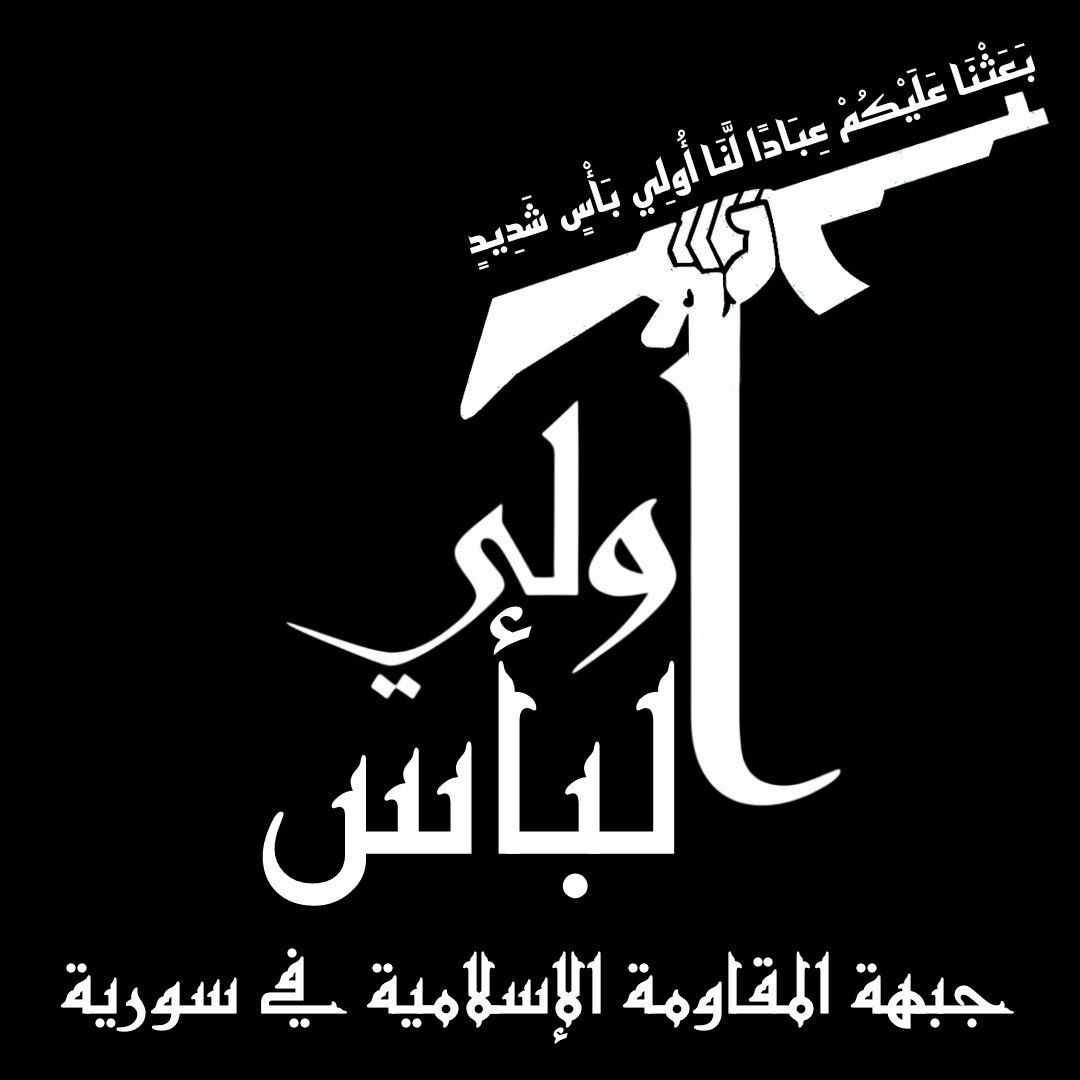
    Islamic Resistance Front in Syria – Uli al-Baas

    Post-Crisis Syria
    Despite Donald Trump’s stated intent to reduce military presence in the Middle East, roughly 2,000 American troops remain stationed in Syria. After the Gaza war, these forces were frequently targeted by militias, although such attacks diminished with the U.S. withdrawal from Iraq. With Uli al-Baas now rising and directly opposing U.S. and Israeli influence in Syria, the future of Washington’s regional presence has become increasingly uncertain.

    While the U.S. State Department has reiterated its commitment to inclusive and peaceful governance in Syria and its opposition to terrorist entrenchment, it continues to classify HTS as a terrorist organization—despite the group’s claimed shift away from jihadist ideology.

    Complicating matters further is the escalating tension between the U.S. and Iran, which intensified after Washington’s withdrawal from the nuclear deal in 2018. Uli al-Baas portrays Iran as a defender of sovereignty and freedom from U.S. domination, arguing that the pressure against Tehran stems from its threat to Israel’s existence.
  • Israel’s Advancements in Quneitra Province, Syria (Map)

    Israel’s Advancements in Quneitra Province, Syria (Map)

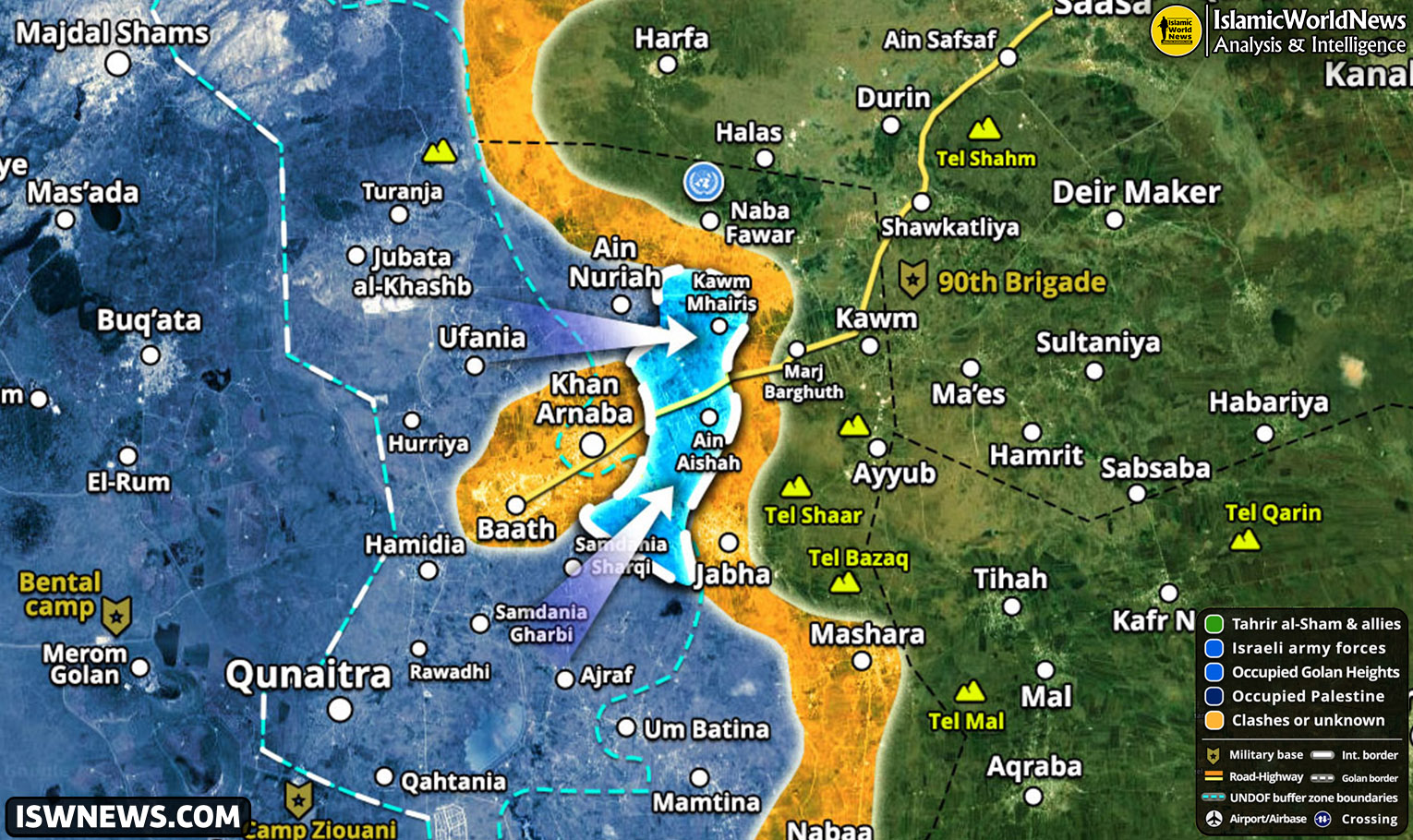
    Last night, Israeli forces, supported by Merkava tanks and military vehicles, entered the village of Ain Aisha and positioned their tanks on the northern outskirts of Jabha.

    In another operation along the Ain Nourieh axis, the Israeli forces, after passing through Ain Nourieh, shelled Kawm Muhairis and established a presence in the surrounding fields.

    As a result of these actions, the Israeli army has effectively surrounded the cities of Khan Arnabeh and Al-Baath, although they have not yet deployed forces within these cities.

    If Khan Arnabeh, Al-Baath, and the towns of Jabha, Kawm along with several surrounding villages, fall under Israeli control, Quneitra province will become the first Syrian province to be completely occupied by Israel.

    Israel’s objective in taking control of Quneitra province is to support the Syrian Druze and to directly challenge the leaders of Tahrir al-Sham. This move aims to threaten the leaders of Tahrir al-Sham, to divide the southern provinces of Syria and weaken them militarily to prevent possible attacks on Israeli positions.

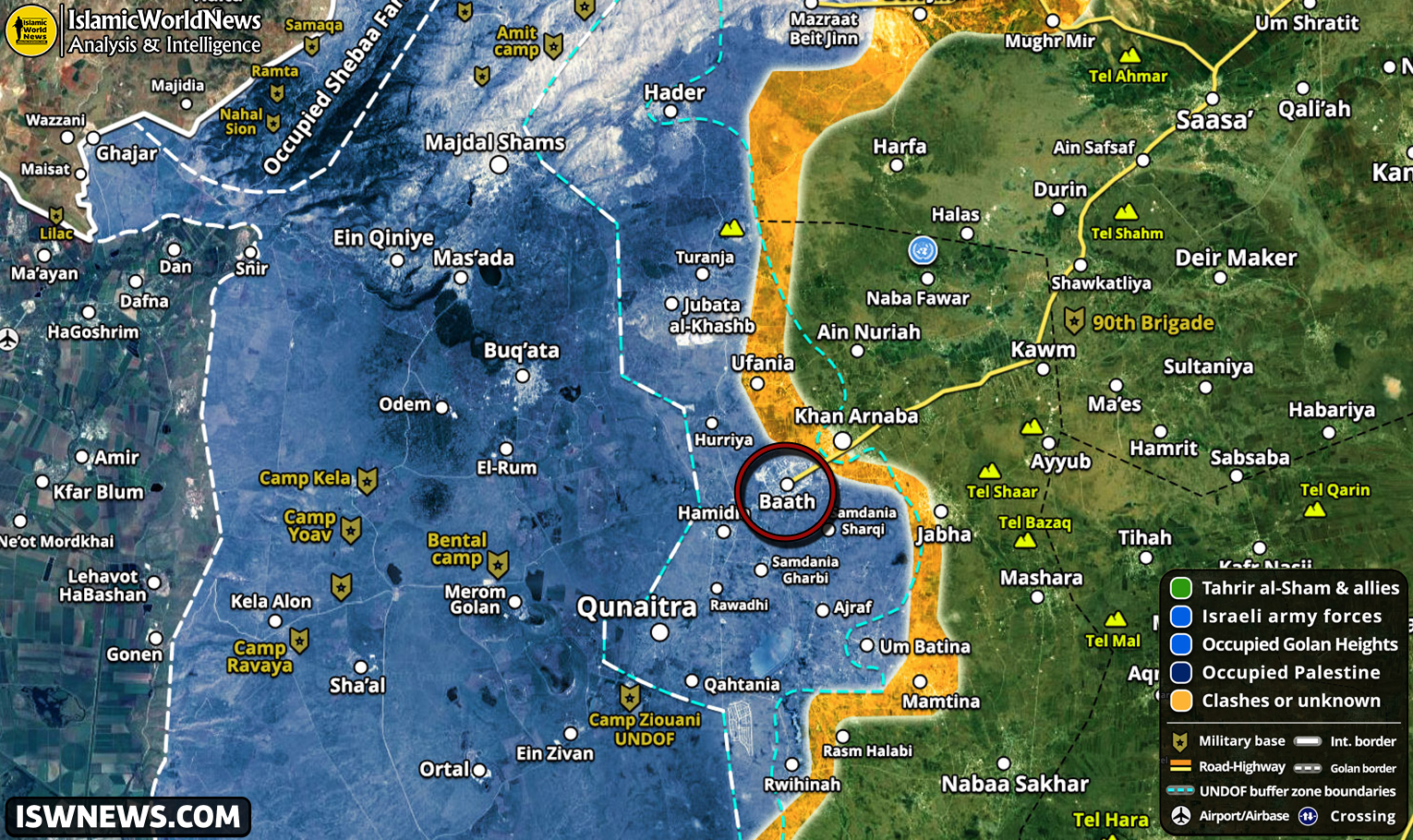
    The newly occupied areas by the Israeli regime in Qunaitra province
  • Israel Army Raided Baath Town In Syria

    Israel Army Raided Baath Town In Syria

    This action occurred amid protests by residents of the occupied areas in southern Syria over the security situation in their towns and villages. Today, a group of residents from the village of Ma’arba traveled to Daraa to discuss the occupation and the Israeli presence in southern Syria with officials from the HTS Military Operations Directorate.

    Despite the indifference of Tahrir al-Sham and other militant groups in Syria, the Israeli army continues to advance and inspect border villages without facing significant resistance.

    The Israeli regime’s ground operations in Syria began on December 7, following the fall of the central government. Israeli army has so far captured more than 25 towns and villages in the provinces of Quneitra and Rif Dimashq.

  • Israeli Soldiers Enter Rafeed Village In Syria

    Israeli Soldiers Enter Rafeed Village In Syria

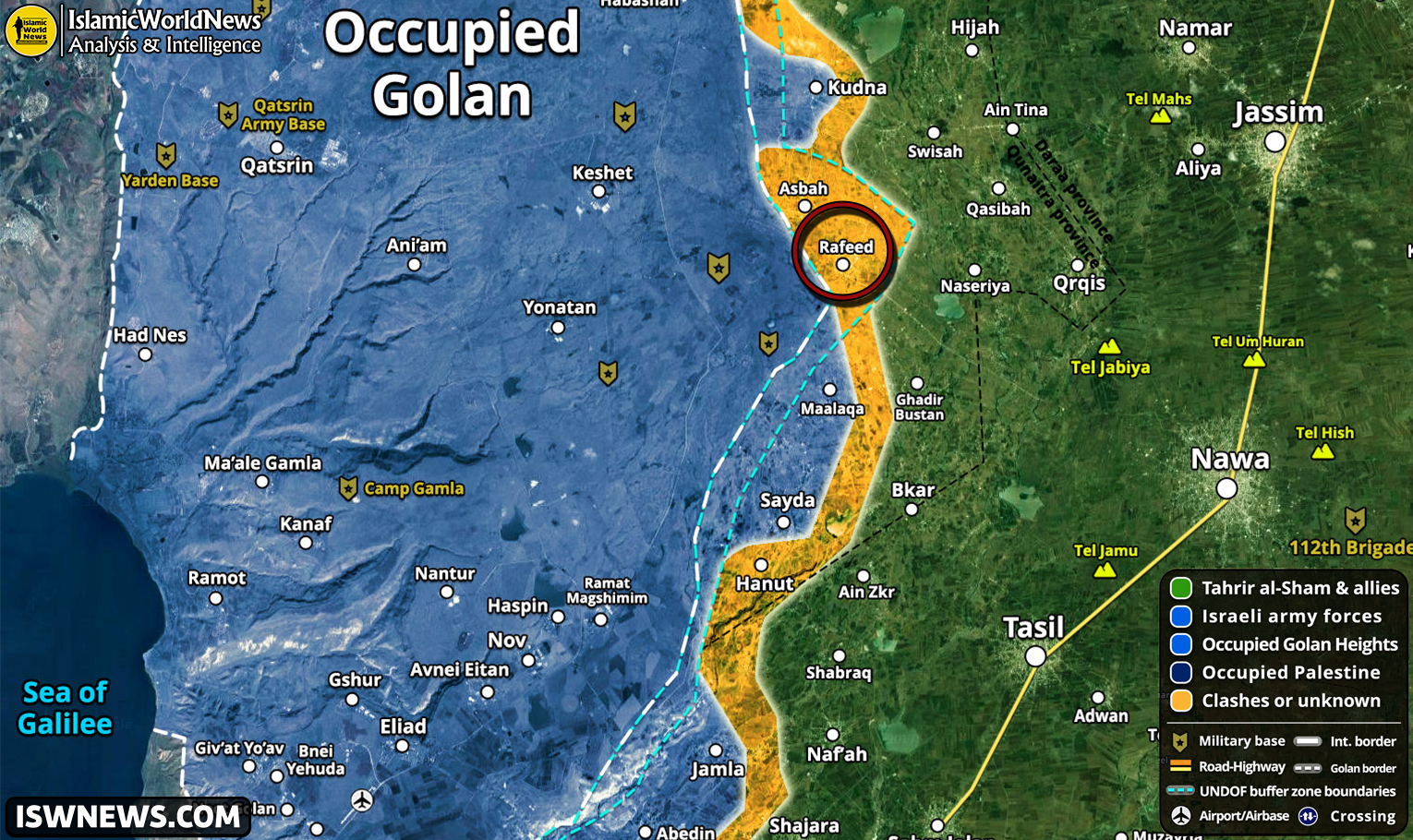
    Local sources report that after inspecting several buildings in Rafeed, Israeli forces cut down trees on the outskirts of the outpost and completely destroyed its structure.

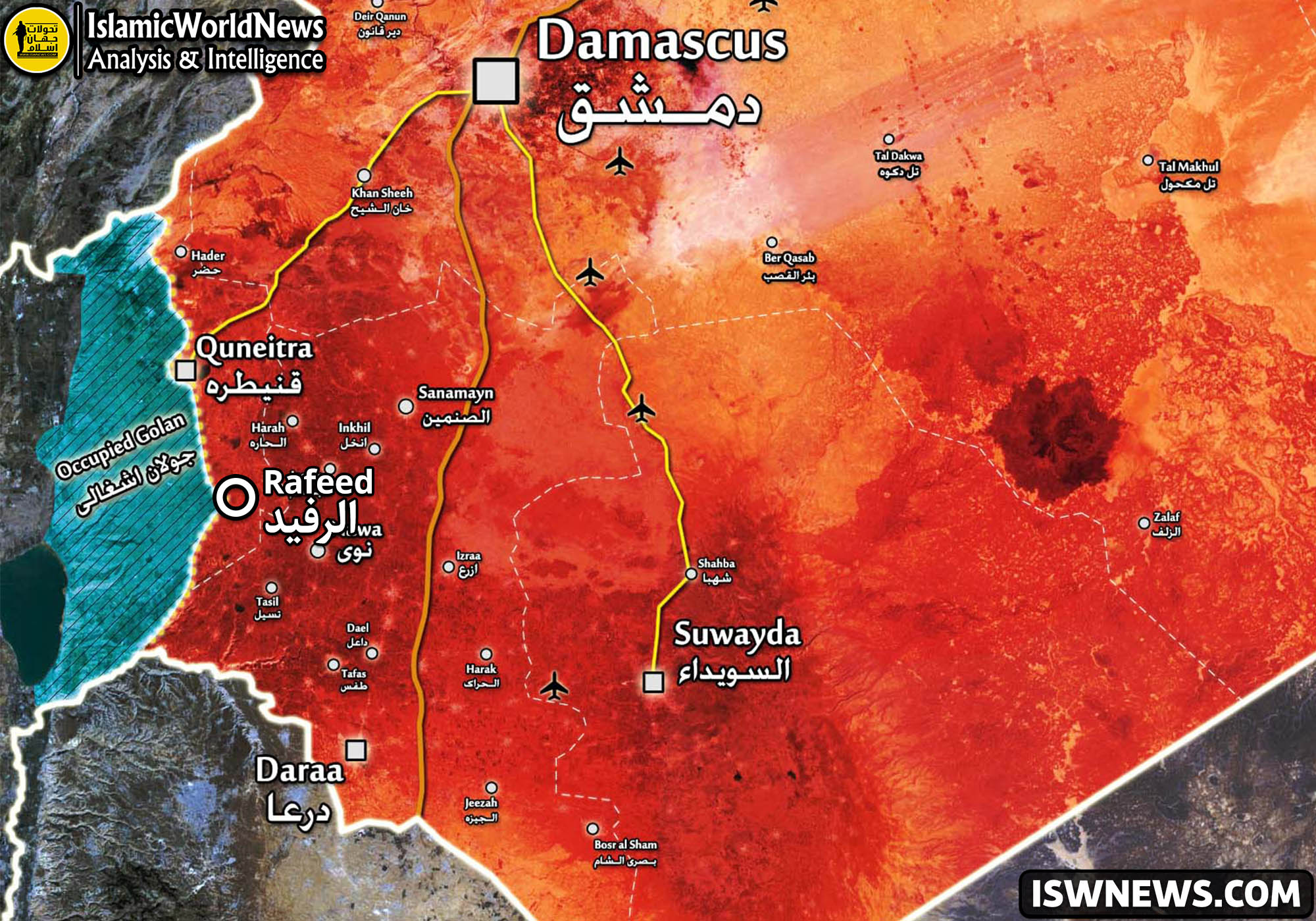
    Importance of Rafeed Village: Rafeed is a Syrian border village in the Golan Heights, situated in the UNDOF buffer zone between Syria and Israel. It is directly connected by road to Nawa town in Daraa province. The Ghadir Al-Bustan Dam and the villages of Al-Asbah, Ghadir Al-Bustan, and Nasiriyah surround Rafeed and are likely Israel’s next targets in this area.

  • Israeli Military Abducts A Syrian Shepherd!

    Israeli Military Abducts A Syrian Shepherd!

    On November 21, the Israeli regime’s forces entered the village of Al Rafeed in southern al-Quneitra and detained a civilian from the southern region of Syria.

    Local sources reported that the civilian, named Mahmoud Hilal Al-Fenish, is a resident of Al Rafeed village. He was engaged in shepherding in the village when he was abducted by Israeli military forces.

    Al Rafeed village is located in the buffer zone between the Alpha and Bravo lines, which separates Syrian forces in the Golan Heights from the Israeli military. The Alpha Line and the Bravo Line were set in the Israeli-Syrian Agreement on Disengagement in 1974 to separate the two warring sides.

    As of now, the Israeli regime’s army has not issued a statement regarding this abduction, and Syrian authorities have also not reacted to the news.

    It is noteworthy that on November 3, the regime’s army announced that commandos from the Egoz Unit of the 210th Brigade had abducted a Syrian named Ali Suleiman Al-Assi in southern Syria on charges of connections with Iran.

    New satellite images indicate that the Israeli regime’s army has begun a construction project along the Alpha line, which separates the occupied Golan Heights from Syria.

    These actions, alongside the abduction of Syrian citizens, indicate a significant intensification of Israeli military activities in the occupied Golan Hights region and border areas compared to the past, which is remarkable.

  • Syrian Soldier Martyred In Israeli Drone Attack On Southern Syria

    Syrian Soldier Martyred In Israeli Drone Attack On Southern Syria

    The attack, which occurred at approximately 07:00 a.m. local time, also caused material damage to the targeted bases.

    According to the IWN, the Israeli army drones targeted the military bases in the provinces of Quneitra and Daraa, leading to the loss of life and destruction of military infrastructure. The attack was part of a series of recent incidents involving Israeli military provocations in the region.

    The Syrian military has confirmed the details of the attack, stating that the Israeli army drones struck the bases in Quneitra and Daraa, resulting in the martyrdom of one soldier and material damage.

    The incident highlights the ongoing tensions between the Israeli regime and Syria, which have been exacerbated by the ongoing conflict in the region.

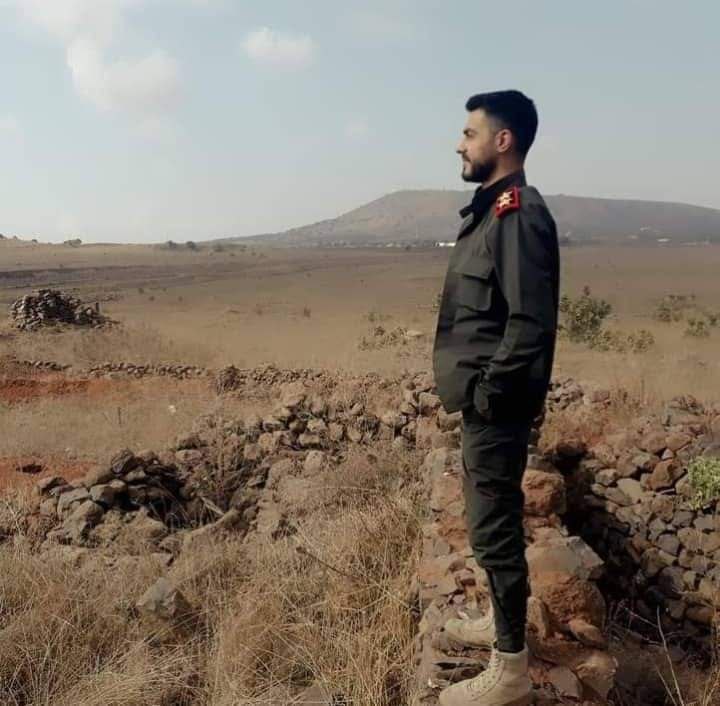
    Sharaf Ahmad Abdulkarim

    The Israeli military has not officially commented on the attack, but the incident is likely to further tensions between the two long-time foes. The attack also underscores the ongoing threat posed by Israeli military activities to the security and stability of the region.

    The Syrian government has time and again lodged complaints at the United Nations against the Israeli regime over its air strikes which Syria says violates its sovereignty.

  • Four Syrians Killed In Israeli Drone Attack On Quneitra

    Four Syrians Killed In Israeli Drone Attack On Quneitra

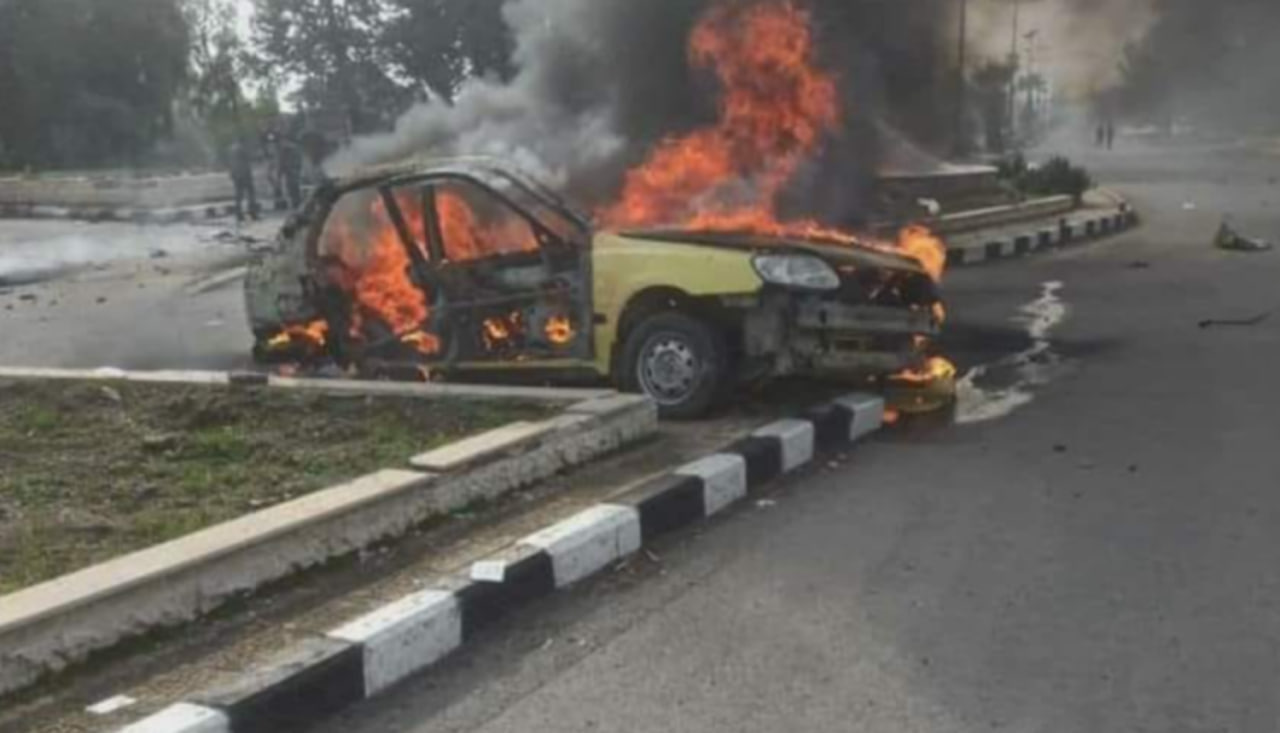
    On December 8, Israeli army drones targeted a vehicle in the city of Madinat al-Baath, killing four Syrians.

    One of the martyrs of the attack was a Syrian soldier named Muhammad Anas Al-Tamr. No information has been released about the other three martyrs.

  • Israeli Army Shells Syria’s Al-Quneitra

    Israeli Army Shells Syria’s Al-Quneitra

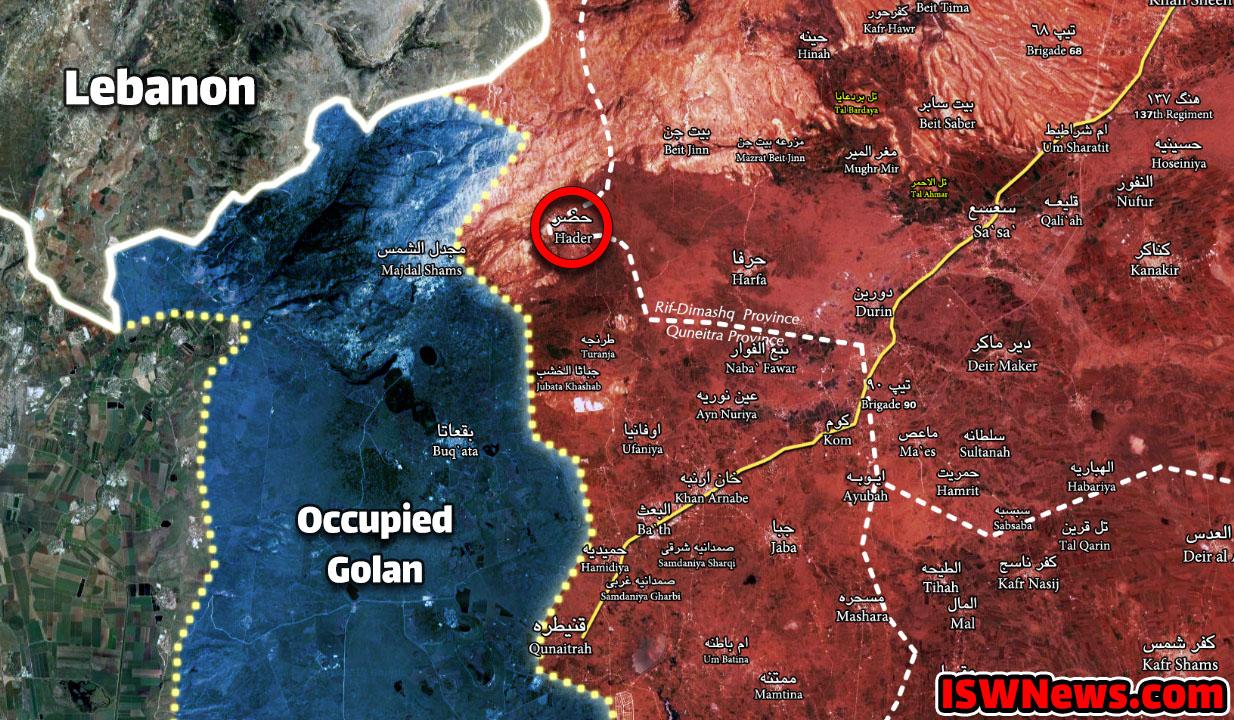
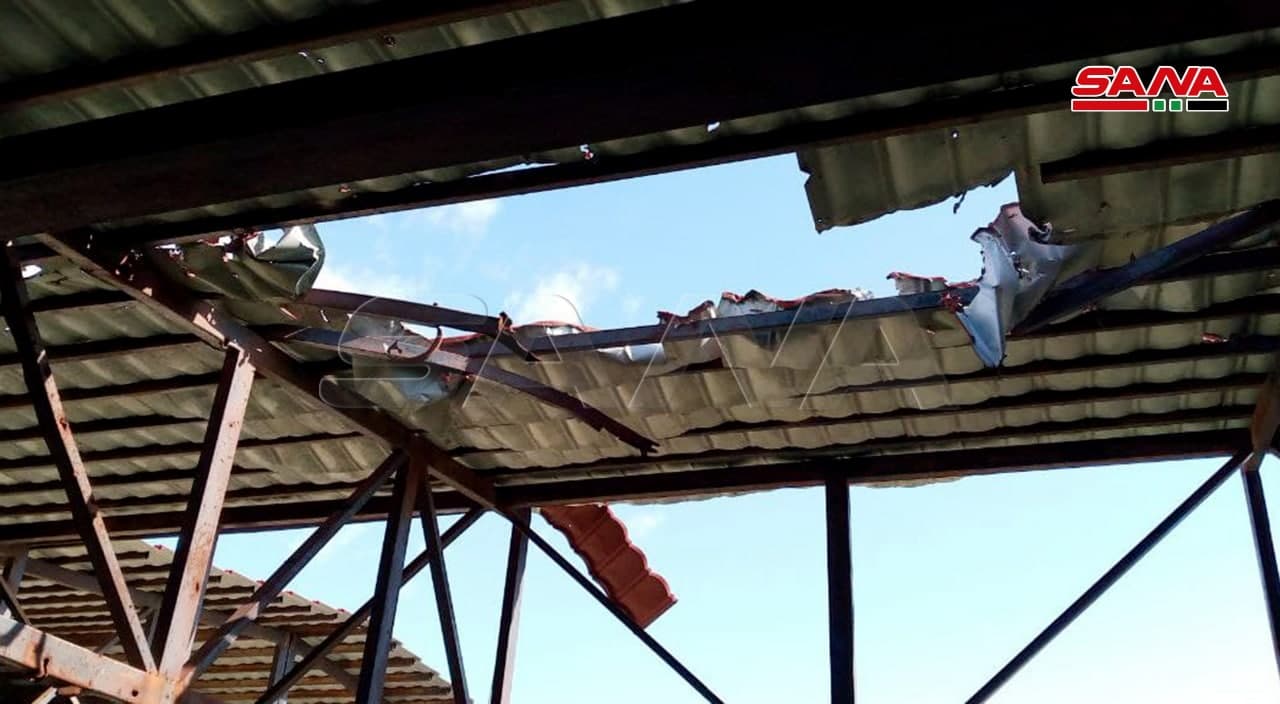
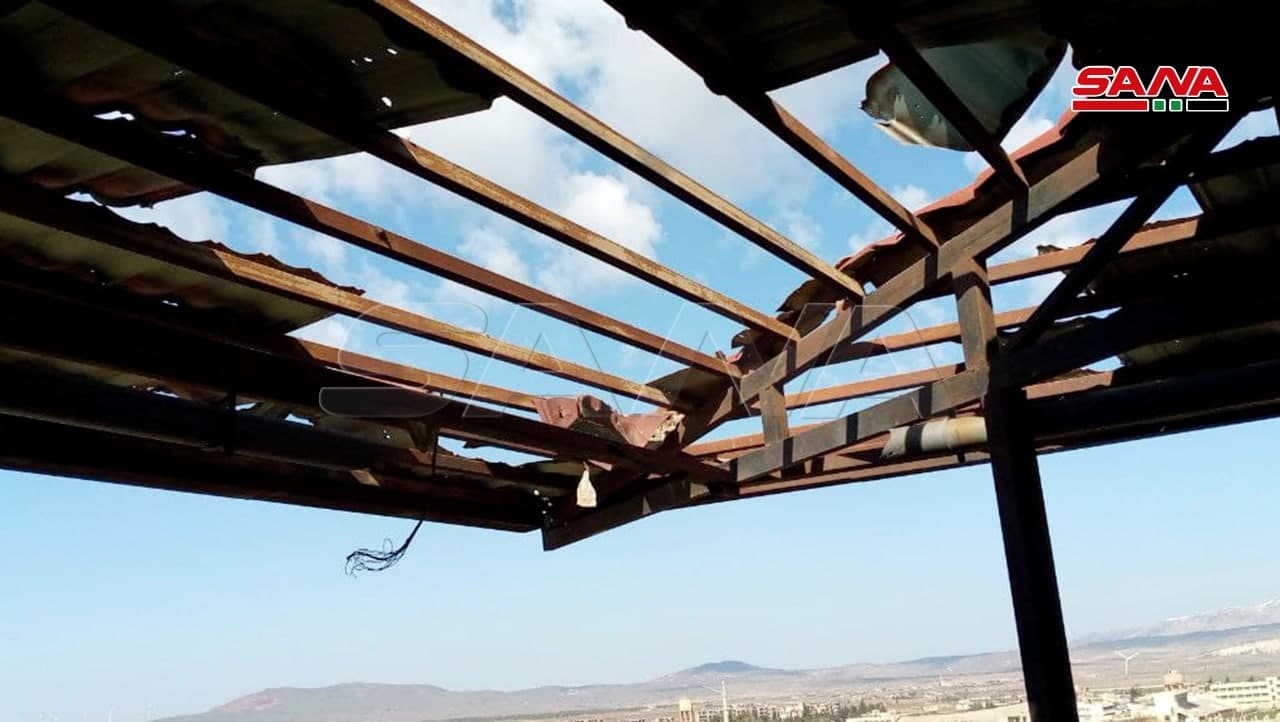
    Early on Monday, the Israeli army fired 12 shells to pound the Qars al-Nafl region in the eastern district of Hadar town in the northern rif of al-Quneitra Governorate in southwest Syria.

    The strike has inflicted some damages to the military headquarters.

    Syrian and Israeli officials have not yet commented on the shelling strike, but it seems to be possible that the Israeli army would claim in the coming days the attack has been carried out under the pretext of hitting paramilitary forces supported by the Islamic Republic of Iran or fighters of the Lebanese Hezbollah movement.

    It is worth mentioning that the Israeli army’s fighter jets fired a number of missiles towards certain targets in southern Syria in response to a rocket attack from Syrian soil on the occupied Golan Heights on April 9, 2023. The rocket attack inflicted damages on Israeli facilities.

    The belligerent strikes by Israel on various Syrian cities and villages have been carried out in the past years, but the Syrian air defense responded to the aggressions.

  • Israeli aggression kills a Syrian citizen Quneitra

    Israeli aggression kills a Syrian citizen Quneitra

    It is said that this young man, Farid Mustafa, works for the Baath Party in Hader and was threatened by Israel before.

    Israel’s attacks against Syria and the killing the Syrian citizens are taking place while international organizations and the United Nations have closed their eyes to the aggressions and crimes of the Israeli regime.

    It should be noted that on July 2, the Israeli regime also attacked some farms in south of Tartus, injuring two civilians and causing material damage.

    Read more:
    Israel aggression on Syria’s Tartus
    Israeli missile attack south of Damascus
    Israeli airstrikes on Damascus, Three people were killed
    Infographic: Israeli air and missile strikes against Syria in 2021

  • Israeli missile strikes on Syria’s Quneitra

    Israeli missile strikes on Syria’s Quneitra

    According to a Syrian military source, around 00:30 local time on Wednesday morning, the Israeli enemy fired several surface-to-surface missiles from the occupied Golan Heights at targets around Quneitra, causing material damage.

    Also on February 16, the Israeli regime attacked Zakia in Damascus countryside with several surface-to-surface missiles, causing material damage.

    Read more:
    Israel missile attack on Syria
    Missile and aerial strikes on Damascus outskirts by Israel + Images

  • Israeli artillery attacks on southern Syria

    Israeli artillery attacks on southern Syria

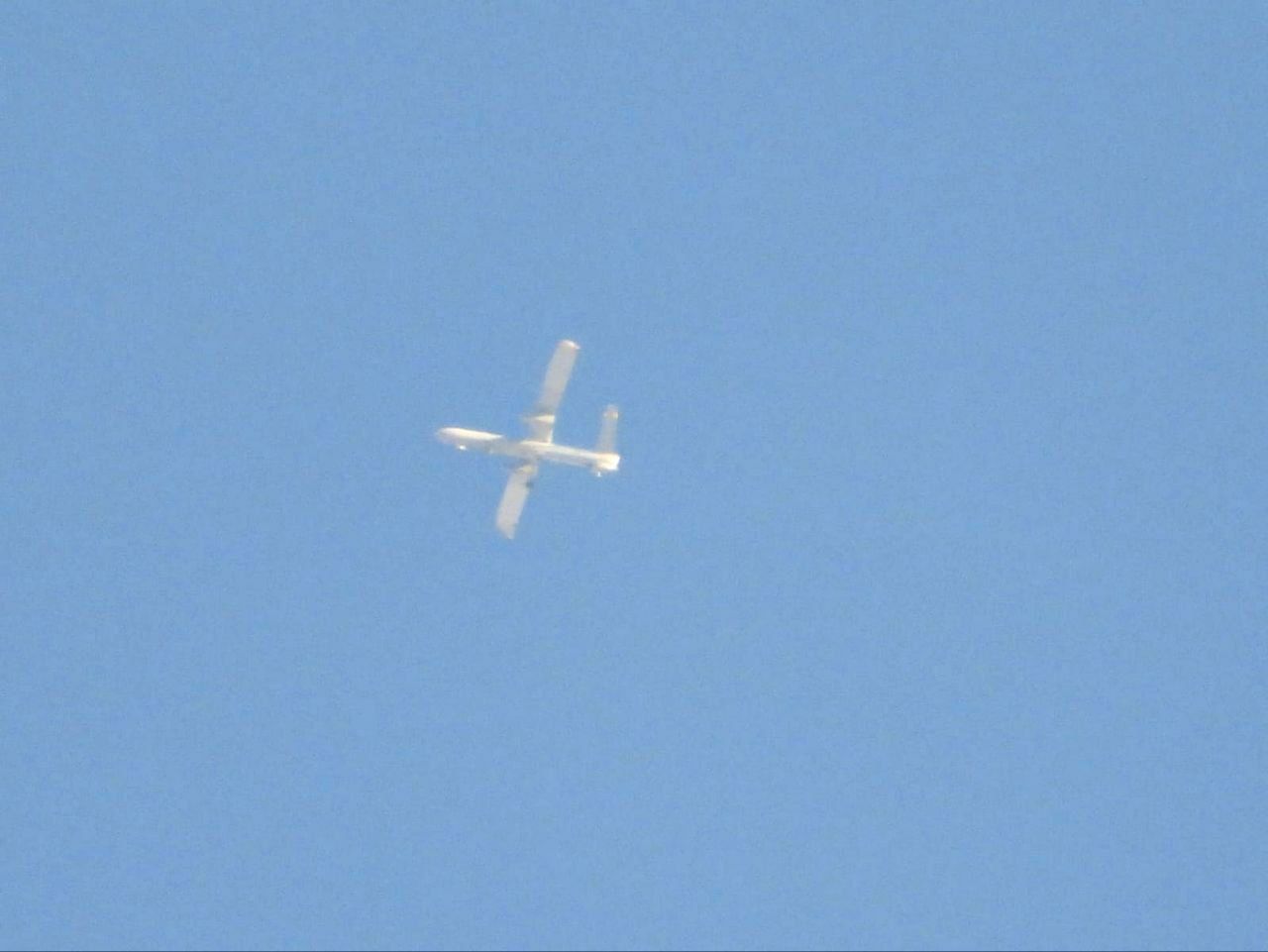
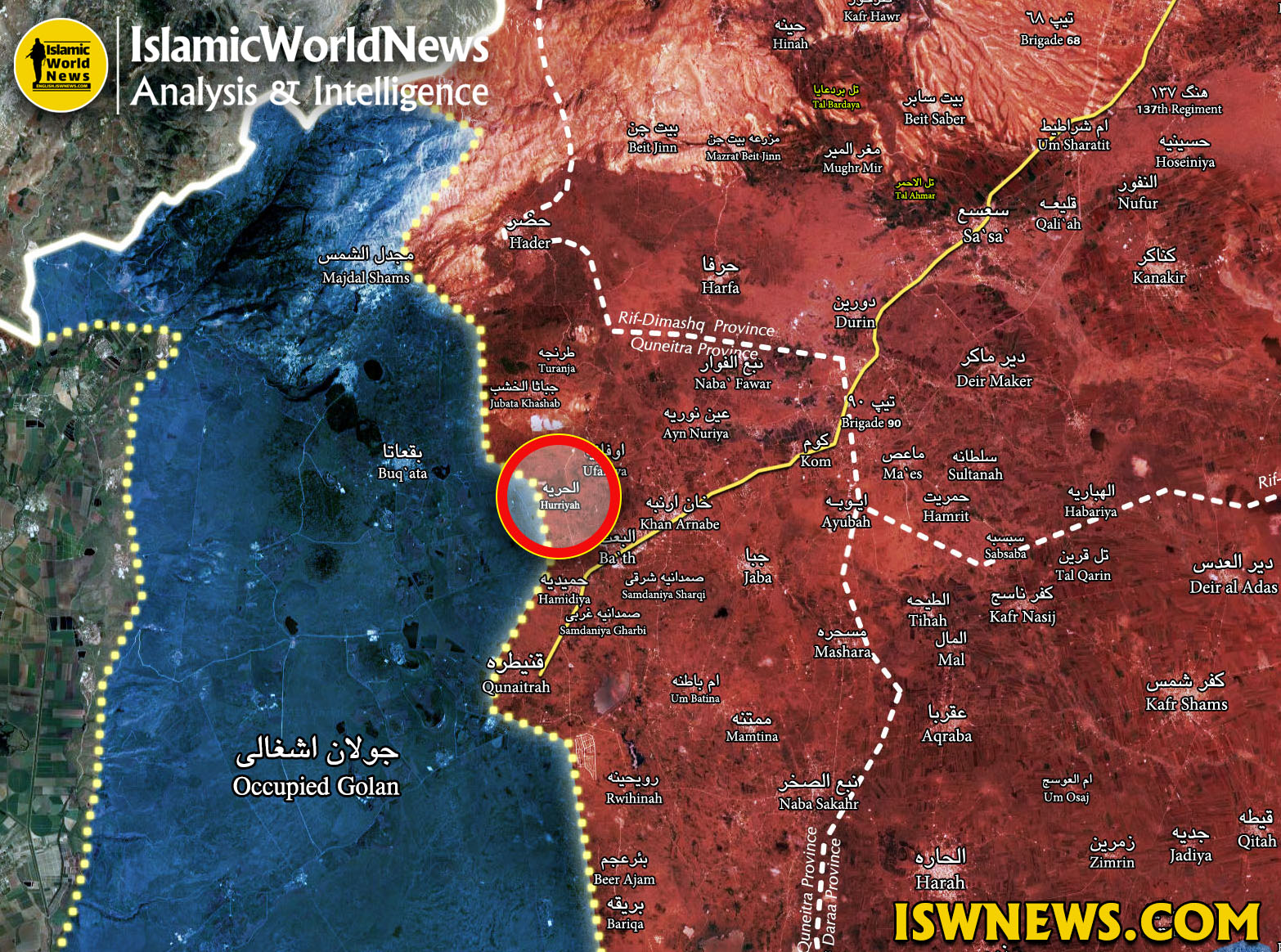
    According to ISWNews field source, as Israeli helicopters and reconnaissance drones flew over the Quneitra region, the regime’s artillery and tanks bombarded the forests of the village of al-Hurriya in northwestern Quneitra province in two stages with 30 minutes time gap.

    The Israeli regime army fired heavy machine guns at the area at the same time due to the thick fog in the area.

    Israeli military sources claimed that the resistance forces were trying to infiltrate the border areas.

    Israeli fighter jets in their latest attack on Syria on the morning of December 28, 2021, fired an unknown number of missiles from the Mediterranean Sea at containers in the port of Latakia, which resulted in fires and property damage.

    Read more: Israel attacks Syria’s Latakia port + Video

    Click to see the full size map
  • Israeli airstrikes on Quneitra

    Israeli airstrikes on Quneitra

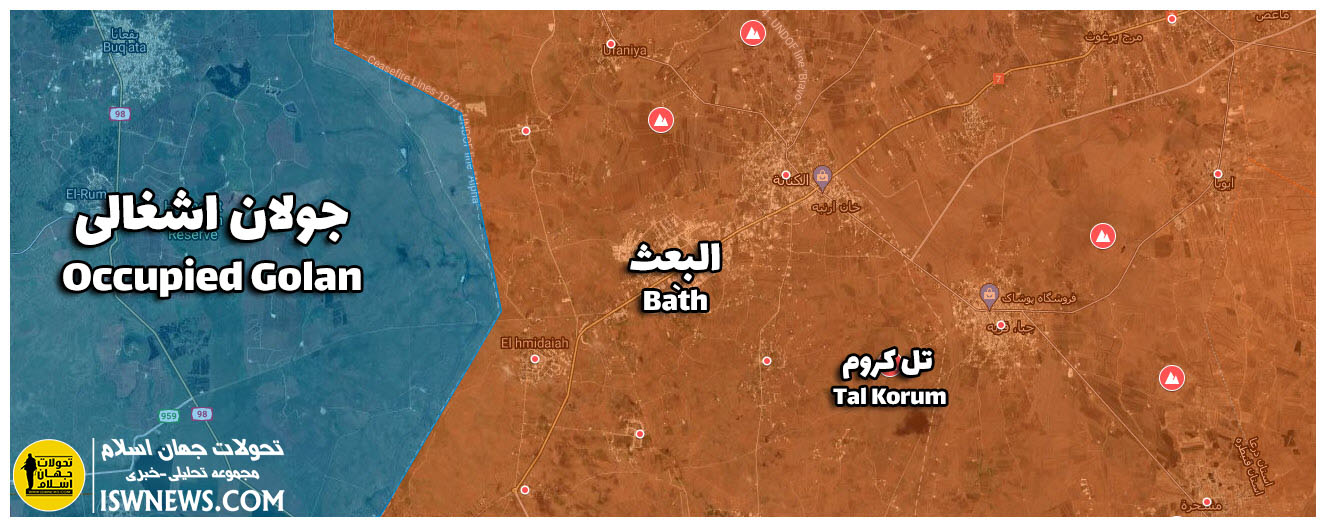
    This morning, Israeli helicopters targeted a Syrian military point in the village of Tal Korum and two other points in Quneitra province. According to pro-Israeli media, two watchtowers belonging to Hezbollah forces and another point near the Syrian army base have been targeted. No information is available on the number of casualties.

    Israeli and Syrian government officials have not commented on the attack. This is the first Israeli attack on Syria since Israeli Prime Minister Bennett met with Russian President Putin in Sochi.

    Hours after the attacks, the Israeli aircraft also dropped warnings leaflets in the area warning Syrian Army forces of any cooperation with Hezbollah forces.

    On August 17 this year, Israeli warplanes fired two missiles at a Syrian military post in the Qars al-Nafl area on the outskirts of Hadar, in northern Quneitra province.