Tag: Taliban

  • Latest updates on clashes between Taliban and ISIS, 30 November 2021

    Latest updates on clashes between Taliban and ISIS, 30 November 2021

    According to Mawlawi Tahir Mobarez, commander of the Taliban security forces in Jalalabad, clashes started this morning in the Zangavi area of Jalalabad and continued several hours. Three ISIS operatives and two Taliban members were killed and four others, including Qari Abdul Rahman, the ISIS operative in Nangarhar, were wounded in the clashes. Also during the conflict, one of the female members of ISIS carried out a suicide operation, as a result of which parts of the surrounding houses were destroyed or damaged.

    On the other hand, another explosion took place this morning in the PD3 of Kabul city, injuring five people. According to Taliban Interior Ministry spokesman Saeed Khosti, the blast was caused by a bomb planted in a pot. He denied any casualties in the blast.

    The shift in ISIS attacks from assassinations and bombings to armed conflict is another sign of the terrorist group’s growing power in Afghanistan. In addition to extensive intelligence and security measures, the Taliban appear to need structural changes in their security institutions to counter ISIS threats in Afghanistan.

    Read more on the topic:
    Latest updates on clashes between Taliban and ISIS, 23 November 2021
    Latest updates on clashes between Taliban and ISIS, 18 November 2021
    Latest updates on clashes between Taliban and ISIS, 16 November 2021

  • Latest updates on clashes between Taliban and ISIS, 23 November 2021

    Latest updates on clashes between Taliban and ISIS, 23 November 2021

    The attacks of ISIS during the last week are as follows:

    1- An IED blast in the path of a Taliban vehicle in the 17th district of Kabul killed one person and injured seven others. Date: November 19.
    2- Assassination of a Taliban member in Logar province. Date: November 19.
    3- An armed attack on a vehicle carrying Taliban militants in the first district of Jalalabad, resulted in the death of three Taliban members. Date: November 20.
    4- Assassination of one of the soldiers of the former government of Afghanistan in the second area of ​​Jalalabad city. Date: November 22.
    5- An armed attack on a Taliban vehicle in the first area of ​​Jalalabad city, resulted in the death of two occupants of the vehicle. Date: November 22.
    6- Assassination of a Pakistani intelligence officer in Bajaur district in Khyber Pakhtunkhwa province. Date: November 23.
    7- Assassination of a Shiite resident of Elias Kaluni area in Rawalpindi city. Date: November 23.
    8- An IED blast in the path of a Taliban vehicle in the second district of Kabul, which according to Taliban sources wounded three people. Date: November 23. (Image)
    9- An explosion in the path of a car carrying the governor of Warsaj district in Takhar province, killed one person. Two others including “Mawlawi Ansarullah Ansari”, the governor of Warsaj were injured. Date: November 24. ISIS has not yet claimed responsibility for the attack. But the type of attack is similar to previous attacks by ISIS.

    The increased activity of ISIS in Afghanistan shows the weakness of the Taliban in Afghanistan. If this weakness continues and the activities of ISIS continue, which is accompanied by the recruiting from the all races in the Central Asian region, including the Tajiks, Uyghurs, etc., the resurgence of ISIS and the fall of areas in Afghanistan is not far off.

    Read more on the topic:
    Latest updates on clashes between Taliban and ISIS, 18 November 2021
    Latest updates on clashes between Taliban and ISIS, 16 November 2021

  • Latest updates on clashes between Taliban and ISIS, 16 November 2021

    Latest updates on clashes between Taliban and ISIS, 16 November 2021

    Recent attacks by the ISIS terrorist group in recent days have targeted civilians in various parts of Kabul, the details of which are as follows:
    1- An IED blast in the path of a car carrying civilians in Dasht-e Barchi area of Kabul, resulted in the death of 6 people, including a journalist and the wounding of 7 others. ISIS claims that 20 people were killed and wounded in the attack.
    2- Explosion of a sticky bomb in Kote Sangi area of Kabul, resulted in the death of one person and the wounding of another. (image)

    In response to the ISIS attacks, the Taliban announced a security operation in the fourth district of Kandahar, during which four ISIS members reportedly were killed and eight others were arrested. Two civilians were also killed in the clashes.

    Khalil Hamrah, a spokesman for the Taliban’s security service, said that during the past three months, Taliban security forces had killed 33 ISIS members and detained more than 600 others.
    On the other hand, Amir Khan Muttaqi, the acting head of the Taliban’s foreign ministry, claims that the ISIS group has been completely destroyed in 70% of Afghanistan.

  • Taliban leader goes to Kandahar for the second time!

    Taliban leader goes to Kandahar for the second time!

    According to local sources, Taliban leader Mullah Hebatullah Akhundzadeh visited the Darul Uloom Hakima school in Kandahar on October 30, where he spoke to religious scholars and Taliban forces.

    “May God reward the oppressed people of Afghanistan for 20 years of fighting the infidels and oppressors. I pray for you here and I ask you to pray for me,” Mullah Hebatullah Akhundzadeh said in the speech.

    He had previously attended a meeting of the Taliban leadership council in Kandahar on 31 August.

    Mullah Hebatullah Akhundzadeh, the current Taliban leader, is from the city of Panjwai in Kandahar province and is said to be about 60 years old. He was elected the second Taliban leader after the assassination of Mullah Akhtar Mohammad Mansour on May 21, 2016. In recent years, there have been reports that he was killed in an explosion in Quetta, Pakistan, or that he was suffering from coronavirus or heart disease, which has been denied by the Taliban.

  • Taliban prominent commander killed in Kabul attack

    Taliban prominent commander killed in Kabul attack

    Hamdullah Mokhles, a Taliban field commander was killed in the attack. Mokhles is said to have been the commander of the Kabul Corps and was one of the first troops to enter the Afghan presidential palace during the Taliban occupation of Kabul.

    According to available information, two explosions took place at the entrance of Sardar Mohammad Daoud Khan Hospital and its vicinity, after which ISIS operatives clashed with Taliban militants.

    This is the fourth major ISIS attack in Afghanistan since the Taliban took control of the country. ISIS has previously targeted Kabul Airport, the Kunduz Shiite Mosque and the Kandahar Shiite Mosque, killing and injuring hundreds of Afghans.

  • Heavy clashes between Taliban and ISIS in Kabul

    Heavy clashes between Taliban and ISIS in Kabul

    On Sunday evening, an explosion took place near the gate of the Eidgah Mosque in Kabul, where the mourning ceremony of the mother of Taliban spokesman Zabihullah Mujahid was being held, killing at least 12 people and injuring more than 30 others.

    After the attack, Taliban militants searched and discovered the hideout of the perpetrators of the attack, which, according to local sources, the hideout of the perpetrators of this terrorist attack was in the 17th district and the “Khair Khaneh” area.

    According to Taliban sources, three ISIS operatives were killed by the Taliban in the Khair Khaneh area. Clashes lasted for several hours.

    In recent days, ISIS has increased its attacks in the cities of Jalalabad, Kabul, Parwan, Kunar, etc. and is using the Taliban’s weakness in intelligence and security matters.

    Image: Taliban clashes with ISIS in Khair Khaneh area in Kabul city

  • Bloody clashes between Taliban and ISIS in Kabul

    Bloody clashes between Taliban and ISIS in Kabul

    A number of Taliban members were killed and wounded in a bomb blast on a Taliban military vehicle in the 17th district of Kabul yesterday. ISIS claimed responsibility for the attack, claiming that six Taliban members were killed and wounded in the attack.
    In response, the Taliban announced the identification of ISIS operatives and the killing of three people in Kabul Bazaar. Local sources claim that these people were shopkeepers in the bazaar and had no connection with ISIS.

    The attack was the fourth carried out by the ISIS terrorist group in recent days in Kabul and Nangarhar provinces of Afghanistan, killing and wounding a total of 22 people.

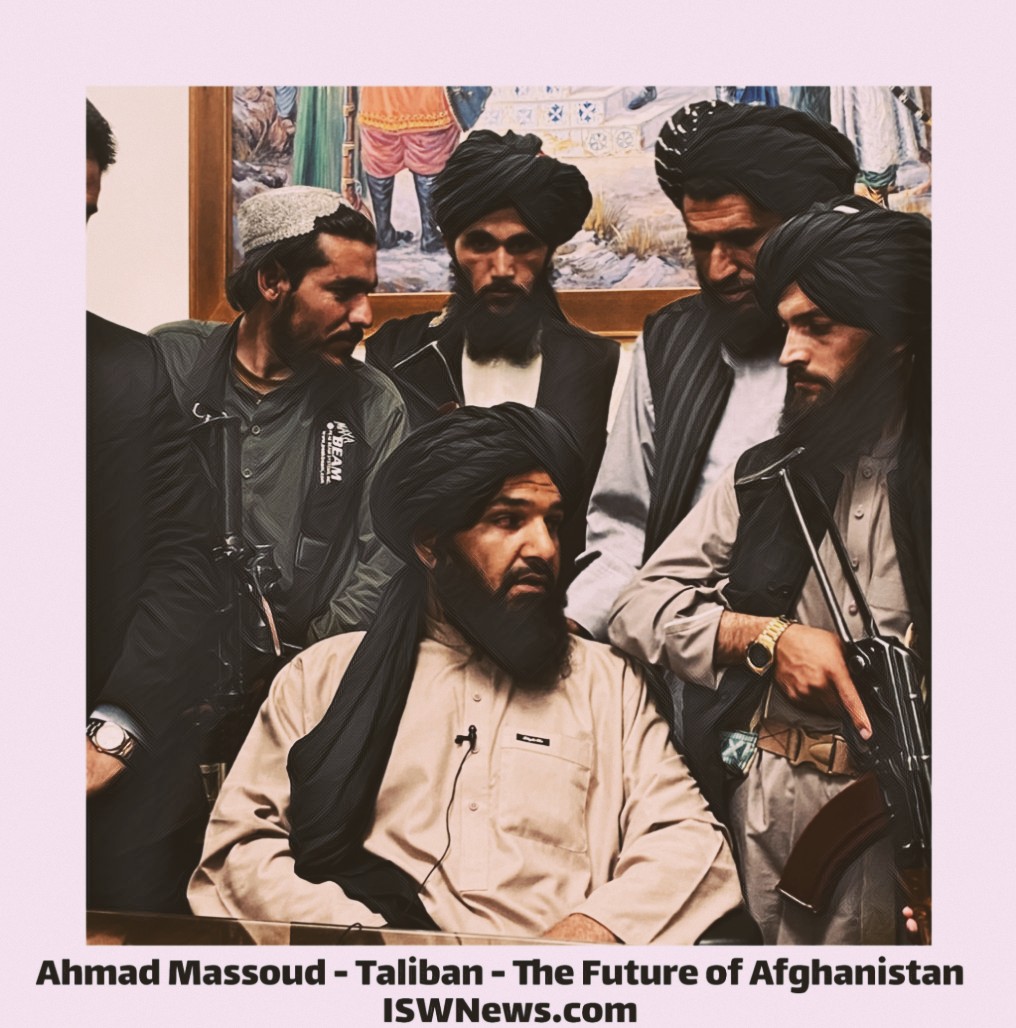
  • Investigation of Afghanistan Major Problems, From Ahmad to Taliban!

    Investigation of Afghanistan Major Problems, From Ahmad to Taliban!

    Recent incidents of Afghanistan opened a new chapter in the history of Afghanistan which shows the future conflicts and government in future.

    In this article we cover the four topics:

    a) Investigation of Ahmad Massoud activities
    b) Forming Taliban’s government
    c) Future conflicts in Afghanistan
    d) Internal conflicts of Taliban

    a) Investigation of Ahmad Massoud activities:
    What comes out of Ahmad Massoud, son of Ahmad Shah Massoud, the Defense Minister of Burhanuddin Rabbani government, is a set of wrong reactions to domestic and international incidents. These mistakes were an end to his glorious activities. It can be said that the position and character of Ahmad Massoud, who could one day be a popular leader for Afghanistan, especially popular leader against the Taliban system, but his position as a potential popular anti Taliban leader lowered to a local defeated commander. Not only he doesn’t control any areas, he acted like an amateur and child in politics and military.

    In general Ahmad Massoud ‘s mistakes are summarized as follows,
    1- Wrong policies in domestic and international relations.
    2- Halting talks with Taliban and poor political acts.
    3- Contacting French intelligence service and specific people like Bernard Levy.
    4- Asking Europe’s and US’s support.
    5- Making his organization tribal by activities such as raising Afghanistan’s unofficial flag.
    6- Battle in a besieged area (Panjshir) and wrong comparison with his father’s battle with the Soviet.

    b) Forming Taliban’s government:
    According to Taliban official, the group will not announce the new government until the whole country is controlled and the internal leading council agrees on the form and members of the government. In a three days summit led by Molla Hibatullah Akhundzada, leader of Taliban, in Kandahar three days ago Taliban members of the future government selected without anyone from previous governments such as Hamid Karzai, Abdullah Abdullah, etc.
    These acts by Taliban show they don’t believe in a federal and united government such as previous governments and they don’t need election for it, either.
    We can’t talk much about the Islamic government until the details are unveiled but if it is based on the same method as the Taliban 20 years ago, it will certainly face the same problems.

    c) Future conflicts in Afghanistan:
    It is a bit early to talk about the future conflicts of Afghanistan, since Taliban has not started working yet. Nevertheless, the cores of the conflicts can be around “race”, “religion” and “internal discords of Taliban”.
    Taliban looks at Hazaras and Tajiks as racial rivals and in religion, Shia and Takfiris like ISIS.
    But they always avoid fighting with Hazaras and Shias since they are supported by Iran and Shias and Hazaras also got along with them.
    However, so far Taliban tried to show beyond race and religion but it has to be tested in action.

    d) Internal conflicts of Taliban:
    It has never been publicized. It is a wrong analysis that Iranian and Afghan analysts have that they think Taliban is completely dependent on Pakistan and Pakistan intelligence service (ISI) decide for them. Also it is not correct that occupying Afghanistan including Herat and Kabul was done by Pakistan militia (Punjabis) and Taliban did not have a strong role in incidents of Afghanistan. These statements are baseless and come from not understanding Taliban properly.
    Taliban has four regional councils of Quetta, Rasul, Shamal and Mashhad and only one , i.e., Quetta, is under influence of Pakistan. Also, the Quetta council is often made up of supporters of the Haqqani network and supporters of Molla Hibatullah, who have never been in conflict with each other. (More details will be provided in future articles.)


    In general, the process of bringing the Taliban to power in Afghanistan has not been based solely on a single organization, widespread popular support, intellectual foundations, and a brilliant track record; Rather, the main cause of this issue was the betrayal and incompetence of the heads of the previous government and then the weakness of their rivals such as General Dostum, Atta Mohammad Noor, Ahmad Massoud and others.

  • Statement by Shia Ulema Council of Afghanistan regarding the announcement of Taliban government

    Statement by Shia Ulema Council of Afghanistan regarding the announcement of Taliban government

    The text of the statement of the Council of Ulema is as follows:

    In the name of God, the Most Gracious, the Most Merciful.
    ‘And fulfill the covenants; indeed all covenants are accountable.’ (Isra, 34)

    Following recent developments and dominance of the Taliban Islamic Movement based on the Taliban’s promises to the people of Afghanistan and the international community to establish a comprehensive government and a full-fledged mirror of all ethnic groups, followers of Islamic religions in the country, as well as the establishment of the Islamic system, the announcement of ministers without the inclusion of worthy people from different ethnic groups in Afghanistan, especially the Shiite community, was unexpected.
    The Council of Shiite Ulema of Afghanistan does not consider the non-comprehensive cabinet declared by the Taliban to be in the best interest of the country, and considers it unfair, which will cause problems for the society and the country.
    Therefore, the Council of Shiite Ulema of Afghanistan advises the Taliban to fulfill their promises and to make the cabinet inclusive, to take action and create positive grounds for cooperation, brotherhood and joint efforts to solve the existing problems in the country.

    Council of Shiite Ulema (Scholars) of Afghanistan
    1400/6/17 SH equal to 1443/2/1 AH


    The statement came as the Taliban recently formally elected all members of the new government cabinet from under their control and barred other political and popular currents from participating in the government.
    Contrary to their previous claims, the change in the Taliban’s course appears to have been foreign-backed. But it is better for them to know that this path has been experienced in the past years and has no end but the fall of the Taliban again! Because Afghanistan is a country composed of different ethnicities and religions, and the only way to maintain its unity is to give importance to all these ethnicities and religions, regardless of political interests.

  • Afghanistan: Taliban captured Panjshir province

    Afghanistan: Taliban captured Panjshir province

    It is said the remaining Ahmad Massoud forces have taken refuge in the mountains and heights of Panjshir, and no details are available about Ahmad Massoud fate and whereabouts.

    In the last heavy fighting yesterday, which took place on the outskirts of Rukhah and Khinj, a number of field commanders of Ahmad Massoud were killed and the defensive lines of the Panjshir forces were destroyed. Following this collapse, the Taliban militants succeeded in advancing on Rukhah district and reached Bazarak city, the capital of Panjshir province.

    Taliban in Panjshir governor’s building

    Fahim Dashti, a spokesman for the Ahmad Massoud forces (nephew of Abdullah Abdullah), and General Abdul Wadud Zareh, an adviser to Ahmad Massoud (nephew of Ahmad Shah Massoud), reportedly were killed by an unidentified drone strike (possibly belonging to Pakistan) in the Dashtak region. Amrullah Saleh also fled to Tajikistan in recent days, and no information is available on the whereabouts of Ahmad Massoud. Some say he went to Tajikistan and others say he took refuge with his troops in the Panjshir highlands.

    In his last speech, Ahmad Massoud welcomed the Afghan Ulema Council’s proposal to stop fighting and talk to the Taliban in Panjshir and called for the Taliban to withdraw from Panjshir. But the Taliban considered his deadline over and continued their attacks on Panjshir until it was completely captured.

    In any case, “Ahmad Massoud” also ousted from the Afghanistan developments, and in the coming days we should see the formation of the Taliban government and their reaction to various events, such as internal and external relations, as well as their internal power conflicts.

    Panjshir online map

  • Afghanistan: Taliban held its second official press conference

    Afghanistan: Taliban held its second official press conference

    The key remarks made by Taliban spokesman Zabihullah Mujahid at his second press conference are as follows:

    ” – The United States must withdraw from Afghanistan by the end of August 31.

    – The current congestion at Kabul Airport is worrying. We do our best to reduce this amount. Four ISIS members who were trying to infiltrate Kabul airport have been arrested and security incidents are taking place. We try not to harm the people who have gathered.

    – We call on all countries that their land should not be a problem for our country. Just as we do not allow anyone to use our land against anyone.

    – Turkey is a Muslim country and we would like to have good relations with them, but we oppose the presence of Turkish troops in Afghanistan. As soon as the problem of Kabul airport is solved, we do not need foreign forces.

    – Negotiations are underway to resolve the Panjshir problem. The Islamic Emirate has declared that the war in Afghanistan is over, we do not want a single bullet to be fired. Talks to resolve the issue are ongoing and are 80 percent complete. This issue will be resolved peacefully.

    – The army is the important foundation of the country and we are trying to build a better army than before. The soldiers we have are recruited and elite and strong people from the former soldiers will be recruited.

    – God willing, our leader, Sheikh Hibatullah Akhundzada, will appear in the media soon.”

  • Afghanistan: Ashura mourning ceremony in Mazar-e-Sharif + Images

    Afghanistan: Ashura mourning ceremony in Mazar-e-Sharif + Images

    Ashura ceremony in Mazar-e-Sharif was held with the participation of tens of thousands of citizens of Balkh province in a very safe and glorious atmosphere more than in previous years.

    In this ceremony, Hujjat al-Islam Sayyed Hashem Hosseini Nejad, Head of Ashura Ceremony, Hujjat al-Islam Moghaddasi, Representative of Molawi Mehdi Mojahed, Hujjat al-Islam Bayani, Chairman of the Council of Shiite Scholars of Balkh Province, Head of the Islamic Emirate in the North, and Sayyed Haidar Hashemi, Friday Imam of the city of Mazar-e-Sharif gave a speech.

    Explaining the aims of Imam Hussein’s uprising, the speakers spoke of brotherhood and empathy and called on the people to empathize.

    The Taliban representative said at the ceremony: “Shiites are our brothers, our war and jihad has been for brotherhood and patriotism. Prejudice, ethnicity and religiosity must be avoided and we must all unite and build the homeland.”