Tag: Taliban

  • Khalilzad’s Return to Kabul: Taliban–U.S. Relations Enter a “New Phase”

    Khalilzad’s Return to Kabul: Taliban–U.S. Relations Enter a “New Phase”

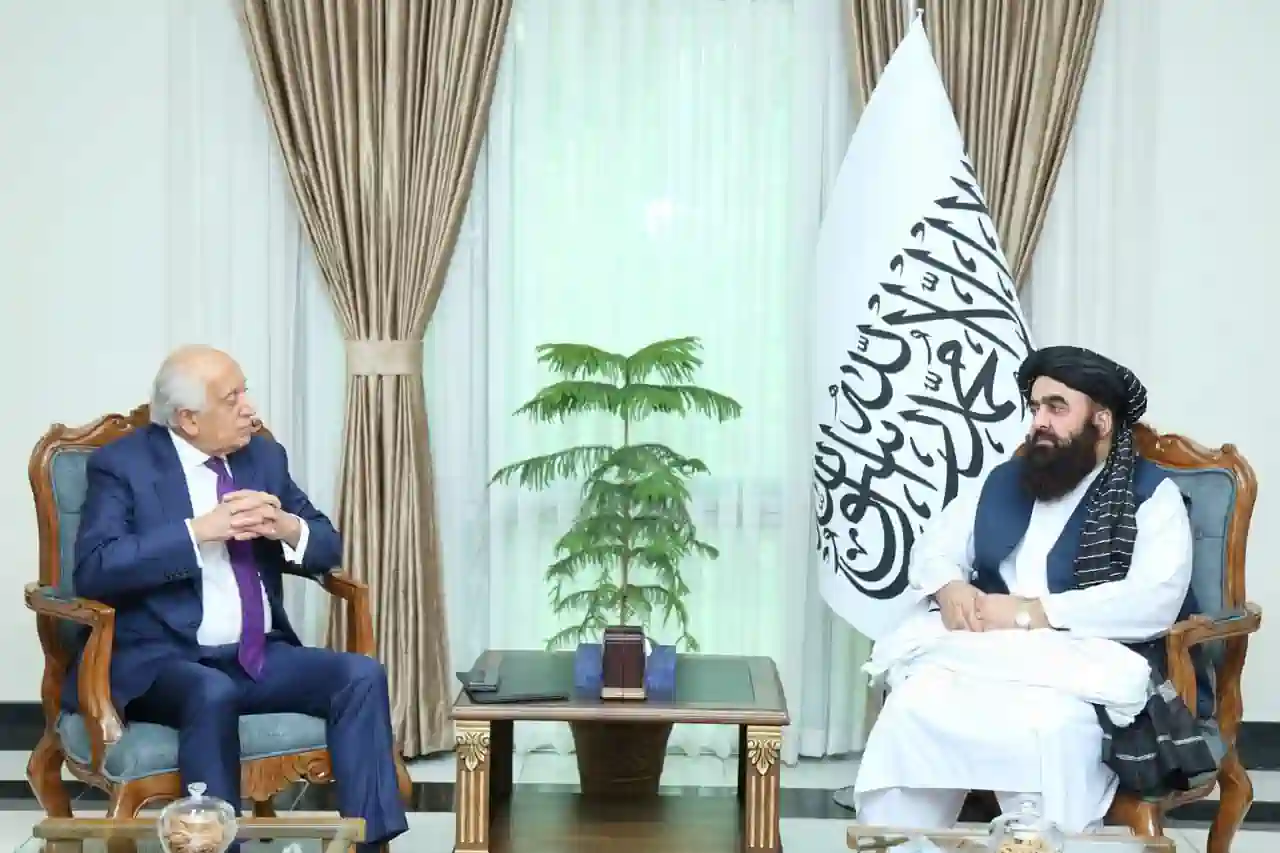
    The details and exact purpose of this meeting have not yet been disclosed. Muttaqi, however, stated that cooperation between the Taliban and the U.S. has entered a “new phase”—a phrase left unexplained, fueling speculation about the scope of this engagement.

    In previous sessions, discussions mainly focused on the release of American citizens imprisoned in Afghanistan. With that process now completed, analysts suggest that issues such as security, humanitarian aid, and limited economic cooperation—channeled indirectly through international institutions—may be on the agenda, though none of these have been officially confirmed.

    Khalilzad has previously traveled to Kabul several times, holding informal talks with Muttaqi about possible pathways for developing Afghanistan–U.S. relations.

    On another trip, he was accompanied by Adam Boehler, the U.S. president’s special envoy, meeting with Muttaqi and Taliban deputy for economic affairs Mullah Abdul Ghani Baradar to discuss matters including detainees, the status of foreign nationals, and economic opportunities.

    The continuation of these meetings indicates that, even after its military withdrawal, the U.S. is still seeking to maintain political and economic channels with Kabul. Yet these interactions remain conditional, limited in scope, and marked by mutual distrust.

    The overall pattern of behavior from both sides suggests a relationship that is neither fully severed nor based on trust, but rather one defined by controlled, interest‑driven engagement. Despite Khalilzad’s mediation efforts to bring security and military issues into the dialogue, the relationship has so far remained confined to economic and diplomatic exchanges.
  • National Resistance Front of Afghanistan Claimed Attacks on Taliban

    National Resistance Front of Afghanistan Claimed Attacks on Taliban

    In response, Saifuddin Laton, spokesperson for the Panjshir governor, denied the report, making the unusual claim that no anti‑security incidents have been recorded in Panjshir over the past three years, and that the province has instead become a tourism destination.

    The conflicting narratives—opposition forces claiming heavy Taliban losses and local Taliban officials issuing sweeping denials—suggest both sides are attempting to amplify or downplay the incident. Panjshir, a mountainous and hard‑to‑access region under full Taliban control, remains a place where obtaining accurate information about events is virtually impossible.

  • Taliban’s Economic Chief Meets with Saudi Executive and Zalmay Khalilzad Over Gas Pipeline Project

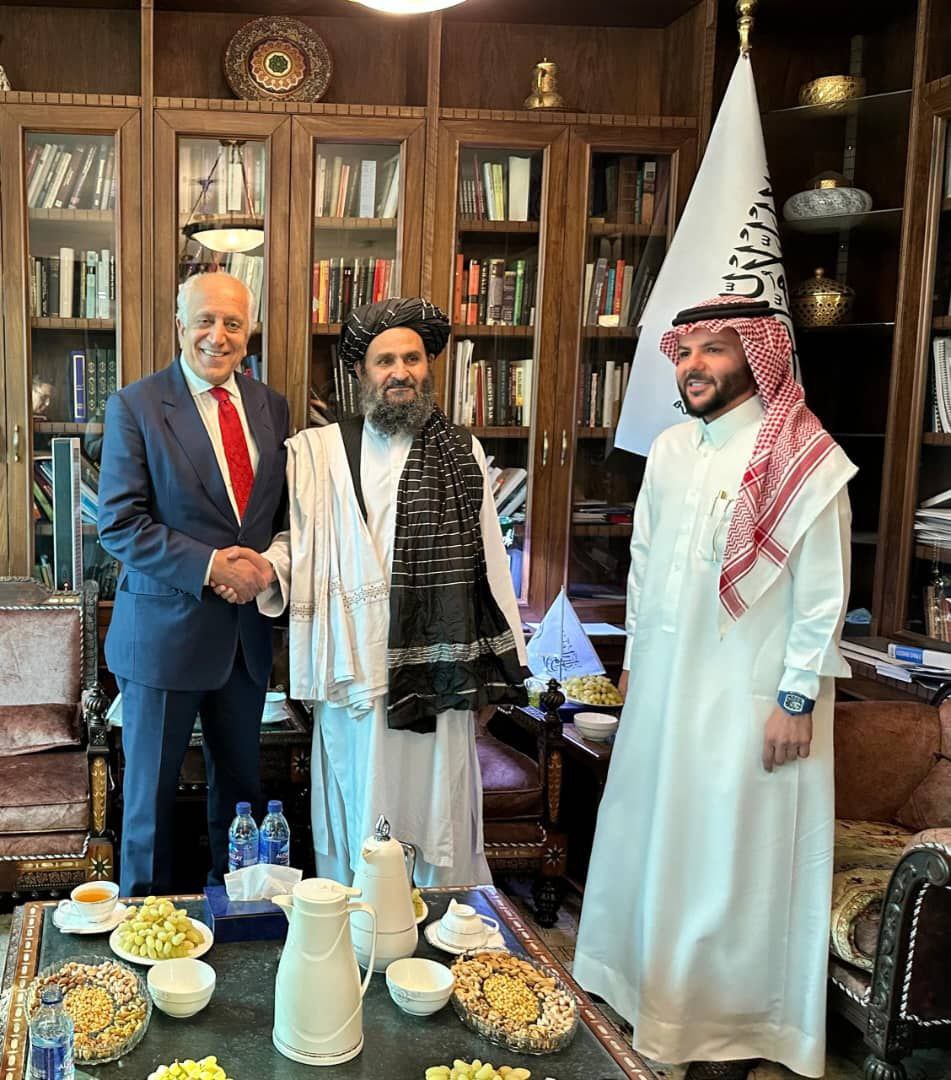
    Taliban’s Economic Chief Meets with Saudi Executive and Zalmay Khalilzad Over Gas Pipeline Project

    The meeting focused on cooperation in gas exploration, extraction, and pipeline development across Afghanistan. Al-Taqi expressed strong interest in investing in the country’s energy sector.

    As negotiations over American prisoner exchanges progress, Khalilzad’s role in shaping Afghanistan’s future has become increasingly prominent. With backing from the Trump administration and Saudi firms, Khalilzad is leveraging Taliban interests—such as gas development—to advance U.S. strategic goals in the region.

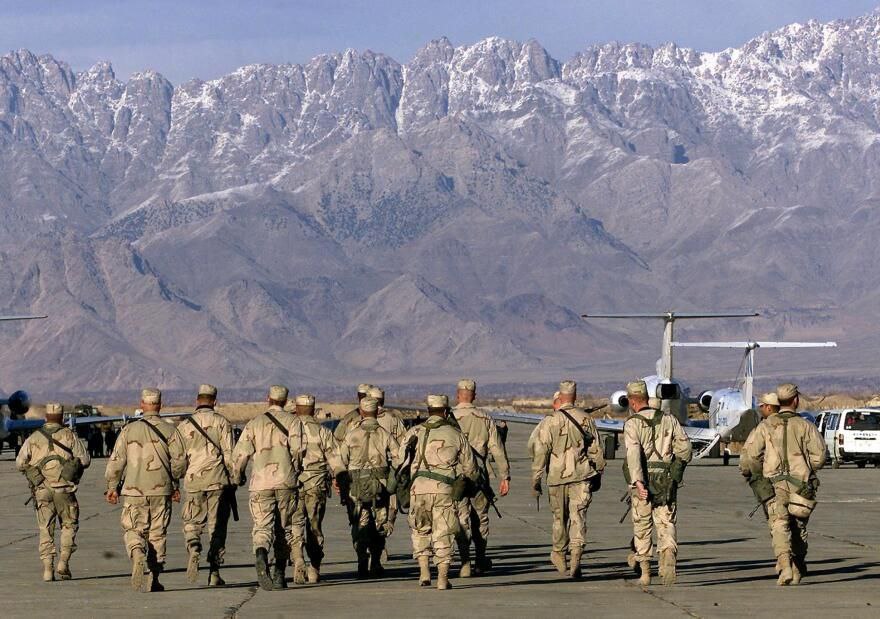
    While his exact objectives remain unclear, speculation includes potential military and intelligence use of Bagram Airbase. The evolving cooperation between the Taliban and the U.S., with Khalilzad as a key facilitator, appears to be gaining momentum.

  • U.S. Preparations for a Potential Return to Afghanistan!

    U.S. Preparations for a Potential Return to Afghanistan!

    The report claims that Washington’s primary strategy is to negotiate with the Taliban for control of Bagram, though military options are actively being considered.

    It further alleges that around 80% of Taliban officials are willing to hand over the base to the U.S., but Taliban leader Mullah Hibatullah Akhundzada and his inner circle oppose the plan. The report speculates that if their stance doesn’t change, the U.S. might consider targeting them for assassination.

    Additional reports suggest that communication devices are being confiscated and internet access has been cut in Kandahar, where the Taliban leader resides. Taliban security forces are reportedly constructing underground tunnels to protect him. These developments point to the possibility of a U.S. military intervention against the Taliban.

  • Taliban Retaliates Against Pakistani Airstrikes

    Taliban Retaliates Against Pakistani Airstrikes

    Afghan Taliban militants targeted four locations in Barmal city of Paktika province, near the Dand Wa Patan, Tri Mangal, and Torkham border crossings in Paktia and Khost provinces, in response to the Pakistani army’s airstrikes.

    The fighting concluded after Pakistani army artillery attacks on border areas in eastern Afghanistan, leading to the retreat of Taliban militants.

    The Taliban’s defense ministry stated that Taliban forces had attacked the bases and hideouts of ISIS and their supporters (Pakistan) in the southeast, which were the sources of the attacks on Afghanistan, without providing details of the attacks on Pakistani territory.

    Clashes on the border areas

    Afghan media reported that 19 Pakistani soldiers and three Afghan civilians were killed in the clashes, and two border checkpoints were captured by the Afghan Taliban. The Taliban set fire to Pakistani border guard equipment and left the area after capturing the checkpoints.

    The videos and images released by Taliban media are old and unrelated to today’s attacks.

    Pakistani media denied these reports, stating that one border guard was killed and seven were wounded. They also claimed that five Taliban militants were killed in an artillery attack by the Pakistani army on Dandpatan town in Paktia province.

    Pakistani artillery attack on Dand Wa Patan area

    These clashes continue the political tension between the Pakistani government and the Afghan Taliban over the Afghan Taliban’s support for the Tehreek-e-Taliban Pakistan (TTP) and the Taliban’s counterclaims of Pakistan’s support for ISIS. The Taliban claim to have carried out the attacks in response to a Pakistani army airstrike on Barmal in Paktika province on January 5, which killed at least 46 people in Afghanistan and sparked a strong reaction from the Taliban. Pakistan claims to have assassinated senior commanders of the Pakistani Taliban, including Shir Zaman (Mukhlis Yar), Abu Hamza, and Akhtar Mohammad, and destroyed the group’s media center, Omar Media.

  • Taliban And Pakistani Border Guards Clash In Kunar-Bajaur Border

    Taliban And Pakistani Border Guards Clash In Kunar-Bajaur Border

    It is said that in response to Pakistan’s attacks last night and this morning, the Taliban shelled the Ganjgol and Navapas checkpoints of Pakistan’s Border Guard Forces.

    This is the 15th border conflict between the Taliban and Pakistan since the beginning of Taliban reign in Afghanistan. The previous conflict occurred on October 5, at the Spin Boldak-Chaman border crossing located in Kandahar province.

  • Iran Intelligence Ministry, Afghanistan’s Taliban Arrested Mossad Agents On Afghan Border!

    Iran Intelligence Ministry, Afghanistan’s Taliban Arrested Mossad Agents On Afghan Border!

    These individuals were Iranian nationals and intended to carry out attacks using suicide drones on Iranian soil and try to create discord between Iran and the Taliban.

    It is also said that the Taliban caretaker government will soon transfer the detainees to Iran for interrogation.

    The preparation and implementation of such terrorist plots are expected in the current crisis situation that the Israeli regime is facing. It is worth mentioning that Iranian nuclear facilities, military sites, and border areas can be targeted.

    Furthermore, since the onset of the Gaza war, Persian-language media outlets in the Israeli occupied territories have repeatedly attempted to provoke terrorist acts in Iranian border provinces such as Sistan and Baluchistan, Kurdistan, as well as trigger political and social disputes, but they have been unsuccessful for various reasons.

  • 14th Clash Between Taliban, Pakistan At Spin Boldak-Chaman Border Crossing

    14th Clash Between Taliban, Pakistan At Spin Boldak-Chaman Border Crossing

    As a result of the clash between Taliban militants and Pakistani army forces at the Spin Boldak-Chaman border crossing in Kandahar province, two Pakistani civilians were killed and four others, including a Pakistani soldier and two Afghan children, were injured.

    This is the fourteenth border clash between Taliban and Pakistan since the group came to power in Afghanistan.

    The previous clash took place at the Torkham border crossing in Nangarhar province, which led to the closure of this border crossing by Pakistan.

    Casualties of the Taliban-Pakistan border conflict
  • Taliban Intelligence Director Killed In Kabul

    Taliban Intelligence Director Killed In Kabul

    The ambush against a vehicle carrying Taliban gunmen happened in Murad Big village located in Kabul’s Shokar Dara town.

    Qari Bismillah, while serving as director of Taliban intelligence in the town of Shakar Dara, also served as deputy director of criminal investigation of the security command of the Taliban police in Afghanistan’s capital city Kabul.

    Assassinations of Taliban security and intelligence officials by Ahmad Massoud’s forces have increased over the recent week and the assassination of Qari Bismillah is the second assassination operation by the National Resistance Front of Afghanistan in Kabul province.

  • Torkham Border Crossing Closed Following Taliban-Pakistan Clash

    Torkham Border Crossing Closed Following Taliban-Pakistan Clash

    Several people were killed and wounded as a result of the border conflict between Taliban militants and Pakistani border guards at the Torkham border crossing in Nangarhar province.

    The conflict began after Pakistani border guards prevented Taliban militants from establishing a border post at this crossing.

    The Pakistani border guard command issued an order to stop activities at this border crossing and closed the border with Afghanistan.

    The two sides have not provided any details about the casualties and losses of the conflict, but some local media claim that two members of the Taliban militants and four Afghan children were killed.

    It is worth mentioning that this is the thirteenth border conflict between the Taliban and Pakistan since the group came to power in Afghanistan.

  • Afghans Carry Out 4th Suicide Attack In Pakistan (Video)

    Afghans Carry Out 4th Suicide Attack In Pakistan (Video)

    The fourth suicide attack by Afghans in Pakistan was carried out by the Tehreek-e-Jihad Pakistan (TJP) on a convoy carrying Pakistani army troops in the Gariyum district of North Waziristan province.

    The TJP issued a statement, claiming responsibility for the attack adding that 12 Pakistani soldiers, including several senior officers, were killed and injured in the attack.

    It should be noted that media outlets close to the Taliban in Afghanistan confirmed the suicide attacker’s identity as a member of the Tehreek-e-Jihad Pakistan group and that he had gone to Pakistan to carry out the suicide operation.

    Earlier, senior Taliban officials had banned militants affiliated to Taliban of Afghanistan from carrying out operations in Pakistan and declared such acts forbidden, but the TJP’s attack showed that this group does not obey the Taliban of Afghanistan.

    Suicide attack by the TJP agent against Pakistan army convoy in Gariyum area
  • Jabhat Ansar Al-Mahdi Khorasan Group Formed In Bannu, Pakistan

    Jabhat Ansar Al-Mahdi Khorasan Group Formed In Bannu, Pakistan

    Following an armed attack by the Jabhat Ansar al-Mahdi Khorasan group on Pakistani police forces in the Maidan Daud district of Bannu in South Waziristan, three Pakistani police officers were killed and injured. 

    This is the first attack by the newly-formed group in Pakistan and government sources have not yet responded to it.

    Some phrases by Amir al-Mu’minin Sheikh Hibatullah Akhundzada, leader of the Taliban in Afghanistan and the leader of jihad in Pakistan, are seen on the flag of the Jabhat Ansar al-Mahdi Khorasan group.

    Bannu city in Khyber Pakhtunkhwa – click to view in full size

    It should be noted that the Jabhat Ansar al-Mahdi Khorasan group has not provided any official information or clear explanation for its formations so far.

    Since the Taliban in Afghanistan also provided financial, arms, and human support to the Tehrik-i-Taliban Pakistan (TTP) in the past to carry out terrorist attacks in Pakistan, it is possible that this group is also connected to the Taliban in Afghanistan.

    Senior officials of the Taliban caretaker government in Afghanistan had previously rejected the possibility and declared any activities with the aim of destabilizing Pakistan as forbidden and unlawful.