Tag: The Yemeni National Resistance

  • Tareq Saleh’s Controversial Visit To Taizz; Prelude To Operations Against Ansar Allah And Islah Party?

    Tareq Saleh’s Controversial Visit To Taizz; Prelude To Operations Against Ansar Allah And Islah Party?

    Taizz city was one of the main strongholds of opponents of Ali Abdullah Saleh especially the Islah Party in the onset of revolution in Yemen and even before the turning point. Following the aggression by the Saudi-led coalition, the Islah Party could mobilize its militants to control parts of the city and it kicked off confrontations with followers of Ansar Allah movement and Ali Abdullah Saleh. The climax of the conflicts occurred when the late president betrayed Ansar Allah and the movement’s fighters retreated from urban areas and took a position in northern areas of the city.

    After over a decade of war in Yemen, several transformations and clashes happened in the country, but Taizz witnessed fewer changes due to its geographical situation, density of population and the spread of conflicts in other fronts.

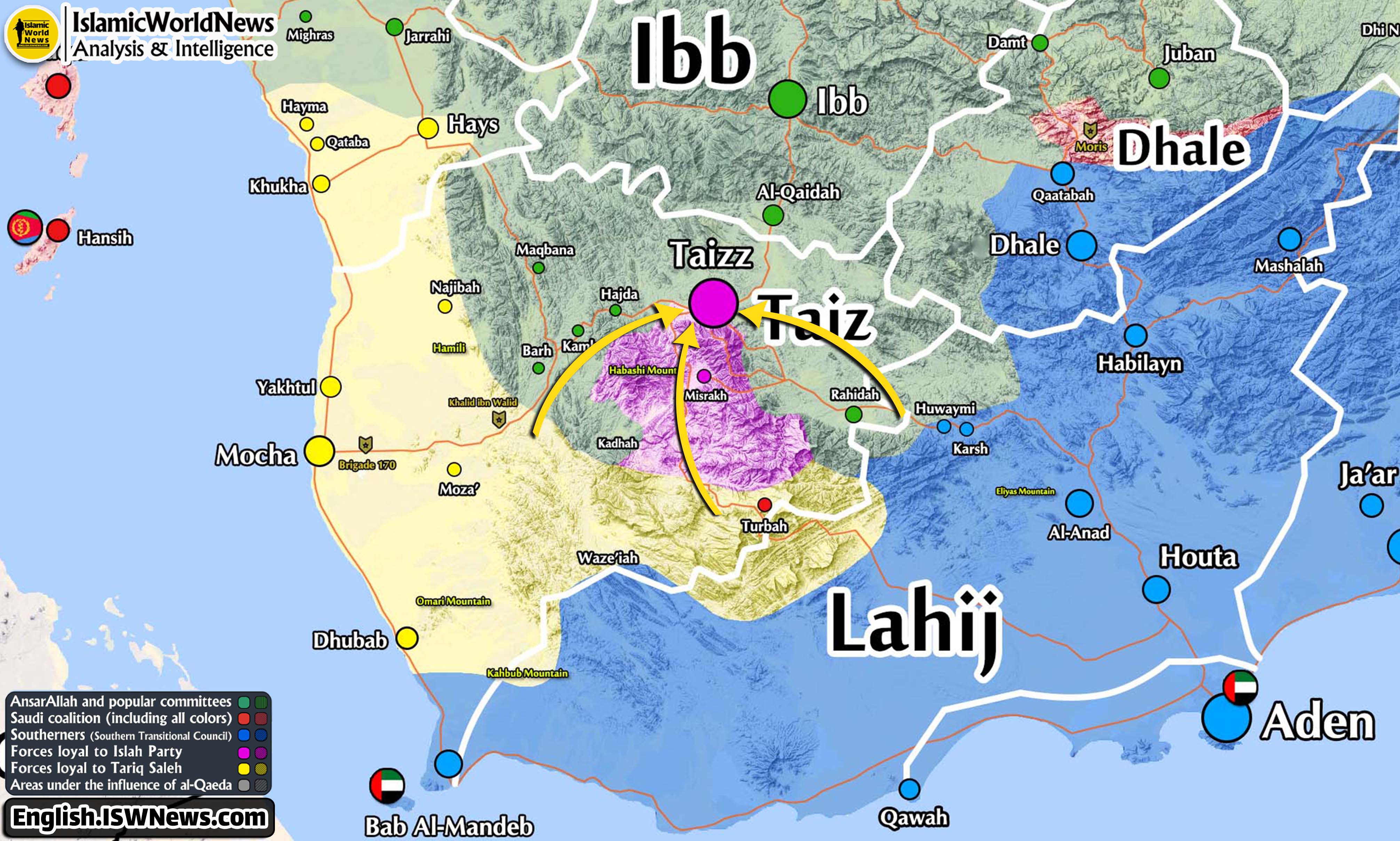
    At present, Ansar Allah controls strategic points in northern, eastern and western areas of the city. The strategic areas encompass the International Airport, major roads, including Taizz-Aden, Taizz-Sanaa and Taizz- Al-Hudaydah, as well as the heights overlooking the city.

    The urban areas, military bases and administrative offices are under the control of the Islah Party and in some point under the supervision of the resigned government of Yemen. Moreover, there is side road in the southern Taizz, which connects the western entrance of the city to Al-Tarba town and Yemen’s southern cities. The side road is controlled by the militants of the Islah Party, which is utilized by the Saudi-led coalition to enter the battle grounds in Taizz.

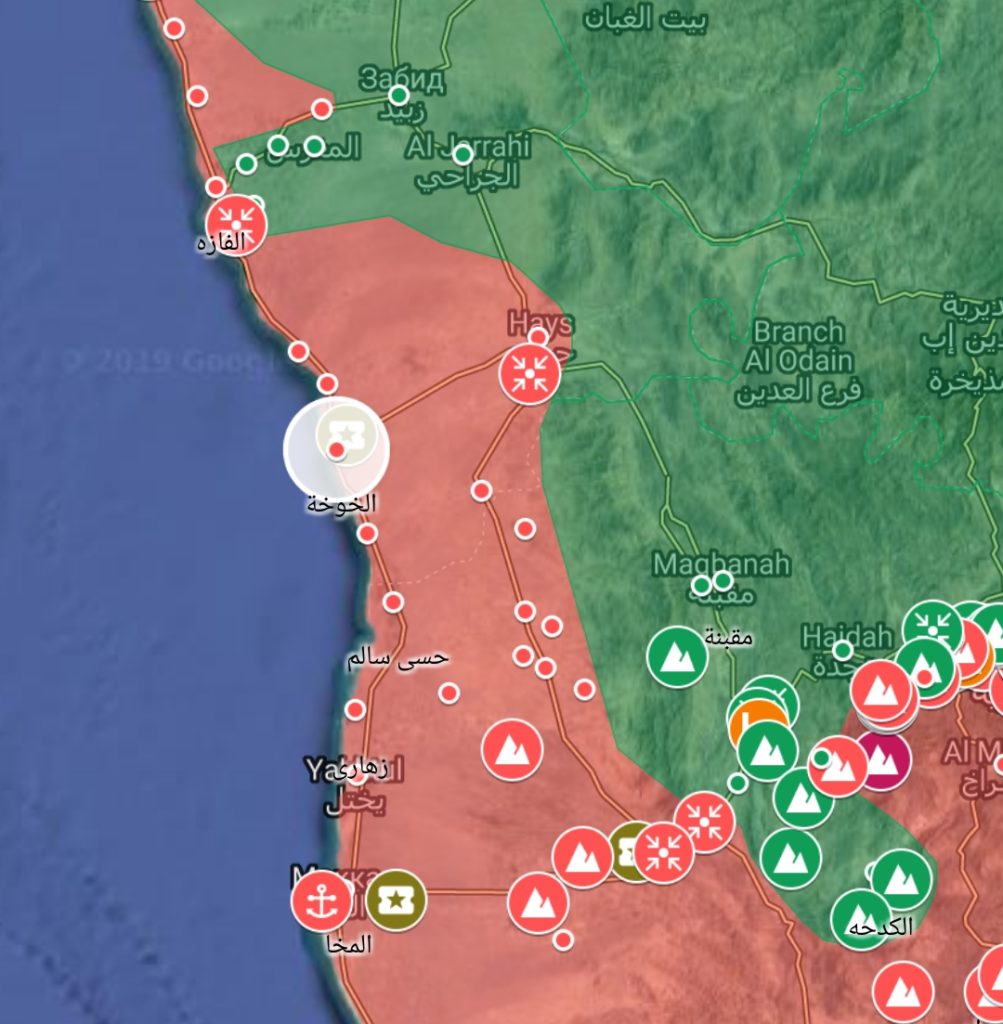
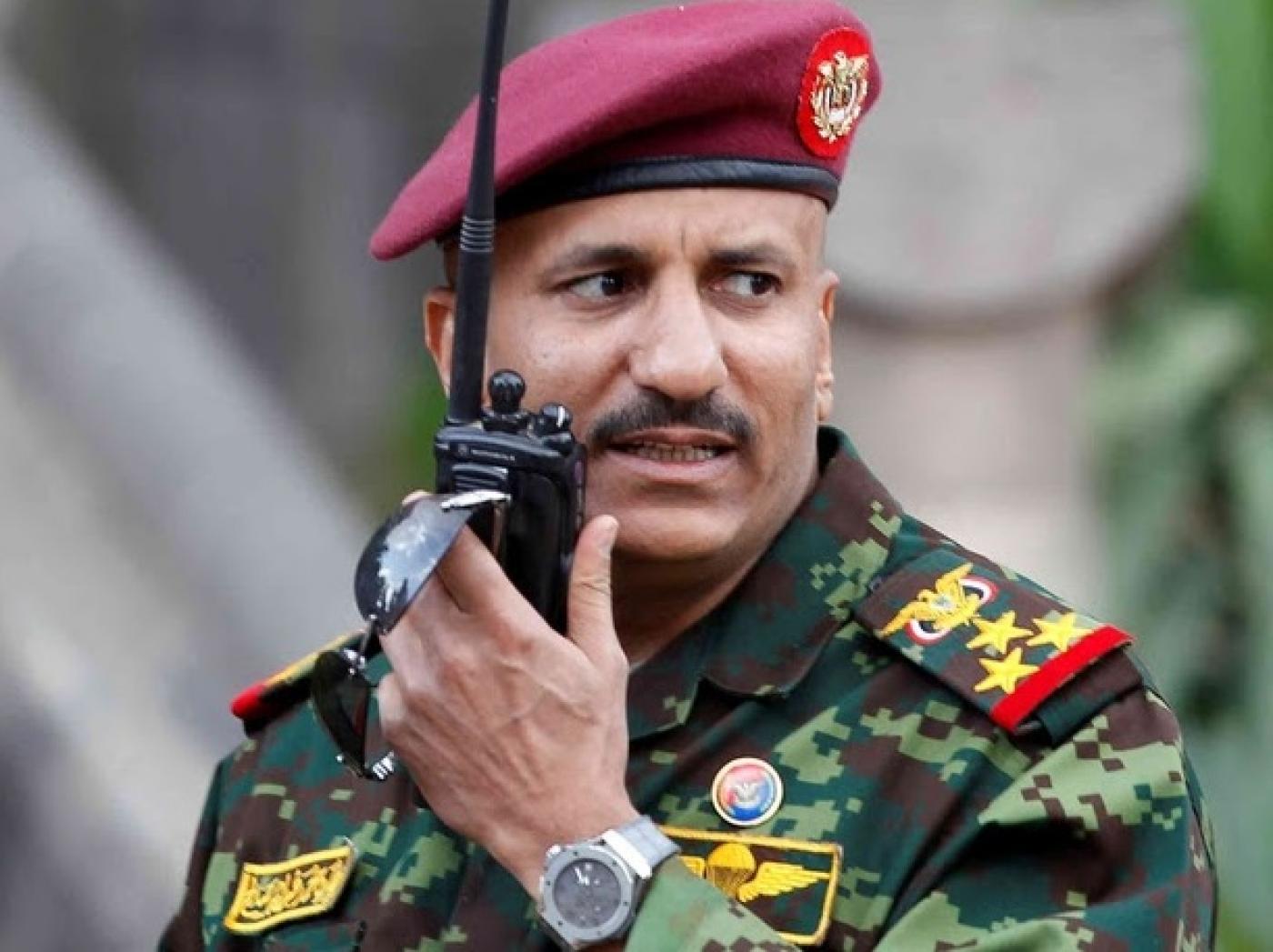
    Tareq Saleh is nephew of the late president of Yemen, who is commander of the Popular Resistance Committees, which is under supervision of the Saudi-led coalition. Tareq Saleh became a member of the presidential council of the resigned government of Yemen following the resignation of former President of Yemen Abdrabbuh Mansur Hadi. Tareq Saleh has a close relationship with the United Arab Emirates (UAE), and he contributes to certain programs of Saudi Arabia, including their confrontation against the Southern Transitional Council (STC). Some of his covert efforts and supports in forming the Popular Resistance Committees, handing over the control of the southern front of Al-Hudaydah and western parts of Taizz to al- Mocha Port, as well as his cooperation in the formation of Al-Dara’ Al-Watan militants paved the way for enhancing his power and influence in the developments of the occupied territories of Yemen.

    As part of his latest attempts, Tareq Saleh met with a military delegation from Saudi Arabia and he visited the headquarters of the Popular Resistance Committees in Taizz, which are of great importance. According to local sources, he plans to implement a military operation in Taizz Governorate to take control of the region. The initiation of the operation can start along with Taizz- Al-Hudaydah and Taizz-Aden roads. Among the axes of confrontations, his militants’ attack on Ansar Allah’s strongholds in Taizz Governorate seems to be more probable than their strike on the Islah Party’s positions. The attack can happen along Albarh-Kamb-Hajda-Taizz fronts, because the Karsh front is controlled by the militants of the Southern Transitional Council. Furthermore, the Tareq forces require abundant equipment and militants to start operation in urban areas, but he cannot afford such an operation given the current circumstances in Taizz. In addition, he has started reaching consensus with certain commanders of the Islah Party.

    Therefore, provided that the Yemen peace negotiations by the mediation of Omen and the United Nations fails to reach a conclusion or stops, one of the areas, which may experience conflicts, would be Taizz front. Of course, victory in this front would not be an easy job for any party, but the incursion into the axis can create new headaches for the Asar Allah movement.

    Read more: Latest Military Map of Yemen; Knowing the Parties Involved in the Yemen War (Map Update)
  • Opinion: The Effect of Recent Developments on Yemen War

    Opinion: The Effect of Recent Developments on Yemen War

    1. Slowing down the operation Bonyan Al Marsous:
    In the recent days, Mohammad Al Bokhaiti member of the Ansar Allah High Political Council, announced the cause of stopping this operation an Arabic country’s mediation (Oman or Qatar). Also in the rest of his speeches, he invited Islah party to cooperation and has emphasized on common points between Ansar Allah and them, that this issue is unprecedented and significant.

    The most important in common aspect of Ansar Allah and the Islah party, is the opposition of two sides with the Yemen breakdown project that was followed by UAE. After power war and recent tension between southerners and Mansour Hadi’s former administration, Ansar Allah set cease fire in more of clashes fronts with Hadi’s forces and decreased the attacks, for helping to former administration against the southerners; but they betrayed to Ansar Allah with two operations of Kitaf and Nihm. The response to this betray was the two operations of Nasr Min Allah and Bonyan Al Marsous.

    Despite these events, as announced by Mohammed Al Bokhaiti, Ansar Allah with mediation of an Arabic country has given up of continuing the operation, in exchange of getting some points.

    Ansar Allah got three points from the Bonyan Al Marsous operation:
    1. Removing danger of coalition’s ground attacks from the capital
    2. Attracting that Arabic country’s trust and financial and oil privileges
    3. Proving the military dominance in Yemen

    Ansar Allah, because of Ikhwan al-Muslimin (Muslim Brotherhood) role in Palestine, is seeking interaction with the Muslim Brotherhood group in Yemen that’s mean Islah party; therefore absorbing some leaders of Islah party that want peace with Ansar Allah, is in agenda; major obstacle in this path are some leaders such Mansour Hadi, that lives in Riyadh or perhaps is a hostage!

    2. Exiting UAE from Yemen
    This is for several times that news of the UAE exit from Yemen has been published, and should consider two points in this regard:
    a) At the moment UAE has not exited completely from Yemen, and the Emirates militaries have controlling on some oil and gas establishments in Shabwah, airport, ports of Hazarmout province, Mocha base and some islands of Yemen.
    b) The UAE even if withdraws its militaries from Yemen, has 200000 proxy forces (including the fans of Southern Transitional Council, and National Resistance) under its command.

    Apparently, the UAE talks about establishment of peace in Yemen; but as England’s agent in region is responsible of Yemen breakup; and with nurturing the southern militants and supporting survivors of Ali Abdullah Salih, has been turned to third faction in Yemen.
    Therefore, the news of the UAE withdrawal from Yemen aren’t confirmable and they still are present in Yemen as third faction.

    3. The failure of Riyadh agreement:
    The failure of forced agreement between Southerners and Mansour Hadi’s former administration has numerous causes including: concession seeking by Southerners, attack of Mansour Hadi’s militants to southern regions, the former administration restrictions in Adan and etc.
    Due to the UAE officials remarks in the statement of UAE exit from Yemen and emphasis on fighting the Muslim Brotherhood (Islah party) and also the Islah party’s opposition with power of Southerners in Aden, it seems that tension between these two factions will still continue.

    Overall, the Yemen war in the eve of its fifth year has been turned to confrontation scene of three factions:
    1. Ansar Allah
    2. Mansour Hadi’s former administration, with supporting of Islah party and Saudi Arabia
    3. Southern Transitional Council, backed by UAE


    With the apparent exit of UAE and the Saudis action for negotiation with Ansar Allah, also Saudi officials remarks including Adel al-Jubeir and recent tweets by Mohammad Al Bukhaiti, it can be estimated that the main strategy of Saudi coalition has been changed from removing Ansar Allah to the forming of unity administration in Yemen; that due to the experience of Lebanon and Afghanistan and Iraq this solution will be the start of political conflicts and chaos; that we have seen it in Afghanistan and Iraq and Lebanon , in the past and today.
    Therefore Ansar Allah in this step should maintain the essence of revolution and the maximum vote of its people in negotiations and battlefield and not accept dividing the power with any dependent group, including the Muslim Brotherhood and the Southerners.

  • Tariq Saleh’s reign on western coast of Yemen!

    Tariq Saleh’s reign on western coast of Yemen!

    Tariq Saleh in graduation ceremony of cadets of artillery, presidential guard unit:
    – Joint forces are given control of all bases in the western coast from Saudi coalition.
    – Our weapons target no one except Houthis (Ansar Allah).

    This was decided after Sudanese forces evacuated the coalition’s bases completely.
    By “joint forces” Tariq Saleh meant “resistance forces” that includes forces of presidential guard of Ali Abdullah Saleh, army and security separated from Sanaa government, Tihamah, Amaliqah and volunteers from tribes supporting him in al Hudaydah, Lahij and Aden. The number of these forces are estimated to be 10 thousand and fight against AnsarAllah in Taiz and al Hudaydah.

  • The Yemeni National Resistance Collapse!

    The Yemeni National Resistance Collapse!

    The engagement sparked by tearing a picture of Ali Abdullah Saleh by Tihamah forces in the anniversary of Saleh’s death and turned into a bloody fight in al-Khokha base.
    Local sources report of constantly shooting sound and ambulances going back and forth in the town.

    Tihamah forces are group of local opposition of AnsarAllah in western shore of Yemen and fight in coalition of Saudi Arabia and UAE against AnsarAllah.