Tag: Yemen

  • Eastern Marib Tribes And Islah Party Kick Off Confrontations

    Eastern Marib Tribes And Islah Party Kick Off Confrontations

    Amid the clashes between the militants of Al Qamad tribe and the Islah party in vicinity of a gas station belonging to the Al Qamad tribe in the Keri district of the eastern Marib, a tank and a military vehicle of the Islah party militants were demolished and at least five militants were killed and injured. Following the confrontation, the Islah Party militants raided the houses belonging to the Al Qamad tribe using Katyusha and artillery rockets.

    The clashes erupt after the Islah Party deployed its militants and heavy military equipment on the eastern road to Marib with the aim of preventing the entry of Al-Dara Al-Watan militants into Marib and embarked on setting up checkpoints on that region’s paths.

    Read more: Al-Dara’ Al-Watan Militants Advancing Towards Marib

    The confrontations kickstarted on Saturday February 11 and came to an end following a five-day ceasefire arrangement, but the onset of the military drills by the Obaida tribes in Wadi Obaida on February 14 fueled the tensions between the tribes and the militants once again. As said by the local sources in Marib, the tribes kicked off the military drills of the tribes in Wadi Obaida region in a bid to take control of the regions as well as expel the Islah Party militants from Marib oil fields.

    The root cause of the tensions come from the disputes between the officials of the resigned government of former Yemeni president Abd-Rabbu Mansour Hadi, and the leaders of the Islah party, which led to the withdrawal of the Islah party militants from Abyan Governorate and their retreatment from the city of Ataq in Shabwah Governorate. At present, the Islah Party is doing all-out efforts to uphold its positions in the north of Hadhramaut Governorate as well as the Marib city; thus, the resigned government of Yemen is attempting to decrease the power of the Islah Party backed by Saudi Arabia, where the militants of the Southern Transitional Council (STC) and al-Dara al-Watan.

    See on interactive map

    Click to view full size
  • Latest Updates Of Conflicts In Aden; UAE Envoy Rushes To Assist STC

    Latest Updates Of Conflicts In Aden; UAE Envoy Rushes To Assist STC

    After the surge of the recent tensions in the region, new UAE Ambassador to Yemen Mohammad Hamad Al-Za’abi arrived in Aden and held unremitting meetings and negotiations with the officials of the Southern Transitional Council as well as the commander of the Saudi-led coalition in the city to resolve the differences Al-Dara Al-Watan and the Southern Transitional Council. Despite the fact that the UAE has succeeded in containing the clashes between the two groups, some local media outlets reported the dispatch of the reinforcements of the Al-Dara Al-Watan from Hadhramaut Governorate to the eastern entrance of the city of Aden.

    Local sources in Aden have reported that Al-Dara Al-Watan militants are at present stationed in some positions such as in the vicinity of Al-Maashiq Palace, the Aden International Airport, the Badr base and the garrison of the Saudi-led coalition forces in the Al-Bariqa military base.

    The STC militants have still refused to hand over the al-Sulaban and al-Nasr bases on the basis of an order by President of the Southern Transitional Council Aidarus al-Zoubaidi, and they are accumulating armed forces and military equipment to overpower the al-Dar al-Watan militants.

    The confrontation between the militants of Al-Dara al-Watan and the Southern Transitional Council formally initiated following the evacuation of Al-Anad military base on December 25, 2022, and the conflict spread to the city of Aden, where the main stronghold of the Southern Transitional Council is located, on February 4, 2023. The major forces of Al-Dara al-Watan militants are made up of the elements loyal to Tareq Mohammed Abdullah Saleh (a Yemeni military commander and the nephew of the late President Ali Abdullah Saleh) as well as the militants of the northern tribes from Hadhramaut Governorate, but the reason behind their relative superiority over the Southern Transitional Council militants is that Saudi Arabia aided and abetted the Al-Dara al-Watan, because the Saudis plan to decrease the might of the Southern Transitional Council.

    Read more: The Onset Of Confrontation Between Al-Dara’ Al-Watan and STC Militants In Aden

    Click to view full size
  • Yemen: Abyan Tribes Attacks The Southern Transitional Council Strongholds

    Yemen: Abyan Tribes Attacks The Southern Transitional Council Strongholds

    After the announcement of the mobilization by the Abyan Tribal Affairs Coordinating Committee and the gathering of the armed men of these tribes against the Southern Transitional Council in the Mudiyah district on January 28, the Abyan tribes demanded the withdrawal of the armed members of the Southern Transitional Council from this province. But STC rejected this request and increased its military activities to strengthen military positions in Abyan province. Therefore, finally, the attacks of the Abyan tribesmen on the positions of the southerners in the Wadi Omran region officially started on the evening of Monday, 6th of February.

    It should be noted that the Abyan armed tribesmen are equipped with military vehicles and light rocket launchers with the support of Saudi Arabia. Also, Sheikh Hassan Al-Sheikh, one of the elders of the Mudiyah tribes, has been assigned to form a new brigade of Al-Dara al-Watan forces in this region.

    Read more: Pro-Islah Party Militants Attacks The UAE Assets In Northern Abyan

  • Yemen: Al-Dara’ Al-Watan Militants Advancing Towards Marib

    Yemen: Al-Dara’ Al-Watan Militants Advancing Towards Marib

    Following the fresh victories of Al-Dara’ al-Watan militants in light of supports made by Saudi Arabia and Tareq Mohammed Abdullah Saleh, a Yemeni military commander and the nephew of the late President Ali Abdullah Saleh, there are rumors about dispatching Al-Dara al-Watan’s militants to Marib with the aim of assisting Lieutenant General Sagheer bin Aziz, a Yemeni politician, member of parliament and military officer who is the current chief of the Yemeni Armed Forces Staff.

    Such informal news stories have led to the formation of a checkpoint of Al-Islah Party militants at the eastern entrance of Marib as well as the supervision of traffic in the military front. It is also asserted that Al-Islah Party militants embarked on blocking the eastern roads of Marib city since Saturday February 4.

    Read more: The Onset Of Confrontation Between Al-Dara’ Al-Watan and STC Militants In Aden

    As a result of the exacerbation of the advances by Al-Islah Party militants in the eastern districts of Marib city, the militants of the Al Ma’ili tribe, who were displeased with the movements of Al-Islah Party in the past time, erected a checkpoint in Al-Ardamia district and engaged in confrontations with Al-Islah Party militants. The fighting between Al-Islah Party and Al Maiili tribe left a number of militants from both sides killed and injured.

    The Saudi-led coalition’s failures in confronting the Ansar Allah fighters ended up in the surge of chaos in the occupied territories of Yemen, paved the way for different factions under the command of the Saudi-led coalition in particular the Southern Transitional Council and the Al-Islah Party to find an opportunity to seek more power. And nowadays, Saudi Arabia and the UAE are attempting to create a new pawn via training fresh mercenary forces such as Al-Dara’ Al-Watan and Al-Amaliqa militants in order to control older militant groups such as the Al-Islah Party and the Southern Transitional Council, and it is worth mentioning that the strategy has been effective so far.

    Read more: The New Al-Dara’ Al-Watan Brigade Was Formed In Southern Yemen

  • The Onset Of Confrontation Between Al-Dara’ Al-Watan and STC Militants In Aden

    The Onset Of Confrontation Between Al-Dara’ Al-Watan and STC Militants In Aden

    Following the dispatch of a section of the Southern Transitional Council troops from Aden to Lahij Governorate, the Al-Dara’ Al-Watan (National Shield) militants attempted to take advantage of the proper opportunity and initiated new military pushes to take the control of positions and headquarters of the Southern Transitional Council’s forces in the city of Aden based on the order of the Saudi-led coalition command from Saturday on February 4.

    As a result of the military advances, the Al-Dara’ Al-Watan militants headed towards the military strongholds of the Southern Transitional Council in Aden, and an armed confrontation erupted between the forces and the Southern Transitional Council’s militants at the Al-Nasr base in Khormaksar District as well as some other areas. To this point, the militants of the Southern Transitional Council deterred the Al-Dar Al-Watan military forces from trespassing into the base and stopped their advance in that area.

    The militants of Hizam al-Amni (affiliated to the Southern Transitional Council) have started accumulating forces to repel a potential raid by Al-Dara’ al-Watan forces on Sheikh Osman district.

    The southern city of Aden has witnessed unprecedented tensions among the Saudi-led coalition militants over the last few days. The Saudi kingdom is trying to diminish the military might of the Southern Transitional Council through forming a new alliance under the name of Al-Dara’ Al-Watan; so, the Southern Transitional Council makes all-out efforts to defend its main stronghold in southern areas of the war-stricken Arab country.

    It is noteworthy that Al-Dara’ Al-Watan (Nation Shield) forces are militias that formed in November 2022, with the support of Saudi Arabia and the key role of Sagheer bin Aziz and Tareq Saleh, from the pro-Saudi tribal armed forces in Hadhramaut province, the forces of Al-Yaman Al-Saeed (subordinate to Saghir bin Aziz) and part of Pro-Tareq Saleh forces in the west of Lahij province.

    Read more: Saudi Arabia Took Control of Al-Anad Airbase From the STC

    Click to view full size
  • The New Al-Dara’ Al-Watan Brigade Was Formed In Southern Yemen

    The New Al-Dara’ Al-Watan Brigade Was Formed In Southern Yemen

    Rashad Al Alimi, the head of the Presidential Council of the Saudi-backed government, approved the plan to form a new brigade for Al-Dara’ Al-Watan forces under the leadership of “Bashir Saif Al-Mazribi Al-Sabihi” on 30th of January. This plan was proposed in 2022 under the name of “Al-Amaliqa in the west coast”, but with the decision of the Saudi advisers, they joined the forces of Al-Dara’ Al-Watan.

    It is noteworthy that Al-Dara’ Al-Watan (Nation Shield) forces are militias that formed in November 2022, with the support of Saudi Arabia and the key role of Sagheer bin Aziz and Tareq Saleh, from the pro-Saudi tribal armed forces in Hadhramaut province, the forces of Al-Yaman Al-Saeed (subordinate to Saghir bin Aziz) and part of Pro-Tareq Saleh forces in the west of Lahij province.

    Al-Sabihi is one of the most prominent figures who was raised in the center of Yemen’s Salafis, i.e., in the Dammaj area of Saada, and is considered to be close to Abdul Rahman Abu Zara’ al-Mahrami, the commander of Al-Amaliqah forces. His area of influence and establishment is in the management of Madhariba and Ras al-Ara’ in Lahij province. He is also supported by the UAE and has fought with the Southern Transitional Council many times in the last few years in Aden or has been arrested in several occasions.

    The increase in the power of the Southern Transitional Council and the decrease in the power of the Islah Party in the southern provinces of Yemen have forced Saudi Arabia to strengthen other forces from the groups under its support. Before this, the human resources of Al-Dara’ Al-Watan forces were provided from the northern tribes of Hadhramaut province and Tareq Saleh’s forces, and now the Salafis and extremists of the southern regions of Yemen have also been added to them. These forces were officially formed on December 21, 2022, and on December 24 , they took control of Al-Anad base on the orders of Saudi Arabia.

    Read more: Saudi Arabia Took Control of Al-Anad Airbase From the STC

  • Yemen: Drone Attack On Al-Qaeda Terrorists’ Vehicle In Eastern Marib

    Yemen: Drone Attack On Al-Qaeda Terrorists’ Vehicle In Eastern Marib

    On January 30, a sedan vehicle was pounded by an offensive UAV in vicinity of Al-Haira gas station in Al Samdah area, on the road from Marib-Al Abar. Local sources reported that the vehicle was carrying three passengers, including Hasaan al-Hadhrami who was in charge of making bombs and explosives for the al-Qaeda terrorist group, as well as his brother Musa Hadbol, who were killed in the Monday airstrike.

    Hasaan al-Hadhrami was a notorious member of the Al-Qaeda terrorist group and a Saudi national, who had been targeted in another drone strike on Al Hadba region on November 30, but the terrorist was injured and survived the airstrike.

    According to the released photos of the vehicle of the Al-Qaeda terrorists and the continuation of drone airstrikes to assassinate the terrorists, it seems to be probable that such attacks have been carried out by the offensive drones of the US Army. Earlier, the US forces have conducted numerous airstrikes in Iraq, Syria and Afghanistan by the use of MQ-9 Reaper drones that are capable of carrying Hellfire missiles, including the R9X missile.

  • Britain’s Role In Yemen Conflict; From Selling Arms To Saudi Arabia To Backing Inflation Of Customs Tariffs In Yemen

    Britain’s Role In Yemen Conflict; From Selling Arms To Saudi Arabia To Backing Inflation Of Customs Tariffs In Yemen

    In the past decade, Britain was one of the most determining ultra-regional players in the crises and developments in the West Asia region. They have resorted to the crises in Syria, Iraq, Yemen and so on in line with their multilayered policy and actively intervened in that region. In the meantime, Yemen is of significant importance for the British rulers because of its key role in linking the waters of the Asia to Africa and Europe. They sold arms and provided Saudi Arabia and Iraq with military training by the use of exerting political pressures, misused diplomatic ties, and even played a mediator role in the early years of the conflicts in Yemen, Iraq, and Syria to pursue their own agenda silently. However, the policy changed in recent months and their military advisers played more active role in the region particularly in Yemen war.

    What are Britain’s multifaceted policies?

    – Political and Military Tools: Britain’s foreign policy is based on internationalism and contribution to allies or regional and ultra-regional powers, and it pursued the same policy in the face of the Yemen crisis. The Saudi-led coalition has time and again conducted air raids on Yemen’s cities by the use of Britain-manufactured arms, from the Euro Typhoon and Tornado fighter jets to different bombs and missiles in the war on Yemen. Furthermore, more than 280 military advisers of the Royal Air Force (RAF) are involved in training and assisting the Saudi military personnel in the Arab country. Britain continued the supports in spite of the violation of human rights (the manslaughter of Saudi journalist Jamal Khashoggi) as well as the arms embargo by certain European states on Saudi Arabia; so, the cooperation turned the Saudi kingdom into the largest purchaser of Britain’s weaponries.

    – Field Military Presence in Yemen: On the other hand, the British military advisers and diplomats are actively present in the usurped regions of Yemen in particular in Al Mahrah and Aden governorates, and they overtly make decisions or influence the internal affairs of the Arab country. One of the most crucial issues that occurred recently and Britain played a key role was the 50% hike of the customs tariffs for the import of commodities in ports that are under the control of the Saudi-led coalition. The decision has been seemingly taken by the Supreme Economic Council of the so-called resigned Yemeni government, and British Ambassador to Yemen Richard Oppenheim embraced and supported the decision. Obviously, the decision was a response to Ansar Allah movement’s measures in hindering the illegal export of Yemen’s oil and the movement’s stress on the payment of the salaries of all Yemeni employees during the negotiations mediated by Oman and the United Nations; and the Ansar Allah movement amplified the resigned government’s taxes in order to respond to the proposal of 50% discount for the import of commodities from Al Hudaydah Port. The consequences of the next measures of the two sides are not clear in the economic war, and possibly the rivalry would be extended to the confiscation of fuel tankers and even a naval confrontation.

    – The Control of the Asian Waterways to Africa and Europe: Britain follows up an internationalist policy and cooperates an international coalition in the Red Sea and the Gulf of Aden, which is known as “153 forces”, to control the regional waters. They contribute to the occupation of the Yemeni islands (Socotra, Mayun, Abd al- Kuri and so on) in cooperation with the UAE in a bid to benefit from the collaboration. The contribution to the coalition and mutual collaborations provides them with the opportunity to respond to the Ansar Allah’s strikes from the western coast of Yemen and also hinder the Iranians’ infiltration and the dispatch of Iran’s aid to the Arab country.

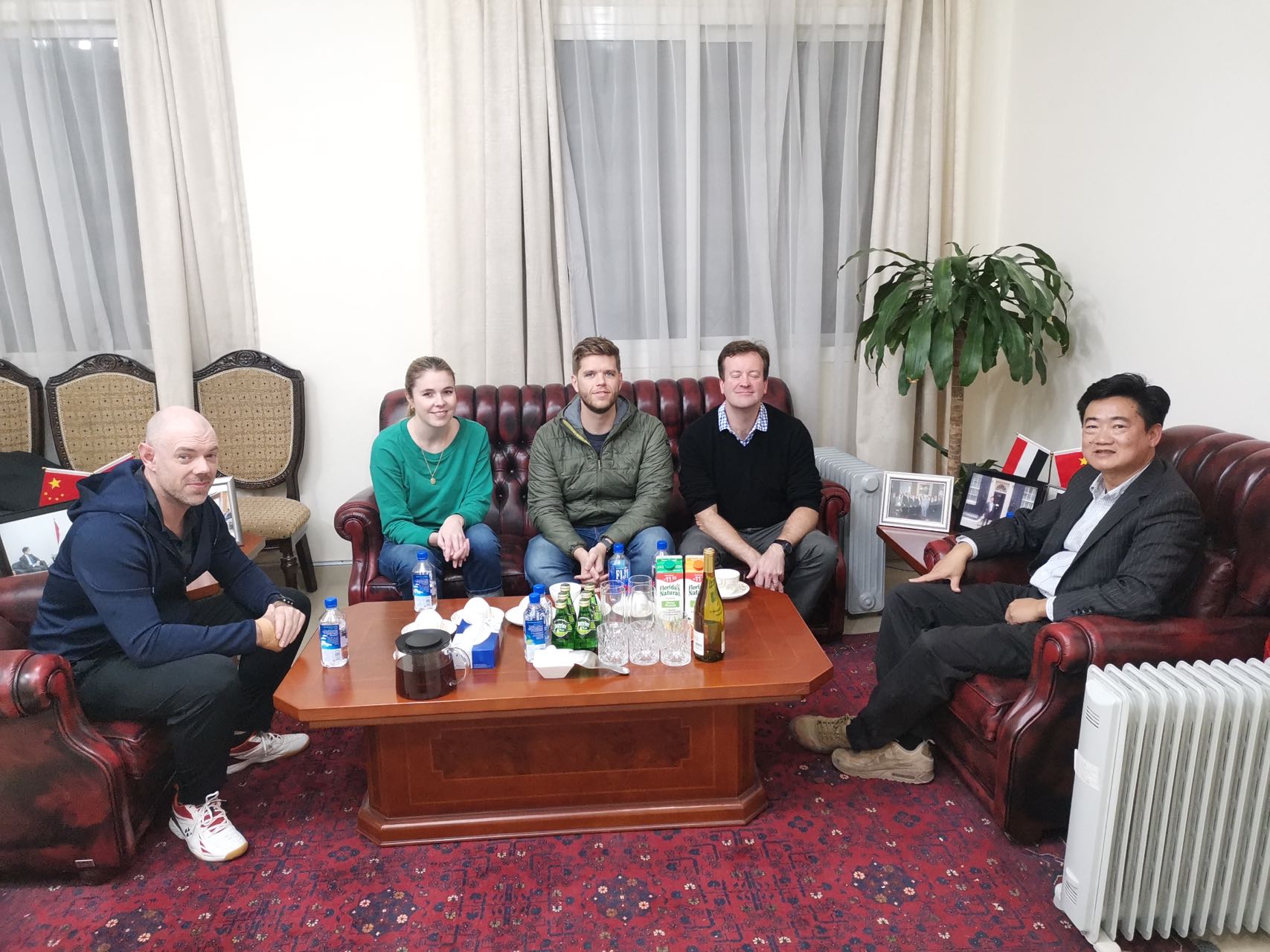
    Britain also enters into a deal with ultra-regional powers in a bid to advance the multi-layered policy. For instance, the resigned Yemeni government faced a strict budget deficit following Ansar Allah prevented illegal export of Yemen’s oil by resorting to three drone attacks on Al-Dhabbah and Qena ports on the southern shores of the Arab nation. The British ambassador started consultations with his Chinese counterpart Shao Zheng to finance the resigned government via the oil sale and supply Yemen with basic commodities. The British and Chinese sides displayed the talks as they were playing ping pong (referring to the ping pong diplomacy between the US and China in the 1970s) at China’s diplomatic mission in Aden Governorate.

    As a whole, Britain is misusing and exploiting the crises created in the regional states particularly in the West Asia region through pursuing a multi-layered policy. The British policy-makers are fanning the flame of conflict by selling arms and dispatching military advisors to Arab countries, and they also loot the oil resources and wealth of a state under the pretext of being a mediating and peacemaking player. Britain’s actions in Yemen are a good instance of their dirty policy.

    Read more: Ansar Allah-Saudi coalition agreement; What are the outline and impediments of recent negotiations on Yemen?

    PS.
    “Ping-pong diplomacy” is a meaningful phrase in politics, which refers to the secret negotiations between the United States and China in the 1970s which resulted in opening the U.S.-PRC relationship, leading the U.S. to lift the embargo against China and the normalization of relations.

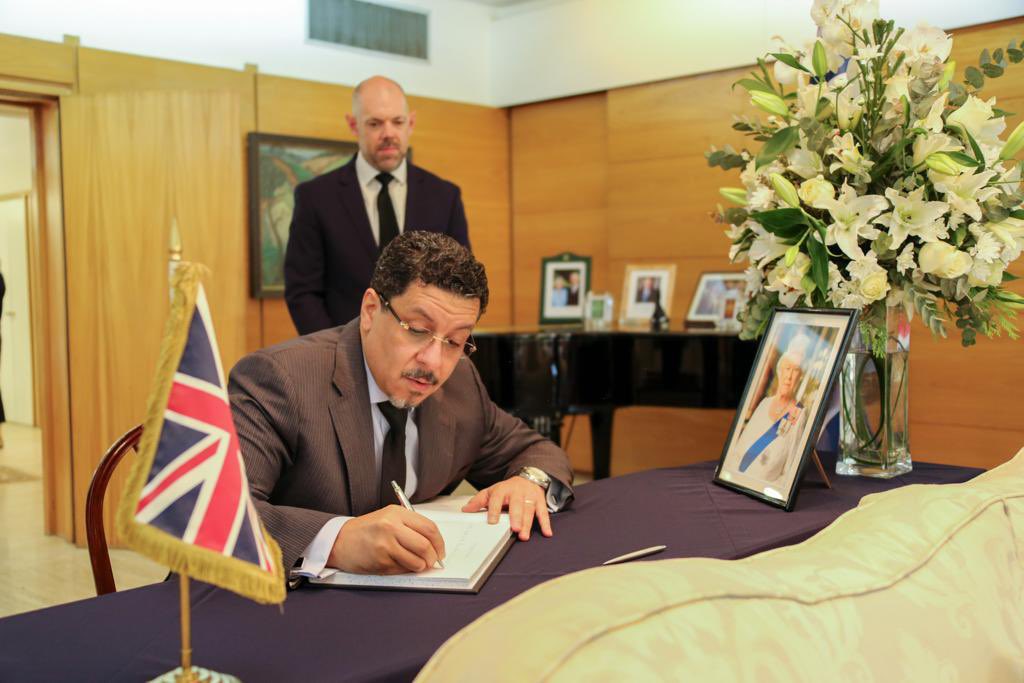
    Image: The presence of Ahmed bin Awad Mubarak, the foreign minister of the resigned government of Yemen, at the British Embassy in Yemen to offer condolences on the occasion of the death of Queen Elizabeth II.

  • Latest Updates on Yemen, 23 January 2023

    Latest Updates on Yemen, 23 January 2023

    Saada:
    According to the ISWNews Analysis Group, the casualties inflicted by the Saudi coalition’s artillery and shelling strikes on the border districts of Saada Governorate have reached nine martyrs and 94 injured since January 1. According to the statistics, the attacks left eight martyrs and 45 injured, including one African migrant in Shada district as well as one martyr and 49 wounded, including 22 African migrants in Munbah district.

    Hudaydah:
    – The Saudi coalition forces violated the ceasefire 114 times in the last 48 hours in this province.
    – In the last 48 hours, the drones of the Saudi coalition have bombed Ansar Allah’s positions in the districts of Hays and al-Jabaliya five times.

    Aden:
    – Britain’s embassy in Yemen welcomed and backed a decision by the Supreme Economic Council of the resigned government of Yemen in order to surge the exchange dollar rate by 50% for the import of commodities in the ports supervised by the Saudi coalition.
    – The Government of National Salvation, Parliament and Ansar Allah officials have slammed the British embassy’s support for the resigned government and described the measure as another crime against the people of Yemen.
    – In response to the comments made by the UK’s Ambassador to Yemen Richard Oppenheim, former President of the Supreme Revolutionary Committee of Yemen Mohammed Ali al-Houthi pointed to the economic war between Russia and Europe, saying that we will also support Russia’s economic decisions against Britain and NATO member states.
    Notably, the resigned government of Yemen has been facing a harsh budget deficit after Ansar Allah blocked it from illegal export of Yemen’s oil and pushed them to pay salaries of all Yemeni workforces from the incomes.

    Lahij:
    According to information released by local sources, Tareq Saleh’s forces dispatched a battalion of the Joint Forces (Quwat al-Mushtarika) subdivisions of the “Yemeni National Resistance”, and took control of the Ras al-Ara region on the coastal regions of Lahij Governorate on January 14.

    Abyan:
    On January 18, a bomb blast on a road where a vehicle carrying the quick reaction forces of the resigned government (UAE-affiliated forces) in Mudiyah village in Abyan Governorate left major commander of the quick reaction forces Abdul Rahman Al-Makar along with two of his companions dead and several others wounded. The terrorist group named Ansar al-Sharia seems to be the main suspect of the guerrilla attacks and bombings in southern areas of Yemen recently.

    Shabwah:
    On January 19, Ansar Allah artillery forces raided the hideouts of the Southern Transitional Council militants in response to their recent strikes on the Uqabat al-Qunza front in Shabwah Governorate. See on interactive map

    Socotra:
    Local sources in the Yemeni city of Hadibu informed of the deployment of new UAE forces in vicinity of the Socotra Airport. The forces replaced the flag of the Southern Transitional Council with the UAE flag in military bases and outposts in Socotra Island.

    Saudi Arabia:
    Major General Amer al-Shehri, commander of the ground forces of the Saudi Army in ​​Khamis Mushait, lost his life because of a heart attack at Jizan hospital. Some media outlets attributed his death to a conflict with Ansar Allah fighters in Jizan, but the claim is not confirmable regarding an ongoing truce in Yemen’s war zones.

    (Image: The recent meeting of Rashad Al Alimi, the head of the presidential council of the resigned government, with Richard Oppenheim, the British ambassador to Yemen.)

  • Yemen: UAE Launches Military Operation Against Islah Party In Shabwah

    Yemen: UAE Launches Military Operation Against Islah Party In Shabwah

    On January 22, the Shabwah Defence Forces, assisted by UAE drones, kicked off a military operation in the areas under the control of militants of the Islah Party in Nisab and Markhah As Sufla districts.

    Following a recent failure attempt in the city of Ataq, the militants of the Islah Party succeeded in inflicting numerous casualties on the defending forces of Shabwah and the militants of the Southern Transitional Council by conducting hit-and-run assaults. The casualties can be considered as the root cause of the new operation by the UAE-backed militants in the west of Shabwah Governorate.

    In spite of capturing Ataq city and most of the regions of Shabwah Governorate by the UAE-backed militants, Nisab and Markhah As Sufla districts in western Shabwah as well as Jardan and Arma districts in northern Shabwah Governorate are still under the control of Islah Party’s forces. After clearing the mentioned regions, the UAE would be able to mobilize its militants to seize the oil fields in northern Shabwah Governorate and eastern Marib Governorate.

    Read more: The governor of Shabwah defeated Islah Party with the help of UAE

    Click to view full size
  • Ansar Allah-Saudi coalition agreement; What are the outline and impediments of recent negotiations on Yemen?

    Ansar Allah-Saudi coalition agreement; What are the outline and impediments of recent negotiations on Yemen?

    In contradiction of several reports on an agreement between the Saudi-led coalition and Ansar Allah to extend the truce and agree Ansar Allah’s conditions; no agreement has been reached in this respect so far, and dialogs between the two sides are still ongoing mediated by the UN and Oman. Ansar Allah’s most vital conditions to reach the extension of the temporary ceasefire are subjects such as a comprehensive end of hostilities, prisoner swap, paying salaries of employees from oil incomes, lifting Yemen siege through reopening Sana’a Airport and Al Hudaydah Port. The conditions have been among the issues, which have been discussed in the last years negotiations, but the conditions have never been approved by Saudi Arabia and the UAE, or they proposed different conditions to accept the Yemenis’ suggestions.

    Nonetheless, the circumstances of the Saudi-led coalition have deteriorated as a result of the past year tensions among the factions, who are backed by the coalition; thus, Ansar Allah has become more powerful. The feebleness of the Saudi-led coalition and the failure of their military operation pushed them towards pursuing negotiations. The situation forced the US, Russia and the European countries to follow the attitude of Saudi Arabia and the UAE to interact with Ansar Allah.

    Potential provisions of agreement between Ansar Allah-Saudi-led coalition:

    The most significant matters debated in the talks between Ansar Allah and the Saudi coalition are issues such as an all-inclusive truce, prisoner swap, paying employees’ salaries from oil incomes, lifting Yemen siege by reopening Sana’a Airport and Al Hudaydah Port.

    Foreign media outlets quoted an Ansar Allah official as saying that the Saudis promised to pay all the remaining salaries of Yemeni employees; while a Saudi diplomat said that the payment of civil servants’ wages is conditional on accepting security assurances such as setting up a buffer zone on northwest border of Yemen with Saudi Arabia. Concerning the prisoner swap, the two sides offered their own lists in March 2022 and finalized the prisoner swap agreement of 2,223 inmates following personal visiting of the detainees, but despite Ansar Allah announced its willingness, the Saudis have not taken any step to enforce the deal. The issue of reopening and developing flights at Sana’a Airport and the lifting of limits at Al Hudaydah Port are also matters that have faced buts and ifs by the Saudi-led coalition, when it comes to inspection; so, the agreements have not been entirely implemented.

    There are also similar disagreements in other issues, and as said by Ansar Allah officials, if the Saudis and Emiratis show willingness to reach an agreement, the process to achieve this goal and end of the conflict and establish peace in Yemen seems not be a hard work.

    What are the impediments to the Ansar Allah-Saudi agreement?

    Besides the Saudi-led coalition’s hesitation and lack of seriousness in reaching a peace agreement with Yemen, the tensions among the various groups under the Saudi-led coalition, from the Southern Transitional Council and the Reform Party to the militants of Tareq Saleh and other factions and influential figures, are stumbling block in the way of achieving an agreement. The struggle between the Islah Party and the militants of the resigned government has been spread to the Yemeni city of Sion in northern Hadhramaut Governorate and the city of Marib in Marib Governorate, and the struggle over controlling oil fields and administrative offices remain in an indirect way.

    The Southern Transitional Council, following clashes with the Islah Party and the Al-Qaeda terrorist group in Abyan Governorate and their retreatment from the city of Al-Mukalla and the Al-Anad base and the Ras al-Ara area in Lahij Governorate, backed away from its claim to split the southern governorates and focused on maintaining its current position in order to aggregate its forces in the occupied areas of Yemen.

    Another matter that gets in the way of the peace process in Yemen is the colonizing and usurping efforts made by foreign states, particularly the United Arab Emirates (UAE) and the United States, as well as the destructive role of European and Zionist companies, when it came to looting wealth in the war-torn country. For instance, the Emiratis have extended their presence on Yemen’s southern coastal areas.

    They constructed numerous military bases between Aden and Abyan with the support of Abdul Latif al-Sayed militants on the beaches and oil-rich zones of Shabwah occupied with the support of Al-Amaliqa militants and in Al-Mahrah Governorate backed by Mohsen Mursa’s militants following their moves in Socotra Island, Mayun, Abdul Kori, Al-Rayan base and Ras Sherwin beaches in recent months.

    Read more: Where is the UAE’s biggest military base on the coast of Hadhramaut?

    The United States and Israel with the support of the UAE and some Yemeni factions are pushing forward their secret projects in Yemen’s eastern and central areas. The essence and details of the plans are not fully clear, but the continuation of the conflict, the looting of oil and other precious resources, the control of strategic locations and lastly the breakup of Islamic states are the outlines of their plot.

    Concerning the Al-Ghaydhah Airport, Saudi Arabia is pursuing the plan of annexation of eastern Yemen to its territories and the construction of an oil pipeline from the Saudi kingdom to the coastal areas of the Al-Mahra Governorate, while the Saudi have experienced less success in pushing forward their objectives in the central and southern regions of Yemen. To this end, they have misused Europe’s requirement for oil resources and provided the European companies with the opportunity to contribute to the projects of exploration and extraction of crude oil in Yemen.

    Read more: Latest Military Map of Yemen; Knowing the Parties Involved in the Yemen War (Map Update)

    Conclusion:

    Given the unproductive experience of the Stockholm Agreement in December 2018 and the imperfect employment of the three truce periods from April 2 to October 3, 2022, the possibility of direct achievement of an inclusive agreement by Ansar Allah and the Saudi-led coalition seems to be unrealistic and out of reach. Seemingly, the two sides chose a temporary period of several months of ceasefire and after successful implementation of the plan, they would resolve Yemen’s external problems through signing an agreement, and then they would form a new government and resolve internal problems with the Saudi-backed factions to pave the way for reaching a comprehensive agreement.

    Iran’s positive participation and the negotiations with Saudi Arabia seem to be complementary to the intra-Yemeni talks as well. Iran-Saudi Arabia negotiations’ development or stoppage would not change the framework of Ansar Allah’s demands, but the talks are expected to affect the process, and even Ansar Allah’s measures in this path would assist Iranians’ stances.

  • Russian Delegation Meets With Ansar Allah In Sana’a

    Russian Delegation Meets With Ansar Allah In Sana’a

    Representatives of the Russian government travel to Sana’a to meet and confer with Ansar Allah authorities, according to local sources.

    Following an Ansar Allah delegation’s recent visit to the capital of Russia, Moscow, a Russian delegation started a travel to Sana’a to meet and hold talk with Ansar Allah officials.

    In line with the report, the Russian delegation has entered the Yemeni capital to speak about coordinating bilateral relations following the recent visit of UN special envoy for Yemen Hans Grundberg.

    In accordance with this issue, Spokesman and one of the commanders of the Southern Resistance Group affiliated to Islah Party Adel al-Hasani said:

    “A high-ranking Russian delegation has arrived in Sana’a, and that prior to the event a delegation from Sana’a visited Moscow. There is not any new incident here. The world collaborates with a unified force, which is Ansar Allah, while the Presidential Leadership Council (the presidential council of the resigned government) still continues to hold camera-based meetings. The facts and figures are apparent, even though some people do not like them.”

    Dmitry Polyansky, the first Deputy Permanent Representative of Russia to the United Nations, in the recent meeting of the United Nations Security Council, criticized the United States, France and the United Kingdom for looting Yemen’s oil and gas resources, describing them as opportunists and calling for an end to the war and blockade of Yemen through dialogue.