1- Marib
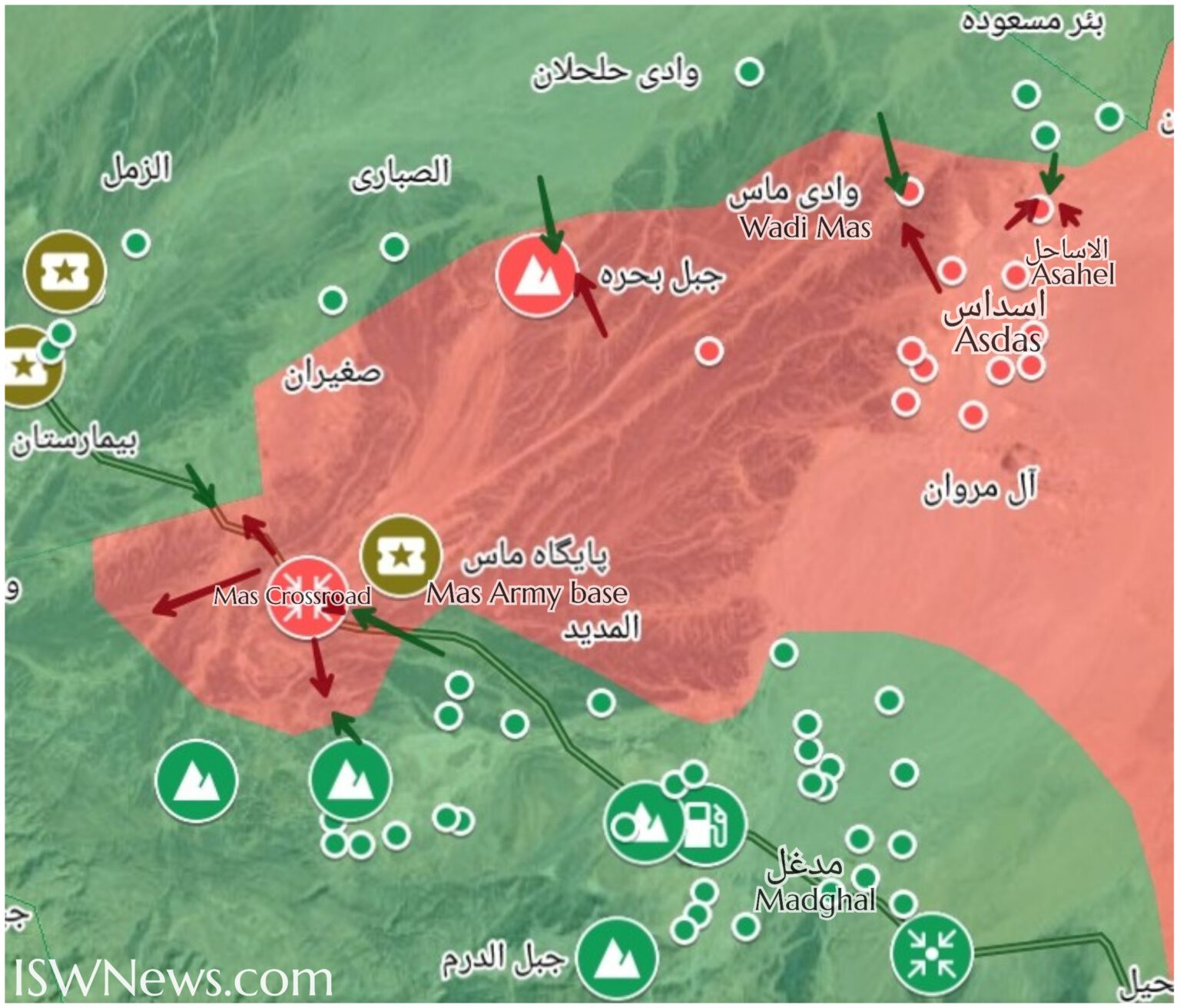
Clashes between Ansar Allah and Saudi-led forces continue on the outskirts of the Maas base and in the southern areas of the Sanaa-Marib road, and the complete liberation of the Maas base has not yet been achieved by Ansar Allah.
As we mentioned in previous articles, the base has fallen militarily, and stabilizing it is only a matter of time, as the Saudi coalition is preparing to withdraw from these areas.
– Ansar Allah has succeeded in liberating Bahrah mountain in the north of Maas base.
– Ansar Allah has entered the Asahel area and the Saudi-led forces, with the support of the Raghwan tribes, are still fighting Ansar Allah.
– Saudi coalition warplanes have bombed the Madghal district 11 times in the last 24 hours.
2- Al-Hudaydah
Saudi-led forces have violated the ceasefire 242 times in the past 24 hours.
3- Abyan
Continuation of clashes between Mansour Hadi and southern forces in Al-Tariyah and other areas of Abyan province.
4- Abdulqader Morteza, the chairman of the Committee for Prisoners’ Affairs of salvation government, announced that Ansar Allah welcomed the invitation of the United Nations to a new round of talks on the exchange of prisoners. The talks will begin on November 19 in Amman, the capital of Jordan.
Author: Mirza
-
Latest Updates on Yemen, 14 November 2020
-
Latest Updates on Iraq, 14 November 2020
– Roadside bomb blasted en route Iraq army caravan in Jurf al-Nasr area.
– Tens of people protested in Baghdad against American forces, demanding them to leave Iraq.
– A militant group announced in Iraq entitled “Ahl al-Maaruf” with mission of fighting with evil people and centers which sells alcoholic beverages.
– Iraq and Saudi Arabia joint committee launched to activate the bilateral agreements.
The members of the joint committee met with Mustafa Al Kadhimi, Iraqi PM, and talked about implementing the agreements and contracts.– PKK leaders vehicle targeted by Turkey near Sinjar, west of Mosul.
– Iraqi armed forces vast operation to cleanse Makhul mountains in north of Saladdin province from ISIS terrorists.
– Martyrdom of five Hashad al-Ashaeri forces and six civilians due to ISIS attack in Redhwaniyah area, west of Baghdad.
– Hashad Shabi built an embankment of 120 km length and 3 m height at ‘Ar’ar border until Nakhib with Saudi Arabia.
– Targeting Iraqi army positions near Tal Manjal village, south of Khanaqin, Diyala province.
– Two Hashad Shabi and Iraqi police martyred and six Hashad Shabi forces injured in an explosion in Kirkuk province.
– Iqlim Kurdistan officials: “446 ISIS prisoners are kept in Iqlim prisons from which 398 are convicted in the court and 48 are freed due to lack of evidence. There are 29 teenagers and 23 women among them.”
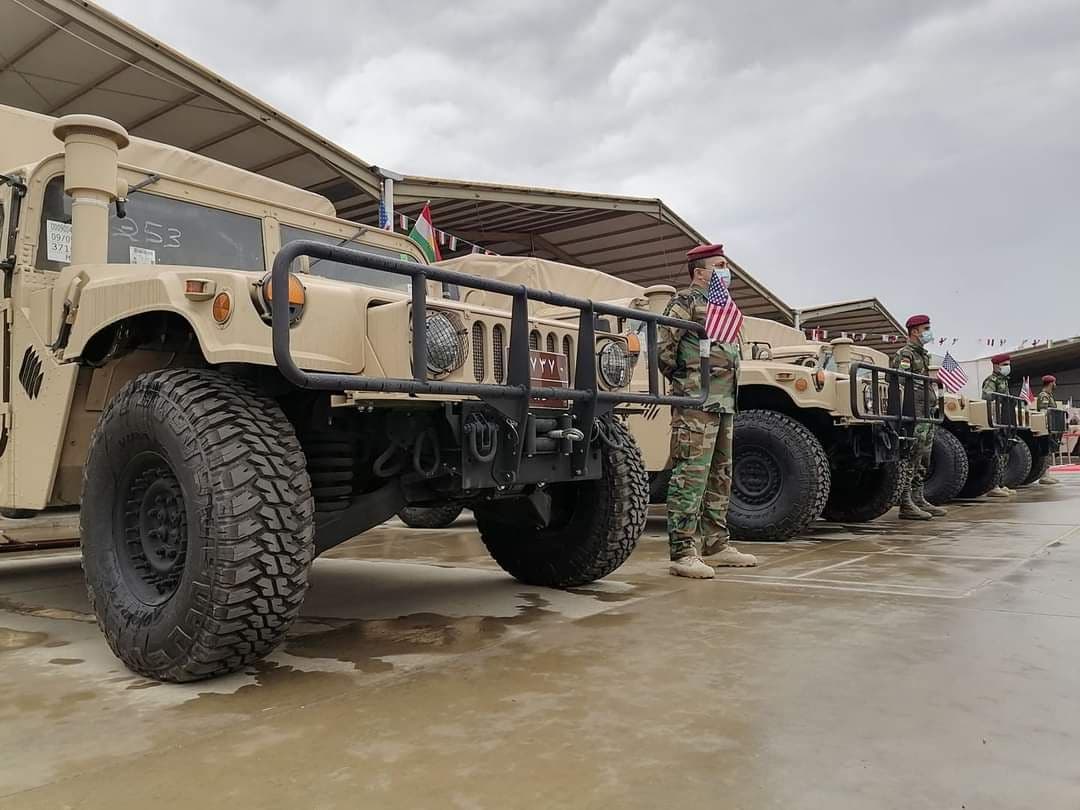
– Several new equipment including IFVs worthy of 150 million dollars were donated to Pehmerga forces by USA in an official ceremony in Erbil.
On 16 September, in an official ceremony in Erbil in presence of US ambassador in Iraq, 250 million dollars of equipment were donated by USA to Pehmerga forces.– Iraqi DM traveled to France on Friday to negotiate buying new weapons for the army. Iraq is after French Rafale fighter jets and long range missiles.
– Abdulamir Yarallah, Iraqi chief of staff, traveling to Saudi Arabia as head of a convoy.
– Iraqi forces operation “Labbayk ya Rasulallah” launched in deserts of west of Anbar province.
– Falih al-Fayyadh, commander of Hashad Shabi, traveling to Syria and meeting with Bashar Assad, president of Syria.
– Online meeting between Iraqi PM and Saudi Arabia crown prince regarding bilateral issues.
– Two ISIS terrorists killed in Redhwaniyah area, Baghdad.
– Mustafa Al Kadhimi phone call with Bahrain crown prince.
– Masrur Barzani, Iqlim Kurdistan PM, investigated bilateral relationship with US energy minister.
– Saudi Arabia decided to open a trade center in Iraq.
– Some media reported Iraqi DM plan to visit Iran.
-

Syria: Evacuation of two Turkish military posts in western Aleppo
In recent weeks, the process of evacuating those Turkish military posts that are under siege by Syrian army forces has begun and is going on in the media silence.
So far, the Turkish army has evacuated the Morek and Sher Mughar observation posts and the Maar Hattat military post, and most of the equipment at these posts has been moved into the Idlib region and the militant-occupied areas.
-
Yemen: Ansar Allah missile attack on southern Marib
Saif al-Shadadi, one of the most important commanders of Mansour Hadi’s forces was wounded during the attack. Shadadi was previously a commander in the al-Qaeda terrorist group and has been active on the southern fronts of Marib.
-
Maas base liberated?
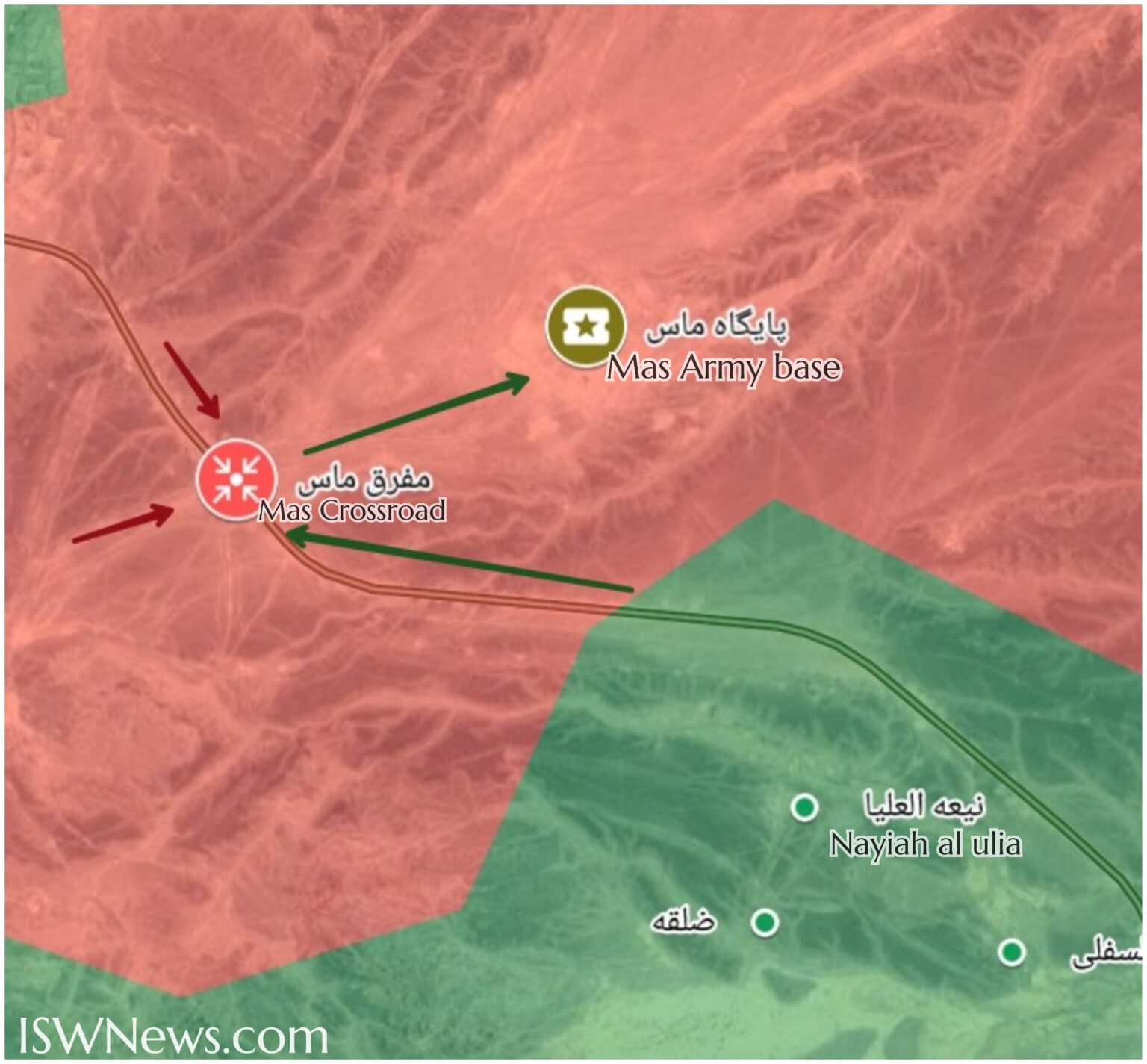
According to local sources, Ansar Allah has succeeded in liberating the Maas base in the west of Marib province. But ISWNews field source stated regarding the situation: “Our forces entered the base on November 10 and clearing of the southern route of Maas from mines and explosive traps continue. Also, due to the siege of the Saudi-led forces in the southern areas of the base, the enemy attacks continue on this axis and the liberation of the base has not been stabilized yet.”
-

Statement by Saudi coalition spokesman regarding last night’s Ansar Allah operation in Jizan
The spokesman for the Saudi coalition, Turki al-Maliki, stated that attacks took place on Wednesday evening. The Saudi Ministry of Energy also confirmed the news of a fire on one of the floating platforms of the Jizan fuel distribution station, citing the attacks were carried out by three Ansar Allah drones on Wednesday evening.
Ansar Allah officials have not yet commented on the attacks.
-
Latest Updates on Yemen, 12 November 2020
1- Marib
– Ansar Allah rocket attack on Tadawin camp killed and wounded a number of Saudi-led coalition forces.
– Continuation of the conflict between Ansar Allah and the Saudi-led forces in different fronts of the Raghwan and Madghal districts.
– In the last 48 hours, Saudi-led coalition warplanes have bombed 25 times the districts of Madghal, Majzar, Sarwah and Rahba.
2- Jaw and Saadah
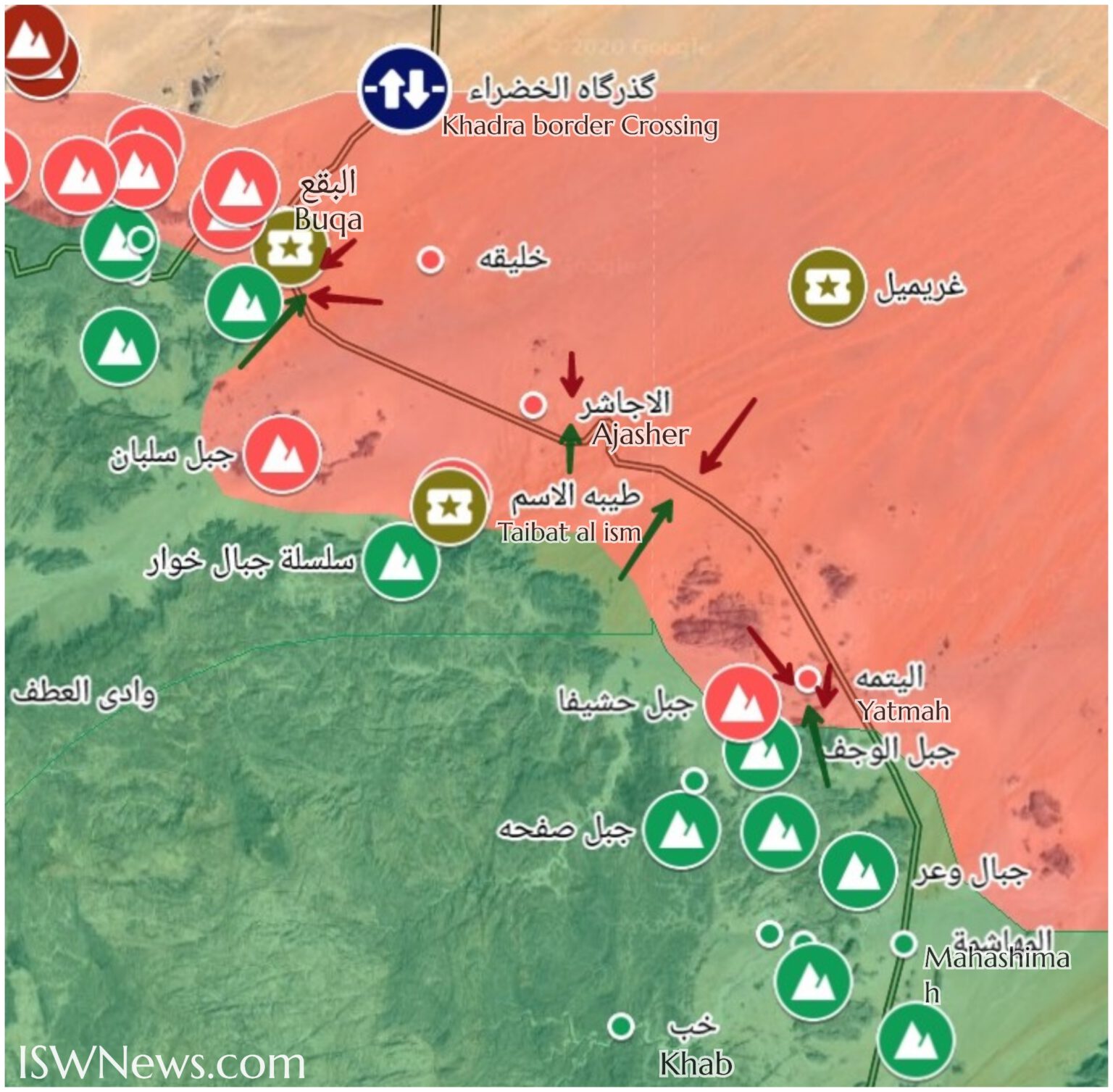
– Ansar Allah launched an operation against the Saudi-led forces on the southern front of the Yatmah and al-Boqa. The news of Ansar Allah’s progress on these fronts is not true…
– In the past 48 hours, Saudi-led coalition warplanes have bombed Al-Zahra and other areas of Khab and Shaaf 11 times, 2 times Bart Al-Anan in Al-Jawf province, 3 times in Al-Ajashar desert and 1 in Al-Boqa in Saadah province.
3- Al-Hudaydah
Saudi coalition forces have violated the ceasefire 465 times in the past 48 hours.
4- The meeting of “Mahdi Al-Mashat”, the chairman of the Supreme Political Council of Yemen, with a number of leaders of the Marib tribes.
These meetings are held in order to attract the attention of the Marib tribes and to establish Ansar Allah control over different parts of the province.
5- Muhammad bin Salman, Crown Prince of Saudi Arabia: We will deal with anyone who thinks of insecurity and destabilizing Saudi Arabia with an iron fist. -

Latest Updates on Karabakh, 12 November 2020 (Map Update)
– Russian military police forces have entered Stepanakert (Khankendi) and so far 10 observation posts have been established in the region. According to the agreement, 16 Russian observation posts will be established throughout the region. Yesterday, Russian military police forces were deployed in the Lachin corridor.
– The Commander of the Russian Peacekeeping Forces in Karabakh met with the Minister of Defense of the Republic of Azerbaijan.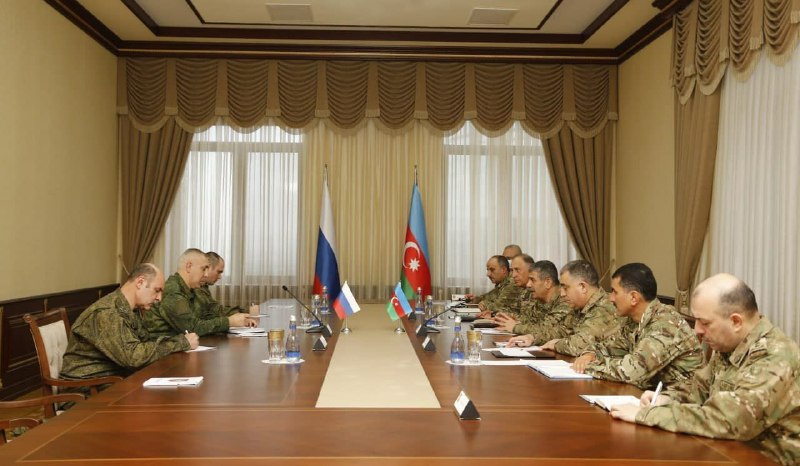
– According to the agreement, the Armenian people in Kalbajar region are evacuating their houses and leaving for Armenia. Some residents are said to have set their houses on fire before leaving.
– The Republic of Azerbaijan deployed more troops in the city of Shusha.
Pashinyan: Armenia will continue to insist on international recognition of Nagorno-Karabakh independence.Click to see the full size map -
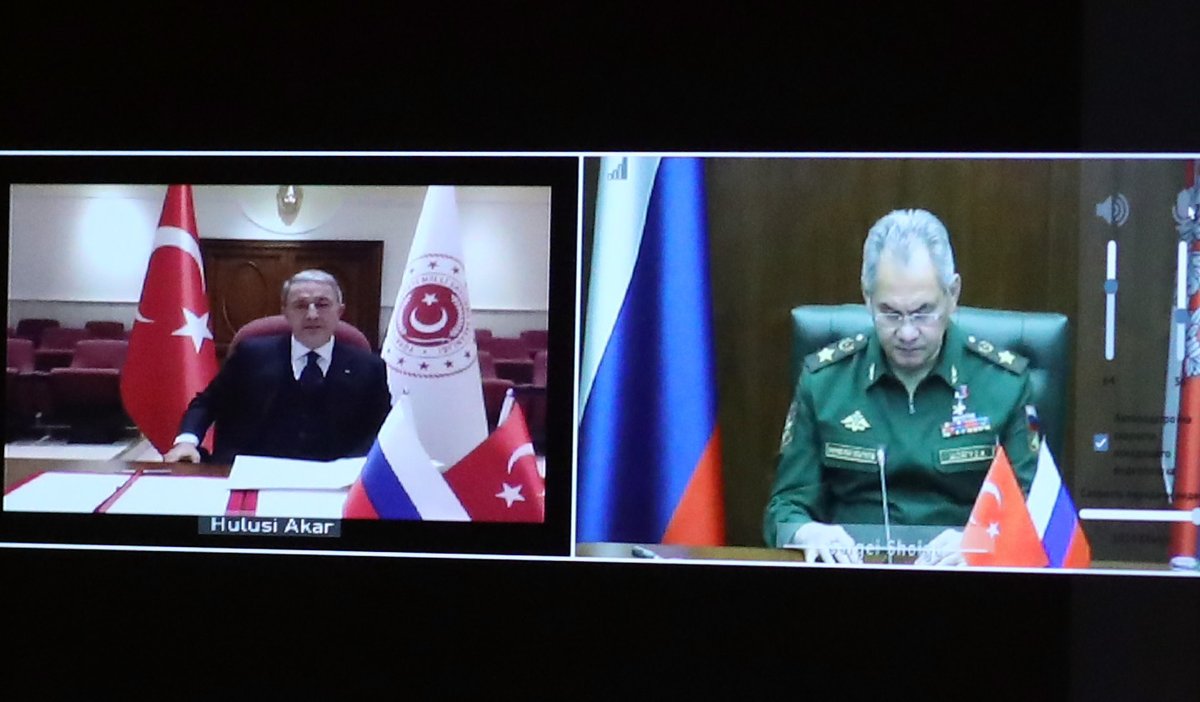
Establishment of a joint Turkish-Russian center to monitor the Karabakh ceasefire
According to the information provided, a joint center will be established on the territory of Azerbaijan and in the newly captured areas. The exact location of the center has not been announced yet, but “Aqdam” seems to be one of the possible options.
The task of this joint center is to monitor the proper implementation of the ceasefire agreement in Nagorno-Karabakh. The establishment of a joint Turkish-Russian center in line with clause 5 of the Nagorno-Karabakh ceasefire agreement.
Clause 5 of the ceasefire agreement states: “In order to increase the effectiveness of control over the implementation of the agreements by the Parties to the conflict, a peacekeeping center will be deployed to control the ceasefire.”The Kremlin previously stated that no agreement has been reached on the presence of Turkish troops in Nagorno-Karabakh. However, the Kremlin seems to be referring to the presence of Turkish troops alongside Russian military patrols inside the Nagorno-Karabakh region, not to their presence at the joint monitoring center.
Turkish Defense Minister also stated that Turkey will be present in the joint peacekeeping force to monitor the implementation of the ceasefire agreement in Nagorno-Karabakh.However, later, the Russian foreign minister, Sergey Lavrov said: Turkish monitoring center on Karabakh will operate remotely using drones and Turkish observers will not travel to Karabakh.
In the future, it will be determined whether Turkish troops will be physically present at the new Karabakh border or not.
-
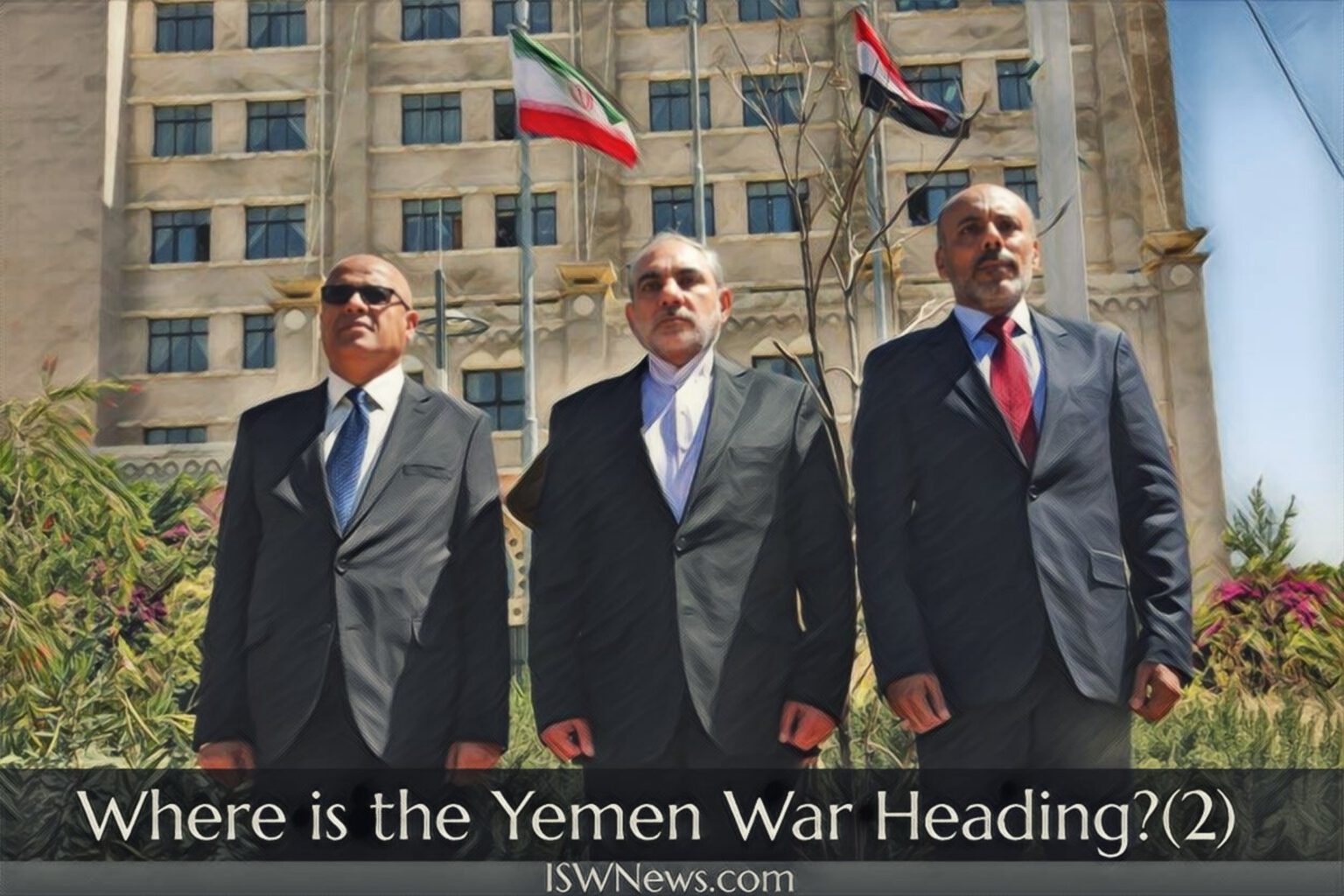
Where is the Yemen war heading? Part 2
1- Ansar Allah operation in Marib province:
In recent days we see that Ansar Allah operation is changing courses from south of Marib to west of the province and the conflict is continuing to liberate Raghwan district and Maas base. As stated in article “Audience Question: Why Ansar Allah Operation in Marib Slowed Down?“, Ansar Allah started negotiation with Raghwan district tribes to stabilize the advances, similar to other areas of Marib province, and it is expected that these tribes join the peace process and condemning Saudi coalition assault. Otherwise these tribes won’t be significant adversaries even in case of any support of Saudi coalition.Maas base has fallen from military point of view but Ansar Allah advances slowly due to mine field around the base, however its complete liberation is soon. Following the liberation of Maas base, Saudi coalition hand to target the capital and in media war regarding the engagements in Nihm district will be emptied and the direction of the engagements will go toward Marib town and north and south of the province.
2- Saudi coalition media war:
The coalition media emphasize on two points, as usual: a) Sabotaging Iran diplomatic activity in Yemen and b) Belittling Ansar Allah victories.As an example Saudi coalition media released a list claimed that Ansar Allah suffered a casualty of 230 forces in Marib battle recently, which are far from truth. Since Saudi coalition actually “withdrew tactically” and the level of conflict is not that intense to cause such casualties.
On the other hand, Iran’s diplomatic endeavor in Yemen, which started by sending new ambassador to Yemen, is now the coalition media main target now. Mr. Hasan Irloo influential activities include meeting with political officials, families of martyrs, participating in popular events, etc., which are useful to enhance the bilateral relations of two countries and also on Ansar Allah domestic policies. Iran’s diplomatic steps in Yemen is a good start to end Yemen siege, in general. Accelerating these endeavors and encouraging other allies of the Resistance to open their embassies in Sanaa helps with breaching the siege ASAP.
3- Negotiation halts and rejecting UN proposition:
Ansar Allah and Saudi delegates talks are a mean still active in Oman, whose latest outcome was the recent POW exchange agreement, during which American, Saudi, Sudanese, … prisoners were exchanged with a higher number of Ansar Allah POWs. The negotiations, which suggested by UN, finally came to the conclusion by UN proposal which was rejected by Ansar Allah leader.UN proposal draft was as follows:
- Paying the salaries of all employees based on the 2014 salaries. (before war started).
- Comprehensive ceasefire effective immediately after signing and forming military committees supervised by UN with presence of both sides.
- Resuming political activities and economical and humanitarian efforts to reduce the suffer of Yemeni people due to six years war.
- Releasing all of the POWs of both sides according to Stockholm agreement.
- Opening Sanaa international airport and lifting the limitation of oil and cargo ships sailing and immediate permit to repair Safer tanker. The Safer tanker is damaged at Al Hudaydah harbor and if it sinks, it has severe impact on the environment.
It was natural that this proposal is rejected by Ansar Allah since they were included in the Stockholm agreement and Saudi coalition did not respect them. According to the latest updates, Ansar Allah conditioned the continuation of the talks to reopening of Sanaa airport and Al Hudaydah harbor according to Stockholm agreement, in their messages to UN and Saudi coalition.
4- Socotra:
Socotra island with an area of 3,650 km2 lays in south of Yemen and Indian ocean and has a good overlook on Bab al-Mandeb strait. Bab al-Mandeb strait is the connection point and the main maritime passage between the horn of the Africa and west of Asia which connects the Red sea to Aden gulf and Arab sea.
Most of the oil and gas export from the Persian gulf, which are exported to Europe and the rest of the world via Suez canal or SUMED, goes through this strait. According to Eritrean sources, Israeli regime is establishing a military/security base in Emba Soira mountain, 135 km south of Asmara, capital of Eritrea, since 2016. This mountain is the highest peak in Eritrea with 3018 m height. Therefore Israel has full overlook over Bab al-Mandeb strait with this base and Socotra island.Socotra island is more vulnerable to secession due to its distance from mainland Yemen. Considering the recent activities of Saudi Arabia and UAE to build many bases and changing the demographics of the island, Ansar Allah should pay attention to it. Drone and missile attacks to Saudi coalition in the island can be a good start to reclaim the sovereignty of the island back to Yemen.
Conclusion:
Ansar Allah should launch operations end the war after six years of resistance. Operations to give Ansar Allah higher stakes and forces the enemy to accept the peace. Otherwise Saudi coalition doesn’t have any problem with damages and multi billion dollars expenses of the war in Yemen. Since they are to be used for this purpose. Liberation of Marib, Aden, Al Hudaydah coast and extensive drone and missile attacks against Aramco structures and UAE economical points can seriously help to end the war. The lift of siege of Yemen which is important to end the war can be only done by Iran and other Resistance countries diplomatic efforts, which are expected to accelerate soon. -

Maps of Russia’s Observation Posts in Nagorno-Karabakh Released
The peacekeepers, including Russian military police, are currently stationed in the Lachin corridor.
According to information provided by the Russian Ministry of Defense, 1960 Russian peacekeepers will be stationed in Nagorno-Karabakh and their main tasks include:
– Collecting information on ceasefire violations and communicating this information to the command of the peacekeepers
– Maintaining the safety of free transit and transport
– Suppression of illegal actions against the civilian populationThere will also be 16 observation posts in the Nagorno-Karabakh region to monitor the implementation of the Karabakh peace agreement. The map below shows the location of these 16 observation posts in the Karabakh area. The Red Triangles are the site of Russian observation posts and red dotted are the main patrol areas for Russian peacekeepers.

Location of Russian observation posts in Nagorno-Karabakh The map below shows the Lachin corridor. The red triangles of the Russian temporary posts are shown, the black dashes shows the Lachin corridor area.

Map of Lachin corridor According to maps published by the Russian Ministry of Defense, the Russian zones of responsibility are divided into northern and southern parts, and the map below shows Russia’s operational area and observation posts in the southern part.

-

The peace agreement between Azerbaijan and Armenia; Who is the winner of this conflict?
Prior to the agreement, three other ceasefires had been announced in Nagorno-Karabakh, which none of them lasted. But Russia’s more serious entry as a major player in the Fourth ceasefire ended the fragile agreements and ceasefires in the Nagorno-Karabakh.
The Azerbaijan-Armenia peace agreement has nine main clauses and is summarized as follows:
1- Complete cessation of clashes and stop in the current positions
2- Delivery of Agdam region to Azerbaijan
3 and 4 – Deployment of Russian forces in Nagorno-Karabakh
5- Establishing a center to monitor the implementation of the agreement
6- Delivery of Kalbajar and Lachin regions to Azerbaijan
7- Return of refugees to Karabakh
8- Exchange of prisoners and corpses
9- Establishing a transit corridor between western areas of Azerbaijan and Nakhchivan regionAt first glance, this agreement may seem like a complete victory for Azerbaijan and a defeat for Armenia, or at least Azerbaijan has achieved what it wanted from Nagorno-Karabakh. However, with a further examination of this agreement and the deployment of Russian forces in the Nagorno-Karabakh region, many questions and ambiguities arise about the fate of this region, which we will examine on a map to better understand this agreement.
– Green hached are regions that scheduled to be returned to the Republic of Azerbaijan within a certain period of time. The Kalbajar region will be handed over to the Republic of Azerbaijan by November 15, the Agdam region by November 20, the Lachin region and the occupied territories of Gazakh by December December 1.
The important point about this issue is that “not” all the districts(Rayons) of Agdam, Kalbajar and Lachin, but also the areas that were occupied by the Armenian forces outside the “Nagorno-Karabakh Autonomous Region” will be returned to Azerbaijan. For example, the eastern half of Rayon Kalbajar is located in the “Nagorno-Karabakh Autonomous Oblast” and these areas will remain under the control of Armenian forces and only the western half of Kalbajar will be handed over to Azerbaijan. The same is true about a small part of western areas of Aqdam Rayon too. In other words, the “Nagorno-Karabakh Autonomous Oblast” mechanism is still in place in these areas.
Regarding the two occupied points in the Gazakh region in northwestern Azerbaijan, it is noteworthy that despite the agreement to return the two points to the Republic of Azerbaijan, the next statement issued by Russia does not mention the status of these two points. And how to solve this issue is unknown. It is said that the original text of the agreement has been leaked and in the next version, which is the original version, this part has been modified and deleted.– Blue hached are areas where 1,960 Russian peacekeepers with 90 armored vehicles and 380 vehicles and special equipment will be stationed.
If we look closely at the deployment of Russian forces in the Nagorno-Karabakh region, it is quite clear that these forces will be stationed exactly inside and on the borders of the “Nagorno-Karabakh Autonomous Oblast.” This means that in fact the “Nagorno-Karabakh Autonomous” will be recognized for Armenia and will remain in the possession of Armenian forces. Although this issue is not mentioned in the text of the agreement, but in practice it will mean that.
In addition to this issue, it should be added that: The text of the agreement states that the Russian peacekeeping forces will remain in the region for 5 years, and if there is no particular problem, this 5-year period will be extended for another 5 years. And these courses will continue indefinitely. Clearly, this also confirms and extends the survival of autonomy in Nagorno-Karabakh.
Nonetheless, these areas are separate from the areas captured by the Azerbaijani army during the recent operation in the Nagorno-Karabakh region.
If we look closely at the southern regions of Karabakh, and especially the southern regions of the “Nagorno-Karabakh Autonomous Oblast”, it is clear that the Azerbaijani forces have taken control of a small part of the southern “Nagorno-Karabakh Autonomous Oblast” and most of the achievements are in areas occupied by Armenian forces outside the “Nagorno-Karabakh Autonomous Oblast.”– On the map, the progress of Azerbaijan army in the Nagorno-Karabakh region is shown in yellow.
Obviously, this is a very good victory because the Republic of Azerbaijan has been able to liberate almost all the southern regions of Karabakh, but on the other hand, this should not be too bad for Armenia either; Because in general, the areas around the “Nagorno-Karabakh Autonomous Oblast”, both in the north and in the south of Karabakh, are officially and internationally part of the territory of Azerbaijan, and the Armenian forces, which occupied the areas around the “Nagorno-Karabakh Autonomous Oblast” in the last 28 yeasr, are now giving the lands to its owner in the south by military force, and in the north by the recent agreement.
Therefore, Armenia can consider the occupied territories around the “Nagorno-Karabakh Autonomous Oblast” as a negotiating card, which it is now handing over, and in return will take over most of the “Nagorno-Karabakh Autonomous Oblast” region.
The Republic of Azerbaijan has also achieved its goal to return the 7 occupied cities of Karabakh. Nevertheless, it is worth mentioning that Azerbaijan demands all of Nagorno-Karabakh, and with the current situation and the field conditions, this issue has not been achieved.
Because most of the “Nagorno-Karabakh Autonomous Oblast” with the support of Russia remains under the control of Armenian forces for an indefinite period of time.Another important issue that should be considered is Russia’s opposition to the presence of Turkish forces in Nagorno-Karabakh. The President of Azerbaijan stated in a televised speech on the agreement to end the war in Nagorno-Karabakh that, in addition to the Russian peacekeeping forces, the Turkish peacekeeping forces will also be stationed in Nagorno-Karabakh. But the Kremlin said in a statement that the issue was not mentioned in the agreement and that the leaders of Russia, Armenia and Azerbaijan had not agreed on the deployment of Turkish troops in the Nagorno-Karabakh region. According to the statement, the presence of Turkish troops in the Nagorno-Karabakh region is virtually rejected, and this implicitly confirms Russia’s support for the continuation of autonomy in the remaining areas of the “Nagorno-Karabakh Autonomous Oblast.”
In general, the presence of Turkish forces in Nagorno-Karabakh or direct land links between Turkey and the Republic of Azerbaijan is a strategic threat to Russia, a threat that reduces Russia’s influence and hegemony in the Caucasus and the Caspian Sea and then in Central Asia. In other words.it will increase Turkey’s power and influence in the region; This is definitely against the wishes and policy of Russia. Therefore, Russia is trying to prevent this from happening.
Russia’s opposition to the official deployment of Turkish forces in Nagorno-Karabakh can be interpreted from this perspective.– Another important issue is the establishment of a new transit and transportation route between Stepanakert and Armenia along the Lachin corridor for three years, as well as the establishment of a safe transit route between the west of the Republic of Azerbaijan and the Nakhchivan region through Armenia. These routes also will be secured by Russian FSB forces.
Comparing these two routes, it can be concluded that Armenia provides Azerbaijan with a safe transportation route in exchange for a safe transportation route to Stepanakert. This also means that Azerbaijan implicitly accepts the autonomy of Nagorno-Karabakh in exchange for Azerbaijan’s direct connection to the Nakhchivan region.
On the map, the new transit and transportation route between Stepanakert and Armenia has been marked with a red arrow and the possible communication route between Azerbaijan and Nakhchivan has been marked with a yellow arrow. Nonetheless, there is a railroad in the south of Armenia and near the borders of Iran, the use of which can also be on the agenda.– Another important issue is the return of refugees to Nagorno-Karabakh. During the Karabakh war, Azeri residents in various parts of Karabakh, including Khojaly, were driven out of the “Nagorno-Karabakh Autonomous Oblast” or Armenians expelled from the southern part of Nagorno-Karabakh, such as Hadrut, during the last two months of fighting; The mechanism for the return of the displaced persons is not explicitly mentioned in the agreement, and so far none of the officials of the parties have commented on it. The city of Shusha is an example of this problem; Shusha is now under the control of the Republic of Azerbaijan, and if this clause of the agreement is to be implemented, Armenians and Azeris must be present together in Shusha, which seems impossible in the current situation.
In general, this agreement, beyond what the parties claim is neither an absolute victory nor an absolute defeat Rather, so far each side has achieved a certain amount of its own goals; The difference is that Azerbaijan has achieved somewhat slightly more than Armenia.
The Republic of Azerbaijan acquired the territories around the “Nagorno-Karabakh Autonomous Oblast” (plus parts of the south of the “Nagorno-Karabakh Autonomous Oblast”) after 28 years. On the other hand, Armenia gained autonomy (at least nominally) and a presence in the “Nagorno-Karabakh Autonomous Oblast”.
The Republic of Azerbaijan achieved a direct land route with the Nakhchivan region, and on the opposite side of Armenia achieved a direct land route to the center of the “Nagorno-Karabakh Autonomous Oblast”, the city of Stepanakert.Regarding the future of the Nagorno-Karabakh region, according to the existing agreement, there are many issues and ambiguities that are not mentioned at least in the text of the contract, and this issue will be problematic in the future and will bring an uncertain future for Nagorno-Karabakh. At present, with Russia’s direct entry into Nagorno-Karabakh, its influence and pressure on the region has increased, and on the other hand, important political developments are taking place in Armenia, and the lines of contact and conflict will always be a place for escalating tensions. Anything is possible in the future, just as Azerbaijan recaptured Nagorno-Karabakh after 28 years of renewal, it is not unlikely that Armenia will pursue a similar policy towards Azerbaijan, or even the odds prepare conditions for the continuation of the Azerbaijani army operation in Nagorno-Karabakh.
And the Karabakh conflict is still continue…

Click to see the full size map


