According to data obtained by ISWNews, this is the 94th attack by Iraqi resistance groups on US assets in Iraq in 2022.
Read more:
Infographic: Iraqi Resistance Groups Operations Against the US in 2021
Infographic: Iraqi Resistance Groups

According to data obtained by ISWNews, this is the 94th attack by Iraqi resistance groups on US assets in Iraq in 2022.
Read more:
Infographic: Iraqi Resistance Groups Operations Against the US in 2021
Infographic: Iraqi Resistance Groups

On August 20, the newly established resistance group “Tashkil al-Warithin” announced the attack on the US military positions in Ali Al Salem Air Base in Kuwait by releasing a video and a statement. According to the statement, this attack was carried out at 06:30 (local time) on August 20 using several suicide drones named “Qassim”.
In its statement, the resistance group “Tashkil al-Warithin” renewed its pledge with the commanders of martyr Hajj Qassem Soleimani and Abu Mahdi Al-Muhandis and announced that we are the heirs of your jihad, therefore we will target those who were involved in your assassination.
On the other hand, the Kuwaiti media denied the news of the drone attack on Ali Al Salem Air Base and announced that Kuwait’s air defense is strong and capable of deterring any aggression. These media claimed that there was no intrusion into Kuwait’s airspace and that all measures were taken to protect the country’s airspace.
It is worth mentioning that the newly established group “Tashkel al-Warithin” is the second Iraqi group that uses drones to attack some military targets in the countries of the region. Earlier in January 23, 2021 and February 2, 2022, the resistance group “Alwiyat al-Waad al-Haq” published a statement about drone attacks on military targets in the United Arab Emirates and Saudi Arabia.
Read more: Infographic: Iraqi Resistance Groups


After the collapse of the Soviet Union, diplomatic relations between Tajikistan and the United States began on February 14, 1992, with the opening of the US embassy in Dushanbe. Now the US ambassador to Tajikistan is Manuel P. Micaller Jr. that has replaced the former US ambassador, John Mark Pommersheim, since March 15, 2019. The Embassy of Tajikistan in Washington also started working in 2002 and the ambassador of this country in the US is “Hamralizoda Farrukh Mahmud”.
The basis of two decades of political relations is based on cooperation in the field of fighting terrorism, preventing drug trafficking, commercial and economic agreements, etc., but these relations have taken on a military and security aspect in recent months, and the US has gained a stronger presence in Tajikistan.
The root of this can be found in the developments of the last year in the Central Asia region and the world. The withdrawal of the US from Afghanistan and the rise of the Taliban, the war between Russia and Ukraine, the expansion of relations between China and Iran with the countries of Central Asia, etc. are among the reasons that have forced the US to make more efforts to increase its influence in Tajikistan. In this regard, the United States has brought its political, military and cultural advisors and representatives into the field and has put extensive programs on the agenda of Tajikistan.
The main US programs in Tajikistan can be categorized as follows:
1- Political and military:
During the last year, the number of visits and meetings of “Thomas West”, the special representative of the United States for Afghanistan, “Donald Low”, the assistant secretary of the United States of America, and General “Michael Kurilla”, the commander of United States Central Command with the authorities of Tajikistan have increased dramatically.
According to US officials, these meetings were centered around the security issues of Central Asia, especially Afghanistan, the strengthening and construction of border posts in Tajikistan, and the protests of the autonomous province of Badakhshan. In addition to these, important issues such as handing over weapons transferred from Afghanistan to the Tajik army, US intelligence-security use of Tajik border bases, immigration to US, military training, etc. have been considered.
In an interview with Radio Liberty Tajikistan, Donald Low says about the construction of border posts: “We are waiting for the completion of the new project for the construction of a border post in Chaldovar region. Of course, in the issue of border checkpoints, the US has completed other projects, but the Chaldovar project was the largest project, and the other projects were for handing over and transferring military facilities and equipment to the border guard forces of Tajikistan.”
It should be noted that this base is located in the Chaldovar area, located south of the border town of Aiwaj, and its reconstruction operations were entrusted to US military companies by the Tajik government with the financing of the US Drug Enforcement Administration in 2020.
According to General Kurilla’s statements, since the beginning of political relations with Tajikistan, the United States has provided more than 330 million dollars in financial aid to Tajikistan in the field of security, of which the provision of RQ-20 Puma drones worth 20 million dollars was the largest part.
Read more: Military Knowledge: RQ-20 Puma Drone
Another issue that has been highlighted in the field of military cooperation between the two countries is the fighter jets and helicopters of the Afghan army, which fled to Tajikistan during the fall of the previous Afghan government. In their meetings with the Tajik authorities, the US officials have promised to hand over these aircraft to the Tajik army, but in return, the US had demands from Tajikistan, the details of which are not clear.
2- Cultural:
The US non-governmental organizations (NGOs) have been able to create a special social footholds among the people of Tajikistan in the form of humanitarian aid and through human information intelligence (HUMINT) methods. In addition to recruiting and identifying scientific elites, these organizations have identified Afghan refugees and Russian-affiliated people and expanded their intelligence network by granting immigration visas to America, financial aid, holding educational, artistic programs, etc.
Unlike Tajikistan, Kyrgyzstan and Uzbekistan’s relations with the United States have not changed much after the fall of the Afghan government. Kyrgyzstan is still unhappy with the US military withdrawal from the Manas Air Base in 2014, and due to the US’s secret support for Kyrgyzstan’s unrest, Kyrgyzstan has not welcomed the Americans in military and security issues. To the extent that no Kyrgyz official came to meet General Kurilla’s recent trip to Manas Airbase!
Despite receiving military aid from the United States, Uzbekistan has aslo declared its policy to be neutral and has declared that it will not allow the construction of a military base and the deployment of foreign troops on its territory.
In general, the Americans have been able to create a new and strong footholds for themselves by establishing warm relations with the officials of Rahmon’s government and deeply examining the needs of the people of Tajikistan. Despite the fact that US has not succeeded in establishing a military base in Tajikistan, their political-intelligence network has expanded in Tajikistan, and this means they have succeeded in penetrating Tajikistan without sensitizing the Tajiks’ main partner, Russia. Tajikistan shares more than 1,400 kilometers of common border with Afghanistan and has a lot in common with this country in terms of ethnic and religious composition. Therefore, in order to continue to control and play a role in the developments of Afghanistan and Central Asia, the United States firstly needs Tajikistan and secondly Uzbekistan, Kyrgyzstan, Pakistan and Turkmenistan.
Read more:
Reviewing the consequences of the conflict between Eastern and Western powers in Central Asia
Joint military exercises of Tajikistan and the United States in Central Asia

The 22nd “Regional Cooperation 22” military exercise was held from August 10 to 20 in the military areas of Bokhtar, Fakhrobod and Dushanbe, the capital of Tajikistan. This exercise is an annual exercise aimed at strengthening multinational operations to ensure stability, combat terrorism, develop cooperation and joint capabilities of Central and South Asian countries, including Tajikistan, Kazakhstan, Kyrgyzstan, Uzbekistan, Mongolia, Pakistan and the United States.
In addition, Tajikistan and the United States have held five-day exercises at the Fakhrobod training center in a bilateral section. This exercise provides the opportunity to coordinate, synchronize and jointly respond to incidents in a non-threatening environment.
Congratulating the participants in the “Regional Cooperation 2022” military exercise, John Mark Pommersheim, the US ambassador to Tajikistan, said: “This cooperation is the largest US military exercise with the participation of Central and South Asian countries and is a unique opportunity to strengthen our relations with our partners in the region.” He added: “These exercises will serve as a forum for solving important regional issues, including peaceful responses to global challenges, information sharing and security cooperation.”
Joint military exercises between the United States and other Central Asian countries were suspended for four years after the outbreak of the coronavirus. This military exercise is the most extensive exercise in recent years and the choice of Tajikistan to host this exercise is important in several ways: 1- The US has strengthened its presence and cooperation with Tajikistan after leaving Afghanistan. 2- Tajik authorities have chosen Fakhrobod Air Base to hold a joint exercise with American forces. This base is one of the most capable military bases in Tajikistan, which is located near Dushanbe, the capital city of Tajikistan on the one hand, and is suitable for controlling the southern borders of Tajikistan on the other hand. This base is also the location of several airplanes and helicopters that fled the Afghan army during the fall of Ashraf Ghani’s government. Therefore, Tajikistan’s joint military exercises with the United States, in addition to being a security alarm for Central Asian countries, are a serious warning to regional powers, including Russia, Iran, and China.
Read more:
Reviewing the consequences of the conflict between Eastern and Western powers in Central Asia
‘Indestructible Brotherhood’ Military Drill in Tajikistan
Iran opens Ababil-2 drone production line in Tajikistan + Video


On August 15, the positions of the US coalition located in the Omar oil field were targeted by a rocket attack. So far, no group has claimed responsibility for this attack. The rockets reportedly fell in the vicinity of Green Village inside the al-Omar oil field.
In this regard, the US coalition issued a statement confirming the rocket attack and announced that at 21:00 (August 15) local time, several rockets hit the area around Green Village in Al-Omar oil field.
Also, this attack did not cause any casualties.
It is worth mentioning that on May 29 of this year, the American military base in the Omar oil field was also targeted by several rockets.
Read more:
Rocket attack on US base in Syria
Rocket attack on Al-Omar oil field; Two American soldiers were wounded


On August 15, the US base at Al-Tanf region in Homs province was targeted with several drones. An informed source in a conversation with “Islamic World News” stated that this attack was carried out by the Iraqi “International Resistance Faction” and the drones accurately hit the predetermined targets.
On the other hand, the US coalition issued a statement confirming the drone attack on al-Tanf base, and announced that the attack took place at around 06:30 this morning (local time) and that the US military cooperated with the US-backed Maghawir al-Thoura militants managed to repulse this attack. According to this statement, one drone was intercepted and destroyed, and another one hit the Maghawir al-Thoura positions, but there were no casualties.
The Al Tanf area in southeastern Syria has been occupied by US forces for years, and Syrian Army and resistance forces are not allowed to approach within a 55-kilometer radius of the area. (Online map)
Read more:
Drone attack on US base at Al-Tanf area in southern Syria + Images
Drone and Rocket Attack on US Tanf Base


During a press conference at the White House, US President Joseph Biden claimed that Ayman al-Zawahiri, the leader of al-Qaeda, was killed by the US military and the Central Intelligence Agency (CIA). The assassination operation of Al-Zawahiri was carried out on Saturday, July 31, in three possible places in the city of Kabul, the capital of Afghanistan.
Read more: Explosion in Kabul city; US drone attack on ISIS or Pakistan’s attack on Tehreek-e-Taliban?
Al-Zawahiri had carved a trail of murder and violence against American citizens. Now justice has been delivered and this terrorist leader is no more. Our intelligence agencies discovered Ayman al-Zawahiri’s hiding place in the past months. He had moved to Kabul to be with his family members. “After carefully examining the convincing evidence about his position, I ordered precision strike to remove him from the battlefield.”
In this regard, the US media quoted officials of this country as saying that al-Zawahiri was on the balcony of his safe house in Sherpur area in the center of Kabul city when the US drone fired two missiles at him. Other members of his family were present in this building, but they were not harmed and only Al-Zawahiri was killed during this attack.
Taliban spokesman Zabihullah Mujahid wrote in a statement in response to this attack that the recent attack in Kabul was carried out against a residential house in Sherpur area. He added: “The nature of this incident was not clear at first. The security and intelligence organizations of the Islamic Emirate (Taliban) investigated the incident and found that the attack was carried out by American drones. The Islamic Emirate condemns this attack for whatever reason it was carried out and considers it a clear violation of international principles and the Doha Agreement. These actions repeat the failed experiences of the past 20 years and are against the interests of America, Afghanistan and the region. Repetition of such actions will harm existing opportunities.”
Ayman Mohammed Rabie al-Zawahiri was an Egyptian-born physician and theologian and the leader of the Islamic Jihad group in Egypt, who after joining Al-Qaeda as the second leader of this terrorist group was persecuted by Western countries, especially the United States. After the death of Osama Bin Laden in 2011, Al-Zawahiri took over the leadership of Al-Qaeda.
Al-Zawahiri was opposed to ISIS from the beginning of its establishment, and perhaps one of the reasons for his removal is the creation of differences between the senior members of Al-Qaeda and pushing disaffected forces towards ISIS in Afghanistan and other Central Asian countries. Al-Zawahiri’s assassination will also create problems for America, because they carried out this assassination in Kabul, the capital city of Afghanistan, and killing a guest is shameful act in the “Pashtun” culture. In addition, there is a possibility that Al-Qaeda will respond to America, and despite the weakening of this group’s organization in recent years, there is enough power to carry out revenge attacks against American positions.


According to data obtained by ISWNews, this is the 93rd attack by Iraqi resistance groups on US assets in Iraq in 2022.
Read more:
Infographic: Iraqi Resistance Groups Operations Against the US in 2021
Infographic: Iraqi Resistance Groups
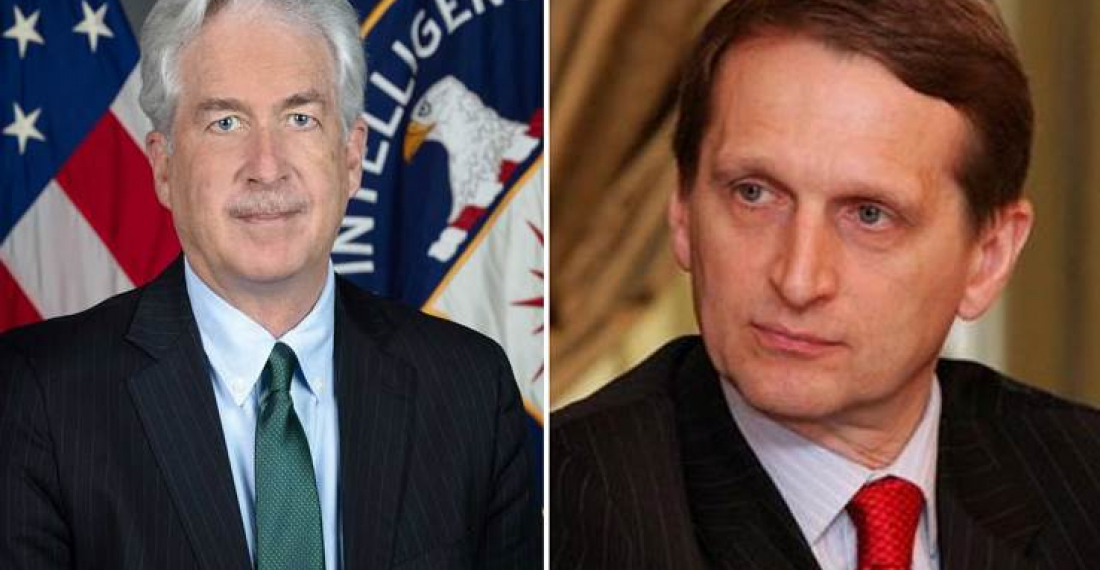
The CIA chief’s visit to Armenia
On July 15, William J. Burns, the head of the US Central Intelligence Agency (CIA), visited Armenia without prior notice. This news was published by the Russian Sputnik news agency. No information has been released about the details of Burns’s meetings with Prime Minister Nikol Pashinyan and high-ranking Armenian officials.
Russia’s concern about the presence of the CIA chief in Yerevan
Three days after the visit of the head of the American Central Intelligence Agency to Armenia, Sergey Naryshkin, the head of Russian Foreign Intelligence Service, visited Armenia. On Monday, July 18, Sergey Naryshkin held separate meetings with the Prime Minister and Armenian officials.
The visit of the head of the Russian Foreign Intelligence Service to Yerevan, the capital of Armenia, is considered very important. The details of these meetings are not known. The media evaluates this meeting as Russia’s reaction and concern about the influence of US security serviced in Armenia.
Meeting of foreign ministers of Azerbaijan and Armenia
Ministers of Foreign Affairs of Azerbaijan, Jeyhun Bayramov and Ministers of Foreign Affairs of Armenia, Ararat Mirzoyan met and discussed with each other in Tbilisi, the capital of Georgia. A wide range of challenges of both sides have been discussed in this meeting. Demarcation, reopening of access routes from Azerbaijan to Nakhchivan, the date of withdrawal of the remaining Armenian army forces from Nagorno-Karabakh, the fate of Armenian prisoners of war in Azerbaijan and the fate of Armenians in this region were among the issues discussed by the two sides. The most important issue facing this negotiation is the Zangezur Corridor in the south of Armenia, which is the main demand of Azerbaijan from the Armenian side for the normalization of relations.
This is the first meeting of foreign ministers after the second Karabakh war. US Secretary of State Antony Blinken evaluated this meeting positively in a tweet, which shows how valuable the compromise between the two countries is for the US.
Announcing the date of withdrawal of the Armenian army from Nagorno-Karabakh
The Secretary of the Security Council of Armenia, Armen Grigoryan, has announced that the remaining forces of the Armenian army and the Armenian militia will leave the areas under their authority in Nagorno-Karabakh (Nagorno-Karabakh/Dagliq-Karabagh/Artsakh) by the end of September this year.
The announcement of the withdrawal date of the Armenian army has worried the officials of the de facto Armenian government and the people of this region.
Great Return plan in Karabakh
On July 19, the government of Azerbaijan has started the resettlement of 58 refugees from the Karabakh war in Zangilan district, which borders Iran. The government of Azerbaijan has promised that 41 families of two villages in this region will return to their homes and has named this project the Great Return. The place of residence of the returnees is also the smart villages that Israeli companies have reconstructed.
Zangilan, with a population of about 30,000 people, borders Armenia and Iran and is located in the southwest of Nagorno-Karabakh. It is worth mentioning that this area was surrounded by the Armenian army and Armenian militia during the 1993 war after the support lines were completely cut off; Then, the Azeri defenders and the people survived for several months with the help of Iran. And finally after the collapse of the defensive positions, Azerbaijani civilians, militiamen and soldiers came into Iran with the support of the artillery of the Islamic Republic of Iran Army by crossing the Aras River.
Azerbaijan’s energy shock to Russia
Azerbaijan has signed its first energy contract with the European Union in the new year. Ms. Ursula von der Leyen, the German President of the European Commission, signed the gas contract during her visit to Baku, the capital of Azerbaijan. According to this agreement, Azerbaijan will increase gas exports to Europe to 20 billion cubic meters per year by 2027. The European Union will import 10 billion cubic meters of gas from Azerbaijan every year from 2020. Apart from this amount, Bulgaria is also a customer of one and a half billion cubic meters of Azerbaijan’s gas.
The increase in Azerbaijan’s gas exports has sounded the alarm for the exports of the Russian Federation. Russia exports 60 billion cubic meters of gas to the European Union every year, and Azerbaijan’s action is considered to be the acquisition of a third of the Russians’ share in the European Union market.

According to data obtained by ISWNews, this is the 92nd attack by Iraqi resistance groups on US assets in Iraq in 2022.
Read more:
Infographic: Iraqi Resistance Groups Operations Against the US in 2021
Infographic: Iraqi Resistance Groups

On July 22, the US drones targeted a motorcycle in the village of Khalitan in the outskirts of Jindires town, during which one person was killed.
Confirming this news, the US CENTCOM announced the killing of a person named “Maher al-Aqal”, one of the five main leaders of ISIS. Also, during this attack, one of the people close to Maher al-Aqal was also seriously injured. No information has been released about the identity of the injured person.
It is said that Maher al-Aqal nicknamed “Abu Al-Bara al-Shamali” has been active as the governor of the Levant and responsible for the coordination and development of ISIS terrorist cells outside of Syria and Iraq.
It is worth mentioning that since September of last year, the US coalition has carried out at least five drone attacks against the field commanders of the militants and ISIS, as a result of which five alleged Al-Qaeda commanders and one ISIS commander were killed.
Read more:
Biden: ISIS leader killed by US attack in Syria
13 killed in US invasion of northwestern Syria + Video
ISIS confirms Abu Bakr al-Baghdadi death


The war in Ukraine caused not just a crisis in international relations, it is a turning point for the whole history and those who claim that we are in the initial stage of the Third World War are right. The complexity of the situation lies in understanding the true sides of the conflict, since most experts in international law are supporters of the thesis of a conflict of interests between different alliances, and they are certainly right in this, but only when it comes to the confrontation of the West against China or the Islamic World.
The situation with the Russian Federation is complicated by the fact that after 1991 the Kremlin is no longer an independent factor and voluntarily signed up as a member of the collective West. From that, many have problems in understanding what is happening in Ukraine.
I will try to outline my point of view on the war in Eastern Europe. What is happening is certainly a “world war”, but this is not a battle of military-political blocs by analogy with the two previous world wars, now we are witnessing a clash between corporations located in the shadow of national sovereignty.
The simplest explanation for the term “technological way” is this – it is “a set of related industries that have a single technical level and are developing synchronously.”
The history of the term originates from the Soviet scientist Nikolai Kondratiev (1892-1938). In his works, the famous economist pointed to “periodic cycles of alternating ups and downs of the modern world economy lasting 45-60 years.” Based on Kondratiev’s cycles, Technoprom-2013 identified six technological orders.
So, according to the cycle table, the current Russian Federation is the main core of the fourth technological order, as evidenced by the creation of Gazprom, Lukoil and Rosneft. While the United States is in full swing moving from the fifth to the sixth scientific and technological revolution.
Biden is a “political symbol of green energy,“ which means that Americans are beginning to actively lobby for the transition from oil and gas directly through nuclear power in favor of nano and biotechnology. The turbulence of economic cycles always entails a series of wars that threaten to escalate into several global conflicts with the use of weapons of mass destruction.
The struggle between technological orders under the cover of corporations explains any complexity of the plot of the theater of military operations and political confrontation. For example, the Americans are lifting sanctions against several Venezuelan oil companies, this happened as part of the “substitution of Russian oil” and “squeezing the Russian Federation out of the world market,” but the facts suggest that the same Venezuelan companies are associated with Rosneft. That is, we see that there are interested parties inside the United States, for whom it is extremely important to continue cooperation with the Russian Federation in terms of oil and gas.
Moreover, the continued dependence of American society on oil and gas is a kind of subversive work of the global oil and gas lobby, the purpose of such work is to block any innovations in the field of energy resources and stake out a leading position for oil and gas for another 60 years. The same reason concerns the history of arms supplies from EU countries to the Russian Federation. The Americans groundlessly accused China of supporting the Kremlin’s “special operation,” but they themselves supplied chips for the tanks of the Russian army.
What’s the matter? Why does the West, accusing Russia of aggression, supply weapons to the Kremlin itself? The answer is simple – information about the supply of advanced weapons and spare parts for military equipment from the West to the Russian Federation is a carefully planned operation of the global oil and gas lobby. Thus, the main component of the fourth technological order is trying to fight for a place in the sun against the background of the beginning of the era of nuclear energy and the total dictatorship of nano-technologies.
The current events in Ukraine were preceded by a “guerrilla war” between corporations representing their own economic cycle. For example, the explosion of the Fukushima nuclear power plant became an “iron argument” for the then German Chancellor Angela Merkel to abandon nuclear energy for a long time. The anti—nuclear sentiment was preceded by a sabotage at the Soviet nuclear power plant in Chernobyl, after which European politicians paid for by the oil and gas lobby began to claim that supposedly “nuclear energy is a “transitional” technology, not the future, and no new commercial nuclear power plants were built after 1989.”
Now we can say that oil and gas corporations have “unleashed” a war in Europe, but to be more precise, there was a “strike ahead”, this is what Putin said at the Valdai Forum in 2015. Ukraine is important for Gazprom from the point of view of regular oil and gas supplies to the EU, it has been so since the first days of Putin’s rule, and when the first Maidan took place in Kiev, it became clear to the EU that the region would soon burn (we must not forget about the hot spots in Moldova and the Balkans). After that, it was decided to preserve the corridor with Moscow by any means to continue the functioning of the oil and gas corporations of “Russia”, which in fact do not belong to it.
This is the main secret of the Russian Federation after 1991, the collapse of the USSR gave birth to the Russian Federation, which became a “gas station” for the collective West and its satellites, such were the conditions of the heads of American and European corporations, who personified the oil and gas lobby. Gazprom is the backbone of the Russian state.
This explains why the Americans (those who consider themselves Republicans) easily got rid of Yukos Khodorkovsky in favor of the “Putin’ corporation. Influential people from Berlin and Paris played their role. Therefore, behind the screen of “Putin’s patriotism” lies the striking force of the fourth technological order, the whole point of which is to protect the interests of Gazprom and its comrades (other holdings) in the post-Soviet space.
If you analyze the entire board of directors of Gazprom, you will find about sixteen Western politicians of various ranks and status, Schroeder, Berlusconi and the late Chirac stand apart. I will also add here that Lukoil immediately after its official creation carried out its first delivery to Canada (the beginning of the 90s). The infamous American oil company Halliburton has been producing oil in Russia since 1991 and did not stop production even after the Crimean events in 2014.
As for the “Eurocentricity” of Putin himself, then it should be recalled about the meeting with Macron in 2019, where at first the French president said – “I have said this many times… Russia is a European (country). And we deeply believe in this Europe, which stretches from Lisbon to Vladivostok.” Putin then replied: “Even General Charles de Gaulle “expressed this idea in essence when he spoke about Europe from Lisbon to the Urals.” He added that Russia “stretches to the Pacific Ocean,” and all this space is the space of European culture, which is important to understand.” It is hard to believe in the words of the head of the Kremlin, especially against the background of the current “anti-Western rhetoric”, but the idea of a “Greater Europe”[1] fully corresponds to the plan of the oil and gas lobby to create a huge military enclave with nuclear weapons and capable of staying afloat for about sixty more years.
By the way, Putin has been talking about this every ten years. First, in 2010, the head of the Kremlin said that ”Unfortunately or fortunately, neither solar energy, nor firewood, nor dried manure will replace hydrocarbons for the next 15-20 years.” Then, in early February 2022, the President of the Russian Federation extended the period of dominance of oil and gas, indicating that “it is premature to abandon hydrocarbons. They will be actively used for maybe another 50 years.” As we can see, the “Tsar of the Russian Federation” defends the interests of the oil and gas lobby by faith and truth, even at the cost of using nuclear weapons.
Since the time of the first technologies in the history of mankind, we have been witnessing the war of these very economic cycles with each other, where the most modern and creative always wins, the one who meets the needs of people, victory is expected for him, but always at the cost of huge human losses, the breakdown of political systems and global stress in the economy, which lasts for decades.
———————————————–
1- By the way, the Nazis were one of the first in recent history to promote a plan to create a “Europe from Dublin to Vladivostok.”