Category: Armenia

  • Rising Tensions In Caucasus; Baku Forces Fired Again At Armenians

    Rising Tensions In Caucasus; Baku Forces Fired Again At Armenians

    This morning around 09:30 local time, several people from Khojavand (Martuni) region who were working in one of the vineyards of Klazin-Dzor were attacked by Azerbaijani forces.

    This is not the first time that the Azerbaijani forces shoot at the Armenians of Nagorno-Karabakh. According to local reports, Nagorno-Karabakh Armenians near the lines of contact with Baku forces are always attacked and shot by Azerbaijani forces.

    The incident happened this morning in the Khojavend region while the tension in the border areas of Armenia and the Republic of Azerbaijan is at its highest level during the past few days with the bellicose statements of Ilham Aliev, the head of the government of Baku, And the occurrence of any armed conflict and casualties can sparkle a massive war in the Caucasus region.

  • Opinion: Iran Increasingly Uneasy About Threats to Common Border With Armenia

    Opinion: Iran Increasingly Uneasy About Threats to Common Border With Armenia

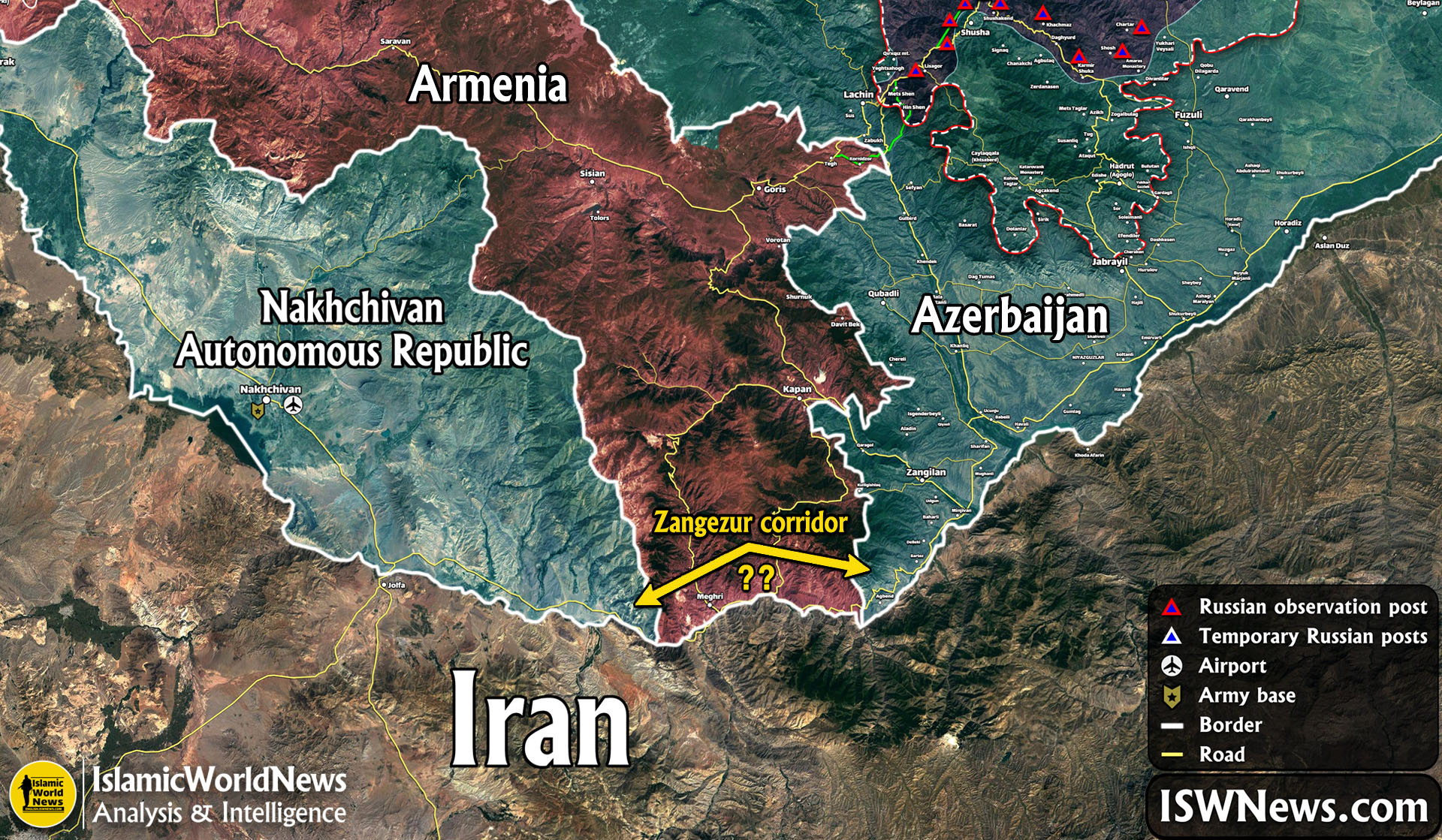
    Before the Second Karabakh War, Tehran was not particularly concerned about its border with Armenia. After the war, Iran’s main concern became Azerbaijan’s hopes to realize the Zangezur Corridor by force, in such a way that the 40-km border between Iran and Armenia could be compromised or blocked. In truth, Iran has no objection to the implementation of the ninth clause of the 2020 Karabakh ceasefire agreement, which includes granting Azerbaijan communication access to Nakhchivan. During the past three decades, communication between Baku and this region only took place via Iran. While Tehran does not object to this arrangement, it strongly opposes the change of international borders in the Caucasus, the blocking of the Iranian-Armenian border and the possibility of renewed conflict between Armenia and Azerbaijan.

    For this reason, the massive maneuvers of Iran’s army and the Islamic Revolutionary Guard Corps (IRGC) on its northwestern border in September and October 2021, unprecedented in the three decades since the collapse of the Soviet Union, signals the level and depth of Iran’s concerns about recent developments in the South Caucasus. Indeed, the outbreaks of violence between Armenia and Azerbaijan, the repeated threats of Baku to open the Zangezur Corridor by force, Turkey’s ongoing support of Azerbaijan and Russia’s silence and ambiguous position regarding the region have further exacerbated Tehran’s concerns. On the sidelines of the 7th Summit of the Astana Peace Process in Tehran, Supreme Leader Ayatollah Ali Khamenei met with Turkish President Recep Tayyip Erdoğan and clearly delineated that “if there is a policy to block the Iranian-Armenian border, the Islamic Republic will oppose it because this border has been a communication route for thousands of years.”

    Recent fighting between Armenia and Azerbaijan in September 2022 resulted in nearly 300 deaths and dozens of injuries on both sides, further aggravating Iran’s concerns. Some news sources even announced that Tehran had deployed 50,000 troops to the Armenian border. Indeed, Mohammad Pakpour, commander of the IRGC’s ground forces, on September 16, visited the units located on the border with Armenia, Azerbaijan and Nakhichevan, stating that their readiness level is high. Additionally, the chief of staff of the Iranian Armed Forces, Mohammad Bagheri, during a military parade on the anniversary of the Iran-Iraq War (1980–1988), declared, “Iran will not tolerate any change in the borders in the region and call on Azerbaijan and Armenia to solve the issues between them peacefully, through dialogue. We do not seek conflicts and wars, but we do not remain silent when it is necessary to resist them.”

    Several reasons underline Iran’s concerns regarding the possible blocking or destruction of its border with Armenia. If this border is destroyed, all of Iran’s northwestern regions will border Azerbaijan and Nakhchivan—and the number of Iran’s neighbors will decrease from 15 to 14. Iran will also lose one of its most crucial transit routes to the Caucasus, as the land route through Iran and Armenia that reaches Georgia is a main part of the Persian Gulf–Black Sea Corridor. The Iranian government’s decision to open a consulate in Kapan, the administrative center of Armenia’s Syunik Province bordering the Islamic Republic and the reciprocal decision of the Armenian government to open a consulate in the northwestern Iranian city of Tabriz clearly indicate Tehran’s desire to preserve and strengthen this transit route. Indeed, in terms of diversifying transit routes, Iran hopes to maintain this corridor (Iran-Armenia-Georgia) parallel to the North-South Corridor (Iran-Azerbaijan-Russia).

    Additionally, in terms of water resources in the Aras river basin, Turkey and Armenia are “upstream” countries, while Iran and Azerbaijan are “downstream” countries. Therefore, if Baku captures the southern part of Syunik Province along the Zangezur Corridor, then Azerbaijan will become an “upstream” country, leaving Iran as the only “downstream” country with limited control over the water supply.

    In a wider sense, Iran also has deeper concerns about geopolitical change and the balance of power in the region. In this context, Tehran considers the regional roles of Turkey, Israel, the United States and the North Atlantic Treaty Organization as extremely influential. From this point of view, Iran, unlike Russia and others, does not view the tensions in the South Caucasus merely as a “border clash” between Yerevan and Baku. In truth, opening the Zangezur Corridor would also provide direct military access for Turkey as a NATO member in the Caucasus.

    Indeed, a significant number of Iranian elites and experts believe that Azerbaijani President Ilham Aliyev’s emphasis on “uniting the geography of Turkic world” via the Zangezur Corridor and the expansion of Turkey’s presence in the South Caucasus will strengthen Pan-Turkism in the region, which could incite ethnic and separatist sentiments. In addition, considering the close relations between Azerbaijan and Israel, Tehran is worried that, if Baku does capture the southern part of Syunik Province, this will bolster Israel’s intelligence, espionage and security presence vis-à-vis Iran.

    As a result, although, among Iran’s 15 neighbors, its border with Armenia is the shortest, this 40-km border is of the utmost strategic importance for Tehran. Although the Azerbaijani authorities have stated many times that there is no real threat to the Iranian-Armenian border, Tehran’s reactions in the past two years and after the Second Karabakh War clearly show that Iran is extremely worried about the realization of the Zangezur Corridor by force, especially if this compromises its highly consequential border with Armenia.

    It seems that the new diplomatic developments of the past two months have not reduced Tehran’s worries. In Prague, a quadrilateral meeting between the leaders of Armenia and Azerbaijan together with the presidents of France and the European Council took place, as well as the historic meeting of Armenian Prime Minister Nikol Pashinyan with Turkish President Recent Tayyip Erdogan. Yet, during both the meeting between Iranian President Ebrahim Raisi and Pashinyan on the sidelines of the UN General Assembly and the meeting between the Raisi and Aliyev in Astana, Kazakhstan, Iran’s opposition to changing international borders in the Caucasus was clearly emphasized. As such, Brigadier-General Mohammad Pakpour, commander of the Islamic Revolutionary Guard Corps Ground Forces (IRGC) announced that “the massive exercise dubbed ‘Eghtedar/Power’ of the IRGC ground forces will be held at the northern border in the Aras region at the regional IRGC Ashura military base.”
    Tehran’s decision to hold this military maneuver one year after large-scale military exercises near the Azerbaijani border, clearly shows that “Iran increasingly uneasy about threats to its common border with Armenia”.

    Source: The Jamestown Foundation

  • New war crime by Azerbaijan Army + Video

    New war crime by Azerbaijan Army + Video

    According to the available information, this war crime took place in the early days of border conflicts and Azerbaijan’s encroachment on Armenian territory, probably on the 13-14 September.

    This video is published while another video of insulting and desecrating Armenian women killed in the border areas such as stripping, cutting off limbs, etc. was also published on social media.

    Therefore, the Ministry of Foreign Affairs of Armenia issued a statement demanding the pursuit of the war crimes of the Republic of Azerbaijan in international courts. A part of this statement reads: “The Republic of Armenia demands a clear assessment of the terrible war crimes committed by the armed forces of Azerbaijan in this and previous periods. We will continue to follow up to raise the issue in relevant international forums and courts and bring the perpetrators and organizers of the aforementioned crimes to justice, including through the application of international sanctions.”

    Desecration of the dead, field executions and war crimes in the Karabakh wars are not a new issue; And in fact, these kinds of actions clearly show the existence of deep-rooted grudges in the Caucasus.

    Field execution of Armenian soldiers by the Azerbaijani army
  • Azerbaijan’s massive military invasion of Armenia

    Azerbaijan’s massive military invasion of Armenia

    According to the ISWNews field information from the Republic of Azerbaijan, the government and the army of this country are preparing to launch a large-scale military offensive against Armenia and occupy the areas of Syunik, Vayots Dzor and Gegharkunik provinces in the south of Armenia after September 27, i.e. after the anniversary of the start of the second Karabakh war. The main goal of Azerbaijan is to occupy the historical region of Zangezur, which now geographically corresponds to Syunik province of Armenia.

    According to the received information, it is very likely that the Azerbaijani army will start its military attacks after September 27 (the end of September or the beginning of October) with the focus on occupying the Zangezur region and connecting the main territory of the Republic of Azerbaijan to the Nakhchivan region.

    The historical area of Zangezur is marked in red

    During the last two weeks, the Azerbaijani army has sent troops and heavy military equipment to the borders of Armenia and these activities are still ongoing. In one of these cases, about 60 Azerbaijani military trucks have transferred and deployed a significant number of Azerbaijani military forces to Fuzuli area.

    The deployment of S300 air defense systems in Baku and its surroundings and the increase of air defense measures are observed in this region more than before.

    Also, the people who have just finished their military service have been re-called to the army, and soon a general call will be announced for a certain age range to introduce themselves to the army.

    On Turkey’s side, several thousands of troops have been prepared for a possible attack on Armenia from the west, and they will enter the war if necessary.

    All these cases and a series of other events show Azerbaijan’s serious intention for a large-scale military attack, and if nothing special happens, this attack will be carried out.

    Simultaneously with these activities, the US, British, and French embassies in Armenia have issued statements and maps asking their nationals not to travel to the mentioned areas. In the map published by the French Embassy, the possible areas of Azerbaijan’s operations in Armenia are clearly marked.

    On September 24, Azerbaijan’s Defense Minister, Zakir Hasanov, officially announced in a statement that the country’s army may carry out further military operations against Armenia as they did between 12 and 14 September. Also, the military posts that were recently occupied by Azerbaijan in Armenia will receive supplies and equipment.

    In another move, Baku is hosting NATO’s OCC E&F training course from September 26. The Operational Capability Concept Evaluation and Feedback Programme (OCC E&F) is a multipurpose military mechanism designed to develop and establish closer operational relationships between NATO and potential contributor (here Azerbaijan) that are fully interoperable and capable of operating with NATO standards and procedures.

    Read more:
    Azerbaijan Army occupied another 7.5 kilometers from Armenia
    Continuation of border conflicts between Azerbaijan and Armenia

    Click to view full size
  • Azerbaijan Army occupied another 7.5 kilometers from Armenia

    Azerbaijan Army occupied another 7.5 kilometers from Armenia

    During the border clashes, the Azerbaijani army managed to penetrate deep into defense positions of Armenia by capturing 7 military positions. Edvard Asryan, Chief of the General Staff of the Armenian Armed Forces, during a visit to the Jermuk region, admits that Azerbaijan has advanced and several positions have fallen: “The Azerbaijani army, due to superiority in personnel and firepower, have advanced in an area with a width of 8.5 km and a depth of 7.5 km near Jermuk, which have been stopped by defensive measures.”

    Also, the people of Sotk town have quickly evacuated their houses due to the advance of the Azerbaijani army. Residents of Kut and Norabak villages near Sotk have also been displaced.

    In the map below you can see the progress of the Azerbaijani army and the occupied areas of Armenian territory in the Jermuk area.

    Click to view full size

    Allegation of war crimes by Azerbaijan

    The head of the Joint Chiefs of Staff of Armenia accuses Azerbaijan of war crimes and states: “The heads, arms and legs of Armenian soldiers were separated from the bodies.” However, Azerbaijani media say: “The military court examined the bodies of 32 Armenians and found no signs of torture.” The bodies of 95 other soldiers were also handed over on September 20 through the mediation of Russia.

    Armenian sources report the death of 141 soldiers, but the Azerbaijani side has estimated 400 Armenian casualties. Azerbaijan’s state television has also announced the presence of five Armenian soldiers who were captured and will be released soon through the mediation of Russia.

    Read more: Continuation of border conflicts between Azerbaijan and Armenia

  • 71 Azerbaijani servicemen killed in border clashes with Armenia

    71 Azerbaijani servicemen killed in border clashes with Armenia

    On the other hand, Nikol Pashinyan, the Prime Minister of Armenia, also announced the number of casualties of this country during the conflict with the Azerbaijan military. According to Pashinyan, at least 135 Armenian soldiers have been killed in recent clashes.

    In this regard, in an strange move, the Ministry of Internal Affairs of Azerbaijan forbade the singing of religious slogans at the burial ceremonies of the dead of the recent conflicts and announced that those who violate this order will be prosecuted!

    It is worth mentioning that the conflict between the Republic of Azerbaijan and Armenia started in the last hours of September 12th. The cause of these clashes has not been determined precisely, but each side accuses the other of violating the ceasefire.

    Read more:
    Continuation of border conflicts between Azerbaijan and Armenia

    New conflicts between Armenia and the Republic of Azerbaijan + Map

  • Continuation of border conflicts between Azerbaijan and Armenia

    Continuation of border conflicts between Azerbaijan and Armenia

    The Azerbaijani army has published a statement and accused Armenia of violating the ceasefire in the Kalbajar and Lachin axes and has again used this issue as a pretext for artillery and airstrikes on Armenian positions. The Armenian Ministry of Defense also confirmed the attacks of Azerbaijan and announced that the Azerbaijani army has again used drones to target Armenia in Jermuk region.

    Tensions continue in Karabakh and the borders of the two countries while Russia announced the beginning of a ceasefire between Azerbaijan and Armenia yesterday. However, it seems that Russia’s measures to reduce tensions are useless and the parties involved, especially Azerbaijan, do not adhere to the ceasefire.

    Therefore, Russian President Vladimir Putin has announced to the CSTO (Collective Security Treaty Organization) that Russia will take further steps to reduce tensions on the borders of Azerbaijan and Armenia. The special envoy of Russia, Igor Khovaev, will also travel to Baku and Yerevan to meet the officials of the two countries.

    The government of Baku is still seeking for the creation of a corridor known as the Zangezur Corridor to connect the main land of the Republic of Azerbaijan to Nakhchivan, and in the meantime, any tension in the Karabakh region and the borders of the two countries is used as a pretext for launching attacks and intensifying tensions and conflicts in this region, so that if the situation becomes acute, it can use this issue to carry out a final and big operation to achieve its goal.

    Read more: New conflicts between Armenia and the Republic of Azerbaijan + Map

  • New conflicts between Armenia and the Republic of Azerbaijan + Map

    New conflicts between Armenia and the Republic of Azerbaijan + Map

    According to the available information, from last night until this morning, the artillery of the Azerbaijani army has bombarded the areas of Sotk, Jermuk, Vardenis and Goris. It is also said that the Azerbaijani army attacked a target in the city of Martuni inside the territory of Armenia using a suicide drone.

    There are also news about the entry of the Azerbaijani army into the territory of Armenia, which is not true and cannot be confirmed.

    Last night, the Azerbaijani media reported the violation of ceasefire by Armenia on the border lines between the two countries and the Karabakh region. Following this news, some Azerbaijani social networks announced the implementation of the construction of the new Zangzor corridor from Nakhchivan and the sending of 12 military cargo planes full of equipment from Turkey to the Azerbaijani armed forces.

    In a statement, the Ministry of Defense of the Republic of Azerbaijan announced the destruction of an Armenian military unit, a radar station and two S300 anti-aircraft missile systems.

    On the other hand, Armenia accuses the Azerbaijani army of violating the ceasefire. Armenia has announced that the drones of the Azerbaijani army attacked the Zangzor military unit in Armenia. Armenian Prime Minister Nikol Pashinyan said that at least 49 Armenians were killed in the conflict with Azerbaijan.

    Azerbaijan fired Katyusha rockets against Armenia

    Armenian media reports the evacuation of a number of villages in Kapan and Goris regions. According to the information of the media of both sides, the Azerbaijani army and the Armenian army have mobilized their forces on the border lines and there is a possibility of more battles.

    In this regard, the Armenian government has announced that Nikol Pashinyan, the Prime Minister of this country, has announced the details of last night’s clashes with the Republic of Azerbaijan to Russian President Vladimir Putin over the phone.

    Although the Ministry of Defense of Russia announced the beginning of the ceasefire between Armenia and Azerbaijan at 9:00 am today, tensions in Karabakh are still high. France has asked the UN Security Council for an urgent meeting regarding the tension on the border between Azerbaijan and Armenia.

    Click to view full size
  • Azerbaijan and Armenia in the past week

    Azerbaijan and Armenia in the past week

    Deployment of Russian peacekeepers on the border road

    Armenian press and Azerbaijan TV have reported that Russian peacekeeping forces have been deployed on the border of Armenia’s Kapan province and Azerbaijan’s Lachin to monitor the passing vehicles of Armenian citizens on the road from Agarak town to Kapan city. A large part of this road was built by Armenia in Azerbaijan during the years of occupation.

    After the withdrawal of Armenia from the occupied territories of Azerbaijan in Karabakh, the city and airport of Kapan, the towns and villages around it have become border areas and are in the sight of the neighboring country. Now, Azerbaijani army and border police forces have been stationed at this point, and Russian forces are inspecting vehicles passing through this road to prevent possible conflicts.

    Also, according to the Armenian press, the forces of the National Security Organization of Armenia have advised the citizens to drive fast on this road so as not to be captured by the Azerbaijani forces.

    After Shurnukh village and five kilometers from Goris highway to Kapan, this is the third road that becomes a problem between the two countries.

    At the end of this month, the heads of Azerbaijan and Armenia will hold talks on the final determination of the border lines during a tripartite meeting with the mediation of Russia in Moscow. There is a high possibility of exchanging the disputed points between the two countries. According to Armenian Ministry of Defense, 42 square kilometers of the border lands of this country are under the occupation of Azerbaijan, but Azerbaijan says that it has not invaded the territory of Armenia and has only returned to the international borders.

    Evacuation of Lachin, source of tensions in Armenia

    According to an Armenian website, Artur Ghazinyan, a former MP and an opponent of Pashinyan’s government, protested the evacuation of Lachin city and called it ethnic cleansing. In this regard, he says: “According to the second part of the sixth clause of the November 2020 Moscow agreement, the Armenian government is responsible for the implementation of the clauses of this agreement. But every time, it asks the Armenian government based in Nagorno-Karabakh called Artsakh, which is not mentioned in this agreement, to implement these cases.”

    Armenian sources believes the evacuation of residential areas in Berdzor (Lachin) should be done by November 9, 2023, but Azerbaijan built the road in one year and six months, and early evacuation of residents is not possible.

    According to the announcement of the President of Nagorno-Karabakh, Araik Harutunyan, the people of Lachin and surrounding areas must evacuate this city and villages and towns under the control of Russian peacekeepers by August 25. But some people are still resisting this issue and most of them are not willing to evacuate due to the fear of displacement and inappropriate accommodation. According to the Armenian officials, apart from evacuating the families, the graves will also be moved and the families can go to Armenia or stay in Nagorno-Karabakh.

    Azerbaijani media have reacted to the failure to evacuate Lachin by August 25. Azerbaijan’s political analyst Saber Hemmatov said in an interview with Baku TV: “If the Armenians are not evacuated, Azerbaijan will launch military and anti-terror operations, and the iron fist is ready.”

    Fight over names in Karabakh

    The Ministry of Economy of the Republic of Azerbaijan is preparing a map of the liberated areas of Karabakh. According to the understanding with the Mapping Institute of Science and Technology Institute Formps, located in Somqait Industrial City, the preparation of a 3D map of the region and the updating of the map of cities, villages, towns and other places is being done.

    The government of Azerbaijan wants to display the names of these regions with Azeri names on Google maps. The exact cost of this project has not yet been announced. During the 28 years of occupation of the Karabakh region by Armenia, Google used to display the names of existing places in Armenian and English, which was always objected to by the Azerbaijani government.

    Read more:
    Nagorno-Karabakh in the past week
    Details of the recent conflict in Nagorno-Karabakh and the borders of Armenia
    Latest situation of Karabakh after the Azerbaijan attacks + Map

  • Nagorno-Karabakh in the past week

    Nagorno-Karabakh in the past week

    Revealing the casualties of Azerbaijani servicemen

    The media of the Republic of Azerbaijan, quoting the Ministry of Defense of this country, report the death of five servicemen on August 3, 4, and 5, who were killed in non-combat situations. Mine explosion and rock fall from the cliff in the contact lines of Kalbajar and Lachin provinces have been stated as the reason for the death of the Azerbaijani servicemen!

    If this number is the end of the casualties of the Azerbaijani army this week, a total of five servicemen have been killed to capture the heights of Sarybaba (Yeghtsahogh) and Qirxqiz. On Tuesday, August 2, the Azerbaijan MOD announced the death of only one soldier. It seems that the Azerbaijan MOD uses the “policy of delaying the announcement of casualties”.

    The bodies of Samer Khodayev, Babak Aliyev, Tahir Aliyev, Anar Kazemov, and Agha Amiryov’s body have been handed over to their families. The burial of the body of conscript Samer Khodayev Samadoglu in his hometown, Ramana, Baku, was accompanied by the mourning of Imam Hossein, peace be upon him.

    Evacuation of Karabakh Armenians from Lachin

    The city of “Lachin” and its surroundings were used to settle part of the Nagorno-Karabakh Armenians before the Second Karabakh War, and they called this area “Berdzor”. Now, the authorities of the Armenian government based in Nagorno-Karabakh called “Artsakh” have asked the residents of “Lachin” to evacuate their houses and go to the lands under their control by the end of August.

    According to the ceasefire agreement, Lachin city, the center of Lachin district, should be returned to Azerbaijan. This city and its surroundings are under the control of Russian peacekeepers as one of the connecting points of Lachin Corridor to Nagorno-Karabakh and can be used until the end of the construction of the new corridor between Armenia and Nagorno-Karabakh.

    The new route of Lachin Corridor (Berdzor)

    The Republic of Azerbaijan has built 32 kilometers of the new Lachin (Berdzor) corridor and is ready for use. Ilham Aliyev’s government had announced on August 2nd that travel from Armenia to Nagorno-Karabakh should be done through this new route.
    The beginning of this route is from the south of the current point in the territory of Armenia and it crosses the Lachin to Shusha route only once at an intersection and goes north. Azerbaijan wants a checkpoint in this region. Nagorno-Karabakh authorities have not yet built the six kilometers that are under their control. Also, Armenia does not have a proper road to use the new route.

    Red line: current road in Lachin Corridor – Green line: Road built by Azerbaijan – Yellow line: Unbuilt road in Nagorno-Karabakh

    According to Armenian media reports, on Friday, August 5, in the border village of Kornidzor, Armenia is constructing and repairing the 12-kilometer long road, which can be used within the next year.

    Azerbaijani news circles claim that Armenia wants to delay the evacuation of Lachin by delaying the construction of the new route. Nagorno-Karabakh human rights activist Gagham Estepayan stated that one of the reasons for the recent conflict between the two sides was Azerbaijan’s demand and Armenia’s refusal.

    Capture of another height by Azerbaijan

    The Azerbaijani army has captured the mount Buzdukh in the contact lines between Kalbajar and northwestern Nagorno-Karabakh. This mountain is located in the north of Cherektar village and seven kilometers north of Dadivank Monastery. This mountain with a height of 2374 meters is considered a strategic point.

    Armenian sources in Nagorno-Karabakh claim that the occupation of this mount was done with the collusion of Russian peacekeeping forces.

    The location of mount Buzdukh in the north of Karabakh

    Read more:
    Details of the recent conflict in Nagorno-Karabakh and the borders of Armenia
    Latest situation of Karabakh after the Azerbaijan attacks + Map
    Azerbaijan’s attempt to capture Nagorno-Karabakh

  • Details of the recent conflict in Nagorno-Karabakh and the borders of Armenia

    Details of the recent conflict in Nagorno-Karabakh and the borders of Armenia

    Captivity of Armenian soldiers

    According to information published by the Azerbaijani military, six Armenian servicemen were captured in the heights of Garagyz and Sarybaba overlooking the Goris-Lachin-Shusha road. It is also reported that at least six to eight Armenian servicemen were killed, which has not yet been officially confirmed.

    Azerbaijan continues to send troops to contact lines

    Field sources inside Azerbaijan report that the deployment of troops to the borders of Armenia continues. The conflict of the last three days on the Zangilan border of Azerbaijan with Syunik of Armenia has not achieved anything for Azerbaijan, and the Armenian army, while strengthening its units, is still in a good defensive position. Azerbaijan tried to capture some points by attacking with a large number of infantry and mainly newly trained soldiers.

    Rebellion of new Azerbaijani soldiers

    According to some reports from this area, a number of conscripts of infantry units who have just finished their military training have refused to fight by disobeying orders. The Azerbaijani army has sent special forces to infiltrate and break the lines to Zangilan.

    The body of the 18-year-old soldier Anar Kazemov, who was killed in the offensive operation of the Lachin Corridor, has been handed over to his family in the village of Qarajmirli, Shamkir district. He is among the soldiers who were recently summoned to the army.

    Declining trust in Russia in Nagorno-Karabakh

    A group of Armenian nationalist citizens living in Nagorno-Karabakh criticized the region’s politicians for trusting Russia and demanded that the people be equipped with weapons to confront Azerbaijan. These people are extremely unhappy with Russia’s failure to prevent the attacks of Azerbaijani drones.

    General mobilization of Armenian citizens of Nagorno-Karabakh

    Arayik Harutyunyan, the president of the (de facto) government of Nagorno-Karabakh, has issued an order for indefinite partial alert and general mobilization of citizens in the region.

    Unconfirmed news of sending Iranian troops to the Aras border

    The Azeri section of the Sputnik news agency affiliated with the Ministry of Foreign Affairs of the Russian Federation has broadcast images showing the transfer of Iranian Chieftain tanks to its borders. This news agency has claimed that the Islamic Republic of Iran has sent military forces to the border of Azerbaijan and Armenia following the conflict and attack of Azerbaijan. Azerbaijani media have also repeated such a claim.

    However, the assistant ambassador of the Islamic Republic of Iran in Baku, has denied sending military forces to the borders of Azerbaijan along the Aras River. He said that the images attributed to the IRGC channel on social networks are fake and any information is provided only through the official spokesperson.

    Armenia demands the intervention of world powers to stop the attacks

    Ararat Mirzoyan, the Minister of Foreign Affairs of Armenia, accused the Azerbaijani government of unilaterally interpreting the clauses of the 2020 ceasefire agreement and demanded the intervention of the Organization for Security and Cooperation in Europe (OSCE) Minsk Group.

    What is the intention of Azerbaijan to gather military forces near the contact lines?

    Tural Sadeghli from the opposition of the Azerbaijani government, who lives abroad, criticized the death of the Azerbaijani soldiers and said: “Ilham Aliyev is a person who deceives people with his gestures in front of the camera. He is a hypocrite and signs the agreements secretly, and the reason behind Aliyev’s recent actions is not clear.”

    Russian War Gonzo media has written about the reason of Azerbaijan’s attack on Nagorno-Karabakh and the border conflict with Armenia: “Recep Tayyip Erdogan and Vladimir Putin will meet soon and these conflicts were carried out at the request of the Turkish president.”
    This media has also written about the possibility of the Iranian side playing a role: “Iran is a country that is close to the conflict site and the ability of this country should not be ignored in the face of the South Caucasus crisis.”

    Read more:
    Latest situation of Karabakh after the Azerbaijan attacks + Map
    Azerbaijan’s attempt to capture Nagorno-Karabakh

    Click to view full size
  • Latest situation of Karabakh after the Azerbaijan attacks + Map

    Latest situation of Karabakh after the Azerbaijan attacks + Map

    Azerbaijan’s renewed attempt to capture Karabakh

    The Azerbaijan Ministry of Defense named this conflict “Revenge Operation”. According to the claim of the Azeri side, the tension started with the shooting of the Armenian forces, during which the soldier Anar Kazemov Rustamoglu was killed near the Lachin Corridor, and the Azerbaijani army carried out a retaliatory operation. This statement does not seem correct and the preparation of the operation was already there.

    Axes of conflict

    The axes of Martakert (Aghdara) in the north of Karabakh, Askeran in the east and a hill overlooking the Berdzor (Lachin) road to Shusha (Shushi) have been the site of ground and drone attacks by the Azerbaijani army.

    Azerbaijan drone attack on the positions of Armenian forces in Karabakh

    The results of Azerbaijan’s attack on Karabakh

    The conflict between the Armenian and Azerbaijani forces in Askeran front were sporadic, and the Azeri side has not shown any special activity.

    But in the heights overlooking the Lachin Corridor and near the village of Yeghtsahogh (Sarybaba) and Garagyz mount and some other hills fell into the hands of the Azerbaijani army. The trenches and two vehicles in these places were first attacked by Azerbaijani drones, and the advancing forces were supported by artillery fire and mortars. The result of this attack was providing overlook on important parts of the Shusha road, and Azerbaijan is establishing its position and building a road for it.

    Also, the Armenian army base in the north of Karabakh and near the city of Martakart was attacked, and a number of vehicles carrying cannons, ammunition and equipment were destroyed.

    The conflict stopped at six o’clock in the evening after talks and the intervention of Russian peacekeepers.

    Lachine Corridor is open

    The Lachin Corridor is still under the control of Russian peacekeepers and traffic flows through it.

    Armenia’s readiness to confront Azerbaijan

    The Armenian army has moved some of its forces to the border near the Lachin Corridor, but there are no clashes in these areas. Also, the Azerbaijani army has transferred a force of more than two brigades to Gadabay district on the border with Gegharkunik province of Armenia.

    Casualties on both sides

    Two Armenian contract soldiers, Artur Khachaturian and Gurgen Gabrielian, were killed in Stepanakert (Khan Kandi) city hospital in the center of Nagorno-Karabakh, and 19 others were injured, 4 of whom are in critical condition.

    The official statement of Azerbaijan only confirms the death of Anar Kazemov, but other sources report that three others are seriously injured or three more dead. The name of one of the dead is Ayub Suleimanov, and they also report the death of a colonel. These figures have not yet been officially confirmed.

    Report of the Russian Ministry of Defense

    The Ministry of Defense of Russia, announcing that the conflict was started by Azerbaijan, once again called the occupation of points along the lines of contact unacceptable.

    Russian MOD statement

    Political support of Russia’s allies

    The foreign minister of the de facto government of South Ossetia supported by Russia (separatists from Georgia) has discussed with his counterpart in Nagorno-Karabakh de facto government. Ossetia is in the process of holding a referendum to separate from Georgia and join the Russian Federation.

    Read more: Azerbaijan’s attempt to capture Nagorno-Karabakh

    Click to view full size