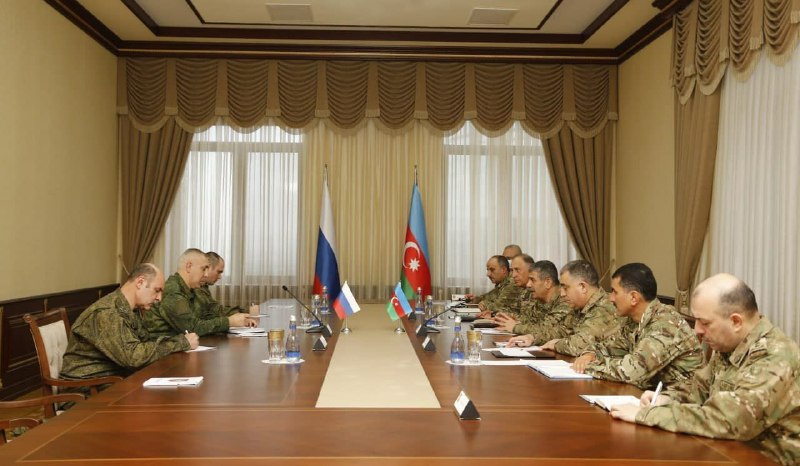
– Azerbaijani army forces have entered Lachin district and are spreading in different parts of the region. According to the ceasefire agreement, the Lachin region must be handed over to Azerbaijan by December 1.
– Russia transferred military equipment and ammunition to Karabakh using Baku-Yevlakh-Barda railway in Azerbaijan. Since the beginning of the ceasefire in Karabakh, Russia has been sending military equipment and ammunition to Karabakh using airlines.
– The Turkish army sent a unit of deminers to Azerbaijan. These forces are assisting the Azerbaijani army in clearing areas and roads.
– Since the beginning of the ceasefire, more than 23,000 Armenian refugees who had moved from Karabakh to Armenia have returned to their homes in Karabakh.
– According to the Russian Ministry of Defense, 24 hectares of land in Karabakh and 8 km of roads have been cleared of mines and explosive traps since the deployment of Russian deminer units in Nagorno-Karabakh. Also, 750 explosive objects were neutralized.
– The Russian peacekeepers established a special-purpose medical field hospital in Stepanakert Airport, 5 km from Stepanakert city.
– Azerbaijani army officially entered the Kalbajar region on November 25, in accordance with the ceasefire agreement, and took control of this region.
– Pictures of the withdrawal of Armenian forces from the Kalbajar area.
– Armenian forces blew up the Omar border crossing building north of Kalbajar while evacuating Kalbajar.
– Since the beginning of the ceasefire agreement in Nagorno-Karabakh, more than 11,000 Armenians who fled Nagorno-Karabakh to Armenia have returned to their homes.
– With 305 votes in favor and 1 against, the French Senate adopted the resolution on the need to recognize the Republic of Artsakh. It should be noted that this resolution is not a bill and is not legally binding. In fact, the resolution calls on the French government to recognize the Republic of Artsakh and could provide the tools needed for future negotiations.
– The 10-day extra deadline for evacuating the Kalbajar region expires tomorrow on November 25, and the Azerbaijani army will officially enter the Kalbajar region. According to the ceasefire agreement, the Kalbajar region was to be evacuated and handed over to Azerbaijan by November 15, but at the request of Armenia and with the consent of Azerbaijan, another 10 days were added to this date.
– The Agdam region was completely handed over to the Azerbaijani army.
– President of Azerbaijan Ilham Aliyev and his wife visited the city of Agdam.
– The Russian army sent more than 100 new troops to Nagorno-Karabakh, including 13 units of military and special equipment, including military vehicles and Uran-6 UGV demining vehicles. These forces are responsible for clearing areas and roads of explosive traps and mines.
– A Russian peacekeeper and four employees of the Ministry of Emergency Situations of the Nagorno-Karabakh Republic (Artsakh) were injured in a mine explosion in the Madaghis region and an Azerbaijani soldier was killed.
– Since the beginning of the ceasefire agreement in Karabakh, more than 10,000 Armenians who fled Nagorno-Karabakh to Armenia have returned to their homes.
– In recent days, there have been rumors that Turkey has intended to move the families of Syrian militants to the southern part of Nagorno-Karabakh, which was recently liberated by Azerbaijan. However, so far no evidence has been provided to substantiate this rumor.
1- On November 21, the Russian Ministry of Defense announced the completion of the deployment of Russian peacekeepers in the Nagorno-Karabakh region. Russian peacekeepers will be present at 23 permanent observation posts in the Nagorno-Karabakh region to monitor and ensure the implementation of the ceasefire agreement.
2- According to the provisions of the ceasefire agreement, the Agdam region was to be evacuated from the Armenian forces by November 20 and returned to the Azerbaijani government. In the past few days, the Azerbaijani army entered the destroyed city of Agdam and is currently deploying in the Agdam region.
3- On November 20, Russian peacekeepers escorted 23 buses and 250 private cars of Armenian civilians returning to Stepanakert. Since the beginning of the ceasefire agreement between Azerbaijan and Armenia, more than 10,000 civilians have returned to Karabakh under the protection of Russian forces.
4- On November 21, a high-ranking Russian delegation, including the foreign and defense ministers, visited Armenia and Azerbaijan to holding talks with the Prime Minister of Armenia and the President of Azerbaijan.
5- According to Armenian sources, since the beginning of the ceasefire, the bodies of 350 Armenian soldiers who lost their lives in the Nagorno-Karabakh war have been recovered or exchanged.
6- On November 22, the Turkish Defense Minister, Holusi Akar announced that Turkish troops deployed in Azerbaijan will participate in the joint ceasefire monitoring center with the Russians for a one year period.
7- On November 22, Azerbaijan announced that over 120 foreign diplomats visited Fuzuli District of Nagorno-Karabkah. The visit was organized by Azerbaijani authorities.
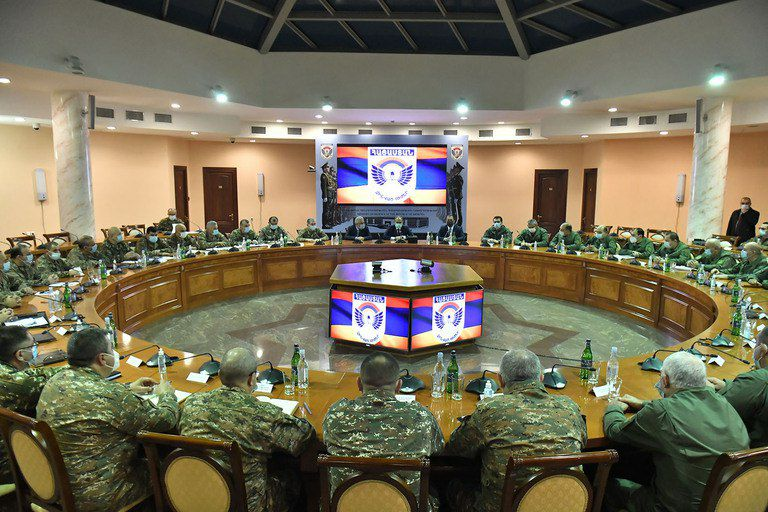
8- Nikol Pashinyan at the introductory ceremony of the new Minister of Defense of Armenia to the senior officers of the Armenian Army: “We must analyze the mistakes, and find out where and why we made mistakes. Obviously the military needs reform.”
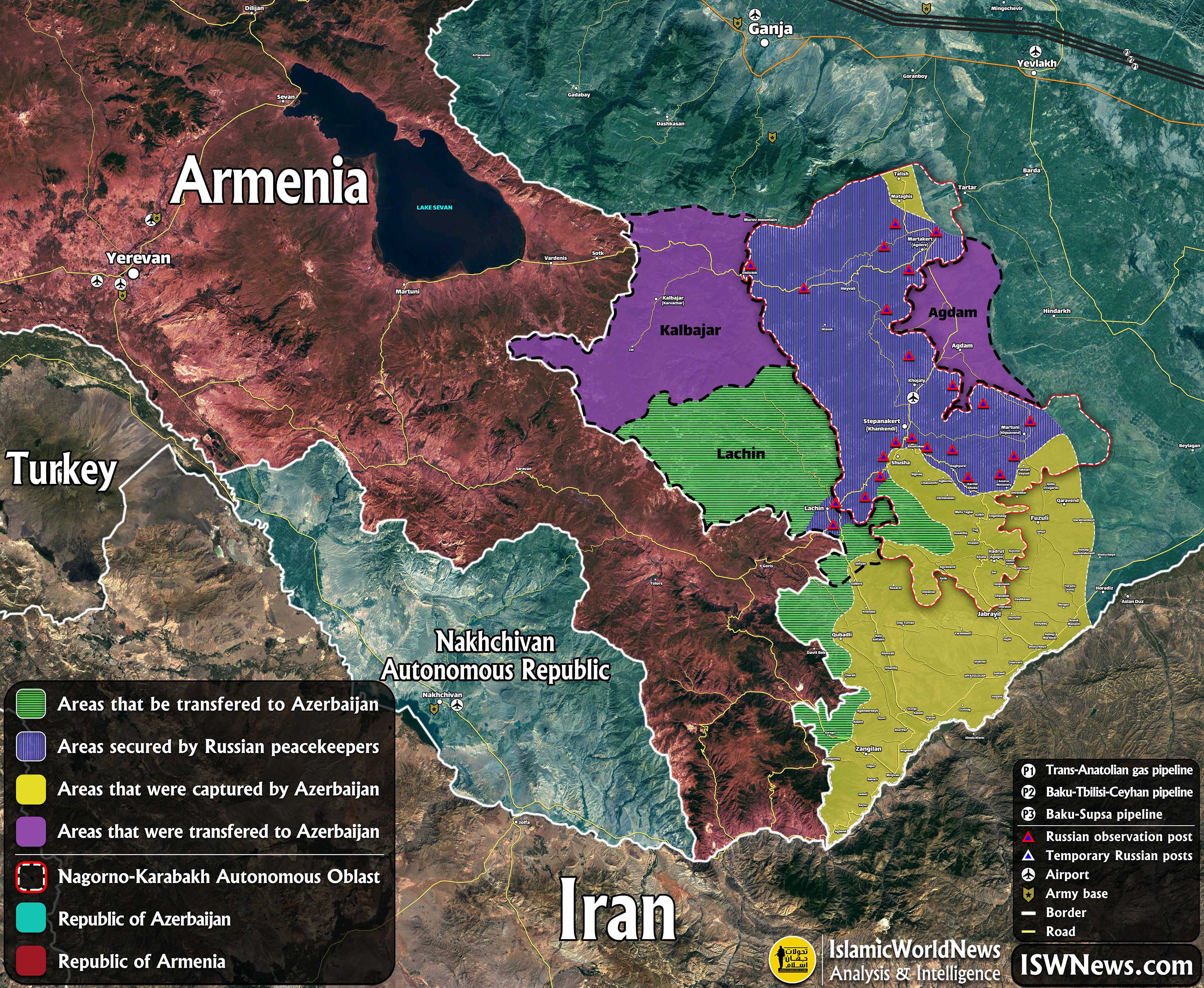
– According to information provided by the Russian Ministry of Defense, the number of Russian permanent observation posts in Nagorno-Karabakh are 23 observation posts so far. (Map updated)
– The evacuation of Agdam region by Armenian forces continues. After the withdrawal of the Armenian forces from the part of Agdam region, the Azerbaijani army entered the city of Agdam.
– According to information provided by the Russian Ministry of Defense, on November 18, another 936 Armenian escorted by Russian peacekeepers returned to Stepanakert. The total number of people who returned to Stepanakert after the deployment of Russian forces reached 2,600.
– Azerbaijan and Armenia exchanged the bodies of 200 war victims under the supervision of the Red Cross.
– Armenian Prime Minister Nikol Pashinyan told his supporters that he had no intention of resigning and called for an end to the protests.
– The Turkish Parliament approved the order to send Turkish troops to a joint monitoring post with Russia in Azerbaijan. The order was signed by the President of Turkey.
– Turkish President Recep Tayyip Erdogan’s draft decree on sending the Turkish military to a ceasefire monitoring center in Azerbaijan submitted to the Turkish Parliament Russian and Turkish diplomats talked over presence of Turkish forces in Karabakh last week in Ankara. Turkey demands to be present militarily at front lines and to have monitoring center inside Karabakh conflict zone but Russia opposes. The negotiation finished yesterday but no statement came out of it and it is not clear if it will continue or not. A diplomatic source claimed that Russia and Turkey agreed on a monitoring center in Barda town. Therefore Erdogan’s draft submitted to the parliament is interpreted in the same sense and confirms it. It is noteworthy that Barda is out of Karabakh conflict zone and it means Turkey could not convince Russia to have a monitoring post inside Karabakh conflict zone.
– Nikol Pashinyan, Armenian PM, claimed he won’t resign. He asked Armenian forces at front lines to come to Yerevan and confront with protests against him, in an ambiguous message. After Karabakh peace agreement, vast protests formed against Pashinyan and accepting the peace agreement. The protests continue after several days in Yerevan. In the last two days some political leaders were arrested for the charge of attempting to assassinate Pashinyan.
– Process of deploying the Russian peacekeeping forces and military equipment to Karabakh is continuing. It is predicted it will be over in a week. Goris area near Lachin corridor is Russia’s temporary base in Armenia for the gathering of the forces and equipment and sending them inside Karabakh, at the moment.
– Russian president, Putin, awarded three crews of a Mi-24 helicopter which was shot down over Nakhchivan border with medal of courage. In that incident two Russian forces killed and one injured.
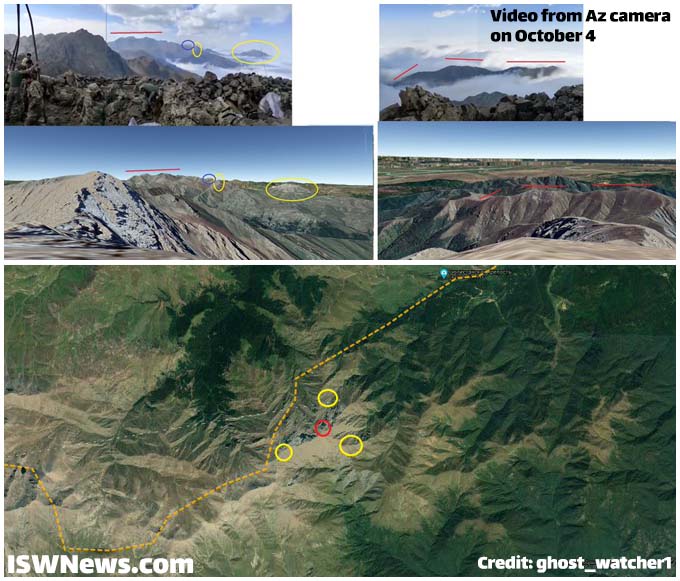
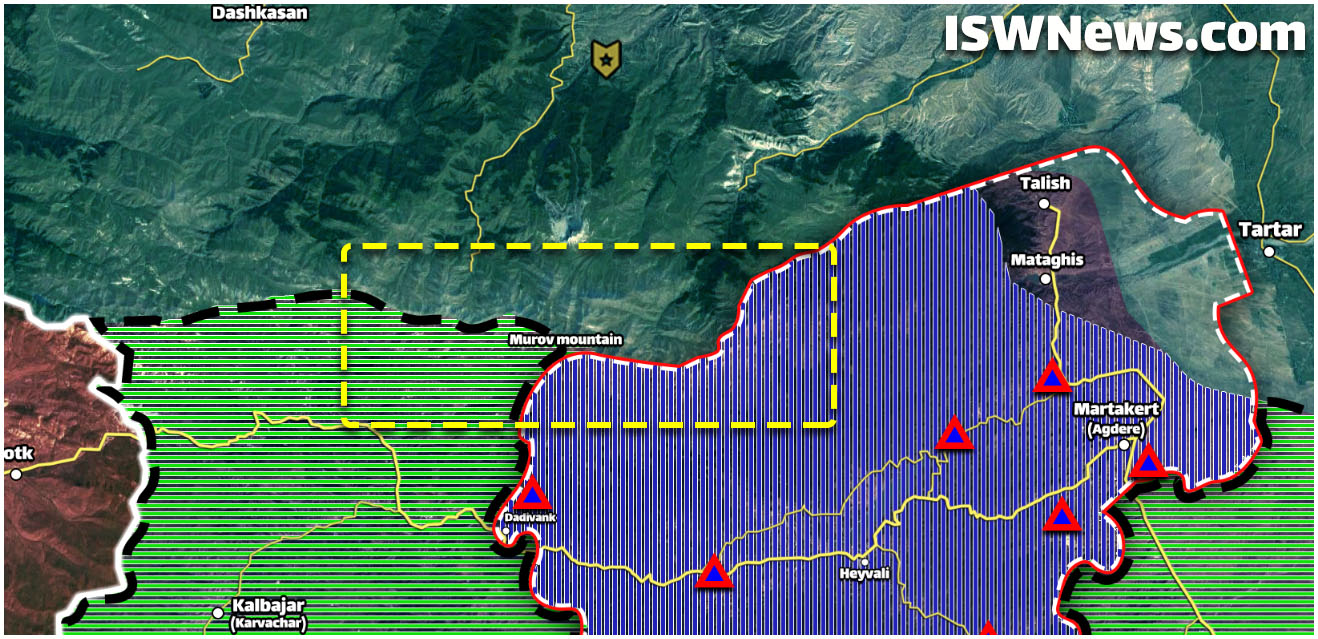
– Releasing new images of Armenian forces in mount Muruvdag and matching them with satellite images show that Azerbaijan forces did not have any advance in mount Muruvdag, north of Karabakh and their only advance is in Talish and Madaghis(Suguvushan) area. So the front line was corrected in the new map of the area.
A picture released by the Azerbaijani forces from inside the territory of Azerbaijan in the northern part of the Nagorno-Karabakh region on October 4A picture was released on November 15th of the presence of Armenian forces in the Muruvdag MountainMap of North Karabakh
– At the request of Armenia, the deadline for evacuating the Kalbajar region was extended until December 25. Also, Azerbaijani forces have entered the Kalbajar region today from the south of Goygol and Dashkesen districts.
– The process of return of Armenians who fled to Armenia from Stepanakert has started today. Stepanakert residents are returning to this city.
– The process of sending Russian equipment to Armenia for deployment in Nagorno-Karabakh continues.
– Deployment of Russian peacekeeping forces in the village of Dadivank in the Kalbajar region
– The Russian and Azerbaijan Foreign Ministers discussed by telephone the progress of the implementation of the ceasefire agreement and other issues of Nagorno-Karabakh.
– Armenia released the names of 51 other Armenian soldiers who lost their lives in the Nagorno-Karabakh war.
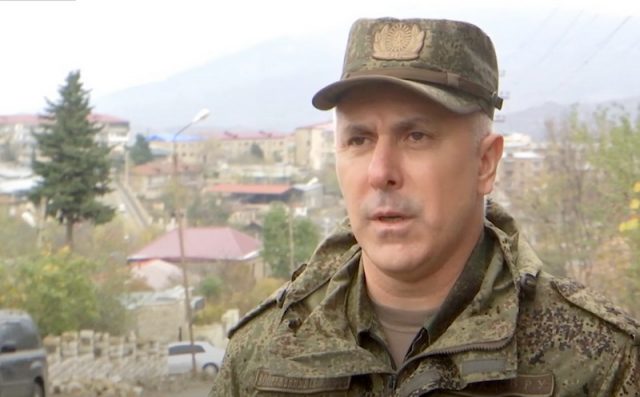
– General Rustam Muradov, commander of the Russian peacekeeping force in Nagorno-Karabakh, denied rumors that he is of Azerbaijani origin. He stated in an interview that he is from Dagestan and ethnically Tabasaran and he has no relationship with Azerbaijan. He emphasized that he is a Russian officer and will carry out his mission as planned. It is worth mentioning that he Tabasarans are an ethnic group who live mostly in Dagestan, Russia and they speak the Tabasaran language and are mainly Sunni Muslims.
Rustam Muradov, Commander of the Russian Peacekeeping Forces in Nagorno-Karabakh
– The map of Russian observation posts in the Nagorno-Karabakh region has been corrected. The Russian Ministry of Defense has released a new map of Russian observation posts in the Nagorno-Karabakh region, according to which there will be 18 (permanent) observation posts in Nagorno-Karabakh, and the location of these posts has changed comparing to previous maps.
– The map of Russian observation posts in the Nagorno-Karabakh region has been corrected. The Russian Ministry of Defense has released a new map of Russian observation posts in the Nagorno-Karabakh region, which, comparing to initial maps, shows the correction of the location and number of posts. According to the published information, 17 (permanent) observation posts will be established in Karabakh region; There will be also a number of other temporary military posts in various parts of Nagorno-Karabakh, marked with white triangle on the map.
– Evacuation of Dadivank village in the north of Karabakh In recent days, images of the evacuation of Dadivank village and the historic church in this area have been published. The village of Dadivank is located near the border of the Nagorno-Karabakh region, and due to its location within the Nagorno-Karabakh region, it was placed under the supervision of Russian peacekeepers respecting the Karabakh peace agreement. However, it seems that due to the location of this village on the border of the Nagorno-Karabakh region and its proximity to the Azerbaijani forces, this village and its church will be evacuated.
– Azerbaijan and Armenia, under the supervision of the Red Cross and Russia, began the exchange of bodies of victims of the Karabakh war.
– More than 4,000 people have been killed, more than 8,000 injured and tens of thousands displaced in the Karabakh conflict, according to Russian President Vladimir Putin.
– According to the spokesman of the Ministry of Health of Armenia, 2317 Armenian soldiers lost their lives in the Karabakh war.
– Over the past three days, 1,103 Russian military personnel and 1,168 pieces of military equipment have been transferred from Russia to Armenia by 73 flights. Troops and equipment are sent to Goris and from there are transferred to the Nagorno-Karabakh region via the Lachin corridor.
Footage of Russian Mi-8 and Mi-24 helicopters escorting Russian peacekeepers to be deployed in the Nagorno-Karabakh region
– The main headquarters of Russian forces in the Nagorno-Karabakh region are in the cities of Stepanakert and Martakert. The 2nd Battalion of the 15th Separate Motorized Rifle Brigade will be stationed in Stepanakert and the 1st Battalion of the 15th Separate Motorized Rifle Brigade will be stationed in Martakert.
– President of the so-called Nagorno-Karabakh Republic Arayik Harutyunyan met with Rustam Muradov, commander of the Russian peacekeeping force in Nagorno-Karabakh.
– The military delegations of the Russian Federation and Turkey in Ankara discussed the ceasefire in Nagorno-Karabakh and the situation in Syria. So far, there has been no news about the physical deployment of Turkish troops in Nagorno-Karabakh.
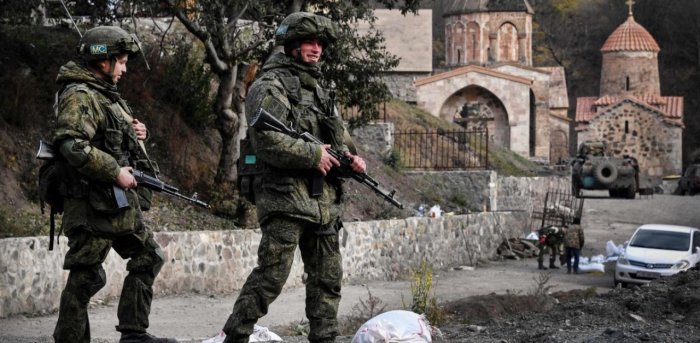
– Russian military police forces have entered Stepanakert (Khankendi) and so far 10 observation posts have been established in the region. According to the agreement, 16 Russian observation posts will be established throughout the region. Yesterday, Russian military police forces were deployed in the Lachin corridor.
– The Commander of the Russian Peacekeeping Forces in Karabakh met with the Minister of Defense of the Republic of Azerbaijan.
– According to the agreement, the Armenian people in Kalbajar region are evacuating their houses and leaving for Armenia. Some residents are said to have set their houses on fire before leaving.
– The Republic of Azerbaijan deployed more troops in the city of Shusha.
Pashinyan: Armenia will continue to insist on international recognition of Nagorno-Karabakh independence.
The peacekeepers, including Russian military police, are currently stationed in the Lachin corridor.
According to information provided by the Russian Ministry of Defense, 1960 Russian peacekeepers will be stationed in Nagorno-Karabakh and their main tasks include: – Collecting information on ceasefire violations and communicating this information to the command of the peacekeepers – Maintaining the safety of free transit and transport – Suppression of illegal actions against the civilian population
There will also be 16 observation posts in the Nagorno-Karabakh region to monitor the implementation of the Karabakh peace agreement. The map below shows the location of these 16 observation posts in the Karabakh area. The Red Triangles are the site of Russian observation posts and red dotted are the main patrol areas for Russian peacekeepers.
Location of Russian observation posts in Nagorno-Karabakh
The map below shows the Lachin corridor. The red triangles of the Russian temporary posts are shown, the black dashes shows the Lachin corridor area.
Map of Lachin corridor
According to maps published by the Russian Ministry of Defense, the Russian zones of responsibility are divided into northern and southern parts, and the map below shows Russia’s operational area and observation posts in the southern part.
Prior to the agreement, three other ceasefires had been announced in Nagorno-Karabakh, which none of them lasted. But Russia’s more serious entry as a major player in the Fourth ceasefire ended the fragile agreements and ceasefires in the Nagorno-Karabakh.
The Azerbaijan-Armenia peace agreement has nine main clauses and is summarized as follows: 1- Complete cessation of clashes and stop in the current positions 2- Delivery of Agdam region to Azerbaijan 3 and 4 – Deployment of Russian forces in Nagorno-Karabakh 5- Establishing a center to monitor the implementation of the agreement 6- Delivery of Kalbajar and Lachin regions to Azerbaijan 7- Return of refugees to Karabakh 8- Exchange of prisoners and corpses 9- Establishing a transit corridor between western areas of Azerbaijan and Nakhchivan region
At first glance, this agreement may seem like a complete victory for Azerbaijan and a defeat for Armenia, or at least Azerbaijan has achieved what it wanted from Nagorno-Karabakh. However, with a further examination of this agreement and the deployment of Russian forces in the Nagorno-Karabakh region, many questions and ambiguities arise about the fate of this region, which we will examine on a map to better understand this agreement.
– Green hached are regions that scheduled to be returned to the Republic of Azerbaijan within a certain period of time. The Kalbajar region will be handed over to the Republic of Azerbaijan by November 15, the Agdam region by November 20, the Lachin region and the occupied territories of Gazakh by December December 1. The important point about this issue is that “not” all the districts(Rayons) of Agdam, Kalbajar and Lachin, but also the areas that were occupied by the Armenian forces outside the “Nagorno-Karabakh Autonomous Region” will be returned to Azerbaijan. For example, the eastern half of Rayon Kalbajar is located in the “Nagorno-Karabakh Autonomous Oblast” and these areas will remain under the control of Armenian forces and only the western half of Kalbajar will be handed over to Azerbaijan. The same is true about a small part of western areas of Aqdam Rayon too. In other words, the “Nagorno-Karabakh Autonomous Oblast” mechanism is still in place in these areas. Regarding the two occupied points in the Gazakh region in northwestern Azerbaijan, it is noteworthy that despite the agreement to return the two points to the Republic of Azerbaijan, the next statement issued by Russia does not mention the status of these two points. And how to solve this issue is unknown. It is said that the original text of the agreement has been leaked and in the next version, which is the original version, this part has been modified and deleted.
– Blue hached are areas where 1,960 Russian peacekeepers with 90 armored vehicles and 380 vehicles and special equipment will be stationed. If we look closely at the deployment of Russian forces in the Nagorno-Karabakh region, it is quite clear that these forces will be stationed exactly inside and on the borders of the “Nagorno-Karabakh Autonomous Oblast.” This means that in fact the “Nagorno-Karabakh Autonomous” will be recognized for Armenia and will remain in the possession of Armenian forces. Although this issue is not mentioned in the text of the agreement, but in practice it will mean that. In addition to this issue, it should be added that: The text of the agreement states that the Russian peacekeeping forces will remain in the region for 5 years, and if there is no particular problem, this 5-year period will be extended for another 5 years. And these courses will continue indefinitely. Clearly, this also confirms and extends the survival of autonomy in Nagorno-Karabakh. Nonetheless, these areas are separate from the areas captured by the Azerbaijani army during the recent operation in the Nagorno-Karabakh region. If we look closely at the southern regions of Karabakh, and especially the southern regions of the “Nagorno-Karabakh Autonomous Oblast”, it is clear that the Azerbaijani forces have taken control of a small part of the southern “Nagorno-Karabakh Autonomous Oblast” and most of the achievements are in areas occupied by Armenian forces outside the “Nagorno-Karabakh Autonomous Oblast.”
– On the map, the progress of Azerbaijan army in the Nagorno-Karabakh region is shown in yellow. Obviously, this is a very good victory because the Republic of Azerbaijan has been able to liberate almost all the southern regions of Karabakh, but on the other hand, this should not be too bad for Armenia either; Because in general, the areas around the “Nagorno-Karabakh Autonomous Oblast”, both in the north and in the south of Karabakh, are officially and internationally part of the territory of Azerbaijan, and the Armenian forces, which occupied the areas around the “Nagorno-Karabakh Autonomous Oblast” in the last 28 yeasr, are now giving the lands to its owner in the south by military force, and in the north by the recent agreement. Therefore, Armenia can consider the occupied territories around the “Nagorno-Karabakh Autonomous Oblast” as a negotiating card, which it is now handing over, and in return will take over most of the “Nagorno-Karabakh Autonomous Oblast” region. The Republic of Azerbaijan has also achieved its goal to return the 7 occupied cities of Karabakh. Nevertheless, it is worth mentioning that Azerbaijan demands all of Nagorno-Karabakh, and with the current situation and the field conditions, this issue has not been achieved. Because most of the “Nagorno-Karabakh Autonomous Oblast” with the support of Russia remains under the control of Armenian forces for an indefinite period of time.
Another important issue that should be considered is Russia’s opposition to the presence of Turkish forces in Nagorno-Karabakh. The President of Azerbaijan stated in a televised speech on the agreement to end the war in Nagorno-Karabakh that, in addition to the Russian peacekeeping forces, the Turkish peacekeeping forces will also be stationed in Nagorno-Karabakh. But the Kremlin said in a statement that the issue was not mentioned in the agreement and that the leaders of Russia, Armenia and Azerbaijan had not agreed on the deployment of Turkish troops in the Nagorno-Karabakh region. According to the statement, the presence of Turkish troops in the Nagorno-Karabakh region is virtually rejected, and this implicitly confirms Russia’s support for the continuation of autonomy in the remaining areas of the “Nagorno-Karabakh Autonomous Oblast.” In general, the presence of Turkish forces in Nagorno-Karabakh or direct land links between Turkey and the Republic of Azerbaijan is a strategic threat to Russia, a threat that reduces Russia’s influence and hegemony in the Caucasus and the Caspian Sea and then in Central Asia. In other words.it will increase Turkey’s power and influence in the region; This is definitely against the wishes and policy of Russia. Therefore, Russia is trying to prevent this from happening. Russia’s opposition to the official deployment of Turkish forces in Nagorno-Karabakh can be interpreted from this perspective.
– Another important issue is the establishment of a new transit and transportation route between Stepanakert and Armenia along the Lachin corridor for three years, as well as the establishment of a safe transit route between the west of the Republic of Azerbaijan and the Nakhchivan region through Armenia. These routes also will be secured by Russian FSB forces. Comparing these two routes, it can be concluded that Armenia provides Azerbaijan with a safe transportation route in exchange for a safe transportation route to Stepanakert. This also means that Azerbaijan implicitly accepts the autonomy of Nagorno-Karabakh in exchange for Azerbaijan’s direct connection to the Nakhchivan region. On the map, the new transit and transportation route between Stepanakert and Armenia has been marked with a red arrow and the possible communication route between Azerbaijan and Nakhchivan has been marked with a yellow arrow. Nonetheless, there is a railroad in the south of Armenia and near the borders of Iran, the use of which can also be on the agenda.
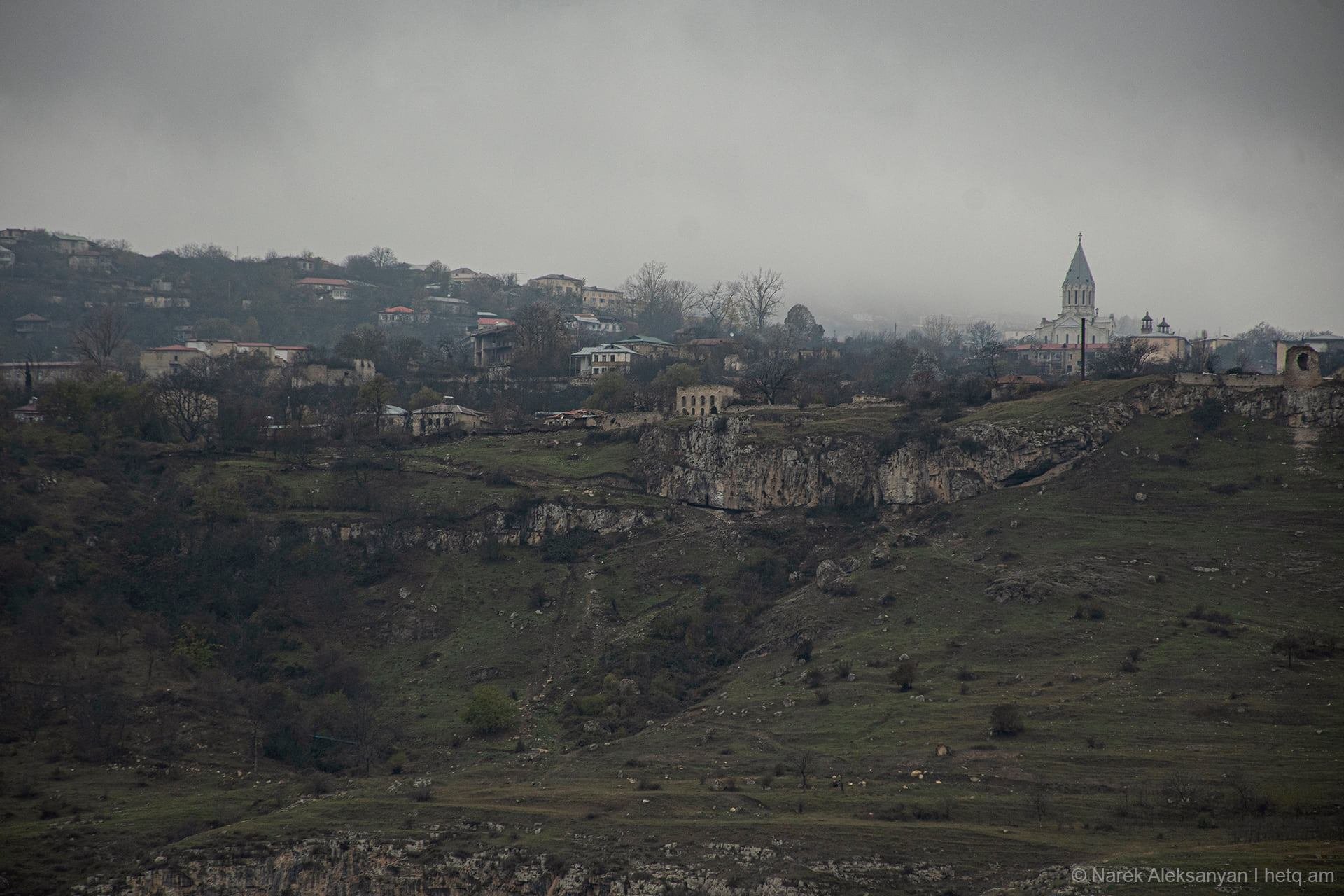
– Another important issue is the return of refugees to Nagorno-Karabakh. During the Karabakh war, Azeri residents in various parts of Karabakh, including Khojaly, were driven out of the “Nagorno-Karabakh Autonomous Oblast” or Armenians expelled from the southern part of Nagorno-Karabakh, such as Hadrut, during the last two months of fighting; The mechanism for the return of the displaced persons is not explicitly mentioned in the agreement, and so far none of the officials of the parties have commented on it. The city of Shusha is an example of this problem; Shusha is now under the control of the Republic of Azerbaijan, and if this clause of the agreement is to be implemented, Armenians and Azeris must be present together in Shusha, which seems impossible in the current situation.
In general, this agreement, beyond what the parties claim is neither an absolute victory nor an absolute defeat Rather, so far each side has achieved a certain amount of its own goals; The difference is that Azerbaijan has achieved somewhat slightly more than Armenia. The Republic of Azerbaijan acquired the territories around the “Nagorno-Karabakh Autonomous Oblast” (plus parts of the south of the “Nagorno-Karabakh Autonomous Oblast”) after 28 years. On the other hand, Armenia gained autonomy (at least nominally) and a presence in the “Nagorno-Karabakh Autonomous Oblast”. The Republic of Azerbaijan achieved a direct land route with the Nakhchivan region, and on the opposite side of Armenia achieved a direct land route to the center of the “Nagorno-Karabakh Autonomous Oblast”, the city of Stepanakert.
Regarding the future of the Nagorno-Karabakh region, according to the existing agreement, there are many issues and ambiguities that are not mentioned at least in the text of the contract, and this issue will be problematic in the future and will bring an uncertain future for Nagorno-Karabakh. At present, with Russia’s direct entry into Nagorno-Karabakh, its influence and pressure on the region has increased, and on the other hand, important political developments are taking place in Armenia, and the lines of contact and conflict will always be a place for escalating tensions. Anything is possible in the future, just as Azerbaijan recaptured Nagorno-Karabakh after 28 years of renewal, it is not unlikely that Armenia will pursue a similar policy towards Azerbaijan, or even the odds prepare conditions for the continuation of the Azerbaijani army operation in Nagorno-Karabakh.
In his statement, Armenian Prime Minister Nikol Pashinyan described the agreement as a difficult one. “I have signed an agreement with the presidents of Russia and Azerbaijan to end the war in Nagorno-Karabakh, which is difficult for all of us,” he said. Nikol Pashinyan added :This ceasefire is very painful for our people and for myself. This is not a victory, but it will not be a defeat unless you acknowledge that you have lost. We will never admit that we have lost and this will be the beginning of the era of national unity for us. I kneel before the martyrs of all of you. I bow to all the soldiers, officers, generals and volunteers who defended our homeland with their lives.”
The text of the agreement is as follows: (Direct translation from the Russian text)
“We, President of the Republic of Azerbaijan I. G. Aliyev, Prime Minister of the Republic of Armenia N. V. Pashinyan and President of the Russian Federation V. V. Putin, have declared the following:
1- A complete ceasefire to all hostilities in the zone of the Nagorno-Karabakh conflict are declared from 00:00 Moscow time on November 10, 2020. The Republic of Azerbaijan and the Republic of Armenia, hereinafter referred to as the “Parties”, will be stopped at their positions.
2- The Agdam region and the territories held by the Armenian Party in the Gazakh region of the Republic of Azerbaijan shall be returned to the Azerbaijan party until November 20, 2020.
3- Along the line of contact in Nagorno-Karabakh and along the Lachin corridor, a peacekeeping contingent of the Russian Federation will be deployed in the amount of 1,960 servicemen with small arms, 90 armored personnel carriers, 380 units of automobile and special equipment.
4- The peacekeeping contingent of the Russian Federation will be deployed in parallel with the withdrawal of the Armenian armed forces. The duration of the stay of the peacekeeping contingent of the Russian Federation is 5 years with automatic extension for the next 5-year periods, if none of the Parties declares 6 months before the expiration of the period of intention to terminate the application of this provision.
5- In order to increase the effectiveness of control over the implementation of the agreements by the Parties to the conflict, a peacekeeping center will be deployed to control the ceasefire.
6- The Republic of Armenia will return the Kalbajar region to the Republic of Azerbaijan by November 15, 2020, and the Lachin region by December 1, 2020, leaving behind the Lachin corridor (5 km wide), which will ensure the connection of Nagorno-Karabakh with Armenia and at the same time will affect the city of Shusha. By agreement of the Parties, in the next three years, a plan for the construction of a new traffic route along the Lachin corridor, providing communication between Stepanakert and Armenia, with the subsequent redeployment of the Russian peacekeeping contingent to protect this route will be determined. The Republic of Azerbaijan guarantees the safety of traffic along the Lachin corridor and the safety of citizens, vehicles and goods in both directions.
7- Internally displaced persons and refugees will return to the territory of Nagorno-Karabakh and adjacent areas under the control of the Office of the UN High Commissioner for Refugees.
8- The exchange of prisoners of war and other detainees and bodies of the dead will be carried out.
9- All economic and transport links in the region will be unblocked. The Republic of Armenia will provides transport links between the western regions of the Republic of Azerbaijan and the Nakhichevan Autonomous Republic in order to organize the unimpeded movement of citizens, vehicles and goods in both directions. Control over transport communication is will be carried out by the bodies of the Border Guard Service of the FSB of Russia. By agreement of the Parties, the construction of new transport communications linking the Nakhichevan Autonomous Republic with the western regions of Azerbaijan will be provided.”
November 2020 President of the Republic of Azerbaijan Prime Minister of the Republic of Armenia President of the Russian Federation
Following the announcement, angry people stormed the government building in Yerevan. The sound of gunfire was also heard in Republic Square in Yerevan. On the other hand, simultaneously with the announcement of the new agreement, the city of Baku, the capital of Azerbaijan, was attacked with two ballistic missiles. According to Azerbaijani officials, the two attacks were carried out in the Khirdalan and Sumqayit areas, and both missiles were intercepted and destroyed.