Category: Central Asia – Pacific

  • Massive Russian cruise missile attack on Ukraine + Video

    Massive Russian cruise missile attack on Ukraine + Video

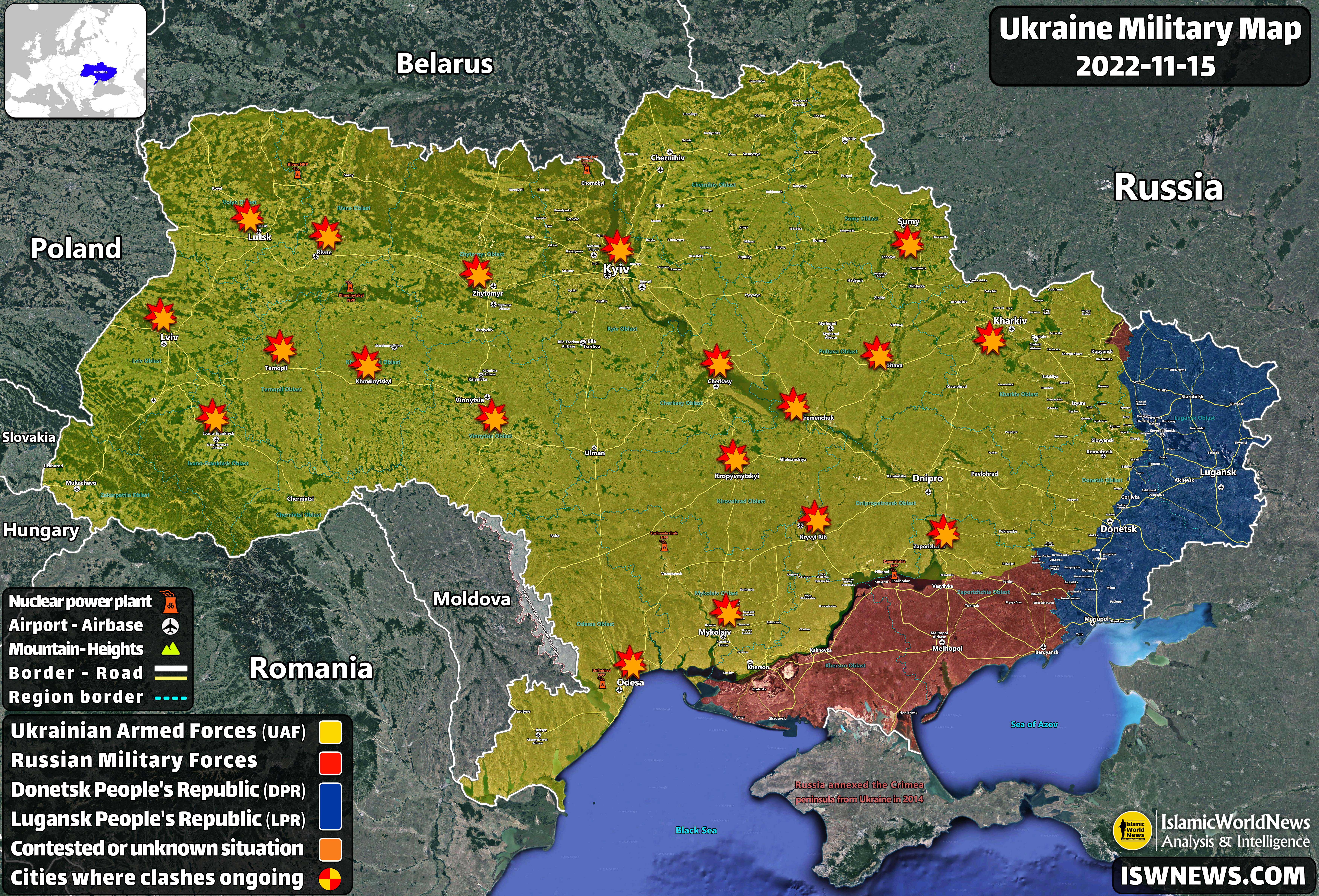
    On November 15 and last night, the Russian army, in a large-scale operation with more than 100 cruise missiles targeted the positions of Ukrainian forces in the cities of Zaporizhzhia, Mykolaiv, Cherkasy, Chernihiv, Poltava, Zhytomyr, Rivne, Kryvyi Rih, Vinnytsia, Sumi, Kremenchuk, Leviv, Lutsk, Khmelnytskyi, Ternopil, Kropyvnytskyi, Kharkiv and Kyiv.

    As a result of the Russian missile attacks, the electricity in the cities of Leviv, Zhytomyr, Poltava and Ternopil has been completely cut off, and other cities such as Sumi and Odessa have been cut off to a limited extent. Also, the local authorities of the mentioned areas have reported serious damage to the energy infrastructure in these cities.

    According to the report of the Ukrainian Air Force, Russia used more than 100 Kha-101 and Kha-55 cruise missiles as well as 10 Shahed-136 suicide drones in these attacks. Also Ukrainian army claimed that since noon on November 15, the air defense systems of the Ukrainian army has managed to shoot down 73 cruise missiles, 10 Shahed-136 drones and one Orion attack drone.

    It is also said that two Russian missiles hit the border areas of Lublin province located in the southeast of Poland. Following this incident, the Prime Minister of Poland, Mateusz Morawiecki, has convened an emergency meeting with the Council of Ministers of his government to discuss the details of this attack. Some Polish sources have reported that two people were killed in the incident, but this figure cannot be confirmed at the moment.

    In the pictures above, you can see a part of the S-300 missile defense system wreckage that fell on Polish soil. Most likely, this missile belongs to the Ukrainian S-300 defense system, and it mistakenly followed a Russian cruise missile or another target to the Lublin area, and landed on a Polish tractor there!

    In this regard, the Ministry of Defense of Russia issued a statement, while denying the missile attack on the border areas of Ukraine and Poland, and added:

    “The statements of the media and the claims of the Polish authorities about the fall of Russian missiles on the territory of Poland are a deliberate provocation in order to intensify the tension.“

    But Ukrainian President Volodymyr Zelenskyy blamed Russia for this incident and said in his latest message on Twitter:

    “Terrorism is not limited to our national borders. Russian missiles hit Poland. “Ukraine has repeatedly emphasized that terrorist acts will not be limited to our country and that Russian terrorism may go beyond our country at any moment.“

    On the other hand, contrary to this statement, US President Joseph Biden said:

    “Initial information shows that the missile that hit Poland was not fired from Russia.”

    Recep Tayyip Erdogan, the president of Turkiye, also reacted to this incident and said:

    “Information shows that Russia was not to blame for the missile incident in Poland, and I accept Russia’s position in this regard.”

    The Ministry of Foreign Affairs of Poland also without mentioning the details of this incident, has stated that a “Russian-made” missile has fallen in the east of this country!

    Read more:
    Latest Military Situation in Ukraine, 15 November 2022
    Russia completely retreated from the west bank of Dnieper River

  • Latest Military Situation in Ukraine, 15 November 2022

    Latest Military Situation in Ukraine, 15 November 2022

    1- Donetsk:
    On November 11, Russian sources claimed that the Russian army took control of Mayorsk village in northern suburbs of Gorlivka city. Ukrainian artillery heavily shelling this area and there is a possibility that this advance will not be stabilized and Mayorsk will be evacuated by the Russians. (Online map)

    – Clashes between the Russian-led forces and the Ukrainian army continues in the eastern and southern front of Bakhmut town. According to the latest news from this front, Ukrainian forces with the support of artillery managed to repulse the Russian army attacks to the cement factory. Also, the claim of the Russian advance in the south of Bakhmut is not correct until this moment and the conflict is going on in the outskirts of the Ivangrad village.

    – Following the Russian army operation in the northern axis of the Donetsk airport, the Optyne area was captured by Russian forces. Clashes in the Vodyane village is still ongoing and it is expected that this village will be captured by the Russian army in the coming days. With the capture of Optyne by the Russians, the Ukrainian forces in Avdiivka will be under more pressure and attacks, and the Ukrainian attacks on Donetsk city from the northern axis will be more limited.


    – On Svatove front, despite the Ukrainian media reports about the AFU advances in this axis, no changes were made in the frontlines and the Russian army so far managed to repel all AFU attempts in the area.
    The artillery duels between the AFU and Russian army continue over the Kotlyarivka, Brestove, Kuzemivka, Miasozharivka, Raihorodka and Makiivka. Also, the Ukrainian army has attacked the industrial factories of the town of Svatove with HIMARS multiple rocket launchers, which has resulted in unspecified losses and casualties for the Russian army.
    According to local sources, the armed forces of Ukraine are preparing and gathering forces in the city of Kupyansk. Also, military and armored vehicles and auxiliary artillery equipment have been sent from Kharkiv to this axis. If this news is true, the attacks of the Ukrainian army on Svatove -Kreminna axis will intensify in the coming days.

    – On November 14, the Russia Ministry of Defense announced the full control over the town of Pavlivka. It should be noted that the Pavlivka clashes started two weeks ago and in the first round of conflict, the Ukrainian army managed to repulse the Russian attack, but the subsequent attacks of the Russian army were heavier and the Ukrainians had to retreat from this town. (Pavlivka on the online map)

    2- A video of the destruction of an Ukrainian M777 howitzer by the Russian Lancet suicide drone.

    Read more: Military Knowledge: Lancet-3 Suicide Drone

    3- Kherson:
    – On November 11, the Russian army blew up the Antonvskiy bridge located in the northeast of Kherson city during its retreat from the west bank of Dnieper River. This bridge was the closest and main crossing on the Dnieper River in the suburbs of Kherson city and it was blown up by Russian forces before sunrise this morning.

    – On November 12, after the announcement of the decision of the Russian army to withdraw from the west bank of Dnieper River by the Russian MOD, the Russian army forces withdrew from the western areas of the Dnieper River with an area of 4800 square kilometers.

    Read more: Russia completely retreated from the west bank of Dnieper River

    – A video of the destruction of Ukrainian army armored vehicles by the Russian Lancet suicide drone on the Kherson front.
    Considering the increase of attacks by the Russian loitering munitions and their high success rate, as well as the longer wingspan of the new drones than before, it is possible that these drones are also made by Iran. Despite these cases, so far, a drone with these specifications has not been seen in Iran’s drone industry.

    4- Odessa:
    On November 13, the Russian army attacked an unknown building in Chornomorsk, south of Odessa, with one or more Shahed-136 suicide drones.

    Read more:
    Latest Military Situation in Ukraine, 10 November 2022
    Latest Military Situation in Ukraine, 15 November 2022

  • Russia completely retreated from the west bank of Dnieper River

    Russia completely retreated from the west bank of Dnieper River

    After the announcement of the decision of the Russian army to withdraw from the west bank of Dnieper River by Sergei Shoigu, the Minister of Defense of Russia on November 9, the Russian army forces withdrew from the western areas of the Dnieper River with an area of 4800 square kilometers. During this retreat, in order to prevent the advance of the Ukrainian army, the Russian army destroyed several bridges and communication routes between the western and eastern bank of Dnipro river, including the Antonovskiy and Kakhovka bridges.

    By withdrawing from the city of Kherson and its northern regions, in addition to handing over economic resources, the Russian army handed over more coasts of the Black Sea to the Ukrainian government and eased the minds of the leaders of Moldova and NATO about the possibility of the Russians marching towards the borders of the Republic of Transnistria.

    Read more: Europe awaiting another war in Transnistria?

    In fact, with this retreat, Russia has placed the Dnipro River as its border with Ukraine and is trying to use this withdraw to convince the western countries in future negotiations. Also, there is a possibility of Russian military operations in the Dneipro river strip and moving towards the northern regions of Zaporizhzhia oblast and even entering Dnipropetrovsk oblast in the coming months.

    In general, with the repeated withdrawals of Russia from the northern front of Ukraine, the southeastern areas of Kharkiv oblast and now the western bank of Dnipro River, the possibility of increasing the conflict and the continuation of the war in Ukraine has greatly decreased, and it seems that the Russians have lost the necessary conditions to continue the war! Therefore, rather than designing new operations, the Russian leaders are eager to negotiate or maybe they are waiting for a new and unexpected event to happen during the war.

    Read more: Russian Army Retreats From the Kharkiv Oblast (Map Update)

    Click to view full size

    Interactive map of Ukraine (click on it)

  • Latest Military Situation in Ukraine, 10 November 2022

    Latest Military Situation in Ukraine, 10 November 2022

    1- Kherson:
    – On November 9, Russian Defense Minister Sergei Shoigu announced the beginning of the withdrawal of Russian forces from Kherson to the east bank of Dnipro River. According to the statements, more than 115 thousand residents of Kherson voluntarily left the region.
    – Following the step-by-step withdrawal of the Russian army from the Kherson front and also the beginning of the Ukrainian army’s operation in this axis, local sources published images of the destruction of three important bridges in the Novosilivka, Daryvka and Tyazhinsky areas (yellow circles in the map) located in the north of the city of Kherson by the Russian army.

    – Clashes between the Russian army and the AFU is going on in the areas north of Kherson. The AFU also took control of Snigorivka, Blahodante and other settlements in the northern front of Kherson.
    – On November 9, Kirill Stremousov, the deputy governor of Kherson was killed in an accident near Henichesk on the northern outskirts of the Crimean peninsula.

    In general, the city of Kherson is of great importance in the battles of southern Ukraine, and whichever side dominates it, has a greater advantage than the other side. Economic resources, control over the southern coast of Ukraine in the Black Sea, land connection with eastern Moldova and the Crimean peninsula are among the things that make Kherson important. If the Russian army retreats from this axis, two scenarios are possible: 1- Russia’s attempt to stabilize its positions on the east banks of the Dnieper river and prevent further losses and casualties, 2- The serious weakness of the Russian army in terms of manpower and military equipment.

    2- Donetsk:
    – Following the Russian army operation in Donbas fronts, on November 8, Russian forces managed to control the Belogorivka settlements in the southwest of the city of Lysichansk. The Russian army intends to disrupt the focus of the Ukrainians by carrying out sporadic attacks on the eastern fronts. In recent months, the Ukrainian army has succeeded in recapturing the southeastern areas of Kharkiv province and several towns and villages in Luhansk province.


    – On November 7, the Russian army again attacked the town of Pavlivka in the western axis of Donetsk province. A heavy conflict is going on in the areas of Pavlivka, Novamikhalivka and Ugledar. In order to prevent the advance of the Russian army, the Ukrainian army has sent its auxiliary forces along with artillery equipment to the western and northern fronts of Donetsk city. (View on the online map)

    3- On November 9, the Russian army attacked positions of Ukrainian forces in Dnipropetrovsk province with one or more Shahed-136 suicide drones.
    According to the statements of local sources, one of these drones has hit the buildings of a service factory in the city of Kirivi Rih. Also, the sound of other explosions was heard from Vishtarasiuka, Margants and Ilinka areas located on the outskirts of the Dnieper River, the cause of which has not yet been determined. Some sources have attributed these explosions to artillery attacks.

  • The assassination of Imran Khan failed! + Video

    The assassination of Imran Khan failed! + Video

    As a result of an attack by an unknown armed person on the convoy carrying Imran Khan, the former Prime Minister of Pakistan, in the rally of his supporters in the city of Wazirabad, located in the province of Punjab, one person was killed and 9 people were injured.

    According to local media, the attacker was arrested by the security forces and Imran Khan was also shot in the leg. Imran Khan has been transferred to the hospital to continue his treatment. Shehbaz Sharif, the Prime Minister of Pakistan, has also condemned this assassination and called it a heinous and cowardly act.

    Following the uncertainty of the date of Pakistan’s national elections, Imran Khan has called his supporters to mass rallies and demonstrations, and this decision has become a challenge for Shehbaz Sharif’s government. This endless debate has caused Imran Khan’s supporting media to hold Shehbaz Sharif and the US intelligence agencies responsible for his assassination and livelihood problems.

    Read more: Imran Khan supporters waiting for the march towards Islamabad

    Shooting at Imran Khan among his supporters in Wazirabad city

    The arrest of the attacker by Pakistani security forces and his beating by Imran Khan’s supporters

    The presence of Imran Khan with a wounded leg in the crowd of his fans

    Transferring Imran Khan to the hospital
  • Central Asian countries are afraid of the gathering of terrorists in northern Afghanistan!

    Central Asian countries are afraid of the gathering of terrorists in northern Afghanistan!

    “International and Regional Border Security and Management Cooperation to Counter Terrorism” meeting with the cooperation of Central Asian countries, the Organization for Security and Cooperation in Europe (OSCE), the United Nations Office of Counter-Terrorism (UNOCT), the United Nations Regional Centre for Preventive Diplomacy for Central Asia (UNRCCA), European Union, Saudi Arabia and Qatar was held for two days in Dushanbe, the capital of Tajikistan, on October 18.

    During his speech on the first day of this meeting, Tajik President Emomali Rahmon expressed his concern about the gathering of foreign terrorists in the southern borders of Tajikistan and called for the creation of a security belt to prevent the dangers of terrorism in Afghanistan from entering the Central Asia region. Rahmon announced in this meeting that there are more than 40 terrorist bases and training centers in the northeastern provinces of Afghanistan, and thousands of terrorists have gathered in these bases.

    Ruslan Mirzayev, the head the executive committee of the regional anti-terrorist structure of the Shanghai Cooperation Organization, also provided additional information in this field and announced the deployment of 13,500 suicide and jihadist terrorists in the northern provinces of Afghanistan and the border with Tajikistan by the Taliban and considered it a great threat to the Central Asian region. Tajik Interior Minister Ramadan Rahimzadeh also claims that the Taliban issued Afghan passports to more than 3,000 of these people and settled them under the guise of refugees in the northern regions.

    After the Taliban came to power in Afghanistan, Tajikistan is the only Central Asian country that has not established any relations with Taliban. In addition, Tajikistan has supported political opponents and anti-Taliban armed groups and held various meetings against them.

  • Imran Khan supporters waiting for the march towards Islamabad

    Imran Khan supporters waiting for the march towards Islamabad

    The uncertainty of the date of Pakistan’s national elections by Shehbaz Sharif’s government has caused the anger and sharp reaction of Imran Khan, the former Prime Minister of Pakistan. In his recent statements, he has threatened to hold a protest march towards the city of Islamabad, the capital of Pakistan. Imran Khan stated that the purpose of holding this demonstration is to defeat the US leadership’s project of carrying out a soft political coup in Pakistan and restoring the power of the people’s government in this country.

    This warning comes while the Tehreek-e-Insaf party (led by Imran Khan) has won six out of eight seats in the mid-term elections of the Pakistani Parliament.

    In this regard, Pakistan’s “Geo TV” channel wrote in an article: “If Imran Khan organizes nationwide and long-term protests in Islamabad and other cities of Pakistan, he will be hanged!” At the same time Imran Khan was threatened with hanging, Omer Sarfraz Cheema, the head of the federal government of Punjab state and a supporter of Imran Khan announced that he will arrest Rana Sanaullah as soon as he enters Punjab state.

    Imran Khan’s conflict with Sharif’s government and his supporting parties started after Imran Khan’s impeachment in parliament and his dismissal on April. After this incident, the Tehreek-e-Insaf party is trying to win local and parliamentary seats and is trying to put pressure on the government to hold early national elections with protest rallies.

    Holding demonstrations and gatherings of millions in Pakistan is not a new thing. The rallies in 2014 led to a four-month sit-in against Nawaz Sharif in Islamabad. After Imran Khan removal, he has proposed holding peaceful demonstrations several times, but every time he stopped them after the protesters reached the capital of Pakistan!

  • Latest Military Situation in Ukraine, 20 October 2022 (Map Update)

    Latest Military Situation in Ukraine, 20 October 2022 (Map Update)

    1- Ukraine’s Foreign Minister Dmytro Kolba, announced the proposal to cut off diplomatic relations with Iran. He raised this request with the President of Ukraine. This request was made because of the prominent role of Iranian Shahed-136 drones in the battles of Ukraine.

    2- Yuriy Ignat, a spokesman for the Ukrainian Air Force: “Russia is no longer firing its missiles at Ukraine from the Caspian Sea, but from near Rostov. Therefore, the time to prepare for attacks and take shelter is reduced. Russian strategic bombers use Kh-101 and Kh-55 missiles. These missiles fly at a speed of 900 kilometers per hour, and if they are launched from the Caspian Sea, the air force has more time to react and people have more time to enter the shelter. Now the distance is shorter and the time is also shorter.”

    3- The Parliament of Estonia officially declared Russia a terrorist state. This parliament also asked the parliaments of other countries to do the same and identify Russia as a sponsor of terrorism. They also demanded Russia’s exclusion from permanent membership in the UN Security Council and asked the European Union to impose more sanctions against Russia and Belarus.

    4- The Ministry of Foreign Affairs of Ukraine officially announced the request to purchase air defense systems from Israel. In response to this request, Benny Gantz, the Israeli Minister of Defense, announced that they will not hand over any weapons to Ukraine.
    In this regard, Benjamin Netanyahu, the former Prime Minister of Israel, also stated that if Israeli weapons are sent to Ukraine, they may fall into the hands of the Iranians. Whenever we have provided military assistance to one side of the field, in the end, the same weapons have fallen into the hands of the Iranians and they have used them against us.

    5- The New York Times published a report claiming that Iranian advisers were sent to Russia. This report states: “Iran has sent advisers from the Islamic Revolutionary Guard Corps to Russia to help solve the problems of drones. These advisers have been stationed in a military base in Crimea to train the Russians.”

    6- Hossein Amirabdollahian, Iran’s Foreign Minister: “We have told the Ukrainian authorities to provide a document about the use of Iranian drones in the war in Ukraine if there is any.”

    7- Donetsk:
    In the Bakhmut axis, the AFU 54th Brigade attacks to recapture the asphalt factory near the city of Bakhmut failed. The conflict in this axis between the parties continues and the Russian army and its allies have increased the attacks on the important city of Bakhmut. Currently, Russian forces have reached the eastern and southern entrances of Bakhmut city, and heavy clashes continue for several days in a row. After Russian retreats from the Kharkiv axis, the main focus of the Russians has been directed to the city of Bakhmut. It seems that the capture of Bakhmut has an important role in determining the future of battles for the Russians in this axis.

    8- Kharkiv:
    In the southern axis of Kharkiv, sporadic clashes between the Russian and Ukrainian armies continue in the southeast of Kupyansk and northwest of Svatove. In the last two weeks, the Ukrainian forces have made extensive advances in this axis and have pushed the Russian forces back several lines.

    9- The Russian army attacked positions of the Ukrainian forces in the city of Mykolaiv, with several “Shahed 136” suicide drones. The video below is about the failure of Ukrainian air defense to counter the Russian drones and the moment it was hit the target.

    10- Ukrainian Army and Volodymyr Zelenskyi, the president of Ukraine, claimed that they shot down 223 “Shahed-136” suicide drones in the past 36 days. The first Shahed drone allegedly was shot down on September 13 over the sky of Kupyansk.

    11- During the last two weeks, Geran 2 and 1 suicide drones (Shahed-136 and its smaller model known as Shahed-131) have targeted Ukrainian military and economic infrastructures in the cities of Kyiv, Lviv, Zhytomyr, Mykolaiv, Kharkiv, Poltava, Dnipro, Zaporizhzhia, Kremenchuk, Odessa, Rivne, Ternopil, Khmelnitsky, Ivano-Frankivsk. Despite the claim of Ukrainian officials about shooting down these drones, most of the drones hit their targets with high accuracy and the Ukrainian air defenses were unsuccessful in intercepting and destroying the drones. The city of Kyiv has been the host of the most Shahed-136 suicide drone attacks, and Russian attacks using these drones on different regions of Ukraine continues aggressively!

    12- On the front of Kherson and Mykolaiv, sporadic clashes between the Russian and Ukrainian armies continue. After the retreat of the Russian army from the eastern areas of the Ingulets River in the north of Kherson province, the clashes continue in the south of Davidyv Brid and Sukhanove area. Yesterday, the Russian army repelled the large-scale attack of the Ukrainian forces in the Sukhanove axis. Currently, most of the conflicts are concentrated in this axis, i.e. in the northwest of Kherson province. The Russian army is strengthening the Kherson front and has sent more troops to this area. Therefore, the Ukrainian forces are trying to break the Russian resistance in this axis and reach Kakhovka as soon as possible and bypass the city of Kherson from the left flank.

    Interactive map: here

    Click to view full size image
  • Opinion: Iran Increasingly Uneasy About Threats to Common Border With Armenia

    Opinion: Iran Increasingly Uneasy About Threats to Common Border With Armenia

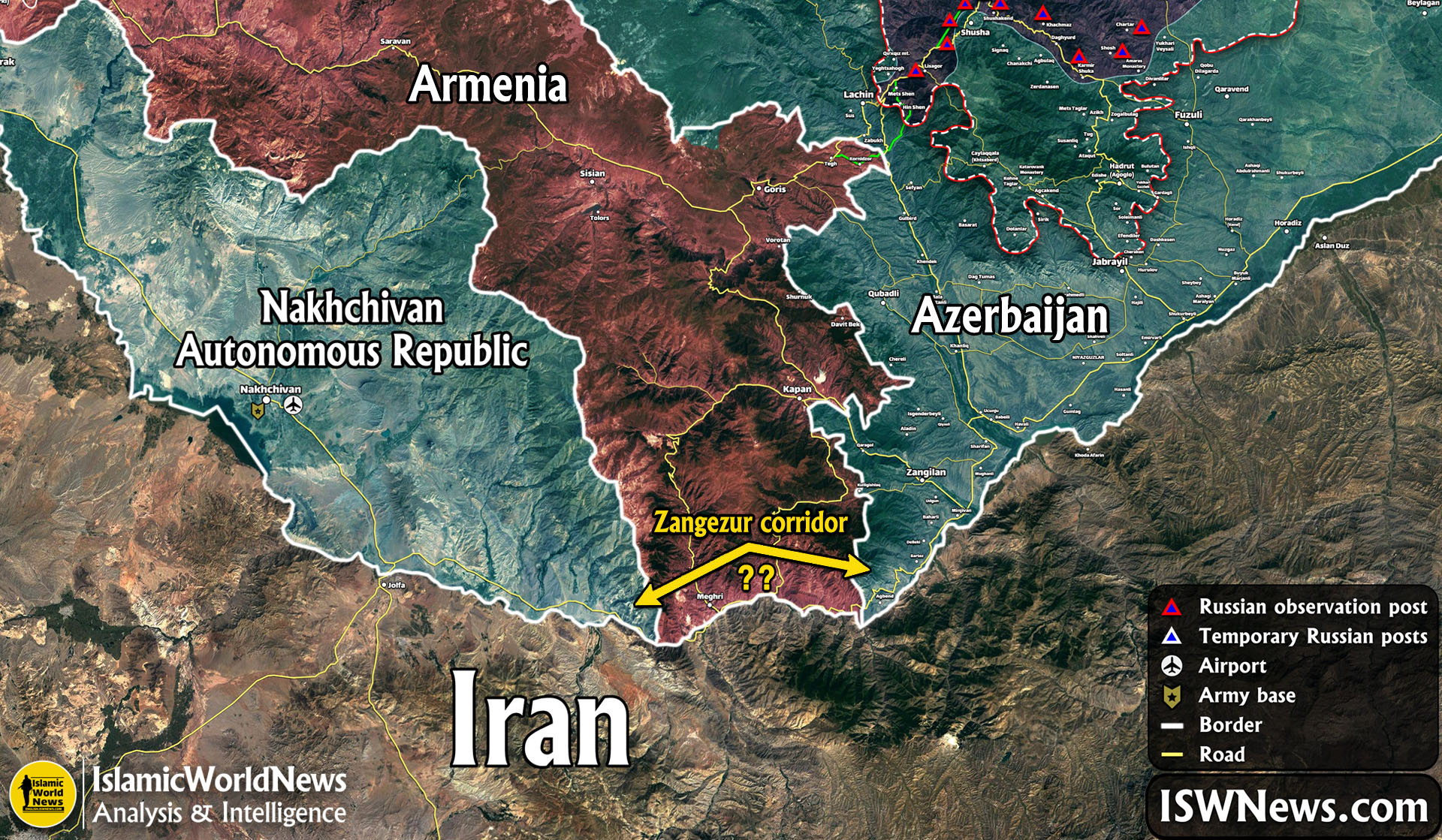
    Before the Second Karabakh War, Tehran was not particularly concerned about its border with Armenia. After the war, Iran’s main concern became Azerbaijan’s hopes to realize the Zangezur Corridor by force, in such a way that the 40-km border between Iran and Armenia could be compromised or blocked. In truth, Iran has no objection to the implementation of the ninth clause of the 2020 Karabakh ceasefire agreement, which includes granting Azerbaijan communication access to Nakhchivan. During the past three decades, communication between Baku and this region only took place via Iran. While Tehran does not object to this arrangement, it strongly opposes the change of international borders in the Caucasus, the blocking of the Iranian-Armenian border and the possibility of renewed conflict between Armenia and Azerbaijan.

    For this reason, the massive maneuvers of Iran’s army and the Islamic Revolutionary Guard Corps (IRGC) on its northwestern border in September and October 2021, unprecedented in the three decades since the collapse of the Soviet Union, signals the level and depth of Iran’s concerns about recent developments in the South Caucasus. Indeed, the outbreaks of violence between Armenia and Azerbaijan, the repeated threats of Baku to open the Zangezur Corridor by force, Turkey’s ongoing support of Azerbaijan and Russia’s silence and ambiguous position regarding the region have further exacerbated Tehran’s concerns. On the sidelines of the 7th Summit of the Astana Peace Process in Tehran, Supreme Leader Ayatollah Ali Khamenei met with Turkish President Recep Tayyip Erdoğan and clearly delineated that “if there is a policy to block the Iranian-Armenian border, the Islamic Republic will oppose it because this border has been a communication route for thousands of years.”

    Recent fighting between Armenia and Azerbaijan in September 2022 resulted in nearly 300 deaths and dozens of injuries on both sides, further aggravating Iran’s concerns. Some news sources even announced that Tehran had deployed 50,000 troops to the Armenian border. Indeed, Mohammad Pakpour, commander of the IRGC’s ground forces, on September 16, visited the units located on the border with Armenia, Azerbaijan and Nakhichevan, stating that their readiness level is high. Additionally, the chief of staff of the Iranian Armed Forces, Mohammad Bagheri, during a military parade on the anniversary of the Iran-Iraq War (1980–1988), declared, “Iran will not tolerate any change in the borders in the region and call on Azerbaijan and Armenia to solve the issues between them peacefully, through dialogue. We do not seek conflicts and wars, but we do not remain silent when it is necessary to resist them.”

    Several reasons underline Iran’s concerns regarding the possible blocking or destruction of its border with Armenia. If this border is destroyed, all of Iran’s northwestern regions will border Azerbaijan and Nakhchivan—and the number of Iran’s neighbors will decrease from 15 to 14. Iran will also lose one of its most crucial transit routes to the Caucasus, as the land route through Iran and Armenia that reaches Georgia is a main part of the Persian Gulf–Black Sea Corridor. The Iranian government’s decision to open a consulate in Kapan, the administrative center of Armenia’s Syunik Province bordering the Islamic Republic and the reciprocal decision of the Armenian government to open a consulate in the northwestern Iranian city of Tabriz clearly indicate Tehran’s desire to preserve and strengthen this transit route. Indeed, in terms of diversifying transit routes, Iran hopes to maintain this corridor (Iran-Armenia-Georgia) parallel to the North-South Corridor (Iran-Azerbaijan-Russia).

    Additionally, in terms of water resources in the Aras river basin, Turkey and Armenia are “upstream” countries, while Iran and Azerbaijan are “downstream” countries. Therefore, if Baku captures the southern part of Syunik Province along the Zangezur Corridor, then Azerbaijan will become an “upstream” country, leaving Iran as the only “downstream” country with limited control over the water supply.

    In a wider sense, Iran also has deeper concerns about geopolitical change and the balance of power in the region. In this context, Tehran considers the regional roles of Turkey, Israel, the United States and the North Atlantic Treaty Organization as extremely influential. From this point of view, Iran, unlike Russia and others, does not view the tensions in the South Caucasus merely as a “border clash” between Yerevan and Baku. In truth, opening the Zangezur Corridor would also provide direct military access for Turkey as a NATO member in the Caucasus.

    Indeed, a significant number of Iranian elites and experts believe that Azerbaijani President Ilham Aliyev’s emphasis on “uniting the geography of Turkic world” via the Zangezur Corridor and the expansion of Turkey’s presence in the South Caucasus will strengthen Pan-Turkism in the region, which could incite ethnic and separatist sentiments. In addition, considering the close relations between Azerbaijan and Israel, Tehran is worried that, if Baku does capture the southern part of Syunik Province, this will bolster Israel’s intelligence, espionage and security presence vis-à-vis Iran.

    As a result, although, among Iran’s 15 neighbors, its border with Armenia is the shortest, this 40-km border is of the utmost strategic importance for Tehran. Although the Azerbaijani authorities have stated many times that there is no real threat to the Iranian-Armenian border, Tehran’s reactions in the past two years and after the Second Karabakh War clearly show that Iran is extremely worried about the realization of the Zangezur Corridor by force, especially if this compromises its highly consequential border with Armenia.

    It seems that the new diplomatic developments of the past two months have not reduced Tehran’s worries. In Prague, a quadrilateral meeting between the leaders of Armenia and Azerbaijan together with the presidents of France and the European Council took place, as well as the historic meeting of Armenian Prime Minister Nikol Pashinyan with Turkish President Recent Tayyip Erdogan. Yet, during both the meeting between Iranian President Ebrahim Raisi and Pashinyan on the sidelines of the UN General Assembly and the meeting between the Raisi and Aliyev in Astana, Kazakhstan, Iran’s opposition to changing international borders in the Caucasus was clearly emphasized. As such, Brigadier-General Mohammad Pakpour, commander of the Islamic Revolutionary Guard Corps Ground Forces (IRGC) announced that “the massive exercise dubbed ‘Eghtedar/Power’ of the IRGC ground forces will be held at the northern border in the Aras region at the regional IRGC Ashura military base.”
    Tehran’s decision to hold this military maneuver one year after large-scale military exercises near the Azerbaijani border, clearly shows that “Iran increasingly uneasy about threats to its common border with Armenia”.

    Source: The Jamestown Foundation
  • Russian Army Massive Drone Attack on the Capital of Ukraine

    Russian Army Massive Drone Attack on the Capital of Ukraine

    The Russian army attacked 136 positions of Ukrainian forces in Kyiv, the capital of this country, with several suicide drones at dawn today. These attacks have hit the offices of energy companies and the railway station in Kyiv.

    According to Vitali Klitschk, the mayor of Kyiv, the Russian army used 28 suicide drones in this attack. According to him, the air defense systems of the Ukrainian army have succeeded in shooting down 23 drones. Despite these claims, various videos of today’s attack show the downing of just two drones over the Kyiv.

    Read more: Military Knowledge: Shahed-136 Loitering Munition

    The wave of fear and confusion among the Ukrainian officials shows the inability of them to deal with the Russian drone attacks, and the publication of unrealistic statistics of the downing of drones by the Ukrainian authorities can be attributed to this reason.

    It should be noted that last night, the Russian army attacked the fuel depot and power plant of Mykolaiv city and a military cargo in Ochakiv port located in the south of Ukraine with suicide drones.

    Successful and effective attacks by Shahed-136 suicide drones against military targets in Ukraine continue, while the Ukrainian army has been unable to neutralize these attacks so far.

    The moment the Shahed-136 drone hit a target in Kyiv city

    The unsuccessful attempt of the defense of the Ukrainian army to shoot down the Russian suicide drone

    The moment one of the Russian drones hit a building in Kyiv

    The destruction of one of the Russian drones by the Ukrainian army

    The destruction of one of the Russian drones by the Ukrainian army

    The moment Russian drones hit the city of Kyiv from the view of the camera of the Turkish news Anadolu Agency

    Read more: Ukrainian MiG-29 was downed while hunting the Shahed-136 drone!

  • New war crime by Azerbaijan Army + Video

    New war crime by Azerbaijan Army + Video

    According to the available information, this war crime took place in the early days of border conflicts and Azerbaijan’s encroachment on Armenian territory, probably on the 13-14 September.

    This video is published while another video of insulting and desecrating Armenian women killed in the border areas such as stripping, cutting off limbs, etc. was also published on social media.

    Therefore, the Ministry of Foreign Affairs of Armenia issued a statement demanding the pursuit of the war crimes of the Republic of Azerbaijan in international courts. A part of this statement reads: “The Republic of Armenia demands a clear assessment of the terrible war crimes committed by the armed forces of Azerbaijan in this and previous periods. We will continue to follow up to raise the issue in relevant international forums and courts and bring the perpetrators and organizers of the aforementioned crimes to justice, including through the application of international sanctions.”

    Desecration of the dead, field executions and war crimes in the Karabakh wars are not a new issue; And in fact, these kinds of actions clearly show the existence of deep-rooted grudges in the Caucasus.

    Field execution of Armenian soldiers by the Azerbaijani army
  • Ukrainian Army retook the town of Lyman

    Ukrainian Army retook the town of Lyman

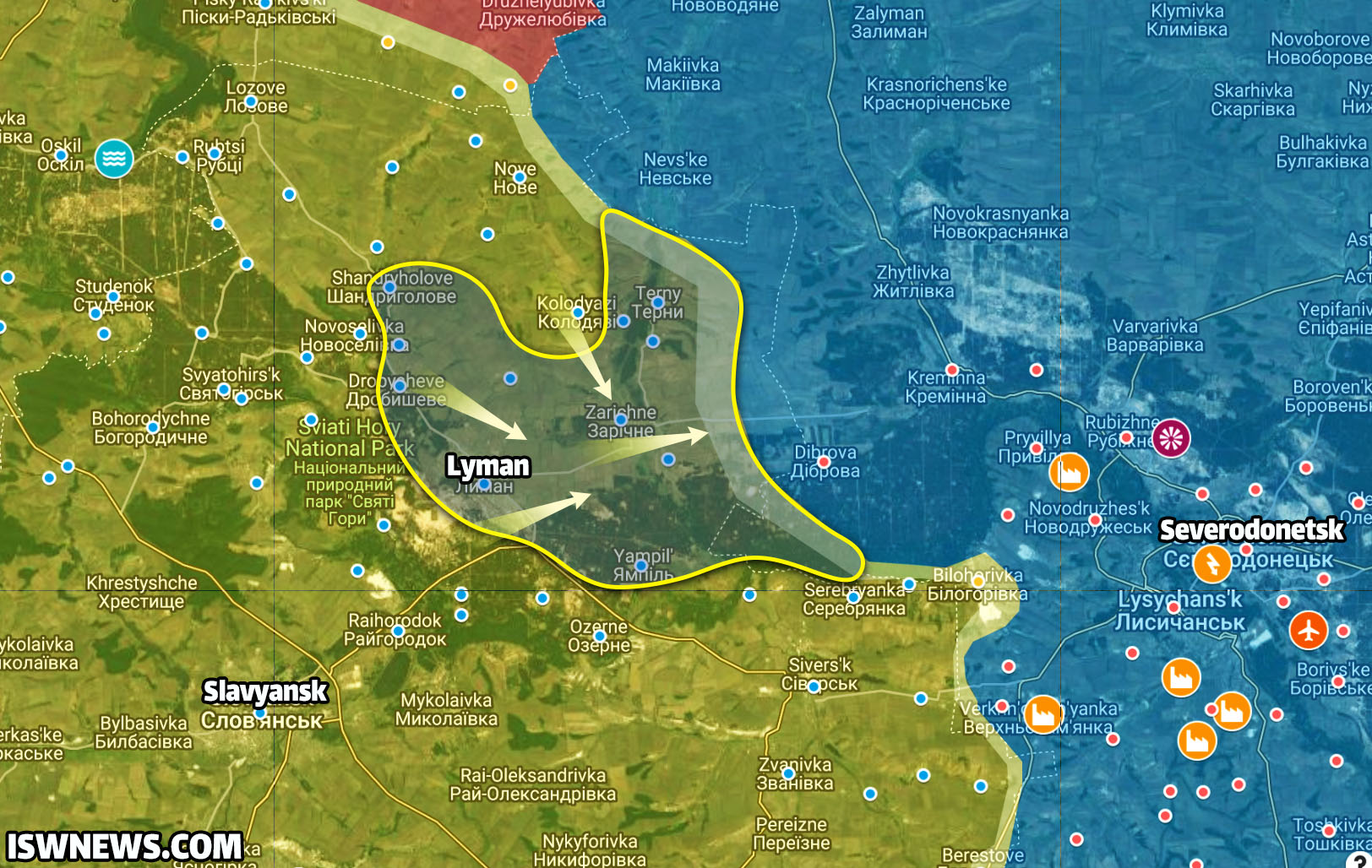
    As we said in the previous articles and it was predictable, after the siege of Lyman, the Ukrainian forces forced the Russian army to retreat from this town, and finally Lyman came under the control of the Ukrainian army. Also, in the continuation of these advances, a number of settlements around Lyman also came under the control of the Ukrainian army.

    The town of Lyman was considered as the main base of the Russian army in the north of Donetsk oblast, and with its fall, practically all the achievements of the last few months of Russia in this axis were lost.

    Now, Ukrainian forces have once again reached the borders of Luhansk oblast, and operations are on the agenda of the Ukrainian army to advance further and even move towards Rubizhne and the city of Severodonetsk.

    Online map here

    Read more:
    Latest military situation in Donbas (Map Update)
    Russian Army Retreats From the Kharkiv Oblast (Map Update)