Category: Opinion

  • Latest Updates on Yemen 20 July 2018 + A Short Analysis of the Flow of War in Yemen

    Latest Updates on Yemen 20 July 2018 + A Short Analysis of the Flow of War in Yemen

    Recently, we’ve seen great advancements in Ansarallah’s drone capability, that after Ansarallah’s drones operated in borders of Jizan & Najran, west coast & Aden, now the drones are targeting Marib and Ryadh. However, yet being in defense position is Ansarallah’s strategy and we haven’t seen any serious operation for retaking the lost regions in south, west coast or other fronts.


    On the other side, we are seeing comprehensive and expensive operations by this “International Coalition”, which UAE and Saudi Arabia have the main role in it. UAE from south (Al-Hudaydah and Taiz), and Saudi Arabia from north (Sa’dah and Al-Hajjah) are operating against a revolution that from Mansor Hadi’s resignation until now, couldn’t form a official cabinet & election, because of the war.


    With this situation, the UN’s Negotation & mediations will be without result, and naturally the fate of the conflict will determined on the field of battle, because in one hand, martin Griffit’s plane lands in Sana’a and on the other hand, the UAE is transporting heavy equipments to southern countryside of Al-Hudaydah in order to start a new phase of the war in west coast.


    Most importantly, Ansarallah’s men are not the people who accept the negotiations “under the shadow of threat & war”, though they showed their honesty & tendency to United Nation for ceasefire.
    In future, we must see that the UN’s negotiation & mediations will have any outcome, or that the flame of war in Al-Hudaydah, Taiz and Sa’dah will grow larger.


    Latest Updates on Yemen 20 July 2018

    1. Ansarallah’s drones attacked Marib

    The meeting of leaders & commanders of Mansor Hadi’s forces in Marib were targeted by Ansarallah’s drones. No information were published about casualties for now. The drone was shot down after carrying its mission.


    2. Mohammad Saleh Al-Ahmar, one of the high ranking commanders of Mansor Hadi’s forces, was killed.

    He is brother in-law of Ali Abdullah Saleh, the former president of Yemen, and one of the representatives of resignation government of Mansour Hadi in Bahrain. Al-Ahmar was killed due to the explosion of his military convoy’s car in Marib.

    Yemeni medias are saying that Ali Mohsen Al-Ahmar was also present in this military convoy & but he is alive.

    Right now, none of the involved parties in Yemen have claimed responsibility for this assassination.


    3. A Badr-1 missile was launched towards Jizan airport

    Also a short-range missile was launched towards west coast.

    The Coalition have said that the missile was downed in Jizan’s sky.

  • What Is Happening in Afghanistan? Understanding Political Streams, Second Part

    What Is Happening in Afghanistan? Understanding Political Streams, Second Part

    Groups whose tendencies are clear:


    1- Alliance to Save Afghanistan:

    Resulted from alliance of Salahuddin Rabbani and Ata Mohammad Nour (party of Jamiat-e Islami and Tajik), Haji Mohammad Mohaqqiq (party of Hizb-e Wahdat-e Islami and from Hazareh) and General Abdulrashid Dostam (National Islamic Movement and Uzbek or Turkmen)


    2- Westernized (mainly followers of Ashraf Ghani and his Government)


    3- Taliban:

    International they do not have any figure but inside Afghanistan they have a vast influence and incidents of last several decades show this.


    4- ISIS:

    They are not as influential in Afghanistan but they use the Government’s weaknesses in some points. Their members are mainly foreigners.


    5- Islamic Party (Gulbuddin Hekmatyar):

    According to Afghan media and analysts his movement is vague from the beginning but he can be considered as the connection between Ashraf Ghani’s Government and Taliban and even some members of ISIS, since his role in peace treaty with the Government and freeing prisoners is positive considering his background.

    (Other groups have not declared their tendencies and activities and if necessary in future articles the classification of groups will be explained with more details.)


    “United Nation Government” is result of an agreement between different parties of Afghanistan and with observation and interference of other countries and after depriving Taliban from having share in power.

    But this model, if not reject it completely, does not work in Afghanistan, since Afghanistan has a tribal and multi-faith structure like other countries in the region and this fact is both a weakness and strong point to establish a united government.

    Some cons can be counted as divided power, dividing ministries and positions between different groups and tribes (which is not necessary based on merit) and political anarchism among others, which we are observing in Afghanistan today. Therefore today’s problem in Afghanistan is change of borders between races and religions, military and political interference of foreigners and also the current model of “United Nation Government”.


    – What is important in future is that if the “Alliance to Save Afghanistan” can, with the help of foreigners, reclaim the power from currently in power Westernized Group and reach the top of the power after several years?

    – Can ISIS do what they did in Syria and Iraq , even for a few years?

    – And until when Taliban can continue the war under the pressures of foreign countries and not negotiate with the Government? (Considering that recently Saudi Arabia invited Taliban to negotiate with Ashraf Ghani’s Government and this trade off is indeed related to Afghanistan’s Government’s support of Saudi Alliance in attacking Yemen.)


    It seems that the Alliance to Save Afghanistan is currently the strongest and mbiggest political stream in Afghanistan considering they can absorb neighbors’ and other countries’ supports. (Haji Mohaqqiq is close to Iran, General Dostam is close to Turkey and Nour is trying to have support from EU such as Germany.)


    What is going on in Afghanistan? (A look on Afghanistan’s news in the past week)


  • Increasing the Strength of the Resistance Marines in Gaza and the Zionist Fear

    Increasing the Strength of the Resistance Marines in Gaza and the Zionist Fear

    The Zionist regime’s TV in a report said that the marines division of Islamic Resistance in Gaza is a dangerous threat against ships and coastal establishments of this regime. This report mentions that these forces are deployed all across of Gaza strip coast, and they are training & increasing non-stop and from 2014 which their numbers were dozens, now in 2018 they are hundred and maybe thousands.


    Zionist regime’s TV with a qualitative review about the power of these marines, added that the marine division of Hamas are equipped with advanced weapons for battles below the surface and powerful explosive mines and they are able to blow us with heavy strikes. This report mentions the naval operation of ZIKIM in 2014 which was carried out by these forces for the first time, this division is now more advanced than those times. According to the Zionists part of these equipments are from outside of Gaza and part of it are produced inside.


    According to this report, the youths of Gaza are so eager to join these forces and in summer periods in Gaza strip, suitable youths will be prepared for this division.


    A Zionist military analyst in response to this report said that, these days in coast of Gaza we are facing marines of Hamas which are able to easily attack us from coast, and Hamas leaders know that if they don’t succeed in ground battles, the sea is the only way to strike their targets.


    Its worth mentioning that the Zionist regime’s leaders have always said that Iran and Hezbollah are the ones training & arming this division, and despite the vast intelligence power of Zionists, the identity of their commander is unknown.

  • Announcing the Complete Liberation of Syrian Desert From the Hands of ISIS; From Claims to Reality!

    Announcing the Complete Liberation of Syrian Desert From the Hands of ISIS; From Claims to Reality!

    In this statement, it is said that the SAA during a series of hard battles against ISIL terrorists managed to liberate 5800km2 of Deir Ezzor’s desert completely.

    So according to this announcement, all the eastern regions of Syria is under the control of SAA.


    The news about liberation of eastern Syria is out, while before this, there were such official news about eastern side of Suwayda & areas close to al-Tanf region, but recently with another SAA’s operation in these regions for liberating them from the hands of ISIS terrorists, it is clear that before this, these regions weren’t liberated completely, or not all.


    The news about liberation of large part of Syrian desert in one or several days, is similar to previous announcements about this matter; it is very unlikely that this large part was liberated in such a short period of time; also the situation of ISIL terrorists in these mentioned regions is unclear.

  • The National Defence Forces (NDF) Will Be Dissolved

    The National Defence Forces (NDF) Will Be Dissolved

    At the beginning of Syria Crisis, with the chaos all across Syria and outspread militia groups in different regions in every city, there was no capability to use the classic forces of the army. In this situation the presence of a fast organization like NDF was felt, more than ever; therefore the best solution to fill this gap was to create “Popular mobilization groups”.


    So with the help of Iranian military advisers like Major General “Martyr Hossein Hamedani” and other well-experienced Generals,The NDF was created, using “Basij (The Mobilization)” as a model.


    Creating “Popular Mobilization Groups” in Syria, prevented the SAA from isolation and depreciation, as the only military force in the field of battle.

    In fact, “Popular Mobilization” filled the gaps within the framework of army and created this opportunity for army to, while decreasing its human forces, concentrate its main forces on main operations in the strategic points of Syria.


    Recently, with regards to liberating most parts of the Syria from milita’s occupation and ending chaos of primary years of war; the political process in Syria increased, and with regards to war in Syria which is coming to an end, it seems that the existance of NDF’s military activity reaches to its end.

    Hence, according to our field sources, Very likely the NDF’s activity will end after the future operation of SAA in southern Syria and The NDF’s forces will join the Syrian Army.


    Therefore, with better organization of these military forces, it increases the power of the Syrian Army in one hand, and will prevent any probable division between the forces in the military organizations on the other hand.

  • Discussion on Aspects of the Saudi Coalition Operation in al-Hudaydah

    Discussion on Aspects of the Saudi Coalition Operation in al-Hudaydah

    As we are witnessing in the last several years, taking over “Bab al Mandab-Dhubab-Mocha-Khukha-Hays” was a slow motion which Saudi coalition is doing on western shore of Yemen and now by attacking south of al Hudaydah, it begins a new phase.


    After previous articles (Monthly Report on Yemen’s developments 29 May 2018), the line of position of Saudi coalition in western shore is weak and vulnerable due to the narrow width and AnsarAllah’s attacks threaten it. (As this axis was under severe fire by AnsarAllah in recent days.)


    Therefore we discuss this operation from two possible plans:

    • Direct attack to al Hudaydah from south and sea.
    • Defeating the “Jarahi-Zabid-Tuhayta” defense axis in south of al Hudaydah from Ta’izz and then attack to east and south of al Hudaydah.


    First plan:

    Possible targets (blue arrows): The first step is to capture Durayhimi, the secons is to attack al Hudaydah airport and at the same time the eastern road of al Hudaydah until the triple junction of “Mansuriah-Murawi`ah-al Hudaydah”, the third is to attack from land, sea and air to the city.


    Second plan:

    Possible targets (pink arrows): The first is to advance till Muqbana which provides defeating AnsarAllah’s defense line in Hajdah until Kamb and Barah, the second step is to attack to Jarahi and Tuhayta at the same time, the third is to coalesce fronts in Zabid and Husayniyah and then  Beit Faqih and Mansuriyah and the fourth is to cut the eastern road of al Hudaydah and attacking the city from all directions.


    Conclusion:

    At the moment, the first point of view due to time limit for the Coalition and the overall situation (from AnsarAllah persistence and …) is more likely to occur than the second point of view. Indeed the Alliance Operation room knows that defeating AnsarAllah defense in south of al Hudaydah is not easy so they need to open more fronts such as Ta’izz and north of al Hudaydah and etc.

    Moreover the coastal axis of the Coalition is not a reliable and safe for attacking to al Hudaydah and relying on it makes the Coalition to give casualties. From this point of view the second plan is considerable.

    Al Hudaydah has a great importance at the moment; For AnsarAllah it is the biggest base to reach the coast and for the Coalition is an edge of the triangle of (cutting AnsarAllah’s connection to sea, occupying Saada and Sanaa) to reach victory, and also a critical importance for Emirates since they believe al Hudaydah is a point to reach Sanaa and have a more quota in Yemen’s future.


    What is AnsarAllah’s reaction?

    Considering the recent talk of Yemeni Army Spokesperson regarding threatening Emirates and having enough power to reclaim lost lands such as Khukhah and Hays, anticipation of the reclaiming operation is not likely; but it is easy to predict teasing and missile attacks to western shores of Yemen and even Emirates.

    In the case of breaking the defense line in south of al Hudaydah, teasing and missile attacks and finally urban war is the sole trick of AnsarAllah to face and ground the Coalition.

    AnsarAllah’s overall strategy in al Hudaydah and in all fronts of Yemen is the same method which results in prolonged war and exhausting the Coalition; if occurs, the Saudi Coalition might retreats from those regions or at least prepares the situation for AnsarAllah and Yemeni Army to reclaim the lost lands.


    Map: Download


    If you’re able, and if you like our content and approach, please support the project. Our work wouldn’t be possible without your help:

    BTC: 1BvrWhL7UQQgv6BNwCiV56YMaMcxJy5T5A

    BCH: qpm7pgnypm0v070mh032s0vmgyl972zgk5atqtttnw

    ETH: 0x29722b2D6c64Bb1d83568d6a5026B02170E12460

  • Monthly Report on Yemen’s developments 29 May 2018; Situation of Fronts + Maps

    Monthly Report on Yemen’s developments 29 May 2018; Situation of Fronts + Maps

    The Saudi-led Coalition military operation axes:

    1. Southern Al-Hudaydah axis.
    2. Western Taiz ( Al-Kadha, Al-Maqbanah and Hajdah) and eastern Taiz (Ar Rahidah) axis.
    3. Southern Al-Bayda’ ( Dhi Naem and Mokayris ), and Northern Al- Bayda’ (Al-Malajim and Qaniah) axis.
    4. Northeast Sana’a (Nahm) axis and Bart Al-Anan in Al-Jawf.
    5. Eastern Sadaa (Al-Buqa and Kitaf) axis, Northern Sa`dah (Alab and Baqim) axis, And northwest Sa`dah ( Al-Dahir and Haydan, etc…) axis.
    6. Northern Al- Hajjah (Haradh and Midi) axis.


    Al-Hudaydah axis and Taiz axis are came under the most severe air and ground attacks in the last week. The purpose of the Coalition, as mentioned in the previous monthly reports, is to capture the West shores and cut the Ansarallah’s access to the sea.


    Al-Hudaydah:

    According to latest news from the al-Hudaydah fronts, the UAE-backed forces in the south of al-Hudaydah with help from the tribes opposing Ansarallah, such as the al-Zarānīq tribe, have reached the southern suburbs of al-Hudaydah.

    Heavy clashes continue in south of al-Hudaydah from al-Jarrahi, Zubayd, Tuhayta, Husseiniya, Durayhimi and now to the south areas of al-Hudaydah city.

    The strike line that the coalition forces opened in the western shores is narrow and extremely vulnerable and could be attacked by Ansarallah, unless the Coalition make progress on the Taiz front, which makes the presence of Ansarallah difficult or impossible on the western shores.

    Click to see the full-size image


    Taiz:

    The West Front of Taiz from Al-Kadha, Hajdah, Al-Kamb, Moqbane to Al-Barah is under severe air and ground attacks.

    In this axis, the coalition forces (Tariq Saleh and by the UAE support) are planning to first take the Hajdah-Barah Road and then move toward Al-Muqbanah, in order to reduce the power of Ansarullah’s maneuver in the south of al-Hudaydah to capture other areas such as al-Jarahi and etc…

    In the east of Taiz and Lahij, also the Karash and Huwaymi areas are under heavy fire and the main goal in this axis is al-Rahidah. By capturing the al-Rahidah, the Ansarallah defensive lines in east of Taiz will collapse.

    Click to see the full-size image


    Al-Baydha:

    After the fall of the Bayhan in Shabwa province, the clashes reached to northern fronts of Al-Bayda, but the Ansarallah stopped the Mansour Hadi troops advances in Nate` and al-Malajim(south of Marab and north of al-Bayda) and clashes continue.

    Al-Qaeda also intends to cut the Al-Baydha road from the “Dhi Naim” axis and from another side has been attacking and moving forward in”Mokayris” and “Al-Some`ah” front in the east of Al-Bayda.

    The most interesting thing in al-Bayda is ISIS presence.

    The ISIS elements in Yemen, which until recently did not have much activity in the country, now managed to capture some positions in the north of Al-Baydha and this can not be irrelevant to their reinforcement and support against Ansarallah and their heavy defenses in al-Bayda.

    Click to see the full-size image


    Sana’a and Marib:

    The Sarwah front in Marib is the unbeatable front of Ansarallah in defending the capital.

    The latest advances of Saudi-coalition in Nihm axis is back to last month, al-Aswad and Yam heights are now the frontlines.

    Click to see the full-size image


    Sa`dah, Jawf and Hajjah:

    Clashes continue in district of al-Motun, Khub al Sha`f, Bart al-Anan(Jawf) and district of Kitaf and al-Baqa` in east of Sa`dah province.

    Saudi troops by intensifying the attacks trying to reach the Sa`dah.

    The fall of Baqim in north of Sa`dah was not true but the Saudis captured the Alab bordercrossing and advanced towards the Baqim in recent days.

    In the east of Sa`dah, the fall of Malahit and Nar heights occurred after Ansarallah retreat from Khobah in Jizan due to heavy bombardment. Therefore ths Sa`dah-Hajjah road from this axis cut by Coalition.

    In north of Hajjah, after fall of Midi, the Haradh town became the new goal of Coalition for increasing pressure on Ansarallah in al-Hudaydah front.

    Despite these changes, the Tawwal bordercrossing is stil under Ansarallah firecontrol.

    Click to see the full-size image


    Conclusion:

    As mentioned before, The Saudi coalition porssue this 3 goals: Cutting the Ansarallah access to western shores, Capturing Sanaa and Capturing Sa`dah.
    If al-Hudaydah city fall in coming days, the first goal will be achieved then the two other goals will be triggered.


    What is against Ansarullah is two hard and vague choice:

    1- Continuing resistance and unequal war in the siege.

    2- To accept the terms of the coalition and start negotiations.


    It is definitely not desirable for the Yemeni people and AnsarAllah to continue the war in the current critical situation.

    On the other hand, any of the Saudi coalition’s plans such as the “six-region federation” plan and similar plans, will harm the entire Yemeni people and ultimately leads to the dissolution of the country.

    Based on this, it is unlikely that Ansarallah without any preconditions retreat from his remaining achievements.


    The deceived Yemenis, once will understand the meaning of the dissolution and the result of the colonialism of Saudi Arabia and the Emirates, when al-Qaeda and ISIS rule on them and the American fighters put their homes under tremendous bombardment on the pretext of fighting terrorism …


    Latest Situation and Reports On Yemen April 22, 2018; Map Update


    If you’re able, and if you like our content and approach, please support the project. Our work wouldn’t be possible without your help:

    BTC: 1BvrWhL7UQQgv6BNwCiV56YMaMcxJy5T5A

    BCH: qpm7pgnypm0v070mh032s0vmgyl972zgk5atqtttnw

    ETH: 0x29722b2D6c64Bb1d83568d6a5026B02170E12460


  • Joint Statement by “Izz ad-Din al-Qassam Brigades” and “Al-Quds Brigades” About Today’s Bombardment of the Gaza Strip

    Joint Statement by “Izz ad-Din al-Qassam Brigades” and “Al-Quds Brigades” About Today’s Bombardment of the Gaza Strip

    Over the past few days, Israeli warplanes targeted the Gaza Strip continuously and in the last of this attacks, three members of the Islamic Jihad Movement in Gaza have martyred.


    Regarding this issue and the continued bombardment of Gaza strip by Israeli regime, the resistance forces from the morning responded to these aggressions and bombarded the Zionist positions around the Gaza Strip. These attacks and the exchange of fire are continue…


    Therefore, today the”Izz ad-Din al-Qassam Brigades” the military wing of Hamas organization and “Al-Quds Brigades” the military wing of Islamic Jihad organization published a joint statement and warned Israel that “Bombings will be answered with bombings and blood with blood and We will not allow the enemy to impose new equations.”


    The statement said: ” This was a response to the Zionist aggression and the crimes against our people and the members of the resistance, the last of which was attacking the two military wings’ outposts which led to the deaths of several of the combatants therein, The action was added to the enemy’s crimes against our people in the Marches of Return along the strip” the message continued.


    “Our retaliation today was a statement that these crimes could not be accepted silently. The resistance is waging a campaign against Israel in a manner serving the interests of the Palestinian people and will not allow (Israel) to force new equations of bloodshed.”


    “We warn Israel against continuing to attack our people. All options are open to the resistance, Bombings will be answered with bombings and blood with blood and We will not allow the enemy to impose new equations, no matter the cost.”


  • Sayed Hasan Nasrallah in “Liberation Day”: “We Do Not Seek War But We Do Not Fear It”

    Sayed Hasan Nasrallah in “Liberation Day”: “We Do Not Seek War But We Do Not Fear It”

    A Summary from Sayyid Hassan Nasrallah’s speech on the occasion of the “Resistance and Liberation Day” :


    – Welcome all and every year and you are well. We did not make an event this year for Liberation Day because of elections and Ramadan.

    – This year’s Quds Day is important and must be covered by media and politically due to sensitive time that Jerusalem is going through after Trump’s decision.

    – I want to start by congratulating all Muslims on beginning of the blessed month of Ramadan.

    – On Liberation Day of 25 May 2000, I congratulate all on this day whether it’s Lebanon or the people of the region as a lesson for the present and future.

    – We thank God first and last for giving us this victory. After that, the resistance fighters at the first degree who fought in 1982 and before who fought to liberate this land from the aggression.

    – Among them martyrs who sacrificed their lives like Musawi, Harb, Mohammad Saad and many more. As well as martyrdom operators and those are wounded and the prisoners who spent their youth in Occupation prisons like Khiyam.

    – Not to forget the people of the villages and those on the border region and throughout all Lebanon. Lebanese Army & other factions also played a role, as well as the Syrian Arab Army who sacrificed martyrs.

    – Those who supported the resistance through financial means and housing those displaced. And not to forget the help from Syria and Iran.

    – Between 1982 and 2000, Hezbollah capabilities were modest compared to not only the enemy (Israel) but also Hezbollah today

    – There were people who ran around looking for a reason not to resist the occupation. But it was our people’s resistance which led to Israel’s withdraw which was not through an agreement or organised fashion, this resistance is still evident today.

    – We do not seek war but do not fear it. Israel threatens but we say that in a war (God forbid) that it will be a victory for us. Confidence in the Resistance was also demonstrated during the election.

    – On sanctions; previously there were Hezbollah personalities sanctioned by US and now there are new lists. This won’t affect us, it is only aimed at isolating us from those who want to sit or meet with us.

    – It is dangerous when it affects Lebanese business and commercial who need to come and go.

    – Let’s say some did give money, Hezbollah is not a terrorist here, we have a holiday (25 May) for us, how can the state accept this?

    – Most importantly the aim of the sanctions is to cut off its financial source, whether its domestic, its allies or the very source, Iran. US with its ‘12 points’ wants Iran to stop supporting Resistance and turn it into a puppet state.

    – We refuse US/Zionist agenda in Lebanon whether it is occupation or installing political administration or a normalisation agreement.

    – Refuse US or Israel attempt to seize land or any drop of oil, naturally this enemy needs to see it be threatened or else it will result to assassinations and sieges.

    – Killings and wars by Israel against Lebanon will not reach results. Loss of life and destruction of homes and businesses is part of the sacrifices of the battle. And we will build our victories on that.

    – I tell US and all, your mistake in your attempt to cut off Hezbollah financially, is they see their ‘allies’ as price tags, they see us as mercenaries. This Resistance, they are owners of an issue which are defending it with their souls no matter the conditions.

    – I say to our enemies this won’t go forward or go back, this Resistance today is stronger in all fields.

    – I have said previously, Syrian leadership and its allies will not allow the fall of Syria. On this day, we congratulate the Syrian Arab Army on the complete liberation of Damascus as it achieves victory after victory.


    Then, Sayed Hassan Nasrallah continued his speech about some of the issues in lebanon election and the Party’s plans on future affairs of the country..


    /End

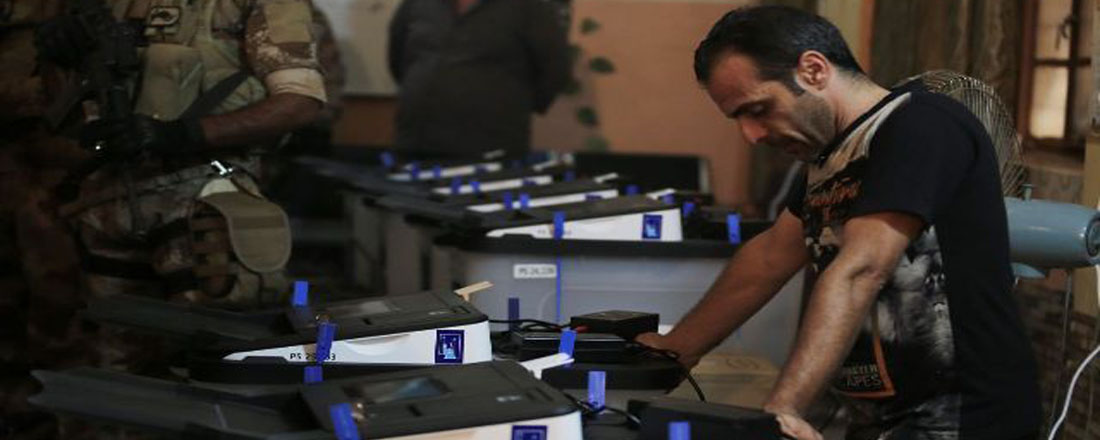
  • The First Elections of Iraq After the Defeat of ISIS and the First Electronic Election; Introducing Iraqi Coalitions.

    The First Elections of Iraq After the Defeat of ISIS and the First Electronic Election; Introducing Iraqi Coalitions.

    According to the unofficial results, “The Alliance of Revolutionaries for Reform” (Sairoon) with the leadership of Muqtada Sadr gained 55 seats, “The Victory Alliance” (Al-Nasr) with the leadership of Haider al-Abadi gained 51 seats, “The Fatah Alliance” with the leadership of Hadi Al-Amiri gained 50 seats.


    Meanwhile in some cities, specially Kirkuk and the three provinces of Iraqi Kurdistan, the protests about the results and election manipulation continue.
    After the announcment of 91% of election results and achieving first place in election by “The Alliance of Revolutionaries for Reform” (Sairoon), Muqtada Sadr in his twitter showed his cabinet choices and the way he wants to form his administration.


    In his tweet, Sadr announced:

    We “The Alliance of Revolutionaries for Reform” will act with “Wisdom” (Hikma), “Nationalism” (alwatanyah) and “The Will of The Electorate” (tajmae ‘iiradat alaintikhabii), and to create a “New Generation” we try and expect to see the “Change Movement” towards “Reforms”, and it is our “Decision” to create an iraq so that we raise the “Flags” of “Victory”, and Baghdad (our “identity”) is our capital, and our movement will be “Democratic” and we will form a “Technocratic Government” without “Partisanism”.


    After this tweet, Nechirvan Barzani and Masoud Barzani —which because of the high tensions of this election, their absence in this election were overlooked — were the first ones to call and congratulate the alliance of revolutionaries for reform’s victory to Muqtada Sadr.


    Because of very close difference in number of gained seats by the victorious political parties and coalitions, and the necessity to create a big coalition of different parties in order to ensure the formation of a bigger parliamentary group, the idea of forming such a coalition is hard and complicated.


    The possible scenarios by some of the sources, about which of these coalitions will form the cabinet :

    1. The state of law coalition, along with Fatah alliance and victory alliance.
    2. The alliance of revolutionaries for reform, along with victory alliance, Fatah alliance and the national wisdom movement.
    3. The alliance of revolutionaries for reform, along with Fatah alliance and the national wisdom movement.
    4. The alliance of revolutionaries for reform, along with victory alliance and the national wisdom movement.
    5. The alliance of revolutionaries for reform, along with victory alliance, patriotic union of Kurdistan (PUK), the Kurdistan democratic party (KDP or PD), and Al-Qarar.
    6. The victory alliance , along with national wisdom movement, fatah alliance, state and law coalition, and the national coalition (Al-Wataniya)
    7. The victory alliance, along with national wisdom movement, the national coalition (Al-Wataniya) and the alliance of revolutionaries for reform.
    8. The victory alliance, along with state of law coalition, Fatah alliance, and the national wisdom movement.


    ✅ The Shia Coalitions

    1) The Alliance of Revolutionaries for Reform

    Muqtada Sadr, along with Iraq Communist Party, Justice Government Party, People’s Party for Reform, Committee of Union and Progress, And Republic of Iraq Party, forms this coalition.


    2) The Fatah Alliance

    Fatah or Fath Al-Mobin (Undeniable Victory) is a electoral coalition including different shia political factions backed by Hashd Al-Sha’abi (Popular Mobilization Forces, PMU) which announced it existance with registering itself in “Independent High Electoral Commission, ” of Iraq.
    The main core of this treaty are as follows:

    a. The Badr Organization (Munaẓẓama Badr) with the leadership of Hadi Al-Ameri
    b. Brigades of the Party of God (Kata’ib Hezbollah)
    c. League of Righteous People (Asa’ib Ahl al-Haq),
    d. Soldiers of Imam Brigades (Kata’ib Jund al-Imam)
    e. Islamic Supreme Council of Iraq (Al-Majlis Al-A’ala Al-Islami Al-‘Iraqi, namely, ISCI or SIIC)

    and some other groups that are backed by “Popular Mobilization Forces”.


    3) The Victory Alliance The head of this coalition is the prime minister of iraq, Haider Al-Abadi, also some of the prominent leaders of “Islamic Dawa Party” and and some sunni figures including, Khaled al-Obaidi former minister of defense of iraq.


    4) State of Law Coalition

    The head of this coalition is the former prime minister of iraq and the general secretary of “Islamic Dawa Party”, Nouri al-Maliki, which

    5) The National Wisdom Movement

    Sayyid Ammar al-Hakim, after leaving the “Islamic Supreme Council of Iraq”, established this movement.


    ✅ The Sunni Coalitions

    1) The National Coalition (Al-Wataniya)

    This coalition includes sunni groups of iraq which are under the leadership of Ayad Allawi and the participation of Salim al-Jabouri, head the “Civil Society for Reform”, and Saleh al-Mutlaq, head of the “Al-Arabiya Coalition” and some other political movements and figures.

    2) Al-Qarar Al-Iraqi coalition

    This coalition is under the leadership of Osama al-Nujaifi, former deputy of president and former head of iraq parliament. he formed a coalition with Khames Al-Khanjar, leader of the arabic project movement, Salman Al-Jumaili and other iraqi sunni figures.


    ✅ The Kurdish Coalitions
    Kurdistan Democratic Party (KDP or PDK) and Patriotic Union of Kurdistan (PUK), The alliance of Taqiir Party, Jama`t Islami, Barham Salih

  • The Message that the Fatah Movement Send to Israel via its Weapons + Video

    The Message that the Fatah Movement Send to Israel via its Weapons + Video

    The Fatah movement, which was the strongest anti-occupation resistance movement in Palestine between 1965 and 1982, not only unsecured Palestinian soil for the Zionists, but also around the world wherever it could.


    After leaving Beirut which it was considered the main base of this movement, Fatah’s military activity was sharply declining Until 1987, with the start of the first Palestinian intifada, Fatah returned to the jihadi square with the formation of the Al-Aqsa battalions.


    After death of Yaser Arafat in 2004, with the leadership of Mahmoud Abbas, “Al-Aqsa battalions” were officially disarmed and practically, the resistance in the West Bank ended with compromise and treachery of Mahmoud Abbas.


    One of the consequences that most of political analysts warned Trump was that, if Quds declared as Israel’s capital, it would break the Fatah 14 year silence and they may resume the military operation against the Zionists.


    The Fatah movement’s yesterday operation can be considered as the spark of their return to jihadi operation against the Zionist and their belief in the path of armed resistance and freedom of Palestine.


    Released images of Al-Aqsa Martyrs Battalions against Zionist

  • Establishing A New Observation Post By Turkey in al-Ghab Plain; An Attempt to Create a New Military Structure in Idlib

    Establishing A New Observation Post By Turkey in al-Ghab Plain; An Attempt to Create a New Military Structure in Idlib

    According to the field sources, the Turkish army with sending a massive convoy including 100 armored and engineering vehicles to “Maydan Ghazal” in Sahl al-Ghab( al-Ghab Plain), established a new observation post in the mentioned region.


    Also recently, there has been activities from Turkish army in al-Rashedin region, just southwest of Aleppo.
    The Turkish forces have an active presence in these regions, and also it has been said that al-Rashedin has become a new observation post by the Turkish army.


    It also needs mentioning that from October 13, 2017 –the first official arrival of Turkish army in west of Syria– Turkey established around twelve “observation posts” in Aleppo, Idlib and Hama provinces.


    An interesting matter about the future of the regions which are under the influence of Turkey in northwest of Syria –Idlib, other parts of western Aleppo, Hama and northern Lattakia– is that they are creating a new “military structure”, including militias.

    According to field sources of militants, there will be a new “military structure” in mentioned provinces, a structure which the establishments of those “observation posts” in these provinces, is only the beginning.

    Though yet, some of the extremist groups like Tahrir Al-Sham, have not accepted this matter, but the history has proven itself that in long term, the nature of the situation in this region will push them towards this new particular structure.


    In fact on April 8, 2018, with the establishment of these new “observation posts” by Turkey in Hama and Morek region, there completes the establishment of observation posts in all contact lines between the Syrian army and militants from south Aleppo to north of Hama, and practically with this the SAA is completely blocked behind these lines and stopped from any further advances”


    In the past month –with the defeat of the militants in Eastern Ghouta and southern Damascus, and also with the “soon to be achieved” defeat of ISIS in Yarmouk camp in southern Damascus– one of the probable goals of the Syrian government would be reinstating (law and) order in northwest of Syria, notably the northern Lattakia, al-Ghab plain and its northern part, namely, Jisr Al-Shoghor.

    So in accordance with these, the Turkish army extending its observation posts around al-Ghab plain, southwest of Idlib and northern Lattakia in order to get the upper hand in these regions and to prevent the advances of Syrian army in future.

    The northern Lattakia, however, have been long under the intelligence and military control of the Turkey and we can say that the Lattakia’s observation post, have been established already.


    Recently, an official of the FSA, known as “Ibrahim al-Idlibi”, in an interview mentioned that “ The Idlib map and its surrounding regions will be drawn by Turkey’s observation post, and we can put it this way, that the war between SAA & militants in this region, have ended for ever.”

    According to the above explanation, the concept of “A New Military Structure” in northwest of Syria which is under the control of militants, becomes more and more obvious.

    A structure which encompasses extremist groups like Tahrir al-Sham within itself, and would integrate that region, creating another autonomous region in Syria.


    On May 15 and 16, 2018 , meetings were held in Astanah in order to finalize the “de-Escalation Zone Plan”, soon the map of the “Square” will be determined.

    Wait for the end of ISIS in southern Damascus and end of Ramadan…


    Map of Turkish observation posts in Aleppo, Idlib, Hama