According to the Ashab al-Kahf resistance group, the first attack took place in Qadesiyah province at 10:30 and the second attack in Babil province at 12:15. Hours later, another US logistical convoy was hit in Muthanna province with a roadside bomb. The Thar al-Muhandis group claimed responsibility for the third attack.
According to data obtained by ISWNews, this is the 177th attacks by Iraqi resistance groups on US logistical convoys since March 21. Of these, 35 attacks were carried out in Qadesiyah province, 42 attacks were carried out in Babil province and 8 attacks were carried out in Muthanna province.
1- Marib: – Clashes continueed sporadically on the southern and western fronts of Marib city. – The Saudi coalition claims to have carried out 10 airstrikes on Ansar Allah positions in the last 24 hours on the Marib fronts. According to the Saudi coalition, the attacks resulted in the destruction of seven vehicles and the deaths of 60 Ansar Allah fighters.
2- Saudi coalition airstrikes: Saudi coalition warplanes have bombed Ansar Allah-controlled areas 33 times in the past 48 hours. These attacks include: 16 times the district of al-Jubah and 7 times the district of Sarwah in Marib province, 2 times al-Nahdayn area and 2 times Dhahban area in Sanaa province, 2 times the district of Khab and al-Shaaf and once al-Aqsha’ area in al-Jawf province, 2 times the district of Harf Sufyan In the province of Imran and once in the province of Hajjah.
3- Al-Hudaydah: – The Saudi-led forces violated the ceasefire 226 times in the province in the past 48 hours. – Clashes continued between the Saudi-led forces and Ansar Allah in the north and east of Hays town. – At least 20 Saudi-led forces were killed and wounded by Ansar Allah joint missile and drone attack on east of the town of Hays in western coast of Yemen.
4- Saada: One civilian was martyred and five others, including two African immigrants were injured in the Saudi coalition’s attacks on the al-Raqo and al-Maftah border areas in Munbah and Shada districts.
5- The Foreign Ministry of the Yemeni Salvation Government condemned Australia’s decision to classify Hezbollah as a terrorist organization.
According to the Ashab al-Kahf resistance group, the attacks took place on November 27 at 20:00 in Dhi Qar province and at 23:25 in Babil province.
According to data obtained by ISWNews, this is the 174th attacks by Iraqi resistance groups on US logistical convoys since March 21. Of these, 23 attacks were carried out in Dhi Qar province and 41 attacks were carried out in Babil province.
In the last round of strategic talks between Baghdad and Washington, it was decided to end the US military presence in Iraq by the end of 2021. After the last meeting of the Iraqi Prime Minister Mustafa al-Kadhimi with the US President Joe Biden, it was decided that the US-Iraqi security relations would be fully transformed into a training, advisory, support and intelligence role, and by December 31, 2021, no US troops would be present in Iraq with a combat role. But contrary to the agreement and the decision of the Iraqi parliament, in the latest position of the US Department of Defense, there is no news of the full withdrawal of US troops from Iraq and it was announced that US troops will remain in Iraq. This forced the Iraqi resistance groups to react.
A few days ago, the Iraqi Resistance Coordination Committee issued a warning statement against US forces stationed in Iraq. The Iraqi resistance, noting that there have been no signs of US retreat so far, warned that there is not much time left until 2021-12-31. Iraqi resistance groups, revealing the increase of movements and transfer of military equipment between the US military bases in different parts of Iraq, announced the readiness of the Iraqi resistance to take action against the American occupiers and warned that the deadline for leaving Iraq is until 12:00 PM on 2021-12-31.
In this regard, Abu Alaa al-Walai, the commander of the Kata’ib Sayyid al-Shuhada, also ordered the organization to begin the process of registering volunteers for the war against the United States. The date of this decided confrontation was announced on December 31, 2021 after 12 PM.
It is worth mentioning that a few days after the statements of the Kata’ib Sayyid al-Shuhada commander, 49,000 Iraqis from different provinces of the country went to the Iraqi resistance headquarters to register their names for the fight against the American occupiers.
The Americans are aware of the determination of the Iraqi resistance, so they will either decide to confront the Iraqi resistance groups, or seek to reduce tensions and buy time through mediators. It is also possible that the Americans, in cooperation with the pro-Western Iraqi authorities and the opposition in Iraq, will increase political pressure on the Iraqi resistance, which is not new, and the Americans have already failed to use this leverage.
What is clear is that the resistance groups are emphasizing the complete withdrawal of American troops from Iraq. A problem that has not been solved so far during the meetings of the political officials of the two countries and diplomatic actions, and it seems that it will not be solved this way either!
On November 12, the Saudi coalition command issued an order regarding the Yemeni war, signaling Ansar Allah success in defeating the Saudi coalition operation on the west coast of Yemen.
The Saudi coalition operation to capture the west coast of al-Hudaydah began on November 2017 with the aim of cutting off Ansar Allah access to the sea, from the two axes of the south of al-Hudaydah province and the north of Hajjah province. The UAE provided the main support to the operation, and coalition forces advanced into the eastern and northeastern strip of al-Hudaydah within a year. With Ansar Allah resisting on the coast and increasing airstrikes of coalition, civilian casualties increased, and finally representatives of Ansar Allah and the resigned government of Mansour Hadi signed the Stockholm Agreement on December 18, 2018.
As we mentioned in the analysis of the battles in the west coast of Yemen, Ansar Allah’s strategy against the Saudi coalition was a long-term and erosive one. The hit and run attacks and the use of various tactics plunged the Saudi coalition into an erosive war, which eventually led to the withdrawal of Saudi-led forces from the al-Hudaydah fronts in the past week without firing a single bullet. Following the withdrawal, there was speculation about a secret agreement, the UAE betrayal of Saudi Arabia, etc., but none of these speculations were true. The command of the Saudi coalition stated that the main reason for the withdrawal from al-Hudaydah was the preservation of Marib, and announced the sending of reinforcements to prevent the city from falling to Ansar Allah.
Marib has now become a barrier against the flood of Ansar Allah attacks, the collapse of which could overthrow the remainings of the Hadi government in Yemen, like the flood of al-Aram that destroyed the Marib Dam! We know very well that the liberation of Marib is another heavy defeat for the Saudi coalition, and in addition it removes the southerners obligations to their agreement with Mansour Hadi because they do not have to give concessions and shelter to a weak and failed government. In this regard, the UAE has planned to dominate the east and south of Yemen by increasing the position of the descendants of the former Yemeni sultans. In al-Mahra, they support Sheikh Abdullah bin Isa Al-Afrar (son of Sultan al-Mahra and the island of Socotra) and in Shabwa province, Sultan Awad bin Al-Wazir Al-Awqli (head of the al-Awql tribe) and seek to weaken the position of figures affiliated with the resigned government of Mansour Hadi.
Ansar Allah has now reached the entrance gates of the most key point in central Yemen, the city of Marib. And on the other hand, it has recaptured the west coast of Hudaydah “without firing a single bullet”. These field victories have increased Ansar Allah power in negotiation table, but now the Saudis have lost interest in a negotiation. They have practically turned their backs on the negotiations with heavy airstrikes on Sanaa and the killing of civilians and Ansar Allah prisoners. According to Ansar Allah officials, the Saudis rejected Ansar Allah’s conditions for removing the siege and stopping the attacks in the talks, and closed the door to negotiations with the Iranians. The Saudis are making extensive preparations to defend their last major stronghold in Marib, and future developments in Yemen will determine Marib fate. It is not clear what positions Ansar Allah will take before or after the capture of Marib. What is clear is that the majority of the people, the tribes, the parties, etc., support Ansar Allah and this will sooner or later hand over the power of Yemen to the Resistance.
1- Aleppo: – On November 24, the Turkish-backed Jabhat al-Shamiya and Ahrar al-Sham militants clashed in the city of Jindires on the outskirts of Afrin.
Clashes between Jabhat al-Shamiya and Ahrar al-Sham militants in the city of Jindires
– On November 25, Turkish-backed militants launched artillery attacks on Kurdish militant positions in the city of Tal Rifat. – On November 23, Turkish-backed gunmen targeted artillery shells in residential areas northwest of Manbij.
2- Idlib: – On November 25, Syrian Army artillery targeted militant positions on the outskirts of the town of al-Bara and Kansafra. – On November 25, Russian fighter jets targeted militant positions on the outskirts of the town of Sarmin and the village of Majdaliya.
Russian fighters bomb Sarmin town
– On November 25, Syrian Army artillery targeted militant positions in the villages of al-Fatirah and Safuhan. – On November 25, Syrian Army artillery targeted militant positions in the village of Ain Larouz. – On the morning of November 23, Tahrir al-Sham militants fired rockets at Syrian Army positions in the village of Jobas, east of Idlib. Hours after the attack, Russian fighter jets in retaliation of the attack, bombed Tahrir al-Sham militant positions in the village of Talitia, east of the town of Kafr Takharim and north of Latakia.
3- Daraa: On the morning of November 24, after the deployment of Syrian Army forces in the eastern areas of the town of Nahta and the siege of suspicious areas, the militants opened fire on the Syrian army. A number of militants were killed and wounded and several Syrian Army forces were wounded due to clashes.
4- Deir Ezzor: On November 23, three members of the Syrian army were killed by an explosive device in the suburbs of Deir Ezzor.
5- Raqqa: – On November 23, Russian fighter jets targeted ISIS hideouts in the Rasafa area, southwest of Raqqa. – On November 24, a Turkish Army personnel named Mete Yildirim was killed in the city of Tel Abyad due to an accident caused by a technical defect in a weapon.
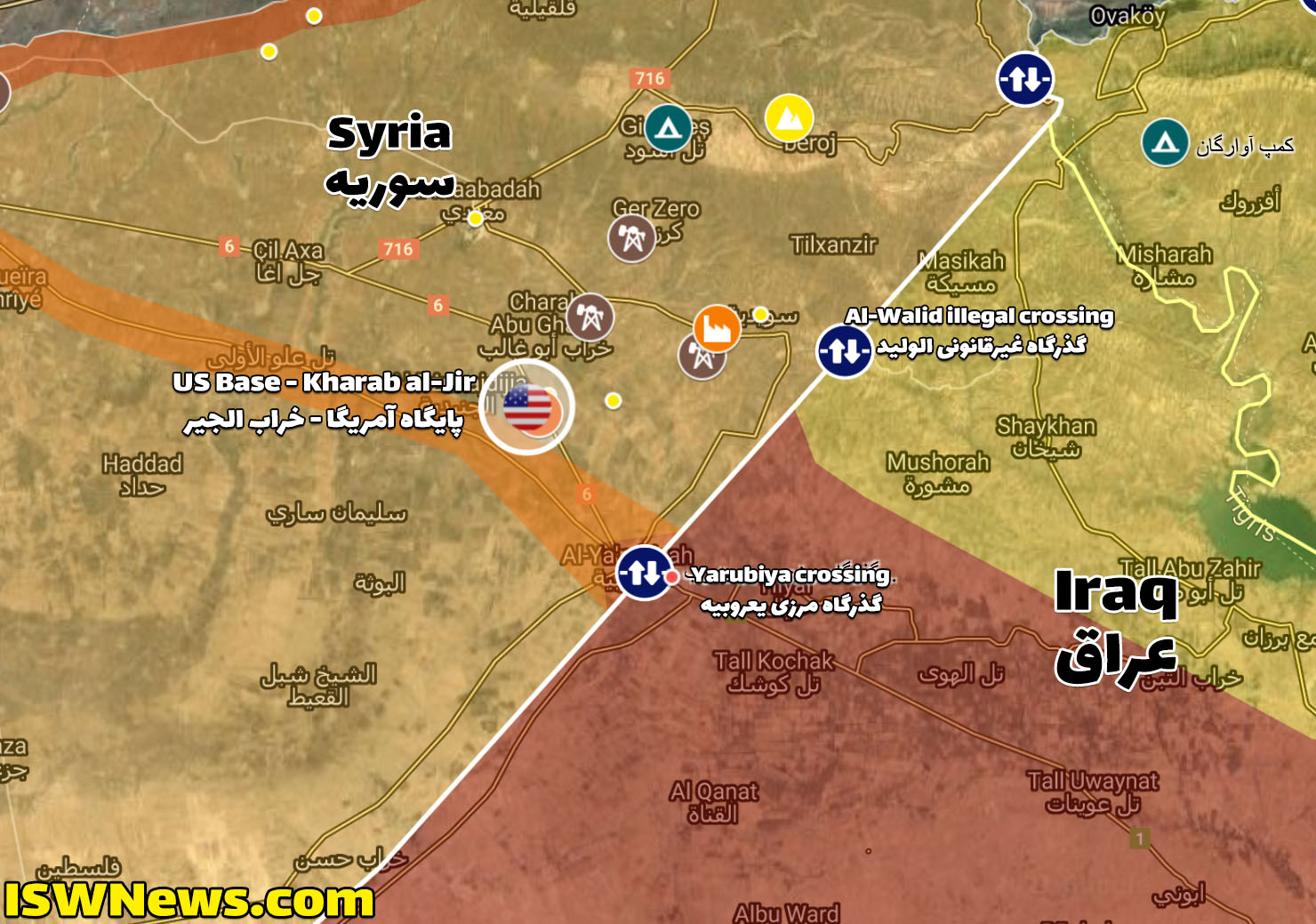
6- Hasakah: On the morning of November 23, four rockets hit a US military base in the village of Kharab al-Jir, five kilometers from the Yarubiya border crossing in the eastern Syrian province of Hasakah.
7- Homs: On November 24, at around 1:26 am, Israeli warplanes using Lebanese airspace targeted several areas in Homs province, killing three SAA members. Seven people including six SAA members were also wounded in the attack.
8- Quneitra: On November 23, a Syrian army soldier was killed by a roadside bomb in Naba’ al-Sakhr area.
9- On November 25, the Russian Reconciliation Center in Syria announced: The militants violated the ceasefire 6 times in Idlib region, of which 2 are in Aleppo province, 2 are in Latakia province and 2 are in Idlib province.
According to data obtained by ISWNews, this is the 172nd attacks by Iraqi resistance groups on US logistical convoys since March 21. Of these, 11 attacks were carried out in Basrah province.
Marib: In the central axis of Yemen, Ansar Allah has succeeded in liberating the al-Jubah district center and the northern areas of this district, as well as the district of Jabal Murad (without clashes), following Operation Rabi al-Nasr. This important advance has led Ansar Allah to the southern entrance of the city of Marib, and clashes have been going on since November 2 in the suburbs of the al-Balaq al-Sharqi and al-Balaq al-Awsat heights.
Al-Hudaydah: On November 12, the Saudi coalition command issued an order to withdraw from the city of Al-Hudaydah and the west coast of Yemen. During this retreat, the National Resistance forces, including the forces under the command of Tareq Saleh, Tahamah, Amalaqah and joint forces, evacuated the northern and eastern areas of al-Hudaydah city and the western areas of al-Durayhami, al-Jah, al-Tuhayta.
On the other hand, on November 18, Tareq Saleh forces launched an operation called “Golden Arc” in the south of al-Hudaydah province and the west of Taiz province, with the aim of securing the positions of the Saudi coalition on the west coast, which has not achieved significant results so far. So far, Ansar Allah has managed to repel most of Tareq Saleh’s ground attacks by carrying out the eighth deterrent balance operation and several other missile and drone operations.
A Turkish Army personnel named Mete Yildirim was severely injured in an accident due to a technical defect in a weapon in the northern city of Tel Abyad in Raqqa province and died after being taken to hospital.
According to a Syrian military source, at around 1:26 a.m. local time, Israeli warplanes using Lebanon airspace attacked several targets in Homs province, killing Syrian soldiers and wounding seven others including six soldiers.
Israeli Channel 12 reported that during the Israeli attack on Syria this morning, the Syrian air defense fired a missile at an Israeli warplane, which exploded off the coast of Haifa.
On November 17, the Israeli regime also fired two missiles from the occupied Golan Heights at the southern part of Damascus. One of the missiles reportedly was shot down and the other hit an empty building south of Damascus, causing no damage.
At 2 a.m. today, four rockets hit a US military base in the village of Kharab al-Jir, five kilometers from the the Yarubiya-Rabiya border crossing in the eastern Syrian province of Hasakah.
Local sources confirmed the rocket attack on the outskirts of the base, saying that after the rockets hit, American aircraft flew over the region.
“Kharab Al-Jair” base is one of the illegal bases of the US occupiers in Syria, which was established in 2015 after the confiscation of agricultural lands of the villagers in this area, and includes a landing strip for helicopters and warplanes. The base plays an important role in supporting US forces stealing oil and other raw materials from Syria to Iraq.
On November 23, Hay’at Tahrir al-Sham, which is listed on the international terrorism list, carried out an intense rocket shelling on Syrian Army positions in the village of Jubas, east of Idlib, which led to material damage, but no human casualties.
In response, the Russian warplanes targeted the Taltita village in Sumaq mountain east of the town of Kafr Takharim in the northwestern Idlib countryside, and the Kabani hills in al-Akrad mountain in the northeastern countryside of Lattakia.
The bombing led to the destruction of 3 headquarters of “Tahrir al-Sham” and the killing and wounding of several terrorists, in addition to the destruction of 4 vehicles carrying medium machine guns.