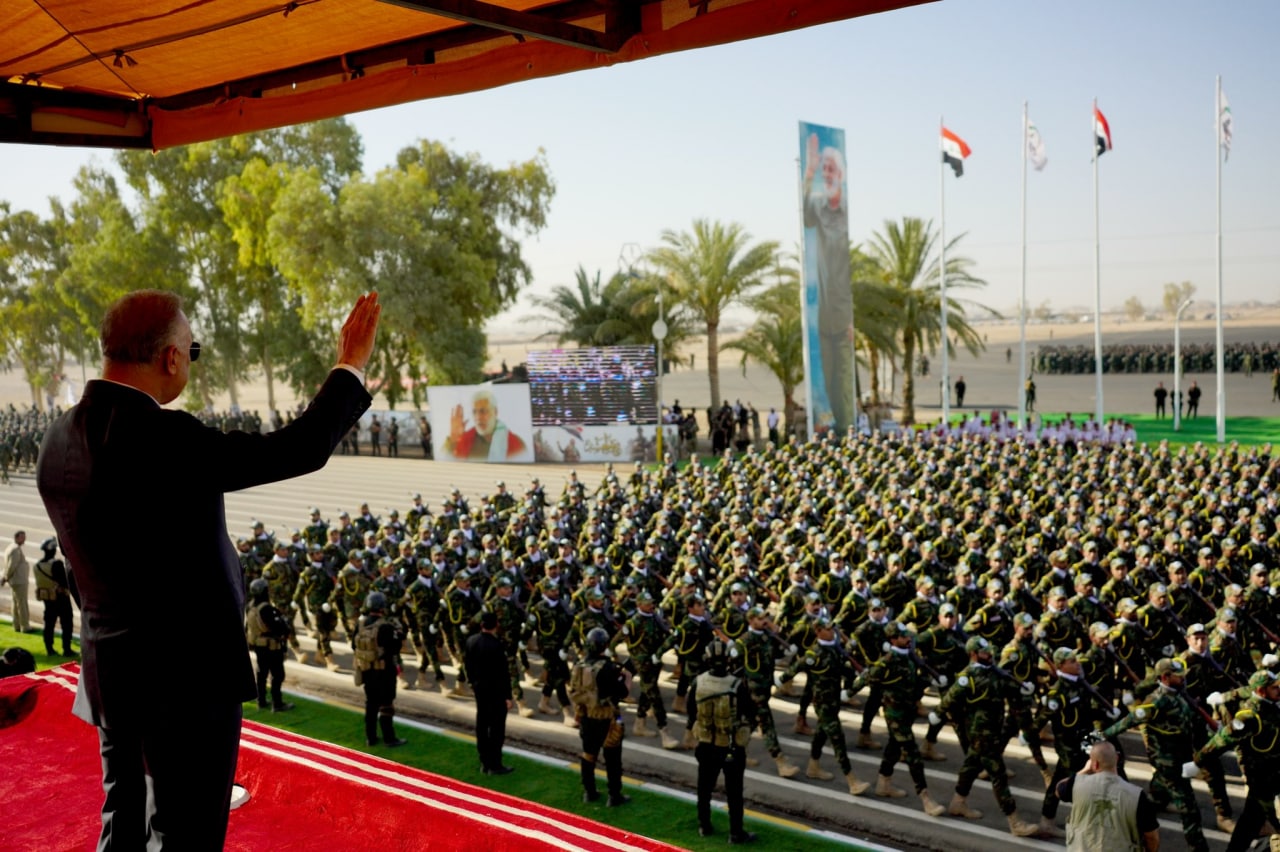
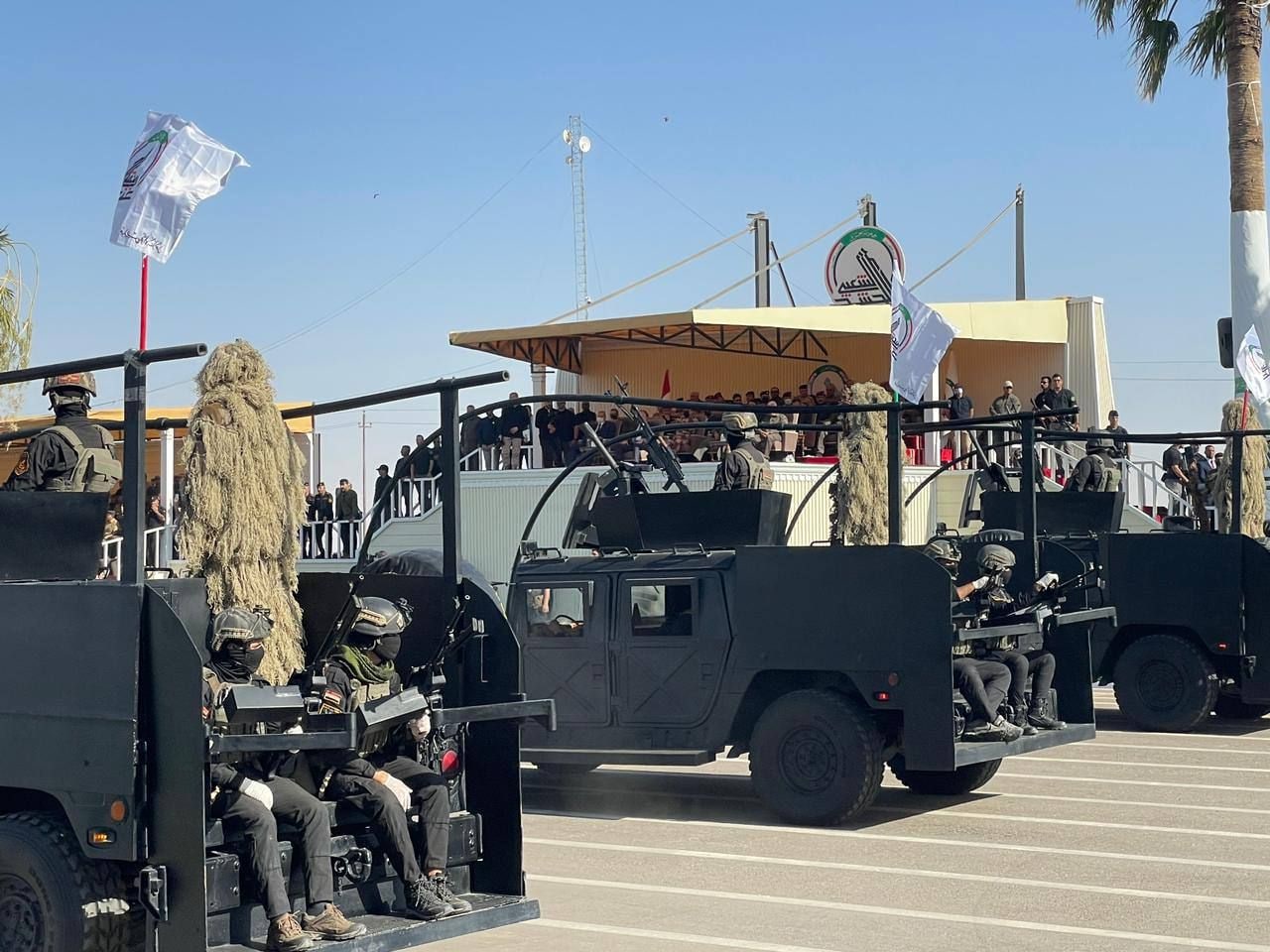
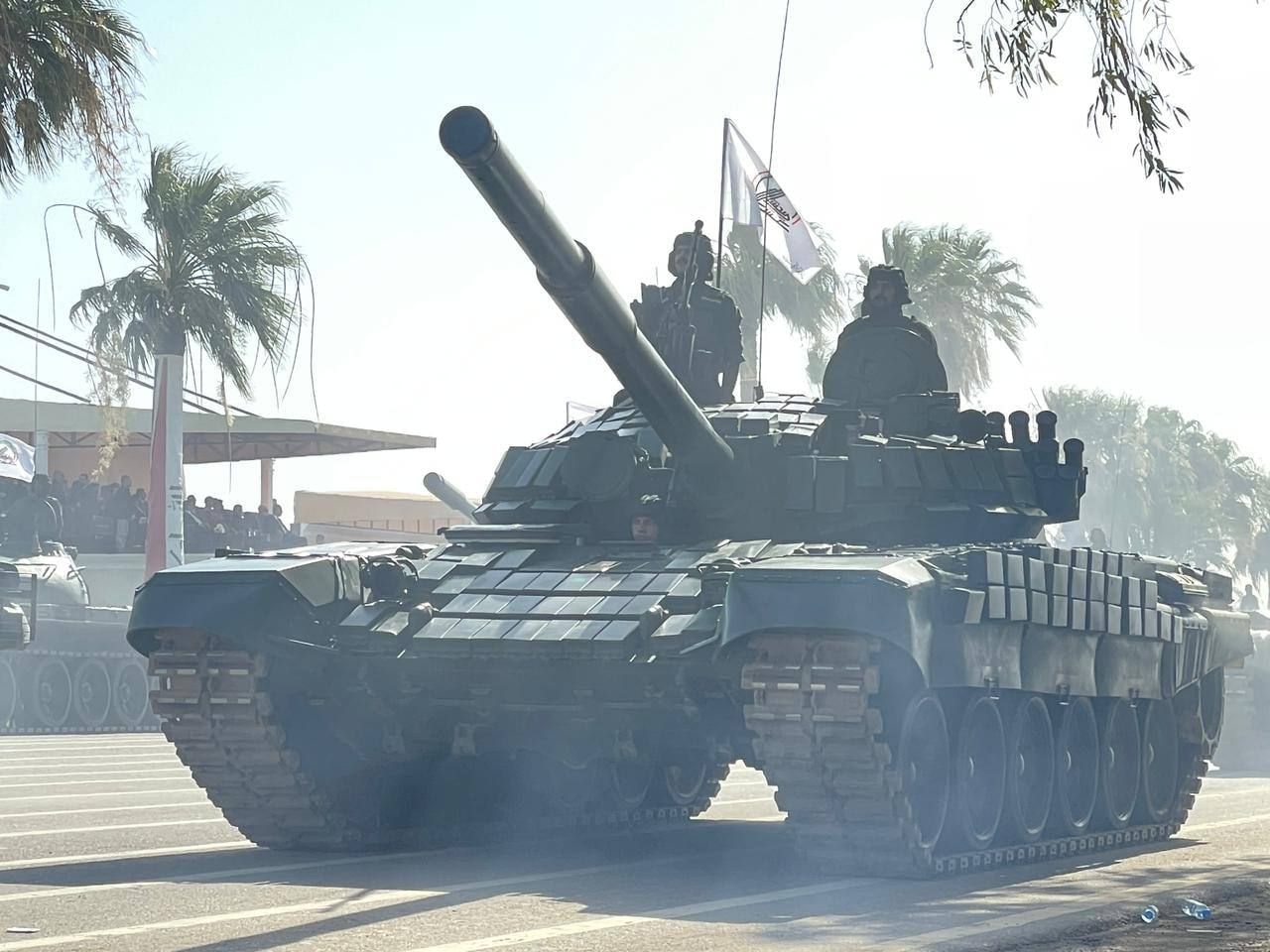
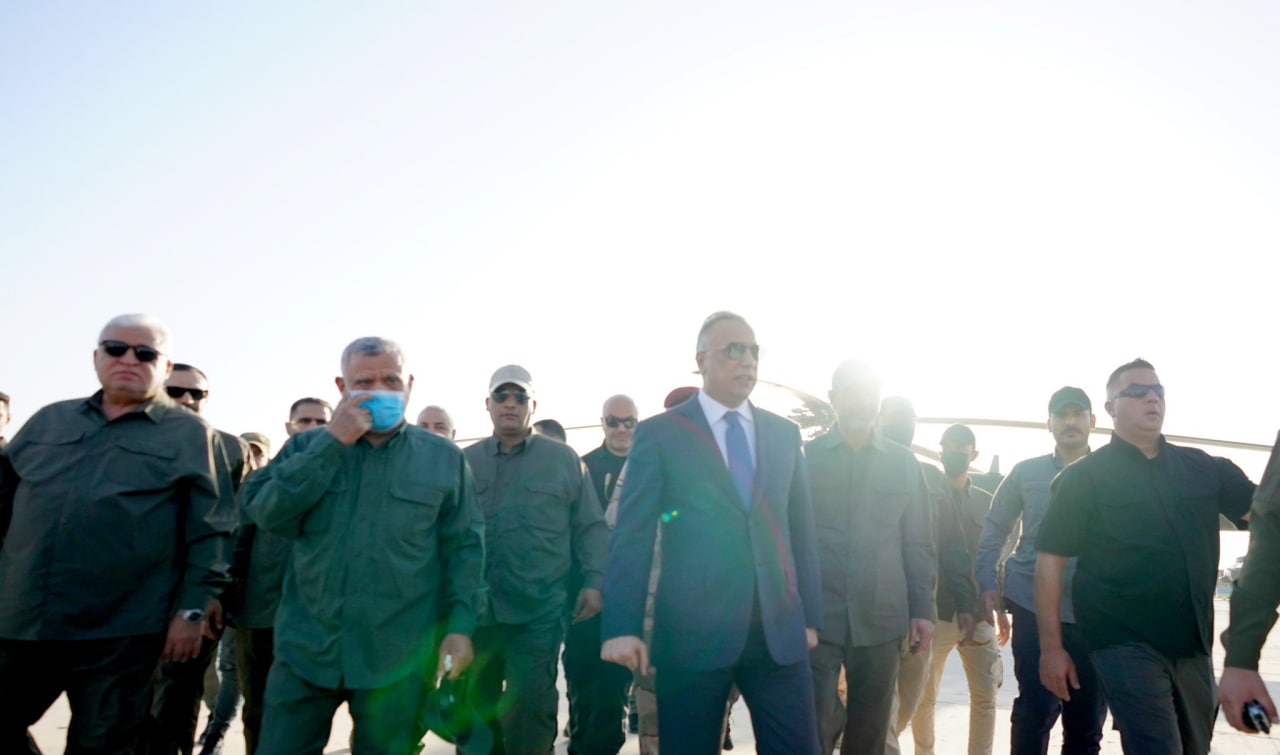
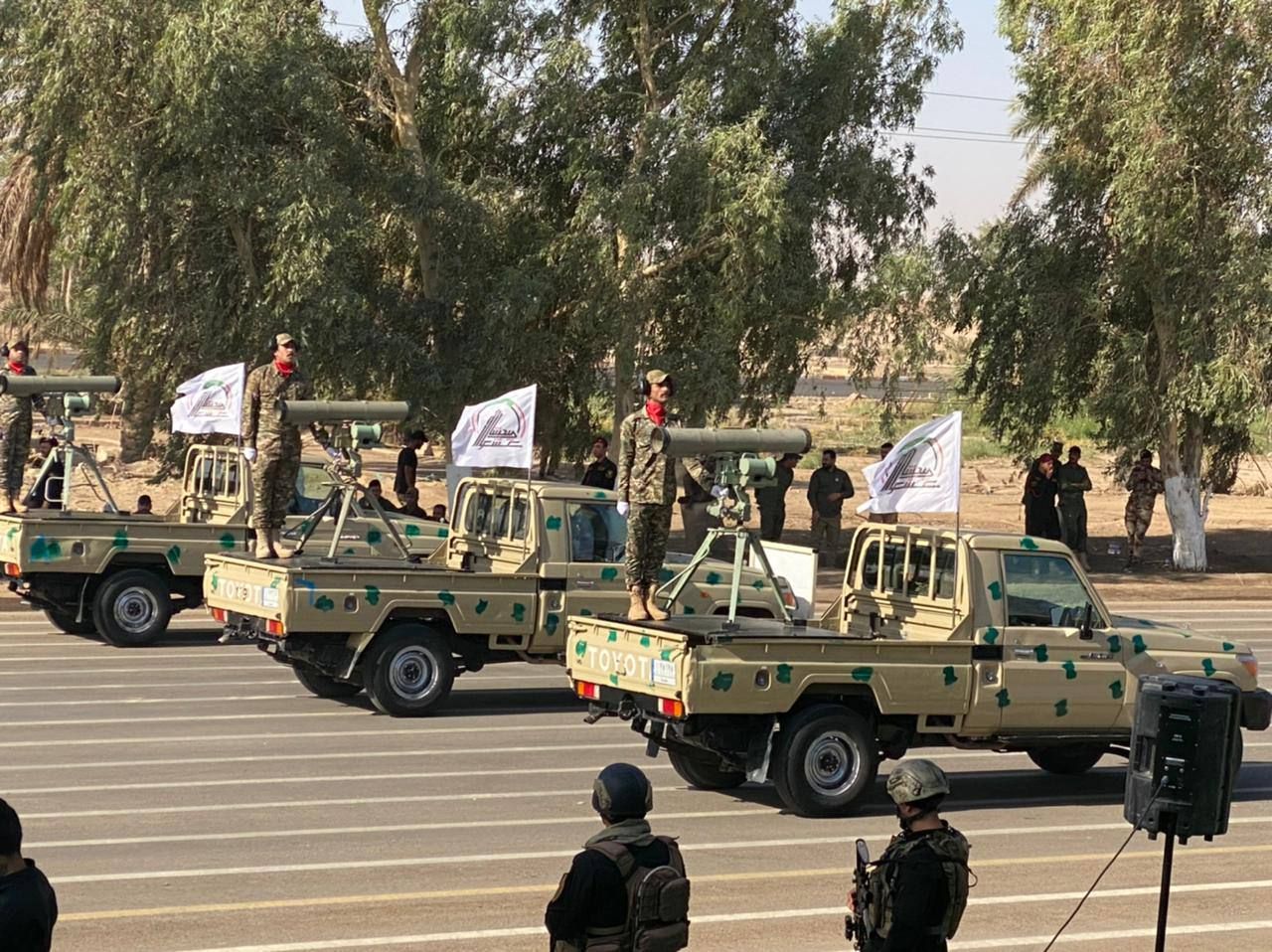
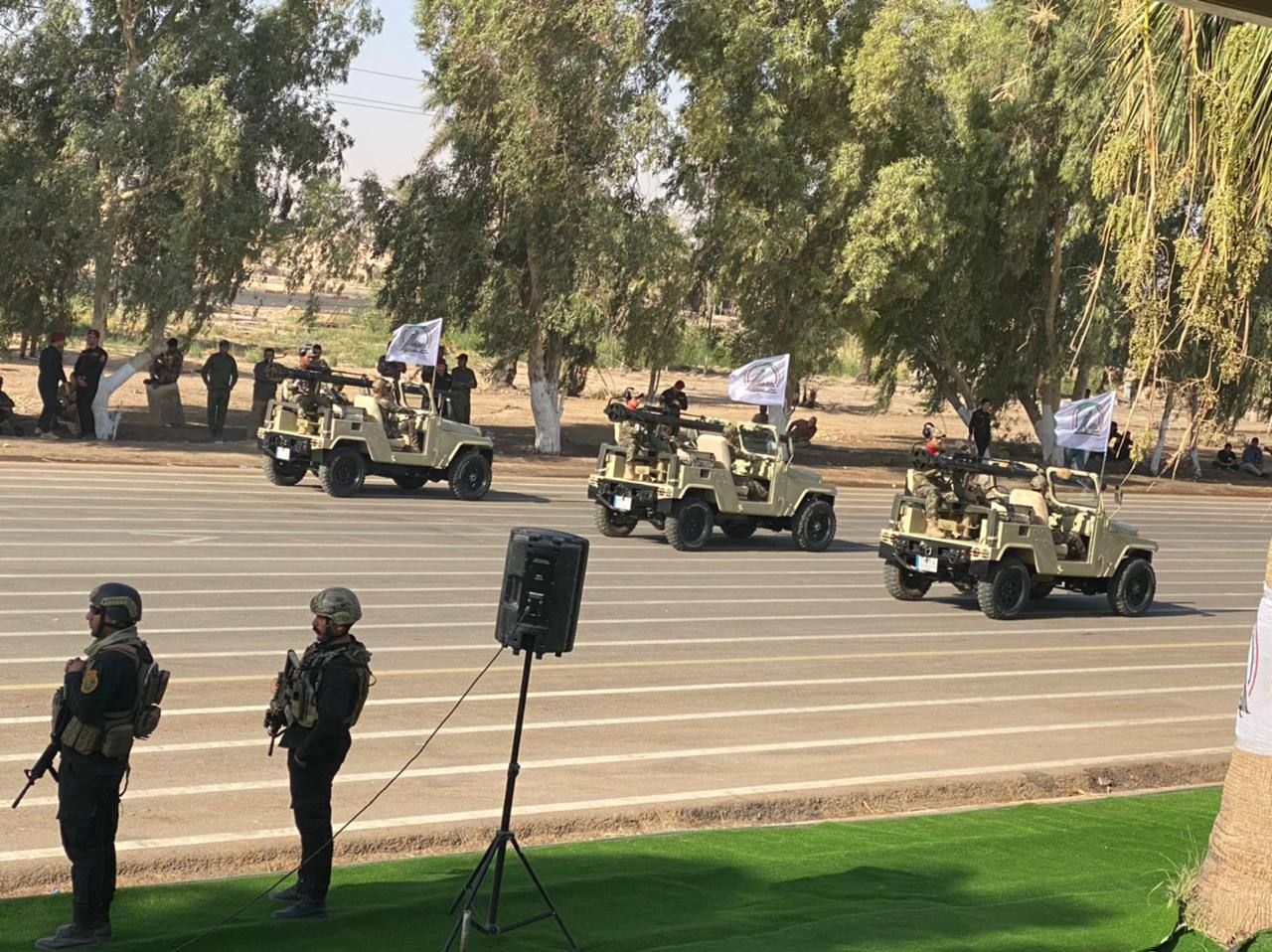
The Iraqi Hashad al-Shaabi (PMU) parade, marking the eighth anniversary of the organization, was held in the presence of Mustafa Al-Kadhimi, Prime Minister and Commander-in-Chief of the Iraqi Armed Forces, Hashd al-Sha’abi commanders and Iraqi officials at the Abu Montazer al-Muhammadawi military base (former Camp Ashraf) in Diyala province.
Among the interesting points of this parade, we can mention the presence of “Safir” jeeps armed with 106 cannons and “Dehlavieh” anti-armor missiles manufactured by the Islamic Republic of Iran. Also, for the first time during this parade, “Al-Abhar” armored vehicles belonging to the Popular Mobilization Units were put on public display.
On February 20, the Hashd al-Sha’abi (PMU) forces and the Iraqi army, after receiving information about the ISIS meeting in the village of al-Tabi in the Taramiyah area in northern Baghdad, raided and clashed with terrorists in the area and killed five ISIS operatives, including ISIS Mufti and governor for the Taramiyah area. Also several ISIS operatives were wounded and taken prisoner by the PMU forces. Three members of the PMU were martyred and two others were wounded. However, ISIS media claimed that 11 members of PMU were martyred in the clashes.
According to information, the ISIS meeting was to discuss how and when to carry out suicide bombings in Baghdad.
The commander of the PMU’s operation command in Baghdad also met with forces wounded in Taramiya area.
Falih Alfayyadh, head of the PMU, while attending the Taramiyah area and meeting with field commanders, announced: A new security equation has been created in Taramiyah. Falih Alfayyadh said that the PMU forces present in the region and their counter-terrorist operations should be supported.
The operation in al-Taramiyah area, which is one of the most important areas of Baghdad’s security belt, ended after Iraqi Prime Minister Mustafa al-Kadhimi arrived in the area and met with field commanders.
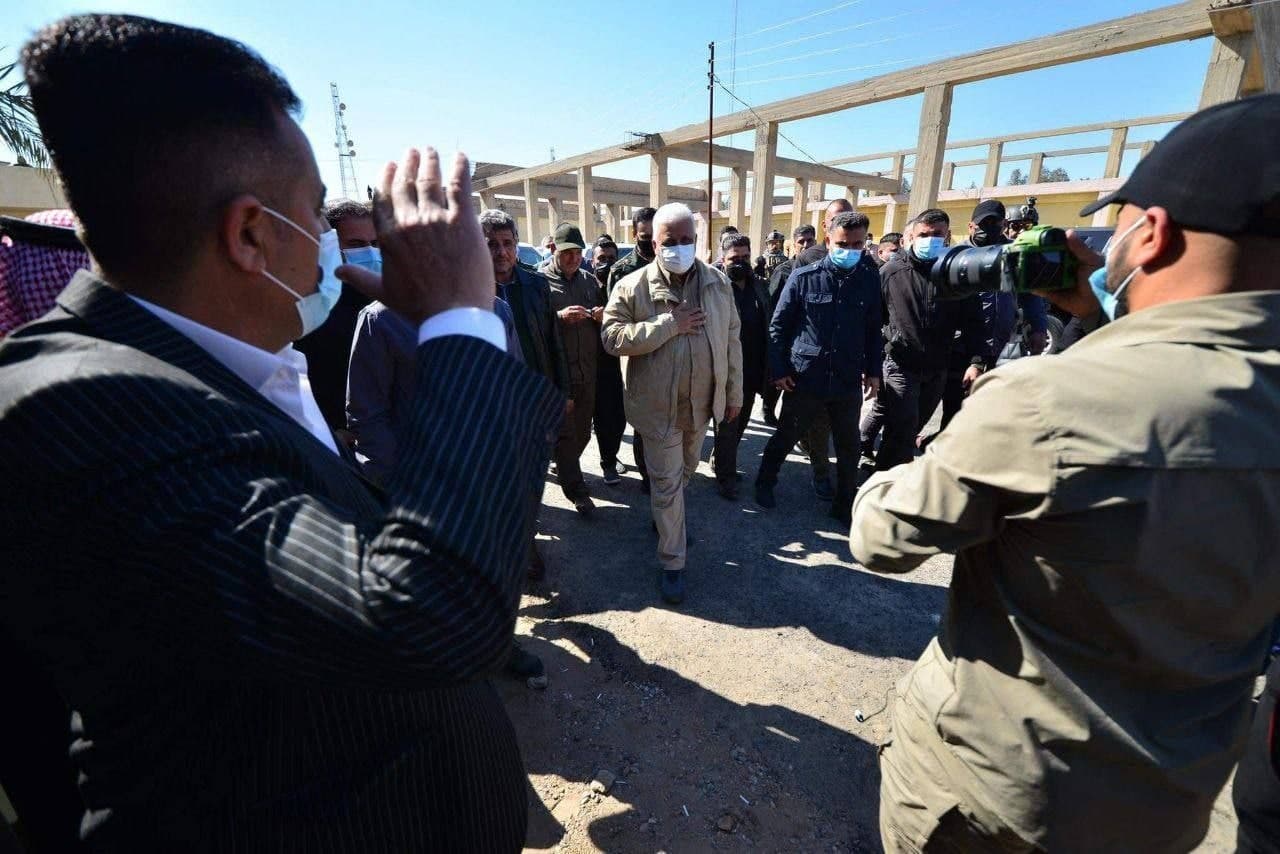
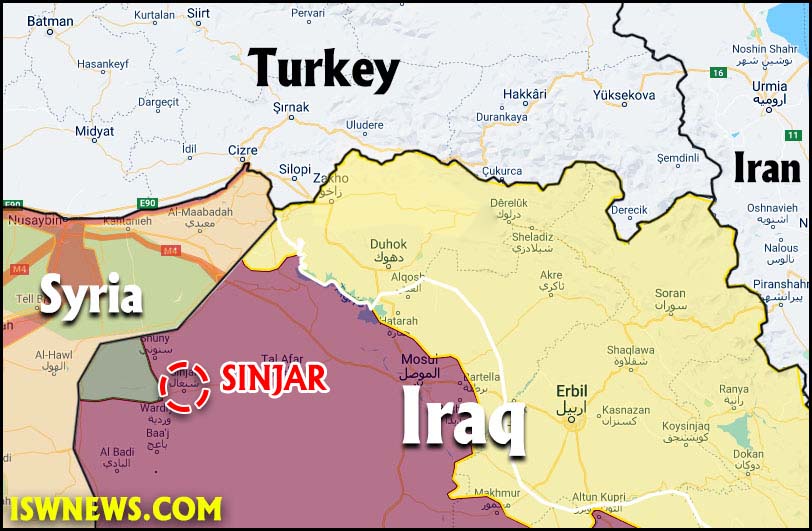
On February 11, Hashd al-Shaabi (PMU) forces consisting of three brigades including 9,000 to 10,000 troops were deployed in the Sinjar region and surrounding areas by order of Mustafa al-Kadhimi, commander-in-chief of the Iraqi Armed Forces. According to reports, after dispatching Hashd al-Shaabi forces to the area, Abdul Aziz al-Muhammadawi (Abu Fadak), deputy head of Hashd al-Shaabi forces organization, and his entourage visited the town of Sinjar, Tal Afar and surrounding areas and met with local people.
Deputy head of Hashd al-Shaabi forces organization
Following Erdogan’s threats of a possible Turkish attack on Sinjar under the pretext of PKK presence in the region, one of the PMU commanders in Sinjar said: “A few days ago, we were informed from Baghdad that we were preparing to repel any Turkish attack on Sinjar, and in this regard, the PMU forces were sent to Sinjar with about 10,000 fighters.” “According to the information we have, Turkey intends to attack Sinjar and deploy Peshmerga forces [affiliated with Barzani (PDK)],” he said.
Following the implementation of the agreement reached on October 9 between the Iraqi federal government (Kadhimi government) and the northern region of the country (Kurdistan Democratic Party (PDK)) over the Sinjar region to implement a joint administration and expel PKK-affiliated militants and also the retreat of Hashd al-Shaabi forces at a distance of 5 km from this area, this is the first time that Hashd al-Shaabi (PMU) forces return to the area.
Also, considering the increase of ISIS attacks in different parts of Iraq and the announcement of the Pope’s visit to Iraq on March 5 and his possible visit to the town of Qaraqush on the outskirts of Mosul, Another reason for the increase of PMU forces in the Sinjar region is to ensure the security of the region against any terrorist threats.
In general, the various brigades of the Hashd al-Shaabi (PMU) forces play a very important and significant role in ensuring the security of the different regions of Iraq and in the fight against terrorism and ISIS.
Al-Saedi said: If anyone is killed or injured in these attacks, the government is responsible for the bloodshed due to the obligation and justification of the Americans to stay away from these areas. The government and the commander-in-chief of the armed forces must be aware of what is happening in the skies of Iraq, because the lack of control over the airspace is a tragedy that is unbearable and the media cannot remain silent in this regard.
He added that the Iraqi Popular Mobilization Forces, which are present on the border with Syria, are often attacked by US and Zionist air forces, while the government is in hibernation.
The security expert stressed that the government should inform the American side of the Hashad al-Shaabi bases in these areas and oblige them to stay away from these areas.
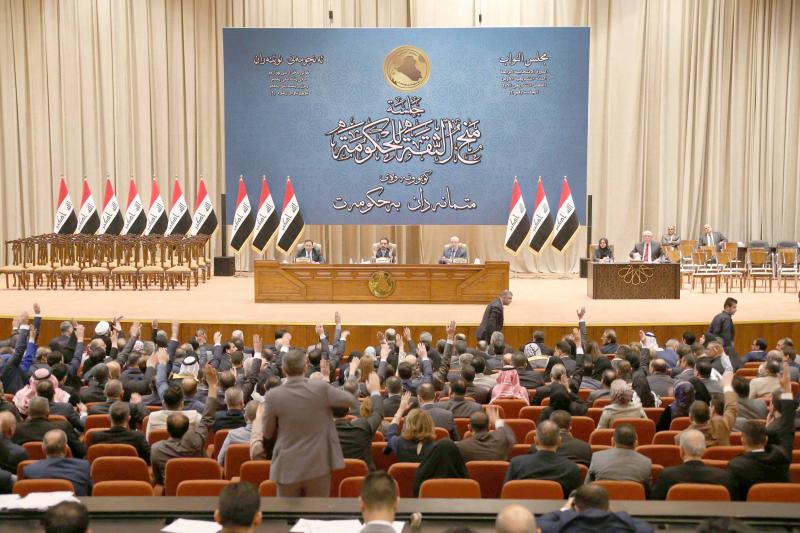
The session held with presence of political groups Fath, Saerun, Nasr, Hikmah, Dowlat Qanun, Sanad al-Watani.
Adil Abdul Mahdi said: – Iran and USA have both fought with terrorism and helped security forces of Iraq. – Hashad Sha’abi is part of Iraq’s security system. – Trust of Americans to us after we did not respect the sanctions decreased. USA somehow said you are either with us or against us! – US told us that Israel has targeted positions of Hashad Sha’abi last summer. – USA did not accept to apologize for bombing Hashad Sha’abi base in Qaem. – Trump asked us to mediate. – Martyr Soleimani was en rout to meet with us to hand in Iran’s answer to a Saudi letter. – Flight of US helicopters and drones over Baghdad was without our permission.
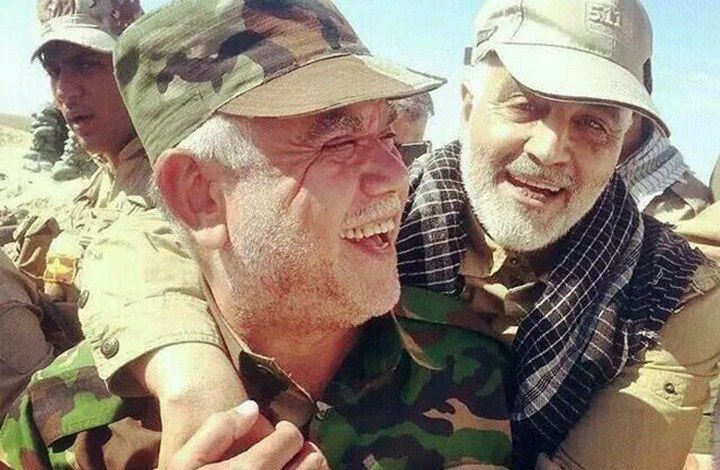
Hadi Farhan Abdullah al-Ameri, known as Abu Hassan al-Ameri, is one of the leaders of the Hashd al-Sha’abi and the Badr organization in Iraq. He has been a leader of pro-Iranian Iraqi forces in sacred defense(Iraq-Iran war) and has fought for years against the Saddam and ISIS terrorists.
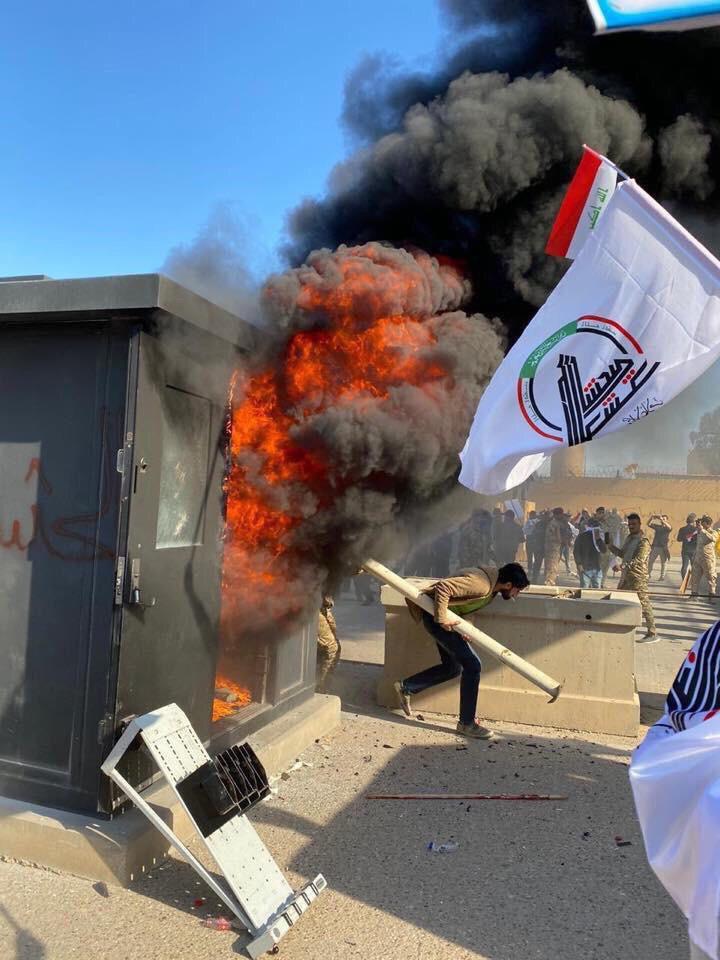
Angry people entered the US Embassy in Baghdad and trying to capture the embassy:
This morning, Hashd Shaabi forces funeral was held in front of the US Embassy in Khazra district of Baghdad, with Hadi al-Ameri and Qais Khazali attending. It is noteworthy that this morning, people of Iraq entered Khazra district and set up tents in front of the US Embassy in Baghdad.
An official of Ayatullah Sistani’s office in Najaf said regarding the recent attack to Hashad Sha’abi bases in Al Qaem town by US forces: High Marja decries the brutal attacks to some of warriors related to Iraq’s official forces which resulted in martyrdom and injury of many of them and he insists on respecting Iraq’s sovereignty and not violating it for any excuses.
1. Resistance groups in Iraq, Lebanon’s Hezbollah and Iran strongly blamed the attack.
2. Abu Mahdi al-Muhandis: Bloods of the martyrs and disabled veterans won’t be wasted and US forces in Iraq will receive a severe and hard answer.
3. Mohamed al-Halbousi, speaker of Iraqi parliament, in a statement asked prudence of Iraqi groups and support and security of diplomatic places and coalition soldiers in Iraq.
4. From yesterday so far US embassy in Iraq has evacuated tens of its employees from Baghdad.
5. Mike Pompeo, US foreign minister: We won’t stand still until Iran jeopardize lives of American women and men.
6. Kata’ib Hezbollah: We are on alert and examining the best way to answer US crime. Trump should know that he will pay an expensive price in Iraq and countries US forces are present.
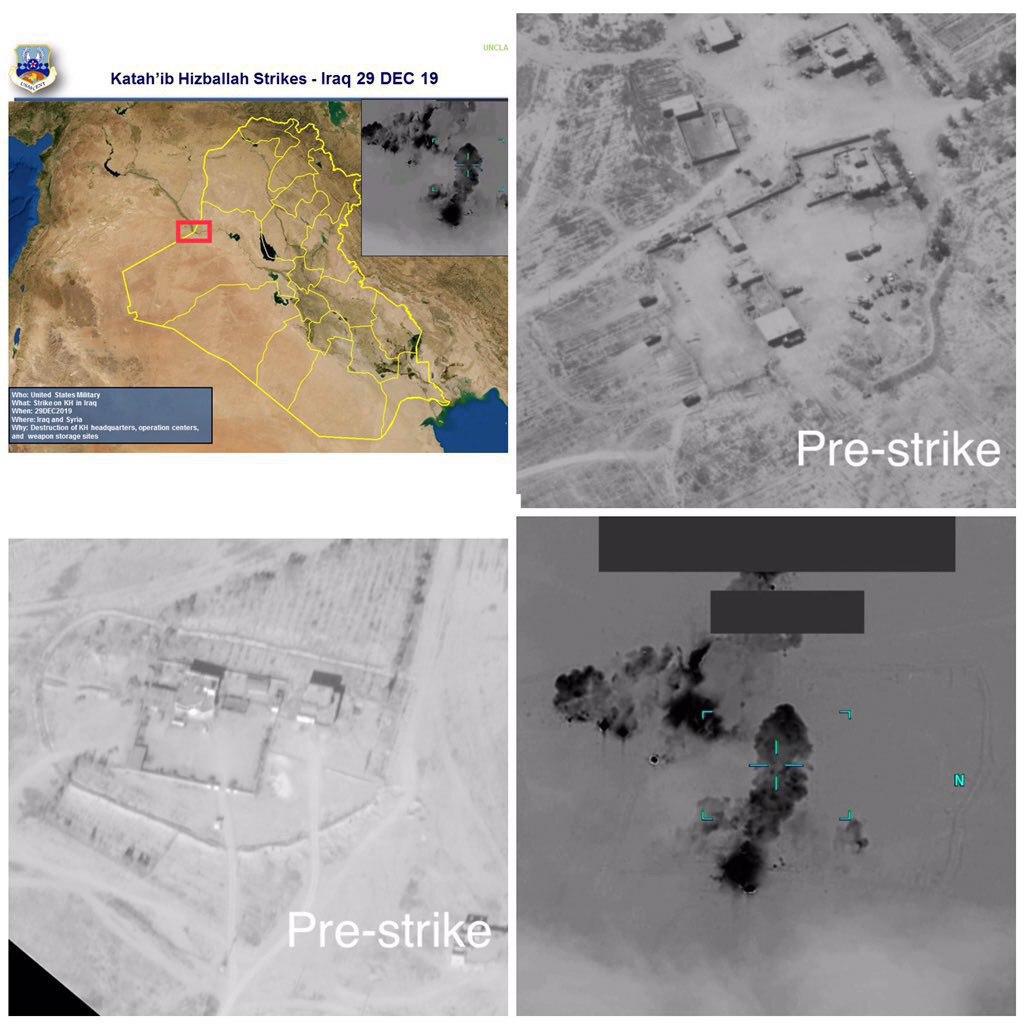
آمریکا تصاویر جدیدی از حمله به یکی از مقرهای کتائب حزب الله عراق را منتشر کرد. مکان دقیق این حمله هنوز مشخص نیست.
According to reports, the US warplanes have targeted the positions of the 45th Brigade of Hashd al-Shaabi in the al-Mazraah area on the road to Akashat, west of Anbar province.
There is contradictory reports and the exact number of martyrs and injuries is still unknown.
First images from the one of the bases which targeted by the US warplanes
In the first part we mentioned some reasons of different efforts for dissolution of Hashd Al-Shaabi forces. Hashd Al-Shaabi has some unique features and capabilities that can be modeled in other fields for Iraqis. That’s why the US and its allies are trying to weaken or removing the Hashd Al-Shaabi forces.
In this part we talk about some another attempts for weakening and removing the Hashd Al-Shaabi.
After the ISIS terrorists occupied a vast part of Iraq, the Jihad order by Ayatollah Sistani caused the young volunteers of Iraq to join the military groups to protect the country.
After that, the fight against ISIS terrorists entered a new phase and the process of victory and expelling these forces from Iraq began. This process continued until the end of 2017, when the complete liberation of Iraqi cities and the defeat of ISIS terrorists in the country were officially announced.
After forming the US anti-ISIS coalition in September 2014, the US announced withdrawal of Hashd al-Shaabi forces from the battlefields as of its main condition to help Iraqis to counter the ISIS terrorists. These attempts were also continued against PMU in different operations such as the liberation of the cities of Tikrit, Ramadi, Fallujah and Mosul.
Sectarianism accusations during fighting against ISIS With the rise of Hashd al-Shaabi’s victories, various political currents and media outlets have started accusing and reflecting some unrealistic news against the Hashd al-Shaabi. Allegations from violence against the Sunni people and looting their property by the PMUs in the liberated areas to forced migration and changing the Sunni structure of the area, are among the false accusations against the Hashd Al-Shaabi.
The US and Saudi Arabia started to make an anti-Sunni atmosphere against Hashd Al-Shaabi forces at the same time of the operation for liberation of Fallujah and they announced if PMUs go to this city, the possibility of sectarian conflicts and carnage is high. These sort of accusations continued numerously before the operation of Mosul and also it caused a delay in lunching the operation.
In the middle of 2016 and during the uprising of the Muqtada al-Sadr’s supporters in Baghdad that also led to the occupation of parliament, one of their demands was to stop the advance of Hashd Al-Shaabi forces in the Sunni areas of Iraq. Although they express that these actions are in the support of Sunni people of those cities but in fact the main purpose was weakening the Hashd Al-Shaabi and decreasing the victories of them.
Ending ISIS project, Ending Hashd Al-Shaabi By getting closer to the total defeat of ISIS terrorists in Iraq, dismantling Hashd Al-Shaabi was also hearing. The media and political parties apposing Hashd Al-Shaabi, were after project “Ending ISIS, Ending Hashd Al-Shaabi”. The main excuse for introducing this project was this idea: Because Hashd Al-Shaabi was created for fighting ISIS, so when these terrorists defeated, there’s no need for the Hashd Al-Shaabi! But the reality is two years after the official announcement of the defeat of ISIS terrorists in Iraq, the ISIS activities and sporadic attacks still continue throughout the country. This is while the Hashd Al-Shaabi continue fighting against these groups and secure the vast part of the western areas of Iraq from ISIS cells.
Disarming Hashd Al-Shaabi under the excuse of concentration of weapons in government The aspect of carrying weapons by different groups and parties in Iraq was always a big national security issue. Different tribes, religious and political groups in Iraq often have military weapons that use them as a tool for power and self-defense. Formation of some military groups under the command of Hashd Al-Shaabi, has made an excuse for parties against it. They are arguing that the armed PMU is a challenge for controlling security in Iraq. That’s why these groups always use this excuse for forcing the government to disarm Hashd Al-Shaabi. As an example, two years ago the French President explicitly requested Baghdad government to dismantle all militant groups including PMU, in a meeting with Kurdistan Region Prime Minister in Paris.
Liquidation of Hashd Al-Shaabi, a condition of Iraq’s exemption from US sanctions on Iran By US withdrawal of JCPOA and reimposing the sanctions against Iran, Iraq’s government was always under the pressure of the USA for buying electricity and gas from Iran. Washington misused this fact for getting points for giving Iraq exemptions in the field of Iran sanctions. In this way, totally dismantling the Hashd Al-Shaabi was always one of the main requests of Washington from Baghdad. For example, the United States spokesperson for department of state, explicitly requested disarming PMU from Iraqi government on December 2018.
Reforming or weakening the structure? One of the most controversial issues about Hashd al-Shaabi is reshaping it which took place by the official order of Adel Abdul-Mahdi, the resigned former prime minister of Iraq. There are many words and analysis about case, some call it the way for official recognition and empowering PMU while some others view this happening a limiting factor for the effectiveness of the unit. Also, the word “reform” has some positive and negative points, but to the author, things happened until now, was not positive and weakens Hashd al-Shaabi and might also lead the unit to dismantling. As an example we can point removing the position of PMU’s vice-chairman of the board in the new structure, which Abu Mahdi al-Muhandis had the seat. More interestingly the aspect of merging the unit with military structure of Iraq government, was one of Muqtada al-Sadr recommendation for the post-ISIS Iraq structure.
Sanctioning Hashd al-Shaabi leaders In addition of having different tools inside Iraq, the US government tried to impose international political and economic pressure against the unit in order to weaken it. The US treasury recently sanctioned three commanders of the group on charge of involvement in killing Iraqi protesters. Some news outlets are also talking about a plan for sanctioning nine other commanders of the unit is being programed in US congress. Before that, US treasury had sanctioned some other commanders of the group on the excuses such as helping Iran to bypass US sanctions, cooperating with Lebanon’s Hezbollah or attacking US bases in Iraq.
Shadow of the political view on the Hashd al-Shaabi services Official and effective entering of some commanders of PMU leaders into the political structure of Iraq and seizing parliament seats plus positions in some of ministries and government agencies have put the group in political sights. Also, this approach empowered the position of Hashd al-Shaabi in governmental structure of the country, but in recent protests, it has been used to weaken the officials of the unit. Because the protesters are putting the responsibility of the current economic situation in Iraq, on political parties and groups, they point Hashd al-Shabi political figures as the reasons for the situation.
Military actions against Hashd al-Shaabi In addition to ISIS activities and attacks against PMU in different parts of Iraq, the number of attacks from unknown drones to the bases of the unit has risen. The target of these attacks was disarming the bases and terrorizing important commanders of the unit. Israel air attacks to Hashd al-Shaabi bases became more and more before the recent protests and after that and simultaneously to that, the number of ISIS attacks also has intensified.
Placing PMU against Iraqis By erupting the protests in Baghdad and other cities in Iraq, one of the main strategies of media and political currents opposing Hashd al-Shaabi, was illustrating an anti-popular face from the forces for youth and protesters. This strategy is being utilized in social media by producing different multimedia programs. But in the real fields also there were many efforts for forcing the PMU to stand against the protesters. For example in the al-Sanak and al-Khalani event which led to the death of 20 people, the media tried to put the responsibility on Asaib Ahl al-Haq that is related to PMU. This charge was raised from al-Sadr group particularly. In that field, forces related to al-Sadr (blue helmets) were defending the protesters. This strategy is taken in order to distance between people and PMU. This strategy is following for perusing people to agree Hashd al-Shaabi dismantling in the future.