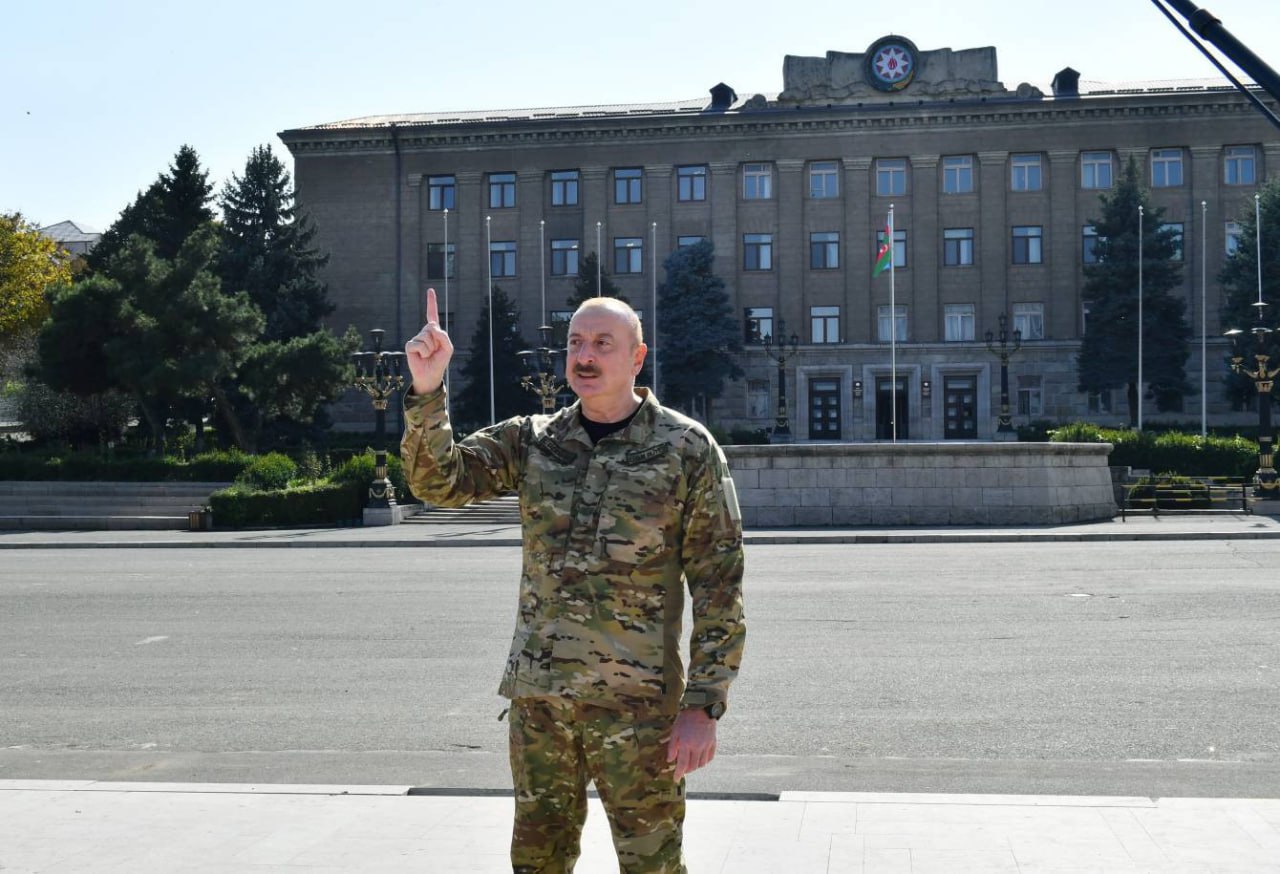
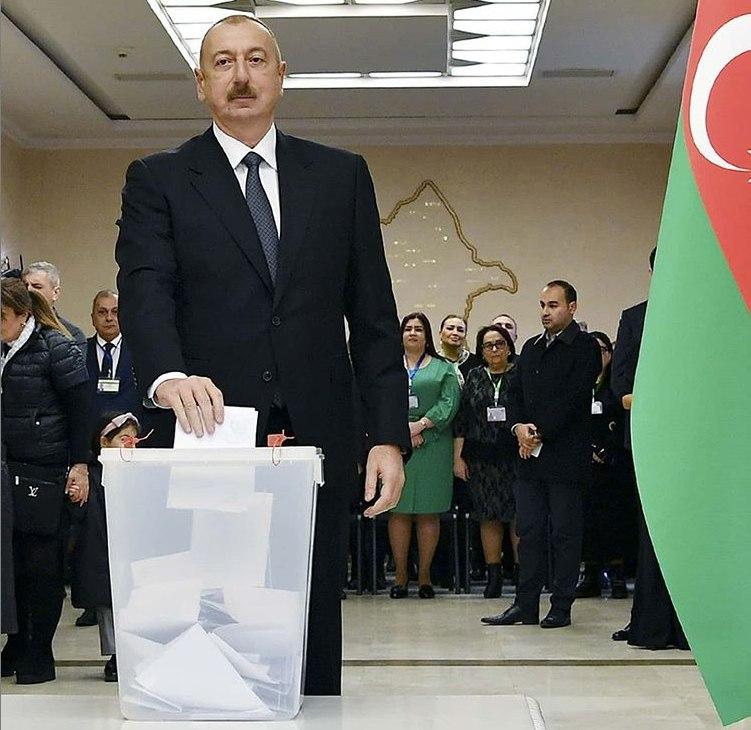
This trip was Aliyev’s first official visit to Khankendi (Stepanakert) since Nagorno-Karabakh surrendered to Azerbaijan in late September.
While trampling the flag of Artsakh, Ilham Aliyev visited Khankendi, Asgeran Castle, Fozuli, Khojali and Aghdara (Martakert), and gave two speeches and expressed important points.
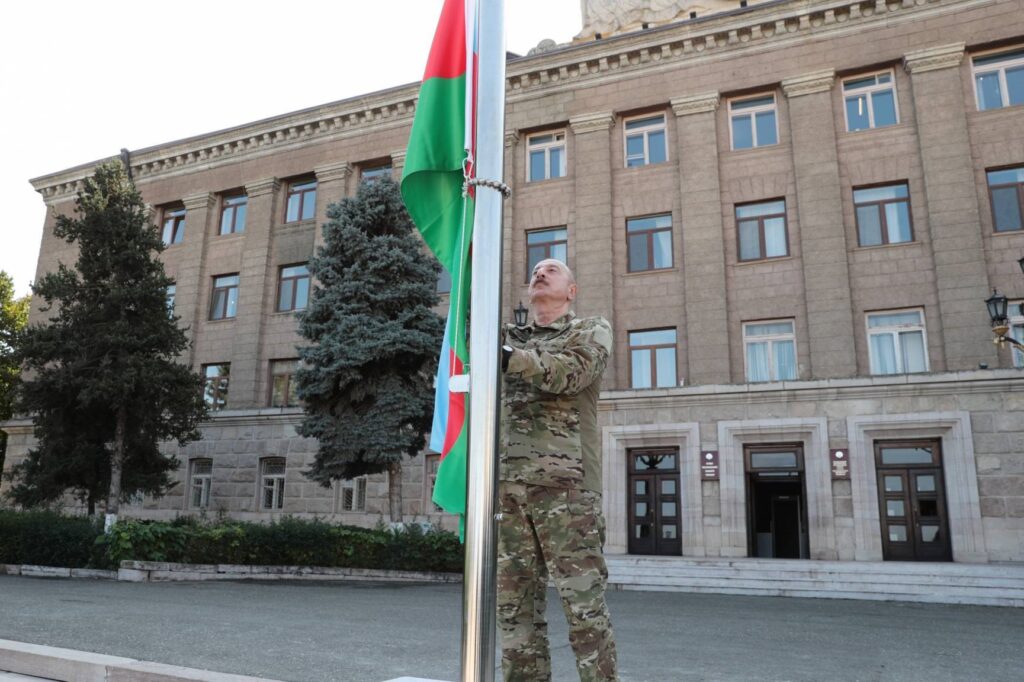
Aliyev visited the administrative buildings of the Nagorno-Karabakh government (Artsakh) in the city of Khankendi (Stepanakert) and gave a speech in front of the building.
Most of the content of Aliyev’s speech was devoted to insulting the Armenian leaders of the Nagorno-Karabakh government and threatening those political figures in the Republic of Armenia who are thinking of revenge. He also praised the policies of his father Heydar Aliyev during the Soviet era and added: “Armenians and Azerbaijanis lived peacefully next to each other in the 60s and 80s and there was no difference between them. He did many measures for the economic and social prosperity of Karabagh.”
This phrase can be considered a kind of sarcasm to the competing political currents in Azerbaijan, of which the Popular Front of Azerbaijan Party is at the head. The explanation is that Aliyev has done this many times in the past years.
Ilham Aliyev raising the Azerbaijani flag in front of Nagorno-Karabakh’s former presidential administration on 15 October 2023 – Image via the Presidential Administration.
Immediately after this speech, political parties in Azerbaijan overtook each other in drafting supportive and laudatory statements addressed to the president of this country.
Also, the state media of Azerbaijan published a video of the conversation between Ilham Aliyev and a reporter in the city of Fozuli, which clearly shows Aliyev’s retreat from the issue of Zangezur Corridor. He said: “We are not greedy for anyone’s land and we will not return to Zangezur with a tank. Our return will be friendly.”
It is worth mentioning that, Azerbaijan by carrying out a one-day military operation on 19-20 September, forced the government of Nagorno-Karabakh to accept the conditions of Baku, and finally the Nagorno-Karabakh government was completely dissolved and all regions of the Nagorno-Karabakh returned to the control of the Republic of Azerbaijan.
After these events, about 100,000 Armenian residents of Stepanakert and other regions of Nagorno-Karabakh refused to accept the citizenship of the Republic of Azerbaijan and fled to Armenia. There is no exact information on the number of Armenians remaining in Nagorno-Karabakh, but it is said that around 1,000 Armenians remained in the region.
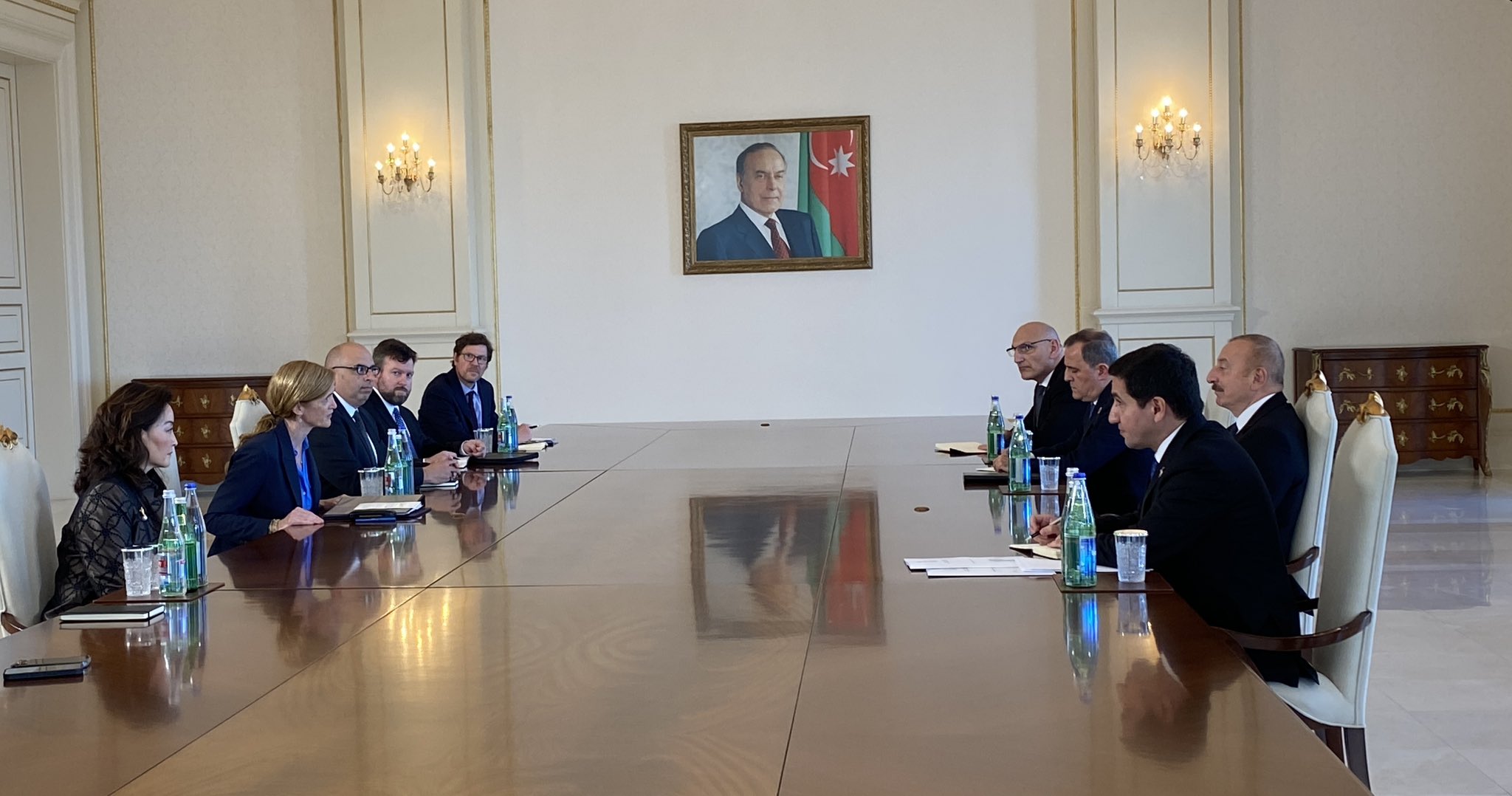
Administrator of the United States Agency for International Development (USAID) Samantha Power, heading a diplomatic delegation, has met with Azerbaijani President Ilham Aliyev in continuation of her visit to the Caucasus region.
The centerpiece of the meeting was to discuss easy access to the Nagorno-Karabakh region and addressing the situation of thousands of Armenian people trapped in the Lachin corridor.
In a discussion with Azerbaijan’s president, the US representative emphasized the presence of international observers in Nagorno-Karabakh to examine the rights of the Armenian people as well as ensure the security of cultural and religious sites, and called for the continuation of negotiations.
It should be mentioned that over the past few days, more than 65,000 Armenian people residing in Nagorno-Karabakh have arrived in Armenian territories, and thousands more have stopped in heavy traffic on the route from Lachin to Armenia.
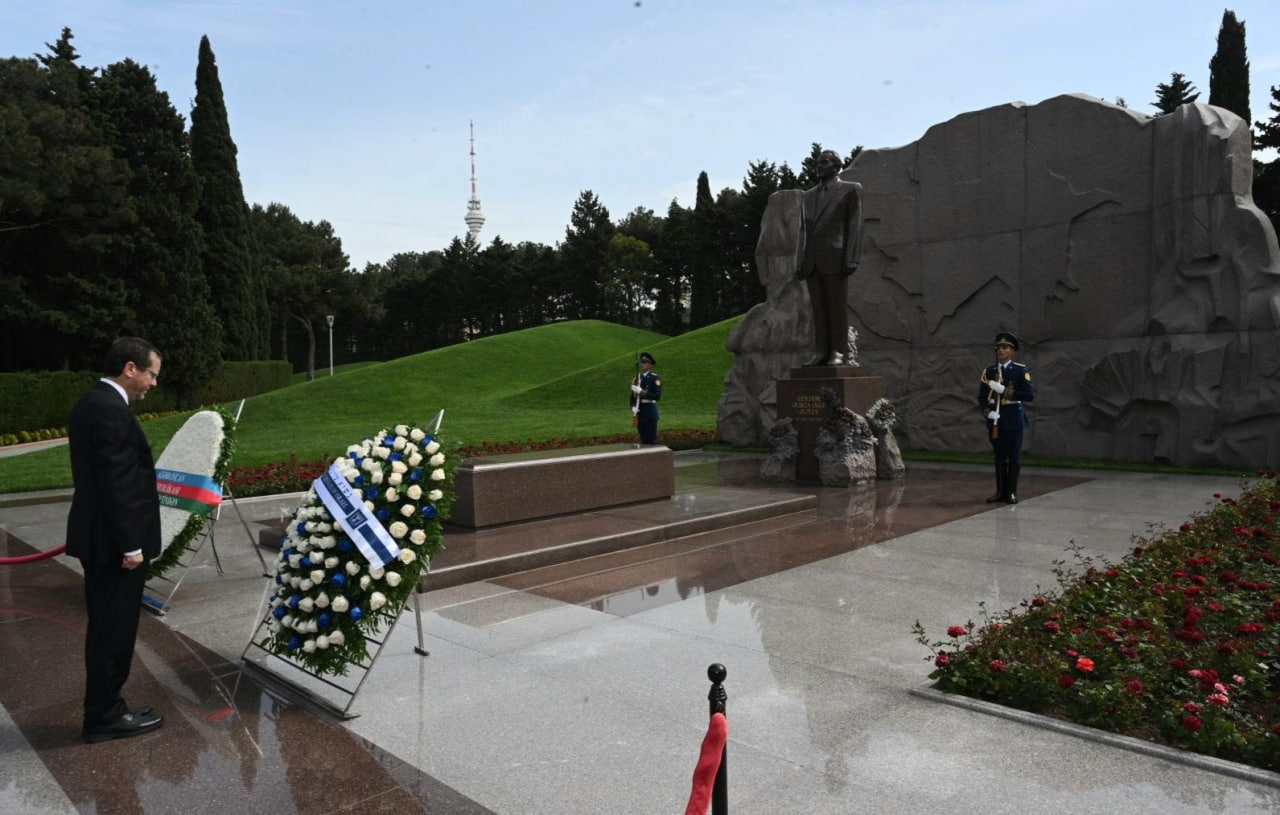
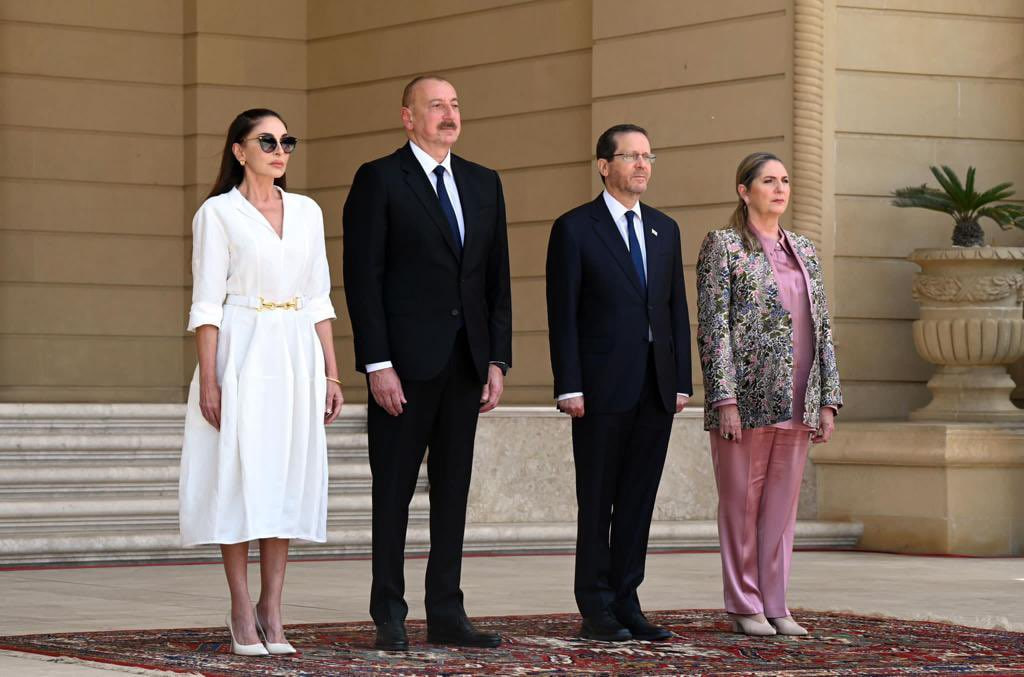
Following a meeting between the head of the Israeli regime and the president of Azerbaijan, a press conference was held and the two parties signed documents, including a cooperation document between the Ministries of Health of Baku and Tel Aviv.
Herzog wrote on his Twitter account following the meeting with Aliyev: “I thank my friend President of Azerbaijan Ilham Aliyev who is a true friend of Israel for his warm welcome at the Presidential Palace. Israel considers the Republic of Azerbaijan as a valuable strategic partner and an anchor of stability in the region. Our relations are a role model for other countries that choose the path of peace and cooperation and an example of friendly relations between Muslims and Jews.”
Herzog also told the media outlets after the meeting with Aliyev: “Iran is the country that threatens the security structure of the region. We had many consultations in this regard at the meeting.”
Aliyev, for his part, said: “After the meeting, we will witness positive dynamics; although, we have already taken many actions in various fields, including trade, security and so on. I am completely sure that there is a lot of potential for increasing cooperation, but there is still a lot of work to be done. Of course, we consider the visit by the president of Israel to Azerbaijan a historic trip.”
It should be mentioned that the visit by the president of Israel to Baku took place while Iranian officials have repeatedly warned Azerbaijan about the evil intentions of the Israeli regime to turn the soil of the Republic of Azerbaijan into a scene of threat against the national security of the Islamic Republic of Iran.
Herzog’s recent remarks and the review of the current status of Baku-Tel Aviv relations indicate that Azerbaijan’s officials are attempting to intensify the level of tensions and insecurity, and they want to increase Israeli presence in the region by ignoring the Iranians’ warnings; This is an important issue that can ultimately lead to Iran’s harsh response.
The anniversary of the summer clashes of July 14, 2020 and the martyrdom of 11 Azerbaijani servicemen, including Polad Hashimov, has entered the political calendar of the South Caucasus region. The event is considered the beginning of the September 27 military operation of the Azerbaijani coalition in occupied Nagorno-Karabakh against Armenian and Armenian separatists. Although the end of the dispute was signed on November 10 of this year after 44 days between the two parties, disputes over the implementation of the terms of the contract remain.
Hot summer July, Exclaves war!
July is still tense, and can still be considered the start point of another war. Especially since the media once again reported more than three major clashes between Armenian and Azerbaijani forces last week. The first clash on Friday, July 9 on the border of Azerbaijan’s Gadabay district and the northern part of the Nagorno-Karabakh region with Armenia’s Chambarak region was reported by the Ministry of Defense of Azerbaijan and the positions of these forces were shelled in Zamanli village.
The clashes took place near the Artsvashen (Bashkend) area which is Armenia’s exclave inside Azerbaijan. The 40-square-kilometer Artsvashen was occupied by Azerbaijani forces in 1992 after the start of the war between Armenia and Azerbaijan, and its Armenian inhabitants were displaced to Armenia.
The second clash took place on Tuesday July 13 in the town of Shusha in Nagorno-Karabakh (Artsakh) and near the Russian peacekeeping post. A disputed town which was inhabited by a mix of Armenians and Azeris before the Nagorno-Karabakh crisis began. The city was captured from Azerbaijan by Armenians in 1992 and came under Armenian control. Shusha (Shushi) was captured by the Azeri side in the last days of the war last year.
The third clash took place on Wednesday, July 14, coinciding with the anniversary of Hashimov’s death on the northwestern border of Nakhchivan with Armenia and near the town of Sadarak in the Nakhchivan Autonomous Republic. An Azerbaijani soldier was wounded and Azerbaijani Nakhchivan army forces exchanged fire with the Armenian side. This area is located near the borders of Turkey and Karki (Tigranashen) village which is Azerbaijan’s exclave inside Armenia. Karki was occupied by Armenia in 1992 and its Azeri inhabitants were displaced.
The fourth clash also took place on July 19 in the same Sadarak-Yersakh border area between the two sides which led to injury of several people including the head of Yeraskh community of Ararat region Rudik Ogikyan in Yeraskh village.
In addition, the Republic of Azerbaijan has two other exclaves in northern Armenia, which are part of the 1992 occupied territories. Barkhudarly and Sofolu (Barkhudarlu) areas of Rayon Ghazakh (Qazax) with an area of 22 square kilometers are located in the Tavush district , Armenia. Also, the Yukhari Askipara exclave (Azeri: Yuxarı Əskipara – Armenian: Verin Voskepar) is also located inside the Tavush district.
According to the terms of the ceasefire, all these areas shall be returned to their country and the displaced have the right to return to their place of residence.
Azerbaijan: Zangezurbelongs to us!
Establishing a corridor connecting the mainland of Azerbaijan with its exclave territory in Nakhchivan is a major geopolitical challenge. According to the Moscow agreement, the Zangezur (Syunik) corridor between the mainland of Azerbaijan and the outskirts of Nakhchivan is to be established.
Of course, Azerbaijan’s interpretation of this corridor is slightly different, so that in addition to a transport corridor, it has officially made a territorial claim to the southern parts of Armenia. The Zangezur and Goycha regions claimed by Azerbaijan include the Meghri, Kapan, Sisian and Goris, which were ceded to Armenia during the former Soviet Union.
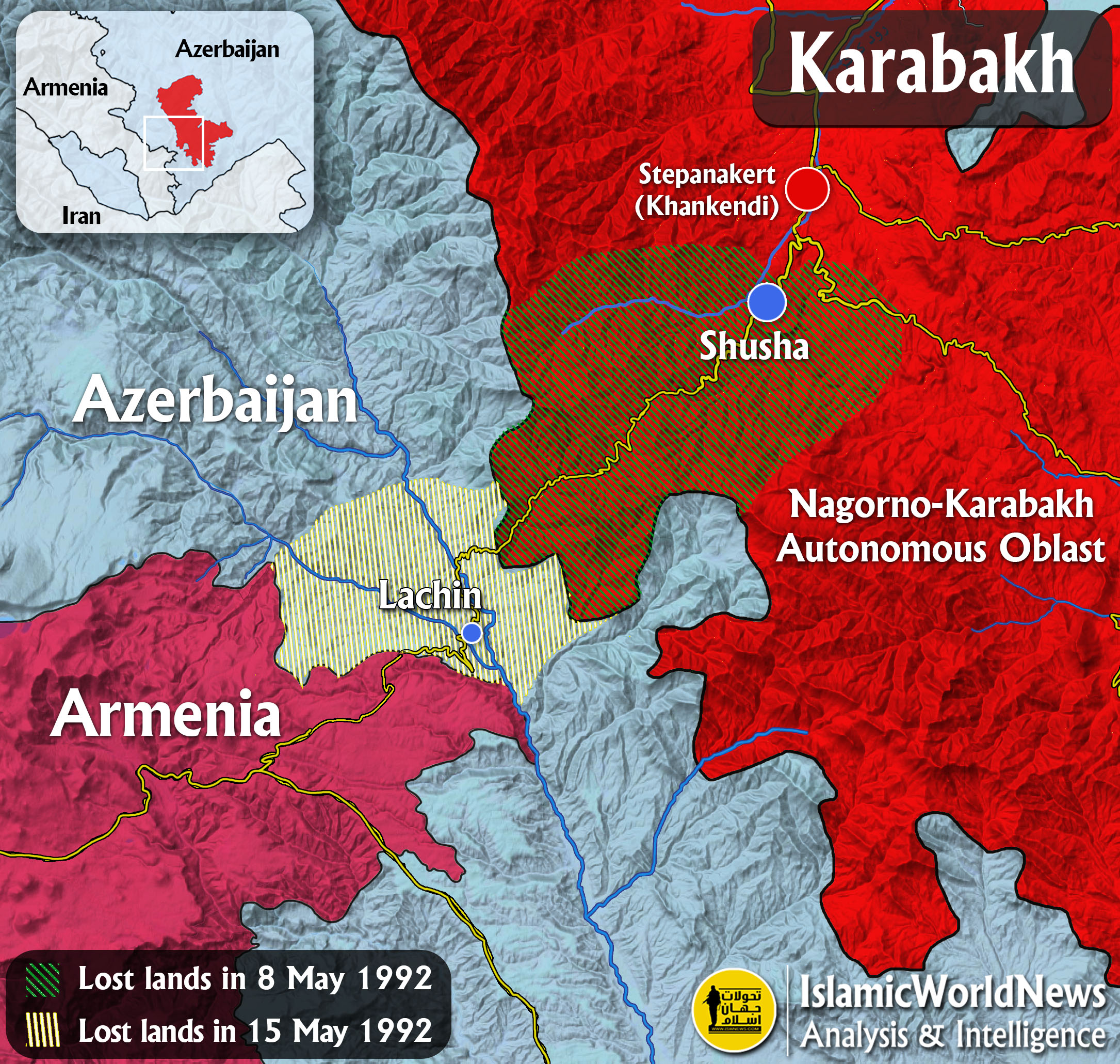
Click to see the full size map The map above shows the military situation before and after the start of the Azerbaijani army operation in Nagorno-Karabakh. The Azerbaijani army took control of more than 50% of the occupied territories in the south of Nagorno-Karabakh in a 44-day period from September 27 to November 10. According to the peace agreement reached between Azerbaijan and Armenia, the regions of Aghdam, Kalbajar and Lachin were handed over to the Azerbaijani government. Armenian forces now control about 55 percent of the “Nagorno-Karabakh Autonomous Region.”
Aliyev’s iron fist in Nagorno-Karabakh!
The President of Azerbaijan on Thursday, July 15, at a ceremony of handing over housing units and cars to the wounded and families affected by last year’s war in the town of Khojavand, Nagorno-Karabakh (Azerbaijani-controlled areas) explained Azerbaijan’s position on territorial policy and the issue of refugees. Elham Aliyev spoke about the return of the Goycha and Zangezur regions to the rule of the Republic of Azerbaijan and the return of the Azeris of Armenia And he mentioned this issue as a necessary condition for the permanent implementation of the peace agreement with Armenia. (About 300,000 Azeris were displaced from Armenia from the Goycha and Zangezur and Yerevan regions between 1988 and 1991, causing Armenian-Azeri tensions. This group is known as the “Yeraz” and is part of the Aliyev family.)
“When all communications are opened, we, the people of Azerbaijan, will return to their ancestral land, of course. The 10 November Trilateral Declaration states: all refugees must return to their homeland. Our native land is Zangezur; our native land is Goycha district, Iravan. We will definitely return there,” Azerbaijan President quoted Aliyev as saying.
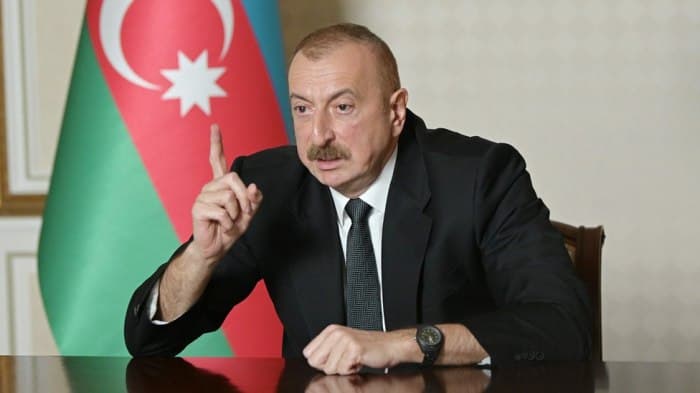
He stated that the political solution is the most logical option for this position. Emphasizing his country’s determination to implement these cases, Aliyev warned the Armenian side to implement the terms of the ceasefire agreement before its military action and to hand over the construction of the Zangezur corridor to Azerbaijan. The President of Azerbaijan also claimed the dissolution of Autonomous Republic of Nagorno-Karabakh and creation of the Nagorno-Karabakh Economic Zone. He stressed that the residents of this region must accept Azerbaijani citizenship or go to Armenia forever. Aliyev also said that if the Armenian authorities in Nagorno-Karabakh resist like last year war, he will hit them with an iron fist and will make them runaway like a dog!
Does Aliyevsend a message of war?
Elham Aliyev’s remarks in the Khojavend region, the southeastern territories of Nagorno-Karabakh and the proximity of areas controlled by Armenian forces can be seen as a signal to the other side. The remarks come as Armenia weakens after the war and is in a political and judicial crisis after the parliamentary elections. So another war between Azerbaijan and Armenia is not so unlikely and could happen again. The Caucasus region, with a density of 80 ethnic groups and religions of Islam, Christianity, Jews and Zoroastrians, is one of the most tense military and security regions in the world. This geopolitical disorder is the result of the creation of small ethnic states where races live intertwined.
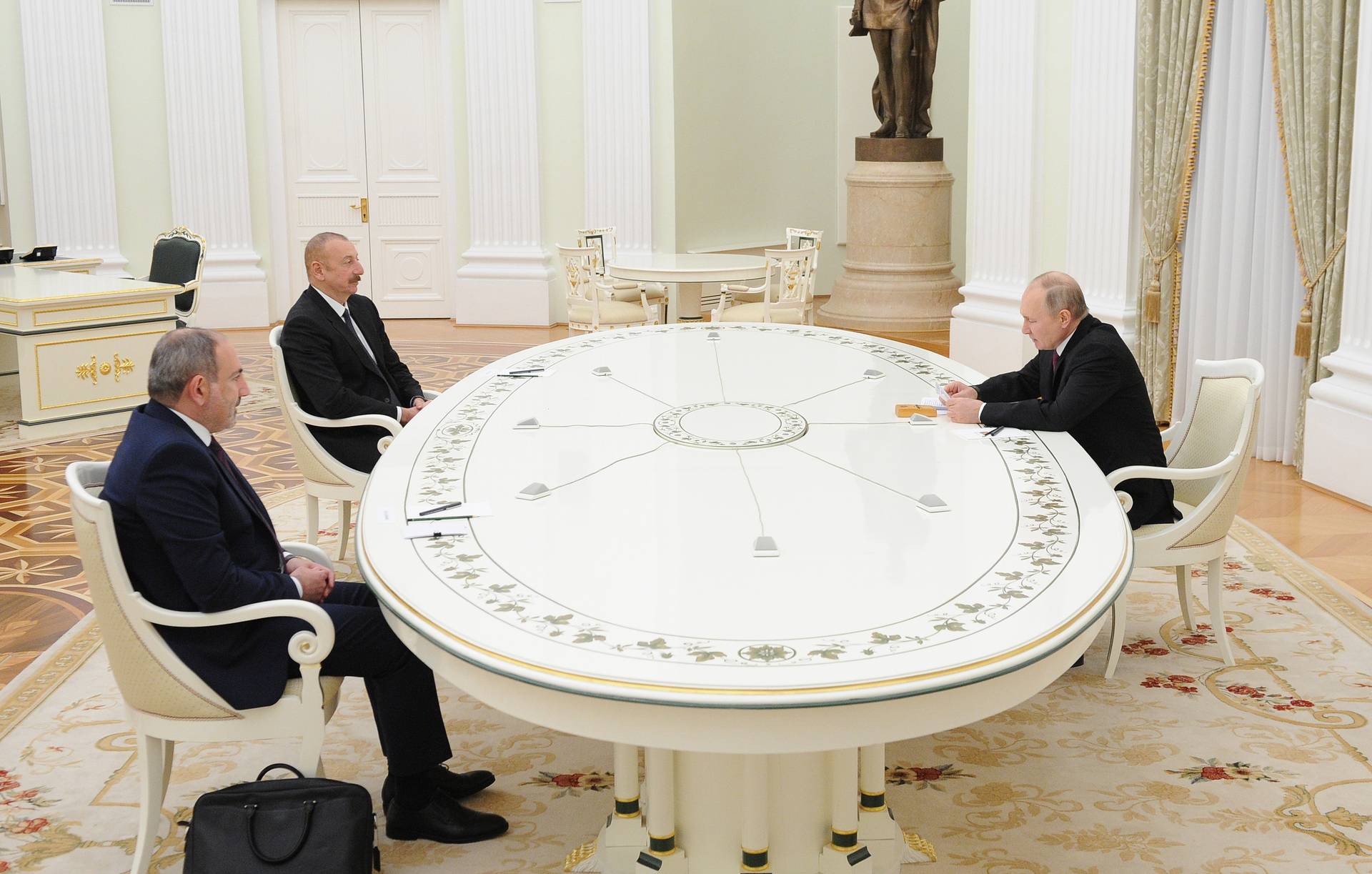
It was an interesting meeting specially after a 44 days war, in which more than six thousand people killed in Karabakh and then Aliyev and Pashinyan met like two good boys with their boss Putin and listened to him.
Following this four hours meeting, three countries unveiled a joint statement to create a list of joint projects to open the borders. There are not much details regarding the new agreement but it is in the same direction as the previous Karabakh ceasefire agreement.
Pashinyan spokesperson said before the meeting that important projects already are being investigated and talked over, one of which is to permit Armenia to cross Nakhchivan and transit to Iran, as well as using the railroad built in USSR era which was used to connect Yerevan to the southern regions of Armenia.
According to this trilateral agreement, each country forms a committee of specialists led by the vice PMs to make a list of joint projects for the leaders of the countries.
Russian paper Kommersant released a railroad map of Caucasus two days ago, which was the same railroad built in USSR era and was closed since the first Karabakh war in 1990. It is going to be open with the new agreement.
Regarding opening this important railroad, which is one of the articles in Karabakh ceasefire agreement, we have mentioned in previous articles. Following Karabakh ceasefire agreement, some claimed the southern corridor means to cut Iran-Armenia border, which was wrong from the beginning.
This railroad will connect Armenia to Russia through Azerbaijan and will be used for transit to Iran as well. On the other hand Azerbaijan will connect to Nakhchivan area and Turkey through Armenia.
This new agreement will have huge impact on different aspects of Caucasus area and each side will get benefited. Although Putin said that the agreement will be useful for all the countries of Caucasus but obviously not on the same level.
Russia and Turkey undoubtedly will get the most of it. Russia restored its hegemony after a 30 years period of weak presence in the area and Turkey as a new player in the Karabakh, has greatly strengthened its foothold in the region and will strengthen its ties with Central Asian countries by connecting the Caspian Sea; Azerbaijan, while regaining its vast occupied territories in the south of Karabakh, was directly connected to the Nakhchivan region and of course to Turkey, and largely overcame the previous problems; Armenia will also benefit from direct connection to Russia and better connection to Iran, and by opening its western border with Turkey will benefit from trades with this country too. And finally, Iran, as the civilization and cultural owner of the Karabakh region, will have the least benefit from the events in Karabakh and the reopening of a new transit route; and Iran political and economic influence in the Karabakh region will be greatly reduced.
Ilham Aliyev on an interview with Turkish TV channel “A Haber” on Friday said: Armenia is procuring drones, Kornet and Konkurs anti armor missiles and SAMs illegally from Armenian businessmen. Russia stated they didn’t sell any weapon to Armenia and if they do it is a war crime. He added: Not only there is no evidence that Iran has sent any weapon to Armenia, but also Iran and Georgia have closed its aerial and ground border on sending any weapon to Armenia, thus we thank Iran and Georgia once more.
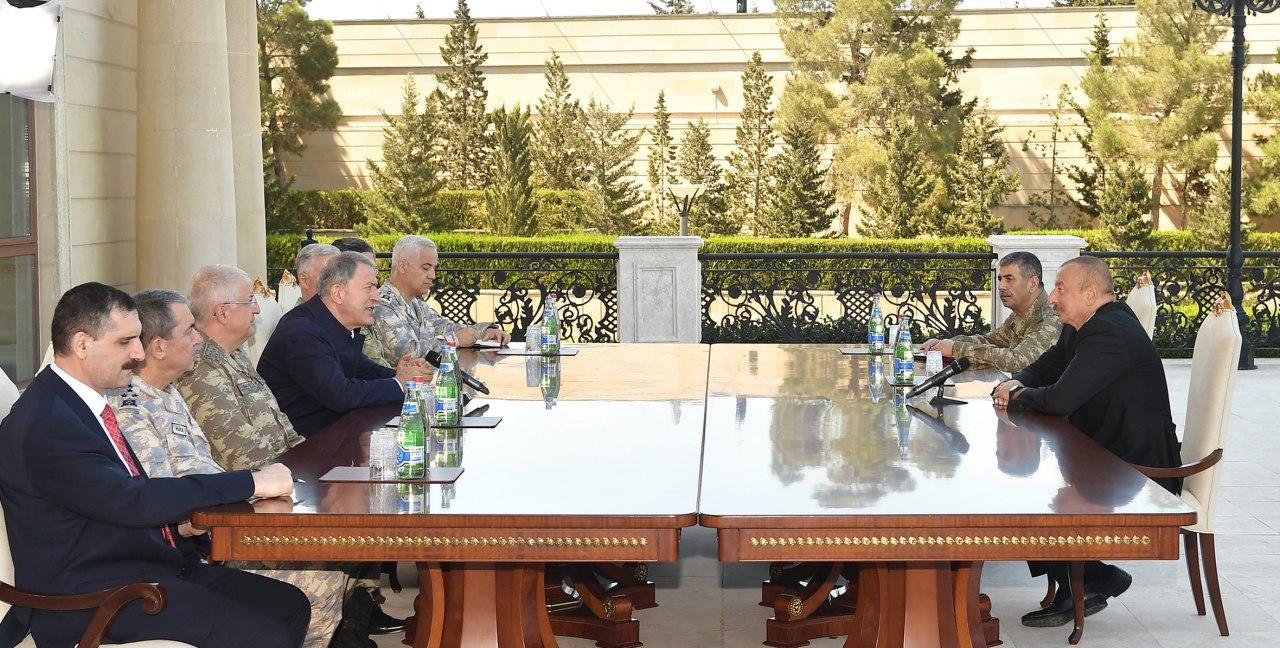
Ilham Aliyev, beside expressing the satisfaction with the development of relations between the two countries, noted that the recent military cooperation was not only limited to a usual exercise and the armed forces of the Republic of Azerbaijan were training under the supervision of commanders from the Republic of Turkey; that first step of these trainings was over today.
Aliyev also mentioned to removing some concerns of foreign countries about military activities of Turkey in Republic of Azerbaijan; that it seems to be a mention to phone call with Vladimir Putin on yesterday. Also, Holusi Akar the Turkish defense minister, with expressing satisfaction and solidarity between the two nations, added that Republic of Azerbaijan will not be alone in difficult days.
In the critical days of the recent two months, Ilham Aliyev simultaneously dismissed some pro-Russian political figures and arrested some political figures close to Turkey. Today, his mentioning to removing concerns of Russia is also notable in its kind.
Ilham Aliyev in his ceremonial speech, decried the previous ruling party (Azerbaijani Popular Front Party and Musavat Party) and said the new oil field increases the income of the government. It is said that the new oil field will be operational until the end of the year.
The discussions and headlines of each of the two countries were focused on domestic topics which brought up discords between political movements and reduced the tension between both countries. It seems each government is trying to point the arrow toward their domestic adversaries to stabilize their own powers.
Following the tensions in border area Tavush-Tovuz, the union of adversary movements and parties in Azerbaijan entitled “National Council” supporting the ruling party emphasized on unity against Armenian enemy. Even some Islamic figures, who have been sentenced to long time imprisonment, issued statements stressing “fight until the last blood” from behind the bars which showed an unprecedented unity.
However less than three days, Ilham Aliyev in his speech, which was released on presidential website, talked about the memories of the era Azerbaijani Popular Front Party was ruling and complained about their irresponsibility which is not related to the current situation whatsoever. This shows that attacking domestic opposition is more important for the president specially since he could remove figures close to Russia under the current crisis shadow.
These statements caused Azerbaijani Popular Front Party to change their stances, that was released just four days ago, and criticizing the government again. Aliyev did not stop there and attacked other leaders of National Council groups and scattered his supporters until that the opposition started conducting protests against the government which eventually resulted in arrest of some high officials of opposition parties.
The last scene of managing the crisis is to imposing the limits on commuting to fight Corona epidemic which actually neutralized the opposition groups since people won’t come out.
The political situation in Armenia was the same and similar situation happened in Yerevan. Before the crisis there were protests against the ruling party and now the government reduced opposition pressure under the shadow of foreign threat. Armenian PM accused Aliyev of provoking the tension to suppress the opposition on the first day of conflict but Azerbaijani media accused Pashinyan of the same thing, and the incidents of past two weeks show both countries are on the same route.
It can’t be overlooked that other scenarios such as war could help the extreme groups to reach power and worsen the crisis.
I’d like to thank readers for their confidence and support. Thanks to your support we can continue to perform our duty on reporting the important events in the region. So If you like our contents, please don’t feel embarrassed to contribute and help our project, for as little as 1 Dollar. Your contribution, however small, will help ensure our project continuity. Thank you.
Ilham Aliyev in a meeting with high commanders of army in a military base two weeks ago talked about treachery of a “Azerbaijani Popular Front Party” in 1992 which gained power by giving the town Shusha to Armenia in Nagorno-Karabakh war. Although talking about it is not a new subject in Azerbaijan media and many analysts knew it already, however, digging what Ilham Aliyev stated has an important aspect which involves Islamic Republic of Iran and Azerbaijan media won’t talk about that aspect never.
Ilham Aliyev speech regarding Azerbaijani Popular Front Party treachery
Azerbaijani Popular Front Party In the last years of Soviet era, political and racial crises in addition to conservative policies if communism, prepared a situation for radical movements and parties to expand including “Azerbaijani Popular Front Party”. The leadership was a hardcore fan of Pan-Turkism since the beginning and inclined toward Turkey. Calling northwestern provinces of Iran “Southern Azerbaijan” and slogan of “one nation, two governments” are among their inventions.
With the help of reforming and daring behaviors Azerbaijani Popular Front Party could absorb the Azerbaijani refugees rejected from Armenia which enabled the movement to have a more important role in Karabakh conflict. The ever increasing tension in Karabakh and transforming into an armed crisis in the last days of communism sovereignty, emphasized on the importance of having army for everyone. Azerbaijani Popular Front Party, the biggest and most important party of the time, could get armed just before the independence of the Republic.
The evolutions suggested Azerbaijani Popular Front Party is the main candidate for the leadership of the newly independent Azerbaijan Republic but the parliament reassigned Ayaz Mutalibov, the last communist leader of Azerbaijan, with the condition to abolish communism party and swear to the new republic.
While the newly formed government did not have an army and tensions increasing everyday in Karabakh, there was the necessity for an armed party, therefore Azerbaijan divided between former communist politicians in power with Azerbaijani Popular Front Party and its armed supporters controlling the critical areas.
There was a harsh competition between the government without army (former communists) and the army without government (Azerbaijani Popular Front) and each side was trying hard to compensate for their weakness. It is obvious that such a critical situation is in favor of Azerbaijani Popular Front, since they can increase their power using their armed supporters. At the same time, Ayaz Mutalibov government was negotiating with Armenians over Karabakh, which was an alarm for Azerbaijani Popular Front, since after the crisis is overcome the government would naturally turn toward armed militia to disarm them.
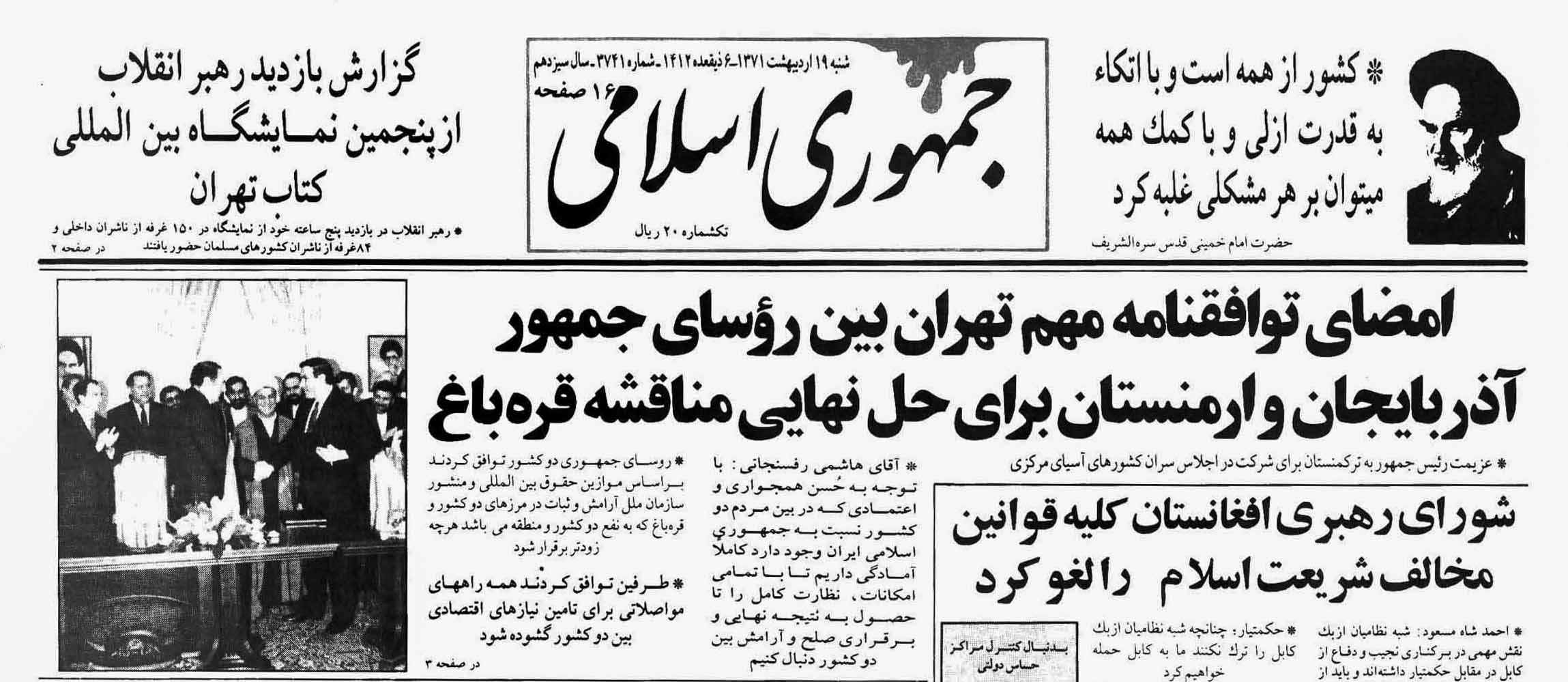
Iranian peace and foreign coup On 7 May 1992 presidents of Armenia and Azerbaijan met in Tehran. In the joint statement of three countries presidents it was mentioned that there will be a seven days ceasefire and delegates of both side start negotiations in Karabakh with supervision of Iran FM.
Signing the agreement of Karabakh- Tehran, 7 May 2020
Obviously Caucasian political sides did not like it, as Iran took the upper hand to solve the issue of Karabakh, having more influence than Turkey and USA. As mentioned above, Azerbaijani Popular Front also did not want the conflict to be solved by Ayaz Mutalibov government. Beside their political future was in danger with their extreme anti-Iran policies, therefore, on 8 May 1992 (just one day after the agreement in Tehran), 2,500 militia affiliated to Azerbaijani Popular Front left Shusha town around 20:00 and the remaining forces could not defend against 700 Armenian soldiers and the town and surrounding villages fell.
Azerbaijani Popular Front Party hoped that many protests would rise in different parts of the country and the government would resign under pressure of people and the parliament, but it didn’t happen so leaders of Azerbaijani Popular Front Party tried another plan. Azerbaijani Popular Front Party recalled their forces from the front lines to the capital for a coup which caused Armenians to occupy more lands.
Despite of no evidence of foreign influence in the coup, the new government leans toward Turkey and USA greatly and ditched Iran out of Karabakh conflict entirely. Iran’s FM deputy traveled to Baku after the incidents but new officials of Azerbaijan showed no interest in Iran role in Karabakh conflict and repeated their claims over northwestern provinces of Iran.
Heritage of “Azerbaijani Popular Front Party” rule Azerbaijani Popular Front Party era, since the very beginning, faced many challenges. Leaving border stations by Azerbaijani Popular Front militia to do the coup, left them to Armenians and with ground connection between Armenia and Nagorno-Karabakh Autonomous Oblast, gave Armenia upper hand. Before Armenia was only the supporter of Armenians of Karabakh on the paper but now the lost villages and towns were victims of political ambitions of Azerbaijani Popular Front Party, which never taken back.
Having open relationship with Israel and cold relationship with Iran are among the important changes in foreign policy of that time. One year later, not only Azerbaijani diplomats sent to Turkey to seek military aid returned empty handed, but Turkey even did not stop exporting electricity and wheat to Armenia and this put a lot of pressure on ruling party by Azerbaijan media until some political movement even demanded reform in relationship with Iran and asking Islamic Republic to supervise solving the issue of Karabakh. Therefore, in order to control the public mind, the State minister of Azerbaijan raised the myth of Iran’s support for the Republic of Armenia during the Nagorno-Karabakh conflict, but nevertheless, the sending of humanitarian aids to refugees of Azerbaijan never stopped by Iran.
I’d like to thank readers for their confidence and support. Thanks to your support we can continue to perform our duty on reporting the important events in the region. So If you like our contents, please don’t feel embarrassed to contribute and help our project, for as little as 1 Dollar. Your contribution, however small, will help ensure our project continuity. Thank you.
Azerbaijani President Ilham Aliyev confirmed this in a video conference with senior army commanders this evening, accusing Armenia of unilaterally violating the ceasefire by suddenly opening artillery fire on Azerbaijani territory.
Armenian Prime Minister Nikol Pashinyan, at today’s cabinet meeting also accused Baku officials of creating controversy in order to avoid internal problems.
The European Union and the Russian government in separate statements expressed concern about the escalation of tensions in the South Caucasus and called on the two governments to avoid further tensions.
Aref Hajili the leader of Musavat (equality) party emphasizing on the published images about cheating in the counting of the votes in some of voting centers, and with showing some of vote sheets to journalists, announced that the results were predetermined. None of the party’s 60 candidates are named among the winners.
The Alternative Republican party is objecting to the results of election,too. Ali Karimli the leader of Azerbaijan People Front that had boycotted the elections before this, has called for a public demonstration.
Ilham Aliyev president of this country in response to these controversy, announced: The election has been held in a democratic way and if people have any protest about it, will raise their voice.