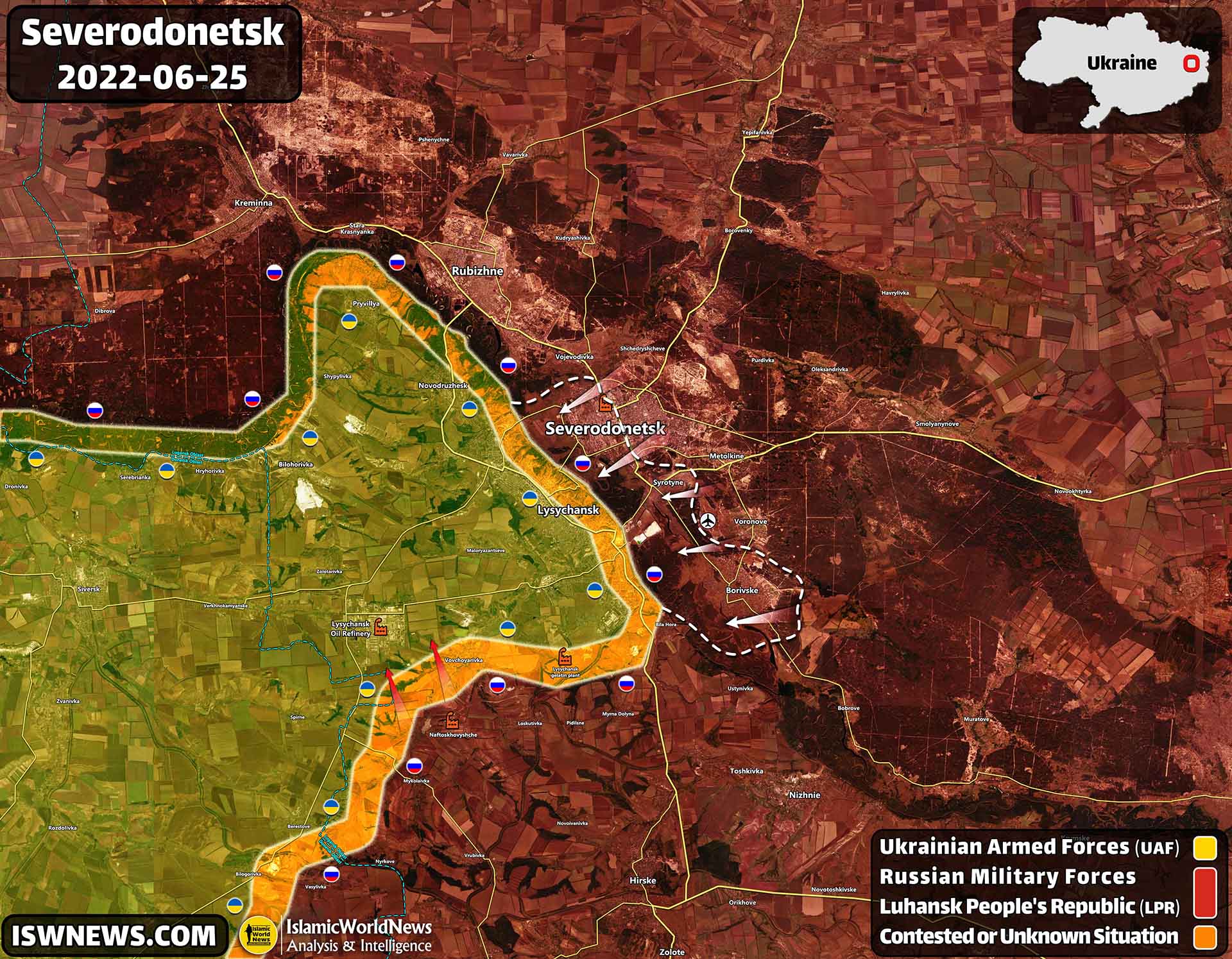
During the Russian advance, in addition to the city of Severodonetsk, the Syrotyne and Borivske settlements also came under Russian control. According to the information provided, the newly captured areas is about 145 square kilometers. However, the resistance of the Ukrainian forces in the city of Severodonetsk and the surrounding areas until the last day was very good and notable; But now, with the Russian occupation of the city, the morale of the Ukrainian forces to maintain the remaining areas in the Luhansk oblast will practically disappear, and we will probably see faster defeats and early retreats to the Bakhmut-Slavyansk-Kramatorsk line.
Currently, most of the clashes are concentrated in the Vovchoyarivka area and south of the Lysychansk refinery. The purpose of the Russian advance on this axis seems to be to pressure the Ukrainian forces to withdraw from the city of Lysychansk.
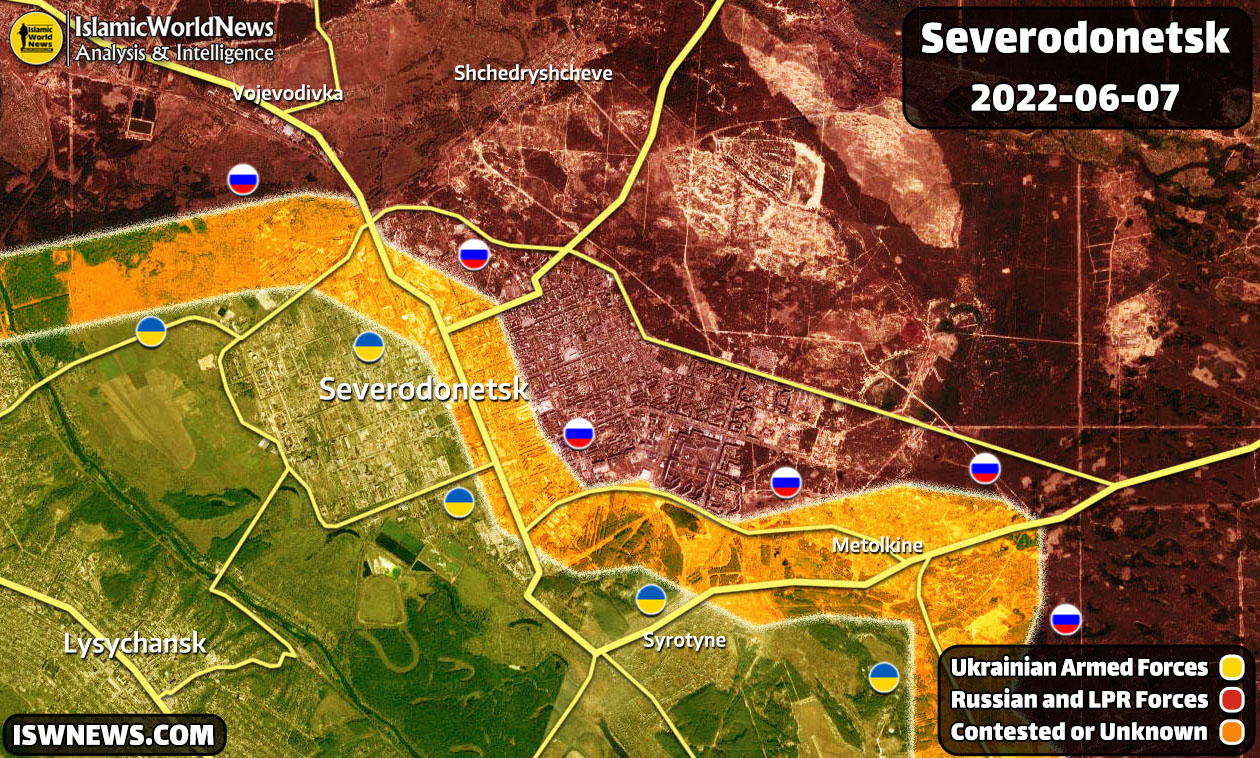
According to the latest news from the Severodonetsk front, clashes are taking place in the Metolkine district and the central areas of the city. Ukrainian sources claimed that they had taken control of the situation and claimed to have repelled Russian attacks. In total, more than half of the city of Severodonetsk has been captured by the Russian army, and clashes continue in the western half.
Severodonetsk is the name of an industrial city in the western part of Luhansk Oblast in eastern Ukraine. The city was chosen as the capital of Luhansk province in 2014 because the city of Luhansk came under the control of LPR forces. The city has several chemical plants and production centers called “Azot” (one of the largest chemical plants in Europe) as well as an airport in the southeast, which are important in recent conflicts.
The location and foundation of this city dates back to 1934 and is closely related to the city of Lysichansk. In fact, the proximity of the cities of Severodonetsk, Lysichansk and Rubizhne to each other has made them an important location.
The city was captured by Luhansk forces at the beginning of the 2014 conflict, but the Ukrainian army regained control of the city two months later. After that, the European Union, while supporting the Ukrainian army operation in Severodonetsk, announced that it would provide 93.8% of the reconstruction costs of this industrial city. After the Russian invasion of Ukraine, the conflict on the western front of Luhansk resumed, and the Russian army, after the complete capture of the town of Rubizhne, began its attacks on May 8 to capture Severodonetsk.
Severodonetsk and Lysichansk are the last areas in Luhansk Oblast to be controlled by Ukrainian forces, and their fall marks the complete capture of the first Ukrainian province by Russia. Therefore, the resistance of the Ukrainians in these areas will be fierce, and the Russian army must use a lot of power and equipment to capture it!
In recent days, with the infiltration of Russian and LPR forces from the east and north into the city of Severodonetsk and the occupation of the first residential areas, the urban war in Severodonetsk practically began. The advance of the Russian forces in the neighborhoods of the city is done in media silence, and only the images published by the Russian forces from inside the city confirm the amount of the advances.
At least one-third of the city is now under Russian and LPR control. According to some estimates, there are about 2,000 Ukrainian troops, as well as an unknown number of foreign fighters in the city of Severodonetsk. But with the Russian army advancing inside the city, most of these forces have retreated to the western part of Severodonetsk and will probably be pushed to Lysychansk soon.
The city of Severodonetsk, unlike the city of Mariupol, does not have strong defenses and the possibility of long-term resistance by Ukrainian forces seems unlikely.
In Donetsk Oblast, on the Mariupol front, on May 30, with the surrender of the last Ukrainian troops to the Russian army in the Azovstal industrial zone south of Mariupol, this important port city came under full control of Russia and its allies. The complete capture of the city would allow the Russian army and its allies to transfer troops from this town to other fronts and increase focus on advancing elsewhere.
In the north of Donetsk, sporadic clashes continue along the Gorlivka and Donetsk front lines. Field changes in this axis are slow. In recent weeks, Russian and Donetsk forces have made minor advances along this axis. The capture of New York near Gorlivka and the capture of Avdiivka near Donetsk are among the main objectives of the Russian military operation on this axis.
In the northeast of Gorlivka, Russian and its allies entered the Donetsk oblast from the Luhansk oblast and the Troitske and took control of the Myronivskyi area. The purpose of advancing on this axis is to capture Svitlodarsk and the surrounding areas of the lake and to secure the city of Gorlyuka from the northeast.
To the west of Donetsk, sporadic clashes continue along the front lines from Mariinka to Velyka Novosilka. Last month, the Russian army and Donetsk (DPR) forces launched an unsuccessful offensive to seize the Mariinka region. Currently, most of the clashes continue on the Mariinka, Novomykhailivka, Ogledar and Velyka Novosilka axes between Russian and Ukrainian forces. It seems that the Russian army and its allies do not have a serious intend to make progress on this axis at the moment, and clashes are taking place on this axis to keep Ukrainian forces busy.
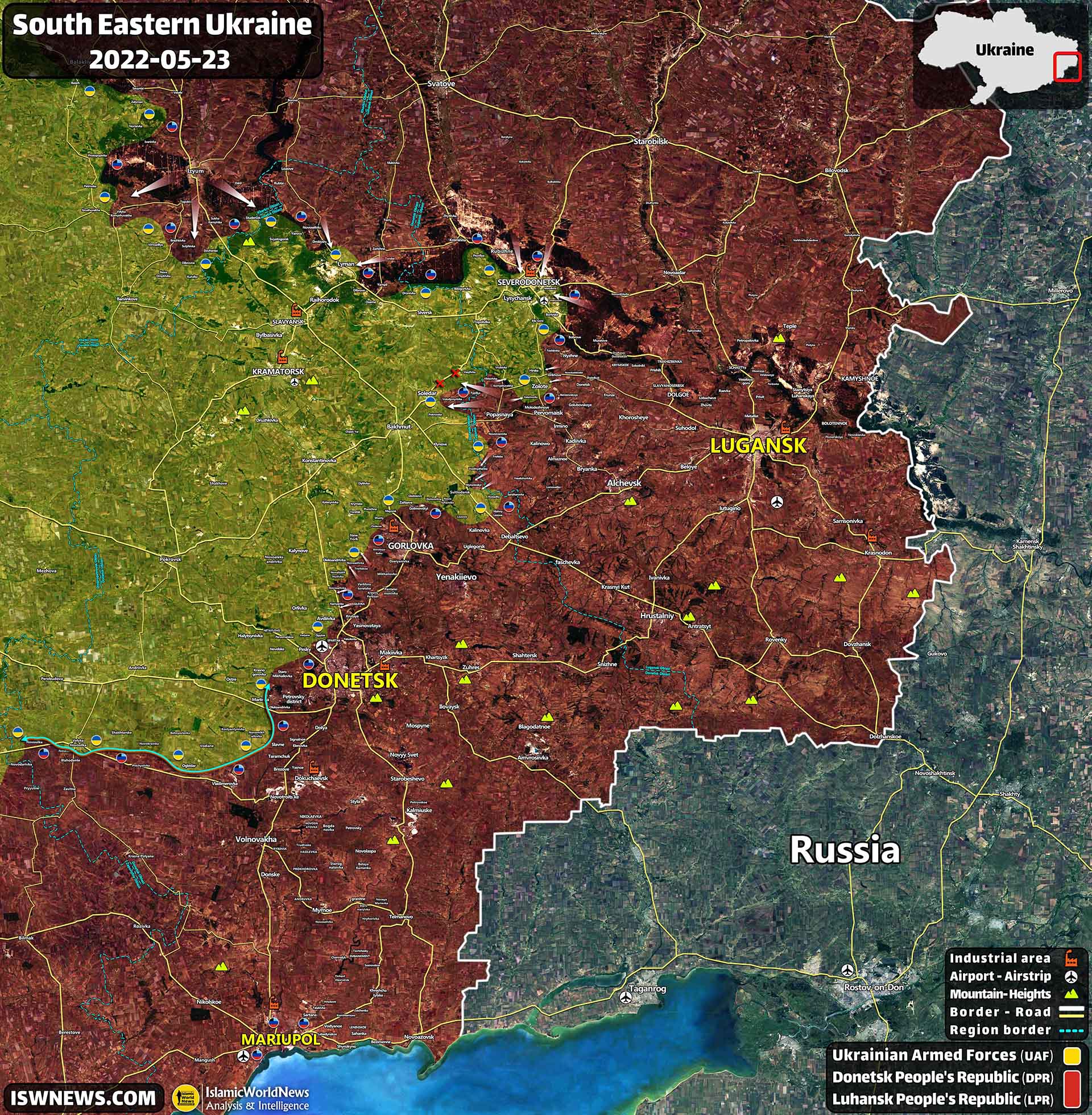
In the Luhansk oblast, clashes and field changes are taking place more intensely, and the completion of work on this oblast seems to be a priority for the Russian army and its allies. Now, 89 days since the start of the war in Ukraine, 95 percent of Luhansk oblast is under the control of the Russian army and its allies, leaving only the city of Severodonetsk and the surrounding area. Hence, the capture of the important and industrial city of Severodonetsk is the main and ultimate goal of the Russian army and Luhansk (LPR) forces in this area.
It should be noted that after the withdrawal of the Russian army from the northern fronts of Ukraine, the Russian army announced its focus on the liberation of the southeastern regions of Ukraine, and in particular the Donbas region. Since then, we have witnessed a change in tactics in the way the Russian army is advancing. Under the new tactic, key areas and areas where face fierce resistance by Ukrainian forces are bypassed by Russian forces and its allies, forcing the defensive forces to retreat from the area by creating an quasi-siege and increasing pressure. This tactic is clearly visible in the northern regions of Donetsk oblast and the Severodonetsk front in areas such as Popasnaya, Zolote, Lyman, etc.
On the Popasnaya front, in recent days and weeks, Russian forces and its allies have been able to expand their contact lines and reach the important town of Soledar from the west. With the advance on this axis, the logistic route of the Ukrainian forces from Bakhmut to the city of Severodonetsk was practically cut off. Ukrainian forces also came under a quasi-siege in the Zolote area. On the Lyman-Izyum axis, progress is slow, but Russian forces have expanded frontlines around Izyum over the course of a few weeks, advancing from village to village. And operations to capture the town of Lyman have also begun. According to the tactics adopted by the Russian army, it seems that all the progress made on these axes is made with the ultimate goal of completing the siege of the city of Severodonetsk.
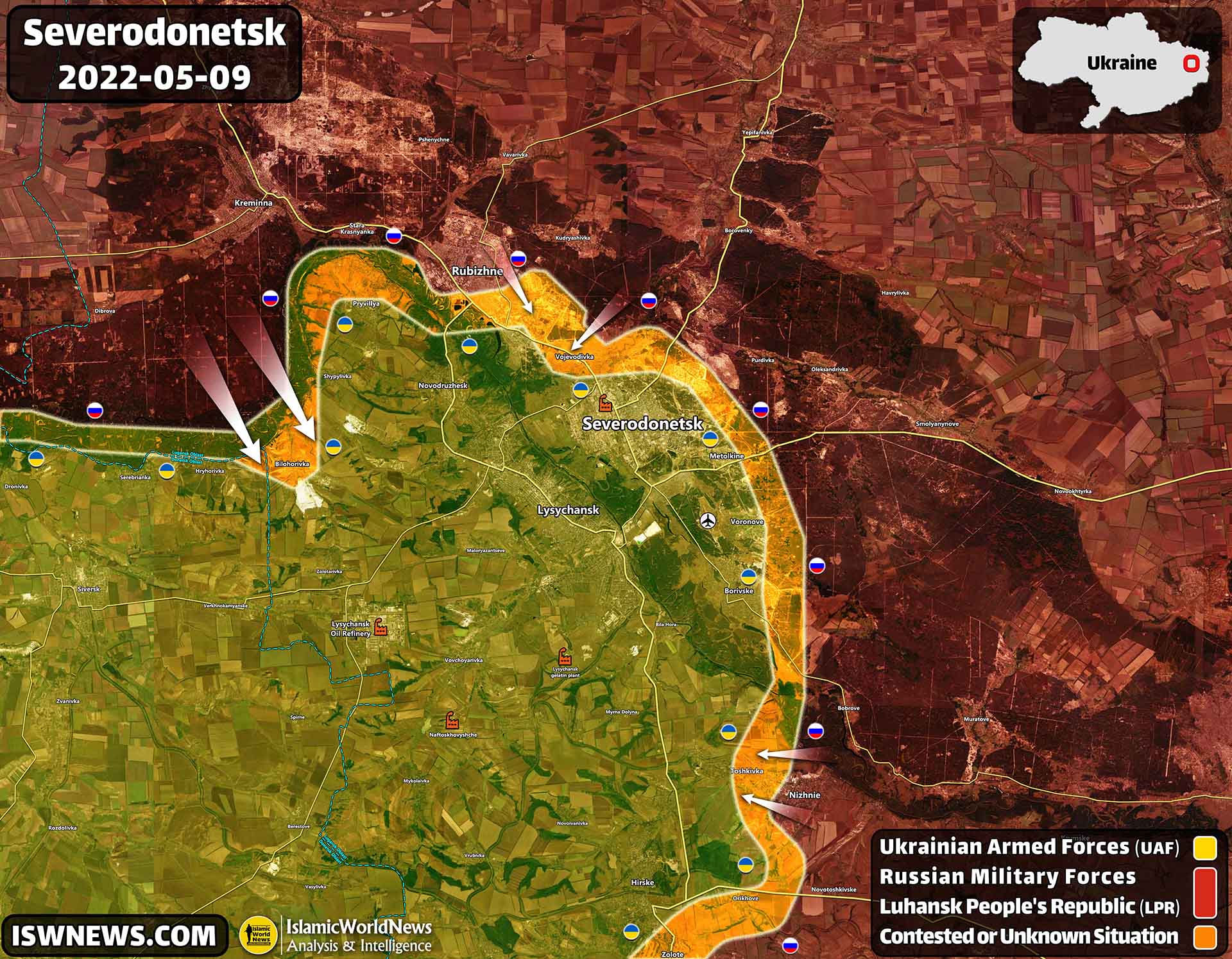
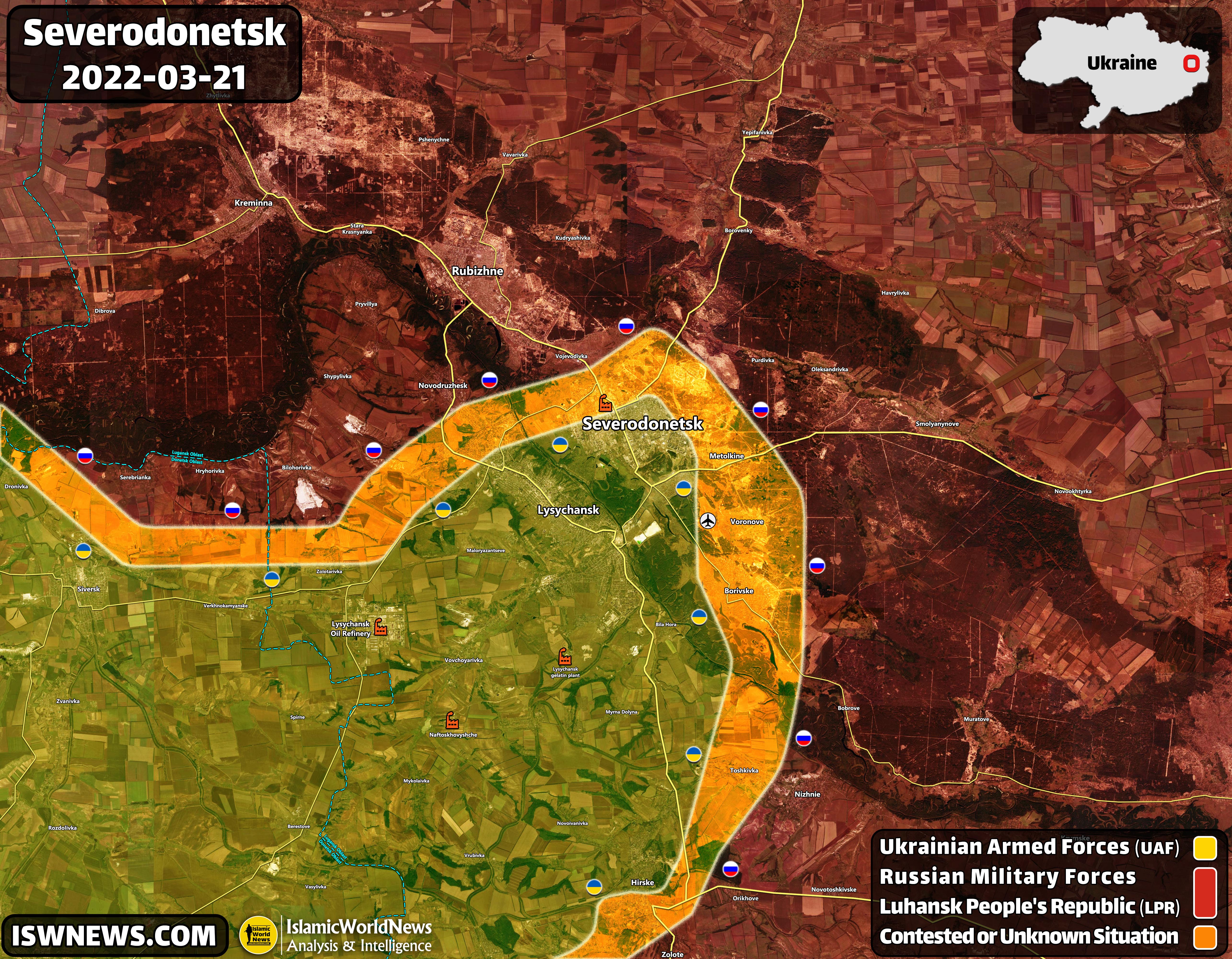
On the ciity of Severodonetsk front, heavy fighting continues around and at the entrances to the city. In recent weeks, Russian and LPR forces have been able to approach the city from both the northern and southern axes. In south of the city of Severodonetsk, clashes continue in the areas of Metolkine, Voronove and Syrotyne. On the northern front of Severodonetsk, heavy clashes continue at the northern entrances to the city. The Russian offensive is focused on the four main roads leading to the city. The Russian military has also blown up the main bridge between Severodonetsk and Lysychansk, with the aim of cutting off Ukrainian forces in the city of Severodonetsk from outside the city. The complete capture of the city of Severodonetsk plays an important role in determining the future of the battles in the southeastern regions of Ukraine.
According to the progress made until the 89th day of the war, about 55% of Donetsk oblast and 95% of Luhansk oblast have been captured by the Russian army and its allies.
In south of Severodonetsk, in recent days, Russian and Luhansk (LPR) forces have taken control of the town of Nizhnie from Ukrainian forces. Clashes continue in Toshkivka at the moment.
In the north of Severodonetsk, clashes continue near Vojevodivka and south of the city of Rubizhne. Pro-Russian sources claim control of the Vojevodivka area and complete control of the city of Rubizhne; But this news can not be confirmed yet. Advances in the city of Rubizhne have been stalled for weeks, and Ukrainian forces are resisting well. The capture of the Vojevodivka area by Russia and its allies will lead to the siege of the remaining areas in Rubizhne and the Ukrainian forces to withdraw from the city.
In west of Severodonetsk(southern Kerminna), Russian forces crossed the Siverskyi Donets River and attacked the Bilohorivka area.
In general, given the direction of the attacks, it seems that Russia’s ultimate goal in this axis is to encircle the cities of Severodonetsk and Lysychansk. According to Russia, about 8,000 Ukrainian troops are present in this region to defend Severodonetsk and Lysychansk. The cities of Severodonetsk and Lysychansk are one of the main hubs of Ukrainian industry in the east of the country, and its occupation by Russia is a severe psychological blow to Ukraine.
On March 19, Russian and Luhansk (LPR) forces took control of the town of Rubizhne in northern Severodonetsk. With the new advances, the siege of the city of Severodonetsk tightened, And the Russian and LPR forces reached the outskirts of Severodonetsk city.
Severodonetsk is located northwest of Luhansk city, the capital of Luhansk Oblast. Following the declaration of autonomy in Luhansk Oblast in 2014 and the seizure of Luhansk city by separatist forces, the Ukrainian government chose the city of Severodonetsk as the acting administrative center of Luhansk Oblast.
With the capture of the city of Severodonetsk and the surrounding areas, Luhansk Oblast will be completely under the control of Russia and Luhansk forces.
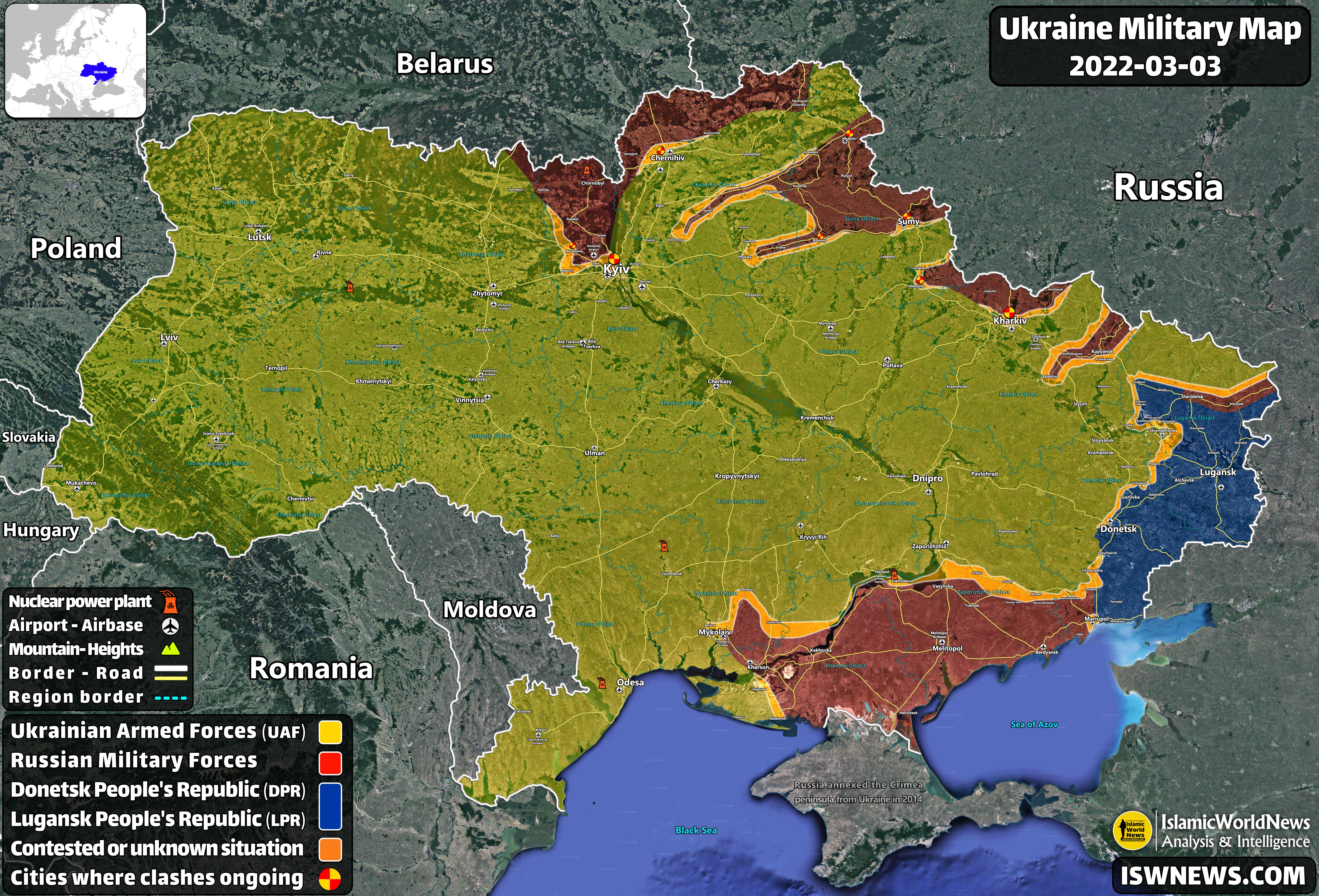
Southern and Eastern front: Heavy fighting continues at the entrances to Kharkiv between Russian and Ukrainian forces. Most of the military positions, as well as government buildings where the Ukrainian defenders are present, have been bombed by Russian warplanes and artillery. The lines of conflict in and around Kharkiv have not changed.
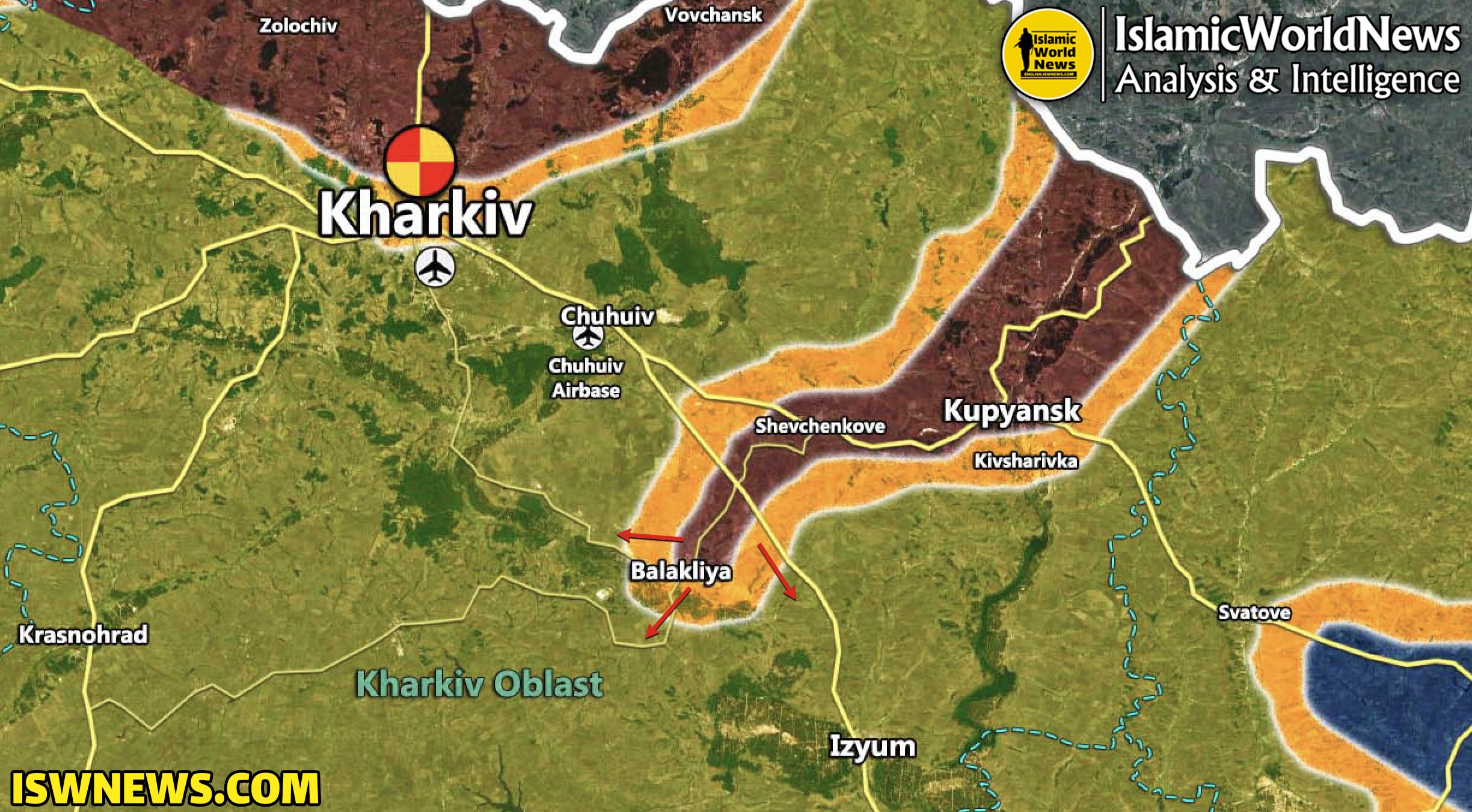
The town of Balakliya, south of Kharkiv, has been captured by the Russian army. The town of Balakliya is located on the Kharkiv-Donetsk road. Cutting this road by Russia will have negative impact on Ukrainian transfer of logistic on the eastern fronts of Ukraine.
Location of the town of Balakliya in the south of Kharkiv
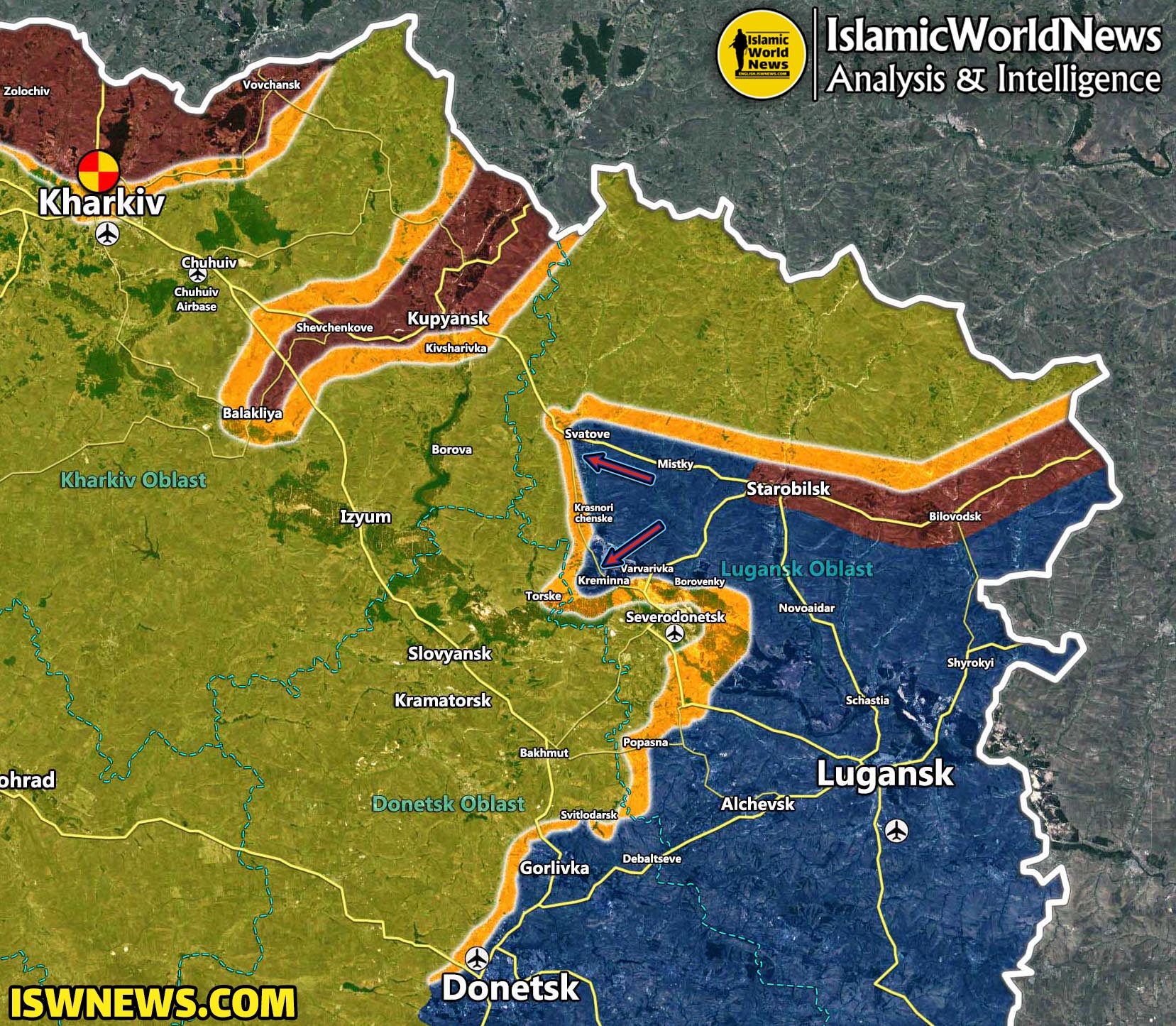
On the northern axis of Luhansk, the Luhansk Forces (LPR) and the Russian army took control of a number of areas and villages in the northern part of Luhansk Oblast. With the advances made, the important city of Severodonetsk came under a quasi-siege. Progress on this axis is slow.
On the Donetsk axis, clashes continue around and inside the coastal city of Mariupol, which is not yet in full control of Russian forces.
The situation on the northern axis of Luhansk and new advances in the region
In the province of Zaporizhzhia, the city of Vasylivka in the central part of the province was captured by Russian forces.
In Mykolaiv province, clashes continue on the outskirts of Mykolaiv, and some sources have reported the arrival of Russian armored forces in the city.
Northern front: For the second day in a row, the military situation on the northern fronts of Ukraine remains unchanged. Scattered clashes continue between Ukrainian and Russian forces around Gostomel and in the Borodyanka area. The current situation around Kyiv seems to be stable for a certain period of time as a lever of pressure to finalize the talks, and meanwhile most of Russia’s attacks will be carried out in the form of precision missile attacks on the city’s infrastructure. Fulfillment of Russia’s demands and conditions to the Kyiv government is a key factor in determining whether or not to continue land advances in and around Kyiv.
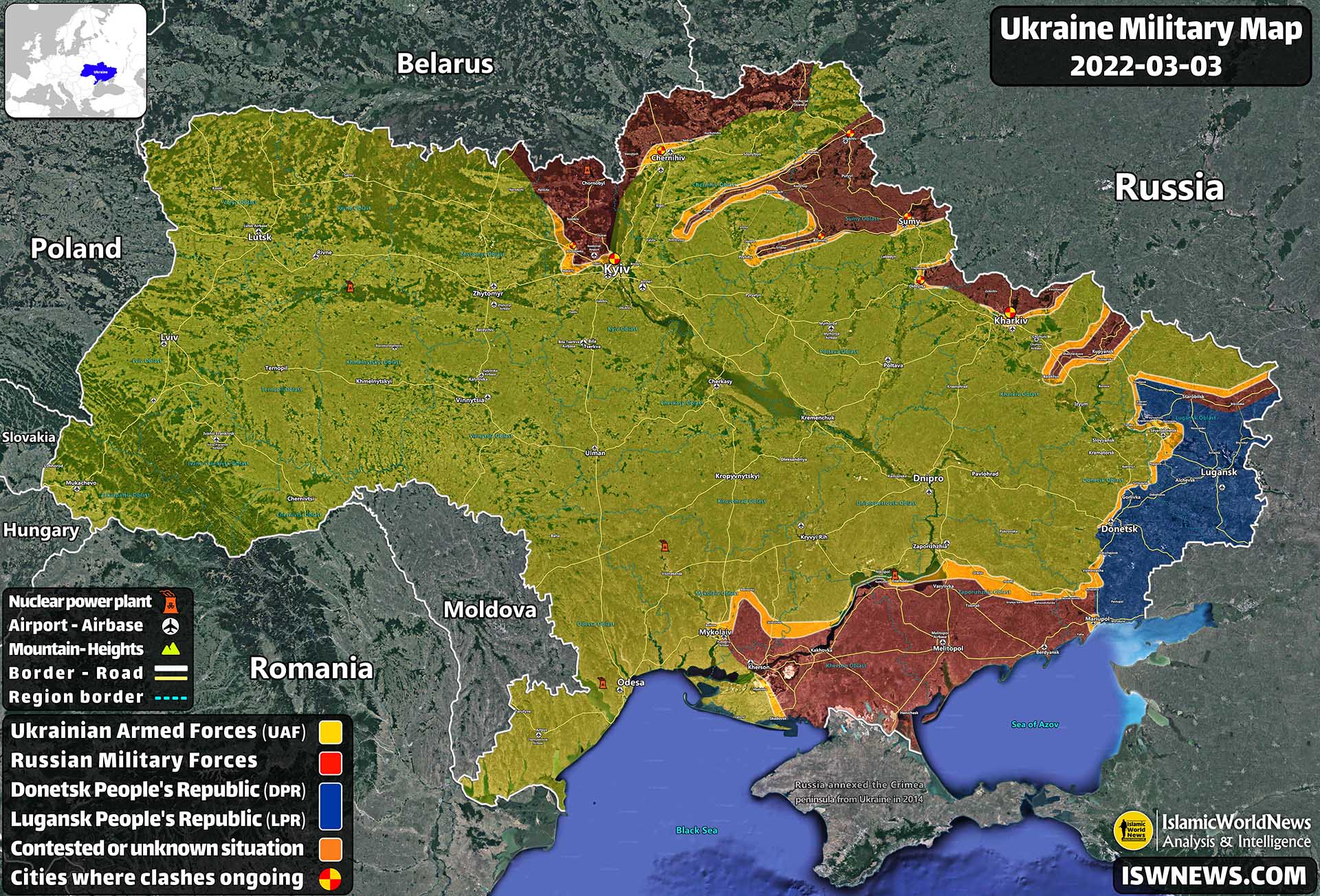
Overall, about 70% of Kherson Oblast, 50% of Zaporizhzhia Oblast, 20% of Mykolaiv Oblast, 50% of Donetsk Oblast and 60% of Luhansk Oblast in southern Ukraine are now under the control of the Russian army and its allies.