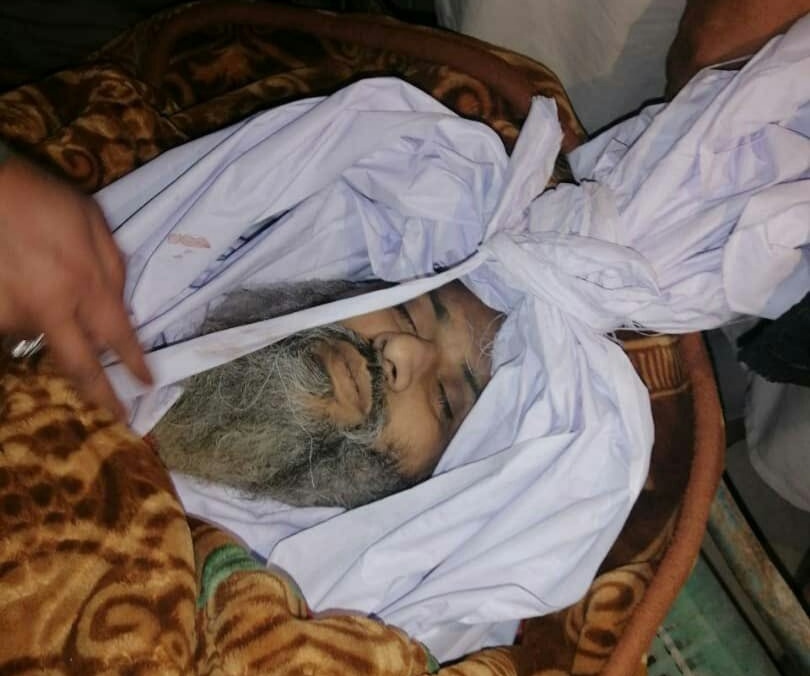
Hakim Sandahi, a senior member of the Tehrik-i-Taliban Pakistan, was shot dead by two unidentified motorcyclists in the second district of Kandahar on March 23. The assassination coincided with a Taliban summit on solving internal problems and a change of government cabinet in Kandahar.
So far, no individual or group has claimed responsibility for the assassination. But local media have accused ISIS as the main suspect in the assassination.
Sandahi was a resident of Punjab, Pakistan and a former member of the Lashkar-e-Jhangvi terrorist group. After splitting from Lashkar-e-Jhangvi, he joined the Tehrik-i-Taliban Pakistan (TTP) and later became a senior member of the group.
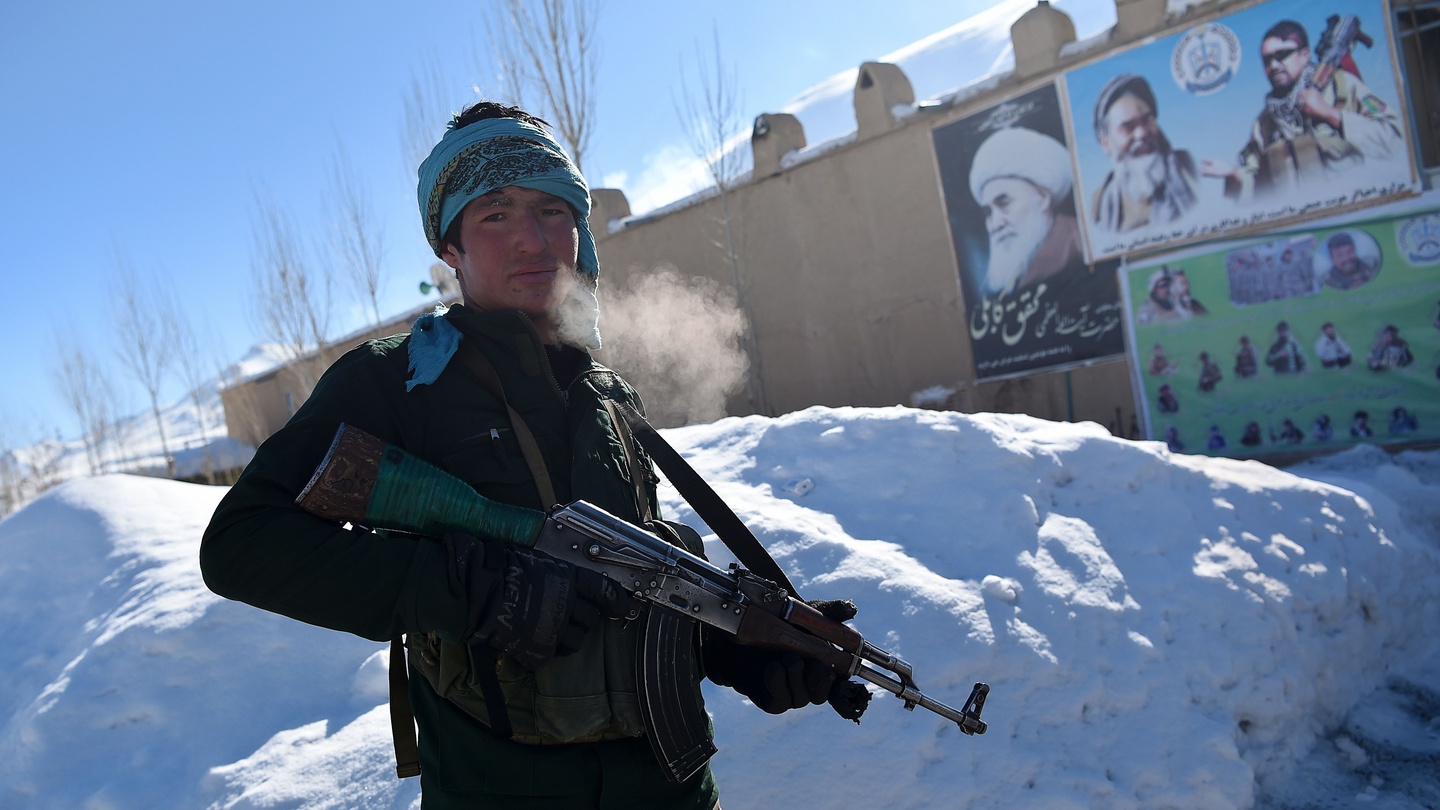
On March 25, an armed group called the “High Council of Resistance” led by Atta Muhammad Nur, the executive chairman of the Jamiat-e-Islami Party of Afghanistan, announced its existence. The group has stated that its goal is to fight the Taliban.
Simultaneously with this event, another armed group called the “Hazara Military Front” announced its existence against the Taliban. The group has announced its organizational framework based on following the ideas of the martyred “Abdul Ali Mazari”, the leader of Hezb-e Wahdat-e Islami of Afghanistan, and its goal is the armed struggle against the Taliban.
These are the third and fourth armed groups to declare their existence against the Taliban in recent months.
Earlier, the Afghan Freedom Front and the Turkestan Freedom Tigers armed group had launched guerrilla operations against Taliban positions and announced their existence.
With the onset of winter and severe cold in Afghanistan’s mountains, Taliban insurgency in Afghanistan is on the rise. This, along with the weak Taliban government, has caused great concern among the Afghan people and increased migration to other countries.
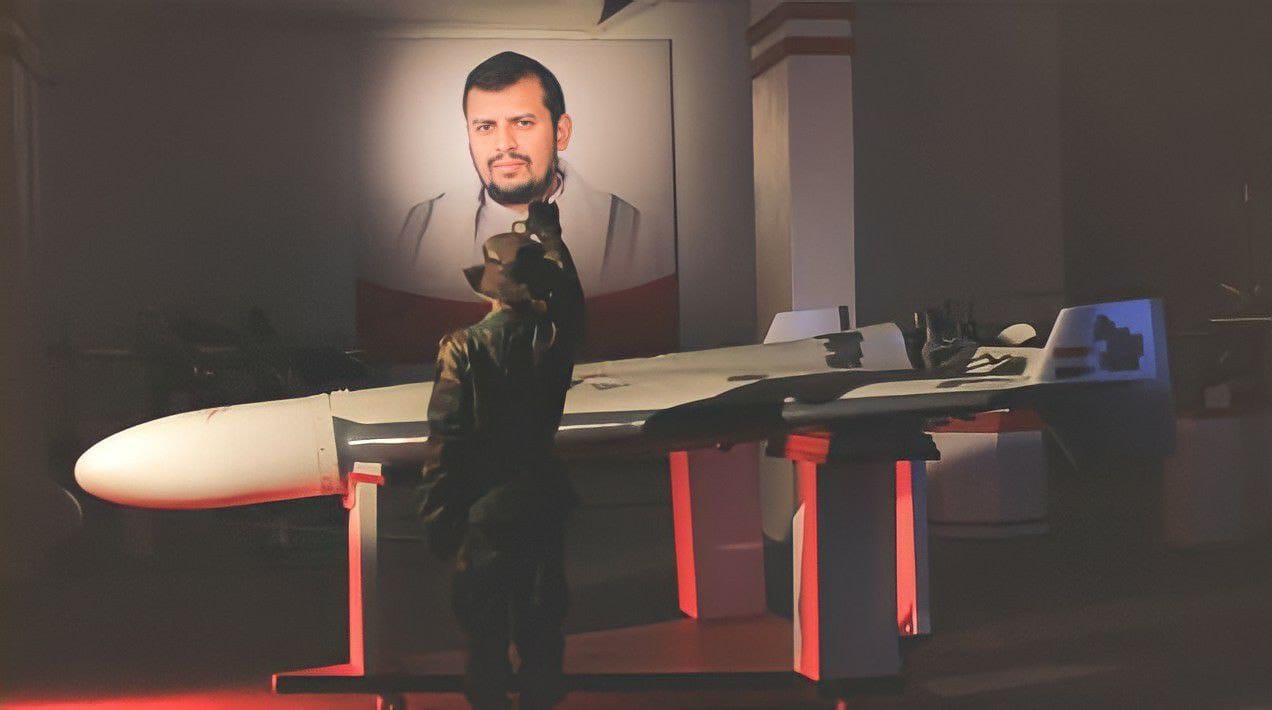
In a statement, Brigadier General Yahya al-Sari’, spokesman for the Yemeni Armed Forces, described the details of Operation Break Siege 3.
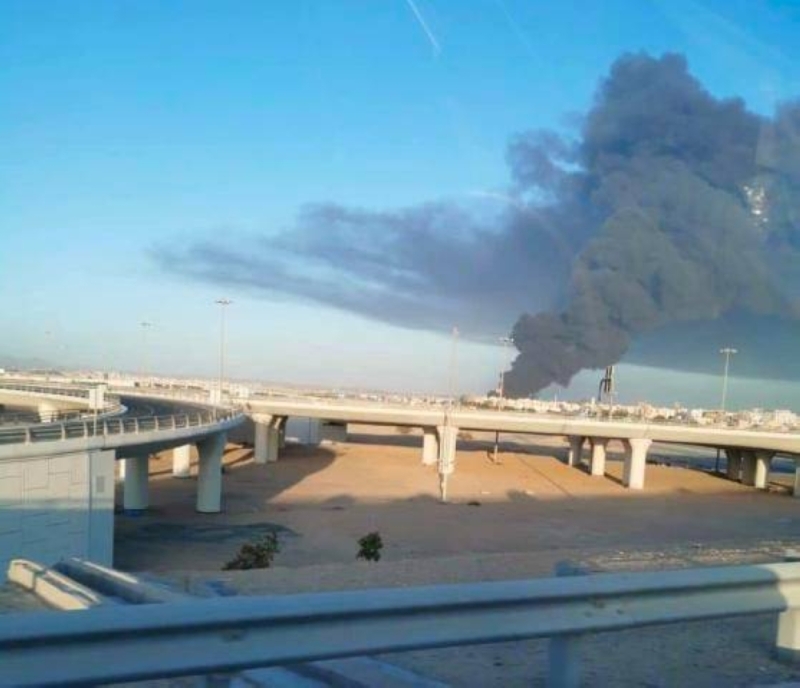
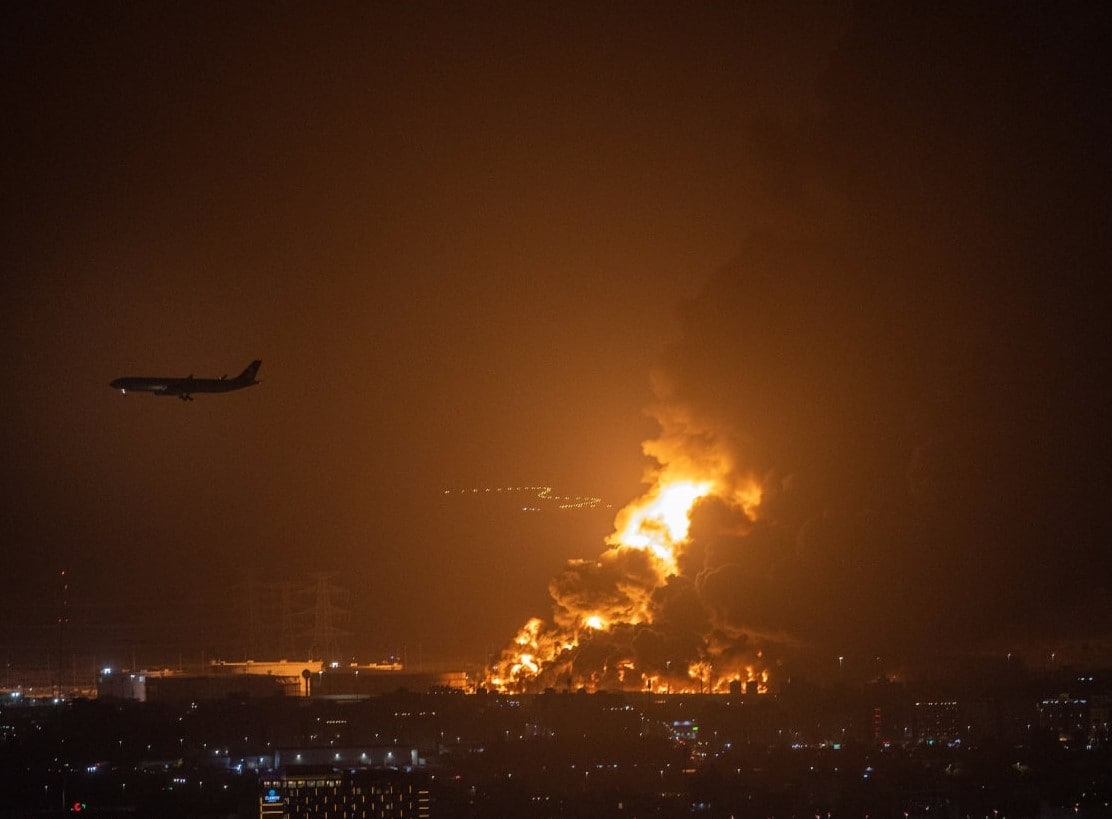
According to the statement, Ansar Allah targeted Aramco’s facilities in Jeddah and vital targets in Riyadh with cruise missiles, Ras al-Tanura and Rabigh refineries, and Aramco in Najran and Jizan with several suicide drones and other vital targets in Jizan, Abha, Khamis Mushait and Dhahran Al-Janub with several missiles.
As the name of operations implies, this series of operations by Ansar Allah is carried out in response to the Saudi coalition’s siege of Yemen. In the previous two operations, Operation Break Siege 1 and 2, Ansar Allah had also launched a large-scale missile and drone strike on Saudi military and infrastructures in various areas of Saudi Arabia.
Fire at the power distribution station in Samtah city due to AnsarAllah attackDamage to water tanks in Dhahran All Janub city in the Ansar Allah missile attackJeddah refinery tanks burning after attacksVideo No. 1: Fire in Jeddah refinery due to Ansar Allah attacksVideo No. 2: Fire in Jeddah refinery due to Ansar Allah attacksVideo No. 3: Fire in Jeddah refinery due to Ansar Allah attacksJeddah refinery burns after missile attack
A satellite image of Aramco’s facility in Jeddah shows the high level of damage by the Ansar Allah attack. Ansar Allah heavy blow resulted in fire and complete destruction of one tank and serious damage to five other tanks.
Satellite image of Aramco’s facility in JeddahHigh quality video from the moment Ansar Allah drone or missile hit the tanks of Aramco refinery in Jeddah
This missile was used during Operation Martyr Soleimani against the US forces at Ain Al Asad Airbase, Iraq, and the very high accuracy of this missile was proven. Fateh-313 missile with a maximum error rate of 3 meters is one of the most accurate missiles in Iran and the world.
In this missile, by using more advanced inertial navigation and possibly combining it with satellite navigation, a kind of terminal guidance has been obtained, which has provided the ability to guide the Fateh-313 missile until it hits the target.
The Fateh-313 is almost identical in length and diameter to the Fateh-110 missile; But the use of the new propulsion system with more power generation capacity has increased the missile range from 200 km to 500 km. This missile uses “composite solid fuel” unlike the Fateh-110 missile, which uses solid fuel. The use of composite solid fuel results in better fuel efficiency, greater safety and greater stability of the missile during flight.
The expanded range of the Fateh-313 makes more targets available to Iran, and due to the high accuracy and capability of using a mobile launcher and move the missile anywhere in the country allows Iran to fire its missiles from more locations within its territory, complicating the enemy’s attempts to attack the missile launchers before the missiles can be launched.
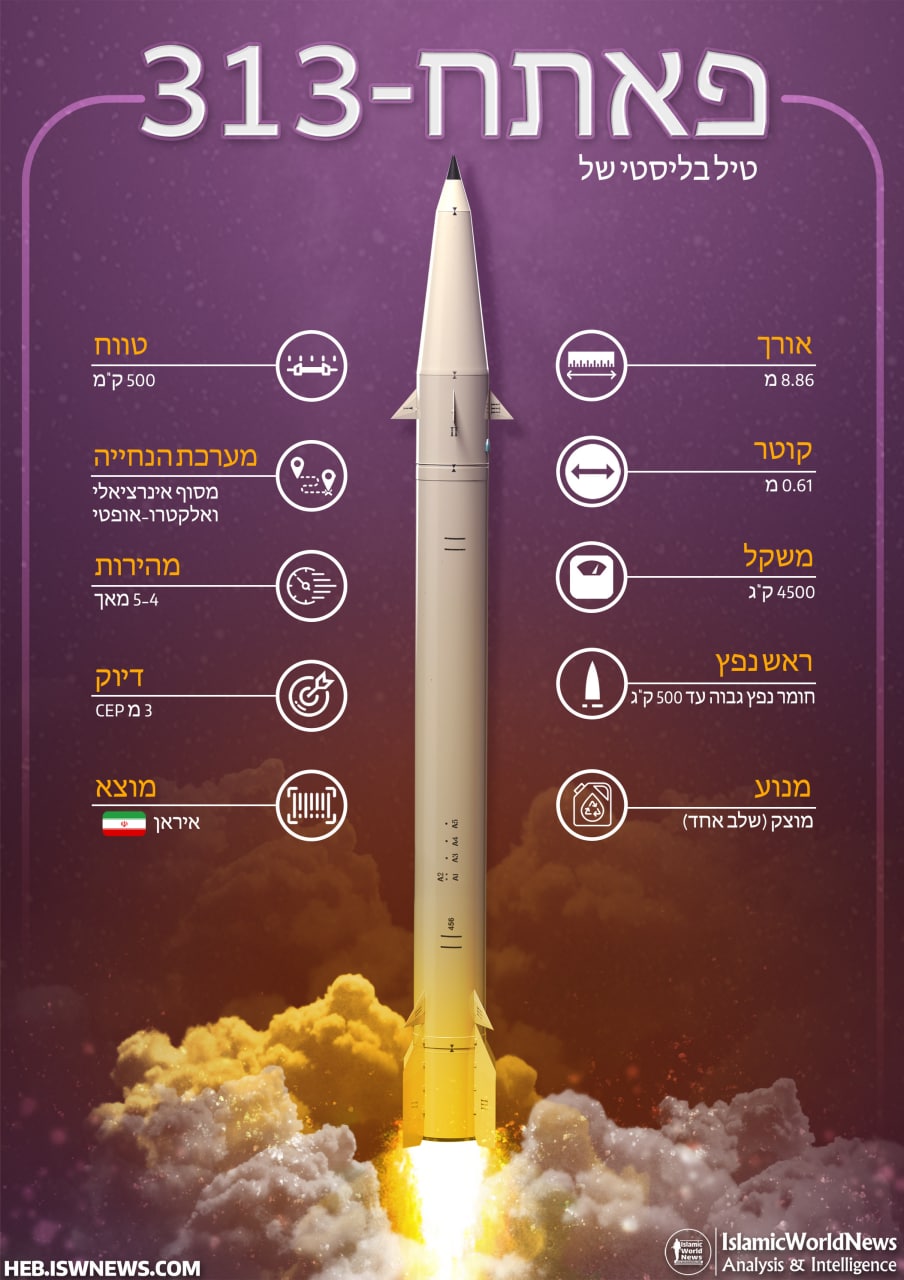
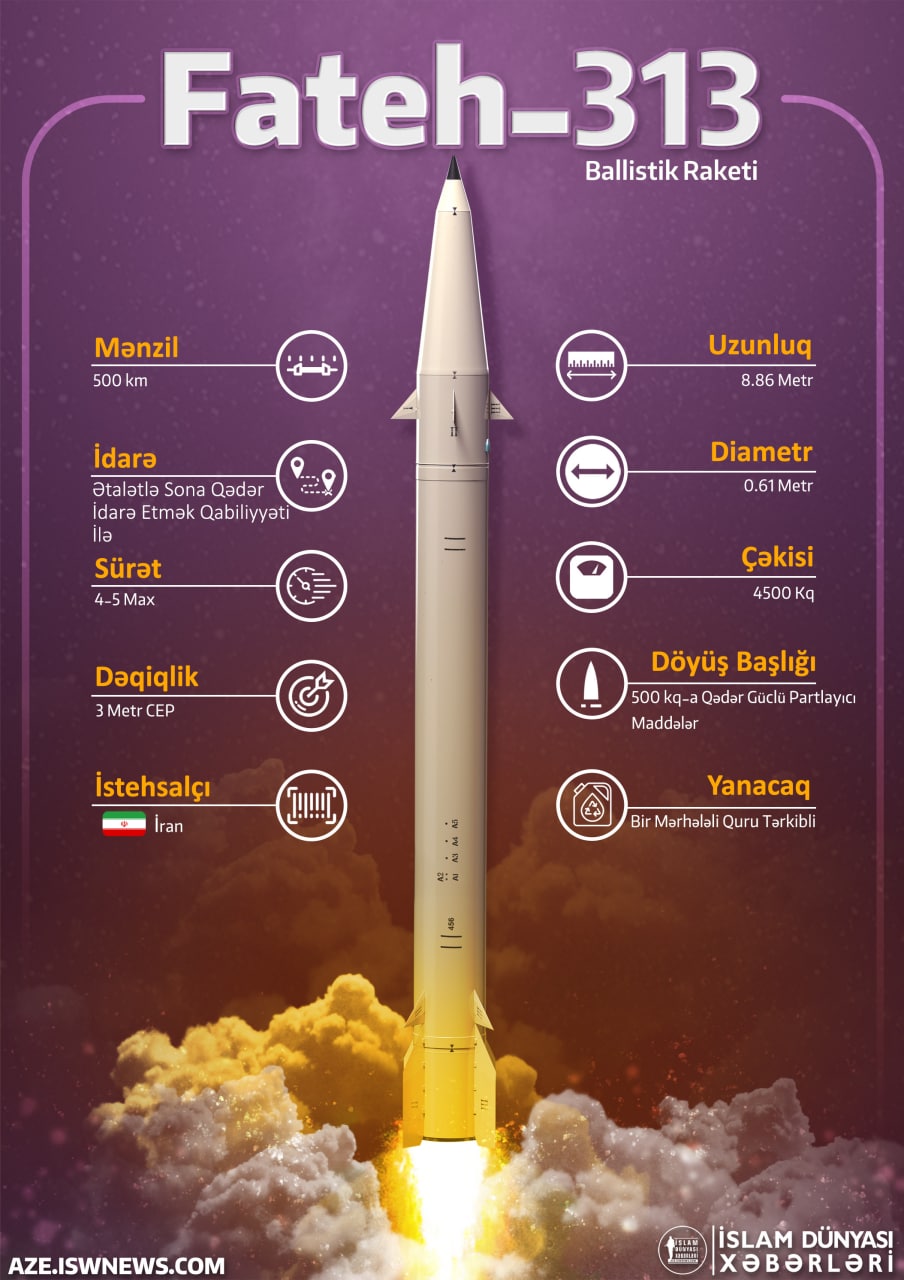
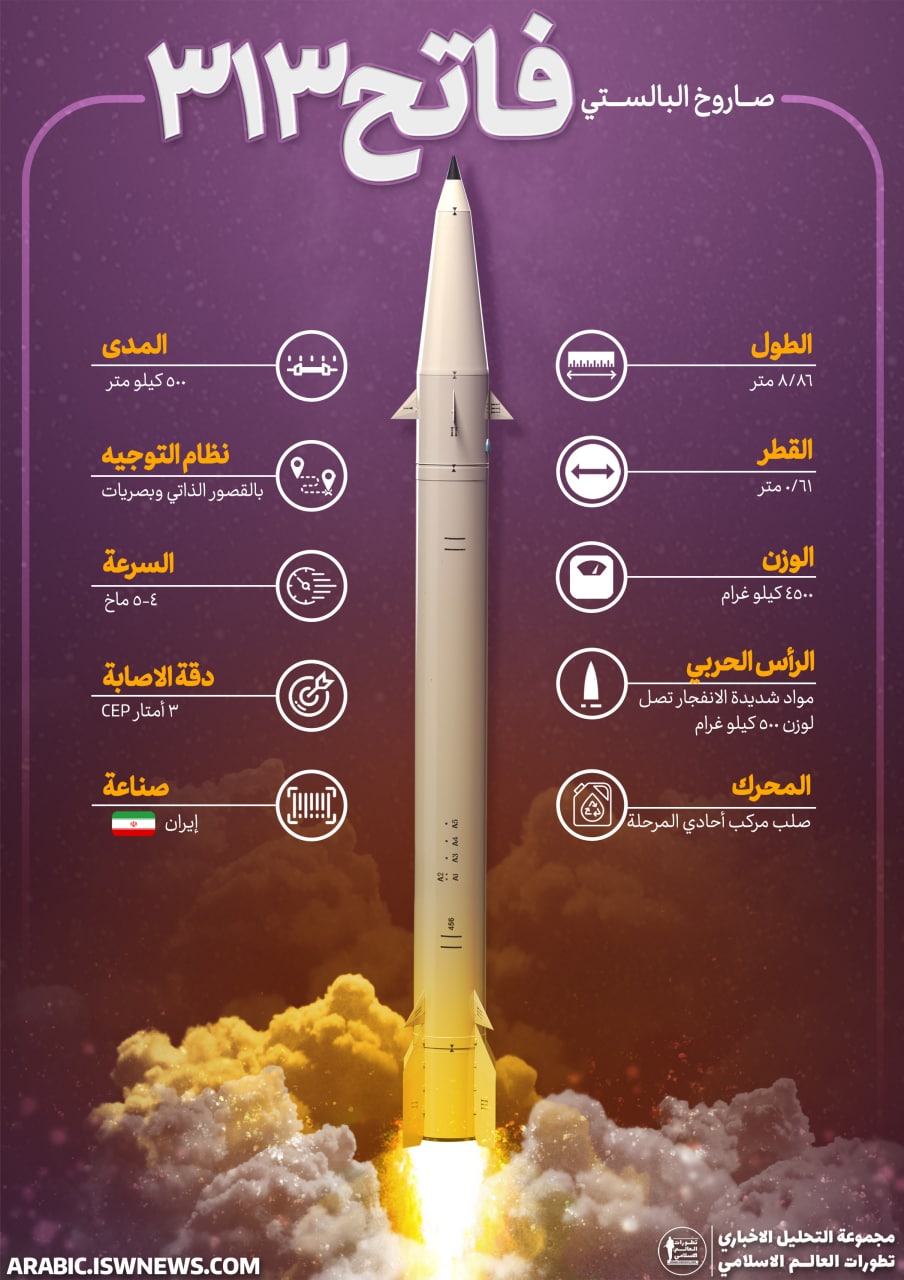
Fateh-313 ballistic missile specifications: Length: 8.86 m Diameter: 0.61 m Weight: 4500 kg Warhead: High explosive up to 500 kg Engine: Solid (single stage) Range: 500 km Speed: Mach 4-5 Guidance system: Inertial and electro-optical terminal Accuracy: 3 m CEP Origin: Iran
Click to view full sizeClick to view full size
“Fateh-313 Ballistic Missile” collection of posters in Persian, Arabic, Kurdish, Azeri, Russian, Hebrew and Chinese for Social Media:
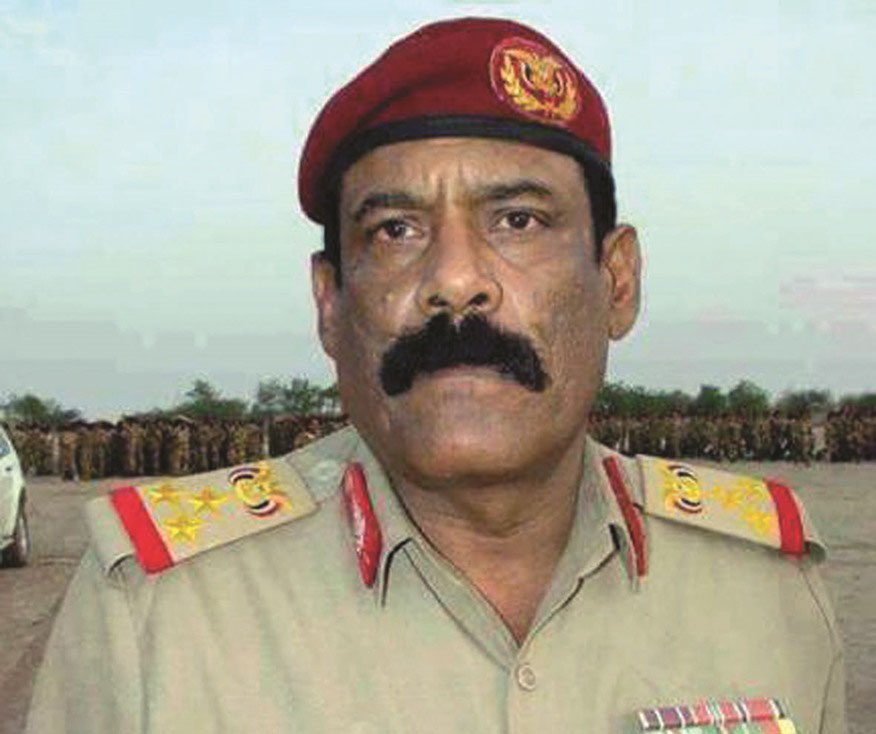
On March 3, this prominent commander was killed along with four others when a car bomb exploded at the parking lot of General Thabet Muthanna Naji Jawas’s car in the al-Khadhraa area north of Aden.
No group or individual has claimed responsibility for the attack.
At the time of his death, he was the commander of the 131st Infantry Brigade on the Anad axis.
Maj. Gen. Jawas was one of the senior commanders of the southern forces and he was from Radfan district in Lahij province. At the time of his death, he was the commander of the 131st Infantry Brigade on the Anad axis.
Thabet Muthanna Naji Jawas held various military positions at different times. During the presidency of Ali Abdullah Saleh, Jawas commanded the 15th Infantry Brigade of the Yemeni Army in Saada Province, and through this position he played an important role during the Six Wars of Ali Abdullah Saleh and Ansar Allah in Saada province. Hence, Jawas is considered as one of the factors in the suppression of the Shiites of Saada and the martyrdom of Sayyid Hussein Badruddin al-Houthi.
After Mansour Hadi came to power, General Jawas was appointed commander of the Aden Special Forces and the military leadership of the al-Anad front, and he fought Ansar Allah in recent years.
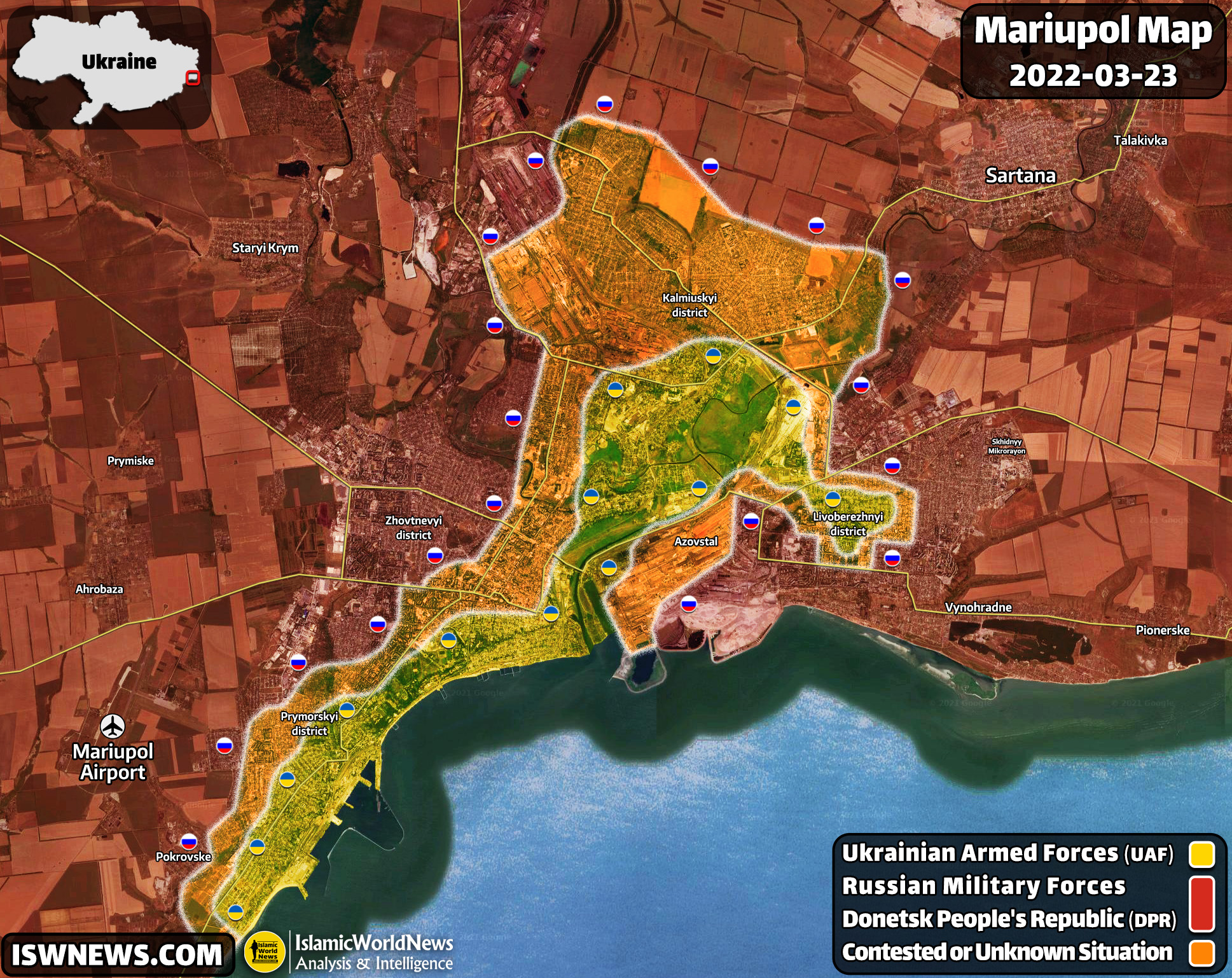
Street fighting between Russian and DPR forces and what remains of the Ukrainian army in Mariupol are still ongoing in the city of Mariupol.
The military situation in the northern part of the city in the Kalmiuskyi district is not exactly known. But Russian news teams in the city say Russia and DPR forces have taken full control of the northern part of the city.
Currently, the main pressure of the attacking forces is on the eastern and western neighborhoods of the city. Russian and DPR forces are advancing east and west to divide the city of Mariupol into two parts in north and south, tightening the siege on the city’s defenders.
Given the current situation, it seems that the city will soon be under the control of the Russian army.
Discussions on bilateral cooperation, regional and international developments are among the topics of the meeting.
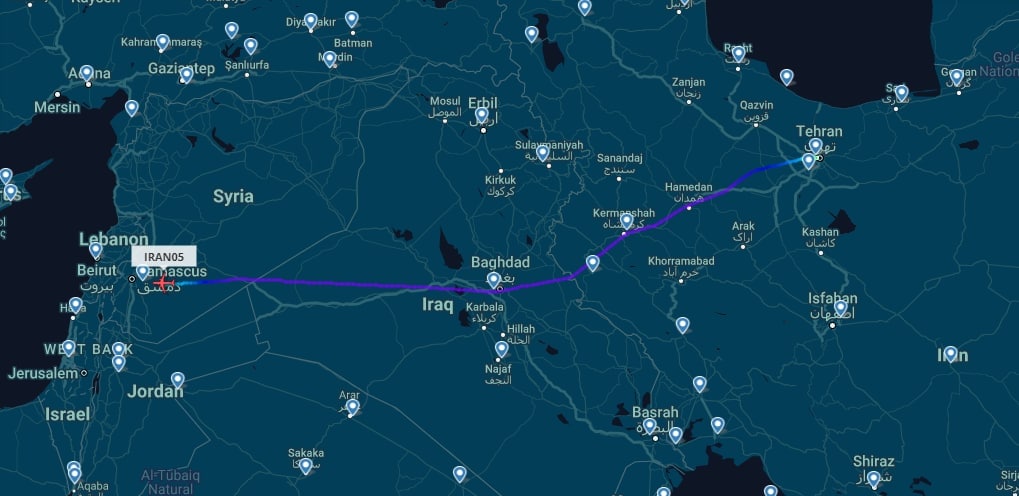
Upon arrival of Hossein Amir-Abdollahian in Damascus, the Iranian Foreign Minister was received by Syrian Foreign Minister Faisal Mekdad. Faisal Mekdad said: “We emphasize on strengthening relations with countries in the region, including relations with Iran and Arab countries. Coordination between Syria and Iran continues at both the regional and international levels. We emphasize our stand by Iran.”
It is worth mentioning that this is Amir Abdullahian’s third visit to Syria. He also traveled to Syria twice in 2021.
The plane carrying the Minister of Foreign Affairs of the Islamic Republic of Iran to Damascus
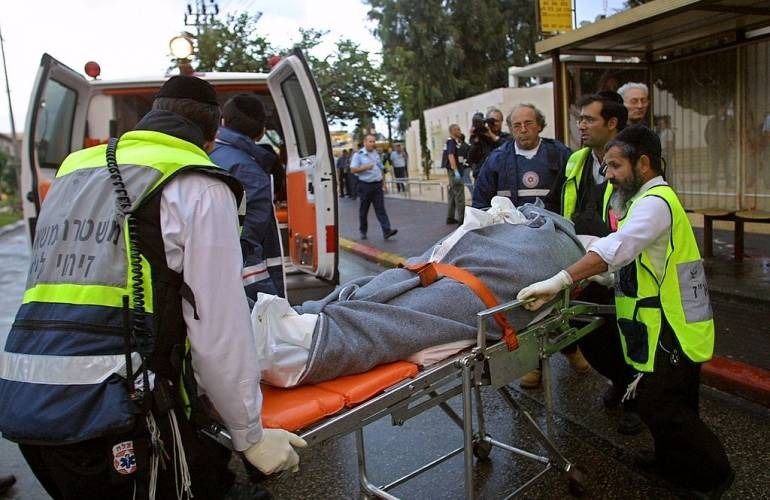
On the evening of Tuesday, March 22, a young Palestinian named “Mohammad Ghalib Abu Al-Qayan” from the village of Hura in the Al-Naqab area, ran over several Israelis by his car and then attacked the residents of Beersheba town with a knife.
He was shot and killed by Israeli security forces. Israeli sources reported that security forces launched an operation to search for and arrest his accomplices in the village of Hura in the Al-Naqab area.
Hamas, Islamic Jihad, Kataib Martyr Abu Ali Mustafa and other Palestinian groups congratulated the martyrdom operation of “Mohammad Ghalib Abu Al-Qayan” in Beersheba, calling it a response to the Zionist regime’s crimes against the Palestinians.
Video No. 1: The moment the Israeli security forces shot a young PalestinianVideo No. 2: The moment of disarmamentA picture of “Mohammad Ghalib Abu Al-Qayan”, the perpetrator of the martyrdom operation in Beersheba