USAID alone manages tens of billions of dollars annually and, in coordination with the CIA, is involved in designing and executing “regime change” operations around the world. However, the overall management of these regime change organizations lies with the U.S. Department of State. Here, we take a look at the budgets and programs defined and implemented by these organizations.
The U.S. Department of State manages a wide range of programs. It is the primary civilian agency of the United States responsible for security and refugee-related assistance, and it holds full responsibility for administering the accounts for International Narcotics Control and Law Enforcement (INCLE), as well as programs for nuclear nonproliferation, counterterrorism, demining, and related initiatives under Nonproliferation, Anti-terrorism, Demining, and Related Programs (NADR).
Additionally, it oversees two migration and refugee accounts: the Migration and Refugee Assistance (MRA) and the Emergency Refugee and Migration Assistance (ERMA) funds. Among the Department’s stated policies is ‘countering Iranian influence,’ which is explicitly mentioned in its budget documents.
Another focus area is preventing Iran’s nuclear development, for which specific funding has been allocated. For example, in 2022, $95 million was allocated to the International Atomic Energy Agency (IAEA) to monitor the nuclear activities of countries such as Iran, Syria, and North Korea, ensuring that such activities do not pose a threat to U.S. interests. The U.S. Department of State, along with the United States Agency for International Development (USAID), funds programs such as the Economic Support Fund (ESF) and AEECA assistance in this regard.
Budget Allocations The U.S. Department of State has taken positions through several programs against Iran and has allocated funding to these initiatives. Iran is mentioned in six instances of funding allocations by the State Department in the year 2025.
Imposing sanctions on Iran and other actors considered threats to so-called international security, with a budget of $26 million allocated for 2025—an increase of $4 million compared to 2024.
Increasing funding for programs related to Near Eastern countries and strengthening Jordan and Egypt to counter Iran’s so-called destabilizing activities and to engage in strategic competition with China and Russia, with a budget of $2.5 billion allocated for 2025—a decrease of $41 million compared to 2024.
Supporting the International Atomic Energy Agency (IAEA) in efforts to compel Iran, Syria, and North Korea to adhere to their commitments and to prevent the development of their nuclear capabilities, with a budget of $95 million allocated for 2025—the same amount as in 2024.
Countering technological threats from Iran and several other countries, and preventing the proliferation of weapons of mass destruction, with a budget of $72.9 million allocated for 2025—a decrease of $17 million compared to 2024.
Providing counterterrorism assistance to confront Iran-aligned forces, including Hezbollah and Hamas, as well as terrorist groups such as ISIS and al-Qaeda, with a budget of $271 million allocated for 2025—a decrease of $3.2 million compared to 2024.
Combating terrorism in the West Asia region by strengthening cooperation with Egypt and Jordan, countering alleged Iran’s destabilizing role and regional influence, and eliminating other terrorist groups, with a budget of $5.296 billion allocated for 2025—$12.2 million less than in 2024.
USAID: The Implementer of Influence Projects
Meanwhile, the U.S. Agency for International Development (USAID) plays a central role in financing and supporting the implementation of U.S. programs in the Middle East. For more than six decades, USAID has been responsible for executing a major portion of the United States’ so-called bilateral development and humanitarian aid. Alongside the Department of State, the agency manages programs such as the Economic Support Fund (ESF), Assistance for Europe, Eurasia, and Central Asia (AEECA), and the Democracy Fund, which primarily support development projects but in reality serve as tools to advance U.S. strategic interests in target regions.
Donald Trump recently described USAID as “run by a bunch of radical lunatics,” while Elon Musk called the agency “a nest of worms” and “a criminal institution” that “deserves to be dismantled.” Musk also criticized the National Endowment for Democracy (NED), referring to it as “a wicked, corrupt, and criminal organization” that “should be shut down.” U.S. Secretary of State Marco Rubio explained that the budget cuts to these organizations were not due to a shift in foreign policy, but rather because of their failure to carry out their missions.
It appears that this budget suspension is not a shift in the United States’ diplomatic strategy, but rather a clear warning to USAID and NED to reassess their so-called “regime change” operations. Leaked documents and intelligence reports indicate that, in recent years, Washington has allocated tens of millions of dollars to opposition groups, Persian-language media outlets, and activists working against the Islamic Republic. According to a BBC report, more than 30 Iran-focused organizations and media outlets have been affected by the suspension, although the exact names of these entities have not been disclosed.
NED: A Covert Interventionist Organization
An examination of the National Endowment for Democracy (NED), which received $315 million from the U.S. Department of State in 2023, reveals that the organization allocated $2.01 million that year to 14 government overthrow projects in Iran.
The foundation openly acknowledges that recipients of its funding played a key role during the 2022 unrest in Iran, serving as primary sources of information for international media outlets. Moreover, the organization’s website explicitly expresses support for the “Woman, Life, Freedom” protests. As early as the 1990s, Allen Weinstein, one of NED’s co-founders, openly admitted in an interview that many of the activities carried out by NED today were previously conducted covertly by the CIA.
Funds are often transferred through intermediaries or embedded within broader programs under the label of “promoting democracy,” making it difficult to trace direct connections. Public documents—later removed—indicate that the National Endowment for Democracy (NED) invested $4.6 million in 51 separate projects aimed at overthrowing the Iranian government.
Funding Iranian Opposition Media Recently, Kit Klarenberg, a journalist and researcher, published a confidential invitation from the U.S. Department of State that includes proposals from private contractors and intelligence-linked entities such as NED and USAID. The leaked documents reveal the true nature of these organizations’ activities and highlight the significant impact that the suspension of their programs has had on their global operations.
Klarenberg states that the flow of U.S. government funds—especially through organizations like NED and NERD—remains opaque. This lack of transparency makes it difficult to trace the final destinations of the funding and identify its beneficiaries. The details of these covert operations are systematically concealed, and mainstream media outlets claim the information is kept classified to protect activists from potential harm. Existing documents—later removed—indicate that the National Endowment for Democracy (NED) invested at least $4.6 million between 2016 and 2021 in 51 different counter-revolutionary projects in Iran.
However, only the names of seven recipient organizations have been disclosed. The Abdorrahman Boroumand Center, based in Washington, D.C., is one of the few known recipients, while the remaining 44 continue to remain unidentified. During the 2022 unrest in Iran, the National Endowment for Democracy (NED) allocated nearly $1 million to projects officially labeled as “human rights advocacy.”
However, none of the participating organizations were identified. The funds were transferred to an unnamed entity tasked with “monitoring, documenting, and reporting human rights violations.” This entity collaborated with individuals inside Iran who referred to themselves as “activists,” aiming to enhance their digital security and propaganda efforts.
Anti-Iranian groups that particularly present themselves as media outlets—such as the Abdorrahman Boroumand Center, Iranwire, BBC Persian, and others—are believed to be among the likely recipients of this covert funding from USAID. Analysts like Hamidreza Gholamzadeh also point out that organizations such as the Iran Human Rights Documentation Center (IHRDC), Tavaana, and the Boroumand Center have likely received funding from NED, while Iranwire is believed to have been funded directly by the U.S. Department of State.
A glimpse of financial support documents for sabotage projects in Iran
Hidden Networks; Repetitive Strategies Many recipients of foreign funding who may appear anonymous at first can be identified through their interactions with Western actors. Recent reports indicate that Western organizations continue to pursue government overthrow strategies in Iran. Shirin Ebadi, the head of the Defenders of Human Rights Center (DHRC), acted as an operative in destabilization projects targeting Iran and, after fleeing to London in 2009, openly expressed support for overthrowing the Iranian government. A joint report by Iran’s Ministry of Intelligence and the IRGC Intelligence Organization in October 2022 explicitly identified the DHRC as a front for subversive activities backed by the United States under the NERD project.
The report revealed how these networks act as proxies for U.S. government agencies, engaging in media infiltration and inciting social unrest to destabilize Iran.
Late Iranian Brigadier General Mohammad Kazemi provided further details about these operations, disclosing that one exposed project included $550,000 in media funding aimed at inciting ethnic and religious minorities in Iran’s border regions and expanding media coverage of riots. Narges Mohammadi, also a recipient of foreign support, followed a similar path—backing terrorists and separatists under the guise of human rights advocacy. Both Ebadi and Mohammadi received large sums to influence media narratives and support individuals convicted of violent acts.
Iranian security reports have confirmed that these individuals and their affiliated networks are involved in U.S.-backed subversive projects such as NERD. Leaked documents show that millions of dollars have been spent on inciting ethnic and religious minorities within Iran. Western tactics for provoking unrest include promoting fringe figures, portraying them as victims, and using them for geopolitical purposes. Iranian intelligence reports, as well as Western sources such as The Grayzone and The Cradle, indicate that organizations like NED and NERD play a central role in funding these operations. Despite repeated exposures, this pattern continues to repeat itself under new names and faces.
These findings align with Kit Klarenberg’s investigative report for The Cradle, which revealed leaked documents related to the NERD project— a U.S. initiative aimed at recruiting and training “emerging women leaders and ethnic minorities” to lead activist movements in Iran. The report also exposed how millions of dollars were funneled through NED between 2016 and 2021 to strengthen counter-revolutionary networks. One of the program’s key objectives was reportedly to “encourage lawyers and clerics to advocate for democratic reforms.” Despite the exposure of these tactics, the pattern continues to repeat itself—merely under new names and fresh media campaigns designed to stir discontent and destabilize independent nations.
Introduction In March 2024 WhatsApp, which is owned by Meta, announced that 90 journalists and members of the public who use the popular messaging app had been targeted by spyware developed by Paragon Solutions, an Israeli company specializing in hacking tools. These journalists and civil society members were notified about the possible compromise of their devices’ security. It remains unclear who was behind the attack. Like other spyware vendors, Paragon’s hacking software is used by government clients, and WhatsApp stated it had been unable to identify which clients ordered the alleged attacks.
Experts have reported that the attack was of the zero-click type, meaning the targets did not need to click any malicious link for their devices to be infected. WhatsApp has declined to disclose the locations of the affected journalists and civil society members, including whether any of them were based in the United States. Three of the hacking victims were Italian journalists.
According to reports in The Guardian and Haaretz, Paragon has since severed ties with its clients in Italy, which reportedly included an intelligence agency and a law enforcement organization. Paragon exclusively works with governmental entities. The company’s flagship product, called Graphite, allows users full access to a target’s phone. Paragon claims that the software is intended for criminal investigations. The company is seen as a competitor to the NSO Group, maker of the Pegasus spyware.
Additionally, Israeli media have reported rumors of Paragon being sold to a U.S. company, which were recently denied by Israel’s Defense Minister following Donald Trump’s return to the White House.
Paragon Solutions Paragon Solutions, founded in 2019 and currently employing 450 personnel, is a cyber company focused on offensive operations and security, utilizing digital intelligence to provide surveillance solutions for smartphones and the internet. The company claims to impose “strict ethical limitations” on itself, restricting data extraction from target devices solely to conversations within messaging apps. Paragon exclusively collaborates with law enforcement and intelligence agencies in what it defines as liberal democracies—a list that includes 39 countries.
As one of the two leading Israeli offensive cybersecurity firms alongside NSO, Paragon specializes in technologies classified as weapons and requires export approval from Israel’s Ministry of Defense. Unlike NSO, which faced international backlash and was blacklisted by the U.S. government for selling spyware to authoritarian regimes, Paragon was founded with a commitment to operate exclusively within democratic nations. This ethical positioning helped pave the way for future deals.
Founders and Key Figures Among the founders of this cyber company is Ehud Barak, the former Prime Minister of Israel, underscoring Paragon’s prominence and distinct position among other firms in the industry. Some media outlets have even referred to the company as “Ehud Barak’s startup”, highlighting his influence in its establishment. According to the image below, the founders of this Israeli company are identified from right to left in the following order:
– Ehud Schneorson
After decades of service in the fields of signals intelligence (SIGINT), cyber operations, and special operations in the occupied territories, he was appointed as the head of Unit 8200, Israel’s elite military intelligence unit. According to Richard Silverstein, commanders in Israel’s Unit 8200are appointed in a highly specific and deliberate manner, alternating between a “khnun” (a Hebrew slang term for a “computer geek” or “tech nerd”) and an individual who rose through the ranks via combat roles. Ehud Schneorson is considered a khnun, whereas his predecessor, Nadav Zafrir, was a combat officer who served in Sayeret Matkal, Israel’s elite special forces unit. This alternating approach, blending technical expertise with combat experience, reflects the military’s effort to strike a balance between technological proficiency and operational capability.
– Ehud Barak
Ehud Barak, the former Prime Minister of Israel, has been a prominent figure in the country’s cybersecurity landscape. He played a significant role in the founding of Paragon Solutions, co-establishing the company alongside retired Brigadier General Ehud Schneorson. Barak’s involvement in Paragon has been substantial, and he also holds a stake in the company, underscoring his direct interest and influence in its operations.
– Idan Nurick
Idan Nurick is the CEO and co-founder of Paragon Solutions, with a background in medicine and an MBA. He has led several successful companies in the fields of cybersecurity and artificial intelligence, with a proven track record in team leadership, algorithm development, software engineering, and data analysis. Nurick founded Cyber Hunters in 2018 and Paragon in 2019, serving as CEO of both. In 2020, he stepped away from Cyber Hunters to focus on Nash and Paragon. He currently serves as a director at Alameda Ventures and a senior executive at Bloomberg Capital. Prior to his current role, he also held a senior leadership position within Paragon. Nurick completed his studies at Tel Aviv University, earning both a master’s degree and an MBA.
– Liad Avraham
Liad Avraham, a resident of the occupied territories, is currently the co-founder and Chief Research Officer (CRO) at Paragon Solutions. He brings valuable experience from his previous roles at Paragon and in the Israel Defense Forces (IDF). Avraham holds a Bachelor’s degree in Computer Science from the Open University and possesses advanced skills in hacking iOS and Android operating systems. During his service in the IDF, he served as a team leader and cybersecurity researcher.
– Igor Bogdalov Igor Bogdalov, a lesser-known figure among the founders pictured, is one of the co-founders and serves as Co-Chief Technology Officer (CTO) at Paragon. He earned his Master’s degree from Tel Aviv University.
Graphite As previously mentioned, this spyware infiltrates devices electronically using a zero-click method, the operation of which is explained in detail below. Zero-click attacks are carried out secretly and do not require any direct user interaction or action. These attacks may seem simple because the attacker does not need to trick the user through phishing emails or clicking on malicious links. However, successfully executing these attacks is not easy. A critical aspect of performing a successful zero-click attack is sending a specially crafted piece of data to the target device via wireless communications such as Wi-Fi, NFC, Bluetooth, GSM, or LTE. This data is designed to trigger a previously unknown or lesser-known vulnerability in the target device. The vulnerability may exist at the software or hardware level of the device. This data might exploit the vulnerability when processed by the device’s system on chip (SoC), but in most cases, the attacker designs the data to be interpreted by specific applications such as WhatsApp, Telegram, Skype, calling services, or even SMS. Therefore, the attacker carefully crafts this data to be interpretable by such applications. This data can take the following forms: • MMS • Voicemail • Video conferencing sessions • Text messages • Authentication requests • Network packets • Phone calls
Conclusion In light of the foregoing detailed discussion, it seems imperative to strengthen the cybersecurity outlook of intelligence agencies with respect to the newest infiltration techniques and the methods for preventing and countering cyberattacks; for failing to recognize the infection of a messaging‑service server application under normal conditions can constitute part of the persistent risk and harm posed by such attacks. Gaining familiarity with and access to the know‑how for producing this type of spyware may, in the future, foster scientific self‑sufficiency—both software‑ and network‑wise, and in certain cases hardware‑wise—within the country’s sensitive institutions as well as among technology firms operating in the realm of social networks. Another matter that acquires significant importance in the wake of these international disclosures is the investigation of the assassination cases of prominent Iranian figures and members of the resistance front in recent years; since the use of messaging apps and social networks—especially domestic platforms such as Eitaa and Baleh—has become commonplace, the hacking of individuals’ accounts grants access to every component of their smartphones, including microphones and geolocation; consequently, the relevant authorities must exercise heightened vigilance.
On Tuesday (October 1) at 8:00 p.m. local time, the Iranian Armed Forces attacked military positions of the Tel Aviv regime in various regions of occupied Palestine, when they fired dozens of ballistic and hypersonic missiles. The following is an assessment of the attack and an analysis of the areas targeted in the operation.
Moments after the Iranian missiles were fired at 8:00 p.m., Spokesman for the Israeli army Rear Admiral Daniel Hagari claimed that our defense systems are fully operational and are detecting and intercepting threats wherever necessary, even at this moment.” Shortly after this claim, numerous videos were released showing Iranian missiles hitting Israeli positions, indicating a high success rate for the Iran-fired missiles. The large number of projectiles hitting the Israeli targets proved that the defense systems of the Israeli military, as well as those of the United States, failed to intercept the Iranian missiles.
According to the initial statement from the Islamic Revolution Guards Corps (IRGC), the Operation True Promise II was carried out in response to the assassination of Palestine’s Hamas political leader Ismail Haniyeh, Lebanon’s Hezbollah Secretary General Sayyed Hassan Nasrallah, and the senior advisor of the IRGC in Lebanon Major General Abbas Nilforushan. Significant military and security positions in the heart of the Israeli-occupied territories were targeted during the operation. The IRGC considered Iran’s military response to be in line with the Islamic Republic’s legal rights as well as international law, warning the Zionists that if they try to react to this retaliatory operation, they would face more devastating and crushing strikes.
As more time passed following the missile attack, the spokesman for the Israeli army again claimed, “the IRGC used the Fattah hypersonic missiles for the first time in tonight’s attack. We will respond to this attack at the right time and place.”
Stunning video of firing a batch of Khaybar Shekan and Fattah-1 missiles in the Sadeq-2 operation towards the Zionist regime
According to the second statement from the Islamic Revolution Guards Corps, several air and radar bases, as well as centers that had been involved in hatching the plot of assassinating resistance leaders, were targeted during the aforementioned operation. Despite the fact that these areas are being protected by the most advanced and extensive defense systems, most of the Iranian missiles successfully hit their targets.
Israeli media outlets reported that Iran fired 181 ballistic missiles toward the occupied territories of Palestine. Some Western sources estimated the number of projectiles to be between 200 and 250. Nevertheless, the official figure was declared by chief commander of the IRGC Major General Hossein Salami, who stated that 200 missiles were launched toward the occupied territories.
It is worth noting that the missiles were launched from several locations across the Islamic country, including Tehran and its suburbs as well as other cities such as Kermanshah, Shiraz, Khorramabad, Tabriz, and Isfahan.
Firing a batch of missiles from TabrizFiring a batch of missiles from Kermanshah
According to the released footages, most of the fired projectiles reached their targets, which indicates a very high success rate for the Iranian armed forces.
One notable aspect of Operation True Promise II was the execution of targeted cyber operations and extensive electronic warfare by the use of jamming systems against the Israeli regime with the aim of disrupting its defense systems. Advisor to the IRGC commander General Ebrahim Jabari announced that a broad cyber operation was carried out simultaneously with the missile operation against Israel’s defense systems.
Hours after the strike, the Islamic Revolution Guads Corps released images of several missiles used in Operation True Promise II. The released images showcased ballistic missiles such as Emad, Khaybar Shekan, Qadr-H and Qadr-F with upgraded warheads. Furthermore, analysis of videos released by the Israeli settlers indicated that the IRGC also utilized advanced hypersonic Fattah missiles in this operation.
Iranian missiles that were fired towards the occupied territories
Additionally, based on images released by Israeli settlers, the booster of the Fattah-1 missile was seen in the occupied territories. These images confirmed the claims of using hypersonic missiles.
Fattah missile’s booster
On the other hand, the Israeli regime attempted to intercept the Iran-fired missiles using Arrow-2 and Arrow-3 anti-ballistic missile systems, while the United States fired at least 12 Standard Missile-3 (SM-3) anti-ballistic missiles from the USS Bulkeley and USS Cole. The number of successful interceptions remains unclear. An ambiguous footage of the interception of the Iranian missiles was also released, but it appears to be old and cannot be verified.
The targets hit in Operation Promise II are as follows:
1-Mossad Headquarters: The Mossad headquarters is located near the Glilot base in northern Tel Aviv city. This base is also the main site for the Unit 8200 or the Central Collection Unit of the Intelligence Corps (AMAN). Visual evidence show that the Mossad headquarters was targeted by two projectiles. Although these two missiles, for whatever reason (likely intentionally to warn Mossad), struck approximately 500 meters apart – one to the north and the other to the south of the building. However, this attack sends a clear message to the Israeli regime: Iran’s reach extends to the main intelligence hub of Israel, and if it makes a decision, it can target that site with a barrage of missiles; and there may not be any mistake next time.
Missile struck approximately 500 meters north of Mossad HQsMissile struck approximately 500 meters north of Mossad HQsMissile struck approximately 500 meters north of Mossad HQsMissile struck approximately 500 meters south of Mossad HQs
In addition, three other missiles struck several kilometers into the sea. One of these missiles hit the western area of the Mossad headquarters in the Mediterranean Sea, resulting in a fire in the water! Clearly, a specific target was struck in the strike.
Two other missiles hit another point a few kilometers off the coast of Tel Aviv with an extraordinary accuracy. The precise impact of these two missiles on a specific point in the sea cannot be by chance. The nature of this target is still unclear.
The missile (left) hits the sea and causes a fire in the sea! This video show the beach along the west side of the Mossad headquarters.Two missiles hit a specific point in the sea on the coast of Tel Aviv, precisely one after another.
2-Tel Nof Airbase in Southern Tel Aviv: Apart from one video that clearly captured the missile strikes, no other videos have been released from this base so far. In the released video from this military base, several missiles hit the Tel Nof airbase. In one of the strikes, flames and white smoke rose from the targeted site, indicating that solid-fuel air defense systems, such as the Arrow missile defense system, were targeted.
To date, no high-quality or even low-quality images of the Tel Nof Airbase have been released, and perhaps they never will be. The damages at Tel Nof were also quite remarkable!
Missiles hit the Tel Nof air base
It is also noteworthy that during the attack on Tel Nof base, one missile struck several kilometers south of this base, hitting the courtyard of an elementary religious school (Shalhavot Chabad) in Gedera, causing damage to the school building! This school is affiliated with the Haredi movement, a branch of Orthodox Jews in Israel.
Shalhavot Chabad schoolMissile hit the courtyard of Shalhavot Chabad religious school in Godra
3-Nevatim Airbase: Most of the attacks and recorded videos are related to the Nevatim Airbase. According to the videos, the Nevatim base has been targeted by a barrage of Iranian ballistic missiles, and it likely suffered the most damage from Iran’s missile attacks on Israel.
Satellite images released after the attack on Nevatim base also indicate the damage inflicted on the base.
The satellite images indicate that the location of the F-35 fighter jets at Nevatim was hit. One of the missiles struck one of the F-35 shelters with high precision. Additionally, a large hangar, administrative buildings, and other points within the airbase were also hit. The targeted areas show that it can be said that several types of missiles were used in the attack on Nevatim base, and the missiles that hit their targets with high accuracy were likely of the Khyber-Shekan or Fattah class.
Satellite images of Nevatim Air Base after Iran’s missile attackA batch of missiles hit Nevatim Air BaseA batch of missiles hit Nevatim Air BaseA batch of missiles hit Nevatim Air Base
4. Hatzerim Airbase: Another target of Iran’s missile attack was the Hatzerim Airbase near the city of Be’er Sheva. Reports confirm Iran’s attack on this base. According to Israeli media outlets, the city of Be’er Sheva sustained minor damages during the Iranian missile attack. This may have occurred due to the fall of missile boosters on Be’er Sheva.
Furthermore, a video footage from inside the Gaza Strip has been released, confirming at least one projectile hitting the Hatezrim Airbase.
A missile hit the Hatzerim Air Base
5. Ovda Airbase: Among the areas in the occupied territories targeted by Iran’s missile attacks, less attention has been given to the Ovda Airbase. However, considering the rate of missiles fired at this base and the very precise hits, it could be said that the most successful attack on Israeli military bases was on the Ovda Airbase.
Based on the low-quality satellite images available, it can be observed that seven missiles struck this base, and nearly all of them hit their targets with remarkable precision.
Alleged satellite images of Ovda Air Base after Iran’s missile attack
If higher-quality satellite images are released, it may be possible to identify several other targeted sites. The main reason that no videos of the missile craters at this base have been released is that the Ovda Airbase is located kilometers deep in the desert, and unlike other bases, there are no nearby villages or towns where someone could film the moments of the attack. However, these satellite images are still valuable.
The Ovda Airbase is located in the southernmost part of the occupied territories, in the southern Negev Desert, 40 kilometers north of the port city Eilat.
This airbase houses Israel’s Squadron 115, which includes F-16C fighters (now retired) and F-16D Barak fighter jets. Additionally, the Israeli Air Force Flight Academy and the Air Force Officer School are part of the training programs for Air Force officers, which are operational at this airbase.
Another important point is that the Ovda Airbase is officially the only air base authorized for the transportation of explosive materials for the Israeli regime. Therefore, this base is used for the export of military equipment and munitions to other countries.
Overall, the missile Operation True Promise II marks a turning point in the developments in the West Asian region. This operation goes beyond being merely a “long whip” against the enemy; it not only inflicted heavy damage on the military bases of the Israeli army but also caused the collapse of the Israelis’ defensive structure, undermining their claims of being invulnerable.
The assassination of commanders and leaders of Islamic resistance groups, especially Sayyed Hassan Nasrallah and Ismail Haniyeh, was an unforgivable sin, and a failure to respond to it would undermine Iran’s establishment and reputation within the resistance axis.
Iran’s missile strikes also serve as a strong response to Israeli Prime Minister Benjamin Netanyahu’s threats; he should know that Iran is not defenseless, when it comes to his threats against the Iranian nuclear and oil facilities. In fact, Iran possesses greater, heavier, and faster capabilities, and certainly, Israel, with all its defensive and aerial resources, will be defeated in this competition in the face of Iran.
The areas that were hit by Iranian missiles in the occupied territories.
Readers can find out about the material damage of the Zionists here. The tactical nuances of the Iranian attack are no less interesting. Here is what the analyst writes under the pseudonym “Fadi Quran“:
”My analysis is that the scale of Iran’s attack, the diversity of locations it targeted, and weapons it used, forced Israel to uncover the majority of anti-missile technologies the US and it have across the region. The Iranians did not use any weapons Israel didn’t know it had, it just used a lot of them. But the Iranians likely now have almost a full map of what Israel’s missile defense system looks like, as well as where in Jordan and the Persian Gulf the US has installations. It also knows how long it takes to prepare them, how Israeli society responds…etc.”.
Words on the image: It will shine forever…
It is necessary to indicate the reaction from the enemy camp. Thus, the Americans note the presence of advanced weapons in the Islamic Republic and the successful effectiveness of tactical maneuvers. As for the Zionists, they immediately imposed censorship, which resulted in a ban on the publication of any information about the bombed air bases in Nevatim and the Negev. Nevertheless, there are rumors among the Zionists about victims from among Mossad employees. It is important to note here that the split that formed inside the cabinet of terrorist Netanyahu in connection with the Hamas operation on October 7 has acquired even more pronounced features.
The terrorist Likud government simply does not know what to do and is facing many problems both inside and outside the “entity”, and the Iranian military response has further aggravated Netanyahu’s situation.
The Americans, in terms of protecting the Zionists, limited themselves to show-off and imitation, Biden’s move was taken as a demonstration of dissatisfaction with Netanyahu’s behavior, the UN, which was assembled in connection with Zionist hysteria and did not come to any consensus at all, since even the most ardent friends of the Zionists understand that it is “militant Likudniks and Talmudic extremists” who want to expand the horizons of the war beyond the borders of occupied Palestine, which cannot be allowed. The opposition to the Likud has gained additional motivation to put pressure on the ruling coalition of Zionist education. In short, the end of Netanyahu and his fanatical henchmen in the person of Ben Gvir and Smotrich is near.
Saleh Koushki’s artwork – “The True Promise”
In conclusion, two conclusions should be drawn.
1. The global West, led by the Anglo-Saxons, has finally changed the priorities of foreign policy. Now the focus of the US and Europe is on Eastern Europe, Eurasia and Asia. The Zionist colony has become a burden that the West will definitely get rid of. Washington will continue to try to imitate support for the Zionists, but every year military-political cooperation will weaken.
2 – Iran’s regional role is increasing every day, without the Islamic Republic it is difficult to resolve at least some issue even in North Africa, and in this regard, the scales will gradually tilt in favor of the Axis of Resistance, which will force the Zionists and their puppets to capitulate or decide to start a “big war”, which in turn It will untie Tehran’s hands in relation to the occupiers and their lackeys. The collapse of the Zionist entity is not far off, time will tell what the surrender of the enemy will look like. Will it be a series of Palestinian operations that will disable the Zionist economy, or coordinated actions by all members of the Axis of Resistance?
The Likud Military Cabinet is already thinking how to defend itself against the above possible attacks, but the wisdom says: “The greatest enemy will hide where you last look” – Julius Caesar. I do not want to make it easier for the Zionists to find these very enemies, I will only write that the Great Silk Road is already close, the Intermarium is a reality, and the Hashemite hypocrites will soon be killed.
The satellite images analyzed by the International Institute for Strategic Studies (IISS) show that the Yemeni army is taking steps to expand its underground military facilities by creating several bases in the provinces of Sanaa and Saada.
In the past, the Ansar Allah movement had used natural caves and simple small tunnels to protect its fighters from air strikes by the forces of former Yemeni president Ali Abdullah Saleh, and even to deploy its own armed forces. But in recent years, this method has evolved, and completely new underground missile facilities are under construction. These underground facilities were formed before the Ansar Allah movement’s confrontation with the US-UK coalition, indicating that Yemenis had been preparing themselves for future confrontations with the US and other Western powers for years.
According to the satellite images of this report, the Ansar Allah movement is constructing and developing underground military bases in the Al-Hafa area in southeastern Sanaa, the Attan area in southwestern Sanaa, and the eastern heights of Saada.
Comparing of the latest satellite images with pictures from years and months ago shows that the debris from the tunnel entrances has been cleared and new routes have been created for the passage of new and heavy vehicles leading into the tunnels. The images of the Al-Hafa area in early 2018 and March 2022 indicate the development of one of the underground infrastructures of the Yemeni army.
Ansar Allah underground facility in al-Hafa area, southeast of Sana’a city
In the Jabal Attan area of Sanaa city, the Ansar Allah movement has in fact expanded the previous Scud missile base of the Yemeni army (during the tenure of Ali Abdullah Saleh), and in the first half of 2023 has started constructing a large tunnel, indicating work on a major underground facility.
Ansar Allah underground base in Attan area, southwest of Sana’a city
In late 2022, the Ansar Allah movement began work on new facilities in a valley east of the city of Saada. Satellite images from February 2024 show three wide tunnel entrances with large amounts of excavated soil piled next to them, indicating heavy vehicle activities. Two other sites near Saada have similar characteristics in relation to the construction of underground military facilities, though they cannot be definitively identified.
Ansar Allah underground base in the east of Saada city
After the initial agreement and ceasefire establishment between the Ansar Allah movement and Saudi Arabia in April 2022, the Yemenis have launched extensive efforts to renovate and expand their military facilities, particularly missile and air bases. The Ansar Allah movement’s missile and drone arsenal, as well as the fighter jets and helicopters left over from Ali Abdullah Saleh’s era, require more secure deployment locations, and Yemen’s military bases are being further developed to this end.
The air strikes by the Saudi-led coalition in the early years of the Yemen war and the destruction of a large portion of Yemen’s air force assets showed that the country’s army urgently needs secure bases to maintain its equipment, and the idea of creating underground bases is the best solution in this regard. The scale of these underground bases, the size of the entrances, and the volume of the excavations indicate that the Ansar Allah movement is not concerned about the disclosure of the locations of these facilities and has taken the necessary security precautions in this regard.
In September 2022, the Moroccan army had purchased dozens of vertical take-off WanderB and ThunderB drones from the Israeli company BlueBird Aero Systems. However, in the past few days, Ronen Nadir, the CEO of BlueBird Aero Systems, confirmed that the local drone production site has been established in Morocco over the past months and will soon begin assembling drones.
According to the disclosed information about the military relations between Morocco and the Israeli regime, the government in Rabat has so far purchased the Barak MX defense system as well as Heron and Harop drones from Israel Aerospace Industries, plus the Skylock Counter-UAS System and the WanderB and ThunderB VTOL drones from the BlueBird Aero Systems.
The Moroccan government has allocated a budget of over $12.88 billion to its defense industry in 2024, and based on the military cooperation agreement concluded with the Israeli regime in 2021, the Moroccan military industries will develop with the assistance of Israeli regime’s experience and experts. This signifies the increasing influence and penetration of the Israeli regime in Morocco.
The establishment of an Israeli drone manufacturing line is also defined in this regard. This demonstrates that the Israeli regime and Morocco are rapidly expanding their military cooperation, a matter that may severely threaten the security of the countries in North and West Africa.
It is worth mentioning that the Moroccan monarchy has been involved in a long-standing war with the Polisario Front over the occupation of Western Sahara for years. Moreover, Morocco’s relations with its only eastern neighbor, Algeria, are tense. Interestingly, Algeria has the clearest and most intense enmity with the Israeli regime among all Arab countries and also supports the Polisario Front in the Western Sahara conflict against Morocco. Therefore, the Israeli regime’s infiltration into Morocco is a carefully calculated and planned matter, similar to the Israeli regime’s infiltration into the Republic of Azerbaijan and what is happening the West Asian country.
The examination of the published images of the remnants of two missiles in the Al-Aziziyah region in the Wasit province and the remnants of another missile in the Al-Latifiya district near the Iraqi capital Baghdad indicates that these missiles are either Israeli ballistic missiles such as ROCKS ALBM or a similar missile like the Black Sparrow ballistic missile, or based on some speculations and the absence of warheads in the images and the presence of missile boosters, it is reinforced the possibility that the Blue Sparrow missile has been used. In any case, the available images of the missile remnants are not sufficient for a definitive conclusion regarding the type of all missiles.
ROCKS is a new type of surface-to-surface Israeli missile that has a great similarity to the Israeli Black Sparrow missile in terms of body design and specifications, and it also utilizes the technology used in SPICE air-to-surface bombs. The Blue Sparrow missile is also one of the target missiles in the Sparrow series of ballistic missiles, which can be equipped with an explosive warhead if necessary.
According to available information, the range of the ROCKS missile is estimated to be between 600 to 800 kilometers. Israeli F15 or F16 fighter jets are capable of carrying this missile. There is no information about the range of the Blue Sparrow, but it can be estimated to have a range of approximately 1000 kilometers.
Sparrow missile series (middle) – Blue Sparrow missile test by Israeli F-15 fighter (left) – Rocks missile test by Israeli F-16 fighter (right)
– In the early hours of Friday around 2:55 AM, Israeli regime fighter jets targeted objectives at the al-Thala airport and a radar base in southern Al-Suwayda Governorate.
– An hour later, around 3:50 AM, reports of anti-aircraft system activities near the airspace of the 8th Shekari (hunting) Air Force base, near Isfahan airport, were reported. Similar reports with a short time gap from the west of Tabriz and anti-aircraft system activities were also reported. It is worth mentioning that the mentioned defensive system activities are related to anti-aircraft cannons, and none of the defense missiles were activated. It was later revealed that the anti-aircraft cannons were activated to target a limited number of suspicious objects, which are small quadcopters, and all of these drones were destroyed in the sky, and no damage was reported to any facilities.
– Several hours later, around 6:45 AM, reports of unidentified projectile launches by Iraqi radars and the sound of explosions in some areas of Iraq were reported. Iraqi authorities also confirmed the passage of unidentified projectiles through the Iraqi airspace. Following this, Iraqi forces were dispatched to the mentioned areas, and the remnants of three Israeli missiles, one in the Al-Latifiyah region near Baghdad, and the remnants of two other missiles in the Al-Aziziyah region in the Wasit province, were discovered.
Field assessments and information conclusions indicate that the aerial attack on yesterday morning against the al-Thala airport and targeting the Syrian army’s radars in the Al-Suwayda Governorate was carried out to blind surveillance stations in southern Syria and facilitate the activities of Israeli fighter jets. On the other hand, quadcopters that entered the sky over Isfahan by infiltrators from within Iran were intended to strike radar and defense systems, and if successful, disrupt the operation of defense systems in the mentioned area and facilitate a potential Israeli attack on a target or targets in Isfahan. However, this attempt failed, and all micro drones were destroyed in the sky. The final phase of this operation involved the firing of Israeli missiles and the destruction of targets.
Based on the information available in this operation, the Israeli regime has fired 3 ROCKS or Blue Sparrow missiles, or a combination of them, towards Iran. Our speculation is that Israeli fighter jets have launched the missiles from the northeasternmost point of the occupied Palestinian territories’ borders. Alternatively, in the second scenario, Israeli fighter jets may have fired the missiles from areas near the Al Tanf military base on the Syrian border towards Iran while passing through the border line between Jordan and Syria in the Al-Suwayda Governorate. Field investigations and the comparison of the missiles’ range reinforce the likelihood of the accuracy of this speculation.
The crash site of the rocketboosters and the possible paths of attack
Regarding the Israeli attack, it is crucial to mention that all three missiles fired or their boosters have crashed at a distance of approximately 100 kilometers from the Iranian border and have not reached Iranian territory in any way! Even considering the speculation that the missiles have detachable warheads (such as the Blue Sparrow) and the remnants of the missiles were actually rocket boosters, it must be noted that in this case, even in this type of missile and in this type of trajectory and path traversal, after separation from the body, the missiles are not capable of traveling a distance of around 100 kilometers, and in this case, the missiles have not reached Iran. Therefore, it is unlikely for them to penetrate 450 more kilometers into Iranian territory and reach Isfahan. The non-activation of any of Iran’s missile defense systems and the absence of any evidence of impact or damage in Iran once again demonstrate that hostile projectiles have not entered Iranian soil. (Speculations and low-quality satellite images regarding damage to the S300 systems in Isfahans’s Shikari Airbase are not accurate, and if there is any damage, it is related to the micro drones.)
The remains of two missiles in Al-Azizia area in Wasit province and the remains of another missile in Al-Latifiyah area around Baghdad.
In light of the existing interpretations, it must be said that the Israeli missile attack has been completely faced with a humiliating failure. Therefore, practically, the need for retaliatory operations by Iran is rejected, as the missiles never reached Iran in the first place. Furthermore, the flight of several micro air vehicles, which has been a precedent in the past, does not provide a necessary pretext for carrying out a large-scale missile operation against the Israeli regime.
There are ambiguities and speculations regarding the overall situation and the manner of Israel’s failure, which we will address further. These speculations have variables, all of which are not entirely verifiable.
– One possibility for the lack of success in this missile attack is that the mentioned missiles ultimately experienced errors in their range and lost communication with their center, or they may have crashed due to technical malfunctions, which is entirely plausible.
– Another possibility is that, due to the failure of the micro air vehicles and the destructive operations against radar and defense systems in Isfahan, Israel may have regretted the attack in the final stage and the projectiles may have been canceled. Because if the operation had been carried out and the missiles had been fully intercepted in Iranian territory, it would have resulted in another major embarrassment for Israel, compelling Iran to carry out another retaliatory response on a much larger scale.
– Another possibility is that Iran’s radar and defense systems, through a very strong electronic and cyber warfare, prevented the missiles from reaching Iran’s borders and neutralized the threats outside Iran’s borders. This requires a very high level of electronic warfare capability.
– Yet another possibility is that the United States itself may have taken action to engage in electronic warfare and intercept Israeli missiles to prevent the escalation of tensions. The United States is deeply concerned about the costs and consequences of a widespread conflict between Israel and Iran and lacks the ability to confront short-term or long-term retaliatory attacks by Iran against Israel.
– The last possibility could involve covert interventions, and Israeli missiles may have fallen prey to unseen forces! Since the Islamic Revolution, Iran has been abundantly witnessing such covert interventions, and matters like these are by no means a strange and unexpected issue for Iran! The famous Tabas incident is another example of such covert interventions that has been officially recorded.
Postscript: This writing is based on the available definitive information and will be corrected and updated in the event of new information and findings regarding the potential impact of hostile projectiles within Iranian territory.
– The Nevatim Airbase in southern occupied Palestine – The Ramon Airbase in southern occupied Palestine – An intelligence and espionage base of the Israeli regime in Jabal al-Sheikh (Mount Hermon) in the northern occupied Golan Heights
It should be noted that the rest of the explosions or hits in other areas of the occupied territories are related to the confrontation of the Israeli air defense systems with the projectiles in the sky or the falling of the wreckage of the interceptor missiles or the wreckage of Iranian missiles.
The map of the military and intelligence bases of the Israeli regime that were targeted by Iran’s missile and drone operations
There are several very important points about last night’s retaliatory attacks that need to be paid attention to: According to Western sources’ claims, Iran fired 185 drones, 110 ballistic missiles, and 110 cruise missiles towards the occupied territories in the attacks last night, and it is claimed that most of these missiles and drones have been intercepted; but the ground reality is different!
The first important point; Iranian missile and drone attacks took place while the Israeli regime’s air defense network was in the most prepared state possible, and all military combat information capabilities of the regime, from defense systems to fighter jets, were 100% mobilized to counter Iran’s attacks. In addition, all military capabilities of the US and its allies, such as the treacherous country of Jordan, also came to the aid of the Israeli regime. On the other hand, all attacks were carried out from the Iranian soil, and it were coordinated with other axis of resistance countries such as Iraq and Yemen to refrain from carrying out extensive missile and drone attacks; And in fact, Iran did not use the potential of the resistance in Iraq and Yemen to saturate the enemy’s defense systems! And alone, with the launch of dozens of suicide drones and cruise missiles, it saturated the defense systems of Israel and the United States. Of course, there is an exception regarding the targets hit in the northern occupied Golan Heights, where Lebanon’s Hezbollah helped to saturate the air defense systems in this area by targeting some positions of Israel in northern occupied Palestine with its attack.
The point is that most of the cruise missiles, suicide drones, and even ballistic missiles were “fired with the aim of saturating the air defense systems,” and predetermined targets were hit by a number of other ballistic missiles that passed through the Israeli regime’s defensive barrier. This method and approach are quite common in the world for dealing with air defense systems. So, do not be deceived by the lies and false propaganda of the MSM about the lack of success and interception of all missiles and drones!
The second very important point; last night’s attack “was only one wave of attack,” and the subsequent waves of breaking and destroying were not carried out! In the conventional military dimension, these types of attacks are carried out in several waves for ultimate and real effectiveness. In the final moments of last night’s attacks and as the first wave of attacks was nearing its end, the Israeli regime’s air defense systems began to experience saturation, and it was at that point that some of the ballistic missiles, by passing through the defensive barrier, hit the Nevatim and Ramon airbases. This is exactly the moment when the second, third, and subsequent waves should have been carried out for the destruction of the targets, but Iran, in the true sense of the word, “restrained” itself. The reason for this is very clear and obvious. The purpose of the “single wave” attack was to send a clear warning message to the Israeli regime, the West, and its lackeys to understand the power of Iran and to know that if the Islamic Republic of Iran wishes, it is capable of crushing its enemies and ill-wishers, and they should not mess with Iran any further!
The third important point; in last night’s attack, “none” of the powerful and advanced Iranian hypersonic missiles such as the types of Fattah 1 and 2, or the Khorramshahr missile, and so on, were used. Last night’s attacks were carried out using inexpensive and cost-effective HESA Shahed 136 drones, simple cruise missiles, and low-cost liquid-propellant Rezvan missiles, which were stored in large quantities in warehouses and remained unused for a long time. In fact, these armaments were mostly used to saturate the air defense systems, and among them, a few solid-propellant missiles like Haj Qasem and Kheibar Shekan were also used for attacking and hitting the targets. The result is that if Iran’s decision was to use more advanced missiles, with this same single wave of attack, the casualties and damage to the Israeli regime would have been much greater than what we witnessed last night.
When it comes to the financial burden and staggering costs that Israel has incurred, there are also very important points to consider. You can pay attention to the estimated figures for last night’s operations. Quoting FieldMarshal, an independent analyst of Iranian defense and industrial technologies, the approximate cost to Iran for carrying out last night’s attacks is estimated as follows: 110 ballistic missiles: $30-50 million, 45 cruise missiles: $4-7 million, and 170 Shahed drones: $4-5 million, totaling approximately $38-62 million for Iran. On the other hand, however, the Israeli costs will be staggering: Considering an estimated number of 300-400 aircraft that were likely in operation for 4-10 hours, with an average hourly cost of $30,000 to $40,000, the cost would be $50-160 million. The cost of intercepting cruise missiles and suicide drones: $100-150 million, and the cost of intercepting ballistic missiles: $500-700 million. Taking into account the estimated damage caused by the ballistic missiles, somewhere between $100 million to $500 million, the Israeli regime has incurred a total of $750 million in the most pessimistic scenario, or $1.5 billion in the most optimistic scenario!
This amount of staggering cost “just for enduring one night of attack only for repelling one wave of attack” translates into the complete economic collapse of the Zionists. If the battles continue for just a few days, the economy of the Israeli regime will be completely paralyzed and destroyed! This is another clear and obvious example that the Zionists do not have the capability to engage in long-term warfare, or better yet, even short-term warfare with the Islamic Republic of Iran, and that is why they are extremely concerned about responding to Iran’s last night attacks.
The fourth important point; as mentioned, Iran did not at all utilize the potential of other Axis of Resistance countries for extensive missile and drone attacks against the Zionist regime’s child-killing regime or to saturate its air defense systems in last night’s attack, and Iran alone carried out the operation. Now, imagine if attacks were carried out simultaneously and extensively from Syria, Lebanon, Iraq, and Yemen, and if Iran also entered the battlefield with a large number of missiles and drones in several waves of attacks; even the thought of this scenario is debilitating and very painful for the Israeli regime. In any case, this stage has currently come to an end to see what would happen later and for a rainy day!
Ultimately, all the last night events conveyed several important messages to Israel and the West; the Israeli regime must understand that even if the entire West mobilizes all its defense capabilities to defend the despicable Zionist regime, Iran’s hand is still open for any retaliatory operation, and whenever it wills, it can accurately and intensely hit the targets and punish the Israeli regime for its crimes. The “military objective” of last night’s operation was the attack on the most important airbase of the Israeli regime, namely the Nevatim airbase near the Dimona nuclear facility!! was successfully carried out despite the presence of the most concentrated defense systems in the world, and the pre-determined airbase was hit. The Israelis must know that every point of the Israeli regime’s entity is under Iran’s control and strike, and the bluster and threats against Iran never go unanswered…
One of the main reasons for the lack of success of the US-British coalition’s joint operation against Yemeni army attacks was that the coalition’s military fleet had no equipped land bases for support and relief operations in the vicinity of the Red Sea and the Gulf of Aden region.
Recently, news stories have emerged about the establishment or entry of American and Israeli forces into the islands of Mayun, Socotra, and Abd al-Kuri. Although there has been no visual evidence to prove this issue, the widespread publication of these news and the negative reaction of the residents of these islands indicate that the plan by the US and the Israeli regime to dominate these islands and establish a military presence and defense network is a serious and real scheme.
The Socotra archipelago at the entrance of the Gulf of Aden, located in the southeast of Yemen
The United Arab Emirates (UAE) also has a special participation in implementing this plan and has swiftly taken a series of actions with the help of the US and the Israeli regime. The UAE’s measures in line with this plan include:
1- The UAE Red Crescent embarked on distributing money among 156 families on Mayun Island. This organization has also offered Mayun residents the opportunity to visit the UAE by obtaining a visa. Furthermore, in past years, some residents of Mayun have vacated their homes in exchange for receiving a piece of land in the Yakhtul village (in the coast of the Taiz Governorate of southwestern Yemen) plus one million Saudi riyals in exchange of handing over their homes to the UAE.
2- The UAE initiated proposing to the resigned Yemeni government that Mayun Island be separated from the Taiz Governorate and annexed to the Aden Governorate.
3- The UAE started training hundreds of native young forces under the guise of security companies in Socotra Island.
4- The UAE began granting citizenship to Socotra residents and providing financial aids for travel, residency, education, healthcare, etc., in the UAE.
5- The UAE kicked off strengthening the influence of individuals affiliated with the Southern Transitional Council (STC).
6- The UAE started purchasing important lands in Socotra under the guise of investment.
7- The UAE also began influencing media outlets and influential individuals to justify the UAE’s suspicious activities in the Yemeni islands.
Alongside these activities by the UAE, the United States has also expanded some plans to deploy some forces on the Yemeni islands. Through the United States Agency for International Development (USAID) and under the guise of providing humanitarian aid, they recently sent a ship carrying food aid to Socotra! Additionally, reports have been published about the deployment of American and Israeli military personnel to Socotra Island, which has been met with serious reactions from the island’s residents.
Simultaneously with this colonial plan, prominent political and social figures of Socotra Island have condemned the presence of American soldiers and the establishment of Israeli air defense systems in the archipelago by issuing a statement, demanding the immediate withdrawal of foreign military personnel from the Yemeni archipelago.
In total, the opinion of the residents of the southern Yemeni islands does not have much impact on the implementation of the US and Israeli plan to control these areas, as everything on these islands is under the control of the UAE and Saudi Arabia as well as their figureheads in the resigned Yemeni government.
Undoubtedly, the United States aims to prevent the spread of the Ansar Allah movement’s operations in the Indian Ocean as well as the success of these attacks in the Gulf of Aden and the Red Sea by using the southern Yemeni islands and establishing defense systems and military ships in these areas. However, this move could lead to failure with the acceleration of Yemeni army attacks and the support of Iranian armed forces present in the Indian Ocean and the Gulf of Aden.
Locations of US forces deployment in Yemen – click to view in full size
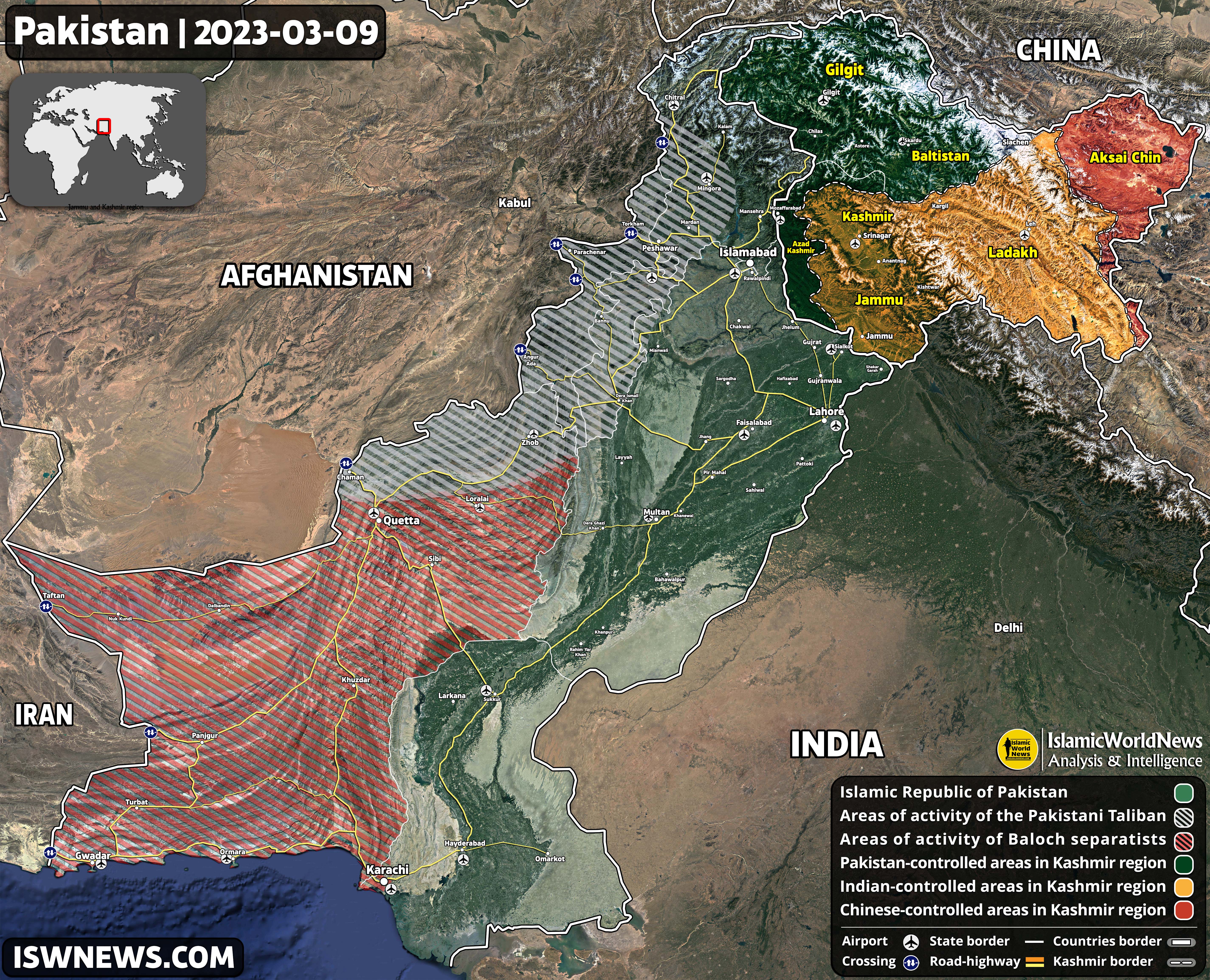
Baloch Republican Army (BRA): The Baloch Republican Army, as the military branch of the Baloch Republican Party (BRP), was founded in 2006. The BRP was established in Quetta city of Balochistan province, but the Pakistani government declared this party along with a group of other parties and organizations as illegal on October 24, 2012. Some sources also claim that the Baloch Republican Army (BRA) separated from the Jamhoori Watan Party (JWP), linked to Nawab Brahumdagh Bugti in 2008, which is related to his uncle, Talal Akbar Bugti.
Baloch Republican Army (BRA)
The Baloch Republican Army (BRA) is a quasi-military organization seeking ethnic-nationalist separation, fighting against the Pakistani government to create an independent Balochistan. Most BRA members belong to the Bugti tribe living in the eastern part of Balochistan, Pakistan. This organization opposes any foreign investment and foreign interference in Balochistan. BRA targets Pakistani security forces and manufacturing infrastructure, claiming to allocate Balochistan’s resources to the people of Balochistan. The Baloch Republican Army (BRA) also targets public transport of the Pakistani government and had previously threatened to continue its attacks against non-combatants if the Pakistani government did not withdraw its forces from the region.
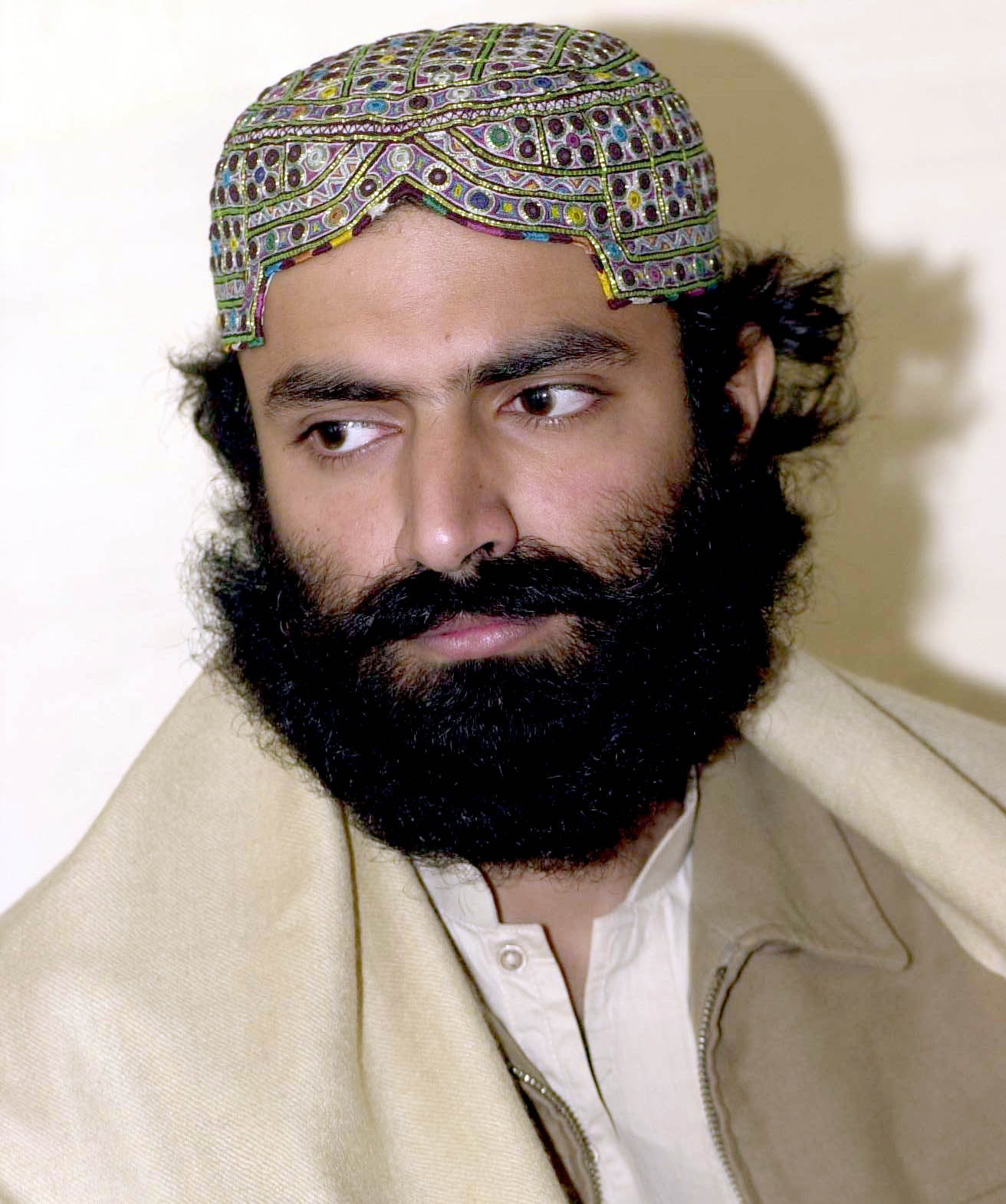
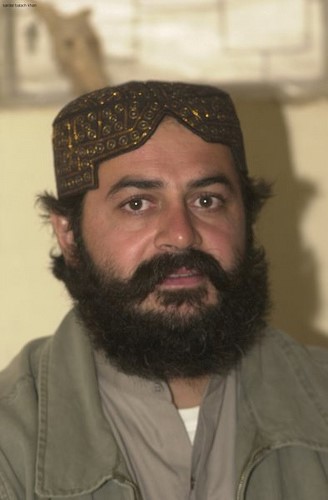
Brahumdagh Bugti
This group carried out its first operation on October 20, 2007, claiming responsibility for detonating a bomb against a bus in Dera Bugti district in eastern Balochistan province. As a result of this operation, 8 people were killed and 28 were injured. The Baloch Republican Army (BRA) does not disclose its leaders; however, the Pakistani government has claimed that Brahumdagh Bugti has been leading this group since its establishment. Bugti is also the leader of the Baloch Republican Party. Pakistani politicians have claimed that US and British intelligence agencies have supported Baloch insurgencies, especially most of BRA’s attacks in Balochistan province, while BRA has also carried out attacks in Punjab and Sindh provinces.
The Baloch Republican Army (BRA) uses mortar attacks, car bombings, handmade bombs, landmines, grenades, small arms attacks, conventional warfare, unconventional warfare, social media, and nationalist propaganda to achieve its goal of establishing an independent Baloch state. This group targets Pakistani security forces, police, public buses, railways, communication systems, gas pipelines, power pylons, checkpoints, and non-governmental offices.
Under the leadership of Gulzar Imam, a branch within this group, which has supporters in the Makran region, it joined the Baloch Raji Aajoi Sangar (BRAS) in 2019. This branch merged with the United Baloch Army (UBA) in January 2022 to form the Baloch National Army (BNA). (BRA) and (UBA) declared their dissolution after the formation of the Baloch National Army.
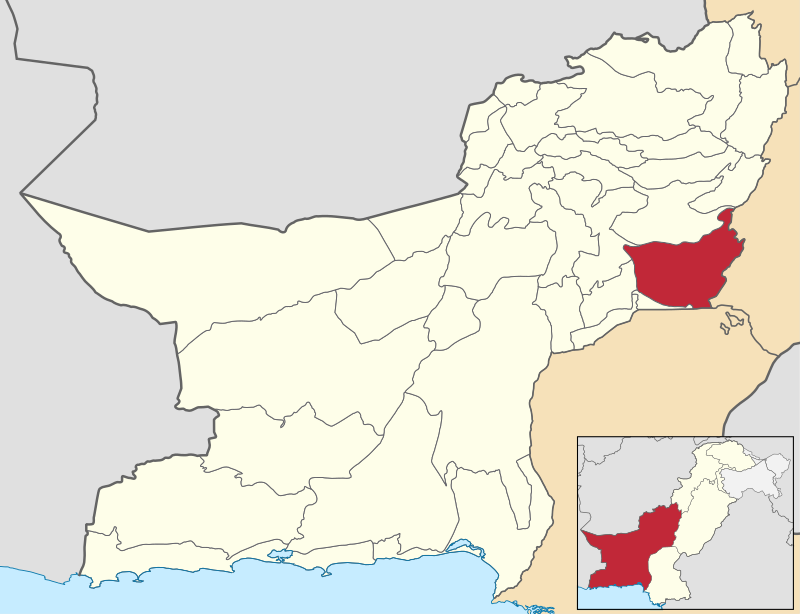
Bugti area in Balochistan province
Balochistan Liberation Army (BLA): The Balochistan Liberation Army is an ethnic-nationalist separatist organization consisting mostly of members of the Marri-Bugti Country tribes located in Afghanistan. The BLA is the oldest and most dangerous group among all active Baloch groups in Balochistan. Formed in summer 2000 in response to increasing dissatisfaction in Balochistan due to the government’s monopolization of natural resources and unequal allocation of jobs to Punjabis compared to native Baloch people, BLA elements targeted Pakistani soldiers and police by resorting to bombings in markets and railroads. Military facilities and Pakistani security forces were targeted with mortar shells during these raids. BLA’s first recorded activity in summer 2000 involved taking responsibility for a bomb blast in a market in Quetta city, Balochistan, resulting in 7 deaths and 25 injuries.
Balochistan Liberation Army flag
The Balochistan Liberation Army (BLA) is considered a terrorist organization by Pakistan, Britain, and the United States.
It is said that the BLA was founded in the year 2000, but some media outlets and analysts speculate that the group is a revival of the Baloch insurgency, particularly the Balochistan separatist movement from 1973 to 1977. In the year 2004, the BLA initiated violent struggles against Pakistan for determining the fate of the Baloch people and the separatism of Balochistan from Pakistan, beginning terrorist attacks against non-Baloch minorities in Balochistan province.
Pakistan designated the BLA as a terrorist organization on April 7, 2006, following repeated attacks by the group on security forces. On July 17, 2006, the British government labeled the BLA as an illegal group. Despite Pakistan’s objections, Britain granted asylum to the suspected BLA leader, Hyrbyair Marri, in the European country. The group’s actions were also described as terrorist activities by the United States Department of State, and the European Union also classified the BLA as a terrorist organization.
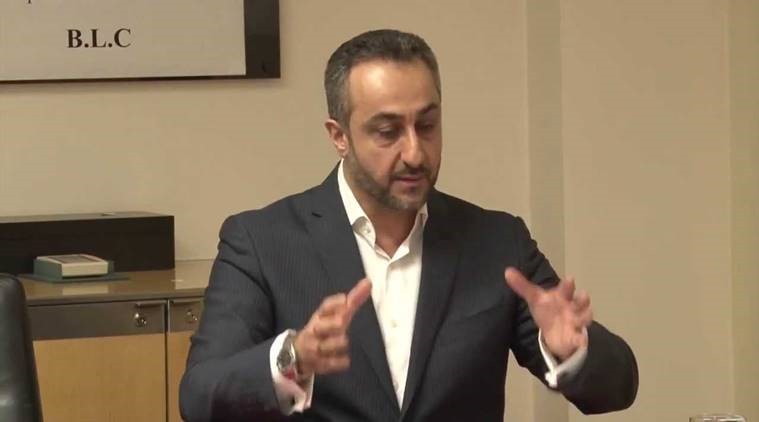
Hyrbyair Marri
Some Western analysts claim that India provides the BLA with funding. The group was led by Balach Marri from 2000 until he was killed in Afghanistan in 2007.
Balach Marri
The BLA most important operations history:
– After operations in 2000, the BLA launched a series of attacks in May 2003, targeting police and non-indigenous Baloch residents. The following year, the BLA attacked Chinese workers involved in large government-sponsored development projects. These attacks attracted the attention of the media.
– Despite the government’s military presence, BLA attacks continued throughout 2003 and into the summer of 2004 with car bombs and multiple attacks.
– In 2005, the group attacked the Kohlu camp, which at the time was hosting the then president of Pakistan, Pervez Musharraf. The Pakistani government considered the actions of the BLA as an attempt on the life of the president.
– On November 21, 2007, government forces killed Mir Balach Marri, the leader of the BLA. Around the same time, the Pakistani government leased Gwadar port in southern Baluchistan to China for 40 years. The BLA and many Baloch interpreted this issue as another attempt by the Pakistani government to colonize Baluchistan, and these groups, especially the BLA, began their military and propaganda operations against China.
– On April 15, 2009, during an interview, Brahumdagh Bugti, a Baloch dissident, asked the Baloch people to kill any non-indigenous resident of Balochistan, whether military or civilian. After these words, about 500 Punjabis were killed in Balochistan, and in the meantime, the finger of accusation was pointed towards BLA.
– In 2013, the BLA claimed responsibility for the attack on the National Heritage Site and historic summer home of Pakistan’s founder Muhammad Ali Jinnah.
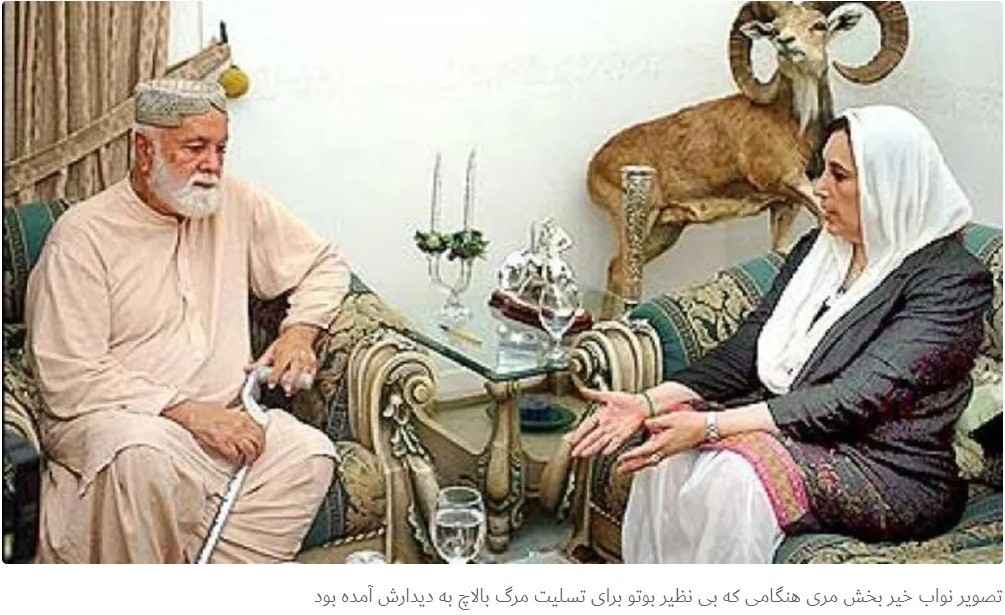
Benazir Bhutto’s meeting with Nawab Khair Bakhsh Marri to condole the death of his son Balach
In 2014, BLA leader Nawab Khair Bakhsh Marri died of natural causes. After his death, Marri’s six sons clashed over control of the BLA. Three of the boys are believed to have left the BLA to help form a splinter group called the United Baloch Army (UBA). In addition to its conflict with the UBA, the BLA has remained active in conducting attacks against the Pakistani government. In April 2017, 500 militants affiliated with various Baloch militant organizations, including the BLA, surrendered to Pakistani authorities.
In its 2022 report, the Balochistan Liberation Army terrorist group has considered two operations as the most prominent operations of 2022. These two operations include the Ganjal operation, which the Baloch Liberation Army claims killed 195 Pakistani soldiers in Nushki and Panjgur, and the suicide attack of Shari Baloch, a female suicide bomber affiliated with the Baloch Liberation Army, in which three Chinese nationals and a Pakistani driver were killed in Karachi.
This group has a strength of between 500 and 700 militants who operate in Quetta, Bolan, Kohlu, Nushki, Kalat, Khuzdar and Karachi. According to an anonymous Baloch human rights activist living in exile, the BLA is strongest in Marri tribal areas such as Mach, Harnai, Nasirabad, Jafarabad, Loralai, Quetta and Awaran in southern and eastern Balochistan.
The BLA Leaders:
Akbar Bugti, former chief minister of Balochistan and considered one of the founding fathers of the BLA. He was killed in a Pakistani security forces operation on August 26, 2006.
Akbar Bugti
Mir Balach Marri was a former member of the provincial parliament who apparently used his political influence to garner local community support for the BLA. He, who commanded the BLA, was ultimately killed in a Pakistani security forces operation on November 21, 2007.
Mir Balach Marri
Khair Bakhsh Marri participated in the 1970s Balochistan uprisings. He was known as the “godfather” of the armed Baloch movement. He, the father of Balach Marri, was a key figure in the BLA until his natural death in June 2014.
Khair Bakhsh Marri
The Pakistani government claims that Brahmdagh Bugti is also among the leaders of the BLA. He gained fame for calling for the killing of all non-Baloch residents in Balochistan during a well-known live television interview. The Pakistani government alleges that Brahmdagh Bugti helped revive the Balochistan Liberation Front (BLF) after leaving the BLA.
Brahumdagh Bugti
Bijar Khan, another BLA leader, was killed in a government attack in July 2015.
Aslam Baloch, known as “Achu,” was a commander of one of the BLA’s sub-groups. It is said that after a dispute with BLA officials abroad, he branched off and declared himself the commander of the BLA. He founded the Majeed Brigade and was in charge of the attack on the Chinese consulate in 2018. The BLA stated that Aslam Baloch was killed in a suicide attack in Quetta in December 2018. Bashir Zeb Baloch assumed command of the BLA after the death of Aslam Baloch. He was actually the commander of the Majeed Brigade, which conducted most of the BLA’s operations.
Aslam Baloch and Bashir Zeb Baloch
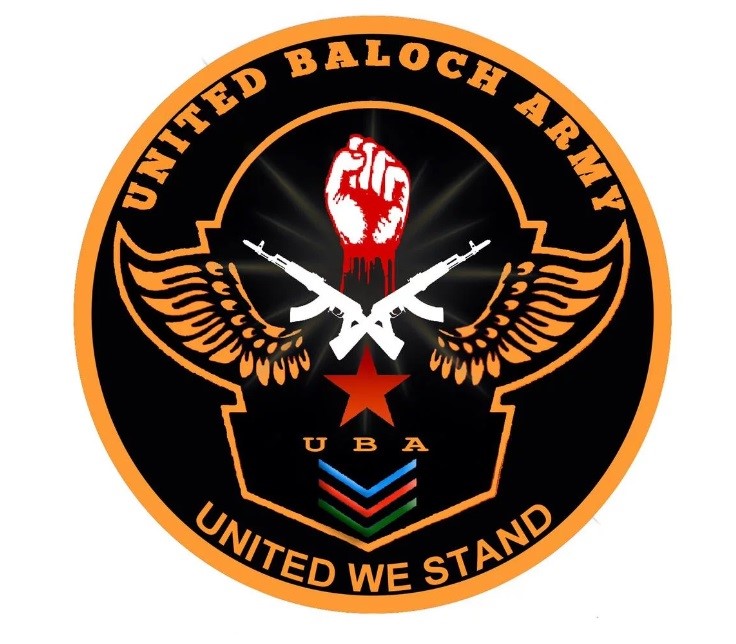
United Baloch Army (UBA): The United Baloch Army (UBA) was a semi-military group fighting for the separation of Balochistan from Pakistan, with headquarters in Kohlu, Kaghan, Bolan, Las Bela, and elsewhere. This group has been designated as a terrorist organization by the Pakistani government. Pakistan declared this group illegal on March 15, 2013. The Swiss government also classified this group as a terrorist organization.
United Baloch Army (UBA) emblem
Mehran Marri led the United Baloch Army (UBA). Following internal disputes with his brother, Hyrbyair Marri, whom the Pakistani government considers the leader of the Balochistan Liberation Army (BLA), Mehran Marri left this group and founded the United Baloch Army (UBA).
Mehran Marri
The Balochistan Liberation Army (BLA) and the United Baloch Army (UBA) engaged in conflict with each other, with the deadliest confrontation between the two groups occurring in the Dera Bugti area, resulting in the deaths of 20 fighters from both sides.
United Baloch Army (UBA) militants attacked two buses in Mastung area on May 29, 2015. The militants emptied the buses and shot dead 22 Pashtuns. The United Baloch Army (UBA) also claimed responsibility for the April 8, 2014 attack on the Jafar Express train in Sebi. This attack killed 16 people and injured 44 people.
Mehran Marri was arrested on November 16, 2017, at Zurich Airport by Swiss immigration authorities. Mehran Marri was permanently banned from entering Switzerland. Swiss authorities issued an indictment stating that Mehran Marri is the leader of the United Baloch Army (UBA).
According to various reports, Sarfaraz Bangulzai, one of the commanders of UBA, created his own group with the same name in 2020 after a dispute with UBA leadership. He wanted to separate UBA from the BRAS umbrella organization. The Bangulzai faction of the United Baloch Army (UBA) merged with the Baloch Republican Army (BRA) in January 2022 to form the Baloch National Army (BNA), and after the establishment of the Baloch National Army, they announced their dissolution.
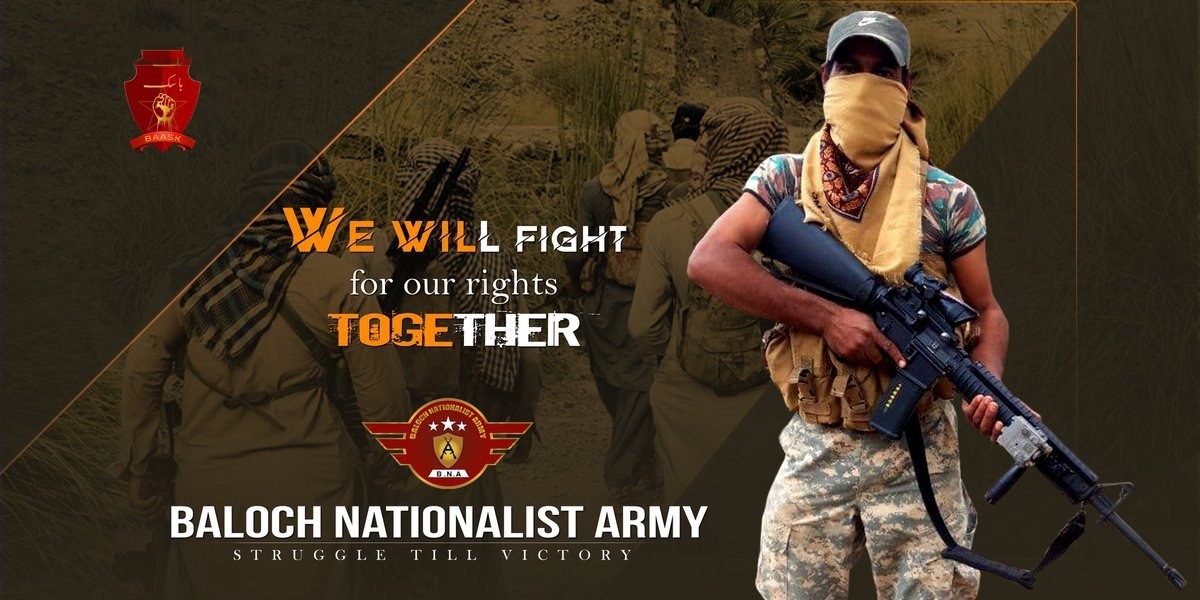
Baloch Nationalist Army (BNA): The Baloch Nationalist Army is a semi-military group fighting for the separation of Balochistan. The group was formed on January 11, 2022, through the merger of the Baloch Republican Army (BRA) and the United Baloch Army (UBA). The Baloch Republican Army and the United Baloch Army also announced their dissolution after the establishment of the Baloch Nationalist Army.
Baloch Nationalist Army (BNA) poster
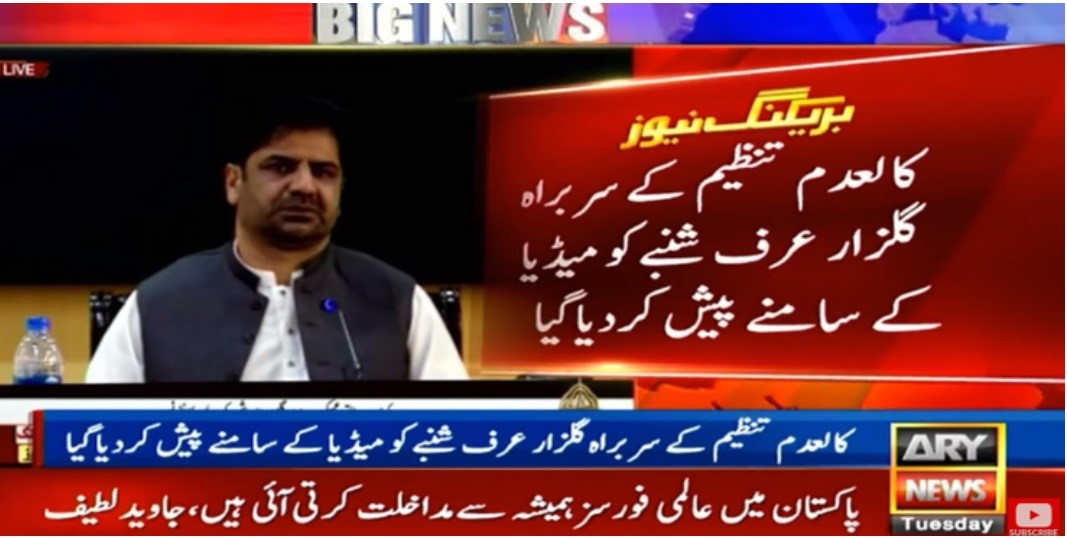
Gulzar Imam alias Shambay was the deputy of Brahmdagh Bugti, who in January 2022, through the merger of his group BNA and the United Baloch Army, formed the new group BRA. After sidelining Brahmdagh Bugti, he became a resident of Europe and was active with over 300 fighters in the regions of Khuzdar, Kech, and Nushki. It is said that in April 2023, Imam Shambay was arrested in an intelligence operation by Pakistan’s Inter-Services Intelligence (ISI) in Turkiye.
In May 2023, Imam Shambay, through Pakistani media, called on all active insurgents in the province to surrender and lead a peaceful life, stating that he had come to the conclusion while in captivity that only peaceful political struggle will resolve the issues of Balochistan. However, after the arrest of Imam Shambay, Sarfaraz Bangulzai, the leader of the UBA faction, introduced himself as the new head of the Baloch Nationalist Army (BNA) under the pseudonym Mureed Baloch.
Imam Shambay in Pakistani media
The BNA operations:
– On January 20, 2022, the Baloch Nationalist Army (BNA) killed at least three people and injured more than 20 people by exploding a bomb in Lahore, Punjab. This was while the Lahore explosion was strongly condemned by leaders of Baloch nationalist groups such as Mehran Marri and Brahumdagh Bugti.
– The Baloch Nationalist Army (BNA) is also said to have collaborated with the BLA in the 2022 Panjgur and Nushki attacks, an operation that attributed to the BRAS umbrella group.
Baloch Liberation Front (BLF): The Baloch Liberation Front is a paramilitary group that operates in the Balochistan province of Pakistan. The group was founded by Juma Khan in 1964 in Damascus and played a significant role in the 1968-1973 insurgencies in Sistan and Baluchestan province in Iran and the 1973-1977 insurgencies in Balochistan province of Pakistan with the support of Iraq. However, the insurgency of this group in Pakistan and Iran was defeated, and its members were driven to Afghanistan where they were supported by Kabul government and the Soviet Union.
Baloch Liberation Front (BLF)
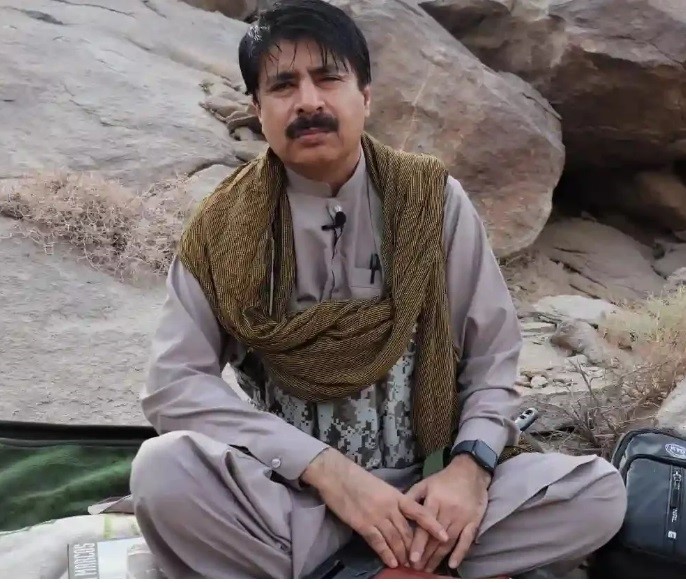
The status of this group was unknown until 2004. The group resurfaced in 2004 after Allah Nazar Baloch took over the leadership of the group in 2003. Since then, this group has been responsible for various attacks on non-combatants, journalists, government officials, and Pakistani military personnel. The Indian newspaper Hindustan Times reported in 2015 that the Baloch Liberation Front (BLF) has expanded its ties with India.
Allah Nazar Baloch
The BLF most important operations:
– Gunmen attacked a Pakistan Coast Guard checkpoint in Gwadar district early on July 27, 2013. This attack was carried out by 24 armed men, which resulted in the death of seven coast guards and the wounding of seven others. Two injured coast guard personnel were also kidnapped by the militants. The Baloch Liberation Front took responsibility for the attack on the Coast Guard post.
– On April 12, 2015, 20 construction workers from Punjab and Sindh were killed in Torbat by gunmen, which the BLF later claimed responsibility for the attack. After the attack, Balochistan Home Minister Sarfraz Bugti claimed that Indian intelligence agencies were involved in supporting the BLF in carrying out such attacks. The BLF claimed that the workers were members of the Pakistan Border Patrol.
– The bodies of 15 migrants were discovered on November 16, 2017, in the city of Torbet. Security officials say migrants have been abducted and then killed by gunmen while trying to cross the border. The BLF later claimed responsibility for the killing of 15 migrants. The mastermind of the attack, Younis Tawakoli, was killed by Pakistani security forces in November 2017. Younis Tawakoli was one of the eight senior commanders of the Baloch Liberation Front.
– On January 25, 2022, BLF elements captured a security forces outpost in the Ketch Plain area and claimed to have killed 17 Pakistani army personnel.
Lashkar-e-Balochistan (LeB): Lashkar-e-Balochistan was established in 2008 with the aim of preserving the position of the tribal chiefs of the Mengal tribe. The Lashkar-e-Balochistan operates from the Jhalawan region.
Lashkar-e-Balochistan (LeB)
Javed Mengal, apparently the leader of the Lashkar-e-Balochistan, is the son of Nawab Akbar Khan Mengal, the first chief minister of Balochistan in 1972. After the dismissal of Akbar Khan Mengal’s government, he was imprisoned and later went into exile. He returned to Balochistan in 1996 and established a political party called the Balochistan National Party. His other son, Akhtar Mengal, heads this political party who left the coalition government of Pakistan Tehreek-e-Insaf (PTI) in June 2020, over the issue of missing Baloch persons and other Baloch issues.
Like all armed Baloch organizations, LeB has not declared its leader, although Pakistan claims that Javed Mengal is the leader of this group and Lawang Khan is its spokesperson.
One of the group’s largest operations took place on September 25, 2020. Members of the Lashkar-e-Balochistan attacked a group of frontier corps in Khuzdar and killed several Pakistani security forces.
Baloch Republican Guards (BRG): The Baloch Republican Guards were formed in 2012 following the assassination of the wife and daughter of Bakhthiar Domki by unknown assailants. Bakhthiar Domki’s wife was the sister of Brahumdagh Bugti and several news reports suggest that this targeted assassination was a message to Brahumdagh Bugti as well.
Baloch Republican Guards (BRG)
The Baloch Republican Guards (BRG) also does not disclose the name of its leader, although Dostain Baloch has been introduced as its spokesperson.
According to Mehrab Baloch, a human rights activist, the Baloch Republican Guards is active in areas like Nasirabad, Bolan, Kech, and somewhere else.
This organization is also part of the Baloch Raji Aajoi Sangar (BRAS).
The Baloch Republican Guards’ elements, on February 10, 2022, fired a grenade at the city of Dera Murad Jamali, which resulted in one death and injuries to several people.
Baloch Raji Aajoi Sangar (BRAS): The Baloch Raji Aajoi Sangar (Baloch National Freedom Front) is an umbrella organization for the main nationalist insurgent groups in Balochistan province, with Baloch Khan as their chosen official spokesperson.
In a joint statement released by media outlets in November 2018, the armed organizations Baloch Liberation Front (BLF), Baloch Liberation Army (BLA), and Baloch Republican Guards (BRG) declared that they form an umbrella organization. Later, the Baloch Republican Army (BRA) also joined this umbrella. The name of this organization, Baloch Raji Aajoi Sangar, in the Balochi language means the Baloch National Freedom Front.
Joint statement released by BRAS
Shortly after, the Sindh Revolutionary Army (SRA) also joined this umbrella group to unite the separatist groups of Sindh province and Baloch separatist groups under one organization. The joining statement of the Sindh Revolutionary Army highlighted countering the China-Pakistan Economic Corridor (CPEC) as a top priority for this umbrella group.
The poster of joining Sindh Revolutionary Army to BRAS
Baloch Liberation Tigers (BLT): The Baloch Liberation Tigers (BLT), a covert organization that appears to have started their operations in 2011, mostly operates in the Dera Bugti area. Moreover, some operations have been reported in Quetta, Nasirabad, Turbat, Lahore, and Jafarabad as well. The news of the operations by this group, which usually engaged in attacks on railways, gas pipelines, assassinations, raids on security forces’ headquarters, and ambushing Pakistani forces, is announced by Miran Baloch, the spokesperson of the Baloch Liberation Tigers.
Baloch Liberation Tigers (BLT)
The Islamic State in Pakistan (Wilayat Pakistan): Under the name Wilayat Pakistan, ISIS has carried out various operations in Balochistan, Pakistan, including assassinations, suicide attacks, abductions and executions of individuals, using hand grenades, and attacking security forces’ headquarters.
One of the significant operations of ISIS in 2023 was a suicide attack by an ISIS member against a group of Pakistani police near Sibi city, killing over 10 of them in March 2023. Similar operations by ISIS in the same region a year prior to the 2023 attack resulted in the killing and injuring of 30 Pakistani security forces.
The kidnapping operation of several Hazara Shia workers in Mach near Quetta and the execution of all of them by ISIS elements in January 2021 also received a lot of coverage in the media.
Tehrik-i-Taliban Pakistan (TTP): Although the Tehrik-i-Taliban Pakistan is composed of a collection of primarily Pashto-speaking Islamist groups from the Pashtun-majority areas of northwestern Pakistan, it should not be overlooked that this group has influence in Balochistan province and is making efforts to increase its influence in this province of Pakistan.
It seems that Aslam Baloch Noshki, the leader of the Tehrik-i-Taliban in Balochistan, is an important figure. Additionally, the Mazar Baloch group is also an important Baloch group within the Tehrik-i-Taliban Pakistan. The new divisions within the Tehrik-i-Taliban Pakistan in Balochistan indicate an expansion of this group’s activities in Balochistan province.
Recently, in June 2023, the council of Tehrik-i-Taliban Pakistan decided, due to the expansion of activities in Balochistan, to elevate Makran and Kalat to provinces, and appoint Shahin Baloch as the leader of these provinces.
It is worth mentioning that in 2022, the Tehrik-i-Taliban Pakistan carried out 12 operations in the province of Balochistan. And in the first six months of 2023, they carried out 19 operations in Balochistan, indicating an increase in the movements of the Tehrik-i-Taliban Pakistan in that province.
Conclusion: Despite efforts to suppress armed movements in Balochistan province, in the ending years of the 20th century, these movements have intensified in the beginning of the 21st century. It seems that the situation in Afghanistan and the instability in northwestern Pakistan have also had an impact on the Balochistan region, which is a region that struggles to find its identity within Pakistan. In the meantime, Pakistan’s closer ties with China and the signing of the China-Pakistan Economic Corridor agreement between the two countries, where Balochistan will play a crucial role, have influenced the rise of armed movements by ethnic and non-ethnic terrorist groups in Balochistan, Pakistan.
It can be said that the Balochistan Liberation Army (BLA) and Baloch Liberation Front (BLF) are the most active armed groups in Balochistan, Pakistan, with other groups either branching out from these two, especially the Balochistan Liberation Army, or being associated with them. Among these, the Balochistan Liberation Army is the most active group in trying to unite other groups.
With the recent developments in Pakistan’s relations with China, rival countries of China, especially India, which have always had a close watch on Baloch groups, have now also paid attention to these groups. In the past decades, countries aligned with socialism like Iraq and Syria also supported separatist Baloch groups. Afghanistan, as a sanctuary for many of Pakistan’s Baloch opposition, is another country involved in Balochistan’s issues. Some analysts also see the footprint of Western powers in supporting separatist Baloch groups in Pakistan.
Due to the tribal structure of the Balochistan region in Pakistan, separatist armed groups are also considered to be linked to tribal groups, with Bugti and Marri tribes holding a special position. Since the origin of these groups is mainly in eastern Balochistan region, it seems that they have little connection with Baloch groups in Iran, and instead have established relationships with Sindhi ethnic groups in their east. Some separatist Baloch leaders, such as Hyrbyair Marri, consider their activities to span across all of Balochistan region, including regions in Iran and even Afghanistan, and some Iranian separatist media outlets also cover Hyrbyair’s activities.
Another issue is that the financial resources available to these separatist groups have led to financial corruption within the groups, with some external separatist leaders exploiting these financial resources for their own benefit. This has caused field commanders to increase their role in opposition to external leaders, a situation that seems to have manifested in the armed movements of these groups, with the military and security objectives of Pakistan coming more into focus for these groups than ever before.
On January 16, Brigadier General Yahya Saree, spokesman for the Yemeni armed forces, announced a missile attack on the bulk carrier Zografia. The cargo ship was reportedly en route from Ho Chi Minh Port in Vietnam to the Suez Canal and possibly one of the Israeli regime’s occupied ports, when it was identified about 100 miles northwest of Al-Salif Port in western Yemen and was targeted by the Yemeni army with several anti-ship missiles.
This is not the first or the last instance of the Ansar Allah movement’s missiles and drones hitting Israeli ships and Israel-bound vessels, and in the majority of operations declared by the Yemeni armed forces, the impact of missiles or suicide drones has unequivocally occurred. However, the Zografia ship is the first case where images of the moment of the Ansar Allah movement’s missile impact and its aftermath are released.
Ansar Allah missile hit the Zographia ship in the Red Sea
At first glance, from the video of the moment of impact, it can be seen that one of the Ansar Allah movement’s anti-ship ballistic missiles hits the Zografia ship. The apparent explosion appears to be relatively small, and its damage seems limited. However, a more technical look at the video and the images of the attack’s aftermath reveals that the missile approaches the ship from above at a 45-degree angle and at high speed, striking the midsection of the ship and causing damage up to its hull.
It is difficult to accurately determine the type of missile due to the low quality of the video. Some Western media outlets and analysts, based on the ballistic missile test footage of the Islamic Revolution Guards Corps (IRGC) in the Persian Gulf, have classified the missile as part of the Fateh series of naval ballistic missiles.
The statement from the United States Central Command (CENTCOM) in West Asia has also referred to the type of the missile fired by the Ansar Allah movement as anti-ship ballistic missile. The Ansar Allah movement’s anti-ship ballistic missiles include Tankeel, Aasef, Mohit, and Al-Bahr Al-Ahmar. However, the image of the missile clearly depicts two wings in the middle of the missile, which reinforces speculation about the use of cruise missiles. The Ansar Allah movement’s cruise missiles include the Quds series (Quds Z-0), Sayyad, Sejil, and missiles made by the Soviet Union and China. In general, determining the type of missile from a single image of poor quality is difficult, but the signs of “cruise” marks on the missile is definite, given the existence of wings in the middle of the missile.
The moment Ansar Allah missile hits the target (probably the Sejjil or Quds cruise missile)Ansar Allah cruise missiles (from right to left: Sayyad, Sejjil and Quds z-0)
The naval war between the Ansar Allah movement and the US-led coalition represents a new chapter of asymmetric conflict in the history of naval warfare. Yemen’s goal in these extensive operations, as mentioned in numerous statements from the armed forces, is to halt Israeli shipping and affiliated vessels, so they can use it as a pressure tool to stop the war in the Gaza Strip. Undoubtedly, sinking these ships is not the aim of the leaders of Ansar Allah and the Yemeni government. However, even if such a goal is defined, suitable weapons for it exist in Yemen, and generally, Ansar Allah’s objective is to stop Israeli shipping.
The deployment of more European and American warships signifies the success of the Ansar Allah movement’s operations and the achievement of its goals. Moreover, Israeli and European transportation companies’ efforts to establish a land corridor from Arab countries to the Israeli regime’s occupied territories indicate that they have no hope of reopening the Bab al-Mandab Strait and the Red Sea and are looking for alternative routes to reduce the economic pressure caused by the closure of the Red Sea shipping route.
The Ansar Allah movement faces logistical constraints and the US-UK air attacks to destroy ammunition depots, missile and drone launch systems, as well as limited capability in its air defense systems. However, the Yemeni forces are trying to counter these issues with asymmetric actions, such as heavy and limited attacks on ships and military fleets of the US and the UK. The challenges facing the US and UK fleets include the lack of control over Yemen’s territories and coasts, restrictions on identifying the sources of missile and drone attacks by Yemen, the lack of direct support from regional countries, and the presence of the Iranian military fleet in the region’s waters.
Considering the above issues, it is expected that the Red Sea route will remain closed to the Israeli regime and the United States in the coming months, and the naval forces of the European Union will join the US-led coalition. Reports suggest that the US and the UK intend to conduct ground operations on the western Yemeni coast, which is unlikely to be successful. This plan was previously carried out by the Saudi-led coalition and its failure led to high casualties and eventually the retreat of the United Arab Emirates (UAE) and the Saudi kingdom. Complete occupation of the western coasts of Yemen will not stop the Ansar Allah movement’s missile and drone attacks in the Arabian and Red Seas, as most of these attacks are launched from the Ansar Allah movement’s deep positions, and less than 20% of the attacks are carried out from the coasts of Al Hudaydah and Hajjah governorates.
The latest status of the Zographia ship / This ship has been sent to the Suez Shipyard in Egypt to repair the damage caused by the Ansar Allah missile.
According to the statements made by General Amir Ali Hajizadeh, the commander of the Islamic Revolution Guards Corps Aerospace Force as well as the existing field information, these attacks were carried out against the command and espionage headquarters of the Mossad approximately 10 kilometers far from the Iraqi city of Erbil, and also against the hideouts and training centers of Takfiri groups associated with the ISIS Khorasan branch in the Kafr Takharim area in northern Idlib Governorate of Syria.
The attack on the Mossad headquarters in the Iraqi city of Erbil was carried out by firing 11 Fateh-110 and Fateh-313 missiles. Out of this number, four missiles were launched from western Iranian city of Kermanshah (Tange Kenesht military base) and seven other missiles were launched from the northwest Iranian city of Tabriz (Azarshahr missile site) to hit the targets. Additionally, according to the published videos regarding the Erbil attack, one or two suicide drones were also used, but the Islamic Revolution Guards Corps has not hinted to the drone attacks in their four statements; therefore, details about the number and type of suicide drones used in this operation are not available. Nonetheless, it is highly likely that these drones are of the Shahed 131 or 136 types.
It is worth mentioning that during the attack on the Mossad headquarters in Erbil, four people, including Peshraw Dizayee, a leading figure of the traders close to the Israeli regime as well as Ahzi Amin, who was a former intelligence commander of the Kurdish Peshmerga forces, were killed.
The attack on the terrorist groups in Syria was carried out by firing 13 missiles. Out of this number, four Khaybar-Shekan ballistic missiles were launched from the Darkhoveyn area in southern Khuzestan province, which is located in southwestern Iran. The ballistic missiles were fired towards Idlib Governorate in Syria to target the headquarters of terrorist groups in the Talteta area. Furthermore, nine other missiles were launched towards targets in Syria, but there is no information available about the type of missiles or the targets. However, General Hajizadeh announced in an interview that the terrorists’ positions in the east of the Euphrates River have also been targeted by missile attacks. It seems that based on field reports from the Idlib and Aleppo governorates as well as General Hajizadeh’s statements, some of these 9 missiles have hit the pre-planned targets in northern and eastern Syria.
What are the important points of these military operations?
The Islamic Republic of Iran utilized the tactic of “hybrid attack” during conducting of these strikes, which we had previously witnessed in the Aramco attack and over the course of the military operations carried out by the Russian army during the Ukraine war. This means that before the missile strike on Erbil, one or more drones were launched in a bid to engage the US C-RAM defense systems stationed at the Al-Harir air base, and then the ballistic missiles hit the Israeli regime’s headquarters. Additionally, with the firing of 24 missiles, these attacks have been the largest missile operation conducted by Iran up to date.
As stated in the statements of the Islamic Revolution Guards Corps, this operation was conducted in response to terrorist attacks in Kerman city and Sistan and Baluchestan province, as well as the assassinations of the IRGC commander Martyr Sayyed Razi Mousavi and senior leader of Hamas and founding commander of its military wing (the Izz ad-Din al-Qassam Brigades) Martyr Saleh al-Arouri by the Israeli regime. But more importantly, it displays Iran’s missile power and capabilities to the United States and the Israeli regime.
In this operation, the strategic ballistic missile Khaybar Shekan was launched against targets in the battlefield for the first time, which could accurately target objectives within a range of approximately 1260 kilometers (from Darkhoveyn in Khuzestan province to Talteta in northwestern Syria). As the name of this missile suggests, the experts of the Islamic Revolution Guards Corps developed this ballistic missile with the aim of creating the capability to target the Israeli regime’s positions, and the operationalization of Khaybar Shekan in the battlefield serves as a serious and clear warning to the Israeli regime. Furthermore, this operation marks the first missile attack by Iranian forces with a range exceeding 1200 kilometers from inside Iran, and such a missile attack has not been carried out before.