Category: Central Asia – Pacific

  • Tehrik-i-Taliban Tajikistan has emerged!

    Tehrik-i-Taliban Tajikistan has emerged!

    The Tajik Taliban militants in Afghanistan, led by Mehdi Arslan, created Tehreek-e-Taliban Tajikistan (TTT) with the aim of armed struggle against the Tajik government. These people were former members of Jamaat Ansarullah of Tajikistan, who were supported by this group after the Taliban came to power in Afghanistan and founded the Taliban of Tajikistan.

    According to local sources, the number of armed men under the command of Mehdi Arslan is more than 250 people, all of whom are citizens of Tajikistan, and most of them are wanted by the government of Tajikistan for security and terrorist reasons. Mehdi Arslan has been appointed as the governor of five border districts in the Badakhshan province in the Afghan Taliban organization and is responsible for controlling the borders of Afghanistan and Tajikistan. Every day, these people shout slogans against the Tajik government in the watchtowers and border stations and invite the Tajik military to fight against the government of Emomali Rahmon.

    “Mohammed Sharifov” known as “Mehdi Arslan” is a resident of Noorabad district of Badakhshan Autonomous Region of Tajikistan and a former member of “Jamaat Ansarullah Tajikistan” group, who has been wanted by the Tajikistan government for terrorist activity allegations for the past eight years.

  • Reviewing the consequences of the conflict between Eastern and Western powers in Central Asia

    Reviewing the consequences of the conflict between Eastern and Western powers in Central Asia

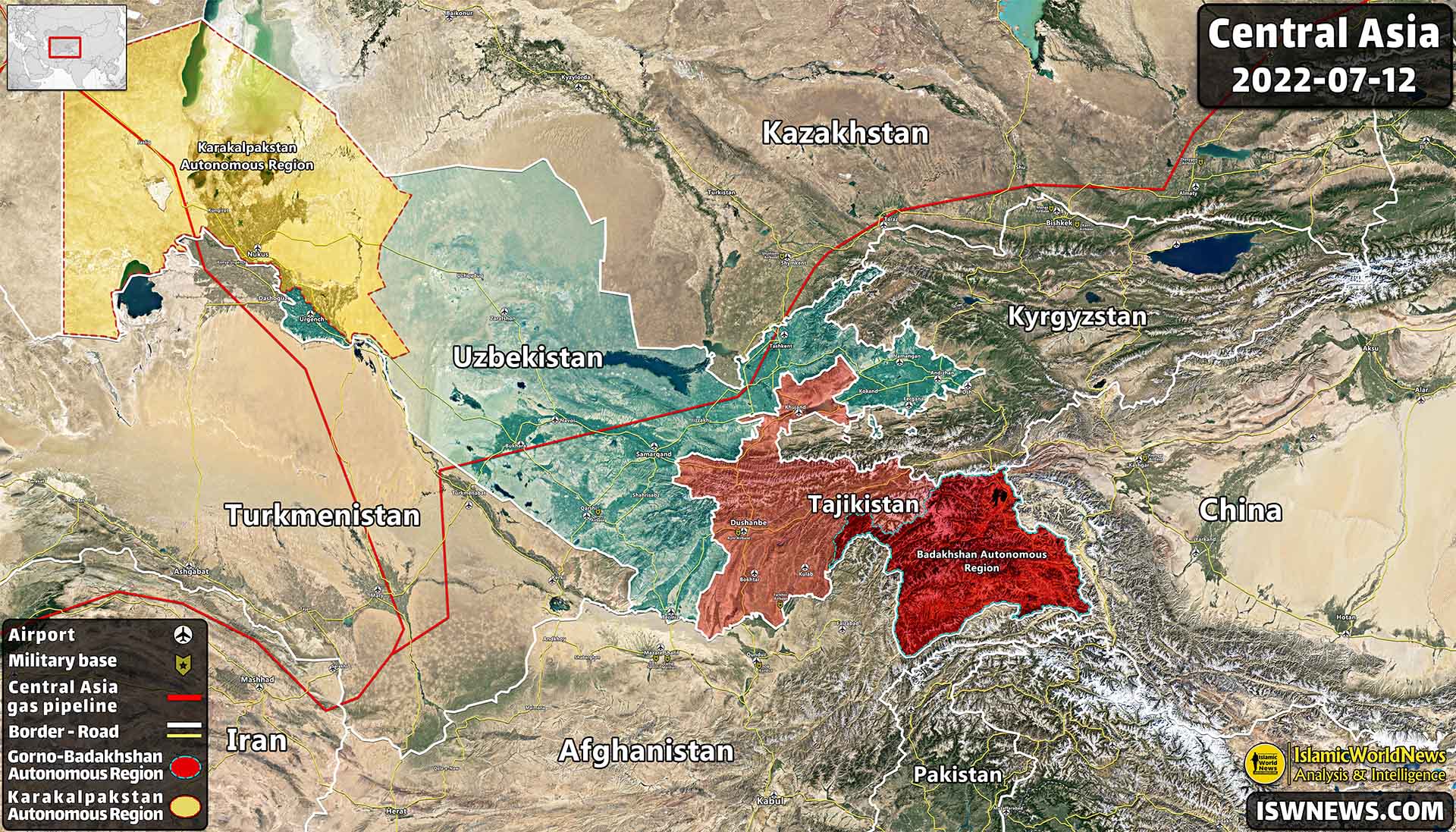
    During the last year, Central Asia has witnessed different crises, from street protests to military conflicts at different levels. Also, the activities of political movements and the military officials of various countries in the Central Asian region, especially the Americans, have increased the importance of this situation. The crises of this region can be defined as follows:

    1- Afghanistan crisis and America’s effort to influence more in Central Asia:
    After a year passed since the Taliban came to power in Afghanistan and also the withdrawal of the American forces from the country, a big security vacuum was created in the region and most of the Central Asian countries started their relations with the Taliban in limited condition.
    But in the meantime, Tajikistan publicly supported Ahmad Massoud forces and rejected the general interaction with the Taliban government. This issue arises from a close relationship with America. In general, the goal of the Americans for the warm relationship with Tajikistan is to continue to be present in the Central Asian region so that they can firstly penetrate into the backyard of Russia, China and Iran and also continue to play a role in the Afghanistan developments. America was defeated by Pakistan’s negative response regarding the construction of the base and several other things at the beginning of this matter; But now with the HUMINT policy, support for non-governmental organizations (NGOs) as well as training and military and security assistance, it has increased its influence in Tajikistan.
    One of the reasons for Putin’s recent visit to Tajikistan was the concern about the increase of American activities. In less than a month, three high-ranking American officials, Donald Lowe, Tom West, and General Michael Kurilla, had traveled to Tajikistan.

    Rocket attacks by ISIS and unknown groups from Afghanistan to Tajikistan, Uzbekistan and Turkmenistan were also among the other events that happened in the last few months, and this issue cannot be analyzed until its dimensions are hidden.

    2- Suppression of popular protests in Tajikistan’s Badakhshan:
    Since 2012, the mountainous Badakhshan Autonomous Region of Tajikistan has been the source of popular protests and severe repressions by the government of Emomali Rahmon. This issue has intensified since November 2021 and its peak can be seen in the assassination of “Martyr Mohammad Baqer MohammadBaqerov”, one of the popular leaders of this region. Also, other local leaders have had a similar fate or have been arrested.

    According to the latest field information, the government of Tajikistan seeks to suppress the popular groups in Badakhshan in order to apply its unified and autocratic rule in all of Tajikistan. With the opportunity of Russia’s war with Ukraine and simultaneous regional trips to Iran, Russia and Uzbekistan, “Rahmon” was able to complete his operations for ethnic cleansing in Badakhshan without any pressure. It should be noted that after this tension, the young fighters of Badakhshan either ran away or hid in the mountains, and the atmosphere of suffocation reigned over the city of Kharogh and other cities of Badakhshan province.

    3- Uzbekistan and the Karakalpakstan crisis:
    During the Soviet Union period, the Karakalpakstan region was first included in Kazakhstan, then in Kyrgyzstan, and later in the status of an autonomous republic, and finally it was handed over to the Soviet Republic of Uzbekistan. In 1990, the sovereignty of Karakalpakstan was approved, and at the beginning of 1993, an intergovernmental agreement was signed, according to which the Republic of Karakalpakstan became part of Uzbekistan for 20 years. Karakalpaks believe that their country is not an autonomous region, but an independent country within Uzbekistan.

    Karakalpakstan is a parliamentary republic, which has a national flag, official coat of arms, constitution and national anthem, and covers 37.1% of the territory of Uzbekistan. This region has rich resources and reserves of oil, gas and gold, and its population is about 2 million people, who are in the minority compared to the population of 35.3 million Uzbeks.

    The separatist tendencies in this republic intensified when the government of Tashkent announced that it was preparing to approve a constitutional amendment, which will remove the sovereignty of the Karakalpaks over their region. On July 5, “Dauletmurat Tazhimuratov”, the leader of Karakalpaks, planned to hold a peaceful rally on this issue, but the situation became tense after his video call. After this, military equipment and counter-insurgency forces were deployed throughout the city of Nukus, the capital of Karakalpakstan and Tazhimuratov was arrested. Of course, the Uzbek government has backed off from changing the constitution and the situation has calmed down. In the last 10 years, the situation in Karakalpakstan has become the hottest topic in the media about Uzbekistan.

    It should be noted that the authorities of Tashkent government have not renewed the autonomy agreement of Karakalpakstan since 2003 without polls and elections from the people of Karakalpakstan, and this led to start of these protests.

    4- Protests in Kazakhstan:
    What ignited the protests in Kazakhstan was the increase of fuel prices, but the demands of the protesters have now changed and they want to address broader issues. Kassym-Jomart Tokayev, the president of Kazakhstan, claims that these protests are organized by “terrorist groups” trained outside of Kazakhstan. The president of Kazakhstan declared a state of emergency following these protests across the country and promised to deal severely with the protesters. In a televised speech in the first hours of the protests, he said that he requested the help of the “Collective Security Treaty Organization” (CSTO) to establish stability in his country. Tokayev is the second leader of Kazakhstan after declaring independence from the Soviet Union in 1991. The election of Tokayev in 2019 was condemned by the Organization for Security and Cooperation in Europe (OSCE) on the pretext of not observing democratic standards in the elections.

    The presence of CSTO forces in Kazakhstan to suppress protests was one of the notable points.

    5- The military aid of the world powers to the countries of the Central Asian region:
    During the past few months, significant military aid was provided to the countries of the region, most of which was directed to Tajikistan. The establishment of the Ababil 2 drone production line in Tajikistan with the presence of Major General Bagheri, the Commander of the General Staff of the Iranian Armed Forces, the visit of the head of US CENTCOM to Tajikistan and the announcement of US$60 million military aid to Tajikistan (Puma drone, the construction of border posts in the Chaldovar region in the south of Tajikistan, ranger and mountain warfare training to the Tajik military, as well as providing special border equipment to Tajikistan), equipping the Tajik army with Chinese weapons, Russia’s promise to support and equip the Tajik border guards, and the sale of Turkish drones to Kyrgyzstan have been part of these military deals.

    Location of US border bases near Aiwaj in Chaldovar region

    Based on these developments, it can be concluded that Central Asia has always been in the spotlight due to its high importance, and due to the attention of the world’s military powers and the sending of military aid to this region, it is susceptible to important developments in the future. As Alexander Lukashenko, the President of Belarus, pointed out at the ceremony of the Independence Day of Belarus, Central Asia, like Eastern Europe, is located between two fronts and is a place where global poles clash. But the main issue today is not Ukraine, Belarus, grain and wheat exports, etc.
    Rather, the main issue is the emergence of new, powerful players in the international arena who have challenged the unipolar structure of the world. Protests and color revolutions, the greater influence of America and China and in contrast to the decrease of Russian influence in Central Asia, the possible role of Iran, etc. are among the things that we will hear more about in the future.

    Click to view full size (9 mb)
  • Latest updates on Afghanistan and Pakistan, 10 July 2022

    Latest updates on Afghanistan and Pakistan, 10 July 2022

    1- Uruzgan:
    On July 6, unknown gunmen assassinated “Shir Agha”, the former governor of Deh Rahwod district in the Lablan village.

    2- Bamyan
    – On July 2, Taliban militants in Bamyan district prevented the distribution of humanitarian aid from charitable foundations to the displaced people of Balkhab district.
    – On July 3, agents of the Taliban’s Department of “Enjoining the Good and Forbidding Evil” insulted Shia students by calling them apostates at Bamyan University. Also, the students protesting this issue were arrested by Taliban gunmen.
    – On July 6 and 7, Taliban militants arrested five civilians in the Shesh Gaw bridge area of Bamyan disttict on charges of collaborating with Maulvi Mehdi Mojahed militants.

    3- Baghlan
    – On July 6, forces loyal to Ahmad Massoud attacked Taliban positions in Charkh Wa Falak Valley located in Khost and Farang district. Five Taliban members including Mullah Bahauddin, the deputy governor of the Taliban were killed and two others were wounded.
    – On July 6, Taliban militants arrested more than 55 civilians in the villages of Dara Pashei, Lerwan, Kezar, Dara Charkh and Falak and Sechi Bala located in Khost and Farang district, on the charge of cooperating with Ahmad Massoud forces.
    – On July 7, Ahmad Massoud’s forces captured Dera Sechi checkpoint in Khost and Farang district.

    Ahmad Massoud’s forces at Sechi checkpoint

    4- Panjshir:
    – On July 4, Pashtun militants of Taliban arrested “Qari Hasibullah Habibi”, director of intelligence of Khanj district and “Molla Shamsuddin”, director of intelligence of Rokha district on charges of cooperation with Ahmad Massoud’s forces.
    – On July 6, as a result of the attack of Ahmad Massoud’s forces on Taliban militants in Arzoo valley located in Shatel city, six Taliban militants were killed and wounded.
    – On July 7, forces loyal to Ahmad Massoud attacked Taliban positions in Melspeh village located in Bazarak district. 12 Taliban militants were killed and wounded.

    5- Paktiya:
    On July 3, as a result of an attack by the forces of the National Liberation Front in Band Chaghlu area in Ahmedabad district, six Taliban militants were killed.

    6- Sare Pol:
    – On July 2, civilian residents of Balkhab district claimed the death of a one-day-old baby in the mountains around this area.
    – On July 6, the United Nations Humanitarian Aid Coordinator Office announced that 27,000 civilians were displaced due to the internal conflict of Taliban militants in Balkhab district.

    7- Samangan:
    On July 6, unknown gunmen gunned down one of the jihadi commanders of the previous government named “Karim” in the second district of Aybak district.

    8- Kabul:
    – On July 2, Taliban militants arrested “Dawud Shah Mateen”, the advisor to the executive directorate of the previous government, on Shital road, located in the 11th district of Kabul city.
    – On July 6, 13 Taliban militants were killed and wounded as a result of an attack by unknown gunmen on the outpost and vehicle of Taliban in Anjirak neighborhood located in the 11th district of Kabul.
    – On July 7, more than 10 Taliban militants were killed and injured due to the internal conflict in the presidential palace.
    – On July 7, unknown gunmen assassinated a moderate religious scholar named “Maulvi Abdul Qudous” and his son in Kabul city.

    Clashes in the Presidential Citadel of Kabul

    9- Qunduz:
    On July 5, due to the explosion of a bomb in a vehicle carrying Taliban militants in Qunduz city, four members of the Taliban were injured.

    10- Nangarhar:
    – On July 2, eight people were injured as a result of throwing a hand grenade at the gathering of students of an Osman Zulnorin school in Shahbazakhel village of Nangarhar province.
    – On July 2, as a result of the military-intelligence operation of Taliban militants in Roshan Mena village located in the fourth district of Nangarhar province, seven ISIS members were killed or arrested.
    – On July 6, the residents of Daronte area found the bodies of more than 100 people from the Daronte water canal. It is said that the Taliban militants beheaded and shot these people on the charge of membership in ISIS.

    11- Herat:
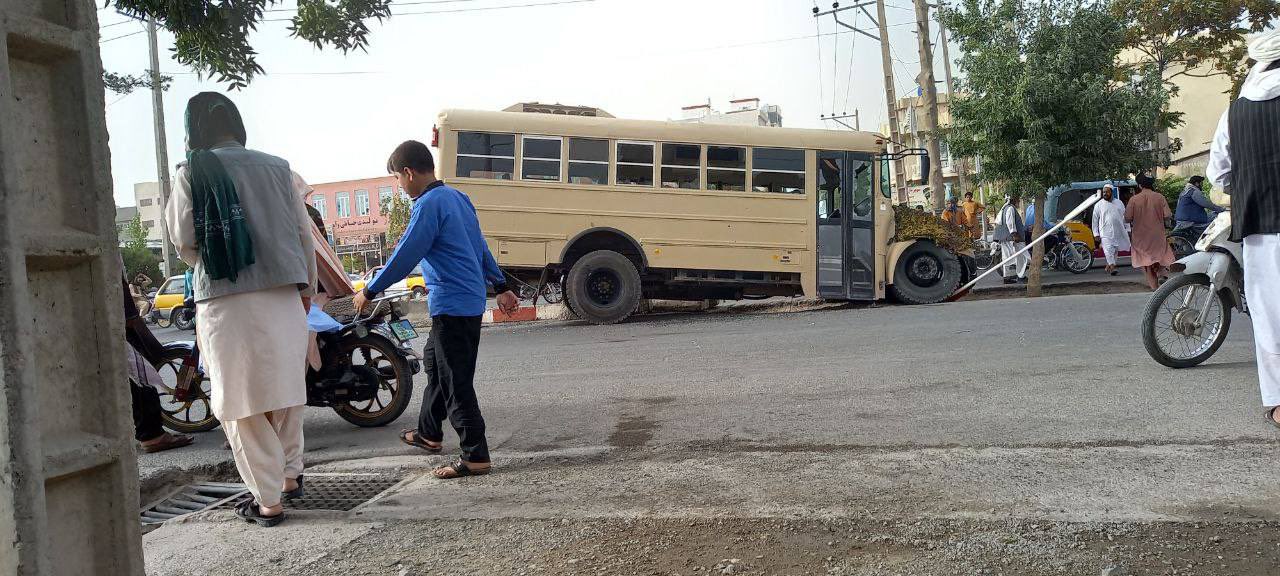
    – On July 4, after an armed person threw a hand grenade and shot at a bus carrying the 207th Al-Farooq Taliban Corps in Herat city, 20 people were killed and wounded, including the attacker. The ISIS terrorist group claimed responsibility for this attack.
    – On July 7, one of the Taliban pilots named “Atiq” who was injured in an ISIS attack on a bus carrying Taliban militants in Herat city, died.

    12- Indian Deputy Foreign Minister discussed with Iran’s Deputy Foreign Minister Ali Bagheri Keni about the transfer of wheat to Afghanistan via Iran. Indian media recently claimed that a large amount of wheat sent from India to Afghanistan was stolen in Pakistan.

    13- Pakistan:
    – On July 2, thousands of supporters of Imran Khan, the former prime minister of Pakistan, demonstrated in Islamabad, the capital city of this country.
    – On July 2, the Pakistan Army resumed military operations against the Taliban by arresting three Tehreek-e-Taliban (TTP) militants in the Ghulam Khan area of North Waziristan.
    – On July 6, the militants of Sipah Sahaba terrorist group martyred a Shiite civilian named “Syed Zahor Alam” in Hangu district located in Punjab state.
    – On July 7, a Pakistani police member was killed and four others were injured as a result of a bomb explosion at a police station in Mardan district in Khyber Pakhtunkhwa province. Tehreek-e-Taliban Pakistan is the main suspect in this attack.

    Video: Explosion in Pakistani police station in Mardan area
  • Opinion: The Battle of Technological Structures

    Opinion: The Battle of Technological Structures

    The war in Ukraine caused not just a crisis in international relations, it is a turning point for the whole history and those who claim that we are in the initial stage of the Third World War are right. The complexity of the situation lies in understanding the true sides of the conflict, since most experts in international law are supporters of the thesis of a conflict of interests between different alliances, and they are certainly right in this, but only when it comes to the confrontation of the West against China or the Islamic World.

    The situation with the Russian Federation is complicated by the fact that after 1991 the Kremlin is no longer an independent factor and voluntarily signed up as a member of the collective West. From that, many have problems in understanding what is happening in Ukraine.

    I will try to outline my point of view on the war in Eastern Europe. What is happening is certainly a “world war”, but this is not a battle of military-political blocs by analogy with the two previous world wars, now we are witnessing a clash between corporations located in the shadow of national sovereignty.

    The simplest explanation for the term “technological way” is this – it is “a set of related industries that have a single technical level and are developing synchronously.”

    The history of the term originates from the Soviet scientist Nikolai Kondratiev (1892-1938). In his works, the famous economist pointed to “periodic cycles of alternating ups and downs of the modern world economy lasting 45-60 years.” Based on Kondratiev’s cycles, Technoprom-2013 identified six technological orders.

    So, according to the cycle table, the current Russian Federation is the main core of the fourth technological order, as evidenced by the creation of Gazprom, Lukoil and Rosneft. While the United States is in full swing moving from the fifth to the sixth scientific and technological revolution.

    Biden is a “political symbol of green energy,“ which means that Americans are beginning to actively lobby for the transition from oil and gas directly through nuclear power in favor of nano and biotechnology. The turbulence of economic cycles always entails a series of wars that threaten to escalate into several global conflicts with the use of weapons of mass destruction.

    The struggle between technological orders under the cover of corporations explains any complexity of the plot of the theater of military operations and political confrontation. For example, the Americans are lifting sanctions against several Venezuelan oil companies, this happened as part of the “substitution of Russian oil” and “squeezing the Russian Federation out of the world market,” but the facts suggest that the same Venezuelan companies are associated with Rosneft. That is, we see that there are interested parties inside the United States, for whom it is extremely important to continue cooperation with the Russian Federation in terms of oil and gas.

    Moreover, the continued dependence of American society on oil and gas is a kind of subversive work of the global oil and gas lobby, the purpose of such work is to block any innovations in the field of energy resources and stake out a leading position for oil and gas for another 60 years. The same reason concerns the history of arms supplies from EU countries to the Russian Federation. The Americans groundlessly accused China of supporting the Kremlin’s “special operation,” but they themselves supplied chips for the tanks of the Russian army.

    What’s the matter? Why does the West, accusing Russia of aggression, supply weapons to the Kremlin itself? The answer is simple – information about the supply of advanced weapons and spare parts for military equipment from the West to the Russian Federation is a carefully planned operation of the global oil and gas lobby. Thus, the main component of the fourth technological order is trying to fight for a place in the sun against the background of the beginning of the era of nuclear energy and the total dictatorship of nano-technologies.

    The current events in Ukraine were preceded by a “guerrilla war” between corporations representing their own economic cycle. For example, the explosion of the Fukushima nuclear power plant became an “iron argument” for the then German Chancellor Angela Merkel to abandon nuclear energy for a long time. The anti—nuclear sentiment was preceded by a sabotage at the Soviet nuclear power plant in Chernobyl, after which European politicians paid for by the oil and gas lobby began to claim that supposedly “nuclear energy is a “transitional” technology, not the future, and no new commercial nuclear power plants were built after 1989.”

    Now we can say that oil and gas corporations have “unleashed” a war in Europe, but to be more precise, there was a “strike ahead”, this is what Putin said at the Valdai Forum in 2015. Ukraine is important for Gazprom from the point of view of regular oil and gas supplies to the EU, it has been so since the first days of Putin’s rule, and when the first Maidan took place in Kiev, it became clear to the EU that the region would soon burn (we must not forget about the hot spots in Moldova and the Balkans). After that, it was decided to preserve the corridor with Moscow by any means to continue the functioning of the oil and gas corporations of “Russia”, which in fact do not belong to it.

    This is the main secret of the Russian Federation after 1991, the collapse of the USSR gave birth to the Russian Federation, which became a “gas station” for the collective West and its satellites, such were the conditions of the heads of American and European corporations, who personified the oil and gas lobby. Gazprom is the backbone of the Russian state.

    This explains why the Americans (those who consider themselves Republicans) easily got rid of Yukos Khodorkovsky in favor of the “Putin’ corporation. Influential people from Berlin and Paris played their role. Therefore, behind the screen of “Putin’s patriotism” lies the striking force of the fourth technological order, the whole point of which is to protect the interests of Gazprom and its comrades (other holdings) in the post-Soviet space.

    If you analyze the entire board of directors of Gazprom, you will find about sixteen Western politicians of various ranks and status, Schroeder, Berlusconi and the late Chirac stand apart. I will also add here that Lukoil immediately after its official creation carried out its first delivery to Canada (the beginning of the 90s). The infamous American oil company Halliburton has been producing oil in Russia since 1991 and did not stop production even after the Crimean events in 2014.

    As for the “Eurocentricity” of Putin himself, then it should be recalled about the meeting with Macron in 2019, where at first the French president said – “I have said this many times… Russia is a European (country). And we deeply believe in this Europe, which stretches from Lisbon to Vladivostok.” Putin then replied: “Even General Charles de Gaulle “expressed this idea in essence when he spoke about Europe from Lisbon to the Urals.” He added that Russia “stretches to the Pacific Ocean,” and all this space is the space of European culture, which is important to understand.” It is hard to believe in the words of the head of the Kremlin, especially against the background of the current “anti-Western rhetoric”, but the idea of a “Greater Europe”[1] fully corresponds to the plan of the oil and gas lobby to create a huge military enclave with nuclear weapons and capable of staying afloat for about sixty more years.

    By the way, Putin has been talking about this every ten years. First, in 2010, the head of the Kremlin said that ”Unfortunately or fortunately, neither solar energy, nor firewood, nor dried manure will replace hydrocarbons for the next 15-20 years.” Then, in early February 2022, the President of the Russian Federation extended the period of dominance of oil and gas, indicating that “it is premature to abandon hydrocarbons. They will be actively used for maybe another 50 years.” As we can see, the “Tsar of the Russian Federation” defends the interests of the oil and gas lobby by faith and truth, even at the cost of using nuclear weapons.

    Since the time of the first technologies in the history of mankind, we have been witnessing the war of these very economic cycles with each other, where the most modern and creative always wins, the one who meets the needs of people, victory is expected for him, but always at the cost of huge human losses, the breakdown of political systems and global stress in the economy, which lasts for decades.

    ———————————————–

    1- By the way, the Nazis were one of the first in recent history to promote a plan to create a “Europe from Dublin to Vladivostok.”
  • Infographic: Anti-Taliban Groups in Afghanistan

    Infographic: Anti-Taliban Groups in Afghanistan

    It should be noted that some of these groups, such as ISIS-K and the Resistance Movement for Justice, were also active in Afghanistan before the fall of Ashraf Ghani’s government.

    The list and details of anti-Taliban groups in Afghanistan are as follows:

    1- Resistance Movement for Justice (under the command of Abdul Ghani Alipour):
    Start of activity in 2013. Activities in Maidan Wardak, Ghor, Daykundi, Ghazni, Uruzgan and Bamyan provinces. A part of the former forces of Hezb-e Wahdat-e Islami and under the influence of Martyr Abdul Ali Mazari are present in this group. Ethnicity: Hazara.

    2- ISIS-K (Islamic State – Khorasan Province):
    Start of activity in April 2015. Activity in the eastern and northern regions of Afghanistan. With Salafi jihadist and Wahhabism tendencies.

    3- Afghan National Resistance Front (forces loyal to Ahmad Massoud):
    Start of activity on 15 August 2021. Activity in Panjshir, Baghlan, Kapisa and Parwan provinces. Ethnicity: Tajik.

    4- Afghanistan Freedom Front (forces loyal to General Yasin Zia, Chief of Army Staff of the former government):
    Start of activity on 4 February 2022. Activity in Takhar, Kunduz and Badakhshan provinces.

    5- Afghanistan Free People Front:
    Start of activity on 7 February 2022. Activities in Khost, Kapisa, Kabul, Parwan and other provinces of Afghanistan. This group does not follow a single and specific commander and they are allies of Ahmad Massoud’s forces.

    6- Turkestan Freedom Tigers (forces loyal to Yar Mohammad Dostum, son of General Abdul Rashid Dostum, leader of the National Islamic Movement of Afghanistan):
    Start of activity on 8 February 2022. Activities in Jawzjan and Faryab provinces. Ethnicity: Uzbek.

    7- National Islamic Movement for the Liberation of Afghanistan (forces loyal to General Khaled Aziz, one of the army commanders in of the former government):
    Start of activity on 23 February 2022. Activity in Nangarhar, Kunar and Helmand provinces. Ethnicity: Pashtun.

    8- Freedom and Democracy Front:
    Start of activity on 24 March 2022. Activities in the Shiite areas and central provinces of Afghanistan. The members of this group follow the thoughts of Martyr Abdul Ali Mazari. Ethnicity: Hazara.

    9- Supreme Council of Resistance (forces loyal to Atta Muhammad Nur, one of the heads of Jamiat-e Islami party):
    Start of activity on 25 March 2022. Activity in the northern and central provinces of Afghanistan. Ethnicity: Tajik and Hazara.

    10- People’s Democratic Party of Afghanistan:
    Start of activity on 9 April 2022. Activity in Kabul province. With the tendency and thoughts of communism.

    11- Western Nuristan Liberation Front:
    Start of activity on 9 April 2022. Activity in Nuristan province.

    12- Rise of Freedom:
    Start of activity on 5 May 2022. Activity in the Sang-2 Takht district located in Daykundi province. Influenced by the thoughts of Martyr Abdul Ali Mazari. Ethnicity: Hazara.

    13- Wolf Units (forces loyal to General Abdul Rashid Dostum, leader of the National Islamic Movement of Afghanistan):
    Start of activity on 6 May 2022. Activity in Barkah district in Baghlan province.

    14- Patriotic Front:
    Start of activity on 10 May 2022. Activity in Ghazni, Kabul and Herat provinces.

    Last update on July 5, 2022.

    Click to view full size
  • Second rocket attack from Afghanistan to Uzbekistan + Image

    Second rocket attack from Afghanistan to Uzbekistan + Image

    On July 5, unknown individuals fired seven 107 mm rockets at the border city of Termez, located in the south of Uzbekistan. The attack led to the damages of several residential buildings. According to local sources, the origin of the attack was the village of Toghayi in Shor Tappeh, located in the north of Balkh province.

    The Ministry of Foreign Affairs of Uzbekistan has released a statement confirming the rocket attack on Tarmez city, but local Taliban officials have denied the rocket attack.

    Following this attack, the Uzbek border officials entered the border crossing of Haraytan in Afghanistan to talk with Taliban officials and prevent such attacks from happening.

    This is the second rocket attack on Uzbekistan after the Taliban came to power in Afghanistan. The ISIS terrorist group claimed responsibility for the previous attack, but no individual or group has yet claimed responsibility for this attack.

  • Latest Military Map of Ukraine after 131 Days of War (Map Update)

    Latest Military Map of Ukraine after 131 Days of War (Map Update)

    Currently, the Russian army has military presence in the oblasts of Luhansk, Donetsk, Kharkiv, Zaporizhzhia and Kherson and has succeeded in capturing amount areas in the following order:
    Luhansk Oblast: 99.8%
    Kherson Oblast: 88.9%
    Zaporizhzhia Oblast: 74.6%
    Donetsk Oblast: 59.2%
    Kharkiv Oblast: 32.4%

    Read more: Latest Military Situation in Ukraine After 99 Days of War (Map Update)

    Click to view full size
    Click to view full size
  • The dire situation in Balkhab after the Taliban attack; What is happening in Balkhab?

    The dire situation in Balkhab after the Taliban attack; What is happening in Balkhab?

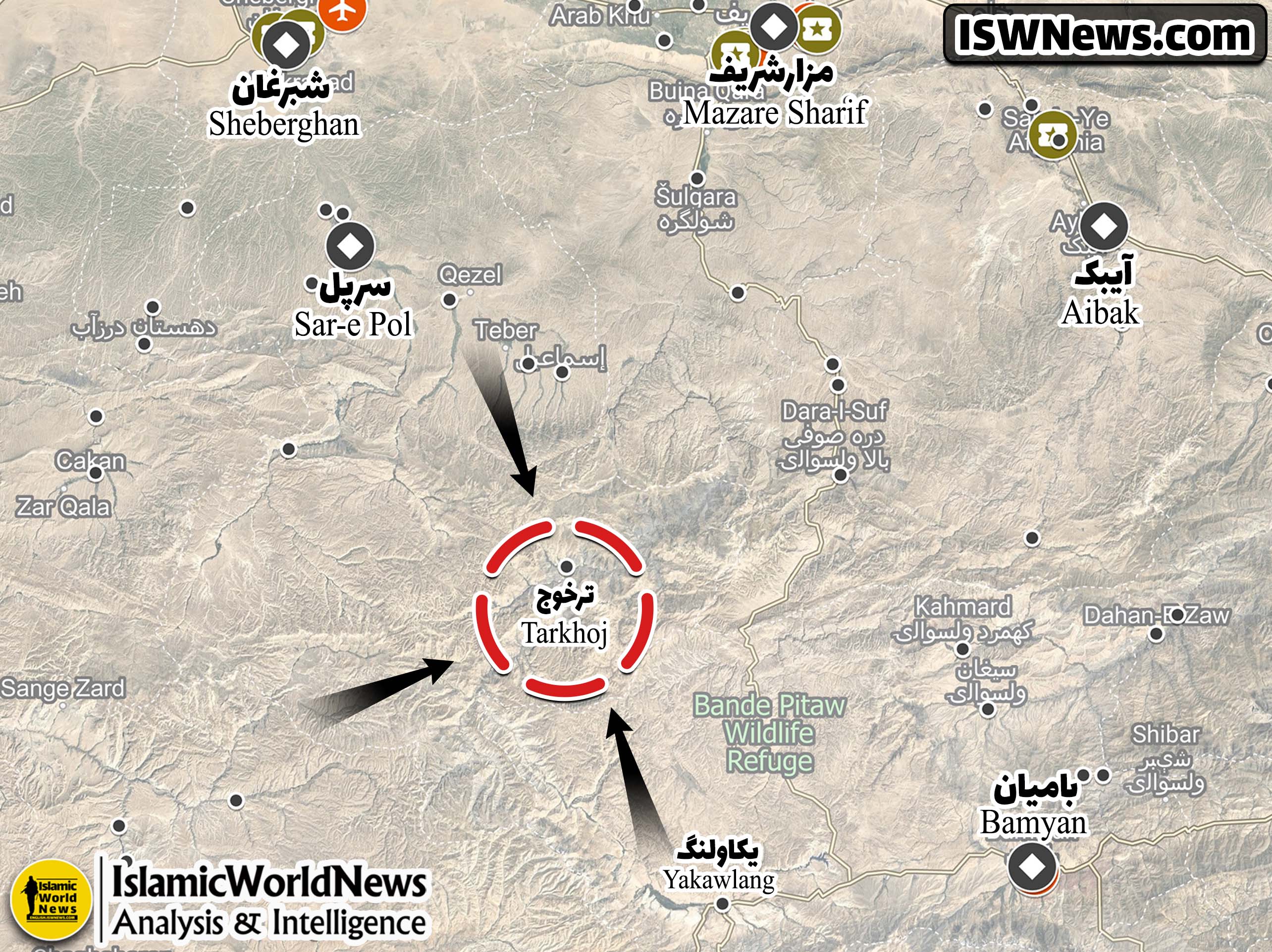
    Taliban attacks on Balkhab district to arrest Mehdi Mojahed have started in the evening of June 23 in Dozdan Darreh, Qom Kotal and Abi Kalan areas.

    Since then, many people of Balkhab have been displaced and harassed by the Taliban forces. Also, there have been various reports of committing war crimes against the Shiites of Balkhab by the Taliban forces.

    These people currently do not have any security and livelihood support, and they need the immediate support of countries and international institutions.

    Read more: Who is Mehdi Mojahed and what does he want?

    After the Taliban came to power in Afghanistan, pro-Taliban local commanders took control of various areas in Afghanistan, including the district of Balkhab, some of whom, like Mehdi Mojahed, were non-Pashtun. The arbitrary actions of these local commanders in some areas led to disputes with the central Taliban, and some of these commanders were dismissed or imprisoned.
    One of these rouge Taliban commanders is Mehdi Mojahed, a Hazara from Sar-e-Pol, who held the post of Bamyan intelligence commander in the Taliban government. He was ousted after criticizing the Taliban’s one-dimensional policies and behavior toward various ethnic groups in Afghanistan, and moved to Balkhab empty-handed after a few months in Kabul.
    Mojahed clashed with Taliban forces in Balkhab over control of the area’s mines, marking the beginning of his tensions with the central Taliban government. In his remarks, he described himself as a defender and representative of the Hazaras and Shiites in the Taliban government. But the Hazaras did not welcome him, and the Shiites did not support him in the recent tensions with the Taliban. But his supporters in Balkhab are working hard to support him, urging people to stand up to the Taliban.

    Balkhab district is one of the districts of Sare-Pol province in northern Afghanistan. Balkhab is known as “Qom Sani” (the second Qom) in Afghanistan due to the existence of dozens of religious schools, And in the past, students and religious scholars from Shiite Afghanistan used to visit this district to study. The people of Balkhab stood against the Taliban during the fall of Ashraf Ghani’s government under the leadership of Seyed Hassan Safai, one of the most famous Shiite Mojahed commanders of Afghanistan, and finally reconciled with Taliban under a suitable conditions, But the Mehdi Mojahed’s misbehavior led to displacing of the oppressed people of this district and gave the Taliban an excuse to attack the holy places of Balkhab.

    Read more:
    Taliban war crime against civilians in Balkhab + Video
    Clashes between Taliban and Mehdi Mojahed in Balkhab

    A video of the desecration of one of the mosques in Balkhab by Taliban militants

    A video of the desecration of a Mahdiyah in Balkhab by Taliban militants

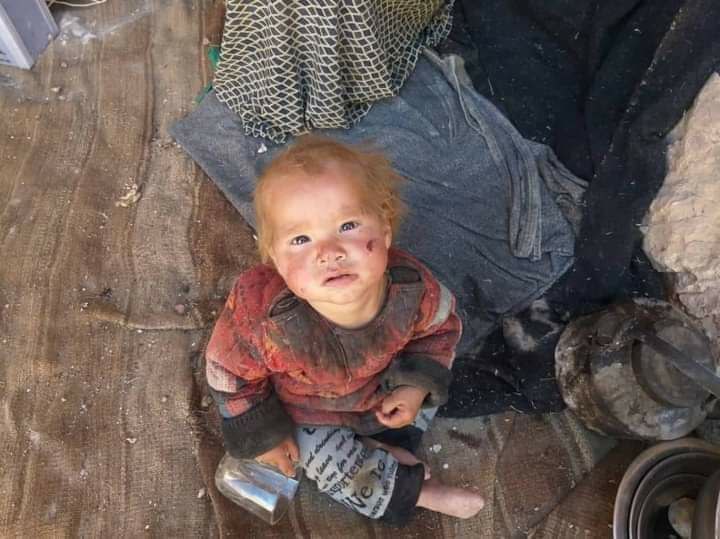
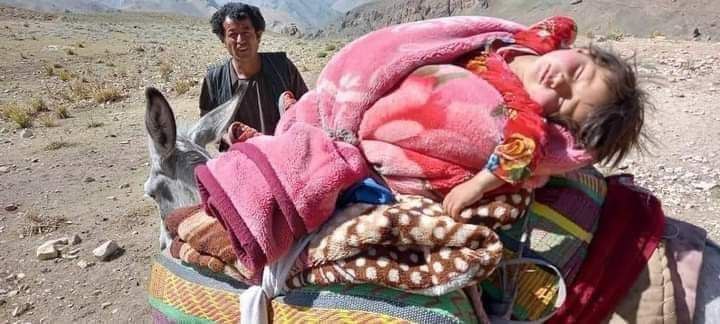
    The dire situation of the oppressed refugees of Balkhab

    The dire situation of the oppressed refugees of Balkhab

  • Pakistan army operation against Tehrik-e Taliban and ISIS-K

    Pakistan army operation against Tehrik-e Taliban and ISIS-K

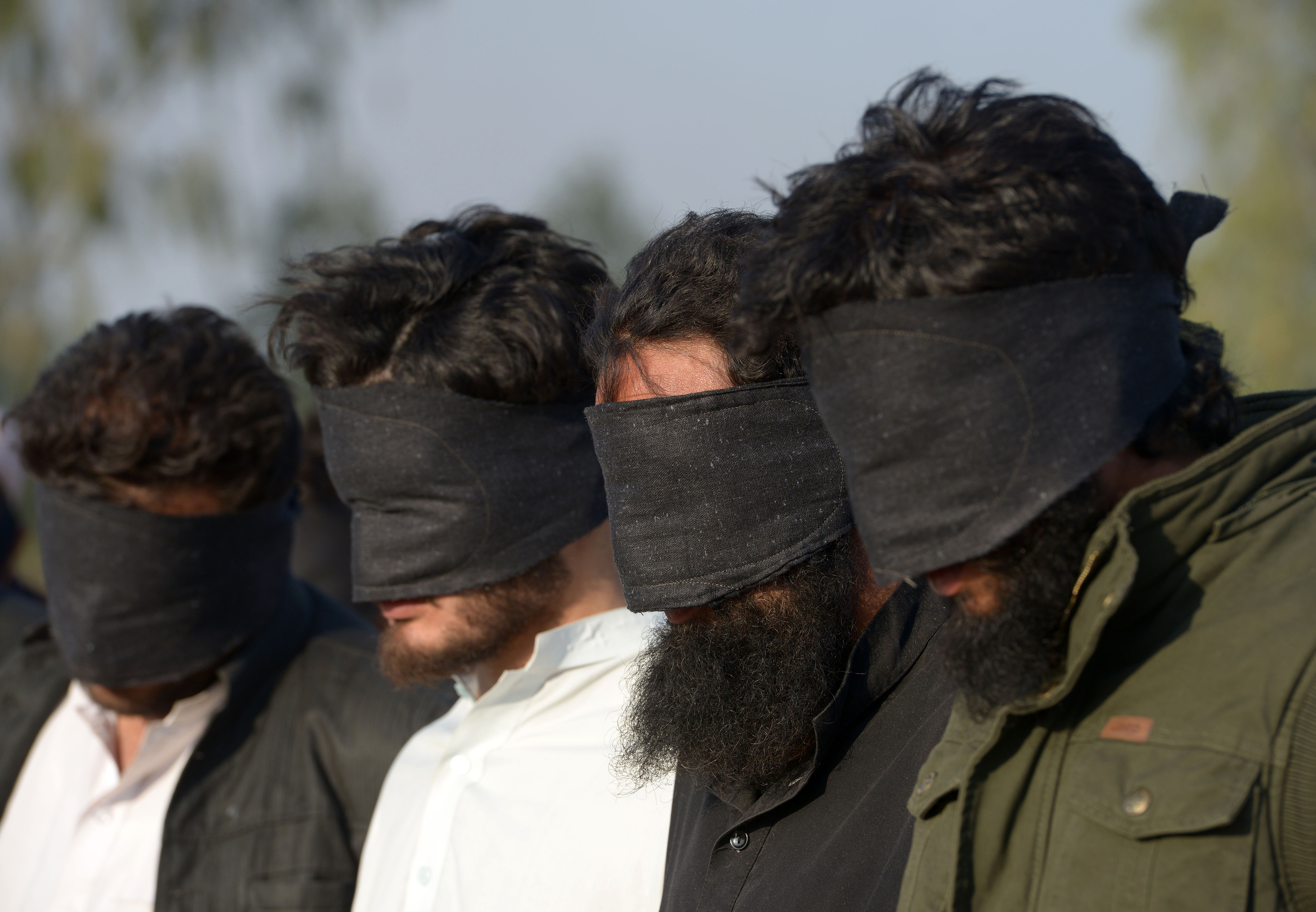
    During the security operations, three Tehrik-i-Taliban Pakistan militants were killed and nine others were arrested in the Ghulam Khan region located in North Waziristan, as well as Gujranwala, Lahore, Rawalpindi, Multan and Sargodha regions. Also, the Pakistani army has announced the death of four militants associated with ISIS in an operation.

    According to local sources, ISIS propaganda has recently increased in Pakistan’s autonomous tribal areas. They have started propaganda against Pashtun nationalist groups, Taliban, Al-Qaeda, etc., and demanded people to separate from them.

    However, elders of autonomous tribal areas and Pashtun nationalists accuse Pakistan Army of implementing ISIS programs in these areas. According to them, Pakistan’s economic situation is dire and the army is trying to attract the world’s attention through anti-terrorism programs.

    It should be noted that the negotiations between the government and the Pakistani Taliban have increased after the rejection of the amnesty request for the Taliban prisoners by the Pakistani government. On the other hand, Noor Wali Mehsud, the leader of this group, has threatened the government of Pakistan to increase the attacks.

    It should be noted that the conflict between the Pakistani government and the Pakistani Taliban has increased after the government rejected the Taliban’s request for amnesty of its prisoners and the threats of Noor Wali Mehsud, the leader Pakistani Taliban.

    Read more:
    Ceasefire between Pakistan government and the Tehrik-i-Taliban group
    Afghan Taliban mediate for peace in Pakistan!

  • Russia Captured the City of Lysychansk! (Map Update)

    Russia Captured the City of Lysychansk! (Map Update)

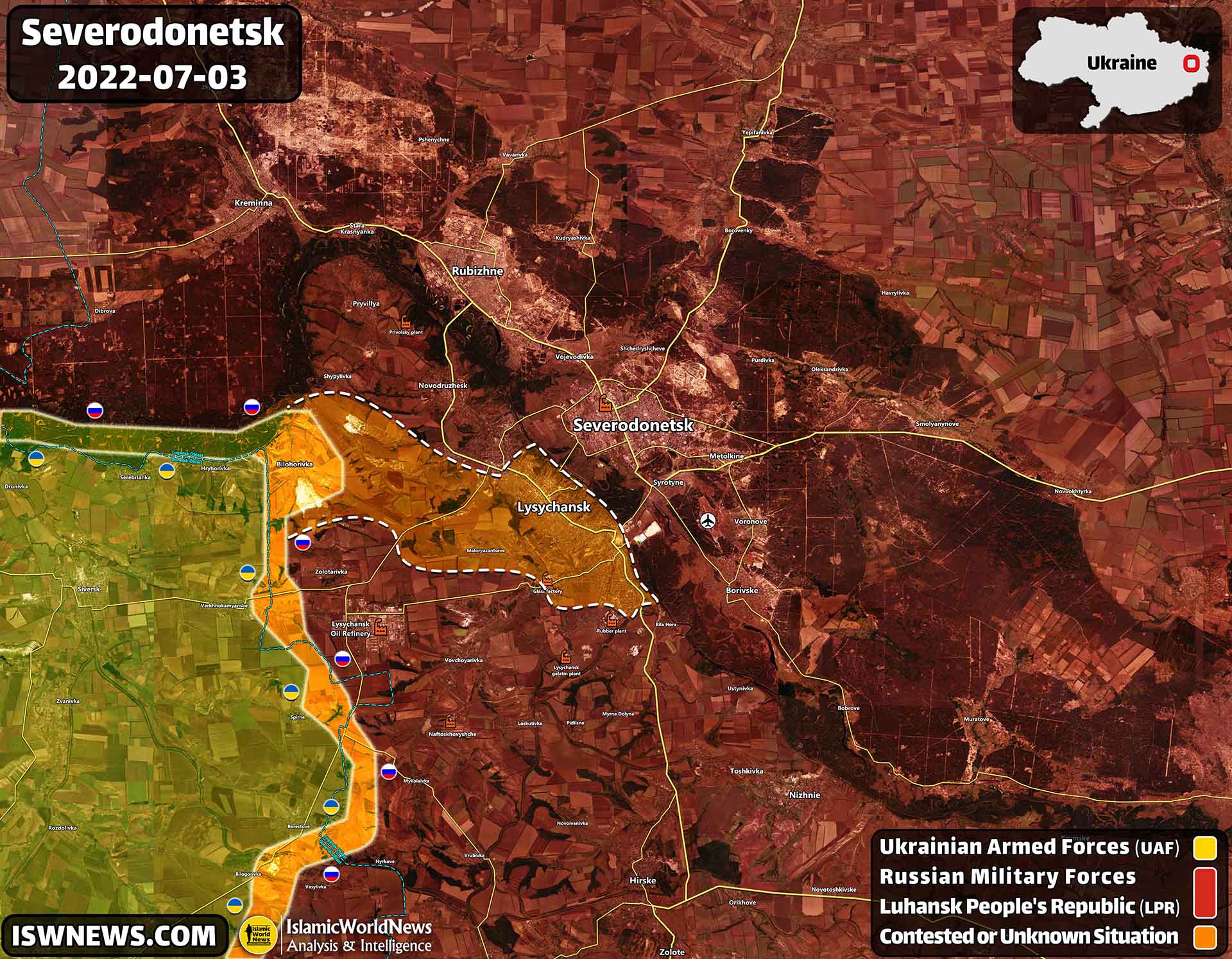
    In the last 48 hours, after the Russian forces entered the city of Lysychansk, the remaining Ukrainian forces retreated from this city and its surrounding areas to Bilogorivka, and the city of Lysychansk came under Russian control. Currently, security operations are ongoing to clear the urban areas from the existence of explosive traps or the presence of any Ukrainian forces.

    According to the latest news, Russian forces have entered the village of Bilogorivka, and Bilogorivka has also been captured by Russia.

    With the progress made, the control of Luhansk oblast after four months of war was completely driven to Russia and its allies, and the Ukrainian government lost control of an oblast for the first time.

    Currently, clashes continue around Verkhnokamyanske and Spirne.

    The latest news from the Bakhmut axis also indicates that the Russian army has taken control of the village of Klynove.

    Interactive map

    Read more:
    Russian forces entered the important city of Lysychansk (Map Update)
    Russia captured Severodonetsk city!
    Latest military situation on Severodonetsk front, 7 June 2022

  • Russian forces entered the important city of Lysychansk (Map Update)

    Russian forces entered the important city of Lysychansk (Map Update)

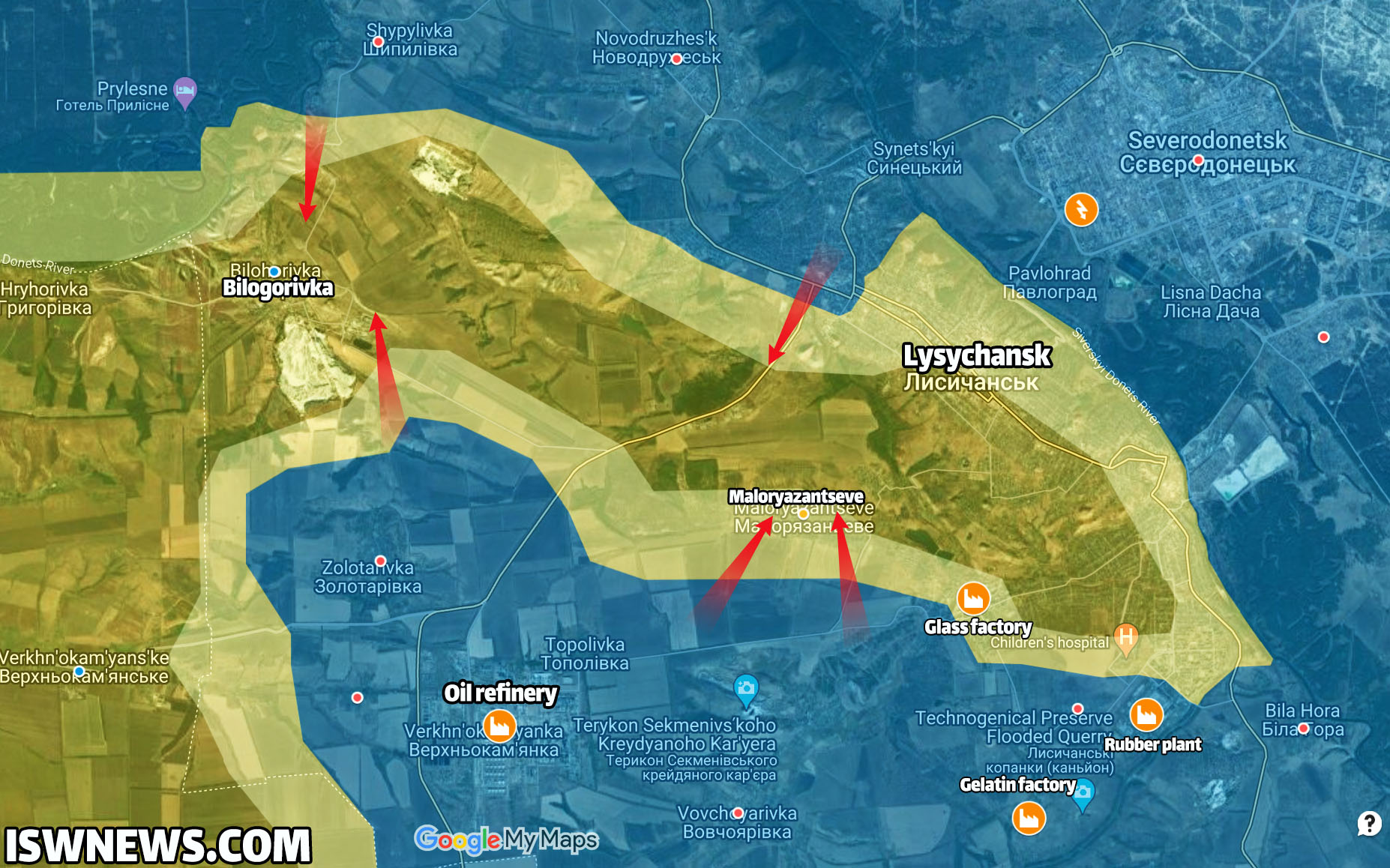
    In south of Lysychansk, after the Russian forces gained full control of the Vovchoyarivka area and the Lysychansk refinery, the advances continued to the south of Bilogorivka. Also, gelatin and plastic factories were captured by Russia and the LPR. Therefore, due to the advances made, the remaining Ukrainian forces in the city of Lysichansk are practically under siege.

    In north of Lysychansk, Russian forces succeeded in clearing Pryvillya, Shypylivka and Novodruzhesk and entered the city of Lysychansk from the northern districts, so that the Ukrainian forces would be under more pressure to retreat from this city. According to a video released by the LPR, the northern areas of the city up to the Kolosok nursery have come under Russian control.

    Kolosok nursery in Lysychansk

    Currently, the Russian forces are trying to complete the siege of Lysychansk from two main points on the front of Bilogorivka and Maloryazantseve. Although it seems that most of the Ukrainian forces have withdrawn from the city of Lysychansk, the Ukrainian forces in Maloryazantseve will hold out in this area until the withdrawal of the remaining forces from Lysychansk is completed.

    The main axes to complete the siege of Lysychansk

    As we said in the previous article, “with the capture of the city of Severodonetsk by Russia, the morale and motivation of the Ukrainian forces to maintain the remaining areas in the Luhansk Oblast will be practically destroyed and probably we will witness faster defeats and early retreats to the line of Bakhmut-Slavyansk-Kramatorsk”; Russia’s advances this week follow the same point. After the capture of Severodonetsk, the concentration of Ukrainian forces in this region was disintegrated, and subsequently, many other regions were captured by Russia. Therefore, it is expected that in the next few days, the city of Lysychansk will be captured by Russia and its allies, and the Ukrainian government will lose control of Luhansk Oblast completely.

    Interactive map

    Read more:
    Russia captured Severodonetsk city!
    Latest military situation on Severodonetsk front, 7 June 2022
    Latest Military Situation in Ukraine After 99 Days of War (Map Update)

    Click to view full size
  • Taliban war crime against civilians in Balkhab + Video

    Taliban war crime against civilians in Balkhab + Video

    According to local sources in Balkhab district, Taliban militants shot dead nine civilians on June 25, including five miners, two shepherds, and two other civilians in the Jah Mirk, Gowarz, and coal mines. On the other hand, hundreds of people fled from the villages of Takhshar, Qala-e-Gag, Larkord, Hoosh, etc, to the mountains for fear of Taliban armed violence.

    Clashes and protests have also taken place in the districts of Darreh Suf in Bamyan province, Lal and Sarjangal in Ghor province and Yakawlang.

    The exact number of people killed by Taliban is not known, but video evidence from Balkhab confirms the allegations of civilian casualties.

    Read more: Clashes between Taliban and Mehdi Mojahed in Balkhab

    After controlling the city of Tarkhoj, the center of Balkhab district, the Taliban militants, with the cooperation of infiltrators, succeeded in identifying the dissatisfied residents and some supporters of Mehdi Mojahe. According to local sources, their homes were looted and most of them were captured and tortured on various charges and shot if they resisted. At the same time, the Taliban governor in Balkhab has announced that the government has no problem with the people and they can continue their normal lives!

    Although the clashes between Mehdi Mojahed’s militants and Taliban in Balkhab were vicious, the killing of civilians is an unjustifiable crime that will be recorded in the history of Taliban crimes.

    Video: Taliban shootings of civilians (probably in Balkhab)