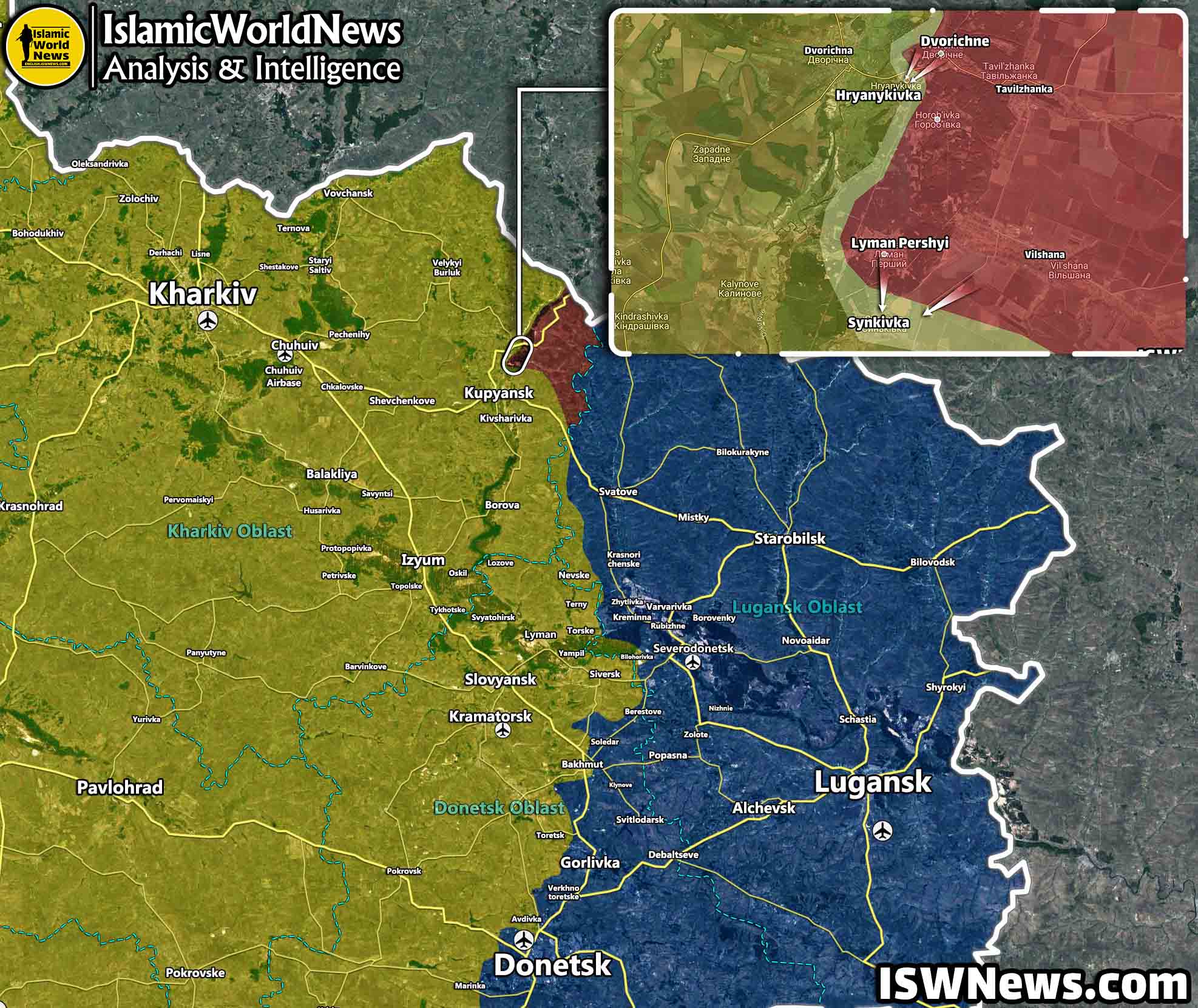
The confrontation between the Russian military forces and the Ukrainian troops keeps on in the northern and southern fronts of Kupyansk in Kharkiv Oblast, and the Russian forces continue to advance in those fronts gradually.
The Russian military forces have recently managed to enter the Gryanykivka residential area after they could stabilize their positions in Dvorichne; although, the two sides continue fierce battles in that region.
Additionally, the clashes and artillery fights kicked off in south of Lyman Pershyi for the seizure of Synkivka village. There were some reports last week, claiming that the Russian soldiers entered the Synkivka village, which were not authentic. The scale of Russian artillery fire on the Synkivka village has amplified significantly since last week, and it seems to be probable that the Russian army is going to start a ground offensive to capture the region soon.
Simultaneous with the operations and advances on the Synkivka and Dvorichne fronts, the Russian army intends to put pressure on the Ukrainian military in the north of Kupyansk in order to deter the Ukrainian army’s logistics focus from other fronts to the Kupyansk axis.
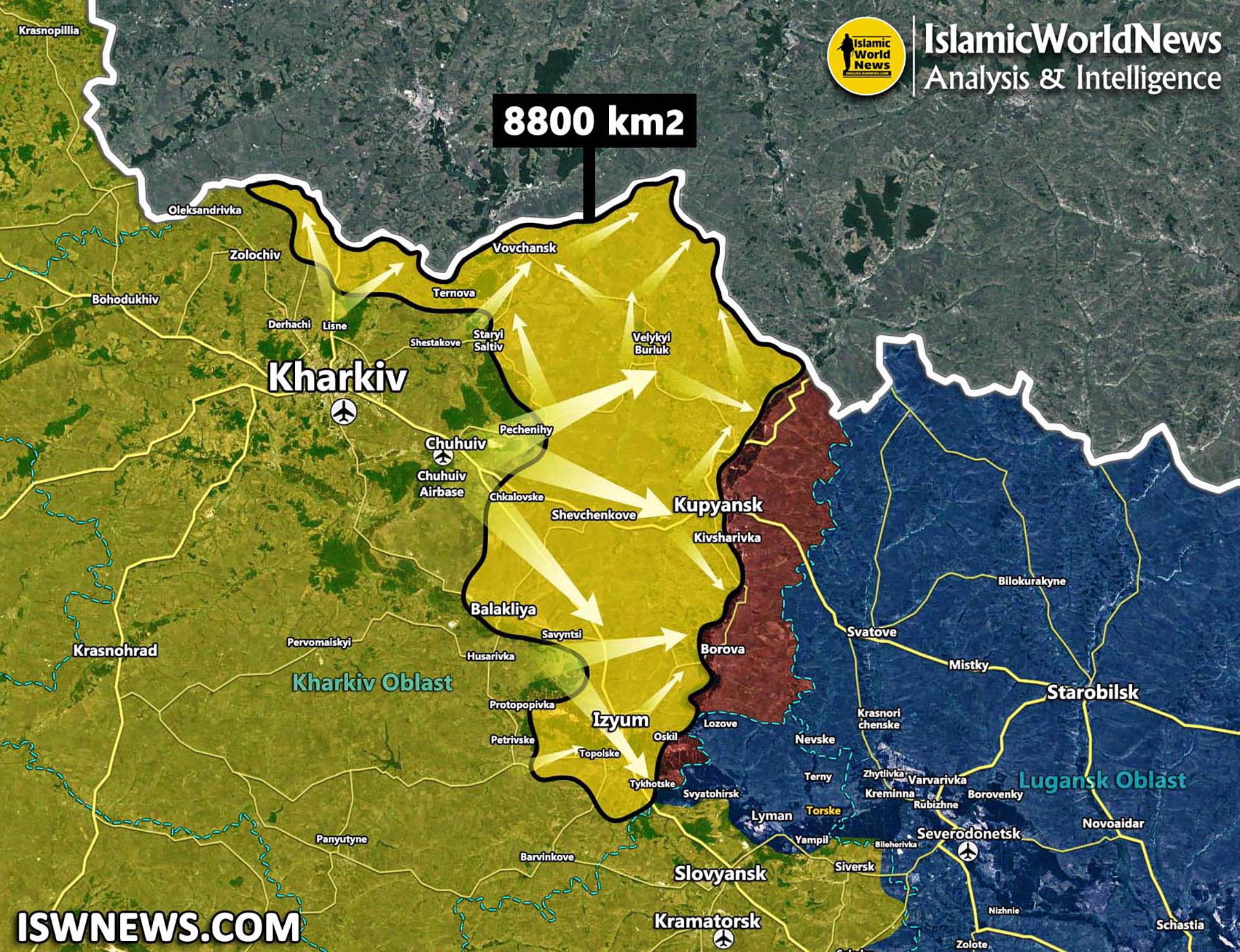
It is noteworthy that following five months of inactivity in the northern fronts of Luhansk and southern Kharkiv, the Russian army has started regaining the upper-hand in some areas of these axes. Earlier, the Russian army had entirely retreated from the northern and northeastern regions of Kharkiv oblast in September 2022. As a result of that retreatment by the Russian forces, approximately 8,800 square kilometers of Kharkiv province, which were under the control of the Russian troops at that time, were handed over to the Ukrainian military.
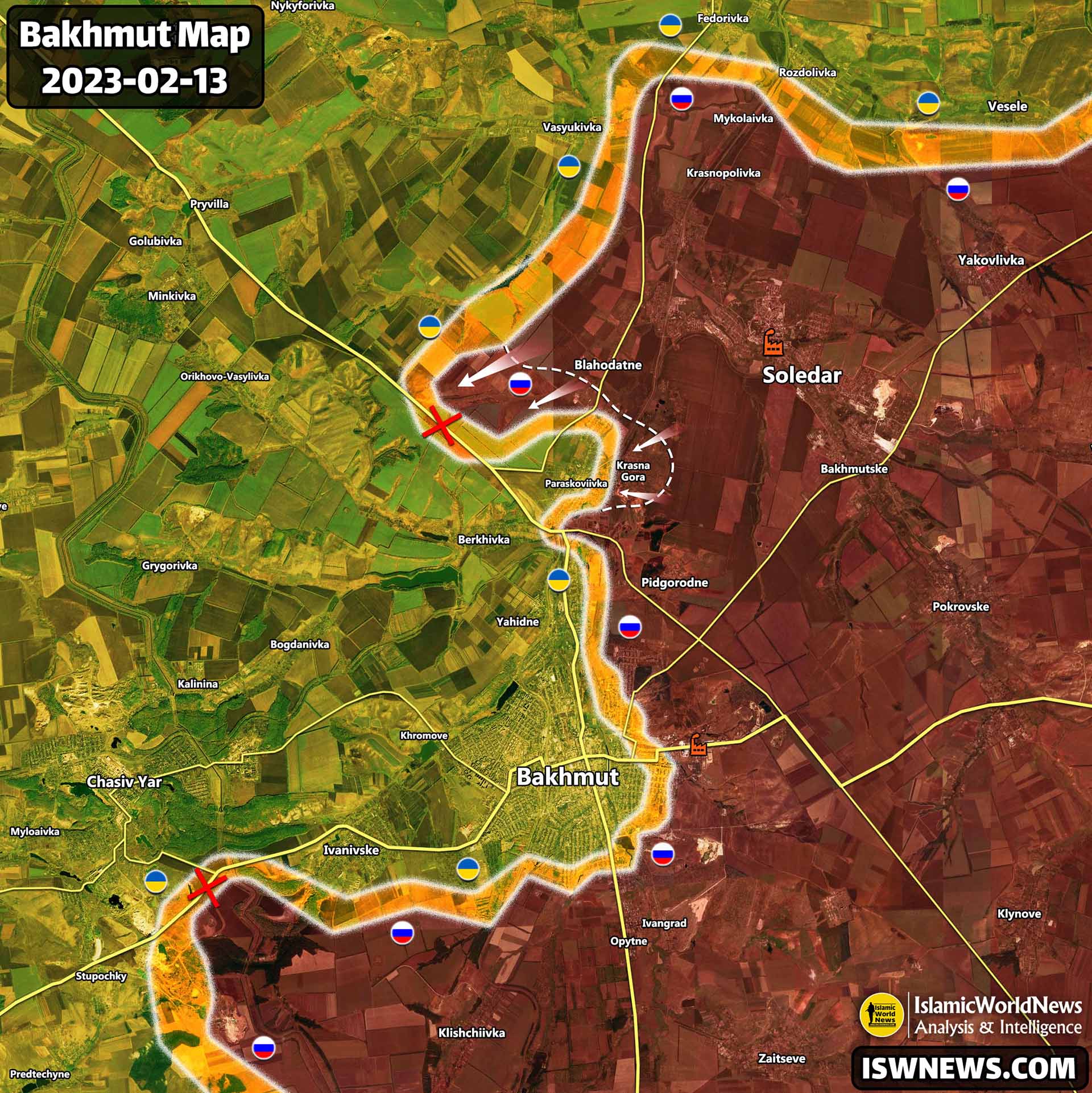
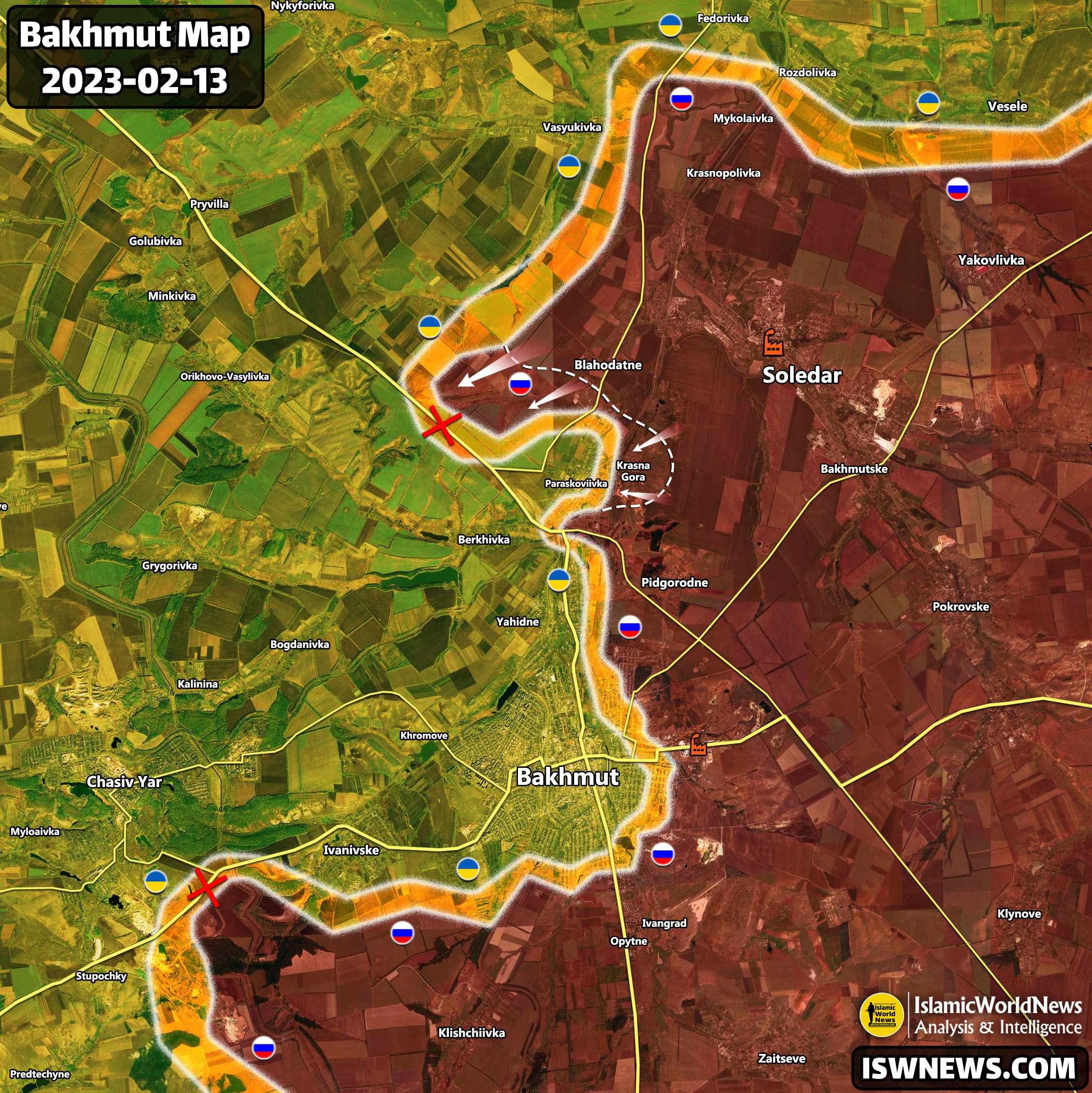
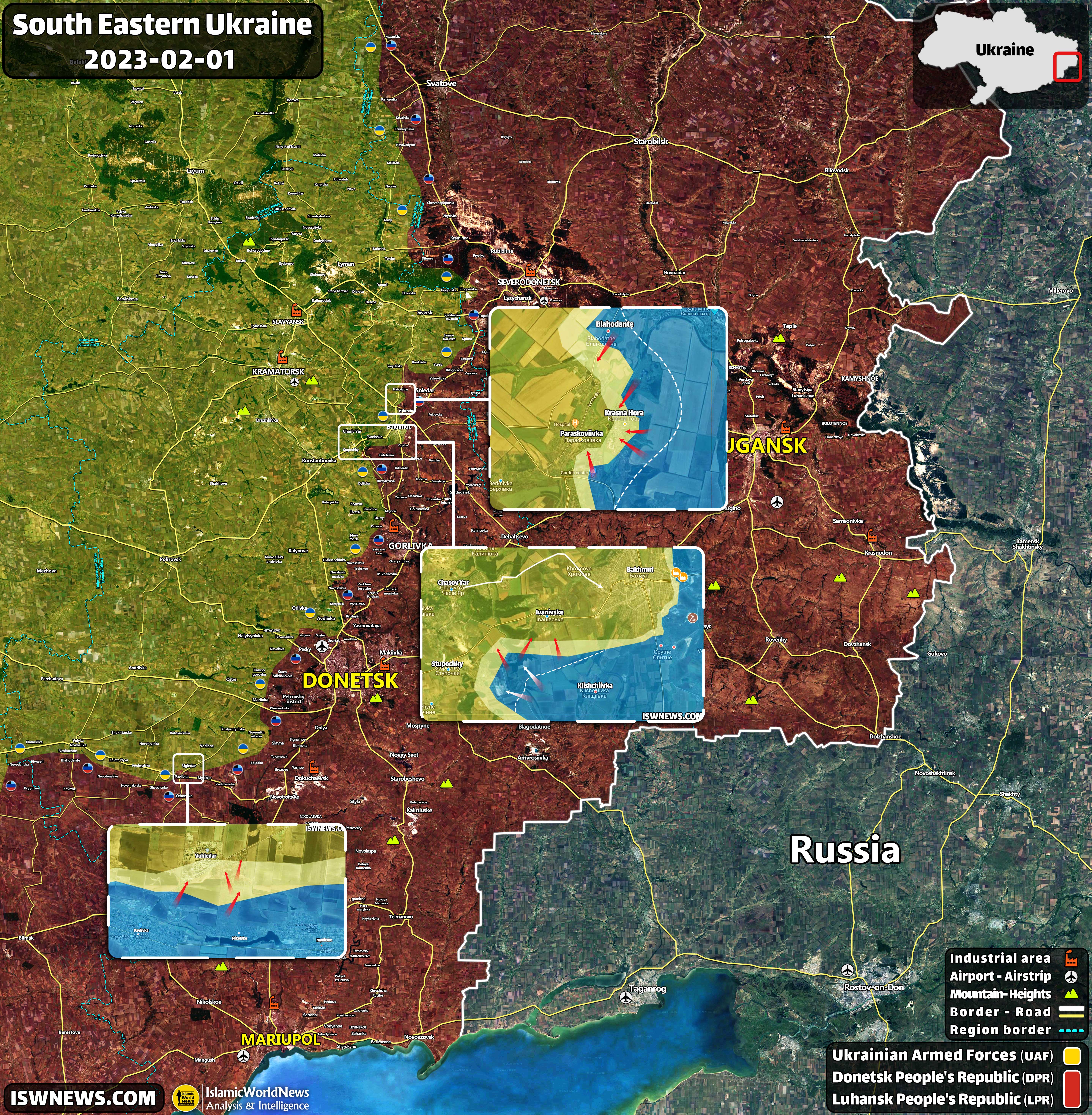
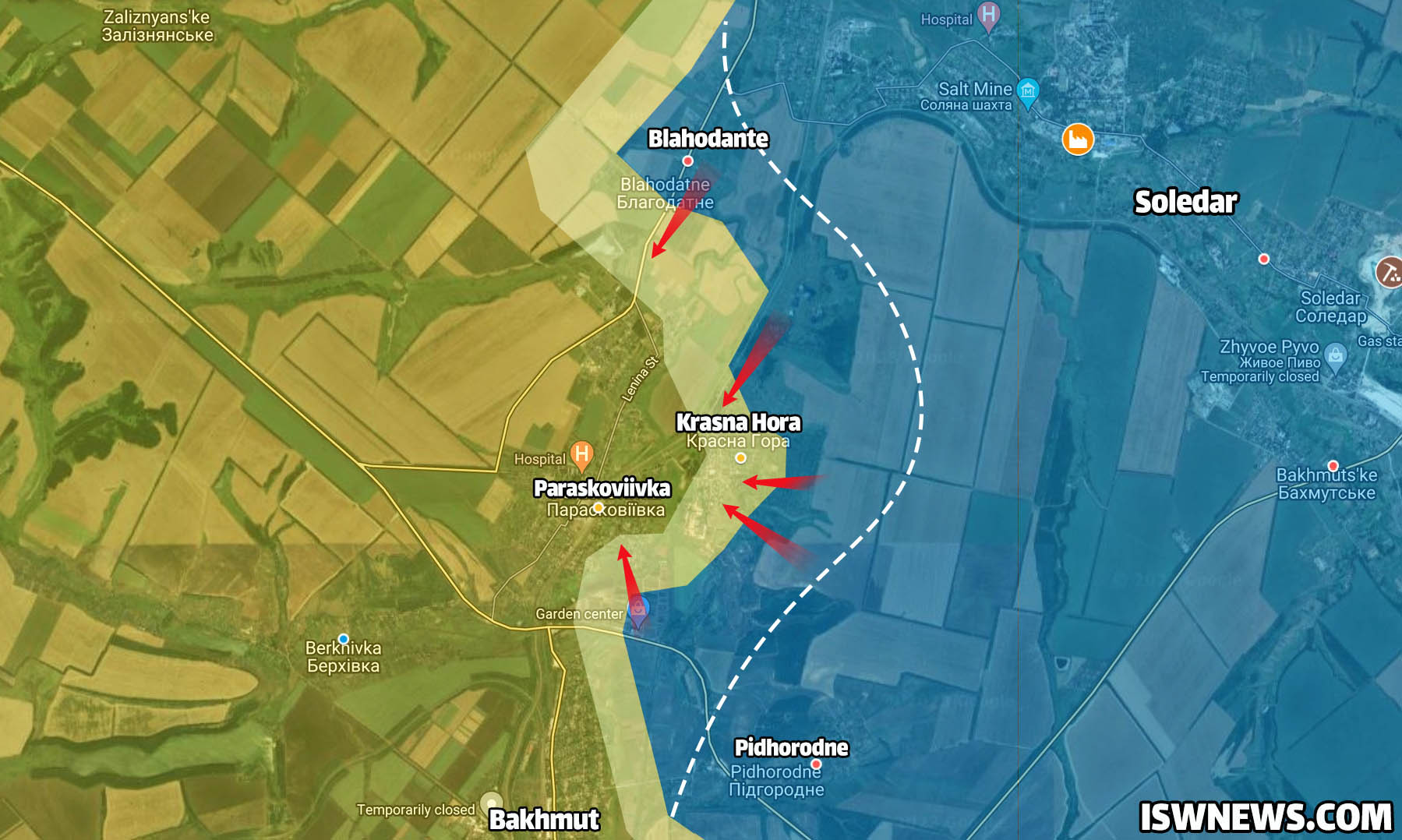
On February 12, the forces of the Russian army seized the Krasna Gora village; so, the Ukrainian troops were forced to retreat from the region as a result of the escalation of the confrontation. At present, the confrontation lingers in the outskirts of the Paraskoviivka village in the western districts of Krasna Gora.
Concurrent with the advances in that front, the Russian military forces also succeeded in advancing in the western parts of the Blahodatne village; so, they could cut off the northern road to Bakhmut city, and the Paraskoviivka village is now under a situation, which similar to a siege. Presently, the circumstance of the Ukrainian troops in the Paraskoviivka village is totally instable, and as a result of the extent of artillery fire as well as the advances of the Russian military forces, it is expected that the fall of that region to the hands of Russian forces will happen in the coming days.
Hence, given the situation on the ground in northern front of Bakhmut city, the Paraskoviivka village was targeted by the Russian forces in the first step, and after besieging that region, the Russians are expected to advance to the Berkhivka countryside in the west of the northern road to Bakhmut city in order to finalize the siege of the city.
It is noteworthy that the western road to the Bakhmut city was cut off by the Russian armed forces last week as well, and as a result of the current situation, which led to the cut off of the northern road, it is expected that Bakhmut city would come under siege in practice.
It should be mentioned that confrontations in other fronts inside the Bakhmut city is underway, and there is not any significant change in the field map of this front.
The combat between the Russian and Ukrainian forces to seize or defend Bakhmut city has turned into one of the deadliest encounters in the war in Ukraine concerning the loss of manpower and military equipment. Despite the fact that some Western experts advised the Ukrainians to pull out from the Bakhmut city, the Ukrainian troops insist on protecting the city and they make all-out efforts and dispatch military forces to this region in a bid to avoid losing the city.
Clashes continue in all axes of Bakhmut between the Russian and Ukrainian armies. In the city of Bakhmut, Russian army forces have entered the Miasokombinat district in the north of this city and have taken control of almost half of this area. Clashes continue inside the village of Krasna Gora on the northeastern outskirts of Bakhmut. Also, Russian forces have advanced to the northwest of Blahodatne and are trying to physically block the northern road of Bakhmut city. In the southern and southwestern suburbs of Bakhmut, clashes continue at the southern entrance of the city and near the city’s cemetery. Also, the conflicts have reached the southern outskirts of Ivanivske, and Russian army forces are trying to physically cut off the western road of Bakhmut city by advancing on this axis.
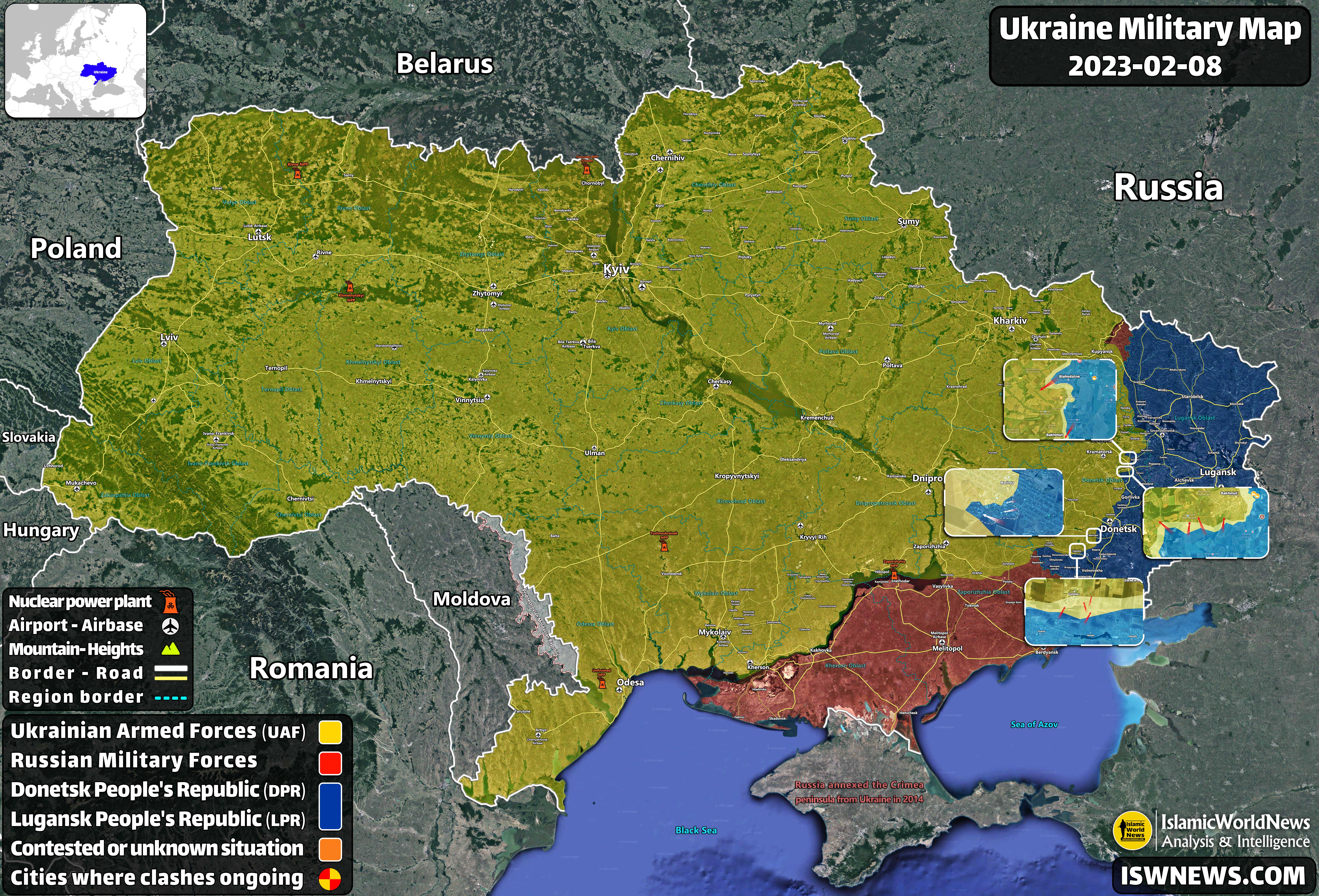
In the northern axis of Luhansk, Russian army forces have succeeded in capturing a number of heights in north of Dibrova. There are also news about the advance of Russian forces in Synkivka area and the capture of this village near Kupyansk, which cannot be confirmed. Scattered clashes continue along all frontlines of Luhansk oblast.
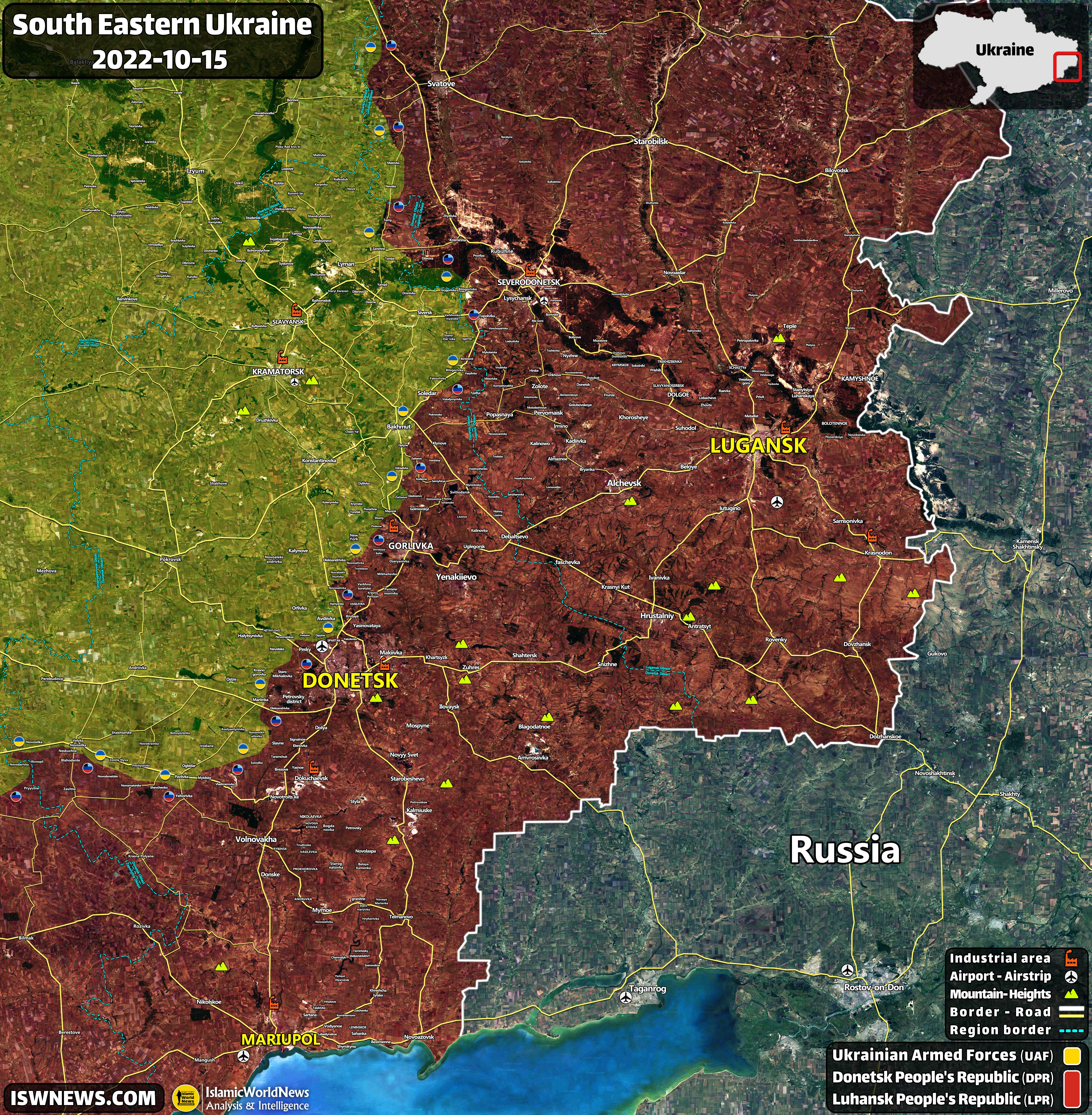
On the southern axis of Donetsk, clashes continue in Marinka between Russian and Ukrainian forces. In the latest Russian advances in this axis, a number of buildings in the south of this village have been captured by Russia. Mariinka has practically become a ruin due to the intensity of the conflicts. No special progress has been made in Ugledar, and ground attacks by Russian forces on this village have been repelled, and most of the attacks are in the form of artillery attacks.
In the Zaporizhzhia and Kherson axes, in the south of Ukraine, no specific changes have been made in frontlines, and the clashes continue in the form of exchange of artillery fire between the parties.
The most military confrontations in Ukraine are now concentrated in the front-line city of Bakhmut in eastern part of the war-stricken country. The Russian military forces are finalizing the siege of the Ukrainian city by keeping on advancements in the northern, eastern and southern fronts of Bakhmut.
The Russians continue military advancements in the northern Bakhmut battle field, following the seizure of other regions, including the town of Soledar, Sol, Krasnopolivka village, Pidhorodne and Blahodatne village along the Bakhmut-Siversk road, and the Russian military forces seized the village of Sakko i Vantsetti in the north of the road, and the confrontations in the southern areas extended into Krasna Hora and Paraskoviivka regions. The seizure of Krasna Hora and Paraskoviivka regions would be Russians last step to surround Bakhmut from the northern front.
Military situation in the northern front of Bakhmut
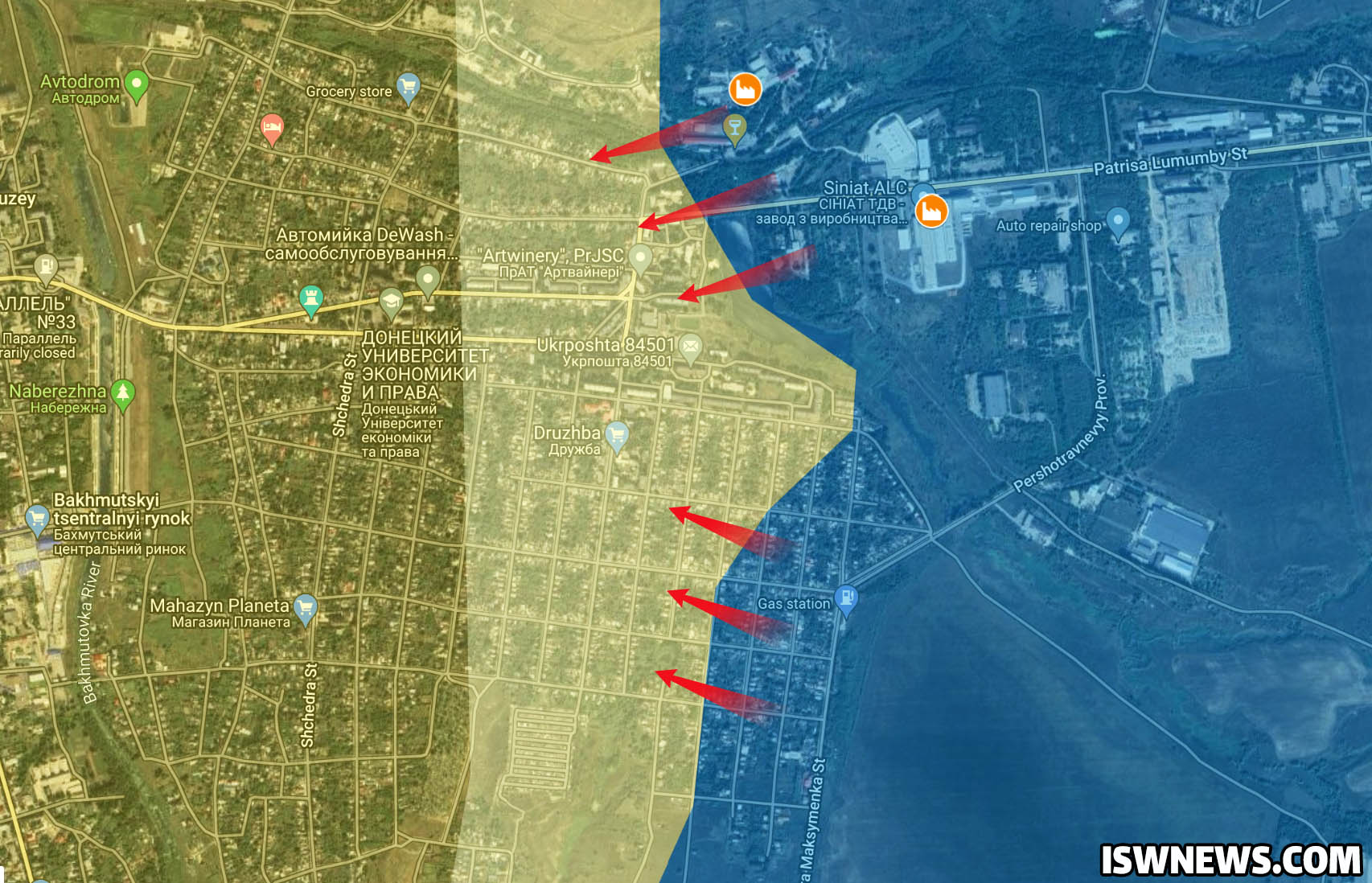
In the eastern front of Bakhmut, the fighting continues and the Russian military forces succeeded in making some minor advances in this region. The confrontations continue in the eastern front of the Ukrainian city in vicinity of a meat factory as well as Zabakhmutivka neighborhood.
Clashes in the eastern areas of the city around the meat factory and Zabakhmutivka neighborhood
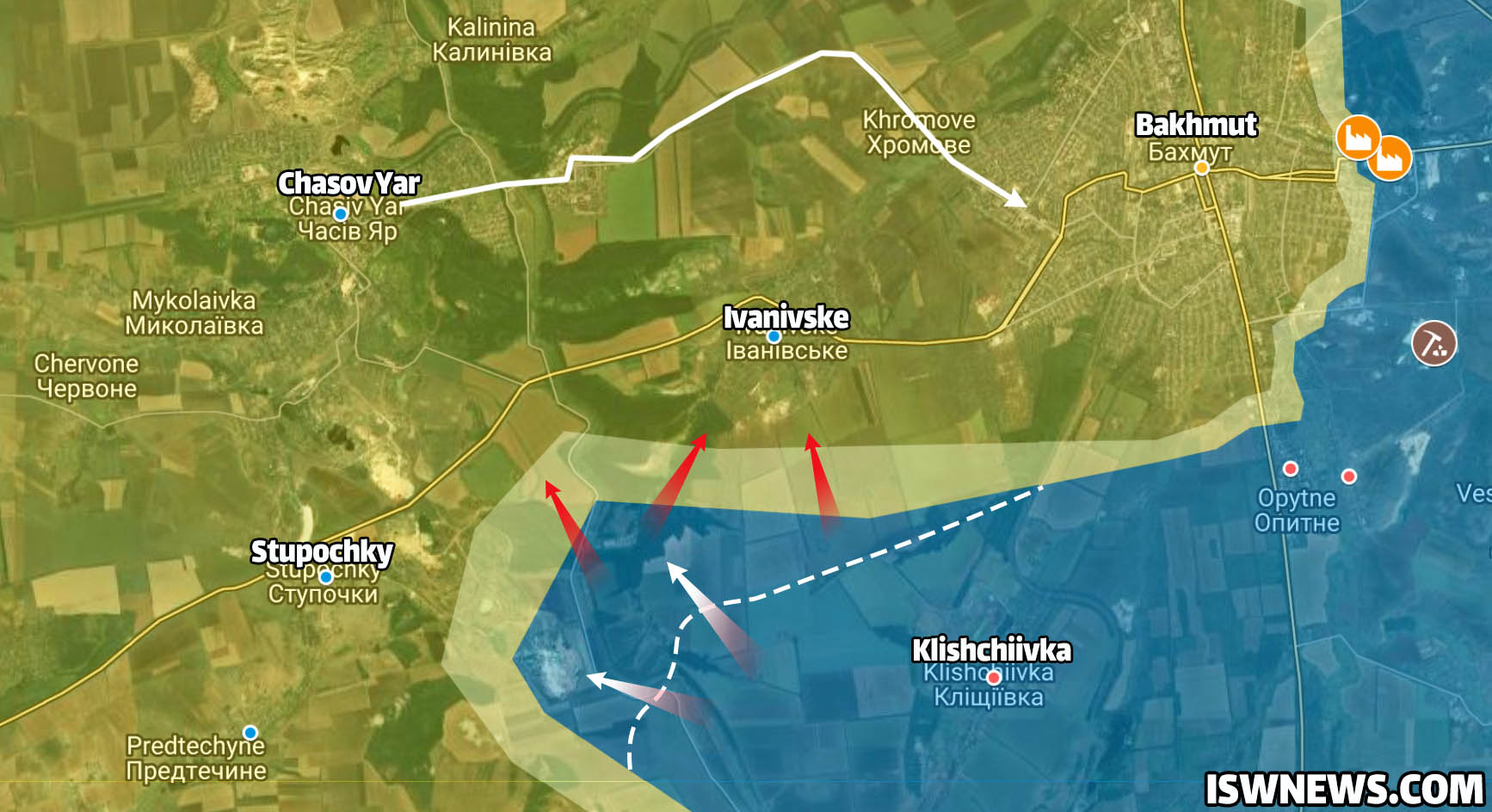
On the southern front of the Bakhmut city, Russian forces could advance toward the north of Klishchiivka district, and the clashes reached in vicinity of Ivanivske at the western entrance of the besieged city of Bakhmut. Furthermore, as a result of the advancement in the mentioned region, the Russian army took the control of the heights overlooking the Kostyantynivka-Ivanivske-Bakhmut road. Hence, the Russian military forces have fire superiority over the Kostyantynivka-Ivanivske-Bakhmut road, and the Ukrainian army’s logistics route from the western areas to the city of Bakhmut has been blocked; so, the only remaining path is the road from Chasiv Yar town.
The Russian army advances on the southern axis of Bakhmut and fire control on the western route of Bakhmut
In the Lyman battle field and the north of Luhansk Oblast, the military advancements by both sides have actually frozen in several battle axes of the front along the road of Kreminna in the south to Kupyansk in the north, and they have not succeeded in advancing in this front for some weeks and they continue the most clashes in the form of exchanging artillery fires. The focal point of the clashes in the front is the Svatove city on the Krasna river, and if the city is seized by the Ukrainian army, Russia’s defense lines on the eastern front would be wrecked. Thus, the Russian army makes all-out efforts to defend the frontlines of the battle axis strongly. The major conflict lines of the front are marked by arrows.
The military situation in the Lyman front and the north of Luhansk Oblast
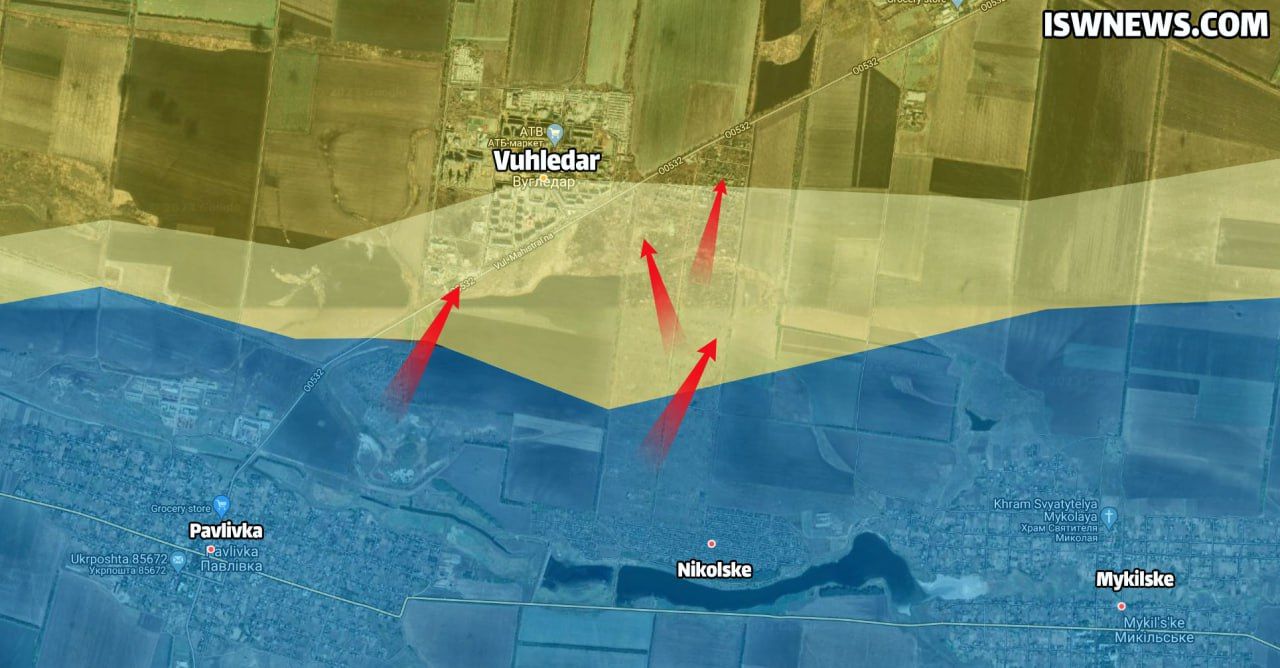
In Donetsk’s battle field and its suburbs, the Russian military forces managed to seize the Vodyane district in the north of the city during their latest advancements in the battle axis. The Russian and Ukrainian armies continue sporadic clashes in vicinity of Avdiivka in the north of Donetsk, as well as Pervomaiske, Krasnohorivka and Mariinka districts in the west of the Ukrainian city. In the Vuhledar battle field, the confrontations between the warring sides continue, but the Russian military forces have not succeeded in fully capturing the region so far.
View on the online map
Military situation in Ugledar axis
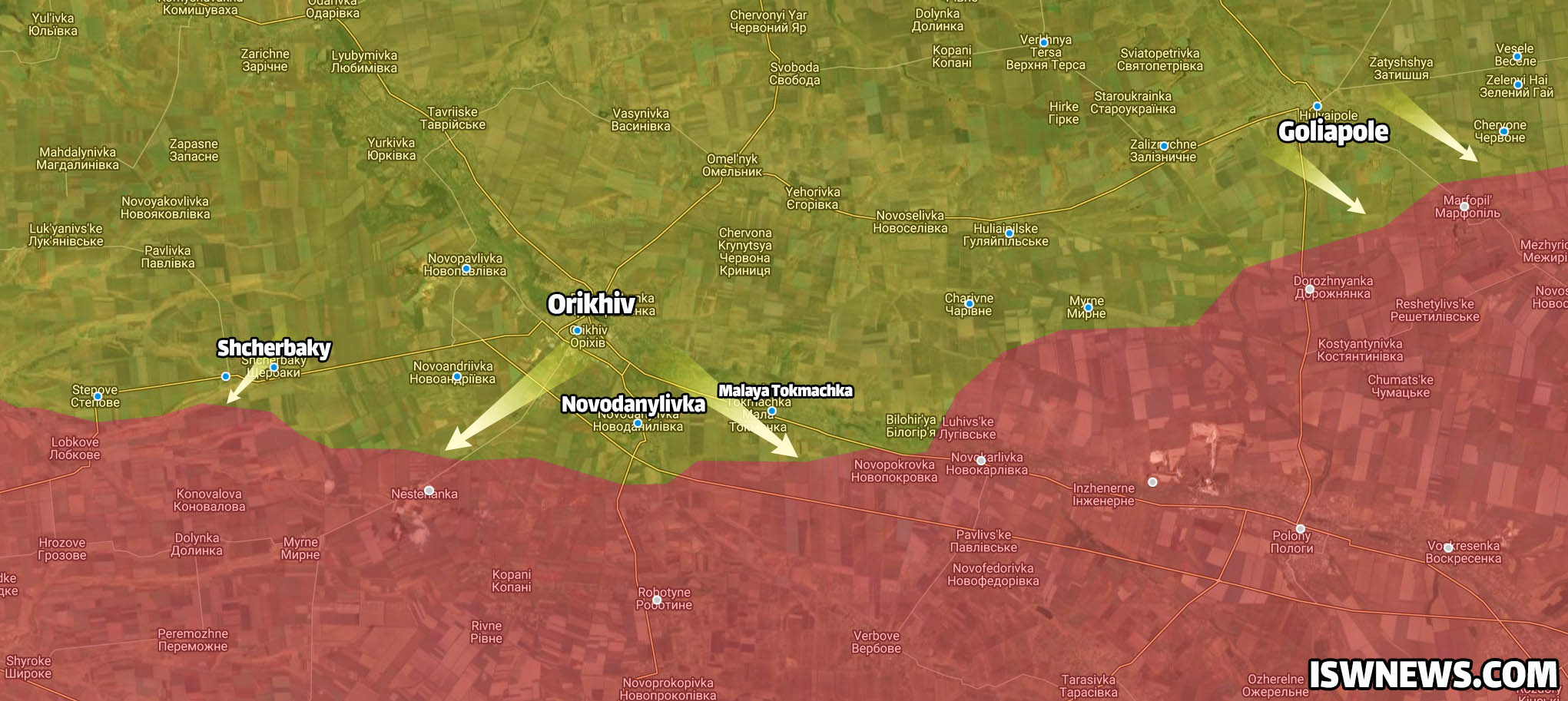
In the Zaporizhzhia battle field, it seems that the last week’s massive Russian attackson the Orikhiv and Golyapol axes came to an end, and the Ukrainian military forces have almost completely foiled all Russian strikes.
In the Kherson battle field, the contact lines of the warring sides have been maintained along the Dnipro River and the most of the confrontations are largely in the form of exchanging artillery fires. In the last outstanding military operation in this battle field, the Ukrainian forces struggled to move troops by the use of aircraft in south of the city of Kherson, in the Ostriv area in the eastern bank of the Dnipro River, but the operation was thwarted as a result of the Russian forces’ vigilance.
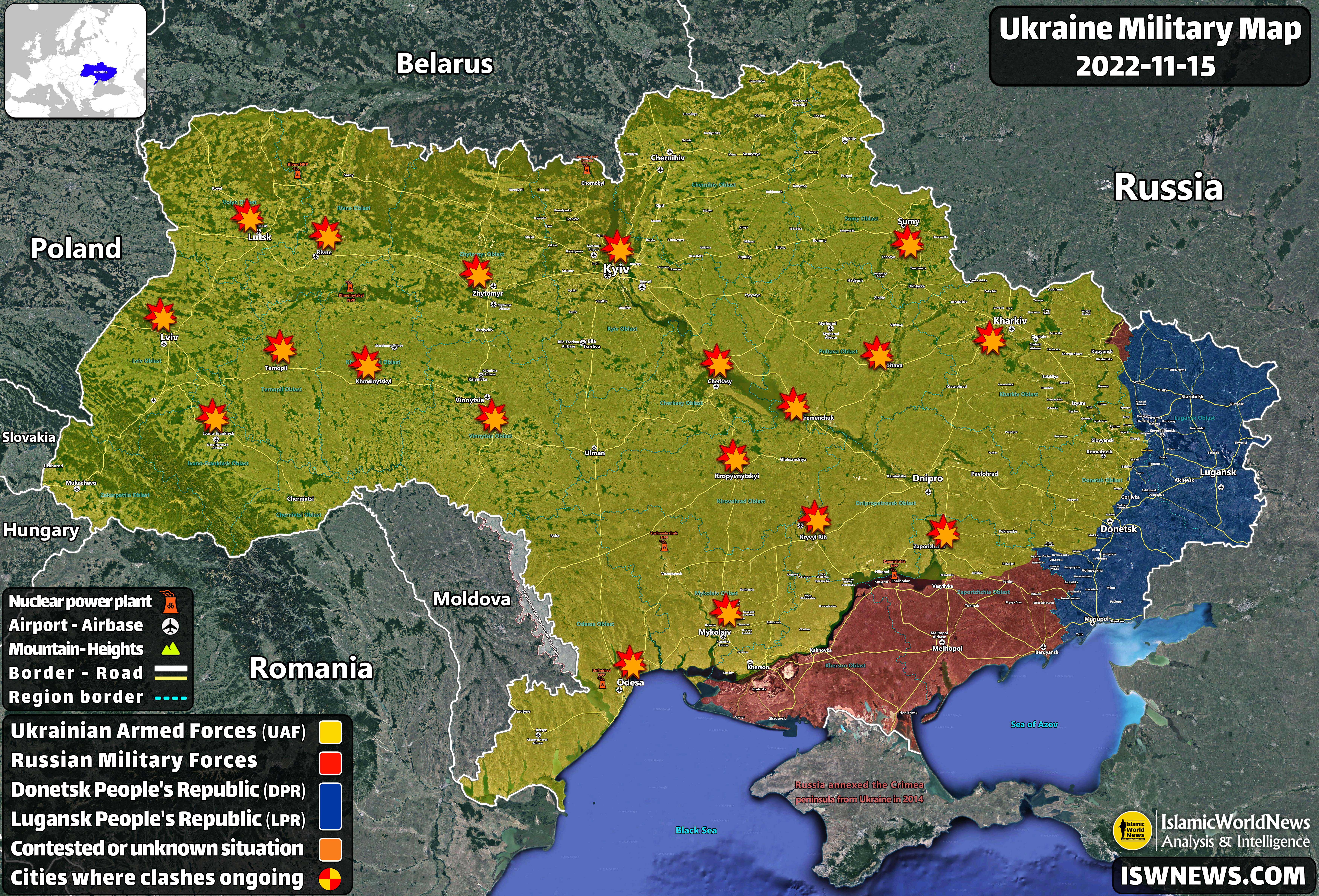
On November 15 and last night, the Russian army, in a large-scale operation with more than 100 cruise missiles targeted the positions of Ukrainian forces in the cities of Zaporizhzhia, Mykolaiv, Cherkasy, Chernihiv, Poltava, Zhytomyr, Rivne, Kryvyi Rih, Vinnytsia, Sumi, Kremenchuk, Leviv, Lutsk, Khmelnytskyi, Ternopil, Kropyvnytskyi, Kharkiv and Kyiv.
As a result of the Russian missile attacks, the electricity in the cities of Leviv, Zhytomyr, Poltava and Ternopil has been completely cut off, and other cities such as Sumi and Odessa have been cut off to a limited extent. Also, the local authorities of the mentioned areas have reported serious damage to the energy infrastructure in these cities.
According to the report of the Ukrainian Air Force, Russia used more than 100 Kha-101 and Kha-55 cruise missiles as well as 10 Shahed-136 suicide drones in these attacks. Also Ukrainian army claimed that since noon on November 15, the air defense systems of the Ukrainian army has managed to shoot down 73 cruise missiles, 10 Shahed-136 drones and one Orion attack drone.
It is also said that two Russian missiles hit the border areas of Lublin province located in the southeast of Poland. Following this incident, the Prime Minister of Poland, Mateusz Morawiecki, has convened an emergency meeting with the Council of Ministers of his government to discuss the details of this attack. Some Polish sources have reported that two people were killed in the incident, but this figure cannot be confirmed at the moment.
Pictures of where the projectiles hit or fell in the border areas of Poland
In the pictures above, you can see a part of the S-300 missile defense system wreckage that fell on Polish soil. Most likely, this missile belongs to the Ukrainian S-300 defense system, and it mistakenly followed a Russian cruise missile or another target to the Lublin area, and landed on a Polish tractor there!
In this regard, the Ministry of Defense of Russia issued a statement, while denying the missile attack on the border areas of Ukraine and Poland, and added:
“The statements of the media and the claims of the Polish authorities about the fall of Russian missiles on the territory of Poland are a deliberate provocation in order to intensify the tension.“
But Ukrainian President Volodymyr Zelenskyy blamed Russia for this incident and said in his latest message on Twitter:
“Terrorism is not limited to our national borders. Russian missiles hit Poland. “Ukraine has repeatedly emphasized that terrorist acts will not be limited to our country and that Russian terrorism may go beyond our country at any moment.“
On the other hand, contrary to this statement, US President Joseph Biden said:
“Initial information shows that the missile that hit Poland was not fired from Russia.”
Recep Tayyip Erdogan, the president of Turkiye, also reacted to this incident and said:
“Information shows that Russia was not to blame for the missile incident in Poland, and I accept Russia’s position in this regard.”
The Ministry of Foreign Affairs of Poland also without mentioning the details of this incident, has stated that a “Russian-made” missile has fallen in the east of this country!
After the announcement of the decision of the Russian army to withdraw from the west bank of Dnieper River by Sergei Shoigu, the Minister of Defense of Russia on November 9, the Russian army forces withdrew from the western areas of the Dnieper River with an area of 4800 square kilometers. During this retreat, in order to prevent the advance of the Ukrainian army, the Russian army destroyed several bridges and communication routes between the western and eastern bank of Dnipro river, including the Antonovskiy and Kakhovka bridges.
By withdrawing from the city of Kherson and its northern regions, in addition to handing over economic resources, the Russian army handed over more coasts of the Black Sea to the Ukrainian government and eased the minds of the leaders of Moldova and NATO about the possibility of the Russians marching towards the borders of the Republic of Transnistria.
In fact, with this retreat, Russia has placed the Dnipro River as its border with Ukraine and is trying to use this withdraw to convince the western countries in future negotiations. Also, there is a possibility of Russian military operations in the Dneipro river strip and moving towards the northern regions of Zaporizhzhia oblast and even entering Dnipropetrovsk oblast in the coming months.
In general, with the repeated withdrawals of Russia from the northern front of Ukraine, the southeastern areas of Kharkiv oblast and now the western bank of Dnipro River, the possibility of increasing the conflict and the continuation of the war in Ukraine has greatly decreased, and it seems that the Russians have lost the necessary conditions to continue the war! Therefore, rather than designing new operations, the Russian leaders are eager to negotiate or maybe they are waiting for a new and unexpected event to happen during the war.
1- Ukraine’s Foreign Minister Dmytro Kolba, announced the proposal to cut off diplomatic relations with Iran. He raised this request with the President of Ukraine. This request was made because of the prominent role of Iranian Shahed-136 drones in the battles of Ukraine.
2- Yuriy Ignat, a spokesman for the Ukrainian Air Force: “Russia is no longer firing its missiles at Ukraine from the Caspian Sea, but from near Rostov. Therefore, the time to prepare for attacks and take shelter is reduced. Russian strategic bombers use Kh-101 and Kh-55 missiles. These missiles fly at a speed of 900 kilometers per hour, and if they are launched from the Caspian Sea, the air force has more time to react and people have more time to enter the shelter. Now the distance is shorter and the time is also shorter.”
3- The Parliament of Estonia officially declared Russia a terrorist state. This parliament also asked the parliaments of other countries to do the same and identify Russia as a sponsor of terrorism. They also demanded Russia’s exclusion from permanent membership in the UN Security Council and asked the European Union to impose more sanctions against Russia and Belarus.
4- The Ministry of Foreign Affairs of Ukraine officially announced the request to purchase air defense systems from Israel. In response to this request, Benny Gantz, the Israeli Minister of Defense, announced that they will not hand over any weapons to Ukraine. In this regard, Benjamin Netanyahu, the former Prime Minister of Israel, also stated that if Israeli weapons are sent to Ukraine, they may fall into the hands of the Iranians. Whenever we have provided military assistance to one side of the field, in the end, the same weapons have fallen into the hands of the Iranians and they have used them against us.
5- The New York Times published a report claiming that Iranian advisers were sent to Russia. This report states: “Iran has sent advisers from the Islamic Revolutionary Guard Corps to Russia to help solve the problems of drones. These advisers have been stationed in a military base in Crimea to train the Russians.”
6- Hossein Amirabdollahian, Iran’s Foreign Minister: “We have told the Ukrainian authorities to provide a document about the use of Iranian drones in the war in Ukraine if there is any.”
7- Donetsk: In the Bakhmut axis, the AFU 54th Brigade attacks to recapture the asphalt factory near the city of Bakhmut failed. The conflict in this axis between the parties continues and the Russian army and its allies have increased the attacks on the important city of Bakhmut. Currently, Russian forces have reached the eastern and southern entrances of Bakhmut city, and heavy clashes continue for several days in a row. After Russian retreats from the Kharkiv axis, the main focus of the Russians has been directed to the city of Bakhmut. It seems that the capture of Bakhmut has an important role in determining the future of battles for the Russians in this axis.
8- Kharkiv: In the southern axis of Kharkiv, sporadic clashes between the Russian and Ukrainian armies continue in the southeast of Kupyansk and northwest of Svatove. In the last two weeks, the Ukrainian forces have made extensive advances in this axis and have pushed the Russian forces back several lines.
9- The Russian army attacked positions of the Ukrainian forces in the city of Mykolaiv, with several “Shahed 136” suicide drones. The video below is about the failure of Ukrainian air defense to counter the Russian drones and the moment it was hit the target.
10- Ukrainian Army and Volodymyr Zelenskyi, the president of Ukraine, claimed that they shot down 223 “Shahed-136” suicide drones in the past 36 days. The first Shahed drone allegedly was shot down on September 13 over the sky of Kupyansk.
11- During the last two weeks, Geran 2 and 1 suicide drones (Shahed-136 and its smaller model known as Shahed-131) have targeted Ukrainian military and economic infrastructures in the cities of Kyiv, Lviv, Zhytomyr, Mykolaiv, Kharkiv, Poltava, Dnipro, Zaporizhzhia, Kremenchuk, Odessa, Rivne, Ternopil, Khmelnitsky, Ivano-Frankivsk. Despite the claim of Ukrainian officials about shooting down these drones, most of the drones hit their targets with high accuracy and the Ukrainian air defenses were unsuccessful in intercepting and destroying the drones. The city of Kyiv has been the host of the most Shahed-136 suicide drone attacks, and Russian attacks using these drones on different regions of Ukraine continues aggressively!
12- On the front of Kherson and Mykolaiv, sporadic clashes between the Russian and Ukrainian armies continue. After the retreat of the Russian army from the eastern areas of the Ingulets River in the north of Kherson province, the clashes continue in the south of Davidyv Brid and Sukhanove area. Yesterday, the Russian army repelled the large-scale attack of the Ukrainian forces in the Sukhanove axis. Currently, most of the conflicts are concentrated in this axis, i.e. in the northwest of Kherson province. The Russian army is strengthening the Kherson front and has sent more troops to this area. Therefore, the Ukrainian forces are trying to break the Russian resistance in this axis and reach Kakhovka as soon as possible and bypass the city of Kherson from the left flank.
– Russian Army and its allies have increased their attacks to capture the important city of Bakhmut. Clashes continue in the eastern and southern entrances of the city. – Clashes continue in Soledar town between Russian and Ukrainian army forces. – The exchange of artillery fire continues sporadically in other frontlines of Donbas region.
In the last week, the Ukrainian forces, crossing the Siversky Donets river, reached Lyman town from the north and south direction. In south of Lyman, the villages of Staryi Karavan and Brusivka have come under the control of Ukrainian forces. In north of Lyman, the regions of Lozove, Rubtsi, Korovii Iar, Oleksandrivka, and Yarova are under the control of Ukrainian forces.
Currently, heavy clashes continue in south of Lyman and in north in Drobysheve and Novoselivka between Russian and Ukrainian forces. Also, in recent days, Russian forces have repelled the attacks of Ukrainian forces in Karpivka and Ridkodub regions several times.
Due to the fact that the amount of conflicts is higher in the northern front of Lyman, it seems that the Ukrainian forces are trying to encircle the Russian forces from the north side and surround them in Lyman by breaking the defense lines in the mentioned areas.
Also, sporadic clashes continue in the Bilogorivka front. Based on the formation of forces in this area, Bilogorivka is almost not under the control of any of the parties.
Clashes between Russian and Ukrainian forces in other fronts of Donbas continue sporadically, and no specific changes have been made in the field map. The Soledar and South Bakhmut fronts are among the active areas in the last week. The fronts of the city of Donetsk has also remained unchanged in the last week.
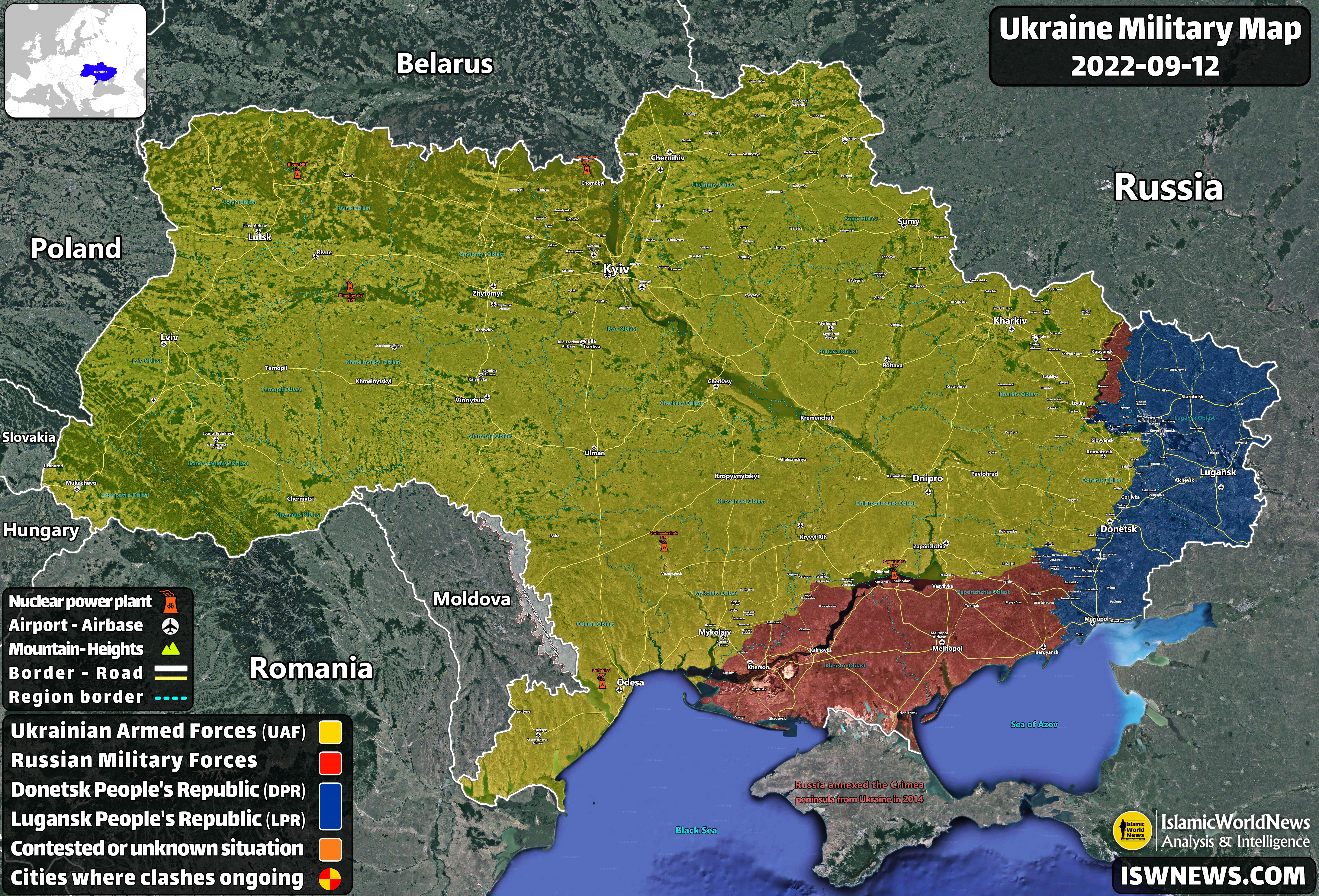
The Russian army completely withdrew from the northern and northeastern regions of Kharkiv oblast, and the Ukrainian army took control of these regions. As predicted, the Russian forces in the north of Kharkiv retreated to the international borders, and in the east of Kharkiv, the forces went behind the Oskil river, and the eastern areas of the Oskil river are the only areas of Kharkiv oblast that are currently under the control of Russian forces.
In this way and with the retreats, about 8800 square kilometers of Kharkiv oblast came back under the control of the Ukrainian government.
It is noteworthy to mention that during the withdrawal of the Russian army from these areas, many Russian descent people of these areas also fled to Russia for fear of genocide, being persecuted, etc.
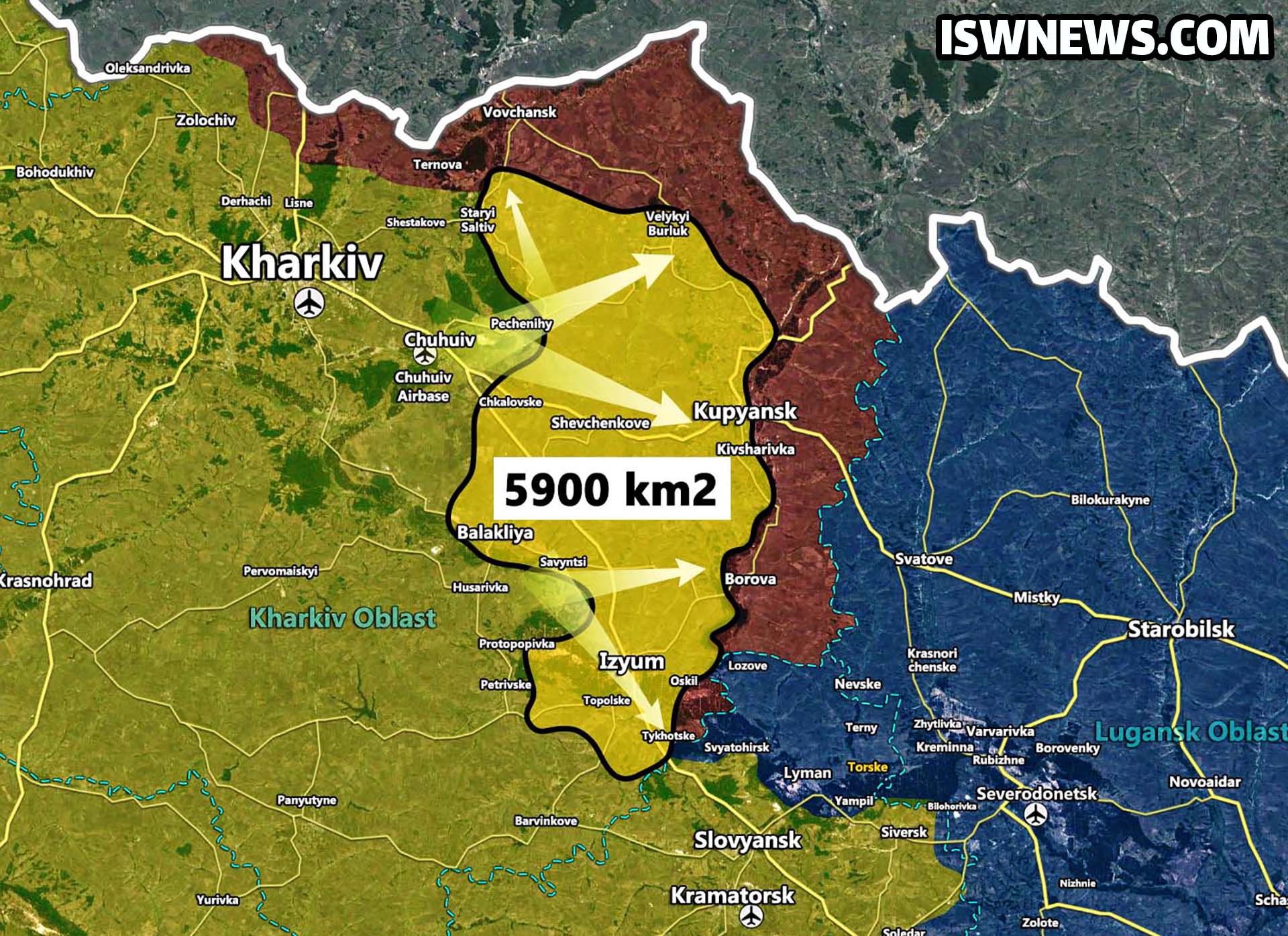
In recent days, Russian Army and its allies withdrew from large areas of the southeast and east of Kharkiv Oblast, and after that, the Ukrainian forces entered the areas almost without any particular conflict and dominated the villages and cities one after the other. During these retreats, important towns and areas such as Balakliya, Izyum, Kupyansk and Dvorichna came under the control of the Ukrainian army. It is safe to say that these retreats are considered to be Russia’s biggest defeat and retreat in the Ukraine war after Russia’s extensive retreats from the northern regions of Ukraine and the city of Kyiv in the early months of the war.
It should be noted that in the course of these retreats, an area of nearly 5900 square kilometers has been controlled by the Ukrainian army, and according to the developments in Kharkiv Oblast, it seems that this area will be increased and the Russian army will retreat to the border lines north-east of Kharkiv. According to the latest information, an order has been issued for the evacuation of the border town of Vovchansk, and the evacuation of this town means Russia’s return to the international borders in this region. During the battles of recent months, the town of Vovchansk was used as a logistic bridge of the Russian army towards the eastern regions of Kharkiv Oblast.
By carefully looking at the field map, it can be seen that the Russians’ purpose for these retreats is to move the forces behind the Oskil River and use this river as a natural defense barrier. A similar tactic that we saw earlier using the Siverskyi Donets River in the same region and parts of Donetsk Oblast in the Lyman axis or Luhansk Oblast at some point of the battles.
But what is the reason for this and why did the Russians withdraw from these areas?
There are many different reasons for the recent defeats of the Russians in Kharkiv Oblast. In the last two months, after Russia’s success in seizing the city of Severodonetsk and advancing towards the important towns of Slavyansk and Bakhmut, we witnessed a long-term stoppage and, in other words, “stagnation” in the eastern fronts of Ukraine. In addition to this issue, on the southern fronts in Kherson and Mykolaiv Oblasts, we have practically witnessed a confusion and stoppage of the Russians. The absence of a comprehensive operational plan by the Russian army and the lack of coordination of operations between the eastern front and the southern front and the failure to use all or most of Russia’s combat capacity in terms of manpower, logistics, ground forces and air fleet, failure to suppress the Ukrainian air force effectively, not suppressing the western military aid sent to Ukraine effectively, relying on old and outdated tactics in the war in Ukraine, etc. are among the reasons that can be clearly seen in the battles in Ukraine.
Despite the importance of the Ukraine war for Russia, in terms of logistics, the Russian army has practically used a small part of its manpower in this war, or has not used all its missile or air power in these battles. Or there are great uncertainties regarding the plan, the general picture and the ultimate goal of Russia’s operations in Ukraine; A subject that emerges in a strange way at every stage of the war. Failure to capture the entire city of Kyiv and its surrounding areas while this was possible, and then extensive retreats from the north, and then a complete focus on the eastern front and the entry of military power into this area, and again reducing or stopping operations in this axis for a period of Almost two months and the confusion between advancing or stabilizing areas in the southern front, practically shows the confusion of the Russian command. On the one hand, the Russians are looking for results, and on the other hand, they are not willing to spend more. If this war is important for Russia and the Russians want to achieve goals in this war, they must devote all or most of their combat power to this war, otherwise they will not have a chance against the Ukrainian army with high manpower; Or the goals will be achieved at a very high cost and in an unknown period of time.
On the other hand, maybe the Ukrainian forces have an easier task than the Russians, and that is to push the Russians back and take back the lost areas. A subject that does not have logistical difficulties and the difficulty of planning an attacker on several fronts. Considering the almost good logistic support of the western countries to Ukraine and the intelligence superiority of the Ukrainians and the use of human forces more than Russia in this war, only a little negligence on the part of the Russians is enough to change the tone of the war in favor of Ukraine. Ukrainian forces have shown that they are capable of resisting and inflicting heavy blows on the Russian army if they have proper support and sufficient logistics, and they have high combat power. Considering that more than six months have passed since the war, the Ukrainian forces have gradually found their combat organization and have come out of the confusion of the initial months. It seems that if the current trend of Russia does not change, in the coming weeks and months we will see more effective attacks and operations by Ukrainian forces to retake the eastern and southern regions.
News of other regions:
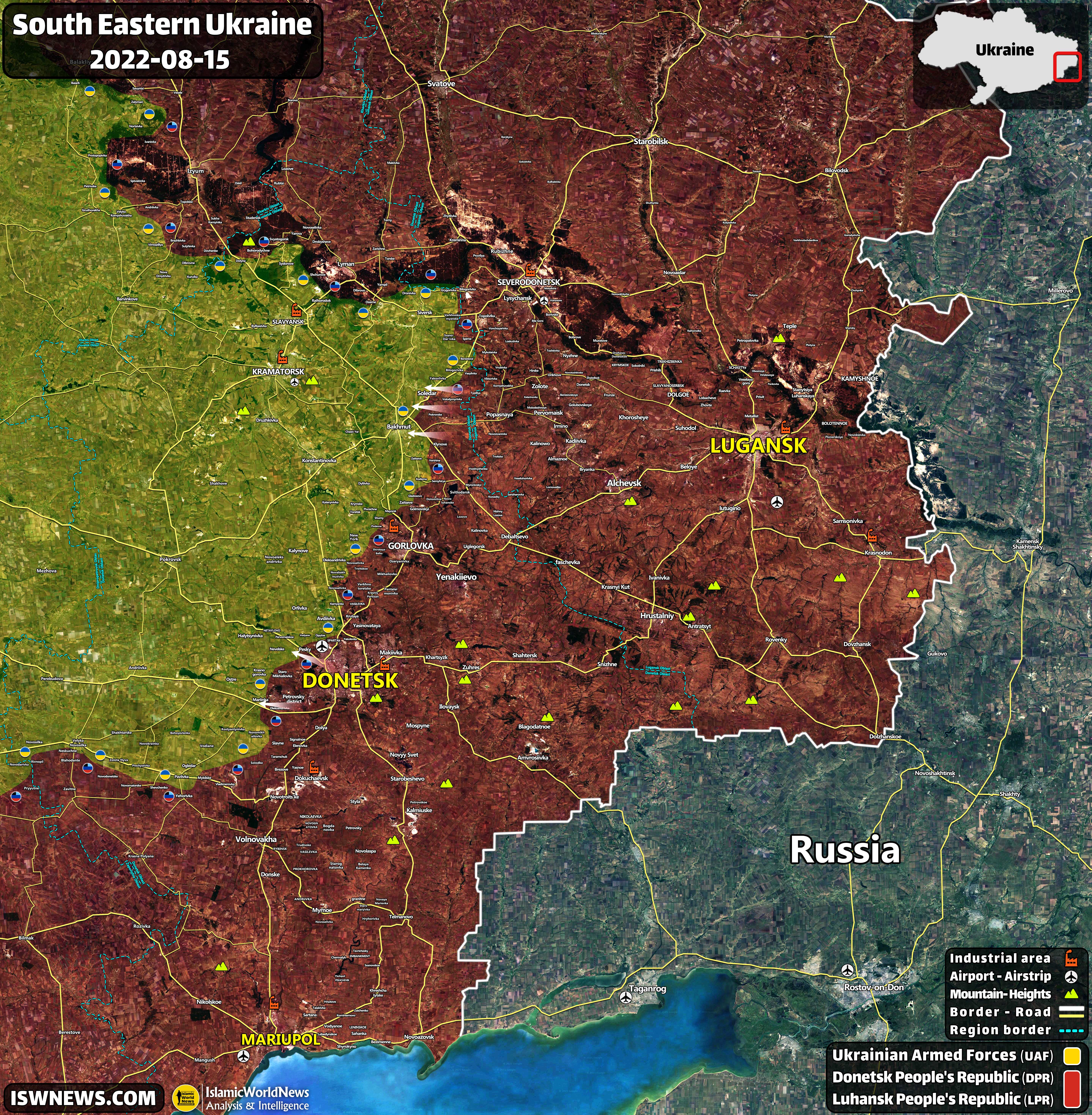
The military situation in Luhansk and Donetsk Oblasts has not changed significantly in the last two months, and sporadic clashes continue around Bakhmut, Soledar, North of Gorlivka, west of Donetsk in Mariinka and Pesky, and near Ugledar. In Mykolaiv and Kherson Oblasts, the clashes between the Russian and Ukrainian army forces continue in the Arkhanhelske and Sukhyi Stavok axes in the Ingulets axis. The conflicts in these areas are currently equal and neither side is able to make large advances.
According to the latest news from the frontlines, the Russian army has concentrated its attacks on the defense line of the Ukrainian army in the Seversk-Soledar-Bakhmut axis. These attacks in the last week have led to an advance in the east and south of the village of Soledar located on the Bakhmut-Lisychansk road. The ultimate goal of the Russian army in capturing Soledar is to cut off the logistic road and impose a quasi-siege on the cities of Seversk and Bakhmut.
Currently, clashes continue inside Soledar and most of the village is under the control of the Russian army. In Bakhmut, cashes have extended to the eastern entrance of the city, and Bakhmut is under the Russian army artillery fire.
In south of Bakhmut, heavy clashes are going on in Zaitseve and Kodema areas, and the Russians are trying to advance in this axis. It seems that one of the main goals of the Russian army in this axis is to completely capture the villages and areas south of Bakhmut and surround this city from the south.
In the western axis of Donetsk city, the exchange of artillery fire between the sides is still going on. In the last week, Russian and the DPR forces took control of the village of Peski, west of the Donetsk airport. Also, clashes between the Russian and Ukrainian armies continue in the Mariinka area, and the Russian army has gained some ground there.
It is important to mention that the purpose of the Russian forces’ operation in the west of Donetsk is to prevent the AFU ground attacks towards the city of Donetsk and to stop their artillery attacks on the city. And at the moment there is no serious intention by the Russians to advance deep into the west of Donetsk.
In general, it seems that the Russian army is not in a hurry to clear the north of Donetsk Oblast. If the Russian army is successful at this stage on Bakhmut front, the next stage will be the advances towards the important cities of Slavyansk and Kramatorsk.
There are no special activities in other fronts either, and most of the clashes are related to the exchange of artillery fire and airstrikes. The news about the large-scale operation of the Ukrainian army in the southern front or the preparation of the Russian army to launch an operation in the Kharkiv province have been more of a psychological warfare, and despite the claims of the Ukrainian and the Russian media, no specific activities has been observed from the parties in the mentioned areas.