Category: Military knowledge

  • Military Knowledge: Sejjil Missile + Images

    Military Knowledge: Sejjil Missile + Images

    This Sejjil mid-range ballistic missile has an operational range of 2000 – 2500 km and has a great accuracy in hitting its target. Accuracy, short preparation time, portable launcher, capability of transporting ready missile and using TVC system are among the extraordinary properties.

    Sejil is the first mid-range solid fueled missile of Iran. Some experts consider it the best Iranian ballistic missile. This missile has a mobile launch system capable of carrying a ready-to-launch missile.

    The solid-fueled missile needs only a few minutes to prepare and the launcher leaves launching point immediately which gives the missile ultimate stealth mode. Sejjil has high acceleration which makes it difficult for enemy to track it at the initial stage of launch and thus intercepting.

    Sejjil 1 did not have a guided warhead and its error was between 100 and 150 meters. However, in Sejjil 2, which was unveiled on December 15, 2009, fins were added to the Sejjil 2 warhead to guide it until it hit the target, which reduced the missile’s error to less than 10 meters.

    Sejjil ballistic missile has a speed of Mach 12 to 14 (about 3400 to 4300 km/h) when entering the atmosphere and will hit the target at Mach 5.

    Sejjil missile specifications:
    Length: 17.57 meters
    Diameter: 1.25 meters
    Weight: 23623 kg
    Warhead: High Explosive materials from 500 kg
    Fuel: Solid (two-stages)
    Range: 2000 to 2500 km
    Flight trajectory: Ballistic
    Accuracy: Error below 10 meters

    Click to see the full size image

    Read more:
    Iran’s Great Prophet 17 Exercise + Images
    Video: IRGC point-to-point missiles are a nightmare for Iran’s enemies
    Second phase of ‘Great Prophet 15’ drill, attacks on naval targets with ballistic missiles + images

    Sejjil Missile collection of posters in Persian, Arabic, Kurdish, Azerbaijani, Russian for Social Media:

  • Military Knowledge: The reason for the burning of the fins of Dezful missile

    Military Knowledge: The reason for the burning of the fins of Dezful missile

    As the rocket accelerates, we encounter the phenomenon of aerodynamic heating, which raises the temperature on the surface of the object. Part of this increase in temperature is due to air friction with the body, and the other part is due to the wave of shocks produced in supersonic and ultrasonic flight.

    In General, Aerodynamic heating is the heating of a solid body produced by its high-speed passage through air, whereby its kinetic energy is converted to heat by adiabatic heating, and by skin friction on the surface of the object at a rate that depends on the viscosity and speed of the air.

    In Mach 4, for example, the surface temperature of an object rises to about 1,000 degrees Celsius, which causes some composite components, such as blocks made of carbon fiber and phenol-based resins, to burn and fire.

    The following equation can be used to approximate the body surface temperature in different Machs at 27 ° C:
    T0 (C °) = 27 + 60 (M ^ 2)

    For example, for a rocket in Mach 4 with an air temperature of 27 degrees, the approximate calculations of the body surface temperature are as follows:
    T0 = ​​27 + 60 × 16 = 987C °

    Read more: Iran’s Great Prophet 17 Exercise + Images

  • Iran Unveils “Exo-Atmospheric Trajectory Maneuvering Technology” for its Ballistic Missiles

    Iran Unveils “Exo-Atmospheric Trajectory Maneuvering Technology” for its Ballistic Missiles

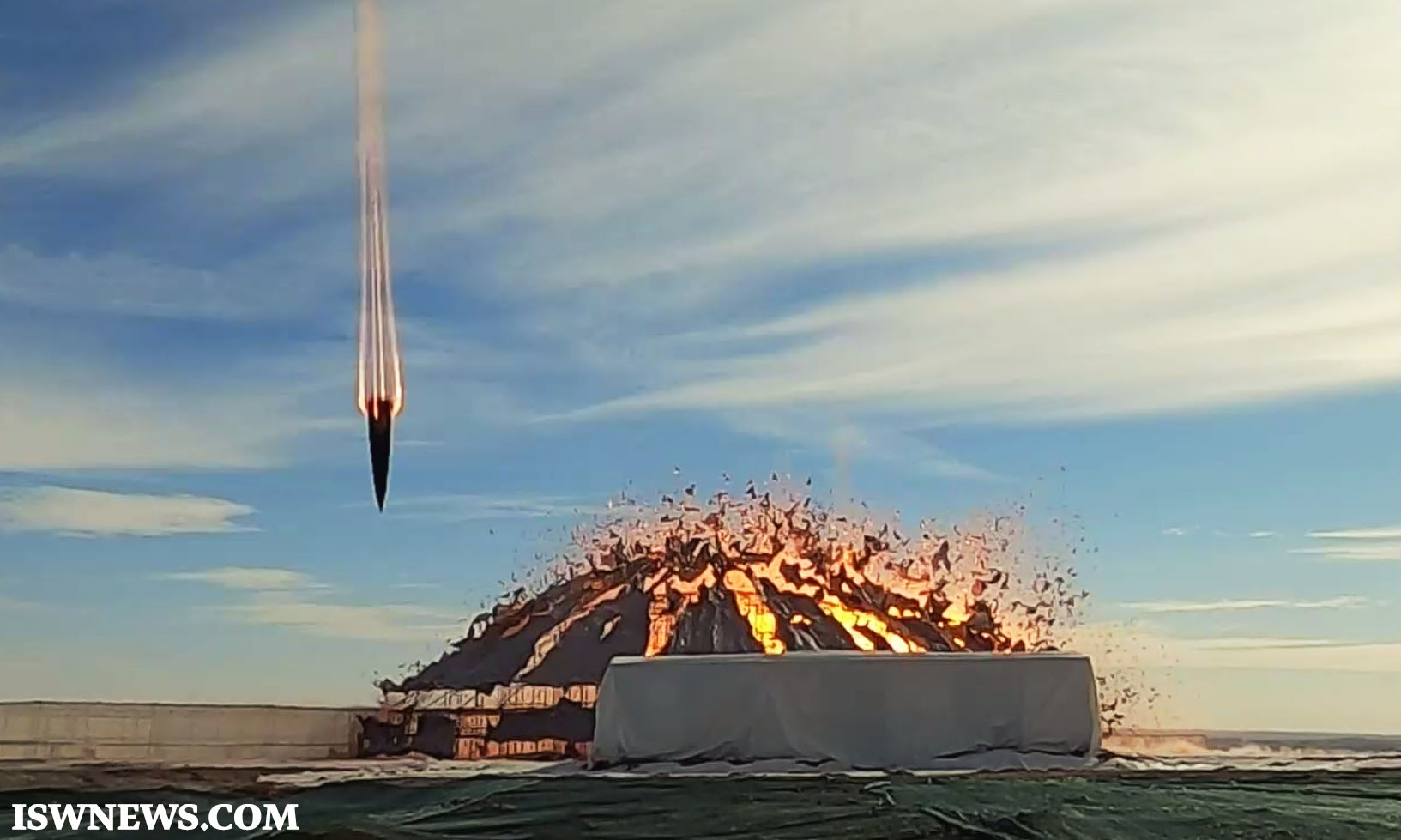
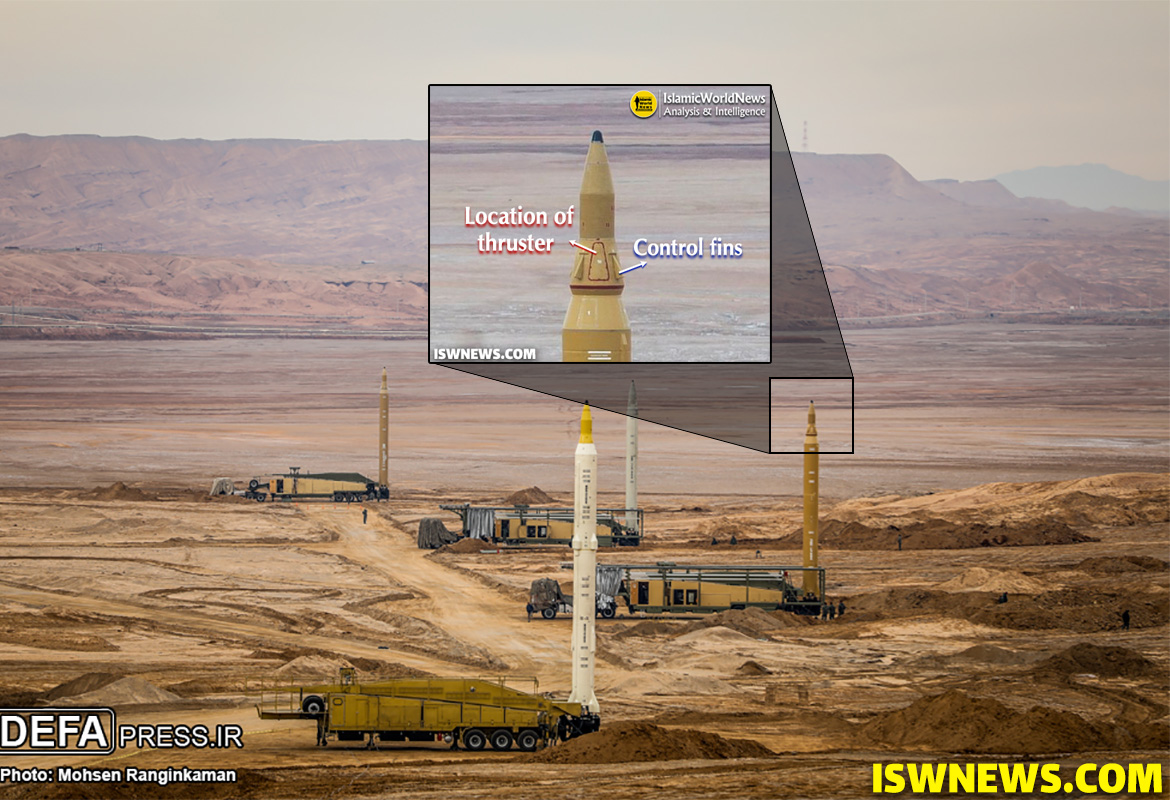
    The technology or maneuverability of warhead outside atmosphere is performed with the help of pressurized gas thrusts or dual liquid fuel, and by changing the direction of the warhead, the trajectory is variable and the exact direction of the warhead is unpredictable. Therefore, this capability greatly reduces the chances of an air defense missile hitting a warhead.

    The exo-atmospheric trajectory maneuvering technology, in addition to increase accuracy, guiding and maneuvering of Qadr missile in the atmosphere enhances its penetrability against missile defenses.

    The maneuverability of medium- to high-range ballistic missile warheads can be achieved in two ways: maneuverability outside the atmosphere and hypersonic flight in the atmosphere. Considering the challenges of hypersonic wave rider warheads such as temperature management, guidance, materials and manufacturing process, the exo-atmospheric maneuvering method seems to be the most optimal option considering the performance, cost and time to upgrade conventional ballistic missile warheads in order to escape the air defense missiles.

    For example, in this method, the old warheads can be upgraded and there is no need to use new complex and expensive refractory materials; The base design of the warheads does not change much and there is no need to design from the base.

    According to studies, apparently the only country that has officially unveiled and used exo-atmospheric maneuvering technology so far is Russia and the Topol-MR intercontinental ballistic missile. Now, with this unveiling, Iran is one of the owners of this technology.

    Qadr missile exo-atmospheric warhead
    Topol-MR intercontinental ballistic missile
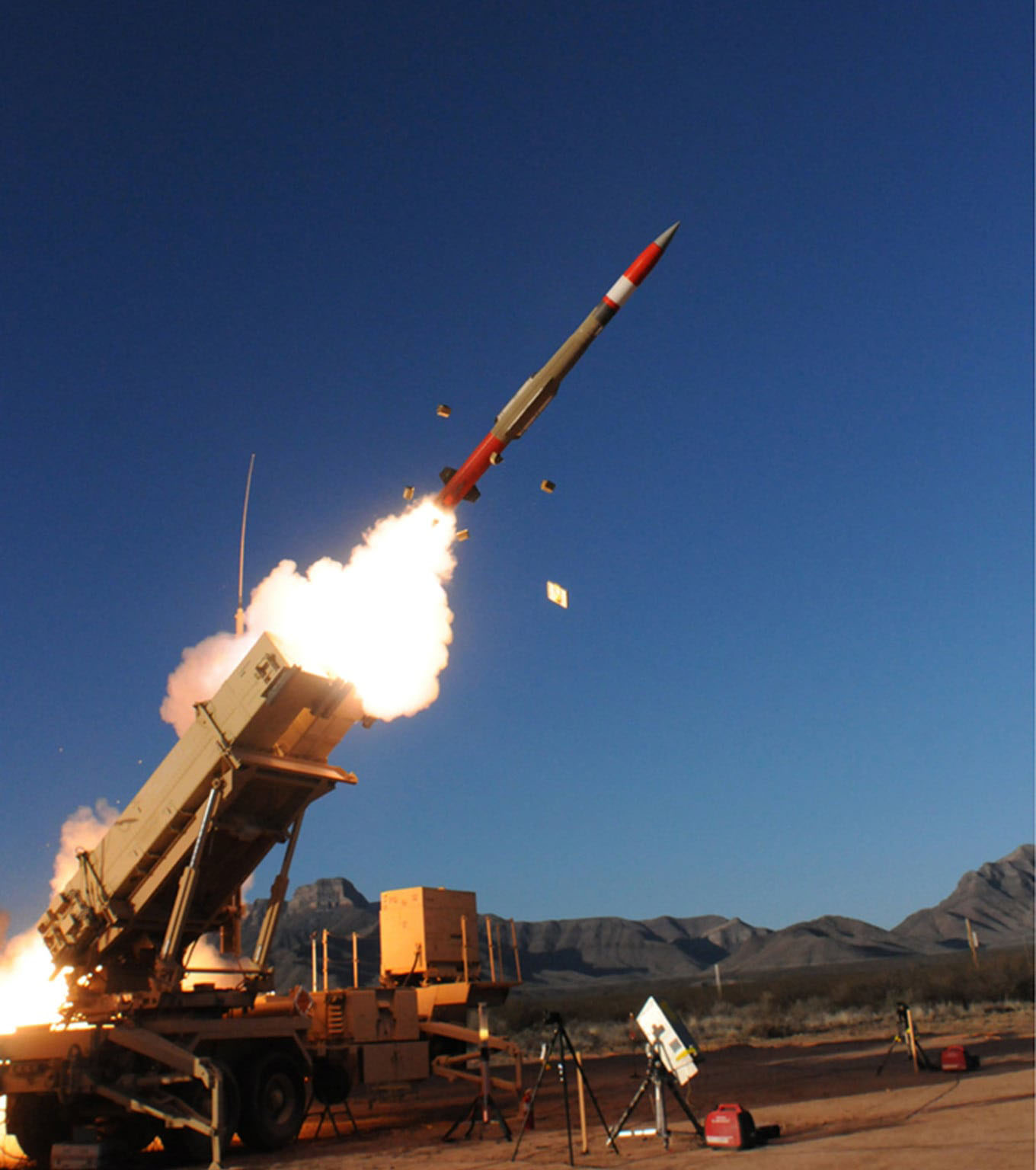
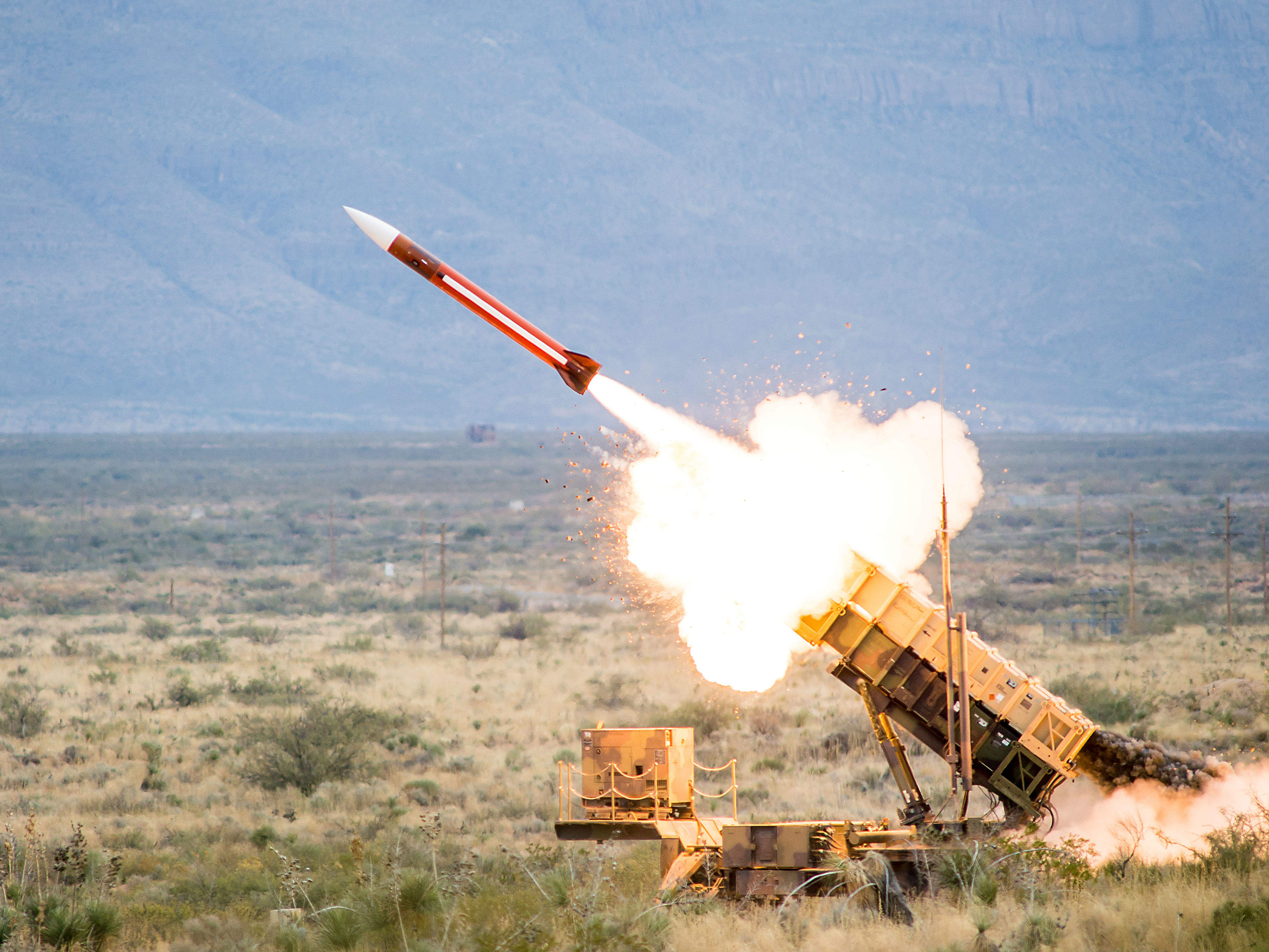
  • Military Knowledge: Patriot Missile System

    Military Knowledge: Patriot Missile System

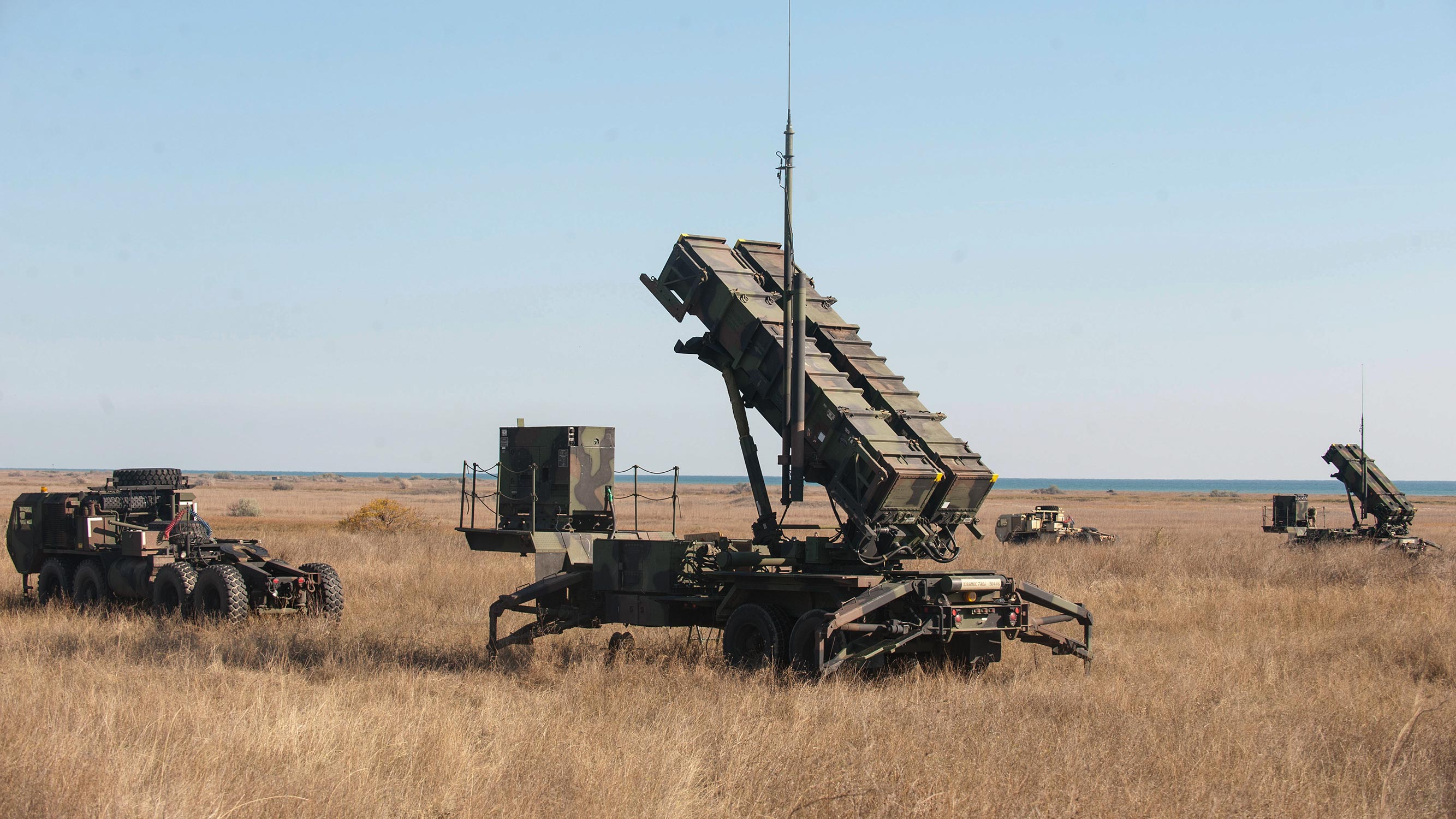
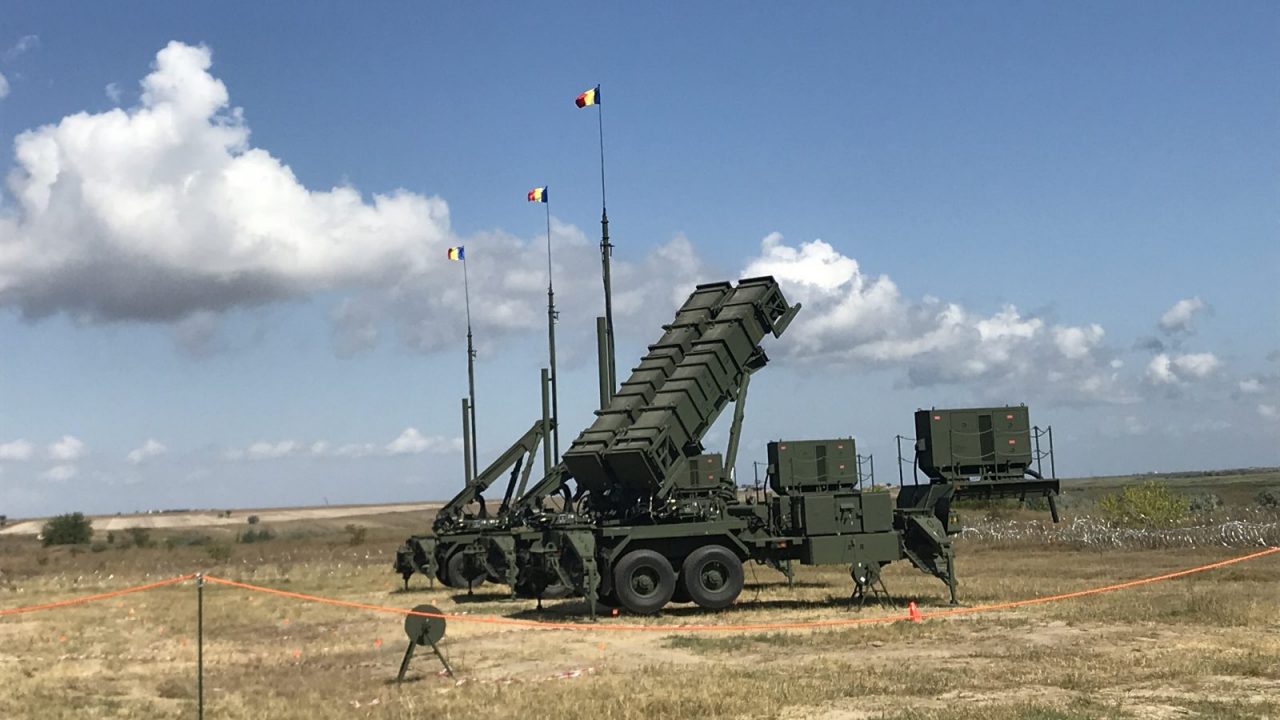
    In the initial versions, this system uses AN/MPQ-53 passive Phased Array radar, in the next generation AN/MPQ-65 passive phased array radar and in the latest generation of this system it use active phased array radar using GaN semiconductor called LTAMDS.

    The AN/MPQ-53 and AN/MPQ-65 radars have a 120 degree coverage angle limit. Therefore, the lack of full coverage was one of the major weaknesses of this system; But in the new generation of radar, this problem is solved and the coverage angle is 360 degrees.

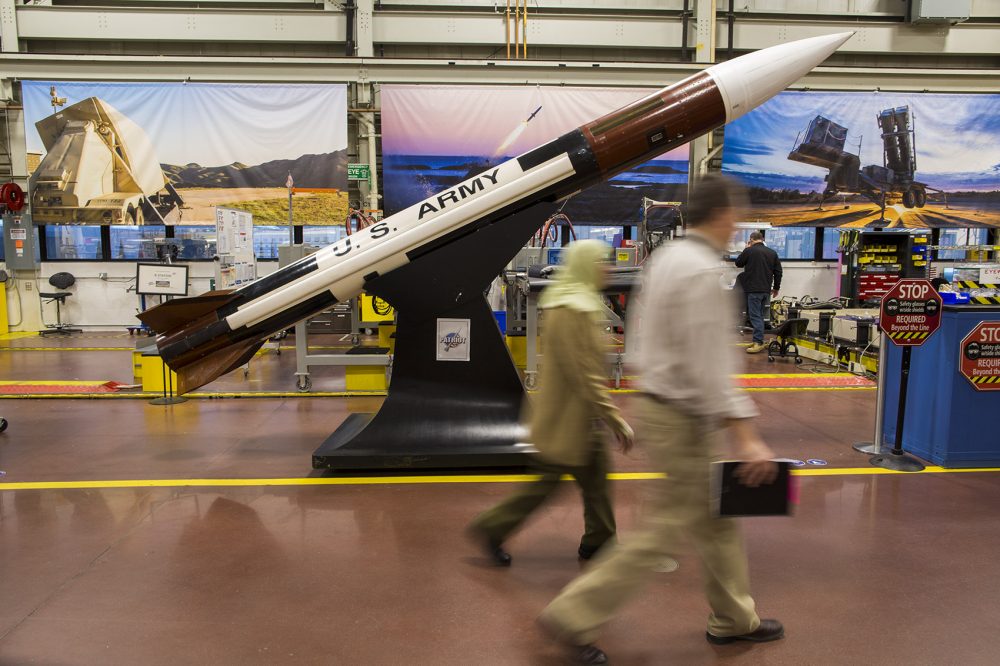
    The Patriot system mainly uses two missiles, PAC-2 and PAC-3. To use the PAC-3 missile, it is necessary to have MPQ-65 radar. PAC-2 missiles have a range of more than 100 km and are commonly used to hunt aerodynamic targets such as aircraft, drones, warplanes, AWACS, etc. and PAC-3 missiles with a range of 20-35 km (depending on the version) are more suitable for hunting ballistic and cruise missiles.

    Currently, 16 US allies use the Patriot system; Saudi Arabia is the largest user of the Patriot system after the United States.

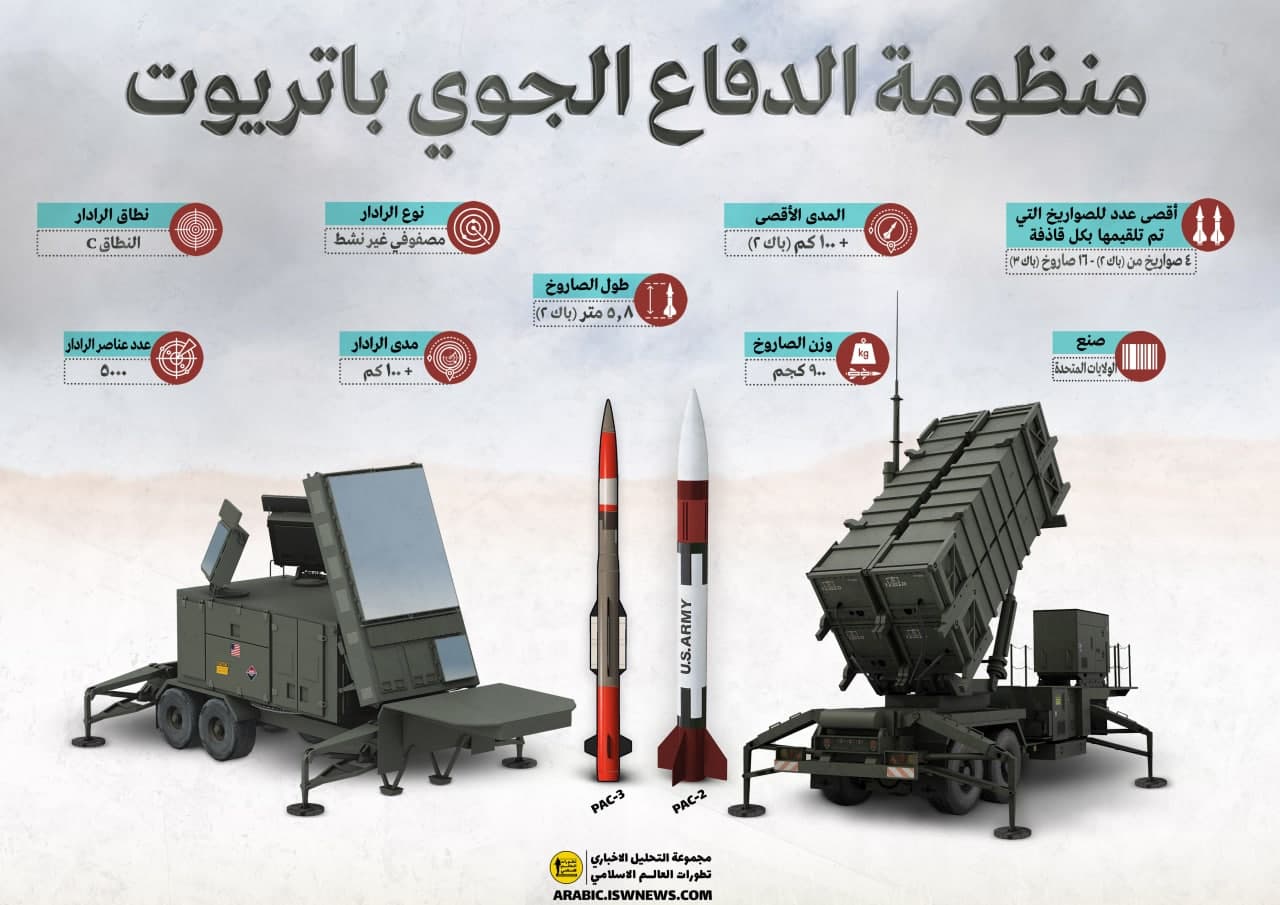
    Patriot air defense system specifications:
    Maximum range: +100 km (PAC-2)
    Radar range: +100 km
    Radar type: Phased array
    Radar band: C band
    Number of radar elements: 5000
    Missile length: 8.5 m (PAC-2)
    Missile weight: 900 kg
    Max number of missiles loaded per launcher: 4 rounds (PAC-2) – 16 rounds (PAC-3)
    Origin: USA

    Read more:
    Military Knowledge: MIM-103C PAC-2 missile
    Military Knowledge: MIM-104F PAC-3 MSE missile

    Click to see the full size image

    Patriot Missile System collection of posters in Persian, Arabic, Kurdish, Azeri, Russian for Social Media:
  • Military Knowledge: MIM-104F PAC-3 MSE missile

    Military Knowledge: MIM-104F PAC-3 MSE missile

    The PAC-3 MSE missile with a length of 2.5 meters and a weight of 312 kg has a range of 40 km and a maximum altitude of 20 km, and due to its small size, it can install 16 of these missiles on the Patriot launcher.

    The seeker of this missile is based on active radar homing, which receive the target coordinates by AN/MPQ65 radar and the navigation is based on the missile’s own radar. This reduces the volume of calculations and removes the limit on the number of conflicting targets in the system at the same time.

    The radar of the PAC-3 has increased detection and tracking ranges. It also has improved discrimination abilities. The radar can discriminate whether or not the aircraft is manned, or which of multiple re-entering ballistic objects are carrying ordnance. Also the software of the PAC-3 ensures that ballistic missiles with chemical warheads or with early release submunitions are destroyed at a certain altitude.

    However, the use of active radar guidance has increased the cost of missile, with each PAC-3 MSE missile costing more than $ 9 million for US partners and about $ 5 million for the US military.

    The missile has a small High Explosive Fragmentation (HE-FRAG) warhead to enhance the kill probability, however it may be not enough for engaging with heavy aircraft targets such as warplanes and bombers. So for this reason, this missile is used in combination with the PAC-2 missile in the Patriot system.

    The target hunting mechanism in the PAC-3 missile is based on Hit-To-Kill. In this method, kinetic energy is the main factor in destroying the target, but in order to increase the destruction and self-destructive ability, there is also a small warhead of high explosive fragmentation type in this missile.

    MIM-104F PAC-3 missile specifications:
    Range: 40 km
    Maximum (engage) altitude: 20 km
    Missile length: 2.5 meters
    Missile weight: 320 kg
    Origin: USA

    Read more:
    Military Knowledge: Patriot Missile System
    Military Knowledge: MIM-103C PAC-2 missile

  • Military Knowledge: MIM-103C PAC-2 missile

    Military Knowledge: MIM-103C PAC-2 missile

    The target destruction mechanism in the PAC-2 missile is based on high-explosive blast/fragmentation warhead with a proximity fuse. This missile has the ability to intercept ballistic targets with a maximum speed of mach +4.

    The minimum altitude of the PAC-2 missile is about 2.5 km, which is useless against cruise missiles and drones flying at low altitudes. Given this weakness, Yemen’s Ansar Allah has focused on the use of drones and cruise missiles and has dealt repeated blows to the Saudi coalition in Yemen war.

    Missile guidance is based on the Track-via-missile method. Track-via-missile or TVM refers to a missile guidance technique which combines features of semi-active radar homing (SARH) and radio command guidance. This avoids the problems with terminal accuracy normally seen by command guided missiles, especially at long range.

    PAC-2 missile specifications:
    Range: +90 km
    Length: 5.8 m
    Diameter: 40 cm
    Missile weight: 900 kg
    Warhead weight: 90 kg
    Maximum (engage) altitude: 30 km
    Minimum (engage) altitude: 2.5 km
    Maximum speed (ballistic): Mach +4
    Max number of missiles on a launcher: 4 rounds
    Origin: USA

    Read more:
    Military Knowledge: Patriot Missile System
    Military Knowledge: MIM-104F PAC-3 MSE missile

  • Military Knowledge: CH-4 Reconnaissance Combat Drone

    Military Knowledge: CH-4 Reconnaissance Combat Drone

    The CH-series drone have been sold to armed forces in more than 10 countries in the Middle East, Southeast Asia and Africa, making them the largest military drone family China has exported so far. The Saudi army is one of the main users of this drone.

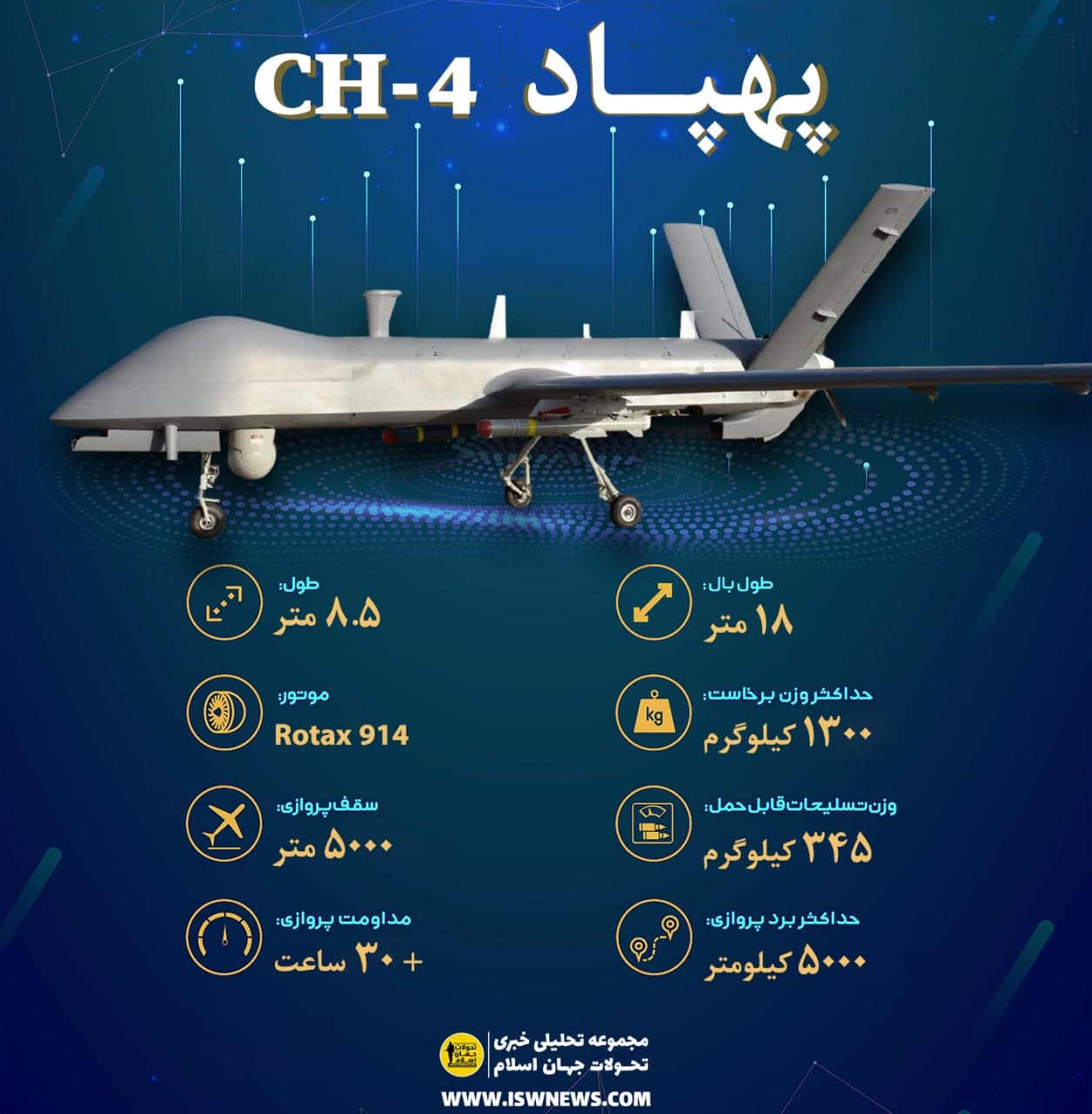
    The CH-4 drone is similar to the US MQ-9 Reaper drone and is in the category of reconnaissance-combat drones with medium flight altitude and medium dimensions. It has endurance up to + 30 hours in reconnaissance mode and up to 12 hours in combat mode, and can carry a maximum payload up to 345 kg.

    The main armament of CH-4 drone is Lan Jian 7 (Blue Arrow 7) laser-guided air-to-surface missiles, TG100 laser/INS/GPS-guided bombs, and AR-1/HJ-10 anti-tank missile – the Chinese equivalent to the American-made Hellfire missile.

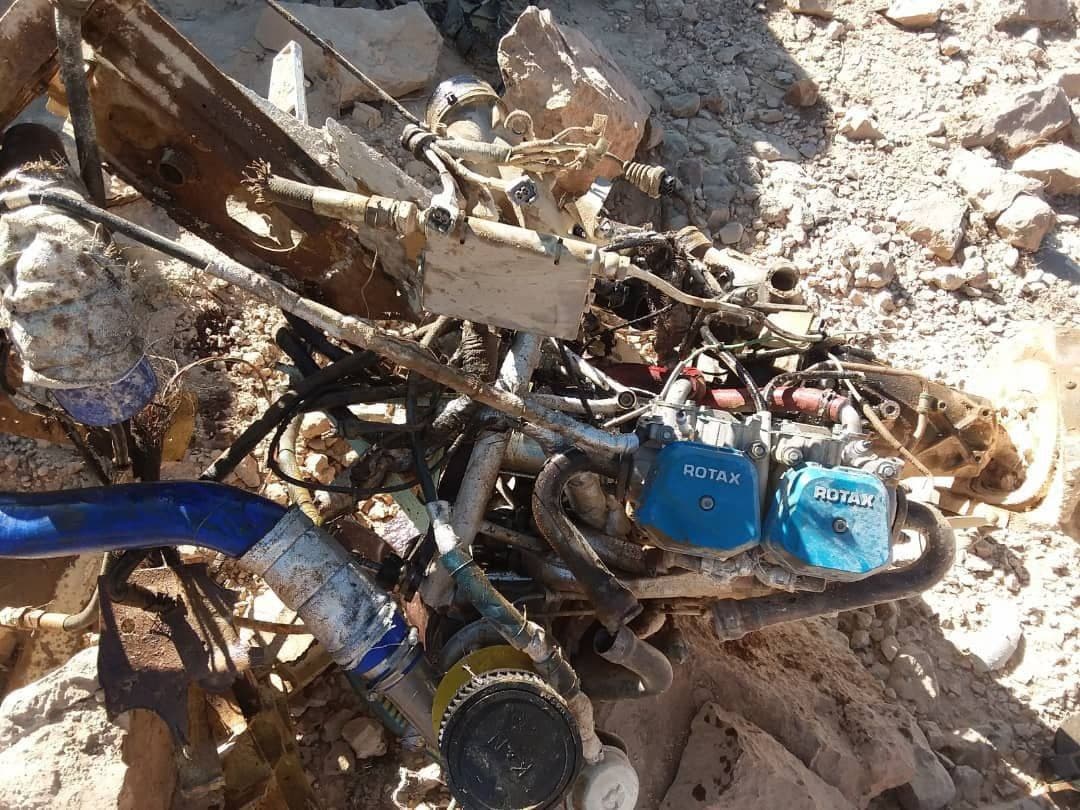
    It should be noted that after a CH-4 drone was downed by the Yemeni Ansar Allah air defence system and obtaining the wreckage of this drone, it was determined that this drone uses the Austrian Rotax 914 engine. The Rotax 914 is a common propulsion in this category for drones worldwide.

    Rotax 914 engine of CH-4 drone

    CH-4B Drone specification:
    Length: 8.5 m
    Wingspan: 18 m
    Max takeoff weight: 1300 kg
    Max payload weight: 345 kg
    Maximum range (reconnaissance): 5000 km
    Maximum range (combat): 600 km
    Service ceiling: 5000 m
    Endurance(reconnaissance): + 30 hours
    Endurance(combat): 12 hours
    Powerplant: Rotax 914
    Maximum speed: 330 km/h
    Origin: China

    Click to see the full size image

    CH-4 Reconnaissance Combat Drone collection of posters in Persian, Arabic, Kurdish, Azeri, Russian for Social Media:

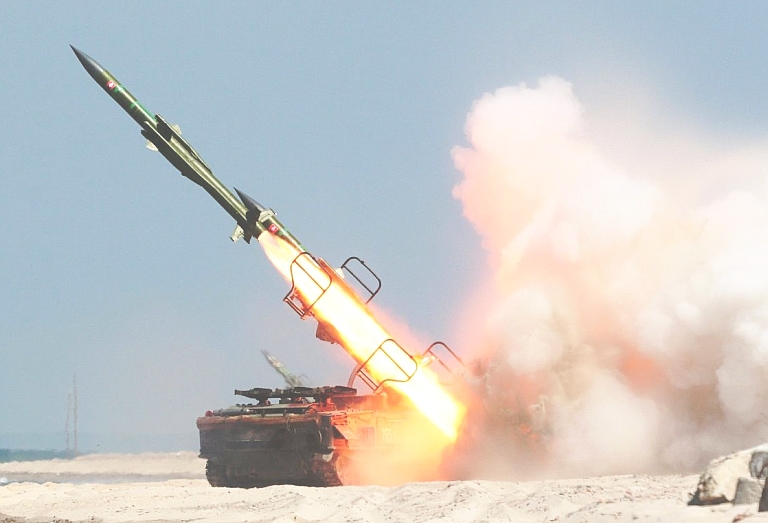
  • Military Knowledge: 3M9 Missile

    Military Knowledge: 3M9 Missile

    The 3M9 surface-to-air missile is a semi active guidance missile; which means missile’s radar seeker seeks reflected radar waves generated by fire control radar of SAM-6 system from the body of target.

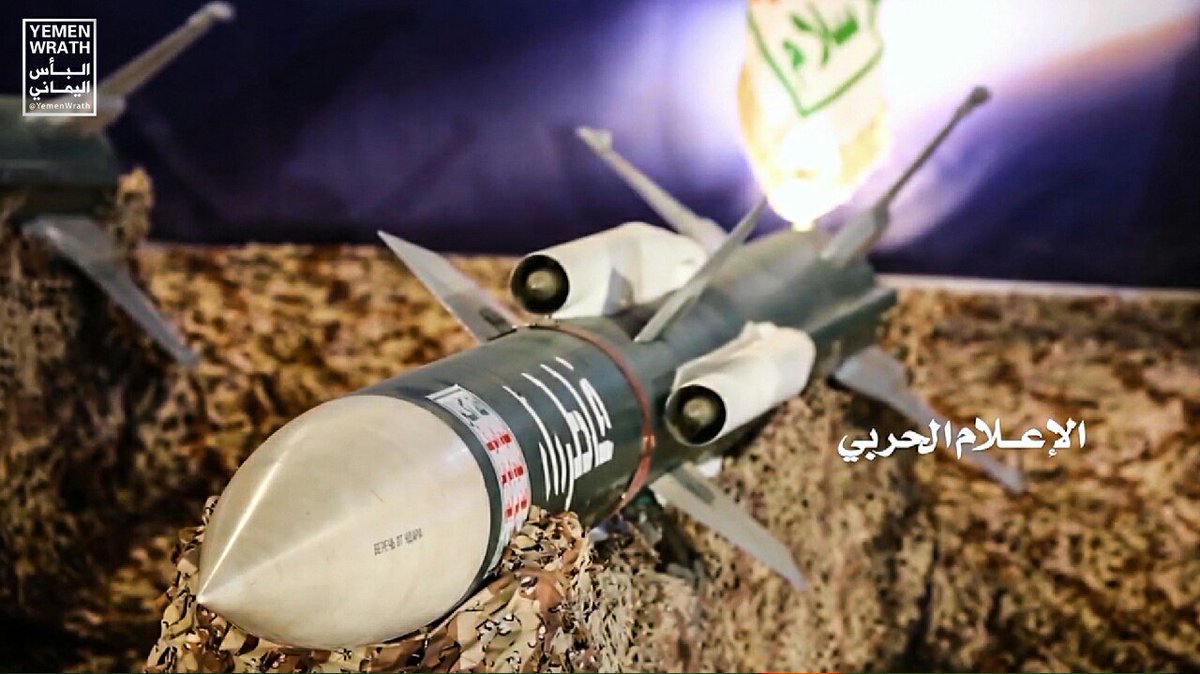
    Another type of this missile has been named “Fatir 1” by Ansar Allah. Yemen’s Ansar Allah has made changes to the 3M9 missile and uses it under the name Fatir 1. Apparently, it is guided by infrared detection system operated in passive working method for severe electronic warfare conditions.

    Ansar Allah Fatir 1 missile

    The propulsion of the 3M9 rocket is a combination of a rocket booster and a solid fuel ramjet (gas converter type). First, the rocket booster propels the rocket to ultrasonic speeds, then the solid fuel gas generator is activated and produces a gas that combines with the air as fuel and ignites. The use of Ramjet increases the range and kinetic energy of the missile.

    The warhead of the missile is a high explosive fragmentation projectile (Frag-HE) type with a weight of 59 kg and its activation mechanism is with the help of proximity and contact fuses.

    Specifications of 3M9 missile:
    Weight: 599 kg
    Length: 5800 mm
    Diameter: 335 mm
    Warhead: Frag-HE
    Warhead weight: 59 kg
    Range: 24 km
    Maximum altitude: 14 km
    Maximum speed: Mach 2.8
    Entry into service: since 1967
    Origin: Soviet Union / Russia

  • Military Knowledge: Al-Shibl 2 Armored Vehicle

    Military Knowledge: Al-Shibl 2 Armored Vehicle

    The Seven Years of War in Yemen is the first battle in which almost all sides involved used MRAP vehicles extensively for the first time. Since the start of the Arab League invasion on the country on March 2015, more than 1,000 types of MRAP models used by coalition members or looted by Ansar Allah forces have been destroyed, and this statistic only related to damages for which visual documents are available. So the real number is much higher.

    Most of the vehicles in Yemen war are made by Western arms companies, but there are also several models made by Saudi Arabia and the UAE.
    Saudi Arabia’s “Armored Vehicles & Heavy Equipment Factory” manufacture or assemble several models of protected armored vehicles, such as Al-Hazm 1, Al-Tuwaiq 1, Al-Shibl 1 and Al-Shibl 2, in their industrial subdivisions such as Al-Tadrea and Al-Araba.

    Logo of Saudi Armored Vehicles & Heavy Equipment Factory

    Al-Shibl 2 armored vehicle is one of the most widely used products in the Yemeni war, which has also been exported to two other countries, namely Libya and Turkmenistan.

    So far, 57 units of Al-Shibl 2 model have been destroyed or looted by Ansar Allah forces.

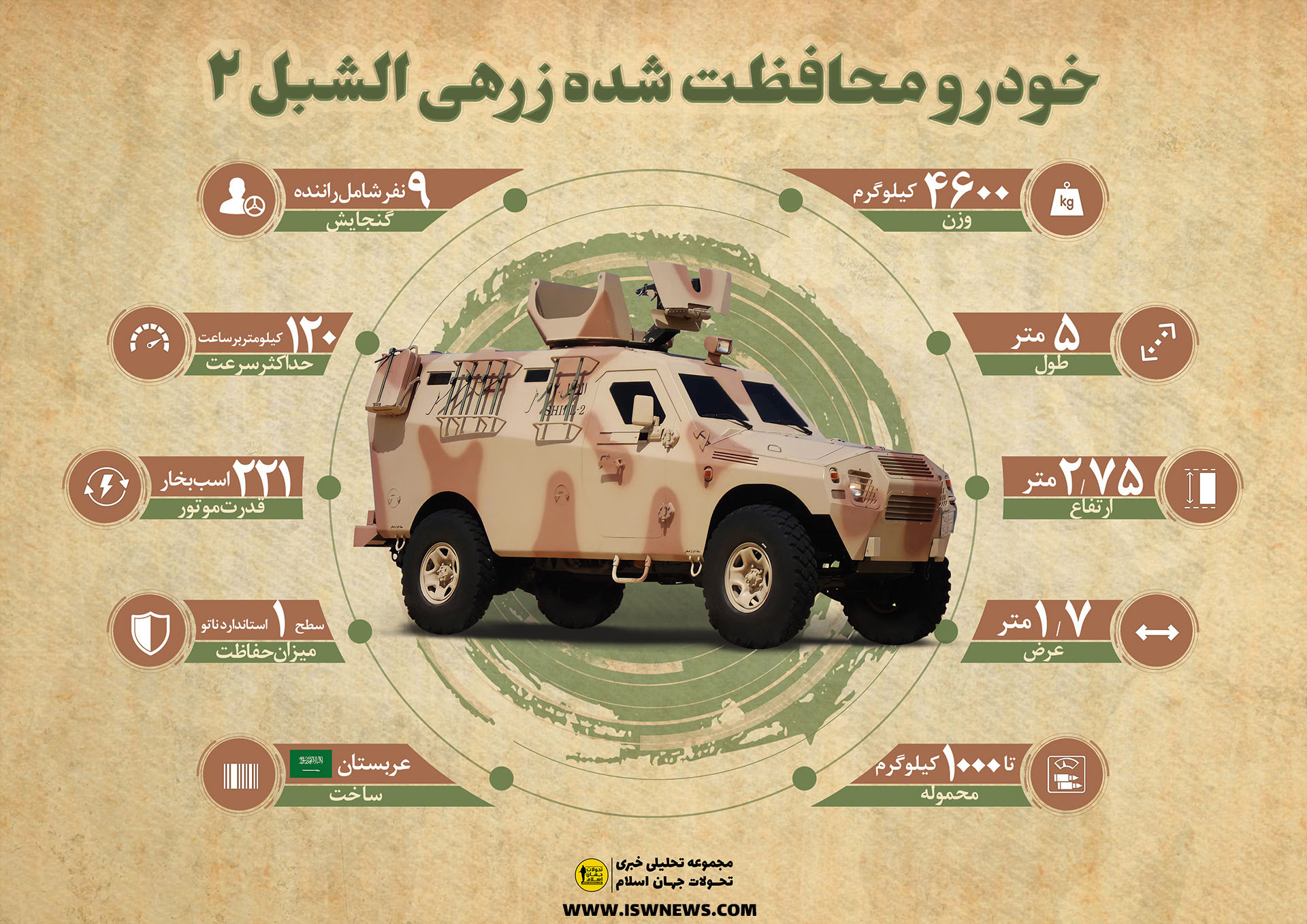
    Al-Shibl 2 complies with NATO Protection Standard Level 1 (STANAG 4569), which means protecting the crew from 7.62 mm ammunition and hand grenades. On the upper part of this vehicle, it is possible to install various types of weapon turrets equipped with 7.62 or 12.7 mm machine guns, 40 mm grenade launchers or guided anti-armor missiles.

    Al-Shibl 2 armored vehicle specifications:
    Weight: 4600 kg
    Length: 5 meters
    Height: 2.57 meters
    Width: 1.7 meters
    Operating weight: up to 1000 kg
    Crew: 9 people including driver
    Speed: 120 km/h
    Engine power: 221 hp
    Protection: Level 1 NATO standard
    Origin: Saudi Arabia

    Al-Shibl 2 armored vehicle of the Saudi army that was hit by Yemeni forces in Jizan.
    Al-Shibl 2 vehicle used by Mansour Hadi’s forces, which was looted by Ansar Allah in the battle to capture the city of Al-Hazm in 2020.
    Click to see the full size map

    Al-Shibl 2 Armored Vehicle collection of posters in Persian, Arabic, Kurdish, Azeri, Russian for Social Media:

  • Military Knowledge: Dehlavieh Dual Missile Launcher, Smart solution by Resistance to counter Trophy Active Protection System!

    Military Knowledge: Dehlavieh Dual Missile Launcher, Smart solution by Resistance to counter Trophy Active Protection System!

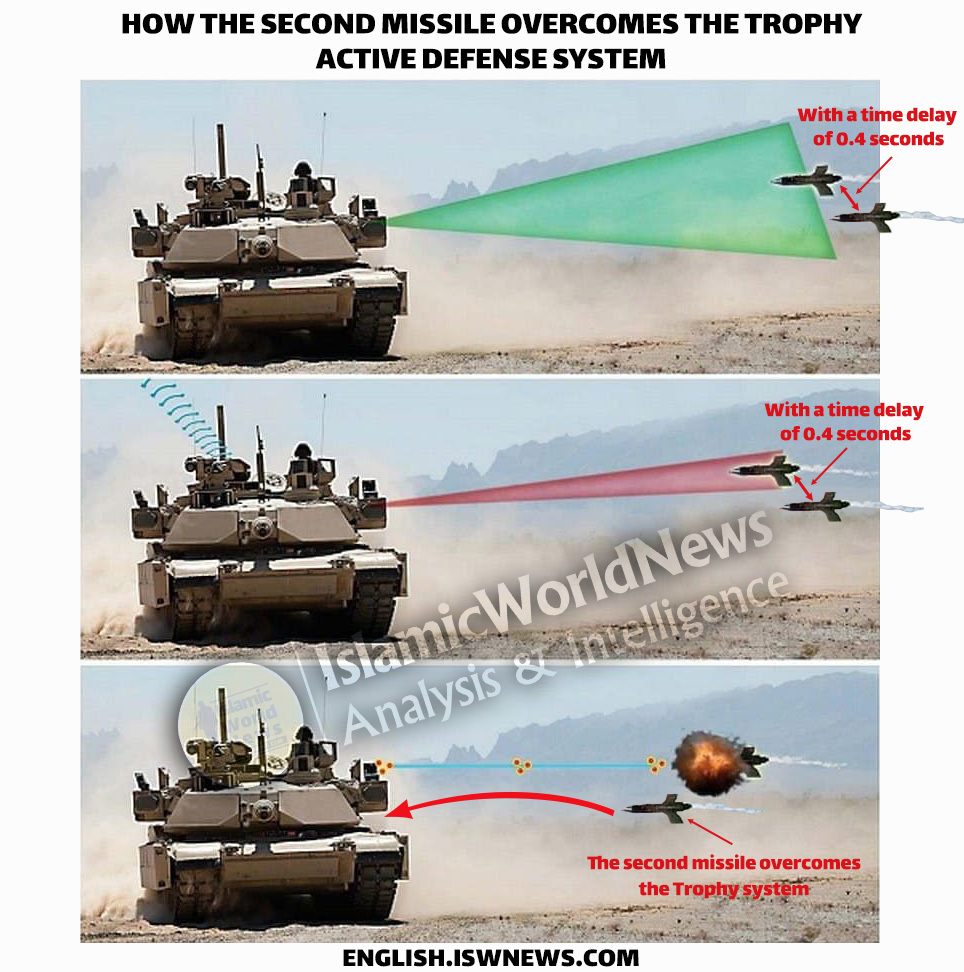
    In the previous article, which reviewed the performance of the Trophy Active Protection System, we pointed out that one of the weaknesses of this system is the 1.75 second reload time of the counter.
    Although the Trophy system is a highly advanced system with a very high level of engineering, which has led top countries in the field of armor, such as Germany, the United States, the United Kingdom, etc. to use this system in their main battlefield tanks, but the solution to counter this system is relatively simpler and less expensive.

    Read more: Military Knowledge: Trophy Active Protection System

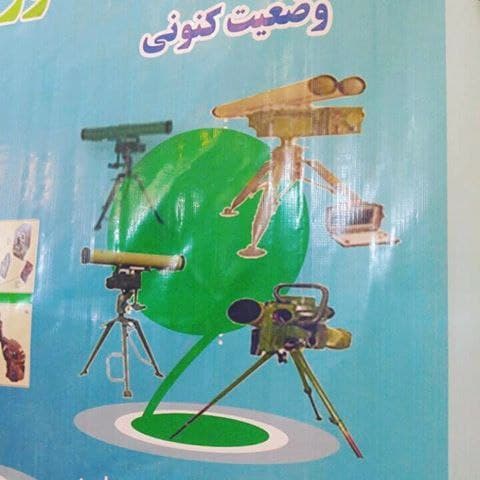
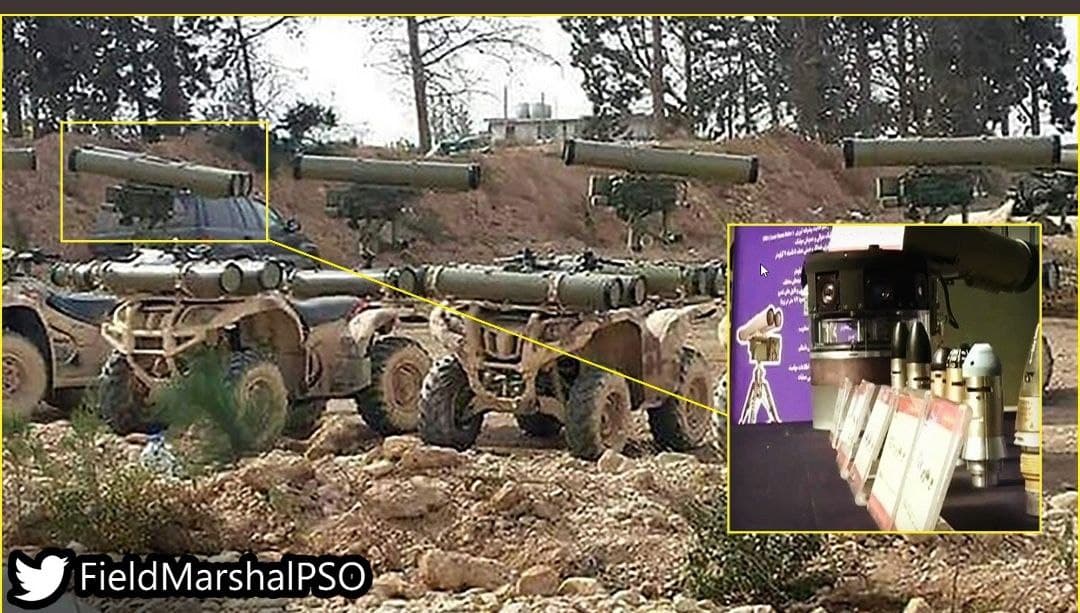
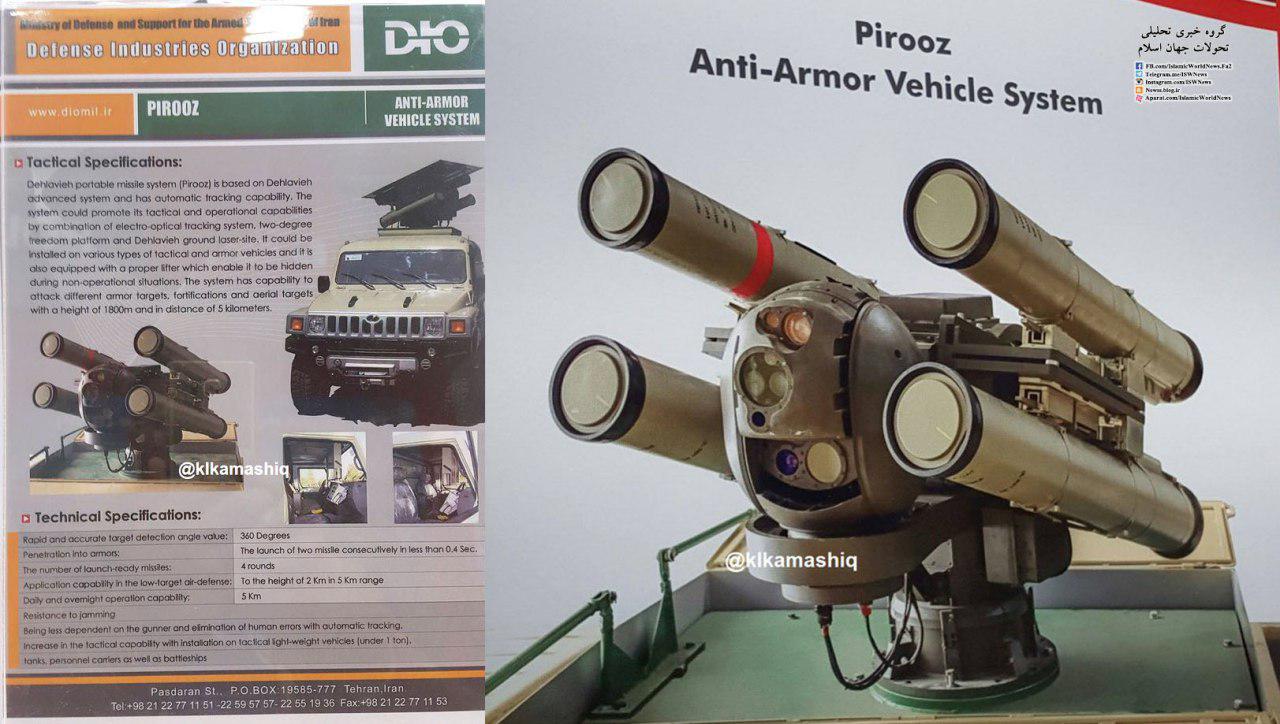
    Iranian defense engineers, considering the weakness of the Trophy system, have developed a dual and quadruple launcher (Pirooz system) of Dehlavieh missile in which the time between launching two consecutive missiles is about 0.4 seconds; That is, less than a quarter of the loading time for the rotating launchers in the Trophy system. The main idea is that after Trophy system deal with the first missile fired, the Trophy system needs at least 1.75 seconds to reload to deter the next missile, while the second missile fired from the Dehlavieh launcher at 0.4 seconds after the first missile, passes through the barrier of the Trophy system.

    Also another feature of the Dehlavieh missile dual launcher is the ability to control remotely (up to 150 meters), which increases the survival of the launcher and its personnel.

    It is worth mentioning that immediately after equipping Israeli tanks with this Trophy system, the Lebanese resistance was also equipped with these launchers, and in practice, the Trophy system was largely neutralized and removed from the equations of this front. It seems that Iran has widely equipped resistance groups with these launchers on other fronts as well.

    Dehlavieh dual missile launcher specifications:
    Laser beam rider system weight: 25 kg
    Moving platform weight: 35 kg
    Missile weight: 15 kg
    Missile penetration rate: 1200 mm
    Remote control capability: up to 150 m
    Target range finding: up to 20 km

    Click to see the full size image

    Dehlavieh Dual Missile Launcher Collection of Posters in Persian, Arabic, Kurdish, Azeri, Russian for Social Media:

  • Military Knowledge: Green Pine Radar
    Military Knowledge: Green Pine Radar

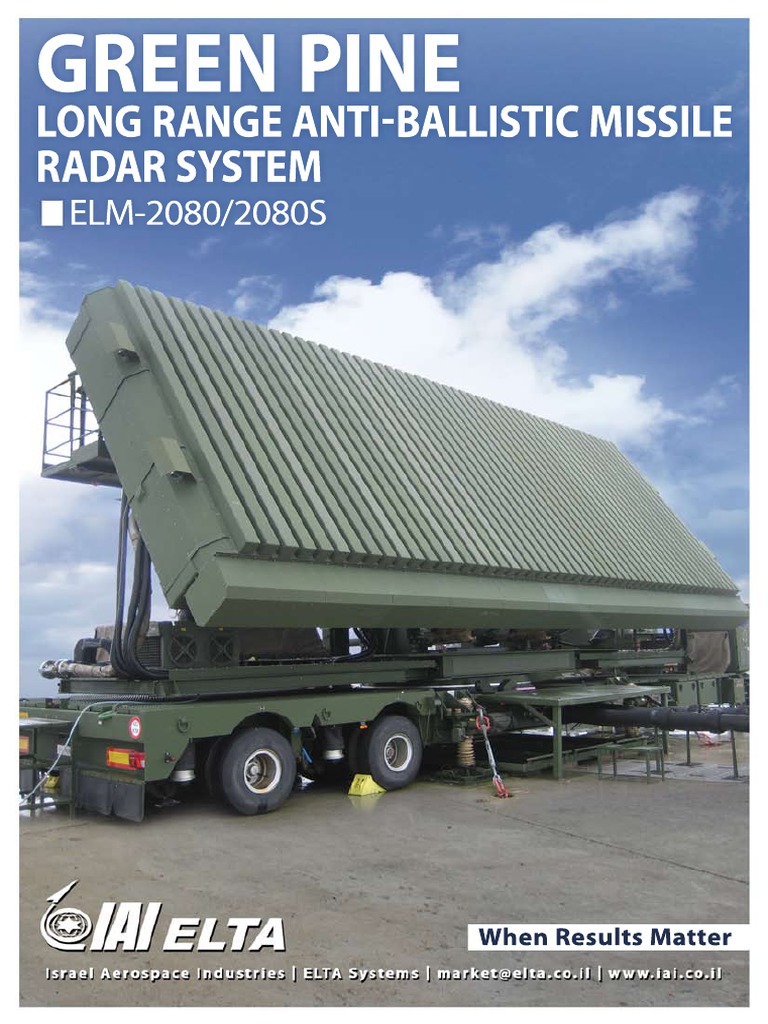
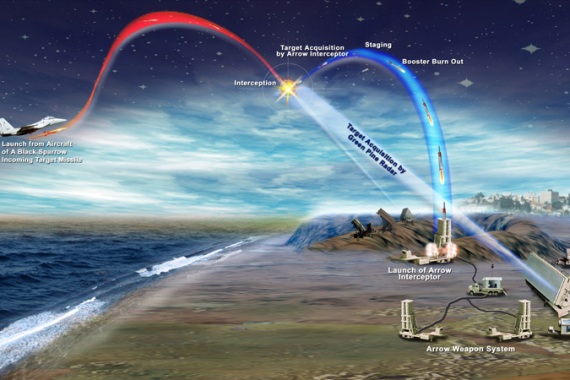
    Green Pine Radar is produced by the Israeli company Elta and is the most important Israeli ground-based missile-defense radar for detecting hostile ballistic missiles. It should be noted that the Green Pine radar was developed with the technical cooperation and financing of the United States.

    This radar has been operating in the Palestinian occupied territories since 1998 and is the most important instrument in the Arrow anti-missile defense system of the Israeli regime. The radar is currently exported to South Korea, the Republic of Azerbaijan and India.

    Read more: Military Knowledge: Arrow Anti-Ballistic System

    According to studies, at least four Green Pine radars are used in the occupied territories.

    The final radar range is 900 km (cross-section of the target radar is not specified). 500 km for EL/M 2080 type and 900 km for EL/M 2080S type.

    Green Pine Radar Specifications:
    Range: 500-900 km
    Operating frequency: 500-2000 MHz
    Deployment time in the new location: 24 hours
    Target detection accuracy: 4 meters


  • Military Knowledge: Trophy Active Protection System

    Military Knowledge: Trophy Active Protection System

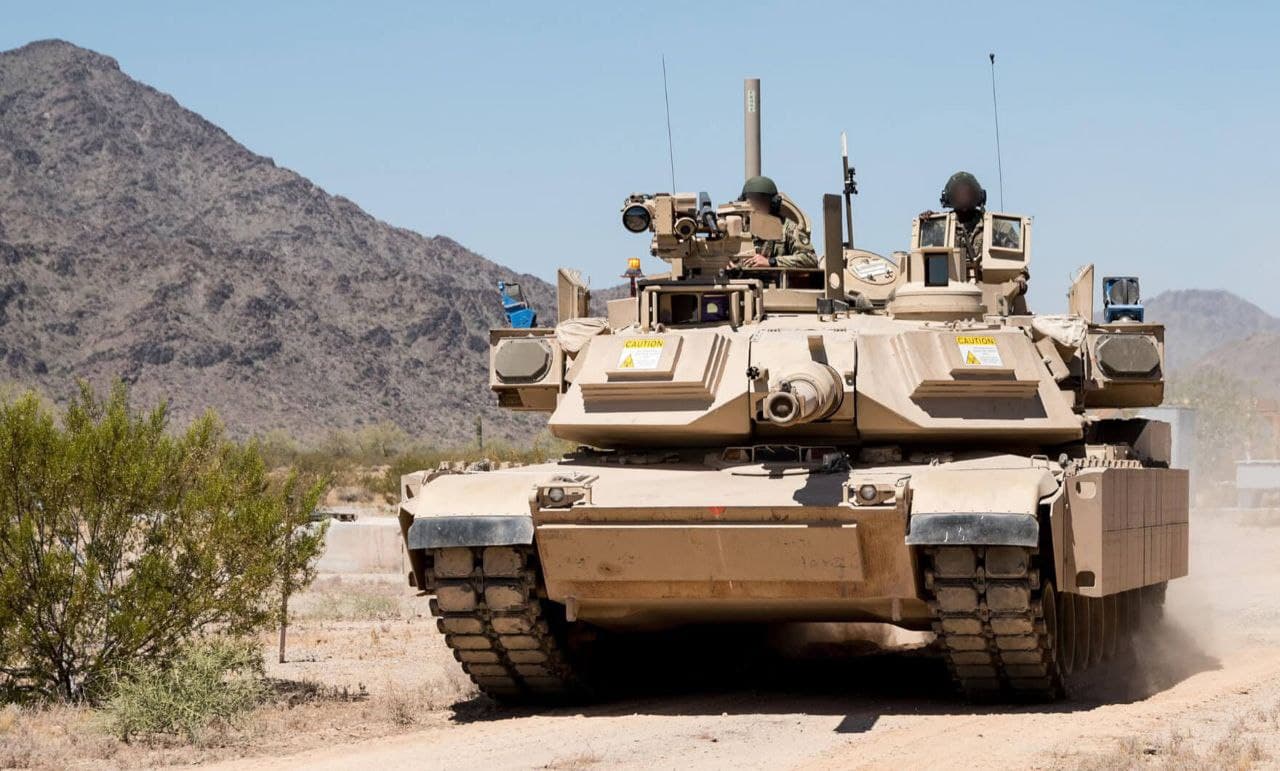
    With the advancement of anti-tank guided missile technology, armored personnel carriers and main battlefield tanks are no longer able to repel these threats with their armor. The solution developed in recent years to counter these threats has been developed with the focus on Israel’s Elbit Systems industry, a variety of active defense systems on armored platforms, and the Trophy system is the company’s most prominent achievement in this field.

    The Trophy system was launched in 2010 on Merkava Mark 4 tanks. This system consists of 4 fire-control radars of active electronic scanning array ElTA EL/M-2133, which detects and tracks targets in 360 degrees, so that after detecting the projectile, the radar transmits information to the central computer of the Trophy system and the target system categorizes, then calculates the optimal time and angle of the counter.

    The response comes from two rotating launchers installed on the sides of the vehicle which fire a very small number of a MEFPs (Multiple Explosively Formed Penetrators) which form a very tight, precise matrix, aimed at a specific point on the anti-tank projectile’s warhead. The system is designed to have a very small kill zone so that it does not endanger personnel near the protected vehicle.

    One of the weaknesses of this system is the inability to deal with kinetic energy projectiles and the reload time of the counter is equal to 1.75 seconds. If the launch of the second missile is simultaneous, with a distance of less than 1.75 seconds, one of the missiles will cross the barrier of this system and the target will be destroyed (if a suitable weapon is used). Also, the cost of this system is relatively high, and due to its high weight and relatively high energy consumption, it is necessary to upgrade some subsystems of the carrier platform, which in itself will increase the additional costs.

    Trophy HV system specifications:
    Weight: 820 kg
    Size: 0.69 cubic meters
    Cost: More than one million dollars
    Reload time: 1.75 seconds
    Ability to reload the counter: 3 times
    Probability of success against anti-tank missiles: 95%
    Radar working band: F/G