In year 2002, ScanEagle made its first successful flight. ScanEagle entered production at Boeing Aerospace, Oregon. In July 2004, the USMC contracted two aircraft to be flown to Iraq in September 2004. Under an agreement reached in April 2005, the United States Navy deployed ScanEagles on 25 destroyers and LSDs from July 2005.
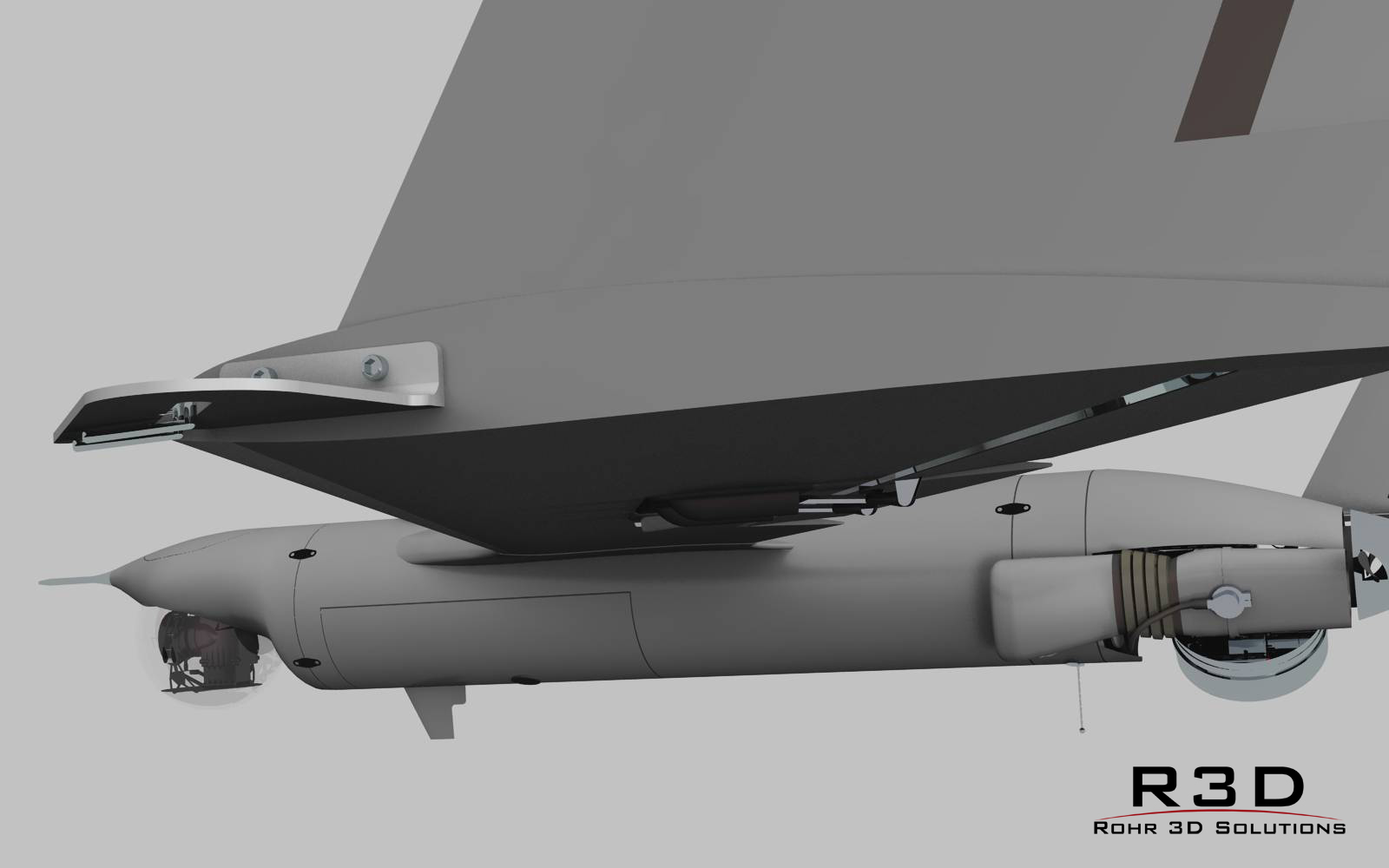
The ScanEagle drone consists of five main interchangeable parts (modules): nose, body, avionics, wings and propulsion system (engine).
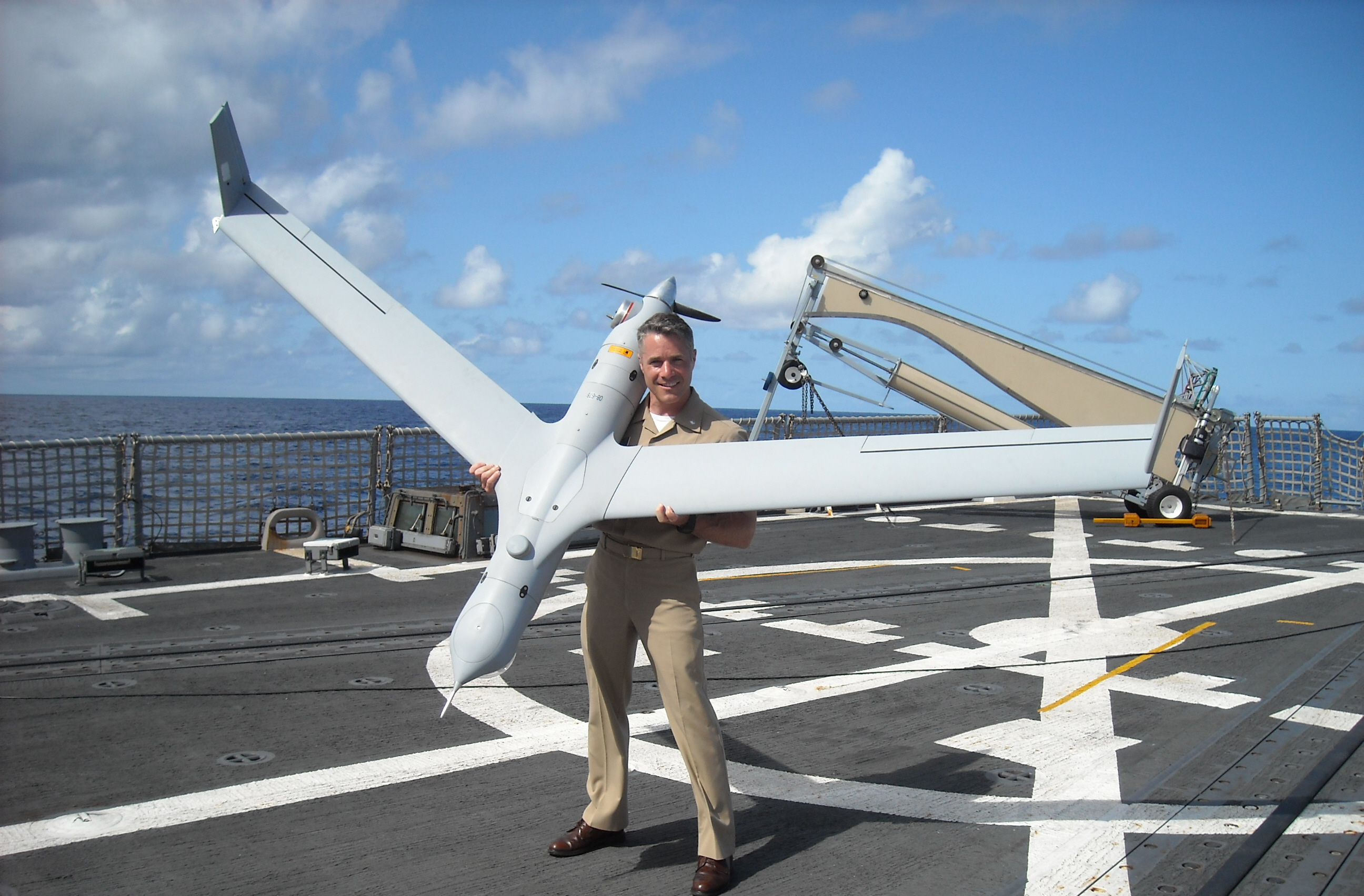
It has a cylindrical body with a diameter of 200 cm with wings drawn in the middle at the top of the body with a length of 3.5 meters. It can also be equipped with carburetor heating and a phobic ice wing cover for working in cold environments.
ScanEagle missions include intelligence, surveillance and reconnaissance (ISR), special services operations, escort operations, sea and caravan protection, protection of valuable facilities, audio, video and high-speed data relays.
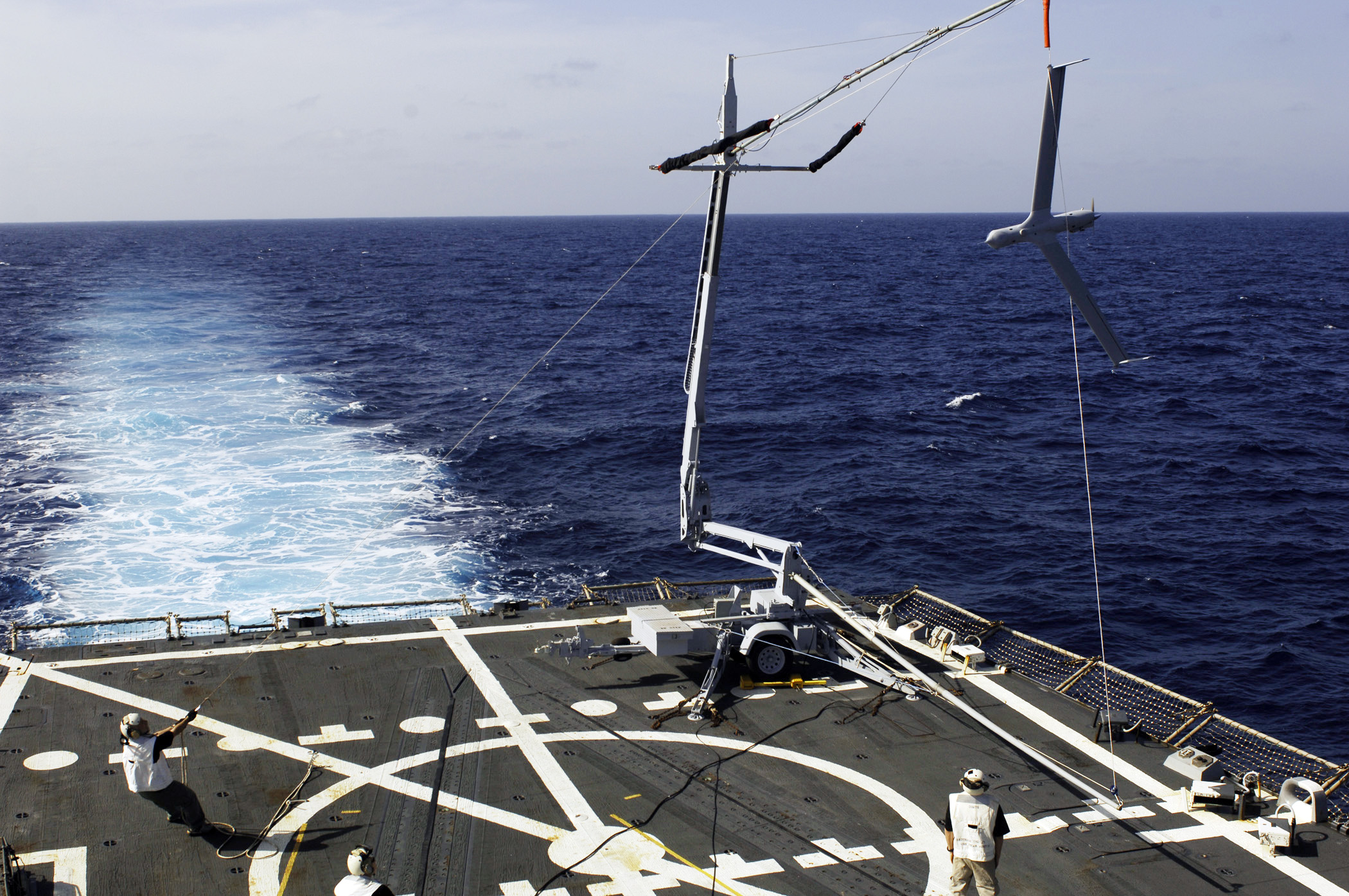
The ScanEagle drone can be launched on land, at sea with a pneumatic catapult at a speed of 25 meters per second. It can also be launched from C-130 Hercules or V-22 Osprey in aerial launch operations.
ScanEagle recovery system is based on the proven SkyHook Recovery System, originally developed for the SeaScan UAV. The SkyHook recovery system uses a stop or jamming line in which the vehicle flies straight to approach the line of attachment and the hook mounted on the wing tip of the aircraft catches the line.
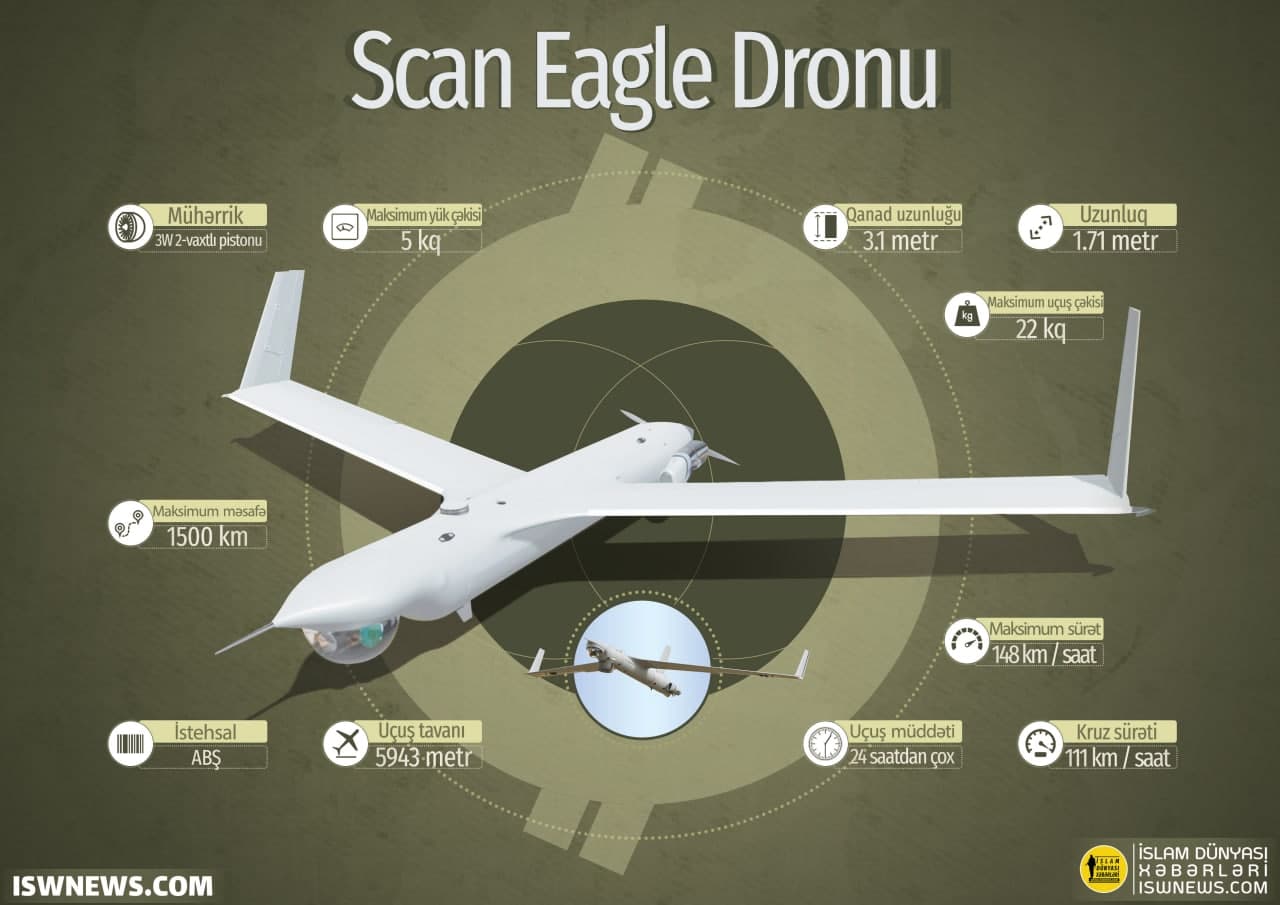
Specifications of ScanEagle drone: Length: 1.71 meters Wing length: 3.1 meters Max takeoff weight: 22 kg Maximum payload weight: 5 kg Engine: 2-stroke 3W piston engine Maximum range: 1500 km Maximum speed: 148 km / h Cruise speed: 111 km / h Endurance: more than 24 hours Service ceiling: 5943 meters Origin: USA
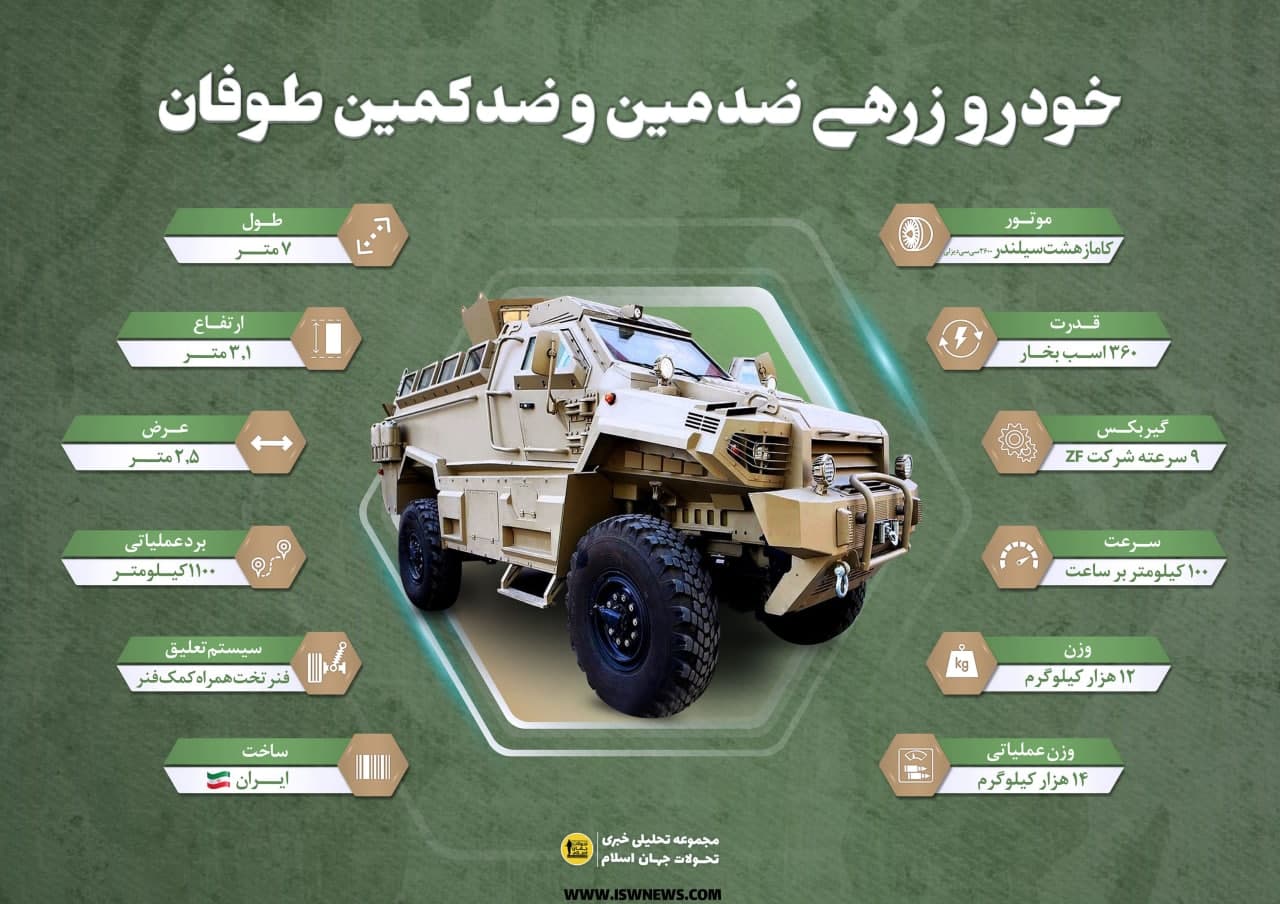
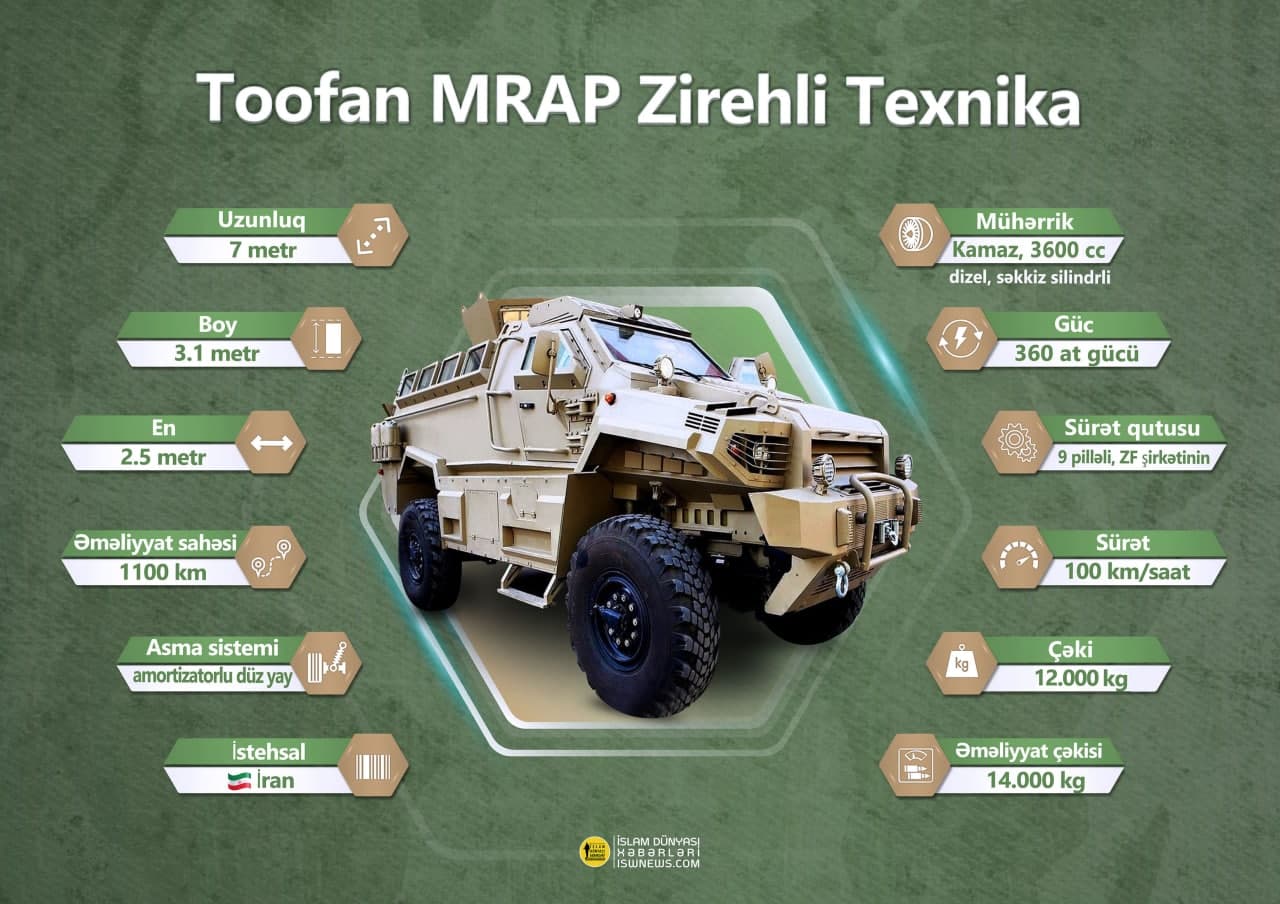
Toofan MRAP is an Iranian ambush protected vehicle capable of withstanding land mines and improvised explosive devices up to 6 to 8 kg of TNT and outfitted with STANAG 3 protection. The V-shaped chassis of this MRAP is monocoque, which means that the chassis and the body are integrated.
It can carry up to 10 personnel and is equipped with run-flat tires which enables it to drive for 50 kilometers with a flat tire. It can also drive at speeds of up to 100 km/h.
Toofan MRAP specifications: Engine: Kamaz 3600 cc 8-cylinder diesel Power: 360 hp Gearbox: ZF 9-speed Speed: 100 km/h Weight: 12,000 kg Operating weight: 14,000 kg Length: 7 meters Height: 3.1 meters Width: 2.5 meters Operating range: 1100 km Suspension: Leaf spring with shock absorber Origin: Iran
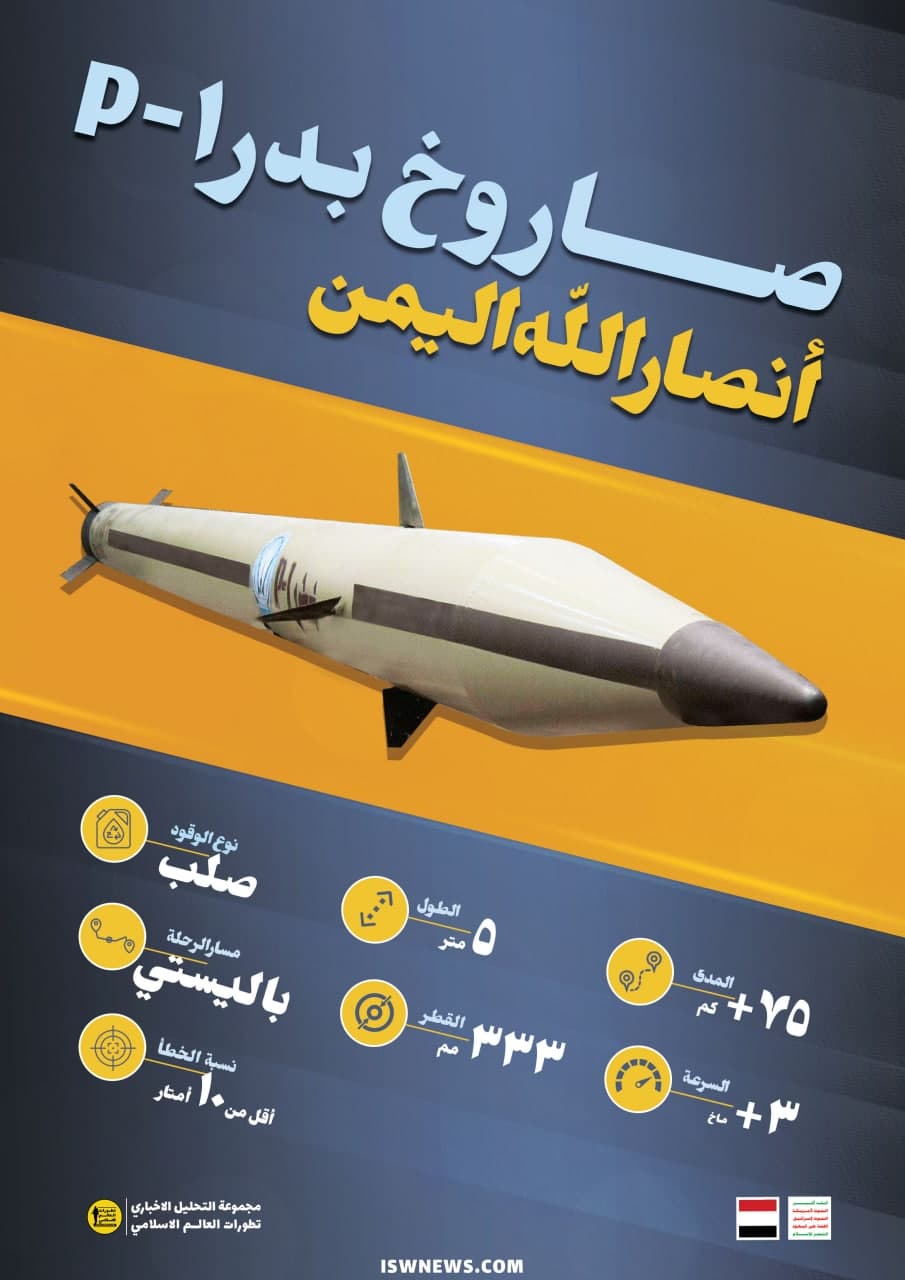
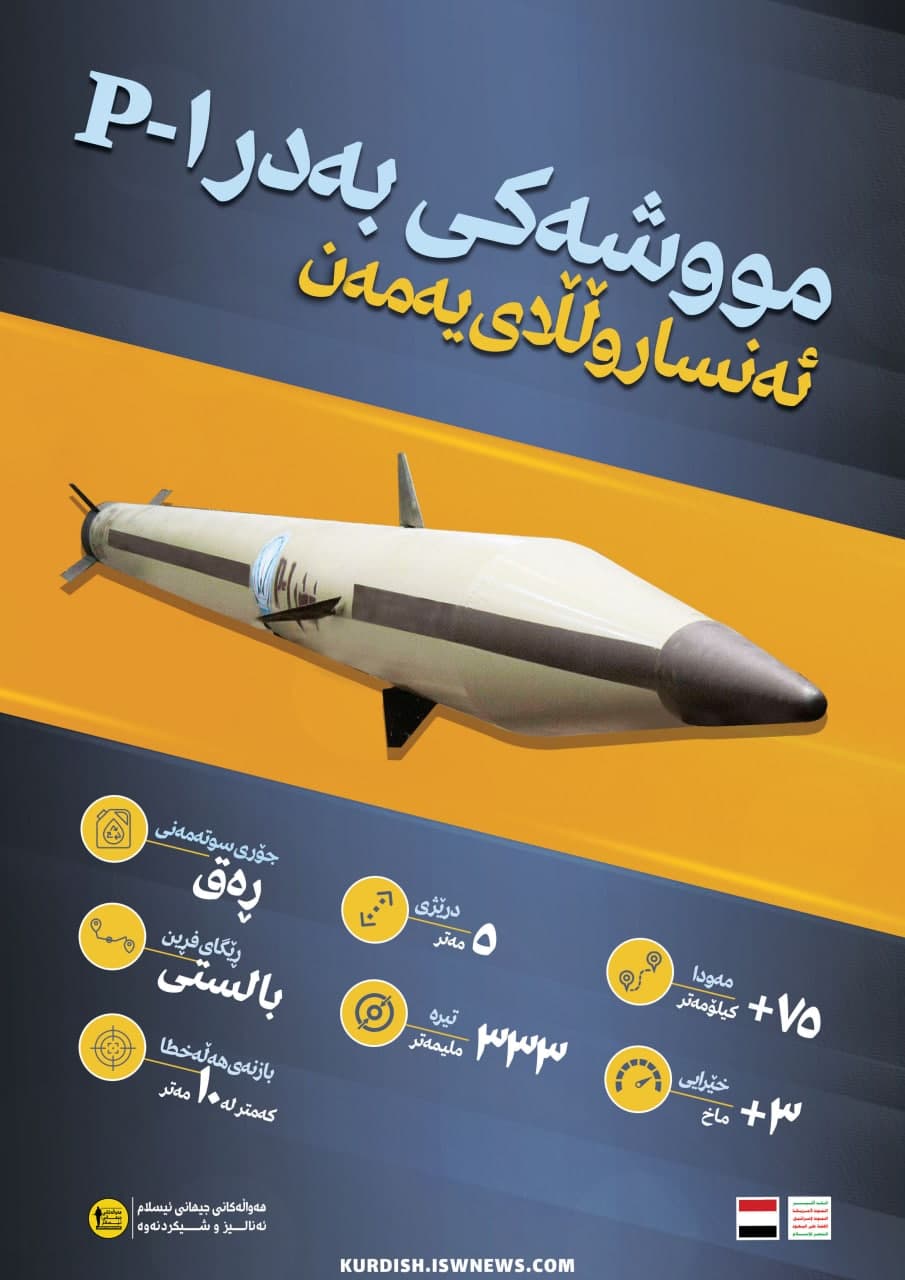
The Badr 1-P guided artillery rocket was unveiled on October 27, 2018 in the presence of Mehdi Al-Mashat, Chairman of the Yemeni Supreme Political Council, and other Yemeni military officials.
Badr 1-P missile specifications: Range: +75 km Speed: +3 mach Length: ~ 5 m Diameter: 333 mm Fuel type: Solid Flight trajectory: Ballistic CEP: less than 10 m
Badr 1-P missile operational records:
1- Attack on the base of the Sudanese forces on the west coast of Yemen, date unknown and publication of information on October 27, 2018. Pictures and video available.
2- Attack on the base of Mansour Hadi forces in the Al-Boqa desert, on November 2, 2018.
3- Attack on the gatherings of the Saudi coalition forces on the west coast of Yemen, on November 3, 2018.
4- Attack on the gatherings of the Saudi coalition forces on the West Bank, on November 4, 1997.
5- Attack on the gatherings of the Saudi coalition forces on the West Bank, on November 7, 2018.
6- Attack on the positions of the Saudi coalition forces in Mafraq al-Jawf, on November 8, 2018.
7- Attack on the gatherings of the Saudi coalition forces in the Midi desert, on November 19, 2018. During the operation, 27 members of the Saudi coalition were killed and 64 others were wounded.
8- Attacking the gatherings of the Saudi coalition forces in the ninth hypothesis located in the northeast of Sanaa province, on November 20, 2018.
9- Attack on the base of the Saudi coalition forces in the ninth administration, on November 25, 2018.
10- Attack on the base of the Saudi coalition forces at the Alab crossing on the northern borders of Saada province, on November 25, 2018.
11- Attack on the location of the Apache helicopters and the residence of the Saudi coalition pilots in the Bir Askar area located in Najran province, on November 25, 2018. In this attack, several Badr 1-P missiles were used.
12- Attack on the positions of the Saudi coalition forces in Khalid base in the west of Taiz province, on January 6, 2019. Video and pictures are available.
13- Attack on the gatherings of the Saudi coalition forces in the management of Midi located in the north of Al-Hijja province, on January 8 and 9, 2019
14- Attack on the gatherings of the Saudi coalition forces in the west of Beerskar region, on January 14, 2019.
15- Attack on the gatherings of Mansour Hadi forces on the Jizan front, on January 21, 2019.
16- Attack on the training base of the Saudi coalition forces in the Alab area, located in the north of Saada province, on January 21, 2019.
17- Attack on the gatherings of the Saudi coalition forces in the east of Al-Tawwal border area, located in the north of Al-Hijja province, on January 26, 2019.
18- Attack on Al-Baqa base located in the north of Saada province, on February 24, 2019 More than 40 Saudi coalition forces were killed and wounded during the attack.
19- Attack on the gatherings of the Saudi coalition forces in the Midi Desert, on March 3, 2019.
20- Attack on the gatherings of the Saudi coalition forces in the east of Alab crossing, on March 3, 2019.
21- Attack on the gatherings of the Saudi coalition forces in the Midi Desert, on March 6, 2019.
22- Attack on the gatherings of the Saudi coalition forces in the Midi Desert, on March 10, 2019.
23- Attack on the gatherings of the Saudi coalition forces in the west of Heyran administration located in the north of Al-Hijja province, on March 13, 2019.
24- Attack on the training base of the Saudi coalition forces in Jabal al-Nar, located in the borders of Jizan, on March 19, 2019.
25- Attack on the gatherings of the Saudi coalition forces on the Al-Malahit border, on March 20, 2019. Seventy members of the Saudi Coalition’s Fifth Battalion were killed and wounded during the attack.
26- Attack on the gatherings of the commanders and forces of the Saudi coalition in the city of Al-Hazm, located in Al-Jawf province, on March 24, 2019 More than 70 Saudi coalition forces were killed and wounded during the operation.
27- Attack on the gatherings of the Saudi coalition forces in the ninth hypothesis, on March 24, 2019
28- Attack on the gatherings of the Saudi coalition forces in the west of Heeran, on March 28, 2019 During the attack, weapons tanks and gatherings of the Saudi elite brigade were targeted. Sixty Saudi coalition forces were also killed and wounded.
29- Attack on the gatherings of the Saudi coalition forces in the north of Al-Dhaleh province, on April 8, 2019
30- Attack on the location of Patriot systems and gatherings of the Saudi coalition forces in Ma’rib in a joint operation with the Ansarullah drone force, on July 4, 2019.
31- Attack on the command center of the Saudi coalition on the outskirts of Saqqam region located in Najran province, on August 10, 2019
32- Attack on the command post of the 19th Saudi Border Guard Brigade in the Bir Askar area, on December 27, 2019.
It should be noted that this statistic is related to the period of October 2018 to December 2019, and since then, Yemeni Ansar Allah has not published the operational information of this missile. During this period, Ansar Allah fired more than 35 Badr 1-P missiles at the positions and gatherings of the Saudi coalition during 32 operations. Ansar Allah has also used the missile several times during the “Balance of Deterrence” and other operations in 2020 and 2021, which according to statistics provided by Brigadier General Yahya al-Sari’, spokesman for the Yemeni Armed Forces, during 2020, more than 20 of Badr 1-P missile was fired at Saudi coalition positions.
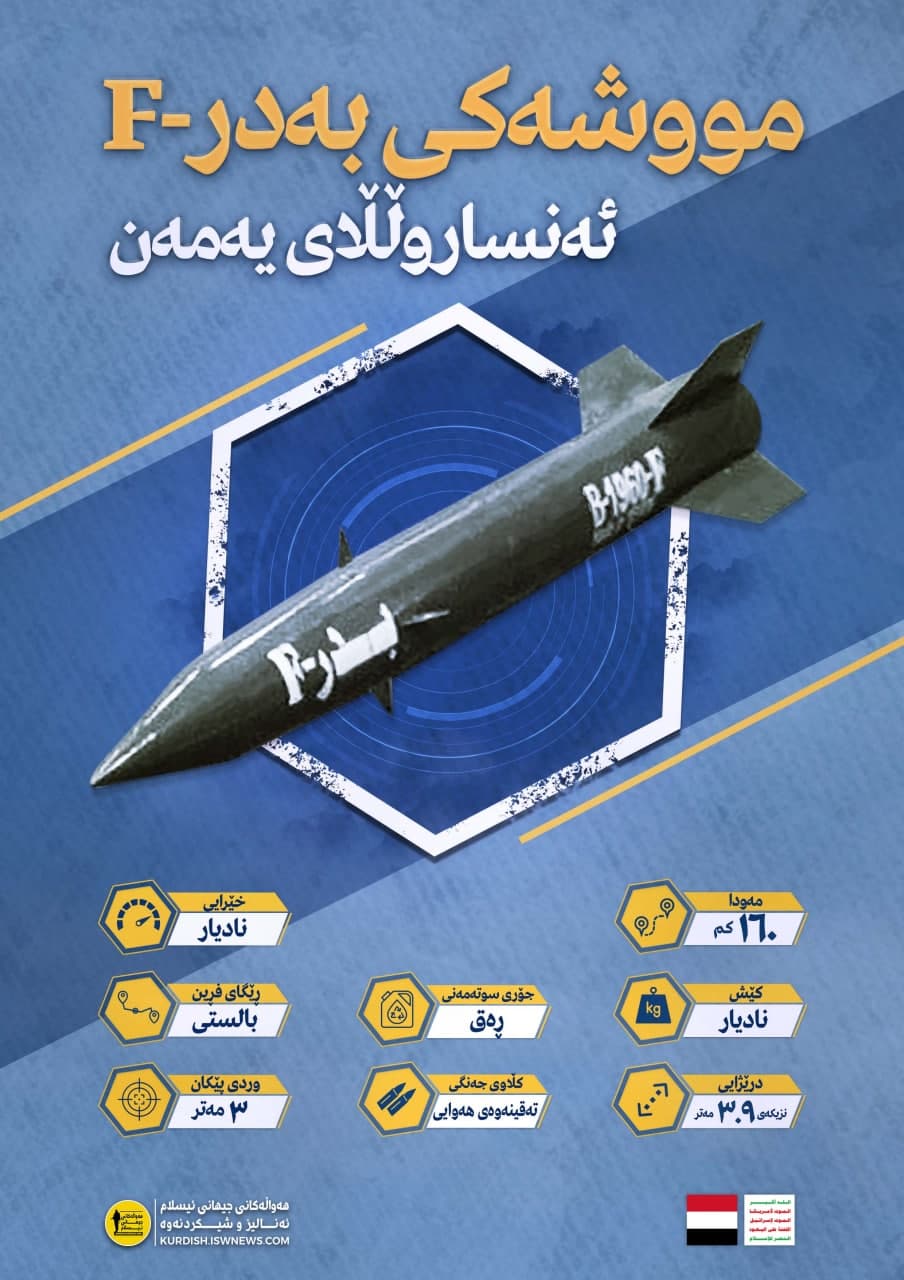
The missile is adapted from the Russian Tochka missile and has a range of 160 km and explodes at a height of 20 meters above the target. After the explosion, the missile scatters some 14,000 pieces of shrapnel in a circular area with a radius of 350 meters.
The Badr-F ballistic missile has achieved qualitative successes by hitting targets, as several camps of Saudi-led forces inside Yemen and camps in the Saudi border areas. Some of these operations were documented and published at a press conference of the Yemeni Armed Forces.
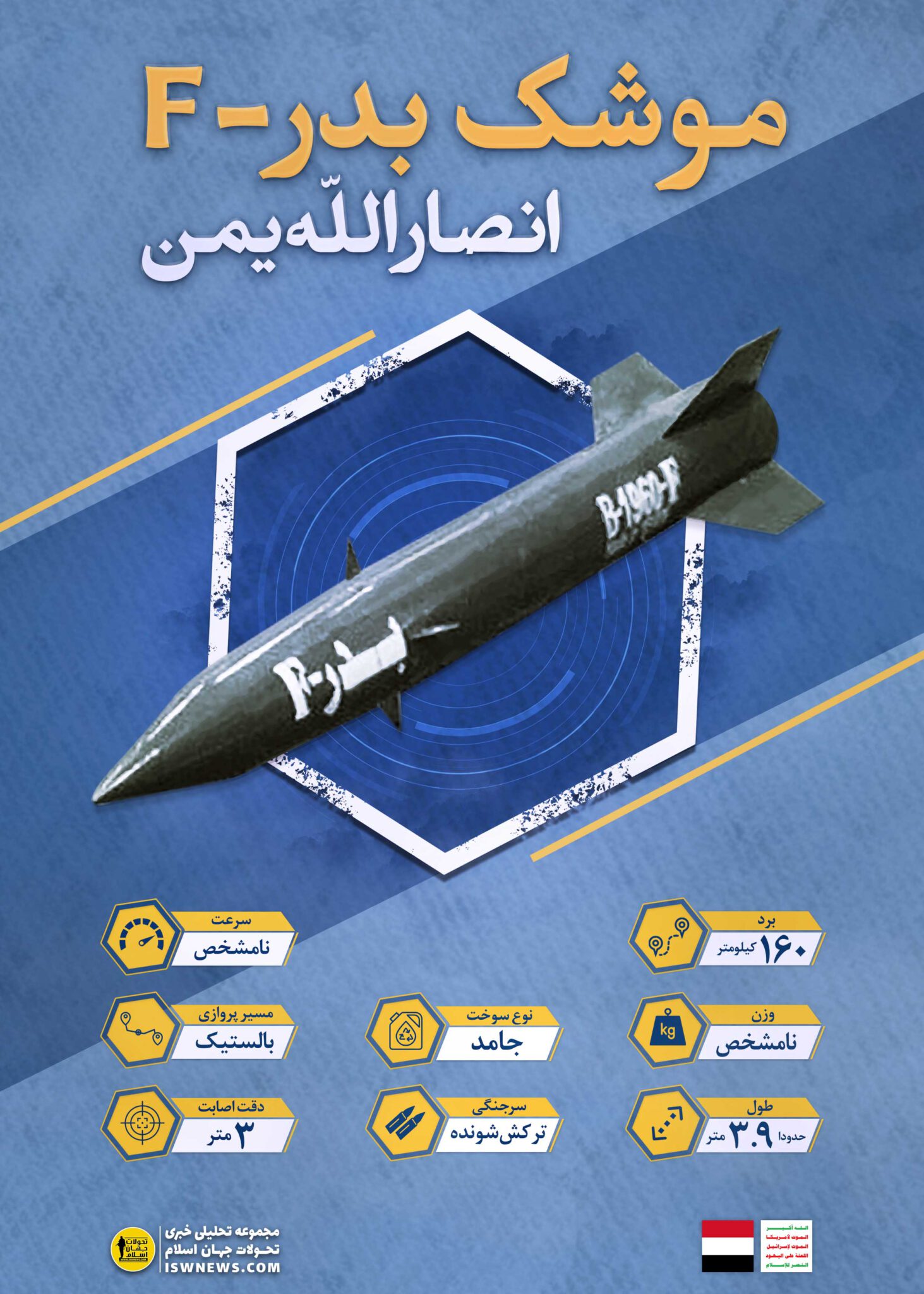
Yemeni AnsarAllah Badr-F missile specifications: Range: 160 km Length: 3.9 m Weight: Unknown Fuel type: Solid Speed: Unknown Flight trajectory: Ballistic Warhead: Airburst Accuracy: 3 m
Badr-F missile operational records:
1- Attack on a training base of the Saudi coalition forces. Unknown place and date, disclosure of details on April 16, 201. (Has video and pictures)
2- Attack on gathering of Saudi coalition forces. Unknown place and date, disclosure of details on April 16, 2019. (Has video and pictures)
3- Attack on gathering of Saudi coalition forces. Unknown place and date, disclosure of details on April 16, 2019. (Has video and pictures)
4- Attack on gathering of Sudanese forces in one of the bases of the Saudi coalition. Unknown place and date, disclosure of details on April 16, 2019. (Has video and pictures)
5- Attack on Hakula base in Al-Dhale’ province, on April 19, 2019.
6- Attack on Al-Istiqbal base in the west of Al-Tawwal area on the border of Jizan, on April 21, 2019. (Has video and pictures) A statement from the Yemeni Armed Forces spokesman said nine Saudi soldiers and 45 Yemeni mercenaries were killed and dozens wounded in the attack.
7- Attack on Al-Hadbah base in Al-Baydha province, on June 3, 2019.
8- Attack on the gatherings of the Saudi coalition forces in Al-Souh area, located in the north of Saadah province, on June 20, 2019.
9- Attack on the gathering of the Saudi coalition forces in the north of Al-Boqa’, located in the north of Saadah province, on July 10, 2019. A spokesman for the Yemeni Armed Forces said 45 people were killed and dozens were injured in the attack. (Has video and image)
10- Attack on the gathering of the Saudi coalition forces in the Al-Daer area in the west of Asir province, located in the south of Saudi Arabia, on July 29, 2019.
11- Attack on the base of the Saudi coalition forces in the south of Saqam region in Najran province in the south of Saudi Arabia, on August 3, 2019.
12- Attack on the base of the Saudi coalition forces in the Rajla region in the province of Najran in the south of Saudi Arabia, on August 7, 2019.
13- Attack on the base of the Saudi coalition forces in the north of the Midi desert located in Al-Hajjah province, on August 7, 2019.
14- Attack on the gatherings of the Saudi coalition forces in the Al-Mosem area in the province of Jizan in the south of Saudi Arabia, on August 7, 2019.
Over the years, Palestinian resistance groups, with the help of Iranian advisers, have been able to build the rockets they need, and many of the rockets are now being built by Palestinian groups themselves.
The arsenal of Izz al-Din al-Qassam Brigades consists of 17 main rockets, and the Ayyash 250 rocket with a range 250 km, which was recently unveiled by al-Qassam, is the longest-range rocket of the Palestinian resistance group. The Ayyash 250 rocket hit targets in the Eilat region in the southernmost part of occupied Palestine for the first time during the 11-day war in Gaza. The Saraya al-Quds (Al-Quds Brigades) arsenal consists of 13 main rockets, and the Buraq 120 rocket with a range of 120 km is one of the longest-range rockets of the Palestinian resistance group.
Regarding the infographic of the rockets of the Palestinian resistance groups, it is noteworthy that these rockets are rockets that have been officially announced or used by the Palestinian groups of Saraya Al-Quds and Al-Qassam Brigades. Other rockets are also available to other Palestinian groups which are not mentioned in this infographic.
Pakistan’s missile arsenal consists mainly of short-range and medium-range ballistic missiles, and important steps have been taken in the production of cruise missiles. Pakistan has received significant technical assistance from China in its nuclear and missile programs, and in addition to China, it has also benefited from military cooperation with Iran and North Korea.
The culmination of Pakistan’s missile program is reflected in the Shaheen 3 (Shaheen-III) missile project, which was successfully tested in the waters of the Arabian Sea on January 20, 2021, after modifying its technical design and carrying capacity.
Pakistan also has two prominent examples of cruise missiles, classified as “Babur” and “Ra’ad”. Babur is fired from land and sea at the target, and the Ra’ad can be fired from the warplane.
Pakistan has been building ballistic missiles since the 1980s under the Hatf project, which has continued unabated to this day with the support of the Pakistan government and military, and has achieved many goals for Pakistan.
Pakistan short-range missiles:
1- Hatf-1 missile: Hatf-1 short-range ballistic missile, which is made in four types. The missile weight is 1,500 kilograms, 6 meters long and 0.56 meters in diameter, the warhead weight is 500 kilograms and has a range of 70 to 100 kilometers.
2- Abdali missile: Hatf-2 or Abdali short-range ballistic missile (named after Ahmad Khan Abdali), the missile weight is 1750 kg, 9.75 meters long and 0.56 meters in diameter, with warhead weight of 500 kg. Range 280 km (with a load of 500 kg) up to 450 km (with a load of 300 kg) and accuracy of 100 to 150 meters.
3- Ghaznavi missile: Hatf-3 or Ghaznavi short-range ballistic missile (named after the Ghaznavid dynasty), the missile weight is 5,256 kg, 9.64 m long and 0.88 m in diameter, with warhead weight of 700 kg and with a range of 290 to 320 km, capable of carrying nuclear warhead.
4- Shaheen 1 missile: Hatf-4 or Shaheen 1 short-range ballistic missile (taken from Iqbal Lahori poem) is a missile with a weight of 9.5 to 10 tons, 12 meters long and 1 meter in diameter, with warhead weight of 1000 kg, and with 750 to 1000 km range, And has a high accuracy.
5- Nasr missile: Hatf-9 or Nasr short-range ballistic missile is a missile with a weight of 1,200 kg, with warhead weight of 400 kg, with range of 70 km and accuracy of 1 meter.
Pakistanmedium-range ballistic missiles:
6- Ababeel missile: The Ababil medium-range ballistic missile is a missile with a length of 21.5 meters and a diameter of 1.7 meters, with warhead weight of 500 kg, and range of 2200 km, which is also capable of carrying nuclear warhead.
7- Ghauri missile: The Hatf-5 or Ghauri medium-range ballistic missile (named after Sultan Shahabuddin Mohammad Ghauri) is a missile with weigh of 15850 kg, 15.9 m long and 1.35 m in diameter, with a range of 1350 to 1500 km.
8- Ghauri 2 missile: The Hatf-5A or Ghauri 2 medium-range ballistic missile is a missile with a weight of 17,800 kg, 18 meters long and 1.35 meters in diameter, with warhead weight of 1,200 kilograms, and with range of 1,800 to 2,000 kilometers and is capable of carrying nuclear warhead.
9- Ghauri 3 missile: The Hatf-8 medium-range ballistic missile, or Ghauri 3, was a 3,000 km missile which did not reach the production stage and its design was stopped. After the halt of Ghauri 3 project, Pakistan claimed to have built another ballistic missile called Tipu missile with a range of 4000 km, about which no information has been released yet.
10- Shaheen 2 missile: The Hatf-6 or Shaheen 2 medium-range ballistic missile is a missile with a weight of 25,000 kg, 17.5 meters in length and 1.4 meters in diameter, with a range of 2500 km, which is also capable of carrying nuclear warhead.
11- Shaheen 3 missile: The Shaheen 3 medium-range ballistic missile is a missile with a length of 19.3 meters and a diameter of 1.4 meters, with a range of 2750 kilometers. The missile is capable of targeting all of India, including its islands, from positions south of Islamabad, as well as targeting Israeli if deployed in Balochistan province.
Qasef 2K was unveiled in Yemeni Armed Forces military exhibition entitled as martyr Salih al-Sammad on 7 July 2019. The drone was used against Saudi coalition commanders gatherings in al-Anad Airbase, Lahij province, which killed a number of high rank Saudi coalition officers.
Qasef 2K when introduced showed the usefulness of a operational air force. Without an efficient air force it’s difficult to impose high casualties to or have accurate information on the enemy. Drones can help significantly to survey and attack the targets accurately.
Qasef 2K was built on the same necessity of the Yemeni army and popular committees and is a fearsome in the class of suicide drones. Qasef 2K high explosive warhead explodes at elevation of 10-20 meter above the ground which shoots deadly shrapnels in a radius of 30 to 80 m and impose high casualties in the mentioned radius.
Qasef 2K Loitering Munition Specifications: Length: 1.2 m Small wingspan: 1.45 m Large wingspan: 2.2 m Height: 0.5 m Powerplant: Piston engine Service ceiling: up to 5,000 m Warhead: up to 30 kg Operational radius: 100 km Endurance: 100 minutes Max. speed: 250 km/h
Qasef 2K operational records: (until April 6, 2021)
1- The attack on al-Anad Airbase in Lahij province on January 10, 2019, which resulted in the death of more than 9 Saudi-led forces personnel and wounding of 15 other. Among those killed were Mohammad Saleh Tamah, head of the intelligence service of the (resigned) Mansour Hadi government, Saleh al-Zandani, deputy chief of staff, and Nasser Barvis, head of the army’s military operations department.
2- Attack on the gatherings of the Saudi coalition forces in Asir province on January 11, 2019.
3- Attack on the gatherings of the Saudi coalition forces in the Al-Khuba area in Jizan on January 11, 2019.
4- Attack on the gatherings of the Saudi coalition forces in Asir province on January 18, 2019.
5- Attack on Al-Suwiqa base in Al-Jawf province on January 18, 2019.
6- Attack on the gatherings of the Saudi coalition forces at Al-Darb base in Jizan on March 7, 2019.
7- Attack on the gatherings of the Saudi coalition forces in the Al-Ruba’a area, located in the province of Asir (southern Saudi Arabia) on April 24, 2019.
8- Attack on the headquarters of the STC in the Al-Bariqa area, located in Aden, on April 25, 2019.
9- Attack on the gatherings of the Saudi coalition forces in Al-Rubu’a area on May 12, 2019.
10- Attack on the hangars of the Saudi coalition warplanes at Najran Airport, on May 21, 2019.
11- Attack on the hangars of the Saudi coalition warplanes at Najran Airport on May 22, 2019.
12- Attack on the patriot system of the Saudi coalition at Najran Airport, on May 23, 2019.
13- Attack on the hangars of Saudi coalition warplanes at Najran Airport on May 26, 2019.
14- Attack on a gathering of Saudi coalition forces at Ras Abbas base in Aden on June 3, 2019.
15- Attack on the hangar and UAV station of the Saudi coalition at Jizan Airport on June 9, 2019.
16- Attack on weapons storage, advanced radars and command rooms of King Khalid Airbase in Khamis Mushait on June 11, 2019.
17- Attack on Abha Airport on June 14, 2019.
18- Attack on the command room of the Saudi coalition drones at Jizan Airport and the fuel station of Abha Airport on June 15, 2019.
19- The attack of five Qasef 2K drones on the hangars of warplanes, weapons storage and other military targets in Khamis Mushait on June 16, 2019.
20- The attack of three Qasef 2K drones on Abha Airport in Asir Province on June 17, 2019.
21- Attack on the hangars of the Saudi coalition drones and other military targets at Jizan Airport on June 20, 2019.
22- Attack on Jizan and Abha Airports on June 23, 2019.
23- Attack on the hangars of Saudi coalition warplanes at Jizan and Abha airports on June 25, 2019.
24- Attack on the hangars of Saudi coalition warplanes at Jizan airports on June 30, 2019.
25- Attack on military positions at Jizan Airport on July 4, 2019.
26- Attack on military positions at Abha Airport on July 5, 2019.
27- Attack on the hangars of Saudi coalition warplanes at Jizan Airport on July 6, 2019.
28- Attack on military targets at Abha Airport on July 6, 2019.
29- Attack on the airport and power station of Abha city on July 9, 2019.
30- Attack on the King Khalid airbase in Khamis Mushait on July 15, 2019.
31- Attack on the hangars of the Saudi coalition drones at Jizan Airport on July 16, 2019.
32- Attack on the King Khalid airbase in Khamis Mushait on July 16, 2019.
33- Attack on Jizan Airport on July 17, 2019.
34- Attack on radars and other military positions at King Khalid Airbase in Khamis Mushait on July 20, 2019.
35- Attack on radars and other military positions at King Khalid Airbase in Khamis Mushait on July 23, 2019.
36- Attack on the hangars of Saudi coalition warplanes and storage and equipment facilities at the King Khalid Airbase in Khamis Mushait and the hangars of Saudi coalition warplanes at the Abha airport on July 25, 2019.
37- The attack of two Qasef 2K drones on the command room of the Saudi coalition drones at Najran Airport on July 28, 2019.
38- Attack on Abha Airport and King Khalid Airbase on July 29, 2019.
39- Joint attack with a missile force on a military exercise at Al-Jalaa base on August 1, 2019.
40- Attack on Abha Airport, King Khalid Airbase in Khamis Mushait and Najran Airport on August 5, 2019.
40- Attack on Abha Airport on August 8, 2019.
42- Attack on the fuel station and watchtower at Abha Airport on August 10, 2019.
43- Attack on the King Khalid airbase in Khamis Mushait on August 11, 2019.
44- Attack on Abha Airport on August 13, 2019.
45- Attack on Abha Airport on August 16, 2019.
46- Attack on the King Khalid airbase in Khamis Mushait on August 22, 2019.
47- Attack on the fighters’ hangar and the runway of the King Khalid Airbase in Khamis Mushait on August 24, 2019.
48- Attack on the watchtower of Abha Airport and King Khalid Airbase on August 25, 2019.
49- Attack on the hangars of the Saudi coalition at the King Khalid Airbase in Khamis Mushait on August 26, 2019.
50- The attack on the military communication system and the hangar of the Saudi coalition warplanes at the King Khalid Airbase in Khamis Mushait on August 27, 2019.
51- Attack on the positions of the Saudi coalition in Najran and the base of the coalition under construction in Jizan on August 28, 2019.
52- Attack on the hangars of Saudi coalition warplanes at Najran Airport on August 29, 2019.
53- Attack on the gatherings of the Saudi coalition forces in the north of Hardh in Al-Hajjah province on September 2, 2019.
54- Attack on the King Khalid Airbase in Khamis Mushait on September 3, 2019.
55- Attack on the King Khalid Airbase in Khamis Mushait on September 5, 2019.
56- Attack on an important military target in Khamis Mushait on September 6, 2019.
57- Attack on an important military target in Khamis Mushait on September 7, 2019.
58- Attack on Abha Airport on September 9, 2020.
59- During a large-scale Ansar Allah operation on March 29, 2020, the military and economic targets of the Saudi coalition in Jizan, Najran and Asir were attacked.
60- Attack on the hangars of warplanes and weapons storage in Khamis Mushait on June 16, 2020.
61- Attack on the operating room of Najran Airport and the weapons storage and hangars of the Saudi coalition warplanes at the King Khalid Airbase in Khamis Mushait on July 3, 2020.
62- Three Qasef 2K drones attacked Abha, Jizan Airport and Malik Khalid Airbase in Khamis Mushait on October 24, 2020.
63- Attack of two Qasef 2K drones on King Khalid Airbase in Khamis Mushait on October 25, 2020.
64- Two Qasef 2K drones attacked Abha Airport on October 26, 2020.
65- Attack on Abha Airport on October 27, 2020.
66- Two Qasef 2K drones attack the Saudi coalition warplanes at Abha Airport on February 10, 2021.
67- Attack of Three Qasef 2K drones on Abha Airport on February 12, 2021.
68- Attack on Abha Airport on February 14, 2021.
69- Attack on Abha Airport on February 15, 2021.
70- Six Qasef 2K drones attacked the positions of the Saudi coalition in Abha and Khamis Mushait on February 28, 2021.
71- Attack on the hangars of the Saudi coalition warplanes at Abha Airport on March 2, 2021.
72- Attack on the King Khalid Airbase in Khamis Mushait on March 4, 2021.
73- Attack on Abha Airport and King Khalid Airbase in Khamis Mushait on March 5, 2021.
74- Attack of five Qasef 2K drones on King Khalid Airbase in Khamis Mushait on March 5, 2021.
75- Four Qasef 2K drones attack Saudi coalition positions in Asir and Jizan provinces on March 7, 2021.
76- Three Qasef 2K drones attacked Abha Airport and King Khalid Airbase on March 15, 2021.
77- Attack on the King Khalid Airbase in Khamis Mushait on March 16, 2021.
78- Attack on Abha Airport on March 18, 2021.
79- Two Qasef 2K drones attack King Khalid Airbase in Khamis Mushait on March 19, 2021.
80- Attack on Abha Airport on March 20, 2021.
81- Attack on Abha Airport on March 23, 2021.
82- During Ansar Allah operation against the positions of the Saudi coalition in Najran and Asir on March 26, 2021, six Qasef 2K drone were used.
83- Attack on the King Khalid Airbase in Khamis Mushait on April 2, 2021.
Sammad-3 drone (or Samad 3) was built by Yemeni Army amid savage war in Yemen. It is named after martyr Saleh al-Sammad, former head of political high council of Yemen who was martyred in drone attack of Saudi coalition. This achievement was due to Ansar Allah necessary to have a deterrence against Saudi coalition air raids.
Sammad-3 was used in three attacks to UAE before unveiling which caught Saudi coalition in great surprise. Sammad-3 was announced in a military industry exhibition by Ansar Allah called martyr Saleh al-Sammad on July 7, 2019.
Sammad-3 has been a vital part of deterrent operations since “Second Deterrent Balance Operation” till now as of its nest is Abha airport! It is a successful weapon in the hands of Ansar Allah drone unit and imposed heavy damages to the coalition. Sammad-3 was used in two attacks to Aramco facilities and in both cases it interrupted the oil production.
Operational history of Sammad-3 drone: 1- Attacking Abu Dhabi airport, UAE, on July 26, 2018. 2- Attacking Dubai airport, UAE, on August 27, 2018. 3- Attacking military targets in Riyadh, Saudi Arabia, on August 26, 2019. 4- Attacking Buqayq and Khurais refineries during Second Deterrent Balance Operation, on September 18, 2019. 5- Attacking Aramco oil facilities, Yanbu harbor, by 12 drones during Third Deterrent Balance Operation, on February 21, 2020. 6- Attacking Saudi coalition positions in Riyadh, Jizan, Najran and Asir, during Ansar Allah operation, on March 28, 2020. 7- Attacking Saudi Arabia’s defense and intelligence facilities and King Salman airport in Riyadh, Jizan, Najran, during Fourth Deterrent Balance Operation, on June 23, 2020. 8- Attacking Abha airport, on September 8, 2020. 9- Attacking Abha airport, on September 9, 2020. 10- Attacking Saudi coalition positions in Riyadh with 4 drones, on September 10, 2020. 11- Attacking Abha airport, on September 17, 2020. 12- Attacking Abha airport, on October 25, 2020. 13- Attacking Abha airport with 2 drones, on February 10, 2021. 14- Attacking Abha airport, on February 13, 2021. 15- Attacking Abha airport, on February 14, 2021. 16- Attacking Jaddah airport, on February 15, 2021. 17- Attacking Saudi coalition positions in Abha airport and King Khalid in Khamis Mushait, on March 5, 2021. 18- Attacking Saudi coalition positions in Khamis Mushait, on March 6, 2021. 19- Attacking Aramco oil facilities in Raas Tanurah and military targets in Dammam area, by 10 drones during Sixth Deterrent Balance Operation, on March 7, 2021.
Specifications: Length: 3 m Wingspan: 5 m Height: 1.5 m Service ceiling: 8,000 m Weapons payload: 40 kg Range: 1,600 km Endurance: 5 hours
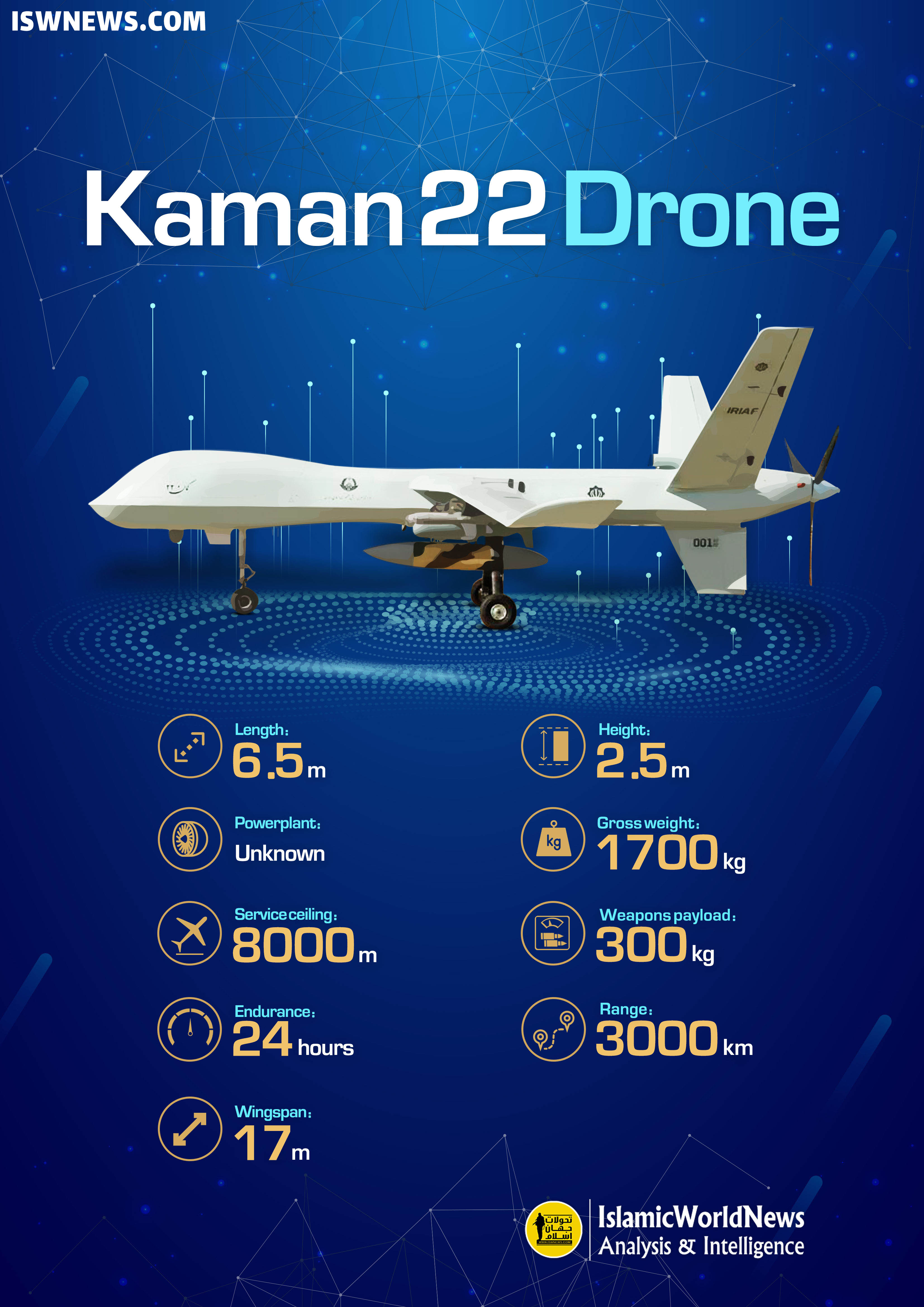
“Kaman 22” is a new reconnaissance combat drone of the Iranian Air Force, equipped with various combat, optical and electronic warfare systems. This drone has the ability to identify, monitor and collect information and photograph distant targets and is designed based on the operational needs of the Iranian Air Force and is in the final stages of production.
The Kaman 22 drone with a range of 3,000 km and a 24-hour flight duration and carrying a variety of smart ammunition will bring a high combat capability to the Iranian army.
The Kaman 22 drone uses a design almost identical to the US MQ-9B drone and has seven pylons for carrying weapons, with six pylons under the two wings and one pylon under the fuselage.
In the position under the wing, four Qaem smart bomb, two unidentified glider bombs and below the fuselage an electronic warfare pod can be seen. Next to the drone is the Sattar-4 laser guidance bomb and the Shahin electronic warfare pod (AN / ALQ-101).
Specifications: Length: 6.5 m Wingspan: 17 m Height: 2.5 m Gross weight: 1,700 kg Powerplant: Unknown Service ceiling: 8,000 m Weapons payload: 300 kg Range: 3,000 km Endurance: 24 hours
The missile was presented by Brigadier General Hossein Dehghan on 11 October 2015.
Emad is a single stage liquid propelled with a detaching warhead which was expanded from Qadr missile. It has a range of 1,500 to 1,700 km and can carry up to 750 kg of HE.
Detaching warhead with canard based guidance system increases the hitting accuracy significantly.
Specifications: Range: 1,700 km Weight: 17,500 kg Length: 15,5 m Diameter: 125 cm Propellant: liquid Warhead weight: 750 kg Speed: 11 Mach Flight profile: Ballistic Accuracy: 10 m
Specifications: – Carrier-based air superiority fighter and multirole fighter – Origin: Soviet Union / Russia – Design group: Sukhoi – Built by Sukhoi, Komsomolsk-on-Amur Aircraft Production Association – First flight: 17 August 1987 – Produced: 1987–1999 – Status: In service – Number built: Approx. 35 – Crew: 2-seat, 1-seat – Length: 22 meters – Wingspan: 14.7 meters – Height: 5.93 meters – Empty weight: 18400 kg – Max takeoff weight: 33000 kg – Powerplant: 2 × Saturn AL-31F3 afterburning turbofan engines
Performance: – Maximum speed: 2300 km/h – Range: 3000 km – Service ceiling: 17000 m – Rate of climb: 246 m/s
Armament: – Hardpoints: 12 external pylons with a capacity of up to 6500 kg – Cannon: 1 × 30 mm Gryazev-Shipunov GSh-30-1 autocannon with 150 rounds
– Missiles: Air-to-air missiles: R-27R/ER/T/ET and R-73E Anti-ship missiles: Kh-31A and Kh-41 Anti-radiation missiles: Kh-25MP and Kh-31P
– Rockets: S-8KOM/BM/OM S-13T/OF S-25OFM-PU
– Bombs: RBK-500 cluster bomb
Click to see the full size image
The Sukhoi Su-33, NATO reporting name: Flanker-D is an all-weather carrier-based twin-engine air superiority fighter designed by Sukhoi and manufactured by Komsomolsk-on-Amur Aircraft Production Association, derived from the Su-27 and initially known as the Su-27K. The aircraft has been principally designed and developed to meet the requirements of the Russian Navy.
Compared with the Su-27, the Su-33 has a strengthened undercarriage and structure, folding wings and stabilators, all for carrier operations. The Su-33 has canards and its wings are larger than the Su-27 for increased lift. The Su-33 has upgraded engines and a twin nose wheel, and is air refuelable.
Su-33 aircraft design The aircraft was designed by Russia’s Sukhoi Design Bureau. The design phase began in 1984 and was finalised in 1985. The aircraft is equipped with sports canards to reduce the take-off distance and enhance manoeuvrability, and has power-aided folding wings. The aircraft is also fitted with an air-refuelling probe to increase its range. The wings are fitted with a two-piece, single-slotted flap, an aileron and a larger leading-edge flap to decrease speed when landing.
Variants – Su-27K: Carrier-based version of the Su-27 designed for Project 11435 and Project 1160 aircraft carriers (heavy aircraft cruisers in Soviet classification). – Su-27KI: Project of a carrier-based version of the Su-27 designed for Project 11435 and Project 1153 aircraft carriers (heavy aircraft cruisers in Soviet classification). – Su-27KPP: Project of a two-seat carrier-based electronic-warfare aircraft. – – Su-27KRS: Project of a two-seat carrier-based reconnaissance and target designation aircraft. – Su-27KT/Su-27KTZ: Project of a carrier-based tanker aircraft. – Su-27KU: Project of a two-seat carrier-based trainer. – Su-27KSH: Project of a carrier-based attack aircraft. – Su-28K: Project of a two-seat carrier-based attack aircraft. – Su-28KRS: Project of a carrier-based reconnaissance and target designation aircraft based on the Su-28K. – Su-29K: Project of a carrier-based interceptor aircraft with a possibility to carry the long-range R-33 air-to-air missiles. – Su-33: Designation for the Su-27K after its introduction into service with the Russian Naval Aviation on 31 August 1998. – Su-27KUB/Su-33UB: Two-seat training-and-combat version based on the Su-27K and Su-27KU with side-by-side seating for crew of two. One prototype built.
It’s designed to be used as a surveillance and aerial reconnaissance and precision strike platform. The combat drone has a long range strike capability thanks to a satellite link.
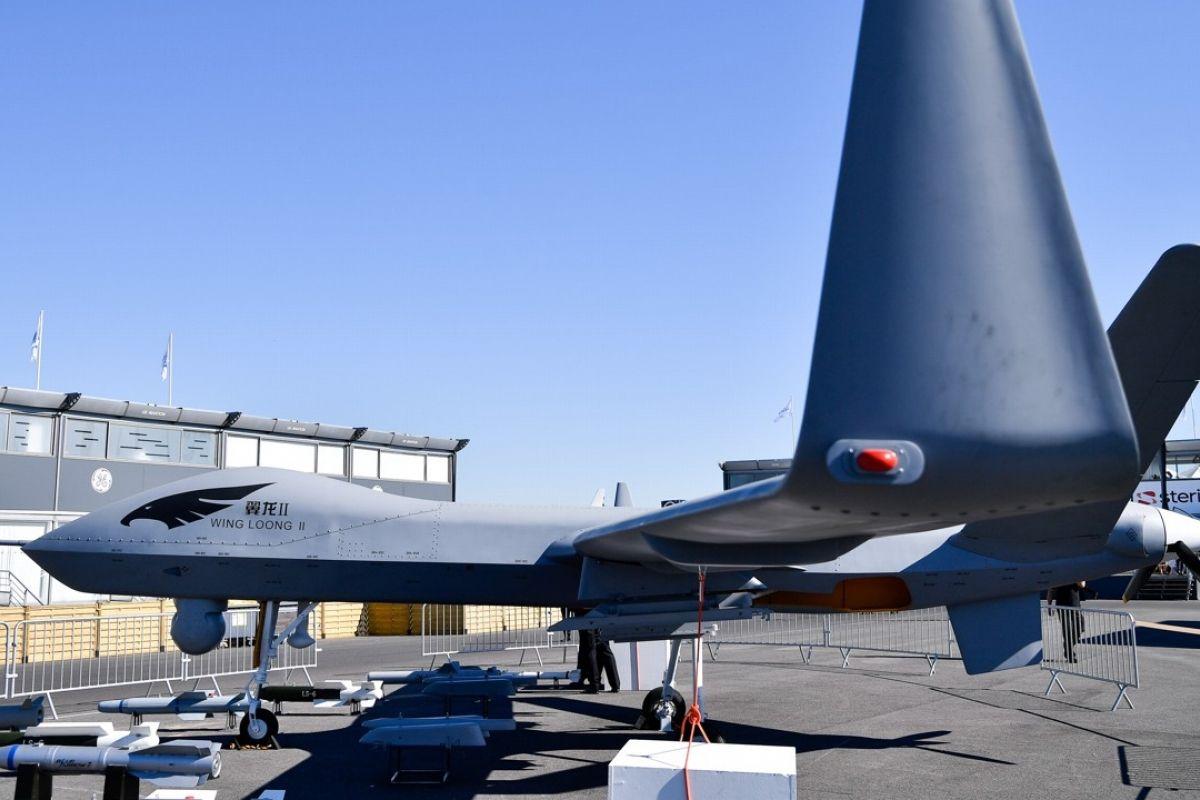
The Company unveiled the concept of Wing Loong II at the Aviation Expo China in Beijing in September 2015 and a prototype of the Wing Loong II was presented for the first time to the public during the Airshow China exhibition, held in Zhuhai from 1-6 November, 2016. It was also presented for the first time in Europe during the Paris Air Show in June 2017.
The design of the Wing Loong II UAV MALE is based to the Wing Loong I But it is longer and higher. It has monoplane slender fuselage and empennage with a prominent V-tail and ventral fin. Each wing incorporates three underwing hardpoints able to carry 12 bombs, rockets or air-to-surface missiles. A satellite communications antenna is mounted on the bulge at the top front surface of the fuselage, offering data transmission between the UAV and the ground control station. The Wing Loong II has a length of 11 meters, a wingspan of 20.5 meters and a height of 4.1 m.
The Wing Loong II UAV is powered by a WJ-9A turboprop 500kW (670 shp) engine. It can fly during 20 hours and has a maximum speed of 370 km per hour. The Wing Loong II has an operational radius of 1,500 km and that it is equipped with a satellite communications system.
The Wing Loong II UAV is able of carrying up to 12 laser-guided bombs or missiles with a total weight of 480 kilogram’s. The electro-optical payload pod, fitted under the forward section of the fuselage, is integrated with day light and infrared cameras and sensors to collect surveillance and targeting data in both day and night and low-light conditions.
Like the Wing Loong 1, the Wing Loong 2 has a much lower manufacturing cost than its American rivals, the MQ-1 and MQ-9, and this has made other countries welcome to buy and use the drone.
Specifications: Length: 11 m Wingspan: 20.5 m Height: 4.1 m Max takeoff weight: 4,200 kg
Powerplant: 1 × WJ-9A turboprop 500kW (670 shp) Maximum speed: 370 km/h Endurance: 20 hours Service ceiling: 9,000 m
Carrying capacity: 480 kg laser-guided bombs and missiles Bombs: FT-10, FT-9, FT-7, GB7, GB4 Missiles: BRM1, AKD-10, BA-7