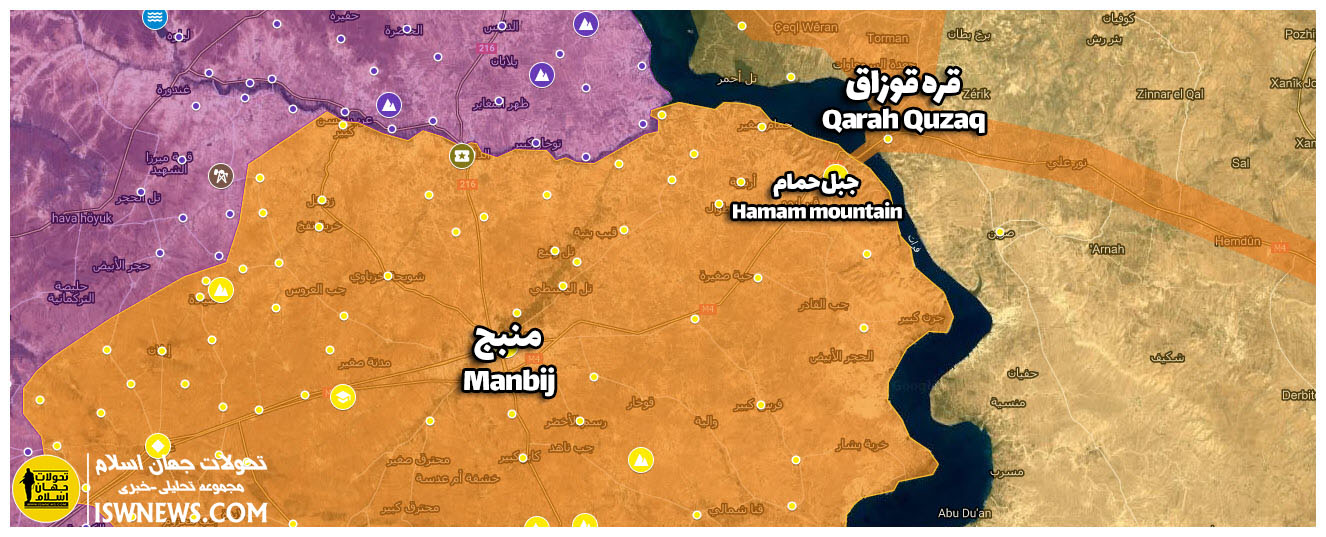
On October 30, a Turkish Army drone attacked a SDF checkpoint near Qara Quzaq bridge. Qara Quzaq bridge connects eastern and western parts of Euphrates.
No details have been released but it is said several SDF wounded and killed and some vehicles heavily damaged. Media close to SDF have not commented yet on it.
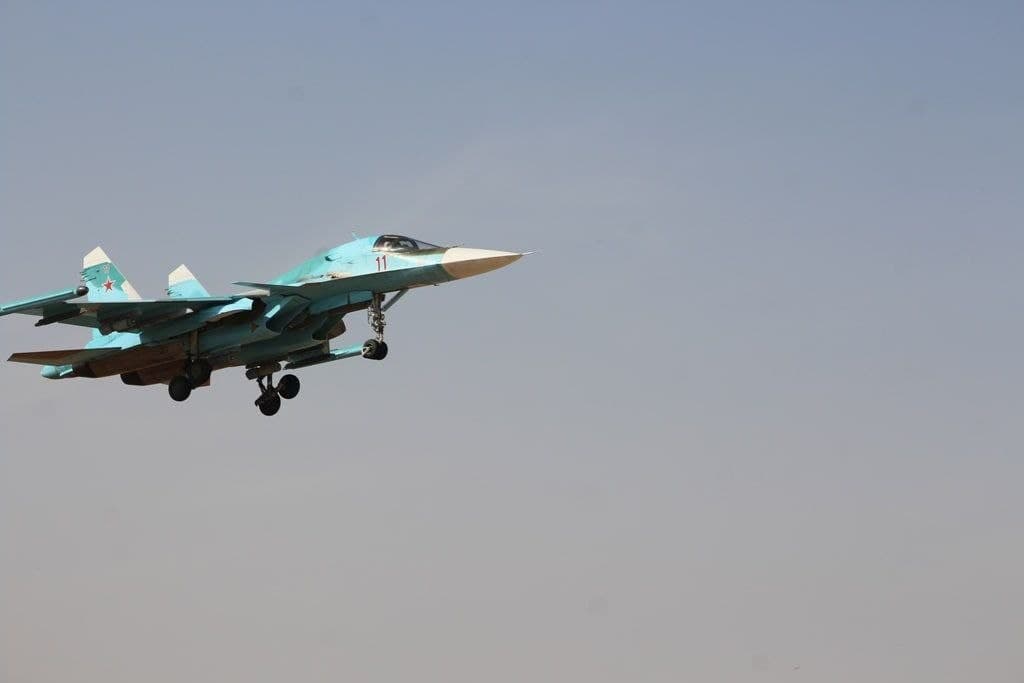
On October 31, 12 Su-34 bombers and 5 Su-35 multirole fighters, which have been stationed in Qamishli airport, conducted air raids on pre-assigned targets. 12 Mi-8 and 5 Ka-52 helicopters also stationed in Sarin area. Sarin was occupied by Americans before and was one of US largest bases in Syria which was used for logistics for American coalition due to its long runway.
Syrian air defense also drilled to confront enemy drones.
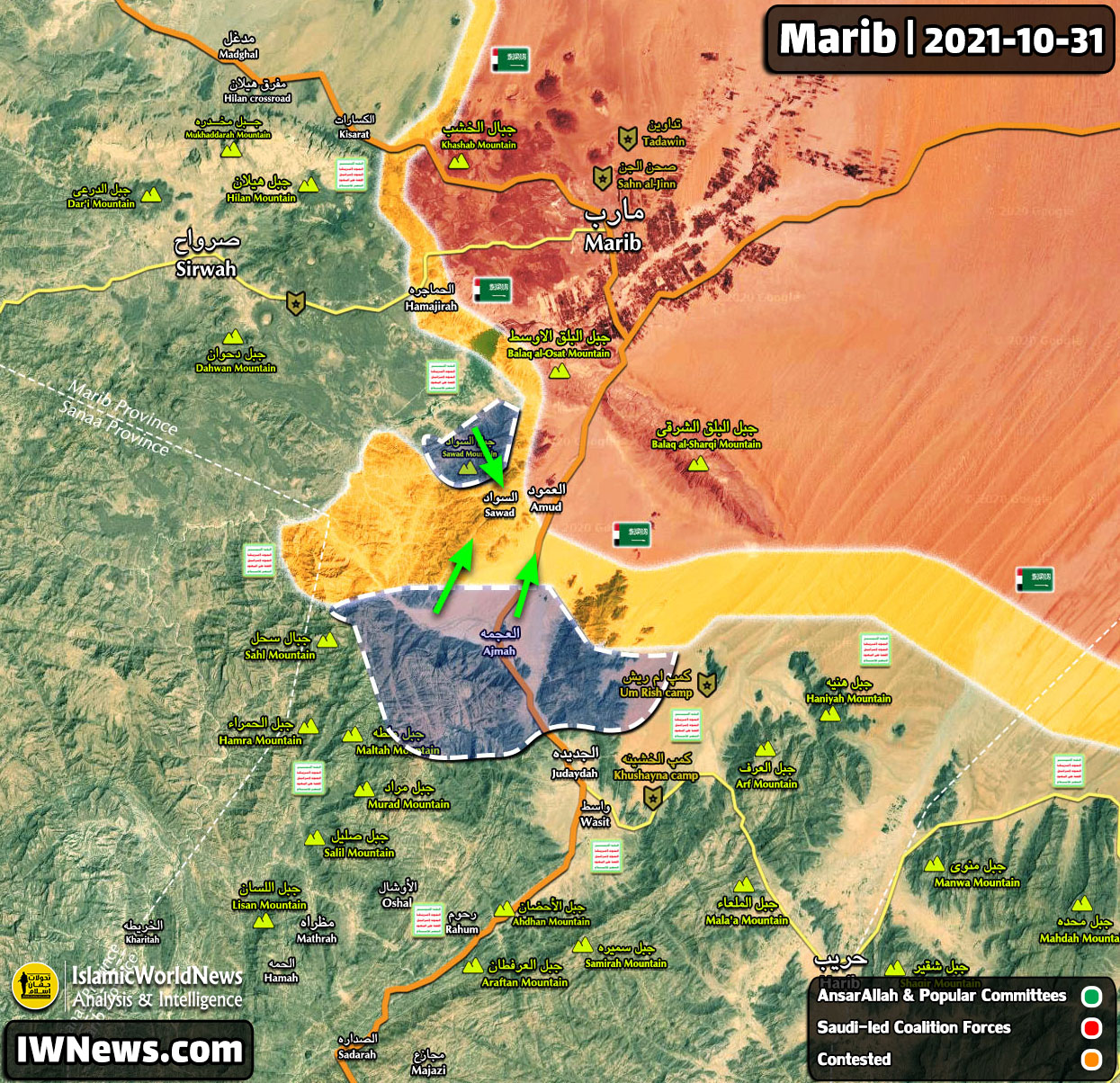
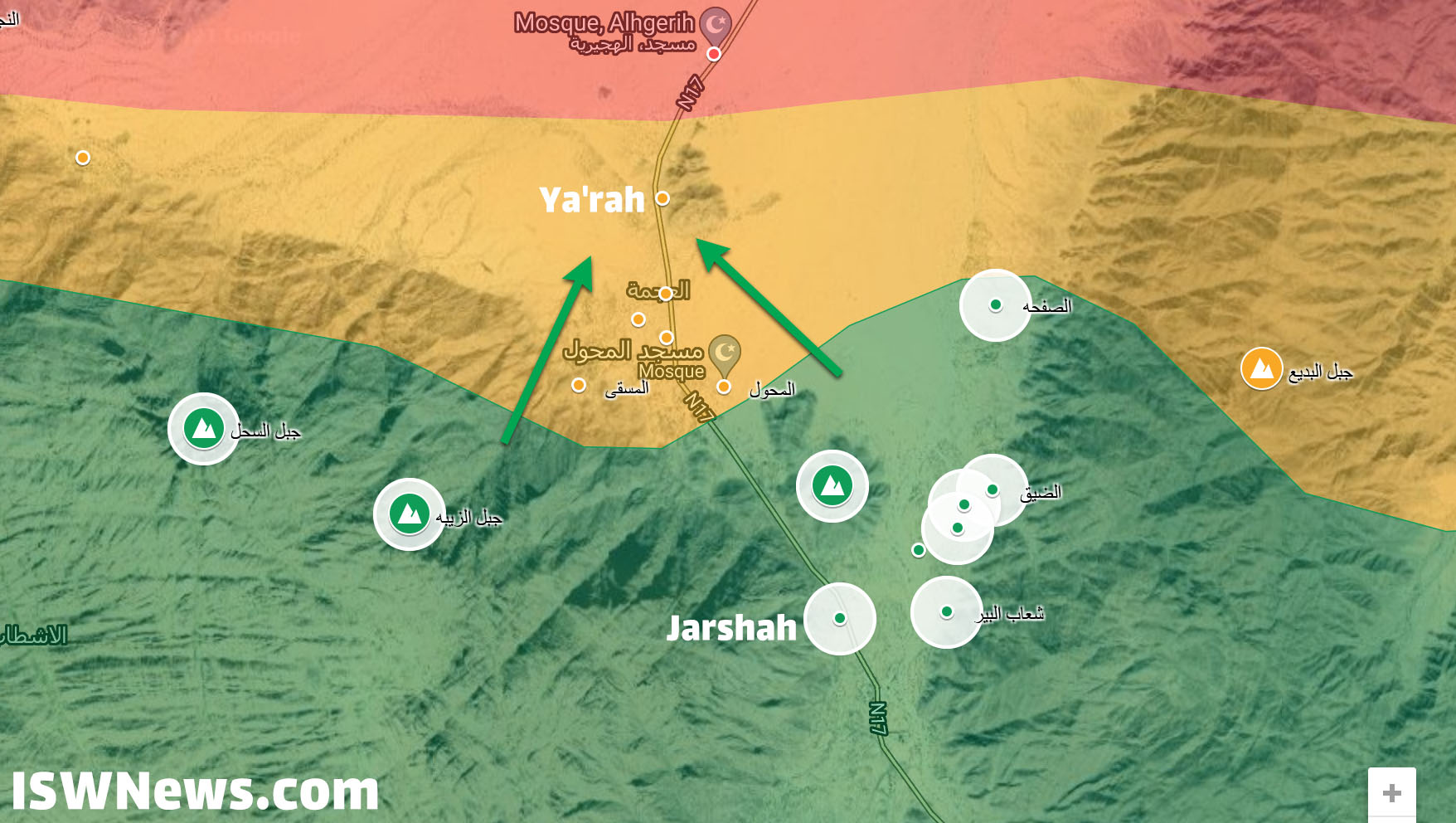
According to ISWNews field source; Ansar Allah has succeeded in liberating the areas of Masqa, Mahwal, Hasamah, Harjah, Ya’rah, ‘Ajma, Be’r Sheikh wa Husur and Sawad Mountain (blue areas) from the control of the Saudi-led forces. With the liberation of these areas, Ansar Allah moved one step closer to the south of the city of Marib, and the distance to the city of Marib from the southern fronts has reduced to 28 kilometers.
In the axis of Wadi Zanah, Ansar Allah has entered into talks with the tribes of these areas in recent days, and an important agreement has been reached between Ansar Allah and the tribes of these areas. Therefore, Ansar Allah has the upper hand militarily and politically in Marib province, and if this trend continues, the liberation of Marib will be imminent in the coming months.
Saudi coalition warplanes have also bombed al-Juba district 24 times in the past 48 hours, which has had little effect on the Ansar Allah advances in southern Marib.
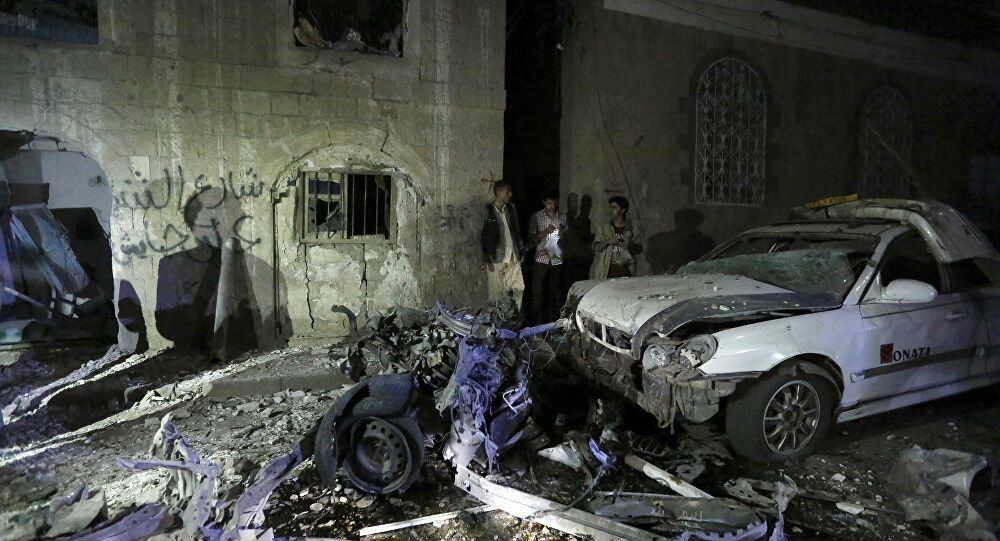
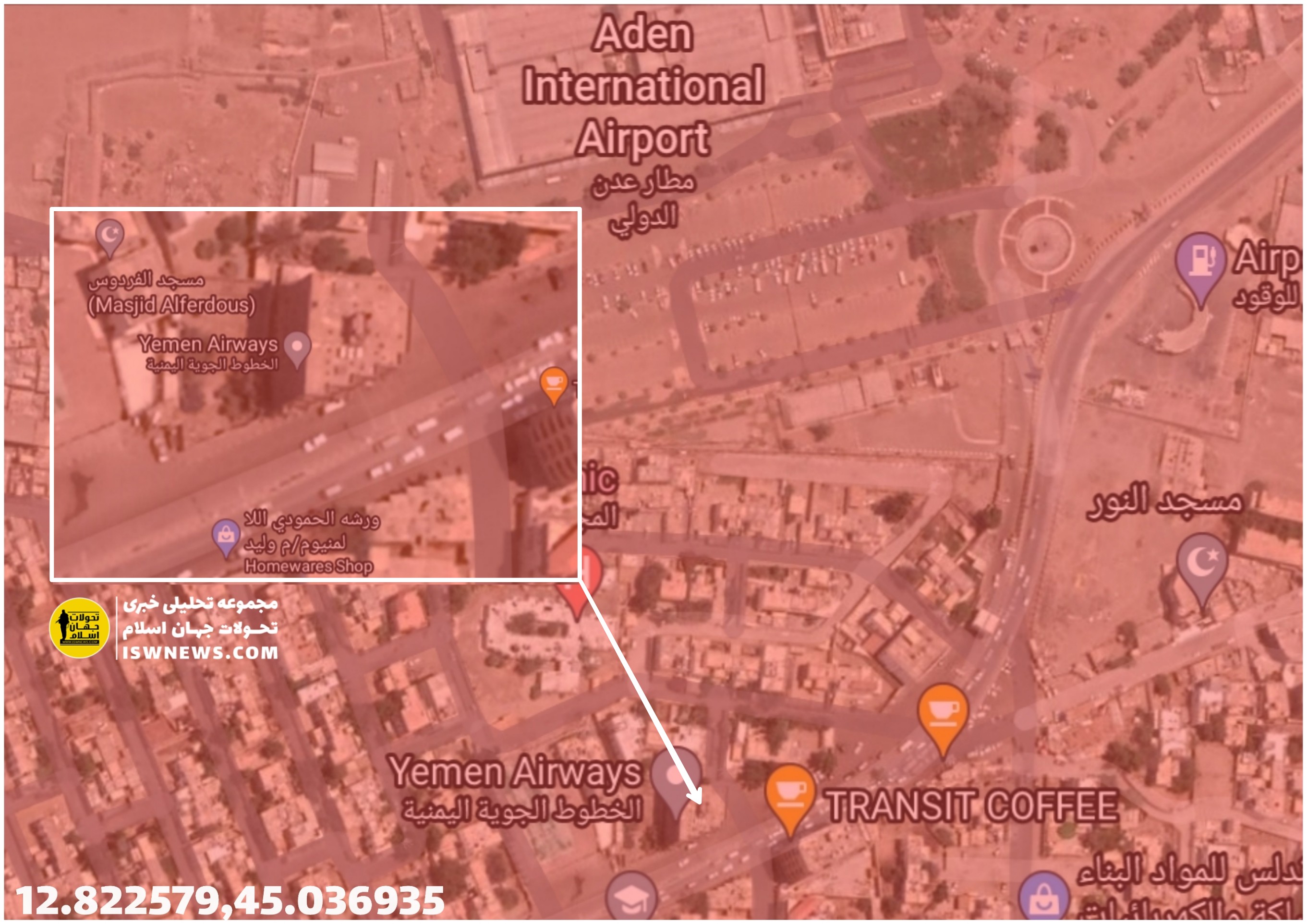
According to local reports, 16 people have been killed and 53 injured so far in the terrorist blast that took place last night at the entrance of Aden Airport in the Khurmaksar area in the south of Aden city. The blast was also so severe that the surrounding buildings were damaged.
So far, no group has claimed responsibility for the attack, but some Saudi-affiliated media outlets accused Ansar Allah for the attack!
The city of Aden can be considered the most insecure city in Yemen, given the scale of the clashes between Mansour Hadi’s forces and the Southern Transitional Council, as well as the terrorist attacks by ISIS and al-Qaeda in recent years. After Ansar Allah took complete control of Sanaa, the resigned government of Hadi chose Aden as its capital, but their conflicts with the southerners have made the city a hotbed of insecurity in Yemen.
Images of the terrorist explosion on the outskirts of Aden AirportTerrorist explosion on the outskirts of Aden AirportCoordinates of the site of the terrorist explosion in Aden: 12.822579 , 45.036935
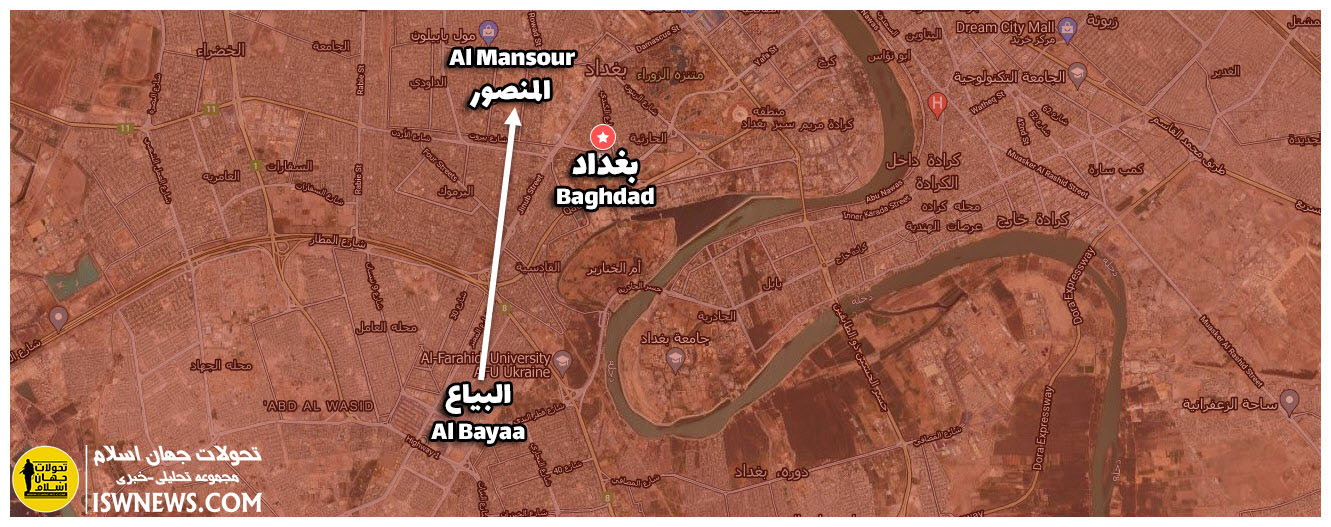
This morning, three Katyusha rockets hit the streets of Al-Naqabat, Al-Amirat and Al-Zaytoun in the Al-Mansour area of western Baghdad. The attack did not cause any casualties but damaged a number of cars and buildings.
Preliminary information indicates that the rockets were fired from the al-Bayaa area. No group has claimed responsibility for the attack.
Ansar Allah attacks to liberate the villages of al-Ajmah and Jabal Ara’ish are currently ongoing. Moving in several directions and clearing the villages without clashes is Ansar Allah’s tactic to reach the heights of al-Balaq.
Despite the bombing of Saudi coalition warplanes, the Ansar Allah plan has been successful so far, and airstrikes have lost their effectiveness as the fronts have expanded.
In recent days, the Black Shadow hacking group has infiltrated a number of Israeli servers and extracted important information. The attacks targeted the Cyberserve hosting company, which provides services to customers such as Cyberserve’s customers include the Dan and Kavim public transportation companies, the Children’s Museum in Holon, the Pegasus travel company and the blogsite of the Kan public broadcaster.
Information of Atraf software was also hacked. “Atraf,” a geo-located dating service as well as a nightlife index, is a popular app and website in the Israeli LGBT community, especially in the Tel Aviv area. This issue worries users of this software that this information may be disclosed by hackers at any moment!
In this regard, the LGBT Association of Israel called on the National Cyber Agency to “immediately take action to prevent the disclosure of information” and added that the disclosure of such information is a risk to the mental health of users of this software.
Last week also, cyberattacks on Israel by a hacking group called Moses Staff leaked the identities of hundreds of Israeli regime soldiers, including their names, surnames, home addresses and phone numbers.
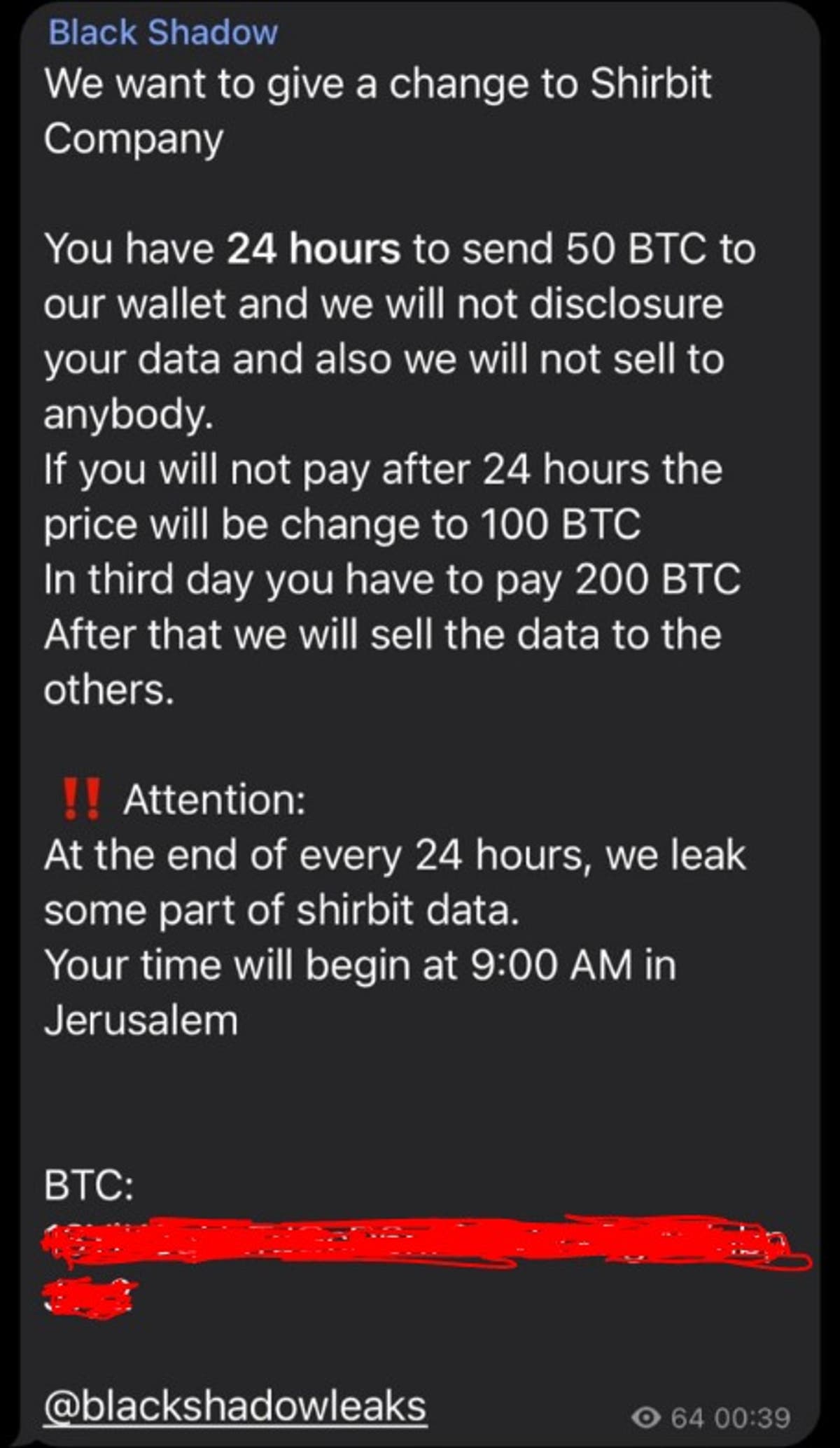
Israel considers the Black Shadow hacking group to be a possible Iranian group. Last year, the Black Shadow attacked the Shirbit insurance firm and opened ransom negotiations, but the company said it wouldn’t pay, leading to the dark web sale of information stolen from the firm.
A picture of black shadow hackers ransom from the Israeli company Shirbit
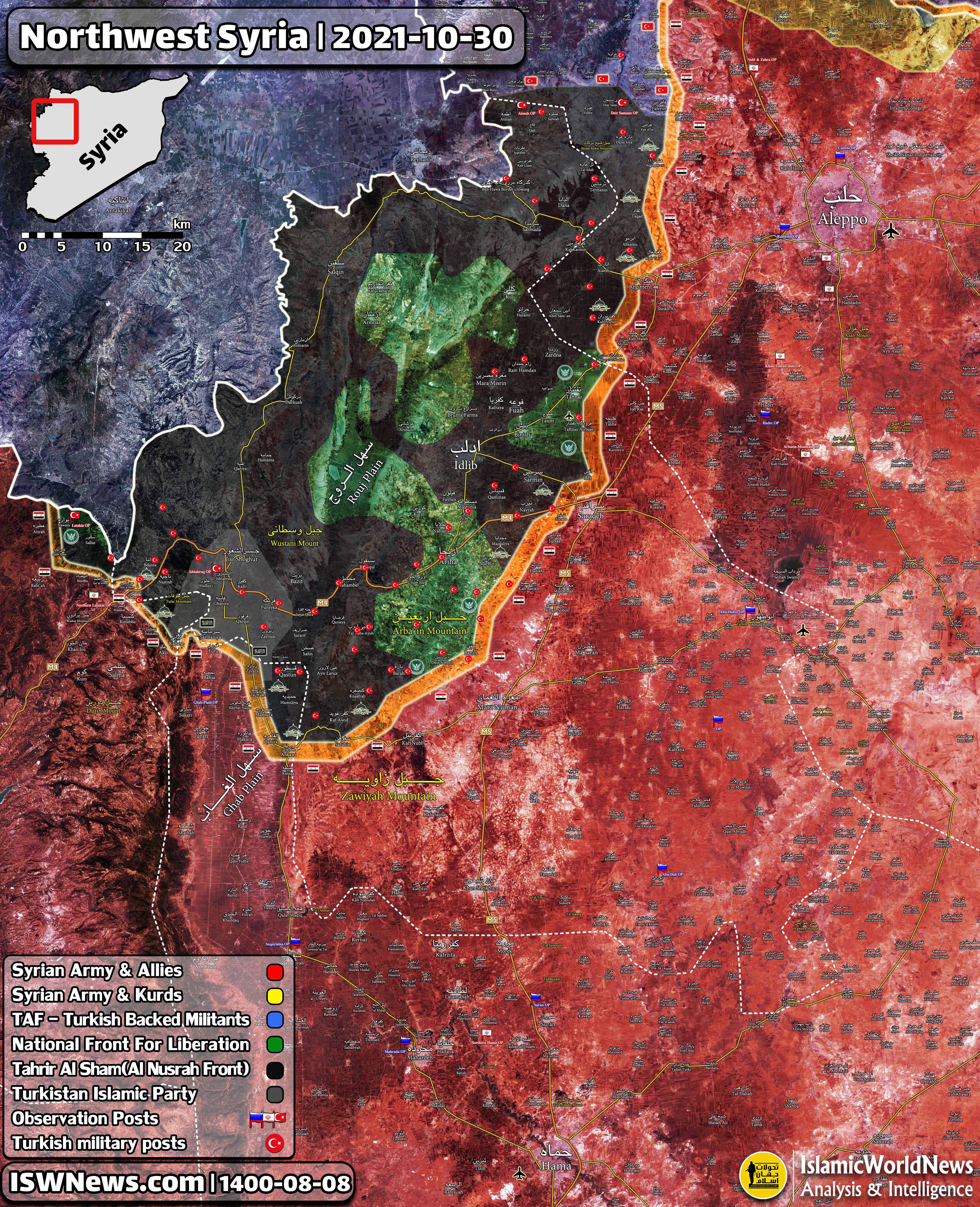
Idlib province has always been of interest to Ankara in recent years due to its strategic location and the presence of Ankara-backed militants. The Turkish military currently has four observation posts and more than 50 military points in western Aleppo and the Idlib region, and continues to strengthen and increase the number of these military posts.
In recent weeks, especially after Putin and Erdogan met and discussed about the situation of Idlib, the Turkish military has sent dozens of military convoys carrying logistics, armored vehicles, troops and construction materials to the province.
In its latest move, Turkish Army have set up a new military point near the Benin village on Jabal al-Zawiyah in the southern countryside of Idlib province. The positions of the Turkish military and Ankara-backed militants in the contact lines have also been strengthened, and Turkey has sent about 5,000 troops to Idlib province in the past three days.
As the Turkish army moves and builds military posts and strengthens its positions in Idlib province, the activity of Syrian Army artillery and Russian warplanes has also increased. In recent months, militant positions in Sheikh Bahr, al-Bara, Safuhan, al-Ankawi, Kansafra, Bayluon, al-Ruwaiha, al-Fatira, Benin, Fulaifil and Majdaliyah have been repeatedly targeted by Syrian Army artillery or Russian warplanes.
In the latest Syrian army attacks on militant positions, Syrian Army artillery units stationed east of Saraqeb targeted militant positions in the town of Sarmin. The militants based in Idlib also targeted the Syrian army positions in Ma’ra al-Nu’man, Kafr Nubl, Saraqeb, Hazarin, Dadikh, Basaqala, Dar al-Kabira and Ma’saran with artillery and rocket attacks.
However, the contact lines in Idlib have not changed much, and there is a daily exchange of fire between the Syrian army and the militants. The southern regions of Idlib are witnessing more clashes than other regions. Syrian army forces stationed on the eastern fronts of Idlib are also occasionally targeted by snipers or guided missiles.
So far, Ankara does not seem to intend to give up its support for the militants in Idlib, and the Syrian government and its allies are strongly opposed to Turkey’s decision.
This is one of the main points of contention between Putin and Erdogan. Although Russia seeks to maintain economic, military and political relations with Turkey, it disagrees on the issue of Idlib with Turkey, and the Idlib case was discussed at the last meeting between the two sides in Sochi. The Russian side told Turkey that it was not satisfied with the situation in Idlib.
Turkey’s actions in Idlib province, which run counter to the Moscow agreement, could be a good excuse for Russia to give the green light to the Syrian government and launch a comprehensive military option to clear Idlib.
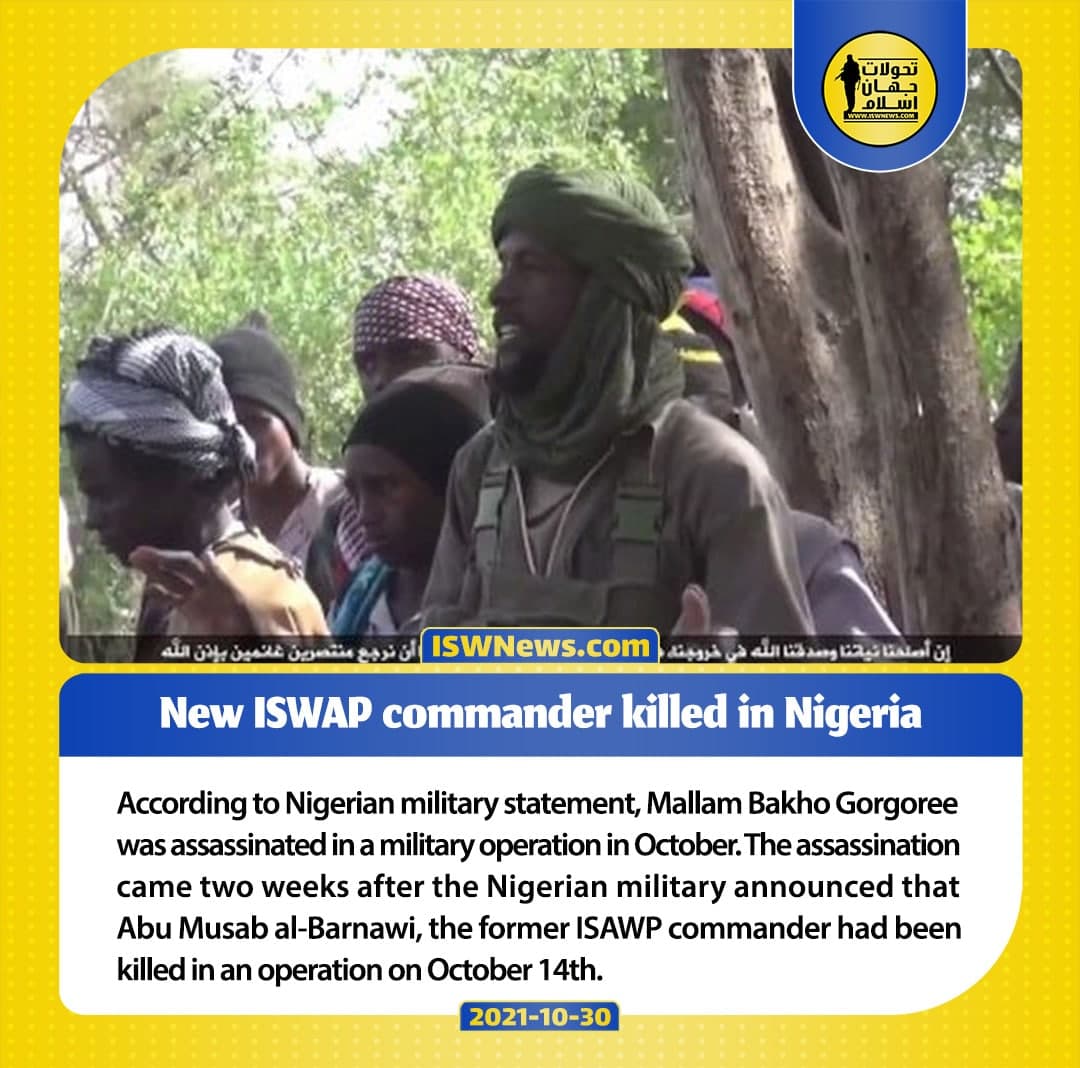
According to Nigerian military statement, Mallam Bakho Gorgoree was assassinated in a military operation in October. The assassination came two weeks after the Nigerian military announced that Abu Musab al-Barnawi, the former ISAWP commander had been killed in an operation on October 14th.
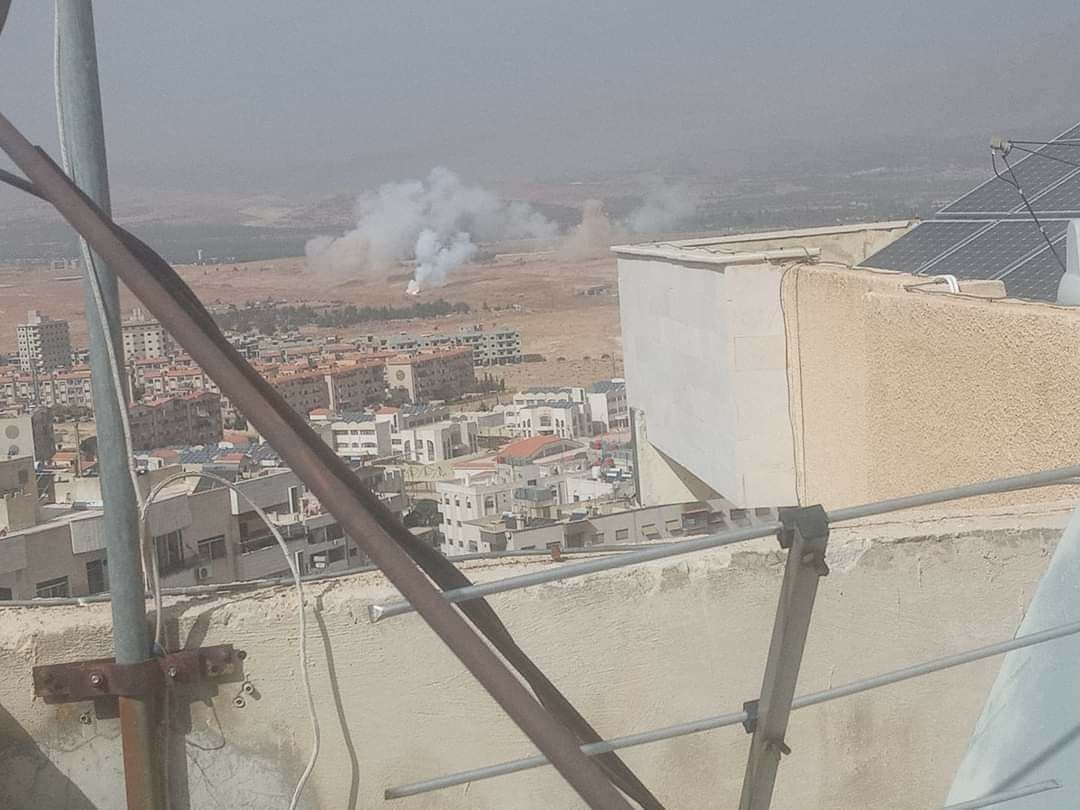
According to the Syrian military source, “At approximately 11:17 (local time), the Israeli enemy fired a burst of surface-to-surface missiles from the direction of northern occupied Palestine, targeting some points in Damascus countryside (Dimas). Our air defenses confronted the aggression’s missiles and shot down some of them, and the aggression resulted in the injury of two soldiers and some material losses.
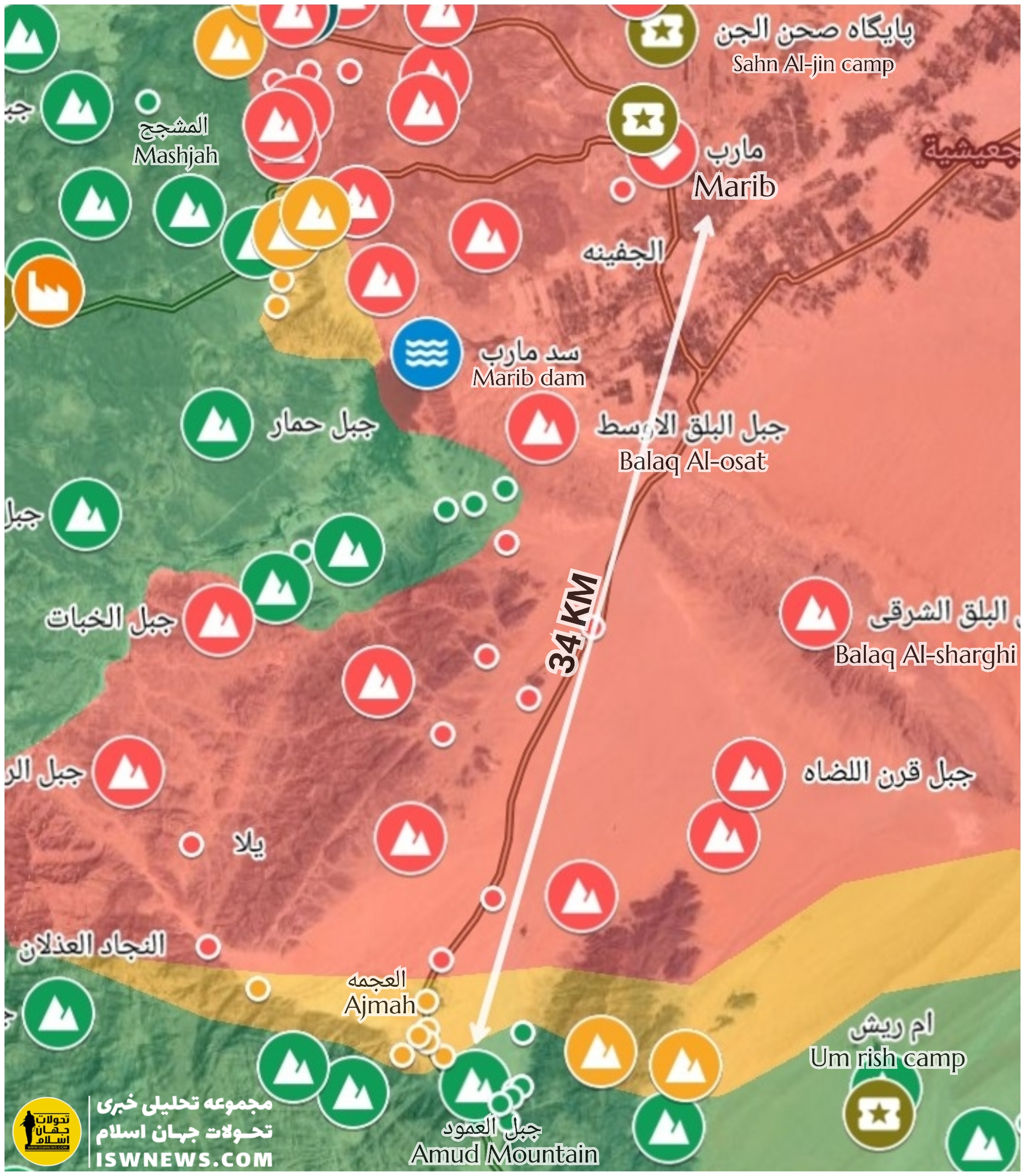
According to the latest news from the southern front of Marib, Ansar Allah and popular committees has succeeded in liberating the villages of Jarshah, Sha’ab al-Bir, Suwayda, Muwais, Atfah, Dhayq, Safhah and heights of Zibah, Sahl and Amud in the north of al-Jubah district. With these advances, the distance of Ansar Allah from the southern fronts to the city of Marib has reached to 34 km.
AnsarAllah advances in the north of Jubah district
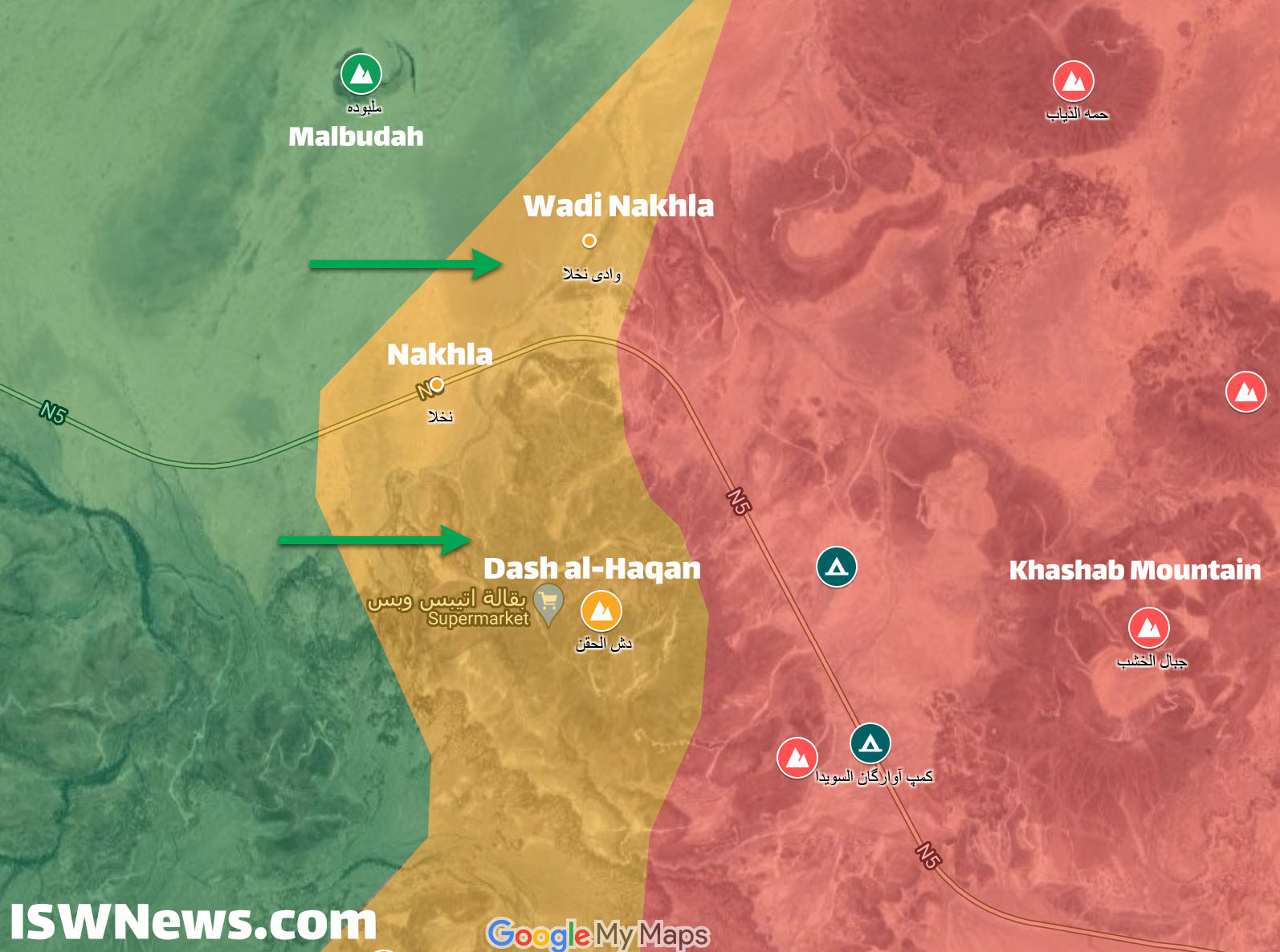
On the western front, clashes continued in the Wadi Nakhla and Dash al-Haqan area, with Saudi coalition warplanes constantly bombing these areas to prevent Ansar Allah advances. In this regard, the Saudi coalition warplanes have bombed Sarwah district 18 times and al-Jubah district 14 times in the last 48 hours.
Western front of Marib – Wadi Nakhla
It seems that the ultimate goal of Ansar Allah in the southern axis is the al-Balaq al-Sharqi heights, and in order to achieve this, it is possible to activate the western fronts of the city and the southwestern part of Marib Dam. Reaching the al-Balaq heights will pave the way for the liberation of the city of Marib, and as we mentioned in the previous analysis, there is a possibility of liberating the city without conflict, and after the al-Balaq heights, almost no other strategic position will remain for the Saudi coalition.
Mali is a landlocked country in West Africa bordering with Algeria, Niger, Burkina Faso, Côte d’Ivoire, Guinea, Senegal and Mauritania. The country has an area of 1240192 square kilometers and a population of about 20 million people who have different ethnicities and languages. About 90% of the Mali population is Sunni. The official language of Mali is French, the legacy of years of colonization by Europe and France; However, only 5 to 10 percent of Mali people are fluent in French, and the local dialect of Mali is Bambara, and about 80% of Mali people speak it as their first or second language.
The northern Mali deserts have vast resources of oil and gas that have not yet been exploited. Mali also has huge resources of gold, uranium, etc. However, despite having such vast and valuable mineral and fossil resources, Mali is at the lowest possible level of development and more than half of its population lives below the poverty line. Overall, Mali is one of the poorest countries in Africa and the world.
Mali has a civilization and history of two thousand years ago and has been under the rule of the Sudanese Empire and Morocco for several periods. The region was occupied by France before the outbreak of World War I and finally gained independence on September 22, 1960. After gaining independence under Modibo Keïta and eight years of socialist rule, Mali became the scene of a military coup by General Moussa Traoré, which ruled until 1991. With the beginning of the popular protests, Traore was removed from the throne and various parties took control of the Mali government through elections until 2012. In 2012, another military coup led to the dissolution of the government and armed groups took control of various areas in Mali. The Azawad separatist movement in the north and al-Qaeda militants in other parts of Mali were able to seize parts of the country, and the French-backed government retained the capital and recaptured the lost cities and towns in a short time. In recent years, there have been several rounds of talks between the government and the opposition groups, which have not yet reached a conclusion. Conflicts are also raging across Mali, and the people of Mali are still waiting for the government’s promise to end the conflict, the withdrawal of foreign troops and the holding of a solid national election.
Classification of parties involved in the Mali war:
Mali government and foreign allies: Following the military coup in 2012 against the Malian president, Amadou Toumani Touré, the Azawad movement, in collaboration with Ansar Dine and other armed groups, occupied three northern Mali provinces. After occupying northern Mali, they announced the formation of an independent Azawad government. The leaders of the Azawad movement eventually clashed with the Ansar Dine group because of disagreement on how to govern the country and after months of fighting lost the war to Ansar Dine militants, which had the support of other extremist groups in the region, such as Al-Qaeda in the Islamic Maghreb (AQIM), Movement for Unity and Jihad in West Africa (MUJWA), etc. The Ansar Dine group enforced strict and fanatical laws in the areas under their control, which were opposed by the people and provoked popular protests. In 2013, the French army saw the situation ready to return to Mali, hence, under the pretext of countering terrorism, intervened militarily in Mali war with several African countries under the name of Operation Barkhane. With foreign intervention in Mali, government forces recaptured northern towns, and opposition groups from Azawad to other extremist groups lost their positions.
Operation Barkhane is the French military operation with cooperation of the G5 (Mauritania, Mali, Niger, Burkina Faso and Chad) countries in Africa’s Sahel region against the Islamist groups that started on August 1, 2014. The Sahel is the ecoclimatic and biogeographic realm in central Africa that stretches from west to east between the Atlantic Ocean and the Red Sea.
Sahel region and Sahara desert in central and northern Africa
The French army has set up military bases in Chad, Niger and Mali, including six bases of Gao, Tessalit, Kidal, Menaka, Gossi and Timbuktu in Mali. Other bases are located in areas such as Abecheh, Faya, N’Djamena in Chad, Niamey, Madama, Aguelal in Niger. The Operation Barkhane is permanently headquartered in N’Djamena, the capital of Chad.
In recent years, several ceasefire and peace agreements have been signed but the conflict has resumed under various pretexts. Among the reasons for the continuation of these disputes are the refusal of the Mali government to grant autonomy to the North, the non-compromise of jihadist groups with the government, the pressure of foreign countries, especially France. The French involvement in the Mali war created a good excuse for the extremists. Because the northern opposition used the France colonization behavior as a pretext, therefore the jihad against the Crusaders again became the basis for the recruitment of Salafi groups.
On the other hand, the Mali government has faced political decline and has faced two coups in its capital in the last year. Of course, French pressure on the Mali government not to negotiate with the opposition and to exert influence on Mali through countries in the region has been effective in Mali’s political deadlock; to the point that in recent months relations between Mali and French government officials over political pressure and ceasefire violations become more strained than ever.
The dispute has escalated in recent weeks after the French government announced a decision to reduce its troop numbers in the Mali and Sahel region. France currently has about 5,000 troops in the region under Operation Barkhane and also 15,000 UN peacekeepers in Mali as part of the United Nations Multidimensional Integrated Stabilization Mission (MINUSMA). France is said to have decided to reduce the number of its troops to 2,500 by 2023. On the other hand, the Mali government has also come up with a solution, and there have been widespread rumors in the media recently about the Mali government willingness to hire Russian Private Military Contractors to replace French troops. Russia has welcomed the request and donated four Mil-17 helicopters to the Mali army in June 2021. These actions have provoked France serious protests and warnings to Mali. An issue that the French did not like and that upset them deeply!
Azawad Movement: Azawad is the name of a political and military movement in northern Mali whose members are Tuaregs. They attribute their civilization to the Gao Empire in northern Mali, which was formed in the ninth century AD and joined the Mali Empire in the fourteenth century. Azawad declared its existence after the military coup in 2011 with the aim of dividing northern Mali. The group had between 9,000 to 10,000 armed forces and it is said that some of the Tuareg members of the Libyan army during Gaddafi and the Tuareg insurgents in 2007 in northern Niger have been members of the movement. The movement weakened after the defeat by Ansar Dine and the group’s allied militias, and its remnants joined the Coordination of Azawad Movements (CMA) in 2014. The Coordination of Azawad Movements is a coalition of Tuareg independence and Arab nationalist groups which formed in Mali, most of whose militants and supporters are currently present in the three northern provinces of Gao, Kidal and Timbuktu. This coalition (cooperation) includes the following groups: 1- The National Movement for the Liberation of Azawad (MNLA) 2- The High Council for Unity of Azawad (HCUA) 3- The Arab Movement of Azawad (MAA) 4- The Coordination of Patriotic Resistance Movements and Forces (CMFPR) 5- The Coalition for the People of Azawad (CPA)
Jama’at Nasr al-Islam wal Muslimin: The Jama’at Nasr al-Islam wal Muslimin (JNIM) is an extremist organisation that was formed in 2017 with the merger of Ansar Dine, the Macina Liberation Front, Al-Mourabitoun and the Saharan branch of Al-Qaeda in the Islamic Maghreb. This group can be considered the official branch of the al-Qaeda terrorist group in Mali, because in 2017, they pledged allegiance to al-Qaeda leader Ayman al-Zawahiri. The group also considers itself an ally of Abu Musab Abdel Wadoud, (former) Emir of Al-Qaeda in the Islamic Maghreb and Taliban leader Hibatullah Akhundzada in Afghanistan. The Jama’at Nasr al-Islam wal Muslimin militia has repeatedly attacked positions of the Mali army and foreign forces in recent years. The leadership of JNIM is in the hands of Iyad Ag Ghaly, the former leader of Ansar Dine group. He is one of the most prominent leaders of the Tuareg insurgency between 1990 and 1995, with a long history of guerrilla warfare.
ISIS: ISIS was formed in Mali with the separation of some commanders of the Al-Mourabitoun group in 2015 under the name of “Islamic State in the Greater Sahara”, which in addition to Mali, also operates in Niger and Burkina Faso. In the following years, ISIS recruited a large number of militants from Gao.