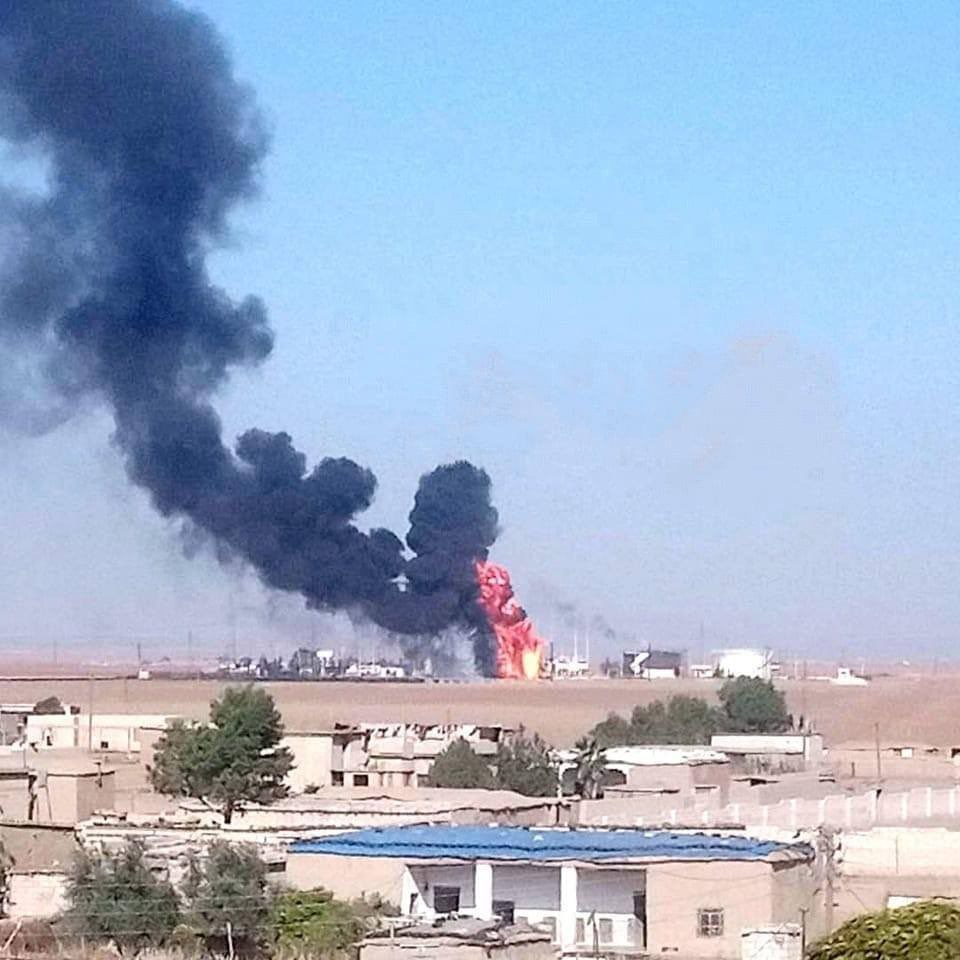
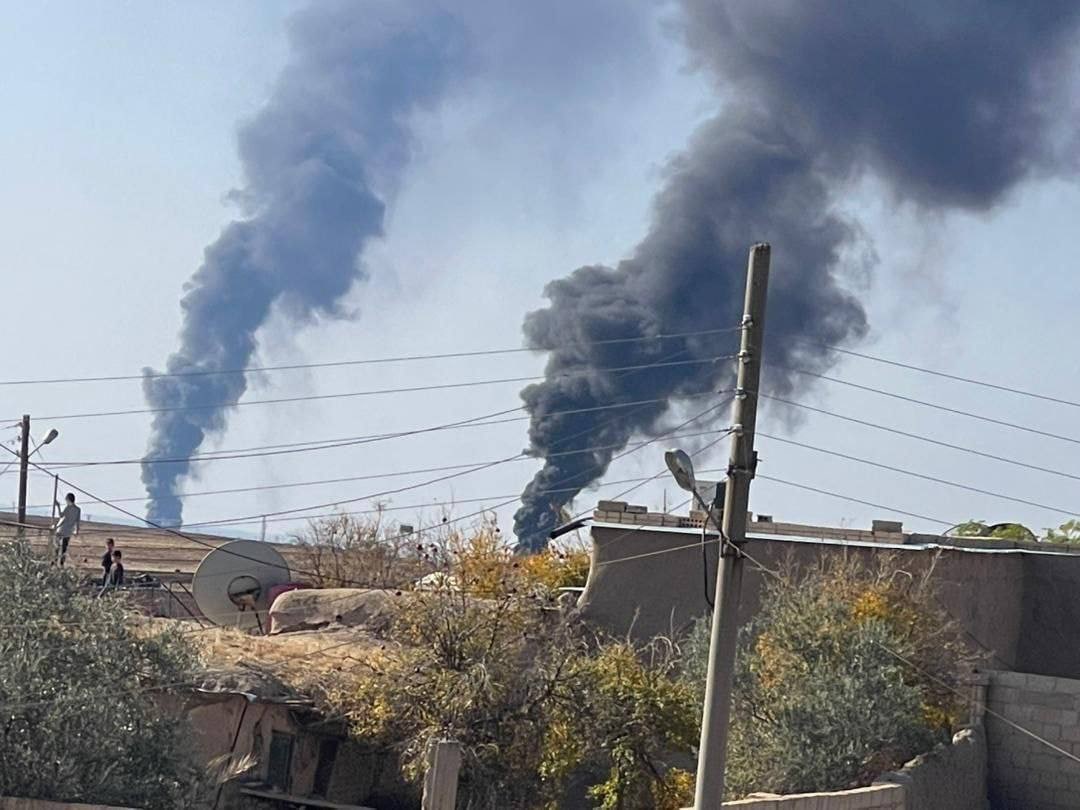
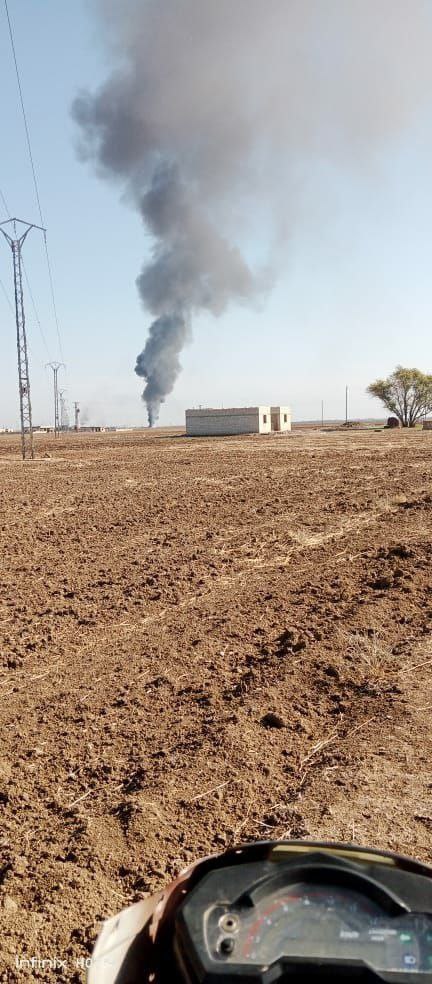
Following the Turkish army air strikes on the northern regions of Syria with the pretext of Operation Claw-Sword, Turkish drones targeted two oil fields near the village of Mulla Abbas and the northern outskirts of Qahtaniyah in east of Qamishli in Hasakah province. These attacks caused fires in the oil fields. Also, a checkpoint belonging to the Syrian Democratic Forces (SDF) near Hemo village in west of Qamishli city was targeted by Turkish drones.
Images of the attacks on two oil fields near Mulla Abbas village and the northern outskirts of Qahtaniyah in east of Qamishli.
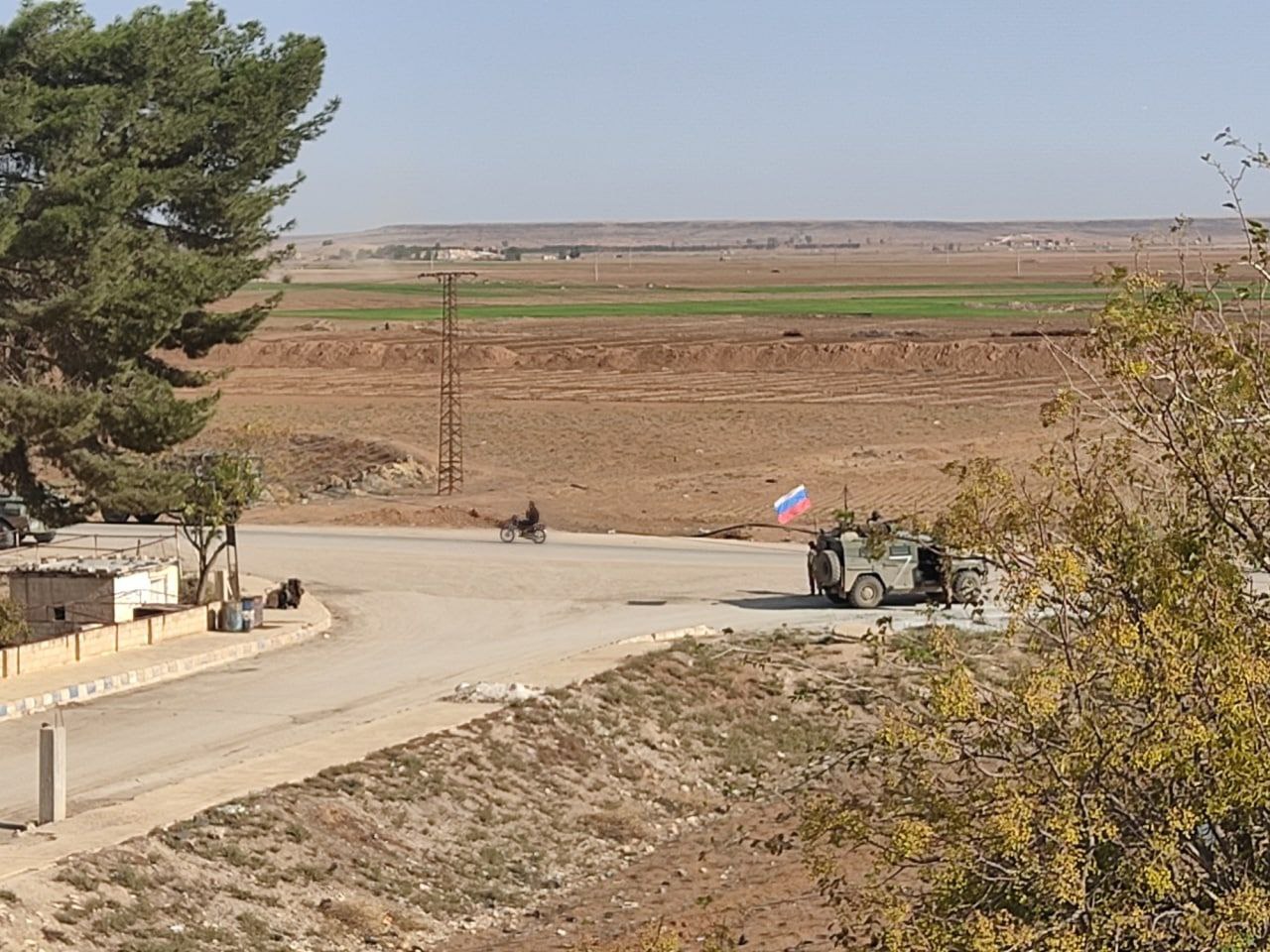
After the first round of attacks, the Turkish drones targeted the joint base of the Russian military and the SDF in the outskirts of the town of Tal Tamar, during which one SDF member was killed and two others were injured. After this attack, the Russian military began the process of evacuating their headquarters from the Tal Al-Hamra region.
The withdrawal of Russian soldiers from their headquarters in Tal Al Hamra area
In addition to the drone attacks on Tal Tamar, the Turkish army and its militants targeted the two villages of Umm al-Khair and Tal Tawil in the outskirts of Tal Tamar with artillery attacks.
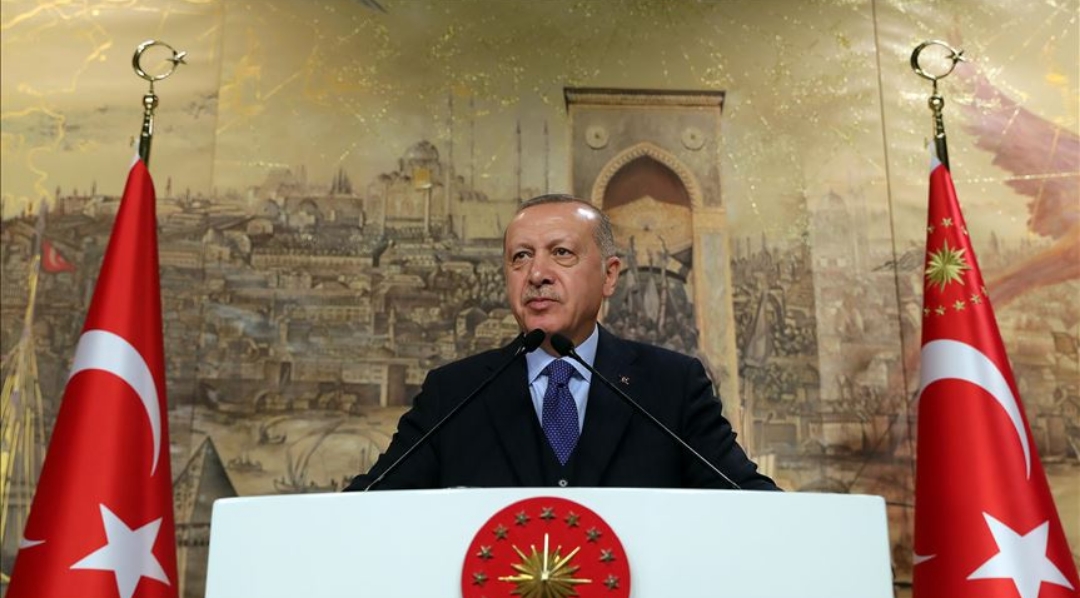
On the other hand, at the same time as the Turkish armed forces attacks on northern Syria, the President of Turkey, Recep Tayyip Erdoğan, said to the parliamentarians of the Justice and Development Party:
“We will find and punish all those who were involved in the explosion of Istiklal Street in Istanbul. Turkey will not remain silent in the face of these attacks. Recent events have shown that the parties who guaranteed that Turkey would not be attacked from Kurdish-controlled areas didn’t kept their promises.”
He said about Turkey’s military operations in northern Syria:
“Air operations in northern Syria have just begun. We will also begin ground operations at the most appropriate time. We will begin clearing northern Syria of Kurdish militias from the cities of Tal Rafaat, Manbij and Ain al-Arab, and the steps we take will guarantee the territorial integrity and security of Syria and Iraq.”
It is worth noting that the increase of these attacks simultaneously with the threats of the Turkish president to start ground operations in the northern regions of Syria is considered a serious warning for the Kurdish militias and the Syrian government. Therefore, it is likely that the senior commanders of the Syrian Democratic Forces (SDF) will negotiate with Iran, America, Russia, and even the Syrian government to get help and get rid of this crisis, just like what we have seen in the past years.
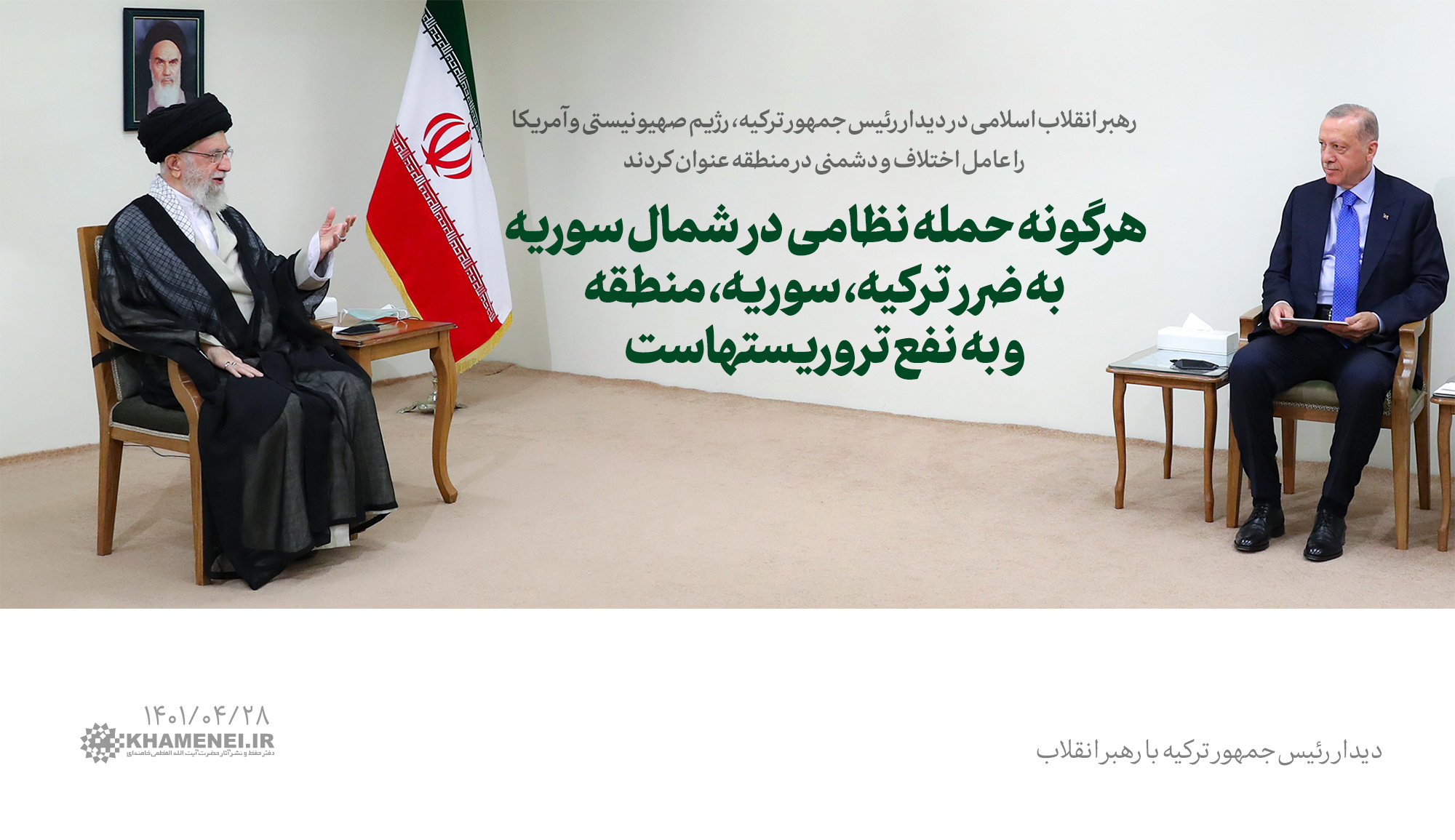
The Supreme Leader of the Islamic Revolution, Imam Khamenei met and discussed with Turkish President Recep Tayyip Erdogan and his delegation about bilateral and regional issues.
Emphasizing the need to increase the cooperation between the two countries, especially in the commercial field, the leader of the revolution called the current amount of economic exchanges between the two countries much less than the existing capacities and emphasized: “This issue should be resolved in the negotiations between the presidents.”
He further pointed to the developments in the region and listed the Zionist regime as one of the main causes of discord between Islamic countries and emphasized that US and the usurping regime cannot stop the deep movement of the Palestinians and despite the favor of some governments to the Zionist regime, the nations are deeply against this usurping regime.
Imam Khamenei said about the recent developments in northern Syria and the news about Turkey’s military operation: “Maintaining the territorial integrity of Syria is very important, and any military attack in northern Syria will definitely harm Turkey, Syria and the entire region, and benefit terrorists, And the expected political action from the Syrian government will not be realized either. Terrorism must be opposed, but a military attack in Syria will benefit the terrorists, and of course the terrorists are not limited to a specific group.”
In response to the Turkish President’s request for Iran’s cooperation in fighting terrorist groups, the Leader of the Islamic Revolution said: “We will certainly cooperate with you in the fight against terrorism. We consider the security of Turkey and its borders to be our security, and you also consider the security of Syria to be your security. The Syrian issues should be resolved through negotiations, and Iran, Turkey, Syria and Russia should end this issue through dialogue. We have always defended your government in internal issues and against interference, and as you said, we are friends in difficult times and we pray for the Muslim nation of Turkey.”
Imam Khamenei further pointed to the issues of the Caucasus region and said: “We are pleased with the return of Karabakh to Azerbaijan. Of course, if there is a policy to block the border between Iran and Armenia, the Islamic Republic will oppose it, because this border is a communication route that is several thousand years old.
Congratulating on the holidays of Qurban and Ghadir Khom, the President of Turkey considered it necessary to unite the Islamic Ummah and increase the solidarity between Iran and Turkey and said: “Turkey has never been silent in the face of atrocities against Iran, and the brotherhood of Iran and Turkey must be expanded in all fields. We have always been and will be against unilateral sanctions against Iran. In Syria, terrorist groups are supported by heavy weapons from Western countries such as Germany, England, France and especially the US. We expect the Syrian government to start political processes. At the Astana summit, the Syrian issue is on the agenda, and we hope to achieve good results.”
After the Syrian war subsided and a period of unofficial ceasefire between Russia, Iran, the United States and Turkey in the north of the country passed, Erdogan rekindled the fire under the ashes by laying his hands on areas north of Aleppo.
It was in late May that the Yeni Şafak newspaper revealed the intention of the Turkish army to carry out operations in all northern regions of Syria, focusing on Tal Rafaat, Ain al-Arab, Ain Issa and Manbij. But Russian moves and joint Russian-Syrian-SDF military patrols in northeastern Syria reduced the Turkish army’s operations to the towns of Manbij and Tal Rafaat in Aleppo province and canceled operations in northeastern Syria.
As usual, Turkey weighs the aspects of the issue with the viewpoint of Russia and the United States before starting any operation in Syria, and then goes on an adventure. In fact, the US behind-the-scenes satisfaction and Russia’s indifference to the situation in northern Aleppo have drawn all of Turkey’s attention to the reaction of Iran and the Syrian government. The reason for this is also clear! The Russians and the Americans have been so involved in the Ukraine war that issues such as Turkey’s cooperation with Sweden and Finland in NATO membership, Black Sea shipping, and wheat exports, etc. can help them a lot!
Map of northern Syria and areas controlled by the SDF and occupied by the Turkish army – Click to view full size
Looking at the latest developments in the region and the latest military map in northern Aleppo, several important issues are of interest. These are as follows:
1- What’s Turkey’s military goal in northern Syria? According to Erdogan, Turkey’s main goals by conducting military operation in northern Syria are to prevent the growth of Kurdish groups based in northern Syria, to keep the PKK away from the territory of the Republic of Turkey and to establish a 30-kilometer-wide security zone in the remaining 458-kilometer-long strip of land between the region of Afrin and the town of Qamishli in the east. But that’s not all! Erdogan’s main goals by the operation are to revive the nationalist sentiment among voters and boost his declining popularity a year before the presidential election in June 2023; so, it’s to gain points to win the presidential and parliamentary elections. And reducing the risks of the presence of Syrian refugees in Turkey and their transfer to northern Syria is another goal of this operation.
2- Who will confront Turkey? The military power of the Syrian army alone is not enough to confront Turkey, and they need the Russian army. The view of the main supporter of Syria, namely Russia, is such that he will not enters into wars and conflict unless it jeopardise its interests. On the other hand, the Kurds living in northern Syria have so far not been very supportive of the positions and actions of the Syrian government and its allies. Therefore, in the eyes of the Russians, Kurdish groups are not worth that much for them to be the source of confront with Turkey. The relations of the Kurds in the north of Aleppo with the United States have weakened after Trump betrayed them during the 2019 conflicts, and also the United States no longer has military bases in the north of Aleppo that can protect Manbij and Tal Rafaat from Turkey. In the meantime, eyes are on Iran and the resistance groups. So far, no clear position has been taken by Iran and the leaders of the resistance groups on a possible Turkish operation in northern Aleppo, but their response is important. If Kurdish groups lean towards Iran and the Syrian government, the support of Iran and the Syrian government will surely change Turkey’s agenda. The support of the Iranians will undoubtedly draw the Russians to the region, and Turkey will have to change its plan. It is not clear how this will change, but Turkey with no doubt will avoid a direct military confrontation with Iran. But if the Kurds remain skeptical about their relationship with Iran and the Syrian government, they will certainly be under Erdogan’s boot, and Tal Rafaat and Manbij, and wherever they are based, will face the fate of Afrin, Tal Abyad,etc. It should be noted that according to the field sources of “Islamic World News” from northern Syria, the resistance forces are actively present around Deir Jamal, and yesterday the Russian army deployed a large number of its forces at Minnagh airbase in south of Azaz. These moves reinforce speculation about cooperation between Russia, Iran and the Kurds in northwestern Aleppo province.
3- Axes of possible Turkish operations: Despite Erdogan’s statements about attacking Tal Rafaat and Manbij, the details of their military operations in northern Syria have not yet been finalized, and Ain al-Arab and Ain Issa are also possible targets for Turkey. In general, the Turkish army will not have much trouble capturing Kurdish positions north of Aleppo unless Syrian and Iranian forces enter the battlefield. They can attack Tal Rafaat from the south of Azaz and west of Marea and blockade Tal Rafaat by cutting off the road to Aleppo. After this, work will remain on the capture of Minnagh Airbase and about twenty villages, which of course pose a threat by Turkey and its militants against the Shiite towns of Nubl and Al-Zahra. On the Manbij front, attacks can begin fromt the al-Dadat area north of Manbij and the al-Arimah suburb west of Manbij, and continue along the Euphrates River. Turkey’s advance on this axis will strengthen its position on the northern front of Aleppo and will let Turkey to prepare for another campaign n towards Ain al-Arab.
Ankara’s “noble ideas” regarding Syrian refugees conceal a diabolical plan to resume major hostilities throughout northern Syria. The Turks have learned a couple of military lessons in Syria, for example, now the Turkish General Staff knows that its army is not capable of single-handedly crushing even the remnants of the Takfiri or defeating the guerrillas from the YPG. Moreover, the Turkish army will be afraid to enter into direct conflict with Assad’s forces, in whose ranks Hezbollah and the IRGC operate. For this reason, the Erdogan-Bahceli tandem decided to create a million-strong army of refugees who will have to join the ranks of the Jabhat al-Nusra and Turkoman groups. Moreover, even strong disagreements between these rebels will not interfere with the Turkish expansion plan. After all, the former are concentrated in Idlib province, which makes their main goal the fight against Assad in the nearest areas, such as Aleppo, Hama and Latakia. As for the second, the Turks will transfer pan-Turkists to the northeast of Syria for the war against the Kurds and a number of Arab tribes (for example, Shammar).
In parallel with the military actions, the Turks will continue the policy of assimilation, which was previously seen in the north of Aleppo and Idlib. Ankara is building schools, mosques, state institutions, police stations in Turkish, moreover, Turkish passports have been issued to all Syrians without exception, where Arabic names have been changed to Turkish. Moreover, even despite the loyalty of Syrian rebel groups and jihadists to Ankara, priority in any issue or dispute is always given to the armed forces consisting of Turkomans.
Erdogan very timely announced a plan for the “resettlement of refugees” and a new intervention in the northeast of Syria, since it is known that Russia is reducing its armed forces due to military operations in Ukraine. The vacuum left by the Russians will be occupied by the Syrians and Iranians, with whom, from the point of view of the NATO Middle East outpost, it is impossible to conduct dialogues, since they are the “main enemies” of the resurgent “Ottoman Empire”. The Kremlin’s current problems in Eastern Europe have become one of the main inspirers of Erdogan’s new Syrian campaign. The second reason is the close military-political alliance with Zionism.
After all, in fact, Erdogan’s goal is not the SDF or even Assad, Ankara is trying to prepare as much as possible for future wars against the Islamic Republic of Iran. Erdogan’s adviser has already unveiled a plan according to which Turkey will become the most important partner of Zionism in aggression against Iran. At the beginning of the year, Ankara intensified its occupation in northern Iraq, advancing 200 km deep. According to local sources, the Turks have 36 military bases in northern Iraq. The Iraq campaign is only part of Erdogan’s overall anti-Iranian strategy under the leadership of Zionism. Syria and Iraq are key parts of the Axis of Resistance alliance, and creating additional problems for them in the form of Turkish occupation is a Zionist plan to weaken the alliance.
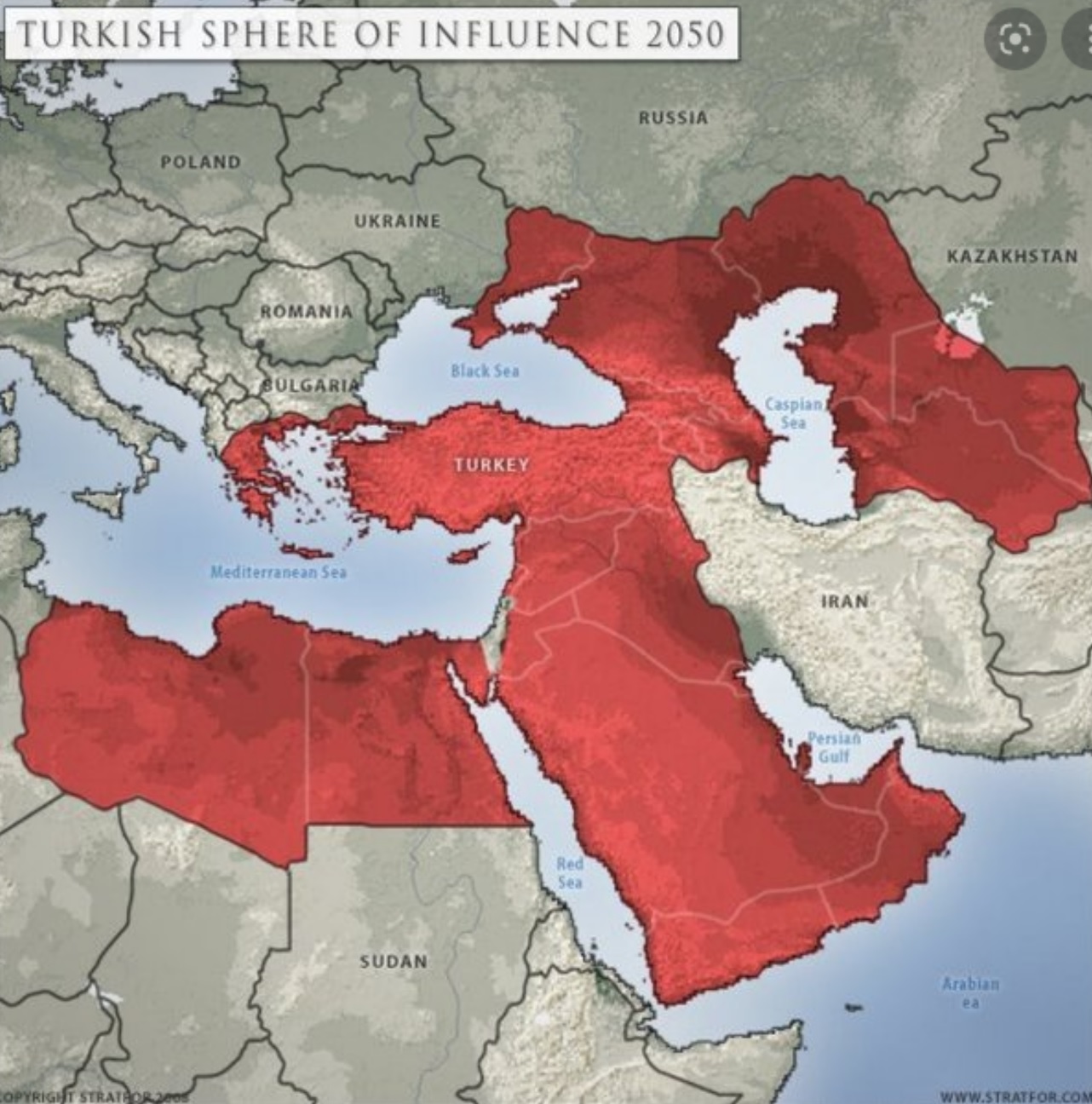
Turkey is not at all embarrassed to be the tip of the Zionist spear, it is worth remembering Thomas Friedman’s map of Ankara’s geopolitical ambitions, where almost the entire Islamic world is captured by the “new Ottomans”, with the exception of the Zionist colony, which, judging by map, will peacefully coexist with the modern “Ottoman port”.
He added that we stand beside our Palestinian brothers and won’t allow Palestinian rights to be trampled. He added that it is possible to suspend the relations with Abu Dhabi and recall Turkish ambassador from UAE.
It is while Turkey has official and unofficial relations with Zionist regime. Which one should we believe? Turkish relation with Israel or blaming Arabic states for normalizing relations with Israel?!
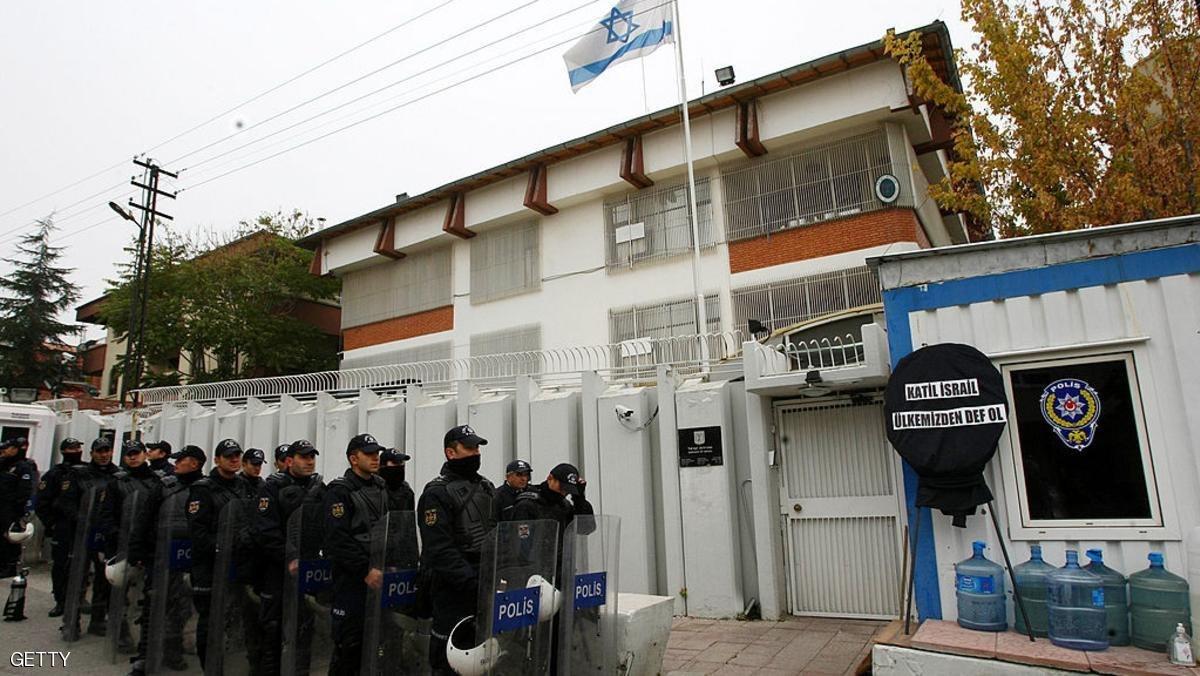
P.S. Archive image of Zionist regime embassy in Ankara
After the Col. Muammar Gaddafi overthrow in 2011 in Libya, that ended his more than 40-years governing, this country entered to a new stage of political and military actions. The actions that continue so far and have turned Libya into regional and trans-regional powers presence square. These clashes still continue, despite the numerous changing of governments. Among the most important reasons of this conflict continuation, can mention the factors like severe disagreements between the national congress early members and their supporting of Gen. Haftar, that announced the coup against national congress in a tv-speech, governments disability in disarming of armed groups and disability in forming a national army.
In the current situation, Gen. Haftar (LNA) has the control of more parts of Libya, with the support of some Libyan political groups, foreign countries like Saudi Arabia, UAE and some European countries; and also in other parts, the government stationed in Tripoli (GNA) is supported by Turkey and Qatar. Among the countries that involved in the Libyan conflict, the Turkey activities are more greater. This presence has many reasons including political, ideological and economic reasons.
The political and ideological dimensions of Turkey’s presence in Libya
The Government of National Accord (GNA) has the Muslim Brotherhood idealogy, that this issue is one of the main reasons of Turkey’s supports from the Tripoli based government in Libya. The AKP that is the ruling party in Turkey, supported of Muslim Brotherhood all over the Arab world in the Arab spring. The clear example of this issue, was supporting of Morsi in Egypt. Also, one of the reasons for Turkey and Qatar good relations, is the Muslim Brotherhood thoughts of Qatar. The thinking that one of its main rivals in the Sunnah world, is Wahhabism thinking by the Saudi Arabia leadership.
Erdogan, as the number one figure in Turkey in recent decade, is very interested in Muslim Brotherhood idealogy. Erdogan has studied at the Imam Khatib school, that is a religious school and promotes some of the Muslim Brotherhood ideas and has had activities in Turkey, and he is so interested in these ideas, regardless of political tendencies. Also, spreading of this ideology is a tool for the reviving the Ottoman geographical borders and ideas named Ottomanism by Erdogan, that include the Syria to Egypt and now the Libya. Of course, the Libya has been the Mediterranean gateway for the Ottomans, since Ottoman empire. Therefore, the political reason for Turkey presence in Libya is an effort for the Brotherhood government domination in Libya in order to turning to a base for Turkey in the North Africa. In fact, the Turks believe that after the coup in Egypt and the Muhammad Morsi overthrow in Egypt as one of the Erdogan allies in north of Africa, Libya can fill this gap for Turkey.
The economic dimension of Turkey presence in Libya
But the other issue, is Turkey’s economic role. At the Muammar Gaddafi time, Turkey had many contractors in Libya, so with the Gaddafi overthrow, Turkey was from the countries that suffered economically in this country. Turkey’s economic activities in Libya were in the extent that this country had been turned to one of the major economic partners of Turkey. Turkey’s investments in Libya are estimated more than 28 billion dollars. Turkey wanted to follow this process after the Gaddafi overthrow, that Libyan economic negotiations with Turkey were postponed due to the Khalife Haftar confliction with the Government of National Accord.
On the other hand, access to the oil and gas as the cheap fuel and industrial motive is very important for Turkey. The issue that Turkey for reaching it, did drilling in Cyprus and even confronted with Europe. Libya is also from the countries that has a lot of natural resources. The sources that can release the Turkey from dependence on Russia and Iran.
Therefore, when the Government of National Accord asked Turkey to send the forces, the Turkish parliament allowed immediately Erdogan to dispatch military forces to Libya. After the Turkey policies failure in Syria and the hopelessness, or it’s better that say Erdogan’s fear of confronting with Syria and its supporters such as Iran and Russia, this country’s forces almost lost their efficiency in the Syria, and now for supplying the Turkey’s economic and political interests in Libya, should fight with Gen. Haftar that is backed by Saudi and UAE.
Erdogan said: – “We have sheltered 3.7 million Syrians in our country and cannot stand a new wave of immigration.” – “About 4 million people have fled the Turkish border because of the bloody attacks by the regime, and there are 1.5 million on our border right now.” – “Turkey is not seeking adventure or striving to expand its borders. In Syria, we are neither seeking oil nor soil, our desire is to ensure the security of our borders through the creation of a safe zone.” – “Idlib has become a pretext for pressuring us and destroying the other gains of our country. We did not go there at the invitation of Assad, but at the invitation of the Syrian people. Until the Syrian people say it is over, we have no intention of leaving. – “I told Mr. Putin, what do you do there? If you are looking to build a base, build it but step aside from us.” – “The main goal of the current scenario is not Syria, but Turkey. After reaching their goals in Syria, they will head towards Turkey. The idea that those who have divided Syria into three parts, respect the territorial integrity of Turkey, is a mere neglect. – “We will show our determination to the regime and its supporters, everyone must see and accept that our struggle in Syria is for everyone’s future.” – “Let’s not forget that we have lost about 7,500 security forces and 6,800 civilians in our country since the first PKK terrorist act in 1984. Today, in Syria alone, the number of trained and equipped terrorists is estimated at between 40,000 and 60,000. – “The blood of our martyrs will not be in vain. So far, more than 2,100 elements of the Assad regime have been killed and 300 of their military vehicles destroyed. Our efforts to create an effective safe zone at a depth of 30 kilometers in Syria continue.” – “Last night 7 chemicals warehouses blew up and this is the stage we never wanted to reach. But as long as we are forced to do so, the consequences must be borne.” – “Their commitment to us was to out the YPG and the PYD from these areas, but neither Russia nor the US did. Those who help the terrorist groups and the regime buy ammunition and equipment from these countries, but no one is supporting Turkey, neither in this respect nor in the field of asylum seekers.” – “What did we say months ago? If this is the case, we will have to open the borders. They were upset but didn’t believe it. What did we do yesterday? We opened the doors. As of this morning, about 18,000 have fled the border. That figure is likely to reach 25,000 or 30,000 today. We will not close the doors from now on.”
1. What happened in Russia-Turkey talks? Russians stated in the negotiation that Turkey did not obliged to Sochi agreement regarding differentiate between terrorists and opposition groups and built several new observation posts and deployed extensive force to Idlib. Russia considers the operation fighting the terrorism but did not close the negotiations and try to force the new conditions upon Erdogan. Erdogan, on the other hand, started being unreasonable, threatened Syria and condemned Russia’s and Iran’s support for the operation.
2. Continuation of Syrian Army and allies operation: Syrian Army and allies could so far liberate about 2,000 km2 in west of Aleppo and Idlib provinces and seven Turkish observation posts with more than 500 Turkish troops are besieged. This can reduce the risk of Turkey extensively assaulting Syria since besieged Turkish troops are the best target to answer any assault by Turkey. As can be inferred from Bashar Assad and Russian officials statements, operation of northwest of Syria will continue at least until liberation of Idlib and possible scenarios and axes of engagement and advance are not clear. Syrian army can move toward border of Turkey and besiege terrorists or liberating towns one by one in Idlib and Aleppo push back them toward Turkey’s border.
Erdogan however by sending numerous troops and equipment to Syria is obviously looking to get more bargaining chips. Putin refuse to meet him or accept his proposal and continuation of the operation challenged Turkish policies fundamentally and Erdogan is facing dilemma of retreating or confronting. Erdogan is aware of consequences (more refugees to Turkey, war extended to Turkey, etc.) of confronting Syrian army more, therefore, avoids having an open war with Syria for now. However wars start with miscalculation and Erdogan is not immune of it either. We will hear more news of liberating new lands in Syria, unless Erdogan stops dreaming to pray in Umayyad Mosque and get along with Russia.
While gathering of forces in the frontline of a war zone! in this shape is completely unprofessional, unnecessary and fatal mistake but important point is that Erdogan and Turkish army have opened the door of anti armor missile depots to terrorists in the northwest of Syria in the way that various terrorist groups use these missiles for targeting the infantry with no concern. This issue has been in the past years too but in the recent year has been intensified; yes this is the Turkey that is a member of NATO and claims fighting with terrorists but in fact helps terrorists to hit foot soldiers with anti tank missiles!
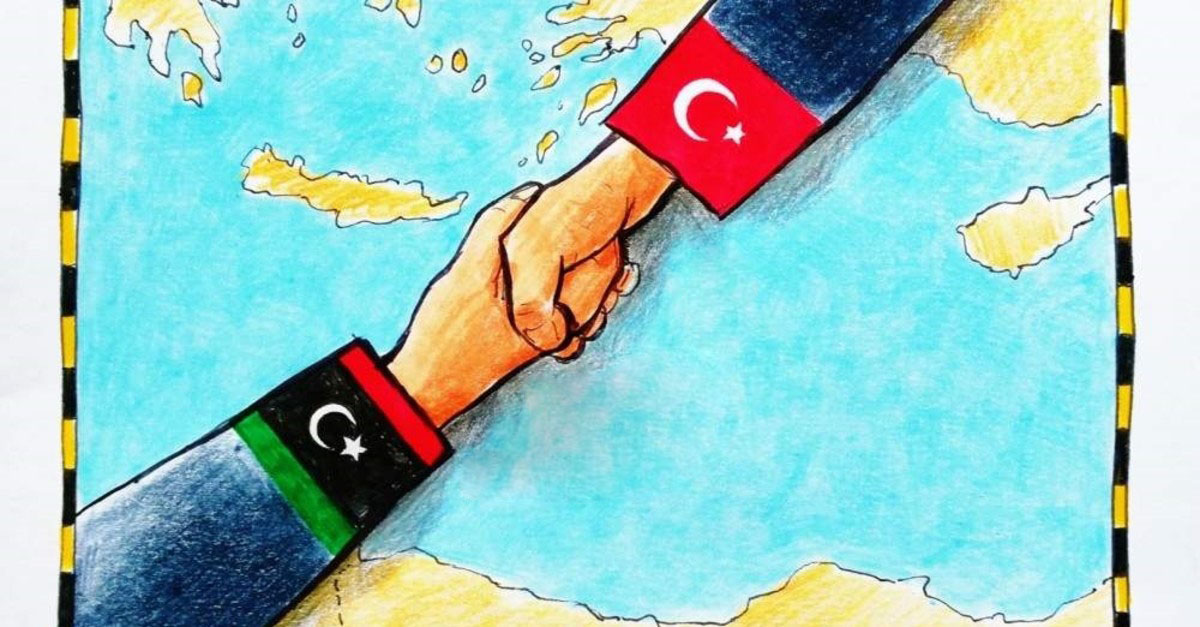
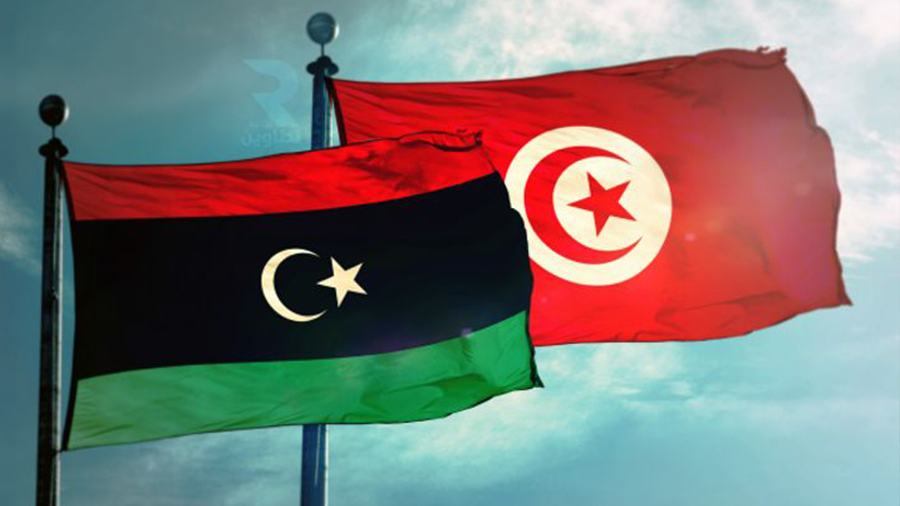
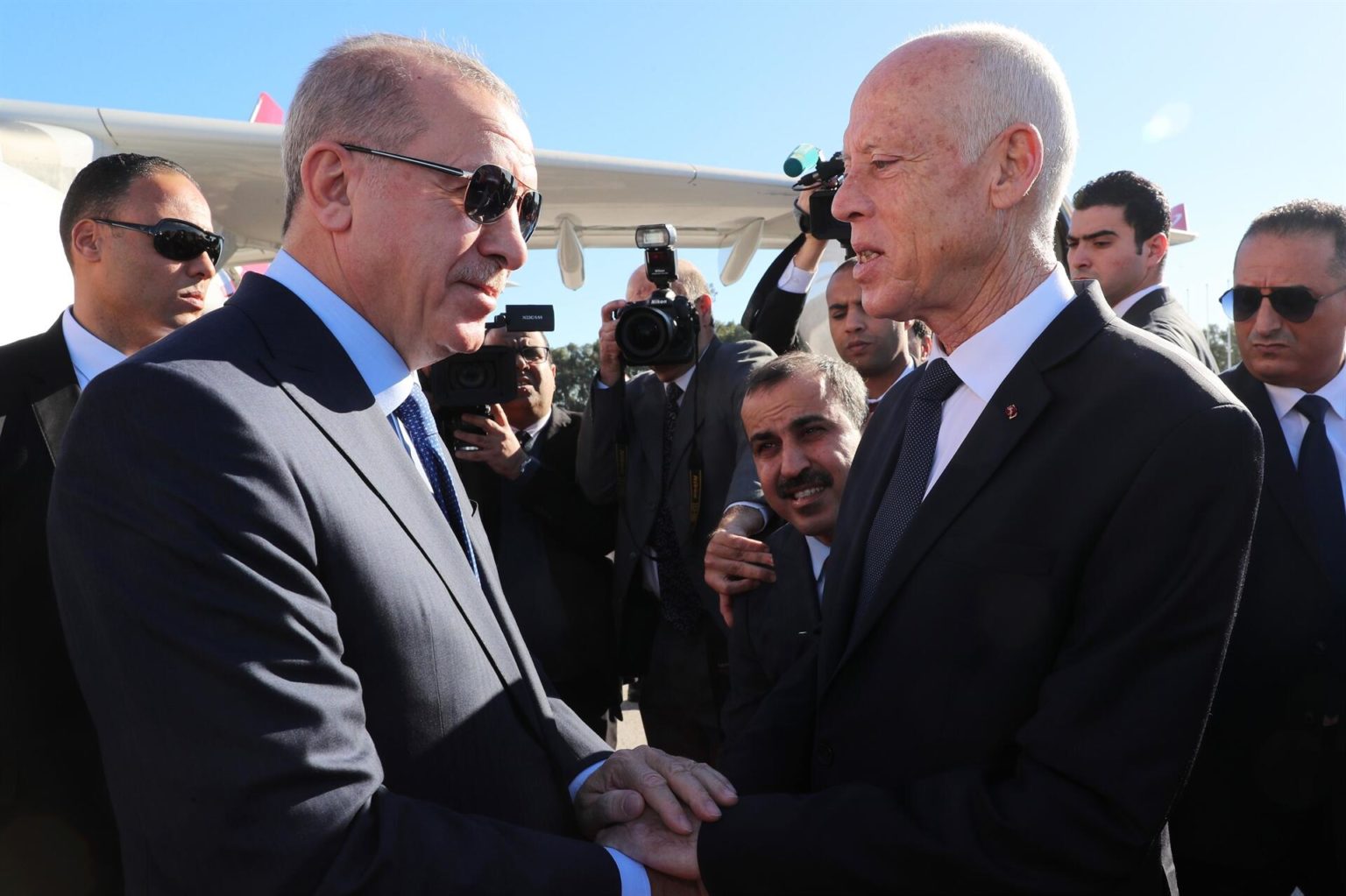
Erdogan said in his latest remarks about Libya: – We propose the bill of troops’ deployment to Libya in next month to the parliament. – In my trip to Tunisia, we decided to support the government of Faez Al-Sarraj in Libya. – Libya is the heritage of Ottomans and Mustafa Kemal Ataturk. – We fully support the GNA which is standing against Haftar. The actions of Haftar is a Coup which different countries specially the Arabic countries support it.
After the Turkey decision, “Dmitry Peskov”, speaker of the Russia presidential palace, believes that the situation of Libya is critical and asked for the international effort for making peace in this country. Peskov also believes that the existence of different countries armies in Libya is because of different destructive actions of the regions regimes.
Erdogan said: – Turkey works with Fayez al-Sarraj who is accepted by international community. But Haftar does not have such a place in the world and we don’t let our brothers under pressure in Libya.
– The issues of Libya are not limited to this country and will affect the neighboring countries such as Tunisia.
– Turkish goal in Libya is to establish ceasefire and start of political process and we believe Tunisia has a key role in stability of Libya.
– There are almost five thousand Sudanese and two thousand Russian soldiers under the title “Wagner” in Libya, why are they there? We never been unwanted and if we are invited officially, we examine it.
– The recent agreements with Libya were passed in our parliament which is representative of the nation and the government will take the next steps.
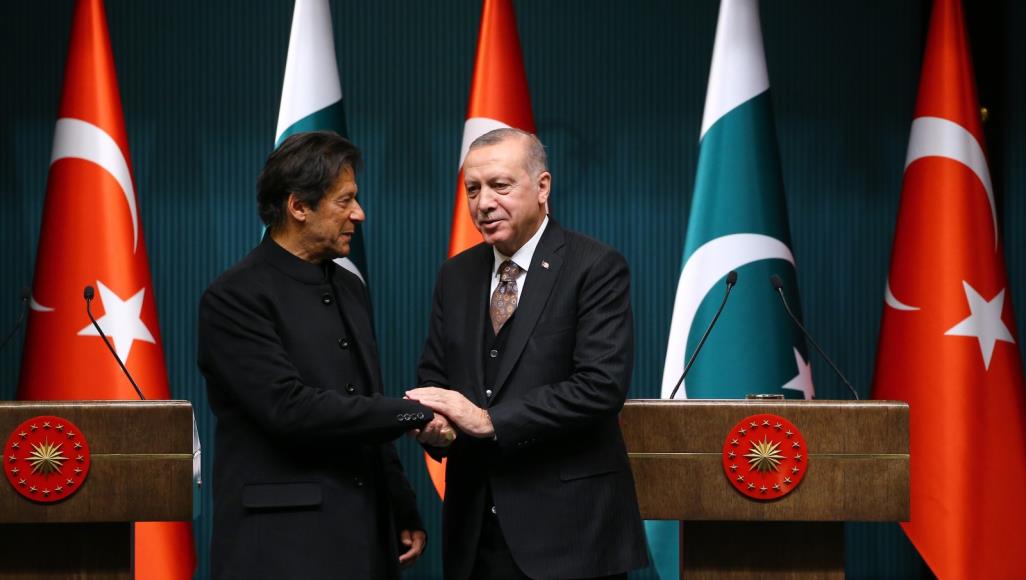
Erdogan said: – Saudi Arabia threatened Pakistan that if they participate in Kuala Lumpur Summit, four million Pakistani workers will be deported! They also threatened that if Imran Khan goes to Malaysia, they will pull out their assets from Pakistan market and central bank.
Pakistan, Indonesia, Iran, Qatar and Turkey were special guests of the leaders of Islamic countries in Kuala Lumpur, Malaysia, and Imran Khan after visiting Indonesia and Bin Salman cancelled his trip to Malaysia abruptly.