Tag: Kurdistan region of Iraq

  • Investigating the Dimensions of Drone Attacks on Oilfields in the Kurdistan Region of Iraq

    Investigating the Dimensions of Drone Attacks on Oilfields in the Kurdistan Region of Iraq

    These drone attacks illustrate the complex political, economic, and security issues stemming from the ongoing tensions between Baghdad and Erbil. One significant attack occurred near Erbil International Airport, which prompted a response from American defense systems stationed in the area, resulting in the destruction of the attacking drone.

    In addition to the incident near Erbil Airport, drone strikes targeted oilfields operated by Norwegian companies DNO and American Hunt Oil in the Zakho and Sheikhan regions. These attacks led to the temporary halting of oil production in some fields, reportedly reducing the region’s overall production by 145,000 barrels per day—approximately half of its daily output.

    Origins and Reasons for the Attacks

    Although no specific group has claimed responsibility for the attacks, many Iraqis believe they are rooted not only in internal disputes among various Iraqi political factions but also stem from broader conflicts concerning the region’s economic and strategic interests. Some analysts suggest that these drone strikes may be part of a strategy aimed at pressuring the Kurdistan Region to accept new oil agreements with the central Iraqi government.

    This theory gained traction following the announcement of a new oil agreement between Baghdad and Erbil, which significantly reduces the region’s share of oil revenues. After this agreement, the frequency of drone attacks on oilfields decreased, indicating that the groups behind the attacks might have targeted these fields to coerce Erbil into accepting the new terms.

    Political Reactions and Consequences

    In response to the attacks, Iraqi Prime Minister Muhammad Shia al-Sudani initiated a comprehensive investigation and urged security authorities to identify the perpetrators as quickly as possible. He also stated that decisive measures would be taken against those responsible, reflecting the Iraqi central government’s strong concern for the security and stability of the region, which is one of the country’s primary sources of income.

    Conversely, the Iraqi Resistance Coordination Committee, which consists of various resistance groups, claimed that these attacks are a “settling of internal scores” between the Kurdistan Regional Government and oil companies. The committee denied any involvement in the drone attacks, asserting that their operations have never harmed the interests of the Iraqi people or security forces. They advised the Kurdistan Regional Government to concentrate on improving citizens’ livelihoods and addressing economic challenges instead of transferring its internal crises onto the central government.

    Economic Concerns and the Future of Oil Production

    The significant decline in oil production in the Kurdistan Region, along with extensive damage to its oil infrastructure, has led officials to call for more robust defense measures to protect these fields. The head of the Kurdistan Region’s Foreign Relations Office has stated that the United States is deeply concerned about these attacks. Consequently, various requests have been made to strengthen the defense systems of both the Kurdistan Region and all of Iraq.

    The drop in oil production and the damage to the region’s strategic oil fields have adversely impacted its revenues and raised concerns about the economic future of the Kurdistan Region. Reports indicate that the monthly oil revenue, which is approximately $297 million, is at serious risk due to the production being cut by half. This revenue constitutes a significant portion of the region’s budget. If the attacks and continued decline in production persist, the economic situation in the Kurdistan Region may be severely affected.

    Iran: A Possible Reason for These Attacks

    The recent drone attacks on oil fields in the Iraqi Kurdistan Region may also serve a strategic purpose for Iran. These security pressures could be Iran’s way of signaling that if the Kurdistan Region becomes a base for military and intelligence operations conducted by Israel and its proxy groups—particularly the Kurdish groups that act against Iran’s interests—then Erbil’s oil and economic resources will be subject to significant attacks and restrictions. This stance reflects Tehran’s concern regarding the increasing anti-Iranian influence in the Iraqi Kurdistan Region and suggests that any alignment by the Kurdistan Region with U.S. and Israeli objectives could lead to severe economic and security repercussions.

    Given the region’s heavy reliance on oil revenues, the escalation of drone attacks on oil wells and infrastructure not only poses a grave threat to Erbil’s economy but also sends a clear warning to regional and international actors: Tehran can use oil as a leverage tool to limit the influence of Israel and its Western allies in northern Iraq.

    In summary, this warning from Iran indirectly calls on the Kurdistan Regional Government to reconsider its regional policies. It emphasizes that to maintain economic stability and security, the Kurdistan Region should refrain from engaging in or facilitating anti-Iranian activities within its territories. Otherwise, the oil economy of the Kurdistan Region could sustain serious damage that would be difficult to repair.

    The drone attacks on the oil fields of the Iraqi Kurdistan Region should be viewed not only through the lens of military and security motives but also as part of a broader conflict in domestic and international politics. These attacks are clearly connected to the oil agreements between Baghdad and Erbil, as well as political developments within Iraq. Thus, the Iraqi central government should closely monitor the security and economic situation in the Kurdistan Region to prevent escalation. Simultaneously, the Kurdistan Region should avoid exacerbating internal tensions and crises to safeguard its security and interests while pursuing diplomatic and economic solutions to its ongoing challenges.
  • Deputy Of Abu Bakr Al-Baghdadi Arrested In Iraqi Kurdistan Region

    Deputy Of Abu Bakr Al-Baghdadi Arrested In Iraqi Kurdistan Region

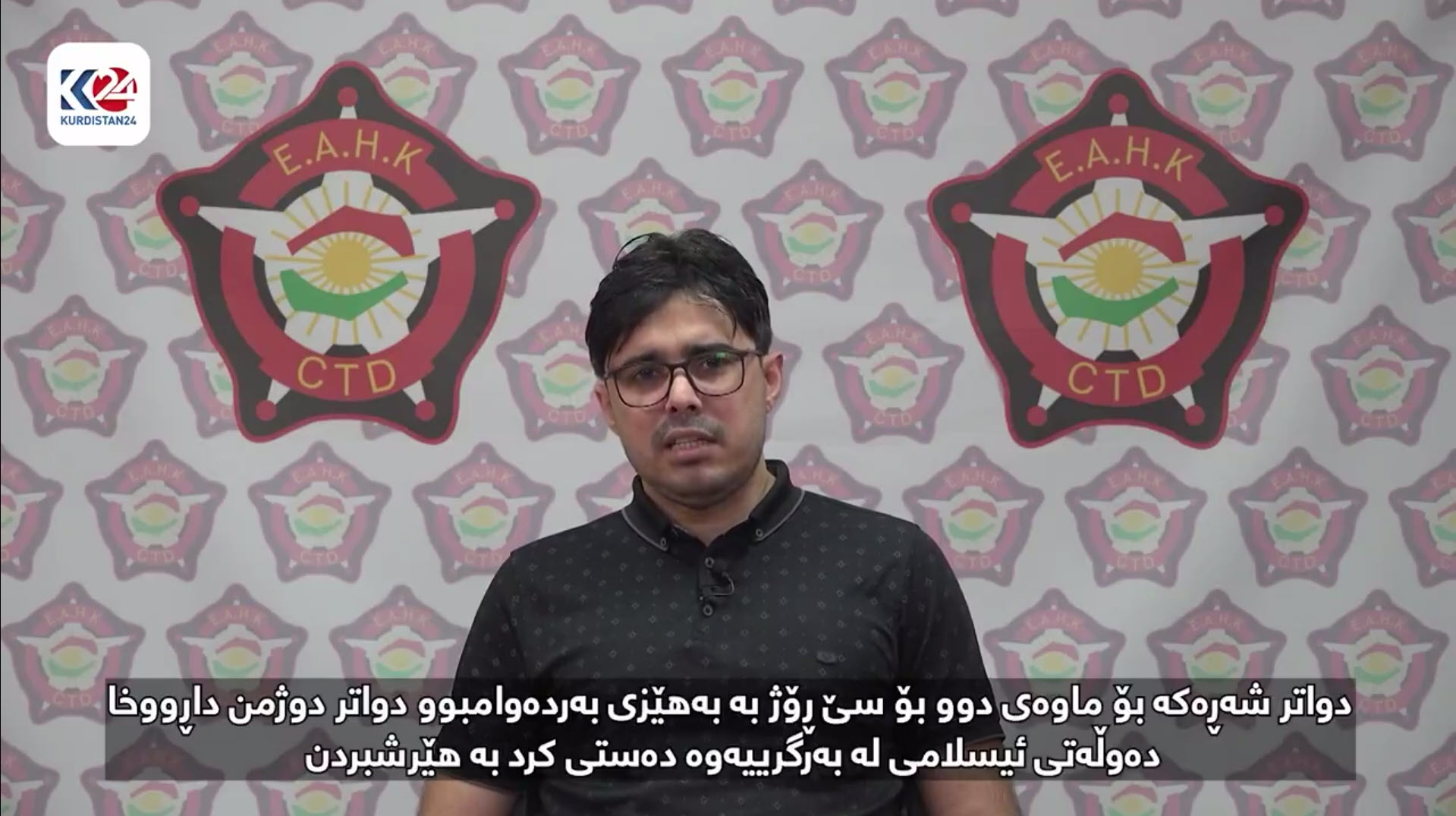
    The Kurdistan Region Security Council on May 17 issued a statement announcing the arrest of Soqrat Khalil, the main aide to Abu Bakr al-Baghdadi, the former leader of the ISIS terrorist group.

    The statement said that Khaled returned to the Kurdistan Region from Turkiye with a fake passport after five years and was quickly arrested.

    Khaled played an important role in making bombs for the ISIS terrorist group, and al-Baghdadi had assigned him to carry out many major operations.

    He also played an effective role in the control of Mosul by this terrorist group in 2014 and participated in many battles against Iraqi forces and the Kurdish Peshmerga militias.

  • US Congress Ratifies Plan To Equip Iraq Kurdistan With Air Defense System

    US Congress Ratifies Plan To Equip Iraq Kurdistan With Air Defense System

    ISWNews Analysis Group – The Armed Services Committee of the US House of Representatives approved the amendment, which was proposed by Dan Bacon, on June 21 during the vote on the “National Defense Authorization Act for Fiscal Year 2024”.

    According to Bacon, the amendment enjoys strong bipartisan support and requires the US government’s attempt to prepare and implement a program to train and equip the Iraqi Kurdistan forces in the face of missile, rocket and drone attacks from Iran.

    In response, Iraqi Member of Parliament Jassim Al-Moussawi stated that providing air defense arms to the Peshmerga forces (Kurdish military forces of the autonomous Kurdistan Region of Iraq) is contrary to international law. The MP noted that any internal party or group in Iraq does not have the right to directly engage in sovereignty matters with other countries without informing and involving the central government. Therefore, the decision to arm the Iraqi Kurdistan region is tantamount to interfering in the country’s internal affairs, he added.

    It is worth mentioning that the US has always opposed the Iraqi army’s access to advanced air defense systems to be able to repel foreign attacks.

    The agreement between the US and Iraq’s Kurdistan region, which was made without informing the Baghdad government, sparked several reactions, and some Iraqi legislators expressed criticism, stating that Washington’s decision is translated into violating Iraq’s independence and undermining its internal security.

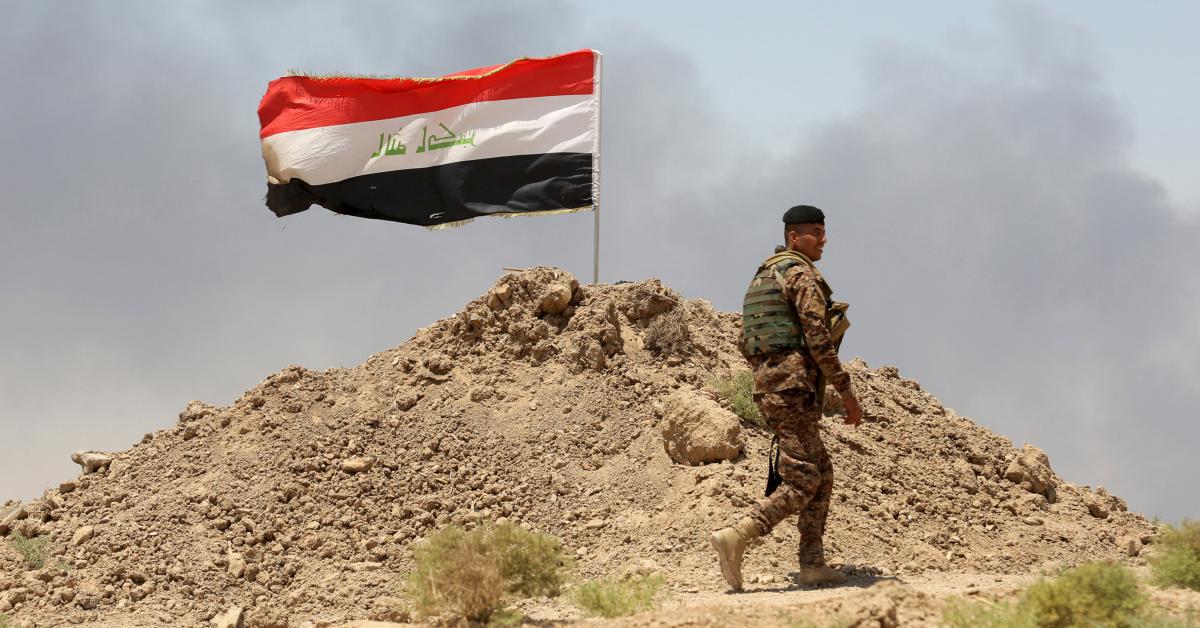
  • Iraqi Army troops deploy along the common border with Iran and Turkey

    Iraqi Army troops deploy along the common border with Iran and Turkey

    On December 4, Iraqi military spokesman Yahya Rasool announced that Mohammad Shia al-Sudani, the Prime Minister and Commander-in-Chief of the Iraqi Armed Forces, ordered border guards to take control of the borderline shared with Iran and Turkey.

    Al-Sudani has also ordered to strengthen the Iraqi Border Guard Command with weapons, equipment and troops so that the border areas are under a suitable control.

    He went on to say that Iraq does not allow its territory to be used to attack its neighboring countries, adding that Iraq has good relations with all neighboring countries and seek to develop the ties regarding the interests of Iraq and the neighboring countries.

    According to Yahya Rasool, the purpose of this order is to end the conflict between the armed forces of Iran and Turkey with the terrorist groups.

    Read more: Iranian missiles pounds terrorist positions in Kurdistan region!

    It is worth mentioning that on November 23, the Iraqi National Security Council (INSC) during a meeting chaired by the Iraqi Prime Minister, Mohammad Shia Al-Sudani, examined the recent attacks carried out by Iran and Turkey on the northern regions of Iraq. The council made four new decisions for the deployment of Iraqi forces along the common borders of Iraqi Kurdistan Region with Iran and Turkey.

    Following the order, two Iraqi military brigades were deployed along the common borders of Iraq with Iran and Turkey.

    It is said that despite the presence of Peshmerga forces, the Iraqi border guards took control of the border areas. This measure was taken following several meetings and an agreement between the Baghdad authorities and Iraqi Kurdistan Region in recent days. According to this agreement, the Iraqi border guards will not enter the border crossings under the control of Kurdistan Region armed forces, known as the Peshmerga.

    It is worth noting that deployment of Iraqi border guards along the common borders with Iran and Turkey was discussed in the recent meeting of Iraqi Prime Minister Mohammad Shia al-Sudani with senior Iranian officials.

    Read more:
    Is Iran marching to Iraq Kurdistan Region to suppress terrorism?!
    Iran’s warning to Iraq: Remove the terrorist groups from the Kurdistan Region!

  • Iran’s warning to Iraq: Remove the terrorist groups from the Kurdistan Region!

    Iran’s warning to Iraq: Remove the terrorist groups from the Kurdistan Region!

    In recent years, the officials and military commanders of the Islamic Republic of Iran have repeatedly warned about the activity and deployment of terrorist groups near the borders of Iran and the Kurdistan region of Iraq, and have informed the local and government authorities of Iraq about their opposition. However, the central government of Iraq and the authorities of the Kurdistan region have not taken decisive and acceptable measures to expel these groups or prevent their attacks on the territory of the Islamic Republic of Iran.

    Therefore, with the increase of the activities of terrorist groups Komola, KDPI, PAK, PJAK and PKK in Iran’s borders, as well as attempts to carry out terrorist operations, the explosion in one of the country’s sensitive centers in Isfahan province by elements of the terrorist group Komala under the guidance of Mossad (the attack was neutralized in August), the attempt to bringing armed teams and import a large amount of weapons into Iran’s soil and the active role in the recent riots in Iran’s border cities made the Islamic Revolutionary Guard Corps determined to carry out a artillery and drone campaign against the positions of the mentioned terrorist groups in the Kurdistan region of Iraq.

    Considering the number of terrorist groups and their foreign supporters, it seems that the recent attacks of the IRGC are not enough to completely destroy the terrorist groups and this operation is just a warning message and retaliatory action. On the other hand, the authorities of the Islamic Republic of Iran, at the same time as the start of this operation, have put diplomatic consultations with the Iraqi authorities on the agenda and demanded an end to the activities of terrorist groups around their borders, especially in the Kurdistan region of Iraq.

    The presence of terrorist groups in the Kurdistan region of Iraq, in addition to threatening the security of Iran, is also considered a serious threat to the security of Iraq. If proper action is not taken by the Iraqi authorities to expel terrorist groups from the Kurdistan Region, this issue can threaten Iraq’s national security in the long term, create problems in relations with neighboring countries, increase the number of foreign military bases in northern Iraq, and turning the Kurdistan region of Iraq into an arena for resolving regional disputes and military conflicts.

    Currently, the terrorist groups of the Democratic Party of Iranian Kurdistan (KDPI), Kurdistan Free Life Party (PJAK), the Komala Party of Iranian Kurdistan (Komala) and the Kurdistan Freedom Party (PAK) are among the main separatist and terrorist groups in the eastern borders of the Kurdistan Region, focusing on attacking Iran’s national security. During the past years, many documents have been obtained about the use of the mentioned groups by western Intelligences, including the CIA and Mossad, to carry out subversive operations in Iran.

    Considering this issue, if the current negotiations to dismantle and evacuate the headquarters of these groups from the territory of the Kurdistan Region do not succeed, we may witness more effective and serious operations by Iran, including ground operations to clean up the eastern areas of the Kurdistan Region.

    Read more:
    Iran’s missile and drone attacks against terrorist groups in the Kurdistan region + Video
    15 terrorists were killed in Kurdistan Region of Iraq
    IRGC missile attacks on north of Er
    bil

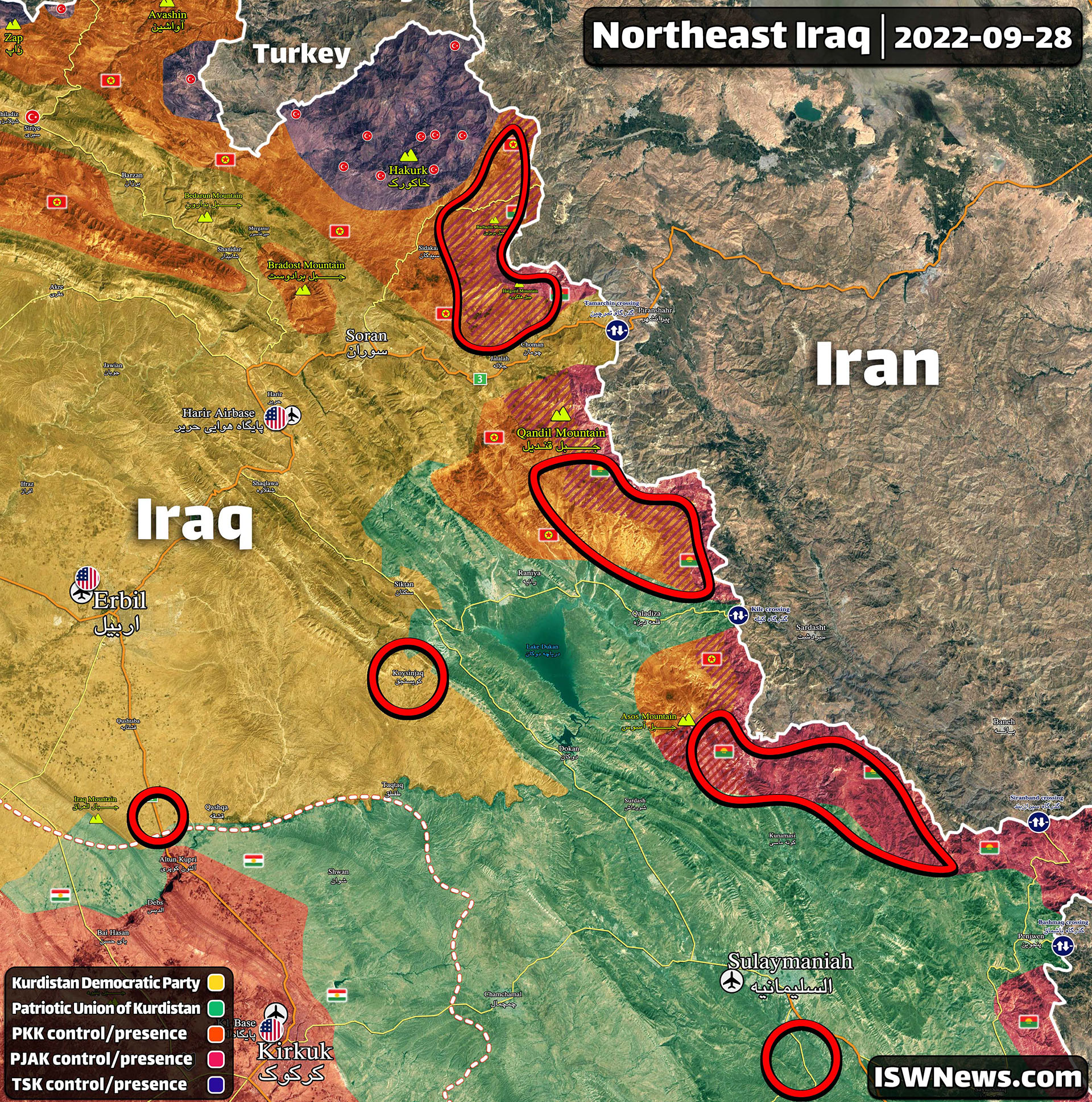
    Map of the dispersion of terrorist groups in the eastern borders of the Kurdistan region of Iraq – Click to view full size
  • IRGC missile attacks on north of Erbil

    IRGC missile attacks on north of Erbil

    The Islamic Revolutionary Guard Corps has announced in its latest official statement that military operations against terrorist groups in the Kurdistan region of Iraq will continue until the complete disarmament of the terrorists. In this regard, Major General Mohammad Bagheri, the Chief of the General Staff of the Iranian Armed Forces, criticized the US support and cooperation with terrorists and separatists and stated that Iran reserves the right to respond to the downing of a Muhajer-6 drone by the US terrorist army. He also warned the neighboring countries where the US and Zionist bases are located, that if any hostile action against Iran’s security and national interests is carried out from these bases, the same bases will be attacked.

    It should be noted that at the same time as the IRGC’s attacks on the north of Erbil today, the Turkish army has also launched an artillery attack on the northern heights of Dohuk province and Sidakan region in the east of Erbil province.

    Due to the incompetence of the Iraqi governments and the cooperation of the leaders of the Kurdistan Region with the United States and the Israeli regime, the heights and different regions of the Iraqi Kurdistan region have become a source for training terrorist and separatist groups on the borders of Iran, Turkey and Syria in recent years. During the recent protests in Iran, these groups plotted and implemented terrorist activities against nuclear facilities, etc., which were thwarted by the intelligence of Iran’s security organizations.

    Read more:
    15 terrorists were killed in Kurdistan Region of Iraq
    Iran’s missile and drone attacks against terrorist groups in the Kurdistan region of Iraq + Video

    Video of #Iran‘s missile and Shahed-136 pinpoint attacks against the terrorist groups in north of Altun Kupri.
  • Iran’s missile and drone attacks against terrorist groups in the Kurdistan region of Iraq + Video

    Iran’s missile and drone attacks against terrorist groups in the Kurdistan region of Iraq + Video

    Based on the available information, in the last four days, the headquarters and camps of the terrorist groups of the KDPI around the city of Koysinjaq, the groups of Komala and PJAK in south of Erbil and north of Sulaymaniyah, and PEJAK and PKK in the Sidekan region have been targeted.

    The Iranian Armed Forces have used suicide drones (Shahed-136), artillery rockets and ballistic missiles in these attacks. The intensity of the attacks has been such that the authorities of these groups have admitted that some of their members were injured and killed. Kurdistan regional media reports that 10 people were killed and more than 24 others were injured, citing the Ministry of Health of Iraqi Kurdistan.

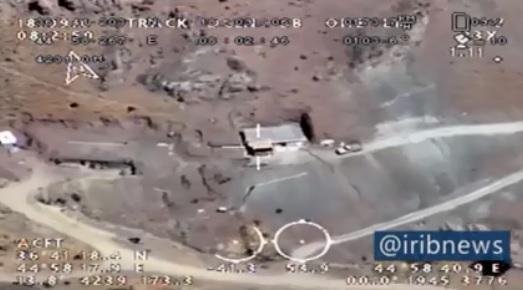
    The moment when two Shahed-136 suicide drones dived and accurately hit the positions of terrorist groups in the Kurdistan region of Iraq.

    It is worth mentioning that the new round of Iran’s attacks against terrorist groups in northeastern Iraq began after these groups took advantage of the recent protests in Iran to enter sabotage teams and a large amount of weapons into Iran’s soil And they intended to carry out terrorist operations in Iran. Therefore, these activities were met with a strong reaction from the Iranian armed forces, and their positions were targeted in different parts of the Iraqi Kurdistan region.

    The attacks against terrorist groups continue and the Iranian authorities have not commented on the results or the end time of these attacks.

    The Iranian Armed Forces had previously warned the Iraqi government and the authorities of the Kurdistan Region of Iraq about the terrorist and illegal activities of the aforementioned groups and had announced that if the Iraqi government and the Kurdistan Region did not take the necessary measures to contain and prevent the terrorist activities of these groups, Iran reserves the right to act against these terrorist groups and suppress them with the strictest necessary measures.

    Click to view full size

    Using the Shahed-136 suicide drone to target terrorist positions in the Kurdistan region of Iraq

    Bombing terrorist positions in the Kurdistan region of Iraq

    Bombing terrorist positions in the Kurdistan region of Iraq

    Bombing terrorist positions in the Kurdistan region of Iraq

    Bombing terrorist positions in the Kurdistan region of Iraq
  • IRGC attacks on terrorist positions in Iraqi Kurdistan + Video

    IRGC attacks on terrorist positions in Iraqi Kurdistan + Video

    Recently, IRGC security forces arrested five members of a terrorist group in the border city of Baneh, the capital of Baneh County, in Kurdistan Province. According to the IRGC, following the confessions of the members of this terrorist team to their subversive goals and intentions against the security of the Iranian nation, this morning positions of terrorist groups in the northern part of Iraq were targeted by artillery and missile attacks.

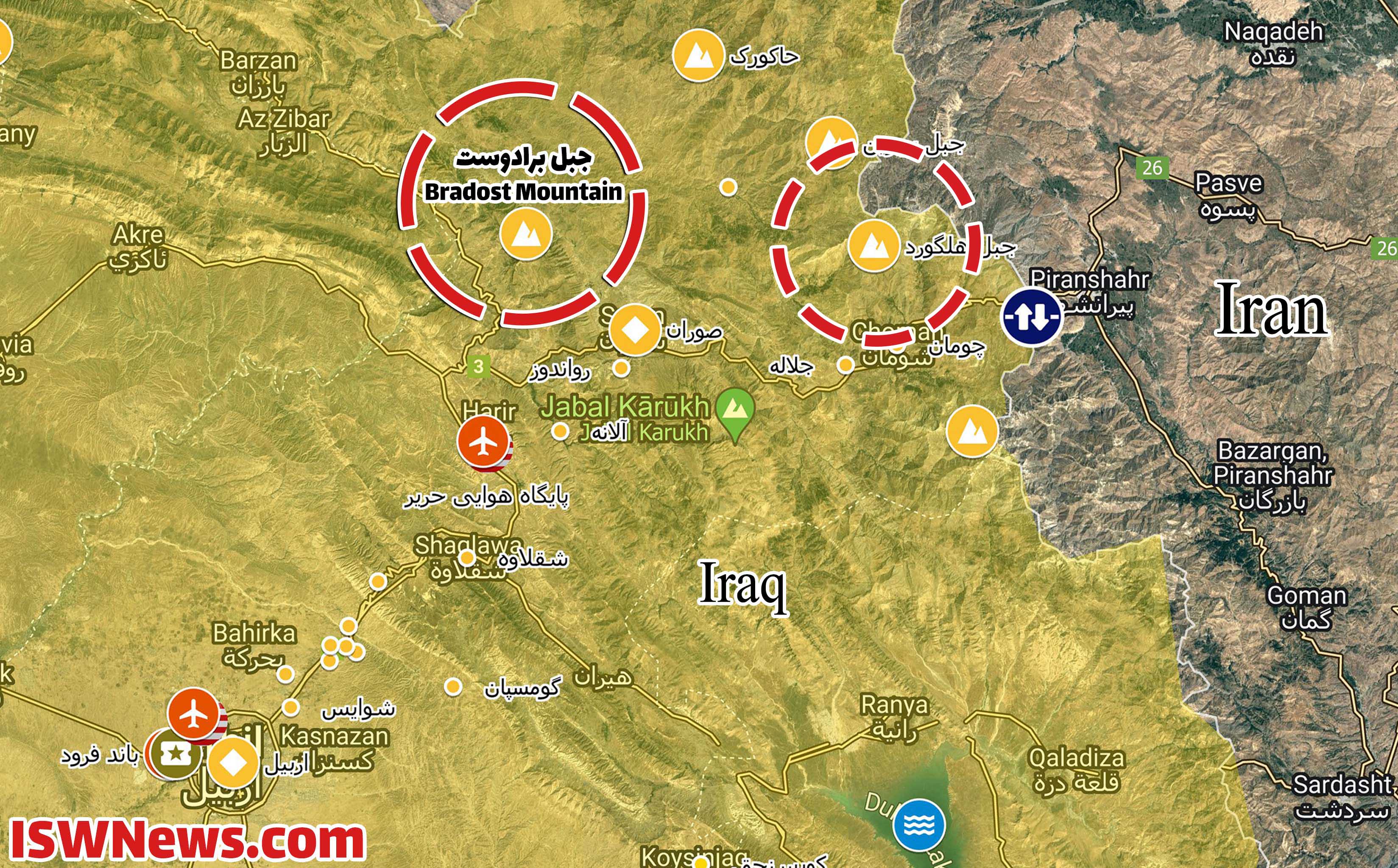
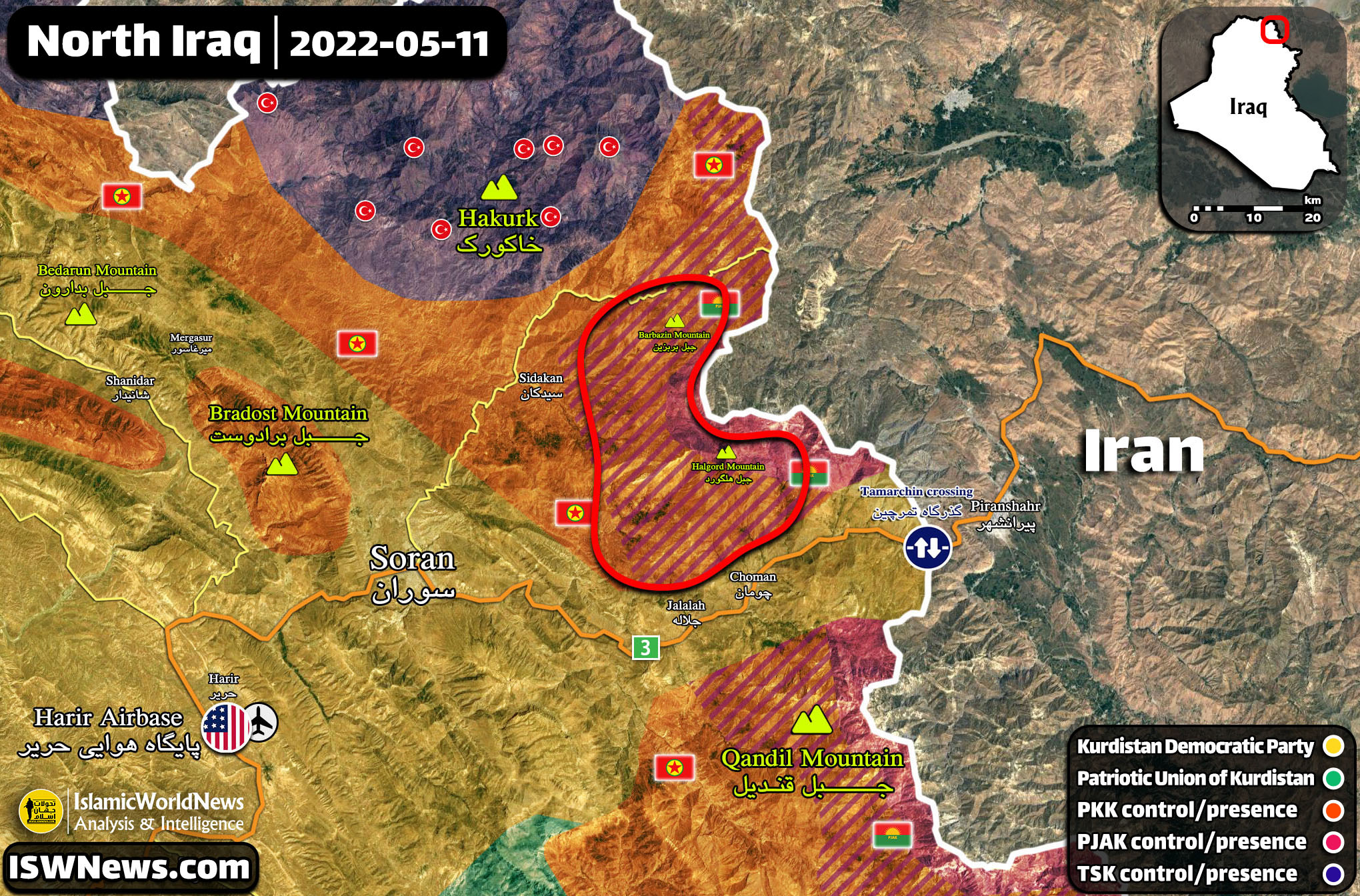
    According to local sources, IRGC ground forces shelled positions of PKK and PJAK terrorist groups in Choman and Barbazin heights of Iraq in the Sidekan region.

    It should be noted that in Summer 2021, IRGC’s ground forces carried out artillery and drone strikes on the positions of PJAK terrorists and other terrorist groups in the Choman and Sidekan areas of Iraqi Kurdistan several times.

    Read more:
    New round of IRGC attacks against PJAK terrorists in Iraq
    IRGC Missile and Drone Attacks on Northern Iraq (Map Update)

    Click to view full size
  • US military aid to Iraqi Kurdistan region + Images

    US military aid to Iraqi Kurdistan region + Images

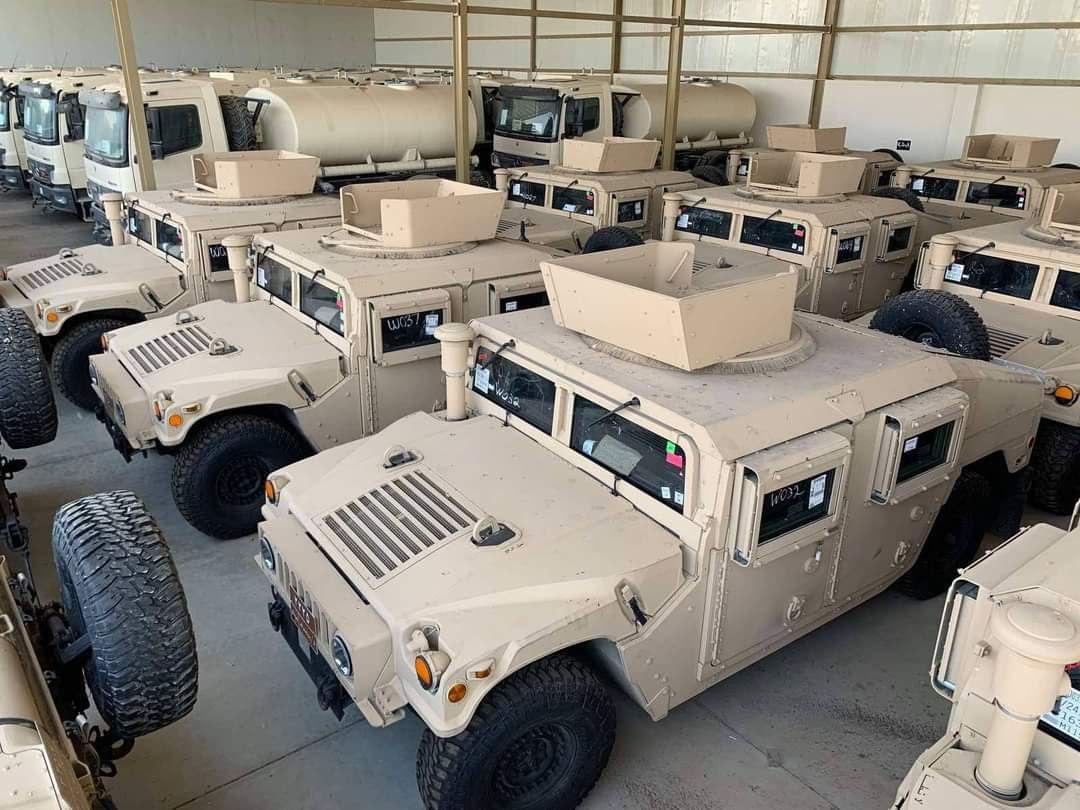
    Matthew Toller, the US ambassador to Iraq, attended a ceremony to hand over $250 million-worth military aid to Peshmerga forces in Erbil, the capital of the Iraqi Kurdistan region.

    According to Iraqi Kurdistan sources, the aid delivered includes armored vehicles and a large quantity of weapons and other military equipment valued at $250 million.
    US military assistance will also continue in the future, and a number of US troops will assist the Peshmerga in training and using some weapons.

    It is worth mentioning that Matthew Toller, the US Ambassador to Iraq, met separately with Massoud, Masroor and Nechirvan Barzani during his visit to the Iraqi Kurdistan region.

    US military aid was delivered directly to the Iraqi Kurdistan region, this is while under Iraqi law any military assistance to Kurdistan Region must be approved by the central government first.

  • Video: IRGC Strikes Terrorist Groups on the Border Areas of Iran and the Kurdistan region of Iraq

    Video: IRGC Strikes Terrorist Groups on the Border Areas of Iran and the Kurdistan region of Iraq


    Recently, the activities of the some Kurdish terrorist groups in the west and northwest of Iran near the Iraqi borders have increased and last week, three members of the IRGC were martyred in the Piranshahr following a terrorist attack.
    Also IRGC ambushed and repelled several terrorists attempts to infiltrate Iran soil and number of terrorists were killed in this clashes.
     
    Today, IRGC published a statement and announced the shelling of terrorist cells on the fringes of the Iraqi Kurdistan Region borders with Iran and the killing and wounding of a large number of terrorists.
    IRGC said the attack was a response to recent terrorist attacks and stated that we have always warned the Kurdistan region authorities about the use of terrorist groups from the Kurdish regions of Iraq for training and organizing terrorist attacks against Iran.
    The attacks were carried out accurately with complete and accurate intelligence on the positions of the terrorist groups, and civilians were asked to keep distance from military camps.