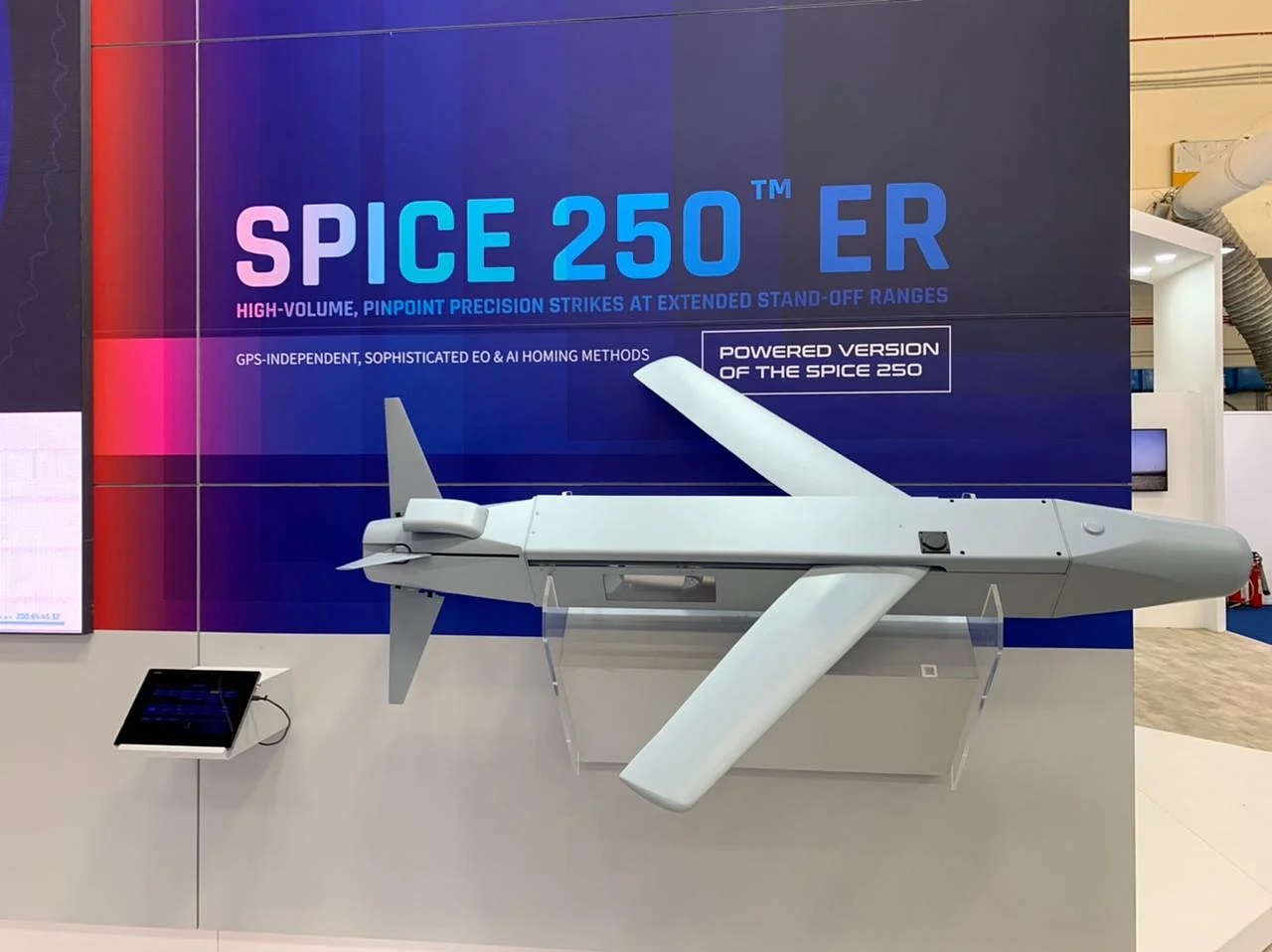
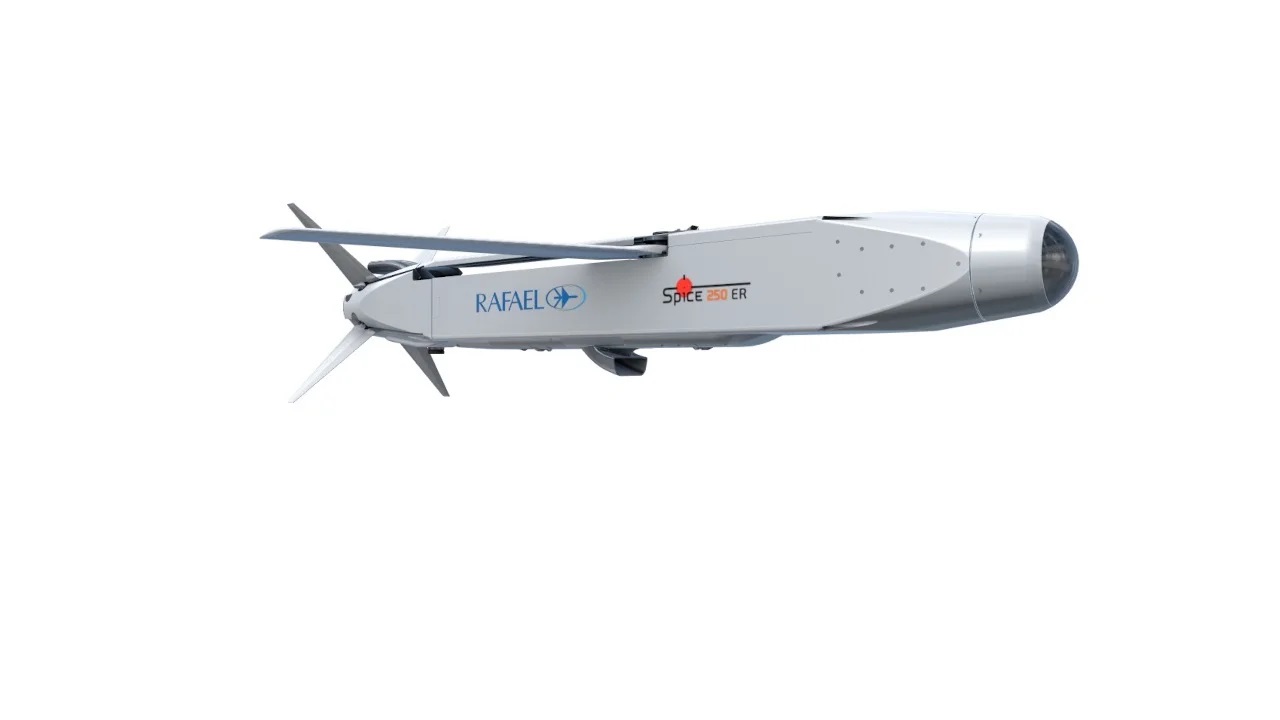
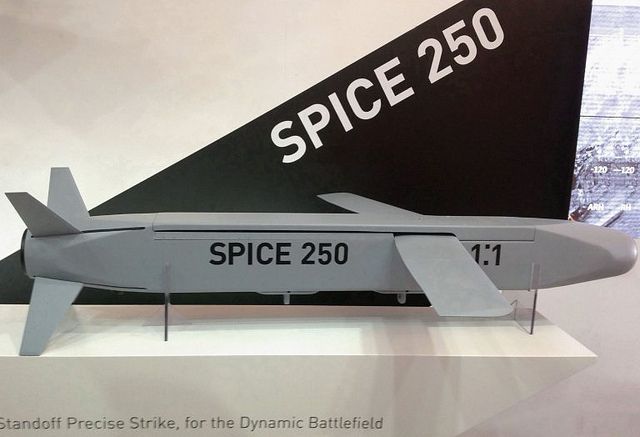
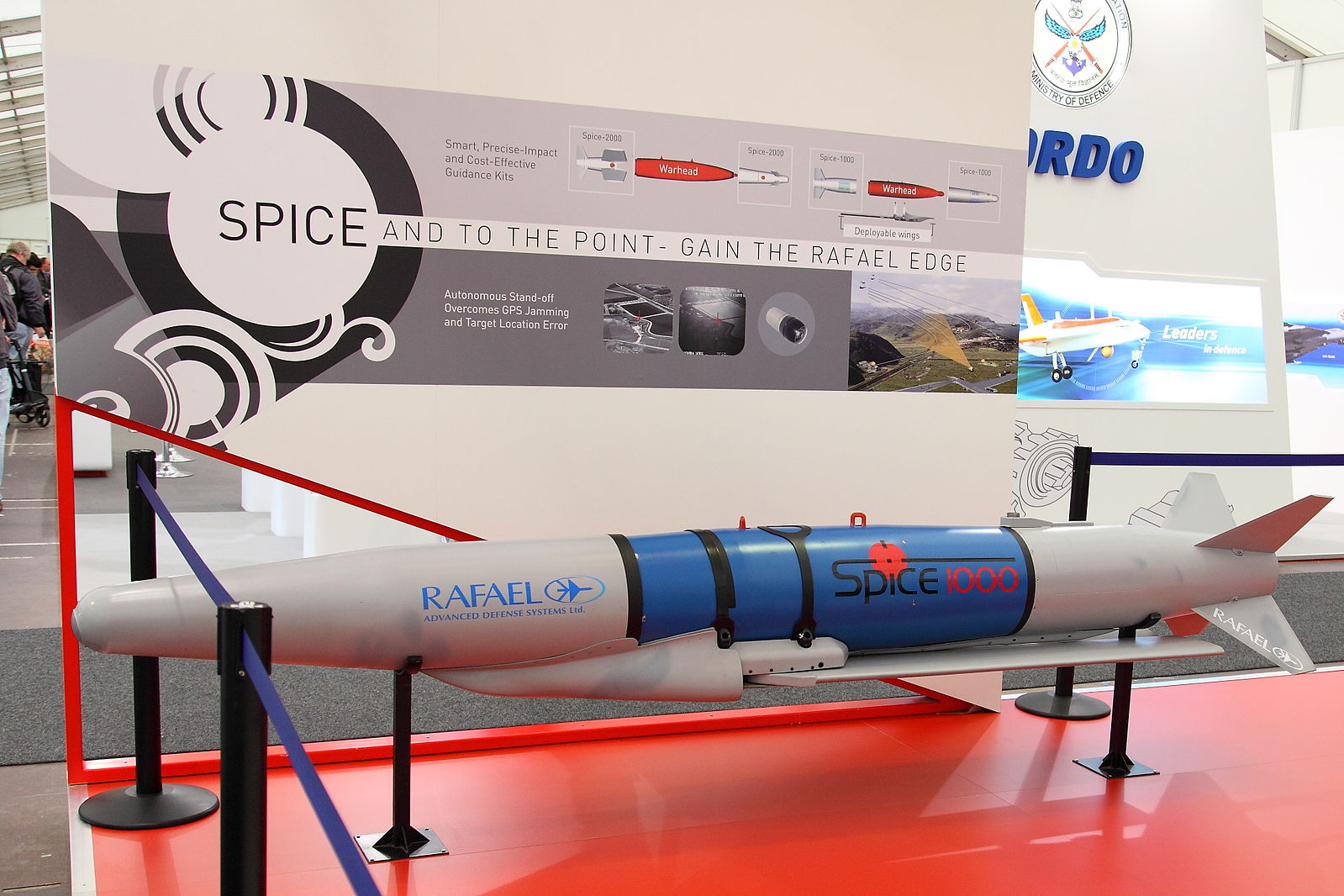
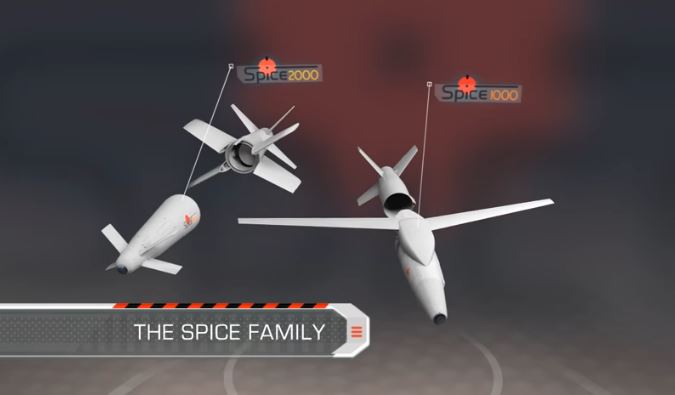
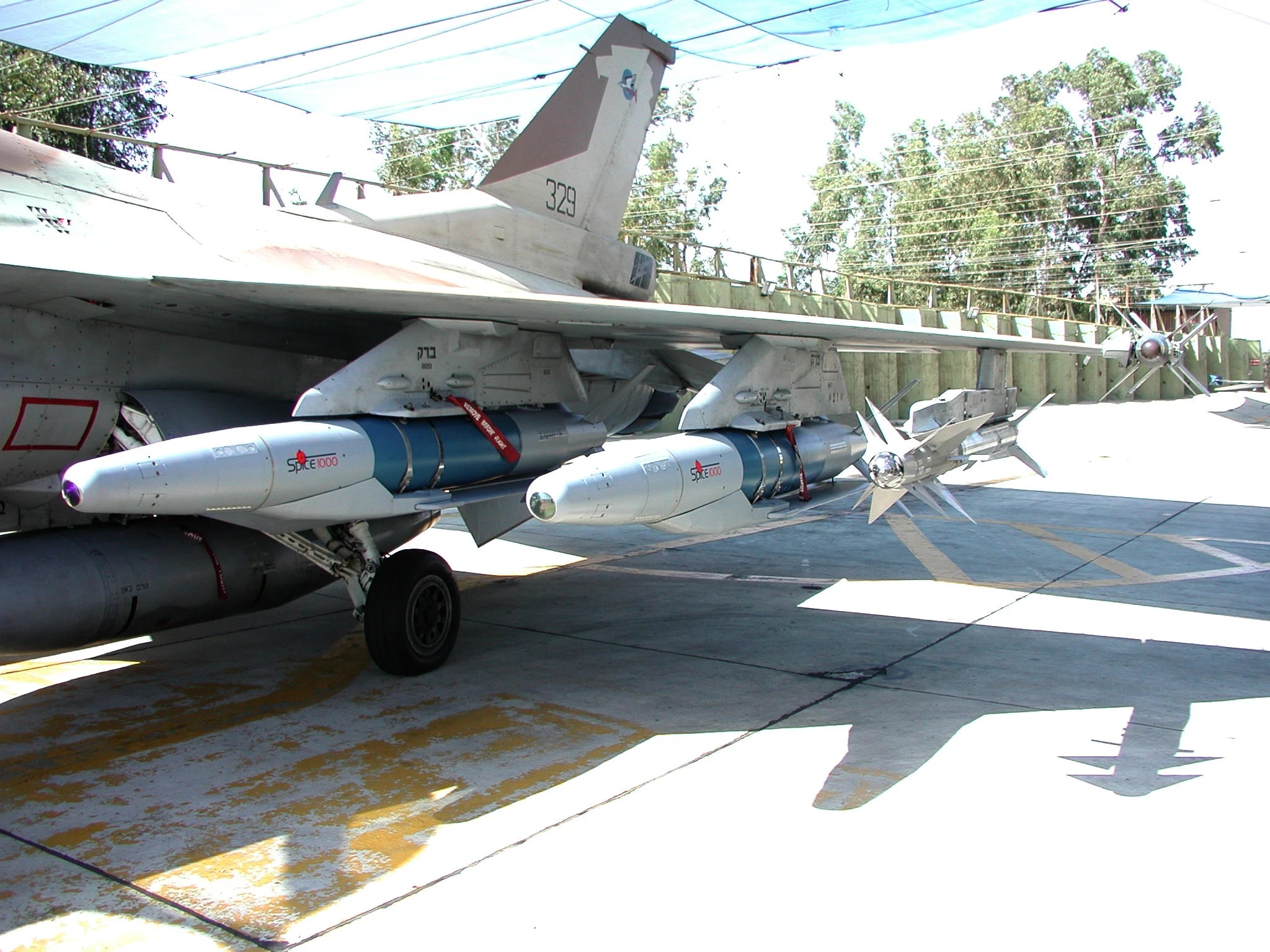
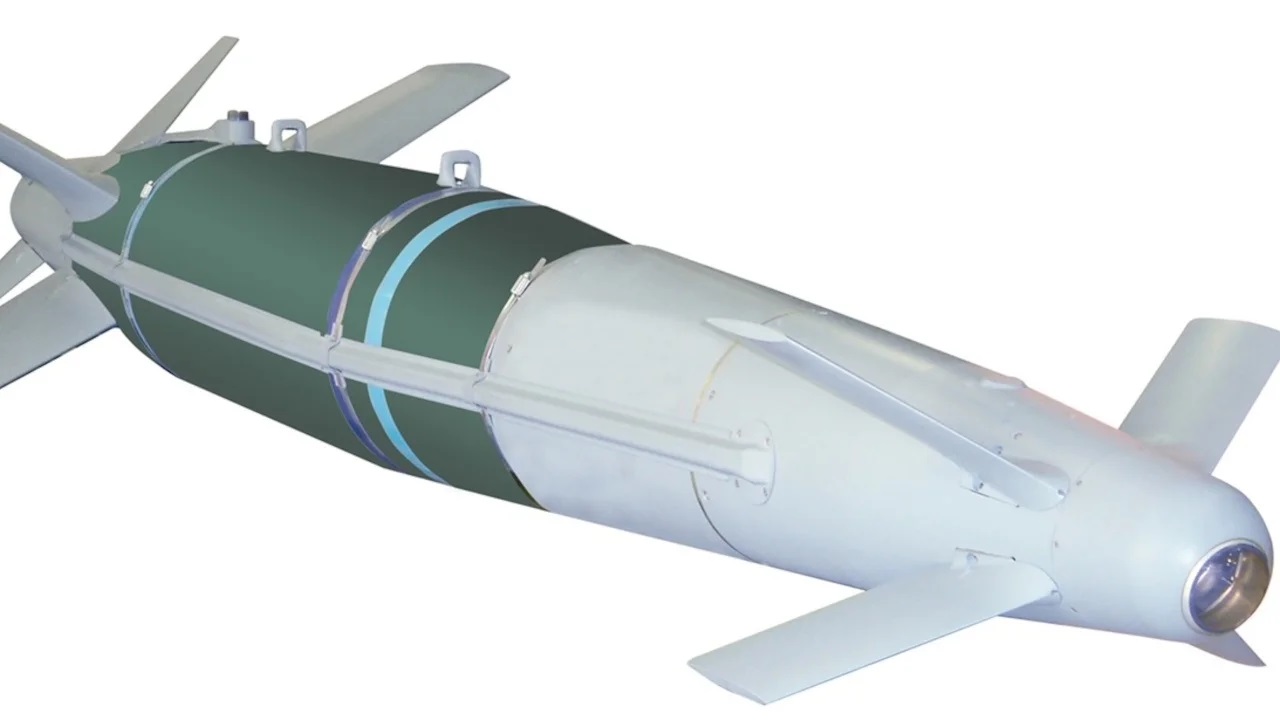
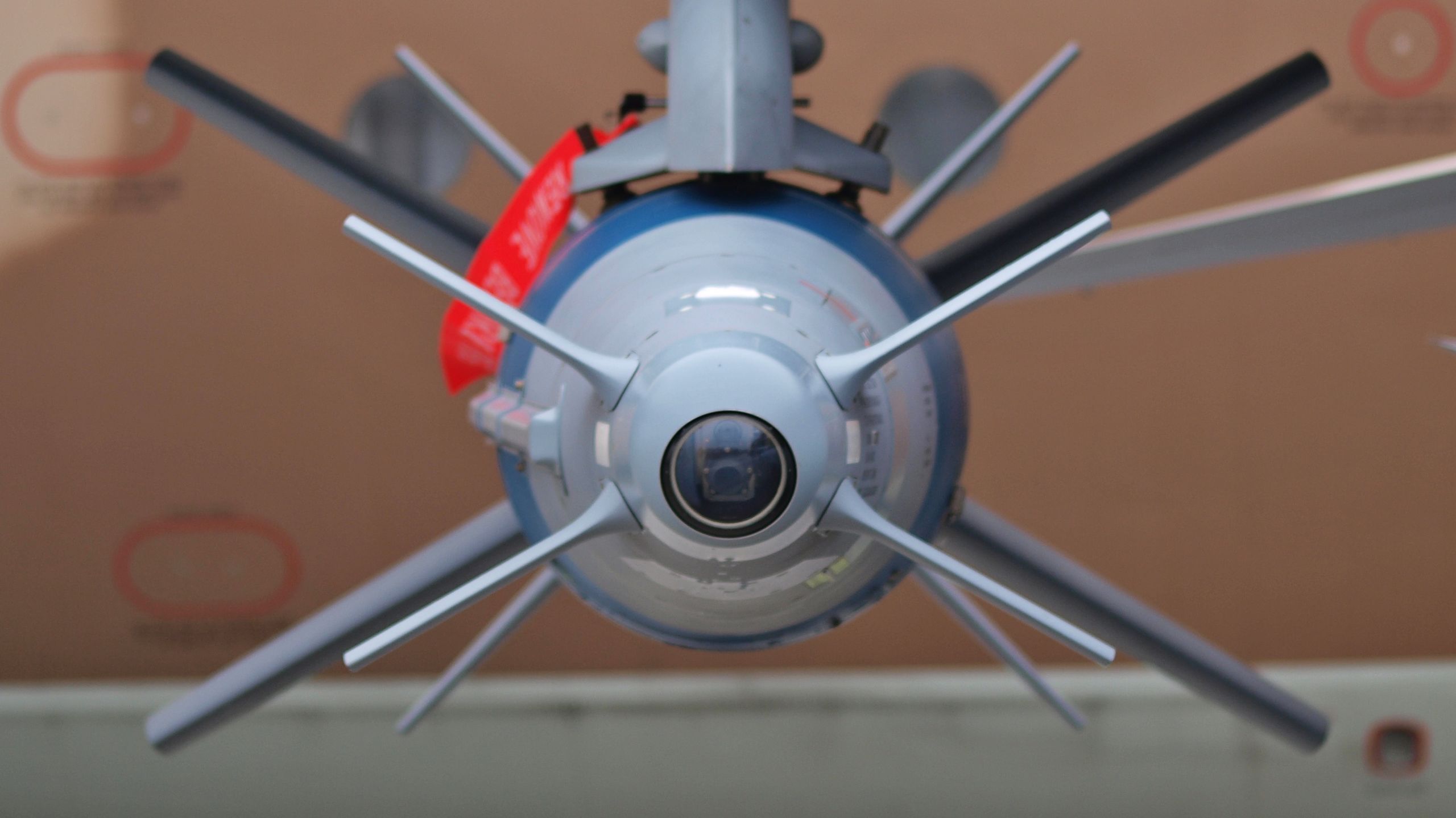
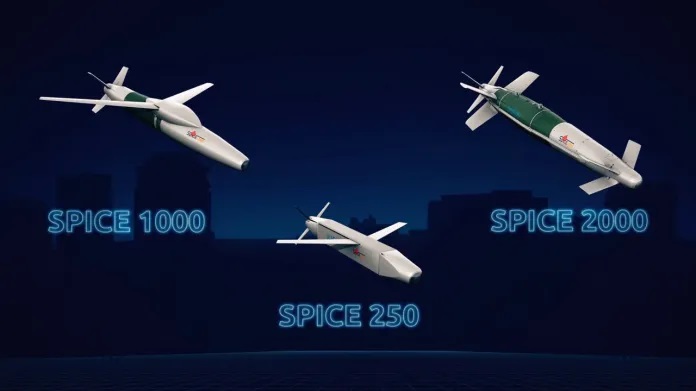
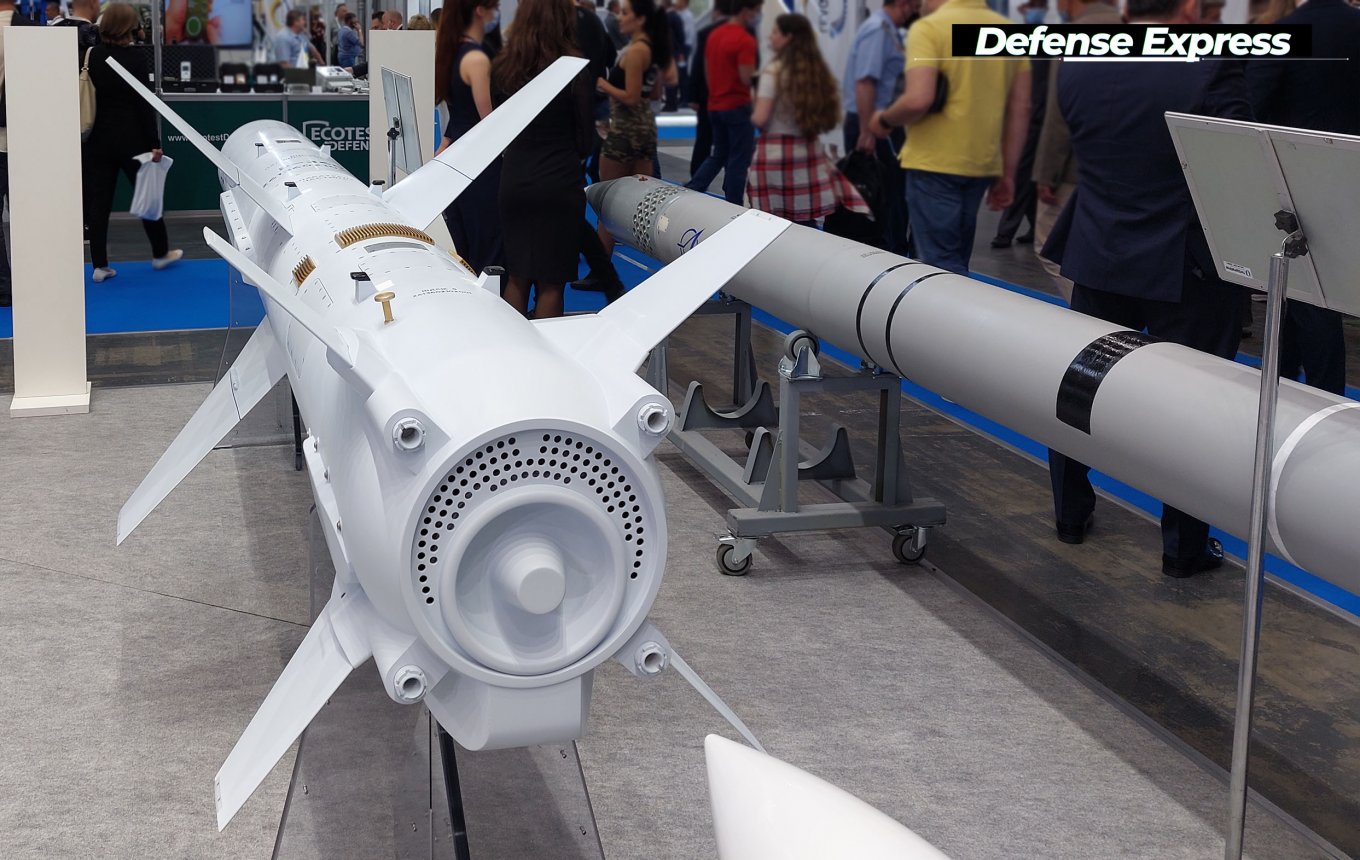
The Spice bombs have been in service with the Israeli army since 2003 and are classified as Spice 1000, Spice 2000 and Spice 250. The numerical part of the name of each bomb indicates the weight of that bomb per pound. For example, Spice 250 weighs 250 pounds, and is the result of add-on kit for the Mark 81 (Mk 81) 250-pound bomb.
Spice bombs use a combination of electro-optical and satellite guidance and have the advantages of both methods. The use of satellite guidance provides drop-and-forget option for several such targets simultaneously and the ability to engage hidden or camouflaged targets in all weather conditions; and electro-optical guidance provides man-in-the-loop guidance for extremely high precision; the ability to engage relocatable targets; lower CEP than that of satellite-guided munitions; and independence from external information sources like satellites.
Electro-optical guidance is based on the pilot’s command and can be independent of external information sources such as satellite imagery, and the pilot can instantly determine and engage the target. It is also possible to transfer target information to the bomb with up to 100 different targets, and the pilot selects one of the predetermined targets depending on the circumstances and drops the bomb for it.
One of the advantages of spice bombs is their glide capability, which due to the use of 12 aerodynamic control surfaces in 3 groups (fore, mid-body and tail), the “Spice” has a very long glide range of about 60 kilometers. This allows a striking aircraft to release a bomb at a target without entering the threat envelope of most short and medium-range air defense systems which might protect it.
Regarding target selection and engagement, the spice bomb engages the target in three ways: First, there is pure CCD or thermographic camera (IIR) image matching, when the guidance section uses algorithms to match the target image in its memory with the image provided by the seeker, and align the center of the seeker’s field of view with the desired image.
Second, if the CCD\IIR seeker can not acquire its target for any reason (such as visual obstructions), the bomb can automatically switch to GPS\INS guidance. This means that the bomb aspires to bring itself to the target’s altitude at a known geographical location. The bomb receives data on its current location from GPS satellites, or from an inertial navigation system in the bomb itself, that has been fed, through the pylon datalink, with the dropping aircraft’s coordinates a fraction of a second before the drop, and can therefore calculate its coordinates from the dropping time and on.
Third, there is a manual “man-in-the-loop” guidance option, in which the weapon systems officer looks at a backseat TV display to see the seeker’s view and uses the backseat stick to control the bomb to the target. This guidance method is probably the most accurate one employed today for air-dropped munitions. Its main drawback is that it allows for only one bomb to be guided at a time.
Spice bomb variants: – Spice 1000. An add-on kit for 450 kg warheads such as the MK-83, MPR1000, BLU-110, RAP-1000 and others. The weapon has deployable wings similar to the JSOW and the SDB that substantially increase its range to 100 km and facilitate the integration to light fighter aircraft. –Spice 2000. An add-on kit for 900 kg warheads such as the MK-84, BLU-109, RAP-2000 and others. –Spice 250. A 113 kg glide bomb designed as a complete system rather than an add-on kit, with a stand-off range of 100 km. –Spice 250 ER. A new version of the Spice 250 bomb equipped with micro-turbojet engine with an internal JP-8/10 fuel tank to increase its range to more than 150 km.
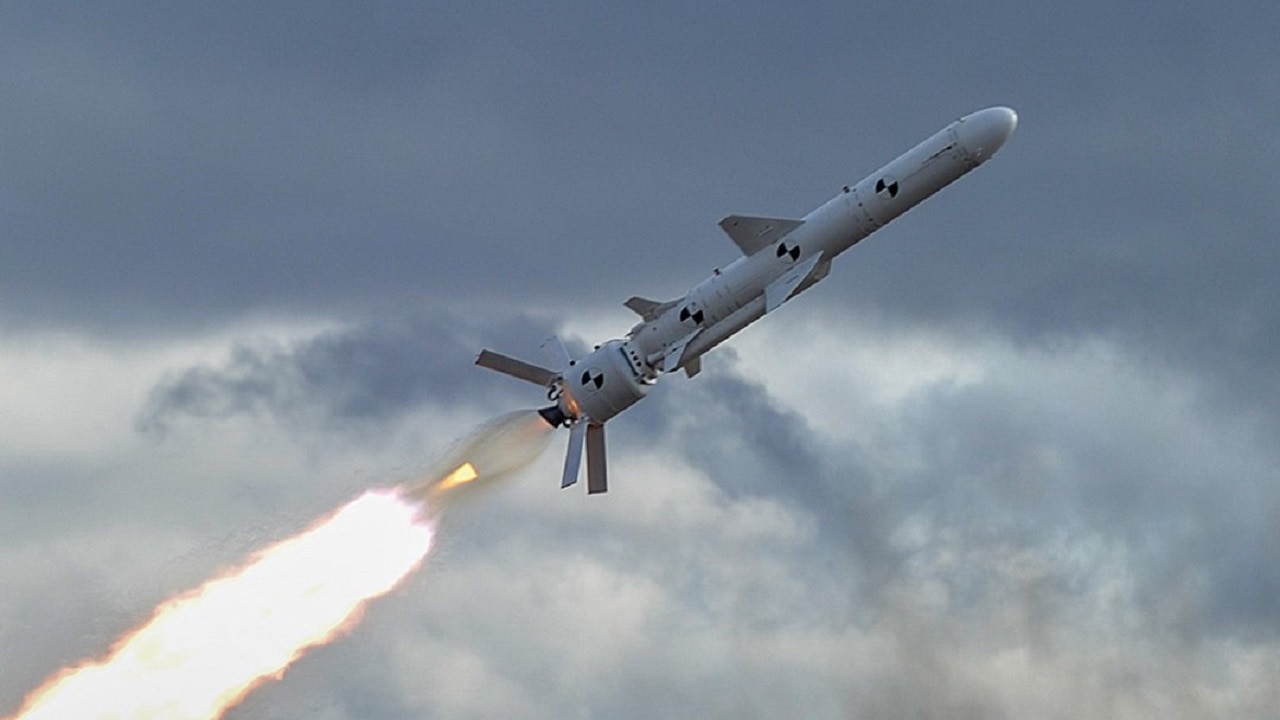
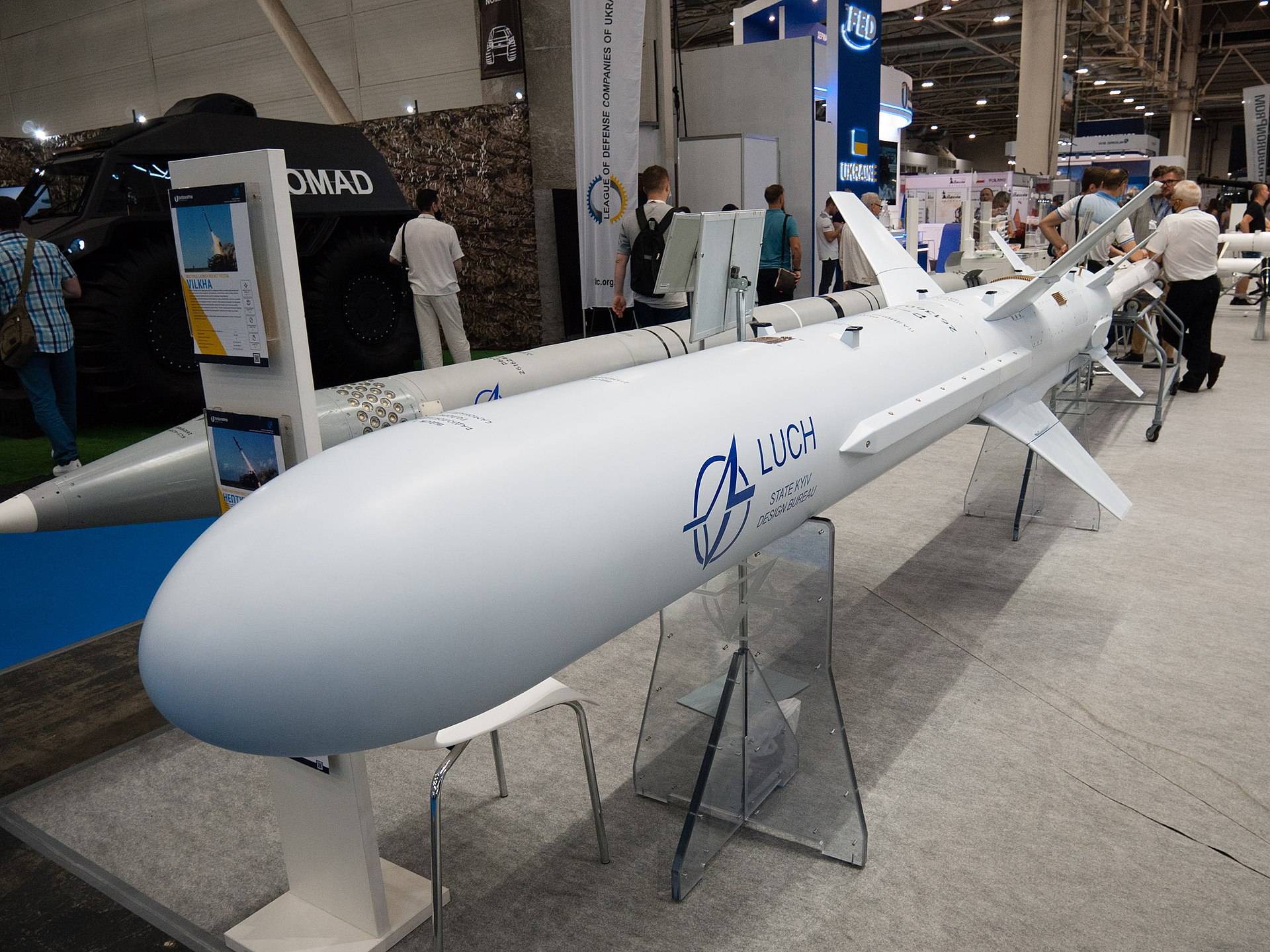
R-360 Neptune is a Ukrainian anti-ship cruise missile developed by the Luch Design Bureau. Neptune’s design is based on the Soviet Kh-35 anti-ship missile, with substantially improved range and electronics, longer body with more fuel, larger booster, and some other modifications.
The Neptune missile was officially unveiled in 2015 at the Defense Exhibition in Kyiv and the system entered service with the Ukrainian Navy in March 2021.
The first tests of the system were conducted on 22 March 2016, attended by Secretary of the National Security and Defense Council, Oleksandr Turchynov. On 17 August 2018, the missile successfully hit a target at a range of 100 kilometres during test firings in southern Odesa Oblast.
R-360 Neptune test launch, 2019
The first flight samples of the cruise missile were manufactured in the second quarter of 2016. Production of advanced missile systems took place in cooperation with other Ukrainian enterprises, including Artem Luch GAhK, Kharkiev State Aviation Plant, Motor Sich, Lviv LORTA, etc.
A Neptune missile including rocket motor is 5.05 metres in length, with a cross-shaped hard wing. Neptune missiles are designed to be housed in transport and launch containers with dimensions 5.30 by 0.60 by 0.60 metres. The system has a maximum range of about 280 kilometres. A single missile weighs 870 kilograms, of which 150 kilograms is the warhead. It carries a High Explosive Fragmentation (HE-FRAG) warhead.
In terms of propulsion, Neptune uses a solid-fuelled booster in the first stage which takes the missile off its launcher and up to its cruise speed within a couple of seconds, then activates its turbofan engine. The small air-breathing jet engine takes over to fly the missile at around 900 km/h, just below the speed of sound, to its target. The engine of this missile is MS-400 turbofan made by Motor Sich Ukraine. This engine has a thrust of 3920 Newtons and a specific fuel consumption of 850 grams per kiloton of thrust per hour. Engine length is 850 mm and its diameter is 315 mm. It also weighs 85 kg.
R-360 Neptune anti-ship cruise missile uses inertial navigation system with active radar homing on the terminal stage of its flight. The missile flies low for most of its flight at 30 meters above sea level to take it away from radar detection. As it approaches the radar coverage envelope of its target, it will descend to 3-10 meters above the surface in order to overcome hostile defense systems.
This missile travels at subsonic speed. It is estimated that due to its subsonic speed that anti-ship missile can be intercepted rather easily, especially by advanced defense system.
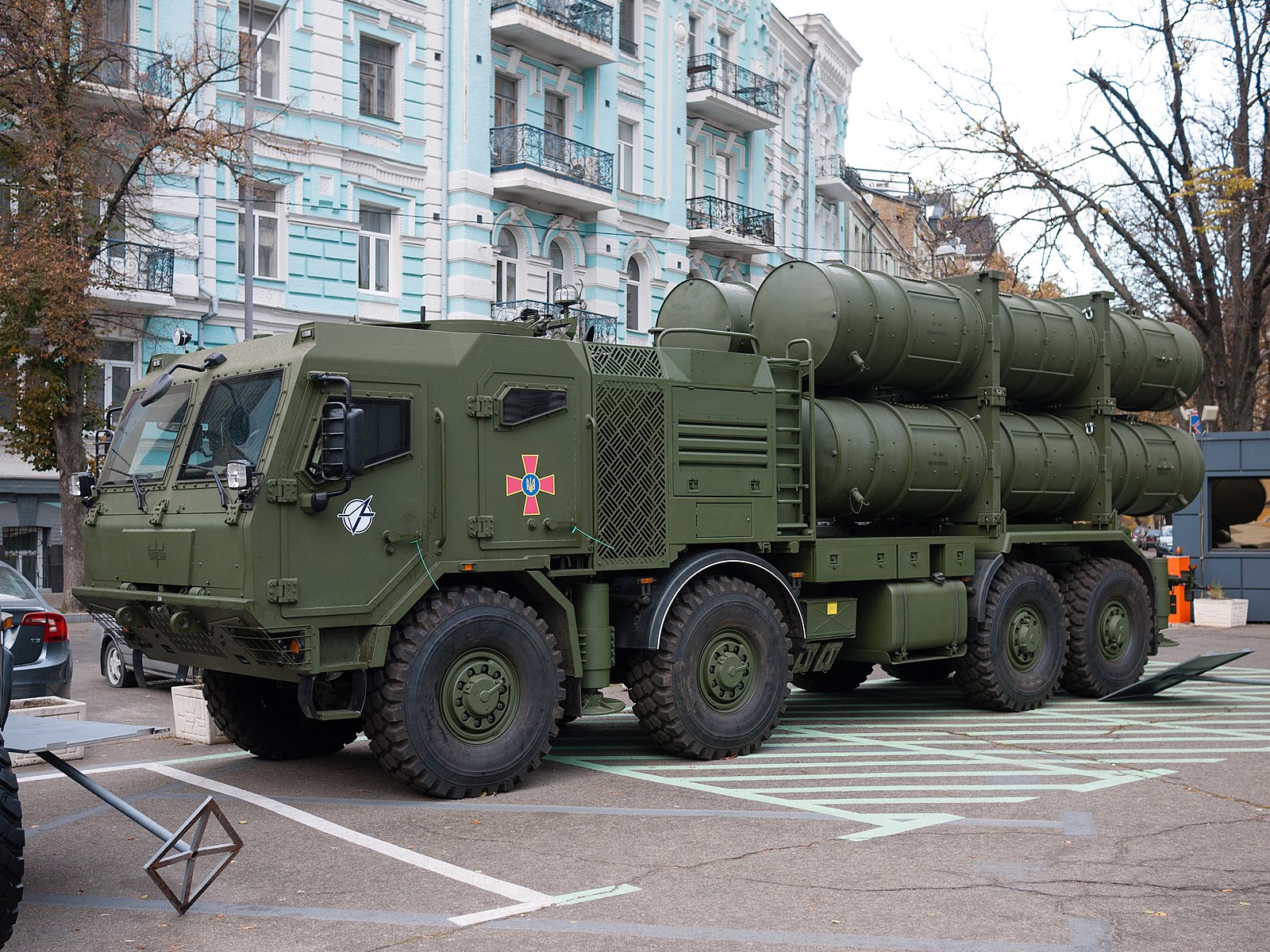
Ukrainians also developed coastal defense missile system, that will carry Neptun missiles. A Neptune coastal defence system comprises a truck-based USPU-360 mobile launcher, four missiles, a TZM-360 transport/reload vehicle, a RCP-360 command and control vehicle, and a special cargo vehicle. Czech Tatra T815-7 trucks replaced prototype KrAZ vehicles.
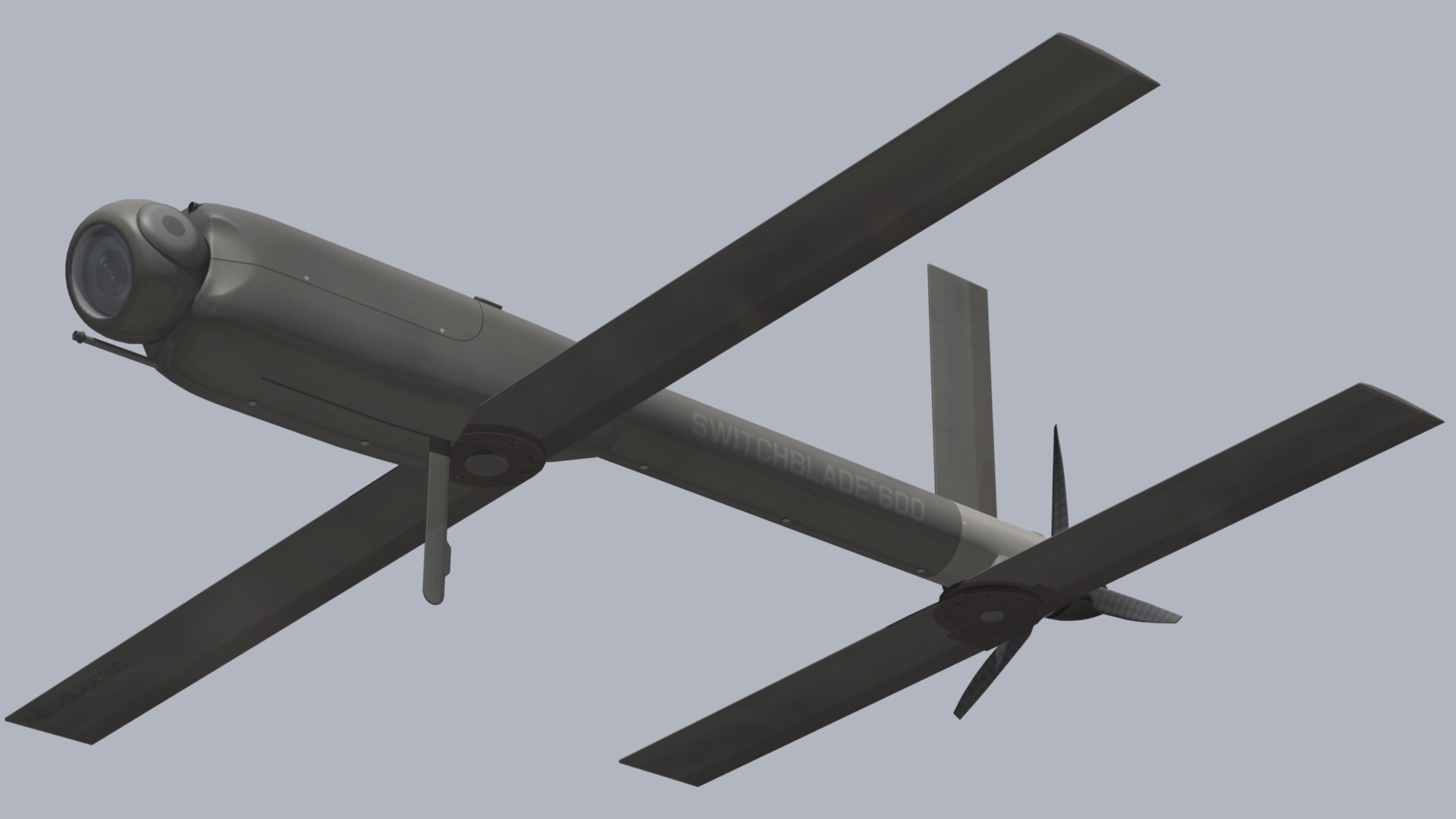
Switchblade drones are a type of miniature loitering munition developed by AeroVironment specifically for the US military. The dimensions of these drones are so small that they can be carried in a backpack. The Switchblade launches from a tube, flies to the target area, and crashes into its target while detonating its explosive warhead. The first prototype of the Switchblade drone was introduced in 2011 and reached the production stage; But in 2020, after the unveiling of the Switchblade drone, the first version was rebranded to Switchblade 300.
It is worth noting that during the Ukraine-Russia war, the US military provided more than 100 of these drones to the Ukrainian army.
Switchblade 300 drone: The Switchblade 300 drone is designed as an expendable drone to increase precision firepower for platoon-sized infantry units. It is 49.5 cm long and weighs 2.7 kilograms including the carrying case and launcher, making it small and light enough for one soldier to carry. The name switchblade comes from the way the spring-loaded wings are folded up inside a tube and flip out once released.
Launch and function of the wings of the Switchblade 300 drone
It can be controlled up to 10 kilometers. Its small size limits its endurance to 10 minutes. This makes it unsuited for scouting roles, but it is useful for inexpensively engaging long-range targets and assisting in relieving units pinned down by enemy fire. The Switchblade uses a color camera and GPS locating to identify, track, and engage targets, as well as being able to be pre-programmed on a collision course. Its warhead has an explosive charge equivalent to a 40mm grenade to destroy light armored vehicles and personnel. If a situation causes a strike to be called off, the operator can call off the Switchblade and re-target it.
Switchblade 300 performance and observing by Puma UAV – Switchblade 300 launch capability from Jump 20 UAV
Switchblade 300 is propelled by an electric engine, so its small size and silent flight makes it extremely difficult to detect or try to intercept, enabling it to close in on a target at 160 km/h. The Switchblade uses the same Ground Control Station as other AeroVironment drones including the Wasp, RQ-11 Raven, and RQ-20 Puma. This creates commonality and the potential for teaming of longer-endurance small UAVs to recon for targets, then having the Switchblade attack once they are identified with the same controller. It should be noted that the multi-pack launcher with remote control capability is also designed for Switchblade 300 drones. This launcher comes in a standard 6-pack configuration weighing 73 kg. The design is scalable from 2 to 20 rounds and allows fast reloading in less than 30 seconds per round. The U.S. military has been deploying these packages since early 2019 to defend its bases. The system can be placed outside and remotely fired from the relative safety of a command-and-control center more rapidly and with up to six shots.
Switchblade 300 Multi-pack launcher – Six-tube firing system
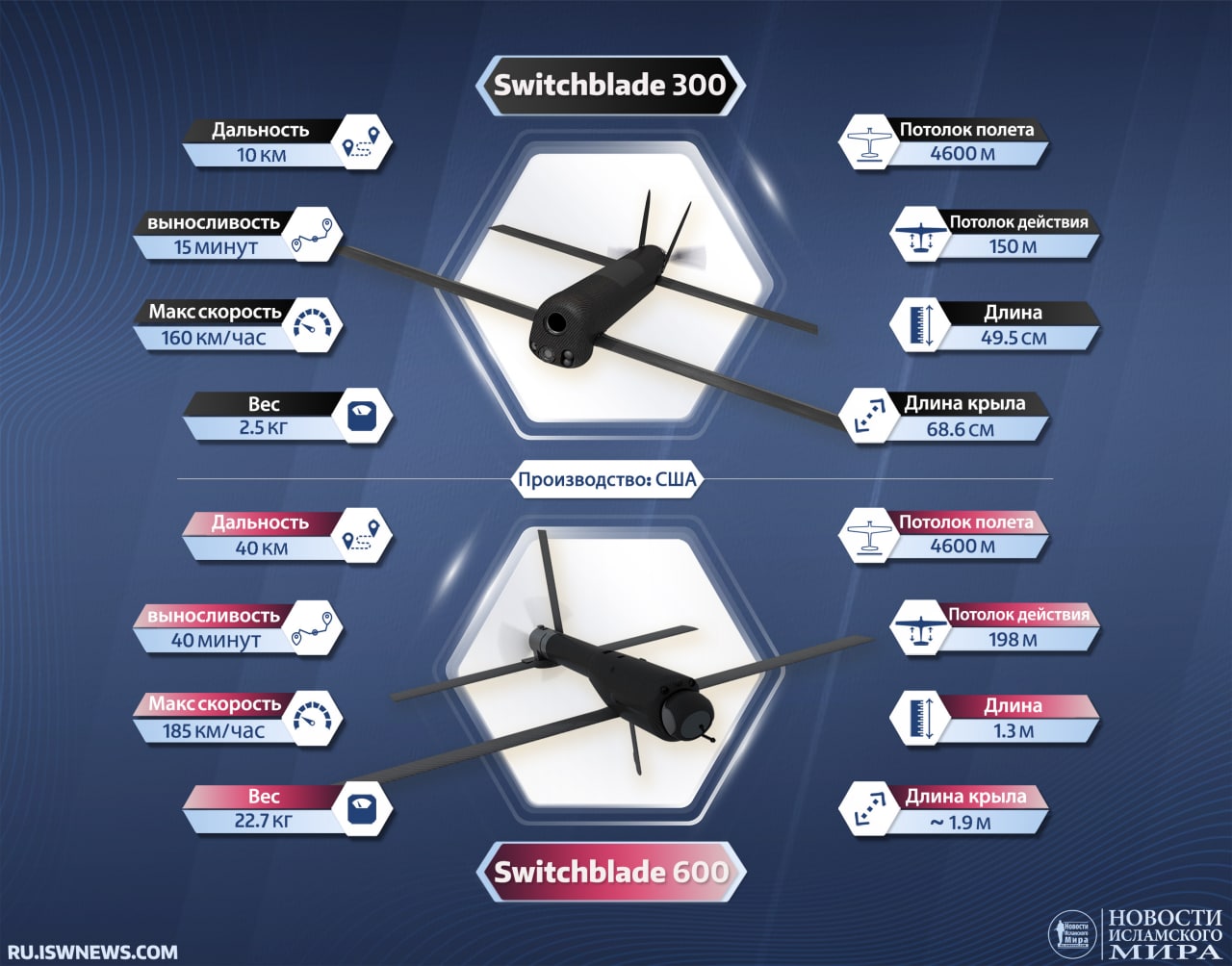
Switchblade 300 specification: Range: 10 km Endurance: 15 minutes Max speed: 160 km/h Weight: 2.5 kg Length: 49.5 cm Wingspans: 68.6 cm Flight ceiling: 4600 m Flight altitude: 150 m Origin: USA
Switchblade 600 drone: The Switchblade 600 drone is larger than the Switchblade 300. The length of this drone is 1.3 meters and its weight is 22.7 kilograms; However, it is still portable by man and can be assembled in 10 minutes. The Switchblade 600 is designed to fly up to 40 km in 20 minutes, as well as for a further 20 minutes of roaming, which means a final range of 80 km (40 minutes in total). The Switchblade 600 attacks at a 185 km/h dash speed, carrying an ATGM warhead based on the FGM-148 Javelin, designed to neutralize armored vehicles.
Launch and function of the wings of the Switchblade 600 drone
A touchscreen tablet-based fire control system can manually or autonomously control the Switchblade 600. It is secured through onboard encrypted data links and Selective Availability Anti-Spoofing Module GPS with a patented wave-off capability. An optional pocket digital data link module allows engagements beyond 90 km. The Switchblade 600 was developed for the Single Multi-Mission Attack Missile development program. Other methods could include a six-pack vehicle-mounted version and by air-launch. One of the advantages and interesting points of the Switchblade 600 drone is that it can hunt targets with a much longer range than Javelin ATGM, but it costs less than a Javelin missile.
Switchblade 600 specification: Range: 40 km Endurance: 40 minutes Max speed: 185 km/h Weight: 22.7 kg Length: 1.3 m Wingspans: ~ 1.4 m Flight ceiling: 4600 m Flight altitude: 198 m Origin: USA
Click to view full sizeSwitchblade 300 drone – Click to view full sizeSwitchblade 600 drone – Click to view full size
“Switchblade Loitering Munition” collection of posters in Persian, Arabic, Kurdish, Azeri, Russian for Social Media:
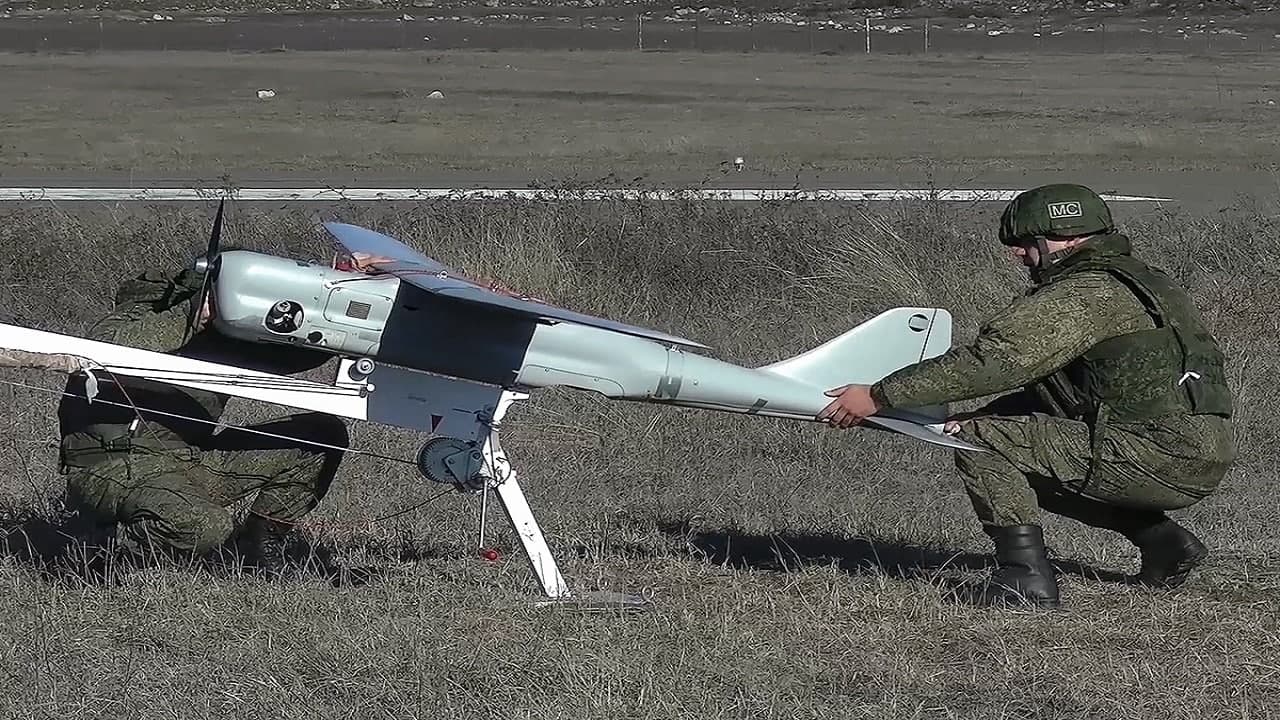
The Orlan-10E, an export variant of the Orlan-10 drone, was unveiled at the 19th FIDAE International Exhibition in March 2016, and ROSOBORONEXPORT (the sole state intermediary agency for Russia’s exports/imports of defense-related and dual use products, technologies and services) also announced plans to export the Orlan-10E drone.
The drone is used for a variety of missions, including reconnaissance, surveillance, electronic warfare, search and rescue, combat training, radio signal detection and target tracking on difficult terrain.
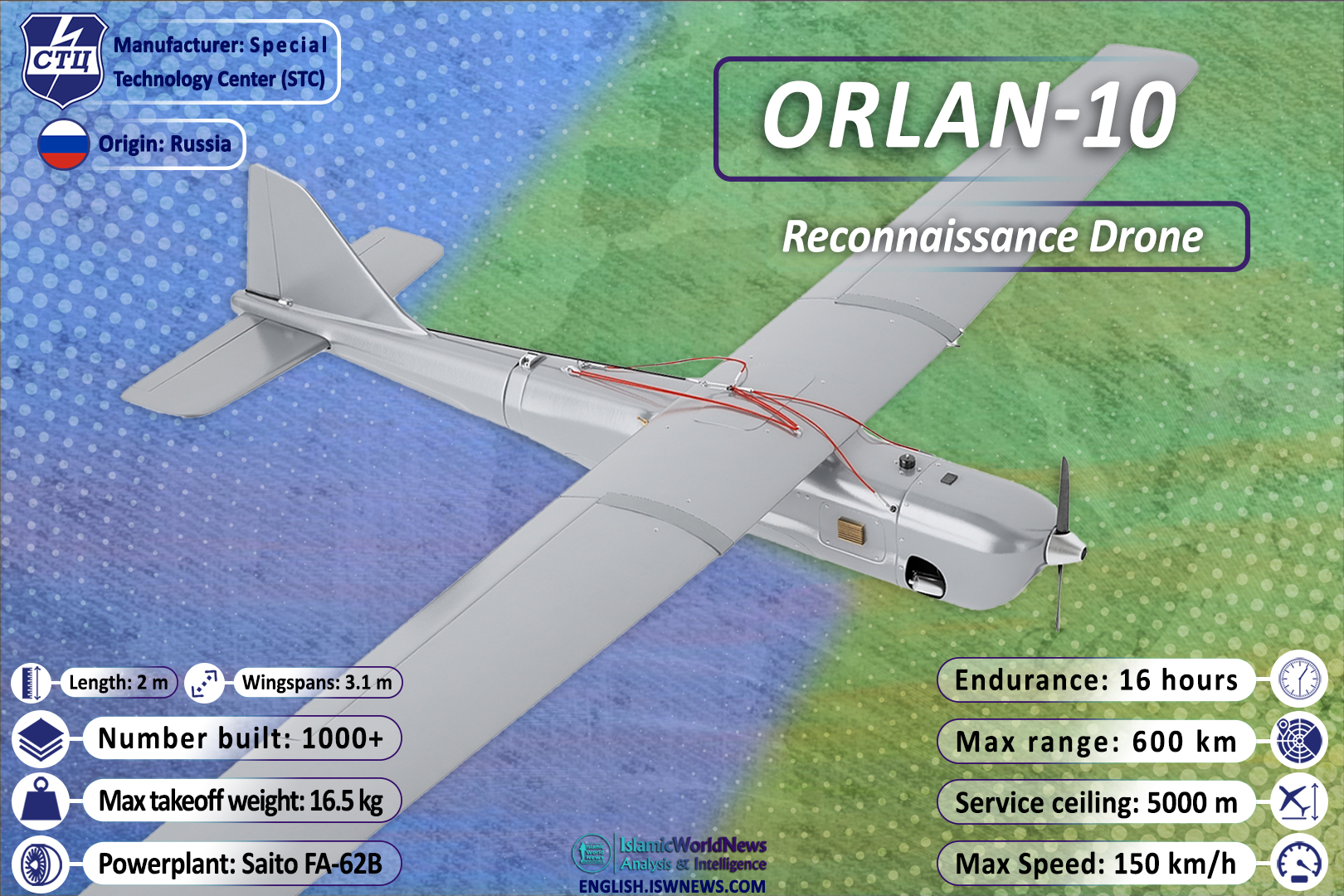
Orlan-10 specifications: Length: 2 meters Wingspans: 3.1 meters Max takeoff weight: 16.5 kg Empty weight: 12.5 kg Endurance: 16 hours Combat range: 140 km Maximum(ferry) range: 600 km Service ceiling: 5000 meters Speed: 150 km Engine: Saito FA-62B single cylinder four stroke gasoline piston engine, 0.75 kW (1 hp)
Click to view full sizeClick to view full size
“Orlan-10 Reconnaissance Drone” collection of posters in Persian, Arabic, Kurdish, Azeri, Russian for Social Media:
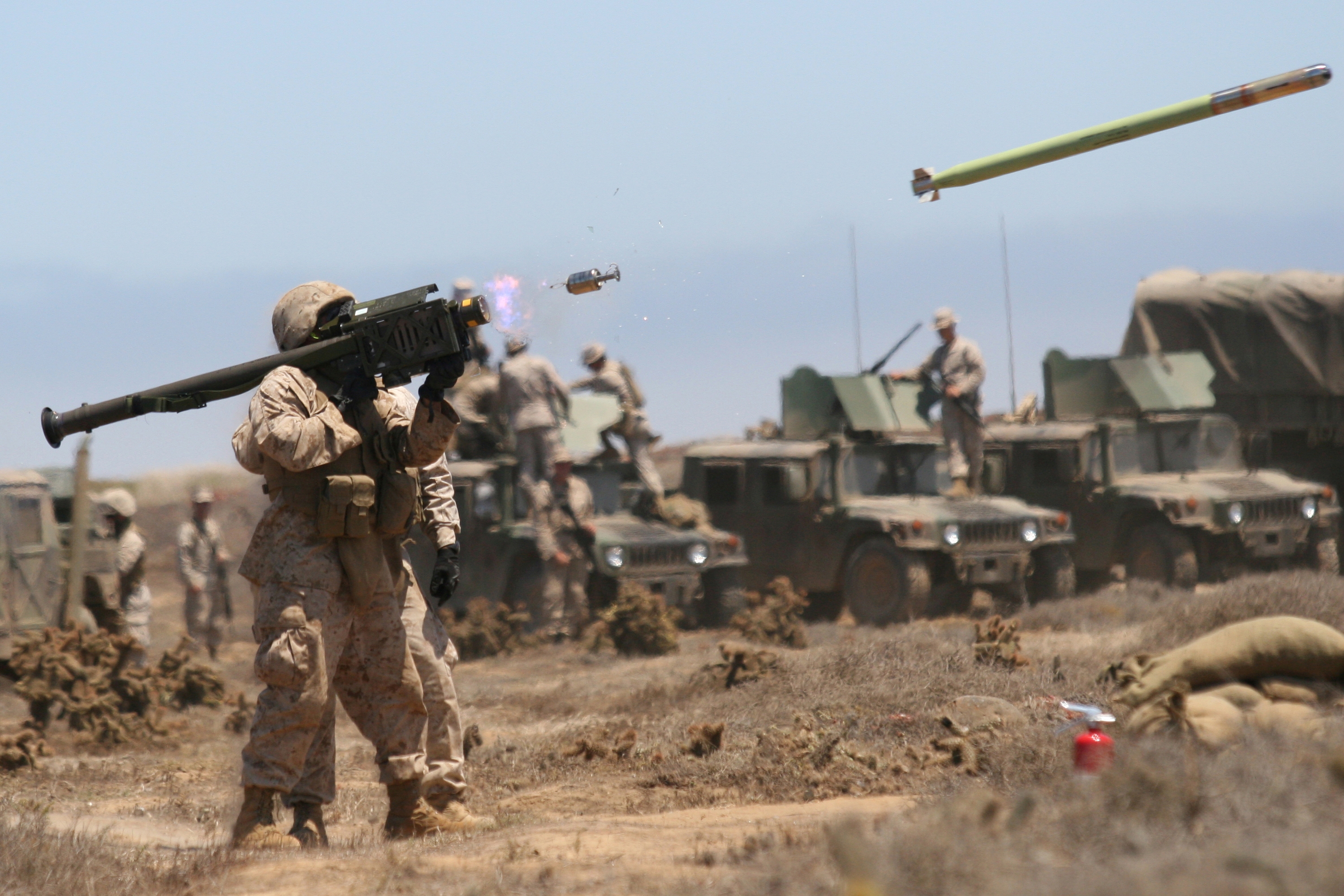
The FIM-92 Stinger is a man-portable air-defense system (MANPADS) that operates as an infrared homing surface-to-air missile.
FIM-92 Stinger can be used in a wide range of vehicles and ground and helicopter launchers. The Stinger was designed in the United States by General Dynamics and entered service in 1981 and has been used in more than 29 armies worldwide. The Stinger missile is produced under license by Airbus Defence in Germany and by ROKETSAN in Turkey, and more than 70,000 Stinger missiles have been produced to date.
The missile is 1.52 m long and 70 mm in diameter with 100 mm fins. The missile itself weighs 10.1 kg, while the missile with its launch tube and integral sight, fitted with a gripstock and Identification friend or foe (IFF) antenna, weighs approximately15.2 kg.
The Stinger is launched by a small ejection motor that pushes it a safe distance from the operator before engaging the main two-stage solid-fuel sustainer, which accelerates it to a maximum speed of 750 m/s.
The warhead contains 1.02 kg of a mix of HMX, TNT, and aluminium powder explosive with an impact fuze and a self-destruct timer that functions 17 seconds after launch.
FIM-92 Stinger missile specifications: Length: 1.52 meters Diameter: 70 mm Mass: 15.19 kg Weight (missile): 10.1 kg Warhead: High explosive Weight: 1 kg HTA-3 Maximum range: 4800 meters Guidance: System Infrared homing
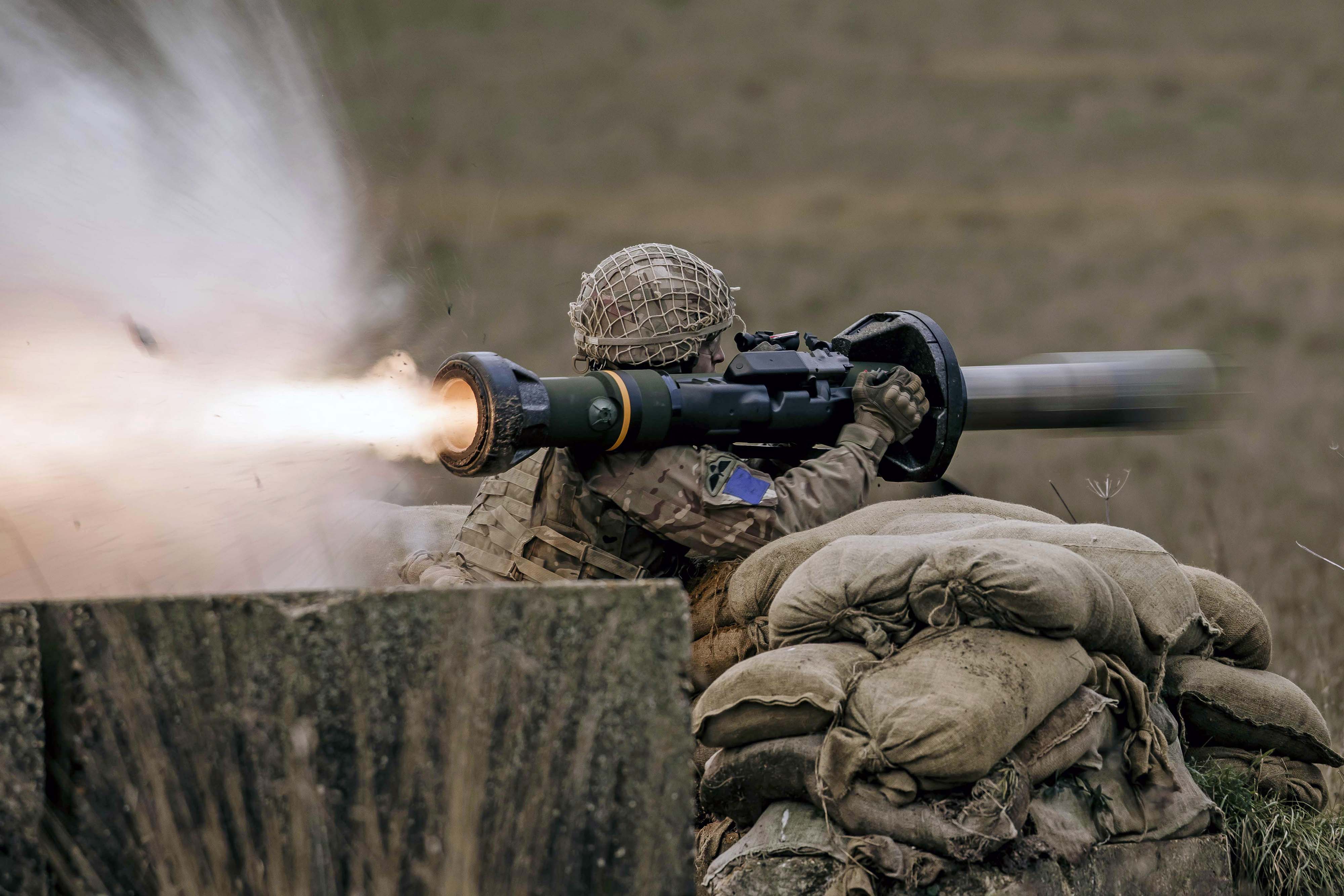
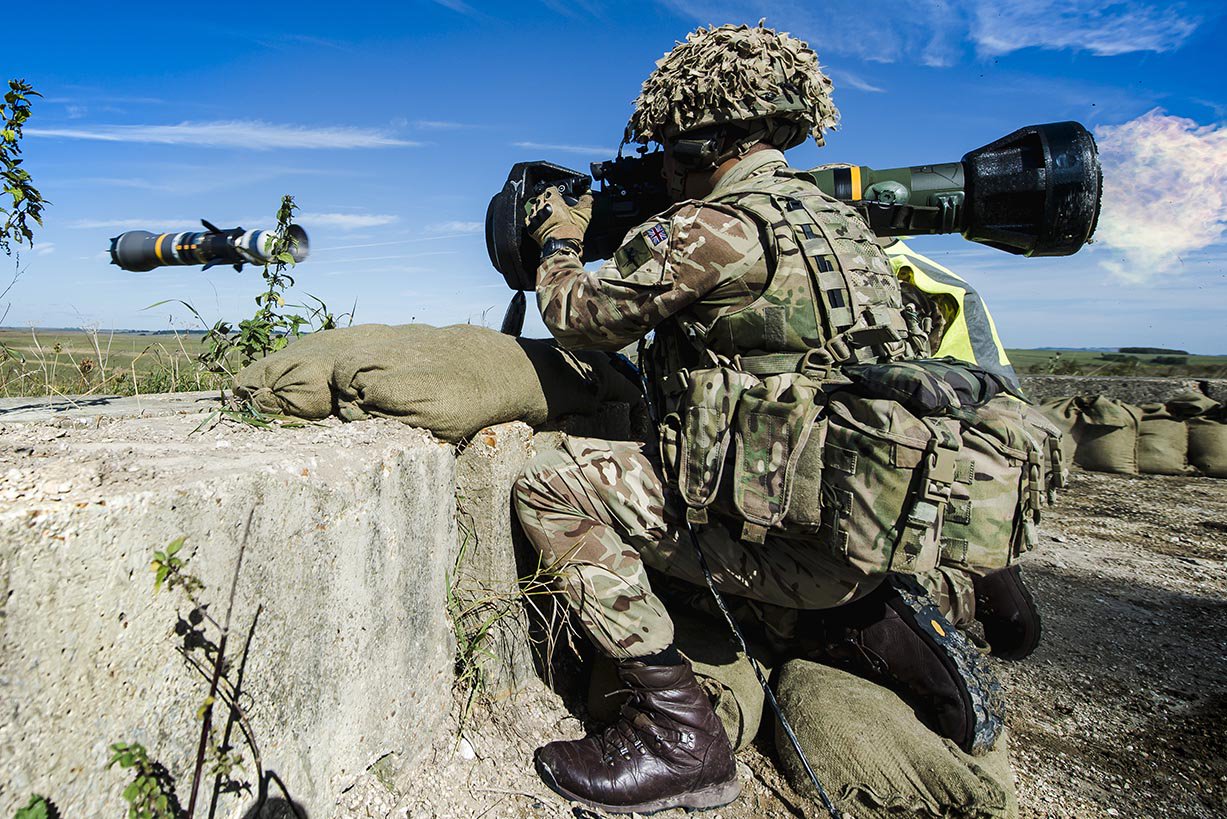
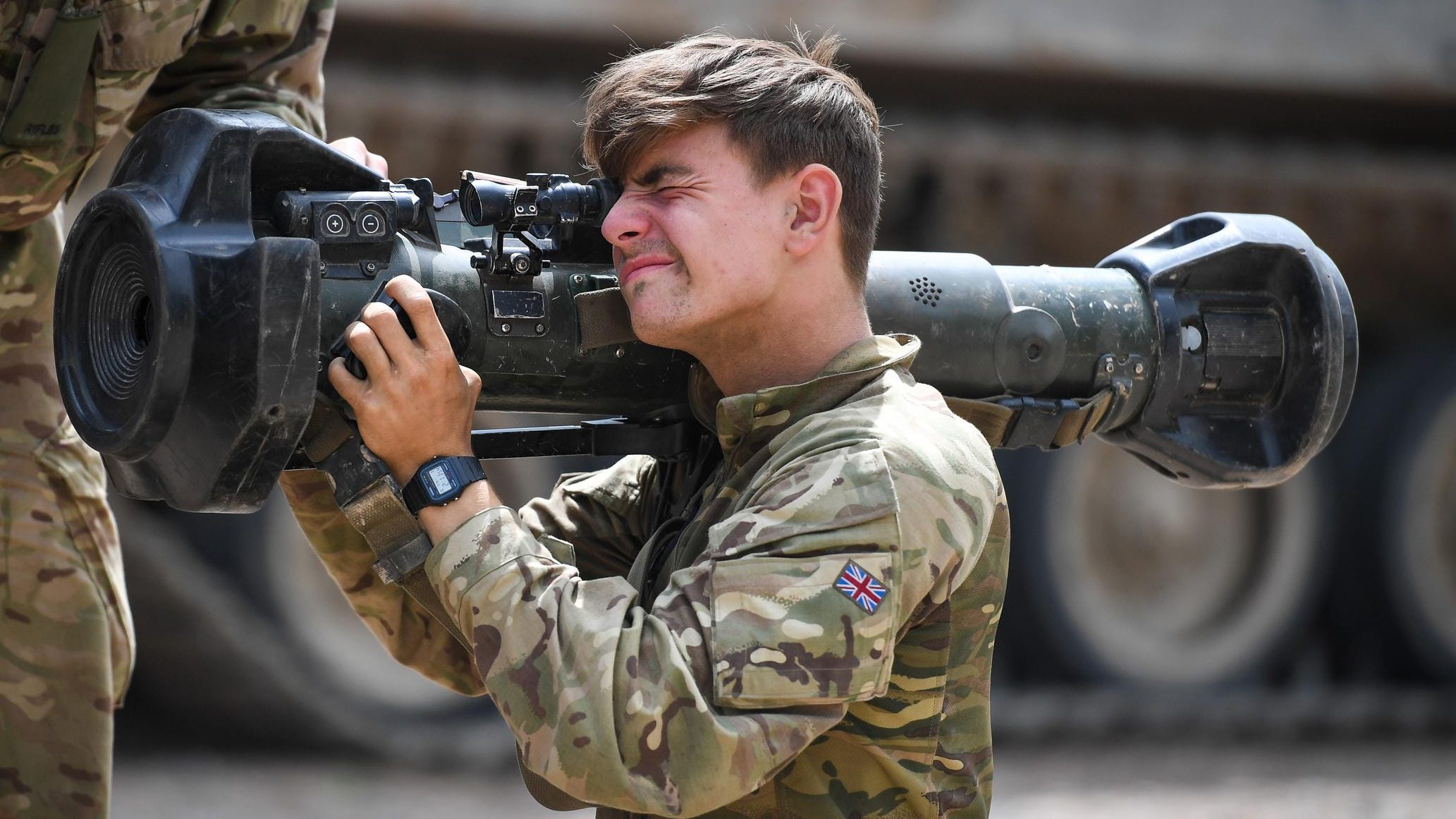
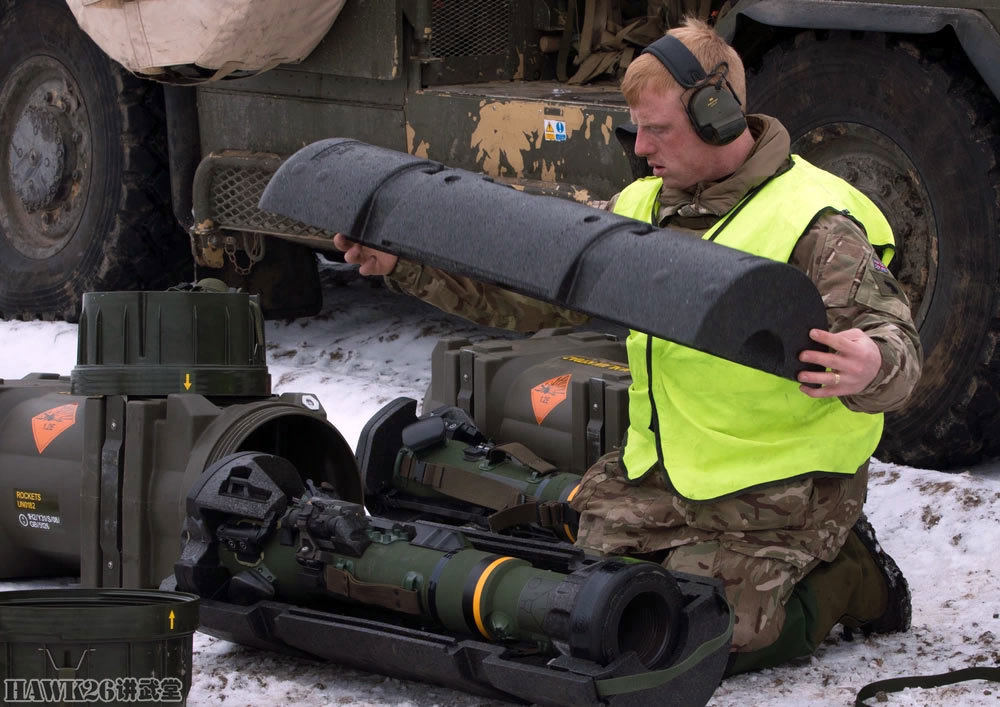
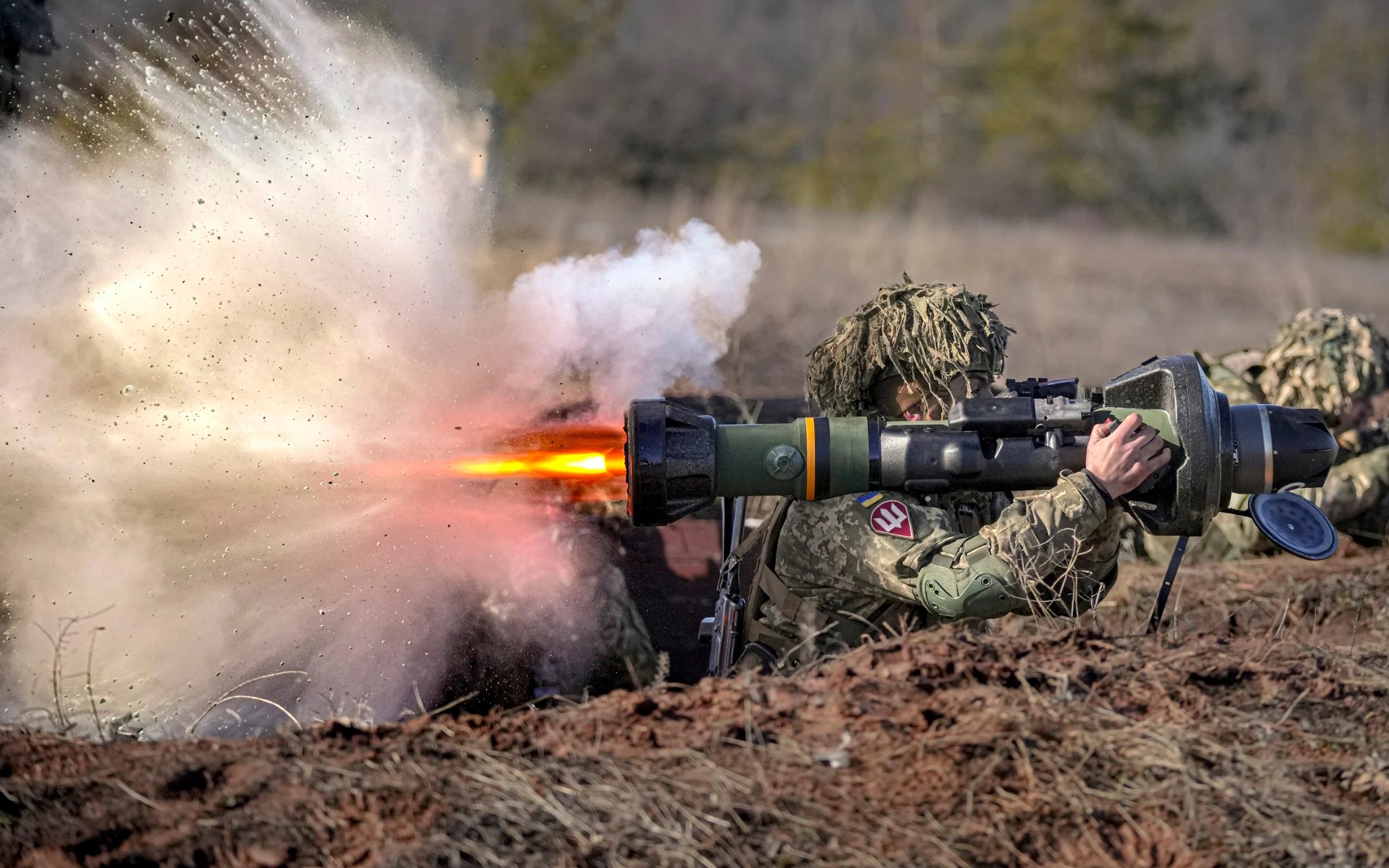
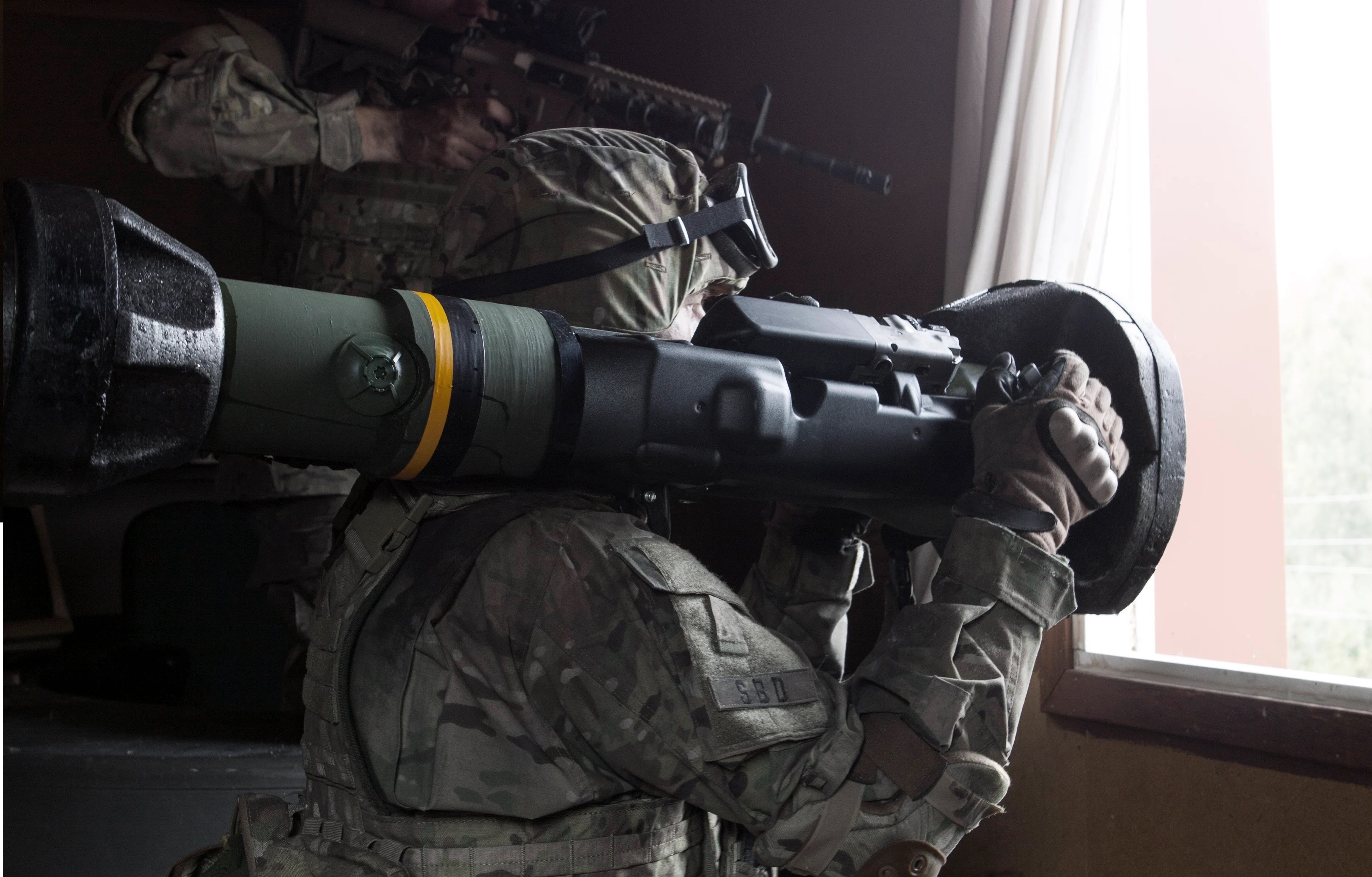
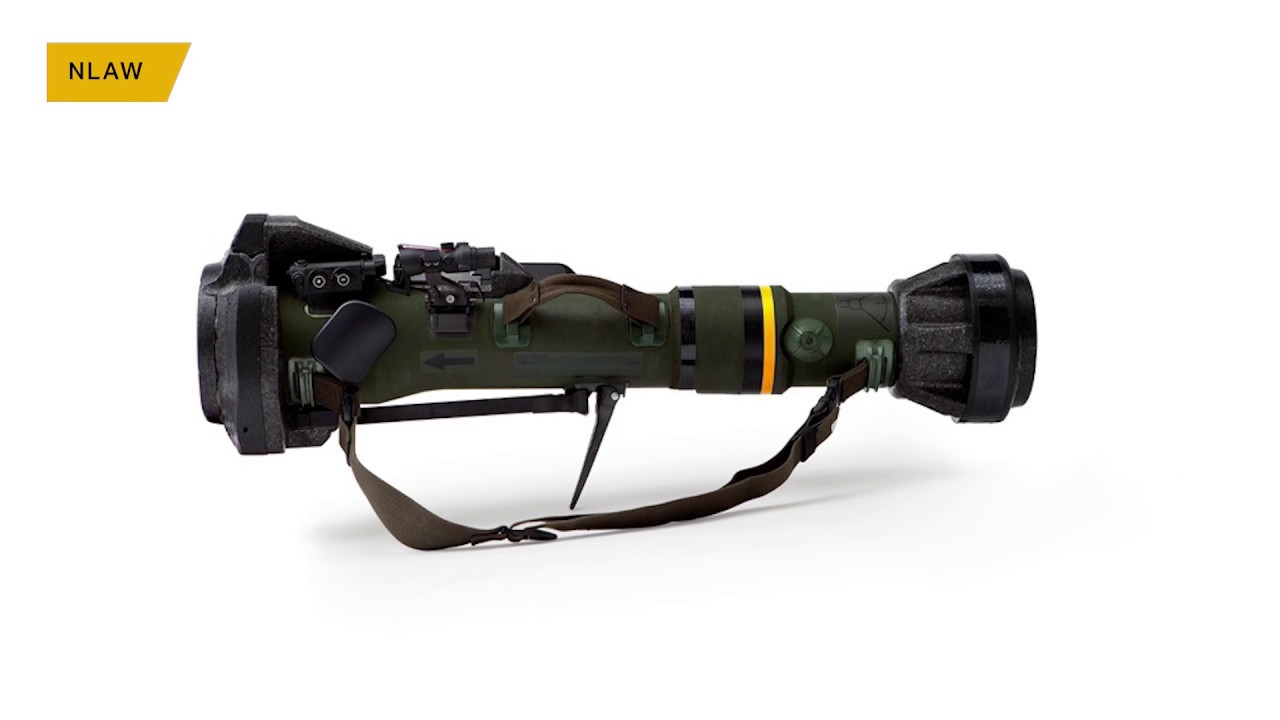
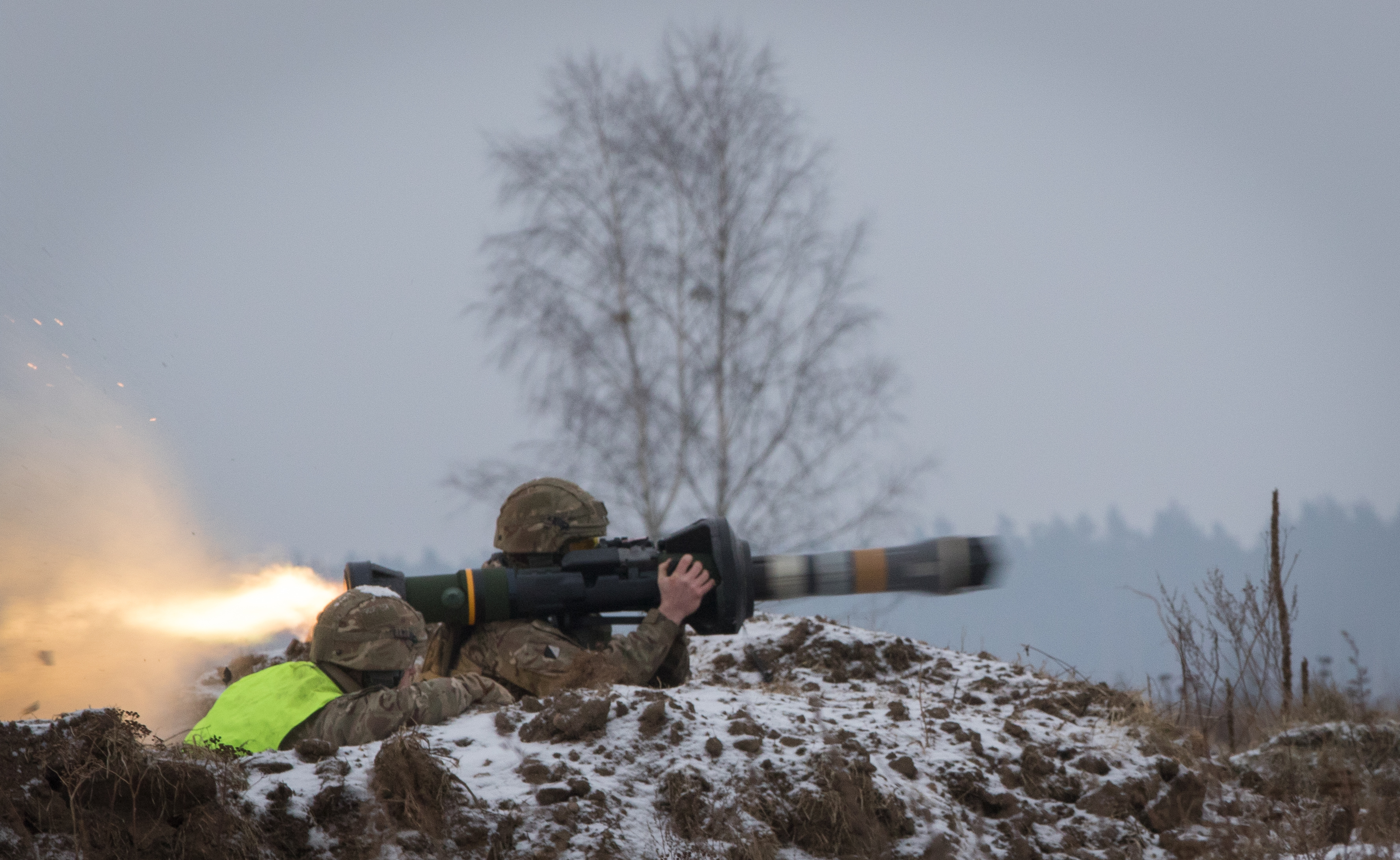
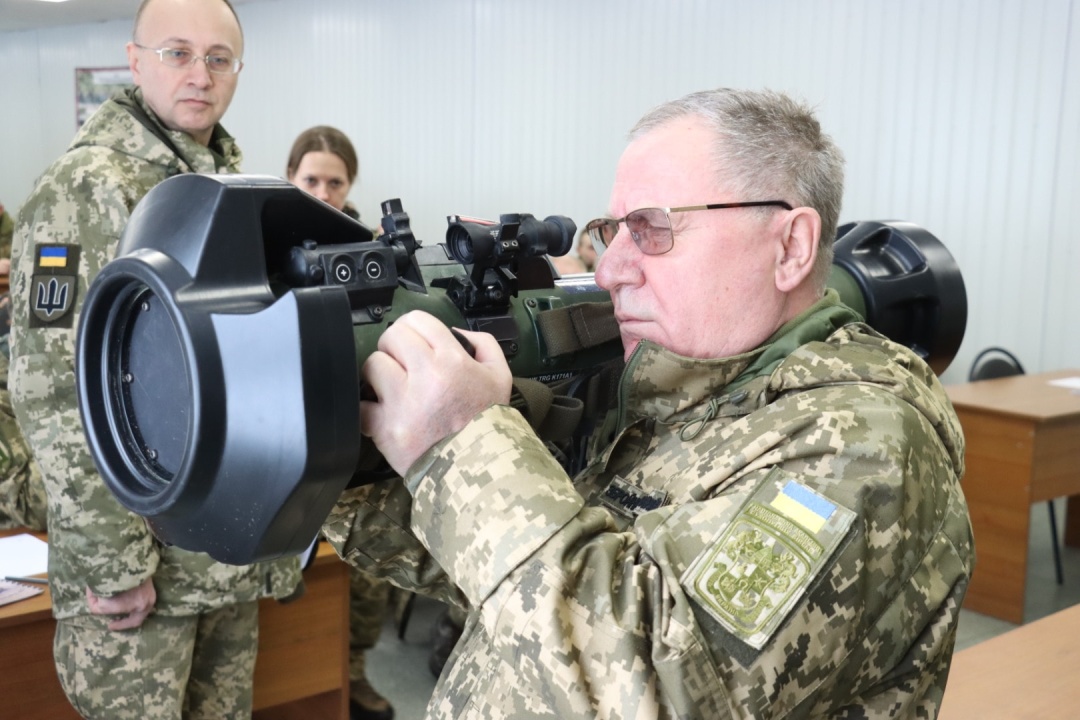
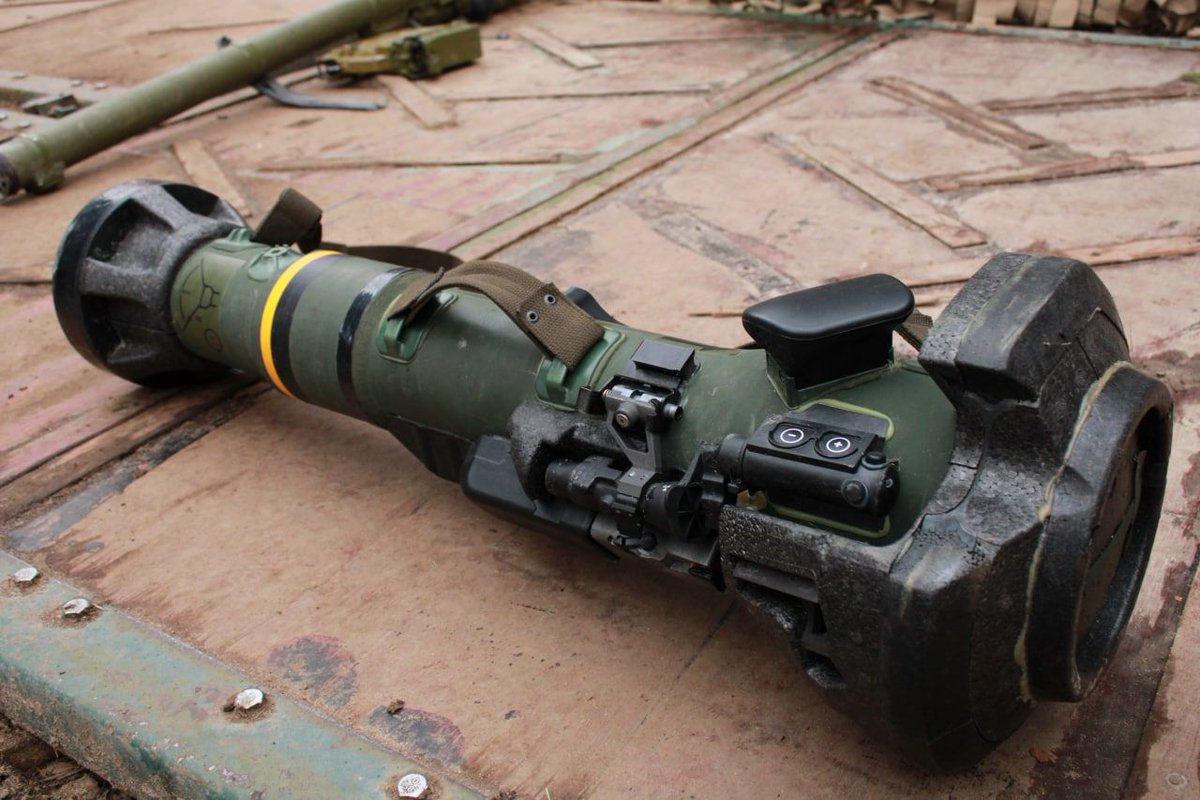
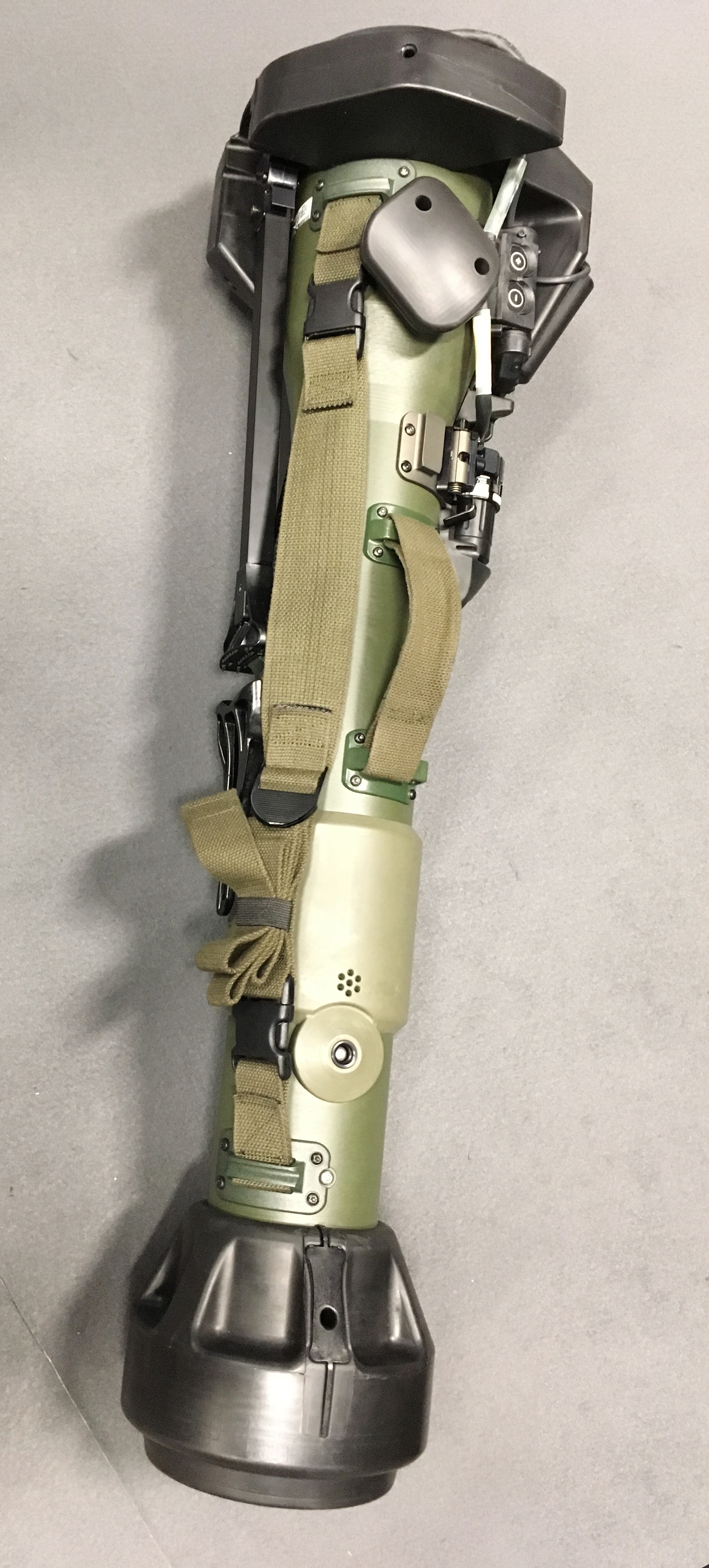
NLAW is a fire-and-forget, lightweight shoulder-fired, and disposable line of sight missile system, designed for use by infantry. The missile, using a soft-launch system, is guided by predicted line of sight and can carry out a top attack or direct attack. It was developed in Sweden by Saab Bofors Dynamics, and manufactured in the United Kingdom, mainly by Thales Air Defence. Users of the weapon include Finland, Indonesia, Luxembourg, Malaysia, Sweden, Switzerland, Ukraine, and the United Kingdom.
The NLAW missile development project was completed in 2002. The guidance technology of this missile is taken from BILL 2 missile and the small and compact configuration of this missile is obtained from AT4 anti-tank missile. The UK Department of Defense is probably looking for more than 20,000 NLAW missiles, with an estimated storage life of 20 years.
One of the salient features of this missile is its ability to fire from closed locations. For this purpose, the missile with a low pressure propulsion is activated first and after leaving the closed position, its powerful propulsion is activated. Since in urban battles it is necessary to shoot from inside the buildings, if the missile does not have such a capability, its operator will be harmed, and when the weapon has such a feature, it is very suitable for urban battles and hitting enemy armored forces inside cities.
NLAW ATGM specifications: Range: 800 m Weight: 12.5 kg Length: 1.016 m Warhead: High-explosive anti-tank combined overfly top attack, direct Warhead penetration: more than 500 mm in rolled steel
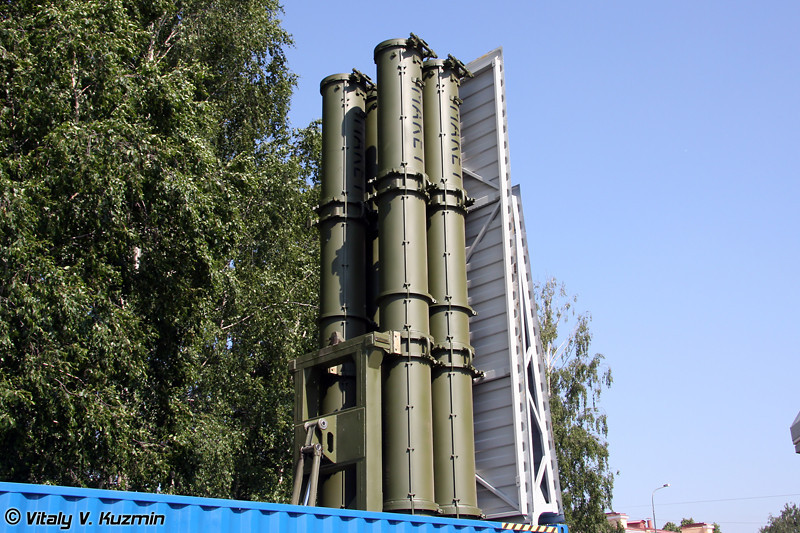
There are different types of Kalibr cruise missiles, each of which has different names depending on its function and model. These missiles are produced in two versions: “domestic” for use in the Russian army and “export” for sale to other countries.
Some versions have secondary rocket propulsion to achieve ultrasonic speeds in the final phase of target hunting. This feature reduces the reaction time of air defense systems.
The components of the submarine-launched version and the one that launch from a surface ships is designed to be as common as possible between the parts of these missiles; Of course, there are some major differences between some of the main components. For example, in the surface ship version, the rocket booster needs to control the thrust vector due to its vertical launch, but the submarine-launched version does not require this system. The fact that the Kalibr missile can be fired from vertical tubes means that it can be used on a wide range of small and large warships. Therefore, the navy of any country that has such a weapon will benefit from very precise and strategic long-range firepower.
In the air-launched version, in order to reduce the effects of the environment on the missile, the missile is placed inside a tube and after being released from the warplane, it will release from the tube and launch.
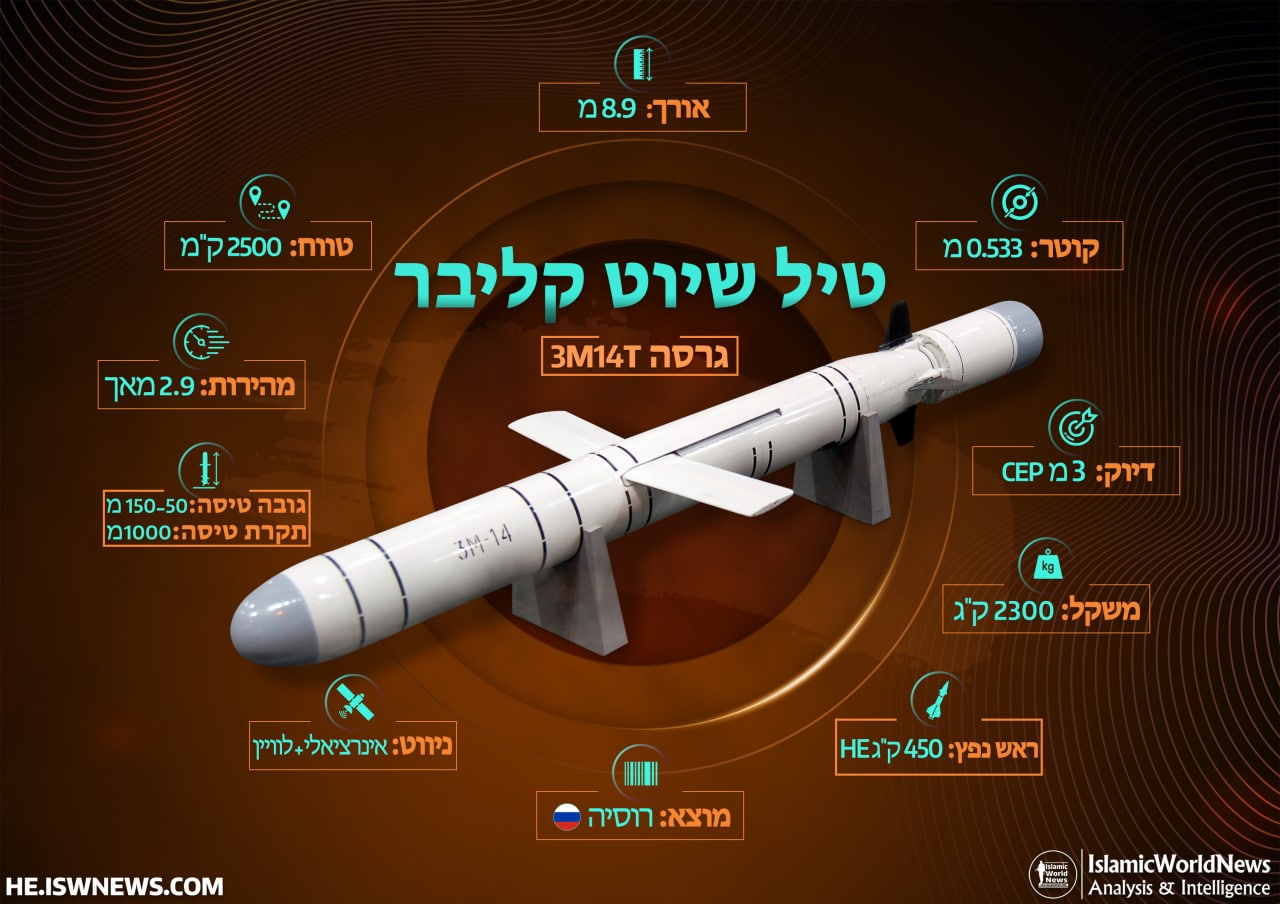
The range of all Kalibr missiles in the service of the Russian army is not exactly known; But given past operations and operational use of the missile, conservative estimates put the maximum range of 2,500 km for the longest-range version of the missile. Thus, the Kalibr cruise missile can hit targets with very high accuracy with a circular error probability (CEP) of 3 meter at 2500 km range with conventional or thermonuclear warheads. The flight ceiling of this missile is 1000 meters, but after firing it flies towards the target with a flight altitude between 50 to 150 from the ground level or with a flight altitude of 20 from the sea level. Kalibr cruise missile navigation system is a combination of inertial navigation system (INS) and satellite guidance.
Kalibr cruise missile variants
Versions used in the Russian army: Domestic versions used in the Russian Navy are divided into two general categories, 3M-54 and 3M-14 with the suffixes K and T. K means the ability to fire from submarines and T means the ability to fire from surface ships. – The 3M54 missile has two general versions, the 3M54K and the 3M54T. 3M54K missile: A submarine-launched anti-shipping variant and its length is 8.22 meters and it has a warhead of 200 kg. Its range is between 375 and 500 km. 3M54T missile: An anti-shipping variant that launches vertically (VLS) from surface ships and its length is 8.9 meters and it has a warhead of 200 kg. Its range is between 375 and 500 km.
– The 3M14 missile has two general versions, the 3M14K and the 3M14T. 3M14K missile: A submarine-launched land attack variant with a length of 6.2 meters and a warhead of 450 kg. Its range is 2500 km. 3M14T Missile: A land attack variant that launches vertically (VLS) from surface ships with a length of 8.9 meters and a warhead of 450 kg. Its range is 2500 km.
The Russian military also has other types of air-launched and land-launched cruise missile versions, but detailed specifications are not available. It is worth noting that most of the Russian army’s Kalibr cruise missiles are of the sea-launched type, and so far the Russian army has used more Kalibr sea-launched versions.
A new version of the Kalibr-M missile is also being designed, which has a larger warhead and a range of about 4,500 kilometers. The missile is expected to join the Russian Navy between 2022 and 2025.
Export variants: Export and attenuated versions (in terms of range and accuracy) of Kalibr cruise missiles fall into four main categories: Club-S, Club-N, Club-T, and Club-A. The Club-S versions are submarine-launched, the Club-N versions are surface ship-launched, the Club-T versions are land-launched, and the Club-A versions are air-launched.
The Club-S version has four types: 3M-54EClub-S,3M-54E1, 3M-14E, 91RE1. – 3M-54E Club-S: It is the submarine-launched anti-shipping variant and its length is 8.2 meters and it has a warhead of 200 kg. Its range is 220 km. -3M-54E1: It is the submarine-launched anti-shipping variant and its length is 6.2 meters with a warhead of 200 kg. Its range is 300 km. – 3M-14E: It is the land attack variant fired from a submarine and its length is 6.2 meters and it has a warhead of 450 kg. Its range is 300 km. – 91RE1: It is the submarine-launched anti-submarine variant and its length is 7.65 meters and it has a warhead of 76 kg. Its range is 50 km.
Club-S land attack, anti-shipping and anti-submarinevariants
The Club-N version has four types: 3M-54TE Club-N, 3M-54TE1, 3M-54TE, 91RTE2. – 3M-54TE Club-N: It is the surface vessel with VLS launched anti-shipping variant with a length of 8.9 meters and a warhead of 200 kg. Its range is 220 km. – 3M-54TE1: It is the surface vessel with VLS launched anti-shipping variant with and its length is 6.2 meters and it has a warhead of 200 kg. Its range is 300 km. – 3M-14TE: It is the surface vessel with VLS launched land attack variant with a length of 8.9 meters and a warhead of 450 kg. Its range is 300 km. – 91RTE2: It is the surface vessel with VLS launched anti-submarine variant and its length is 8.9 meters and has a warhead of 76 kg. Its range is 40 km.
The Club-T version has two types, the land-based 3M-54E2 for targeting warships and the Land-based land-attack 3M-14E1. These missiles are used as mobile missile systems for coastal defense. These missiles have a warhead of 450 kg and probably have a range of about 300 km.
Coastal defense version of caliber cruise missiles
The Club-A version has three types: 3M-54AE, 3M-54AE1 and 3M-14AE. – Versions 3M-54AE1 and 3M-54AE are anti-shipping missiles fired from warplanes. The 3M-54AE missile weighs 1950 kg and has a warhead of 200 kg and a range of 300 km. – The 3M-14AE is a air-launched land-attack variant fired from warplanes. It is 6.2 meters long, weighs 1400 kg and has a warhead of 450 kg. Its range is 300 km.
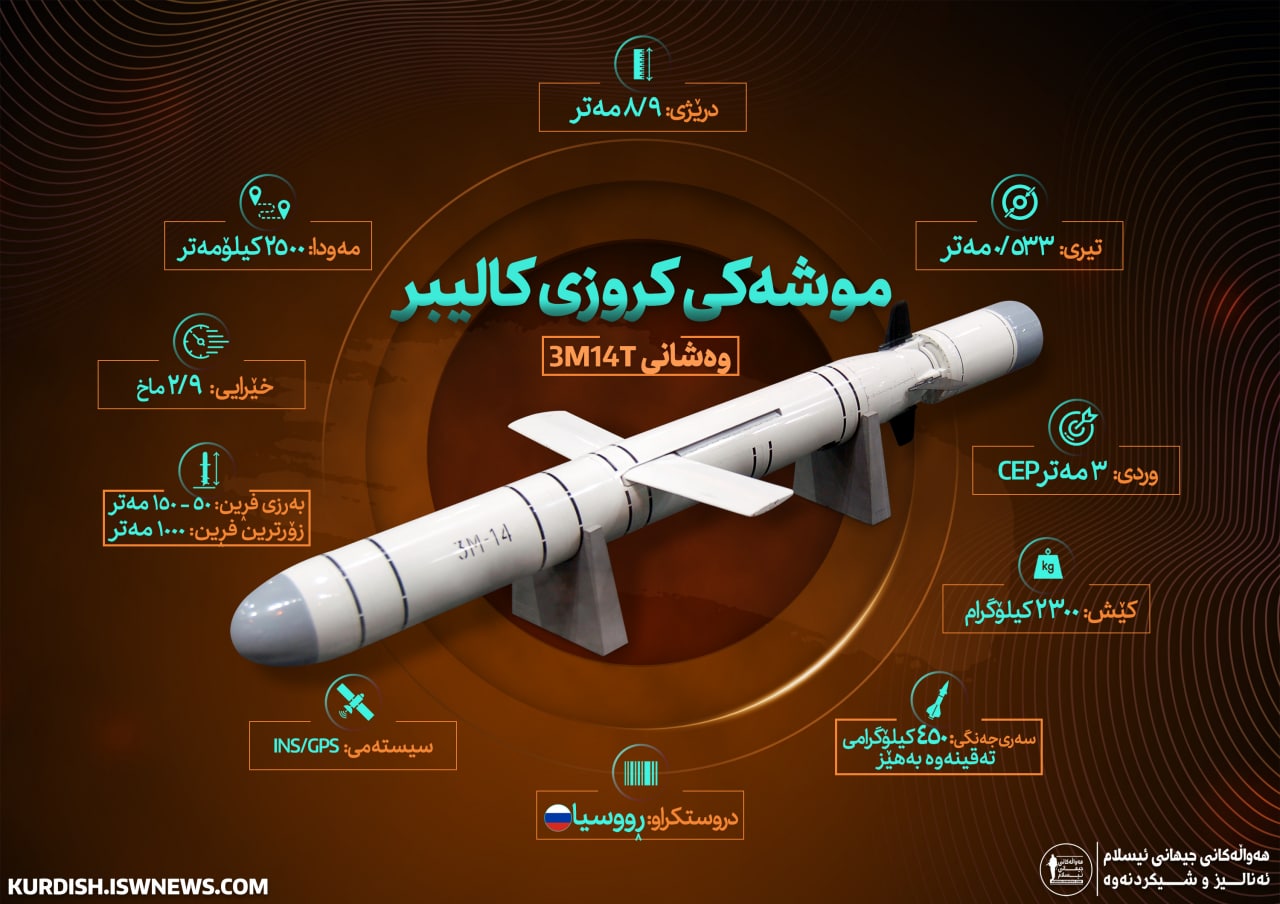
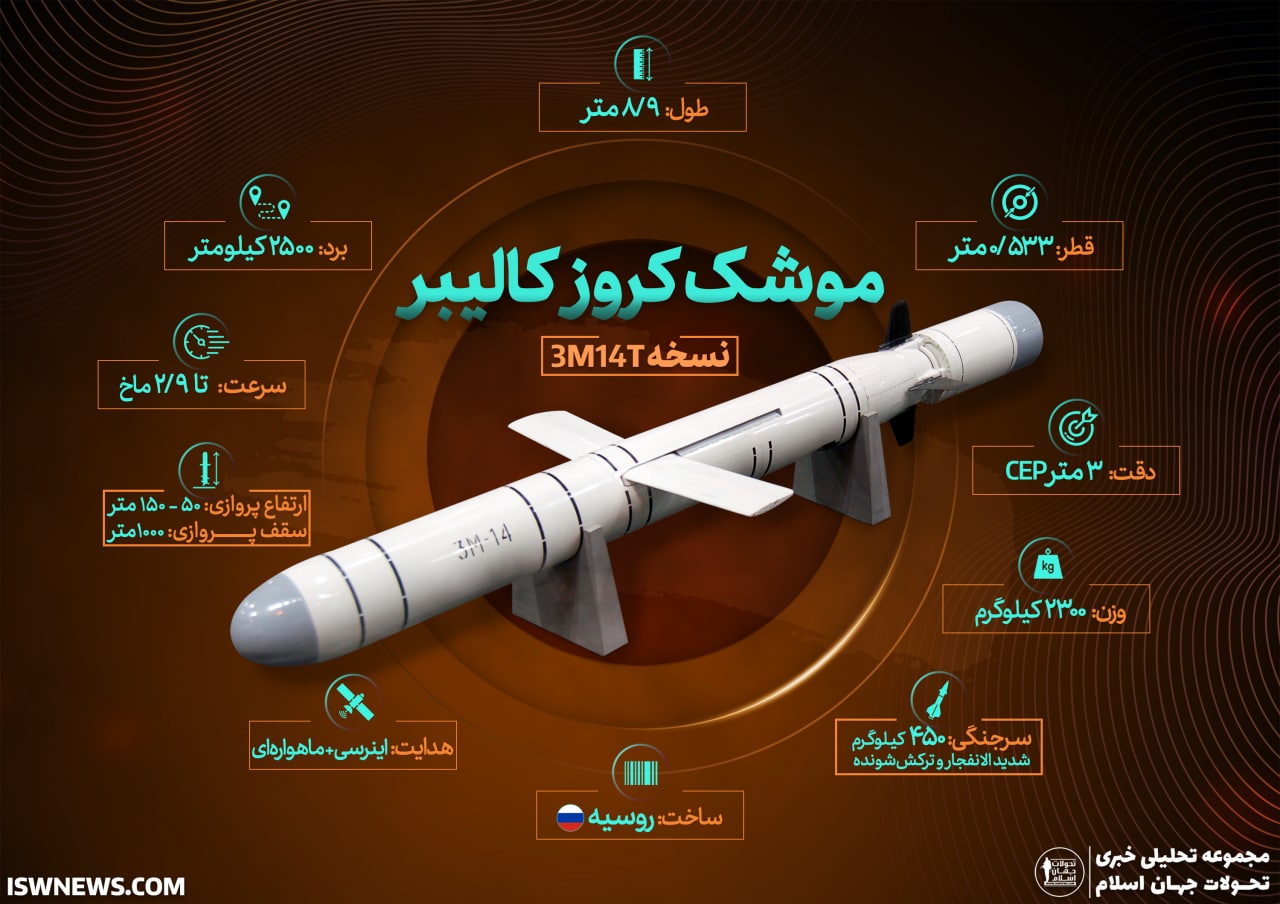
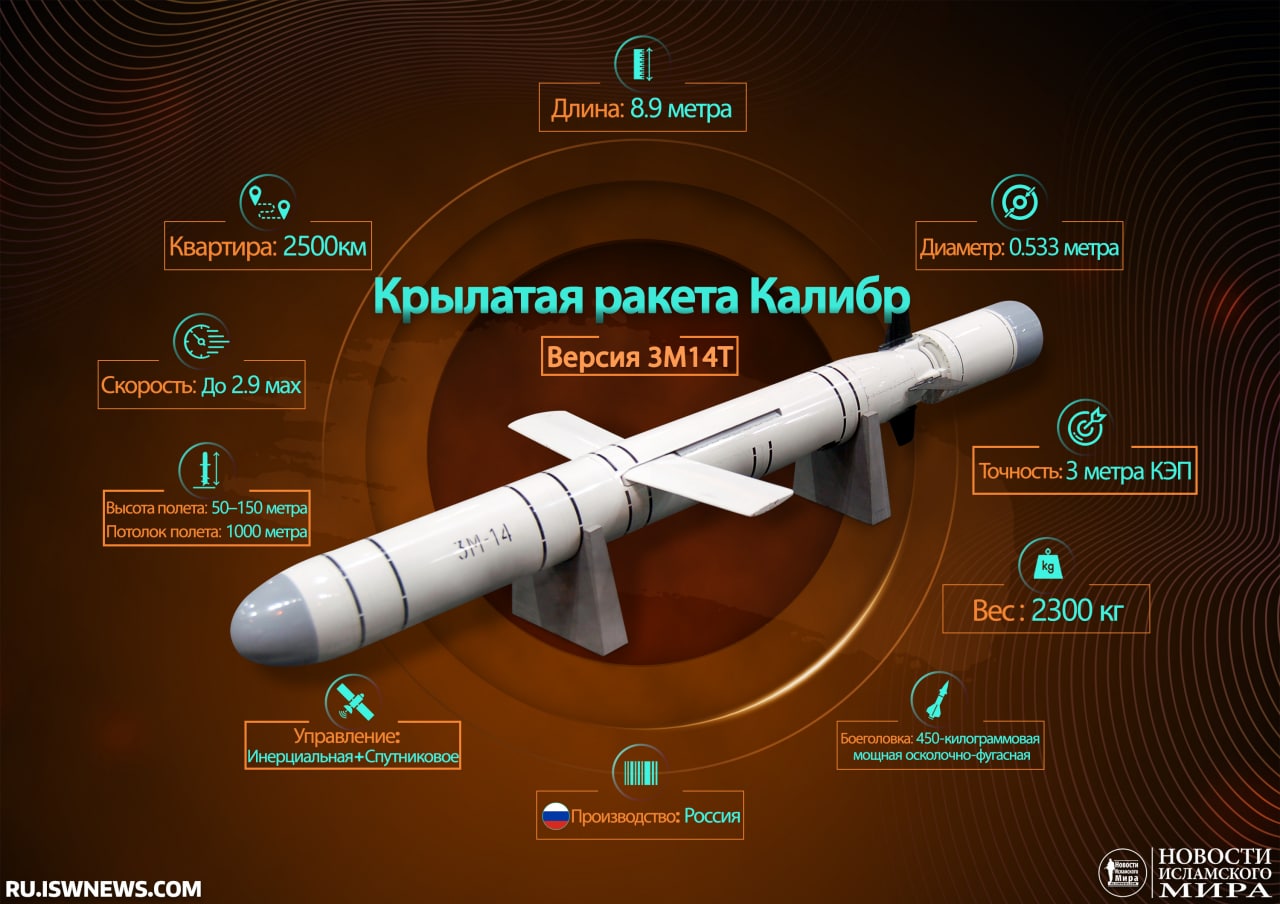
Kalibr cruise missile specifications (3M14T variant): Length: 8.9 m Diameter: 0.533 m Wingspan: 3.080 m Weight: 2300 kg Warhead: 450 kg HE Range: 2500 km Speed: Mach 2.9 Flight ceiling: 1000 m Flight altitude: 50 – 150 m Guidance: Inertial + satellite Accuracy: 3 m CEP Origin: Russia
Click to view full size3M14T and 3M54T caliber cruise missiles fired from Russian warships
“Kalibr Cruise Missile” collection of posters in Persian, Arabic, Kurdish, Azeri, Russian, Hebrew and Chinese for Social Media:
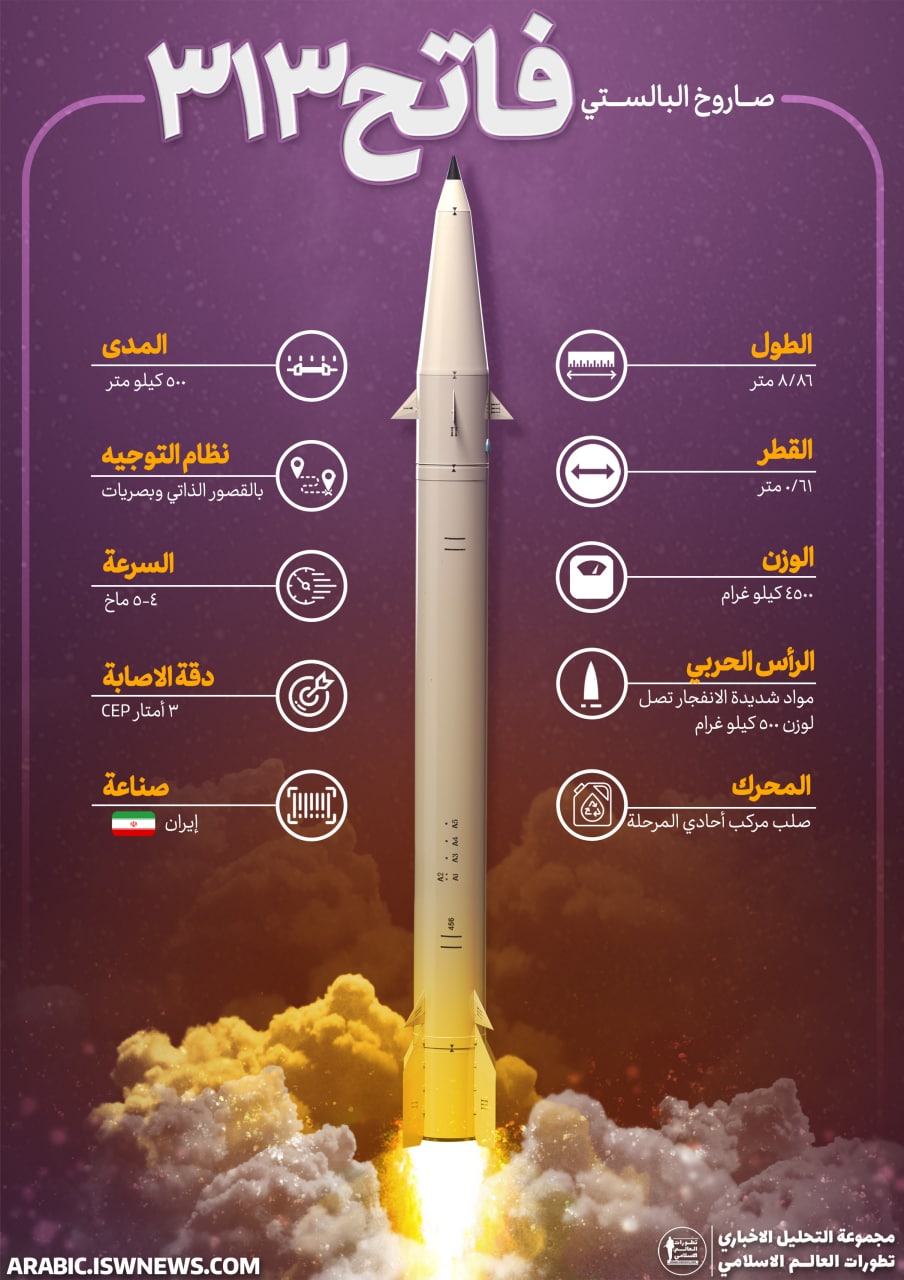
This missile was used during Operation Martyr Soleimani against the US forces at Ain Al Asad Airbase, Iraq, and the very high accuracy of this missile was proven. Fateh-313 missile with a maximum error rate of 3 meters is one of the most accurate missiles in Iran and the world.
In this missile, by using more advanced inertial navigation and possibly combining it with satellite navigation, a kind of terminal guidance has been obtained, which has provided the ability to guide the Fateh-313 missile until it hits the target.
The Fateh-313 is almost identical in length and diameter to the Fateh-110 missile; But the use of the new propulsion system with more power generation capacity has increased the missile range from 200 km to 500 km. This missile uses “composite solid fuel” unlike the Fateh-110 missile, which uses solid fuel. The use of composite solid fuel results in better fuel efficiency, greater safety and greater stability of the missile during flight.
The expanded range of the Fateh-313 makes more targets available to Iran, and due to the high accuracy and capability of using a mobile launcher and move the missile anywhere in the country allows Iran to fire its missiles from more locations within its territory, complicating the enemy’s attempts to attack the missile launchers before the missiles can be launched.
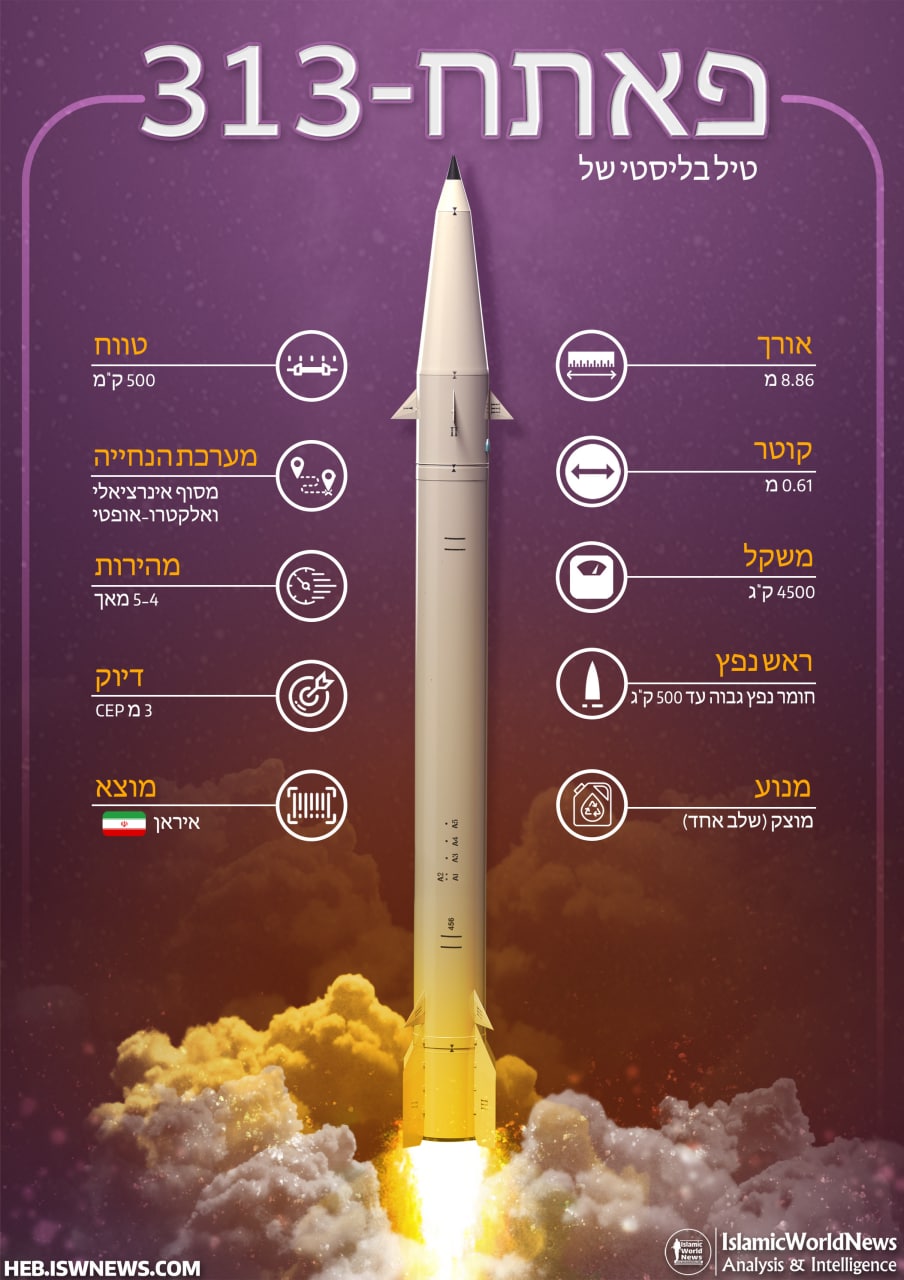
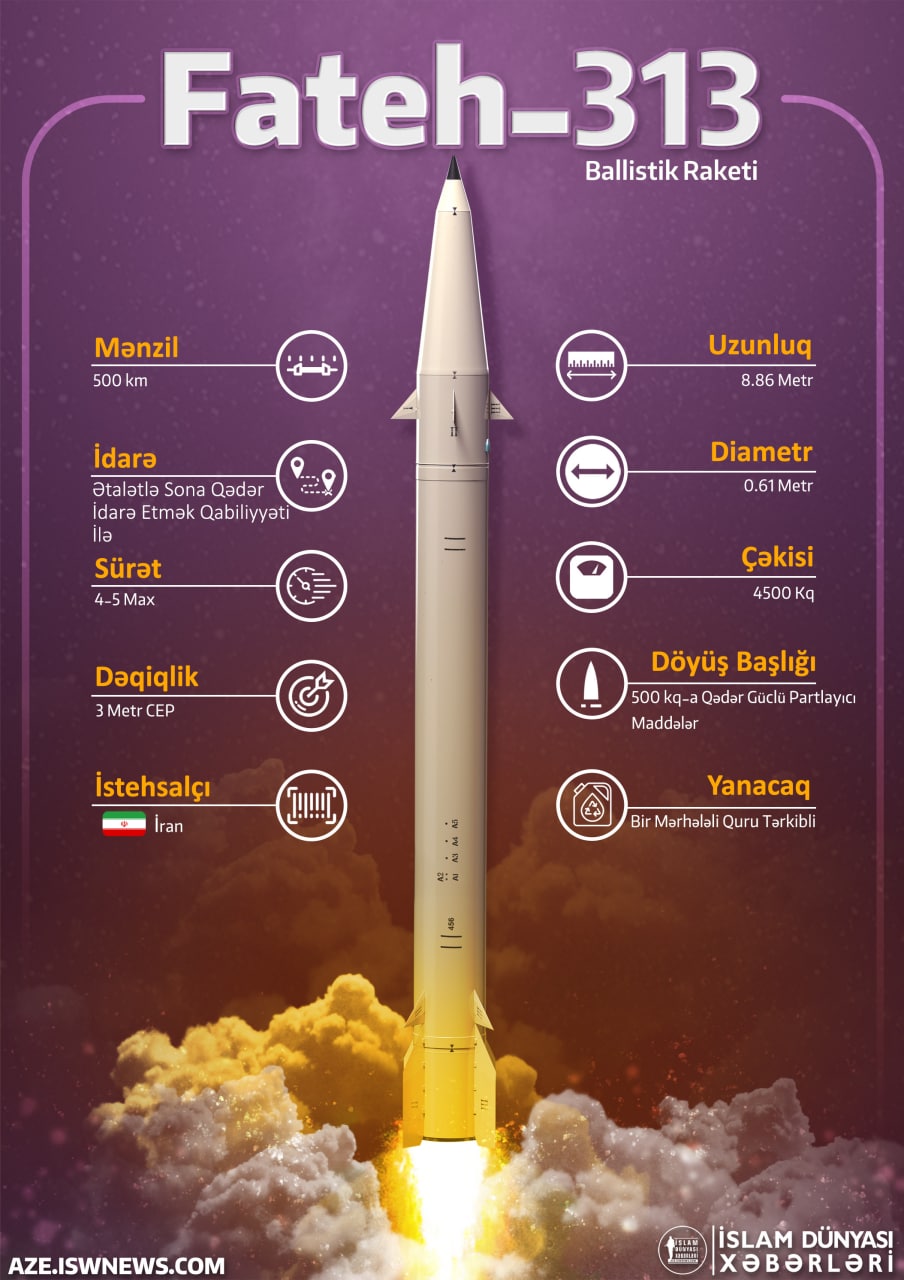
Fateh-313 ballistic missile specifications: Length: 8.86 m Diameter: 0.61 m Weight: 4500 kg Warhead: High explosive up to 500 kg Engine: Solid (single stage) Range: 500 km Speed: Mach 4-5 Guidance system: Inertial and electro-optical terminal Accuracy: 3 m CEP Origin: Iran
Click to view full sizeClick to view full size
“Fateh-313 Ballistic Missile” collection of posters in Persian, Arabic, Kurdish, Azeri, Russian, Hebrew and Chinese for Social Media:
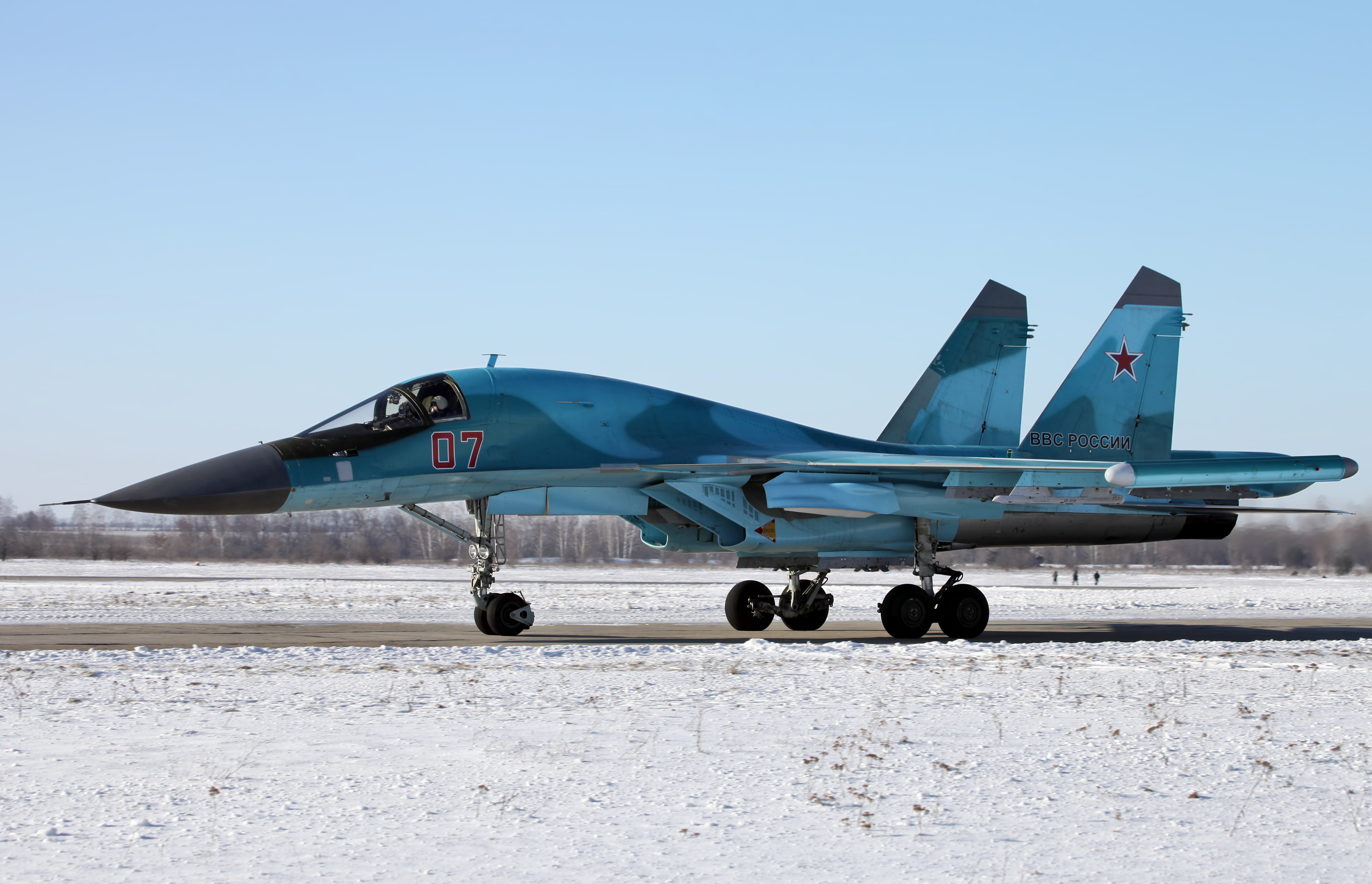
The Su-34, despite being derived from the Sukhoi Su-27 Flanker, is equipped with a cockpit with two seats next to each other; Due to its different role from other fighters in this family, it does not have the title of Flanker.
This fighter is primarily designed to attack ground and naval tactical targets and is capable of bombing, attack and air support operations. The fighter is capable of operating in any weather conditions and electronic warfare environments.
The main purpose of producing the Su-34 fighter is to replace the old Su-24 fighters and Tu-22M3 bombers in the Russian Air Force.
Su-34 fighter development
The design and development of the Su-34 fighter has a long history. Sukhoi first began a new design in the mid-1980s to replace the old Su-24 fighters. Next, the Su-27 fighter design was selected, which had a high maneuverability.
The original design of the Sukhoi 34 was known as the T10KM-2. The T10KM-2 is a Navy-derived version of the Sukhoi Su-27K. The design of the project was known in the Soviet Union as the T-10V, which was introduced in the late 1980s along with the design of the Soviet aircraft carrier Ulyanovsk.
In 1990, a photo of a prototype fighter landing on a Tbilisi aircraft carrier was released, which Western officials mistakenly identified as a Su-27KU fighter.
Tbilisi aircraft carrier: Admiral Kuznetsov aircraft carrier was first built under the name Riga, then launched under the name Leonid Brezhnev, then under the name Tbilisi conducted its naval tests and finally, it entered the service under the name of Admiral Kuznetsov.
Finally, the first flight of the Sukhoi 34 fighter jet was performed on April 13, 1990 by pilot Anatoliy Ivanov.
This version used a new nose, but the overall structure of the fighter was similar to the Su-27UB.
In 1992, the Su-27IB (Sukhoi 34 prototype) was unveiled at the MAKS Airshow and refueled from an Il-78 refueling tanker. The aircraft was officially unveiled on February 13, 1992 in Machulishi, Belarus. A year later, the fighter was re-introduced to the public at the MAKS Airshow.
The first version of this fighter, known as the T10V-2, first flew on September 18, 1993. The initial test version differed in appearance from the original because it was manufactured in Novosibirsk, the production site of the Sukhoi 24 fighter jet.
The first standard version of the Sukhoi 34 fighter jet flew on December 28, 1994, equipped with the Leninets OKB-designed V004 passive electronically scanned array radar system. This version, because it was different from the original versions, was once again introduced at the 1995 Paris Air Show under the name Su-32FN. This version was designed to serve off the coast of Russia to operate against naval targets. Sukhoi also produced another version called the Su-32MF, but it was canceled due to budget constraints.
The Russian military currently has two different versions of the Sukhoi 34, one for electronic warfare, equipped with the L700 Tarantul ECM pod, and the other for intelligence, surveillance and reconnaissance operations.
The modern version of the Sukhoi 34 is known as the Su-34M, which is equipped with a new electro-optical infrared targeting pod, a Kopyo-DL rearward facing radar that can warn the pilots if missiles are approaching, combined with automatic deployment of countermeasures and jamming
The difference between the two designs of Su-34 and Su-27KUB
The Su-27IB fighter (prototype Sukhoi 34) and the Su-27KUB, which is a naval training version, are not related to each other and each has a separate design. In appearance, the nose of the Su-27KUB design is quite round, but the nose of the Su-34 (Su-27IB) is like a duck tip.
Appearance difference between Sukhoi 34 and Sukhoi 27
Orders and delivery
The first batch of eight of these fighters was built at the Novosibirsk plant and was ready for delivery in 2004. In 2006, Russia’s defense minister announced the purchase of five Su-34 fighter jets. In late 2008, a contract was signed for the purchase of 32 Sukhoi 34 fighters until 2015.
According to reports from the Russian Ministry of Defense, by 2015, 70 Sukhoi 34s were to be replaced by 300 Sukhoi 24s, after which the program was canceled and the old Sukhoi 24s were upgraded.
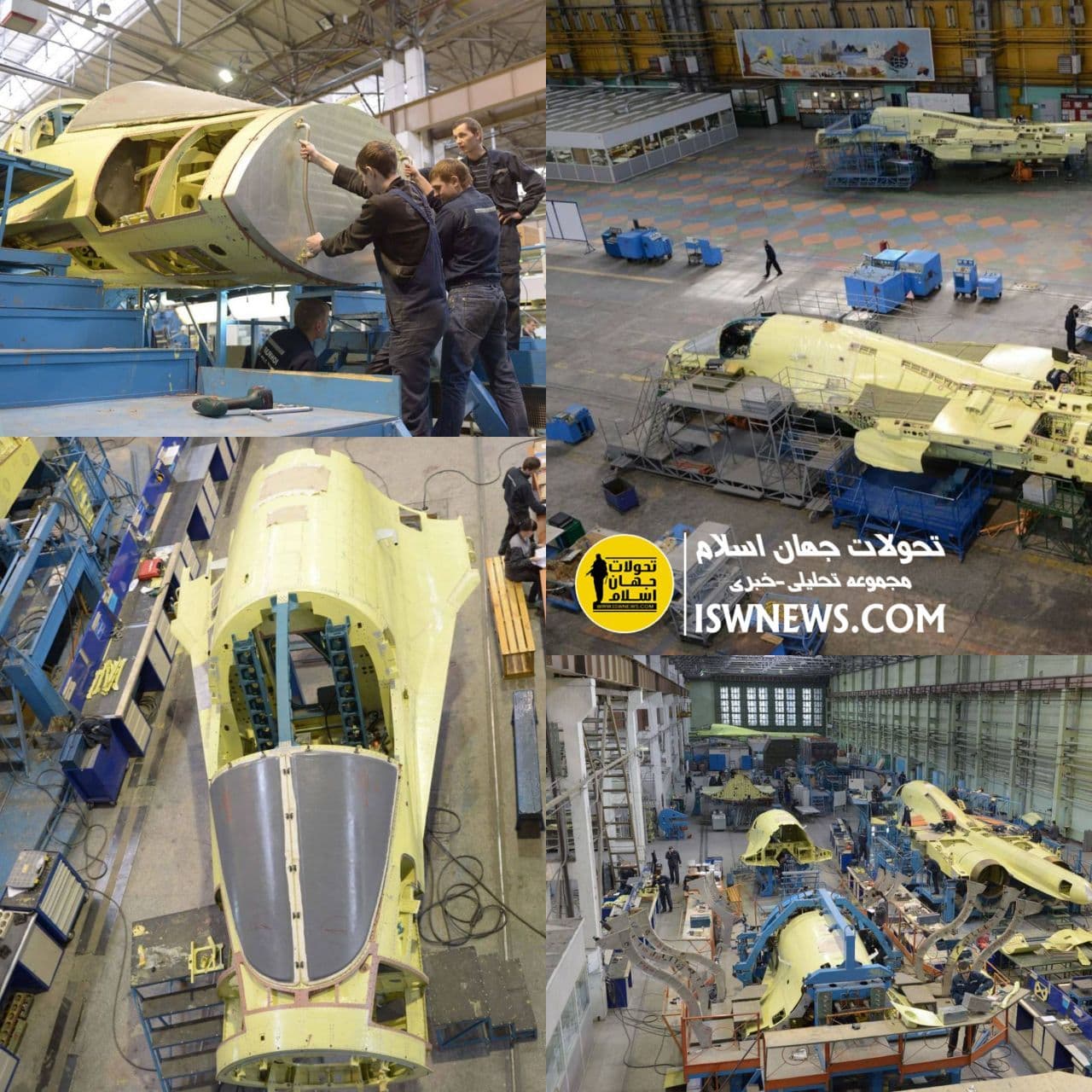
Production line/assembly of Su-34 fighter
Su-34 fighter design
The Sukhoi 34 is similar in structure to the Su-27 and Su-30 in wing, tail and engine nozzles, and similar to the Su-30MKI in the Canards. The engine of this fighter is Saturn AL-31FM1 turbofan, which is also installed on the Su-27SM fighter.
The operational range of this fighter is 4000 km with one time refueling and it is capable of carrying 8000 kg of all kinds of ammunition and weapons.
This fighter is also known by the nickname Duckling or Duckbill due to the fact that two pilots are placed next to each other. In the cockpit, the pilot is on the left and the weapons operator is on the right. One of the advantages of this design is that it is not necessary to use duplicate equipment for every pilot.
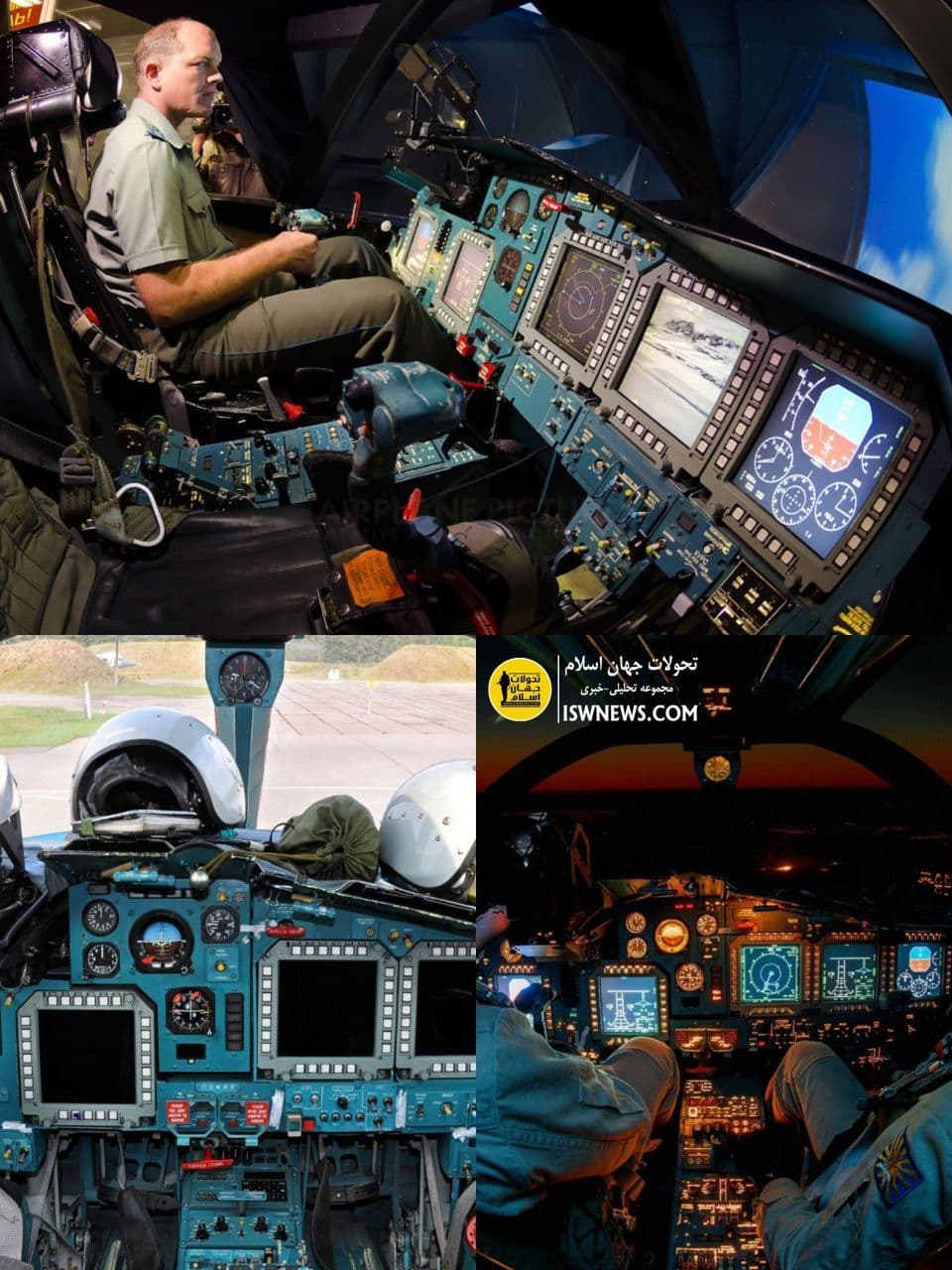
Su-34 fighter cockpit
Fighter crews are able to stand and walk inside the cockpit during long missions. Even the size of the cabin is so large that the pilot and operator have the ability to lie down and sleep on the floor. There is also a toilet and a small kitchen behind the crew seats.
Toilet inside the Su-34 fighter
The crew enters the fighter through a ladder from under the cockpit. The entire cockpit is covered with 17mm armor to withstand a variety of threats.
Ladder under the cockpit of the Su-34
The Su-34 fighter is equipped with the Helmet Mounted Display System (HMDS). HMDS is a device used in aircraft to project information to the pilot’s eyes. It provides the pilot with situation awareness, an enhanced image of the scene and cue weapons systems to the direction their head is pointing.
Su-34 fighter helmet
The radar of this fighter is Leninets OKB-designed V004 passive electronically scanned array radar, which has the ability to detect a variety of targets. The detection range of this radar is 200 to 250 km and it has the ability to detect 10 targets simultaneously. It also has the ability to engage with 4 targets simultaneously. In addition to the main radar, a N012 rearward-facing warning radar is used behind the fighter, which has a range of 120 km.
Sukhoi 34 front and rear radarVideo of Su-34 fighter flying, maneuvering, takeoff, landing, firing various missiles, rockets, etc.
Su-34 fighter-bomber specifications: Length: 23.34 m Wing length: 14.7 m Height: 6.09 m Empty weight: 22500 kg Gross weight: 45100 kg Engine: 2 × Saturn AL-31FM-1 turbofan Speed: 2200 km/h Range: 1100 km Service ceiling: 17,000 meters Crew: 2 Origin: Soviet Union (Russia) First flight: 13 April 1990 Produced: 2006–present Hardpoints: 12 × on wing and fuselage with a capacity of 8000 kg
Su-34 Armament:
Guns: 1 × 30 mm Gryazev-Shipunov GSh-30-1 autocannon with 180 rounds
KAB-500KR and KAB-1500KR TV guidance bombs KAB-500L and KAB-1500L laser guided bombs KAB-500OD guided bombs KAB-500S-E satellite guidance bombs RBK-500 and SPBE-D cluster bombs BETAB-500SHP concrete-piercing bombs ODAB-500PM, OFAB-100-120 and OFAB-250-270 free-fall bombs
80 mm S-8 missiles with a range of 1 to 4.5 km 122 mm S-13 missiles with a range of 1 to 4 km 340 mm S-25 rockets
Vympel R-73 short-range air-to-air missile with a range of 30 km All versions of the Vympel R-27 medium-range air-to-air missile with a range of 40 to 170 km Vympel NPO R-77 medium-range air-to-air missile with a range of 80 to 200 km
Kh-29 air-to-surface missile with a range of 10 to 12 km Kh-25 air-to-surface missile with a range of 11 to 60 km Kh-38 air-to-surface missile with a range of 70 km Kh-58 air-to-surface missile with a range of 120 km Kh-59 air-to-surface missile with a range of 200 km
Kh-36 cruise missile with a range of 120 km Kh-65SE cruise missile with a range of 600 km Kh-SD cruise missile with a range of 300 to 1,900 km
Kh-31A / AD anti-ship missile with a range of 25 to 105 km Kh-41 anti-ship missile with a range of 120 to 240 km Kh-35U anti-ship missile with a range of 300 km Kh-61 anti-ship missile with a range of 300 to 600 km
Kh-25MP anti-radar missile with a range of 60 km Kh-31P anti-radar missile with a range of 110 km Kh-58 anti-radar missile with a range of more than 120 km
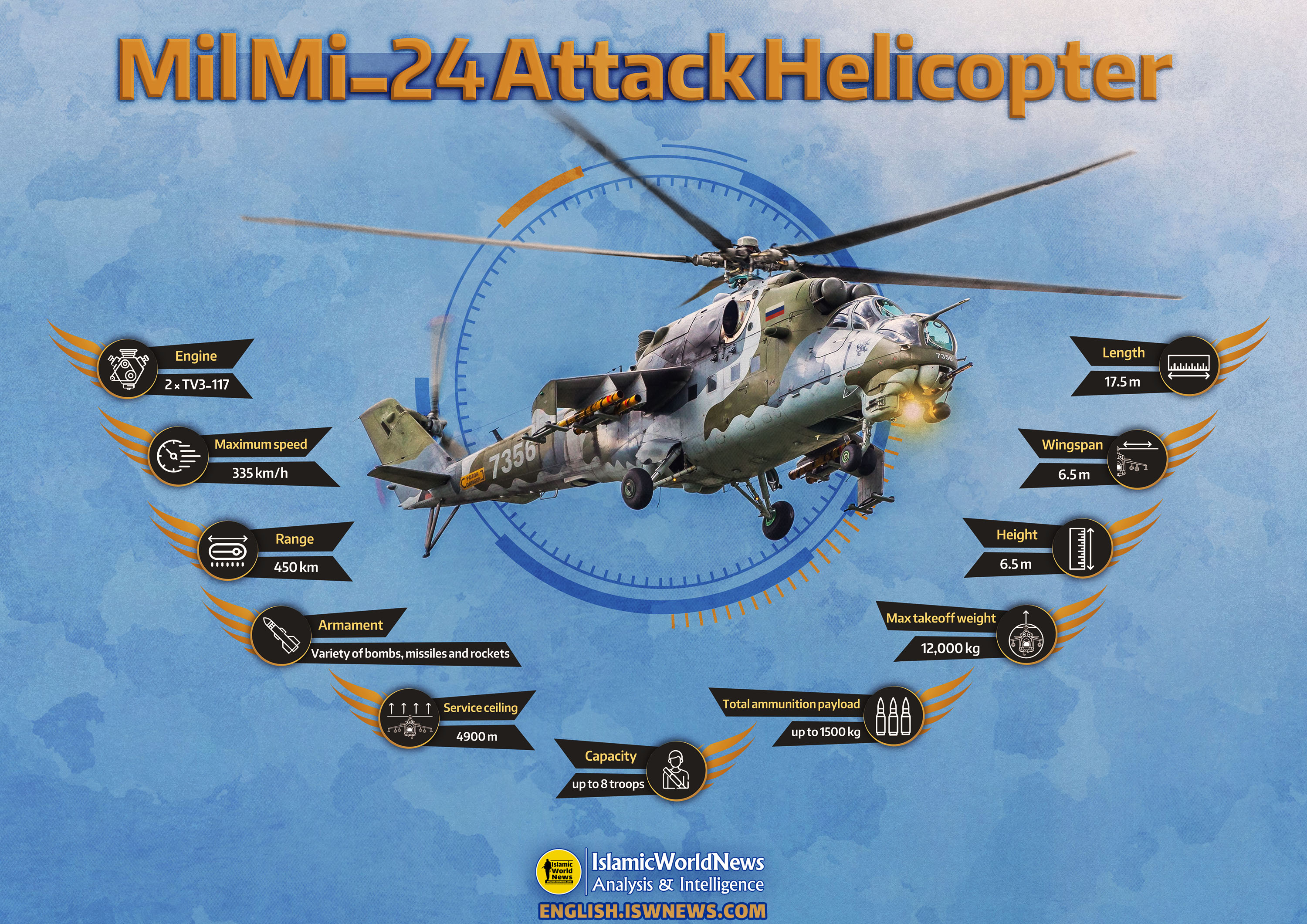
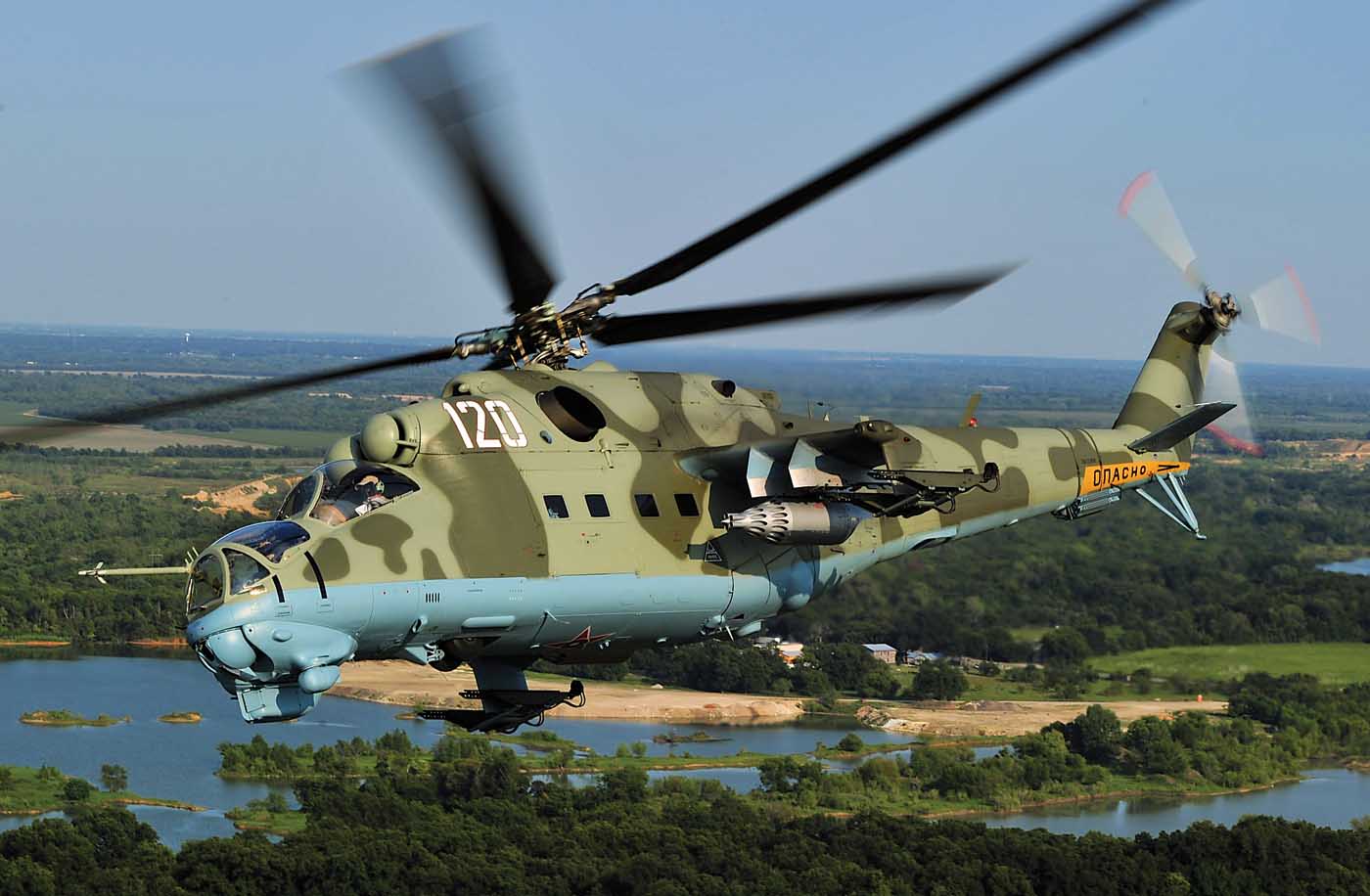
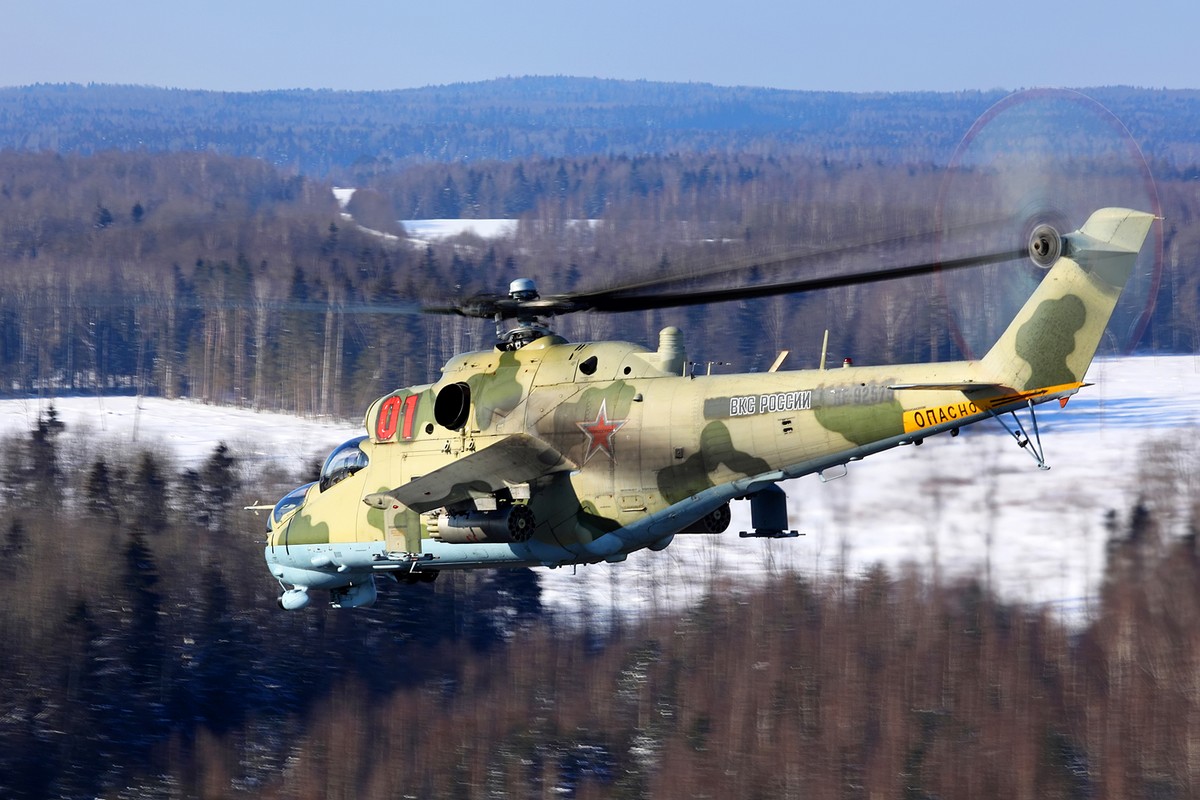
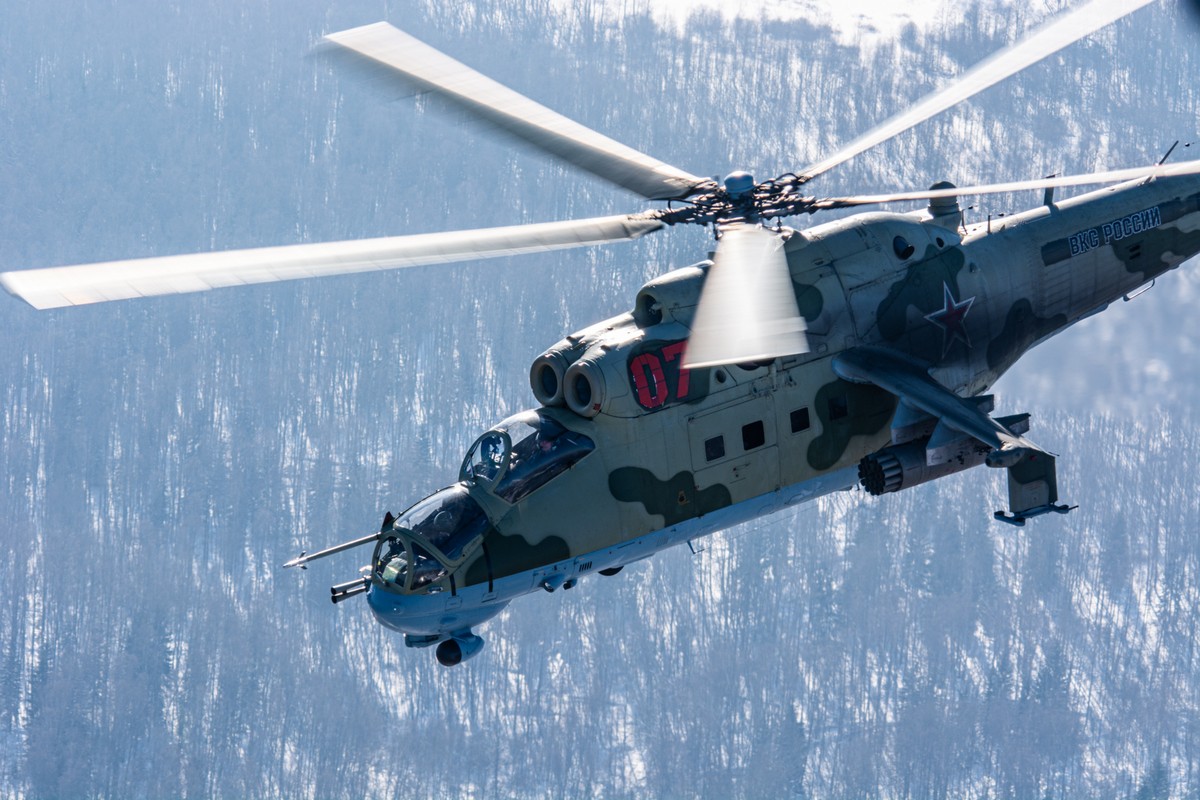
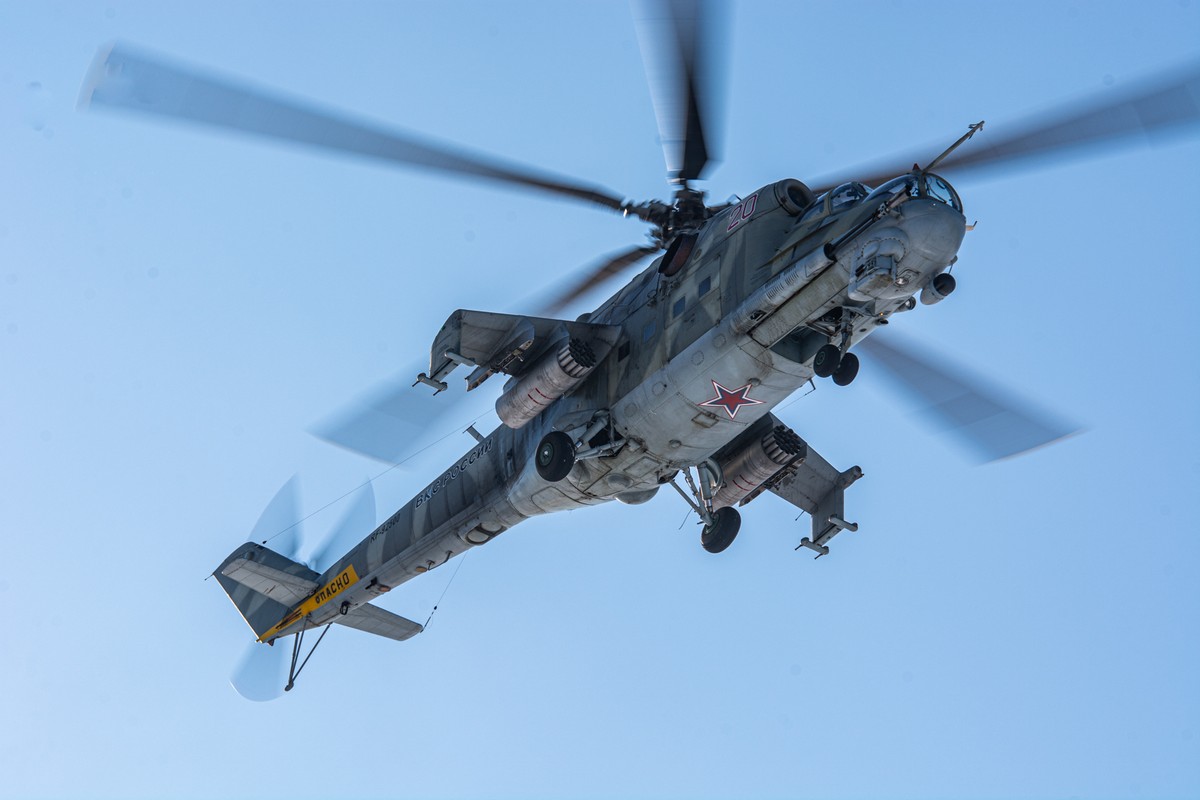
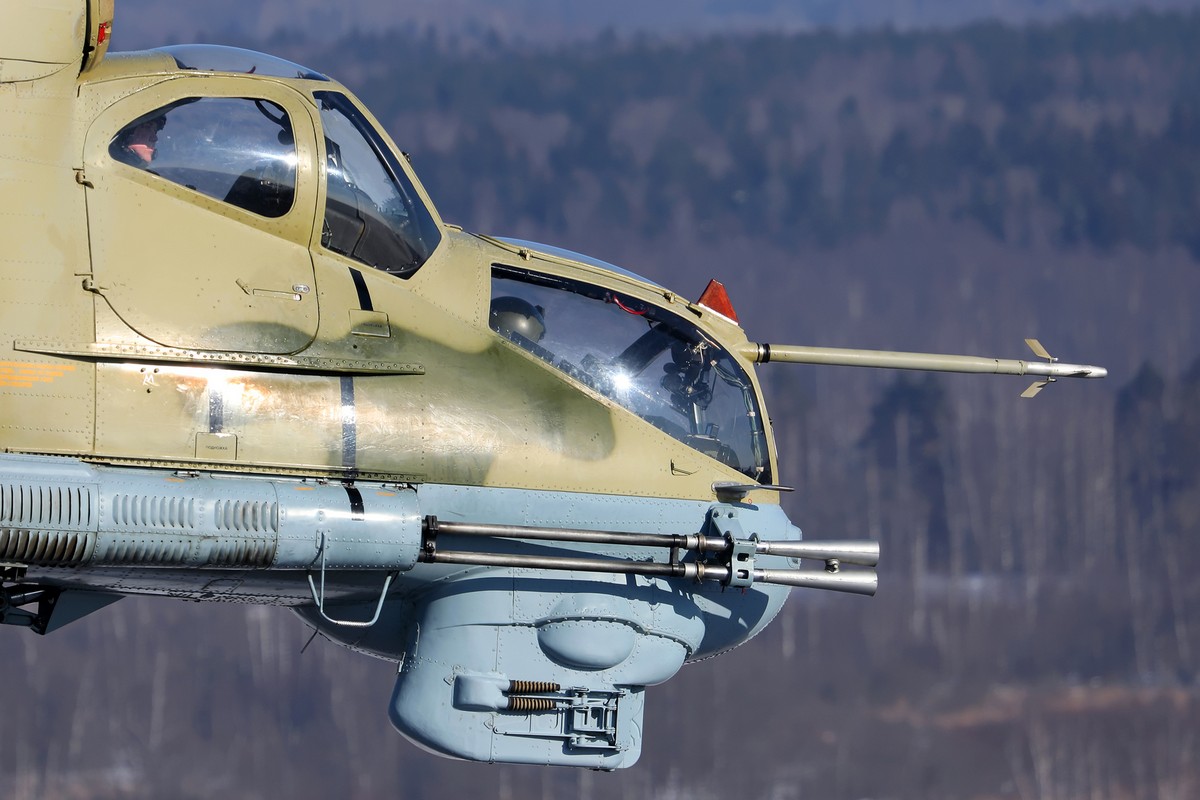
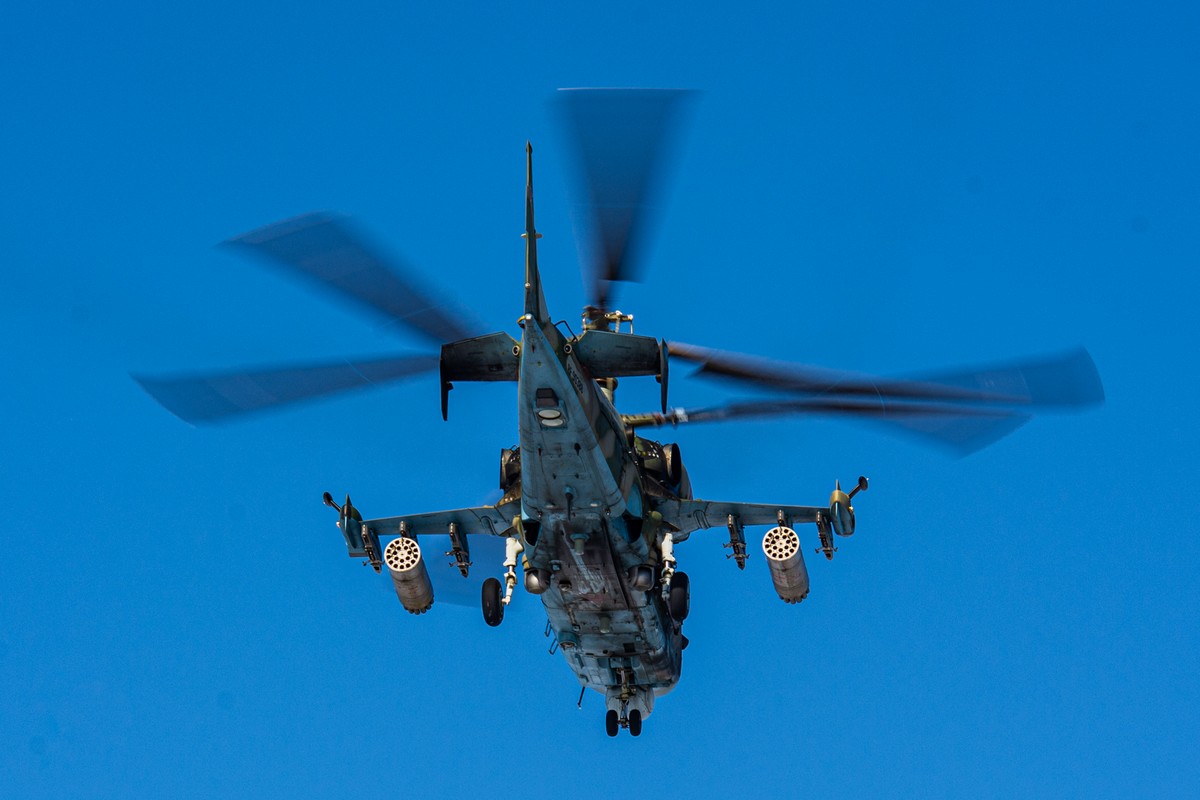
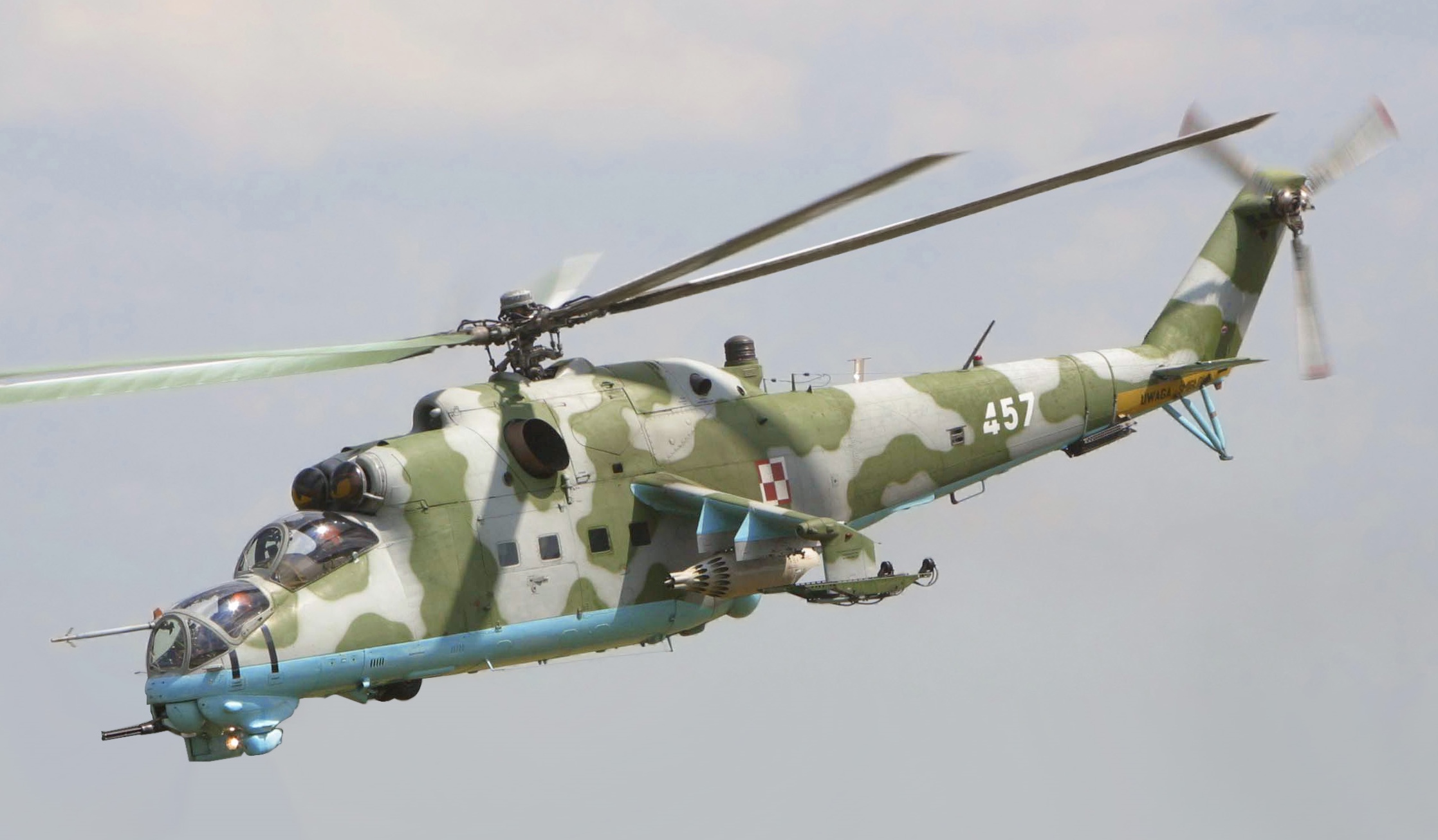
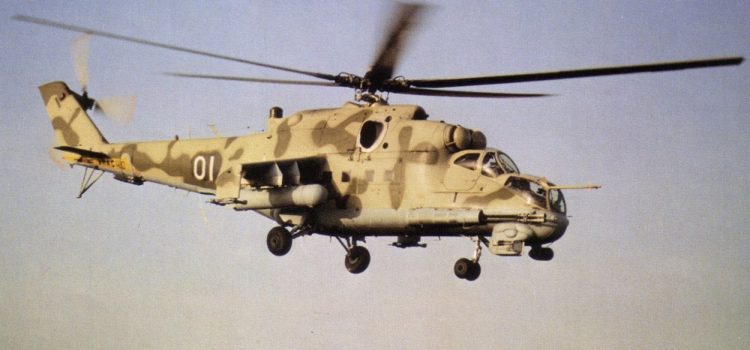
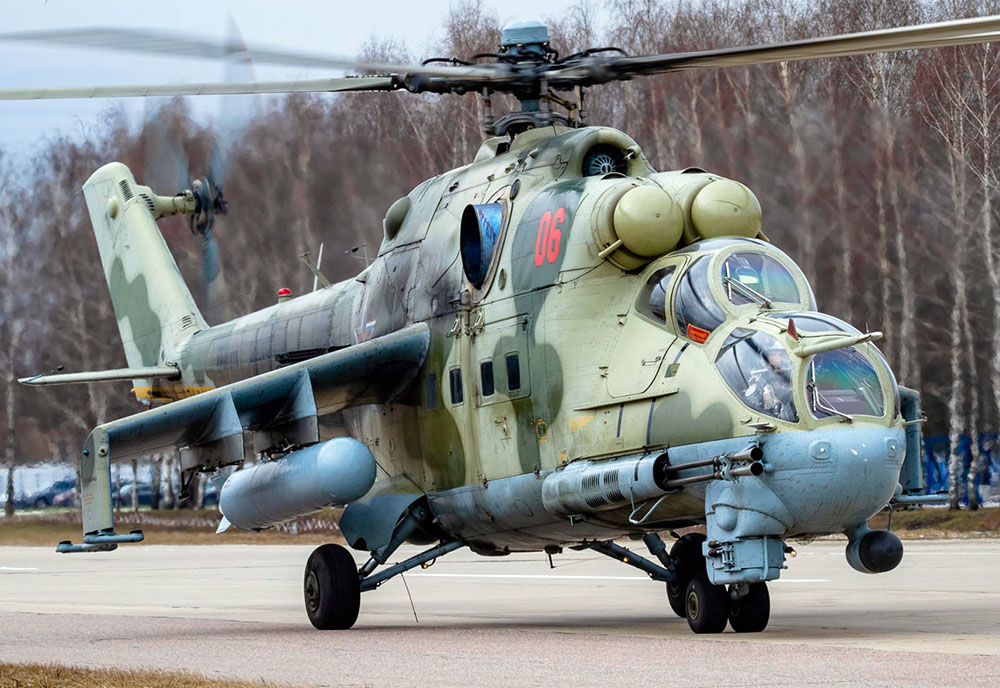
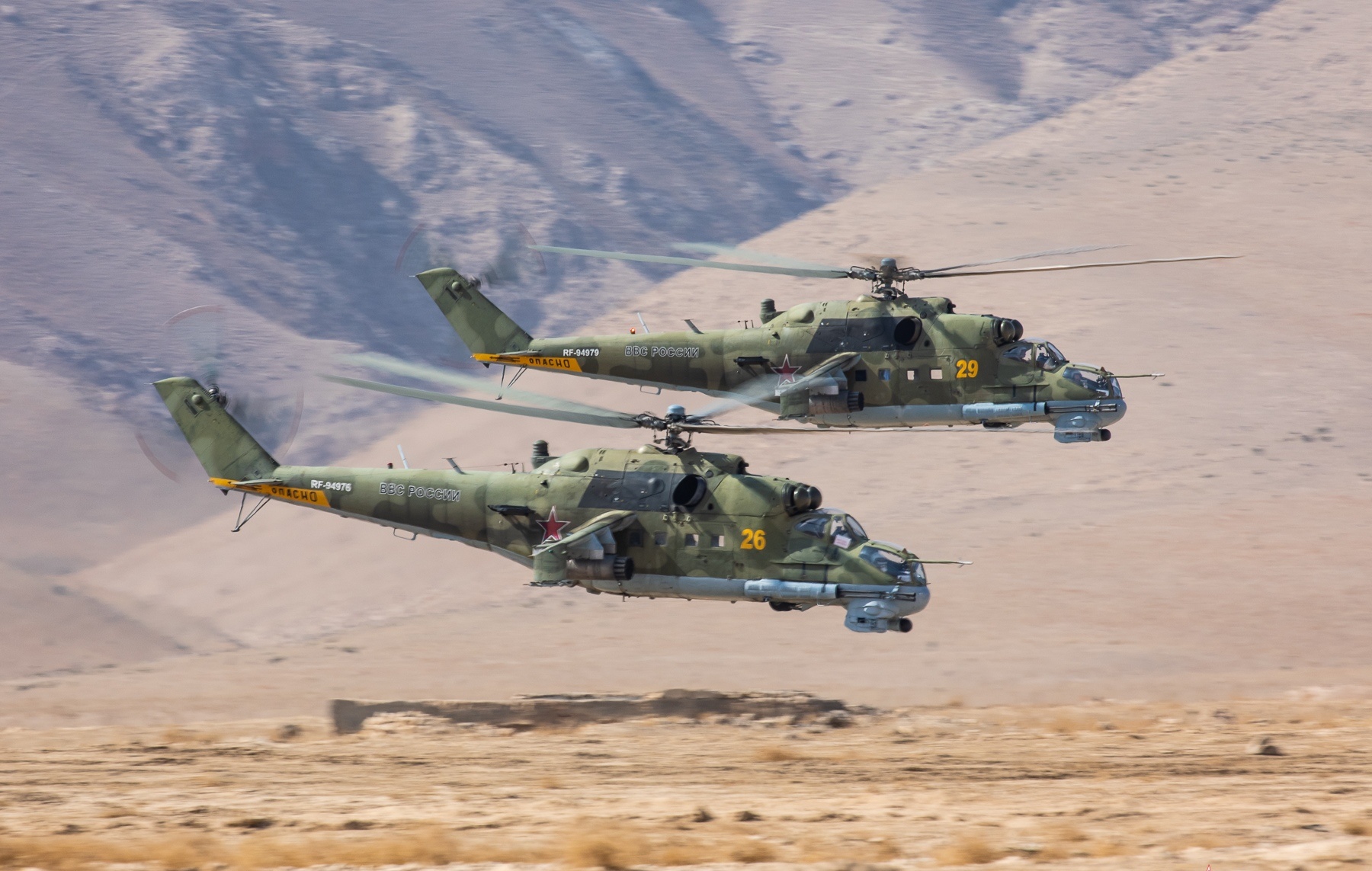
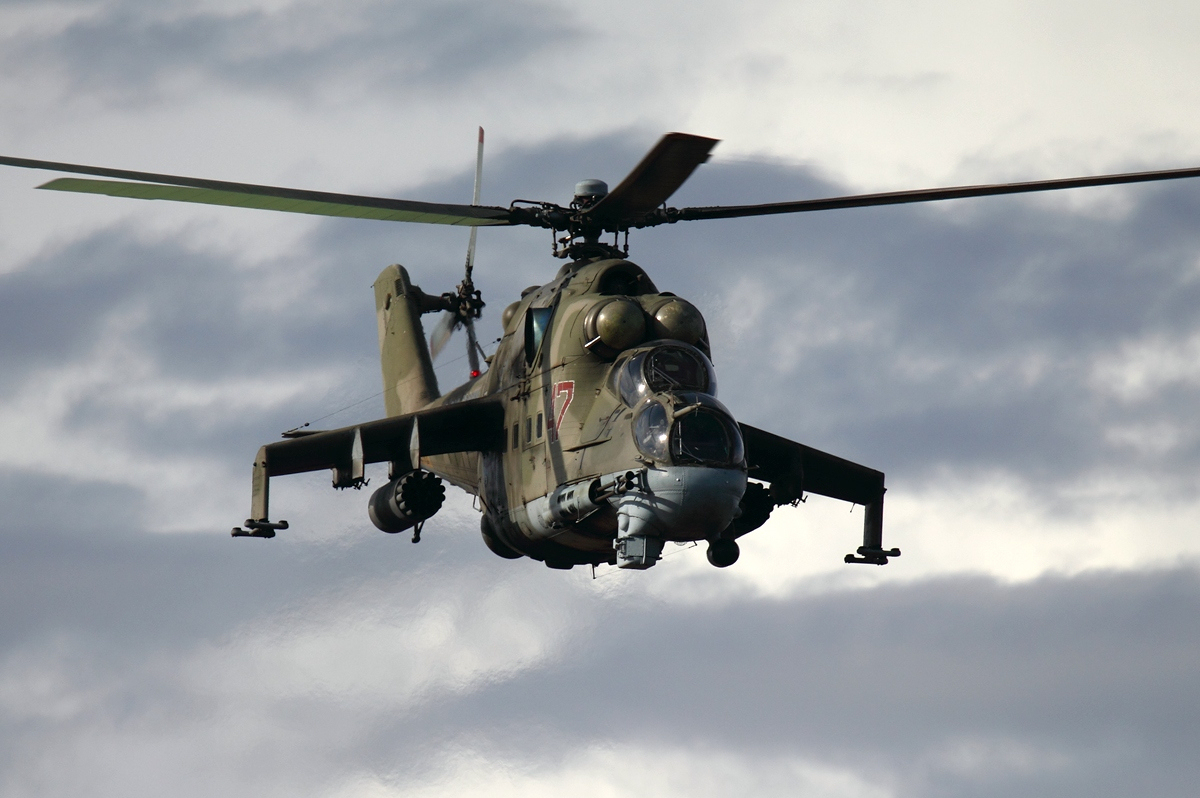
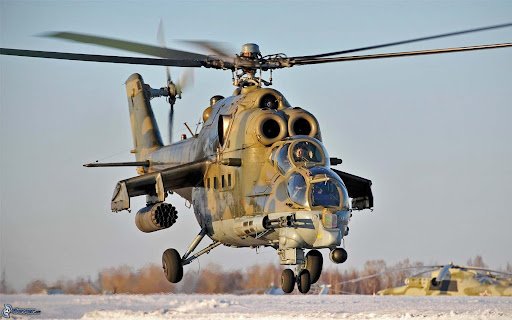
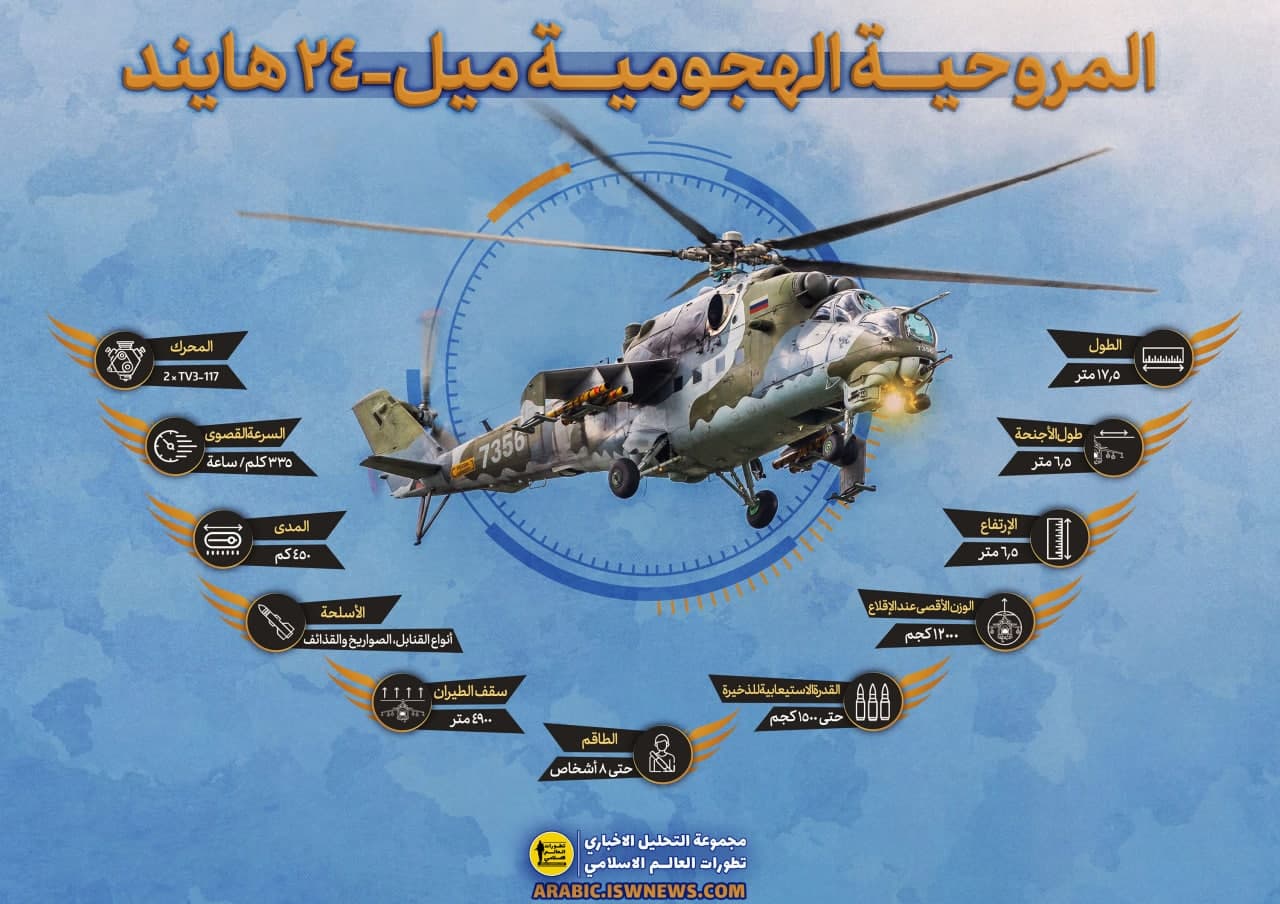
The design of the Mil-24 helicopter has striking similarities with the famous Mil-17 transport helicopter, and the number of common components between the two helicopters is significant, and this has encouraged countries that own the Mil-17 transport helicopter to use the Mil-24; The Mil-24 helicopter has been used in the armies of 48 countries.
One of the capabilities of the Mil-24 is the ability to carry up to eight people, and this feature was widely used by the Soviet Air Force in the war in Afghanistan.
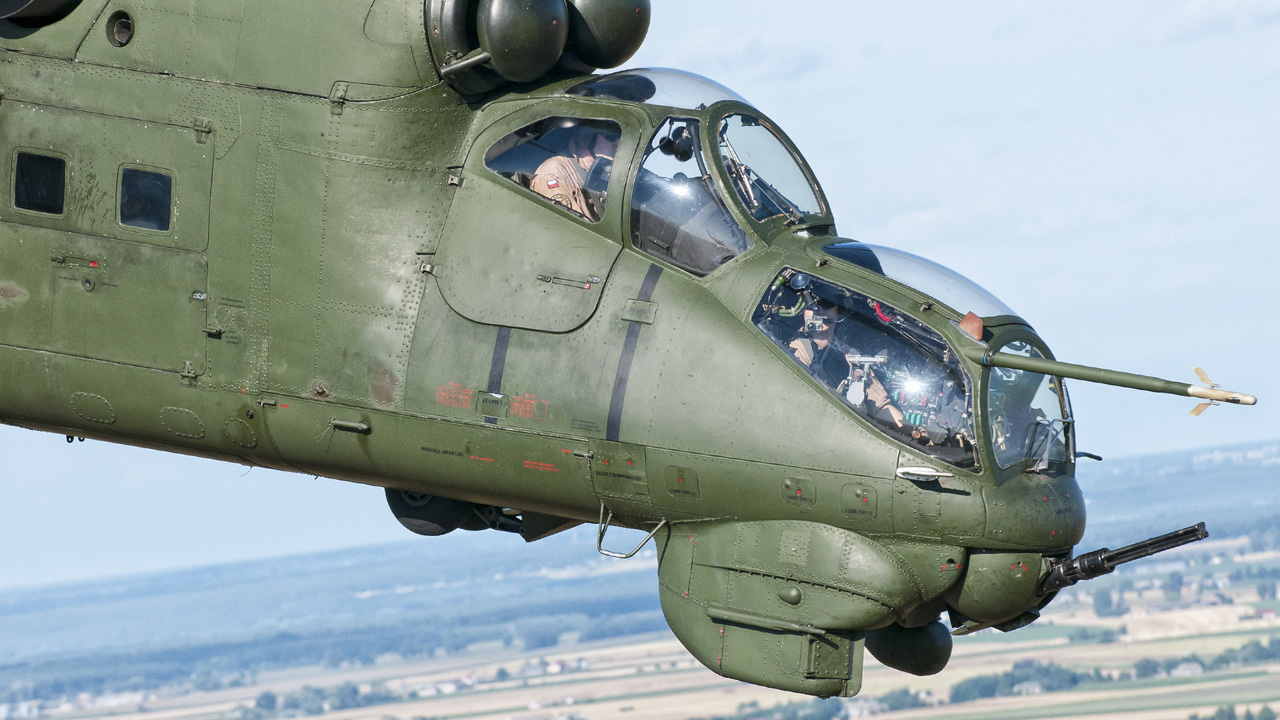
The body of this helicopter is reinforced with titanium to be resistant to bullets up to 12.7 mm caliber. The rotor of the helicopter is also made of titanium and is resistant to bullets up to 12.7 caliber.
In order to protect the crew against the atomic biological chemical (ABC) agents, the air pressure inside the cabin is higher than the environment and prevents the entry of ABC agents into the cabin.
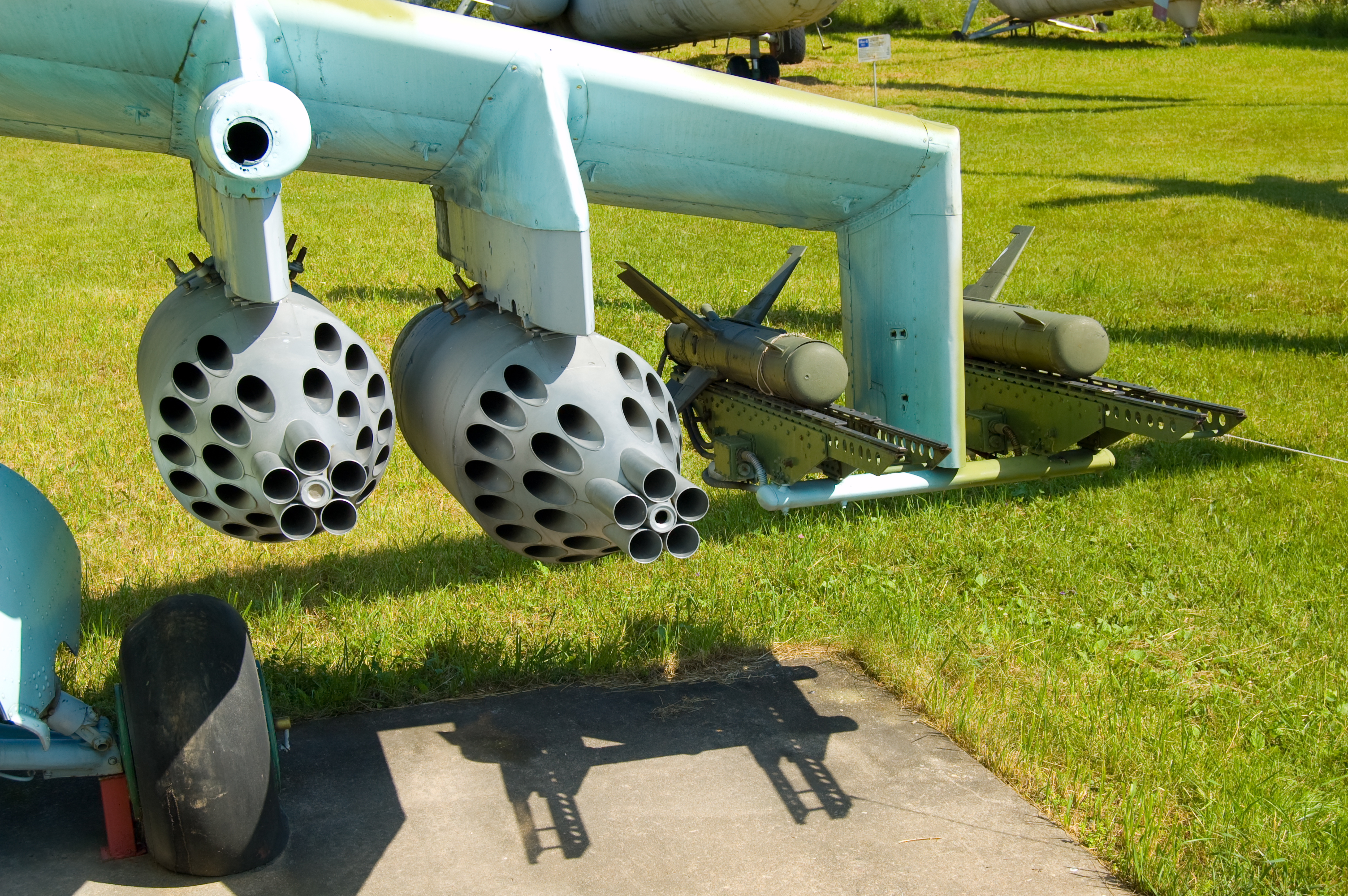
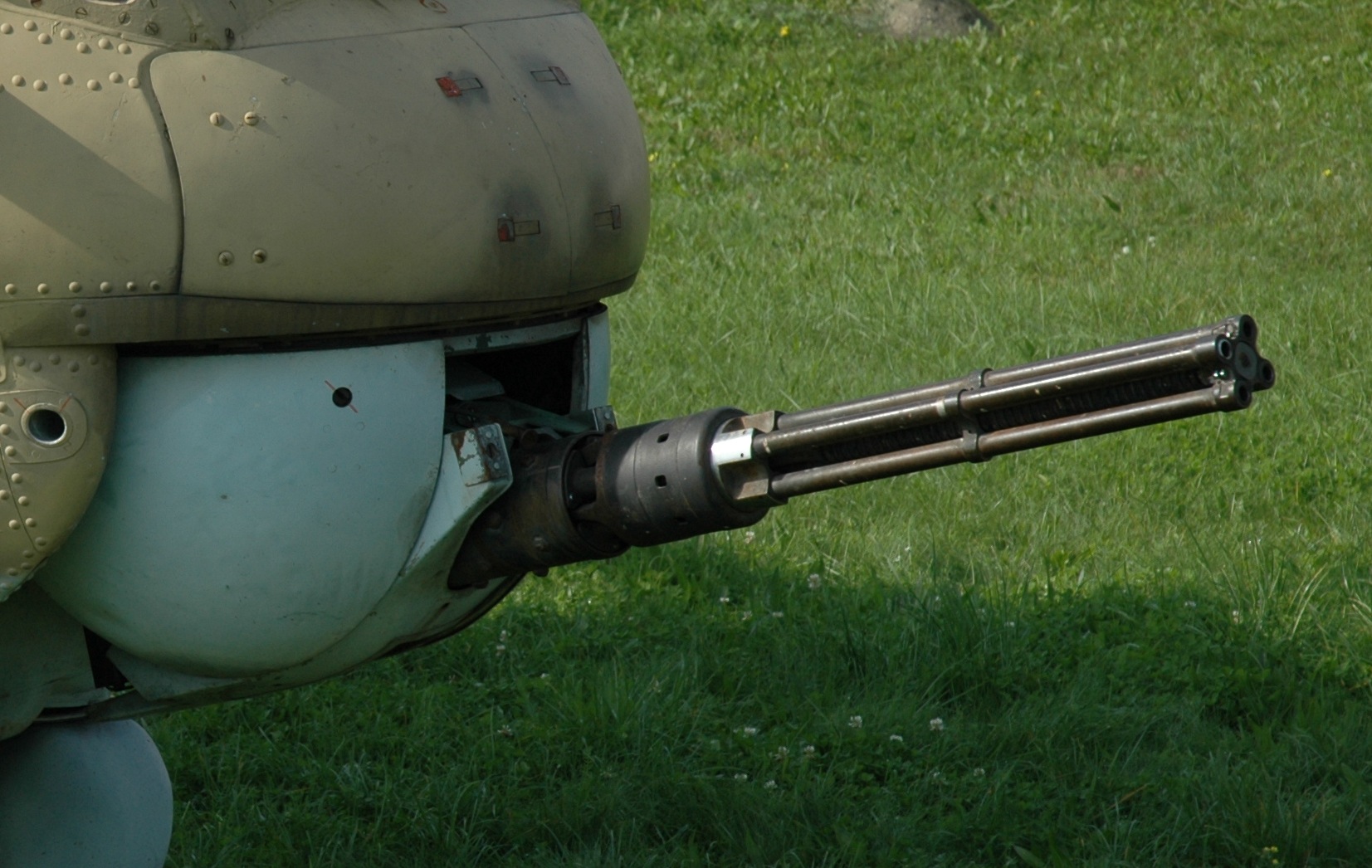
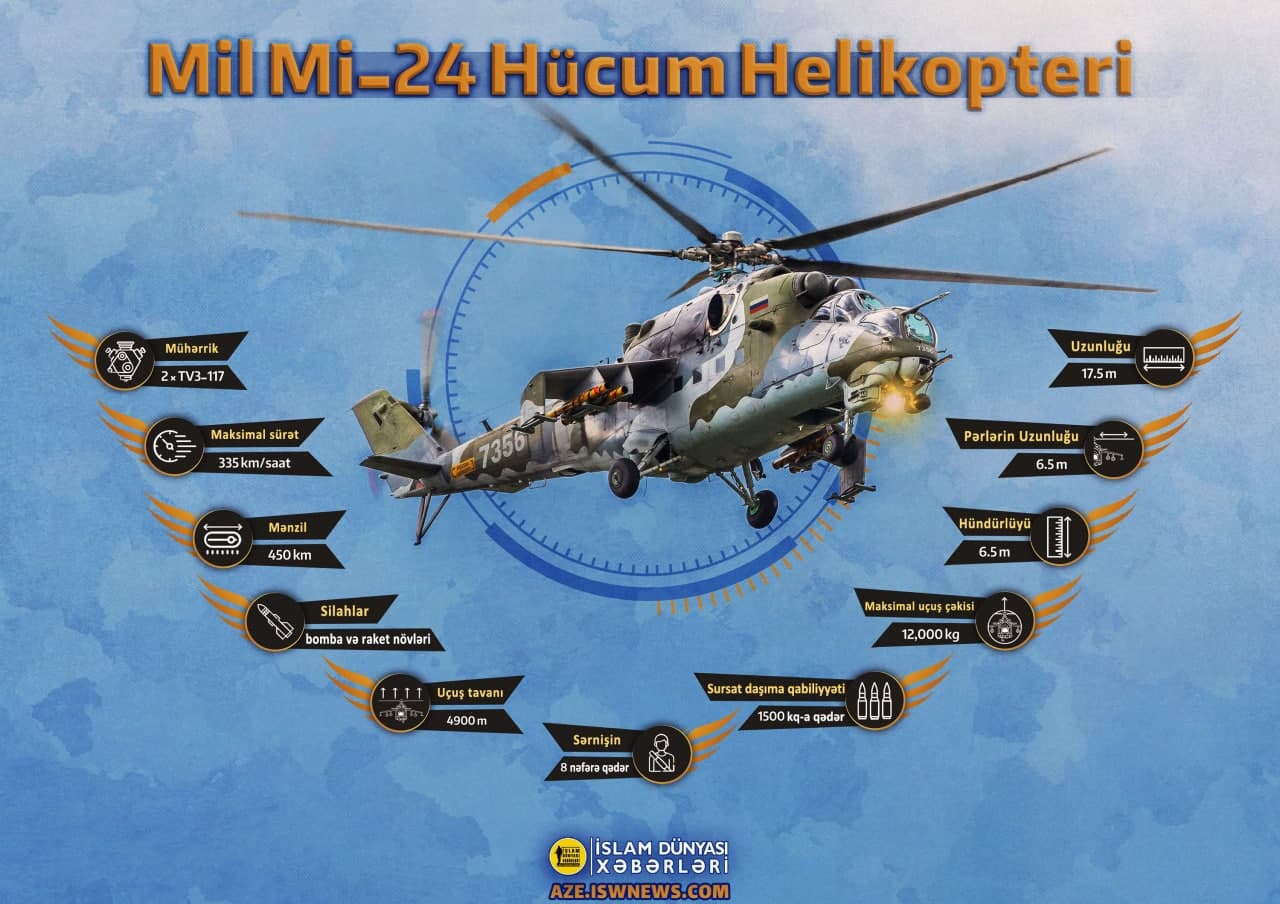
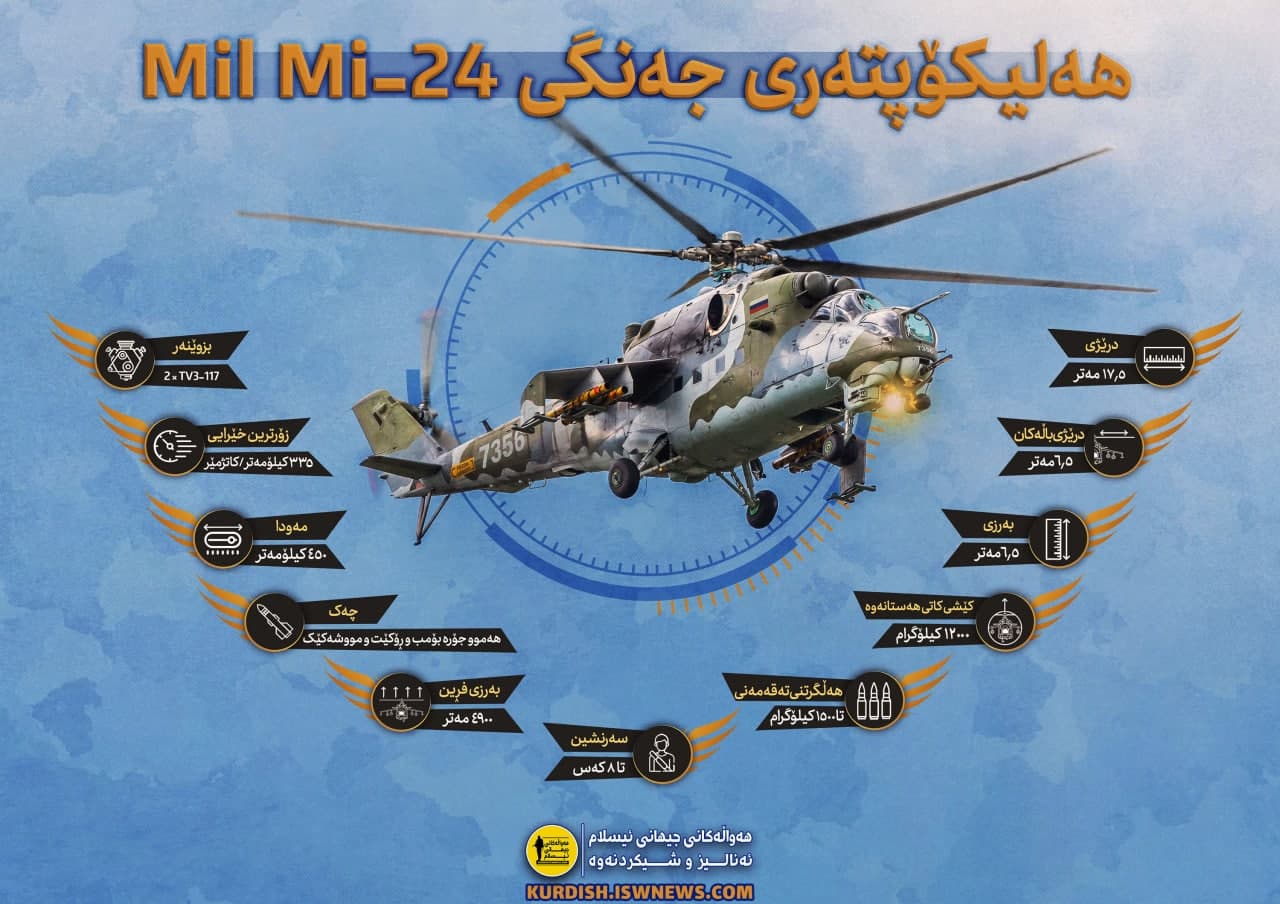
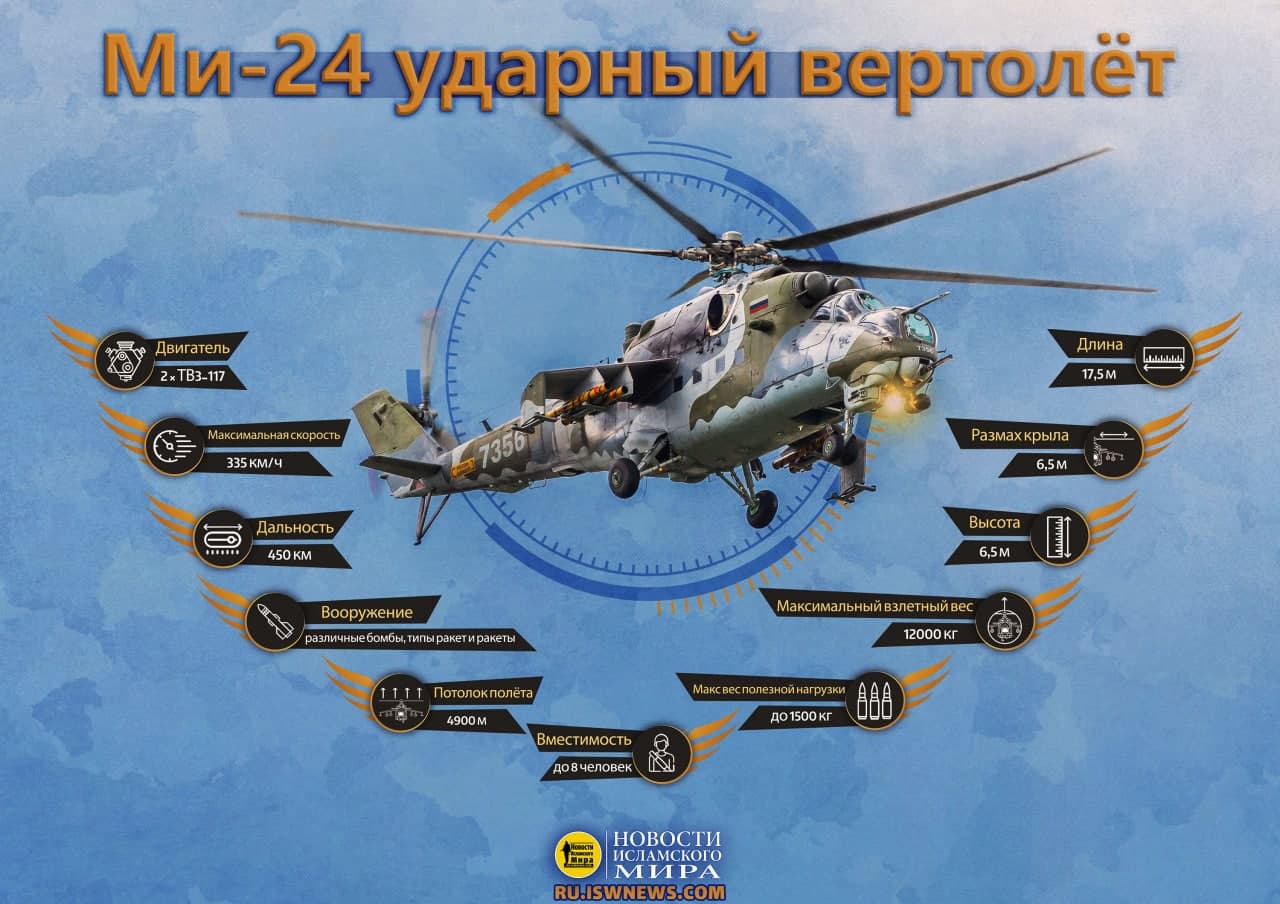
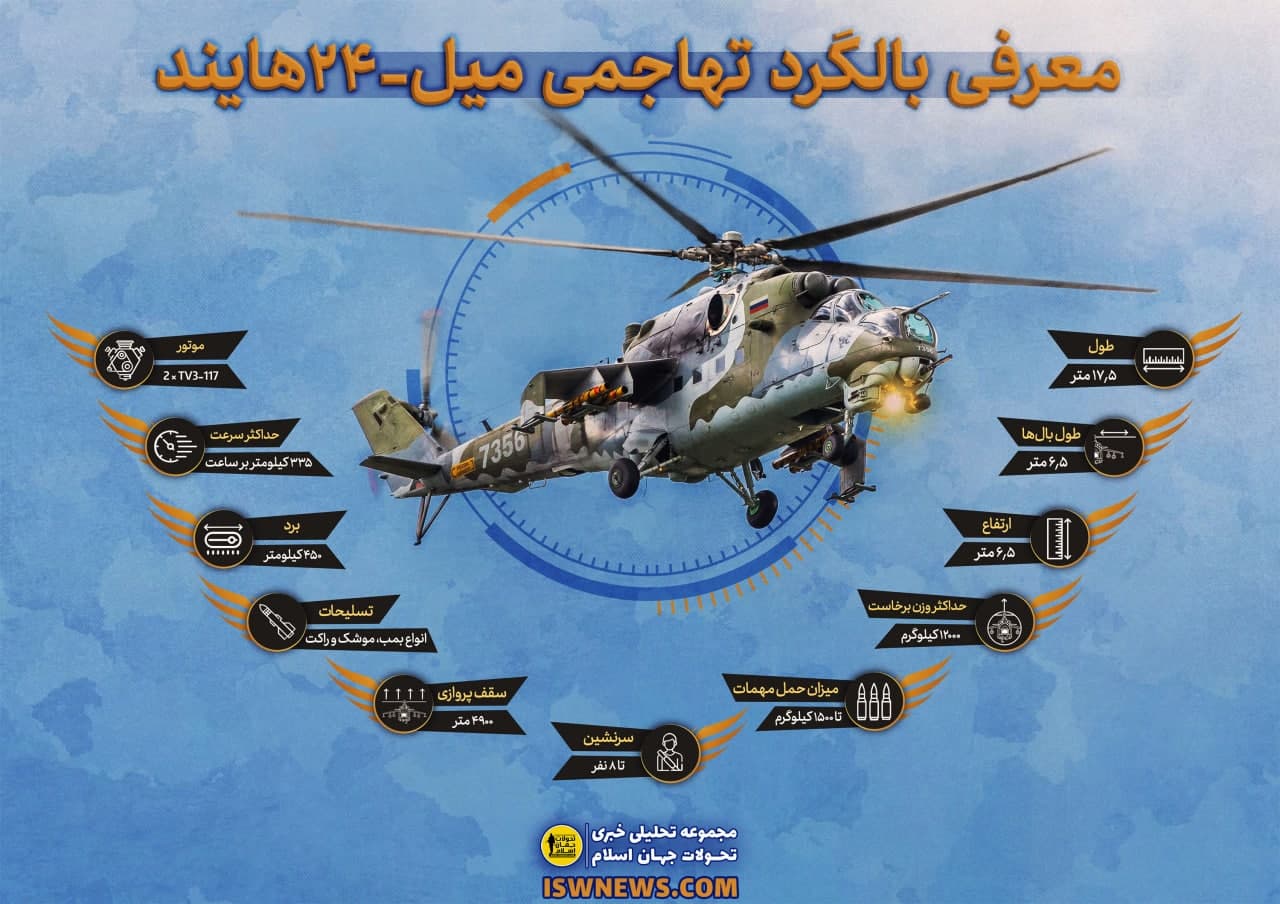
Mil Mi-24 Attack Helicopter specifications: Length: 17.5 m Wingspan: 6.5 m Height: 6.5 m Max takeoff weight: 12,000 kg Engine: 2 × TV3-117 Maximum speed: 335 km/h Range: 450 km Service ceiling: 4900 m Capacity: up to 8 troops Total ammunition payload: up to 1500 kg Armament: Variety of bombs, missiles and rockets Origin: Soviet Union (Russia)
Click to see the full size image
“Mil Mi-24 Attack Helicopter” collection of posters in Persian, Arabic, Kurdish, Azeri, Russian for Social Media:
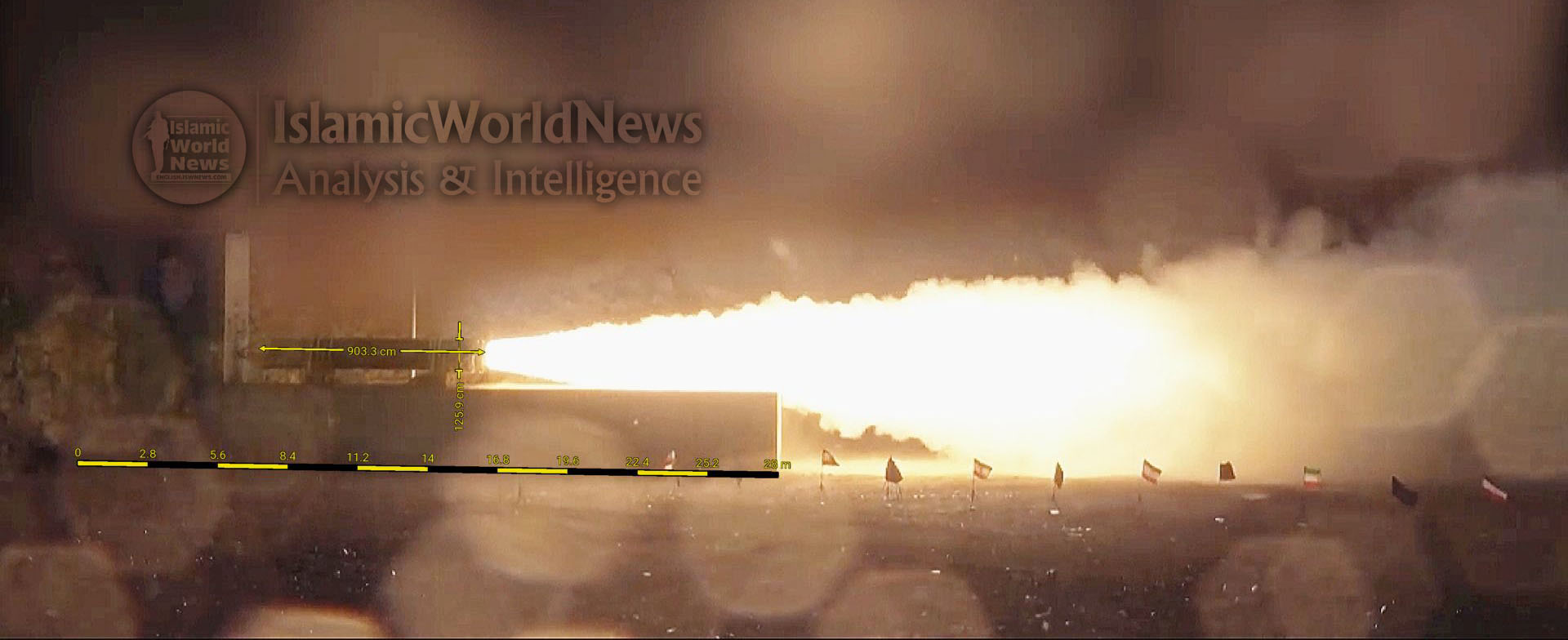
Rafe solid-fuel engine has a composite body made of carbon fiber composite and can withstand up to 100 bar pressure. The use of carbon fiber in the construction of the fuselage greatly reduces the dead weight of the engine and provides a Structural Ratio ratio of about 10%, paving the way for the construction of missile and light rocket engine with a high mass ratio.
According to the footages, the test was performed on a horizontal solid fuel test platform in the coordinates of 36°13’03.7″N 55°21’44.0″E in Shahroud base.
According to the length of the platform, which is 28 meters, the length of the ‘Raafe’ engine is 9 meters and its diameter is 1.25 meters in accordance with the standard diameter of Shahab-3, Qadr, Safir, etc. missiles.
The nozzle of this engine is Flexnozzle type to control the thrust vector, similar to Salman second stage engine. The advantage of using a Flexnozzle is better propulsion performance compared to the Jet Vane-based thrust vector mechanism in the Sejjil solid-fueled missile and the Zuljanah satellite launch vehicle.
The closest solid-fuel engine to the ‘Raafe’ engine can be considered the GEM 46 engine, which with a chamber pressure of 105 bar, a thrust of about 60 tons and a special impact of 242 seconds at sea level and a carbon fiber composite body material and a structural factor of about 11%.
The first-stage “Raafe” rocket engine can be used on the Qased-2 satellite launch vehicle, which is a light satellite launch vehicle; However, due to the size and performance of this engine, it can be used in a small intercontinental ballistic missile like the MGM-134 Midgetman missile or an extraterrestrial interceptor missile such as the GBI missile.
According to the specifications of GEM 46 engine, the specifications of Raafe engine are estimated as follows: Weight: 12.5 tons Structure coefficient: 10% Special Impact (Shahroud Conditions): 250 seconds Length: 9 meters Diameter: 1.25 meters Burning time: 65+ seconds Maximum trust: 68 tons
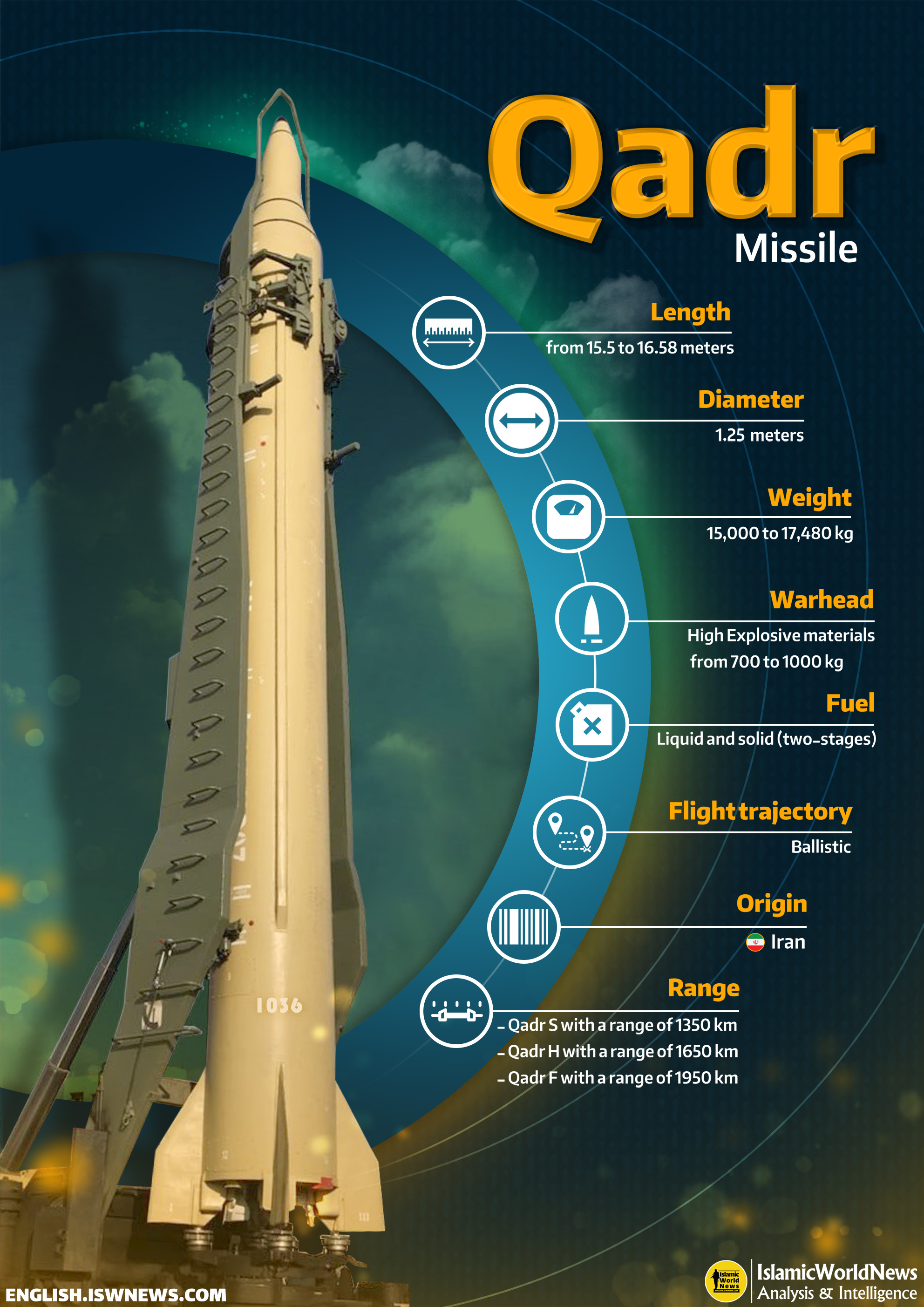
The Qadr missile is a medium-range ballistic missile based on the Shahab 3 missile. In the past, this missile was also called Qadr 1, Qadr 110 and Qadr 101.
The Qadr missile was unveiled for the first time in an annual parade marking the anniversary of the start of the Iran-Iraq war. This missile has been produced in three types: “Qadr S” with a range of 1,350 km, “Qadr H” with a range of 1,650 km and “Qadr F” with a range of 1,950 km.
The Qadr missile set-up time is 30 minutes and is much faster than the Shahab 3 missile, which takes hours to install and launch. Some sources consider the Qadr missile a two-stage missile, the first stage is liquid fuel and the second stage, which is related to detachable warheads, is solid fuel. However, some sources believe this missile to be just liquid fuel.
The speed of the “Qadr F” missile is estimated at Mach 9 and its navigation system is based on inertia-GPS guidance.
The Qadr F missile is capable of carrying warheads weighing up to 1000 kg. Qadr series missiles also have warheads in different types such as blast and cluster.
Qadr ballistic missile specifications: Length: from 15.5 to 16.58 meters Diameter: 1.25 meters Weight: 15,000 to 17,480 kg Warhead: High Explosive materials from 700 to 1000 kg Fuel: Liquid and solid (two-stages) Range: Qadr S with a range of 1350 km Qadr H with a range of 1650 km Qadr F with a range of 1950 km Flight trajectory: Ballistic Origin: Iran