Tag: Military Knowledge

  • Military Knowledge: Mohajer-6 Reconnaissance Combat Drone

    Military Knowledge: Mohajer-6 Reconnaissance Combat Drone

    Mohajer-6 combat reconnaissance drone is a medium-class drone manufactured by the Iran’s Ministry of Defense. This drone was first officially unveiled in April 2017 during the visit of the President of Iran to the Defense Achievements Exhibition of the Ministry of Defense.

    Mohajer 6, as the newest member of the Mohajer drone family, has been deployed in the Ground and Naval Forces of the Islamic Revolutionary Guard Corps (IRGC), the Islamic Republic of Iran Army Ground Forces, and the FARAJA organization (the Law Enforcement Command of the Islamic Republic of Iran).

    Iran started marketing for the sale of Mohajer-6 drone at the MAKS 2019 International Exhibition in Russia.

    This drone can be considered as Iran’s most successful export drone. Mohajer-6 has been exported to Iraq (Hashd al-Shaabi) and Ethiopia. Mohajer-6 and Qaem bomb series have performed very well in Ethiopia.

    Read more: From where does Ethiopia procure its drones?

    Mohajer 6 UAV in the service of Iraq’s Hashd al-Shaabi

    Mohajer 6 UAV in the service of the Ethiopian army

    In Venezuela, a replica of Mohajer-6 was first seen, and then a sample of it was produced in this country. There is no information available about the Venezuelan sample.

    Mohajer 6 UAV replica with Qaem bomb series in Venezuela

    Mohajer-6 drone uses a rectangular body with a wide and sharp tip. Its simple rectangular wings are located on the upper part of the body and its tail has a High Boom Tail configuration. This drone is powered by a 3-blade Rotax 912 piston engine. The Mohajer-6 drone has a forward-looking camera at its tip, which enables continuous monitoring of the drone’s path independently of the camera below the drone.

    Camera in the nose of Mohajer-6

    So far, Mohajer-6 with Oghab-4 electro-optical system has been seen in two versions, H and D, both of which are equipped with a day vision camera with 36x optical zoom, a laser rangefinder and a cooling thermal camera.

    Oghab 4 optical systems in three types

    The Oghab 4H electro-optic system has a focal distance of 15 to 300 mm and weighs 18 kg, and the Oghab 4D system has a focal distance of 60 to 120 mm and weighs 19 kg. As a result, the Oghab 4 system in the H version has a better field of vision and resolution.

    Oghab 4H optic installed on Mohajer-6

    Oghab 4D camera installed on Mohajer-6

    Also, images of a new camera with 60x zoom for this drone have been released, which shows Iran’s progress in making advanced electro-optic systems for drones.

    Video of a new electro-optic with 60x zoom that can be installed on Mohajer-6. In the footage, due to the visible landing gear, this optic is probably being tested on Ababil-4.

    The guidance and control system of Mohajer-6 drone is placed on a truck, which allows it to be moved quickly.

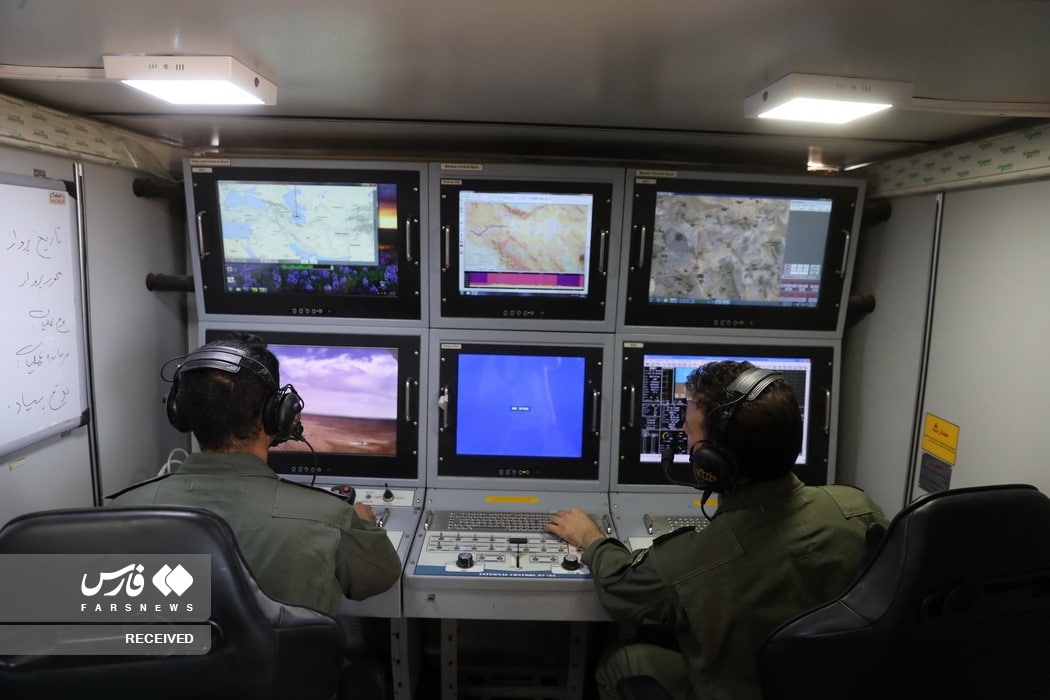
    The control room of Mohajer-6 drone

    Interior view of Mohajer-6 control room

    Unfortunately, the weight information of Mohajer-6 has not been officially announced. In the early days of the introduction of this drone, due to the installation of two Qaem-5 bombs, its carrying capacity was stated by the media as 40 kg; But this number was not correct, because the weight of Qaem-5 has not been officially announced. Considering the similarity of dimensions and front wings of Qaem-5 bomb and Sadid-345 bomb, if the weight of its warhead has not changed, due to the presence of fixed rear wings, the weight of Qaem-5 bomb should be slightly heavier than Sadid-345 (34 kg).

    However, a poster of Mohajer-6 has been published in the permanent exhibition of the defense achievements of the Islamic Revolutionary Guard Corps, which stated that the weapons payload was 100 kg and the gross weight was 600 kg.

    Mohajer-6 poster in the permanent exhibition of the defense achievements of the Islamic Revolutionary Guard Corps

    Also, at the ARMY 2022 exhibition, the Ministry of Defense of Iran published a catalog of its defense products, which published the specifications of Mohajer-6 under the title M6, and stated that the weapons payload is 100 kg, and the maximum gross weight is 670 kg.

    Mohajer-6 catalog at the ARMY 2022 exhibition

    Therefore, according to the picture of Mohajer-6 with four Qaem-5 bombs, the weight of this bomb should not be more than 25 kg because the total weight of the bombs will be more than 100 kg. Also, a picture of Mohajer-6 drone has been seen in the Army’s 313 underground base (Strategic Drone Base 313) loading a Qaem-5 bomb along with a 3-tube launcher for Hydra rockets.
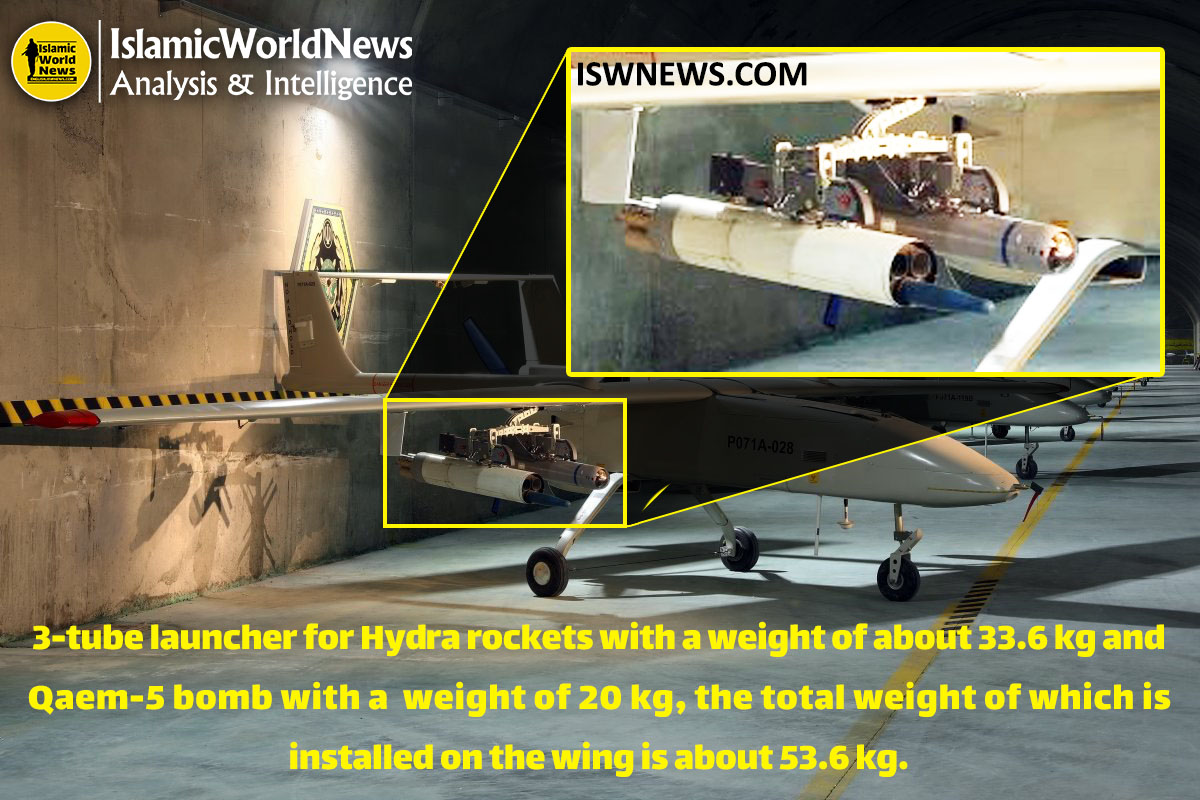
    The picture of Mohajer 6 in the Army’s 313 underground base

    The weight of each Hydra rocket is 6.2 kg, and if we assume that the rocket launcher is 15 kg (due to its small size and lightening), the weight of the whole package should be 33.6 kg. And if we consider the weight of Qaem-5 as 20 kg, it means a weight combination of 53.6 kg for one wing and 107.2 kg for both wings, which means a weight of more than 100 kg. Therefore, the maximum weapons payload for this drone is more than 100 kg, which has not been officially announced yet. So the maximum weapons payload can be considered 150 kg.

    Considering that the announced numbers in two official events are different, we can conclude that we are dealing with two types of Mohajer-6 with different powers. In addition, Mohajer-6 has undergone changes in the front and rear landing gear. There may have been some changes to reduce the weight of Mohajer-6. There is also a possibility that the type that has been provided to the army has increased its carrying capacity.

    Mohajer 6 front and rear landing gear

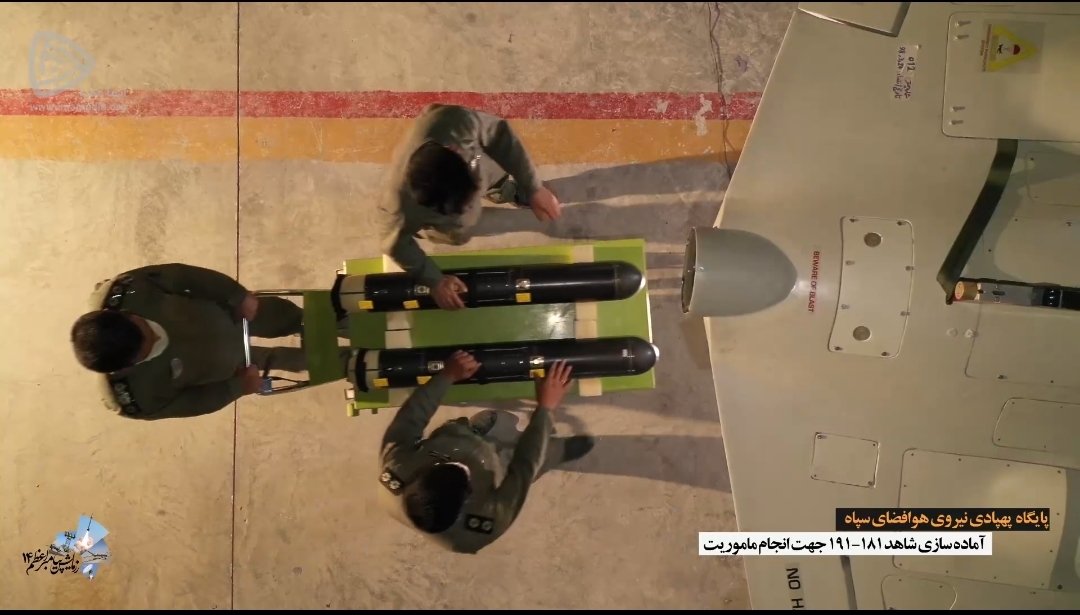
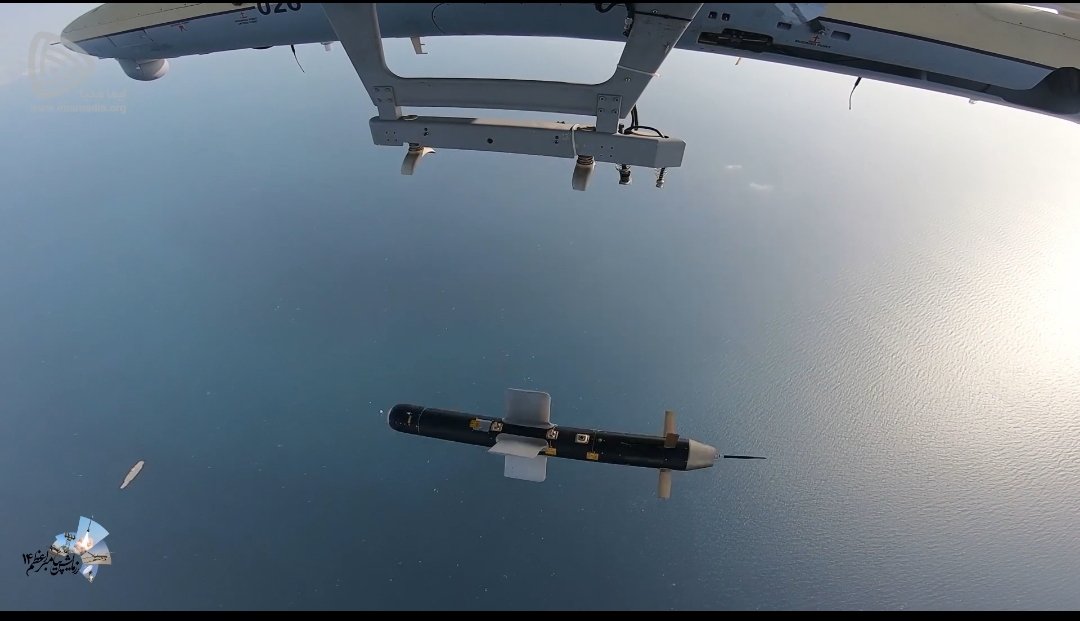
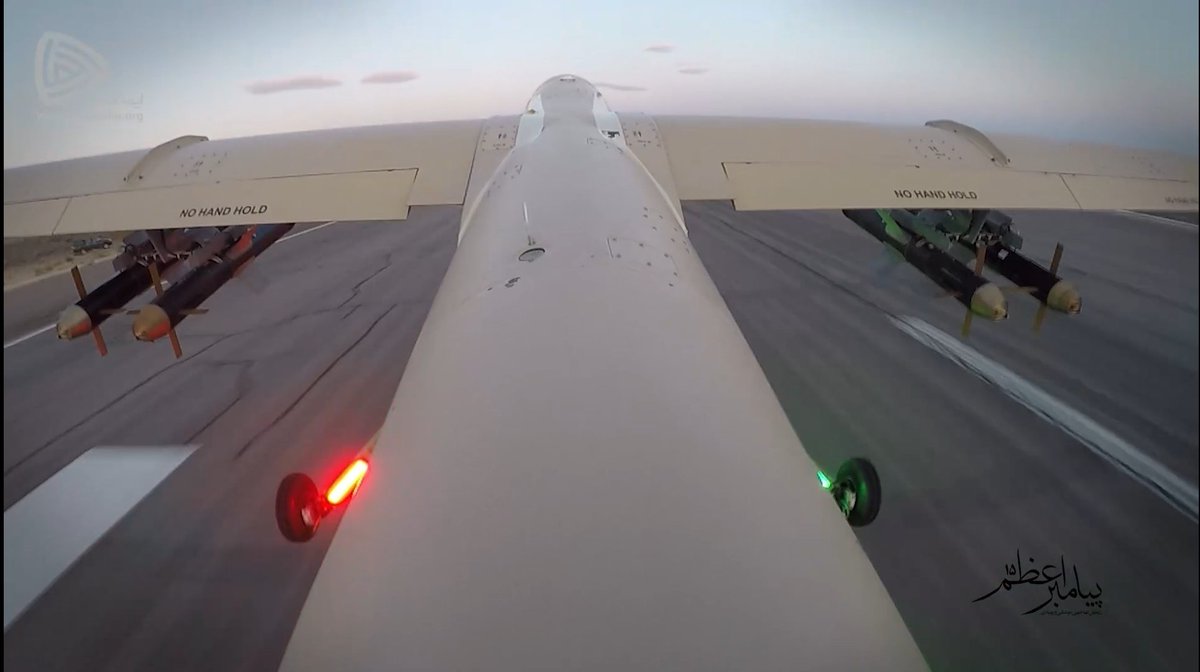
    The Mohajer-6 combat reconnaissance drone can carry a wide range of indigenous weapons. This drone has the ability to carry Qaem bombs series, Sadid bombs and missiles family, Almas missile and the ability to carry Hydra rockets, which gives this drone high firepower.

    Read more: Military Knowledge: Sadid Smart Bombs and Missiles

    Mohajer 6 drone has the ability of carrying Tiam 1400 systems with a weight of 5 kg and Taha 1400 systems with a weight of 6 kg. Tiam 1400 and Taha 1400 are detection and warning and electronic warfare systems. First, the Tiam 1400 radar detection and warning system performs detection and identification of the enemy’s radar waves, then the data about the radar is transferred to the Taha 1400 electronic warfare system so that the Taha 1400 acts to disrupt the enemy’s radar waves.

    Mohajer 6 with the installation of two systems Tiam 1400 and Taha 1400 and banners related to these two systems

    Also, an unknown pod has been spotted on Mohajer-6 drone at Army’s Strategic Drone Base 313, whose nature we do not know. This pod was also used in Kaman-12 drone.

    Unknown pod installed on Mohajer-6 drone

    The operational records of the Mohajer-6 drone are many, but only a few footage have been published in the media. As an example, we can refer to the operations against terrorists in the northwestern borders of Iran in July 2019.

    The use of Mohajer 6 against terrorists in the northwestern borders of Iran – July 2019

    The missions assigned to the Mohajar-6 combat reconnaissance drone include aerial reconnaissance and surveillance, destruction of fixed and mobile targets on land and sea and in all weather conditions day and night with high accuracy, monitoring and control of borders and coastal strip, and the possibility of carrying all kinds of Military cargo with the ability to land and take off conventionally from the runway and emergency recovery with a parachute.

    Mohajer-6 and the use of Qaem-5 bombs and the explanation of the Iran’s Minister of Defense about this drone

    Ammunition that Mohajer-6 can carry:
    Bombs: 4 Sadid-342 with a range of about 3 km, 2 Sadid-345 with a range of about 3 km, 4 Qaem-1 with a range of about 6 km, 4 Qaem 5 or 9 with a range of about 12 km

    Missiles: 2 Sadid-1 with a range of about 7 km (not seen but possible to install), 4 Akhgar missiles with a range of about 30 km (not seen but possible to install), 4 Almas missiles with a range of about 6 km (from In terms of weight, it is possible to carry more, but there is no proper hardpoints), 2 Qaem-114 missiles with a range of 8 km (not seen but it is possible to install)

    Rocket: 2x 3-tube rocket launchers for Hydra 70 mm rockets

    Electronic warfare systems:
    “Tiam 1400” radar wave detection and warning system and “Taha 1400” radar wave jamming system

    It is possible to use a combination of above weapons and systems.

    Some of the mentioned weapons have not been seen on Mohajer-6. But due to the nature of the weapon design and use on other Iranian drones, it is also mentioned here. Other weapons such as Azarakhsh and some weapons related to helicopters can also be installed, but in order to use these weapons, changes are needed, such as creating a proper fuselage to install heavy weapons on the drone.

    Mohajer-6 reconnaissance combat drone specifications:
    Length: 7.5 meters
    Wingspan: 10 meters
    Height: 1.9 meters
    Operational range: 2400 km
    Service ceiling: 5486 meters
    Endurance: 12 hours
    Engine: Rotax 912 115 hp
    Speed: 200 km/h
    Hardpoints: 2, with the possibility of converting to 4
    Gross weight: 670 kg
    Weapons payload: ~ 150 kg
    Origin: Iran
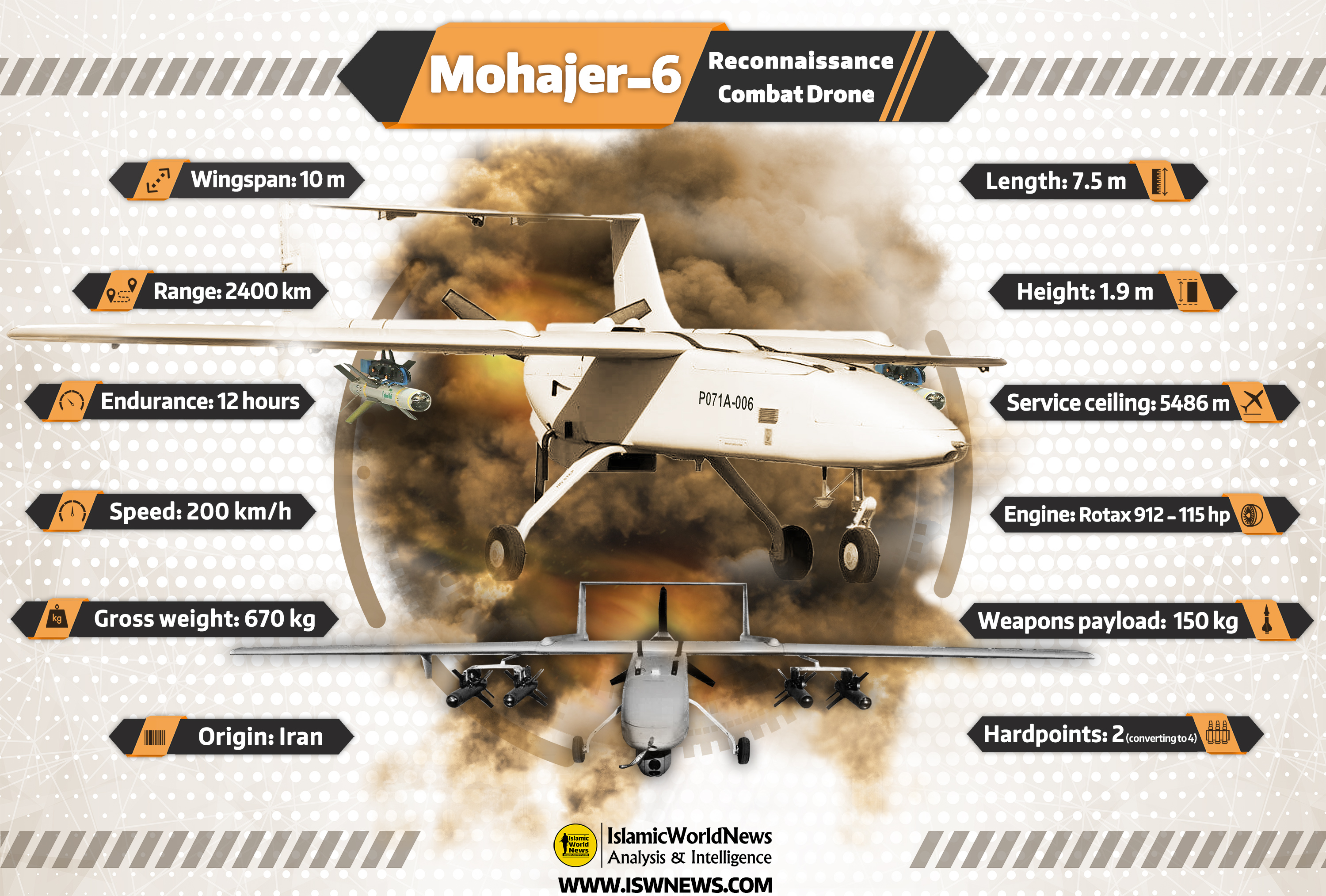
    Click to view full size

    Mohajar-6 combat reconnaissance drone posters in Russian, Chinese, Hebrew, Arabic, Azeri, Kurdish and Persian:

    More Images of Mohajer-6 combat reconnaissance drone:

  • Military Knowledge: Sadid Smart Bombs and Missiles

    Military Knowledge: Sadid Smart Bombs and Missiles

    The first member of the Sadid family was exhibited at the Kish Air Show in 2010. The first two members of the family, Sadid-1 and Sadid-342, were assembled by the IRGC, and due to the fact that its parts were the same as the Toofan missile, the parts were delivered to the IRGC from Montazer Al-Mahdi Industries belonging to the Ministry of Defense, which produces the Toofan (Iranian TOW) missile.

    It seems that the production and use of the Sadid family dates back to before their unveiling in the exhibition of the achievements of the Islamic Revolutionary Guard Corps in 2013. The proof of this is the display of different types for the first time in this exhibition. Sadid’s operational record in all its types in Syria is brilliant.

    In the following, we will examine different types of Sadid bombs and missiles. The types that have been officially unveiled so far are as follows:

    1- Sadid-1 missile:
    The first member of the Sadid family is the Sadid-1 missile. This missile was unveiled at the Kish air show in 2010 by installing it on Shahed 258 helicopters.

    Shahed 285-C marine model helicopter equipped with Sadid-1 missile at Kish air show

    Shahed 285-A marine model helicopter equipped with Sadid-1 missile at Kish air show

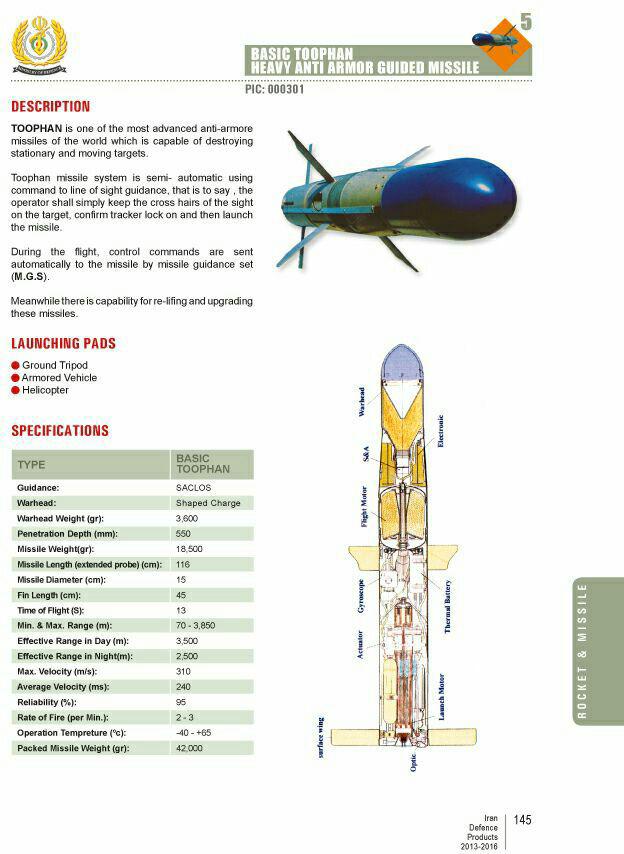
    Sadid-1 missile is very similar to Toofan anti-armor missile. If you pay close attention to the placement of the wings and the engine gas outlet in Sadid and Toofan missiles, you will see a great similarity between the two missiles.

    Comparing the appearance of Sadid-1 missile and Toofan missile, their similarity is quite obvious.

    Sadid-1 missile has two rows of variable wings, like Toofan missile, and the size and direction of folding of wings in both missiles are completely similar to each other. In the middle of the rocket, there are two hot gas outlets for the main rocket engine, and at the end of the rocket, there is the outlet of the primary engine that is used to launch the rocket from inside the tube, which is completely similar to each other. However, at the end of Sadid-1 missile, the parts related to wire guidance, including two wire spindles and xenon lamps related to Tau missile, have been removed, which is the reason for the difference in the way the missile is guided.

    Comparison of appearance of Sadid-1 and Toofan anti-armor missiles

    The specifications of Sadid-1 missile have not been officially announced yet. But by comparing and matching it with the Toofan anti-armor missile, almost accurate information can be obtained.

    Toofan anti-armor missile in prototypes is capable of penetrating 550 mm of armor at an effective range of 3500 meters. Considering the possibility of firing at an initial speed from the drone and the possibility of gliding if released from a height of 5 km, a range of more than 7 km can probably be considered for this type of missile. Due to the launch of this missile from the sky, which allows this missile to attack from above, its 550 mm penetration is enough to target any type of armor. There are also variants of Toofan missiles with a longer range and penetration power of up to 900 mm.

    Due to the great similarity of Sadid-1 missile and Toofan anti-armor missile, the weight of these two missiles should be very close to each other. Toofan-1 has a weight of 18.5 kg with a warhead of 3.6 kg, and the weight of the missile and its tube is 42 kg. Due to the fact that the weight of Sadid-1 missile is not announced, this missile can also be considered 18.5 kg. Due to the use of Sadid-1 tube and rocket on UAV and helicopter, the weight of 42 kg should be considered for its set.

    Also, the best way to determine the dimensions of the Sadid-1 missile is to consider the dimensions of the Toofan missile. The length of the Toofan missile is 116 cm and its diameter is 15 cm.

    Specifications of Toofan 1 missile which has been officially published.
    Maximum range: 3850 meters
    Minimum range: 70 meters
    Effective range: 3.5 km
    Effective range at night: 2.5 km
    Missile weight: 18.5 kg
    Warhead weight: 3.6 kg
    The weight of the complete package of the missile: 42 kg
    Missile length: 116 cm
    Missile diameter: 15 cm
    Armor penetration rate: 550 mm

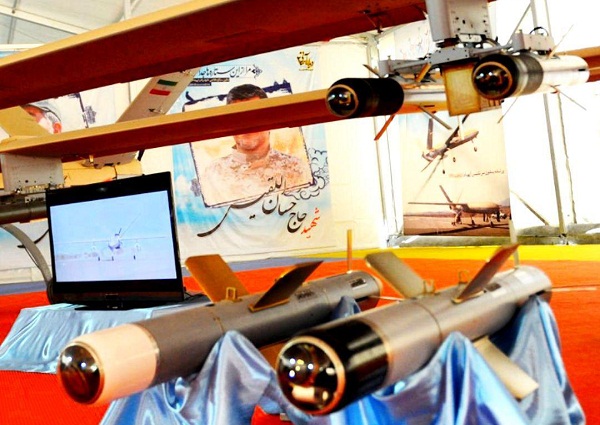
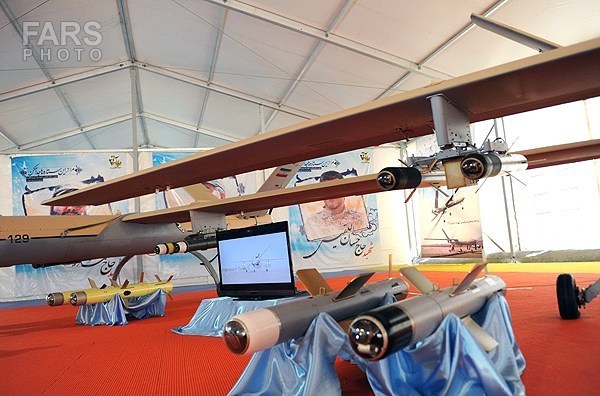
    The Sadid-1 prototypes did not have seeker in its nose, but in May 2014, during the visit of the Leader of the Revolution to the exhibition of the achievements of the Islamic Revolutionary Guard Corps, two types of Sadid-1 missiles with optical and infrared guidance were seen. This new possibility can bring fire-and-forget capability to Sadid-1 missile.

    A picture of the first Sadid-1 sample without a seeker in its nose

    Sadid-1 missile with optical seeker on the ground and Sadid-1 missile with infrared seeker under the wing of Shahed 129

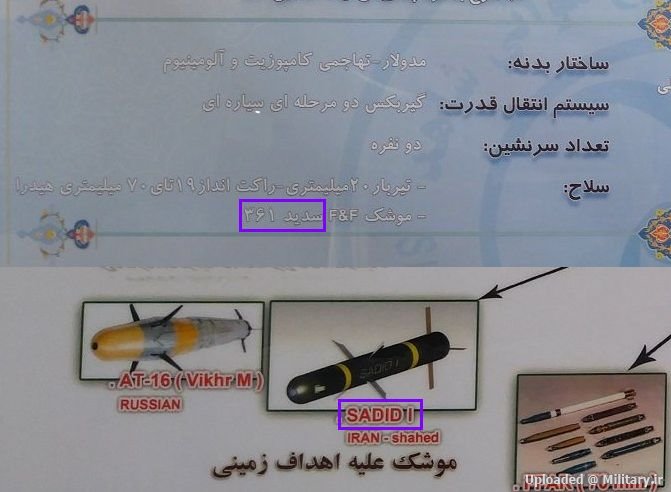
    This missile has been introduced in some media with the names of Sadid 361 and Fatah 362 missiles.

    Possible specifications of Sadid-1 missile:
    Diameter: 15 cm
    Length: 116 cm
    Missile weight: 18.5 kg
    Warhead weight: 3.6 kg
    Warhead type: Shaped charge
    Packed missile weight: 42 kg
    Range: 7 km if released from a height of 5 km

    2- Sadid-342 glide bomb:
    The Sadid-342 bomb is the second member of the Sadid family, which was showcased in 2014 during the visit of the Iran’s supreme leader to the exhibition of the achievements of the Islamic Revolutionary Guard Corps. However, due to the display of the Sadid-345 bomb in the same exhibition, the operational history of the Sadid-342 probably goes back to before the year of its unveiling.

    In this bomb, the engine is removed and the bomb is attached to under the UAV’s wings using two rings. The main difference between Sadid-342 and Sadid-1 missile is these two things. The wings of the bomb are not different from the Sadid-1 missile, and the wings are folded into the body.

    Sadid-342 bomb

    The Sadid-342 bomb has been produced in three types of television, infrared and thermal guidance.

    Sadid-342 bomb in the exhibition of the achievements of the Islamic Revolutionary Guard Corps in 2014. This bomb has an infrared filter, which is often used for infrared seekers

    Sadid-342 bomb with a mercury coating indicating the use of a thermal seeker (IR) in this bomb

    Sadid-342 bomb with TV guidance installed on the wing of Shahed-129 drone and Sadid-345 on the ground

    Due to the removal of the main engine in this bomb, more explosives can be used without much change in the weight of the bomb. It can be considered that the Sadid-342 bomb will probably be the same weight as the Sadid-1 missile. Removing the main engine will reduce the range of this bomb, and its range can be predicted to be about 3 km if released at a height of 5 km.

    Possible specifications of Sadid-342 glide bomb:
    Diameter: 15 cm
    Length: 116 cm
    Missile weight: 18.5 kg
    Warhead weight: 7 kg, probably twice as much as Sadid-1 missile (there is a possibility of reducing the weight of the warhead and increasing the range)
    Warhead type: Shaped charge
    Packed missile weight:: 42 kg
    Range: 3 km if released from a height of 5 km

    3- Sadid-345 glide bomb:
    Iran’s experiences in using Sadid missiles and bombs in the Syrian war led to the production of a new type of Sadid bombs. Sodid-345 was also showcased in the exhibition of achievements of the Islamic Revolutionary Guard Corps in 2014.

    In Sadid-345 bomb, the front wings have become fixed wings and it is designed in a way that brings the maximum amount of lift to drag ratio. But the rear wings are still folded.

    It should be noted that the only member of the Sadid family which its specifications have been officially announced is the Sadid-345 glide bomb.

    Specifications of Sadid 345 bomb published at MAKS 2017 exhibition in Russia

    According to the specifications of Sadid-345, this bomb is suitable for attacking gatherings or radar equipment and enemy artillery personnel. This bomb has three types of guidance, one of which is television guidance, the accuracy of which is the lowest and its error is 5 meters. Clear air is needed to receive television quality images and this is a very big limitation for this bomb.
    But there is also a type of laser guidance, which the error rate is declared to be 2.5 meters. Laser guidance also loses its effectiveness in dusty and foggy weather conditions.
    The third type of conventional guidance on this bomb is guidance with an IR seeker, which has brought an accuracy of 2.5 meters, which is a very good number. In addition, the thermal seeker can be used in all weather conditions.

    Bottom right: Sadid-345 in the right side with television guidance and in the left side with infrared guidance
    Top right: Sadid-342 under the wing with TV seeker
    Left: Sadid-1 television guided missile on the ground and Sadid-1 infrared guided missile installed under the wing of the drone

    The bombs on the right side are with television guided and the bombs on left side have a mercury coating to use the thermal (IR) seeker

    The warhead weight and the range of Sadid-345 bomb have not been announced. Considering the 470 mm increase in the length of the Sadid-345 and the increase in the weight of the bomb by nearly 15 kg, about 20 kg of explosives can be considered for this bomb. It should be noted that in the above calculation, the increase in the weight of the wings is considered equal to the removal of the engine and its fuel consumption. Of course, a variant with the name Sadid-362 is mentioned in some sources, which must be the same as Fatah 362, which is the Sadid-1 missile.

    Specifications of Sadid-345 glide bomb:
    Weight: 34 kg
    Length: 1630 mm
    Diameter: 152 mm
    Warhead type: Shaped charge
    Mission: Destroy various moving and stationary targets
    Warhead: H6 explosive – fragmentation
    Type of fuse: Impact
    Lethal radius: 30 meters
    Type of aircraft: UAV
    Hit accuracy:
    – By using IR seeker, the accuracy of impact in radius of target is 2.5 x 2.5 meters.
    – By using laser seeker, the accuracy of impact from laser radiation is 2.5 meters
    – By using visible seekers, if there is not image processing errors, the accuracy of radius impact is 5 meters.

    A picture of Shahed-129 and Sadid bomb. This image shows us the size and ratio of the Shahed-129 drone and the Sadid bomb

    Using the Saegheh drone and dropping Sadid-342 bombs from the drone to attack ISIS terrorists in Syria

    A video of Sadid’s bomb launch from Shahed-129 drone

    More images of Sadid bombs and missiles:

    Read more:
    Shahed 129 Reconnaissance Combat Drone
    Gaza Reconnaissance Combat Drone
    Fotros Reconnaissance and Combat Drone

  • What is the main reasons for the success of Ukrainian air defense systems against Russia

    What is the main reasons for the success of Ukrainian air defense systems against Russia

    In the war between Ukraine and Russia, despite the suppression of the Ukrainian air defense systems by the Russians, the Ukraine air defense systems has achieved considerable success. Therefore, we examine the reasons for the success of Ukraine’s air defenses as follows. These reasons can be divided into three parts:

    1- Incomplete suppression of the Ukrainian air defense systems:
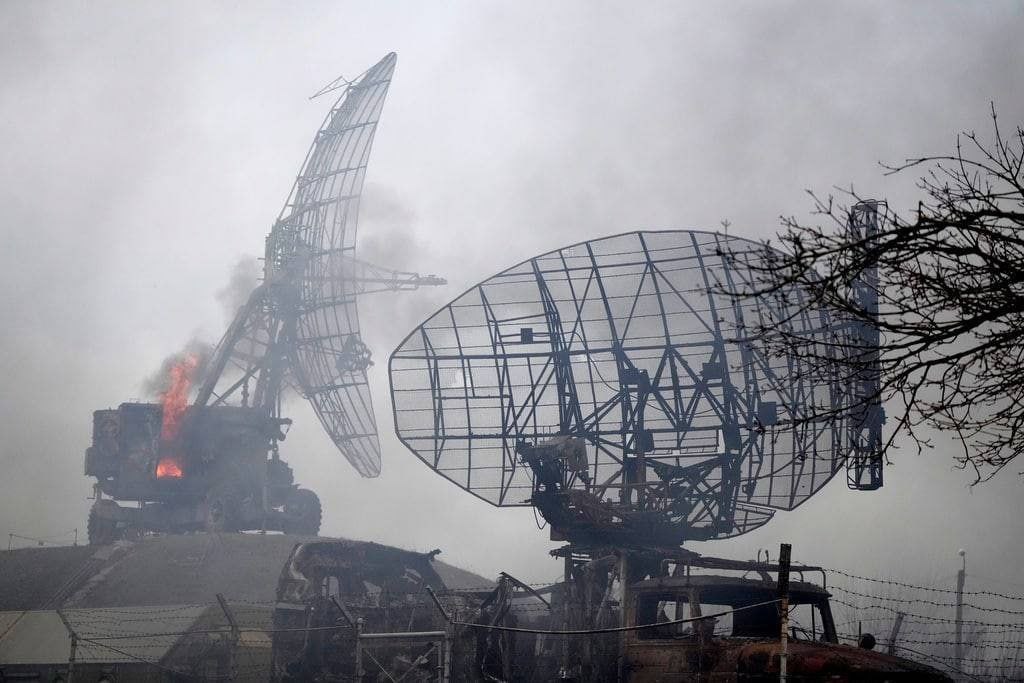
    At the beginning of the battle, the Russians tried to suppress enemy radars by firing anti-radar missiles such as KH-31. But this air defense suppression was done very quickly and hastily, and the Russians only suppressed the early warning radars and active systems, and without completing the defense suppression process, they abandoned the middle layers of the air defenses and sent their forces into Ukraine.
    The Russians, speculating that a medium-range and short-range air defense systems without early warning radars are very ineffective, completely abandoned this part of air defense suppression and began ground and air operations to speed up their offensive process. But contrary to the speculations, some air defense systems successfully engage hostile targets even without early warning radars. Most of these systems were short-range defense systems like the TOR-M1.

    The use of free-fall bombs for offensive operations on frontlines or deep operations in a situation where Ukraine’s short-range and medium-range air defenses had not been suppressed is considered a tactical mistake by the Russians. In such a situation, the Russians should either completely suppress the air defenses or use high-range smart ammunition in their operations to be completely away from the effective range of Ukrainian short-range air defense systems. In a situation where the suppression of Ukraine’s ADs were not complete, the use of helicopters had a very high risk, which the losses of the Russians prove this fact. Because short-range air defense systems such as TOR-M1 are well capable of countering Russian cruise missiles and helicopters, and in addition to this, some man-portable air-defense systems (MANPADS) also helped the Ukrainian army a lot in destroying aerial targets. Some anti-armor missiles and other MANPADS donated to Ukraine, such as the FIM-92 Stinger for hunting helicopters, caused the Russians to suffer numerous casualties in this field.

    Read more: Military Knowledge: FIM-92 Stinger MANPADS

    2- Ukrainian tactics for hunting aircraft:
    The Ukrainian air defense has a significant number of short-range systems of various types. These systems have succeeded in destroying several Russian cruise missiles and several fighter jets in the current war between Ukraine and Russia. Due to the geographical and forest conditions of Ukraine, short-range defense systems such as Buk-m1 can hide well and hunt targets such as fighter jets, cruise missiles, etc. On the other hand, soldiers can easily destroy targets such as helicopters or drones with the help of MANPADS by camouflage and sheltering among environmental covers such as trees. Ukraine’s forests have practically created an excellent natural camouflage for Ukrainian ADs to hide and to some extent escape the suppression of Russian forces.

    Air defense assets of Ukraine before the start of the war (without taking into account the systems donated after the start of the war) are:

    • SA-14 (Strela-3), SA-18 (Igla), FIM-92 Stinger MANPADS
    • SA-2 and 3 missile defense systems
    • Short-range and low-altitude mobile missile defense systems SA-6, SA-8 (Osa), SA-13 (Strela-10 as a MANPAD), SA-18 (TOR-M1), SA-9 (Gaskin)
    • SA-17 (Buk-m1) short-range and medium-altitude mobile missile defense systems
    • ZSU-23-4 Shilka mobile short-range anti-aircraft weapon system
    • S-300PM long-range, high-altitude fully mobile missile defense system
    • S-200 high-altitude long-range fixed missile defense system

    3- Foreign military aids to Ukraine:
    From the very beginning, when the possibility of a conflict between Ukraine and Russia increased, NATO member countries, especially the UK and the United States, began providing arms. These aids included individual equipment such as AR-15 rifles to various anti-armor missiles such as NLAW, Javelin, etc., and these weapons had a great effect in destroying Russian tanks on the battlefields. Military aids and better equipment is still being sent to Ukrainians day by day. Understanding the process of equipment training, the US and other allies started sending Russian defense systems such as SA-8/10/12/14 to Ukraine. It can definitely be said that the western aid has kept Ukraine afloat until today.

    Read more:
    What shoulder-launched systems are Ukrainian forces using to counter Russia?
    Military Knowledge: STARStreak Anti-Aircraft Missile
    Military Knowledge: Switchblade Loitering Munition

    According to the definition of short-range defense, it has a maximum height of 15 km and a maximum range of 50 km. With the development of air-launched weapons, short-range defense is extremely vulnerable. For example, the new generation Hellfire missiles with a range of 20 kilometers which can be launched by drones, makes it easy to destroy short-range air defenses.

    Most of the time, a short-range defense is effective when it operates under the cover of medium-range or long-range air defense systems. If there are early warning radars, the location of the target can be detected before reaching the target, and in this way, detection and attack operations can be carried out by short-range air defense and prevent the air defense from being hunted.
    Considering the anti-radar capabilities of the Russian army and the extensive use of KH-31 anti-radar missiles, along with the reports of Ukrainian radars being targeted, it can be concluded that there is practically no early warning radar left on Ukrainian soil.

    A report from the CNN television network showed that an Airborne Warning and Control System (AWACS) E-3 is continuously patrolling and intercepting Russian fighter jets over the border between Poland and Ukraine. In his press conference, the President of the United States spoke clearly about providing up-to-date information to the Ukrainian side as soon as possible.

    A report from the CNN television network showed that an Airborne Warning and Control System (AWACS) E-3 is continuously patrolling over the border between Poland and Ukraine and detecting and intercepting the information of Russian aircraft. In his press conference, the President of the United States also spoke clearly about providing up-to-date information to the Ukrainian side.

    The AN/APY-1 radar of the US E-3 AWACS has the ability to identify a fighter jet from a distance of 320 km (of course, it also depends on the cross section of the radar). Or another example is the AWACS E3-A, the radar of this aircraft at high altitude is capable of detecting high-altitude flying targets from a distance of 650 km. The distance from the Polish border to the city of Kyiv is less than 450 km. The distance between the Romanian border and Kyiv is about 400 km. Considering the distance between the borders and the characteristics of the E-3 AWACS, this AWACS creates a suitable air cover and provides the necessary information to the air defense of Ukraine. There have been various reports of eavesdropping and surveillance flights around Ukraine. All of these and other intelligence aids contributed greatly to the execution of ambushes around Kyiv, and most of the Russian Air Force casualties were related to this.

    The Ukrainian army used to ambush in different places with a high probability of attack or close to the front lines by turning off and hiding the short-range systems. In such a case, the possibility of discovering these systems by Russia was not possible. The Americans, by analyzing satellite images and eavesdropping systems, check the possibilities of attack in different places and with the help of AWACS, eavesdropping and GPS, which is used commercially by the Russians, they determine the position of Russian aircraft and at the right time and place, the air defense systems intercepts and destroys targets. And AD systems quickly turn off the radar and change their location after the operation. This makes it difficult to identify them after the operation. Satellites, electronic warfare systems and even AWACS which are capable of detecting active radars, will not have enough time to detect the short-range radar system with this method.

    Realizing this, Russia withdrew from the vicinity of Kyiv and focused on the areas where the West could provide the least intelligence assistance to Ukraine. This increased the effectiveness of the operation and reduced the losses of the Russians in the air force sector.

  • Iran Unveils Drone-Carrying Fleet

    Iran Unveils Drone-Carrying Fleet

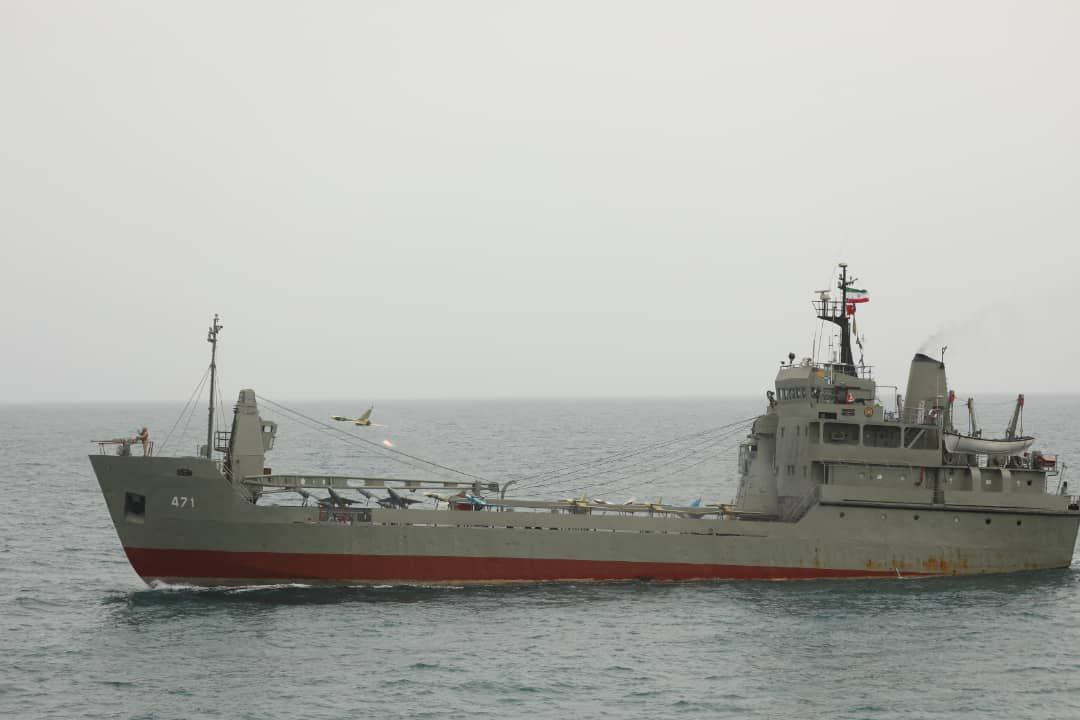
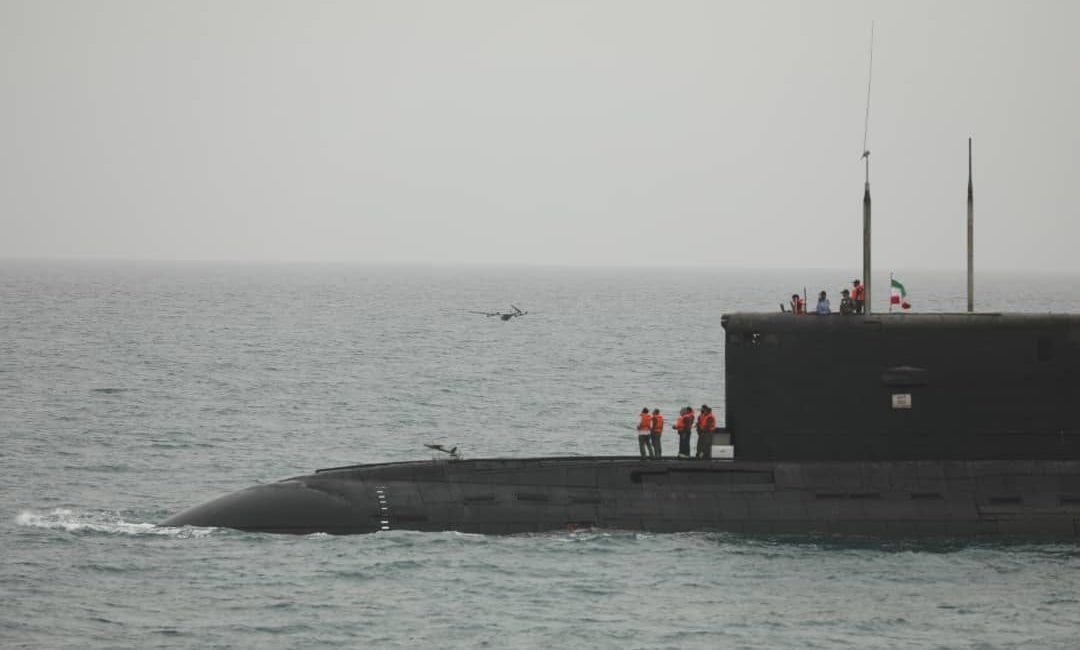
    In this ceremony which was held on July 15, the Lawan and Delavar warships were converted into drone carriers, and for the first time, several drones were launched from the Iranian Fateh and Tariq submarines.

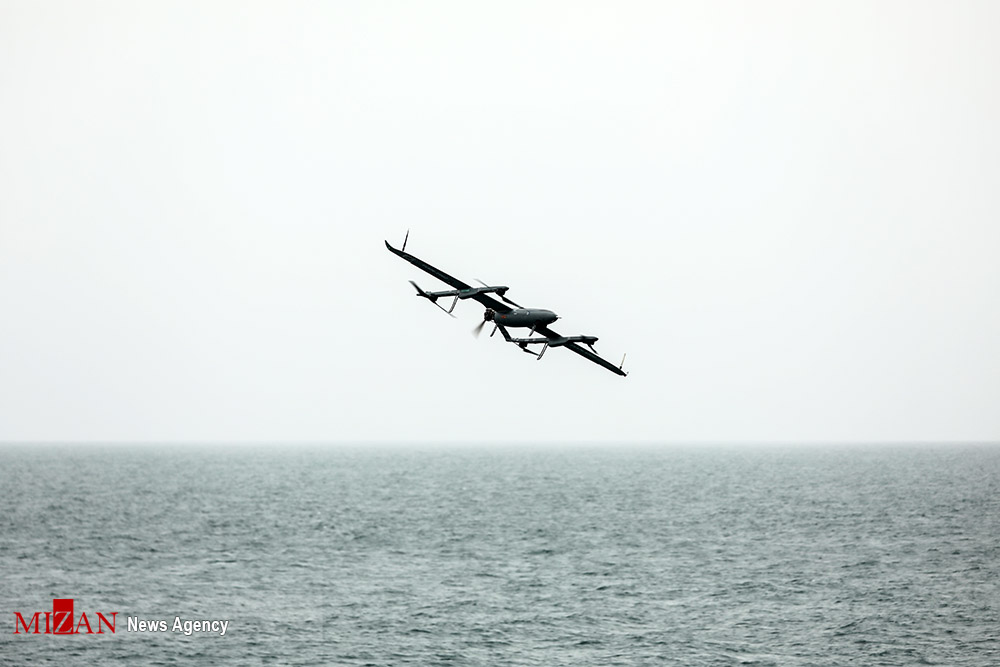
    Drones such as Arash and Ababil 2 suicide drones, Pelican and Homa vertical take-off and landing drones, Karar combat and suicide reconnaissance drones, and Ababil 4 reconnaissance and combat drones were showcased and flew in this ceremony.

    The most important challenge for this drone carriers is the recovery of reconnaissance drones. The conventional method is to use nets; in this way, the drone hits a net installed on the ship at the lowest possible speed. This method is effective for small drones that have a short range, but it is not so favorable for larger drones. Larger drones like the Ababil 4 drone sit in a runway after taking off and completing the mission. In the unveiling ceremony, the Ababil 4 drone landed on the landing strip in Jask after taking off from the drone carrier.

    In the interview of Admiral Shahram Irani, important points were mentioned about the drone fleet, which can be mentioned as follows:

    • The possibility of repairing and producing drones inside the fleet
    • The possibility of combined operations in the form of flight groups of drones and swarm operations
    • The possibility of moving the command control center from one ship to another or subsurface guidance or using a flight unit for command.
    • The possibility of setting different targets for several different categories of drones
    • The possibility of using drones for electronic warfare
    • The possibility of flying 40 to 50 drones at the same time to support any mission and the possibility of replacing them quickly

    UAVs launched from submarines enable the detection of targets in the distance. For this reason, the range of submarine weapons, especially cruise missiles such as the Jask 2 missile, increases. But the main challenge for subsurface fleet use of UAVs is the launch and recovery of the UAV. If a submarine comes to the surface for every launch, the risk of detection increases greatly during the war. This also applies to the recovery of the reconnaissance drone. According to the commander of the Iranian Navy, it will be possible to launch drones under the surface in the future. Also, the possibility of discovering underwater targets will be added to drones.

  • Military Knowledge: E95M Target Drone

    Military Knowledge: E95M Target Drone

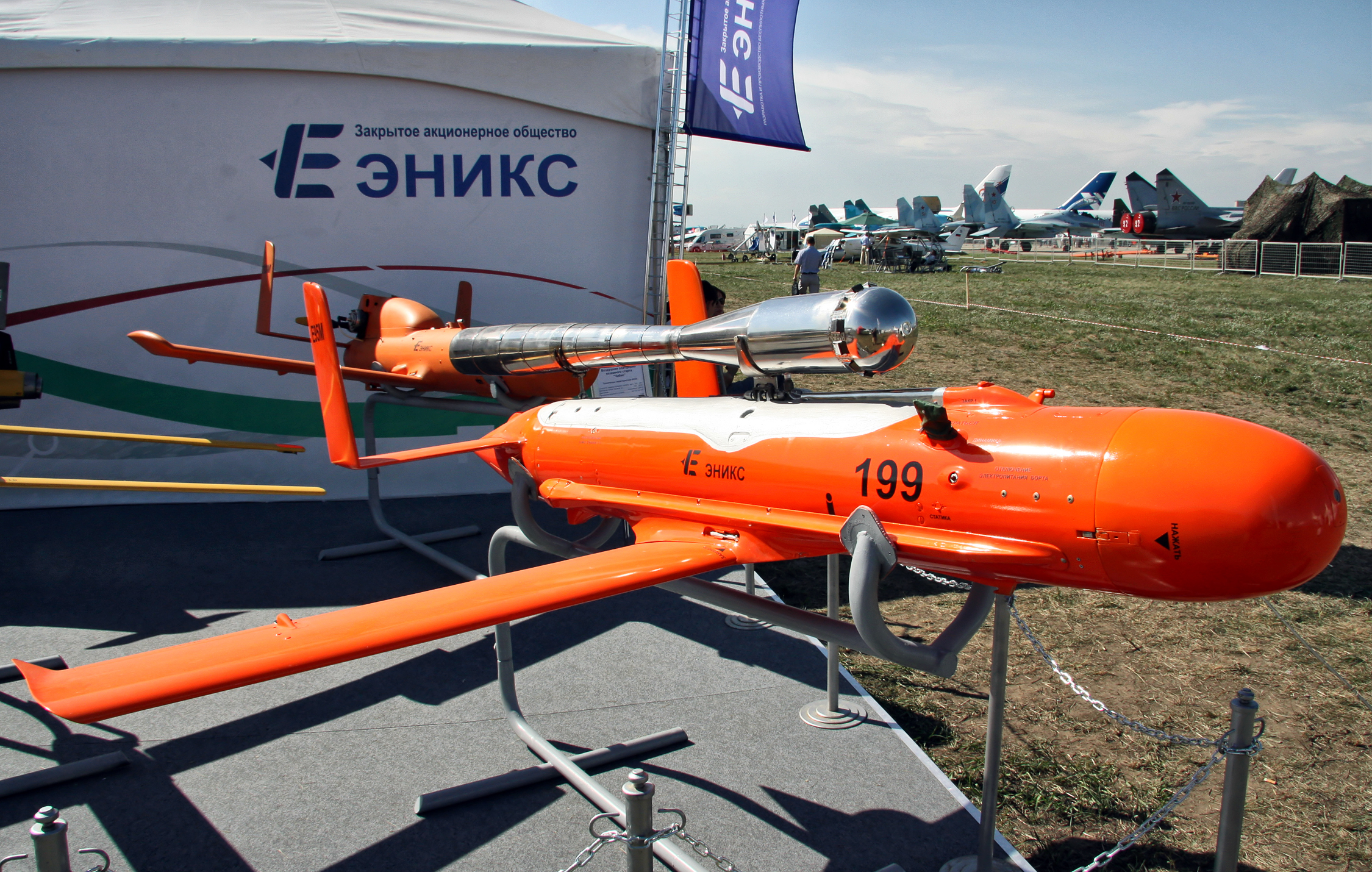
    One of the things to consider about this drone is the use of the M135 Pulsejet engine. Pulsejet engines are the simplest type of jet engines and in the valveless type they do not have any complicated moving parts. The use of this engine greatly reduces the cost of construction.

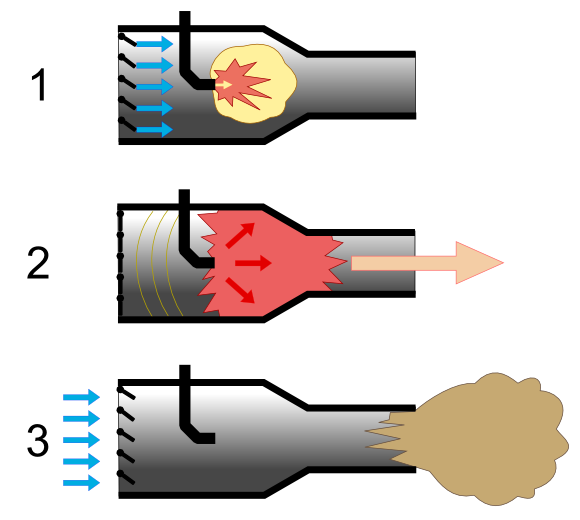
    There are two main types of pulsejet engines, both of which use resonant combustion and harness the expanding combustion products to form a pulsating exhaust jet that produces thrust intermittently. The first is known as a valved or traditional pulsejet and it has a set of one-way valves through which the incoming air passes. When the air-fuel is ignited, these valves slam shut, which means that the hot gases can only leave through the engine’s tailpipe, thus creating forward thrust.

    Diagram of a pulsejet engine

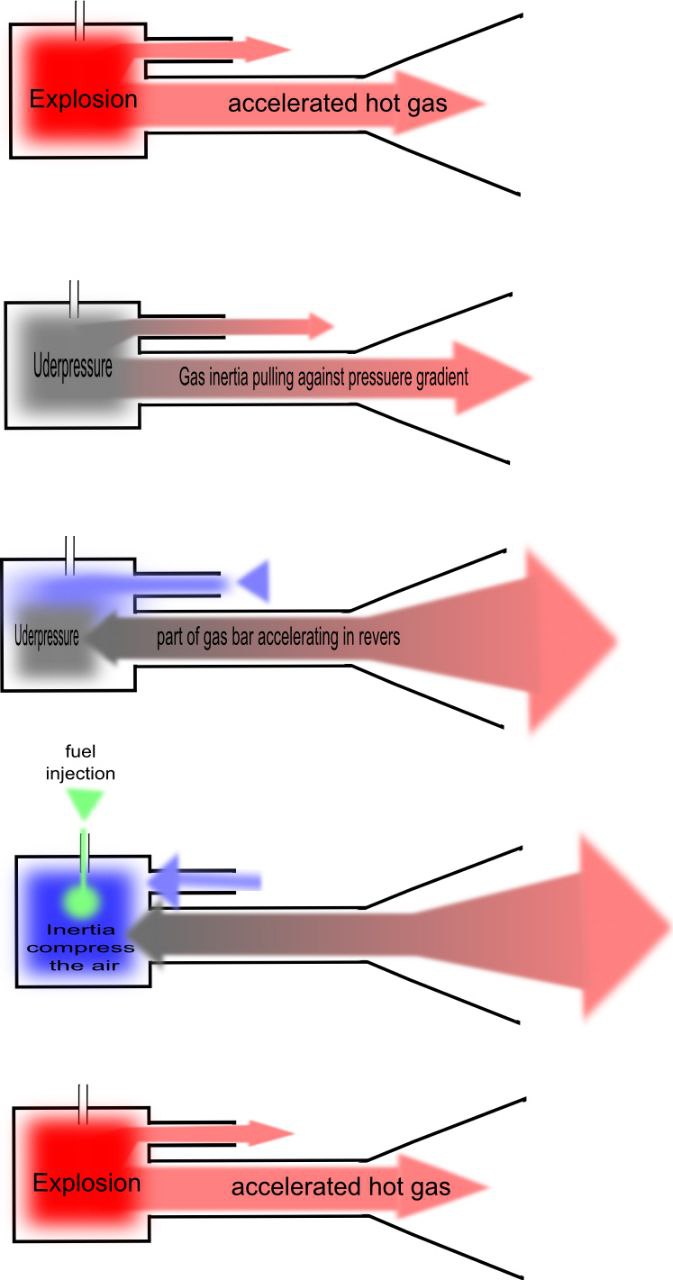
    The second type of pulsejet is known as the valveless pulsejet. The valveless pulsejet is, mechanically speaking, the simplest form of pulsejet, and is, in fact, the simplest known air-breathing propulsion device that can operate “statically”, i.e. without forward motion. Valveless pulsejet engines have no mechanical valve, eliminating the only internal “moving part” of the conventional pulsejet.

    One notable line of research of pulsejet engines includes the pulse detonation engine, which involves repeated detonations in the engine, and which can potentially give high compression and reasonably good efficiency.

    Working mechanism of a valveless pulsejet engine

    The takeoff is carried out using a low-pressure pneumatic catapult. Landing and recovering is carried out using a parachute that is placed in its body.

    E95M drone pneumatic catapult launcher and ground control station

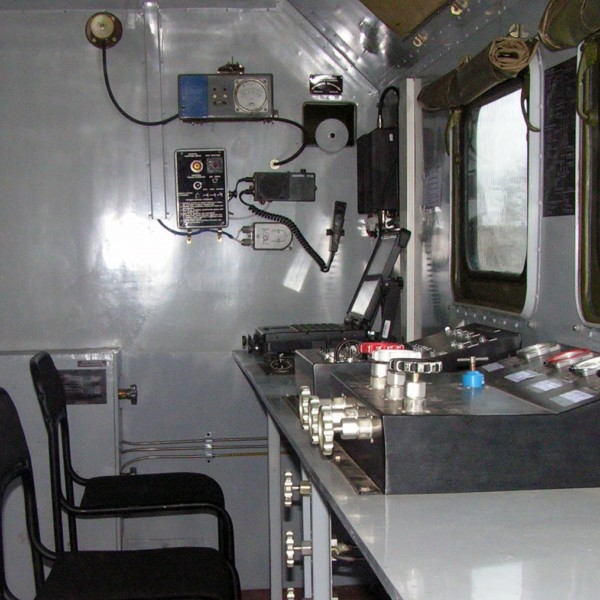
    The E95M target drone is controlled by a ground mobile control station. The ground control station is mounted on an off-road chassis KAMAZ-4350, GAZ-3308 or Ural-4320. The control station is completely autonomous and provides tracking and control of the drone at a distance of up to 70 km.

    E95M drone control room

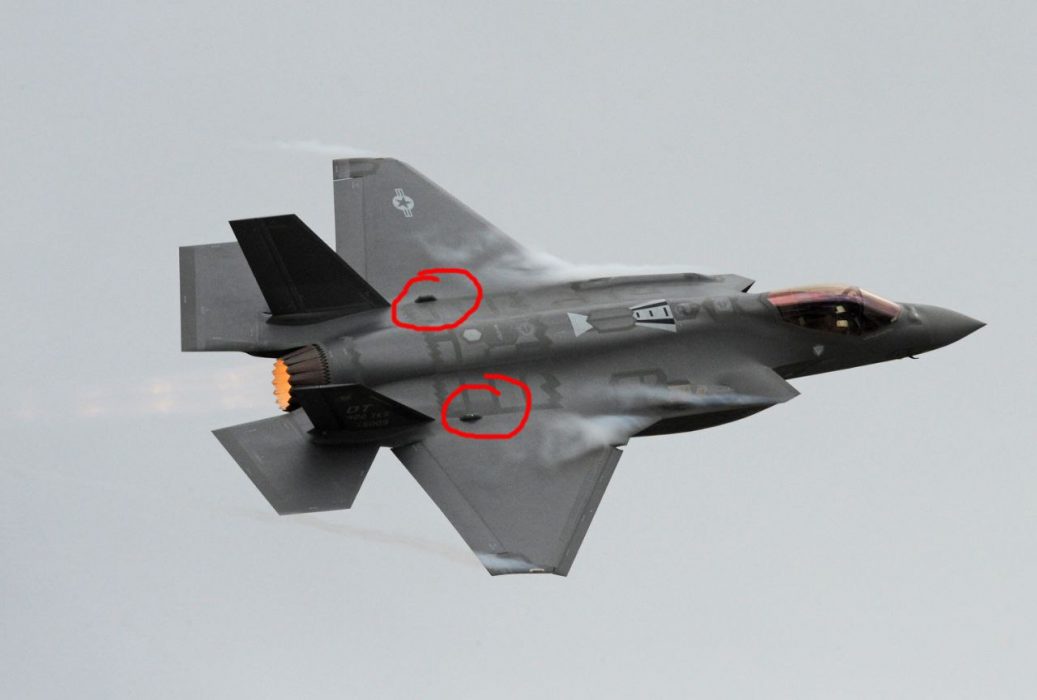
    One of the cargoes of this drone in order to increase the cross-sectional area of the radar and simulate larger aircrafts is the Luneberg lens. Due to its geometry, the Luneberg lens causes resonance in the radar waves in the return wave and amplifies it and increases the overall cross section of the bird.
    Therefore, removable Luneburg lens type radar reflectors are sometimes attached to military aircraft in order to make stealth aircraft, such as the F-35 fighter, visible during training operations, peacetime or to conceal their true radar signature.

    Luneburg reflectors (the marked protrusion) on an F-35

    More pictures of the E95M target drone:

    E95M specifications:
    Length: 1.2 m
    Wingspan: 2.4 m
    Range: 50 km
    Flight ceiling: up to 3000 meters
    Flight duration: 32 minutes
    Maximum speed at low altitude: 300-400 km/h
    Available maneuvers: Dive, pull up (lifting the nose), S-turn
    Engine: PuVRD M135 Pulsejet
    Engine thrust: 150 newtons
    Take-off weight: 70 kg

    Source:
    БПЛА-мишень E95М
    Pulsejet engine
    Valveless pulsejet
    Luneburg lens

  • Military Knowledge: What is a Waverider?

    Military Knowledge: What is a Waverider?

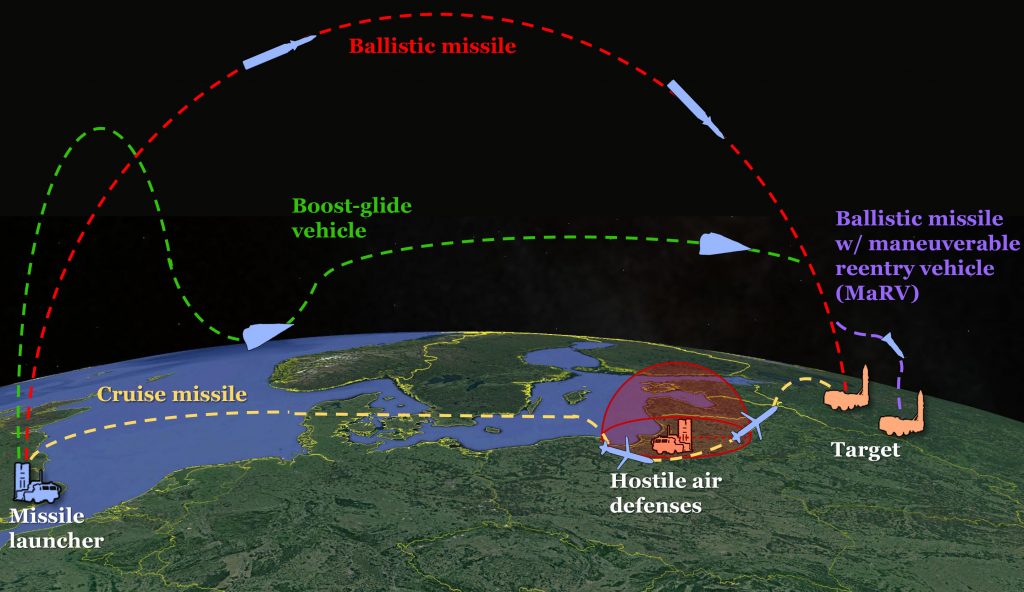
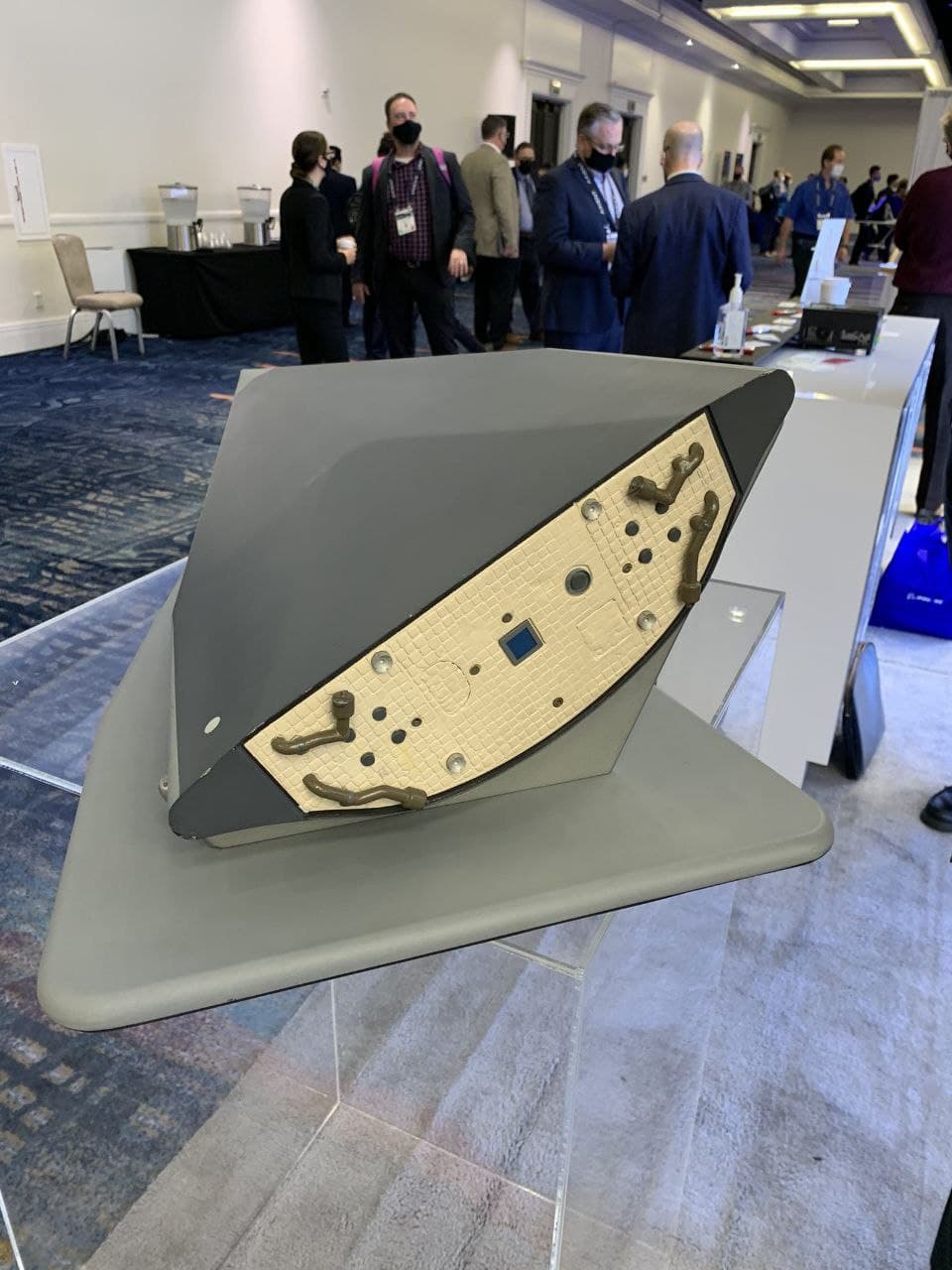
    A waverider is a hypersonic object that creates a high-pressure area based on the creation of shock waves on its lower surface, so that due to the pressure difference created between the lower surface and its upper surface, generates the power required for gliding at very high flight Machs.

    In military weapons, with the advent of new hypersonic weapons, hypersonic glider warheads usually use the waverider configuration in their aerodynamic design. The purpose of this is to achieve the appropriate lift-to-drag ratio so that the weapon achieves an acceptable range in the shortest possible time.

    In the design of the hypersonic waverider, it is tried as much as possible that the pressurized air under the fuselage does not enter the low pressure air on the upper surface in order to achieve the highest efficiency.

    One of the common methods in designing complex geometric surfaces of this device is the Wave Derived Compression Surface method.

    The Chinese DF-17 missile is a ballistic missile with a hypersonic glider warhead. Recently, North Korea has also tested a medium-range missile equipped with a hypersonic glider warhead, which according to its design configuration seems to have achieved this by transferring technology from China.

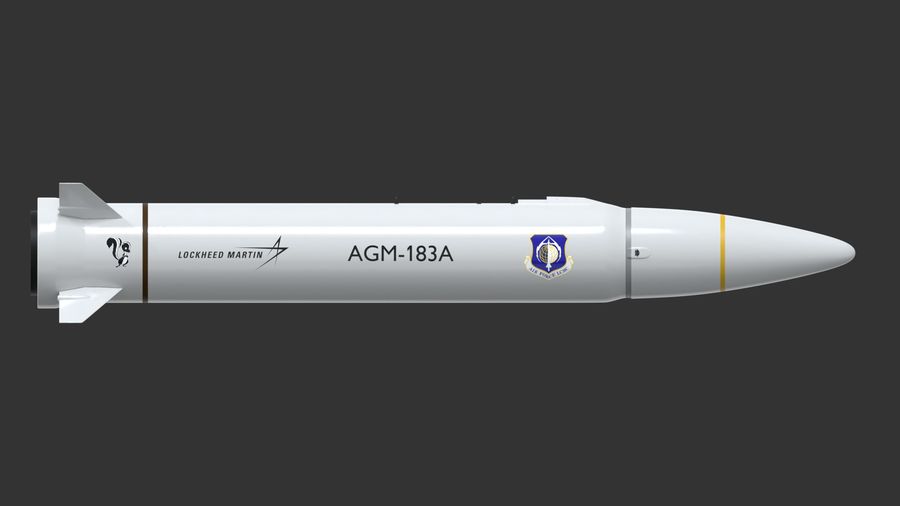
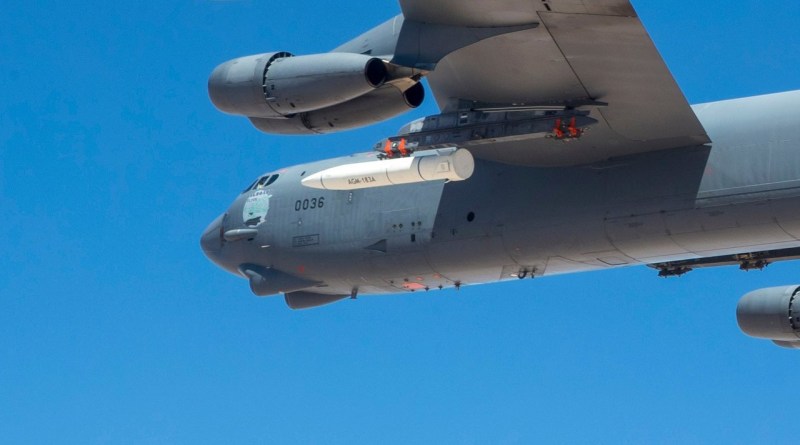
    The Russians also have a hypersonic glide vehicle as a continental weapon called Avangard. It can deliver both nuclear and conventional payloads. In the United States, a missile called AGM-183 ARRW is being developed, which is air-launched.

  • Unveiling Qased satellite carrier’s third stage engine, completing the puzzle of Iran’s exo-atmospheric missile technology

    Unveiling Qased satellite carrier’s third stage engine, completing the puzzle of Iran’s exo-atmospheric missile technology

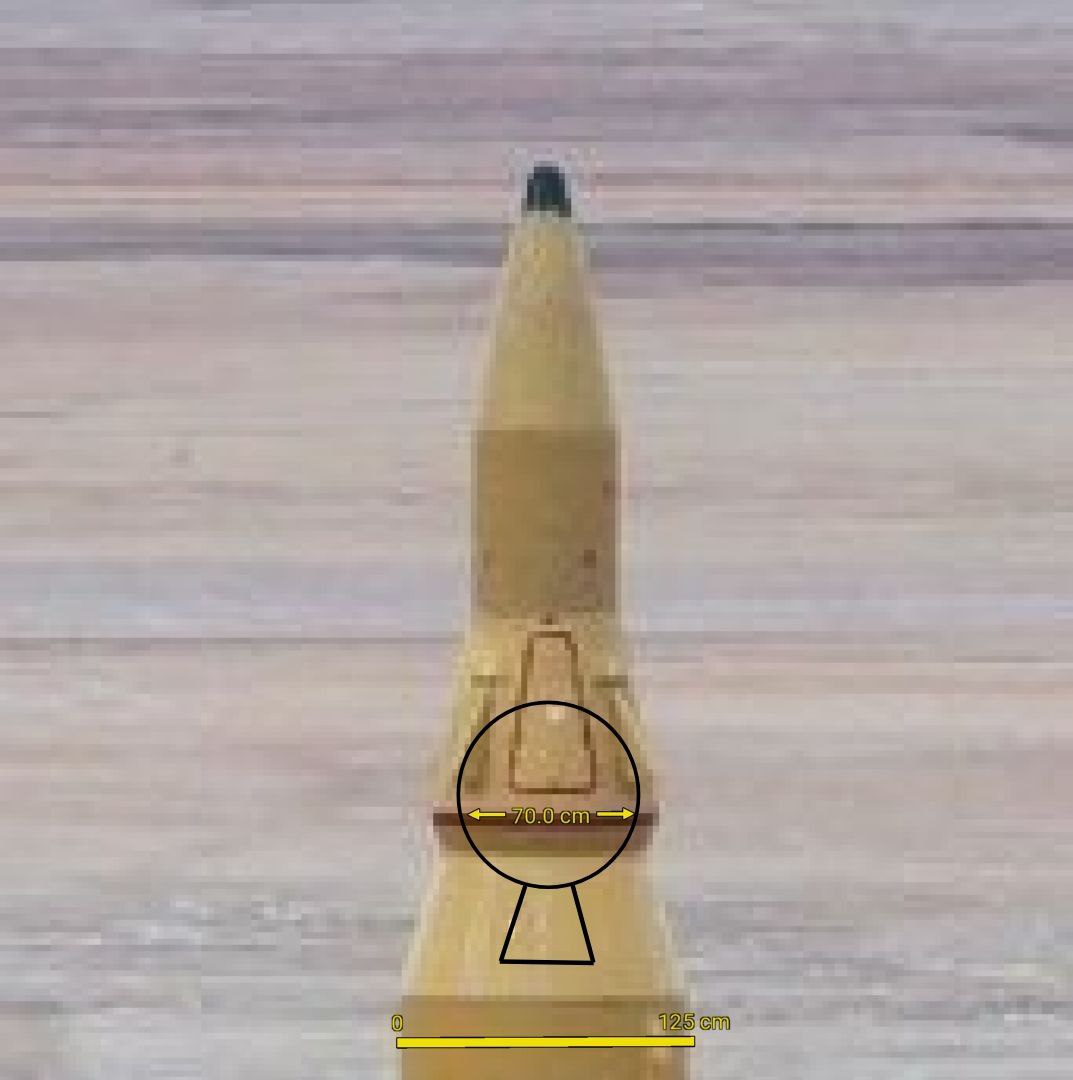
    After the release of images of the third stage engine of the Qaseed satellite carrier, interesting points can be obtained from this engine. First, we start with the dimensional estimation of this engine, which was determined with the help of calculations based on the single-point perspective of the image, the diameter of the cylinder holding the satellite was determined, and then by placing the diameter of the cylinder as a base in an image from the front view, the diameter of the spherical body of the engine was calculated, which is about 700 mm.

    Interestingly, these dimensions match up well with the newly unveiled exo-atmospheric trajectory maneuvering warhead of Qadr medium-range ballistic missile that we reviewed a while back.

    Qadr missile warhead and matching sizes

    Read more: Iran Unveils “Exo-Atmospheric Trajectory Maneuvering Technology” for its Ballistic Missiles

    Since this engine has a carbon fiber composite body like the Salman and Rafe engines and most likely has a thrust vector control mechanism with the help of a flexible nozzle, the engine body is designed spherical. Spherical bodies in pressure tanks have the lowest mass at the same pressure compared to other geometries, and the purpose of spherical design is to reduce the dead weight of the satellite carrier.

    Read more: ‘Raafe’ rocket engine, the most advanced Iranian first stage solid-fueled engine + Video

    As mentioned, the dimensions of this engine are quite suitable for placement in the exo-atmospheric maneuvering warhead, and since it is common for the IRGC Aerospace Force to use the same modules and parts in order to reduce costs in different missile systems, it is likely that the third stage engine of the Qased satellite carrier is used in this warhead.

    It is even predicted that an exo-atmospheric anti-missile defense missile is under development using Raafe, Salman and Qased third stage engines along with third stage gas thrusters. This achievement can provide Iran with exoatmospheric anti-ballistic missile or anti-satellite weapon technology, and for the first time, the Islamic Republic will have a defense umbrella against intercontinental nuclear weapons.

  • Military Knowledge: STARStreak Anti-Aircraft Missile

    Military Knowledge: STARStreak Anti-Aircraft Missile

    After STARStreak missile launch, the missile accelerates to more than Mach 4, making it the fastest short-range surface-to-air missile in existence. It then launches three laser beam-riding submunitions, increasing the likelihood of a successful hit on the target. The darts are guided to the target at a maximum distance of 1.5 meters from each other.

    Starstreak has been in service with the British Army since 1997 And in 2012 Thales relaunched the system as ForceSHIELD.

    The warhead of this missile consists of three darts. Each dart or submunition has 450 grams of PBX-98 explosive and the total weight of the darts is 900 grams. Each dart is 396 mm long and 22 mm in diameter. Each dart consists of a rotating fore-body, with two canard fins, attached to a non-rotating rear assembly with four fins. The rear assembly of each dart also houses the guidance electronics including a rearwards facing sensor.

    The submunitions on this missile is made from a tungsten alloy; Because tungsten has a density about three times that of steel, which increases its kinetic energy and range and height, and the impact of its fragments on the body of the target aircraft is greater. The reason why tungsten fragments are most effective is the high hardness of tungsten-based alloys, which is very suitable for penetrating the aircraft body.

    Delayed impact mechanism is used in darts. On impact with the target a delayed-action fuse is triggered, allowing the projectile to penetrate the target before the explosive warhead detonates. This activation mechanism is designed to fragment and maximise damage inside the target.

    STARStreak air defense missile performance

    The first stage rocket motor has a very short burning time; this launches the missile from the tube but burns out before leaving the tube to protect the operator. This is to prevent damage to the operator due to the high speed and temperature of the exhaust gases. Four metres away from the operator, when the missile is at a safe distance, the second stage motor fires. This rapidly accelerates the missile to a burn-out velocity exceeding Mach 4. As the second stage burns out, three dart sub-munitions are released. The three sub-munitions have enough kinetic energy to manoeuvre to meet a target evading at 9 g at 7,000 metres.

    In the new versions of this missile, the maximum effective firing range has been increased to more than 7 km and the maximum operating ceiling to 5 km.

    Variants of STARStreak missile:
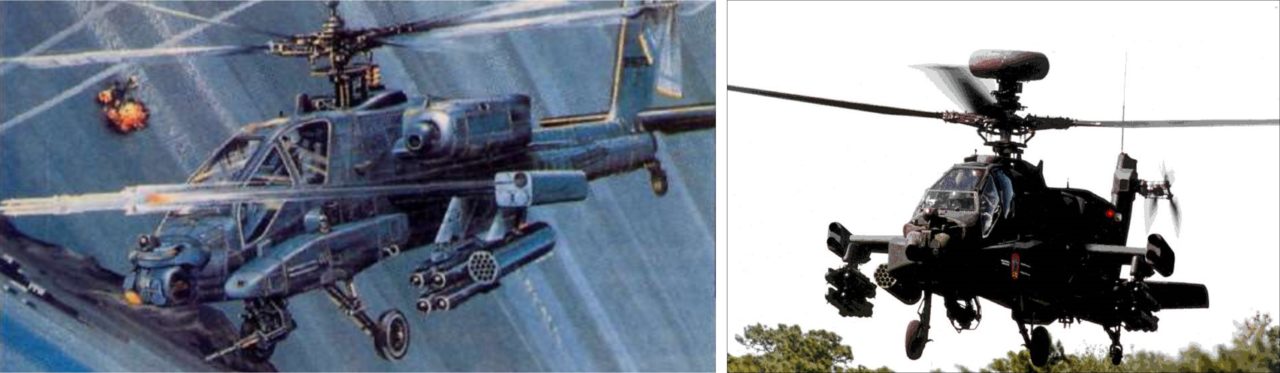
    ATASK (Air To Air Starstreak) Variant: This type is made for shooting from a helicopter. This was developed in combination with McDonnell-Douglas and Lockheed-Martin electronics between 1995 and 1998 specifically for use with the AH-64 Apache. However, this type of missile has not yet entered service.

    ATASK (Air To Air Starstreak) Variant

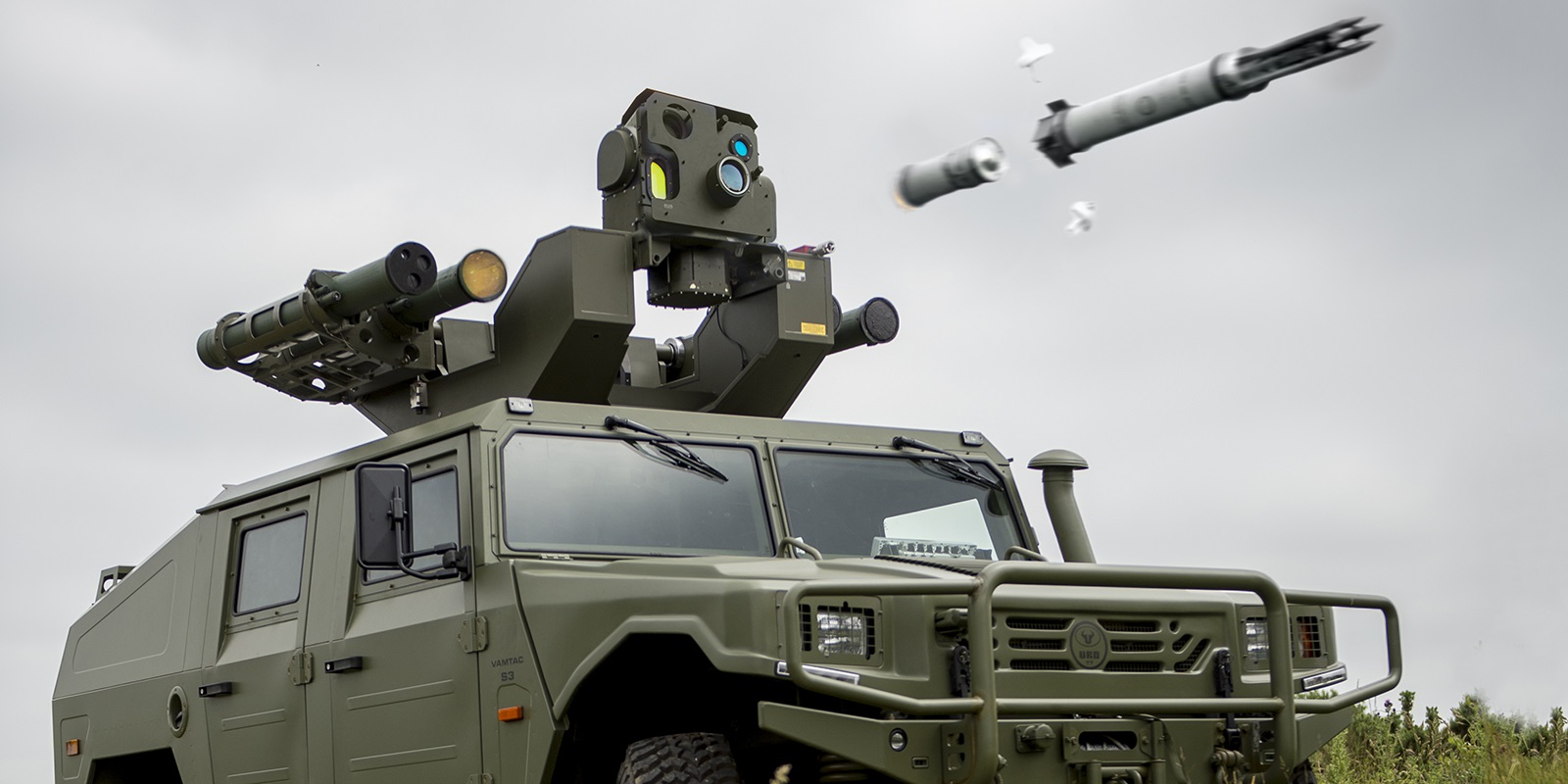
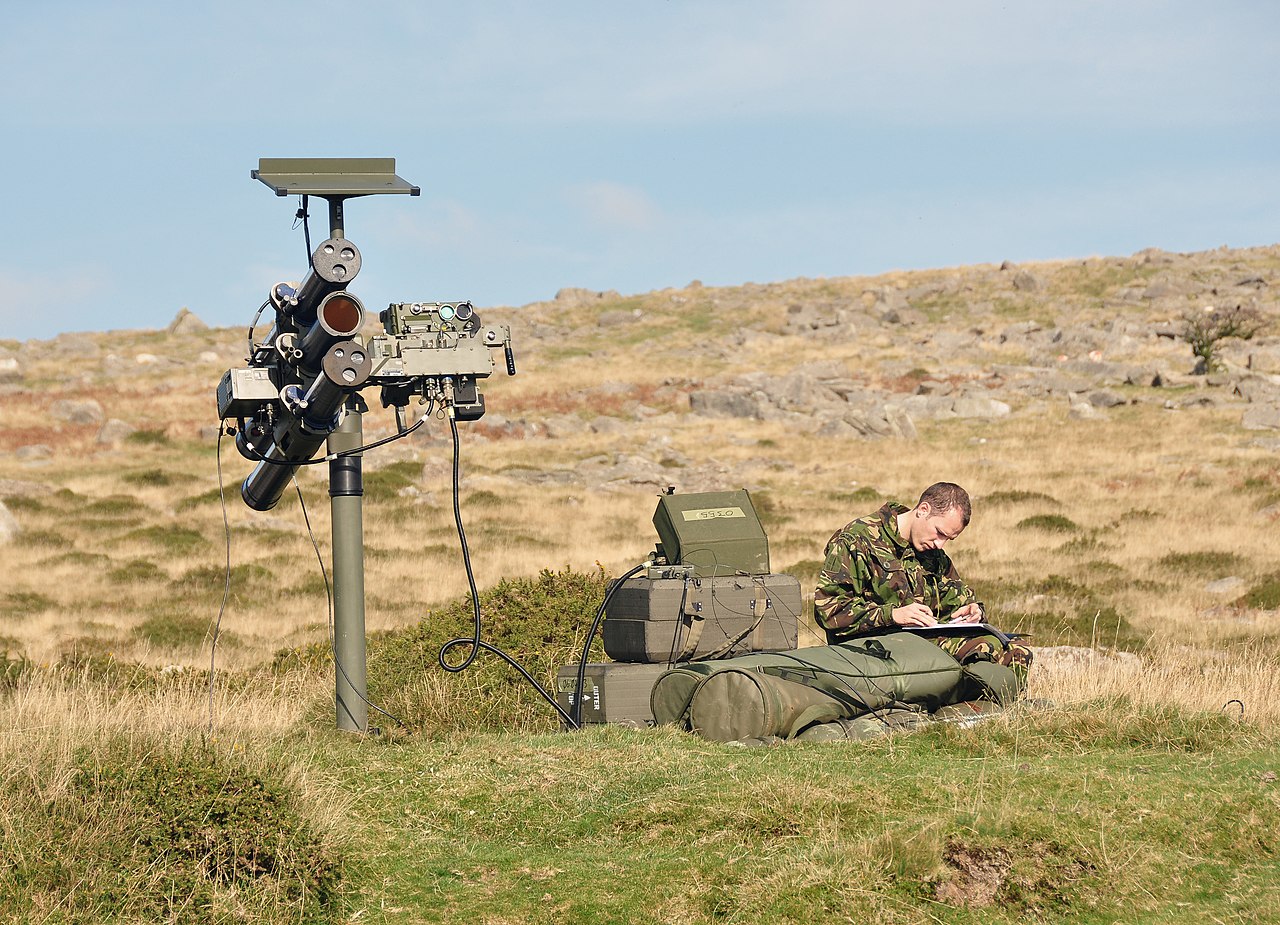
    Lightweight Multiple Launcher (LML) Variant: The Lightweight Multiple Launcher can be mounted on a tripod as a fixed launcher or on a light vehicle such as a Land Rover or Humvee. This type holds three STARStreak missiles ready for firing. While STARStreak missiles are designed to target high-speed air targets, the LML adds the capability to defeat surface targets such as Light Armoured Vehicles, trucks and fixed installations, as well as aerial targets such as drones and helicopters. A very precise laser guidance system is also included in this system, which allows the operator to select target tracking modes manually or automatically.

    Lightweight Multiple Launcher (LML) Variant

    RAPIDRanger Variant: RAPIDRanger is a lightweight, highly automated multi-missile launcher which can be fitted to most tracked and wheeled military vehicles. In this type, a four-round launcher is installed on various armored vehicles. RAPIDRanger can also be loaded with a range of missiles from Thales and other providers, adding the ability to attack ground targets such as armoured personnel carriers, static installations and platforms. The addition of an integral 360° surveillance sensor provides the RAPIDRanger with completely autonomous system operation for 24/7 force protection.

    RAPIDRanger Variant

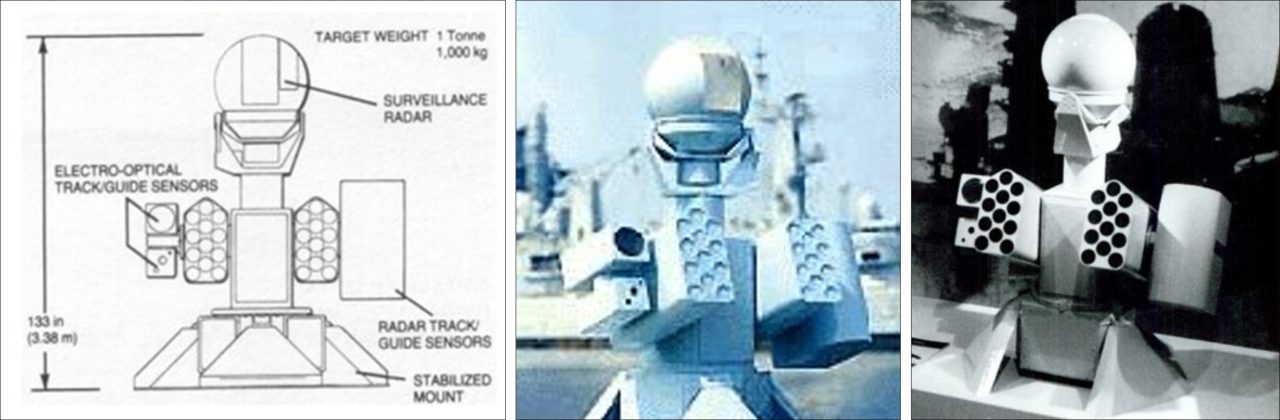
    Seastreak Variant: Seastreak is a naval type of this missile. In this model, the CIWS (close-in weapon system), which includes 24 STARStreak missiles, is formatted in two blocks of 12 missiles. This system is used on warships to deal with short-range targets.

    Seastreak Variant

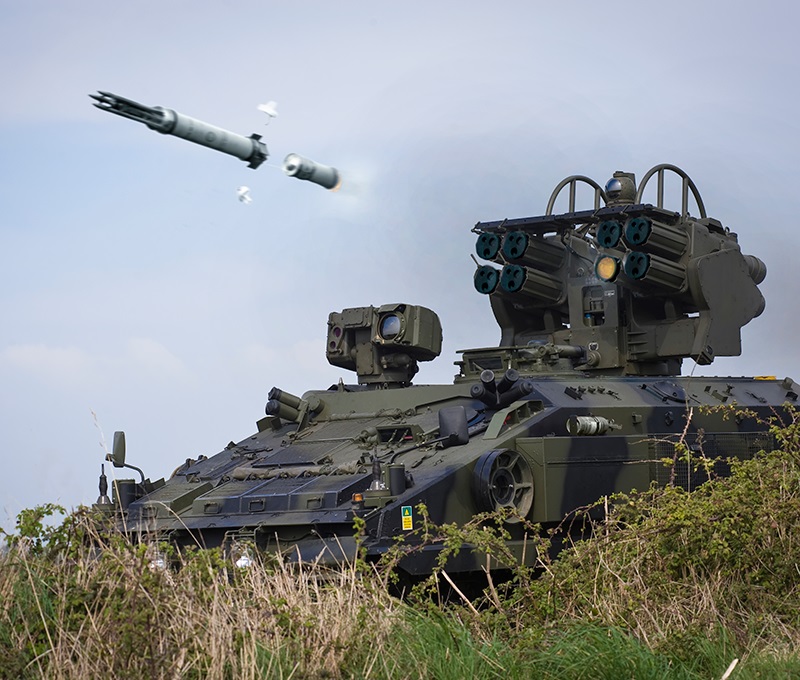
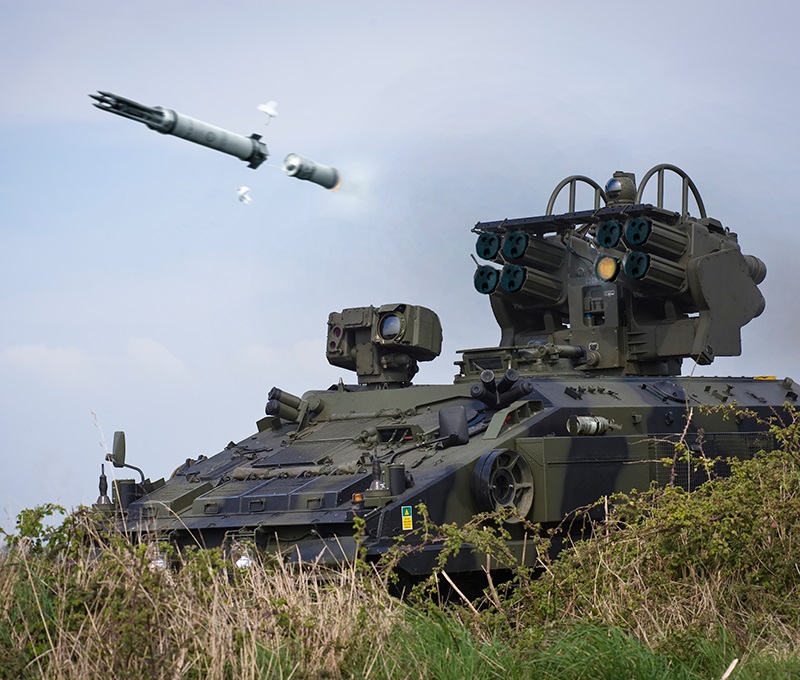
    Self-propelled high-velocity missile (SP HVM) Variant: In this type, an eight-round launcher with internal storage for a further 8 missiles is mounted on the Alvis Stormer armored vehicle.

    Self-propelled high-velocity missile Variant

    Starstreak Avenger Variant: This system was built based on the needs of the US military in the early 1990s. In this type, the Starstreak missile launcher is installed on the Boeing Avenger vehicles replacing one pod of Stinger missiles with one pod of four Starstreak missiles. As a result, the vehicle has a quadruple pod of the Stinger missile and a quadruple pod of the Stinger missile.

    Starstreak Mark II Variant: This is an upgraded version of the Starstreak missile. In this type, the missile range has been increased to more than 7 km.
    THOR/Multi Mission System (MMS) Variant: This type has a four-round Starstreak missile launcher mounted on the Austrian Pinzgauer cross-country chassis.

    THOR/Multi Mission System Variant

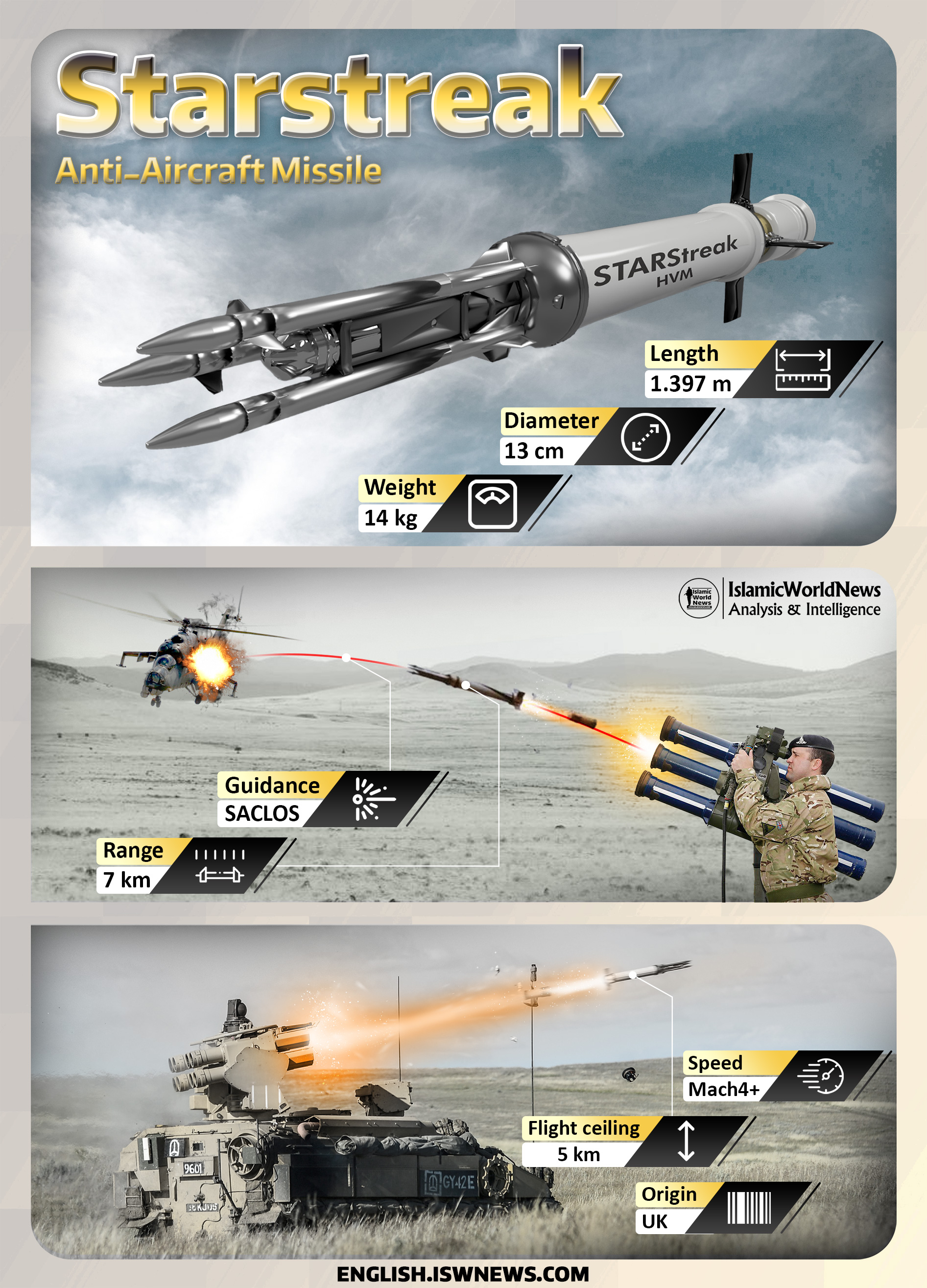
    Starstreak anti-aircraft missile specifications:
    Length: 1.397 m
    Diameter: 13 cm
    Weight: 14 kg
    Range: 7 km
    Speed: Mach 4 +
    Flight ceiling: 5 km
    Guidance: SACLOS
    Origin: UK

    Click to view full size

    “STARStreak Anti-Aircraft Missile” collection of posters in Arabic, Kurdish, Azeri, Russian, Persian for social media:

    Source:
    RAPIDRanger and LMLNG
    Starstreak

    Starstreak High-Velocity Missile (HVM)

  • Military Knowledge: Ababil-2 Reconnaissance and Suicide Drone

    Military Knowledge: Ababil-2 Reconnaissance and Suicide Drone

    The Ababil-2 drone is a target, reconnaissance and suicide drone. Ababil-2, which was initially produced with a reconnaissance and target mission, was later defined as a suicide drone and is now at the disposal of the Iranian Armed Forces with this mission.

    The Ababil series started operating in 1987. Ababil-1 was also used as a suicide drone during the Iraq-Iran war in 80s. Ababil-2 has been in mass production since 1991 by Iran Aircraft Manufacturing Industries (HESA) And since then entered the service of the Iranian Armed Forces.

    The Ababil-2 drone does not need a runway to land and take off. The Ababil can be launched from a zero-length jet-assisted take-off platform or by a pneumatic catapult launcher with the help of a rocket attached to the end of the UAV. For landing and recovery, a parachute or skids can be used for conventional landings on a runway or field.

    This drone with a high operating rate is a potential threat to a variety of enemy equipment from tanks, personnel and defense systems on the battlefield.

    Ababil-2 has an operating range of 100 km, a flight duration of 75 to 120 minutes, a flight ceiling of 11,000 feet (3352.8 m) and a maximum cruising speed of 220 km/h and 370 km/h in dive mode.

    Guidance and control of Ababil-2 is done by the ground control center. In this case, the images are transmitted online to the control and command center. The newer Ababil-2 models are equipped with 123 system (automatic stabilizer) and GPS.
    “123 System” is a new project in the electro avionics engineering department of HESA. This system provides features such as easy flight with more safety by non-professional pilots (in long and short range), automatic take-off and semi-automatic landing, planning and guidance on a desired route with the help of global navigation system, the possibility of disconnecting the control center from the drone and automatic operation of the drone, sending information from the UAV to control center in 17 separate channels, including information on engine speed, ascend and rotation angles, fuel quantity, battery voltage, altitude, and travel speed for Ababil-2.

    Ababil-2 uses a cheap camera with 12 megapixel image quality.

    Ababil-2 is responsible for tasks such as reconnaissance, battlefield surveillance, border patrol, aerial photography, artillery firing correction, as bait to luring air defenses, carrying out suicide missions and training drone personnel.

    Two Ababil-2 models have been observed to date that also have different engines. The difference in appearance of these models is in the tail, the first model has a vertical tail attached to the main body and the second model has two identical vertical tails on the rear wing.

    Ababil-2 specifications:
    Length: 2.88 m
    Wingspan(rear): 3.25 m
    Height: 0.91 m
    Empty weight: ~ 27 kg
    Maximum take-off weight: 83-128 kg
    Payload: 40 kg of cargo or explosives
    Internal fuel capacity: 16 liters
    Engine: W3 or MD series with 20-30 hp
    Maximum speed: 370 km/h
    Cruise speed: 250 km/h
    Combat range: 120 km
    Endurance: 75-120 minutes
    Service ceiling: 3352.8 m
    Origin: Iran

    Click to view full size image

    “Ababil-2 Drone” collection of posters in Arabic, Persian, Kurdish, Russian, Chinese, Azeri and Hebrew for social media:

  • Military Knowledge: Javelin FGM-148 anti-tank missile

    Military Knowledge: Javelin FGM-148 anti-tank missile

    The gunner carries a reusable Command Launch Unit (CLU), which is the targeting component of the two-part system. The CLU has three views which are used to find, target, and fire the missile and may also be used separately from the missile as a portable thermal sight. Infantry are no longer required to stay in constant contact with armored personnel carriers and tanks with thermal sights.

    The CLU weighs 6.4 kg and uses passive infrared guidance to fix and track targets. The day sight is equipped with 4x magnification and the infrared-imaging night sight features 4x and 9x magnification.

    Both the gunner and the ammunition bearer carry the Launch Tube Assembly, a disposable tube that houses the missile and protects the missile from harsh environments. The tube has built-in electronics and a locking hinge system that makes attachment and detachment of the missile to and from the Command Launch Unit a quick and simple process.

    The Javelin measures roughly 1.2 m in length, 127 mm in diameter, and weighs 22.1 kg, with some minor differences depending on the variant. The missile carries a single 8.4 kg tandem-charge, high-explosive antitank (HEAT) warhead. This round utilizes an explosive shaped charge to create a stream of superplastically deformed metal formed from trumpet-shaped metallic liners. The result is a narrow high velocity particle stream that can penetrate armor. It has a qualified maximum range of 2,500, though the U.S. notes that it has “demonstrated performance to 4,000 meters in most operational conditions.”

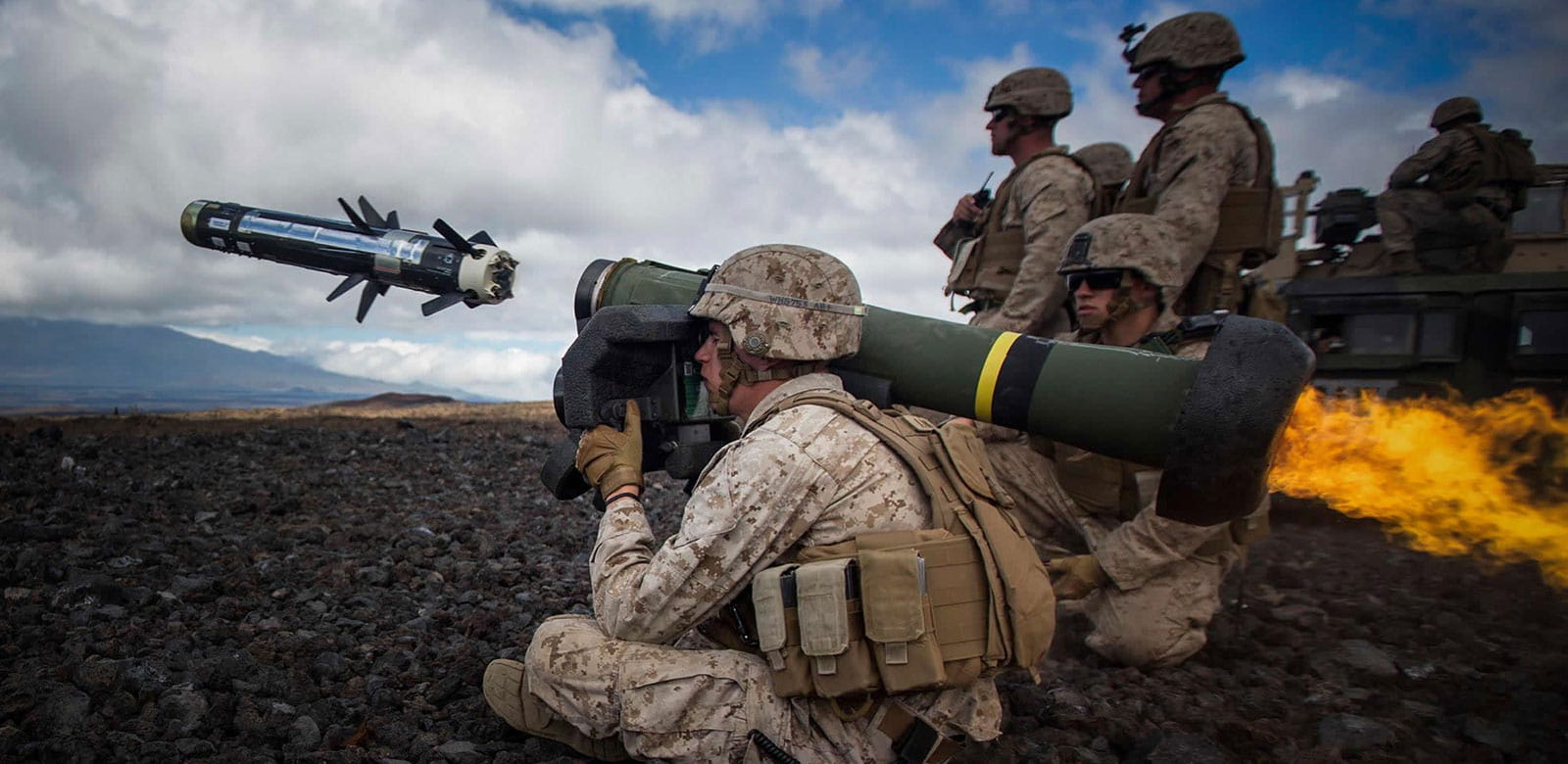
    The Javelin employs a soft launch mechanism. This means when an operator pulls the trigger, an initial low-g motor ejects the missile from the firing tube. Once it exits the firing tube, the missile then ignites its main flight motor to propel it toward its target. The Javelin’s soft launch mechanism prevents missile exhaust from hitting the operator, enables fires from inside confined spaces and buildings, lowers recoil for shoulder-launched fires, and minimizes launch smoke trails that indicate launch locations and invite counterfire.

    Operators can select to use the weapon in top attack mode or direct attack mode. Top attack mode is designed to target tanks; the missile flies upward to reach a peak altitude of 150 m before striking the tank’s more vulnerable roof. The direct attack mode is designed to engage fortified targets, bunkers, buildings, and helicopters. In this mode, the missile flies relatively straight to its target at a peak altitude of 50 m.

    Early versions of the Javelin had a range of 2000 meters, which was later increased to 2500 meters. Javelin has been used in more than 5000 conflicts in Afghanistan and Iraq. This system is supposed to remain in service until 2050. The United States has been buying Javelins at the rate of about 1,000 a year. The maximum production rate is 6,480 a year, though it would likely take a year or more to reach that level. The delivery time is 32 months; that is, once an order is placed, it will take 32 months before a missile is delivered.

    FGM-148 Javelin specifications:
    Length: 1.1 m
    Barrel length 1.2 m
    Diameter 142 mm
    Total system weight: 22.3 kg
    Warhead weight: 8.4 kg Tandem-charge HEAT
    Penetration rate: 800 mm RHA
    Effective range: 75 to 2500 m
    Target discovery range: 4000 m
    Guidance system: Infrared homing
    Origin: U.S.

    Source:
    FGM-148 Javelin
    Javelin
    Javelin Weapon System
    FGM-148 Javelin
    Will the United States Run Out of Javelins Before Russia Runs Out of Tanks?


  • Military Knowledge: Khaybar Shekan Ballistic Missile

    Military Knowledge: Khaybar Shekan Ballistic Missile

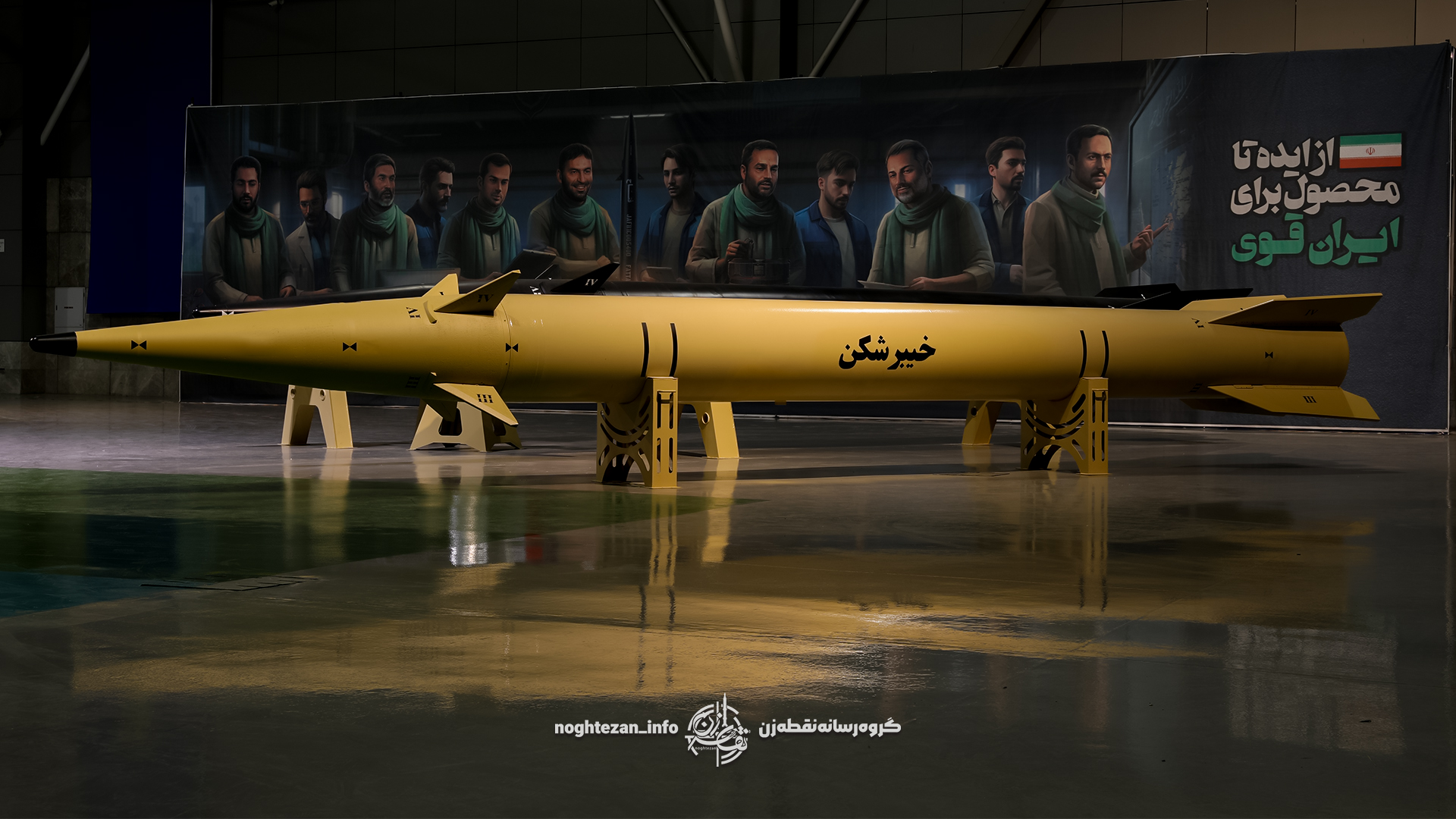
    On February 9, 2022, during the visit of the Chief of General Staff of the Iranian Armed Forces, Major General Mohammad Bagheri, and the Commander of the IRGC Aerospace Force, Brigadier General Amir Ali Hajizadeh, to one of Iran’s underground missile bases, the Khaybar Shekan or Kheibar Shekan (Khaybar Breaker) tactical short-range ballistic missile was unveiled.

    The unveiling of this missile on the eve of the forty-third anniversary of the victory of the Islamic Revolution of Iran, and especially the unique name of this missile, attracted many attention and reactions around the world. “Khaybar” refers to the famous war between Muslims and Jews in the early years of Islam and the victory of Muslims over the Jews after Imam Ali (as) threw down the door of the final fort.

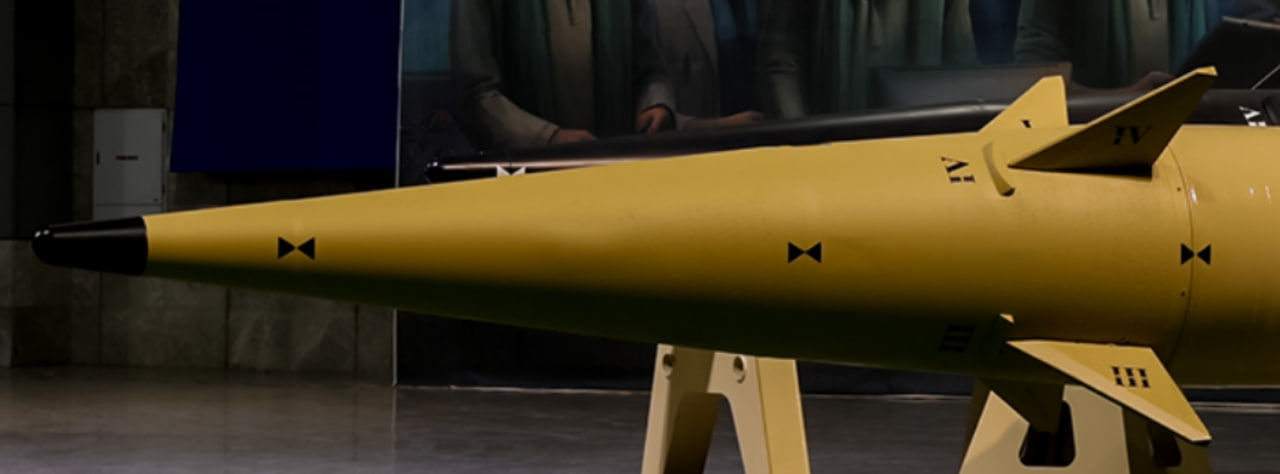
    The first thing that catches the eye in the Khaybar Shekan missile is the relatively larger dimensions of its warhead movable fins. Increasing the size of the fins, increases the maneuverability of the warhead after entering the atmosphere and allows for more sophisticated and faster maneuvers in order to pass more effectively through layers of in-atmosphere anti-missile defenses such as the David Sling and Patriot.

    Khaybar Shekan missile warhead and larger movable fins

    The warhead configuration is of Tri Conic type. The use of this conservative configuration is to maintain the stability of the warhead during heavy maneuvers and in the landing phase causes high maneuverability to pass through the layers of missile defense systems. Of course, the amount of drag in this configuration is a bit high. In engineering, increasing the drag force is intended by the weapon designer to achieve greater maneuverability.

    An example of how a maneuverable warhead (MaRV) works

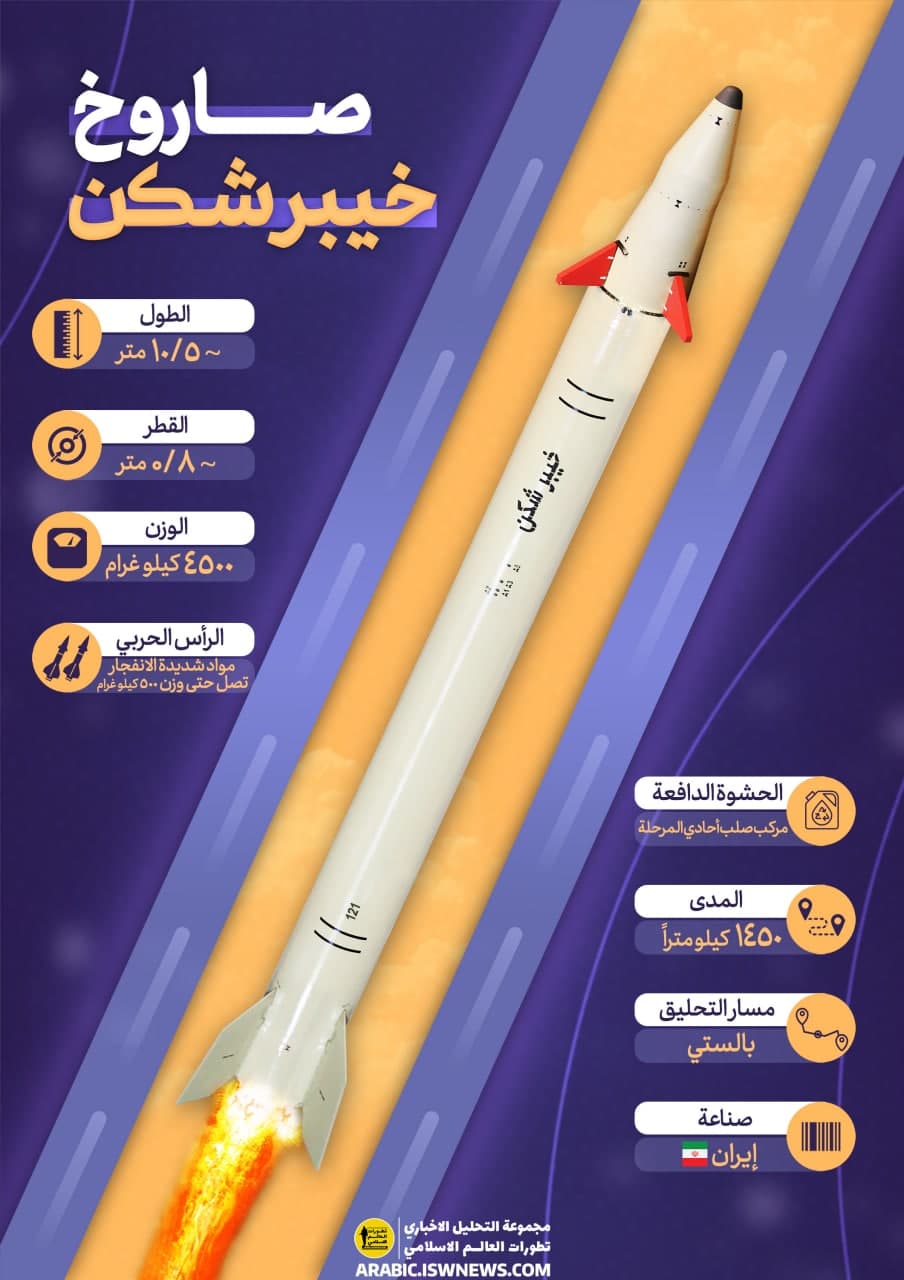
    Unfortunately, the exact details of the missile, such as weight, length, diameter, warhead weight, etc., have not been officially provided by Iranian officials; But according to estimates, the diameter of the missile is 800 mm and its length is about 10.5 meters.

    Due to the reflection of light from the missile body and its texture, it seems to be a composite body material, which means low deadweight of engine. Therefore, the missile weighs between 4.5 and 5 tons, assuming the weight of the warhead is 500 kg, which is a unique number for a short-range ballistic missile with a range of 1450 km. At the time of unveiling, it was mentioned that the weight of this missile has been reduced to one third, which is consistent with one third of the mass of the 15-ton Qadr S missile.

    Extreme agility and speed in hitting targets at a range of 1450 km is one of the main capabilities of this missile.

    Body of Khaybar Shekan Ballistic Missile

    As mentioned, this missile is based on the Dezful missile and with a weight of 30% of liquid fuel missiles, it has achieved the range of the same missiles. Therefore, this missile has solid fuel, and due to the reduction of dimensions and weight of this missile, it is possible to use two missiles of this type on dual launchers.

    Smaller missile dimensions have significant advantages. The smaller the missile, the more missiles can be stored in the confined space of underground missile bases. Also, the need for drilling to increase the length of the tunnels and the cost and time is reduced. It should be noted that in the past, due to the lack of space for missiles, the IRGC Aerospace Force implemented the idea of multi-floor missile depots.

    Iran Underground Missile Base

    Another advantage of reducing the dimension of missiles is the use of a wide range of launchers; So that the Khaybar Shekan ballistic missile can be launched from the Iran Khodro Diesel’s Aria 10-wheel launcher. This truck has recently joined the Iranian Armed Forces.

    Iran Khodro Diesel’s Aria 10-wheel launcher

    Another item that was revealed with the unveiling of Khaybar Shekan missile is the use of a dual launcher that have the ability to carry and launch up to two Khaybar Shekan short-range missiles. Until now, short-range missiles, such as Iranian Qiam missiles with a maximum range of 1,000 km, were carried by the launcher as a single unit; Increasing the number of missiles means increasing the firing rate, which is a very effective and proven tactic in overcoming on missile defense systems.

    Another important issue that occurred during the unveiling of the Khaybar Shekan missile, which led to much speculation, was the naming of the missile and the type of warhead: Khaybar Shekan (Breaker). At first, it looked like a bunker buster warhead, but with the release of more footage of the missile firing and hitting the target, the bunker buster warhead theory was rejected due to the angular impact on the target and how it exploded instantly.

    Of course, the possibility of developing a bunker buster warhead for this missile is quite possible. However, in the unveiling footage of the missile, the missile uses the HE warhead, which according to the commander of the IRGC Aerospace Force, Sardar Hajizadeh, the explosive used in the warhead, is several times more than its TNT equivalent, and provides more explosive power. Therefore, a combination of RDX and HMX has probably been used to provide such performance.

    Video of the unveiling and performance of the Khaybar Shekan ballistic missile

    In 2023, another variant of the Kheibar Shekan missile was unveiled. This missile, which is known as Kheibar Shekan-2, is almost identical to Kheibar Shekan-1.

    Khaybar Shekan-2 with a range of 1800 km

    The only difference in the appearance of Khaybar Shekan-2 with Khaybar Shekan-1 is the warhead. The Khaybar Shekan-1 missile has a three-cone warhead, but the Khaybar Shekan-2 missile uses a single-cone warhead.

    In the booster section, the boosters of the Khaybar Shekan-2 and 1 missiles are exactly the same size with a diameter of 76 cm, but the weight of the Khaybar Shekan-2 missile is less than the Khaybar Shekan-1 missile. The range of Khaybar Shekan-2 has also increased from 1450 km to 1800 km.

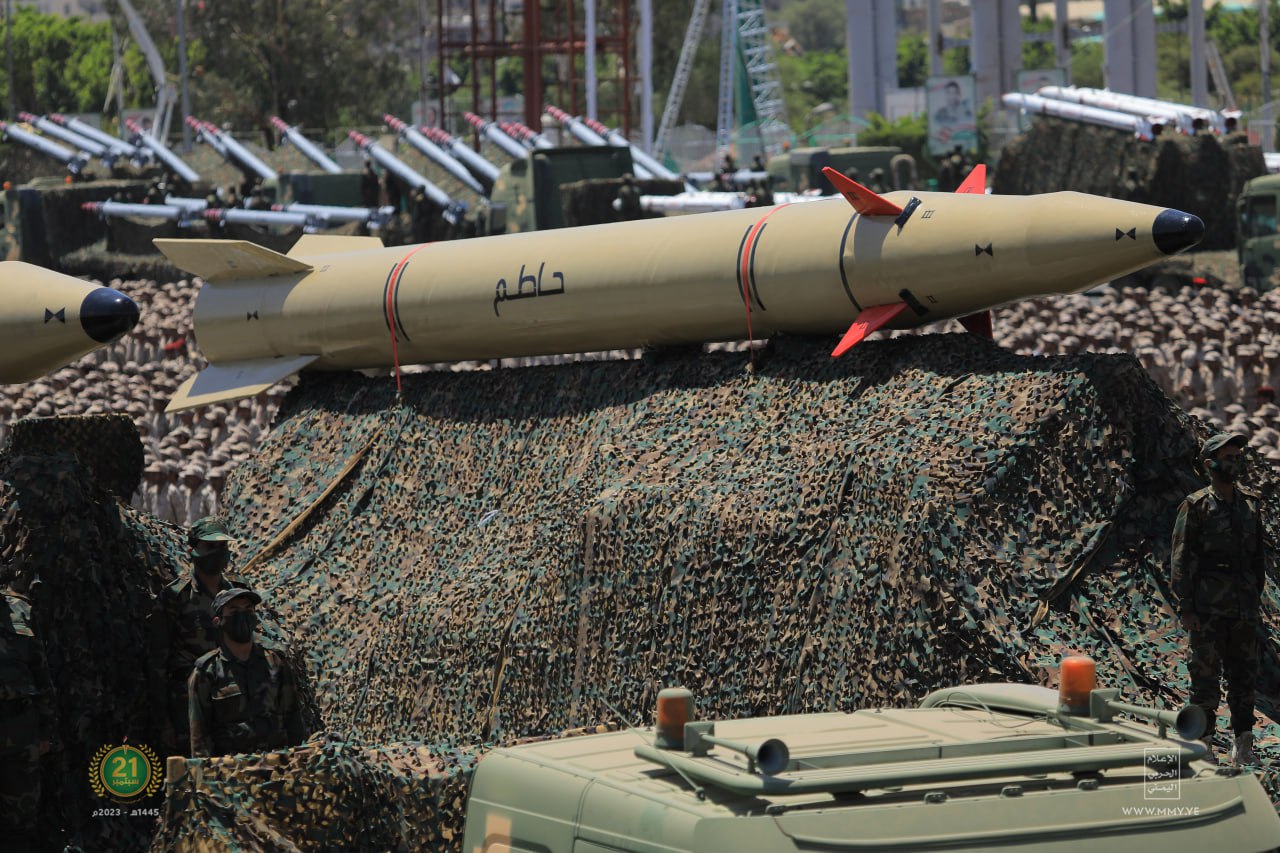
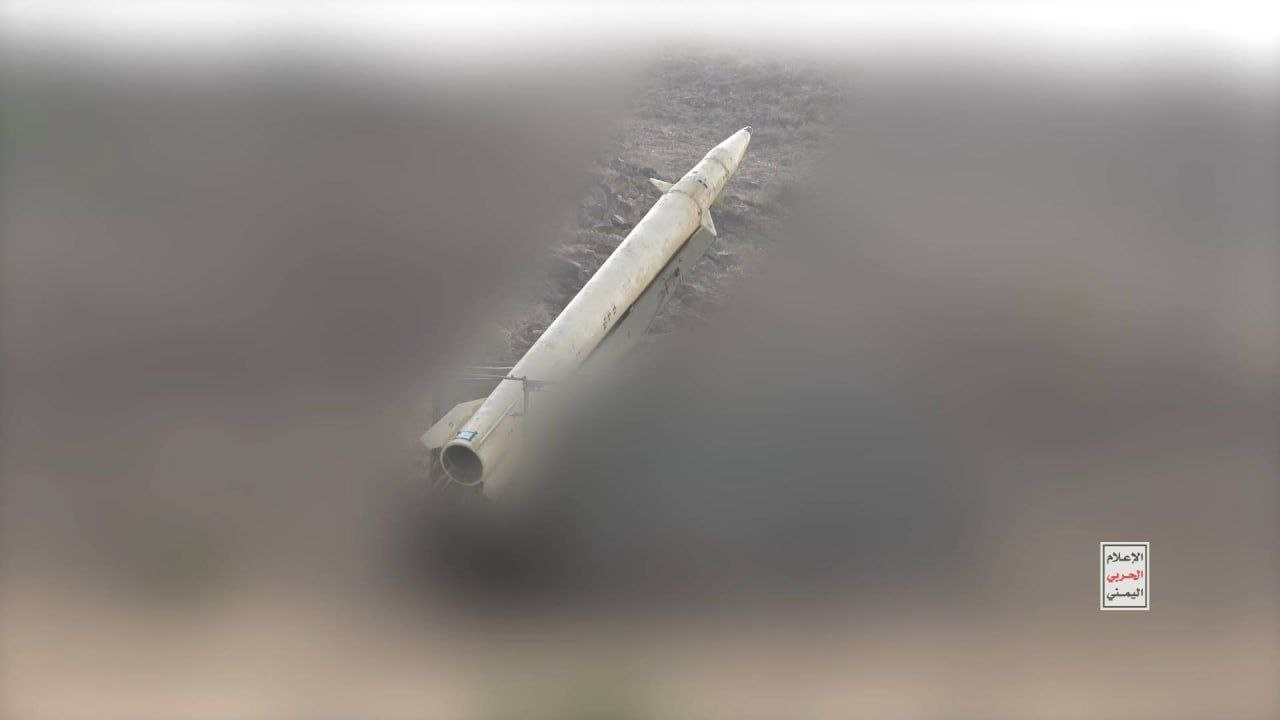
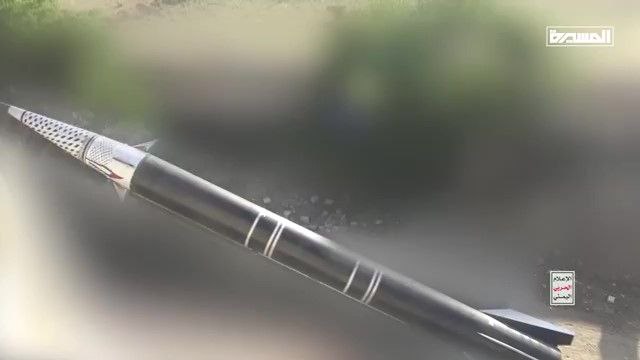
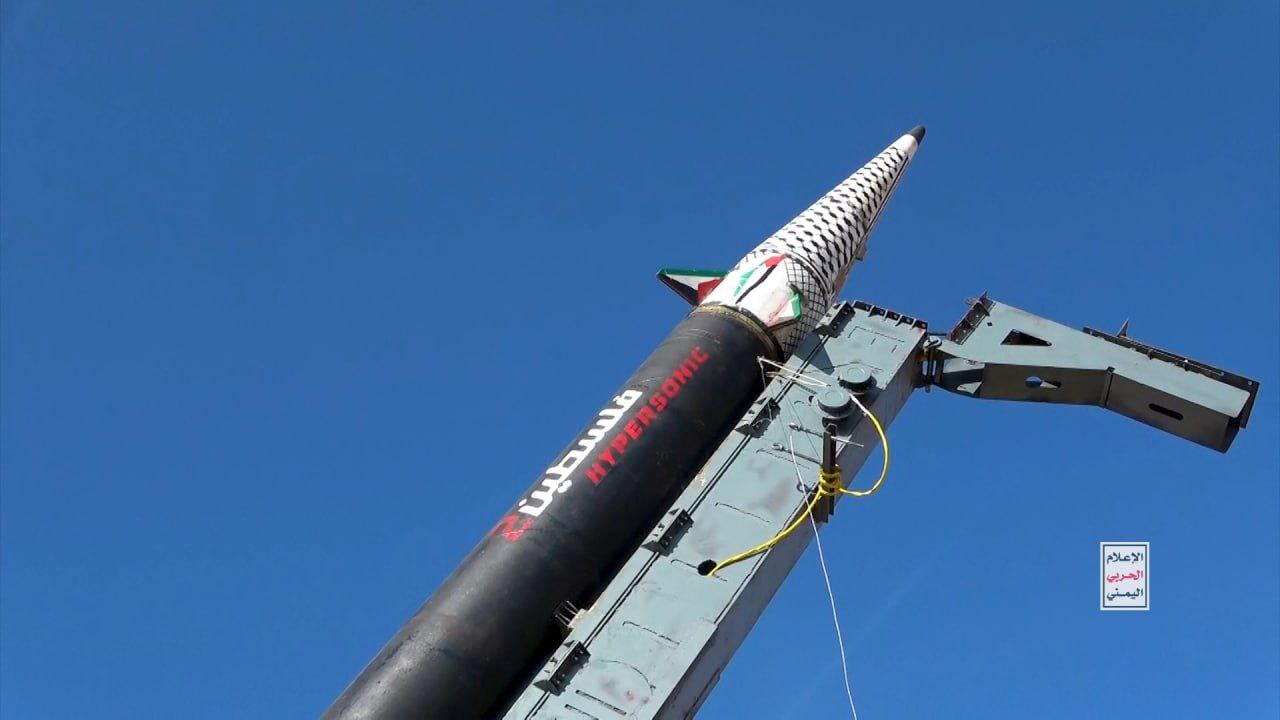
    It should be noted that the variants of Khaybar Shekan 1 and 2 missiles named Palestine and Hatem missiles have been put into service by the Yemeni army (Ansar Allah).

    In fact, the Hatem-1 and 2 missiles with a three-cone warhead are similar to the Khaybar-Shekan-1 missile, and the Palestine-1 and 2 missiles with a single-cone warhead are similar to the Khaybar Shekan-2 missile.

    Regarding the range of these missiles, apart from the Palestine-2 missile, no exact information is available, but naturally, their range should be similar to the Iranian variants.

    The range of these missiles is classified as follows based on the announced information:
    Khaybar Shekan-1 »»» 1450 km
    Hatem-1 »»» 1450 km
    Hatem-2 »»» unknown range
    and
    Khaybar Shekan-2 »»» 1800 km
    Palestine-1 »»» 1800 km
    Palestine-2 »»» 2150 km

    The Palestine-2 missile was used in an attack on a target near the city of Tel Aviv, and its range was officially announced as 2,150 km. Considering that Palestine-2 is similar to Khaybar Shekan-2 (with a range of 1,800 km), it seems that its warhead has been greatly reduced in order to reach a range of 2,150 km.

    Khaybar Shekan-1 missile specifications:
    Length: 10.5 m
    Diameter: 0.8 m
    Weight: 4500 kg
    Warhead: High Explosive up to 500 kg
    Fuel: Solid (One-stage)
    Range: 1450 km
    Flight trajectory: Ballistic, MaRV warhead
    Origin: Iran

    Click to view full size

    “Kheibar Shekan Ballistic Missile” collection of posters in Persian, Arabic, Kurdish, Azeri, Russian for Social Media:

  • Military Knowledge: M141 Bunker Defeat Munition

    Military Knowledge: M141 Bunker Defeat Munition

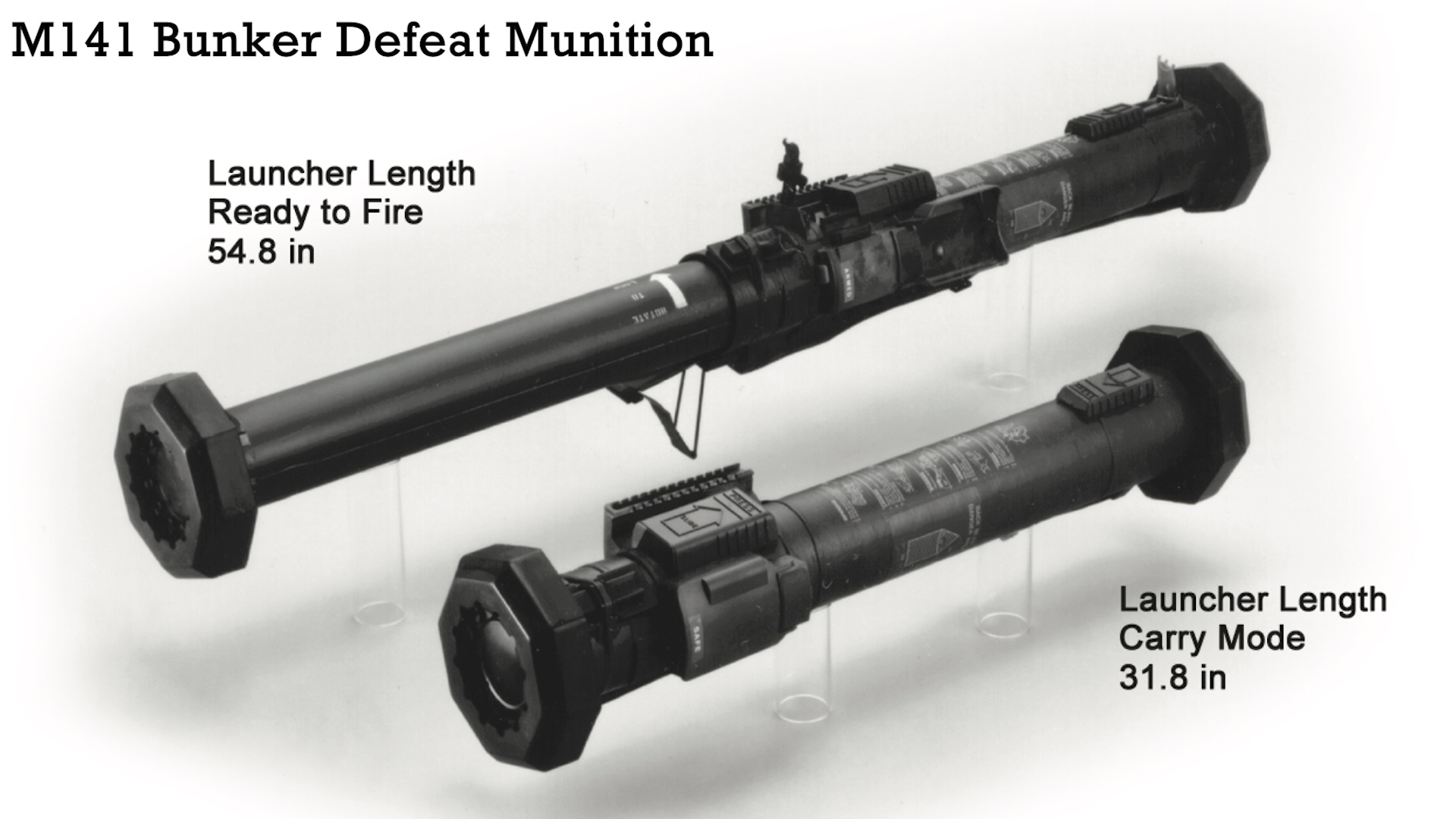
    M141 or SMAW-D (“Disposable”), is a single-shot, shoulder-launched weapon designed to defeat hardened structures. The weapon was designed as a modification of the United States Marine Corps Shoulder-launched Multipurpose Assault Weapon (SMAW) to fill the void in the United States Army inventory of a “bunker buster” weapon.

    The SMAW-D operates on the principle that the recoil created by launching the rocket is counteracted by a “backblast” of gases fired from the rear of the weapon like RPGs. This makes the SMAW-D inherently dangerous, especially in confined, urban areas, as is with all weapons of this design.

    M141 Bunker Defeat Munition has two configurations: a “carry mode” in which the launcher is 810 mm long, and a “ready to fire mode” in which the launcher is extended to its full length of 1,400 mm.

    The warhead is the same High Explosive, Dual Purpose (HEDP) as the United States Marine Corps SMAW. It is effective against masonry and concrete bunkers as well as lightly armored vehicles. The projectile is capable of penetrating up to 200 mm of concrete, 300 mm of brick, or 2.1 m of sandbags. The warhead is activated by a crush switch in its nose that is able to distinguish between hard and soft targets. On soft targets, such as sandbags, the detonation is delayed until the projectile is buried in the target, producing a devastating effect. The warhead detonates immediately on contact with hard targets.

    M141 Bunker Defeat Munition specifications:
    Weight: 1.7 kg
    Length: 810 mm
    In service (US Army): Since 1999
    Caliber: 83.5 mm rockets
    Range: 15-1000 meters
    Penetration rate in concrete: 200 mm
    Penetration rate in brick: 300 mm
    Penetration rate in sandbags: 2.1 meters

    Source: Wikipedia