This continued presence by Israeli forces is in direct violation of the ceasefire agreement, which stipulates that all occupying forces were supposed to withdraw from southern Lebanese lands. Furthermore, the Lebanese army lacks the power to exert significant pressure on the Israelis.
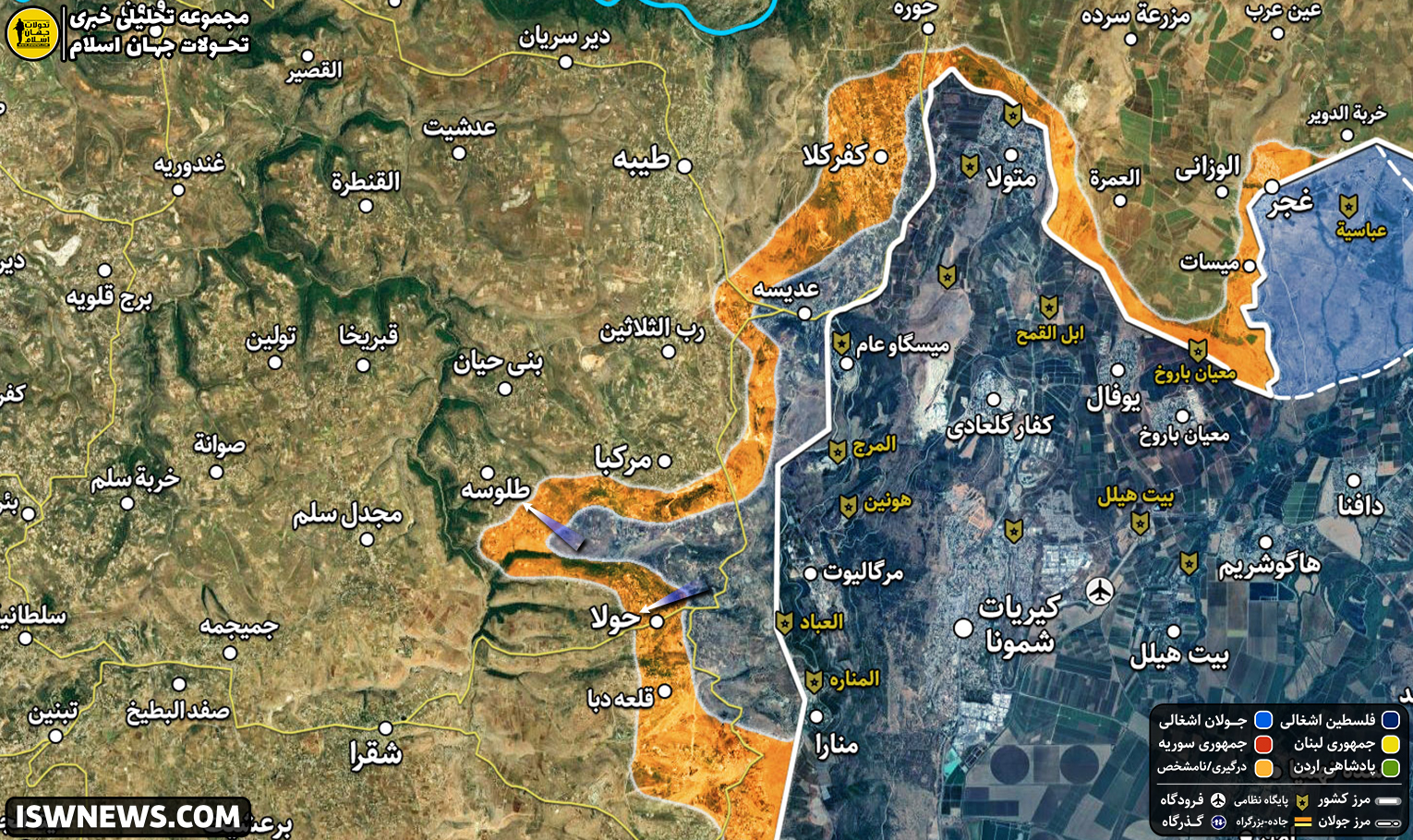
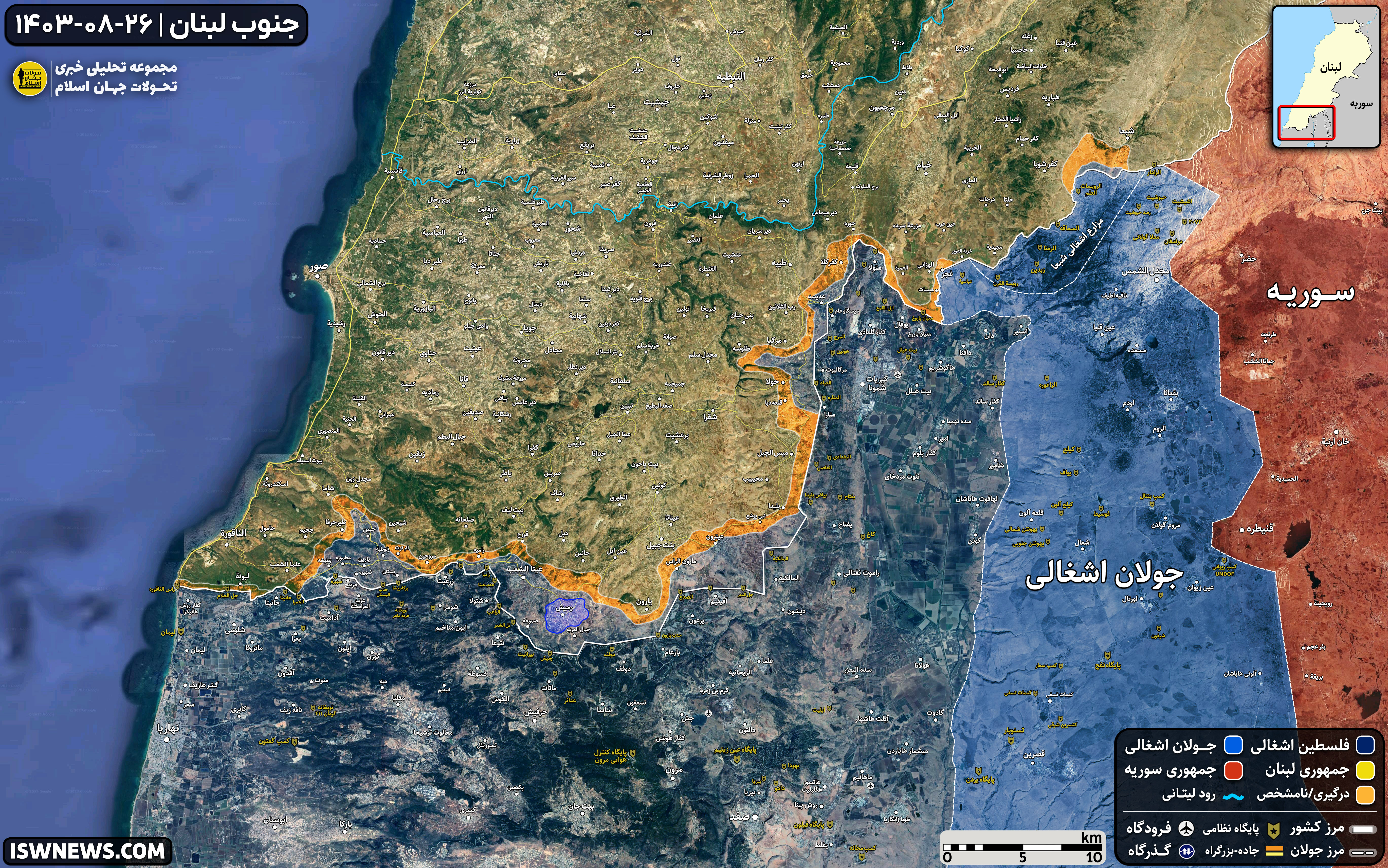
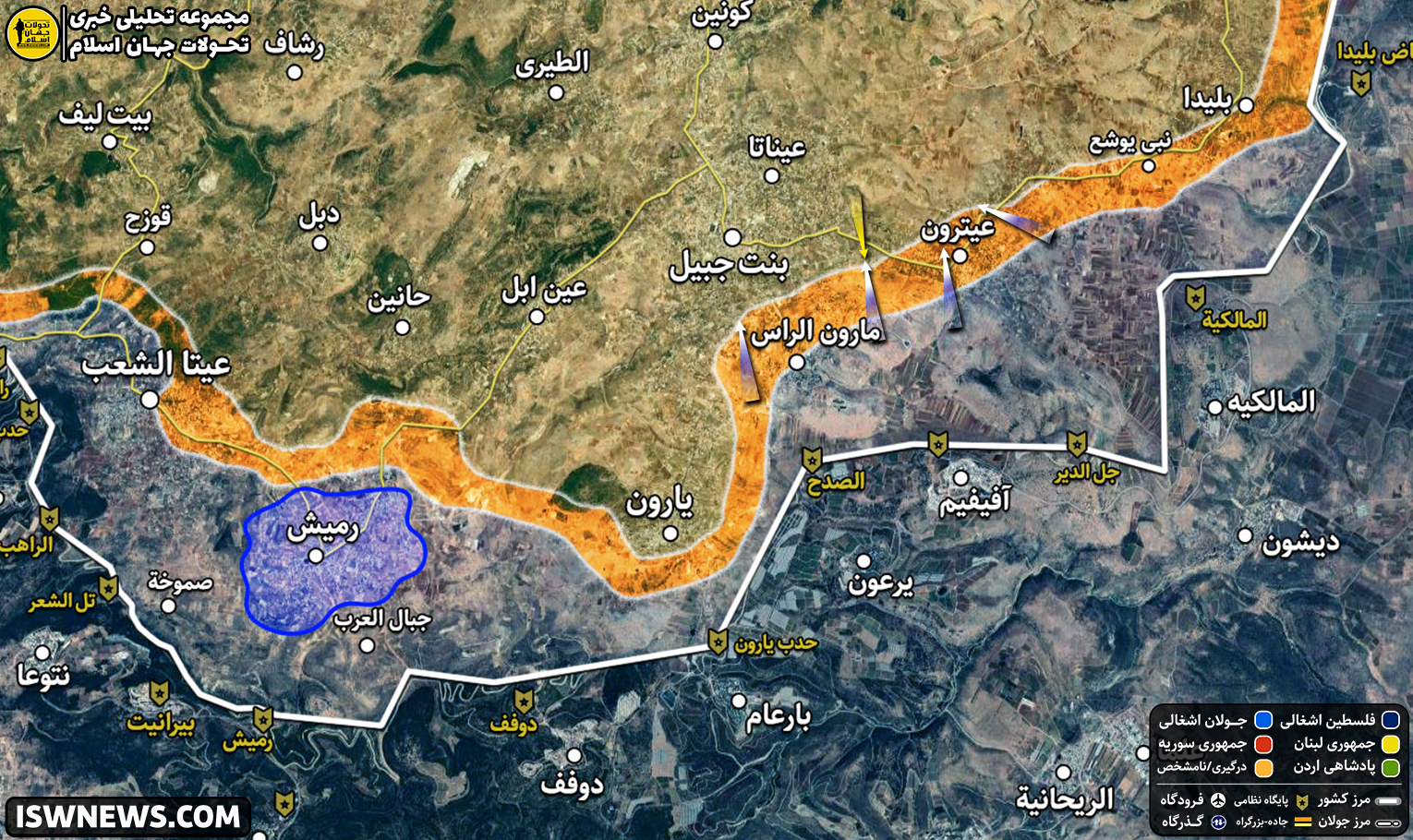
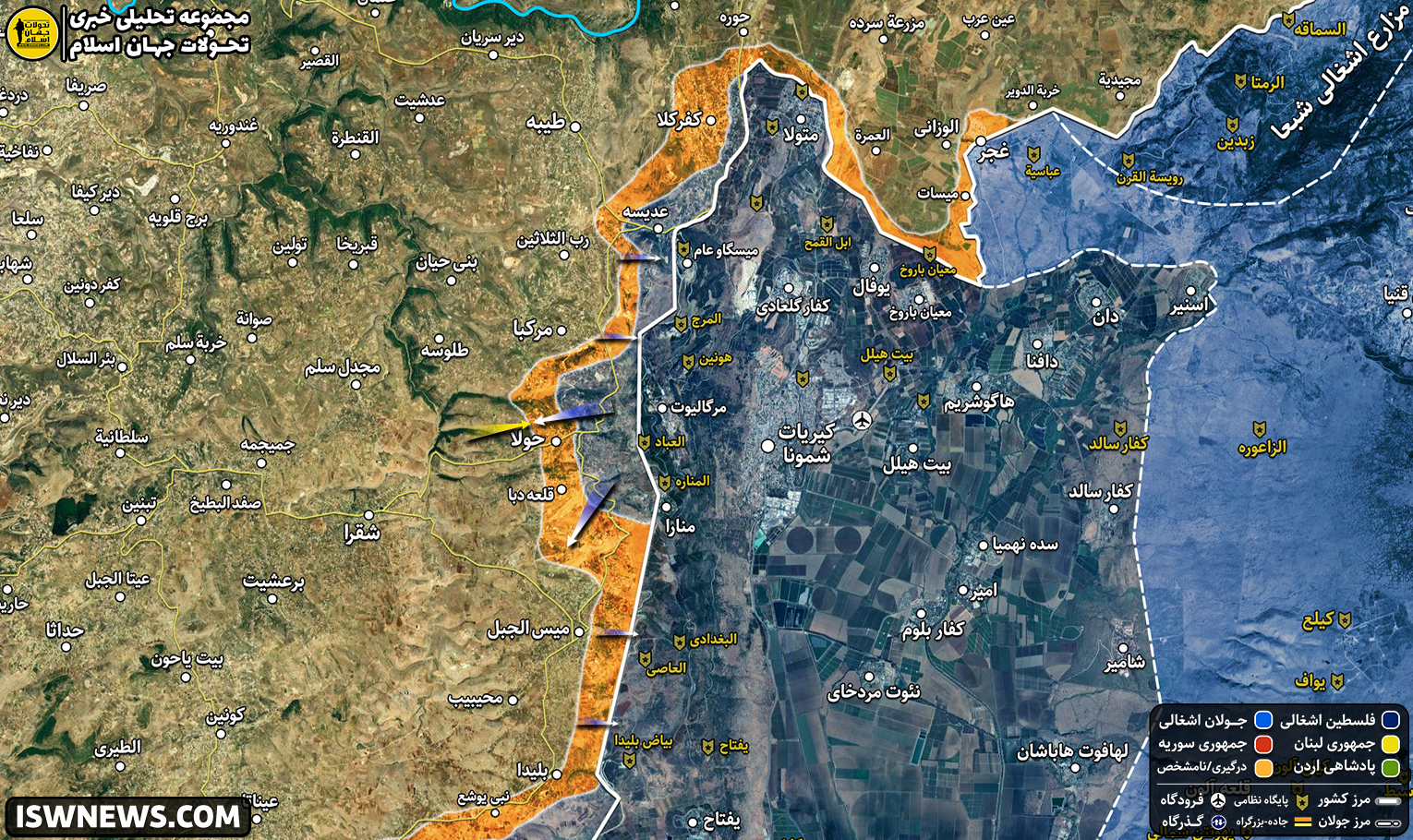
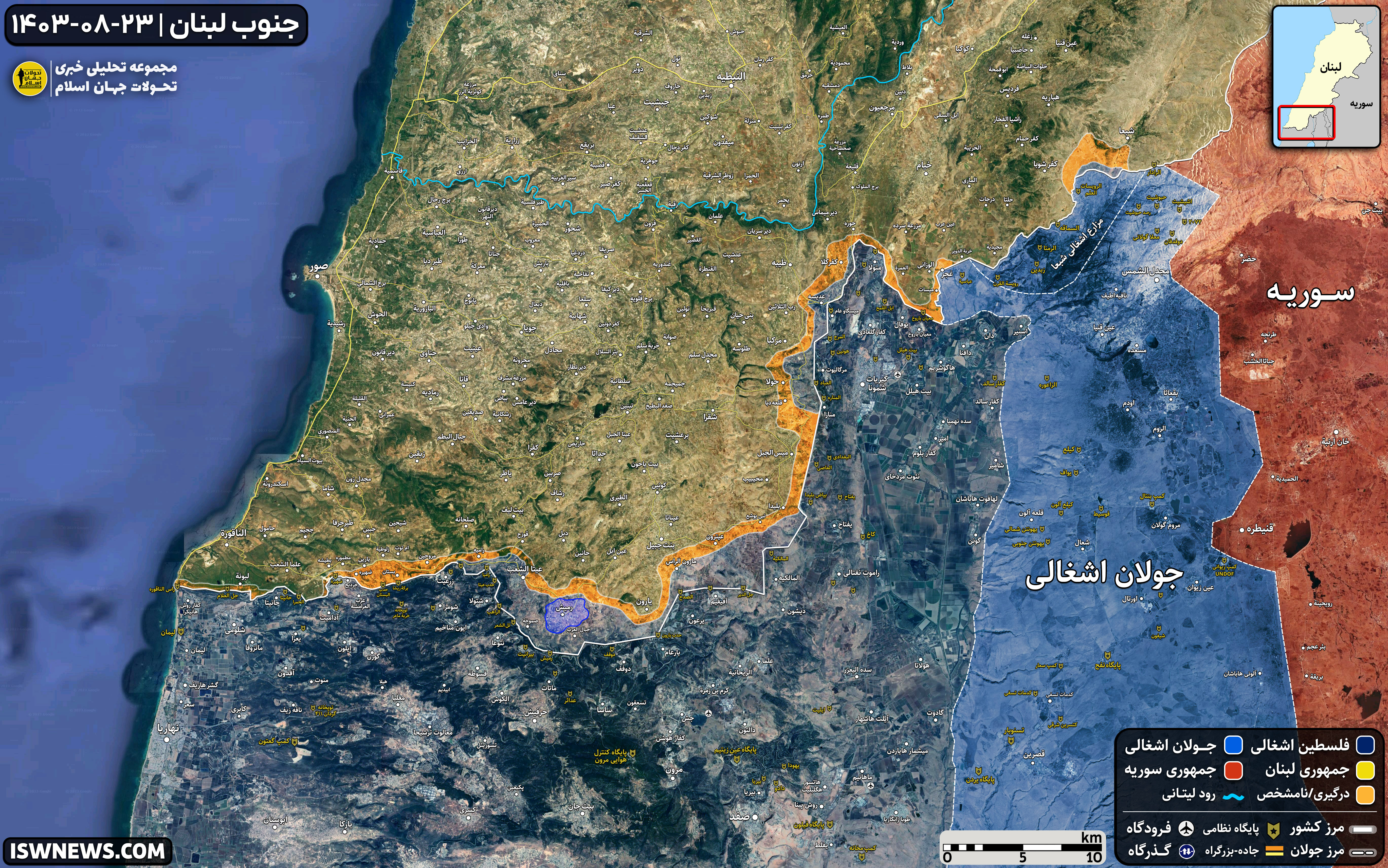
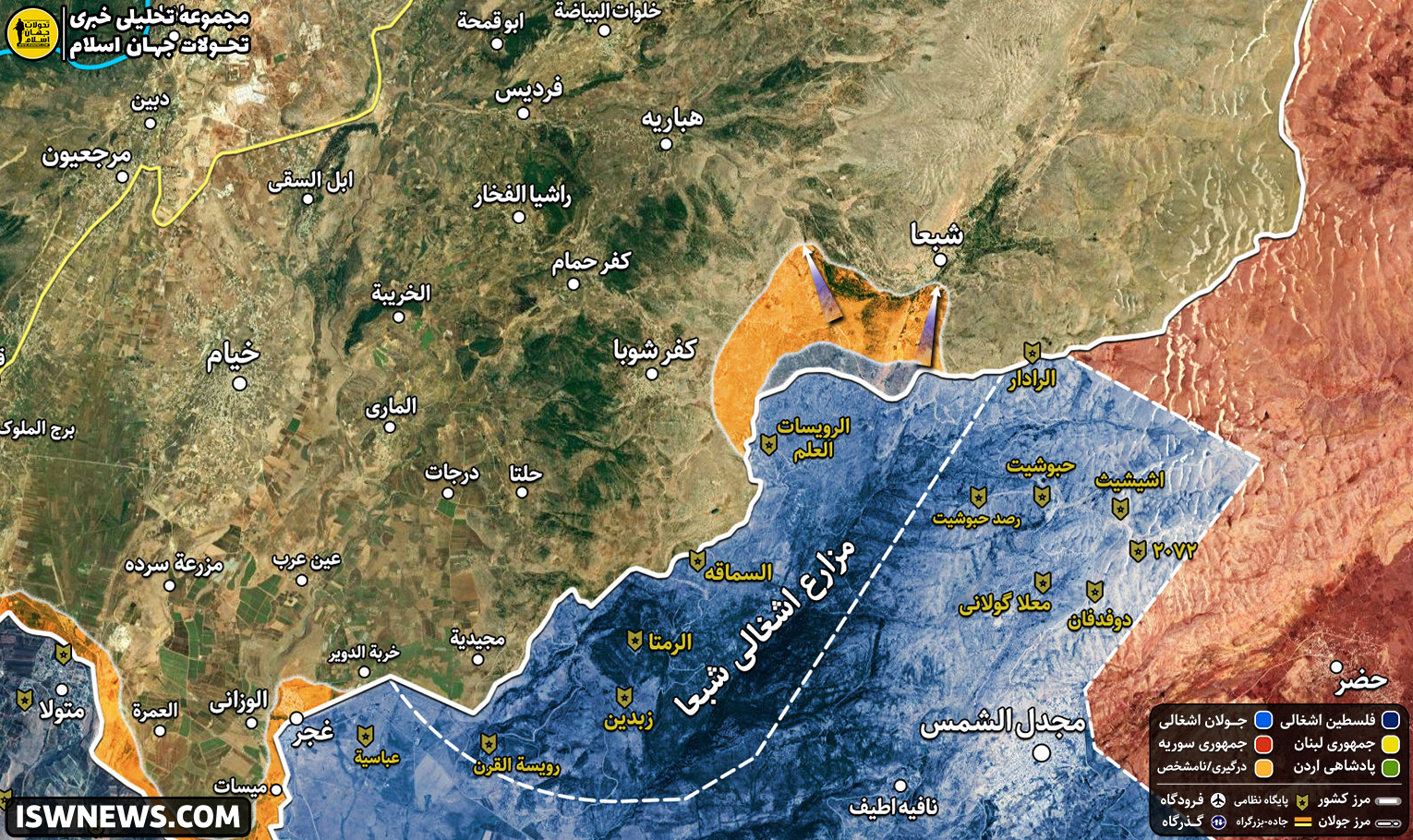
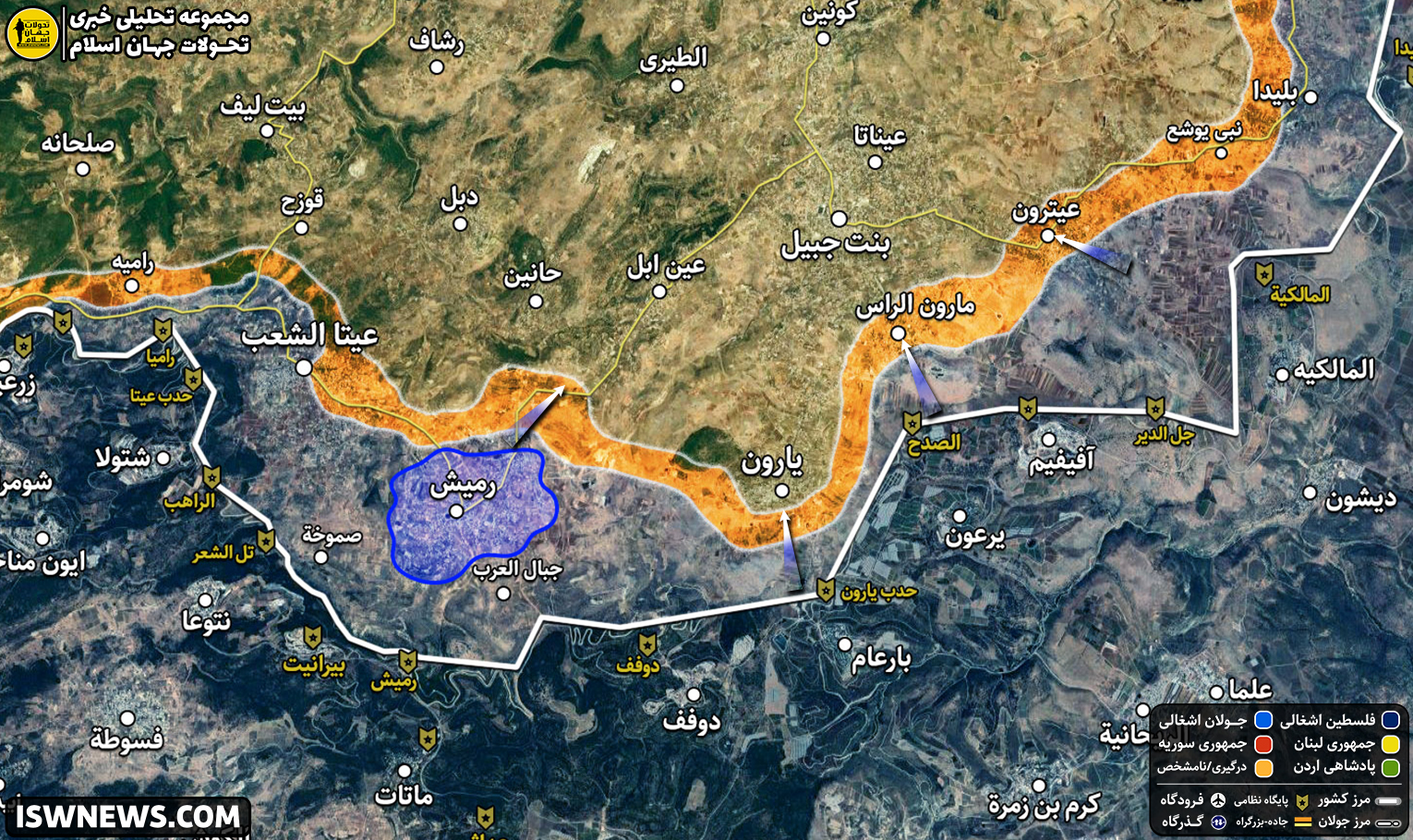
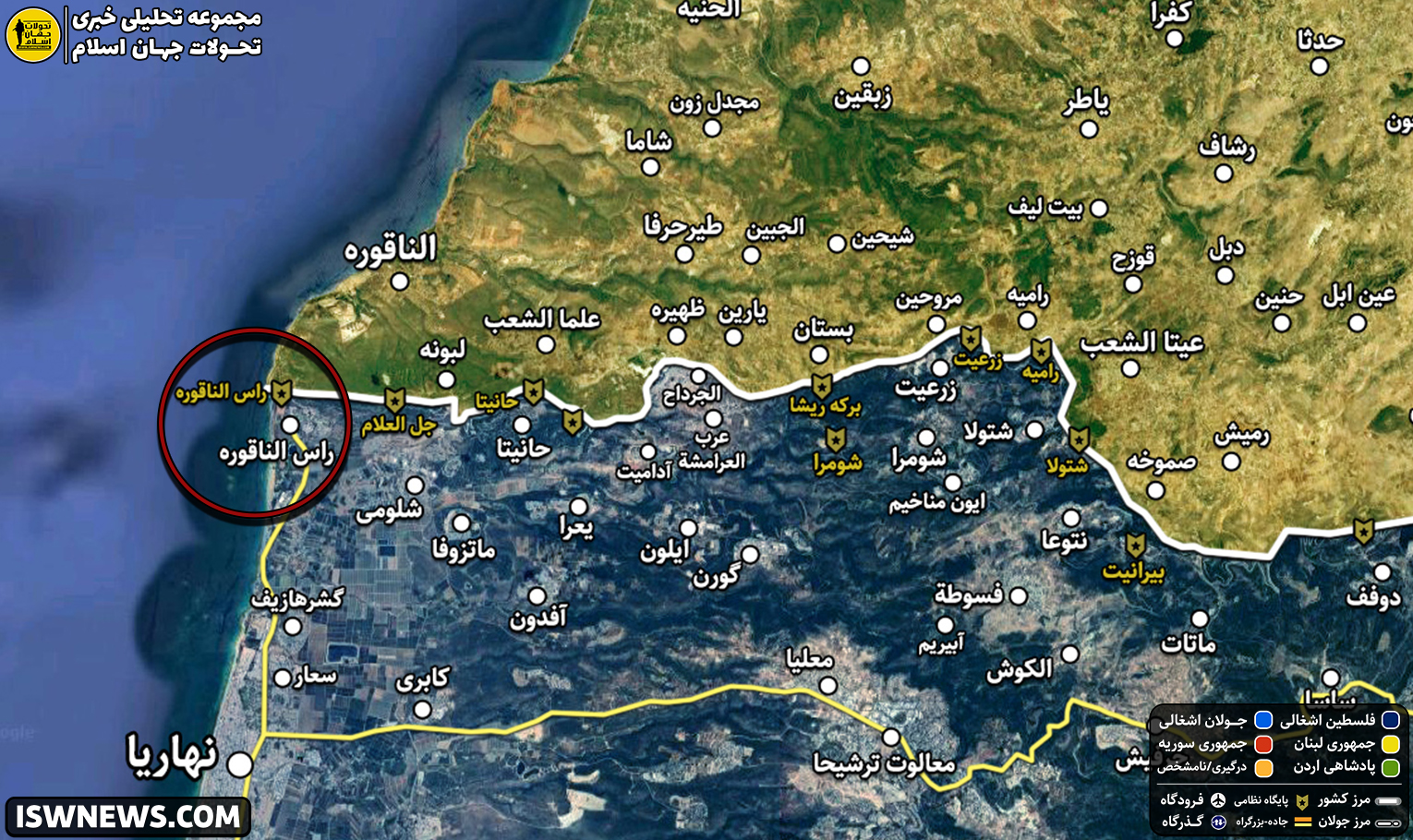
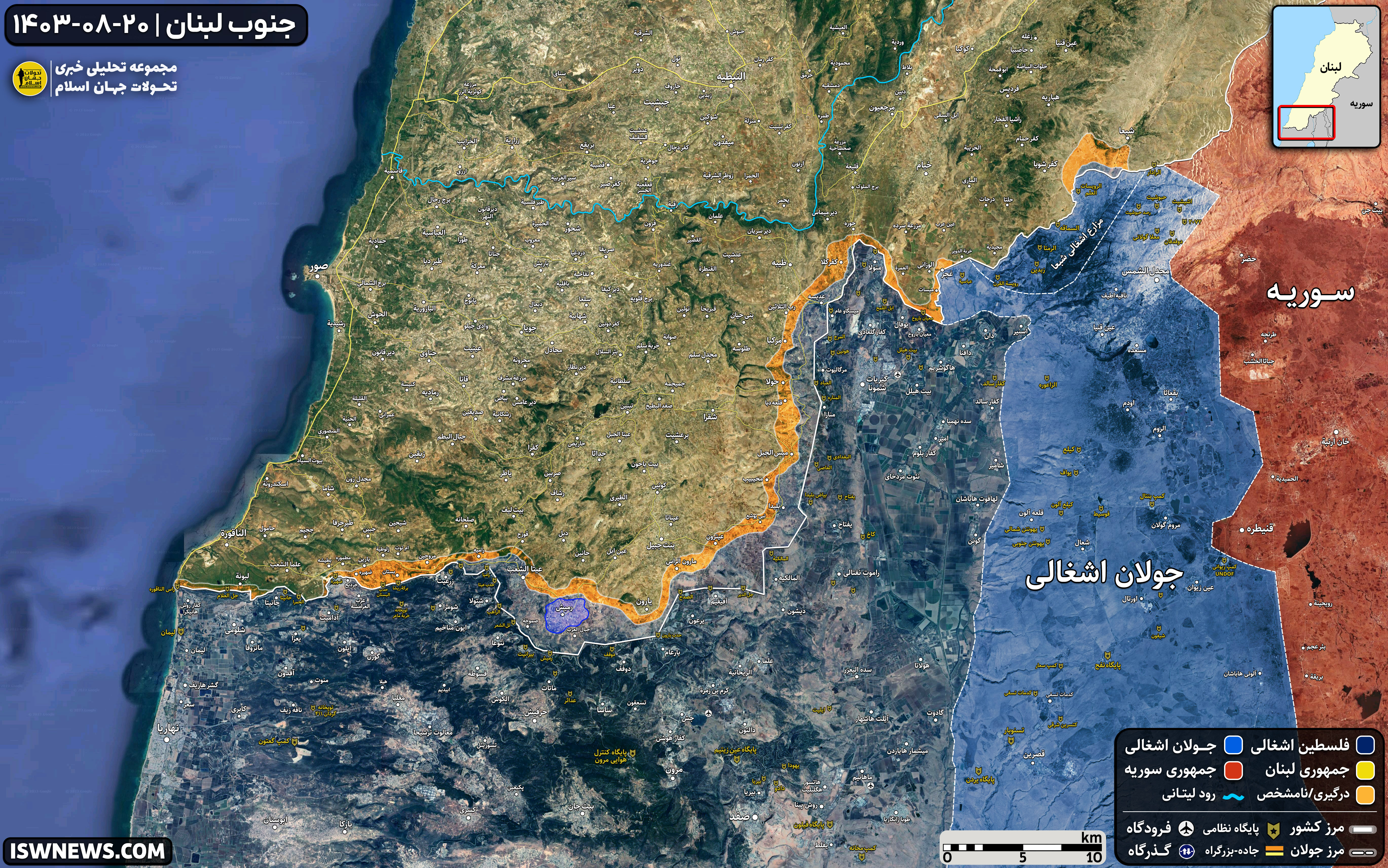
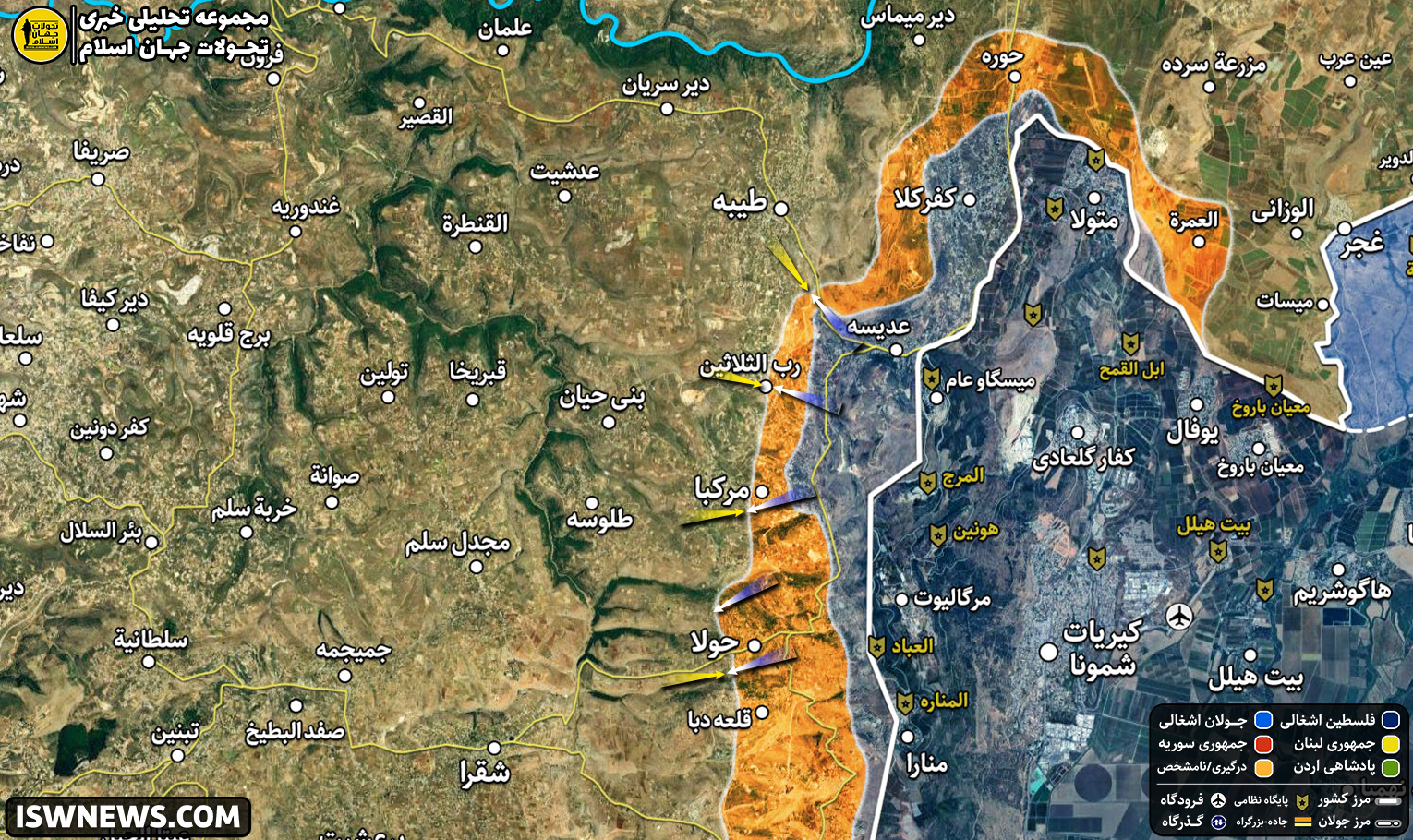
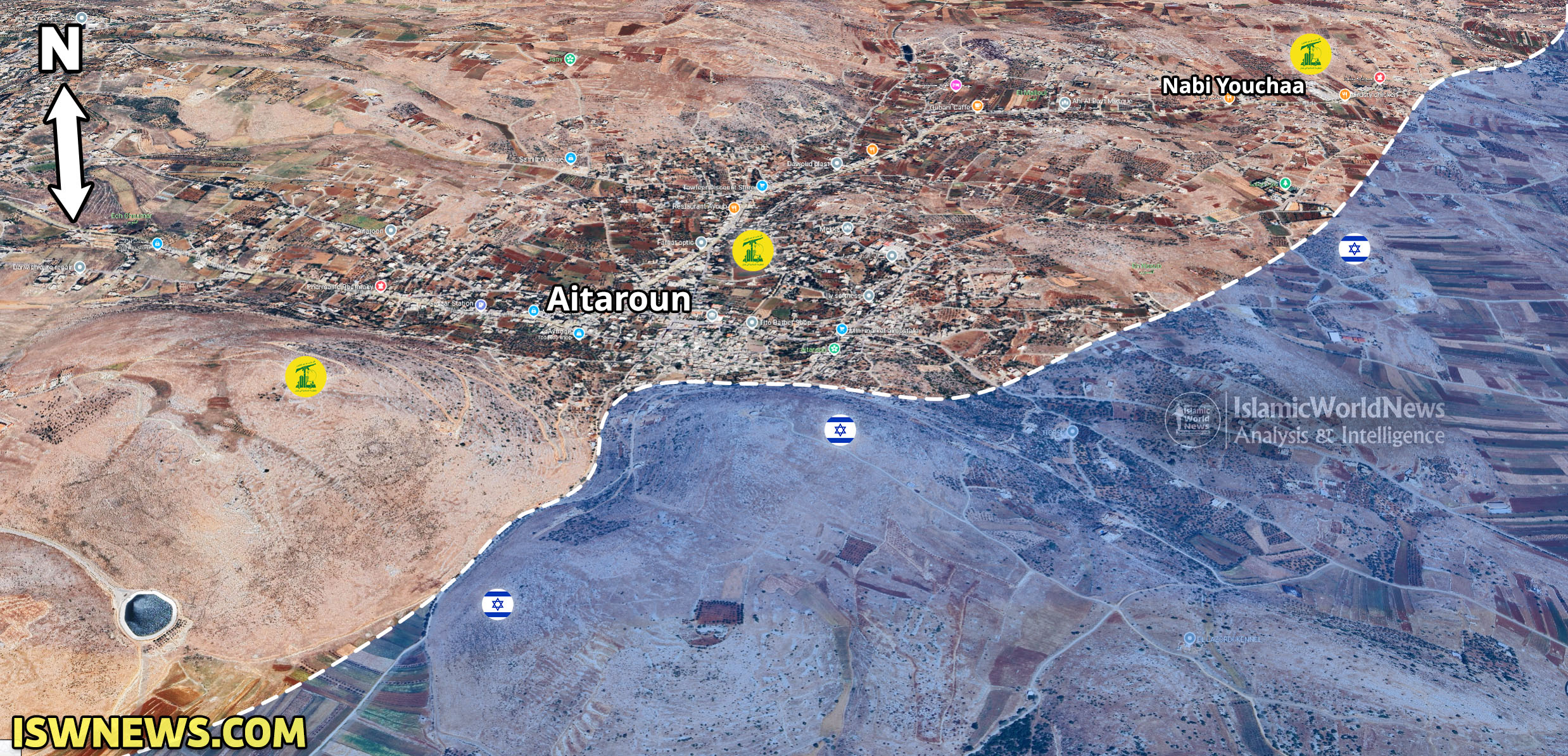
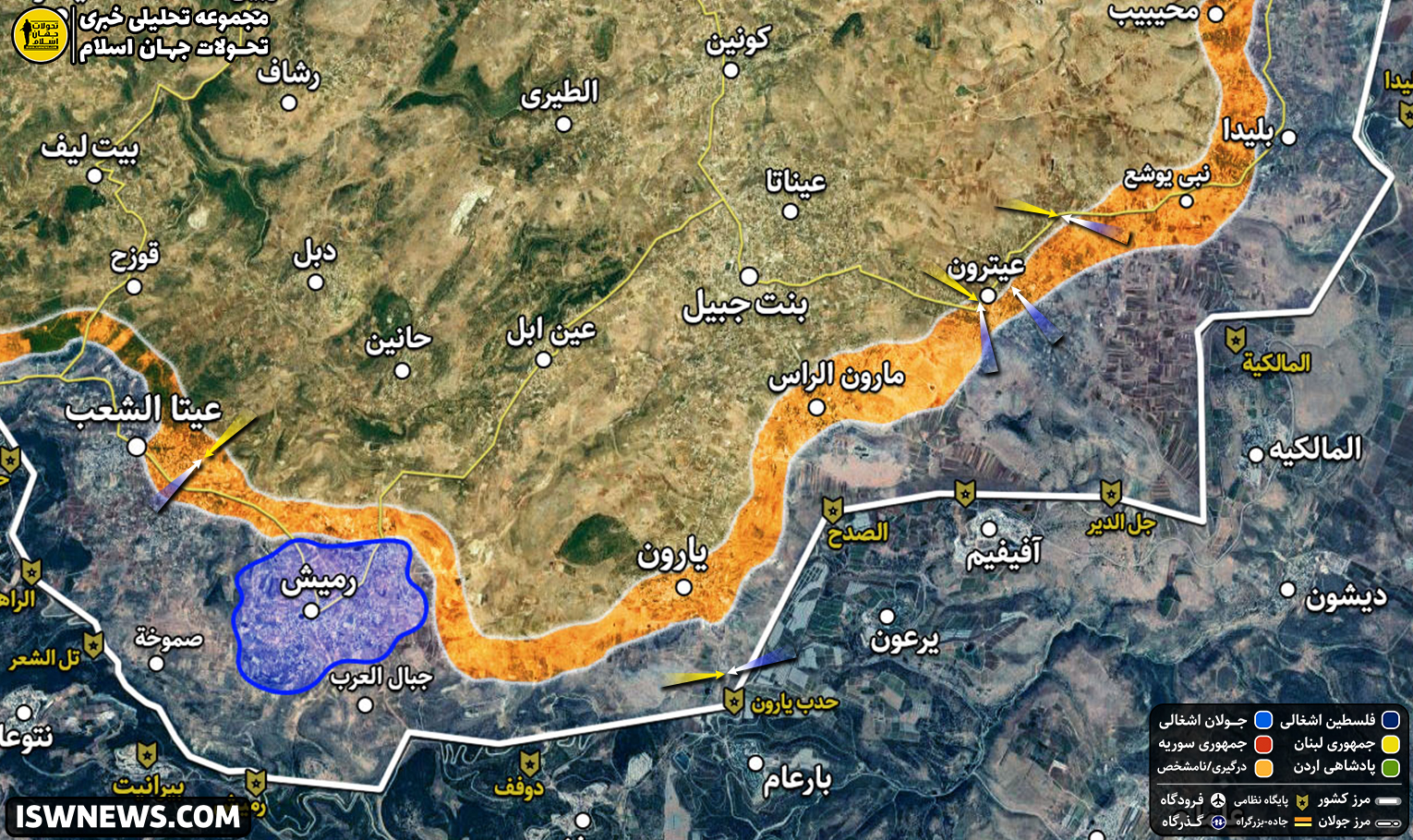
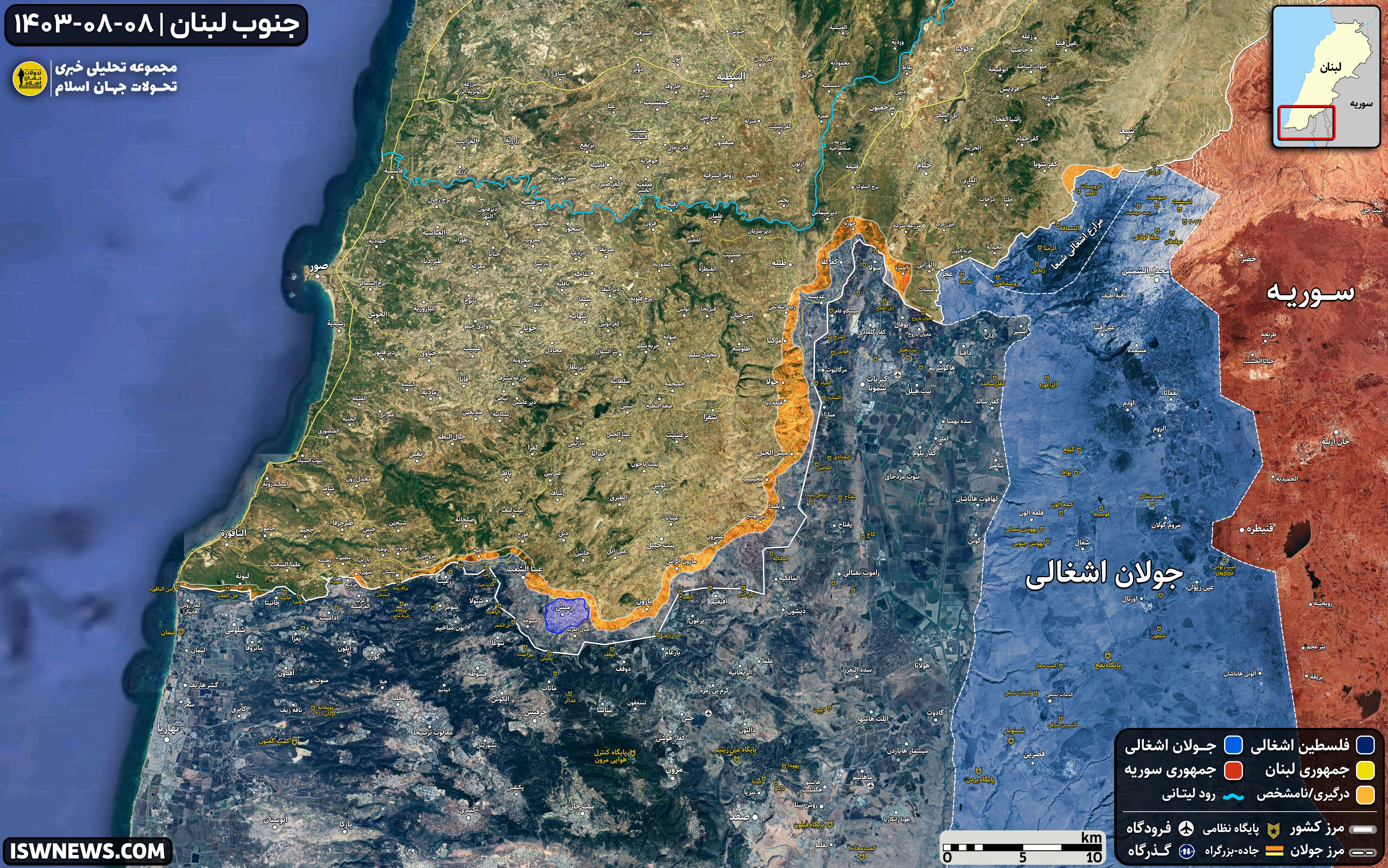
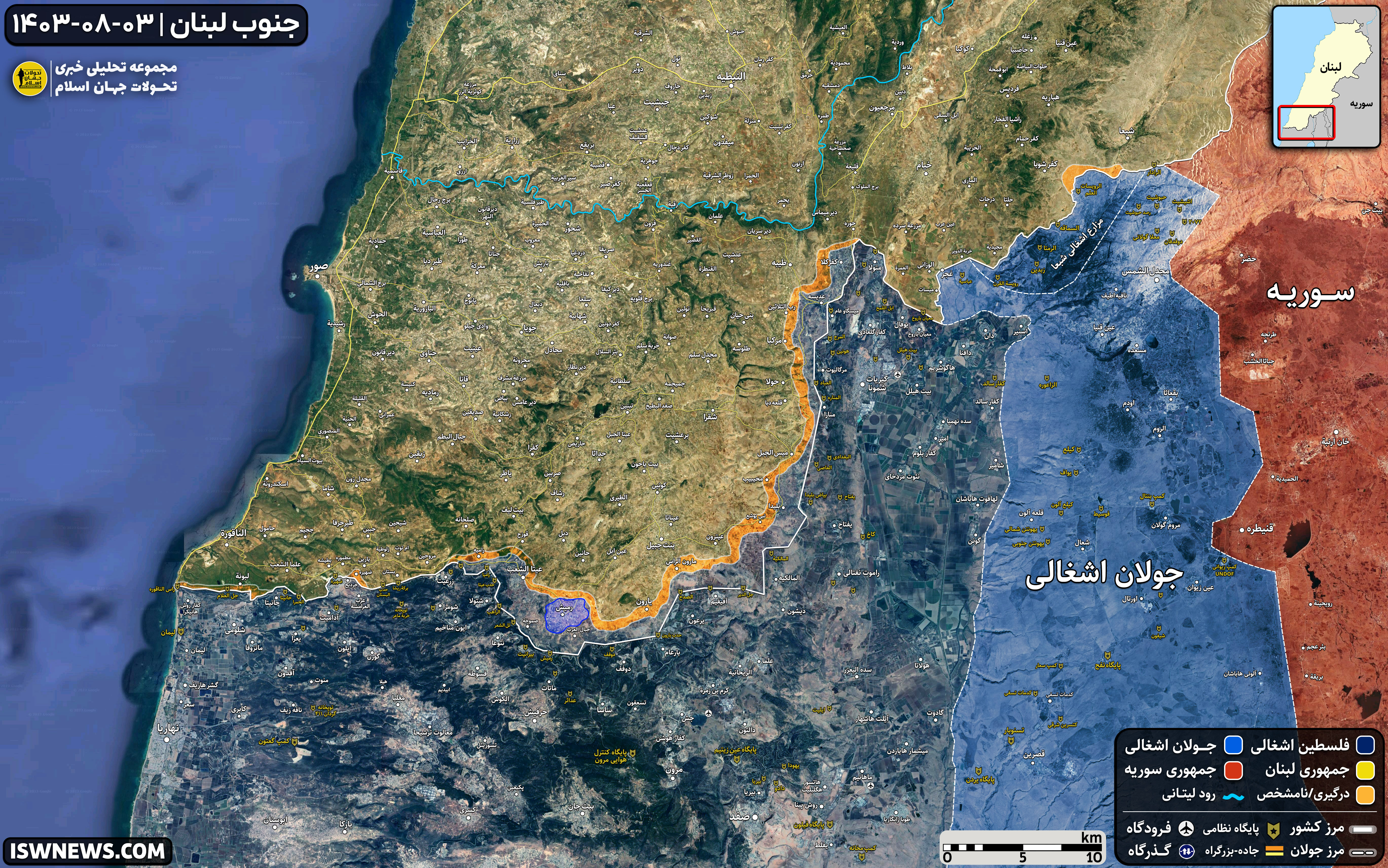
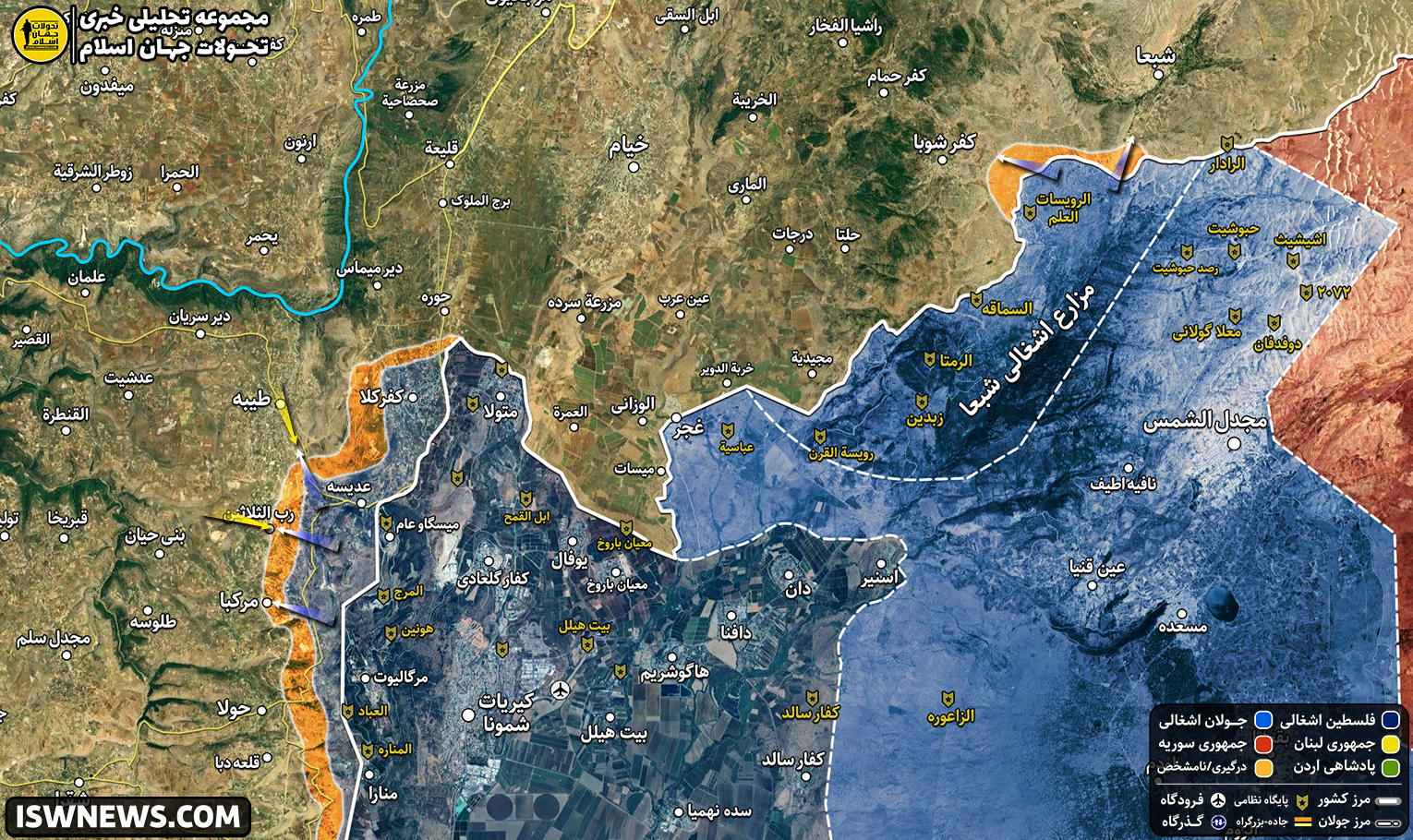
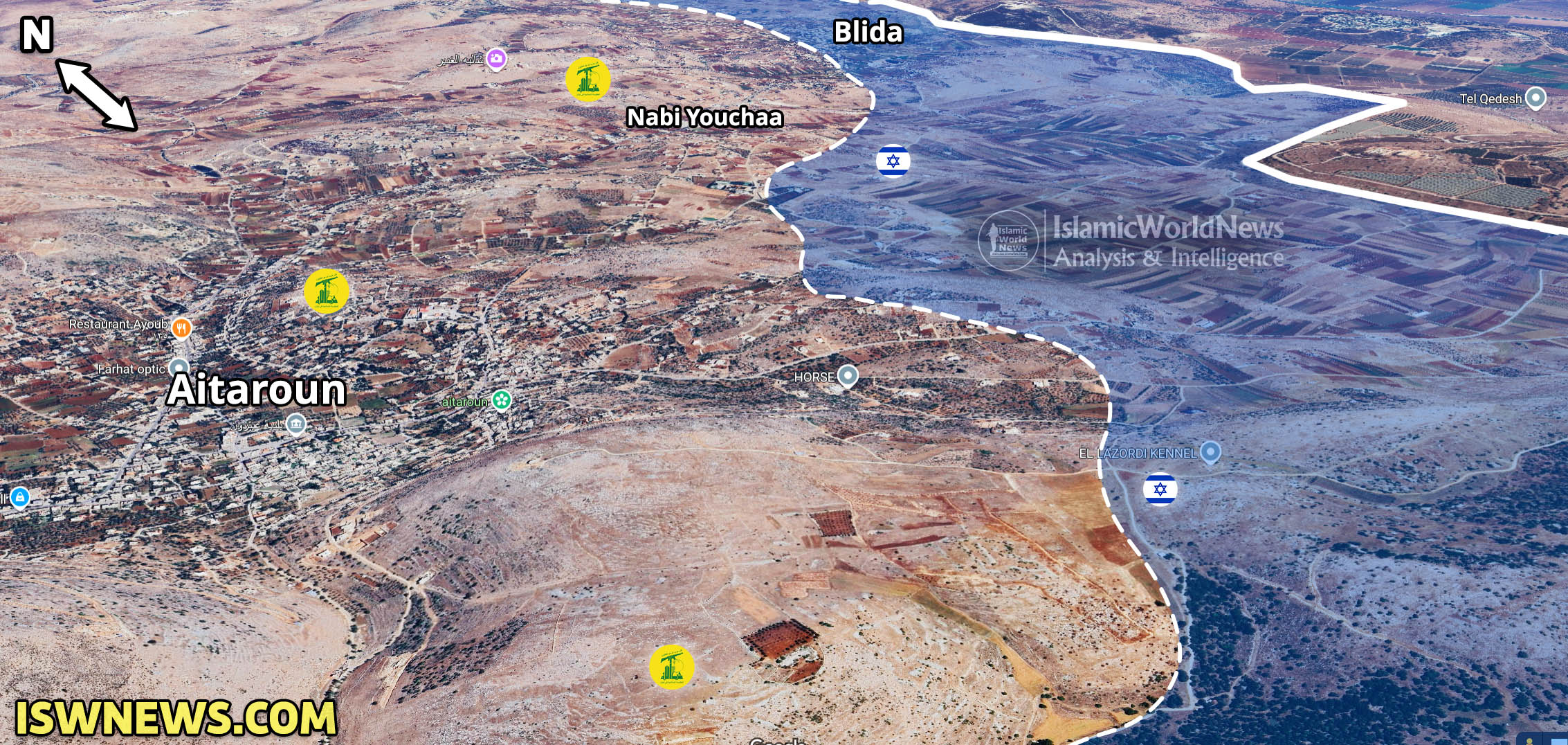
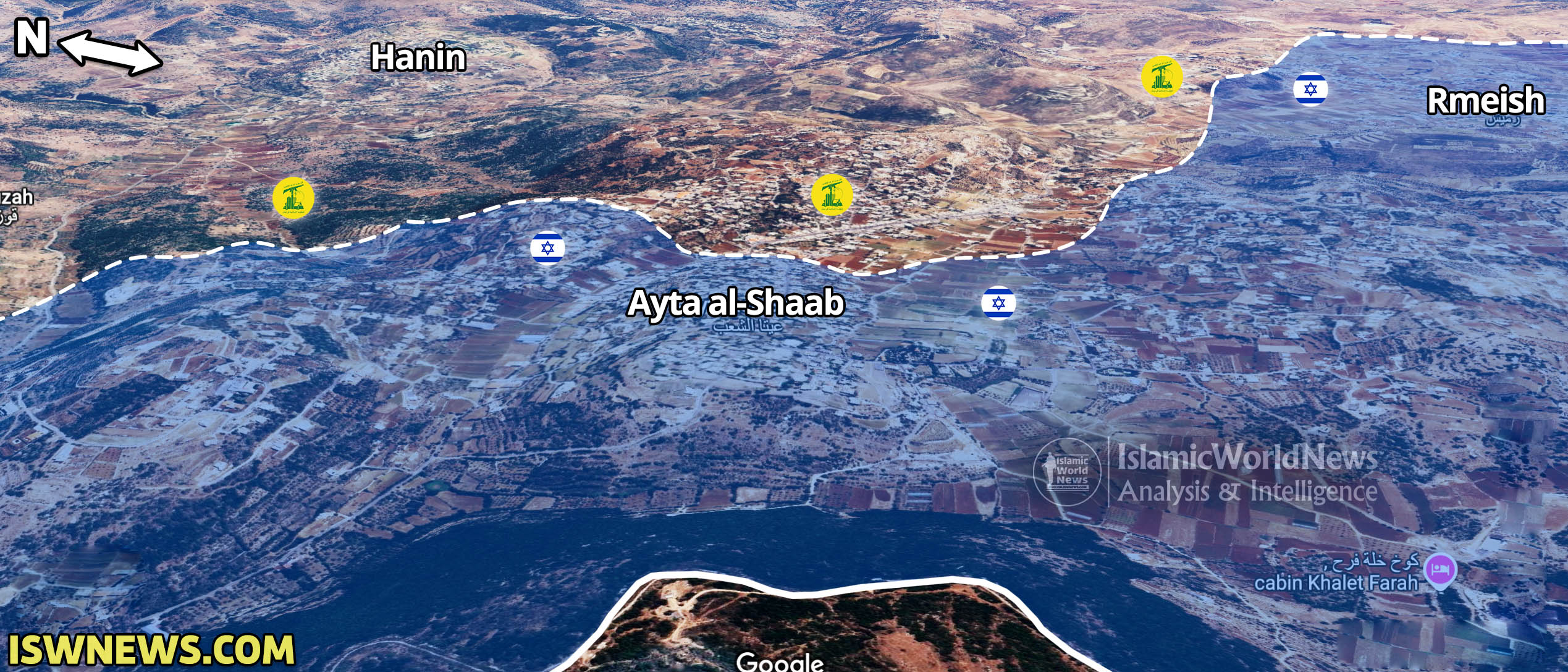
The five locations where Israeli troops are stationed in Lebanese territory are as follows: Tel al-Hamamis south of the town of Khiam, Jabal al-Dawawir between Marbakah and Houla, Jabal al-Dair south of Aitaroun, Jabal al-Balat between Ramieh and Marwaheen, and a base located in the forests of Labuneh and Ulama al-Shaab.
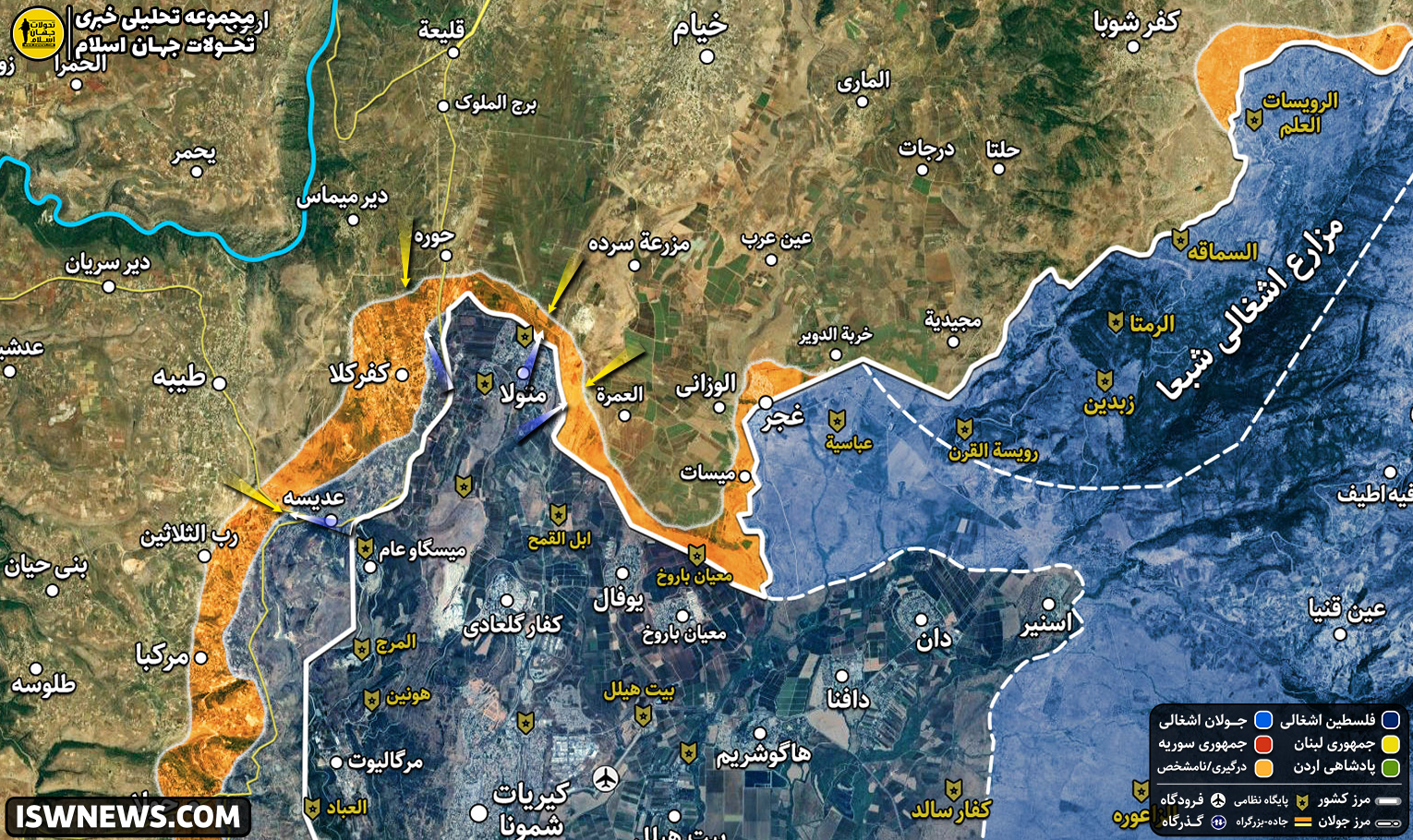
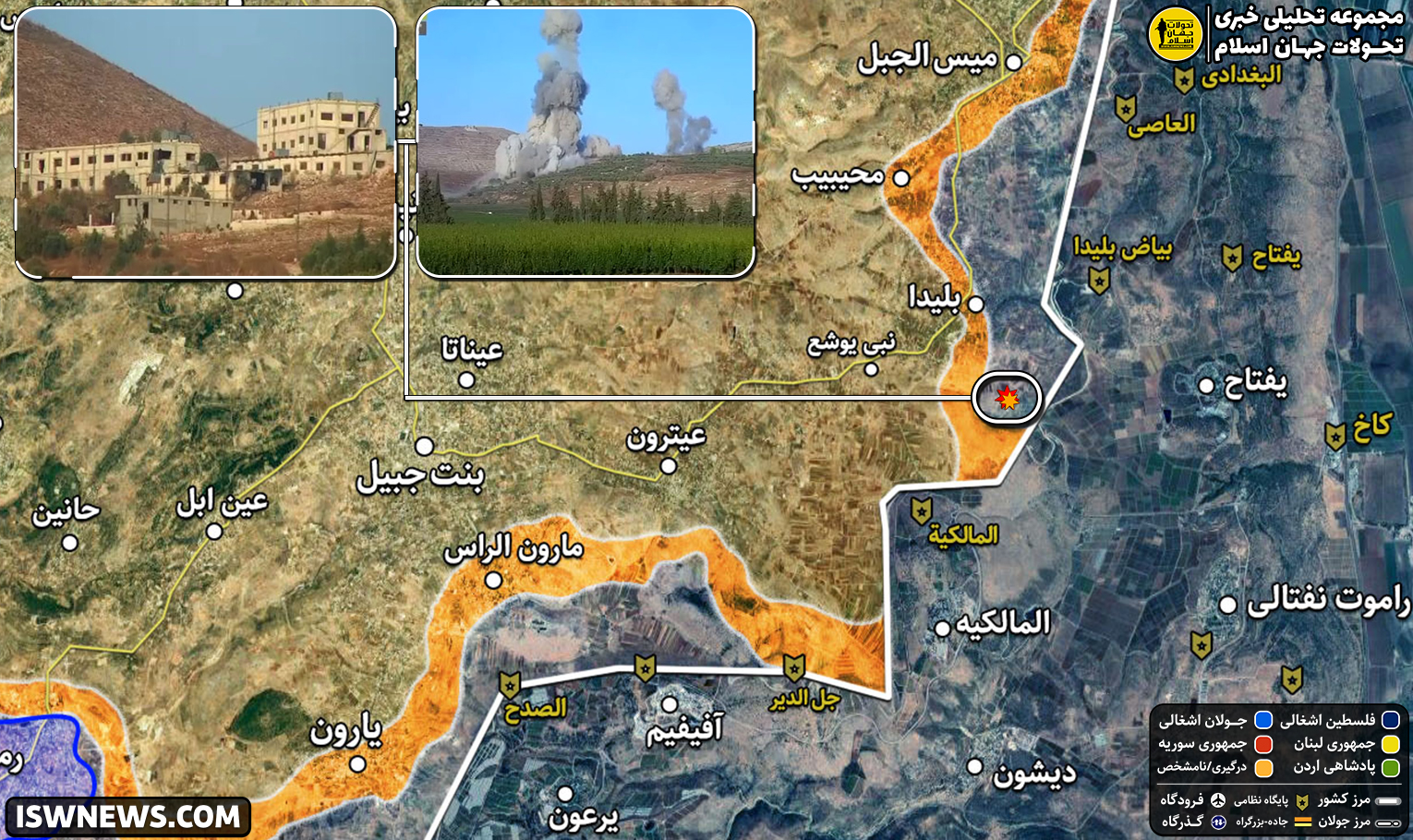
It is also noteworthy that the Israeli army regularly operates along all Lebanese border lines. They enter Lebanese territory at will—undeterred by the ceasefire and without regard for the Lebanese army—conducting bulldozing operations. For instance, in recent days, Israeli bulldozers entered Lebanese territory to destroy and clear areas around Blida.
The evidence suggests that, in addition to remaining at the five military points, the Israeli army is attempting to establish a shallow buffer zone along the border between Lebanon and occupied Palestine. All signs indicate that the Israeli army intends to maintain its presence in the occupied areas of southern Lebanon, potentially for an indefinite period.
Israeli army’s five military points in southern Lebanon
According to Lebanese media reports, the five points the Israeli army will continue to occupy after February 18 are:
Labounah-Alama al-Shaab forests
Jabal Balat, between Marwahin and Ramieh
Jabal al-Deir in the south of Aitaroun
The newly established base along the Marbakah-Hola road
Tel al-Hamamis in the south of Khiam
The areas where Israeli forces will remain in Lebanese territory
These areas were crucial for Hezbollah’s operations over the past year, as they were used to attack Israeli border bases and thwart Israeli ground attacks. Additionally, some of these areas held out until the last day of ground battles between Hezbollah and the Israeli army, only coming under Zionist control after the ceasefire agreement was implemented.
Lebanese authorities have reportedly rejected the deployment of Israeli forces in these areas during talks with American representatives. However, in practice, they are left with no choice but to accept Israel’s conditions due to Israel’s support from the United States and France, and the influence of the US, France, Qatar, and Saudi Arabia on Lebanese political positions.
The significance of these five points under Israeli control lies in the oversight and consolidation of Israel’s presence in Lebanese territory and border areas. This allows Israel to maintain control over Lebanon’s southern borders and eliminates their time and space limitations for actions against Hezbollah.
Following the ceasefire in southern Lebanon on November 27, 2024, the Israeli army continued its advance into southern Lebanon, entering many areas without facing conflict, which they had not been able to control during their battle with Hezbollah. Over the 57-day ground conflict, Hezbollah managed to prevent the Israeli military from expanding deep into Lebanon, even south of the Litani River, restricting the fighting to the southern Lebanese border strip.
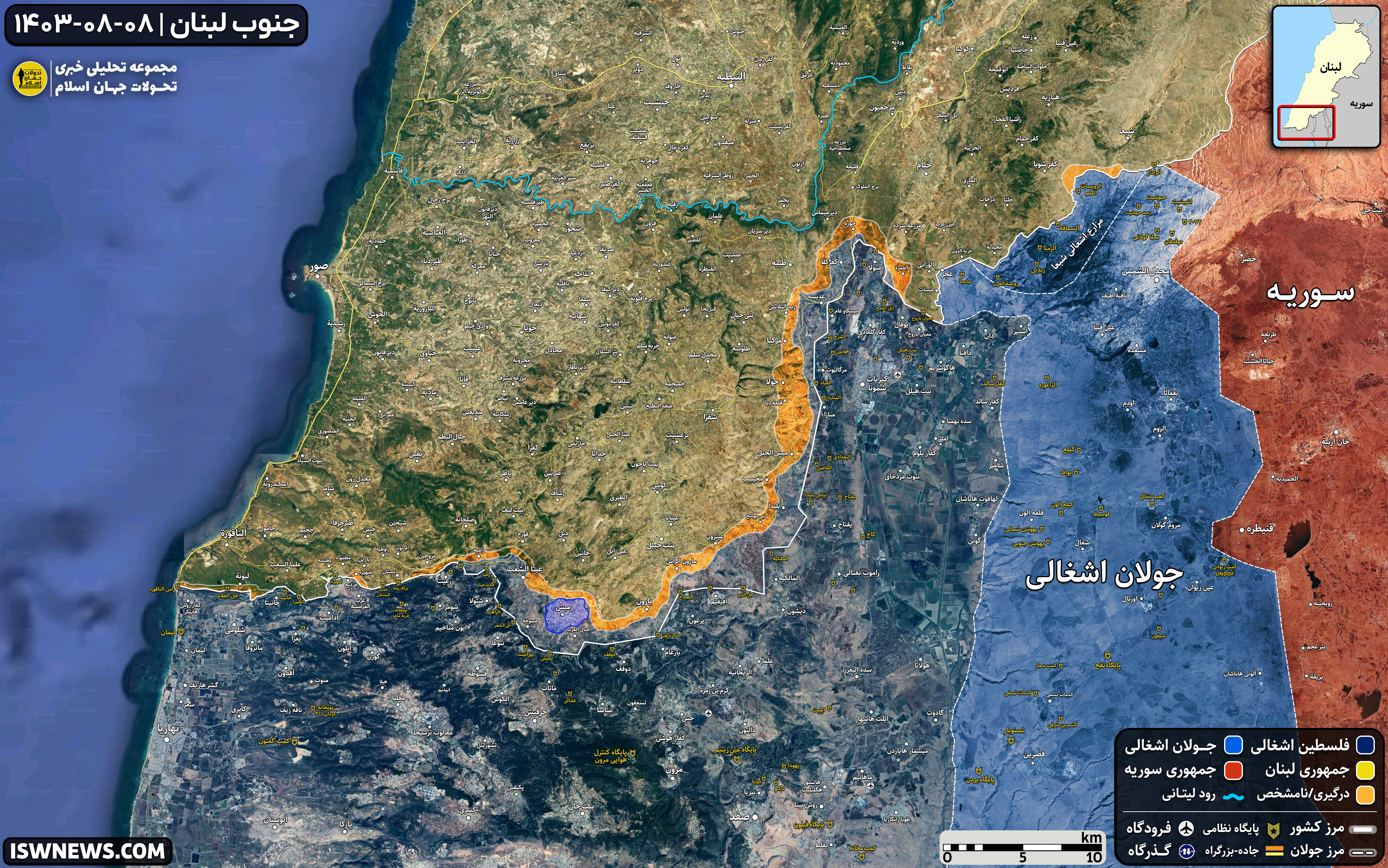
In total, considering the areas that came under Israeli influence during the ground battle and post-ceasefire, the Israeli army has so far withdrawn from the areas and villages of Shamaa, Tayrharfa, Shiheen, Al-Jubain, Al-Naqurah, Hamul, Bani Hayyan, Kfarshoba, Shabaa, Deir Mimas, Houla, Meis Al-Jabal, Marun Al-Ras, Aitaroun, Yaroun, Dhahira, Yarin, Umm Tut, Zalutiya, Taibah, Deir Saryan, Beit Leif, Haninne, Qantara, Ramieh, Aita Al-Shaab, Rmaish, and Quzah.
According to the ceasefire agreement, these areas have been handed over to UNIFIL forces following the withdrawal of Israeli troops and are now under the control of the Lebanese Army.
Recent reports indicate that the towns and villages of Labouneh, Marwahin, Bustan, Blida, Muhaibib, Markabah, Kafr Qala, Udaysah, Rab al-Thalathin, Tallusah, Tel al-Hamams, al-Wuzzani, al-Abbasiyyah, and al-Majidiyah are still under Israeli control or influence.
As per the ceasefire agreement, the Israeli army was supposed to evacuate these areas within 60 days, by January 26, 2025. However, this did not occur, and the Lebanese government, under pressure from the United States, accepted an extension of the Israeli withdrawal deadline to February 18.
Nevertheless, Hezbollah’s Secretary General and its military command’s Operations Room have stated they do not accept this delay. They assert that the United Nations, the agreement’s supporting countries (the United States and France), as well as the Lebanese government, army, and people must oppose the Zionist occupation.
Given Israel’s repeated requests for permanent deployment at three to five strategic points in southern Lebanon, it appears that Israel’s delays and excuses for not evacuating will continue. Israel’s main objectives are to completely devastate the border areas and reignite the conflict in southern Lebanon. With the Trump administration now in power in the United States, the West’s support for Israel has intensified, and any forthcoming conflict is likely to be more severe than before.
These attacks clearly violate the ceasefire agreement, indicating Israel’s disregard for the ceasefire and a resumption of conflict in southern Lebanon.
While such violations typically warrant a reciprocal response, Hezbollah has maintained patience and restraint, refraining from reacting to the escalating actions so far.
Israeli strikes
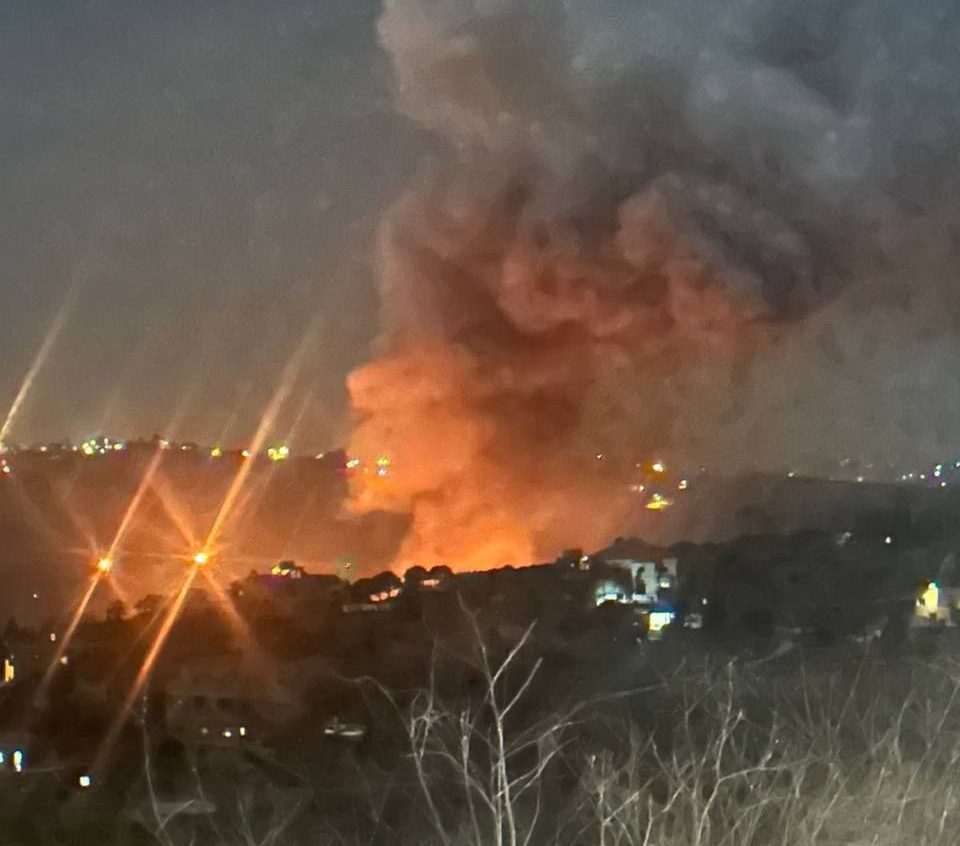
The Israeli regime has continued to violate the ceasefire agreement with Lebanon, which officially went into effect on November 27. Recent violations include airstrikes, territorial incursions, and attacks on civilians and infrastructure in southern Lebanon.
Amos Hochstein, the U.S. President’s special envoy to Lebanon, proposed a ceasefire plan that was approved by Hezbollah last week and announced to Lebanese government officials. Hochstein then traveled to Tel Aviv to brief Israeli officials on the proposal.
The Israeli cabinet is currently reviewing the ceasefire plan, with meetings to discuss the proposal starting this afternoon. The cabinet will vote to either approve or reject the plan, and Israel’s response to the ceasefire proposal is expected to be announced in Prime Minister Netanyahu’s upcoming speech.
The Lebanese government will also hold a meeting tomorrow morning to approve the ceasefire agreement.
The details of the agreement have yet to be disclosed, but recent discussions have centered around a 60-day, phased agreement that could be expanded in future rounds. Key topics in the negotiations have included:
1- Israel has demanded freedom of action in Lebanon, citing the ineffectiveness of Resolution 1701 in securing the northern borders. The Lebanese side, however, rejected this demand during discussions with Hochstein, considering it a violation of Resolution 1701. This point was the main source of contention in the negotiations.
2- Lebanon has requested the international community to establish a permanent land border along the Blue Line in southern Lebanon to prevent contact between Lebanese and Israeli forces. Lebanese officials have voiced concerns about deploying multinational forces for the ceasefire monitoring mission in Lebanon, preferring the presence of forces from an Arab country. On the other hand, Israel favors the deployment of forces from Western countries, and some progress has been made with the involvement of French and Italian forces.
3- The return of Lebanese refugees is contingent upon Israel’s withdrawal from Lebanese territory. Israel, however, does not accept this clause, arguing it lacks meaning without the return of displaced Zionists to settlements in northern occupied Palestine. Consequently, Israel has requested to remain in Lebanese territory for 60 days following the ceasefire’s implementation to ensure the peace process, a condition opposed by the Lebanese side. Nonetheless, Zionist media claim that Lebanon has agreed to this clause.
4- The release of Lebanese prisoners has been a significant topic of discussion. If Israel does not agree to release them, it could lead to the abduction of Israeli soldiers and a resurgence of conflict.
Although Hezbollah and Hamas leaders back the ceasefire agreement in southern Lebanon and northern occupied Palestine (Israel), there is discontent in both Lebanon and Palestine. Opponents, referencing Sayyed Hassan Nasrallah, argue that any ceasefire in Lebanon should also include a ceasefire in the Gaza Strip.
In Israel, Internal Security Minister Itamar Ben-Gvir and Finance Minister Bezalel Smotrich have been vocal in their opposition to the ceasefire agreement. However, it seems that the majority of the Israeli cabinet members are leaning towards voting in favor of the ceasefire plan.
Hezbollah utilized all its resources to support the Gaza Strip during the 14-month conflict with the Zionist regime, significantly engaging Israel’s military forces and alleviating pressure on Gaza. Despite these efforts, the war persisted. Resistance axis leaders believe that extending the conflict in southern Lebanon under the present conditions is not advisable. They view a ceasefire on this front as a beneficial move for the entire resistance axis.
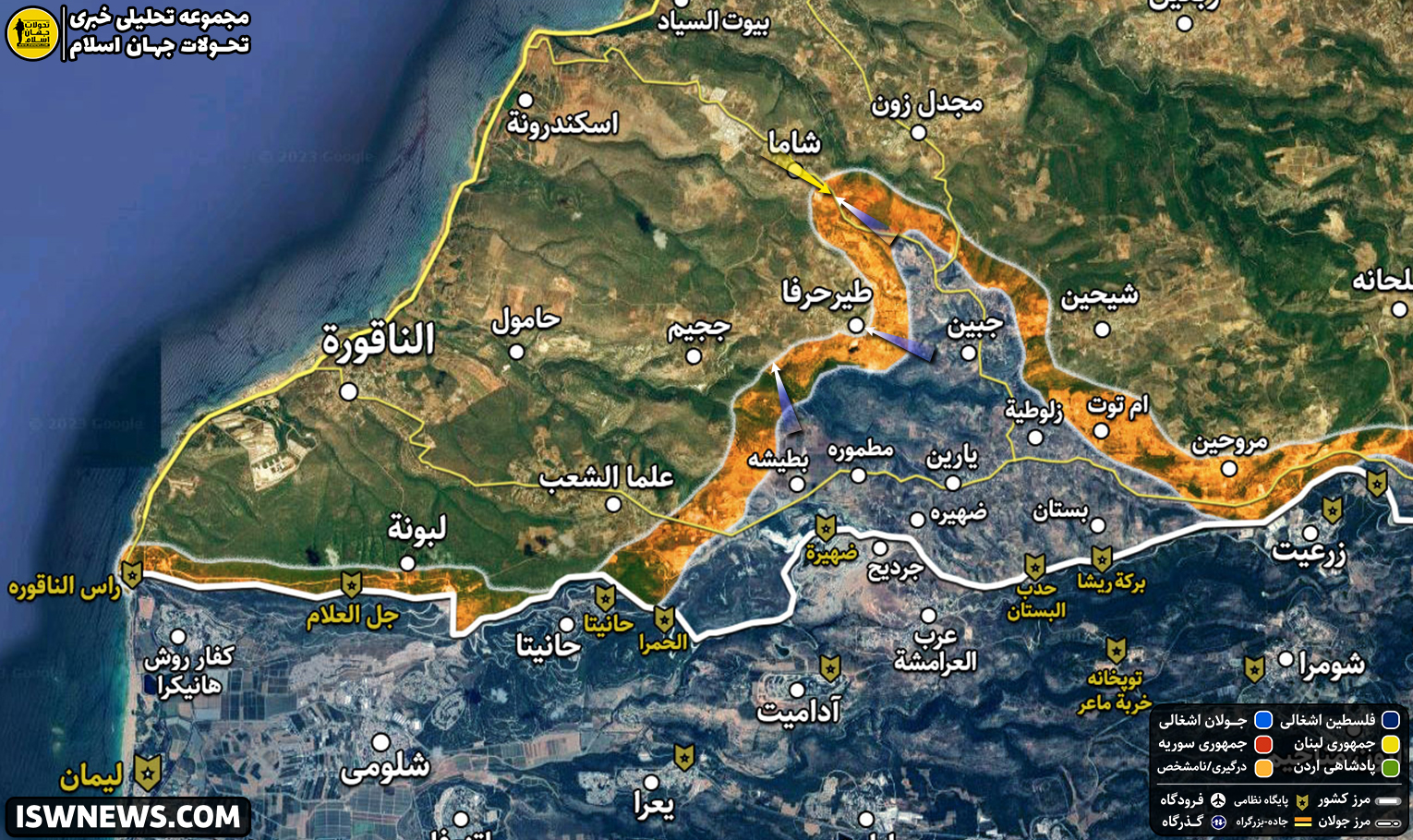
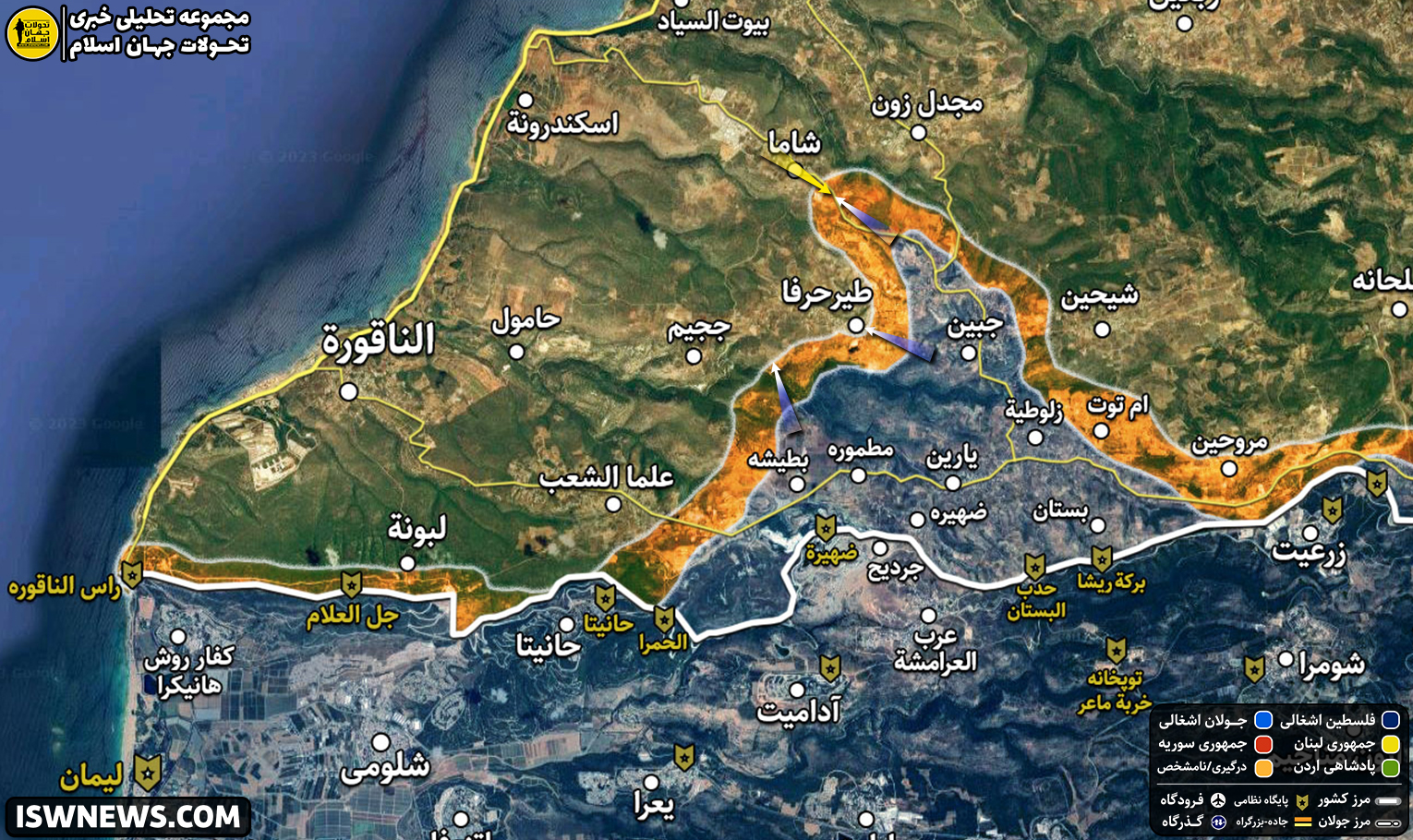
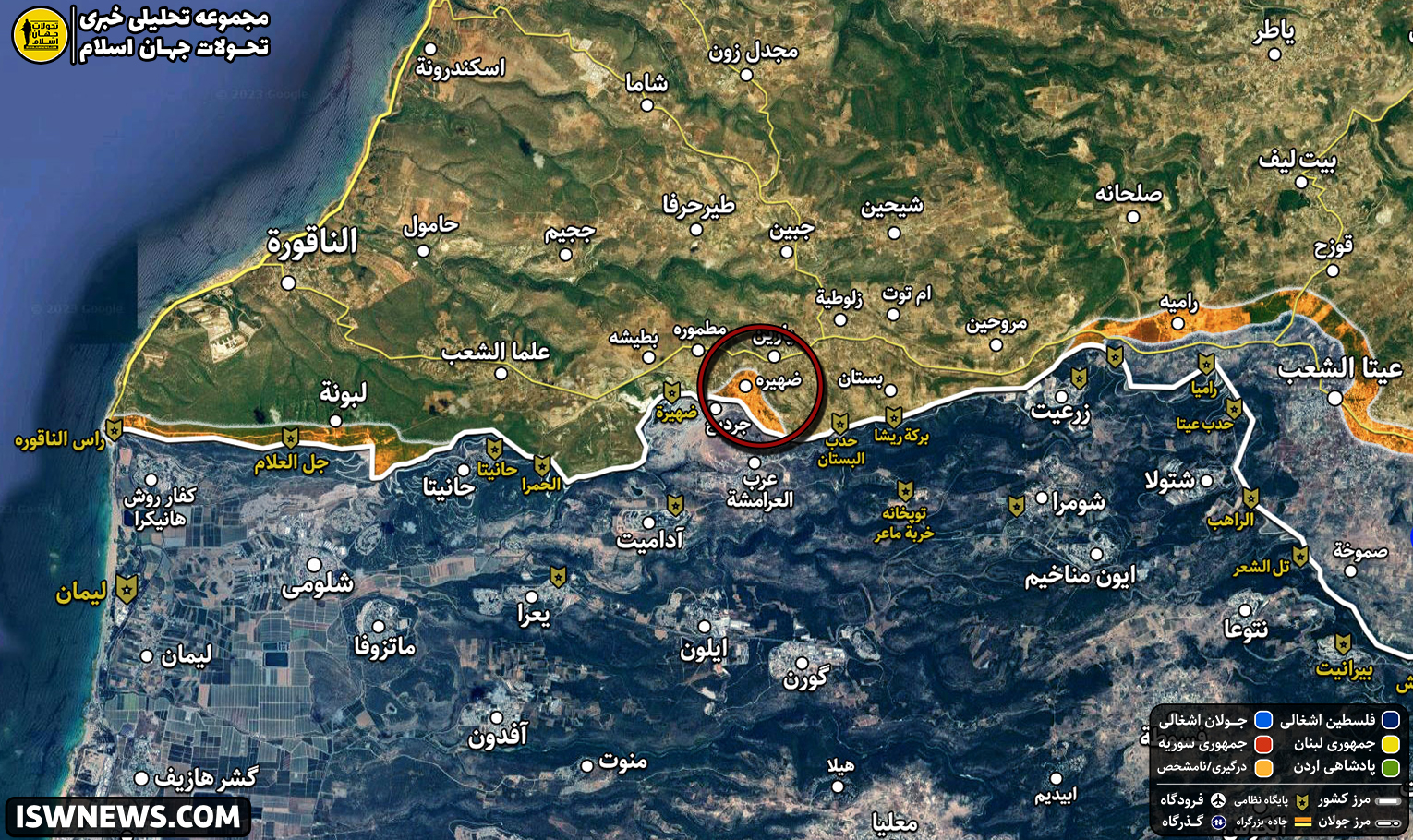
Al-Naqourah-Tayrharfa front: On Thursday, Israeli forces entered the villages of Yarin, Batisheh, Matmoura and Jibbain in the south Tyre district. As usual, they bombed and destroyed a part of residential and civilian buildings in these villages.
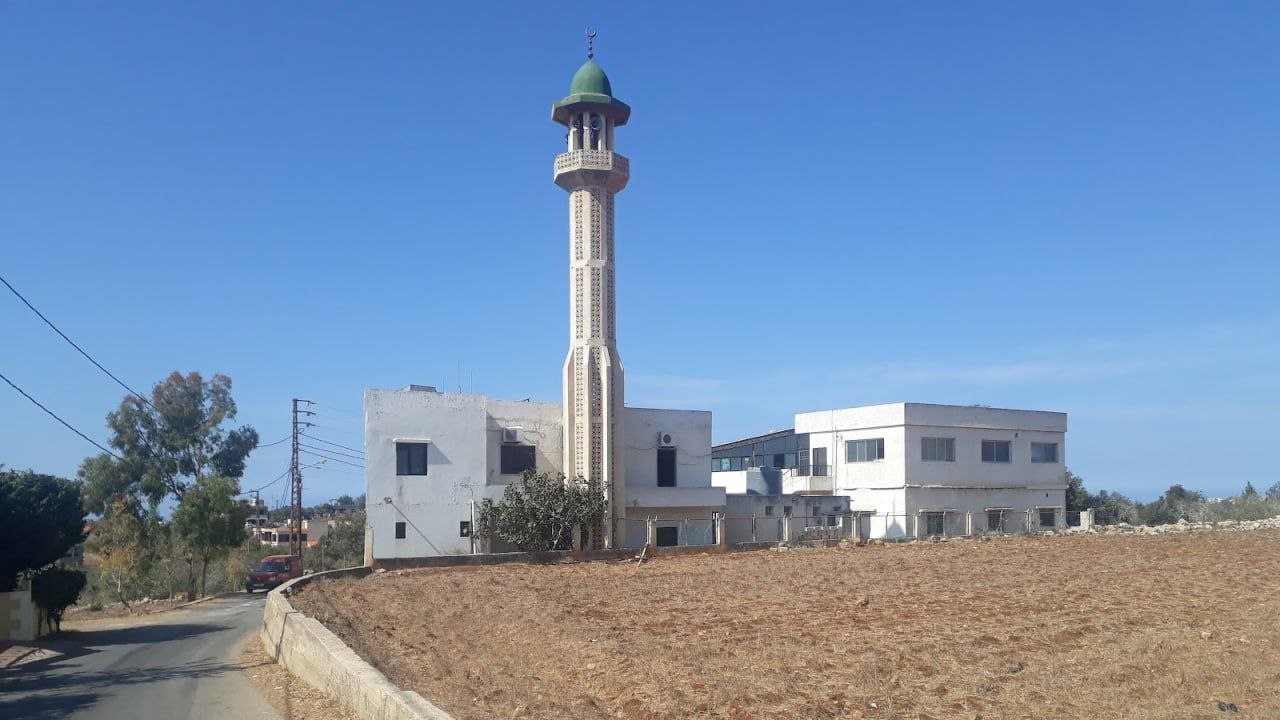
As usual, the Zionists bombed and destroyed the Nasser Salahuddin Mosque upon entering Yarin. Israel claims that Hezbollah uses this mosque and other mosques as a weapons depot and military center. But so far not even a picture has been published for these claims. Yarin Mosque is a single minaret mosque and it was built in the name of Salah al-Din Ayyubi and belongs to Ahl al-Sunnat Yarin and has no connection with Hezbollah.
Israeli army demolished Nasser Salahuddin Mosque in Yarin village
After passing through these villages, the Israeli forces attacked Tayrharfa and the historical village of Chamaa through Jibbain road and a local road in the north of Matmurah. The attack to the west of Tayirharfa faced resistance from Hezbollah fighters, while Israeli forces succeeded in taking control of the eastern areas of Tayirharfa.
Reports indicate that the Israeli army’s attack on Chamaa has been repelled. However, this repulsion was temporary, as the Israeli army resumed ground attacks in Tayrharfa and Chamaa this morning, November 16.
Video showing Israeli forces at the Shimon al-Safa shrine in the historic village of Chamaa.
During yesterday’s Israeli attacks on Chamaa, an artillery shell struck the UNIFIL headquarters in the village. Additionally, there was an unknown incident involving UNIFIL forces, which resulted in the death of one French soldier and injuries to three others. While UNIFIL has not provided details on this incident, it is likely that it was caused by the Israeli artillery strikes.
Latest military situation in Naqourah front – click to view full size
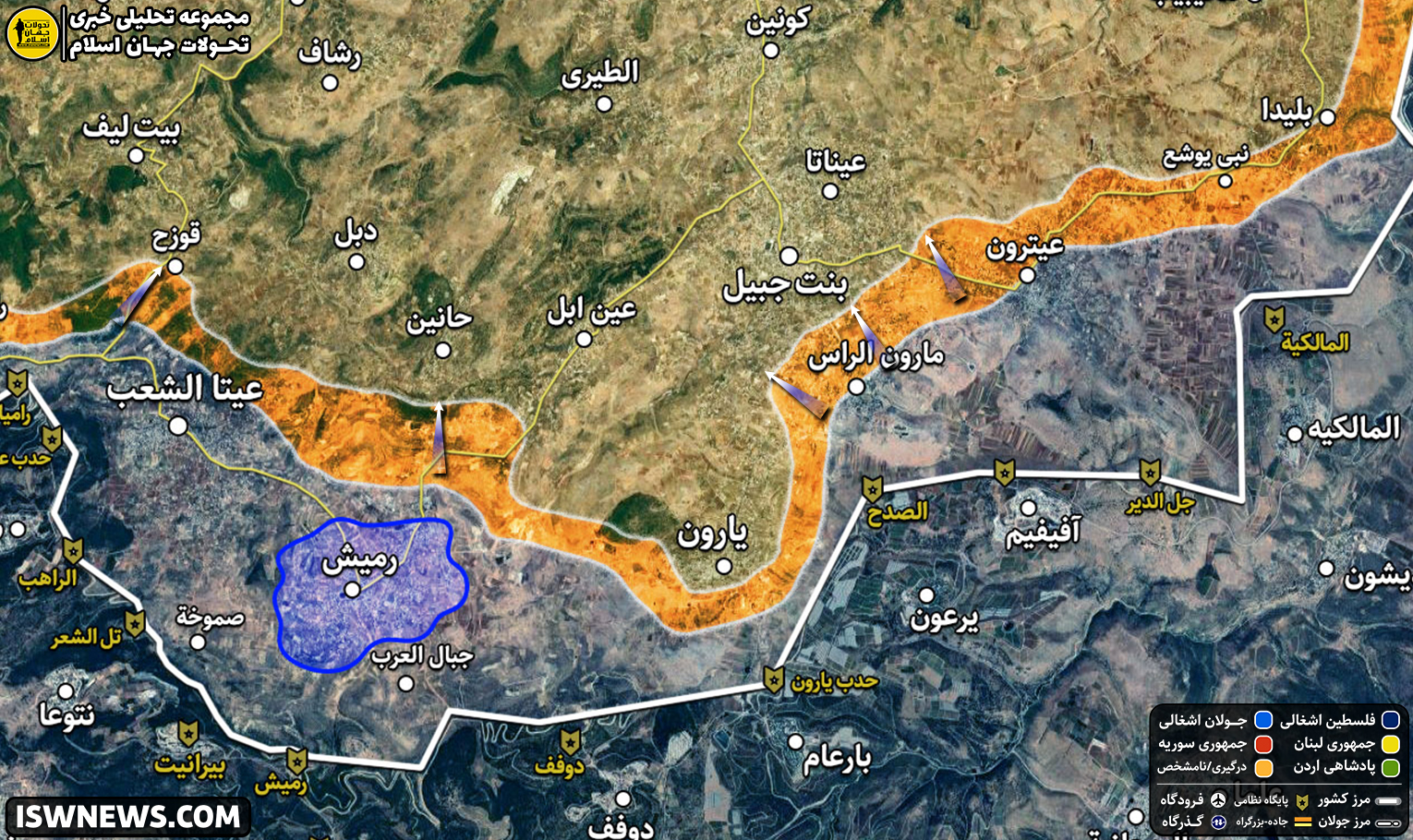
Bint Jubeil front: The battles continue in the west of Aitaroun, south of Ainatha, Al-Maslekh neighborhood and the southern areas of Bint Jbeil. The Israeli forces are making significant efforts to penetrate the city of Bint Jbeil, and their ground assaults, supported by air power, are still ongoing.
Also, limited movements and attacks have been reported in the southern region of Hanine village and in Qouzah, located north of Aita al-Shaab.
Latest military situation in Bint Jubeilfront – click to view full size
Tallouseh front: As mentioned in previous reports, Tallouseh and Bani Haiyyan will be the targets of the Israeli army in the second phase of the ground operation in southern Lebanon.
In the last 46 days, Israel has not been able to gain control of Markaba and Rab El Thalathine. Now, it has launched an attack on this village, hoping that Hezbollah’s defenses in Tallouseh are weak.
Clashes are ongoing at the southeast entrance of Tallouseh, where Hezbollah forces have successfully repelled attacks thus far.
Latest military situation in Tallousehfront – click to view full size
There are no reports of Israeli attacks in other areas. But it is likely that Israel’s attack will develop in the second phase of the ground operation to the village of Qouzah in the north of Aita al-Sha’ab, Hanine and Ain Ebel in the west of Bint Jubeil, Khiam town and Sheeba front.
Taking a general look at the developments of the last 46 days in southern Lebanon, it must be said that the second phase of the Israeli army’s ground operation has had a better start than the first phase. By expanding the security strip in southern Lebanon, Israel seeks to create more suitable conditions for for future advances.
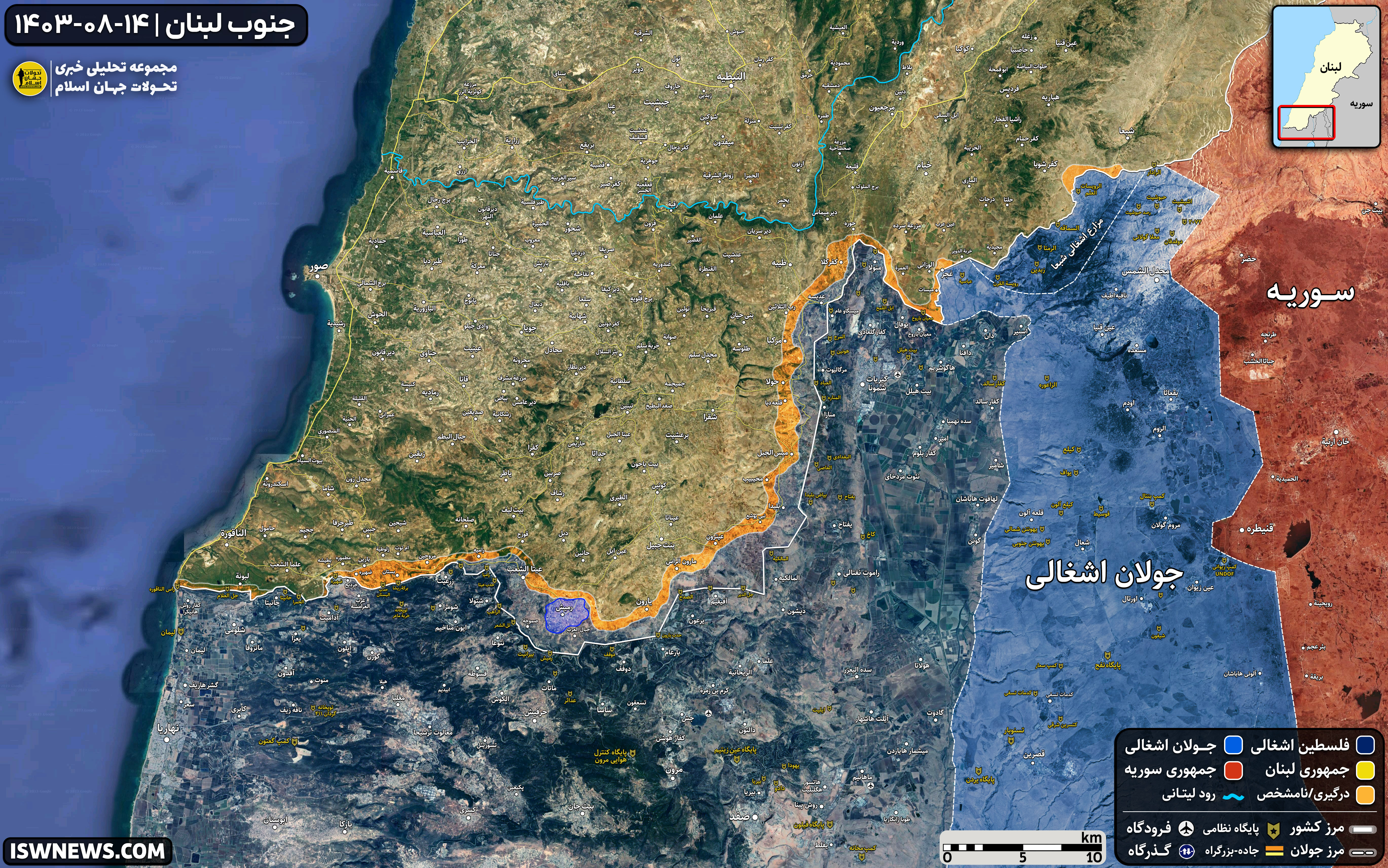
Latest military situation in southern Lebanon – click to view full size
The Israeli army’s invasion of Lebanon intensified after the assassination of Hezbollah’s Secretary-General, Sayyed Hassan Nasrallah. Since October 1, ground operations have been underway along the southern borders.
These assaults have so far resulted in the martyrdom of 3,445 Lebanese civilians and injuries to 14,599 others, as well as the martyrdom of over 500 Hezbollah fighters. On the other side, over 100 Israeli troops have been killed in Hezbollah’s retaliatory strikes in northern occupied Palestine.
Southeast Front: The 91st and 98th Brigades of the Israeli regime’s army have withdrawn from their positions in the outskirts of the village of Taibeh, east of Rab El-Thalathine and Markaba, as well as the town of Meiss El-Jabal after 43 days of fighting and attempts to control the border strip in southern Lebanon.
Undoubtedly, the precise strikes by the Lebanese resistance movement Hezbollah on Israeli tanks, armored vehicles, and machinery have significantly affected this military withdrawal and prevented them from achieving their objectives completely.
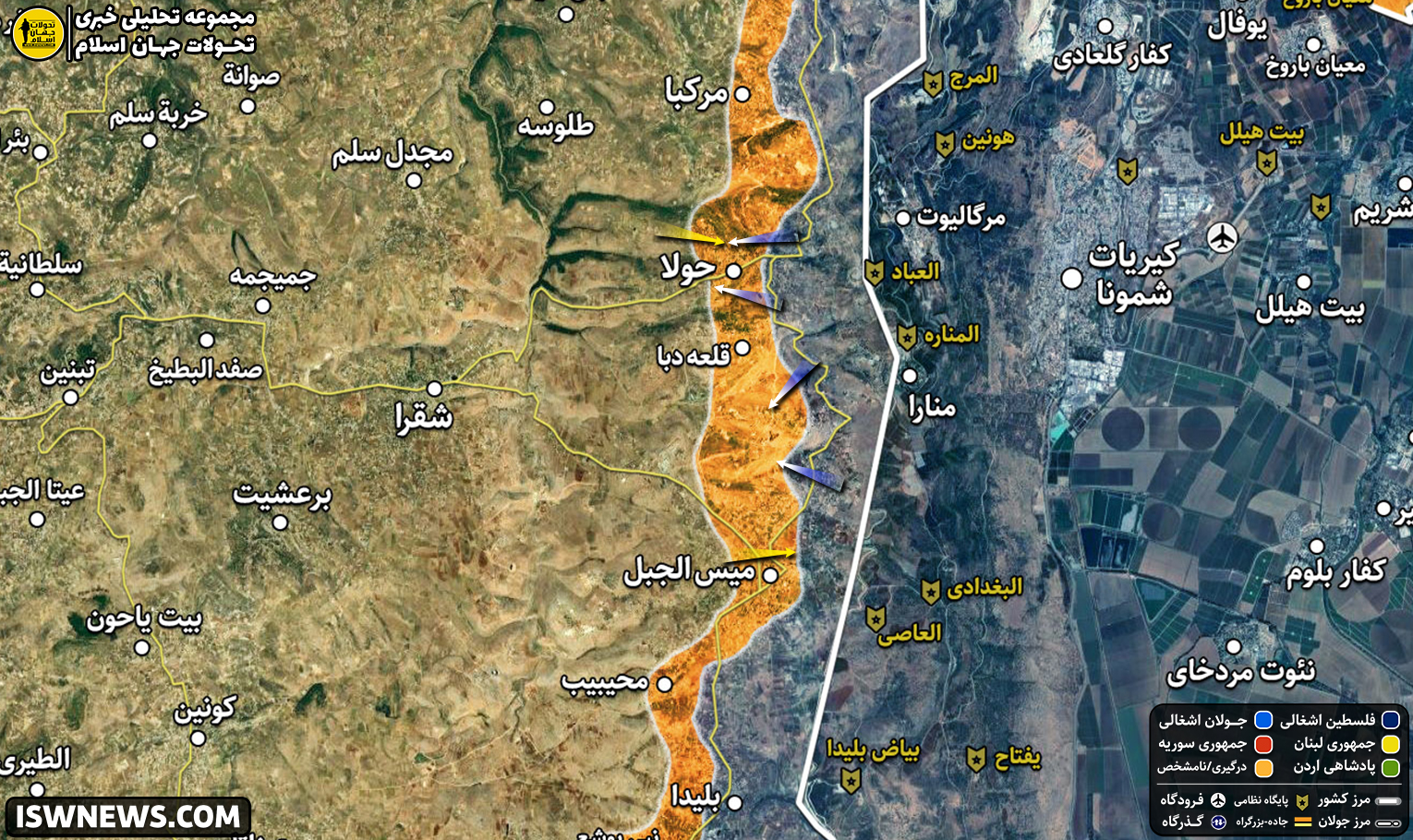
Latest military situation on south-eastern front of Lebanon – click to view in full size
Aitaroun and Maroun El-Ras Fronts: On the Maroun El-Ras Front, the Israeli regime’s army attacked from the eastern direction of the Maroun El-Ras village toward the village of Aainata. This attack faced an ambush by Hezbollah fighters and ended in failure. The Israeli regime’s forces have also attacked from the Yaroun-Maroun El-Ras Road to the western front of Maroun El-Ras, which led to the regime forces’ advances in this front.
The Israeli forces’ movement from this front is very dangerous. If the destruction and passage through Maroun El-Ras are completed, the conflicts will shift to the town of Bint Jbeil, and the Israeli regime’s army would be able to put pressure on the resistance front in Aitaroun, Yaroun, and Ain Ebel-Hanine.
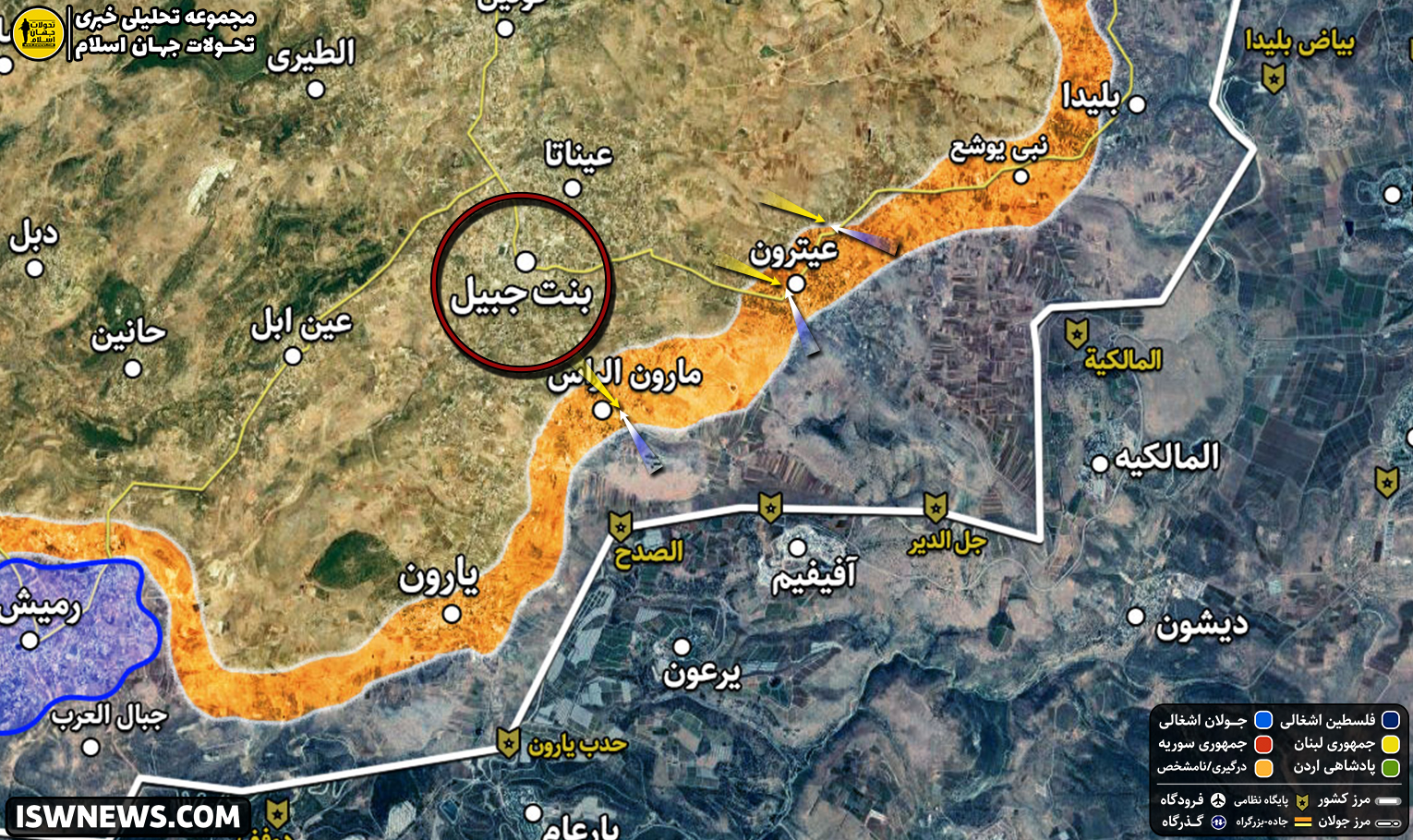
Latest military situation in Aitaroun and Marun al-Ras – click to view in full size
There have been no changes in the lines of confrontation in the Shebaa Farms, Kfar Kila, Houla, and Naqoura fronts. Reports have been published about the gathering of Israeli military forces at the Ras al-Naqoura border crossing, which are likely aimed at attacking Al-Labouna and then the Hamoul Valley on the outskirts of the town of Naqoura. The battle in this front will be very tough, and Hezbollah fighters can inflict effective and costly strikes on the Israeli regime’s forces by using forest as a cover.
At this stage of the conflict, the continuation of rocket and drone attacks in the border line of northern occupied Palestine has become very important. Additionally, the use of Fateh-110 missiles and the hybrid attacks of Hezbollah’s rockets and suicide drones have affected the focus and organization of the Israeli regime’s army in supporting the northern fronts.
Since the onset of the ground conflict, 43 Merkava tanks, 8 military bulldozers, 6 armored vehicles, and six Hermes 450 and 900 drones have been destroyed. Although the Israeli regime’s airstrikes on various regions of Lebanon continue, they have not had a significant impact on reducing Hezbollah’s retaliatory attacks.
This indicates that Hezbollah has gained control over the situation in the southern Lebanon front, and their strategies to remain safe from air attacks have been effective. The persistence of this situation benefits Hezbollah and will lead to further defeats for the Israeli regime’s forces unless they enter the second phase of ground operations and escalate ground attacks deep into southern Lebanon.
Latest military situation in southern Lebanon – click to view in full size
Despite the overall decrease in ground tensions, sporadic clashes are ongoing on the fronts of Shebaa town, as well as Houla, Aitaroun, and Marun El-Ras villages. Confrontations in the villages of Houla, Markaba, and other border areas in southern Lebanon are also accompanied by sporadic attacks from the Israeli regime and the Lebanese resistance movement Hezbollah, with no significant changes in the front lines in these areas.
Shebaa Front: On the Shebaa front, the Israeli regime’s forces have advanced to the western outskirts of the town of Shebaa Farms. These military forces have not yet succeeded in entering Shebaa, and Hezbollah has targeted Israeli troops’ movements around Shebaa with rocket attacks.
Shebaa is a border area with a Sunni majority, located in the valley between the Al-Radar border post overlooking the Shebaa hills and Jabal Sidana. Alongside the town of al-Khiam and Kfar Shuba, Shebaa Farms is one of the targets of the Israeli army’s 210th Brigade on this front, and the Israelis’ attempts to destroy it are aimed at preventing border attacks from Hezbollah fighters.
Latest military map of Shebaa front – click to view full size
Bint Jbeil Front: The Israeli regime’s army continues ground attacks on the Aitaroun, Marun El-Ras, and Yaroun fronts under air cover, but there has not been much change in the front lines. Hezbollah targets the movements and gatherings of Israeli military forces with rocket, artillery, and drone weapons, while the regime’s army bombards buildings from which retaliatory attacks are launched.
On the Ain Ebel-Hanine front, no clashes have been reported, although the Israeli regime’s fighter jets have carried out several air attacks on this area in recent days.
Latest military map of Bint Jbeil front – click to view full size
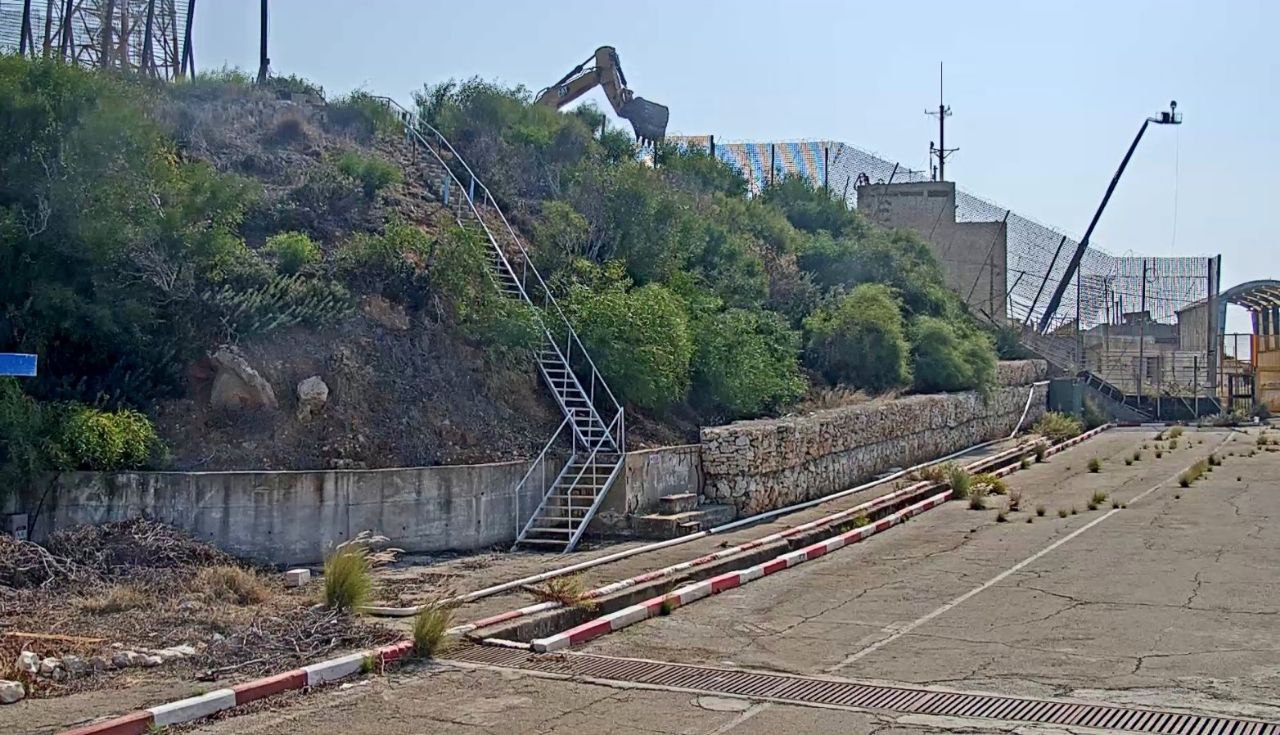
Naqoura Front: On November 9, the United Nations Interim Force in Lebanon (UNIFIL) released videos and images from their security cameras, and claimed that two bulldozers and an excavator of the Israeli regime destroyed part of a fence and a concrete structure belonging to the UNIFEL forces in the Ras Al Naqoura crossing in southern Lebanon. UNIFIL protested this action, while the Israeli regime’s officials denied that the incident occurred in phone conversations with the UN organization.
Israeli bulldozer activity at Al Naqoura borderIsraeli bulldozer activity at Al Naqoura border
The Israeli army’s invasion of Lebanon intensified after the assassination of Hezbollah’s Secretary-General, Sayyed Hassan Nasrallah. Since October 1, ground operations have been underway along the southern borders.
These assaults have so far resulted in the martyrdom of 3,316 Lebanese civilians and injuries to 13,979 others, as well as the martyrdom of over 500 Hezbollah fighters. On the other side, over 100 Israeli troops have been killed in Hezbollah’s retaliatory strikes in northern occupied Palestine.
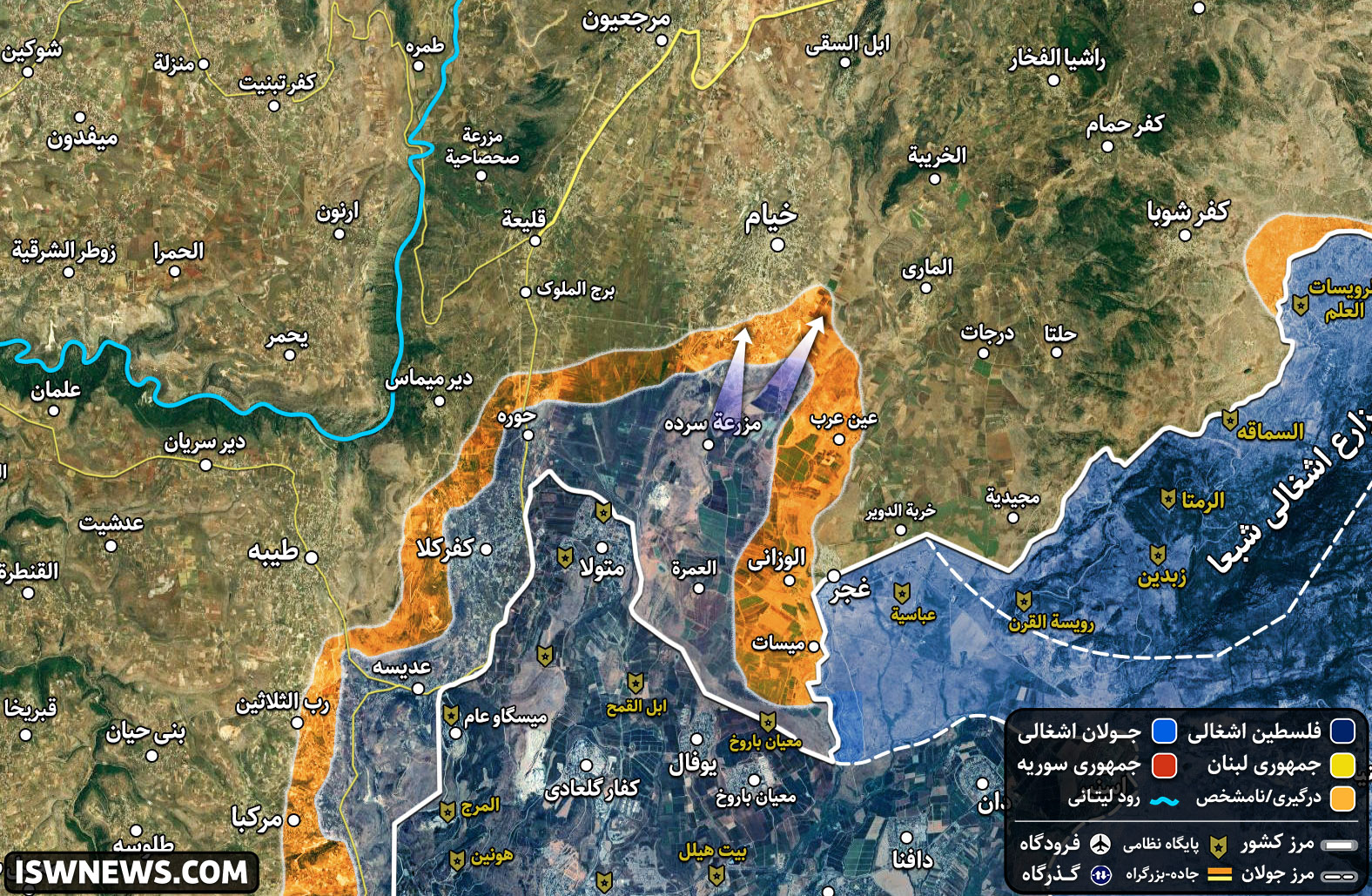
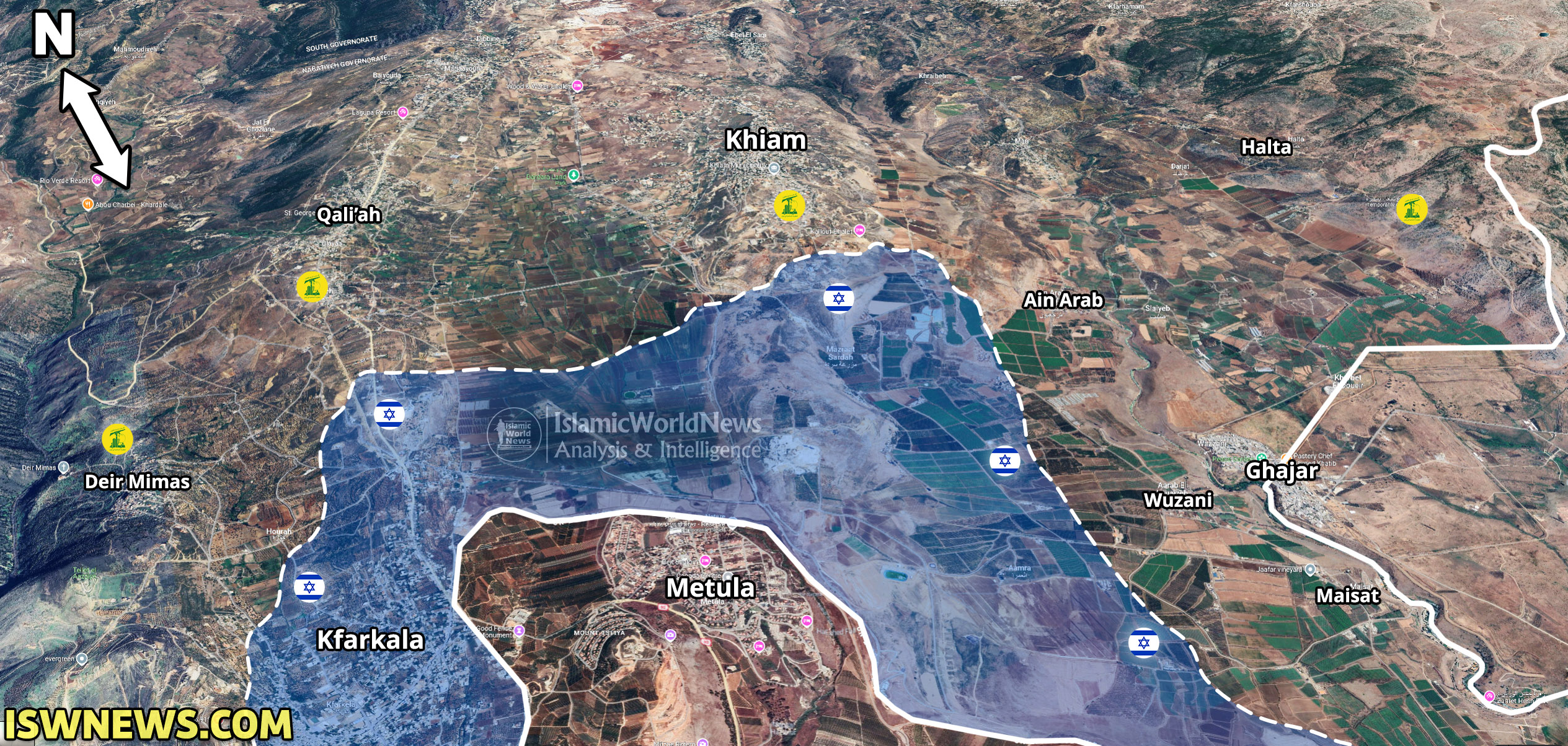
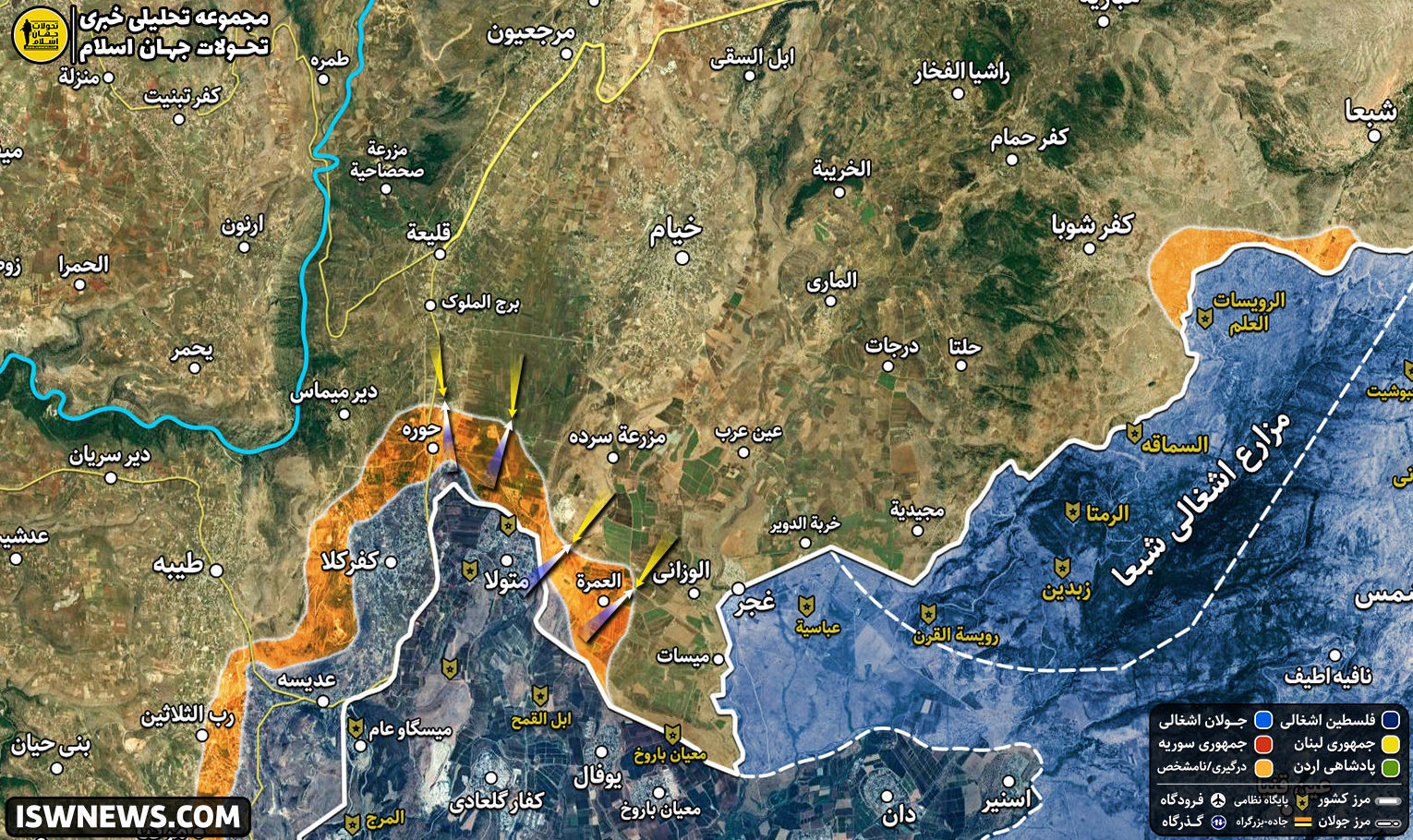
Northern Front Metula: The Israeli regime’s army, after retreating from the southern axis of the al-Khiam town on November 2, withdrew its military equipment and tanks from the Sarda Farms, al-Hamamis area, and the villages of al-Wuzzani and al-Omra, and retreated to the town of Metula. Thus, the regime’s army suffered its first military defeat in the southern Lebanon axis and completely failed in controlling and demolishing al-Khiam.
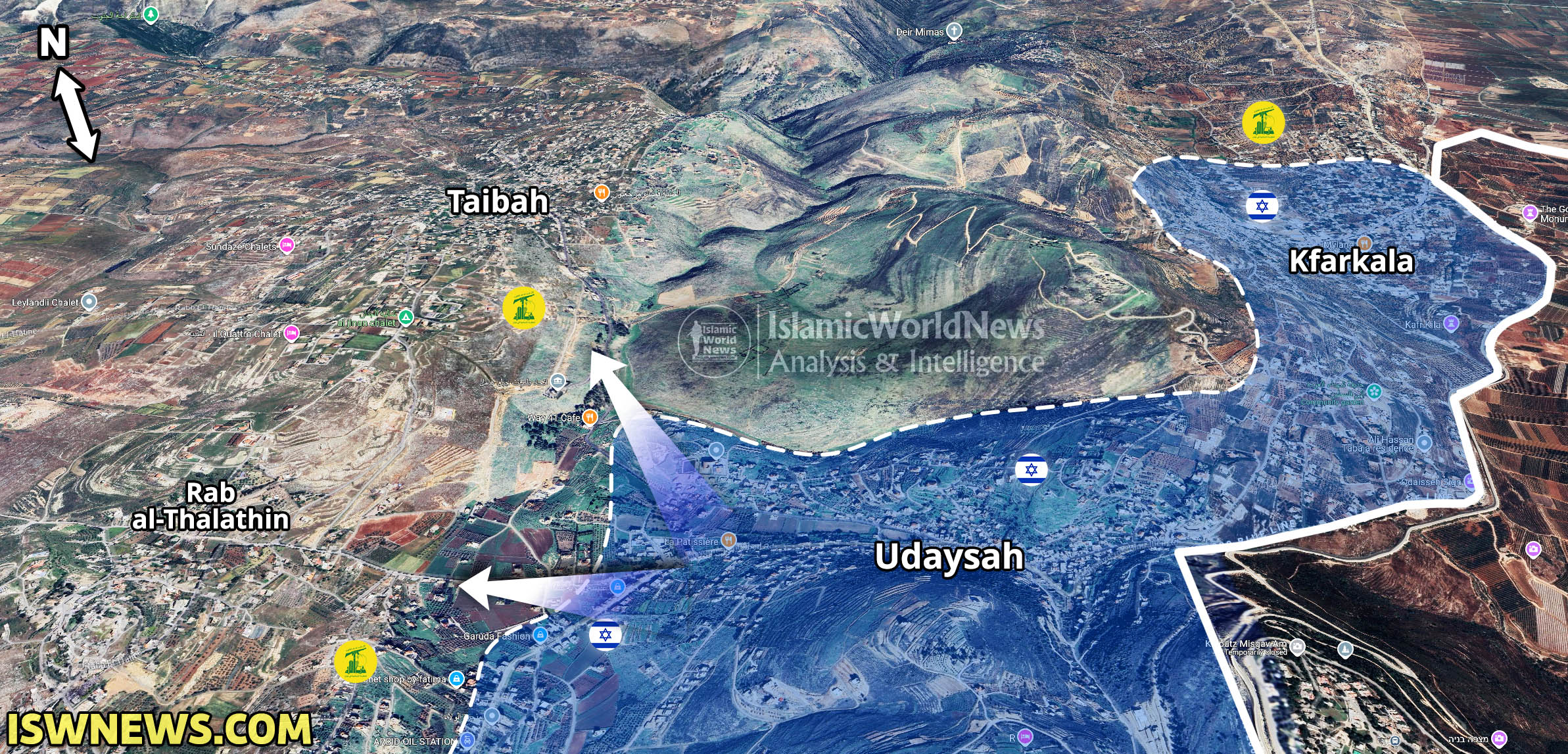
Despite this withdrawal, the presence and patrols of Israeli troops in the village of Kfar Kila continue to ensure the security of Israeli army movements on the road from al-Udaysah village towards Taibeh and Rab El Thalathine villages.
In the Taibeh, Rab El Thalathine, as well as Markaba villages, there has been no change in the conflict zones, and the last Israeli attacks to enter Taibeh and Rab El Thalathine in the eastern axis of these areas doomed to failure. The Lebanese resistance movement Hezbollah holds a favorable upper hand in the face of the Israeli regime’s army in the east of these regions, making it easy to monitor and target Israeli military forces’ movements and gatherings.
Latest military situation of Metula and Udaysah Front – click to view in full size
Houla-Meiss El Jabal Front:
In the past 48 hours, the Israeli regime’s army carried out numerous attacks to demolish residential buildings east of the village of Houla. Hezbollah countered some of these measures, launching rocket attacks on Israeli troops’ gatherings in Tal al-Khazan district and targeting two bulldozers, which were busy to demolish buildings, that led to inflicting destruction or damage on them.
Currently, the Israeli regime’s army has advanced to the eastern half of the village of Houla, completely devastating the residential areas of the village in the east of the Marjayoun-Bint Jbeil Road. Israeli military forces have also moved towards the northern areas of the town of Meiss El-Jabal, reaching near the Meiss El-Jabal hospital. It is likely that the regime’s army will move towards the northern areas of Meiss El-Jabal after demolishing the hospital and surrounding buildings.
Latest military situation of Houla and Meis al-Jabal Front – click to view in full size
Aitaroun-Maroun El-Ras Front:
Despite the ongoing airstrikes by the Israeli regime’s army, the efforts of the 36th Brigade of the regime’s army to penetrate deep into the villages of Aitaroun and Maroun El-Ras have not been successful, with clashes concentrated in the eastern and southern outskirts of Aitaroun and the southern half of Maroun El-Ras. The main objective of the Israeli regime in attacking this axis is to reach and destroy the town of Bint Jbeil, which is the southernmost city in the Nabatieh Governorate.
Latest military situation of Aitaroun and Maroun al-Ras Front – click to view in full size
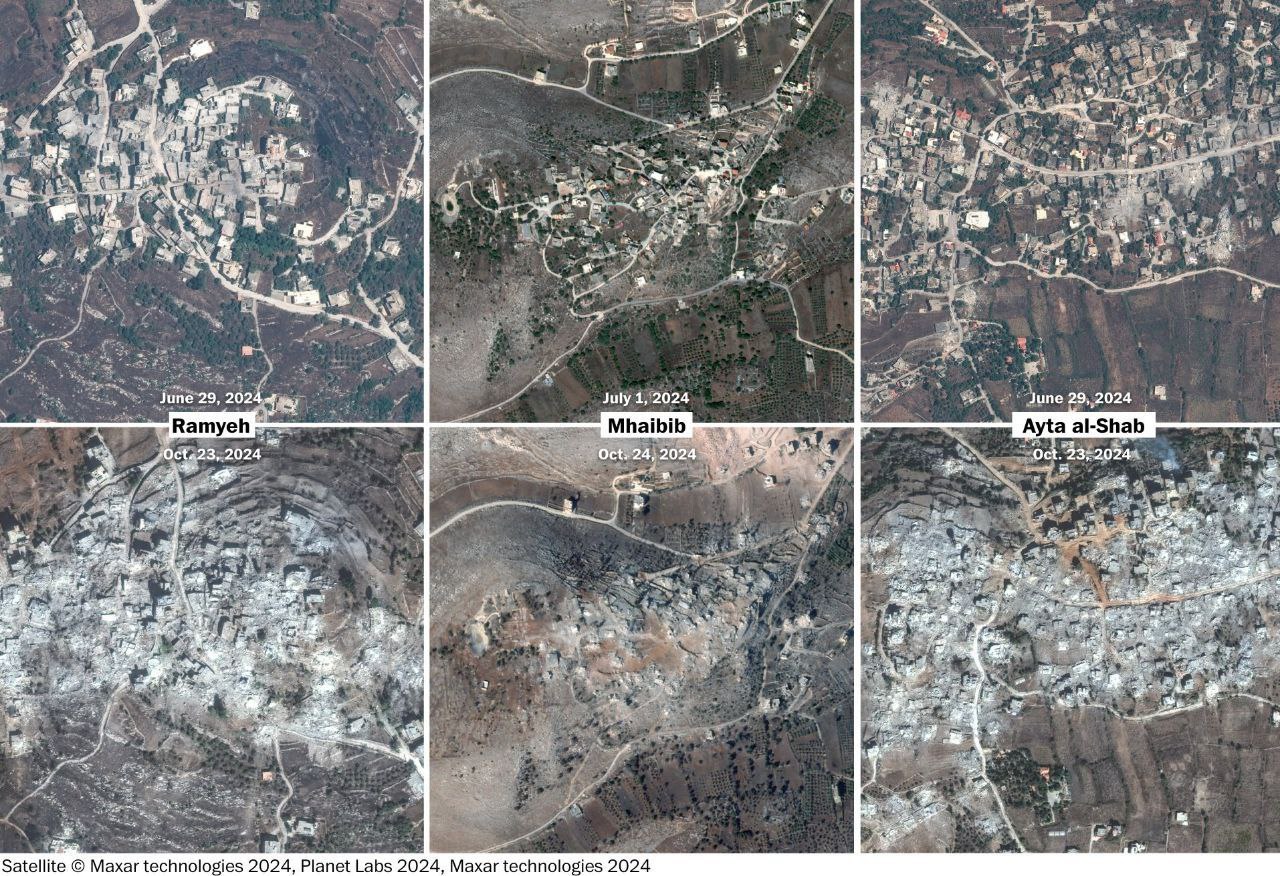
According to satellite images, at least 5,868 residential buildings have been destroyed across the border villages of Lebanon, with 80% of these buildings demolished since the onset of the Israeli army’s extensive offensive on October 1. In some areas, such as the villages of Ayta ash Shab and Kfar Kila, nearly half of all buildings have been destroyed. Many village centers have been demolished, and the majority of the destruction has occurred through controlled explosions following a widespread wave of airstrikes.
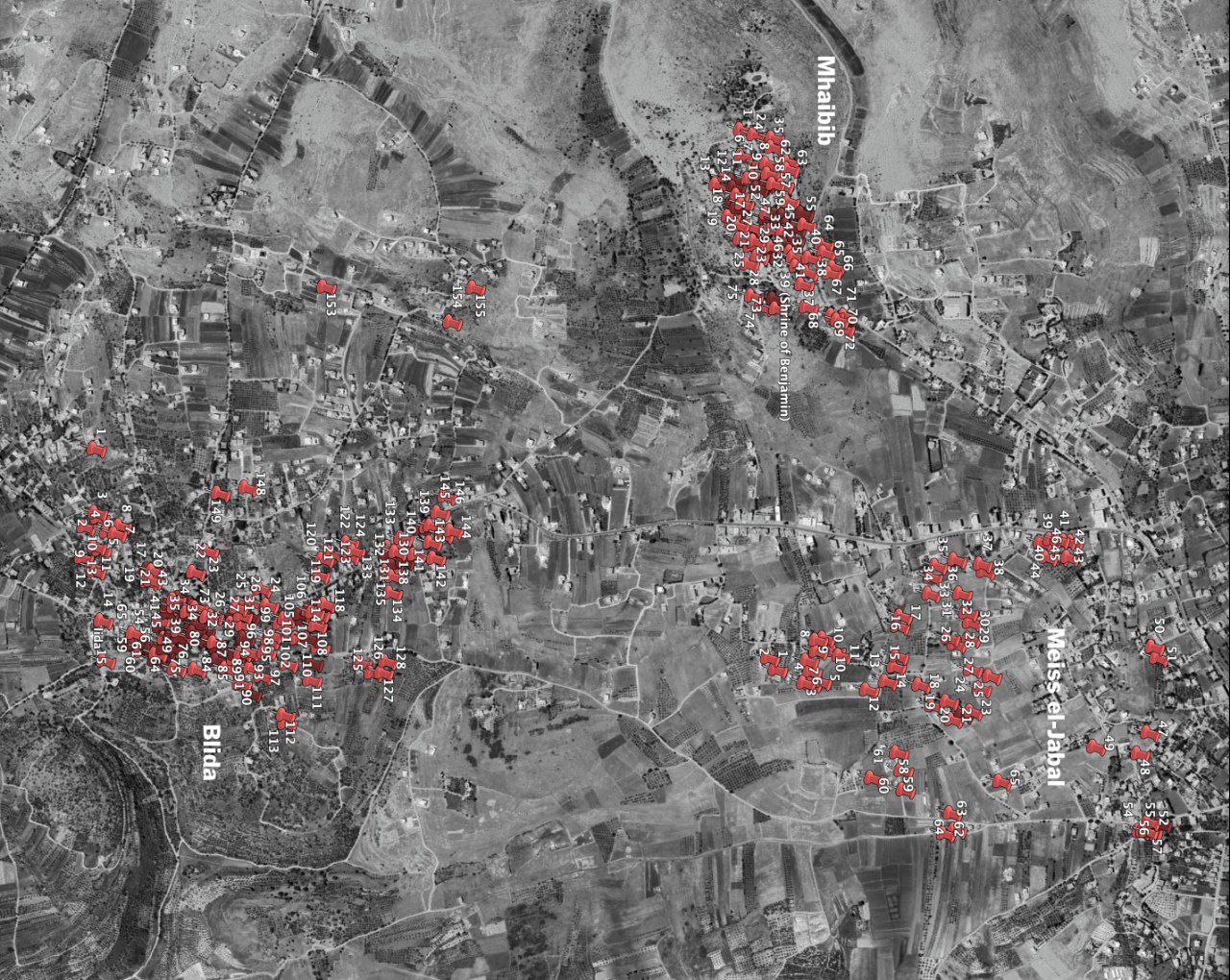
Satellite image of the situation before and after the war in the villages of Aita Shaab, Mhaibib and Ramieh
Since the start of the ground offensive in southern Lebanon, the Israeli regime’s army has destroyed most of the buildings in the towns and villages of al-Adaysah, Kfar Kila, Houla, Meiss El-Jabal, Mhaibib, Blida, Yaroun, Ayta ash Shab, Ramyeh, Marwahin, Umm al-Tut, and Al Dhahirah.
The extensive invasion of the Israeli regime’s army against Lebanon began to intensify after the assassination of Secretary-General of Hezbollah Sayyed Hassan Nasrallah, and the regime’s military has kicked off a ground phase with operations along the southern borders of Lebanon since October 1.
These assaults have so far resulted in the martyrdom of 3,002 Lebanese civilians and injuries to 13,492 others, as well as the martyrdom of over 500 Hezbollah fighters. On the other side, more than 90 Israeli troops, have been killed in Hezbollah’s retaliatory strikes on northern occupied Palestine.
The southeastern areas of al-Khiam town consist of open lands and farms, and the Israeli regime’s army can advance there using Merkava tanks. Furthermore, Hezbollah positions in al-Hamamas, which overlook the surrounding areas, have been destroyed by the Israeli airstrikes.
Military situation on Khiam front – click to view full size
The border village of al-Wuzani has also been evacuated since the beginning of the clashes, and the Israeli military forces have not conducted any advances in this area aside from the destruction of mosques.
Clashes are underway in the Al wati’ah and Khallet al-Asafir areas located southeast of Khiam. Hezbollah has so far destroyed two Merkava tanks and a Hermes 900 drone in this front. Additionally, the gatherings of Israeli forces behind the frontline are under artillery fire.
After destroying several border villages in Lebanon, the Israeli regime’s army launched attacks on the towns of Aitaroun and al-Khiam, as well as the villages of Houla, Taibah, and Rab El Thalathine. Despite reports of the Israeli army retreating from the Lebanese border, heavy fighting continues in the Aitaroun and al-Khiam front, and the regime’s army is determined to maintain security for its bases and border settlements in northern occupied Palestine by destroying the border villages of southern Lebanon.
Shebaa Farms-KfarKala Front:After the failure of movements towards Shebaa town and Kfar Shoba village, the forces of the 210th Brigade of the Israeli army have begun a new attack to reach the town of Khiam.
Currently, the Israeli regime’s military forces continue fighting to push Hezbollah fighters back from Tal al-Nahas (Hourah) and Tal al-Mahamas, and the Israeli army intends to enter from the eastern and western fronts of the town of al-Khiam. If the Tel Aviv regime’s forces can capture the two heights of Tal al-Mahamas and Tal al-Nahas, they will not only secure the Metula settlement but also easily reach the town of al-Khiam.
As mentioned in previous reports, the goal of the 210th Brigade in this operation is the destruction of Shebaa, Kfarshoba, Kfar Hamam, and most importantly, the town of al-Khiam.
Latest situation in northern front of Metula and Aita al-Shaab – click to view in full size
Udaysah-Markaba: On the eastern front of Taibah and Rab El Thalathine, Hezbollah fighters prevented the advance of the 98th Brigade of the Israeli army with numerous artillery and rocket attacks on Udaysah Marjaayoun village in southern Lebanon and the Israeli regime’s Misgav Am kibbutz and its border bases. In the village of Markaba, Israeli forces have also entered from the southern front, and clashes in this area continue.
This video is related to the attempt of the Israeli soldiers to enter the villages of Rab Al-Thalathin and Taibah from the east on October 25, which failed due to Hezbollah’s rocket and artillery attacks, and finally the Israeli soldiers were forced to retreat.
Houla-Blida Front: On this front, the forces of the 91st Brigade of the Israeli army entered the village of Houla and destroyed parts of the residential buildings in this village. The level of destruction in the villages of this area is very severe, and after destroying Mhaibib and Blida villages, the Israeli army also demolished many buildings in the eastern and southern neighborhoods of Meiss El Jabal village.
Satellite image of the amount of destruction of civilian buildings in Meis al-Jabal, Mhaibib and Blida by the Israeli regimeLatest situation of Taibah, Rab al-Thalathin, Markaba and Hola – click to view in full size
Aitaroun-Ramyeh Front:In the village of Ayta ash Shab, the Abu al-Laban hill to the east of this village remains under Hezbollah’s control, and multiple clashes have occurred in this area between resistance fighters and Israeli military forces. Israeli troops are demolishing and destroying buildings in other areas of Ayta ash Shab.
In the village of Aitaroun, the forces of the 36th Brigade of the Israeli army entered from the southern road of this village and are engaged in clashes within its neighborhoods with Hezbollah fighters.
Latest situation in Aitaroun and Aita al-Shaab Front – click to view in full size
Marwahin-Ras al-Naqoura Front: In recent days, the forces of the 146th Brigade of the Israeli army made attempts to enter the towns of Marwahin and ad-Dahira, which were thwarted by Hezbollah attacks, and currently, Israeli military forces have halted their operations on this front and retreated. The exact reason for this decision is unclear, but it seems that Israel’s operation on this front is accomplished.
However, the Israeli forces managed to bomb and destroy several buildings in border areas, including the Rasul Akram Mosque in the village of Dahira. Additionally, the forest between the villages of Aalma El Chaeb and Dhahira has been set on fire.
Video of the destruction and explosion of Rasoul Akram (PBUH) Mosque in the border village of Dhahira by the Israeli regime
This mosque is located at a distance of about 400 meters from the occupied Palestinian border, and after the Ahl al-Qur’an mosque, it is the second mosque in the village of Dhahira that the Zionists blew up.
Dhahira village and archival photo of Rasoul Akram Mosque (PBUH)
Israeli soldiers laugh and sing Jewish religious songs while destroying the Muslim mosques in the border towns of Lebanon. This action contradicts their claim that “the war is limited to Hezbollah” and “they are trying to save Lebanon from the Hezbollah and Iran”. The destruction of Muslim mosques and civilian buildings shows that they intend to destroy Lebanon and fight against all Muslims in the region.
According to a statement from Hezbollah’s operations command, since the onset of the ground operation in southern Lebanon, Hezbollah fighters succeeded in killing over 90 Israeli troopers and injured 750 others. Furthermore, 38 Merkava tanks, four military bulldozers, one Hummer vehicle, one armored vehicle, one personnel carrier, and three Hermes 450 drones and one Hermes 900 drone have been shot down.
Contrary to reports published by the Israeli regime’s army, in which it claimed the retreating of its forces from Lebanese territory and the end of clashes this week, heavy battles continue. The future of the conflicts is uncertain, but the primary goal of the Israeli regime’s army is to create a secure border strip in southern Lebanon, and through the destruction of residential areas, and as a result of passive stance in Lebanon and the resistance front, its forces may expand into deeper southern Lebanon. Hezbollah will not be able to rebuild these areas at this stage of the war, and restoring their capabilities in border areas will take months.
However, expecting rapid reconstruction from Hezbollah is unreasonable. It seems they must first work on their weaknesses and then rebuild their defensive barrier in southern Lebanon with a new perspective. The Lebanese resistance movement needs to utilize various tools, including strengthening its air defense capabilities to mitigate the impact of airstrikes, establishing a stronger intelligence network, and expanding its arsenals of modern weapons to be able to halt the massive war machine that Western countries have built for the Israeli regime in these critical circumstances.
Hezbollah fighters are currently engaged in heavy combat after 23 days of fighting on five fronts. The resistance fighters have been engaged in fierce clashes from Naqoura city to Marwahin town, from Ramyeh village to east of Aitaroun town, from southern Blida village to northern Houla village, from southern Markaba village to al-Ghajar village, and from al-Ghajar to the Shebaa Farms with the 146th Brigade, the 36th Brigade, the 91st Brigade, the 98th Brigade and the 210th Brigade of the Israeli army respectively.
Hezbollah’s missile and air units continue to target military centers and headquarters along the Lebanon-Palestine border as well as inside the occupied areas of northern occupied Palestine, with an increase in attacks on the occupied cities of Tel Aviv, Haifa, Tiberias, and Safed. The Lebanese resistance movement’s air defense units have also intensified their response against Israeli fighter jets as well as reconnaissance and combat drones, increasing the number of downed Israeli drones to 11.
Since the onset of the ground operation, the Israeli forces have destroyed a significant number of villages, including Mhaybib, Blida, Ramieh, Kfarkala, Al-Udaysah, and Yaroun, but have not stationed military forces or equipment in these areas. The occupation and control of these regions are not among the Israeli army’s objective, primarily due to Hezbollah’s superiority in ground combat. Instead, destruction through bombings and heavy airstrikes is being prioritized to create a so-called security belt along the border areas and mitigate threats from the Lebanese resistance in the occupied settlements and border bases.
Shebaa Farms Front: As expected, the primary objective of the Israeli 210th Brigade in this front is to enter Shebaa town and Kfarchouba village. Advancing in this area is complicated due to the geographical conditions, and Hezbollah can halt the Israeli forces’ attempts to enter these areas with precise rocket and artillery strikes from the heights.
Kfar Kila-Markaba Front: A video from inside the town of Kfar Kila shows that on October 23, Israeli troops completed the destruction of most buildings in this Lebanese town.
Israeli army video from inside Kfarkala villageZionist media’s video of the destruction of buildings in Kfarkala by Israeli military bulldozers
The situation is similar in the Aadaysit Marjaayoun axis, where commanders of the 98th Brigade of the Israeli regime are sending their forces and equipment toward Taybeh, Rab El Thalathine, and Markaba villages. Currently, clashes are ongoing in the southern and eastern districts of Taybeh, east of Rab El Thalathine, and inside Markaba. Hezbollah fighters are not only engaged in armed conflict but are also using anti-tank missiles and rocket attacks to destroy Merkava tanks and crush gatherings of Israeli troops on border roads and in the Misgav Am settlement, west of Aadaysit Marjaayoun village, and at the al-Marj base.
The latest situation of Udaysah front / Click to view in full size
The villages of Taybeh, Rab El Thalathine, and Markaba are considered as Hezbollah’s first line of defense in this axis, and maintaining this line is crucial, when it comes to the Israeli army’s subsequent movements in southern Lebanon. These areas are geographically appropriate for military operations, allowing Hezbollah to inflict heavy casualties upon the occupying forces and show strong defense by resorting to anti-tank and rocket attacks.
The latest situation of the Shebaa Farms to Markaba / Click to view in full size
Houla-Blida Front: After completing operations in Mhaibib and Blida fronts, the 91st Brigade of the Israeli army moved toward Houla and reached the eastern areas of this village in their latest attacks. However, most buildings in this village have been damaged in the Israeli artillery and air strikes over the past year, and other buildings have been evacuated due to the war circumstances.
In the west of the Meiss Ej Jabal village, scattered armed confrontations continue within its neighborhoods, but there is no reliable news regarding the latest situation in this area. Given the Israeli army’s movement toward Houla village, it is likely that the destruction of buildings in the northern and eastern areas of Meiss Ej Jabal has been completed.
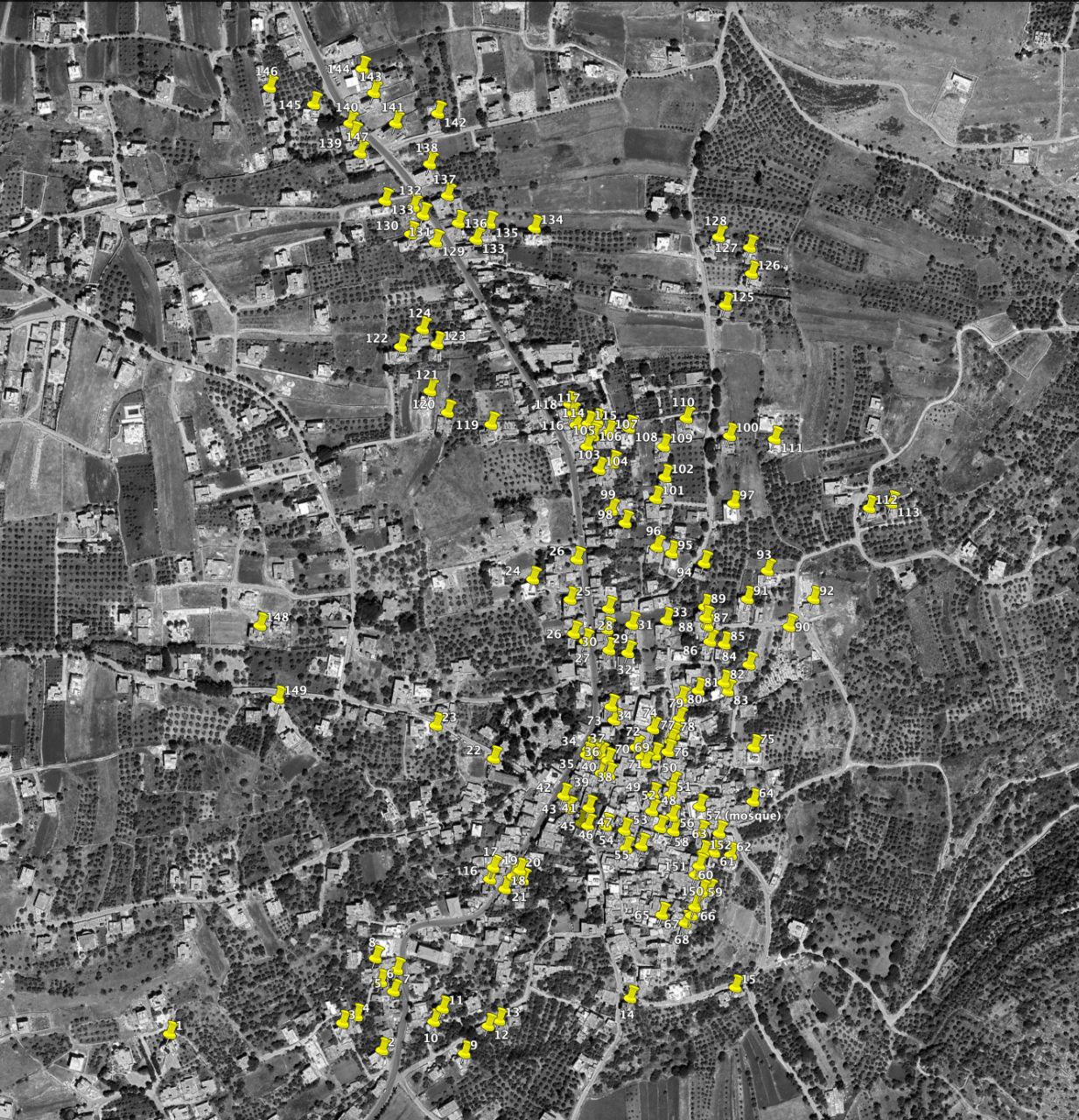
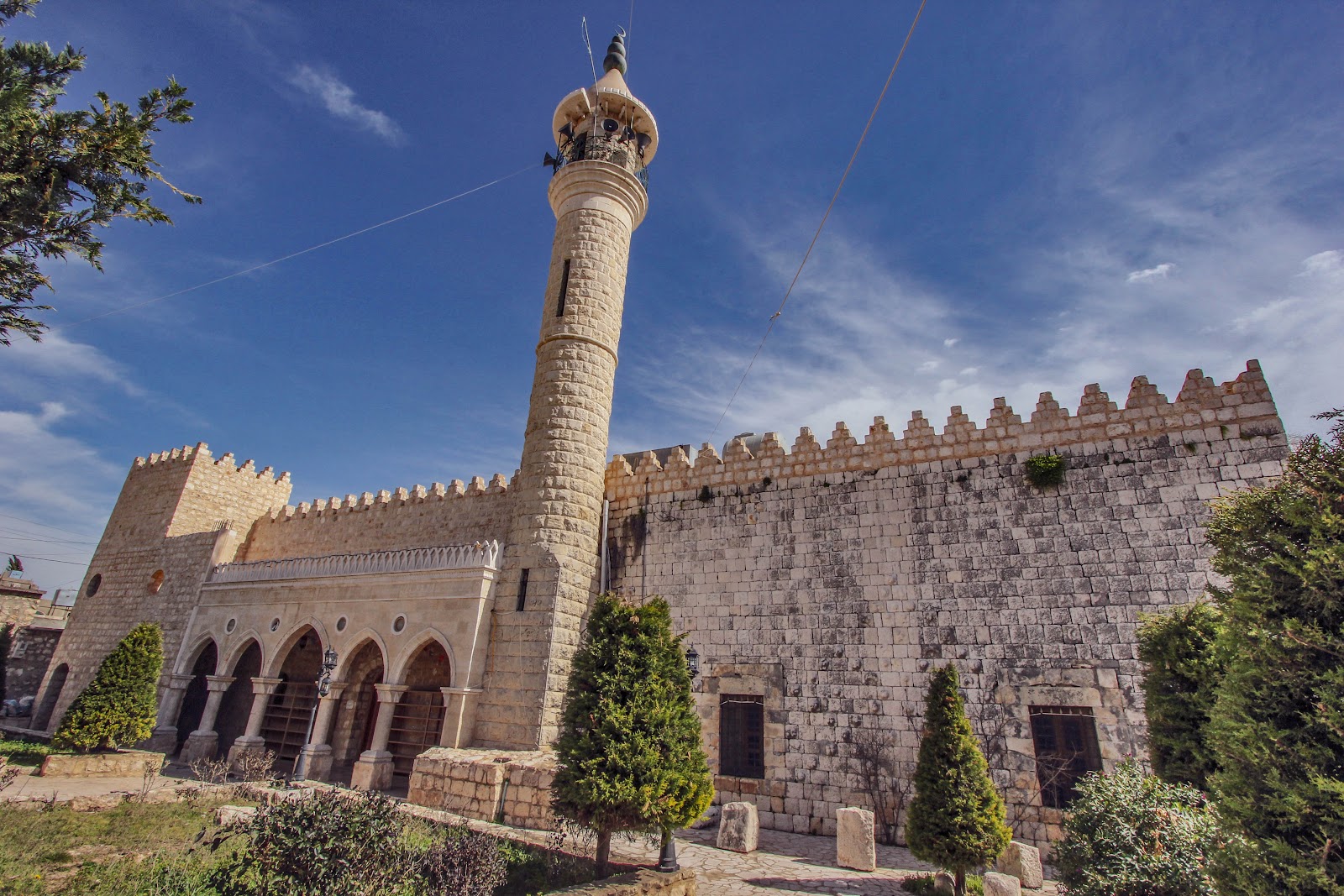
In the village of Blida, satellite images show that bulldozers and cranes of the Israeli regime’s army have ruined more than 152 buildings in this border village. Blida is one of the southeastern border villages of Lebanon and part of the Marjaayoun town in the Nabatieh Governorate, which also had an old and beautiful mosque, now the satellite images show its destruction. The Israeli regime’s army has even spared no mercy for the Blida cemetery, because its forces destroyed graves of the Muslims.
Aerial image of Blida and archival image of the historical mosque of this village
In another video from southern Blida, troops from the 920th Battalion of the 769th Brigade of the Israeli army are seen blowing up a large poultry farm on the southern borders of Blida. The owners of this poultry farm state that it was the largest livestock and poultry breeding center in southern Lebanon, raising tens of thousands of chickens. They had intended to relocate the chickens to other areas of Lebanon before the outbreak of ground warfare, but direct threats from the Israeli army prevented them from doing so. Such actions by Israeli military forces are in line with statements made by Yoav Gallant, the Israeli war minister, regarding the necessity of launching an economic and military campaign against Hezbollah and Lebanon.
The demolishing of the largest chicken farm in southern Lebanon by the Zionists
Aitaroun-Ramyeh Front: The Israeli regime’s army has successfully entered the Aitaroun town from the eastern axis, and clashes are currently ongoing in the western half of this town. The situation is similar in the Maroun El Ras village, where Israeli village are attempting to advance deeper into Maroun El-Ras and toward the southern entrance of the Bint Jbeil town.
The latest status of the Aitaroun Front / Click to view in full size
Heavy fighting is taking place in Ayta ash Shab village, particularly in the northern and eastern neighborhoods of this area, with the Israeli army conducting heavy attacks over the past two days to destroy Hezbollah positions on Aboullaban Hill east of Ayta ash Shab. Most buildings in Ayta ash Shab village have been destroyed in airstrikes, and despite the betrayal of the Christian villagers of Rmaych, Hezbollah fighters remain in the village and continue to defend it.
Hezbollah fighters are targeting Israeli gatherings and movements in this axis with rocket and artillery attacks, inflicting heavy casualties on the Israeli occupiers. However, these attacks are not sufficient to halt the Israeli war machine, as the combination of airstrikes along with bulldozer and crane activities on the ground is allowing the regime’s military forces to advance in the border areas of southern Lebanon.
The latest status of Aita al-Shaab Front / Click to view in full size
Given the direction of attacks by the Israeli 36th Brigade in Aitaroun and Maroun El-Ras, it appears that the Israeli regime’s main objective in this axis is to reach the Bint Jbeil village. In addition to Aitaroun and Maroun El-Ras, the movement of Israeli military forces along the Rmeish-Ain Ebl road (Christian villages) poses a significant threat to Bint Jbeil and could effectively encircle this small area.
The latest situation of the Houla to Ramieh front / Click to view in full size
Marwahin-Ras Al Naqoura Front: In the Marwahin-Ras Al Naqoura front, no significant ground movements from the Israeli army have been observed, with most of their activities focused on air and artillery attacks.
According to a statement from Hezbollah’s operations command room, the total Israeli casualties, based on observations by resistance fighters, exceed 70 killed and more than 600 wounded, including officers and troopers of the Israeli regime’s army. Additionally, 28 Merkava tanks, four military bulldozers, one armored vehicle, one personnel carrier, three Elbit Hermes 450 drones, and one Elbit Hermes 900 drone have been destroyed in the course of 23 days of ground combat. This count does not include casualties inflicted on the Israeli enemy in bases and camps in northern and deep inside occupied Palestine.
This level of casualties and damage significantly impacts the continuation of the clashes, especially if Hezbollah can execute guerrilla warfare, infiltrate occupied territories, or utilize devastating weapons in ground battles. The first phase of the Israeli army’s ground operation aims to create a security buffer zone in Lebanese territory, but what will determine the future of the war is Hezbollah’s response in ground combat and the extent of casualties and losses suffered by the Israeli regime at this stage of the confrontation.