Tag: Syria

  • Latest Developments in Southern Syria – August 28, 2025 (Map)

    Latest Developments in Southern Syria – August 28, 2025 (Map)

    According to the latest data gathered by Islamic World News, the most recent Israeli military movements in southern Syria are as follows:

    • August 24: Five Israeli military vehicles entered the village of Bariqa in Quneitra province. Troops stationed themselves in front of the Public Security building and set up a temporary checkpoint, inspecting passing vehicles.
    • August 25: A convoy of 11 military vehicles and over 60 Israeli soldiers entered the Beit Jinn area in the Damascus countryside, detaining six local residents. Simultaneously, Israeli forces took control of Bat al-Warda hill on the slopes of Mount Hermon.
    • August 25: Israeli military activity intensified in the Al-Rafid area of Quneitra. After deploying on Al-Jamous hill, troops entered the village of Al-Hiran, while another group patrolled Ayn Zivan. The village of Ayn al-Abd also witnessed an Israeli raid.
    • August 26: An Israeli attack on a residential home in the village of Tarnajah, north of Quneitra, resulted in the death of a Syrian youth named Rami Ghanem.
    • August 27: Israeli forces entered the village of Western Samadaniyah in Quneitra province, conducted patrols, and then withdrew.
    • August 28: Israeli troops appeared at the Abu Ghara junction east of Al-Rafid and continued scattered patrols in Beit Jinn.

    The physical presence of Israeli forces on Syrian soil—regardless of its immediate outcomes—sends a clear regional message: Israel is willing to enter a new operational phase to prevent the establishment of intelligence or military infrastructure near its borders. These recent actions reflect Tel Aviv’s effort to solidify a security belt beyond the ceasefire lines.

    Moreover, field developments suggest that Tel Aviv aims to secure its desired geographic clauses in security agreements not through negotiation, but via direct military pressure. This strategy indicates Israel’s intent to impose its security equations on the Golan governance through a combination of iron and fire.

  • Israeli Airstrikes and Heliborne Operation South of Damascus; Israel Seeks Demilitarization of All Southern Syria!

    Israeli Airstrikes and Heliborne Operation South of Damascus; Israel Seeks Demilitarization of All Southern Syria!

    On August 26, Syrian security forces discovered and seized advanced Israeli surveillance and espionage equipment near Jabal al-Manea and the 1st Armored Division. While attempting to transfer the equipment to the division’s headquarters, they were struck by Israeli airstrikes, resulting in casualties among Syrian soldiers. The strikes continued for 24 hours to prevent reinforcements from reaching the area. Despite the strikes, some Syrian forces managed to destroy parts of the equipment and evacuate the bodies of the fallen.

    Continuing the events, Israeli aircraft again targeted the Al-Kiswah and Jabal al-Mane’ areas multiple times last night and conducted a heliborne operation at the 1st Armored Division base. According to local sources, at least four Israeli helicopters participated. Israeli forces remained in the area for over two hours, though no direct clashes with Syrian troops were reported.

    While details of the operation’s objectives remain undisclosed, it’s believed the recovered surveillance equipment was significant enough to prompt Israel to launch a retrieval mission. Of course, that’s not the whole story; the strategic importance of the military installations in Al-Kiswah and especially Jabal al-Mane suggests broader goals. The sequence of airstrikes, troop deployment, and extended presence indicates Israel is pursuing more than a limited strike.

    The execution of combined operations involving airstrikes, drones, and heliborne assaults deep inside Syrian territory signals a qualitative shift in the Israeli army’s operational tactics. This style of operation was previously carried out in Masyaf during the final phase of Bashar al-Assad’s rule, during which important documents were stolen and part of an underground base was destroyed.

    Overall, the Israeli regime seeks to demilitarize southern Syria and establish a large buffer zone adjacent to the occupied Golan Heights. The fall of the previous government and the rise of a fledgling and weak regime in Damascus presents the best opportunity for Israel to pursue this goal. Through repeated airstrikes and physical occupation of parts of southern Syria, the Zionist regime aims to neutralize the Syrian army’s capabilities and maintain permanent control over potential threats. Although talks between Damascus and Tel Aviv regarding normalization of relations or peaceful coexistence are ongoing, it must be understood that Israel holds the upper hand and considers itself above the need to engage with Syria. Therefore, the regime continues its attacks and efforts to neutralize the Syrian government while simultaneously participating in negotiations, viewing them as an opportunity to extract more concessions and apply greater political pressure.

  • Israeli Drone Strike Near Damascus Leaves Six Syrian Troops Dead

    Israeli Drone Strike Near Damascus Leaves Six Syrian Troops Dead

    A Syrian Defense Ministry official confirmed that the strike hit positions of the Syrian Army’s 44th Division.

    Since the fall of Bashar al-Assad’s regime, Israel has carried out hundreds of air and drone strikes across Syria, targeting military sites and infrastructure. Tel Aviv claims these operations are part of a broader strategy to curb the influence of Iran-backed groups and Hezbollah in the region. Damascus, however, views them as blatant violations of its sovereignty.

    The repeated Israeli strikes reflect a sustained pressure campaign against Syria’s transitional government. This strategy not only weakens Syria’s defensive capabilities but also sends a message to regional actors about Israel’s determination to prevent the deployment of forces aligned with Iran.

    Beyond military casualties, the continuation of these attacks risks escalating humanitarian and security crises along Syria’s borders. The strikes could destabilize the transitional government and delay efforts to rebuild Syria’s security infrastructure—an outcome with serious implications for the broader West Asian security landscape. Notably, these attacks coincide with both public and behind-the-scenes negotiations between Syrian and Israeli officials.

  • Southern Syria on the Brink: Druze Push for Federal Autonomy

    Southern Syria on the Brink: Druze Push for Federal Autonomy

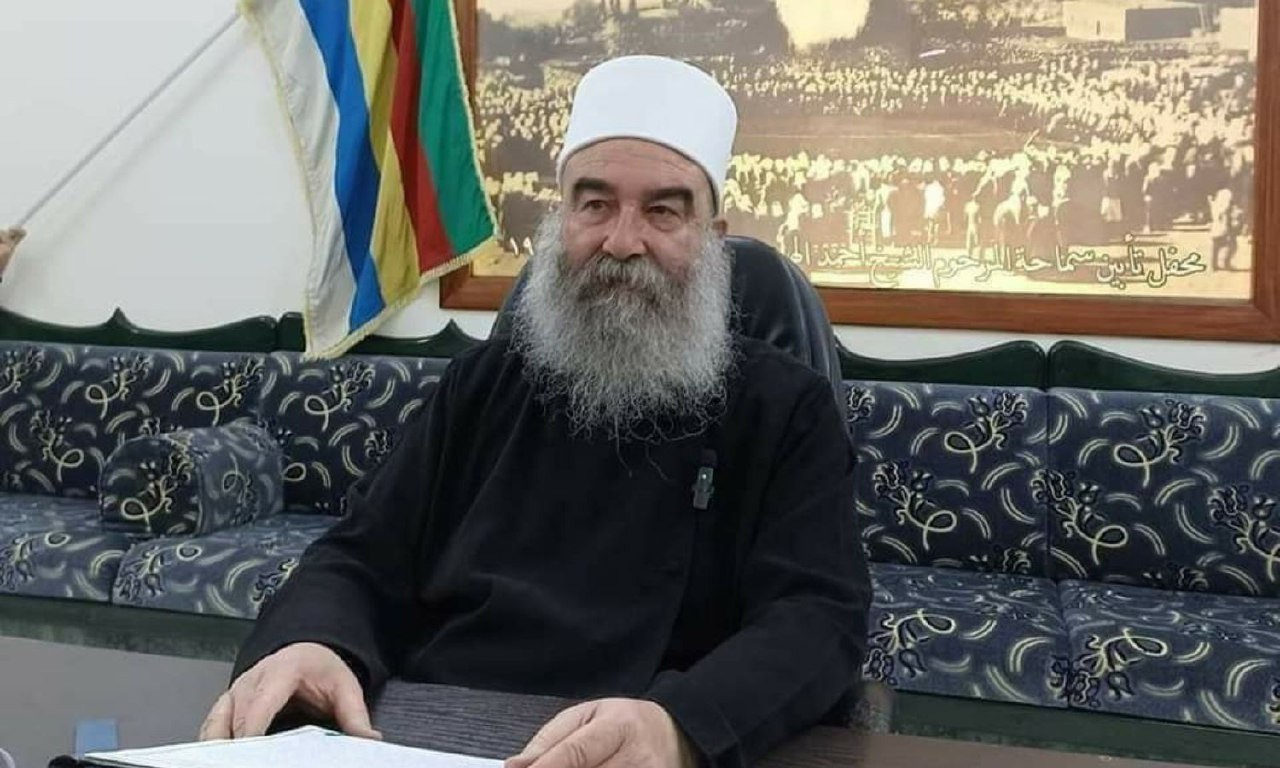
    In this context, various armed Druze groups, despite their internal differences, formed a National Guard led by Sheikh Hikmat al-Hijri. Al-Hijri stated that organizational structures similar to a local government had appeared in Sweida province. He also described the establishment of the National Guard as a military force and the creation of a legal committee as progress toward that objective.

    Al-Hijri stated: “We call on all free people of the world to stand with us and support us as an independent community in southern Syria. We seek a separate region that guarantees our security and future permanently.”

    These remarks come after months of tension and conflict in Sweida province, where clashes between Druze groups and armed Arab tribal elements—backed by security forces affiliated with the al-Jolani government—have resulted in hundreds of casualties.

    Despite al-Hijri’s controversial statements, some analysts believe he does not fully represent the stance of the entire Druze community. Syrian Druze are generally guided by three spiritual leaders: Hammoud al-Hanawi, Yousef Jarbouh, and Hikmat al-Hijri. While al-Hijri has repeatedly sought support from the Israeli regime in recent months and even expressed gratitude to Tel Aviv, Jarbouh and al-Hanawi have firmly opposed any ties with Israel.

    In previous statements by these two leaders, national unity, central government sovereignty, and opposition to separatism have been declared as non-negotiable principles. These internal divisions within the Druze community may signal further complexity in the future developments of southern Syria.

    Hikmat al-Hijri’s call for a Druze autonomous region aligns with federal or quasi-federal models seen in the Middle East. However, given Syria’s current challenges—including political legitimacy crises, ethnic separatism, and foreign military presence—such a demand is viewed less as a realizable goal and more as a bargaining chip in political negotiations.

  • Gradual Fragmentation of Syria: Examining the Most Likely Governance Scenario for Syria’s Future

    Gradual Fragmentation of Syria: Examining the Most Likely Governance Scenario for Syria’s Future

    The “mini-state” model has emerged in several post-Ottoman Arab countries. Yemen, Libya, Lebanon (especially before the recent war), and to a large extent Sudan and Somalia, have all experienced this form of governance. The Trucial States (now the UAE, Qatar, and Bahrain) prior to 1971, and the territory of present-day Saudi Arabia before King Abdulaziz’s wars and the founding of the third Saudi state, are other examples. A diluted version of this model can be seen in present-day Iraq, though it has weakened since the first post-Saddam decade. Syria itself experienced a similar situation between 1946 and 1963.

    Preconditions for Mini-State Formation

    This situation arises when three conditions are met:

    1. The central government lacks sufficient hegemony.
    2. Nation-building efforts are severely disrupted, leading citizens to prioritize other identity factors over national identity.
    3. Economic resources are no longer monopolized by the state, forcing it to rely on influential actors for funding and security.

    If the central government is either in the “state-building phase” or has a system where political competition is institutionalized—especially if public opinion plays a role—this fragmentation intensifies. It’s crucial to distinguish between the legal structure of power and its actual distribution. None of the examples mentioned earlier are legally federal systems.

    Key Groups Likely to Form Mini-States

    This section identifies powerful domestic actors that may evolve into influential entities, forcing the central government to engage with them. In Arabic political discourse, such groups are said to form a “mini-state” (a state within a state).

    A) Kurds
    They are the most likely to establish a mini-state, possibly limited to northeastern Syria or areas like northern Hasakah and Ain al-Arab (Kobani). All four conditions mentioned earlier apply strongly to the Kurdish context.

    B) Druze
    The Druze are the second most likely group to form a mini-state. In broader governance comparisons, the Syrian Democratic Forces (SDF) are pursuing semi-secession, and one of the main Druze factions recently reached an agreement with the central government. Under this deal, the Interior and Justice Ministries in Suwayda province will be staffed exclusively by locals, while Druze groups will retain their weapons. This arrangement lays the groundwork for a mini-state in Suwayda.

    C) Alawites
    The coastal Alawite community has a moderate chance of forming a mini-state. Despite widespread sensitivity toward this group, internal cohesion, restrained ambitions, effective foreign support, and smart strategy could enable them to establish control over coastal areas.

    D) Free Syrian Army (Jaysh Suriya al-Hurra)
    This group, formed under direct U.S. guidance in the al-Tanf region, now controls territory from al-Tanf to Qaryatayn and Palmyra. Their strengths include foreign backing and a dual identity—Arab opposition to Assad with some advantages similar to the SDF. Their semi-autonomous presence within the Syrian army structure positions them as a potential mini-state.

    E) Daraa
    Daraa also has high potential for mini-state formation, but internal divisions among southern factions pose a major challenge. The population is split into four or five groups with serious rivalries, and at least half look to external powers for support. These internal fractures reduce the likelihood of a unified mini-state.

    F) Others
    Beyond these five, other regions also show potential for mini-state emergence. Due to space constraints, only their names are listed:

    • Arab tribes of Deir ez-Zor
    • Arab tribes of Raqqa
    • Turkmens of northern Aleppo
    • Salafists of Idlib
    • Smaller minorities

    Signs of This Scenario Emerging

    What are the indicators of this scenario unfolding in Syria? Both political and security developments offer clues. The clearest sign is Damascus’s concession to Suwayda’s Druze elders, allowing them to control the Interior and Justice Ministries—an arrangement even more extensive than the SDF-Damascus agreement. Another sign is the central government’s efforts to alter the situation in Afrin, which may lead to demographic changes.

    On the security front, armed groups in many areas refuse to surrender their weapons or integrate into a unified national army. Continued activity by pro-Assad militias (known as “Shabiha”), casualties inflicted by Tahrir al-Sham, and Damascus’s lack of control over all Syrian territory—effectively dividing the country into three or four zones—are further indicators.

    Politically, the most telling signs are how local elites influence governance. In provinces like Daraa and Suwayda, governors are chosen based on local power brokers’ preferences. In Daraa, Deir ez-Zor, Hama, and Aleppo, senior military commanders are appointed by external forces, not the president. Suwayda still lacks a military commander, and in coastal provinces, competition between official ministries and the newly formed “National Reconciliation Committee” is intensifying. In eastern Euphrates regions, no governors or military commanders have been appointed at all.

  • Latest Updates on Southern Syria (Map)

    Latest Updates on Southern Syria (Map)

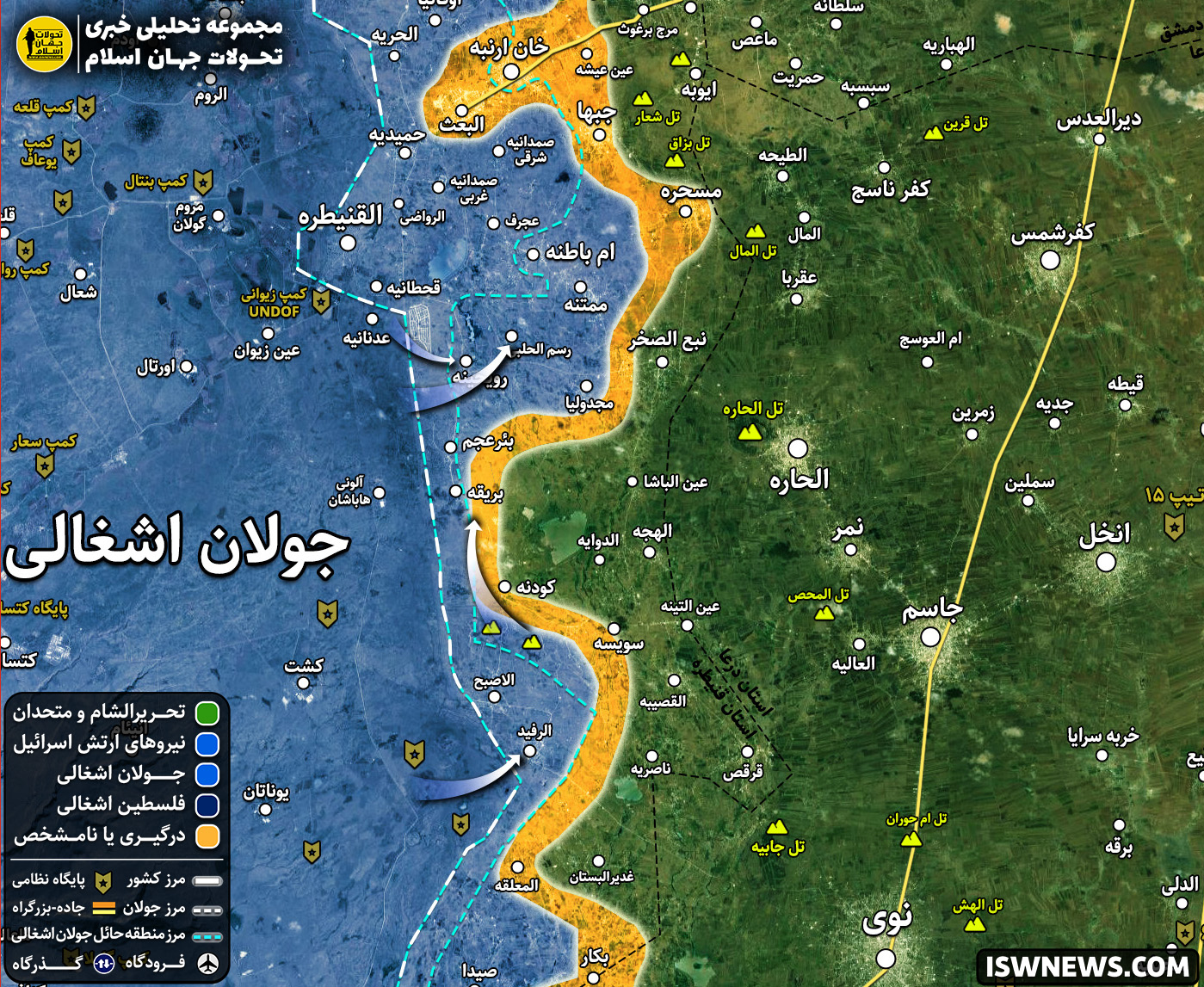
    In the latest movements, 10 Israeli military vehicles departed from Tel Ahmar and headed toward the Bariga-Kudna road, establishing a checkpoint there.
    Additionally, another convoy of 10 vehicles entered Ruwaiheena village before proceeding toward Rasm al-Halabi in central Quneitra.
    Five Israeli vehicles also entered Rafid village.
    An Israeli patrol, supported by two tanks, moved from Adnaniyeh to Ruwaiheena, with the tanks positioning themselves on the village outskirts.

    It appears that the regime’s movements in southern Syria are now directly influenced by ongoing Syrian-Israeli-American negotiations, and until the parties’ agreements are clarified, significant changes in frontlines are unlikely.

  • Syrian Foreign Minister Meets with Israeli Delegation in France

    Syrian Foreign Minister Meets with Israeli Delegation in France

    The United States facilitated the meeting. The talks focused on reducing tensions and preventing Israeli interference in Syria’s internal affairs(!), monitoring the ceasefire in Sweida province, and implementing the 1974 agreement.

    The goal is to foster regional understanding to enhance security along Syria’s southern borders and prevent conflicts in areas under Julani government control.

    Additionally, on August 21, 2025, during a visit to Amman, the Syrian Foreign Minister met with Jordanian Foreign Minister Ayman Al-Safadi and US Special Envoy Thomas Barak to discuss trilateral cooperation aimed at stabilizing Syria.

  • Turkey has spoken! Corridor from Sweida to the north is prohibited!

    Turkey has spoken! Corridor from Sweida to the north is prohibited!

    Turkey deemed such actions “imperialist and Zionist demands”, and a threat to the unity and sovereignty of Syria, as well as to the country’s political transition process. The spokesperson emphasized that Ankara will take all necessary measures to protect its national security.

    This stance indicates that Turkey views the situation not merely in terms of border security in Syria, but as part of a broader regional equation. This perspective may lead Turkey to consider more direct and preemptive actions in the Syrian arena.

    The mentioned corridor, often referred to as the so-called “David’s Corridor” is seen as a long-standing goal of Zionists aimed at expanding their influence in the region, both physically and spiritually. As long as this corridor is perceived as a threat to Turkey, the country will view it as a significant geopolitical shift and will oppose it firmly, unless the issues related to the Syrian Democratic Forces and the PKK in northern Syria are resolved.

    Turkey is particularly concerned about scenarios that could strengthen federal or autonomous structures in Syria, as these might bolster the position of armed Kurds in the northern regions.

  • Silent Heirs of the Golan: The Emergence of New Resistance Group in Syria

    Silent Heirs of the Golan: The Emergence of New Resistance Group in Syria

    The Dawn of Hope
    While the Syrian Democratic Forces (SDF) concentrated their efforts on combating ISIS, Bashar al-Assad, backed by Iran and Russia, managed to reclaim large swaths of territory previously lost to Salafi groups. By 2019, following ISIS’s defeat, the conflict reached a form of deadlock. However, sudden offensives by groups such as Hay’at Tahrir al-Sham (HTS) and the Turkish-backed Syrian National Army altered the dynamics.

    In the meantime, factions like the Syrian Social Nationalist Party (SSNP), which had previously fought alongside the government, remained active—justifying their continued operations as responses to growing Israeli occupation. This faction, which supports the formation of a “Greater Syria,” expressed its support on December 17 for the establishment of a front to confront Israeli aggression. In response, the group Uli al-Baas emerged on January 9, initially under the name “Southern Liberation Front,” before adopting its current name and symbolism on January 11.

    As post-Assad Syria became a contested arena between Israeli and Turkish influence, Uli al-Baas framed itself as part of the Axis of Resistance against what it calls the “Global Axis of Evil.” In a statement to Newsweek, the group’s political bureau—officially named “The Islamic Resistance Front in Syria – Uli al-Baas”—affirmed that praising Israeli occupation and Turkish incursions is expected, since “[America] is the sponsor of chaos, terrorism, and evil across the globe.”
    The group’s emblem—featuring a raised Kalashnikov—mirrors an iconography first introduced by Iran’s Islamic Revolutionary Guard Corps (IRGC) and later adopted by Hezbollah and other Iran-aligned resistance groups, including several in Iraq. The term Uli al-Baas, mentioned in the Qur’an, was previously invoked by Hezbollah Deputy Secretary General Sheikh Naim Qassem in reference to the group’s struggle against Israel.

    Despite its alignment with the Axis of Resistance, Uli al-Baas claims organizational and political independence, asserting no affiliation with any party or state. It presents itself as a revolutionary, nationalist movement rooted in Arab identity, with a distinct political project aimed at establishing a strong and liberty-oriented state.

    A Turbulent Beginning
    On January 13, Uli al-Baas claimed it was deploying light armored vehicles and fighters to Quneitra, Suwayda, Daraa, Damascus, and surrounding rural areas. Four days later, it officially declared the start of its “military operations” against Israeli presence in the south.
    The group’s first alleged action was reported on January 24, claiming that one of its units downed an Israeli drone in the Tal Ahmar area of rural Quneitra on January 21. On January 31, it issued a second statement, asserting that it had attacked Israeli forces in the village of Turanja, northern Quneitra. However, no evidence was provided, and on February 14, the group’s Telegram channel retracted the claim.

    Cooperation with Other Fronts
    On February 19, Uli al-Baas announced the deaths of two senior commanders, Muhannad al-Baqari and Muhammad Mansour, during an operation near Israeli positions in Quneitra. Just two days later, on February 21, the group formed a coalition with two other Iran-aligned factions— Liwa Dir’ al-Sahel, led by Miqdad Fathi, and Ashbah Ruh al-Muqawama, led by Abdulhamid al-Shamali. This alliance targeted ISIS, Salafi movements, and the newly restructured Syrian government. The republication of the coalition’s official statement by Uli al-Baas clearly indicated its confrontational stance toward Damascus.

    Mission
    The group identifies the expulsion of Israeli forces from southern Syria as a central objective. It cites Israel’s violations of the 1973 ceasefire line and its continued strikes on Syrian installations as justification for its armed resistance. Uli Albas views the Syrian interim government as complicit due to its silence regarding Israeli aggression. The Zionist officials, meanwhile, have warned they will not allow hostile forces to establish a presence near their borders.

    Islamic Resistance Front in Syria – Uli al-Baas

    Post-Crisis Syria
    Despite Donald Trump’s stated intent to reduce military presence in the Middle East, roughly 2,000 American troops remain stationed in Syria. After the Gaza war, these forces were frequently targeted by militias, although such attacks diminished with the U.S. withdrawal from Iraq. With Uli al-Baas now rising and directly opposing U.S. and Israeli influence in Syria, the future of Washington’s regional presence has become increasingly uncertain.

    While the U.S. State Department has reiterated its commitment to inclusive and peaceful governance in Syria and its opposition to terrorist entrenchment, it continues to classify HTS as a terrorist organization—despite the group’s claimed shift away from jihadist ideology.

    Complicating matters further is the escalating tension between the U.S. and Iran, which intensified after Washington’s withdrawal from the nuclear deal in 2018. Uli al-Baas portrays Iran as a defender of sovereignty and freedom from U.S. domination, arguing that the pressure against Tehran stems from its threat to Israel’s existence.

  • Resumption of Clashes in Sweida Province (Video)

    Resumption of Clashes in Sweida Province (Video)

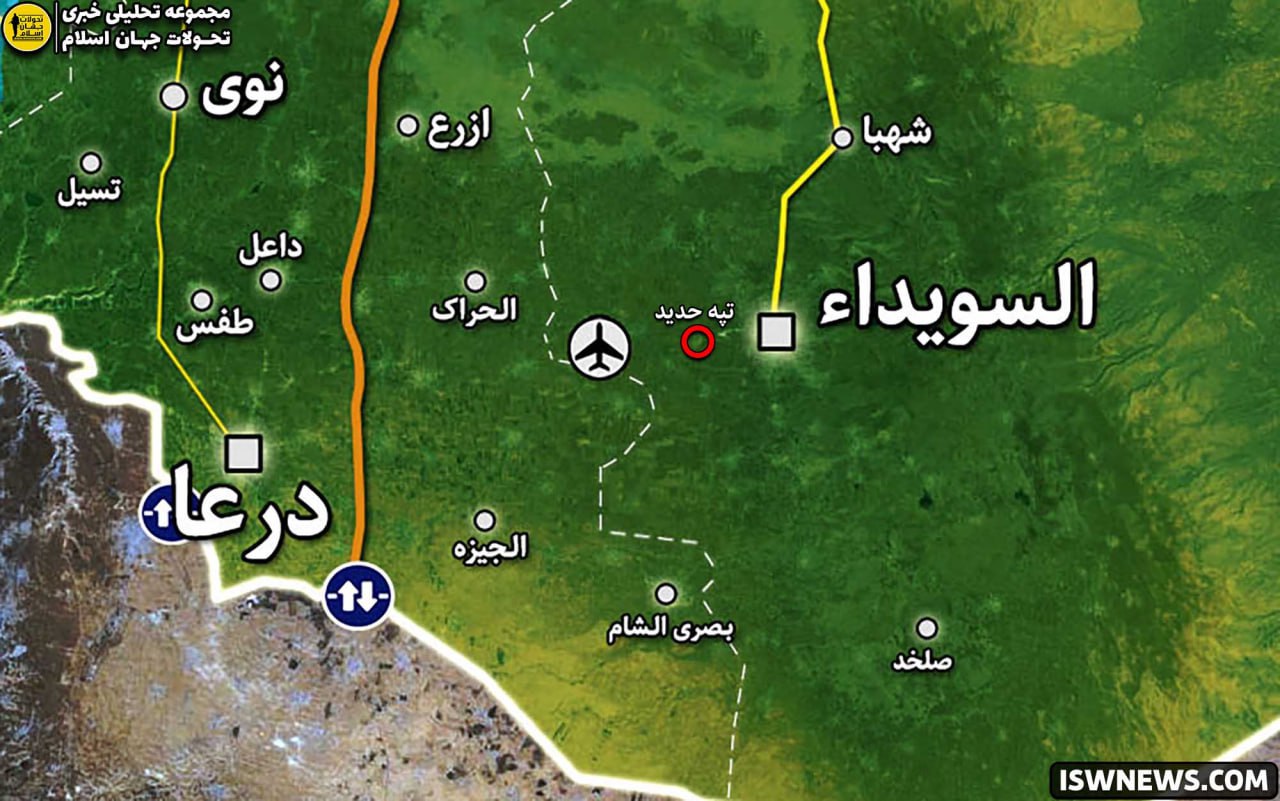
    According to the latest reports, Druze militants successfully took control of the strategic “Hadid” hill in western Sweida after engaging in clashes with Julani forces. During these confrontations, one Druze armed element was killed. There is currently no information regarding the casualties among Julani forces; however, several wounded members of the Syrian internal security forces have been transported to medical centers in Daraa province.

    Tal Hadid Suweida
    Tal Hadid Suweida
    Tal Hadid Suweida

    Meanwhile, as the clashes erupted in Sweida province, Israeli army aircraft were observed flying over both Sweida and Daraa provinces.

    Israeli warplanes

    It is important to note that Hadid Hill, located in the west of Sweida province, overlooks vast areas, including Al-Thaala and the roads leading to the center of Sweida. This strategic position underscores its significance in the ongoing conflict.

  • Israeli Energy؛ Syria’s Electricity Crisis and Israel’s Gas Resources

    Israeli Energy؛ Syria’s Electricity Crisis and Israel’s Gas Resources

    Even before Assad’s fall, Syria’s power grid was in poor condition, but the decade-long civil war made things much worse. Power plants and transmission lines were severely damaged, and Syria, once an oil exporter, became dependent on imports. Following Assad’s downfall, the flow of Iranian oil—which had previously met Damascus’ energy needs—was halted, and most of the country’s oil resources came under the control of Kurdish-led forces (SDF).

    Omar Shukrouk, Syria’s Minister of Electricity, stated that the country’s oil production capacity in government-controlled areas has dropped from 360,000 barrels per day to just 10,000.

    Although there have been reports of oil supply resuming from Kurdish-controlled areas, the future of this arrangement remains uncertain due to tensions between Turkey and the Kurds, as well as the unclear U.S. policy toward these forces.

    Temporary and Ineffective Solutions
    To escape the current energy crisis, Syrian officials have been offered various solutions:

    1. Use of private generators and solar panels
    Advantages:
    • Can provide localized power for households and small businesses.
    • Solar energy is a sustainable and environmentally friendly option.
    Disadvantages:
    • High cost of purchase and installation, which many Syrians cannot afford.
    • Lack of proper infrastructure for large-scale deployment.
    • Limited electricity generation, especially during seasons with low sunlight.

    2. Import of LPG from Turkey, Azerbaijan, and Jordan
    Advantages:
    • A quick short-term solution to meet some energy demands.
    Disadvantages:
    • Mainly suitable for domestic uses like cooking, with limited impact on electricity generation.
    • High transportation costs and dependency on foreign suppliers reduce sustainability.
    • Limited volume of imported gas does not meet Syria’s wide-scale energy needs.

    3. Use of floating power plant ships
    Advantages:
    • Can generate large amounts of electricity.
    • Quicker deployment compared to building new land-based power plants.
    Disadvantages:
    • Connecting these ships to the domestic power grid can take several months.
    • High operational and fuel supply costs requiring external financial support.
    • Difficulty transmitting electricity from coastal ports like Baniyas and Tartus to inland areas due to extensive damage in the transmission network.

    Overcoming the Crisis with Zionist Gas?
    One option now under consideration is using natural gas from the Israeli regime to supply electricity in Syria. Currently, the Arab Gas Pipeline (AGP), which was originally built in 2003 to deliver Egyptian gas to Jordan, Syria, and Lebanon, is now operating in reverse.

    Instead of transporting gas from Egypt northward, the pipeline now delivers gas from the occupied territories southward into Egypt. This gas is extracted from the Leviathan field off the Israeli coast and sent to Jordan, where it supplies 70 percent of the country’s electricity.

    There is now a proposal to redirect part of this gas, via Jordan and the AGP, to Syria. However, the plan faces not only technical hurdles but also significant political challenges.

    Political Barriers and Operational Challenges
    The Syrian government would find it politically difficult to officially accept gas from Israel, as any open cooperation with Tel Aviv is unacceptable for Damascus. Therefore, officials may label the gas as “Egyptian” or “Jordanian” to minimize domestic and regional backlash.

    In the occupied territories, some hardline factions oppose such a deal as well, arguing that Syria should not be aided. Nonetheless, relative stability in Syria could benefit Israeli security, as a power vacuum in the country enables extremist and militant groups to thrive.

    Another major hurdle is the cost of project. Syria lacks both the infrastructure to transfer the gas and a reliable system to make payments. International energy companies, including Chevron, which has a stake in the Leviathan project, are reluctant to enter contracts without financial guarantees. If Gulf countries such as Saudi Arabia, Qatar, or the UAE agree to finance the project, the chances of its implementation would increase.

    Syria Awaits Major Decisions
    As Syria’s energy crisis worsens by the day, its government is exploring different options. In the coming days, negotiations between Syria and Jordan are expected to take place, and the European Union has announced that it will lift certain energy sanctions on Syria.

    Syria now stands at a major crossroads: it must either continue with temporary and ineffective measures or navigate political and financial obstacles to accept gas that may be labeled “Egyptian,” but originates from elsewhere. In the end, this path may well tie Syria’s future to the broader project of a new Levant.
  • Israeli Army Advanced to within 11 Kilometers of Damascus!

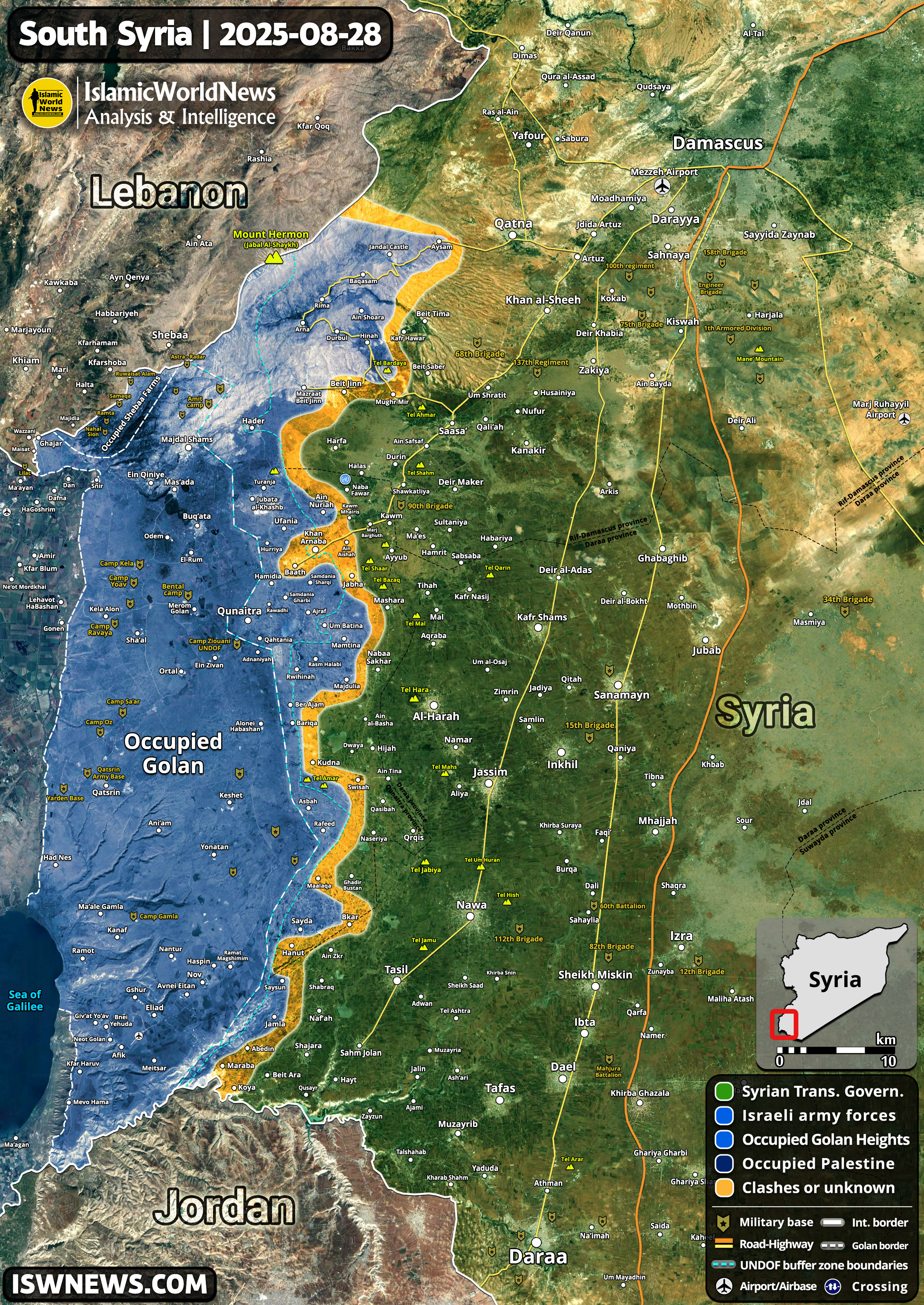
    Israeli Army Advanced to within 11 Kilometers of Damascus!

    According to videos that have emerged, an Israeli army convoy consisting of approximately 15 vehicles has reached the outskirts of Qatna.

    In addition to Qatna, Israeli forces have also entered the village of Al-Rafid in Quneitra province. This area has seen security operations and inspections conducted by the Israeli army in recent weeks.

    Despite calls from Syrians to confront the Israeli regime and the threats made by Julani militants, the forces of the new Syrian government have not taken any action to prevent or confront the Israeli army’s movements. The Israeli advance in southern Syria continues amidst the silence of the Julani government.