A Syrian military source stated that, “About 8:20 p.m. this evening, the Israeli enemy carried out an air attack with bursts of missiles from the direction of the Mediterranean west of Baniyas, targeting some points in the central region (likely Hama province). Our air defenses confronted the aggression’s missiles and shot down most of them.” The source added that the aggression “led to the death of five, including one civilian, wounding seven citizens, including a child, and causing some material losses.”
The SANA news agency indicated that the Israeli aggression also resulted in the outbreak of several fires in the farms of Masyaf countryside in the western Hama, as a result of the fall of a number of hostile missiles in those areas.
It should be noted that on April 27 also, the Israeli warplanes fired missiles from Lake Tiberias at targets around the city of Damascus, killing four Syrian soldiers and wounding three others.
M141 or SMAW-D (“Disposable”), is a single-shot, shoulder-launched weapon designed to defeat hardened structures. The weapon was designed as a modification of the United States Marine Corps Shoulder-launched Multipurpose Assault Weapon (SMAW) to fill the void in the United States Army inventory of a “bunker buster” weapon.
The SMAW-D operates on the principle that the recoil created by launching the rocket is counteracted by a “backblast” of gases fired from the rear of the weapon like RPGs. This makes the SMAW-D inherently dangerous, especially in confined, urban areas, as is with all weapons of this design.
M141 Bunker Defeat Munition has two configurations: a “carry mode” in which the launcher is 810 mm long, and a “ready to fire mode” in which the launcher is extended to its full length of 1,400 mm.
The warhead is the same High Explosive, Dual Purpose (HEDP) as the United States Marine Corps SMAW. It is effective against masonry and concrete bunkers as well as lightly armored vehicles. The projectile is capable of penetrating up to 200 mm of concrete, 300 mm of brick, or 2.1 m of sandbags. The warhead is activated by a crush switch in its nose that is able to distinguish between hard and soft targets. On soft targets, such as sandbags, the detonation is delayed until the projectile is buried in the target, producing a devastating effect. The warhead detonates immediately on contact with hard targets.
M141 Bunker Defeat Munition specifications: Weight: 1.7 kg Length: 810 mm In service (US Army): Since 1999 Caliber: 83.5 mm rockets Range: 15-1000 meters Penetration rate in concrete: 200 mm Penetration rate in brick: 300 mm Penetration rate in sandbags: 2.1 meters
The outbreak of war in Ukraine has affected the world energy market. The most important event after the increase in oil and gas prices is the limitation and conditions of the new supply of energy to the EU market by Russia. This is why the European Union is thinking of reducing purchases from Russia to supply gas.
Europe, meanwhile, is thinking of countries that can meet this need. Europe’s strategy is to meet its needs from several sources so that it does not become dependent on one source.
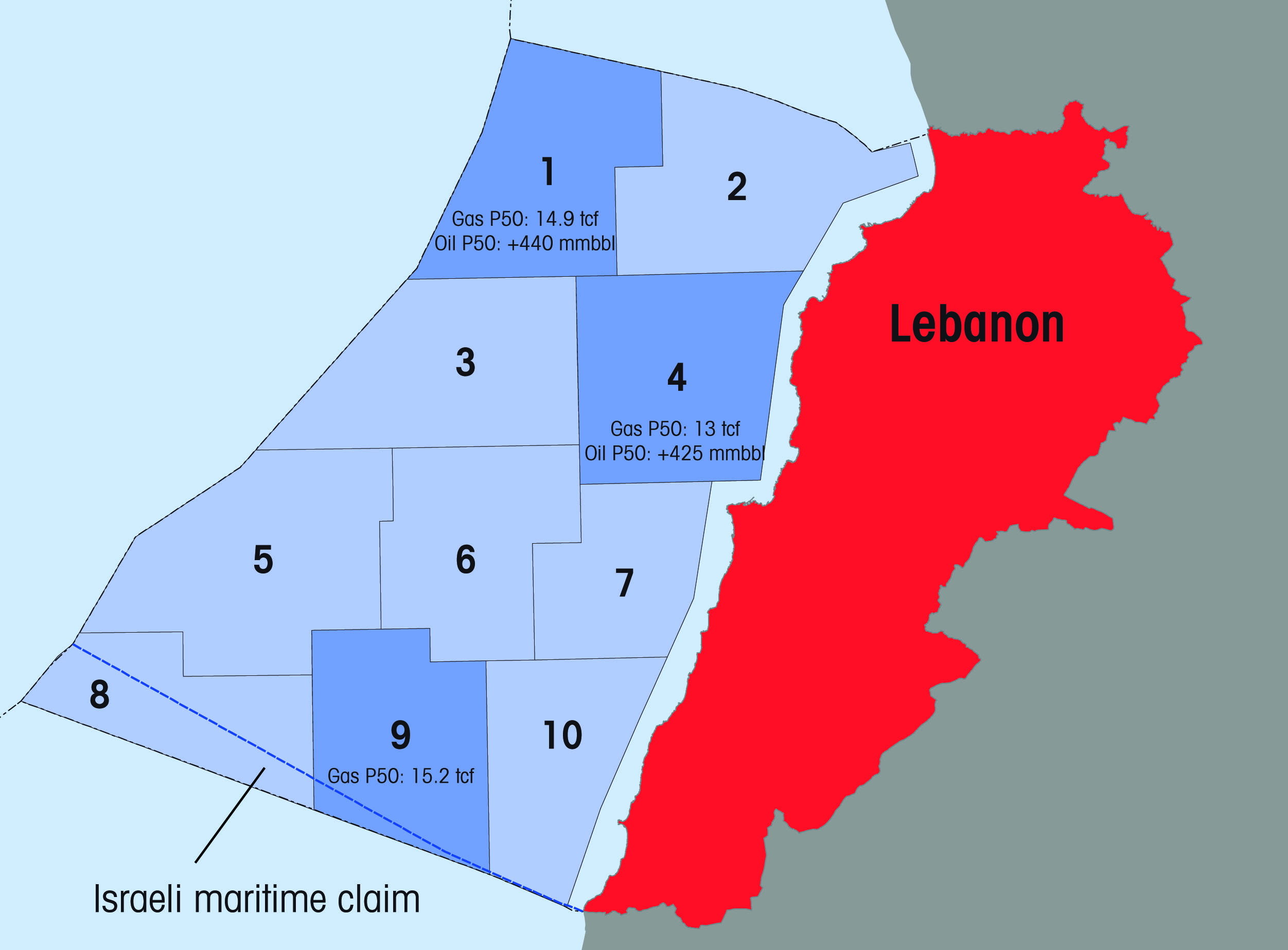
In addition to increasing oil and gas purchases from old suppliers, Europeans are also turning to new suppliers. Over the past month, news of Turkish-Israeli cooperation has shifted the focus of the energy market. The Leviathan and Tamar gas fields in the waters of occupied Palestine, as well as the oil and gas fields in the disputed EEZ between Lebanon, Israel and Cyprus in the eastern Mediterranean, are a new source of gas for Europe.
Lebanon’s oil and gas blocks and the disputed area
Turkey has no territory in this area, but continues its illegal exploration due to the occupation of the northern Republic of Cyprus and the formation of the de facto Turkish government of Northern Cyprus. The news of cooperation with Israel in these fields and the pipeline connecting the Turkish port of Ceyhan is a turning point in European strategy.
Gas pipeline from the Turkish port of Ceyhan to the occupied Palestinian gas fields
These fields are the closest point to the export terminal of Ceyhan port and Europe. From here, Turkey sends Baku-Tbilisi-Ceyhan oil and gas shipments to Europe. The security of this field is much higher than other fields in the Caucasus and Libya due to the military power of Israel and Turkey and the NATO base in Cyprus. The Russian Federation’s naval and air base in the port of Banias and Latakia are not efficient enough to cut it off, but it is a potential danger.
The current challenges for these pipes and fields are protests by the Lebanese and Cypriot governments, Iranian and Russian bases in Syrian ports, and pro-Iranian forces in Lebanon.
Cyprus’s European nature and de facto Northern Cyprus government also do not have much opposition to Turkish influence in this area. They are relinquishing their share, and the main challenge is on the eastern shores of the Mediterranean.
The Lebanese government’s opposition, due to the presence of Iranian supporters, including Shiite parties in the parliament and cabinet, is a serious and important issue that makes things difficult for Israel politically. They are a major obstacle to Israel, Turkey and the European Union, but the Lebanese government needs such a resource to get rid of its crisis-ridden economy. This reduces the share of other parties. In this case, the European Union is trying to attract the Lebanese cabinet with its own groups and negotiate with Iran.
EEZs in the eastern Mediterranean – Maritime disputes in Mideterenean
Recently, IRGC security forces arrested five members of a terrorist group in the border city of Baneh, the capital of Baneh County, in Kurdistan Province. According to the IRGC, following the confessions of the members of this terrorist team to their subversive goals and intentions against the security of the Iranian nation, this morning positions of terrorist groups in the northern part of Iraq were targeted by artillery and missile attacks.
According to local sources, IRGC ground forces shelled positions of PKK and PJAK terrorist groups in Choman and Barbazin heights of Iraq in the Sidekan region.
It should be noted that in Summer 2021, IRGC’s ground forces carried out artillery and drone strikes on the positions of PJAK terrorists and other terrorist groups in the Choman and Sidekan areas of Iraqi Kurdistan several times.
At around 3 am local time, the Israeli army fired several surface-to-surface missiles at targets near the town of Hadar, causing material damage.
Hours after sunrise, Israeli forces launched a second artillery attack on Syrian territory, targeting SAA 90th Brigades on the outskirts of Jabhat al-Khashab, near the occupied Golan Heights, but no casualties were reported.
Syrian officials and the Israeli regime have not yet commented on the attacks, but it is likely that in the coming days the Israeli army will claim that it carried out these attacks under the pretext of attack on Iranian-backed forces or Hezbollah.
This is the first Israeli attack on Syrian territory since Syrian President Bashar al-Assad’s visit to Iran.
The last attack of the Israeli regime on Syria took place on April 27 this year. Israeli warplanes fired missiles from Lake Tiberias at targets around the city of Damascus, killing four Syrian soldiers and wounding three others.
In south of Severodonetsk, in recent days, Russian and Luhansk (LPR) forces have taken control of the town of Nizhnie from Ukrainian forces. Clashes continue in Toshkivka at the moment.
In the north of Severodonetsk, clashes continue near Vojevodivka and south of the city of Rubizhne. Pro-Russian sources claim control of the Vojevodivka area and complete control of the city of Rubizhne; But this news can not be confirmed yet. Advances in the city of Rubizhne have been stalled for weeks, and Ukrainian forces are resisting well. The capture of the Vojevodivka area by Russia and its allies will lead to the siege of the remaining areas in Rubizhne and the Ukrainian forces to withdraw from the city.
In west of Severodonetsk(southern Kerminna), Russian forces crossed the Siverskyi Donets River and attacked the Bilohorivka area.
In general, given the direction of the attacks, it seems that Russia’s ultimate goal in this axis is to encircle the cities of Severodonetsk and Lysychansk. According to Russia, about 8,000 Ukrainian troops are present in this region to defend Severodonetsk and Lysychansk. The cities of Severodonetsk and Lysychansk are one of the main hubs of Ukrainian industry in the east of the country, and its occupation by Russia is a severe psychological blow to Ukraine.
The first thing to realize is that great battles are coming, where the main enemy of the Ummah will be doomed to total defeat and this time Big Satan will not be able to help his main lackey. Why do we need “armies”? The fact is that modern military art has reached such a stage of tactical development when all the leading combat forces of the planet have come to the conclusion that any military unit or organization should include in its tactical arsenal the ability to act as partisans and as a regular army with all the nuances. Accordingly, despite the vast experience of Hezbollah and the Palestinian resistance, they need two things: 1 – an additional front against Zionism, 2 – an increase in the size of the operational center or coordination structure for the transformation from guerrillas to militia.
Now, as for the strategy. Given the abomination of the Zionist regime, it is necessary to prepare for all scenarios, and the most disgusting thing that Zionism can do in this situation is not even the use of nuclear weapons (we will still go to Heaven, InshaAllah), it is the use of its “Muslim” allies to protect its colony. Here I mean the military units of the junta of Egypt and the guard of the King of Jordan. Earlier, Zionism had already tried to conclude an agreement according to which the Sisi regime would have to “provide security” in the West Bank of Jordan. As for the army of Abdullah’s autocracy, they are already “holding hostage” Palestinian refugees and controlling the transition to the West Bank. The fact that most Palestinians in Jordan lack combat experience should not confuse observers(mass marches indicate a willingness to fight the occupiers – this is the main thing), because after the inevitable collapse of Abdullah’s autocracy, the borders will disappear, which means that the Islamic resistance forces of Iraq[1] located next door will be able to train Palestinians and provide all kinds of military assistance. The presence of British and American military bases in Jordan gives a strong argument in favor of the fact that Abdullah will cling to his throne to the last.
But apart from these dictatorships, there is another insidious enemy that will certainly come to the aid of Zionism – the autocracy of Saudi Arabia. Yes, we can recall their failed aggression against Yemen. But it is obvious that when the question of the survival of the main ally of the Banu Saud regime in the face of Zionism arises, the criminal regime of Riyadh will do everything to support its main ally in the face of destruction. The Saudis can at any moment mobilize 50,000 militants on the border with Iraq or Jordan, which include their military, various mercenaries and local puppets from among the Arab tribes in Jordan and Iraq. Earlier, Riyadh had already practiced similar tactics in 2014, when, allegedly to counter ISIS, they concentrated 30,000 guards to “protect” the borders. (in fact, the Saudis tried to occupy part of Iraq) In my opinion, the forces of Hashad al-Shaabi of Iraq will have to block a possible Saudi intervention directed against the Palestinians of Jordan.
After all, from the point of view of tactics, it will be much more convenient for them to stop the Saudis. In principle, the foundation of the local “liberation army” has already been laid in Iraq, which is a symbiosis between Hashad al-Shaabi and the forces of the Islamic Resistance. These organizations are quite capable of fighting on two, and even three fronts[2]. For example, Hadi al-Ameri (head of the Fatah alliance and one of the leaders of the BADR organization) said that “The vanguard of the liberation of Jerusalem comes from here, from Iraq. The banners that will liberate Jerusalem are coming from Iraq.” It is worth recalling that BADR is the main core of Hashad al-Shaabi (almost 70 percent of combat groups). Another Iraqi organization, Harakat Hezbollah al-Nujaba, which, in addition to membership in Popular Mobilization Forces, is present in the Coordinating Council of Resistance Factions, released a clip on the day of al-Quds, where a ballistic missile was shown.
Thus, we are witnessing the implementation of the Martyr Muhandis’ plan to create ballistic missile systems in the western part of Iraq. At the end of the topic about the “regional liberation army of Al-Quds”, you can also point out about the coordination between Hezbollah and Hamas in Lebanon, where these parties are creating a “Palestinian-Lebanese army”. In Syria and Yemen, by analogy with Iraq, the foundation of the “Al-Quds army” has already been created. Egypt and even Libya may be a surprise.
1- The Iraqi factor is a reality for Jordan and even the West Bank. After all, earlier the representative of Kataeb Sayyid al-Shuhada explained why the Islamic Resistance of Iraq has the right to strike at the Abdullah regime(first of all, this is a signal for Western military bases), also a year ago the leader of Harakat Hezbollah al-Nujaba Sheikh Akram al-Kaabi noted that his organization has the opportunity to penetrate into the depths of the Zionist enemy. It is logical to assume that we are talking about special operations through the West Bank.
2- in addition to a common front with the Palestinians against Zionism in the direction of the West Bank, the Iraqis will be able to cover the rear of the Palestinians of Jordan from the Saudi “stab in the back”, and expel the Turkish interventionists from Iraq and Syria.
One month after the UN announced a ceasefire agreement and its repeated violations by the Saudi coalition, Ansar Allah air defense this morning shot down a Chinese-made CH-4 drone belonging to the Saudi coalition. The flight and operation of reconnaissance and combat drones during the ceasefire period are among the violations, and Ansar Allah, after numerous warnings to the coalition, responded strongly to this blatant violation. This could be the end of a ceasefire agreement that has not been fully implemented. Among the terms of the agreement are the arrival of fuel ships in the port of Al-Hudaydah and the reopening of Sanaa Airport, which the Saudi coalition has refused to fulfill.
It should be noted that Ansar Allah has destroyed 15 CH-4 drones since the beginning of the Yemen war. This drone is made in China and is similar to the US MQ-9 drone, which can carry 250 kg bombs and fly for up to 40 hours and has a range of up to 5,000 km.
In addition to the Azerbaijanis of the Republic of Azerbaijan, Shiite Azerbaijanis living in Russia, the Caucasus, Turkey and Europe are also present in this movement.
Hujjat al-Islam Tohid Ebrahimi (Tohid Ibrahimbayli) is the founder and first official of the Huseyniyyun group.
The group first protested against the anti-religious policies and restrictions imposed on Shiites by the government of the Republic of Azerbaijan. They did not have a specific name on that time. Then, following the widespread arrests and punishments of religious activists and the indifference of the “Religious Council of the Caucasus”, they left the Republic of Azerbaijan. In the following years, with the start of the Syrian and Iraqi wars to defend the sanctuary and fight ISIS terrorism, the group participated as part of the Resistance Axis in the region.
Finally, in 2017, with the direct approval of Martyr Qassem Soleimani, the commander of the IRGC’s Quds Force, the name of Huseyniyyun was officially chosen for this group, and this group officially made its activities public.
It should be noted that the Azerbaijanis who were present in Syria in the form of the Huseyniyyun group, after returning to their country, were mostly imprisoned or faced severe punishment by the government of the Republic of Azerbaijan.
But the main reason that has made the Azerbaijani government sensitive to the Huseyniyyun group is their media activities on social networks. The Huseyniyyun resistance group spreads interesting news on social media by exposing the behind-the-scenes realities of Azerbaijan.
So far, six members of the Huseyniyyun have been arrested in Azerbaijan and Russia and sentenced to 12 to 14 years in prison after a trial in the Baku Special Organized Crime Court. The most prominent prisoner of this complex is Yunis Safarov, the perpetrator of the shooting of the mayor of Ganja, who has been sentenced to life imprisonment.
During their previous meetings with Iranian officials, the officials of the Republic of Azerbaijan have emphasized the extradition of members of the Huseyniyun resistance group to this country and in return are willing to grant some economic concessions. They are even willing to make concessions in return for imposing restrictions on members of the group in Iran without extradition. Of course, this is the demand of the Azerbaijani government, but the Islamic Republic of Iran has asked the Azerbaijani officials during various meetings to cut ties with Israel and not to become an ally of the occupiers of the Palestinian territories. Or at least obstruct Israeli military and security activities in Azerbaijan and along the borders of Iran.
Following the recent defeats of the Ukrainian army on the southern and eastern fronts, as well as escalating tensions in the Transnistrian region, it appears that Eastern European countries, with US support, intend to launch an operation to control the Transnistria or the Pridnestrovian Moldavian Republic. With the annexation of the Crimean peninsula to Russia in 2014, Transnistria has become more inclined towards Russia and is looking for a way to join the Russian Federation.
Last week, there were reports of the redeployment of large units of the Polish army to Romania for subsequent joint activities, such as exercises on the territory of Moldova. Russian sources reported that the Polish Armed Forces started to establish a strike group on the territory of Romania. The list and composition of specific units being moved to Romania is not revealed. The total contingent is estimated at up to 8,000 servicemen. In the near future, a consolidated contingent is planned to enter Moldovan territory under a plausible pretext, such as a humanitarian operation or an official government request.
One of the development options of the Polish leadership’s plan is to create an advanced bridgehead on the territory of Moldova to promptly take control of Transnistria and deploy a “peacekeeping contingent” on the territory of the Odessa region. For its part, the Odessa command of the Ukrainian Armed Forces is ready to support a possible Moldovan-Polish-Romanian invasion of Transnistria under the guise of a humanitarian operation. This will cause huge reputational damage to the Russian Federation and will also divert Russian forces from other front lines, for example, from the Mykolaiv direction. The grouping of the Armed Forces of the Russian Federation in the Mikolaiv-Krivyi Ruh areas does not exceed 30,000 servicemen.
The number of the Operational Group of Russian troops in Transnistria is up to 1,700 servicemen, now it is more likely about 1,300. The Armed Forces of Transnistria count up to 7,500, while the Armed Forces of Moldova count up to 5,200 servicemen with a reserve of 60,000 people. The number of Romanian Armed Forces is up to 70,000.
A joint group of 22,000 – 25,000 Polish-Romanian-Moldovan soldiers would be enough to carry out such an operation in the region. In the event of a conflict, the main combat work will fall on the Romanian and Polish assault units. It is estimated that 6,000 Romanian and 3,000 Polish troops of the rapid reaction forces would be enough.
Military clashes of the Armed Forces of the Russian Federation with the Armed Forces of Poland and Romania on the territory of a non-member state of NATO is the perfect scenario for Kiev and Washington. In case of the opening of another front in the neighboring country, the AFU counter offensive should be expected in the south of Ukraine with active defense in the East.
This is the main scenario in the region which also follows the ongoing international political developments. The preparation and composition of the sixth package of EU sanctions are associated with the upcoming events in Transnistria.
The expected timing of the scenario is from May 12 to May 25, 2022, or from June 15 to June 25, depending on the actions and successes of the Russian Federation in the Donbass region.
Click to view full size
Thus, in the Transnistria, the situation is escalating:
“the Russian peacekeeping forces are monitoring the situation in the Security Zone”, i.e. demilitarized zone of separation of the armed forces of Moldova and the Pridnestrovian Moldavian Republic, claimed the Co-chairman of the Joint Control Commission.
The Victory Day Parade on May 9 in Transnistria has been canceled. Only the flower-laying ceremony will take place.
educational institutions in the capital will operate remotely until the end of the academic year.
Security measures on the borders have been increased, including the enhanced document verification regime.
Roadblocks will be set up at the entrance to the cities of Transnistria. The inspection of vehicles and citizens during the daytime will be selective, at night control measures will affect everyone entering the localities. The law enforcement agencies have been transferred to an enhanced duty regime.
In Moldova, the situation is not calm neither. There are signs of the upcoming military operations.
Sandu called an emergency meeting of the Supreme Security Council. This body does not have real power, but is a cover for the legal formalization of decisions taken by political actors.
The Information and Security Service has called everyone to calm down, what is already a dangerous sign.
Moldova, in fact, is under external control no less than Ukraine. At the same time,the majority of the population of the republic does not support the beginning of hostilities in Transnistria.
Also, the Armed Forces of Moldova do not have necessary power. Therefore, an attack is possible only by the forces of Polish-Romanian units on the one hand and the AFU from Odesa on the other.
A new hotspot of the war can significantly change the nature and scale of the conflict in Eastern Europe. The escalation of the situation in Transnistria corresponds to Washington’s vision and statements that the United States is changing course towards Russia, from the desire to exhaust Moscow economically to a direct and complete military victory over the Russians on the battlefield. This was recently announced by Washington after a meeting with Zelensky in Kiev.